All cards
1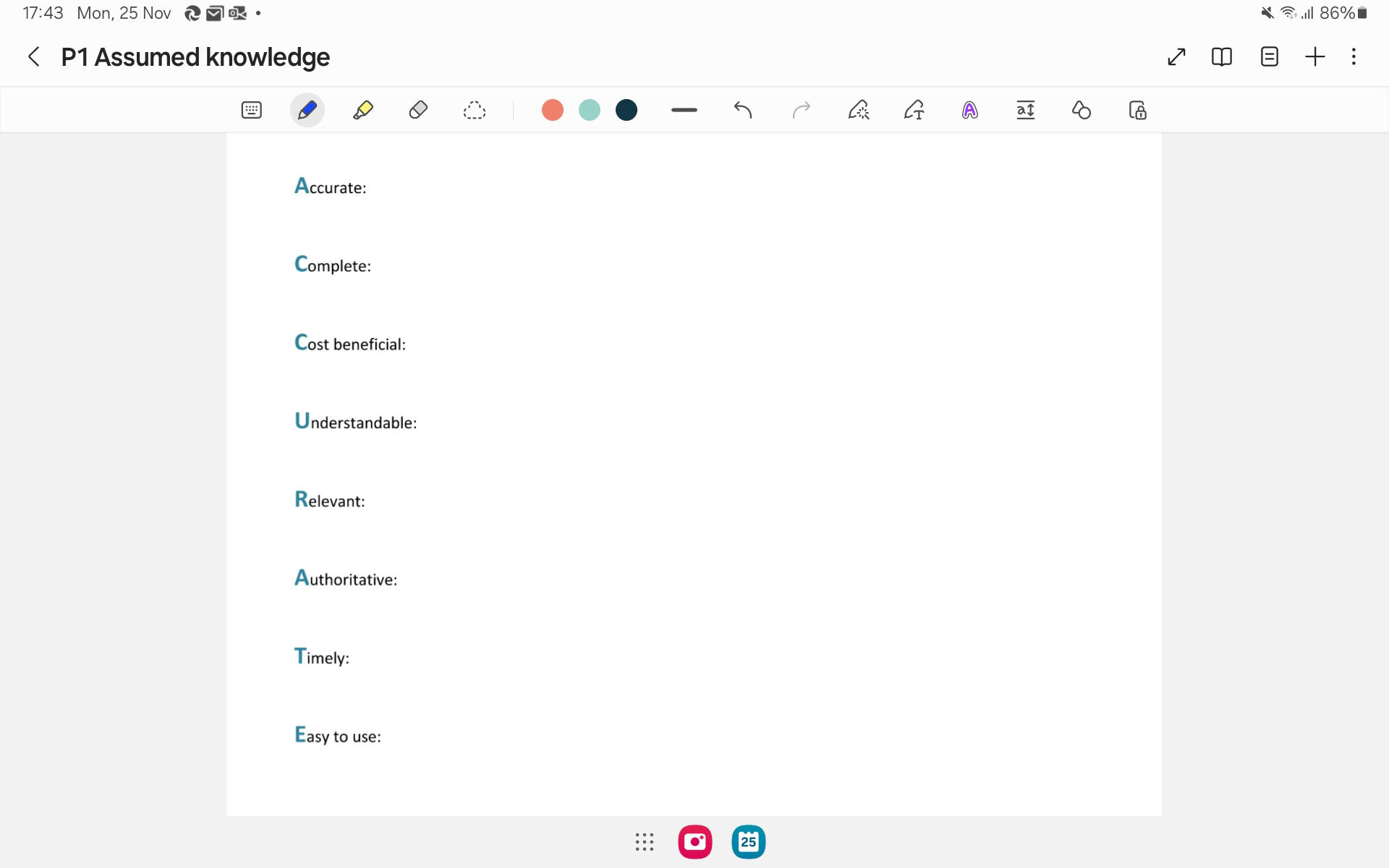
what are the characteristics of good information
2
How does CIMA define Management Accounting
The application of the principles of accounting and financial management to create, protect, preserve and increase value for the stakeholders of for-profit and not-for-profit enterprises in the public and private sectors
3
How does CIMA define Cost Accounting
The gathering of cost information and it's attachment to cost objects, the establishment of budgets, standard costs and actual costs of operations, processes, activities or products; and the analysis of variances, profitability or the social use of funds
4
When stock increases which will produce a larger profit
- Marginal costing
- Absorption costing
5
How do you reconcile the profit between marginal and absorption costing
multiply the change in inventory by the overhead absorption rate to give you the difference. If stocks have increases in the period absorption costing will be the higher profit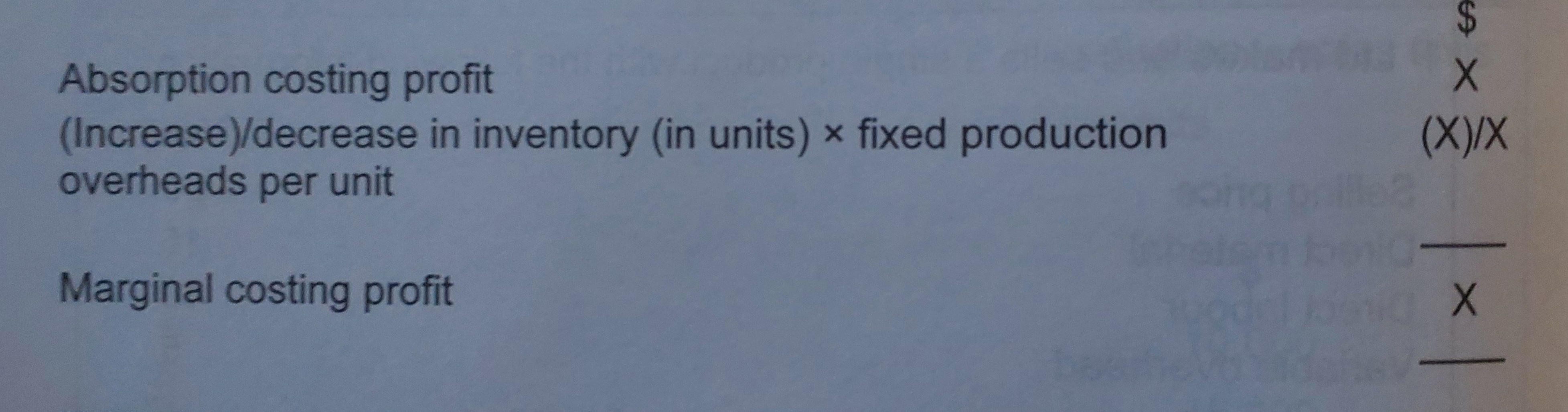
6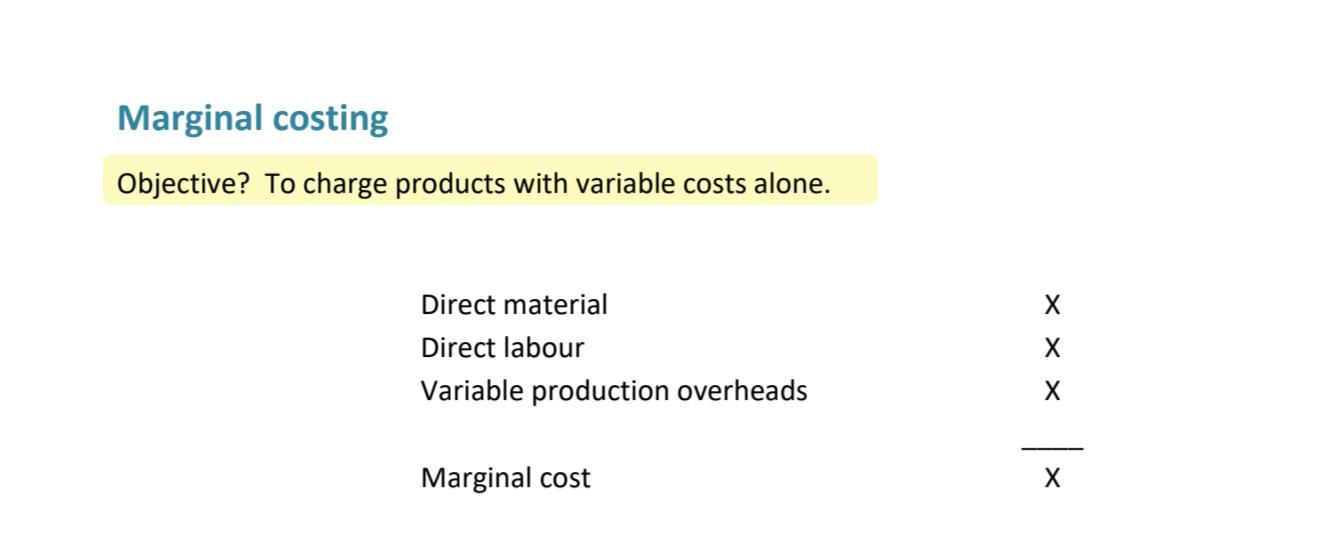
what is the objective of marginal costing?
7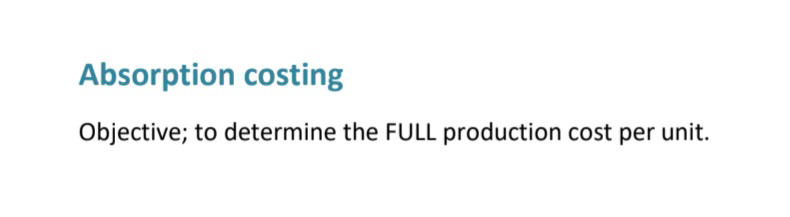
What is the objective of absorption costing?
8
What does the full product cost include (4)
Direct material
Direct labour
Direct expenses
Production overheads
Direct labour
Direct expenses
Production overheads
9
What is a period cost?
Costs which are charged in full to the P&L in the period in which they occured. These include admin costs, selling and distribution costs and finance costs
10
What would be included in the Prime Cost of a unit?
Direct Materials
Direct Labour
Direct Expense
NO OVERHEADS
Direct Labour
Direct Expense
NO OVERHEADS
11
What would not be included in the full production cost?
Non production overheads (also called period costs which are charged in full to the P&L
12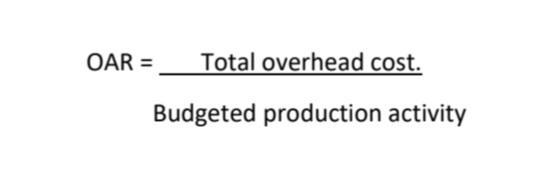
How do you calculate the overhead absorption rate (OAR)?
13
What are the traditional costing methods (2)
Absorption costing
Marginal costing
Marginal costing
14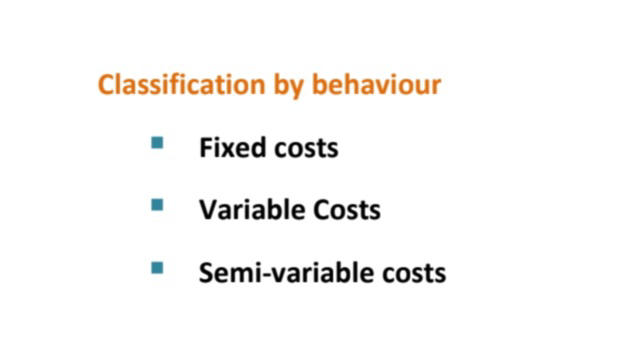
what are the types of cost behaviuor?
15
What are the types of costs by function?
1) Production Costs
2) Non - Production Costs
2) Non - Production Costs
16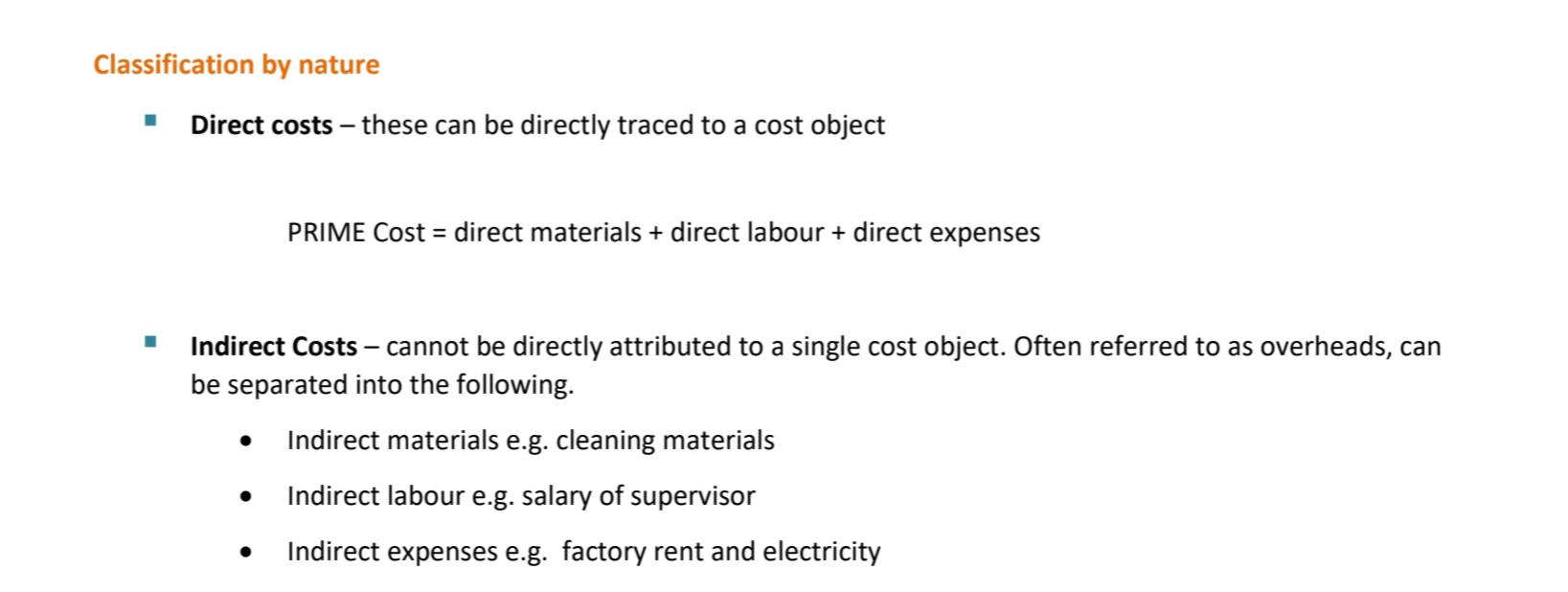
What are the types of cost nature?
17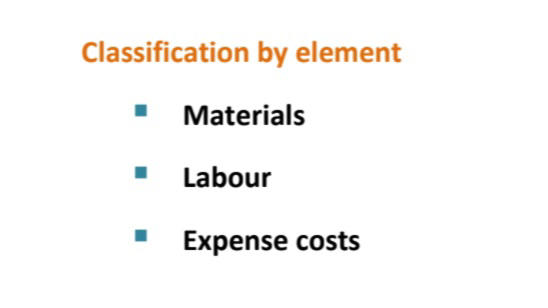
What are the types of cost element?
18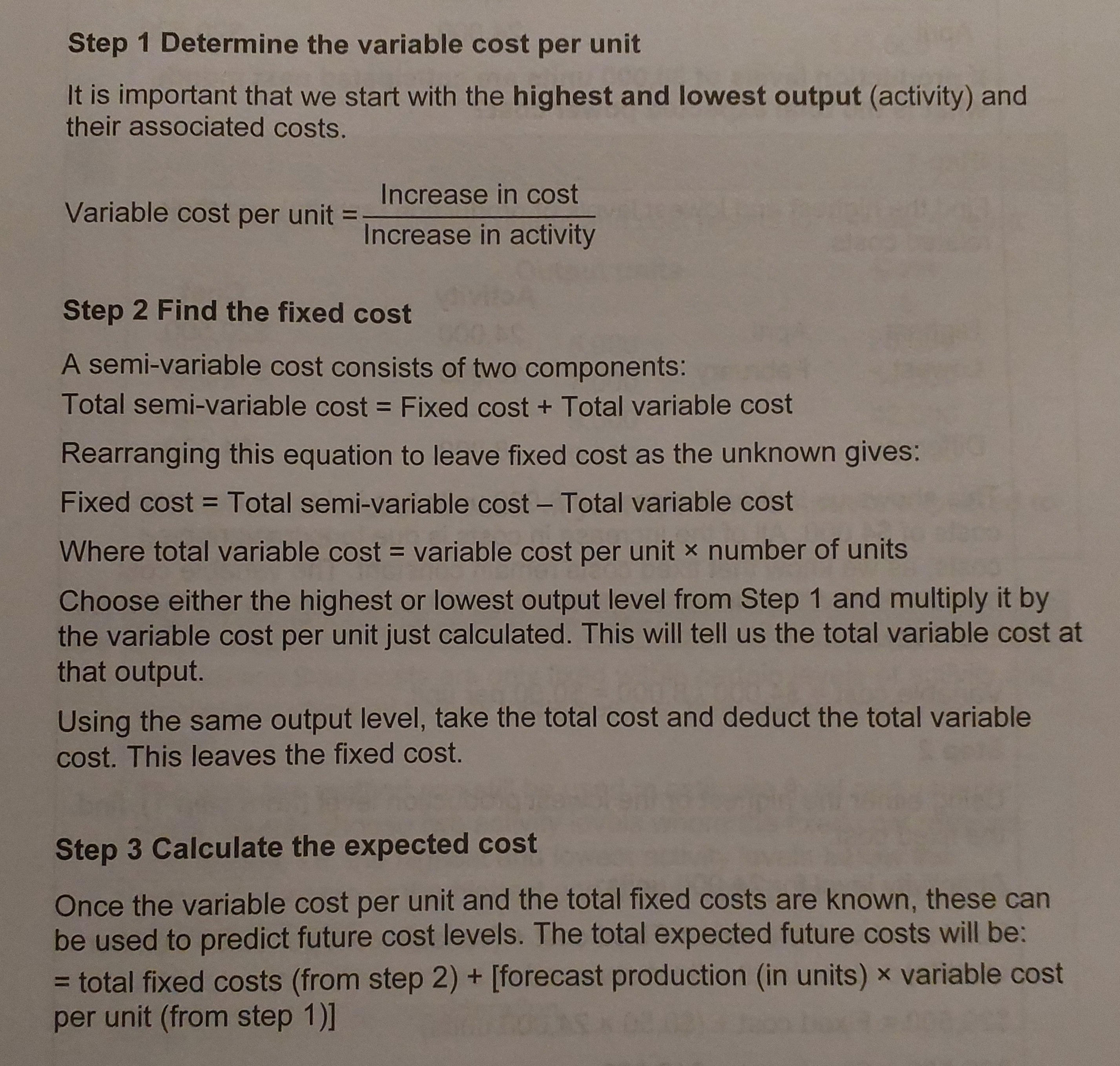
How do you use the high low method to analyse semi variable costs into their fixed and variable elements?
19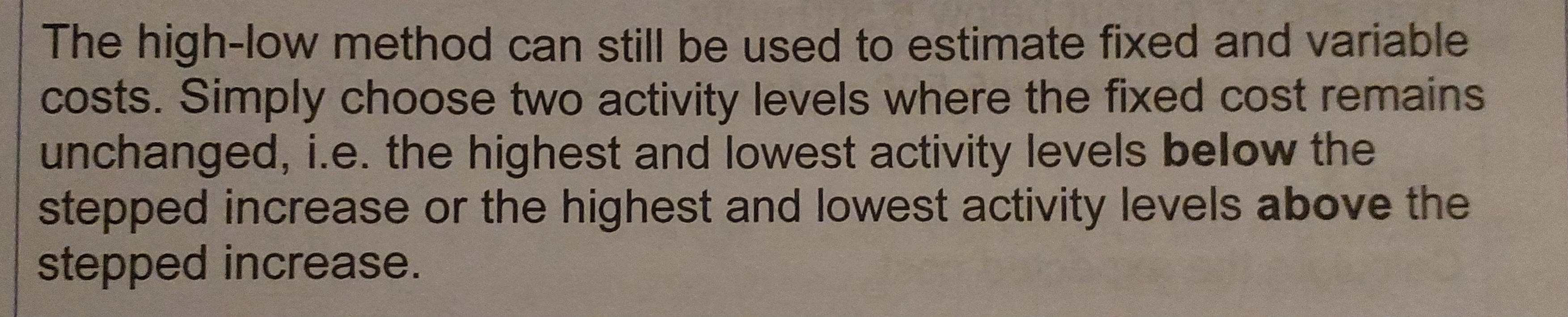
How do you use the high low method to calculate fixed and variable costs for STEPPED FIXED COSTS
20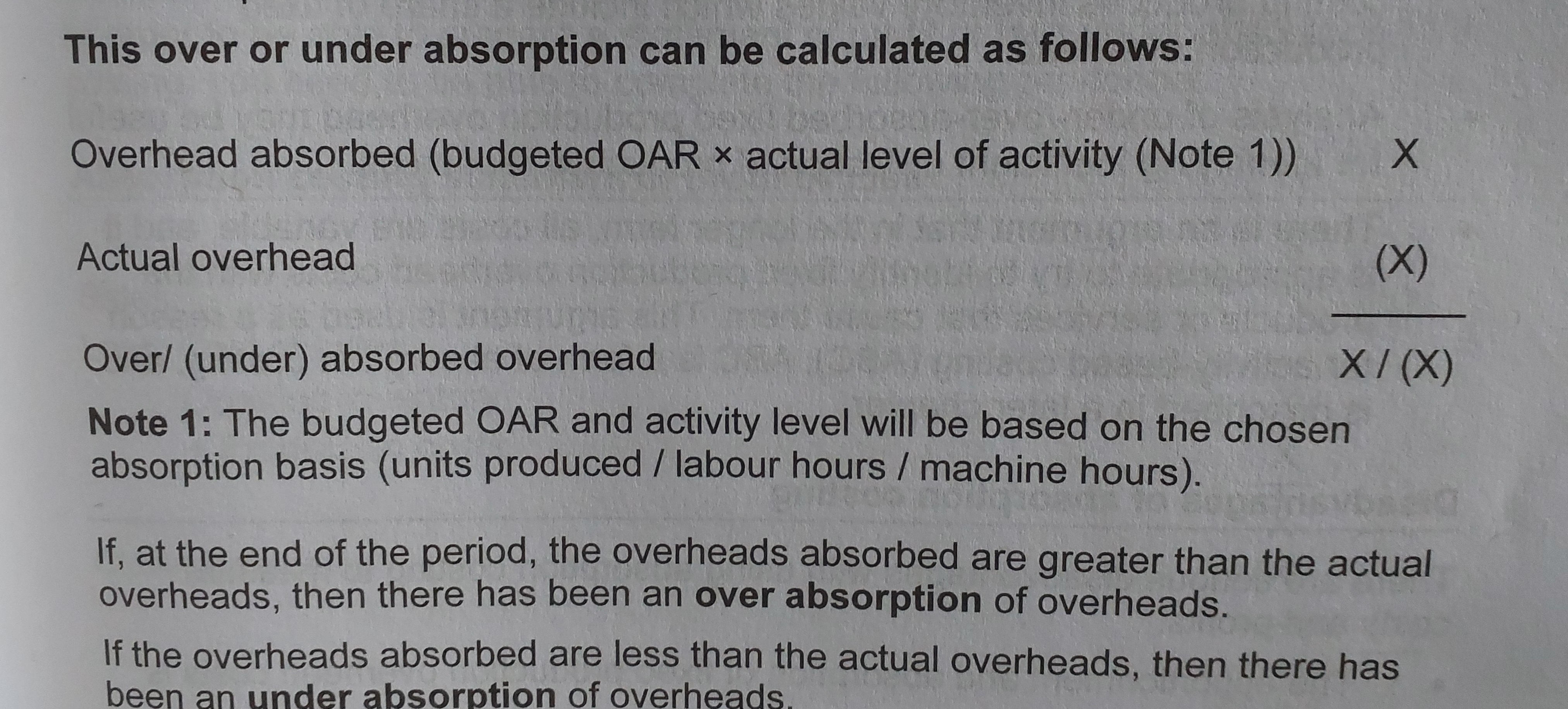
How do you calculate the overhead over / under absorption amount
21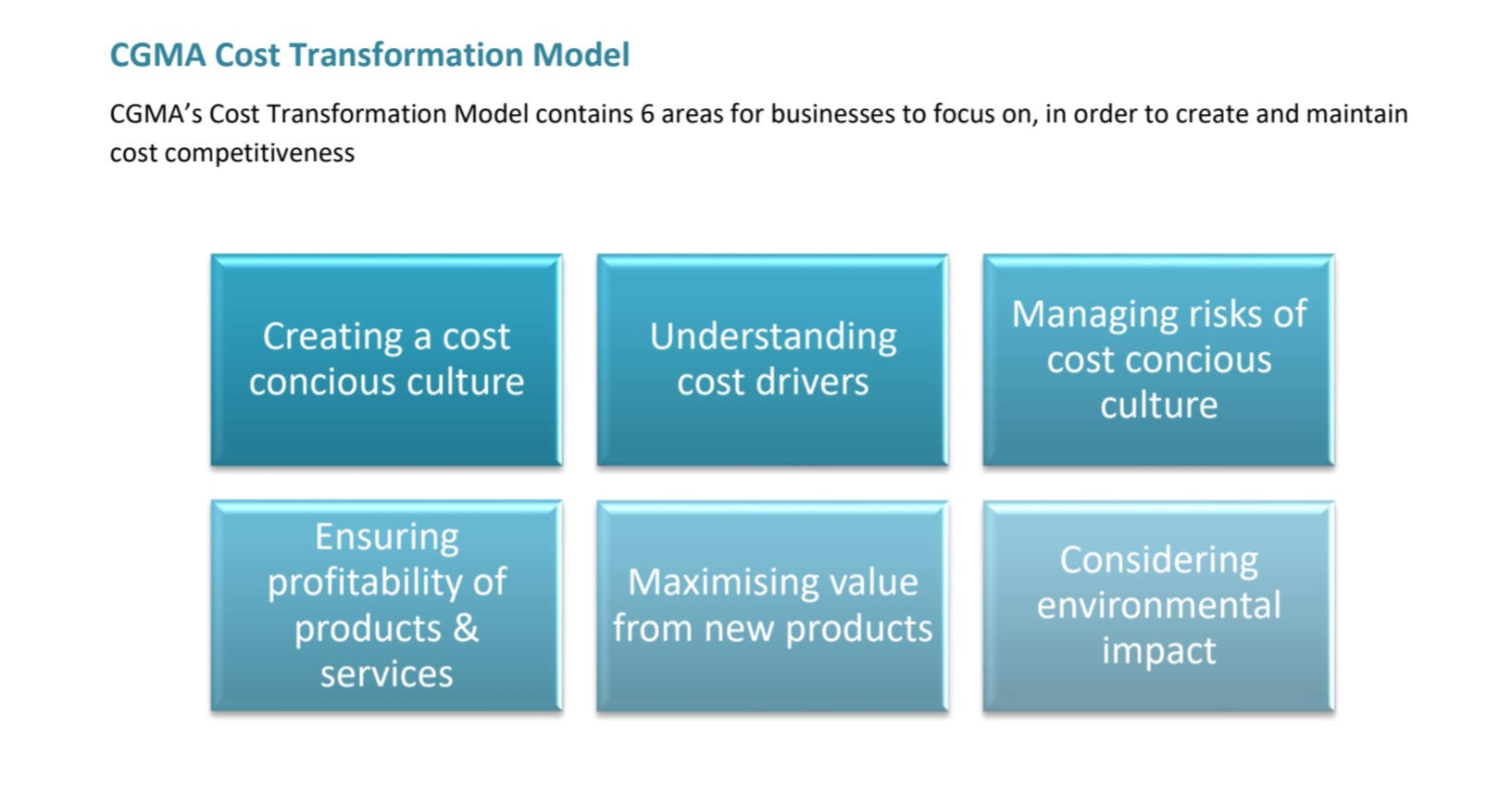
In the Cost Transformation Model, what are the 6 areas for a business to focus on?
22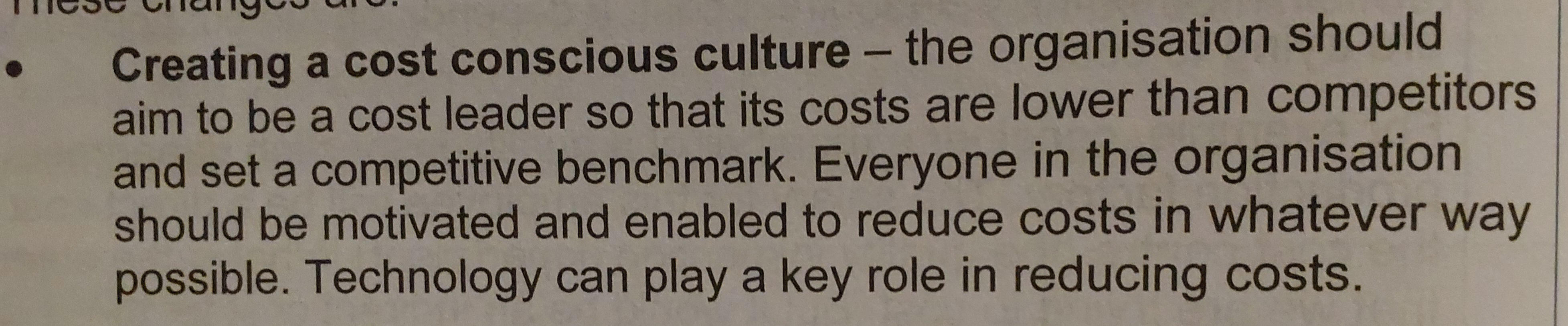
In the cost transformation model explain 'creating a cost conscious culture
23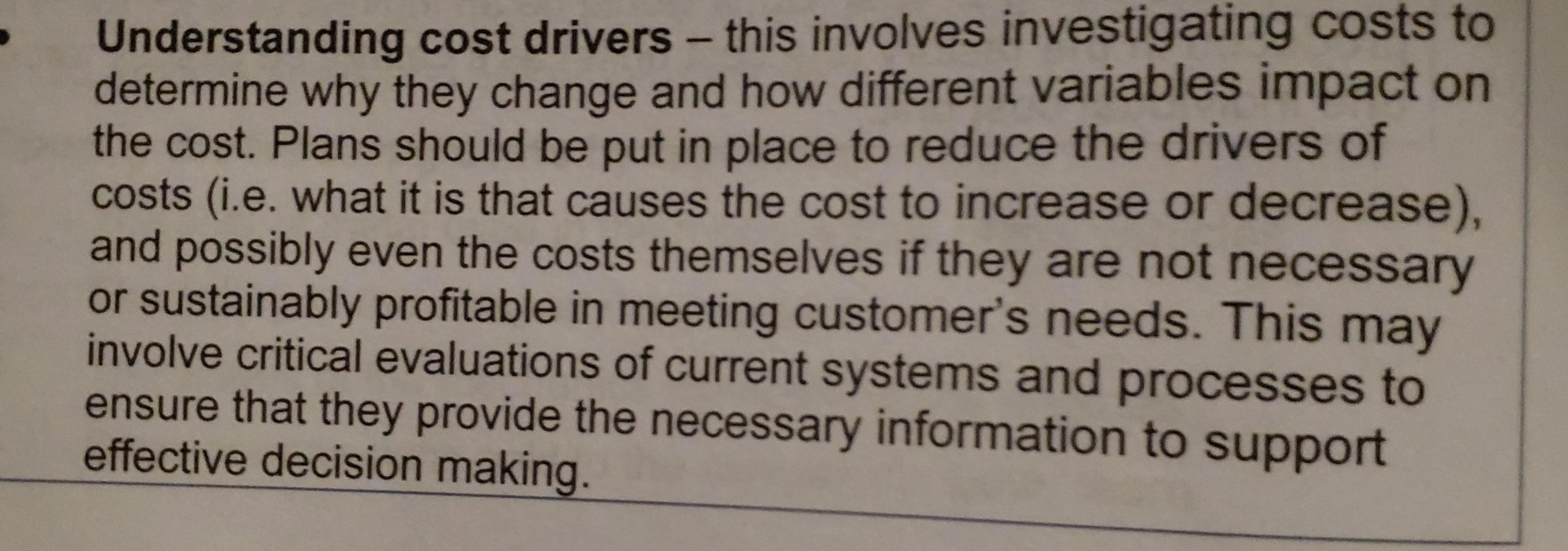
In the cost transformation model explain Understanding cost drivers
24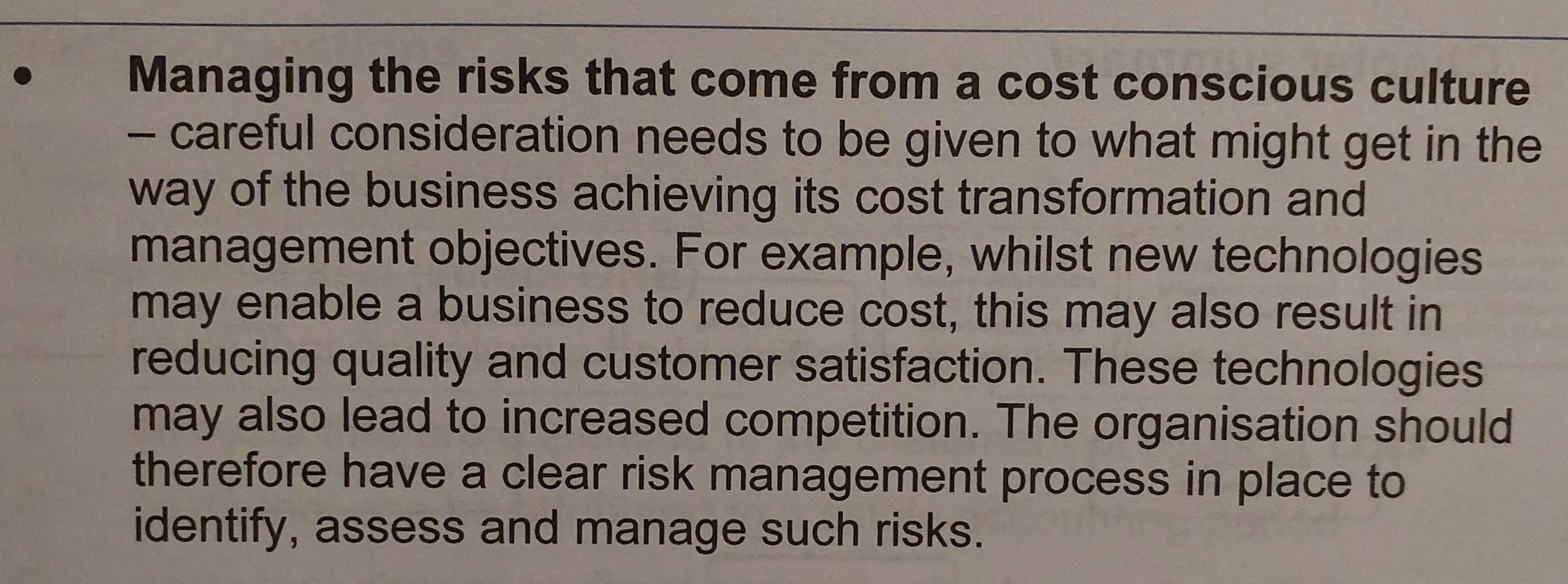
In the cost transformation model explain Managing the risks that come from a cost conscious culture
25
In the cost transformation model explain Connecting products with profitability
26
In the cost transformation model explain Maximising value from new products
27
In the cost transformation model explain Considering the environmental impact of products
28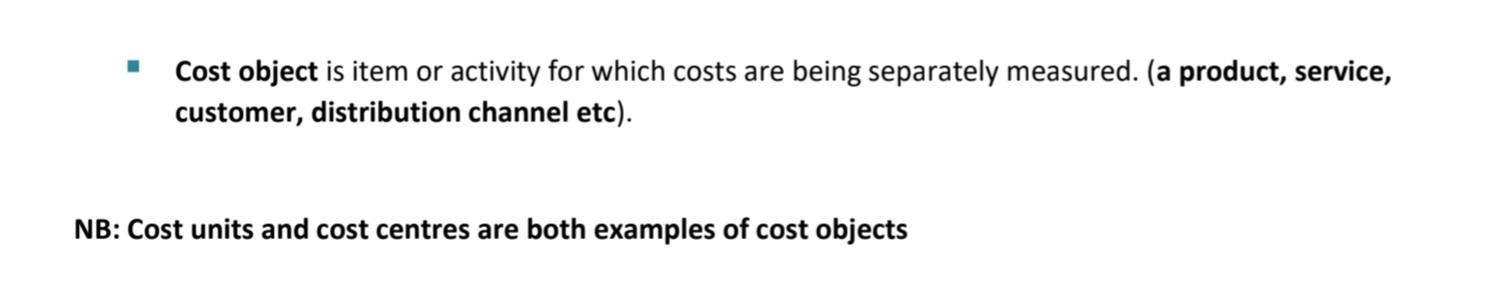
what is Cost Object
29
What is the purpose of management accounting (3)
30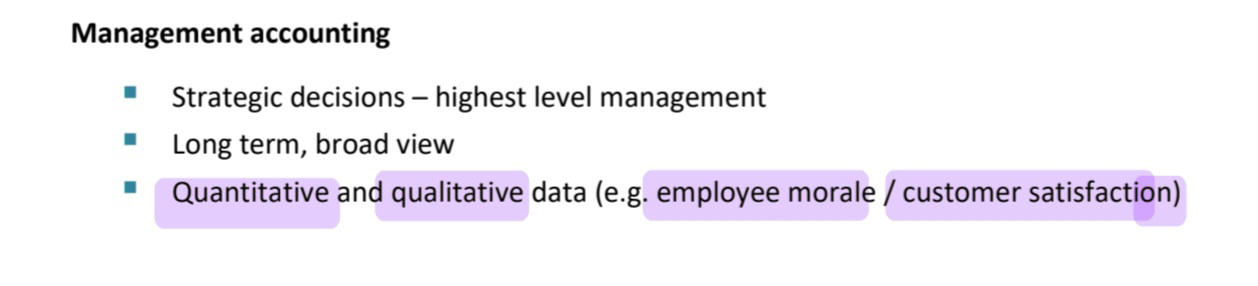
Give 3 characteristics of management accounting
31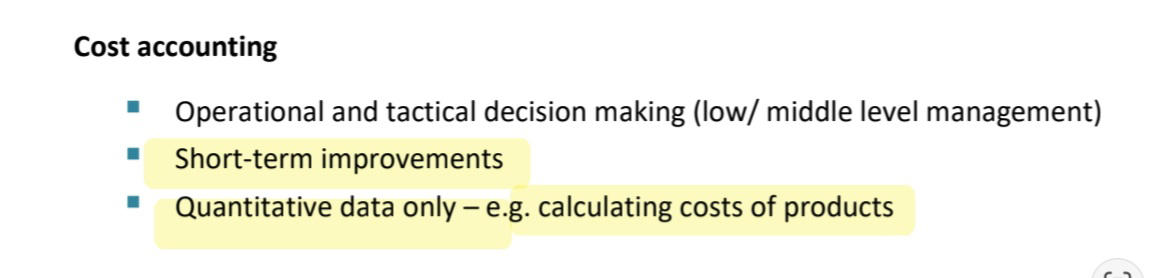
Give 3 characteristics of cost accounting
32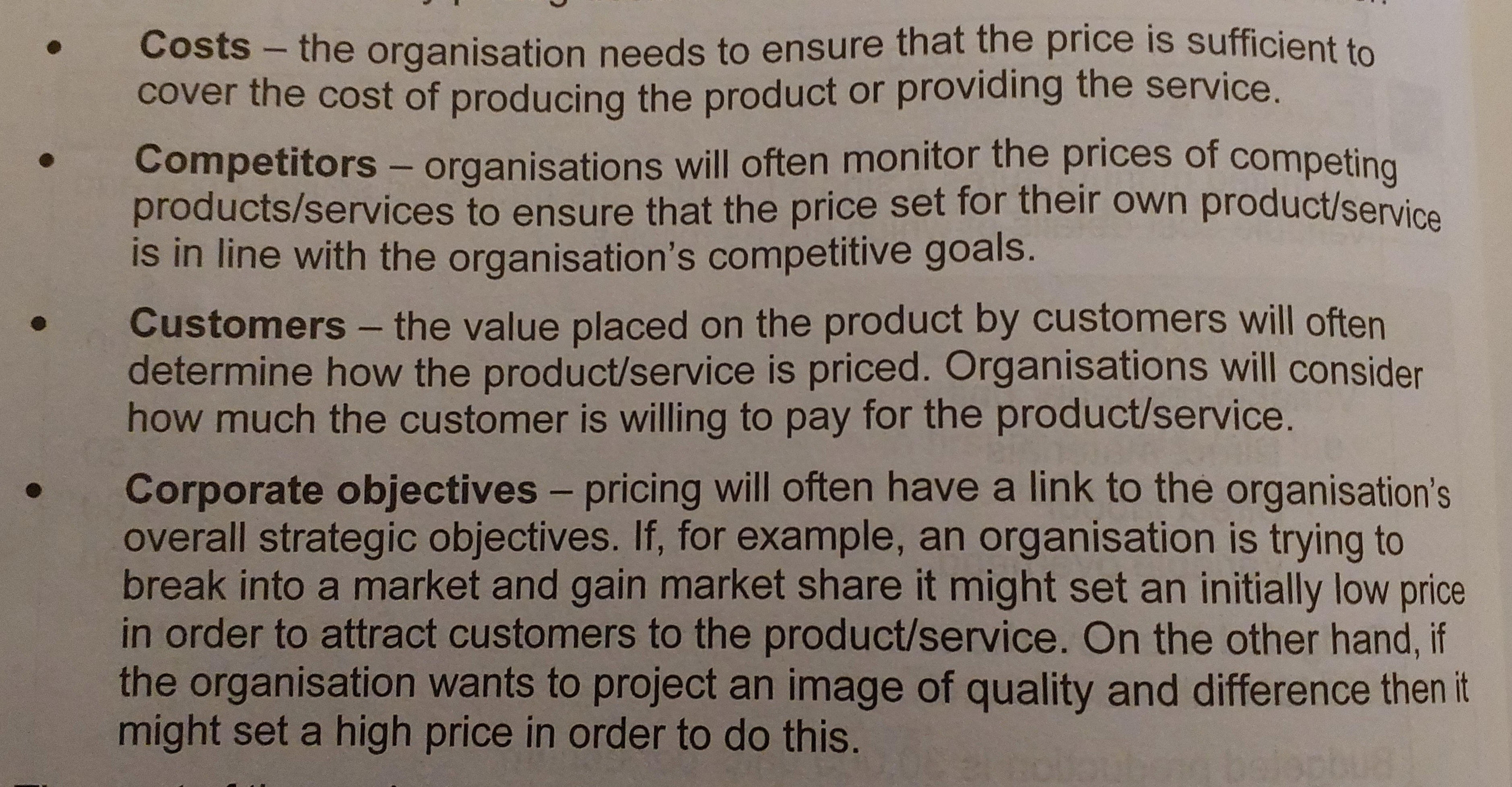
What are the 4 key factors to consider in any pricing decision?
33
What is the difference between full production cost and total cost
Full production cost will include the OAR for production overheads but total cost also includes non production overheads
34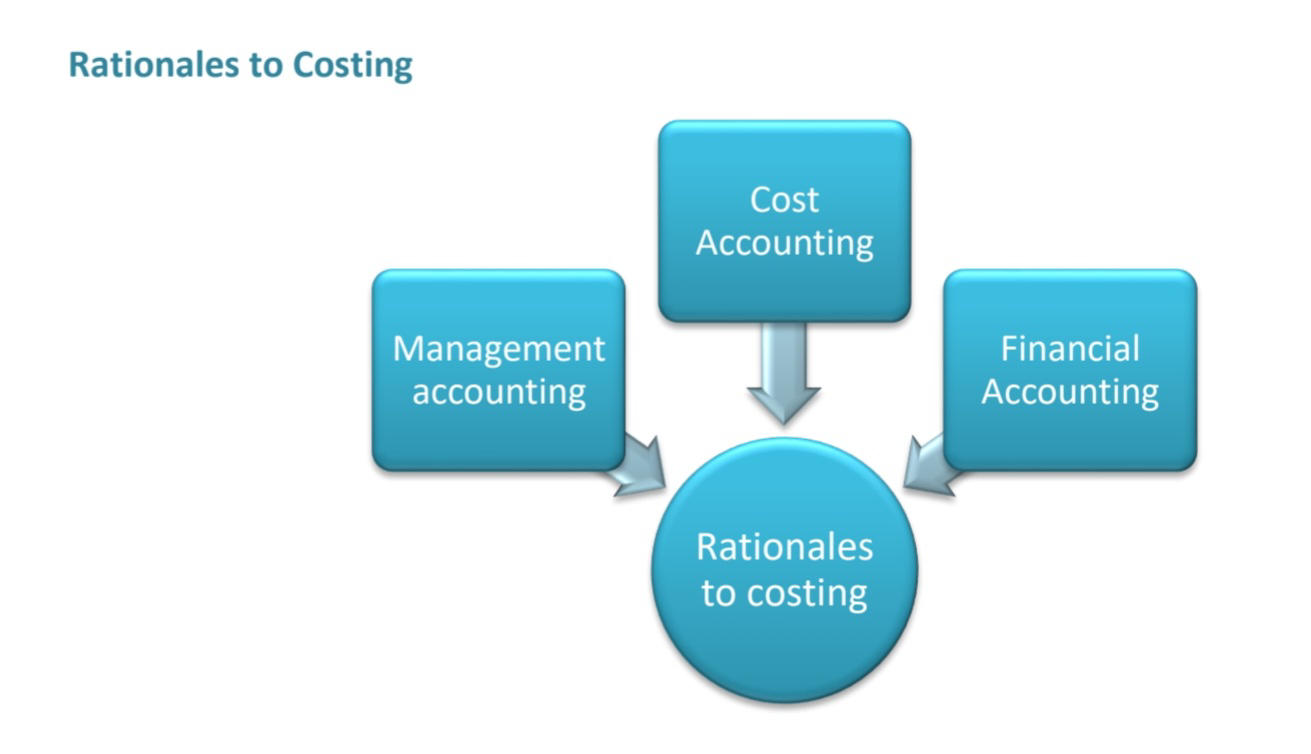
What are the 3 rationales to costing?
35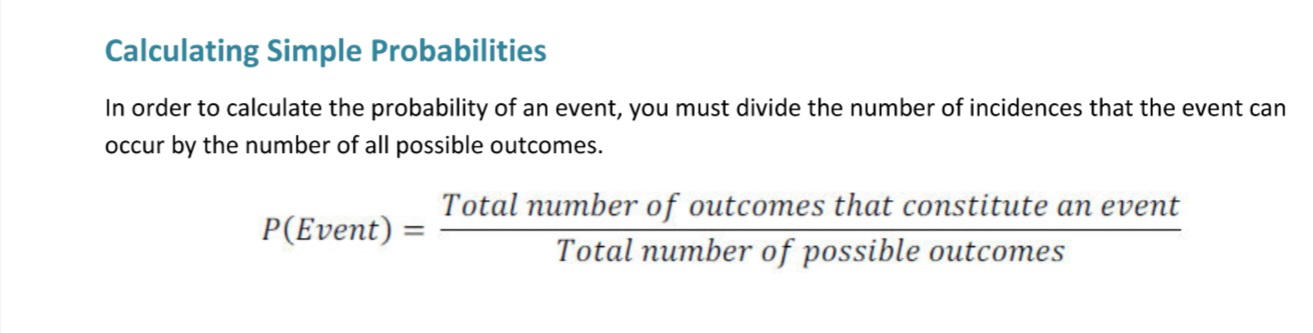
What is the formula for calculating simple probabilities
36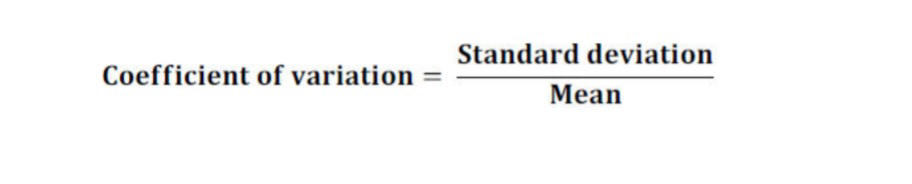
How do you calculate the coefficient of variation
37
in a formula what does this mean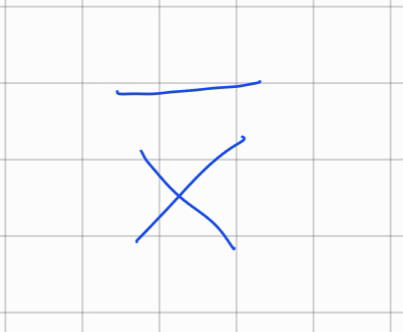
average of X
38
what are the purposes of a budget?
Coordination
Responsibility
Utilisation
Motivation
Planning
Evaluation
Telling
Responsibility
Utilisation
Motivation
Planning
Evaluation
Telling
39
what is the difference between marginal costing and absorption costing
marginal costing treats all fixed costs as period costs, absorption costs will absorb the fixed costs per unit.
40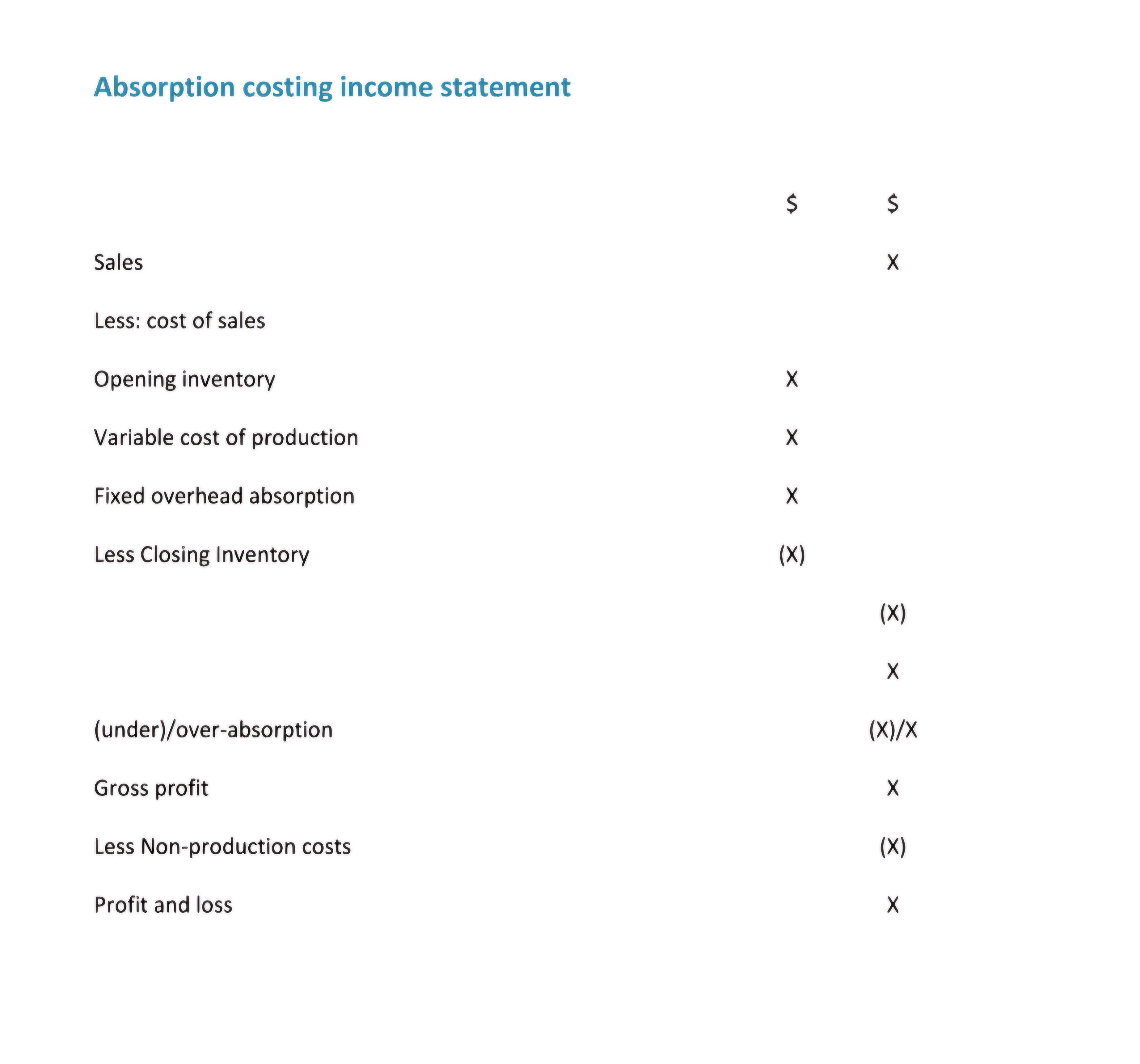
what is the pro forma for an absorption costing income statement
41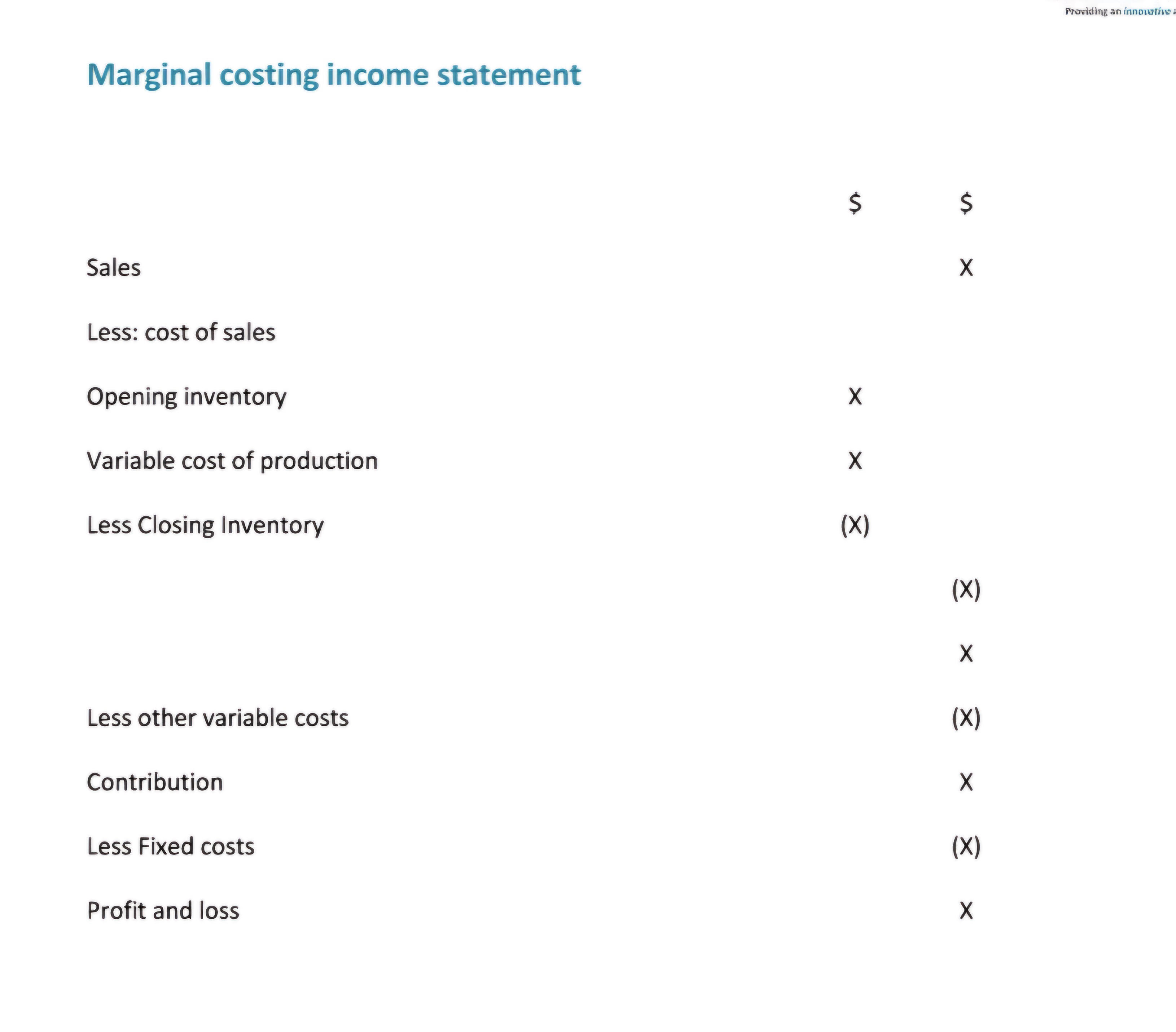
what is the proforma for a marginal costing income statement
42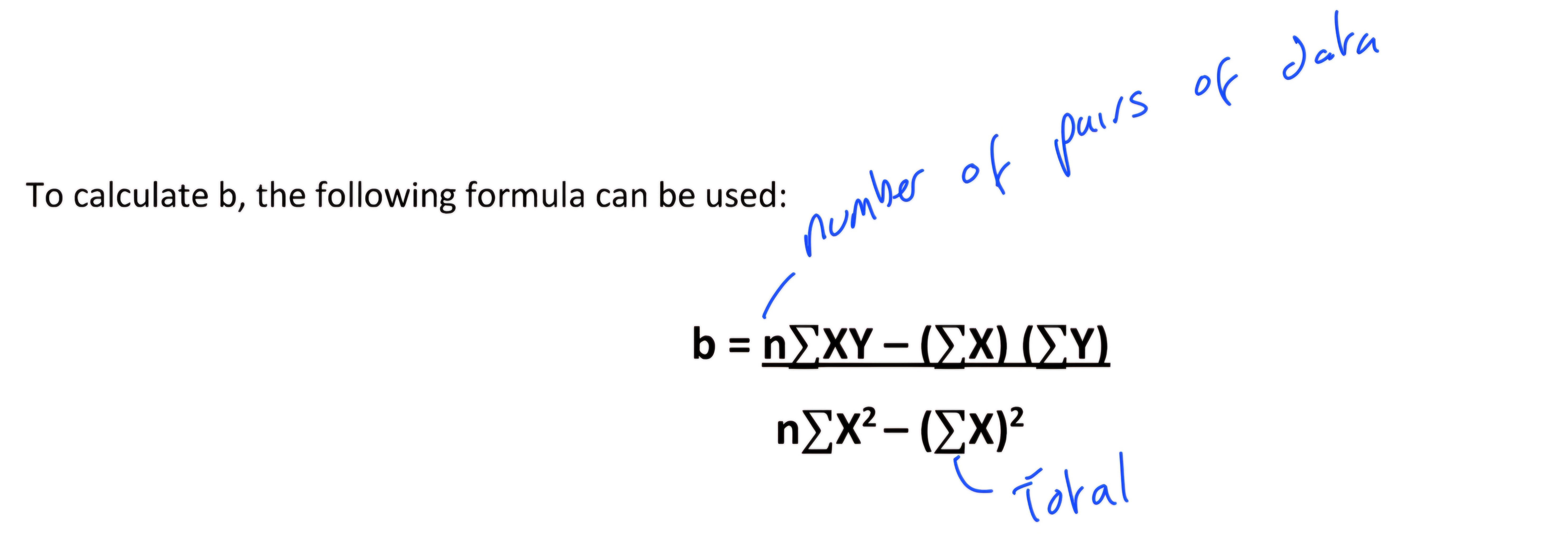
in the linear regression straight line formula how can you calculate b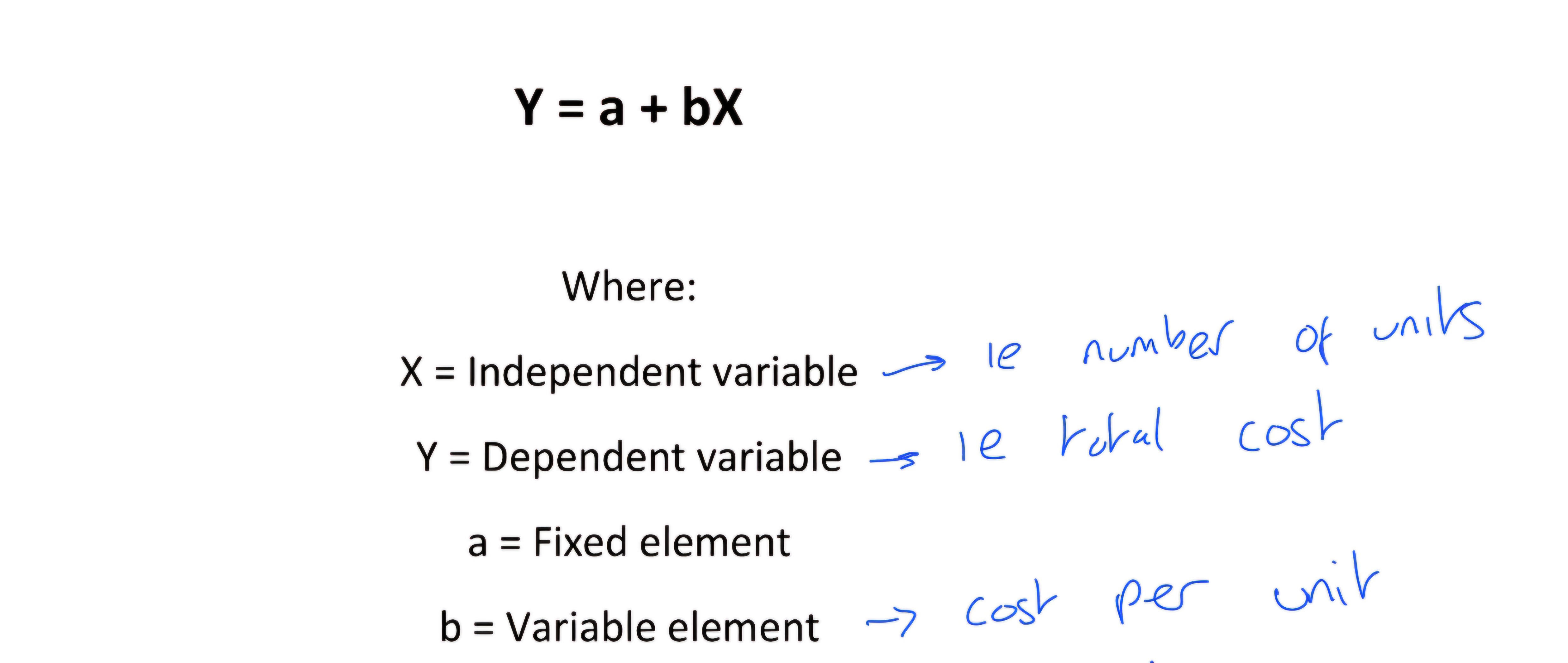
43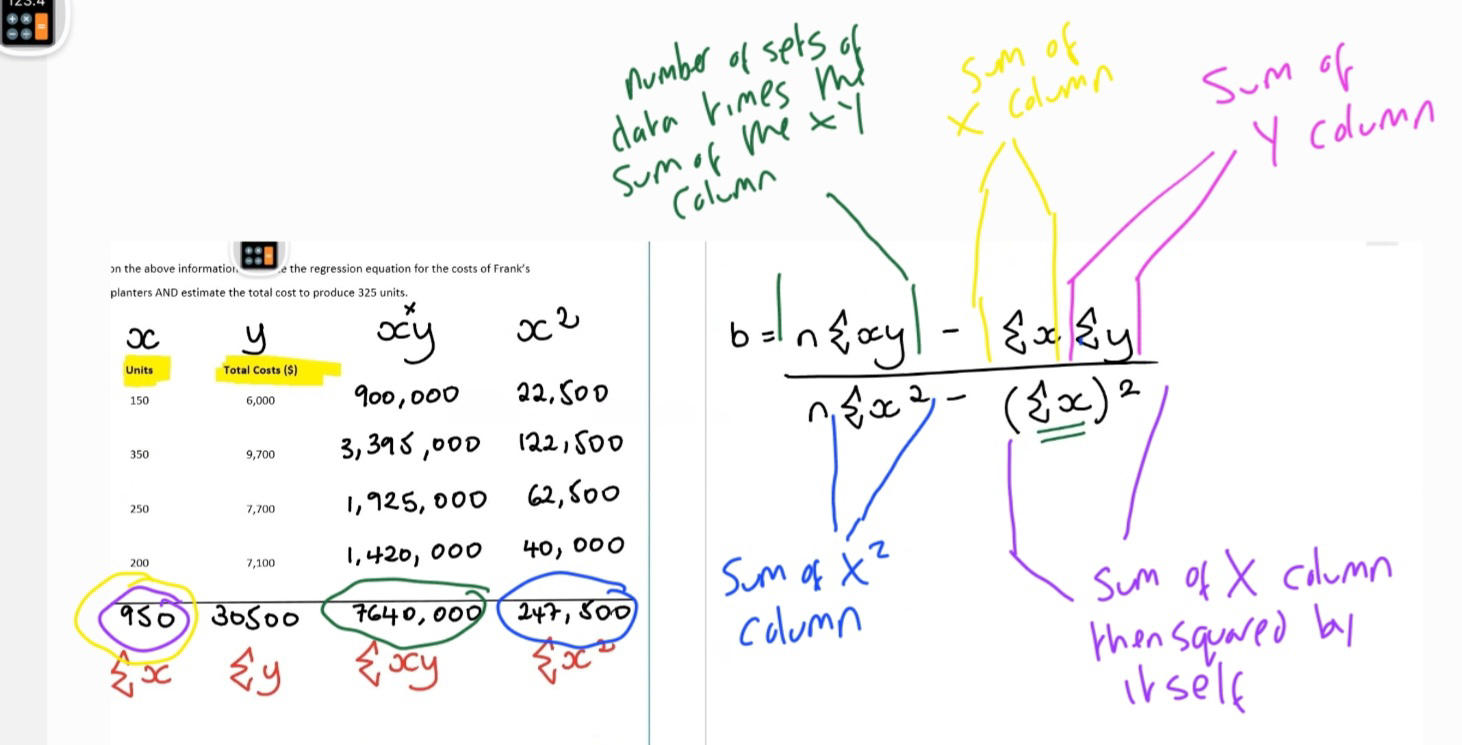
In linear regression how can you calculate B ie variable cost per unit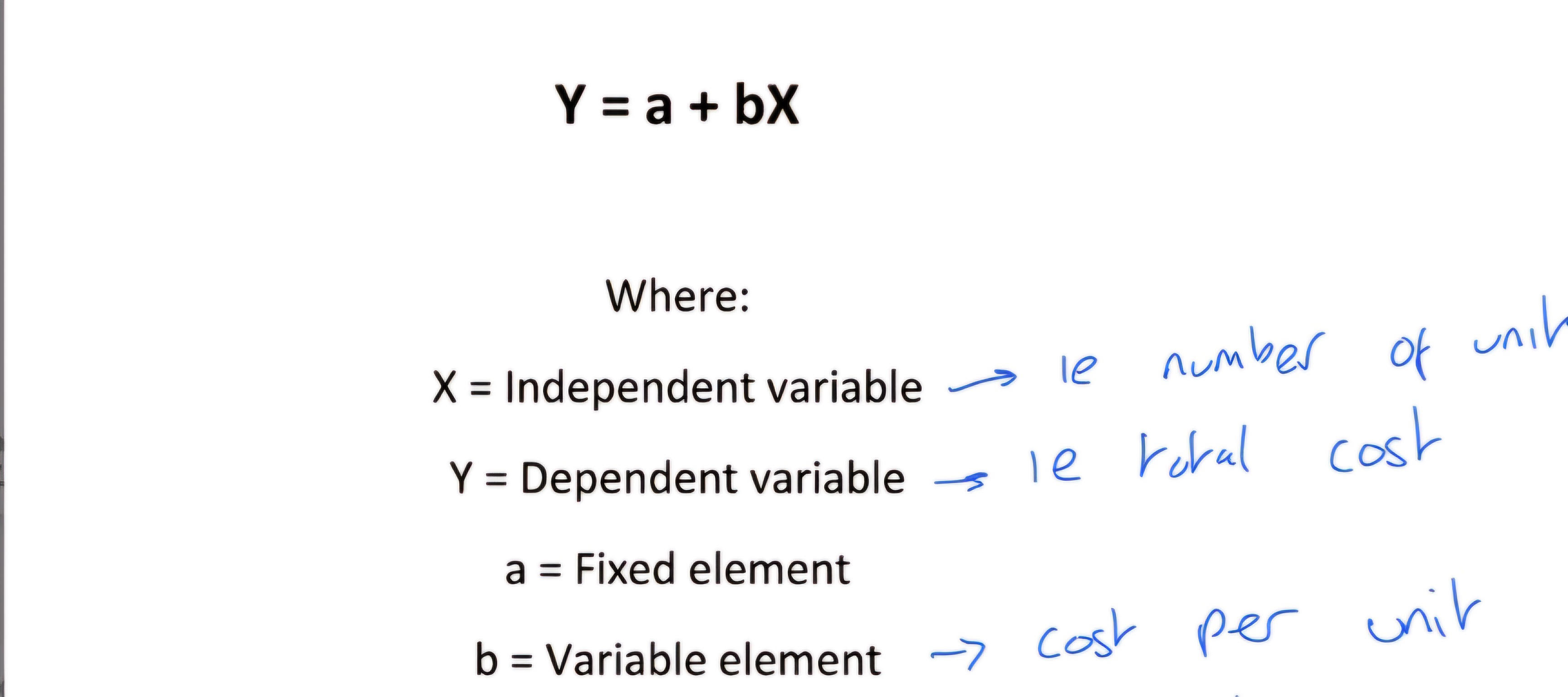
44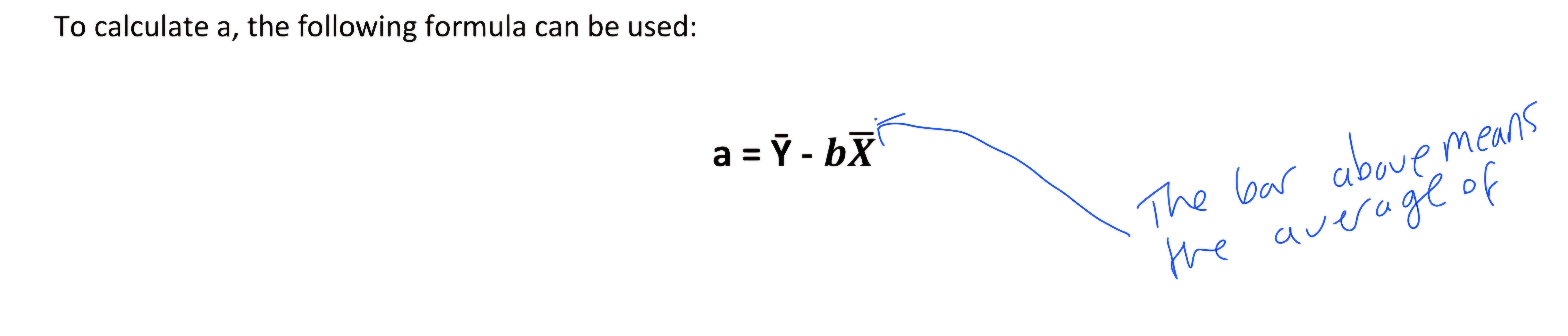
in the linear regression straight line formula how can you calculate a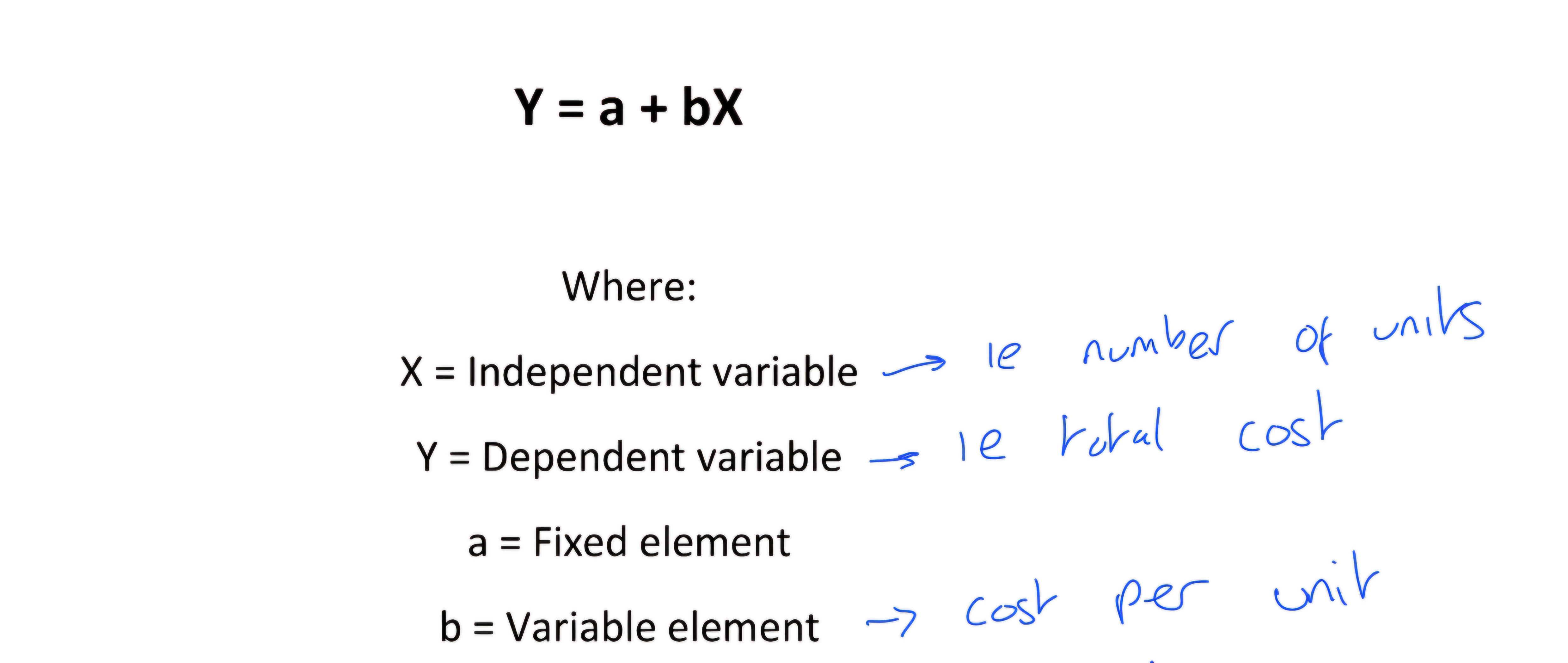
45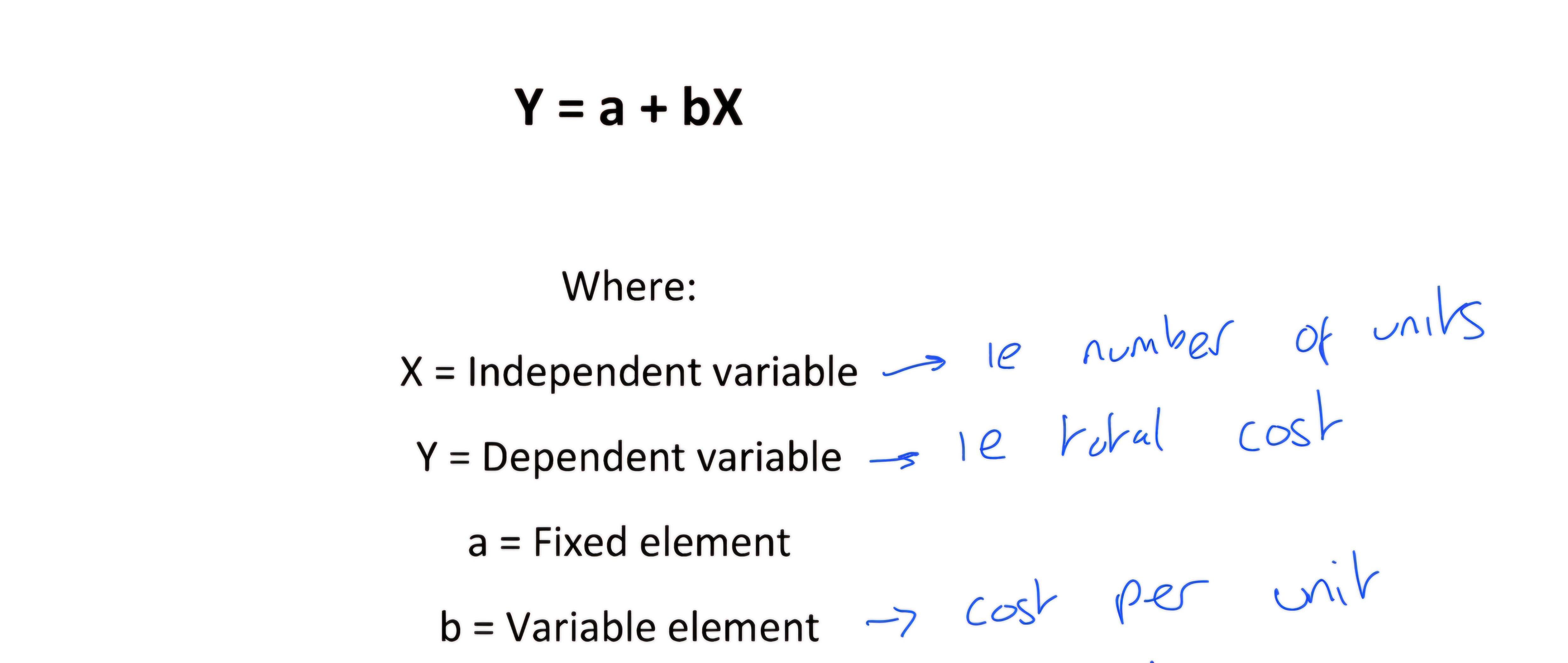
In linear regression what is the formula for calculating the straight line
46
in a formula what does sigma mean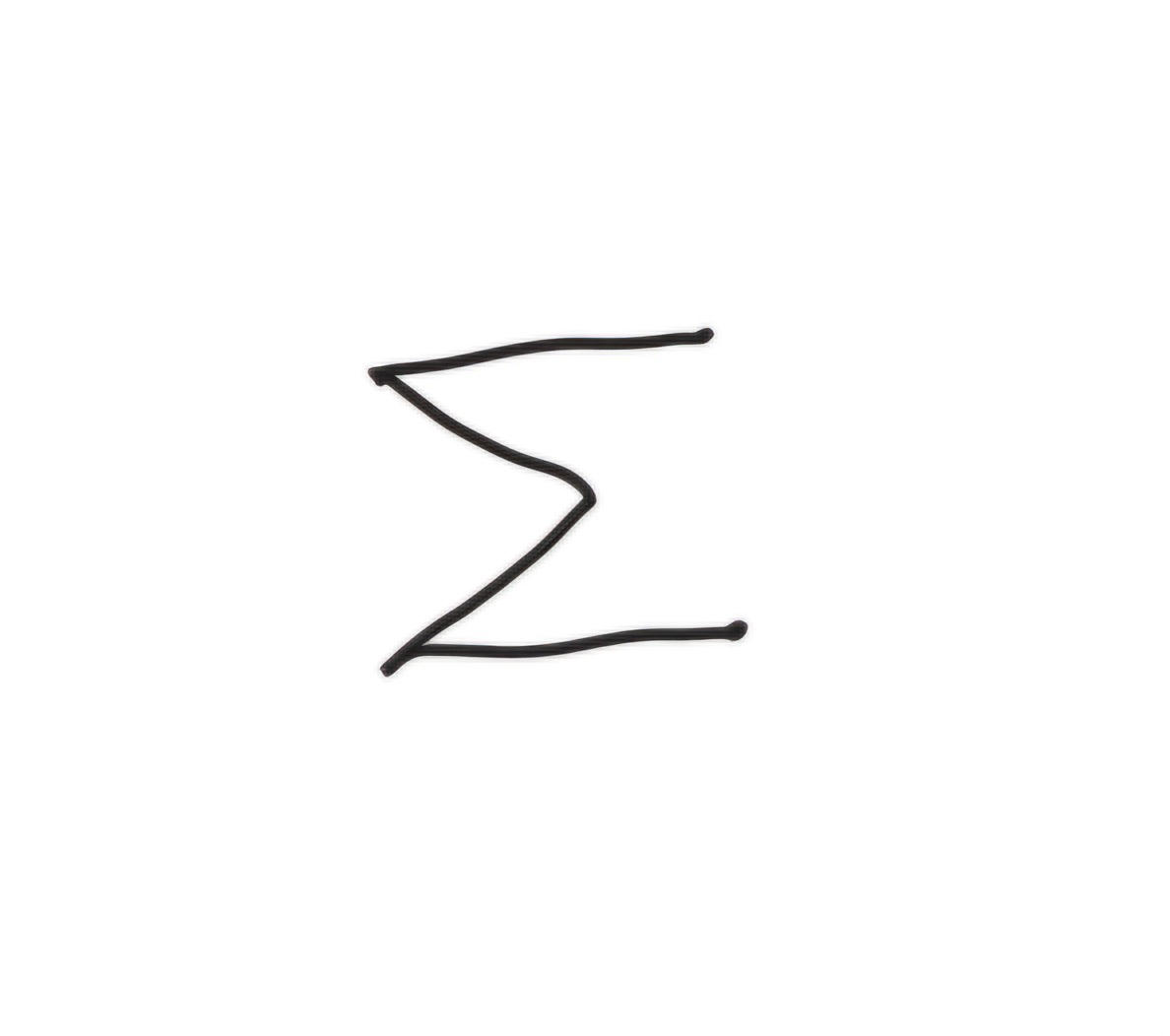
the sum of
47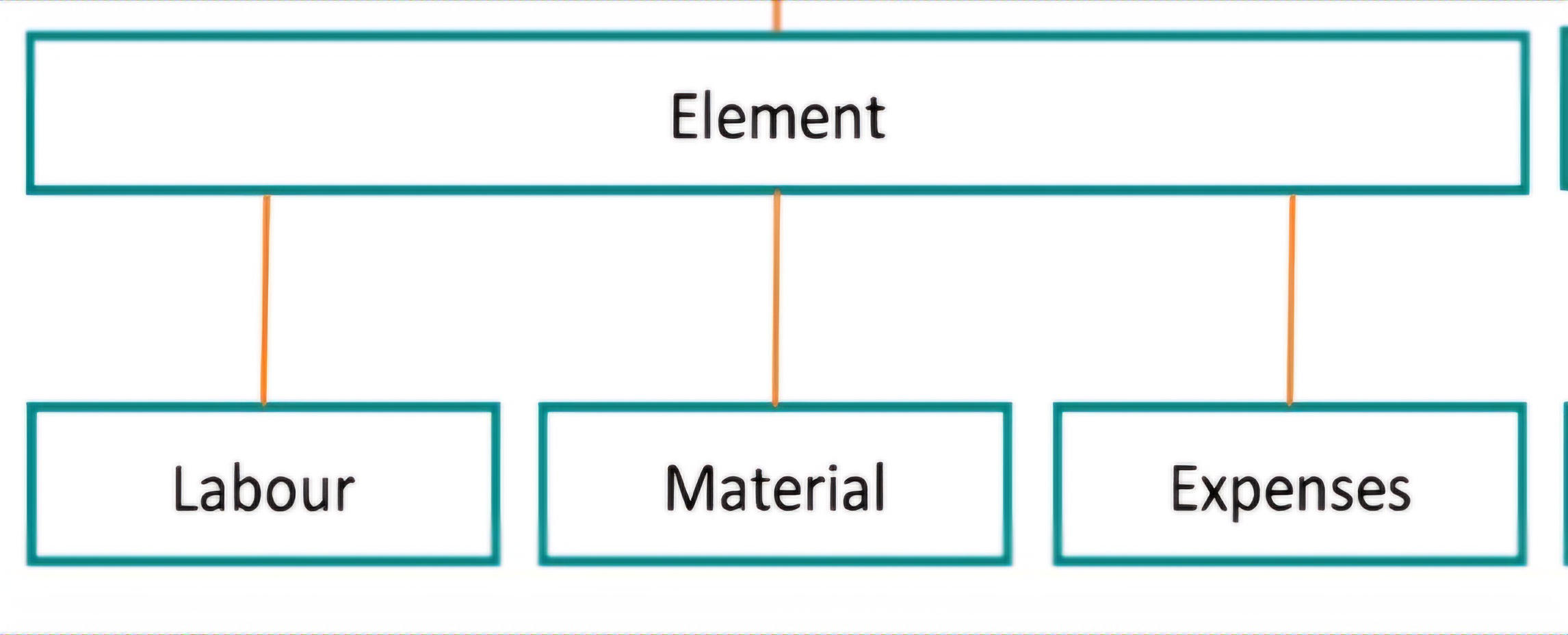
Name the 3 elements of costs
48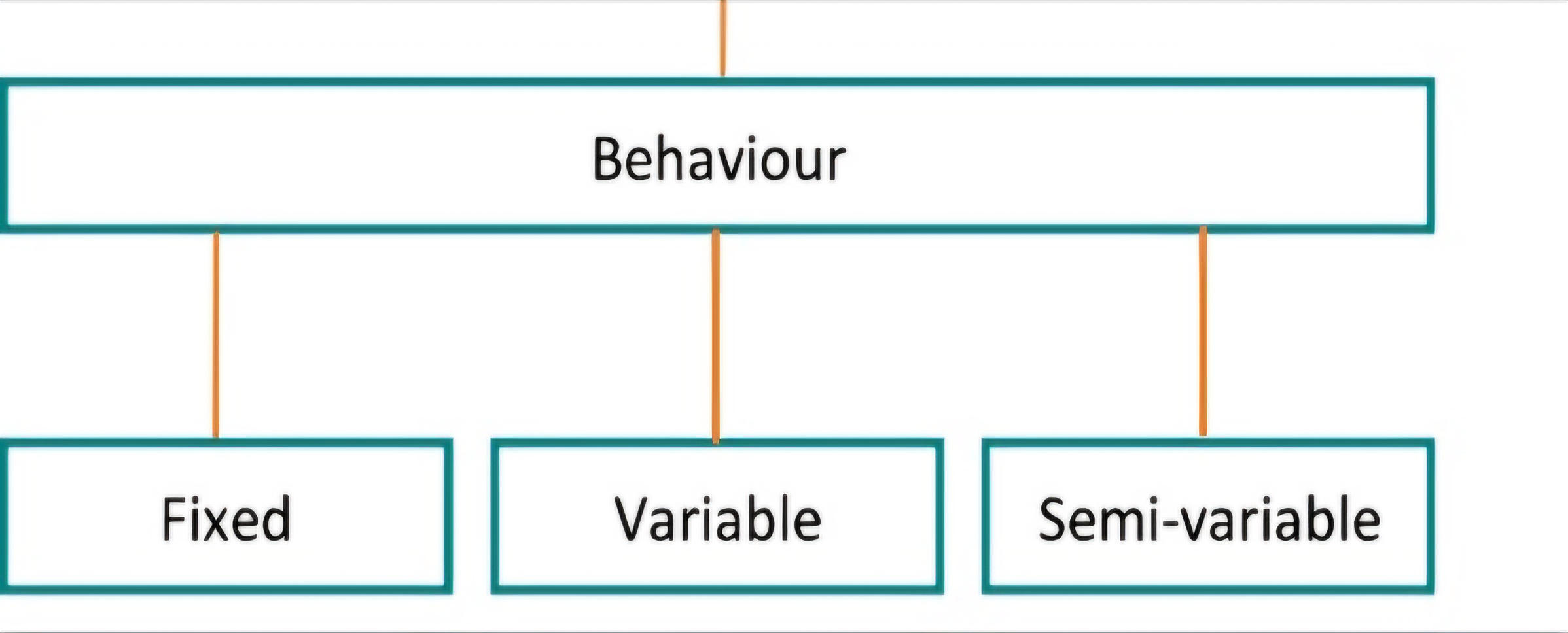
Name the 3 behaviours costs
49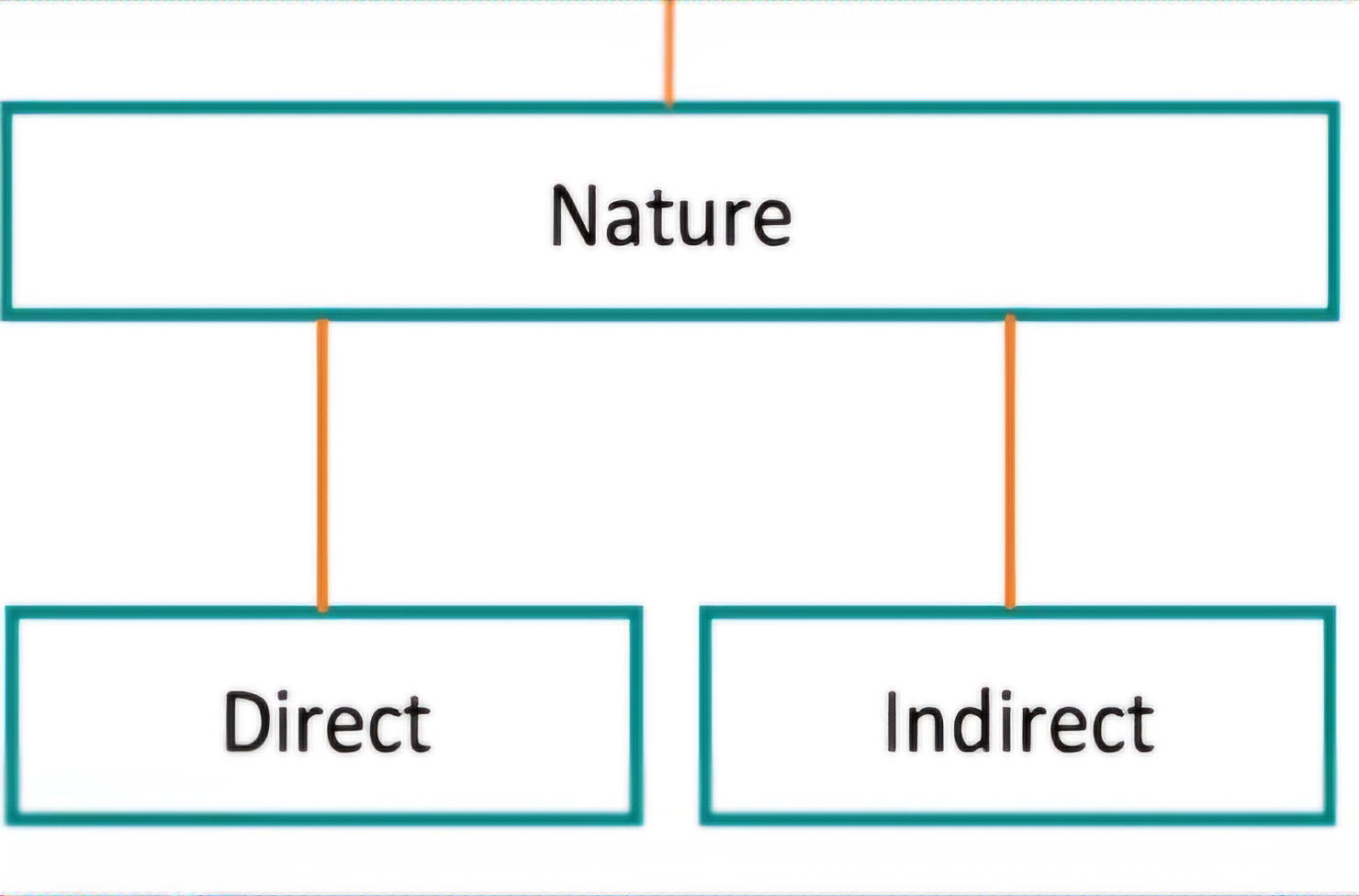
Name the 2 nature's of costs
50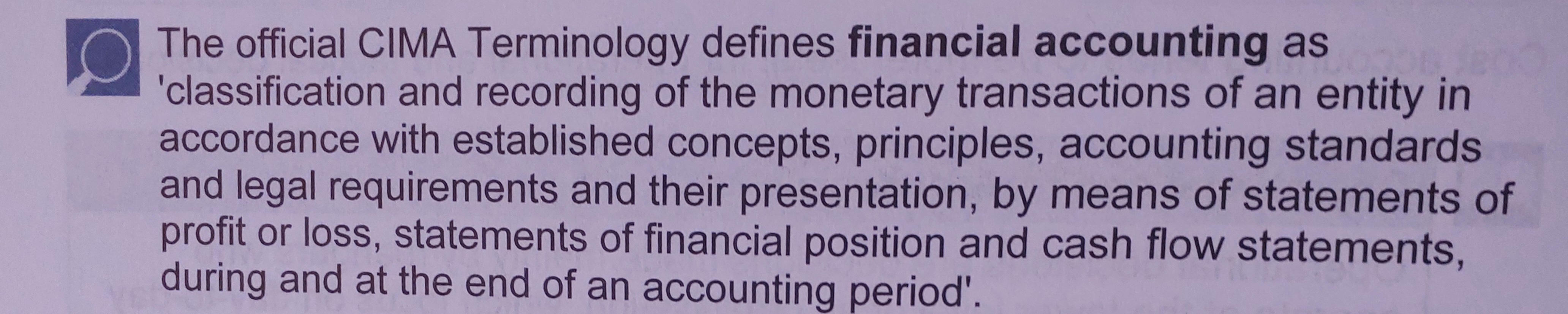
How does CIMA define Financial Accounting
51
Define Overhead Allocation
52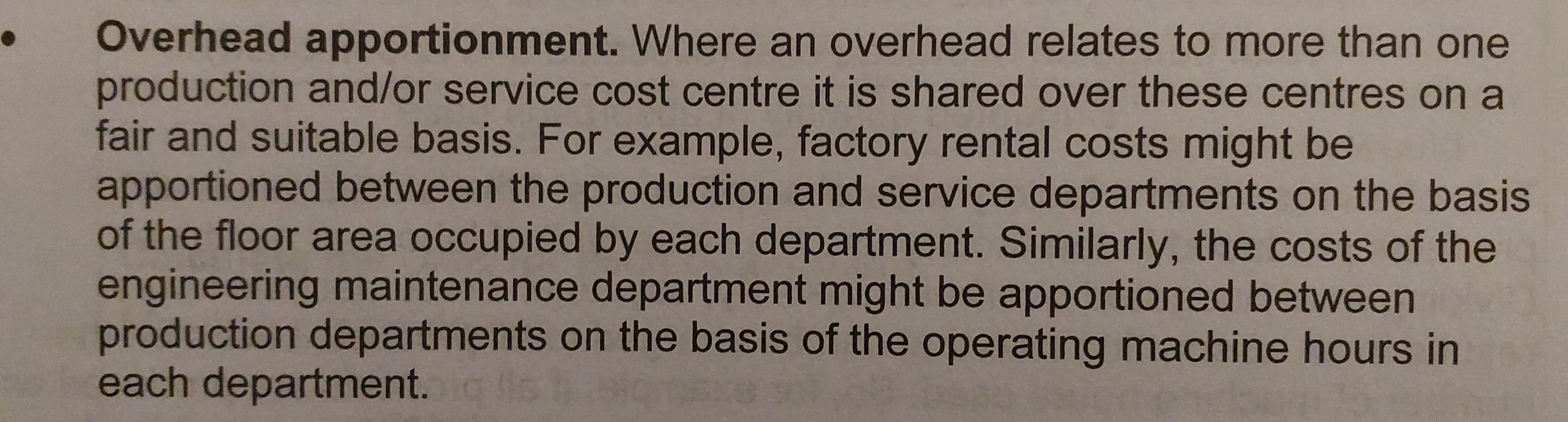
Define Overhead Apportionment
53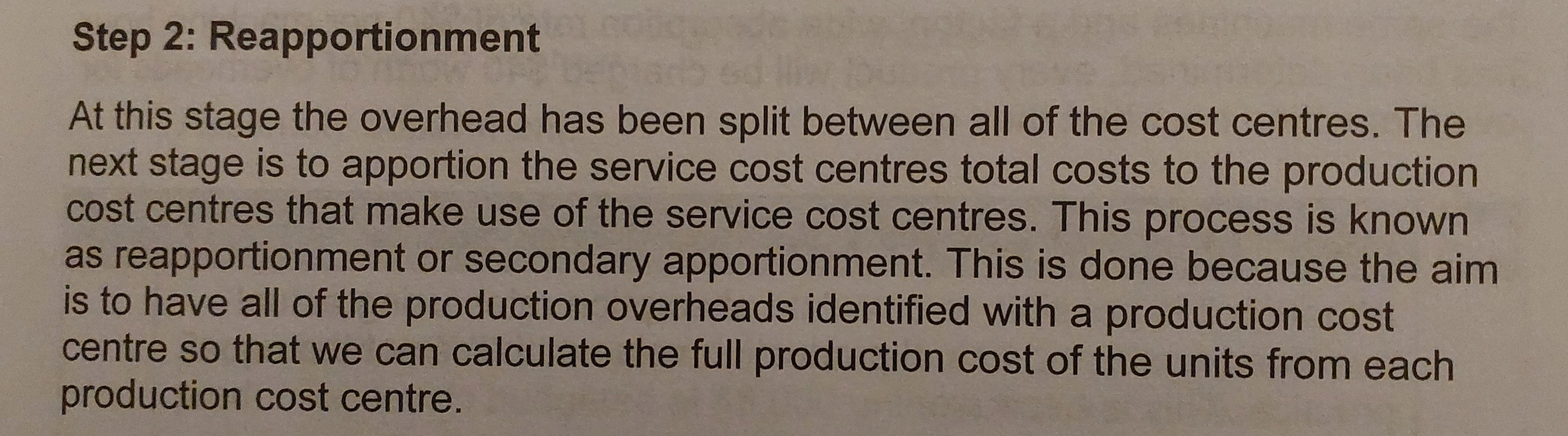
Define Reapportionment
54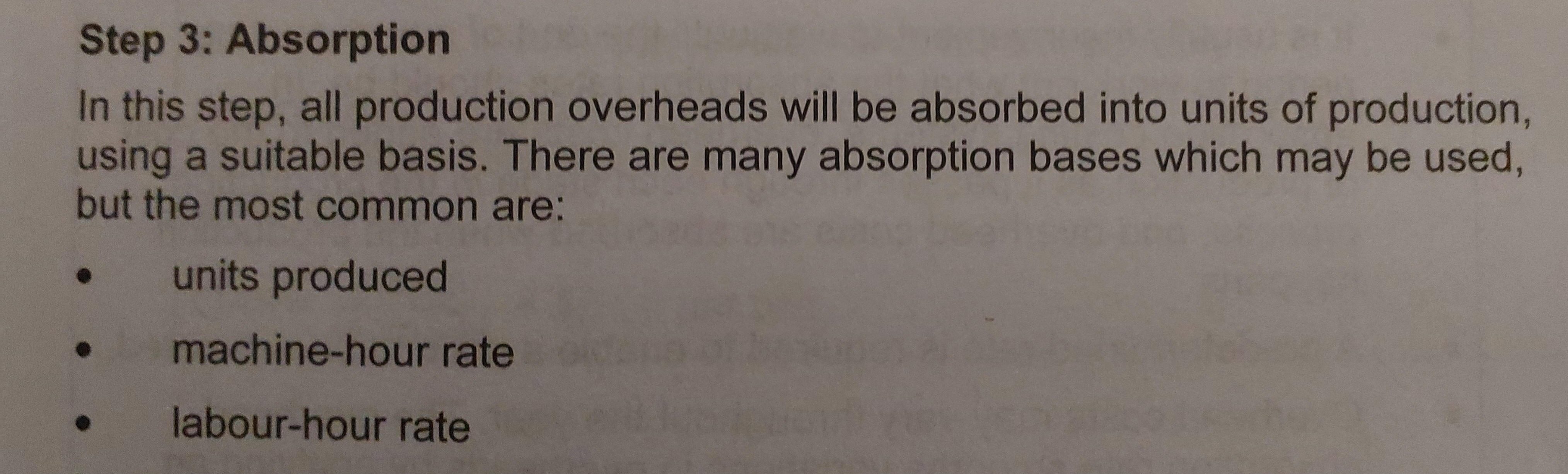
DefineAbsorption
55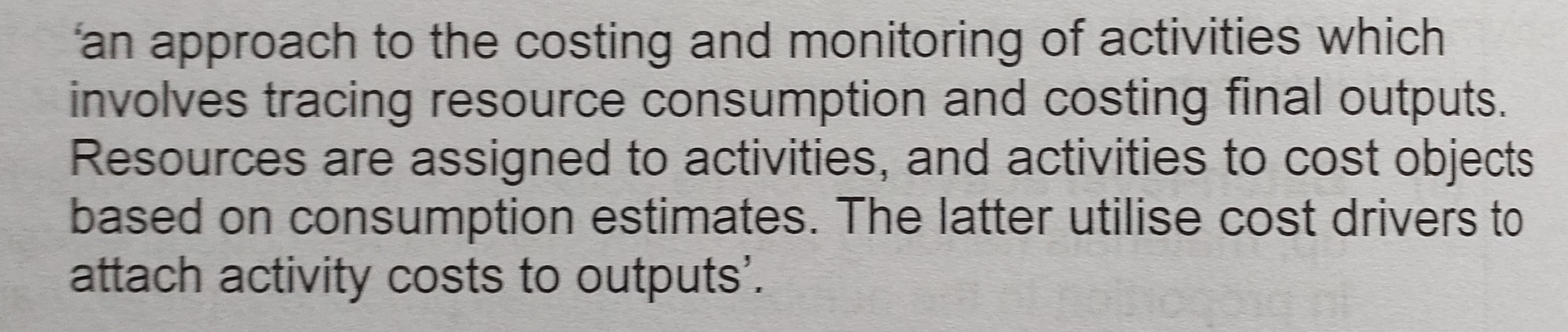
What is activity based costing?
56
What is a cost pool
An activity that consumes resources and for which overhead costs are identified and allocated
57
What is a cost driver
A unit of activity that consumes resources, a factor influencing the level of cost
58
When is activity based costing relevant? (3)
Indirect costs are high relative to direct costs
Products or services are complex, tailored to customer needs
Some products sold in large numbers, but others are sold in small numbers
Products or services are complex, tailored to customer needs
Some products sold in large numbers, but others are sold in small numbers
59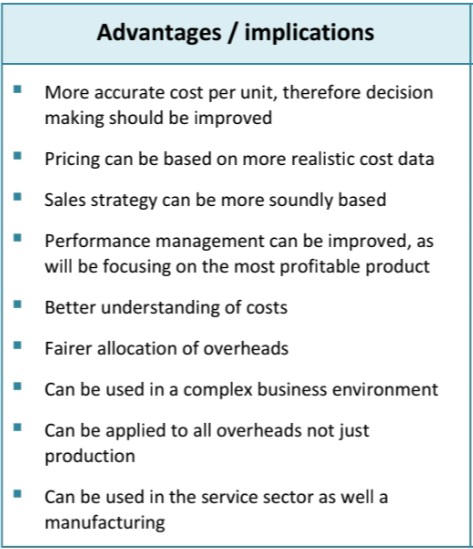
What are the advantages of activity based costing? (9)
60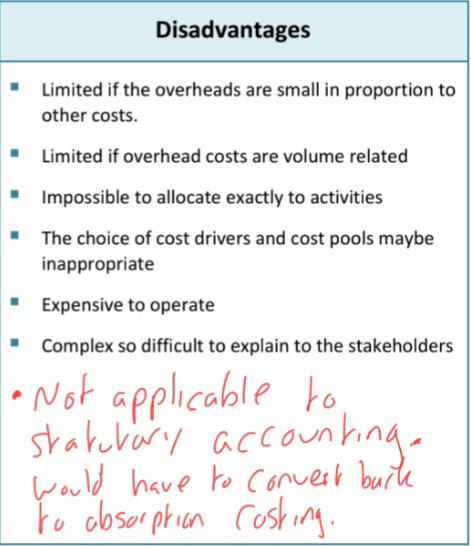
What are the disadvantages of activity based costing? (7)
61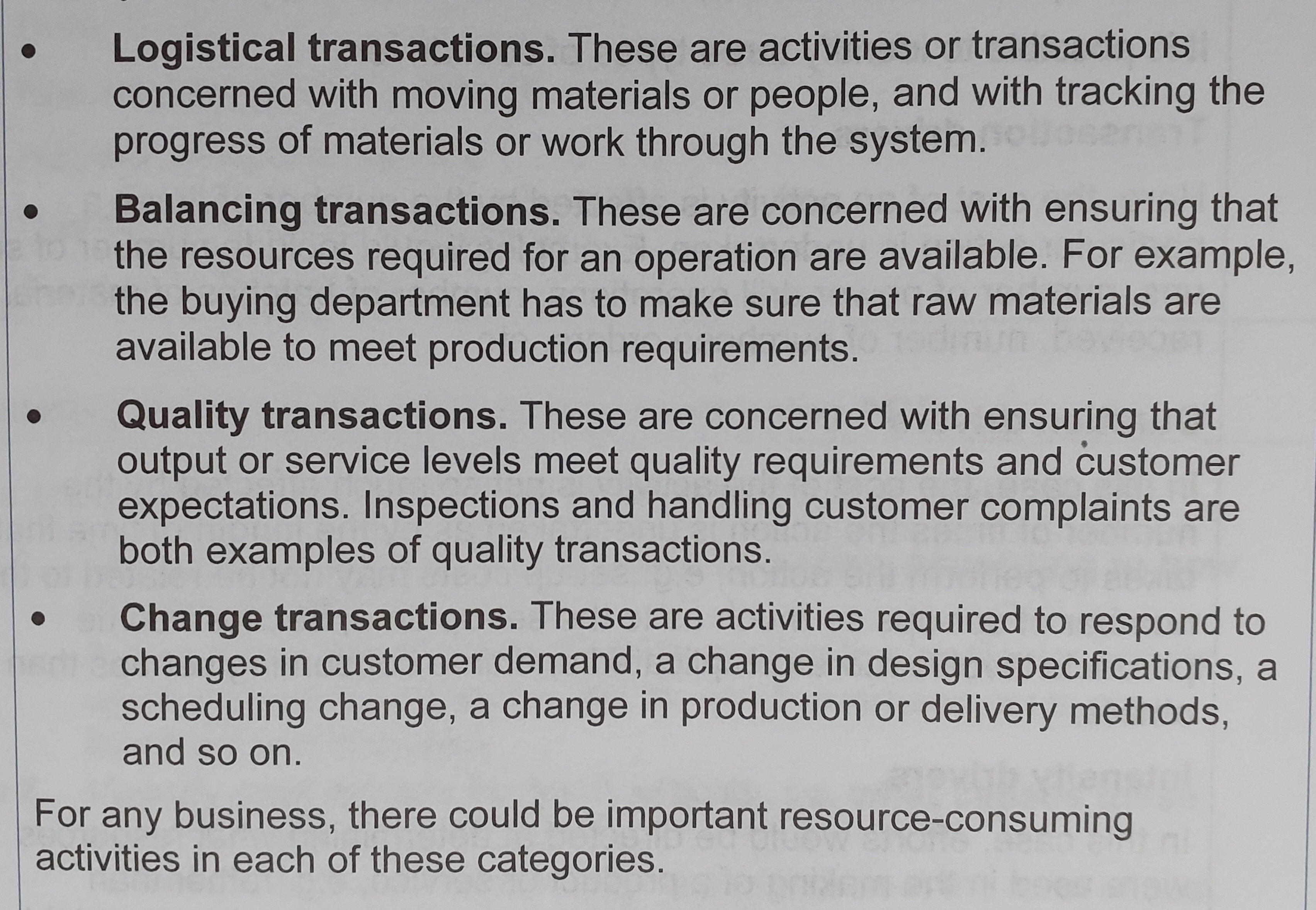
In activity based costing what are the 4 main categories of activity or transaction?
62
In activity based costing what 2 things should a cost driver be?
Relevant
Easy to measure
Easy to measure
63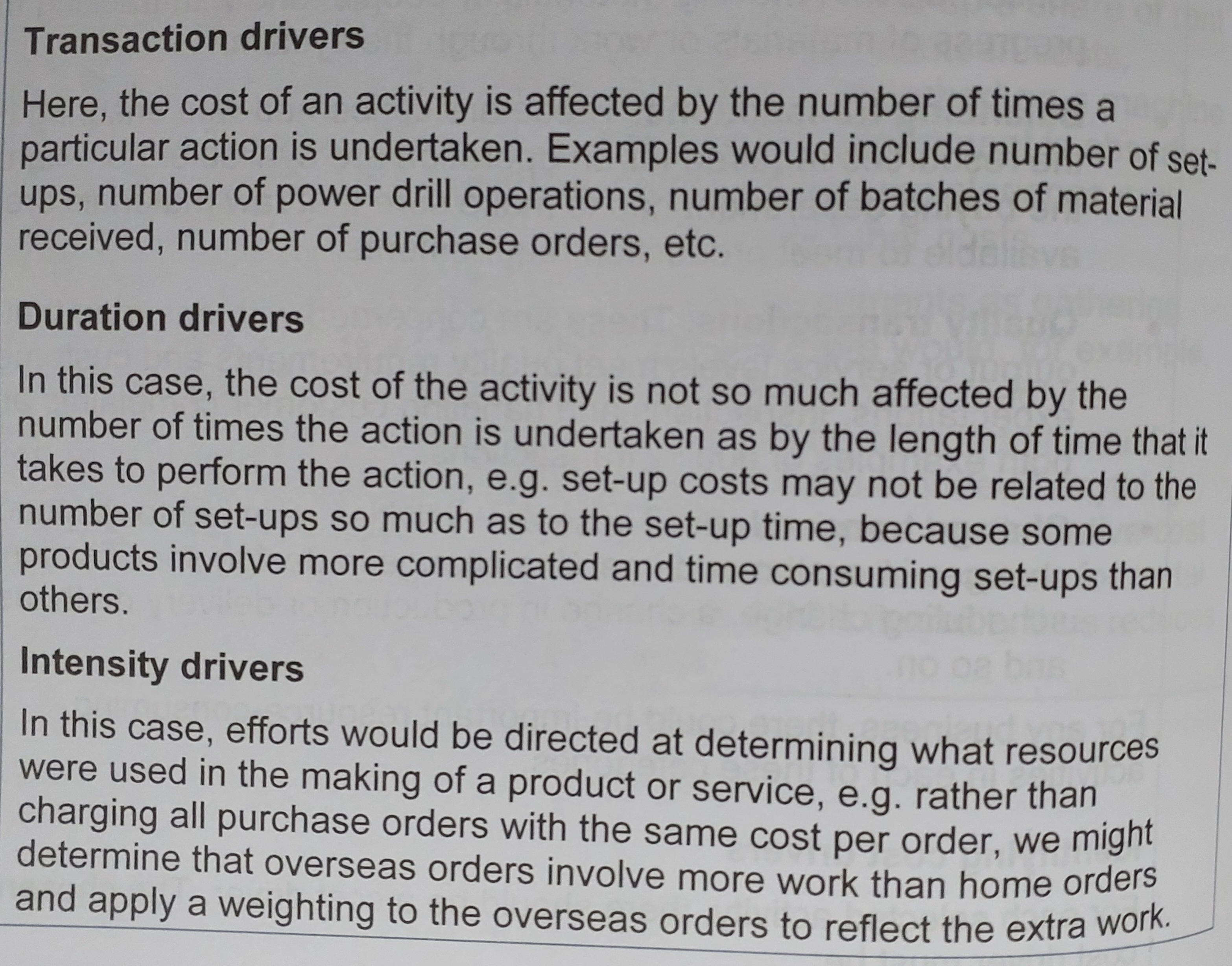
What are the 3 types of cost drivers
64
What are the 5 steps to calculating the full cost per unit using ABC (activity based costing)
1) Group production overheads into activities, according to how they are driven
2) Identify cost drivers for each activity, i.e what causes these activity costs to be incurred.
3) Calculate a cost driver rate for each activity
4) Absorb the activity costs into the product
5) Calculate the full production cost and/or the profit or loss
2) Identify cost drivers for each activity, i.e what causes these activity costs to be incurred.
3) Calculate a cost driver rate for each activity
4) Absorb the activity costs into the product
5) Calculate the full production cost and/or the profit or loss
65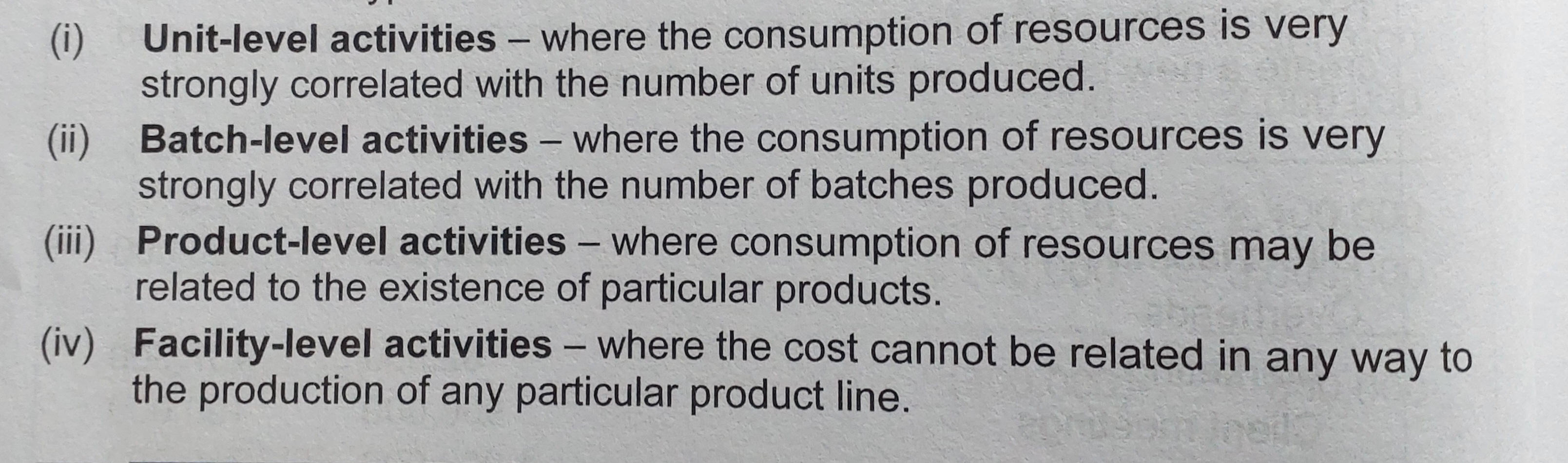
In activity based costing, overheads can be divided into what 4 types of activities?
66
When allocating joint costs between joint products what 3 measurement bases can be used?
Physical measurement
Market value measurement
Net realisable value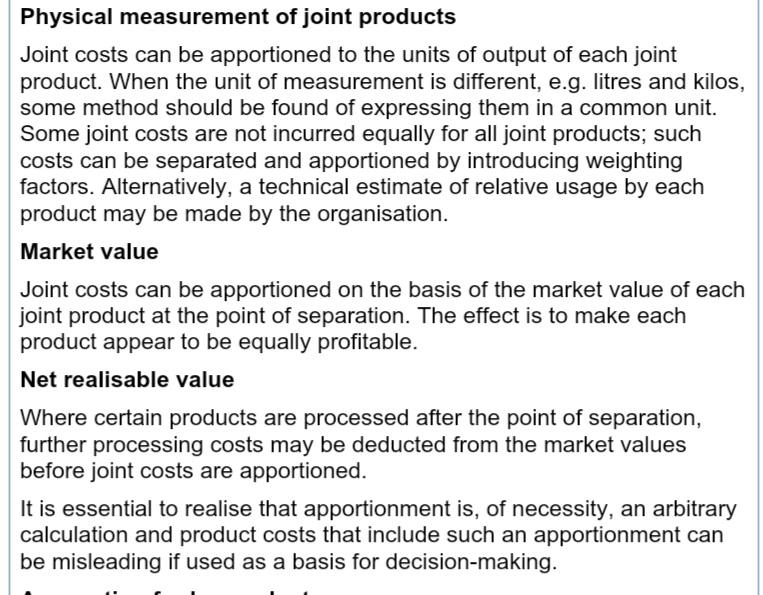
Market value measurement
Net realisable value
67
What are Joint products
68
What are By products
69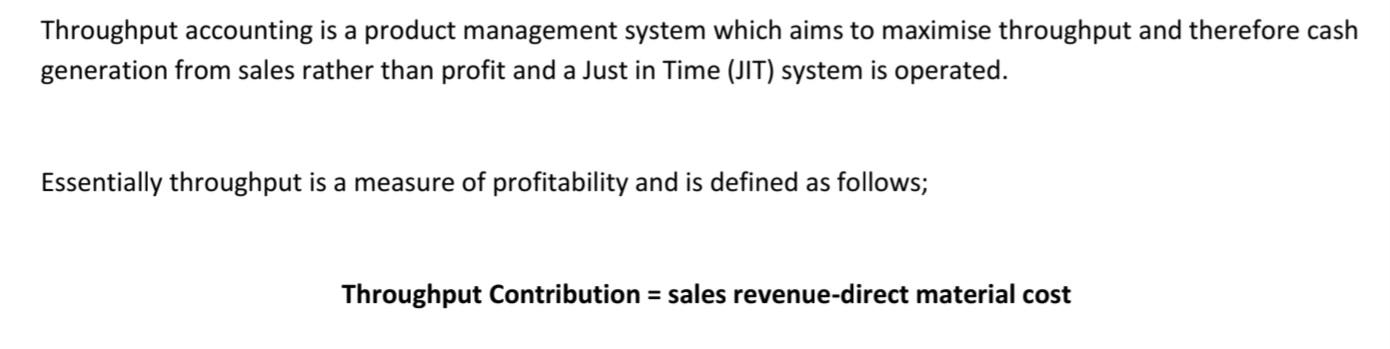
What is throughput accounting?
70
In throughput accounting what can be included in the cost of sales?
Materials cost ONLY! Labour and expenses are considered fixed costs (Still need too do opening Inv plus purchases less closing inventory for cost of sales)
71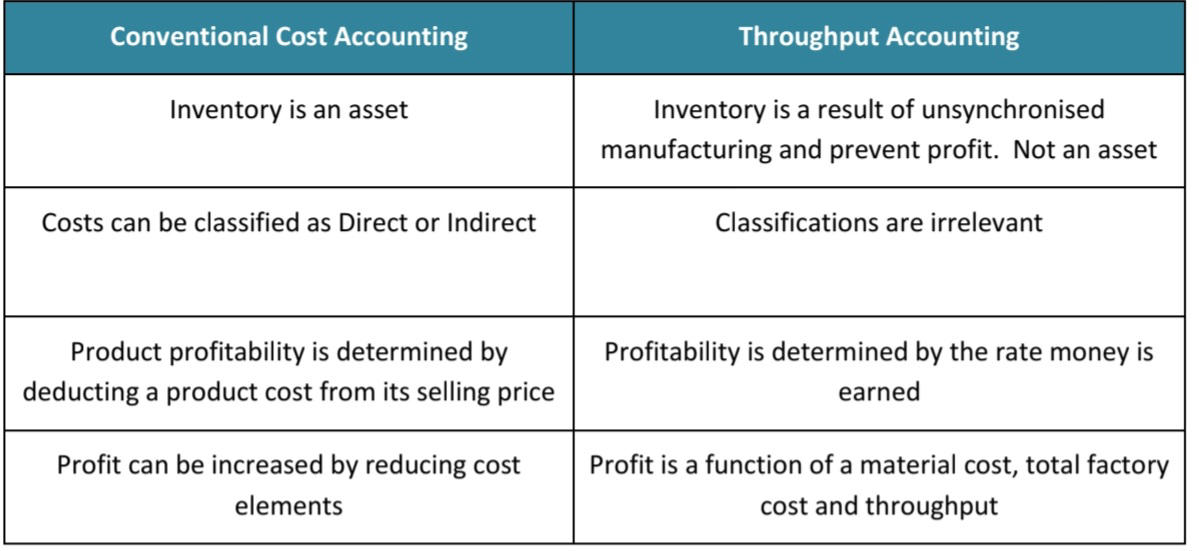
What are the differences between conventional cost accounting and throughput accounting?
72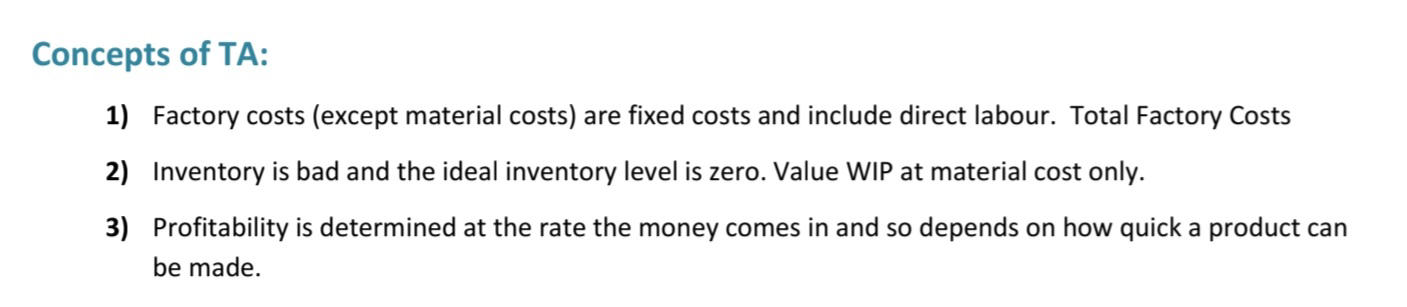
What are the concepts of throughput accounting? (3)
73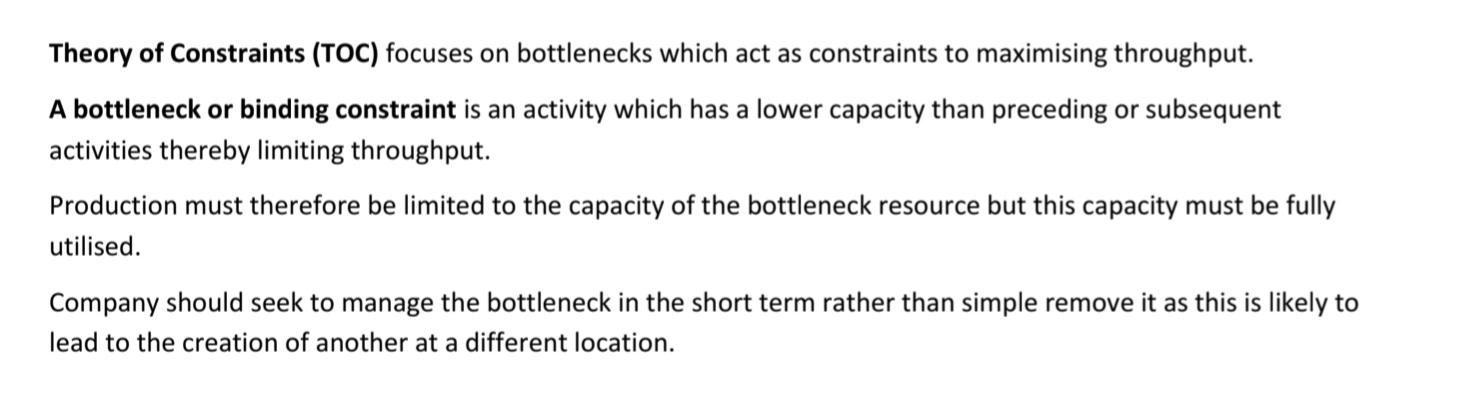
What is the Theory of constraints (TOC)
74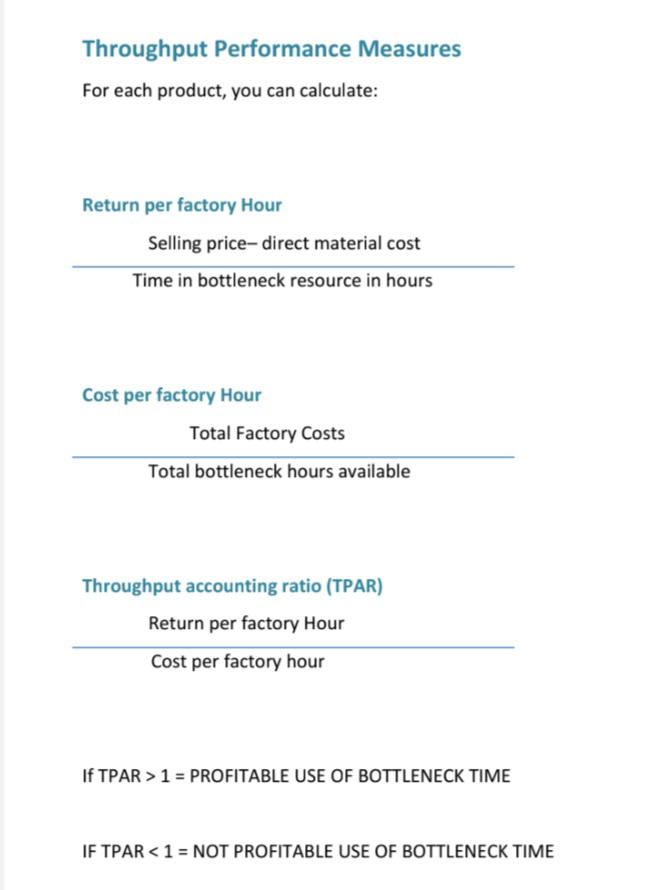
What calculations can be used as part of Throughput performance measures
75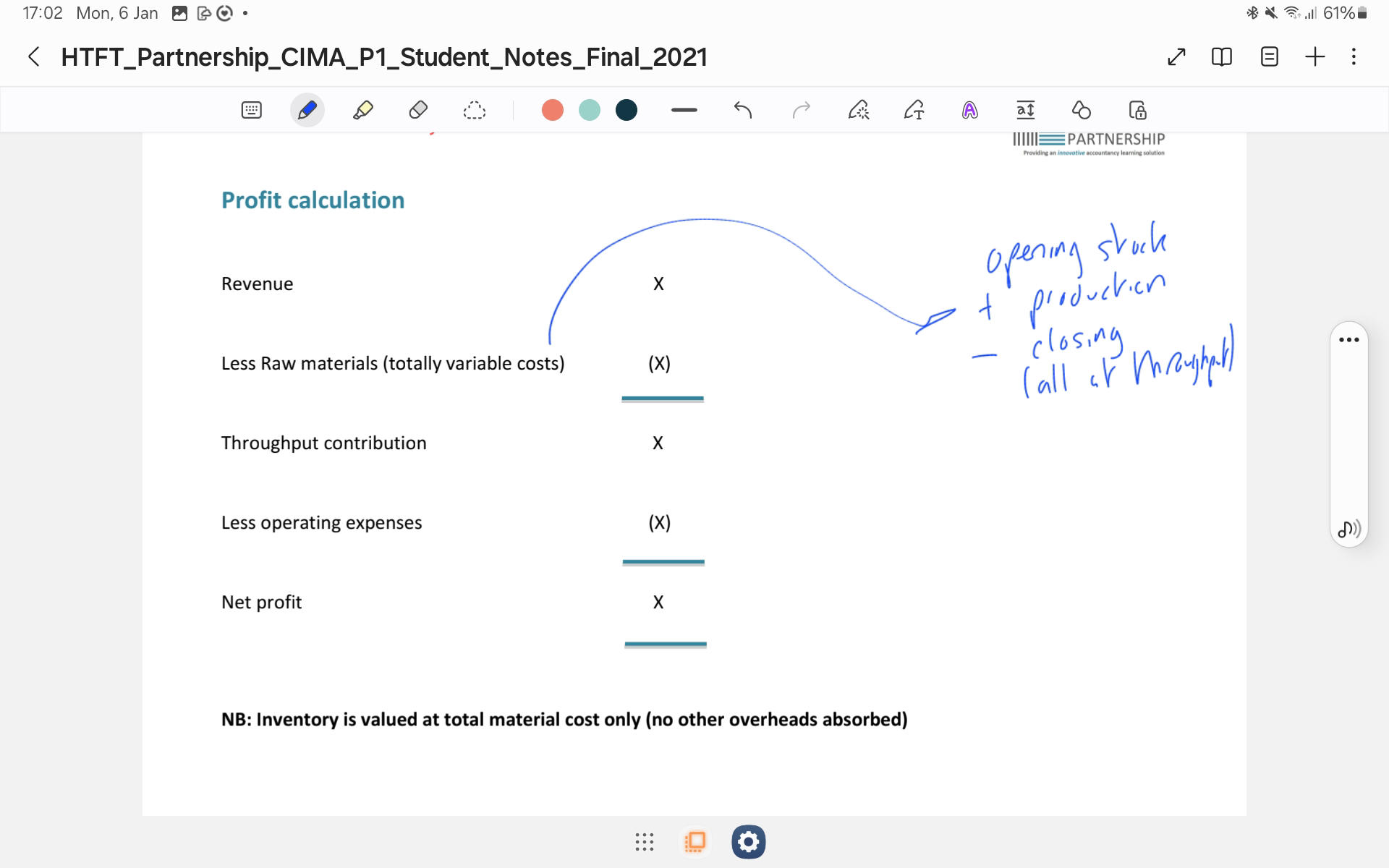
What is the pro forma for calculating throughput accounting profit?
76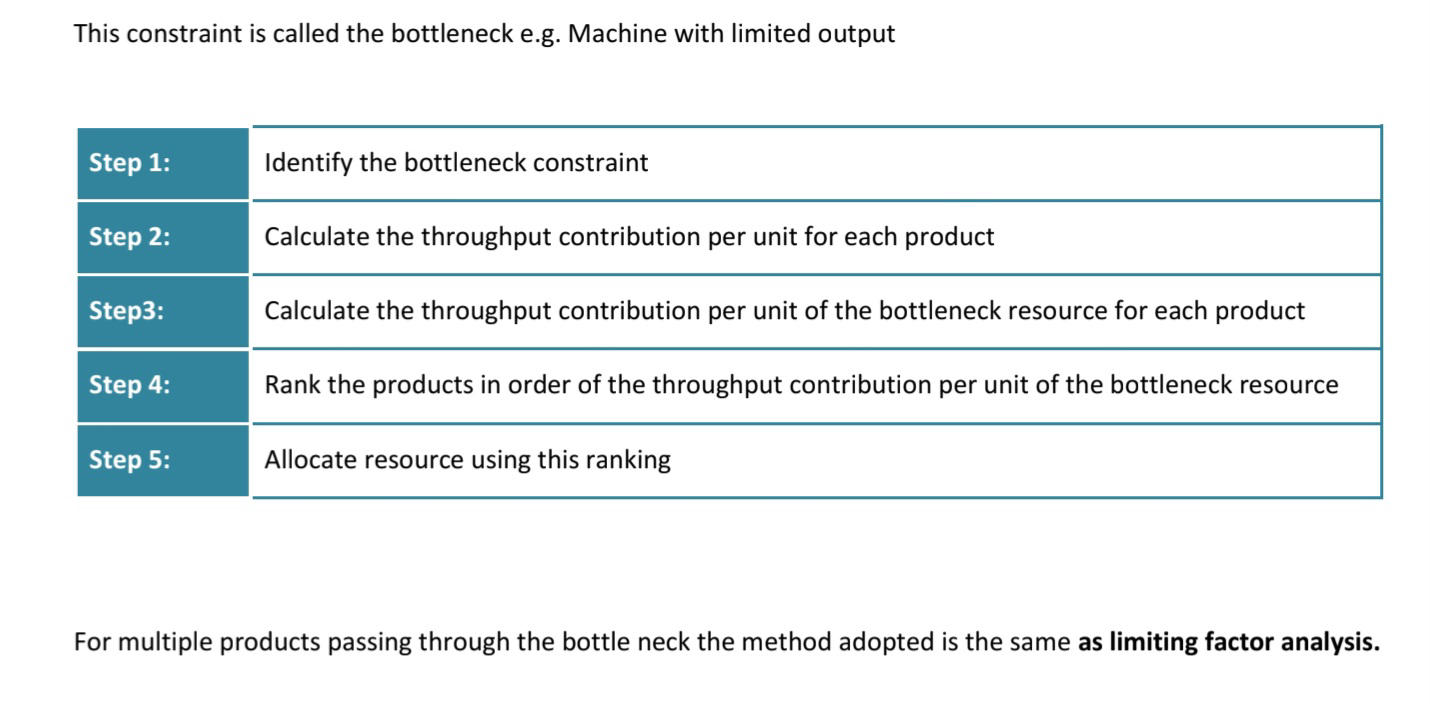
What are the steps to maximise throughput (5)
77
What is TPAR?
Throughput accounting ratio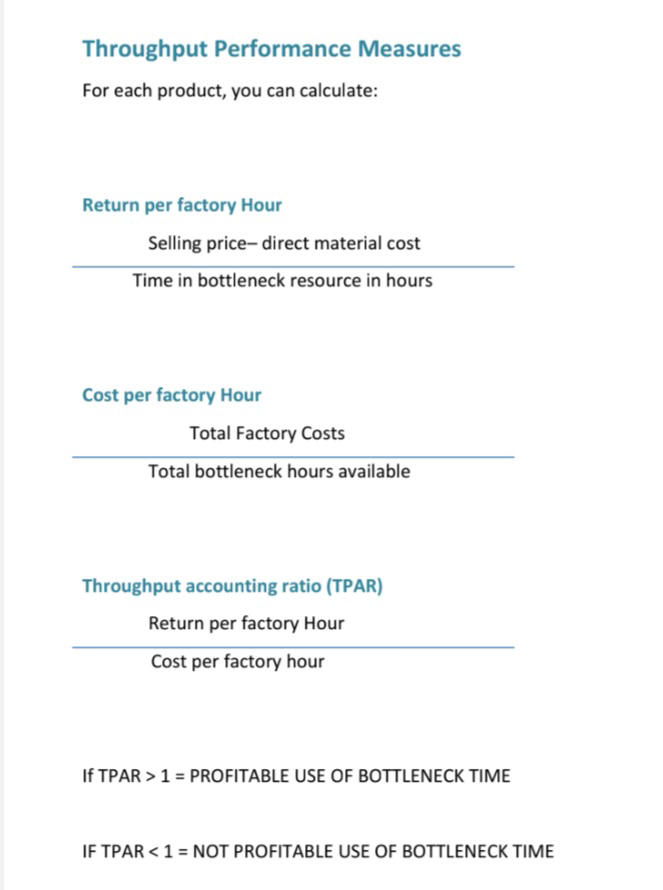
78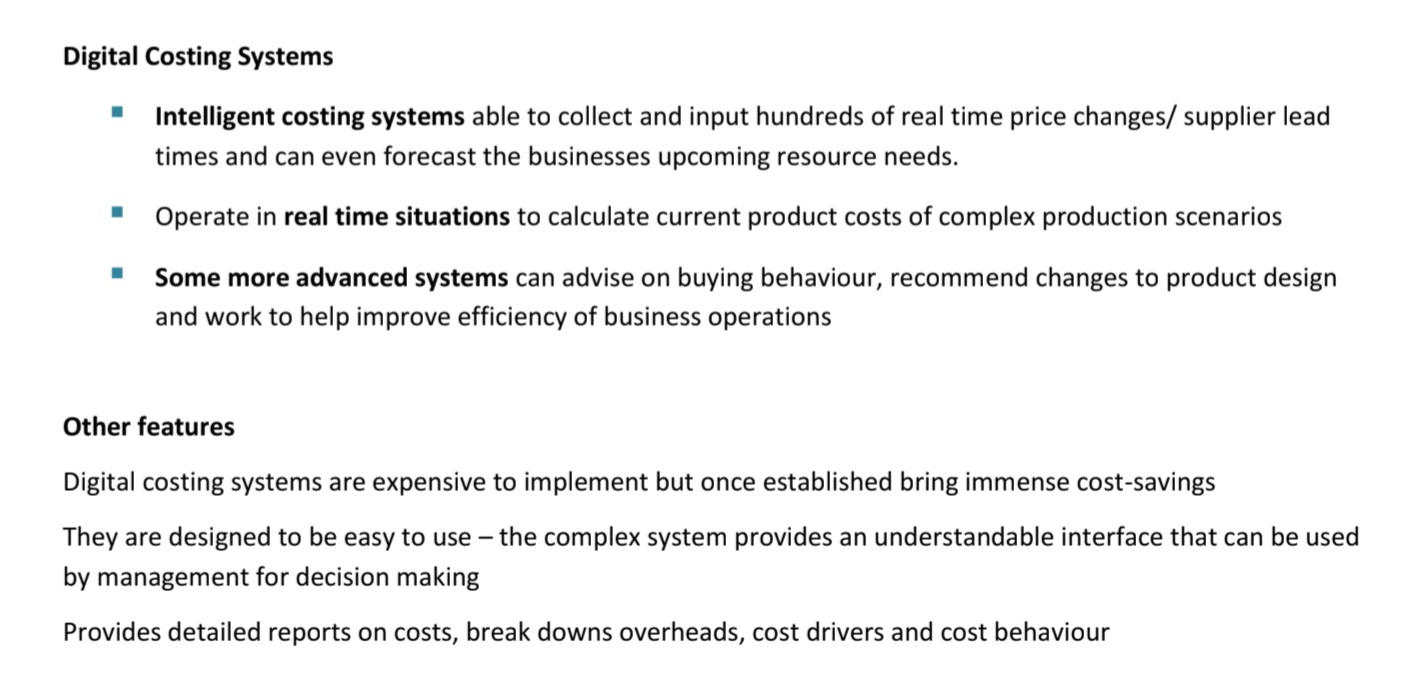
What is a digital costing system?
79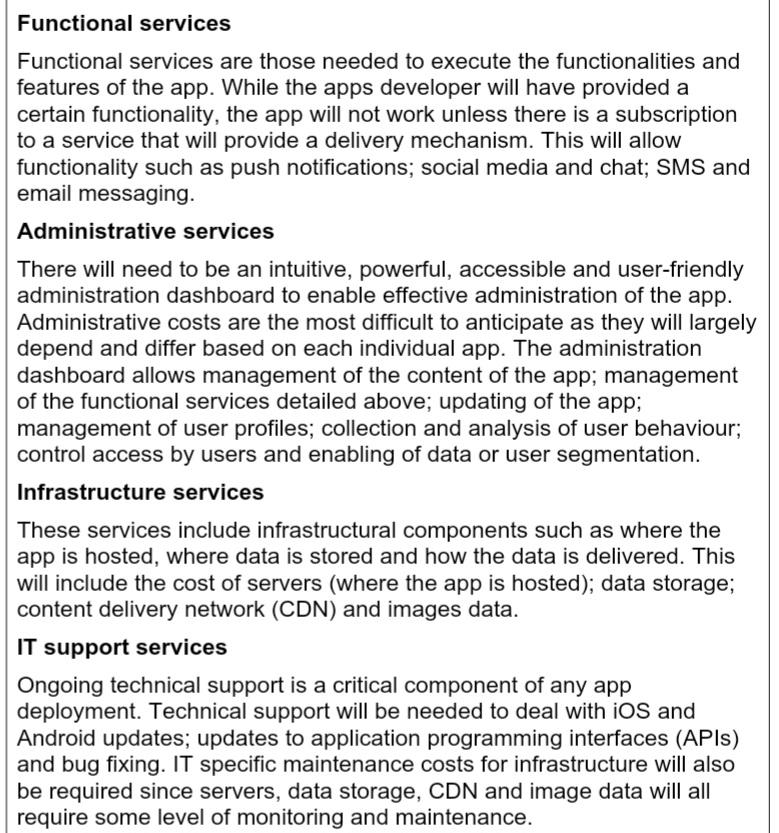
What are the 4 main costs associated with operating apps post-development
80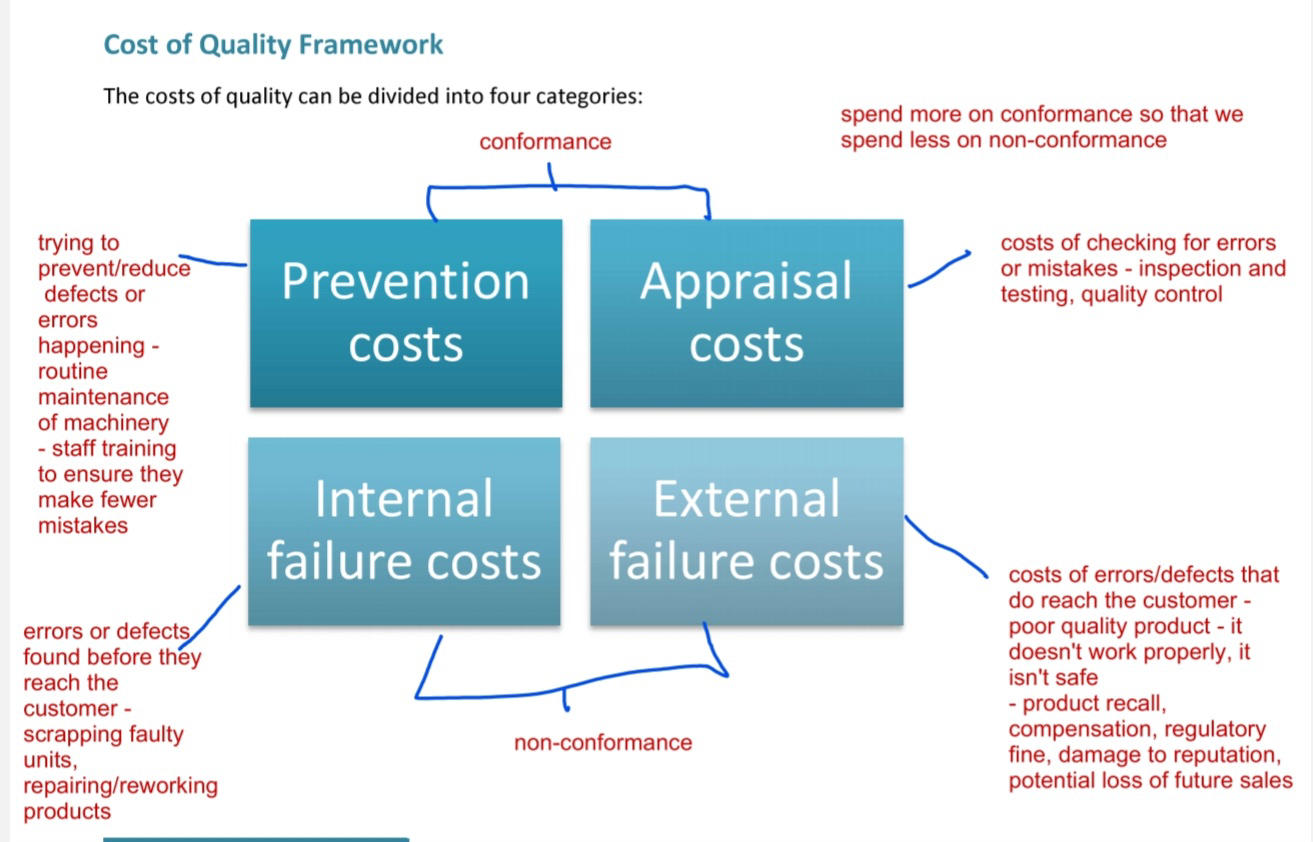
What are the 4 catagories in the cost of quality framework?
81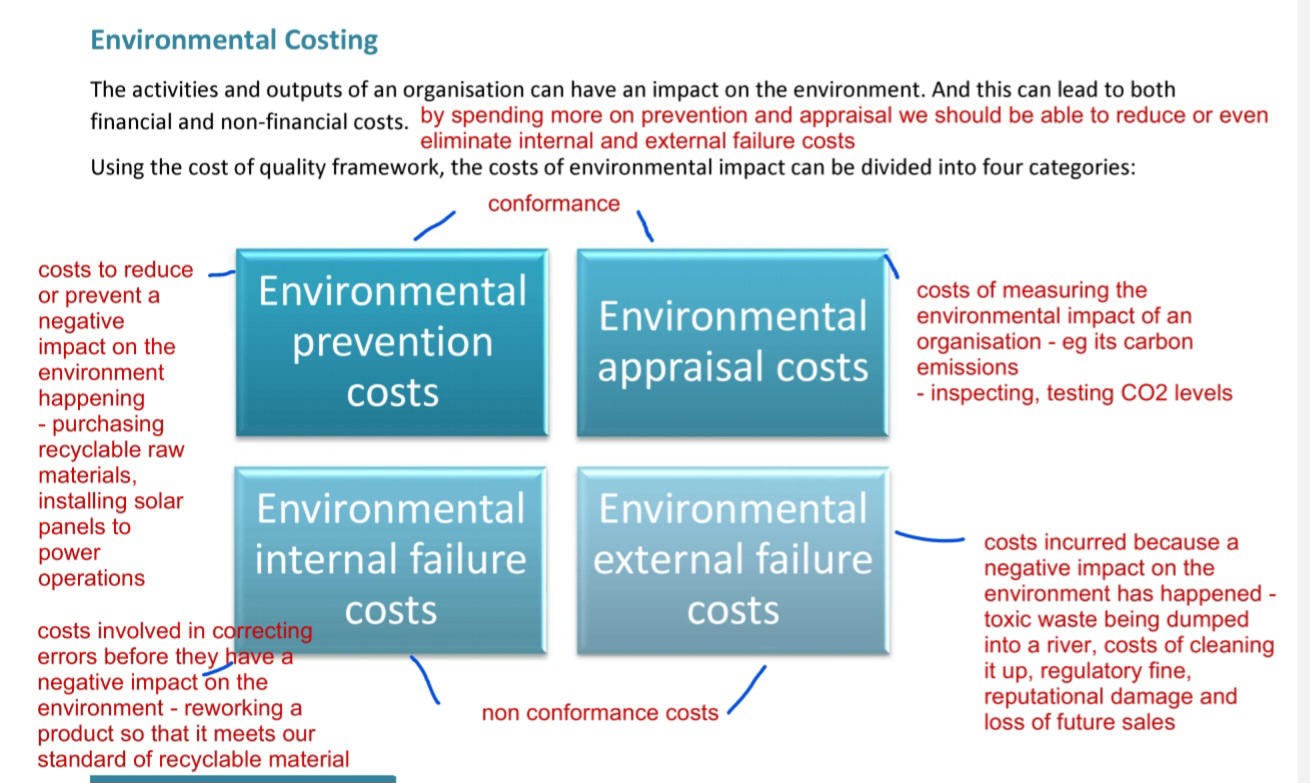
What are the 4 catagories in the cost of environmental impact?
82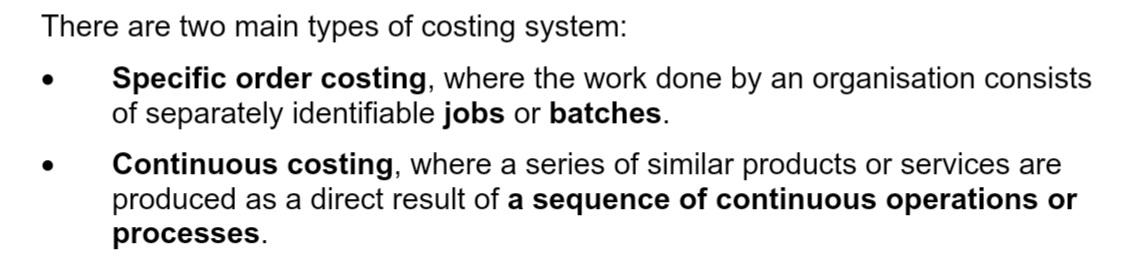
What are the 2 main types of Costing Systems?
83
What are the different costing methods? (5)
Job Costing
Batch Costing
Service Costing
Process Costing
Costing in the public sector
Batch Costing
Service Costing
Process Costing
Costing in the public sector
84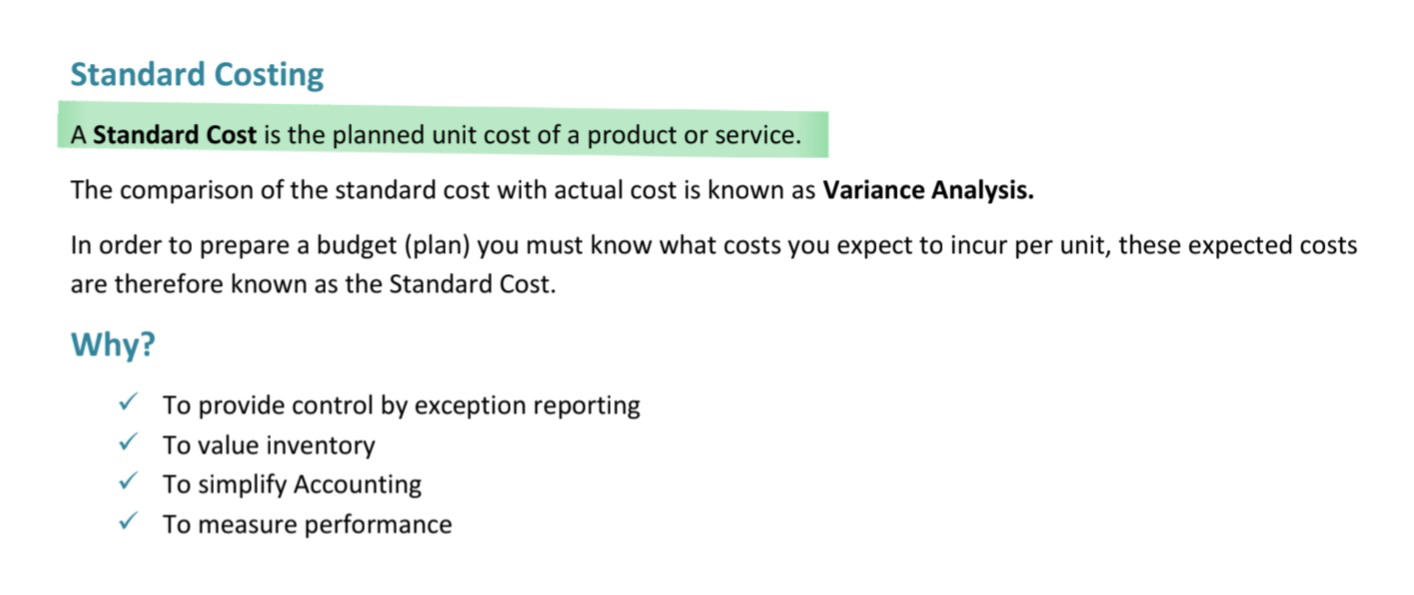
What is a standard cost?
85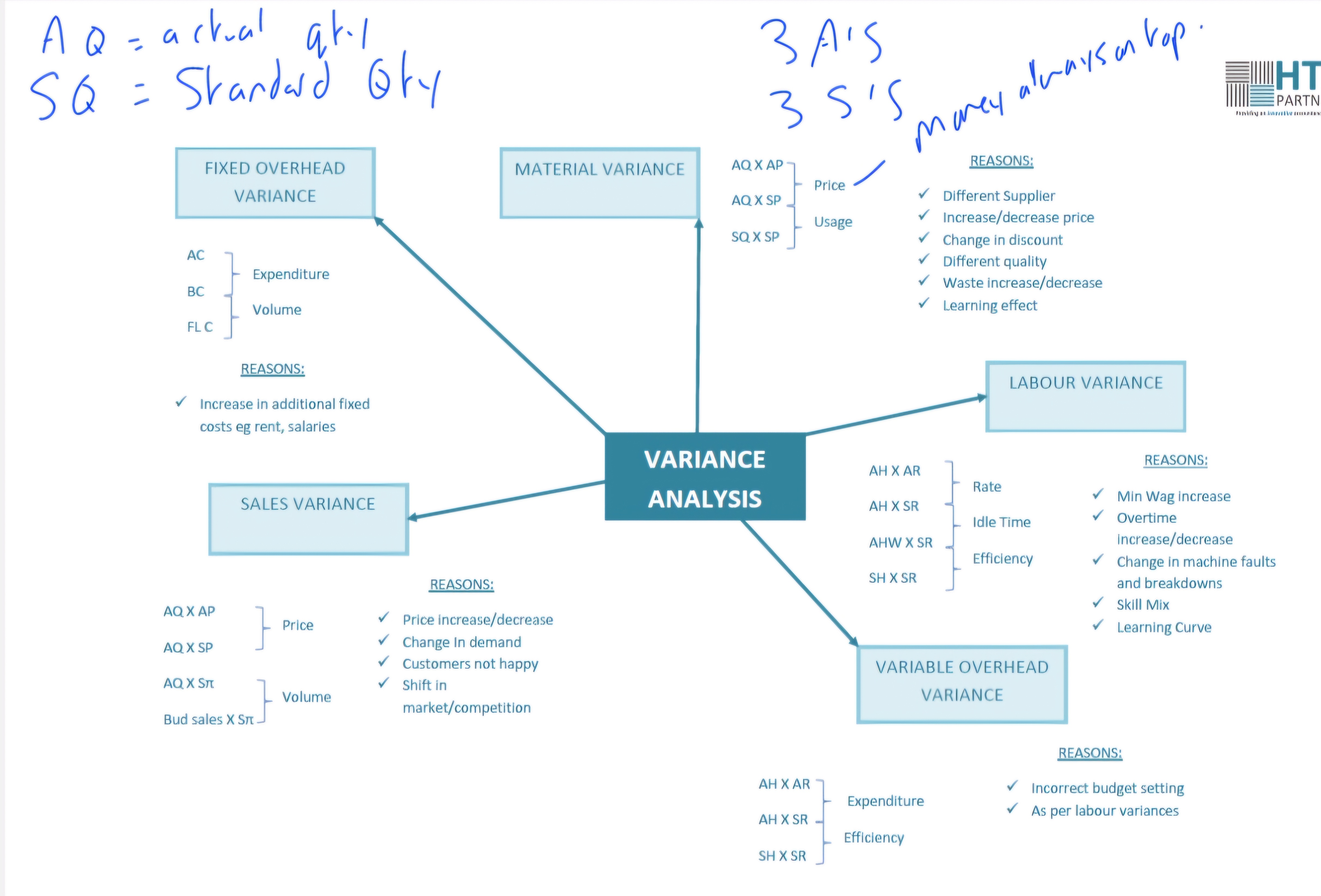
Image occlusion: name the hidden labels
86
Define variance analysis
The evaluation of performance by means of variances, whose timely reporting should maximise the opprtunity for managerial action
87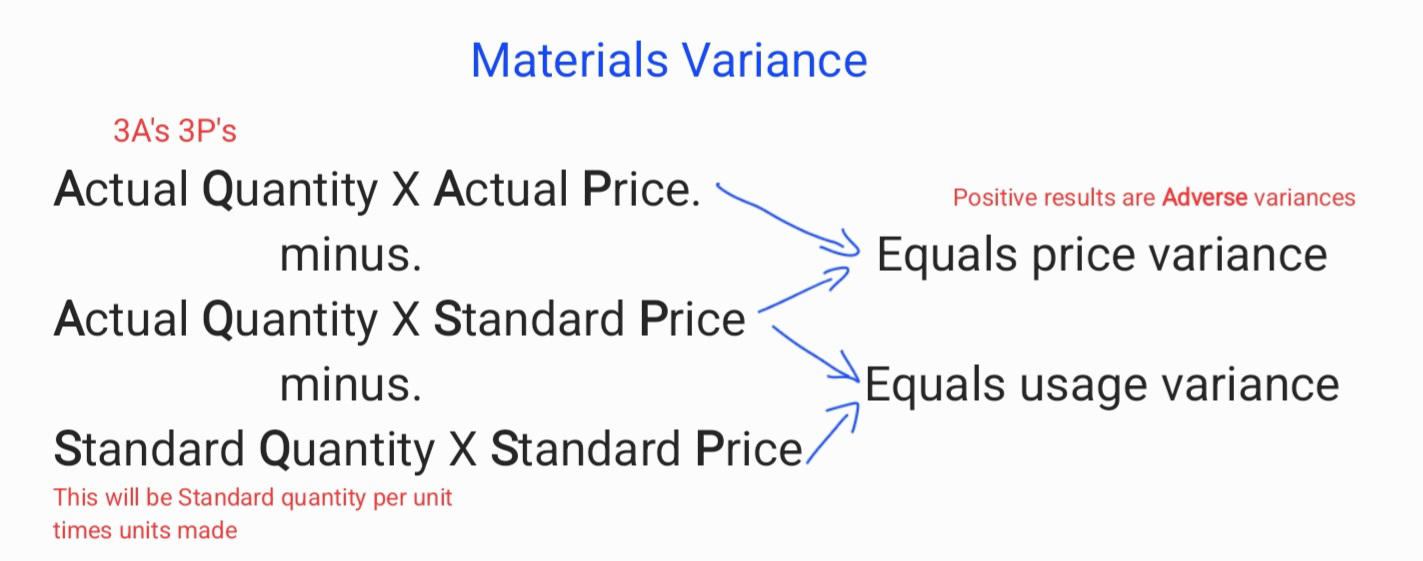
How do you calculate a materials variance?
88
How does the valuation of raw materials effect the calculation of materials Price variances?
this is only on the price variance, usage variance will be on materials used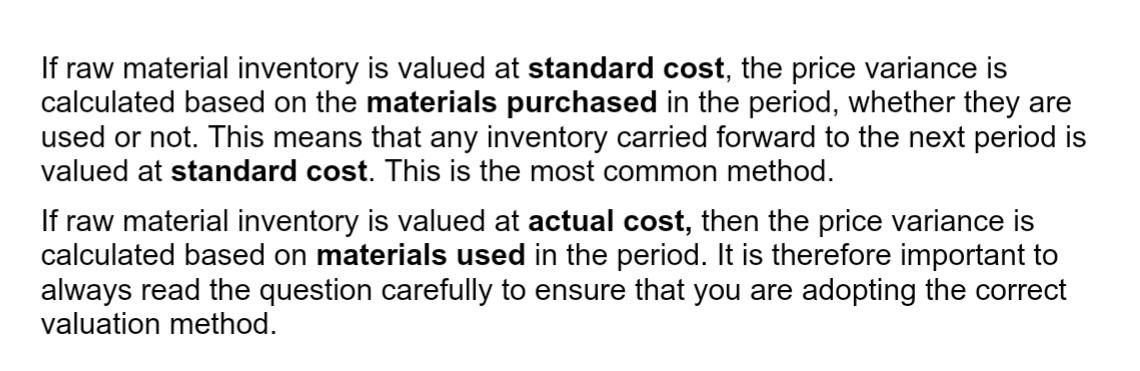
89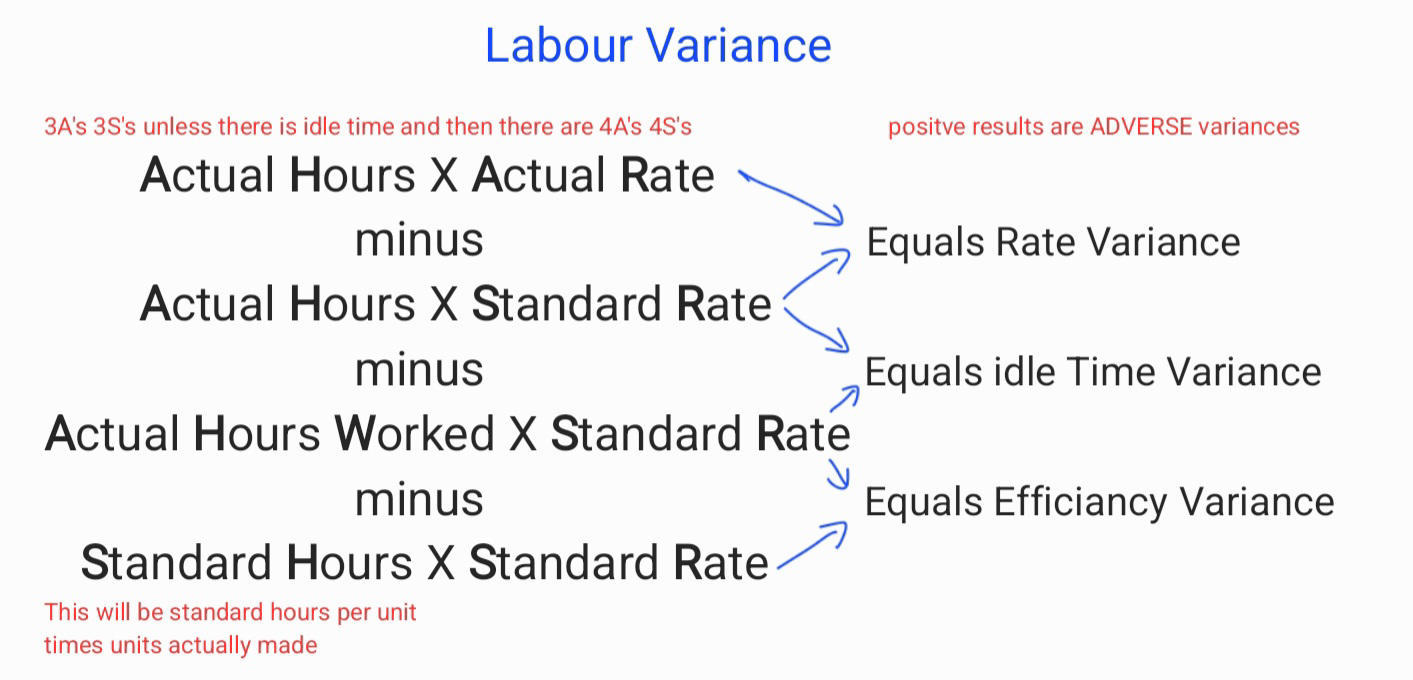
How do you calculate a labour variance?
90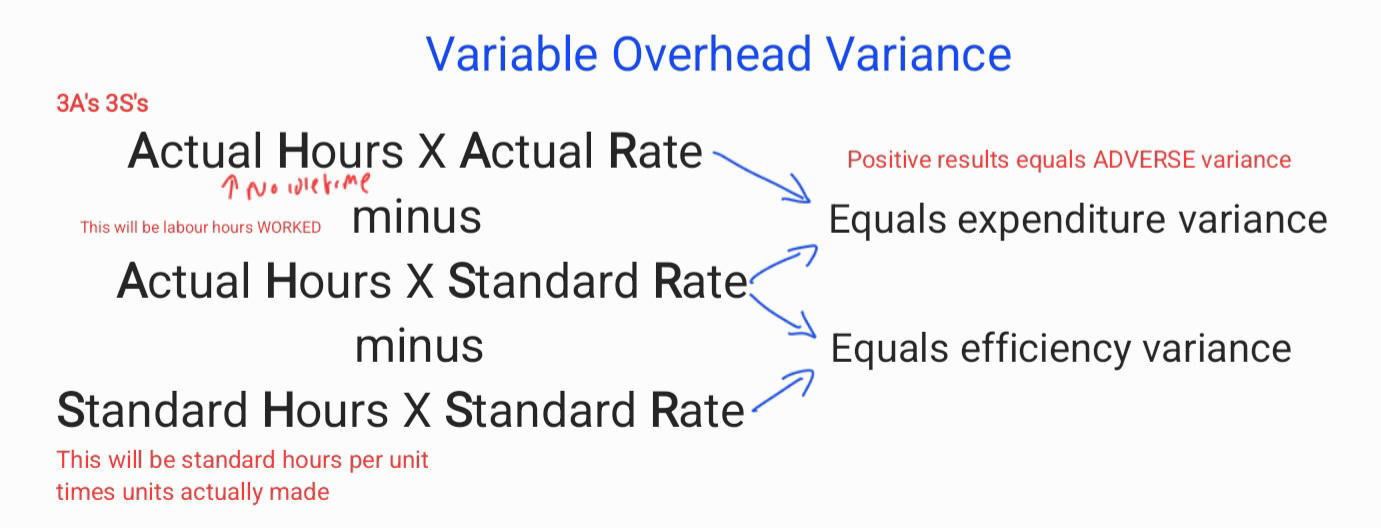
How do you calculate a variable overhead variance?
91
What does this symbol mean?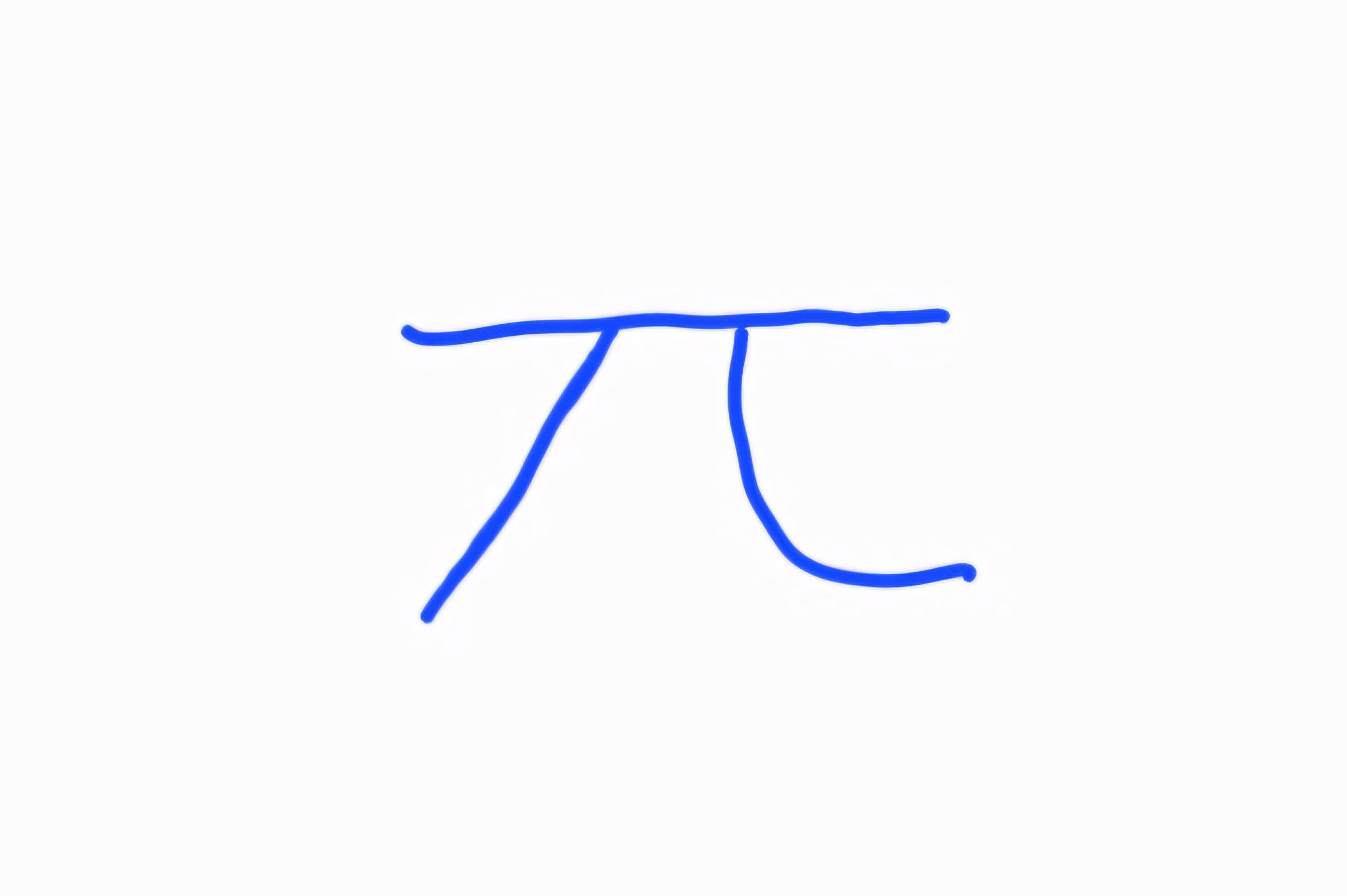
Profit
92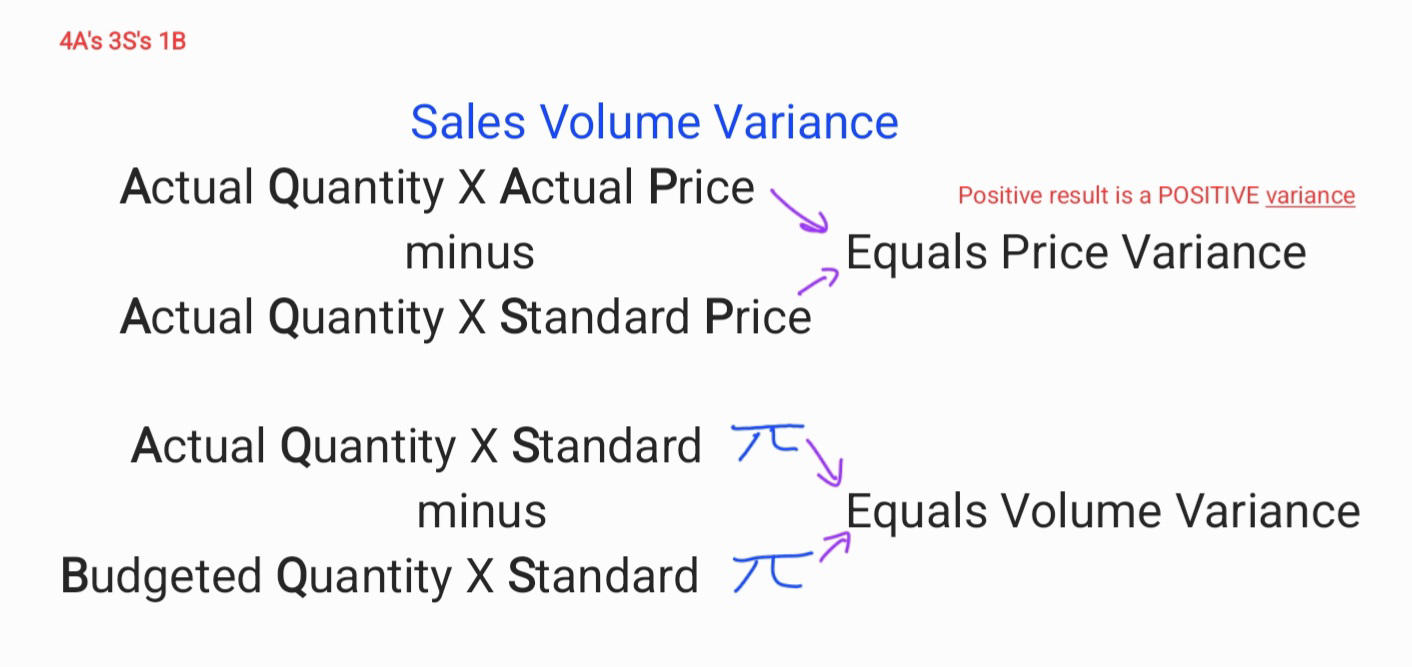
How do you calculate a sales variance?
93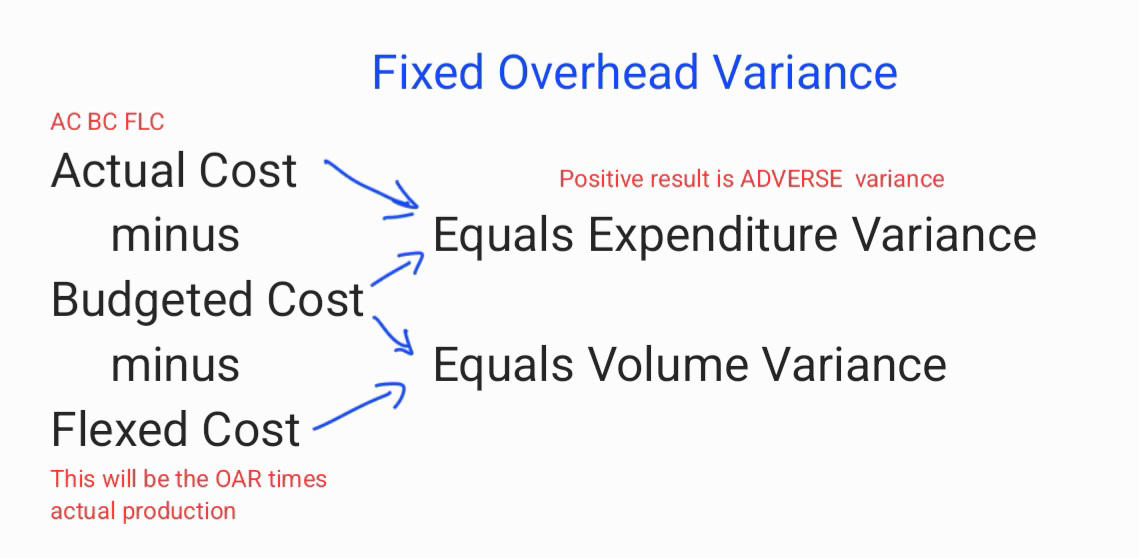
How do you calculate a fixed over head variance?
94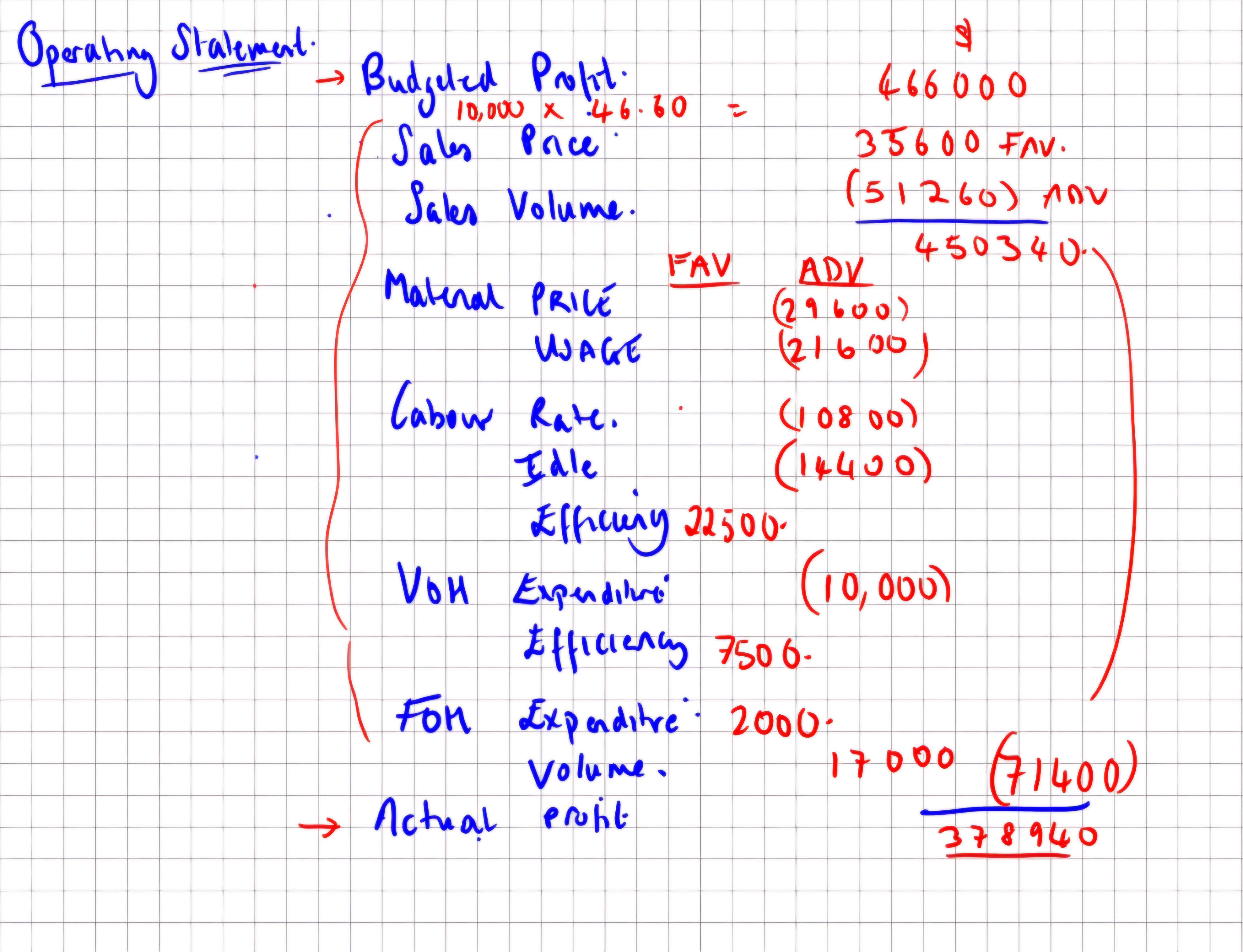
How do you calculate the operating profit using the budgeted amounts and the variances (Operating Statement)
95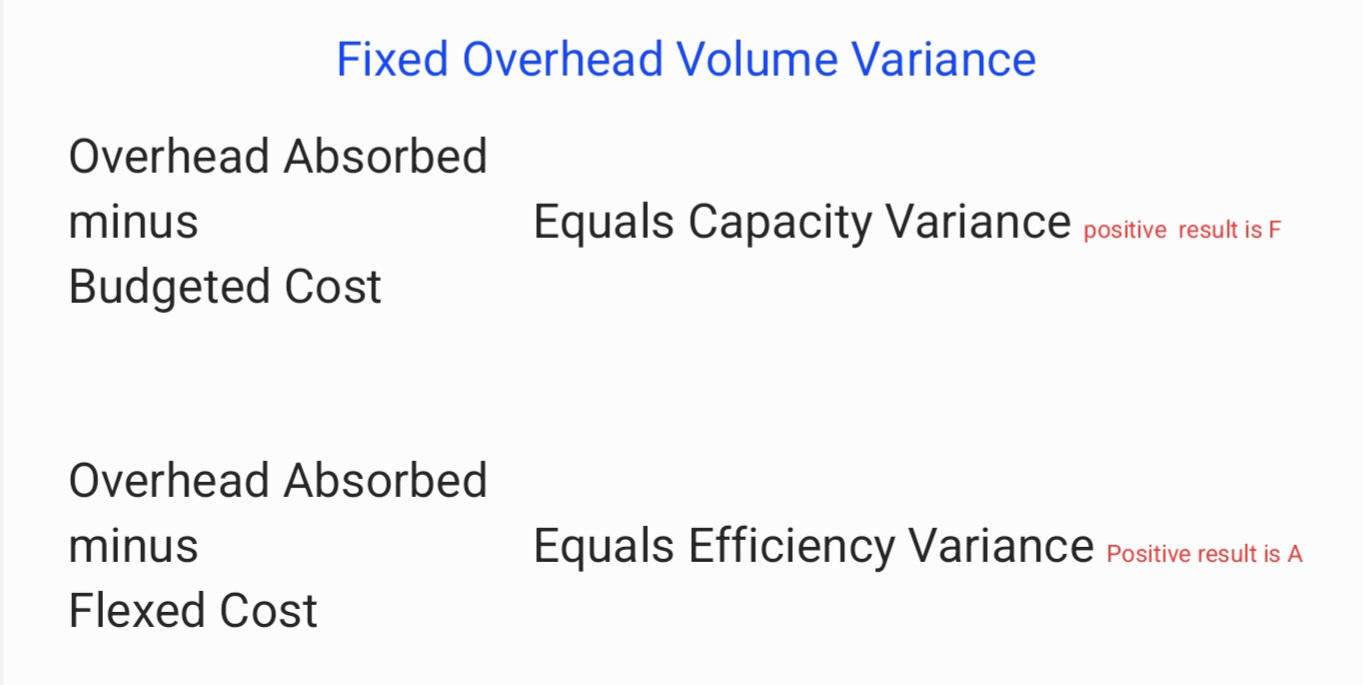
In the fixed overhead VOLUME variance, how do you calculate the capacity and efficiency variances?
96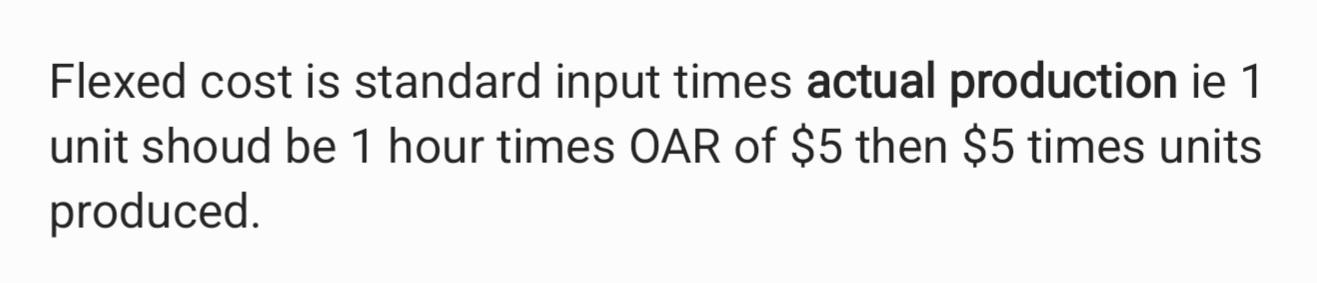
How do you calculate the Flexed cost
97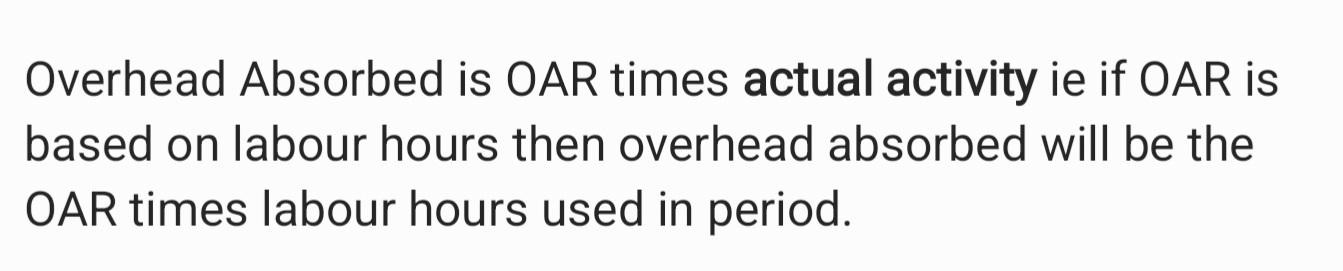
How do you calculate the Overhead Absorbed
98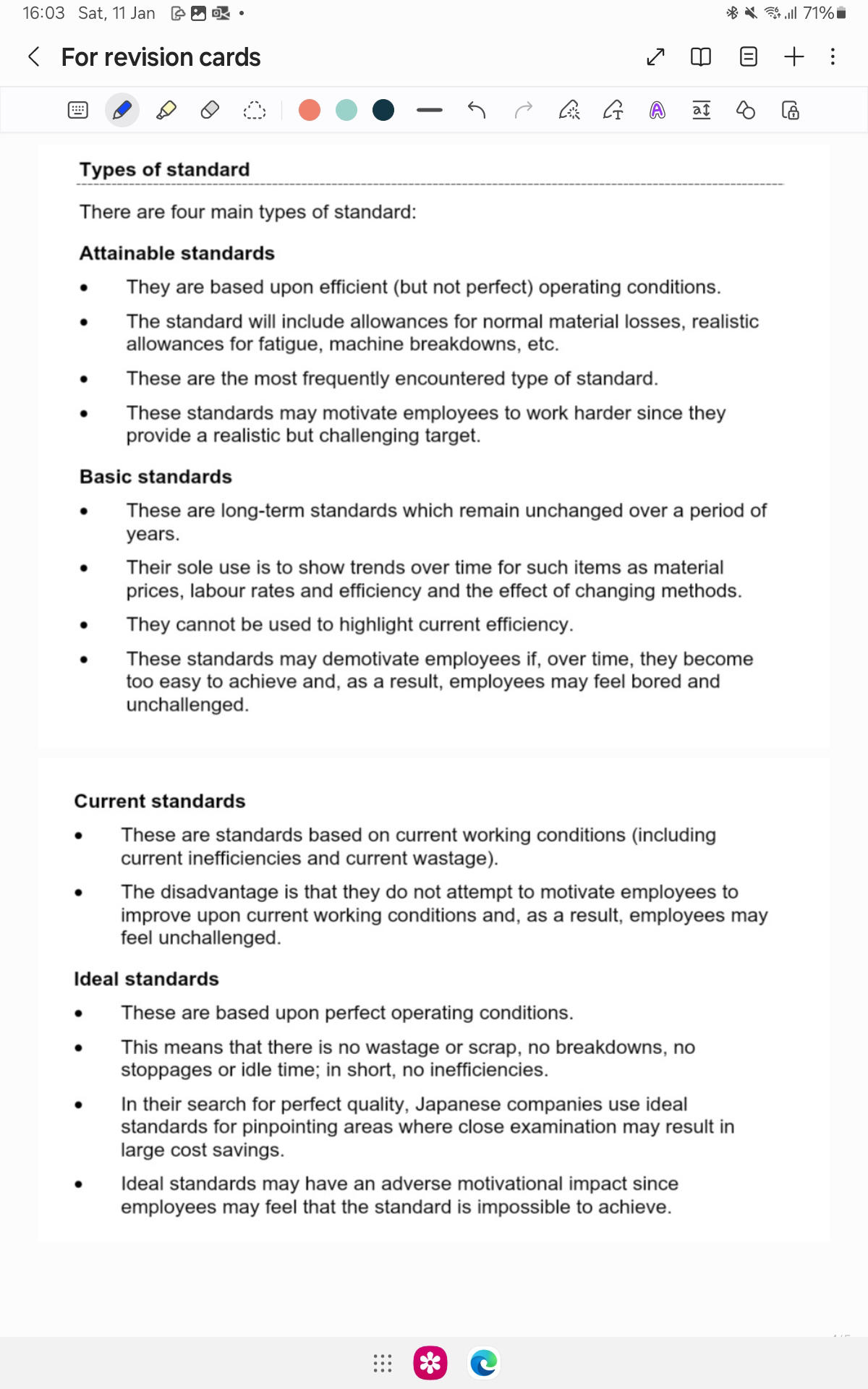
What are the 4 types of standard?
99
When does a unit of production have a standard profit
When using an absorption costing system
100
When does a unit of production have a standard contribution
When using a marginal costing system
101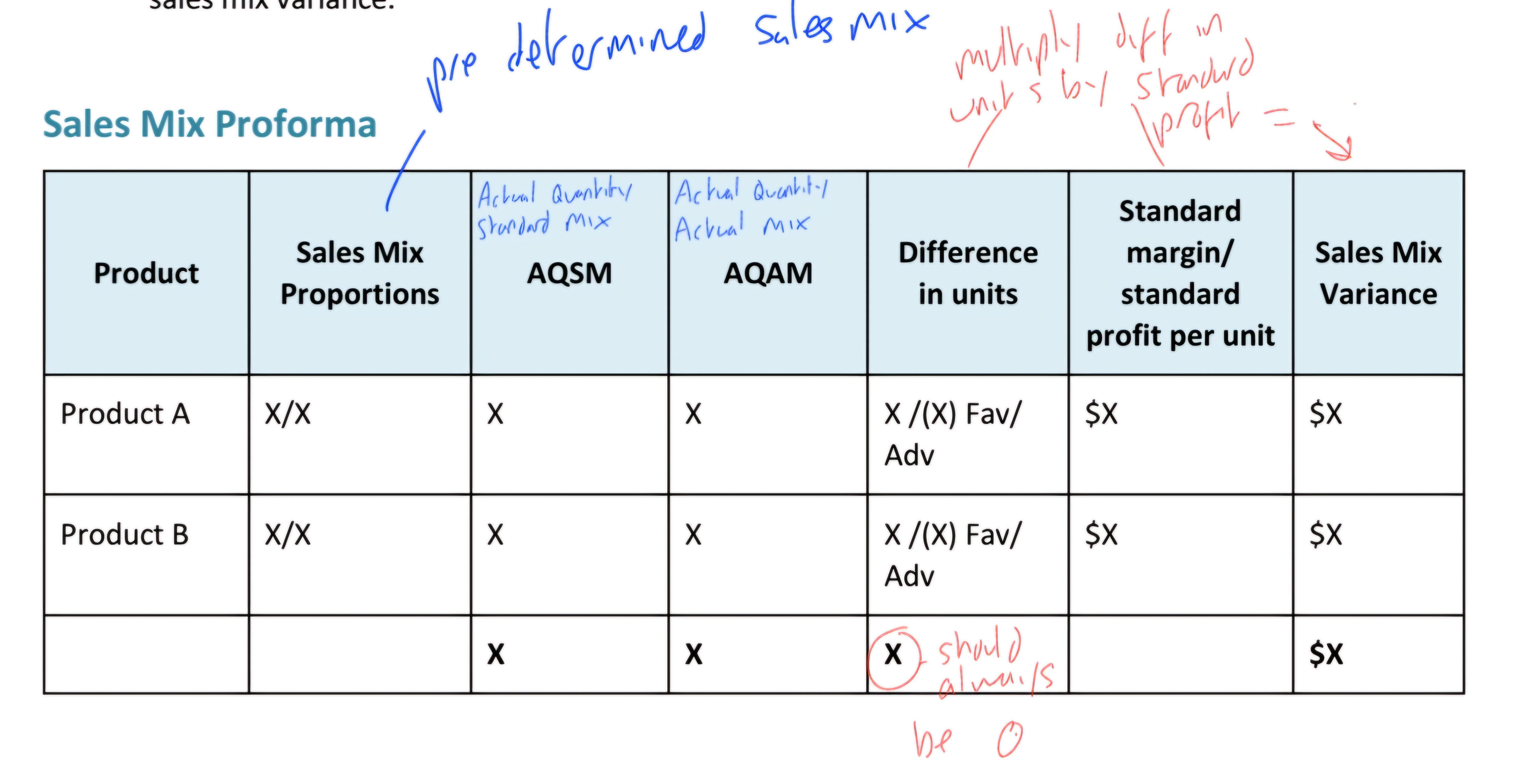
How do you calculate the sales mix variance using the individual method?
102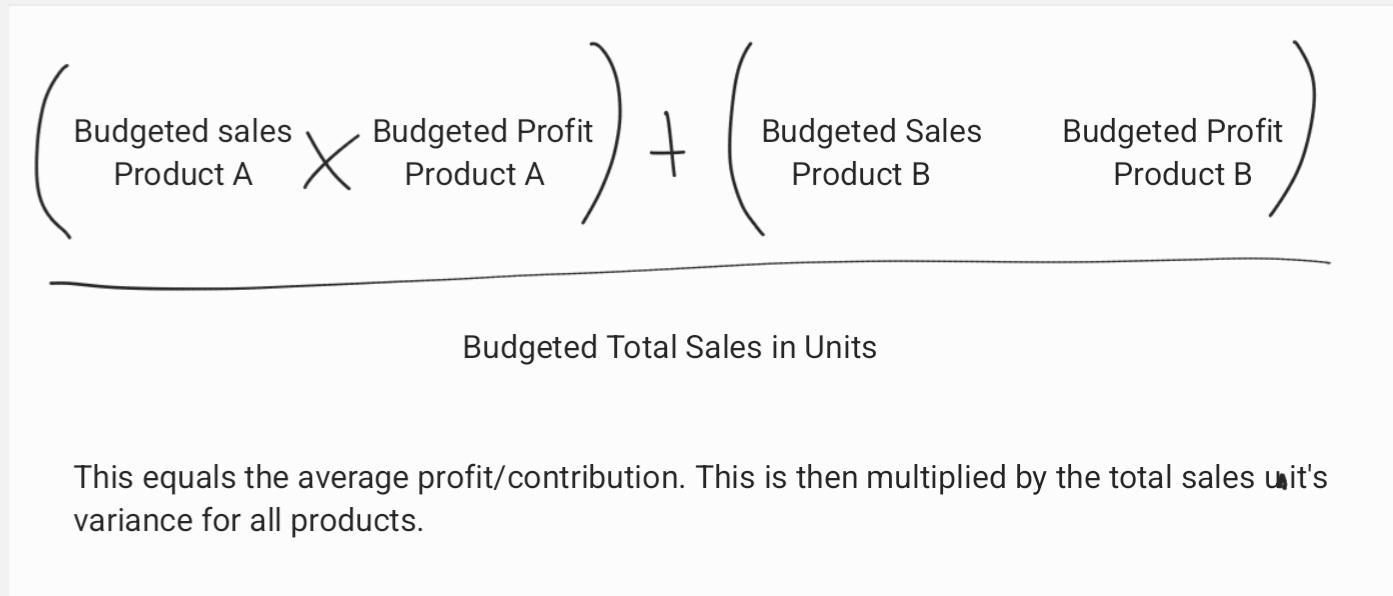
How do you calculate the sales Quantity Profit variance for sales mix?
103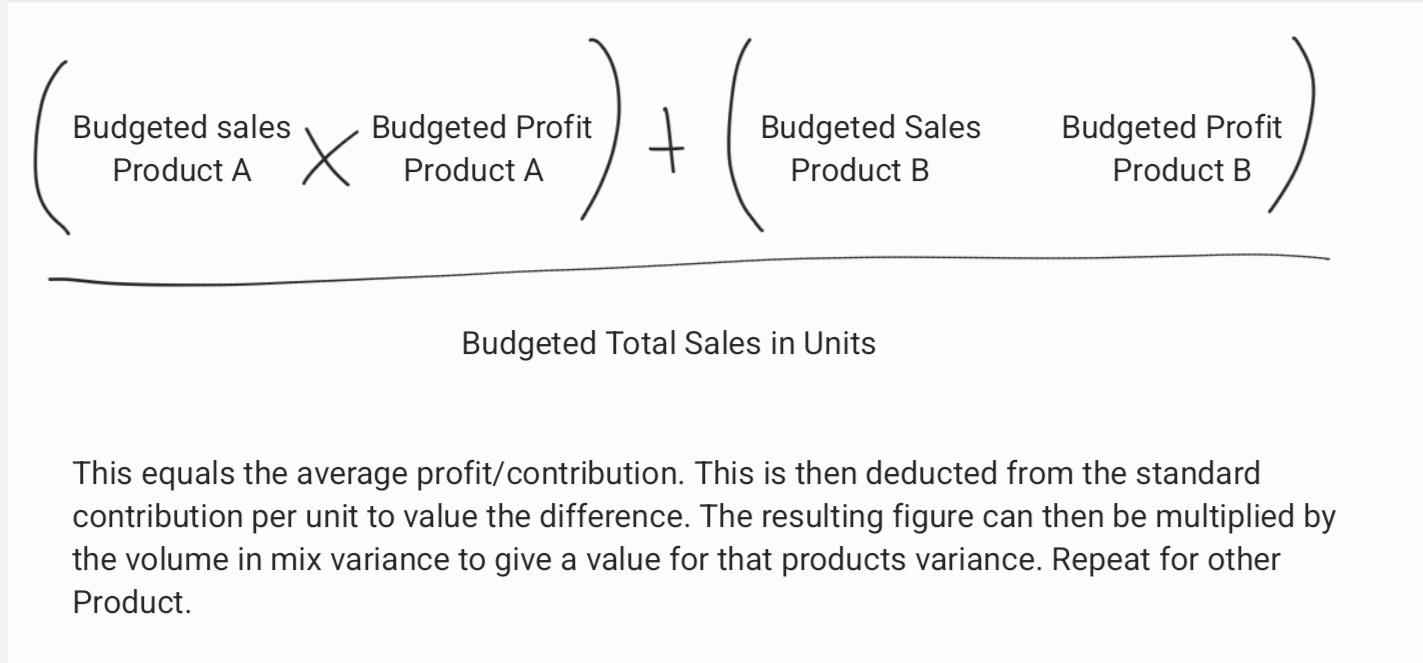
How do you calculate the Sales mix variance using the weighted average method?
104
What is a planning variance?
105
What is a operational variance?
106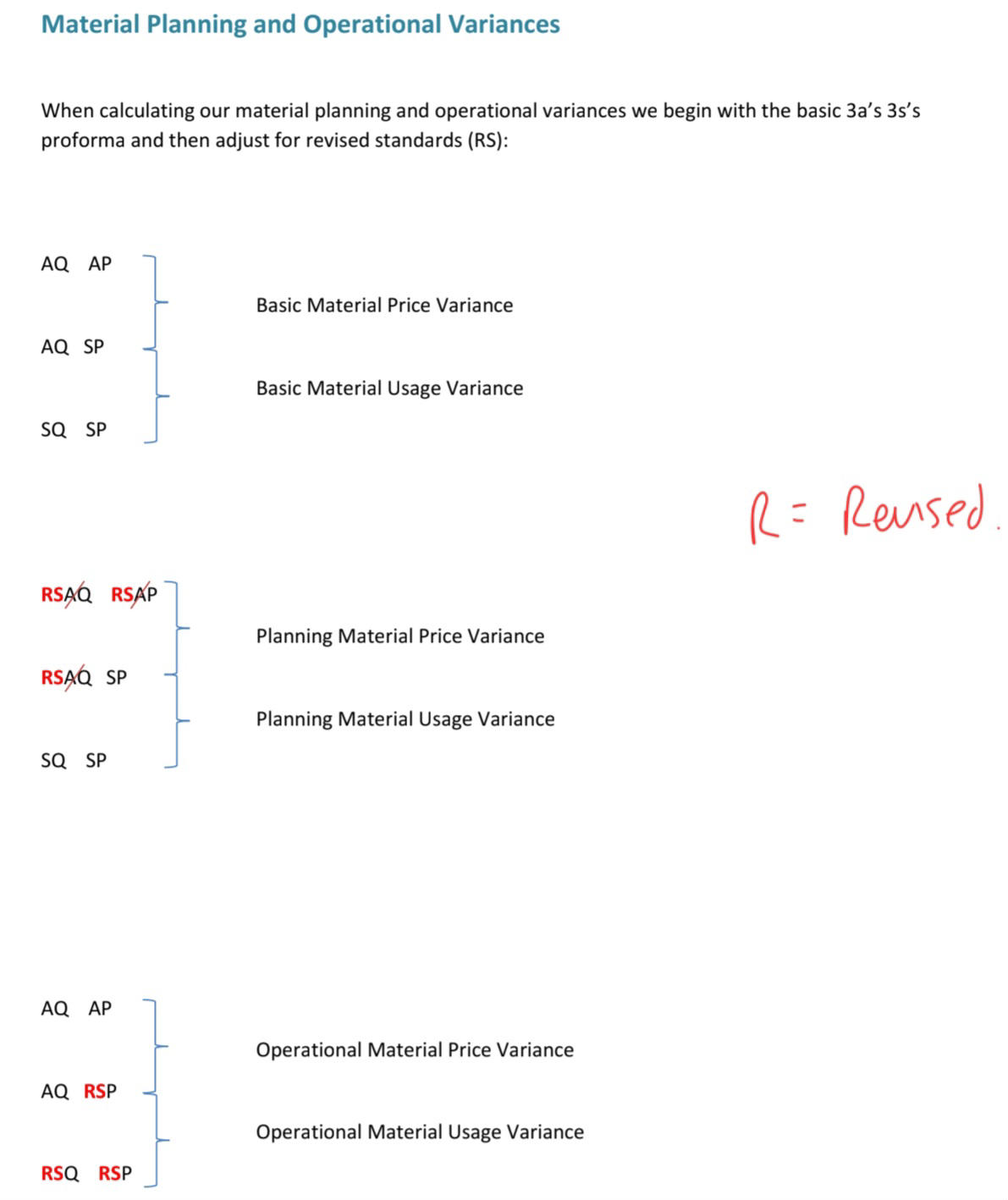
How do you calculate material planning and operational variances?
107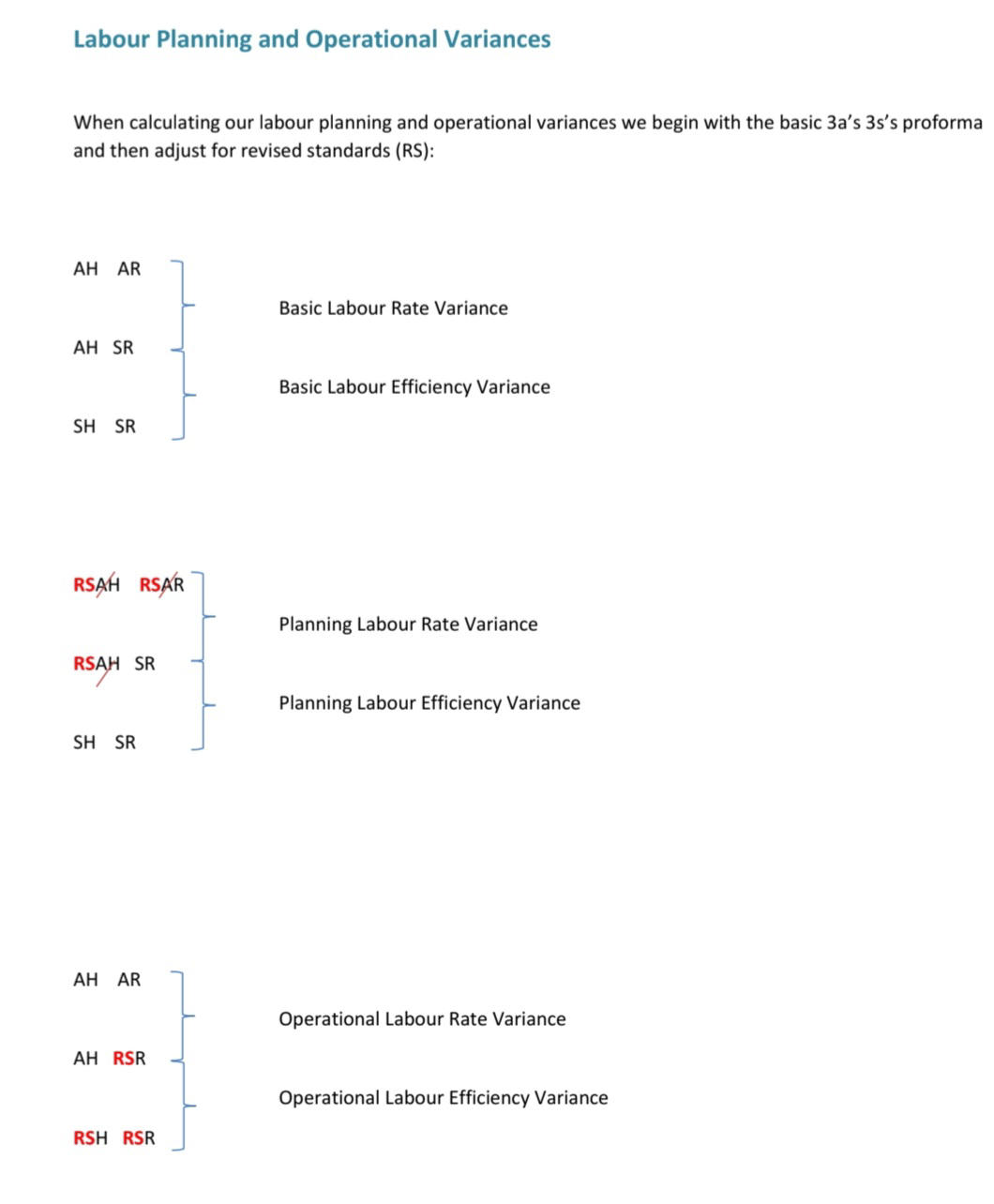
How do you calculate the labour planning and operational variances?
108
What is the definition of a budget?
109
What is the principal budget factor?
The budget that drives the others (usually sales budget) it will determine the production volumes etc.
110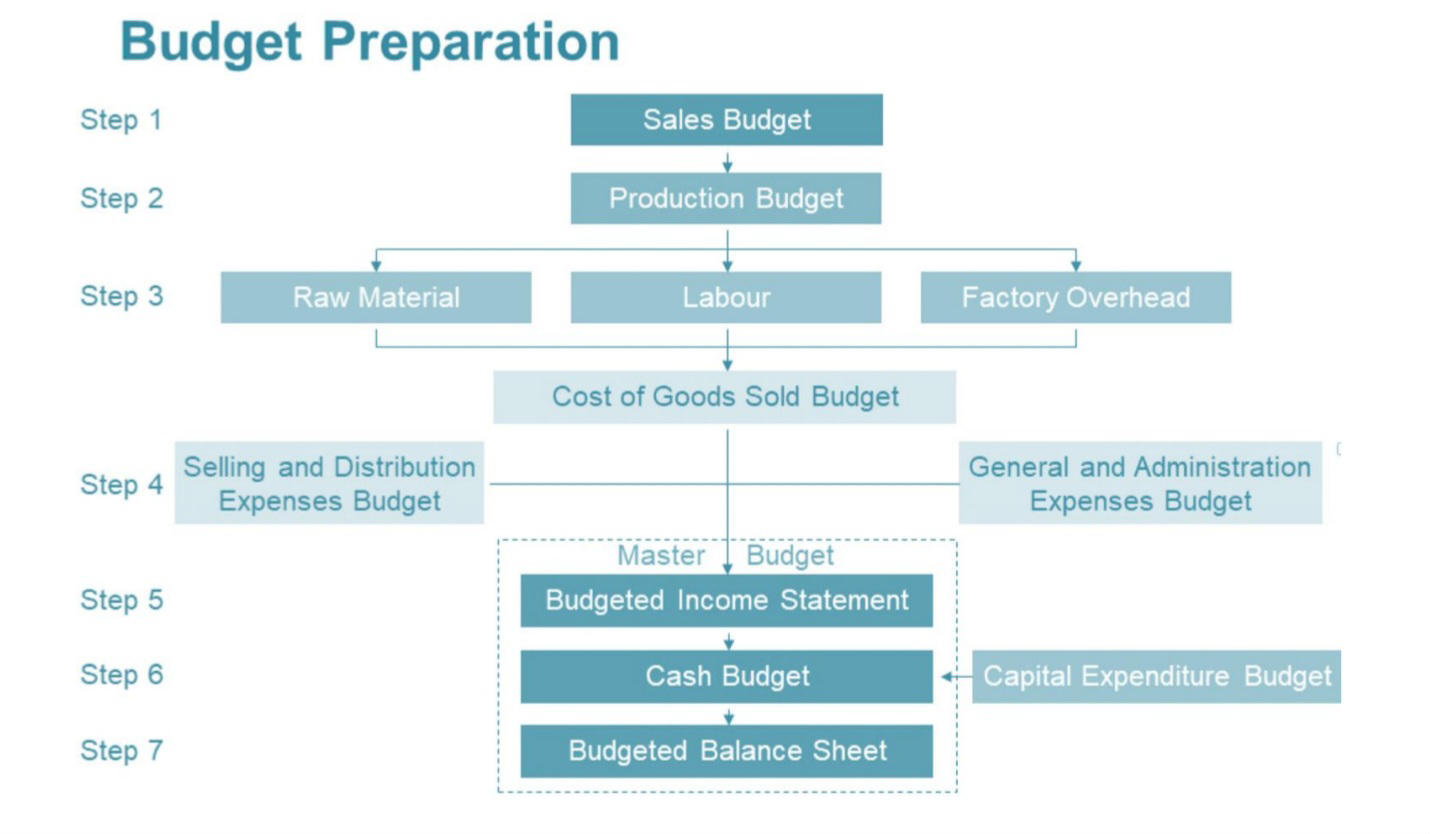
What does the typical heiachy of budgets look like?
111
What are the 4 V's of big data?
Volume
Variety
Velocity
Veracity (integrity/authenticity)
Variety
Velocity
Veracity (integrity/authenticity)
112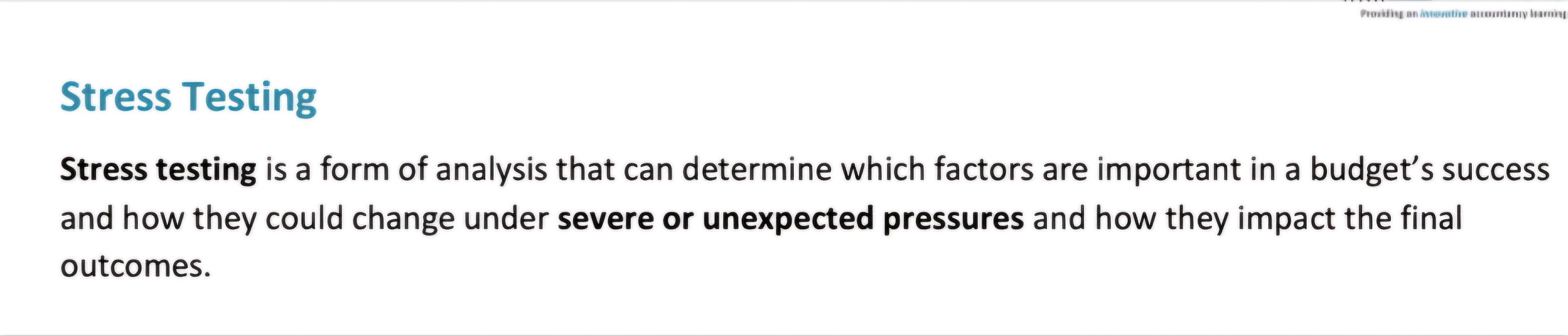
What is stress testing
113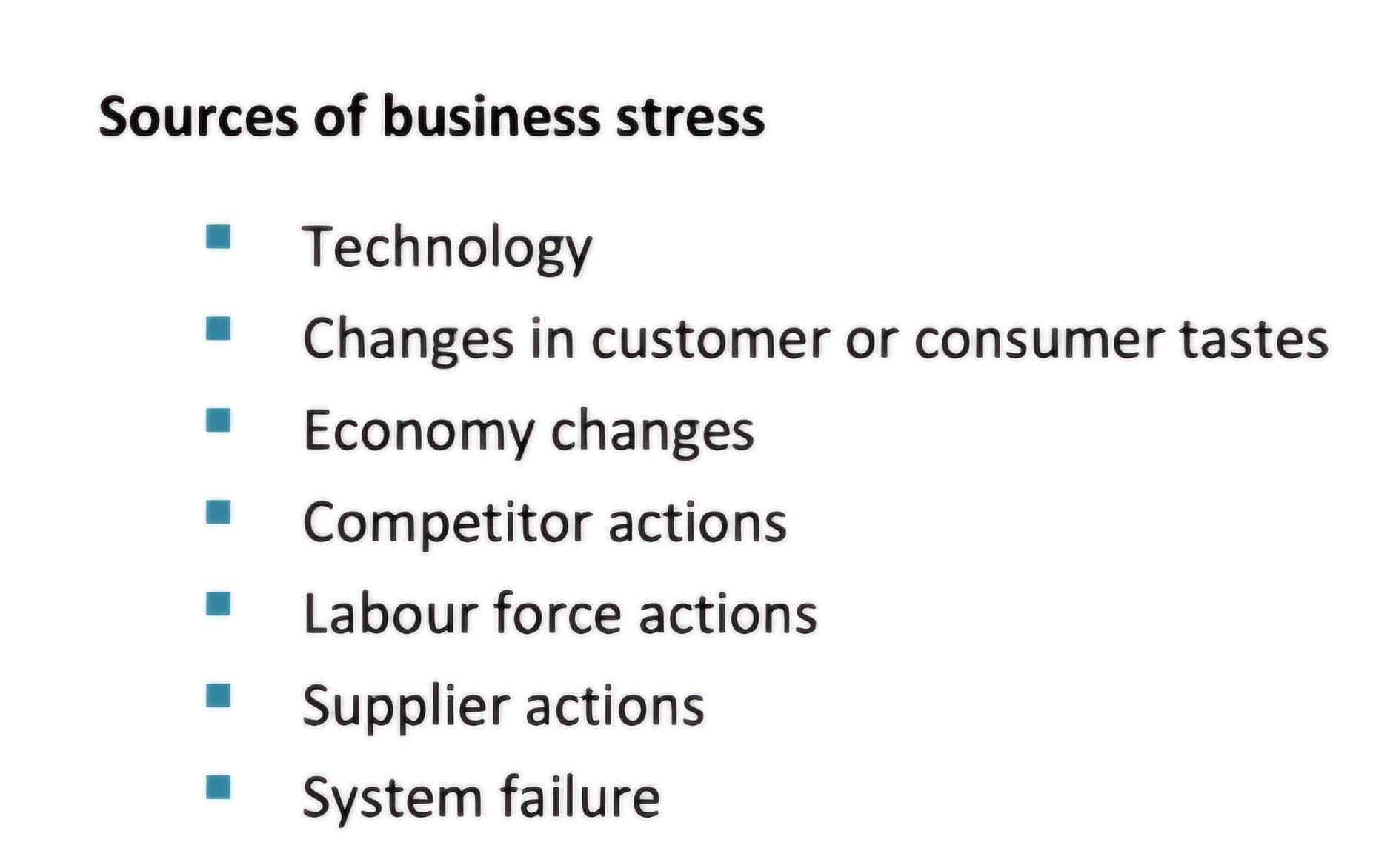
What are the sources of business stress? (7)
114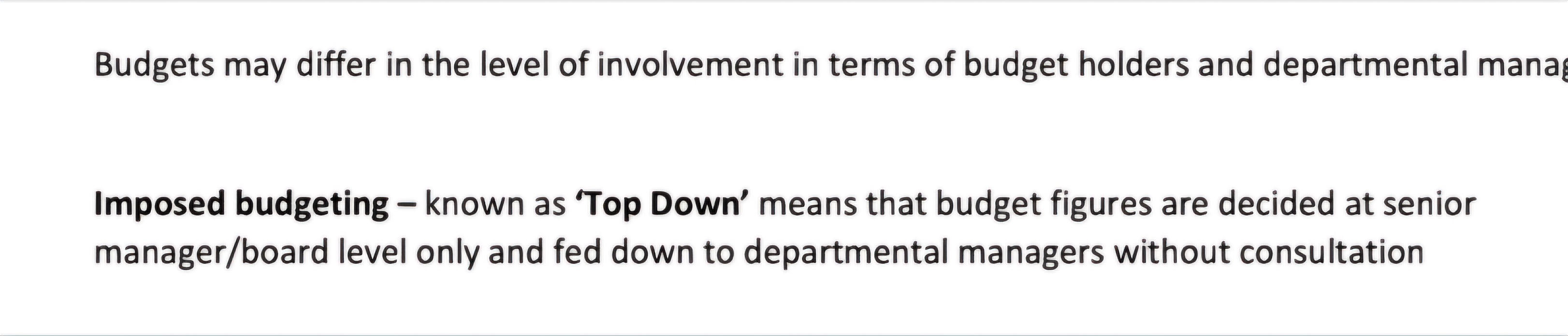
What is a Imposed Budget
115
What is a Participative Budget
116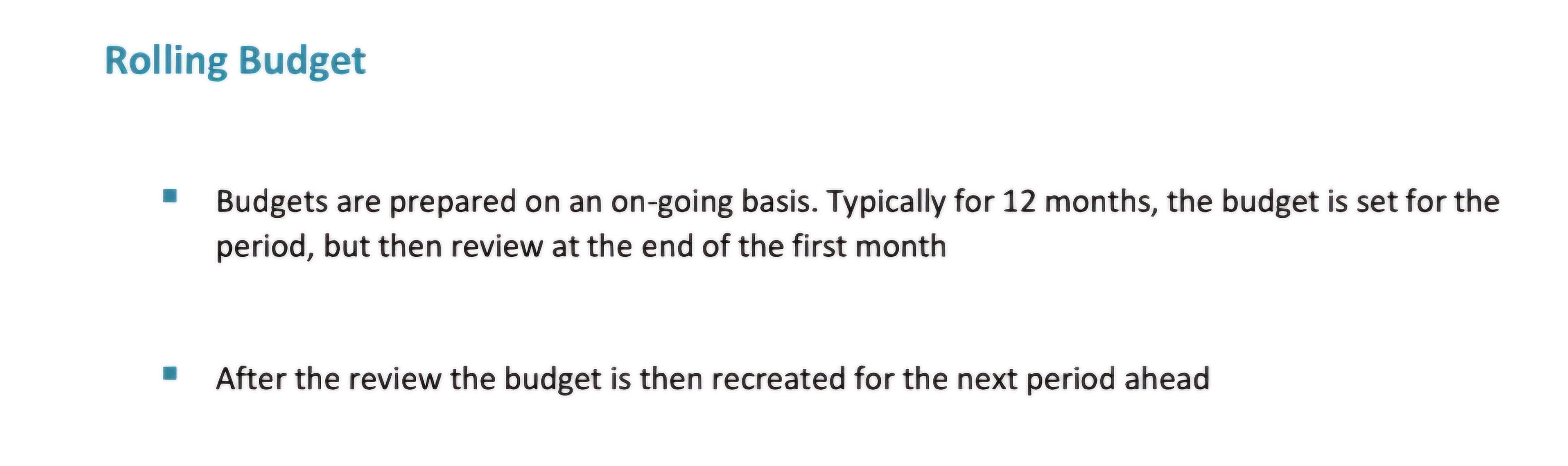
What is a Rolling Budget
117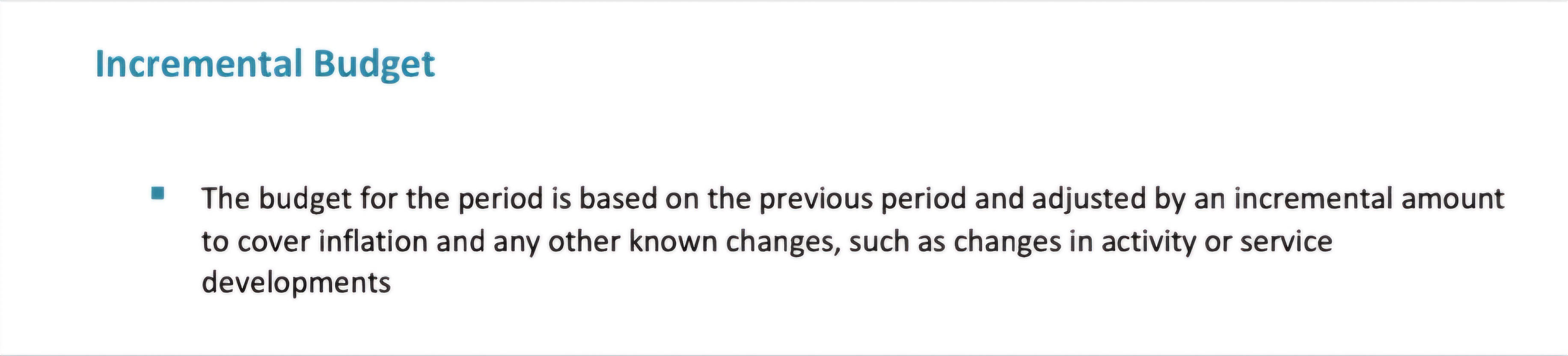
What is an Incremental Budget
118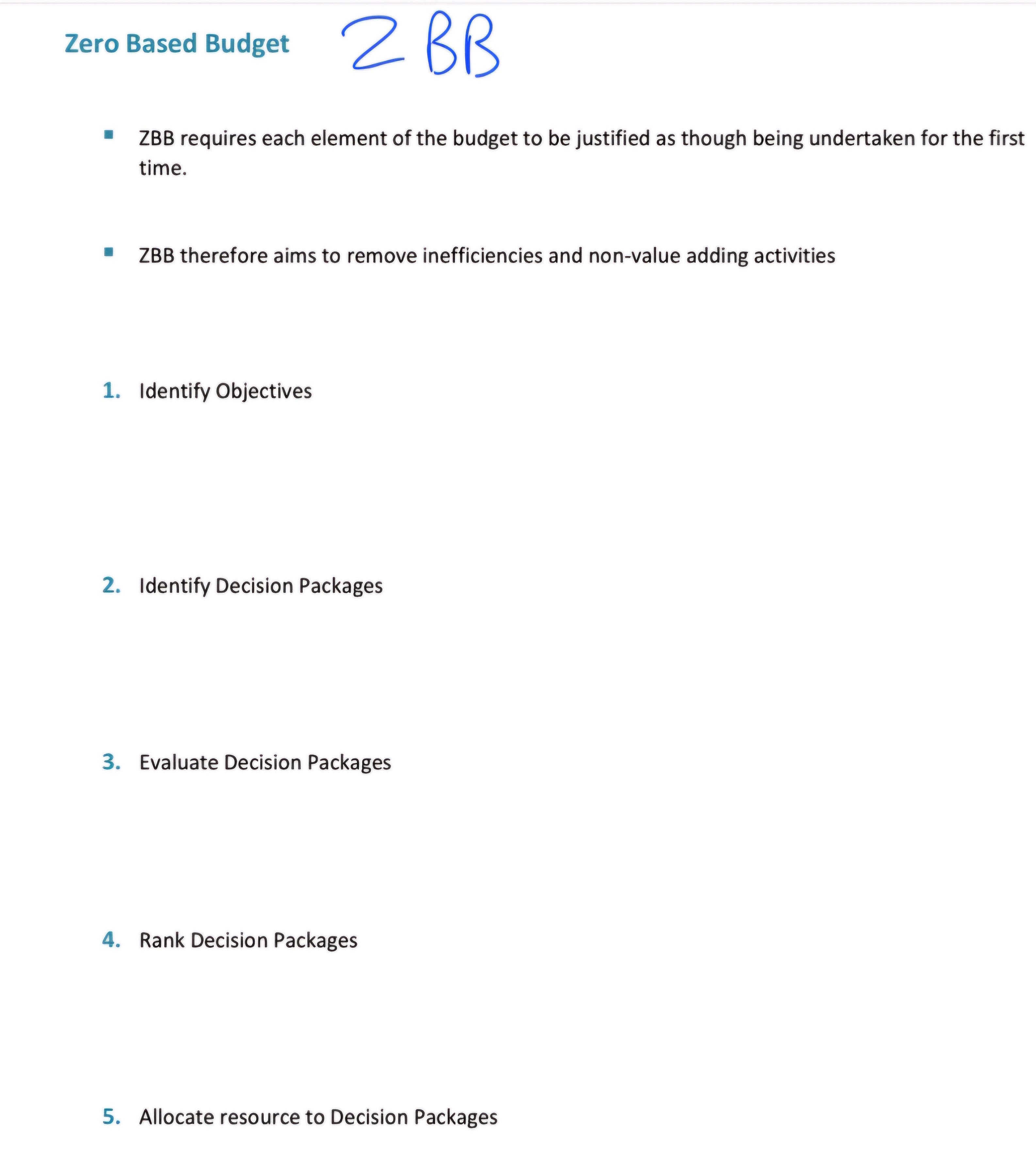
What is a Zero Based Budget (ZBB)
119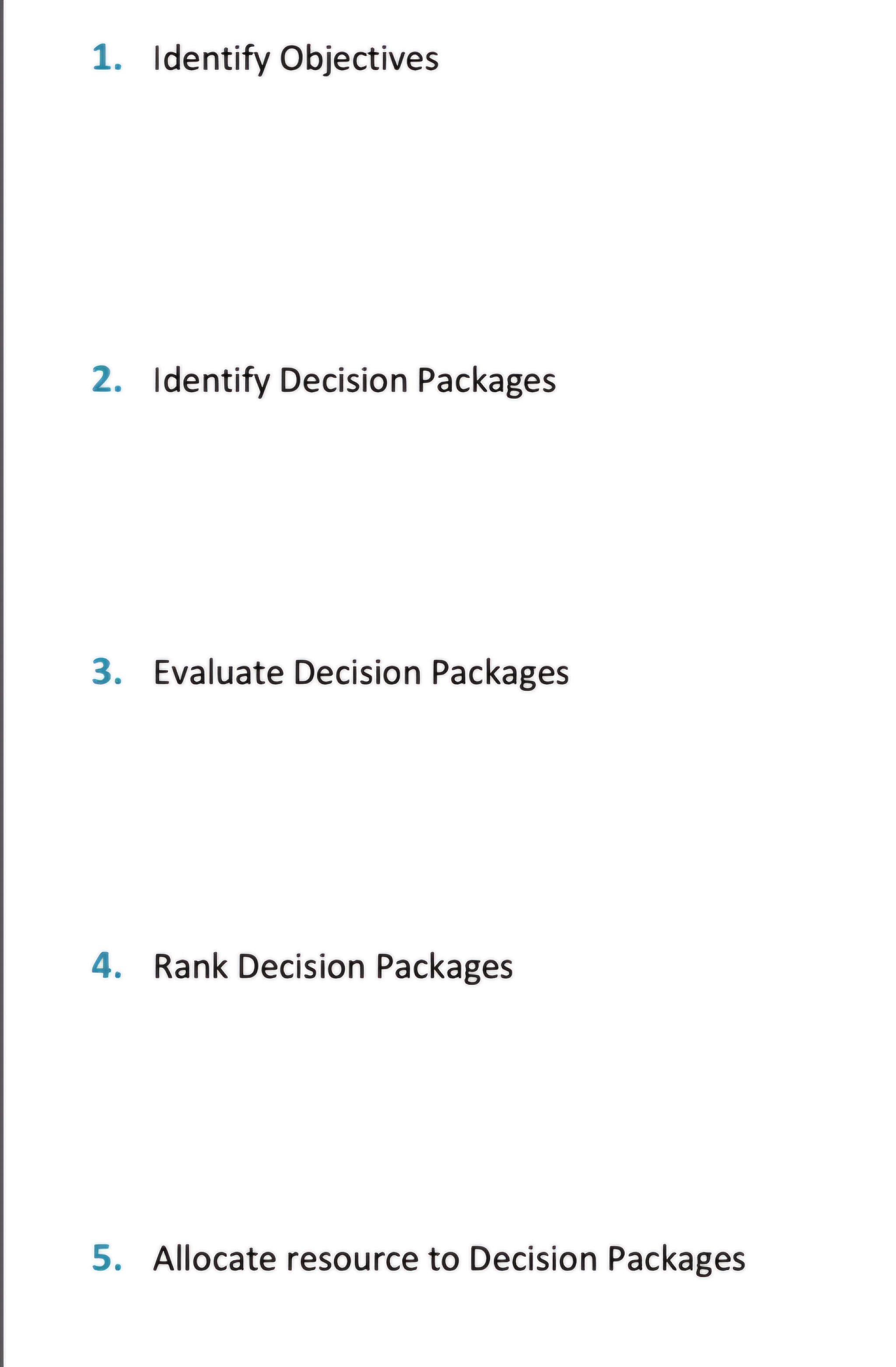
What are the 5 steps in creating a Zero Based Budget
120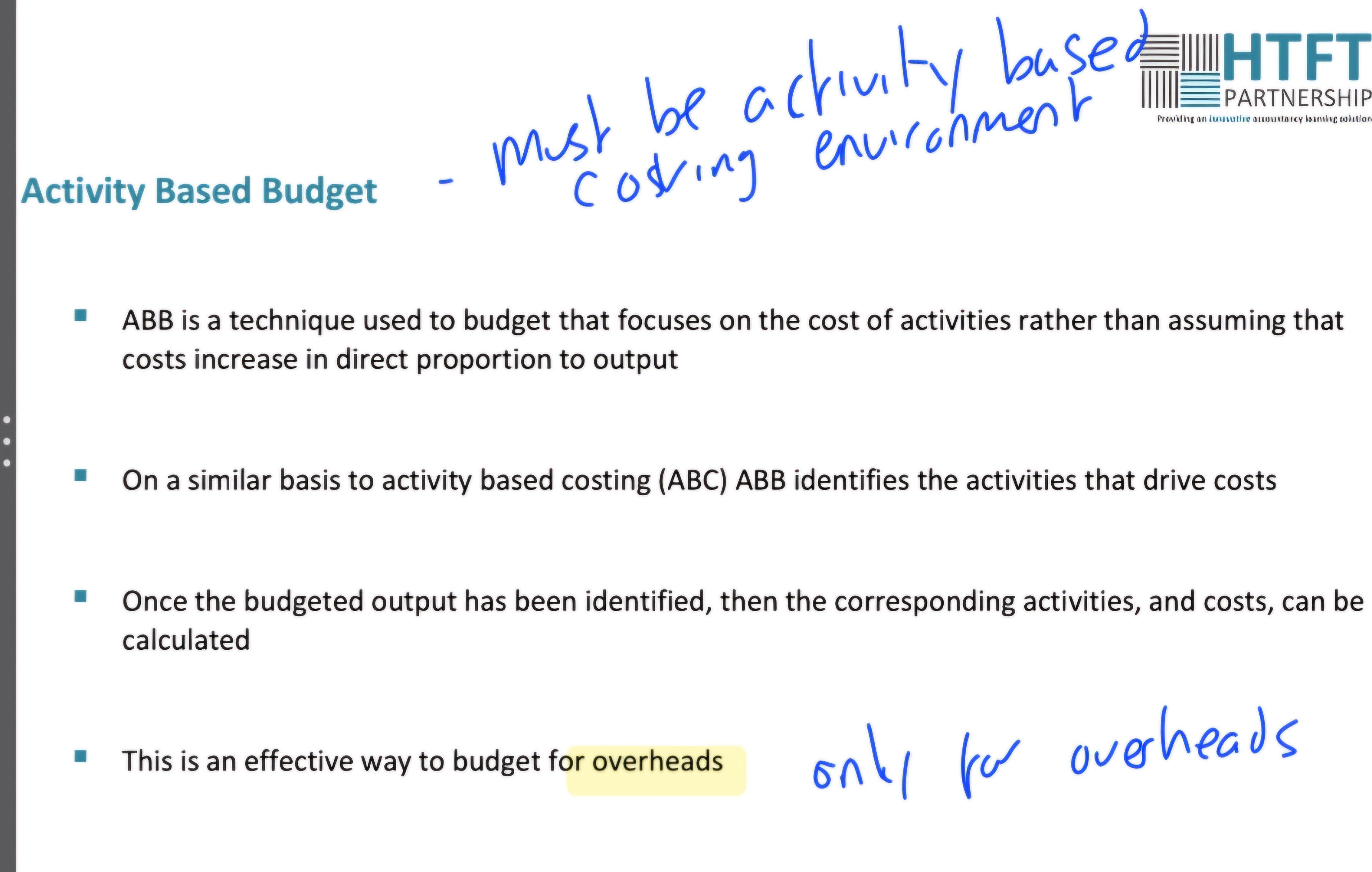
What is an Activity Based Budget
121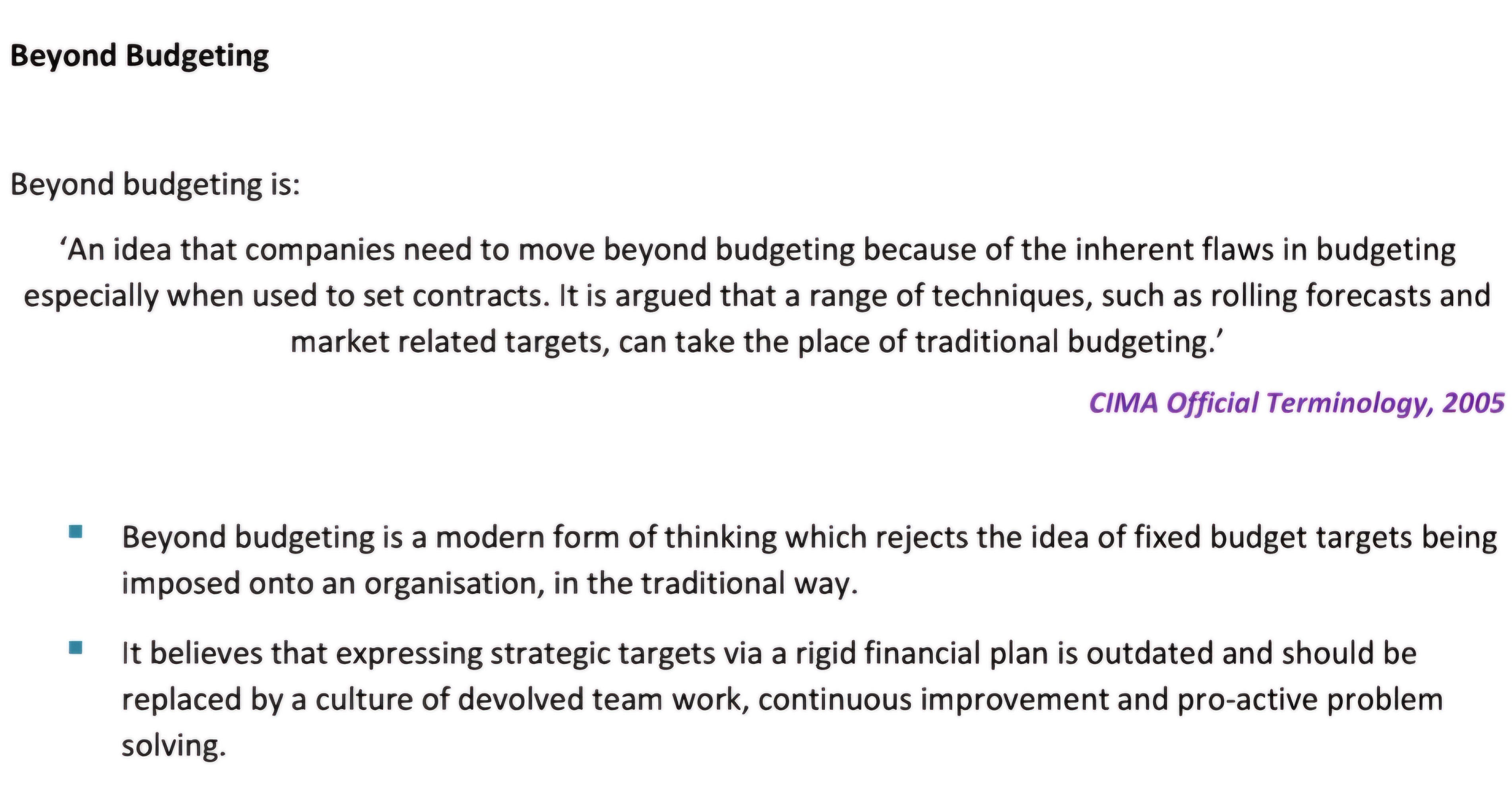
What is Beyond Budgeting
122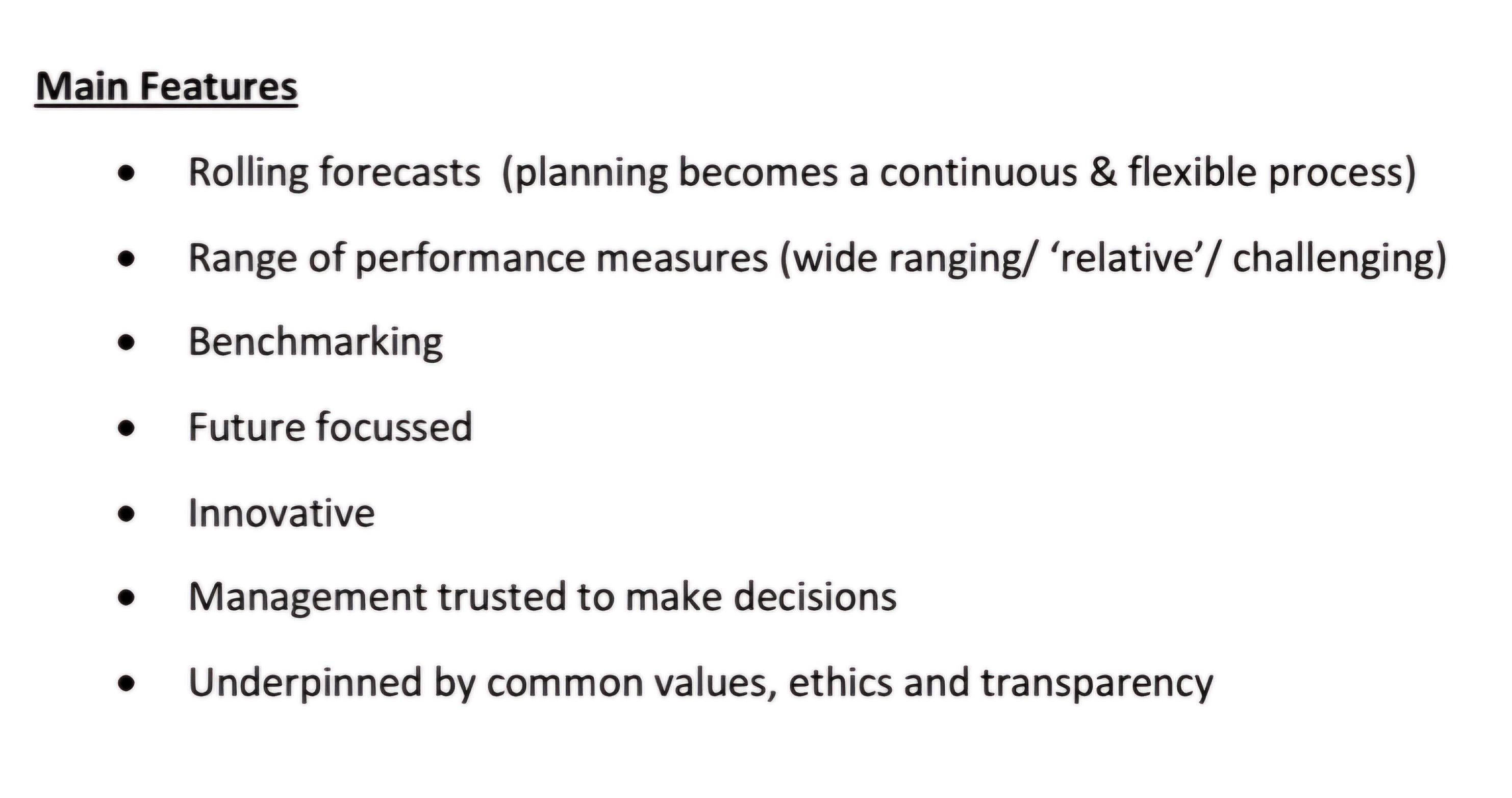
What are the 7 main features of Beyond Budgeting
123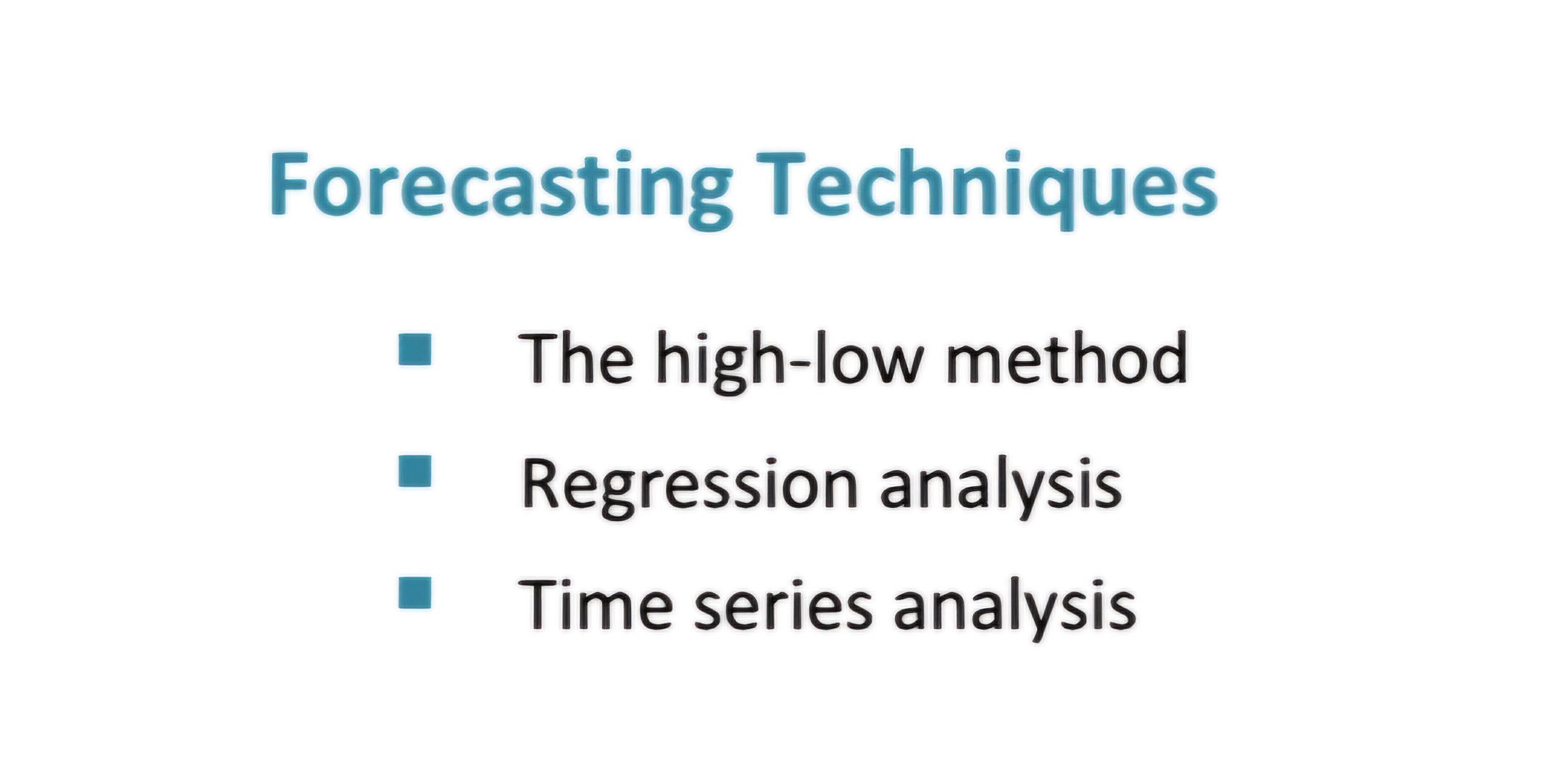
What are the 3 forecasting techniques?
124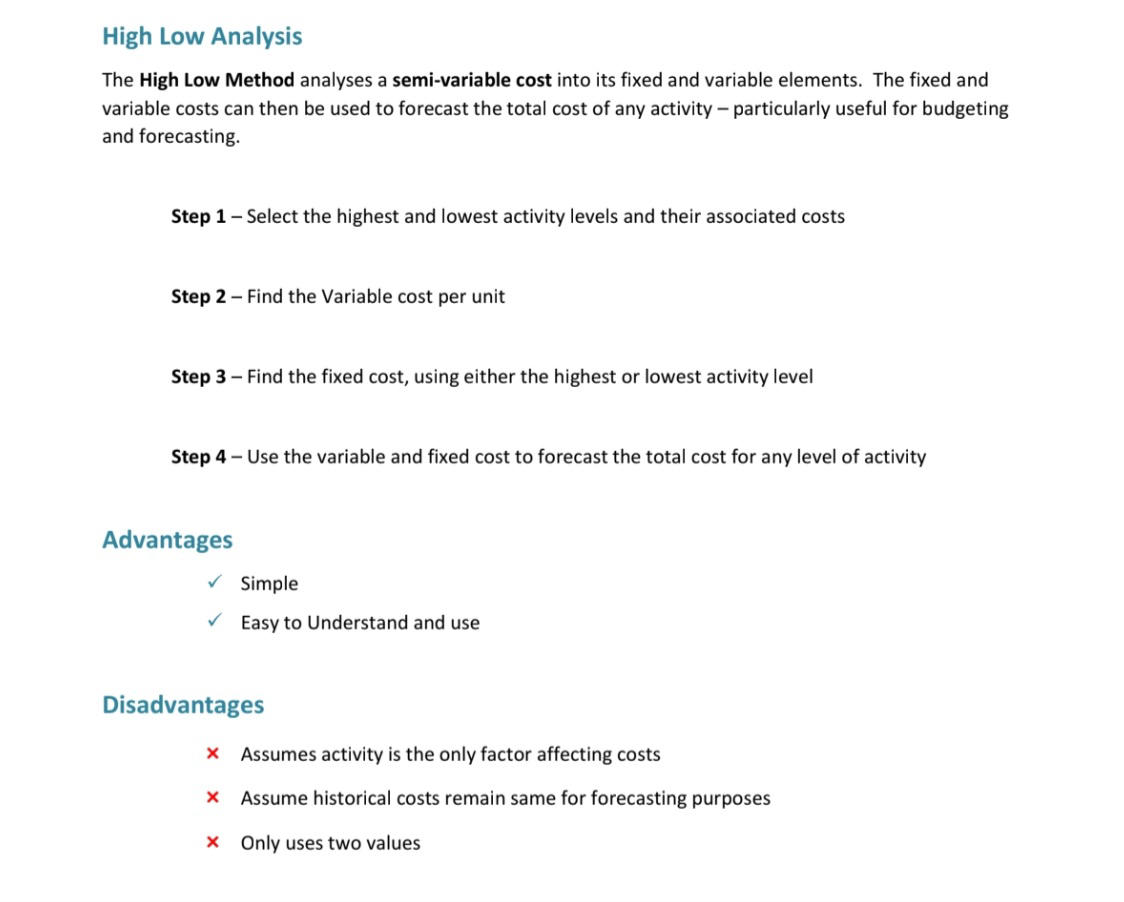
Explain High Low analysis
125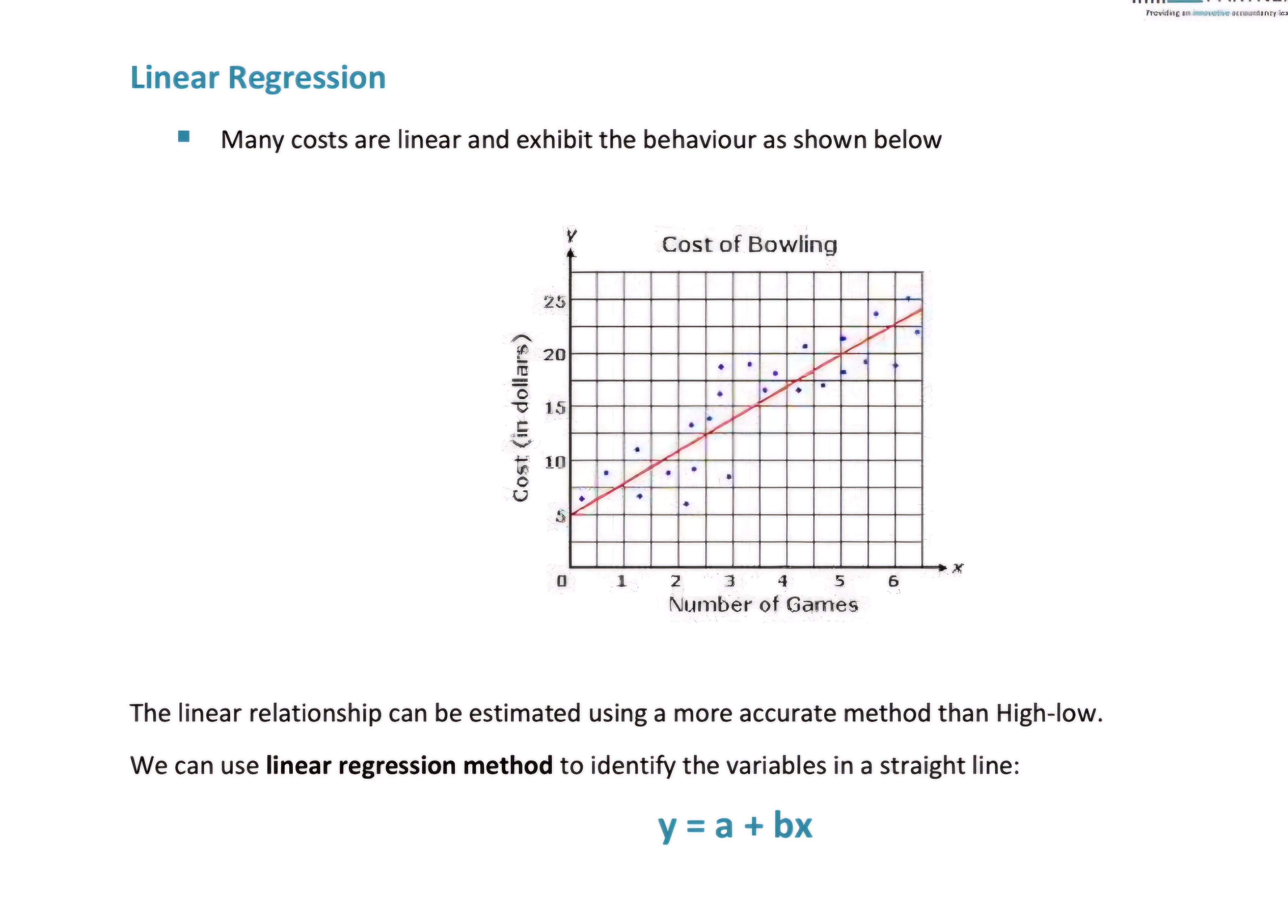
Explain linear regression
126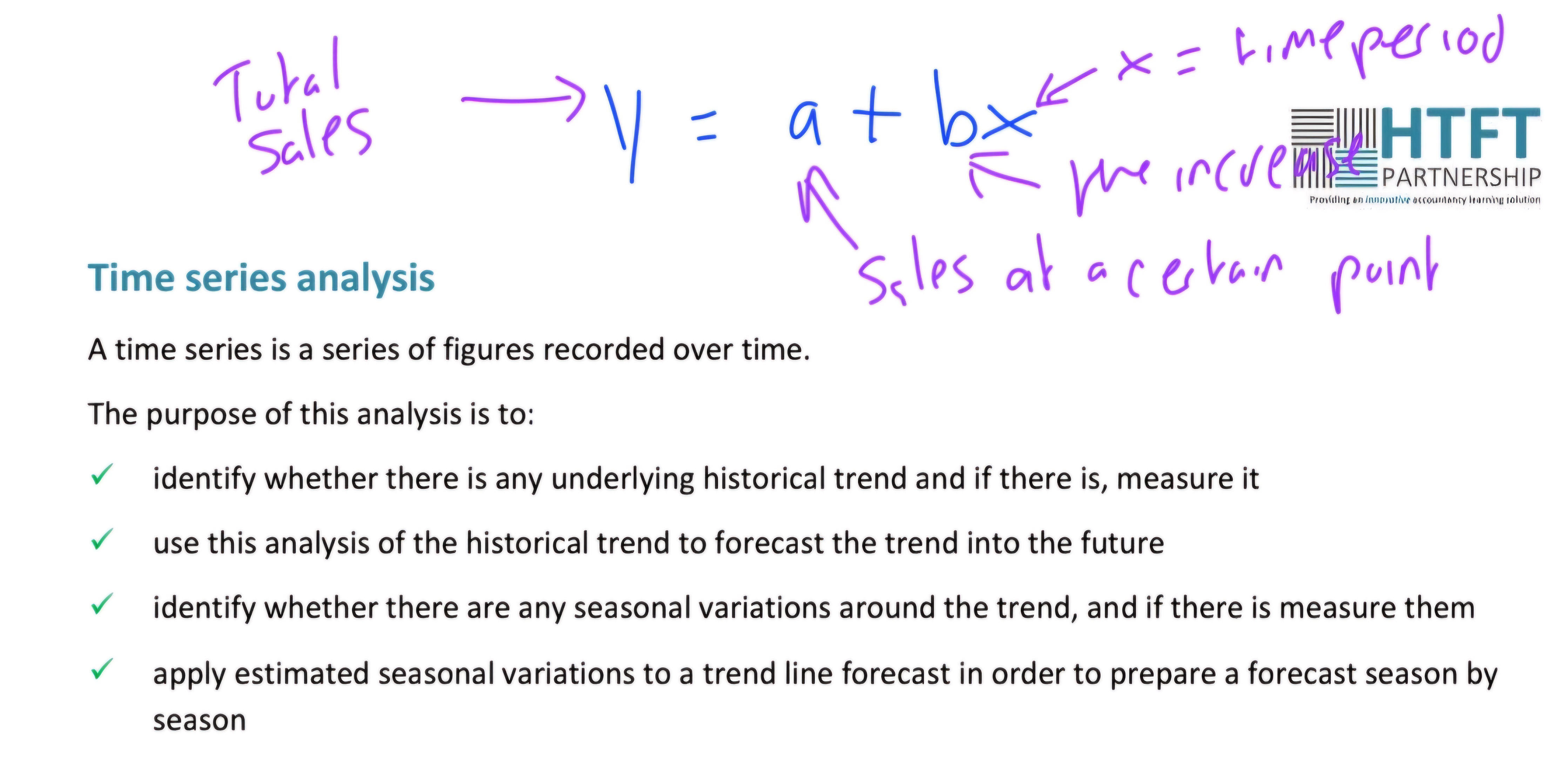
Explain Time Series Analysis
127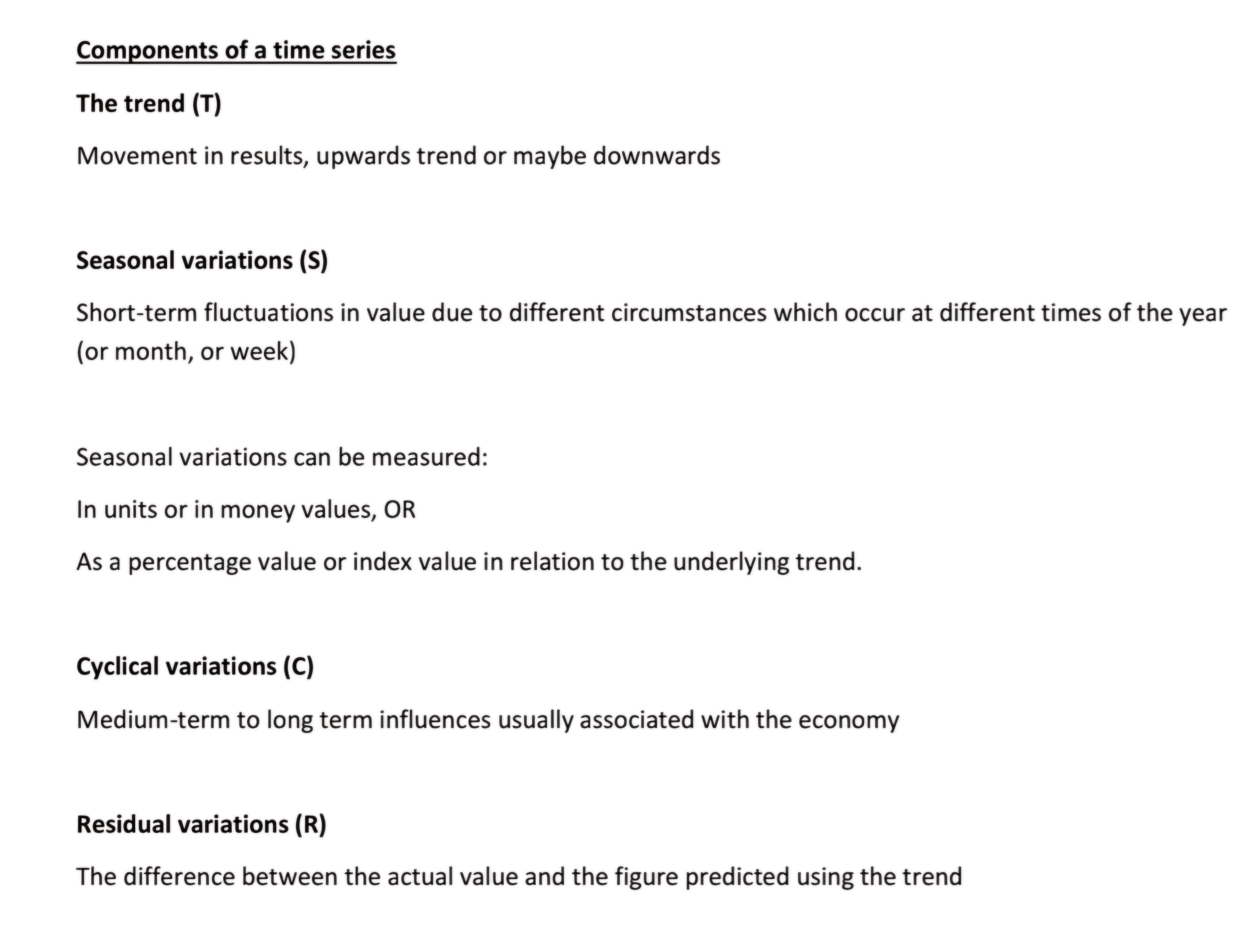
What are the 4 components to Time Series Analysis?
128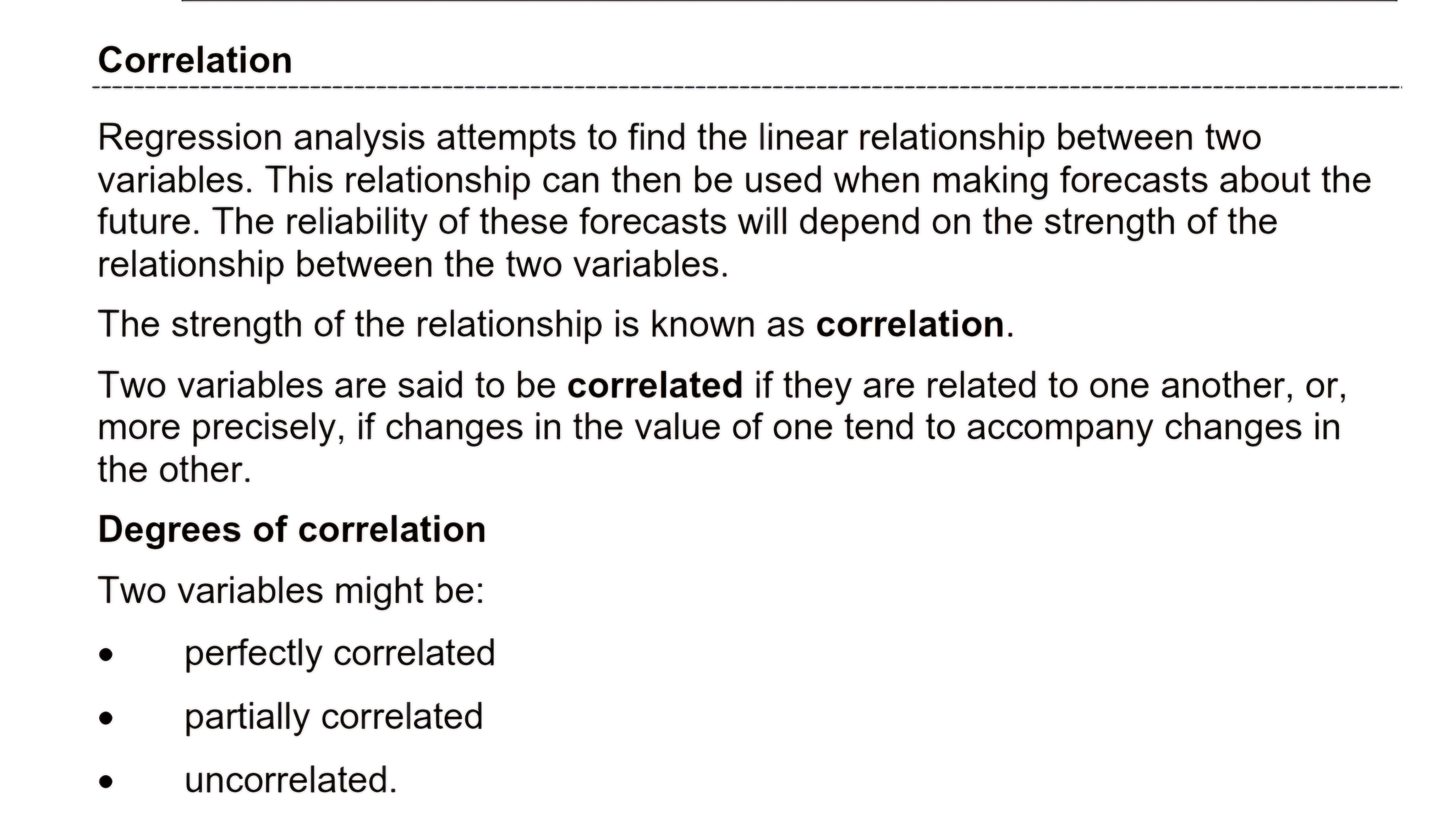
Explain correlation
129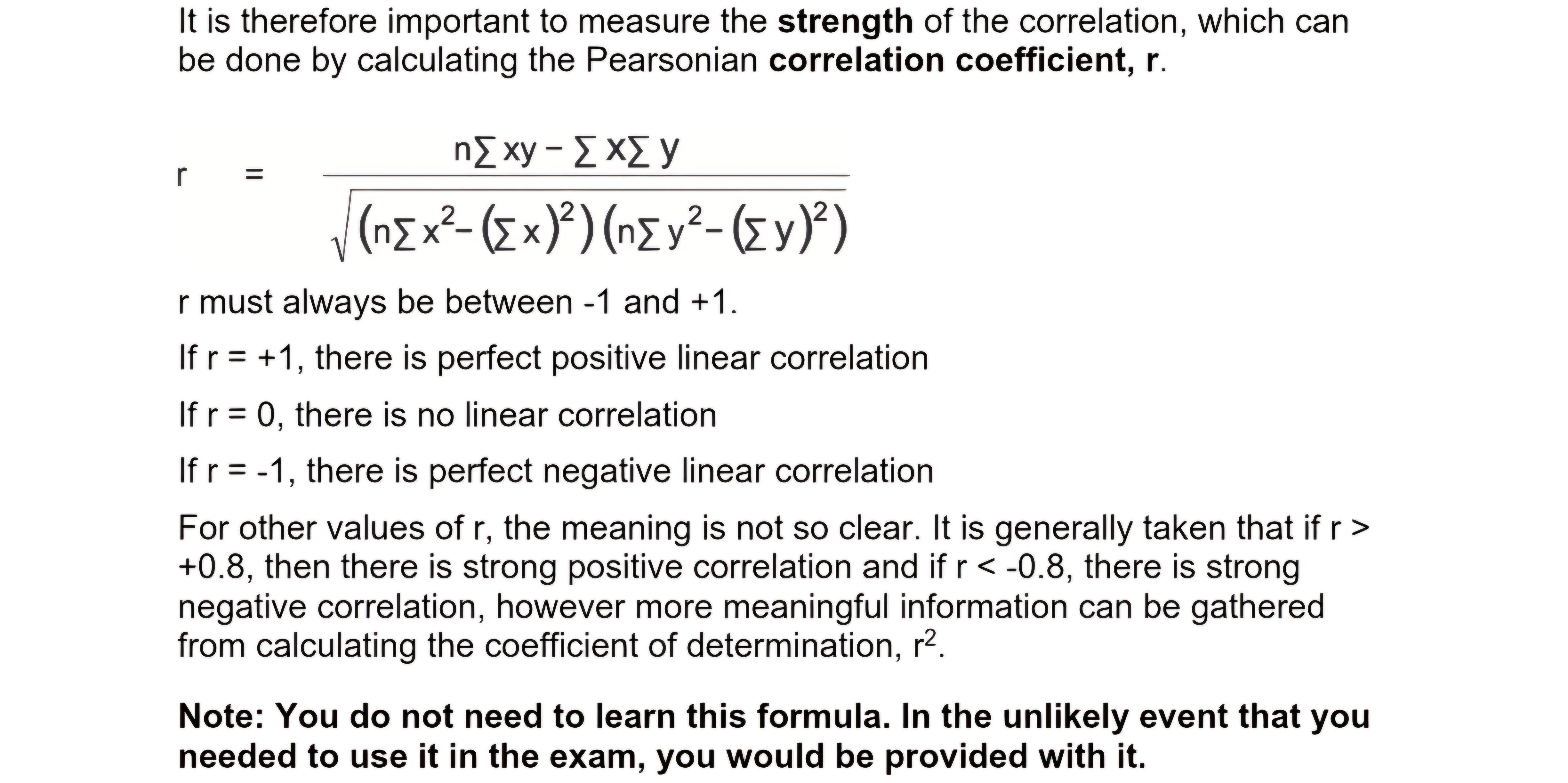
How do you calculate the correlation coefficient
130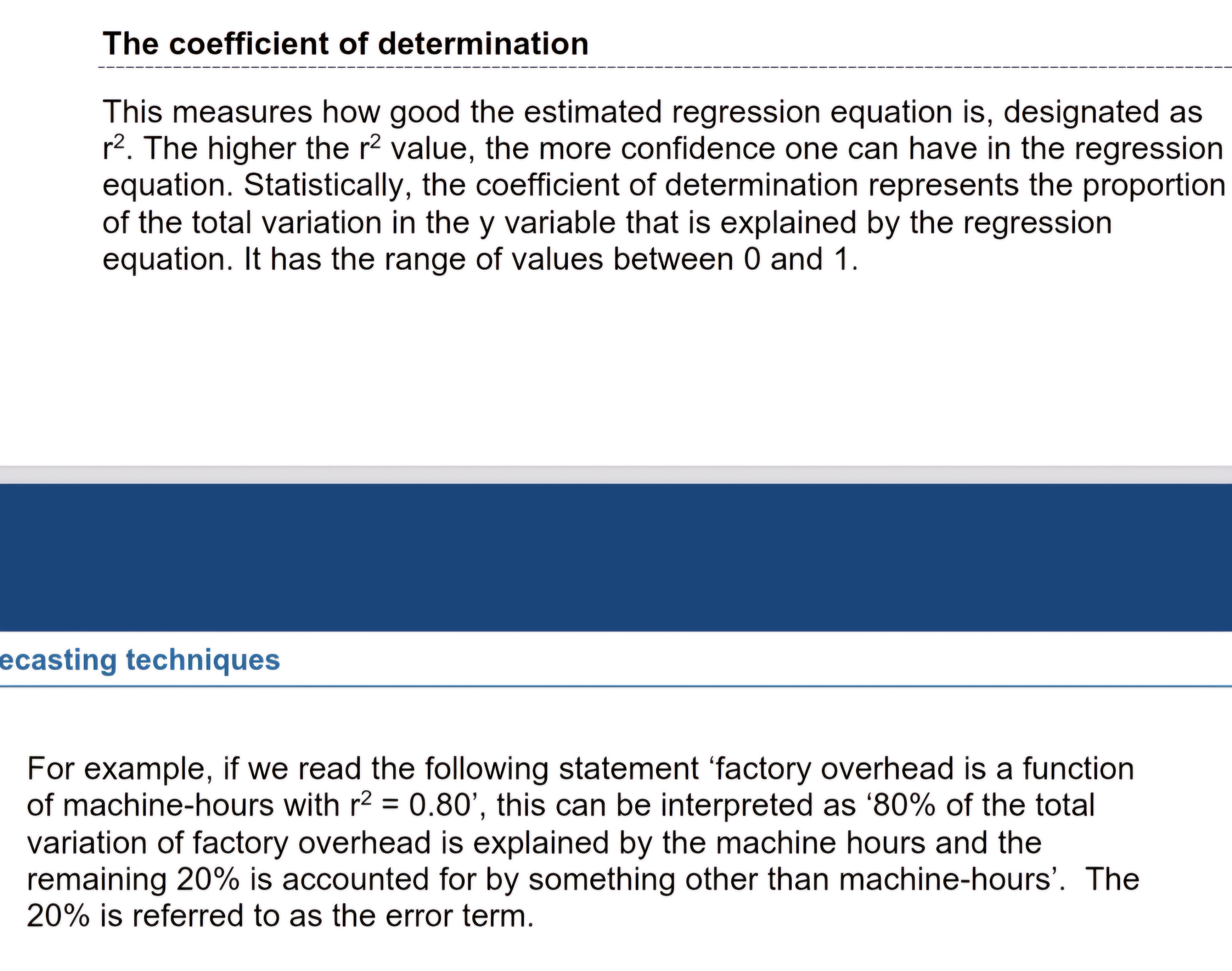
Explain the coefficient of determination
131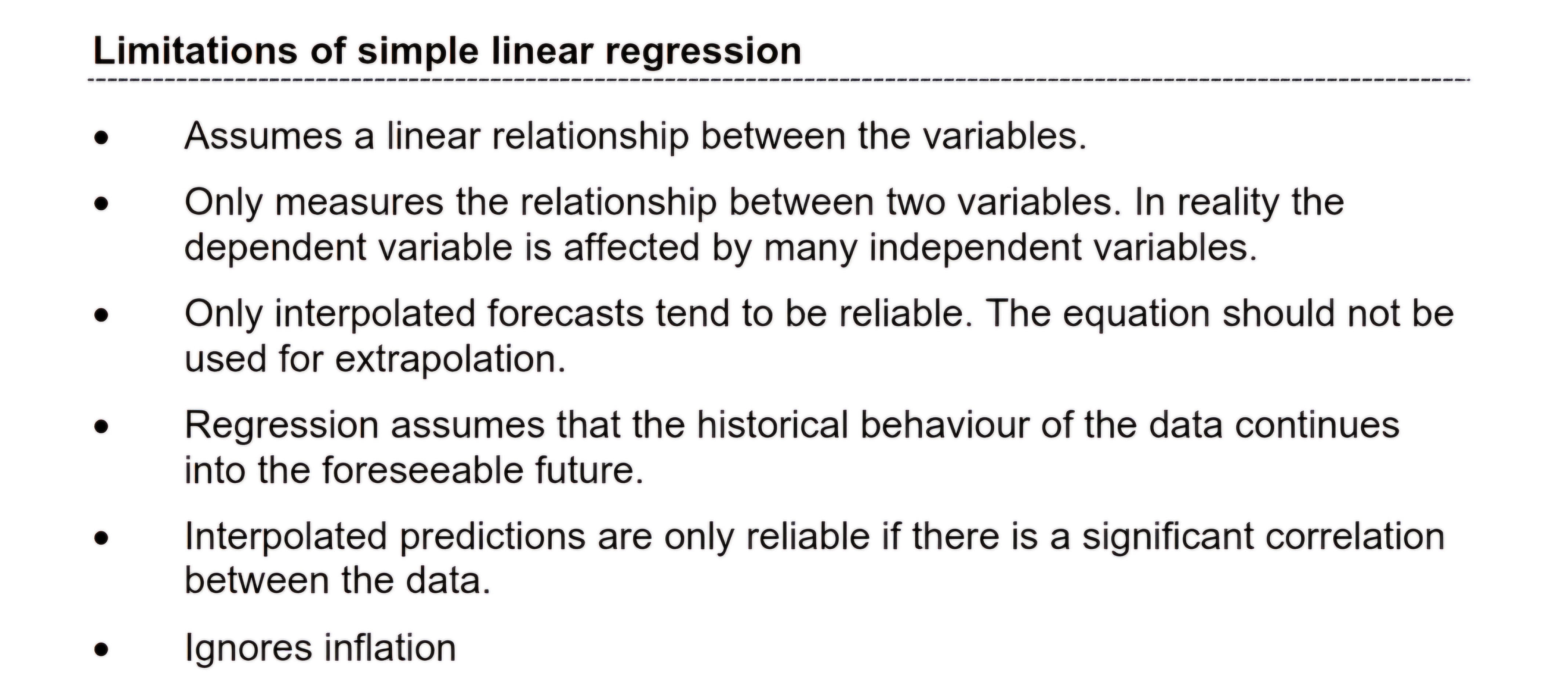
What are the limitations of linear regression? 6
132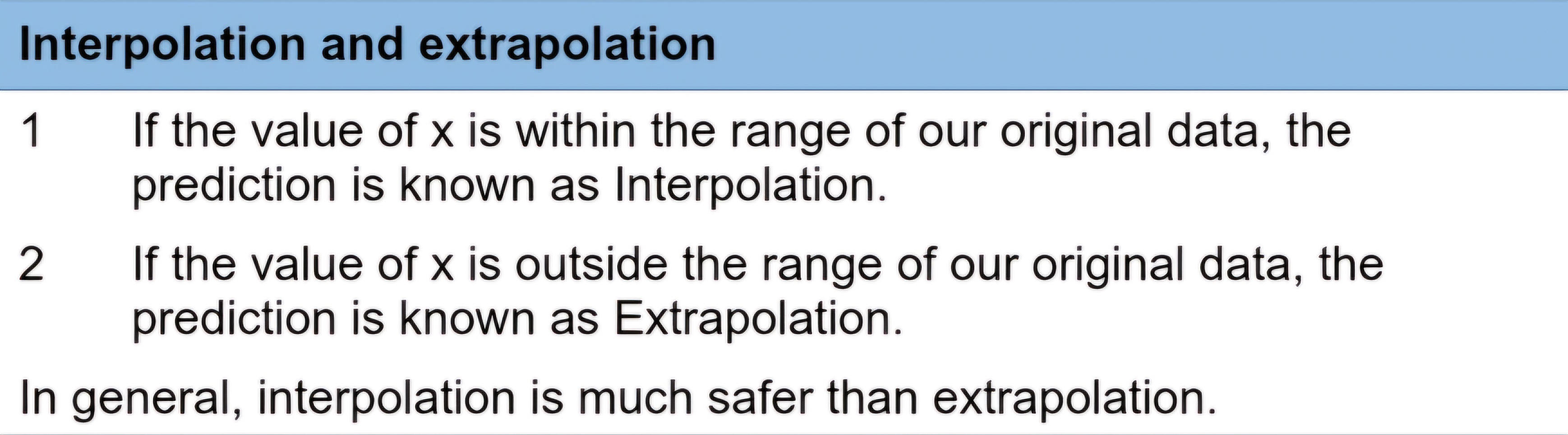
Explain Interpolation and Extrapolation
133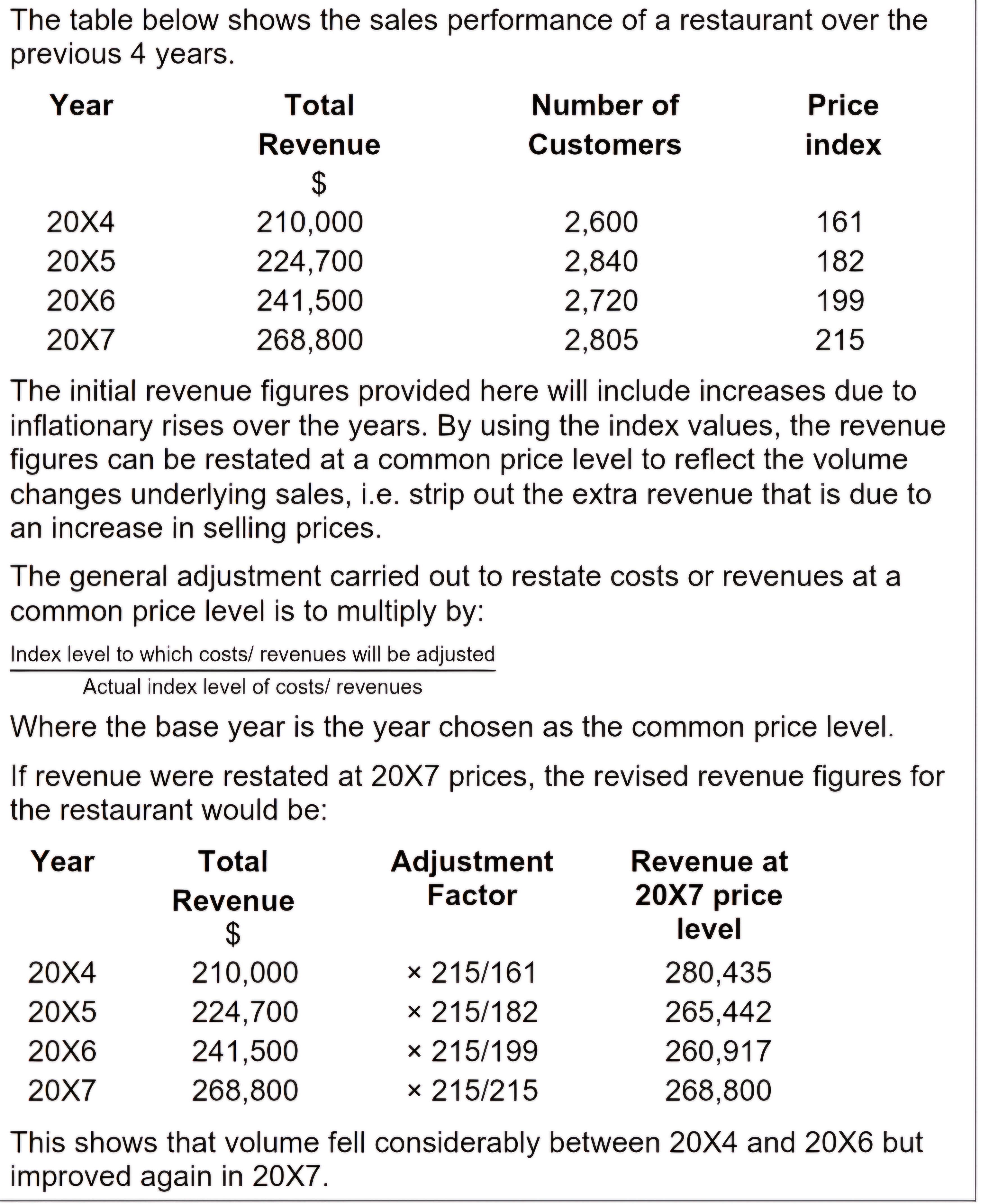
How do you adjust forecasts for inflation using the price index?
134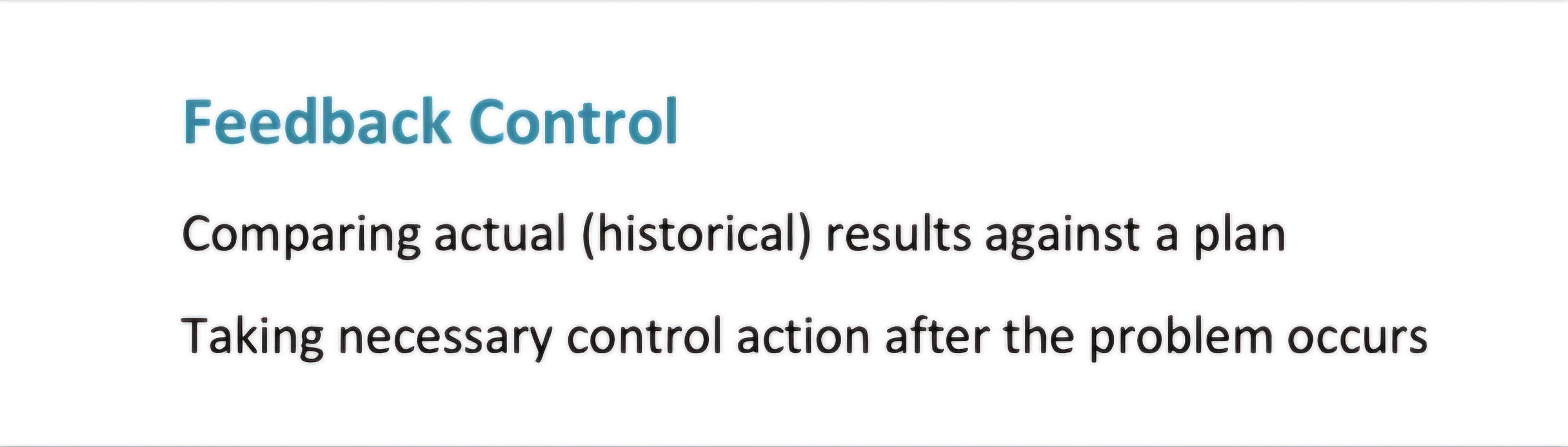
What is budgetary feedback control
135
What is budgetary feedforward control
136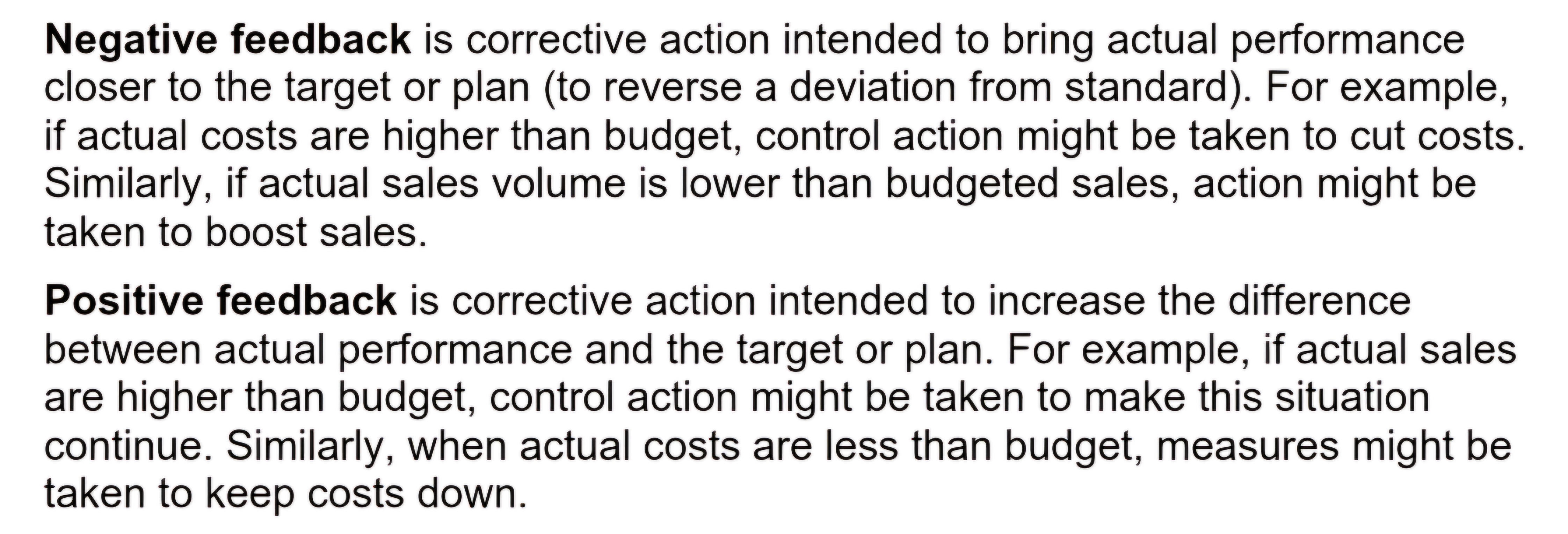
In budgetary control what is the difference between positive and negative feedback?
137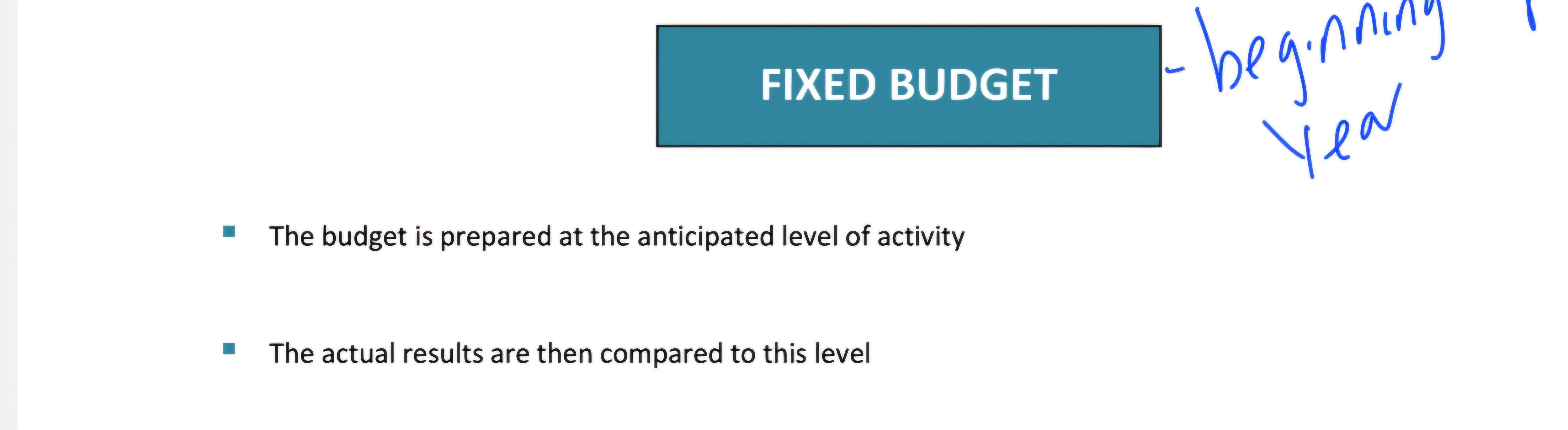
What is a fixed budget
138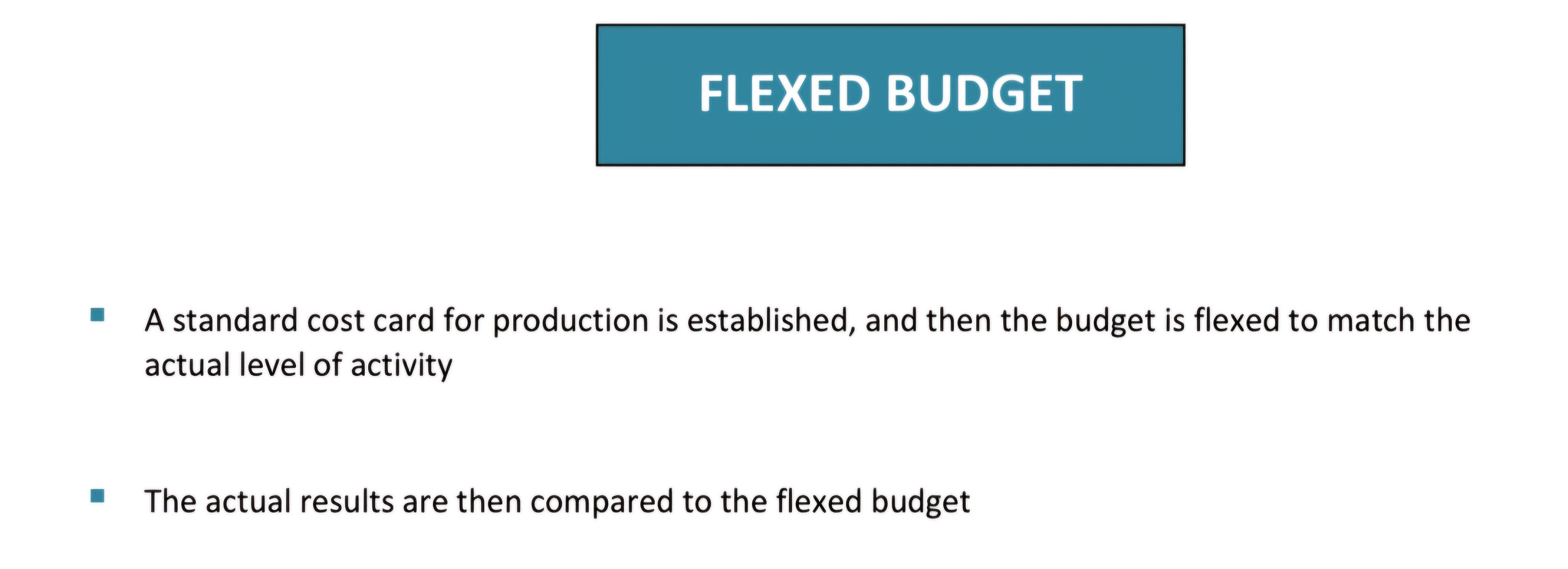
What is a flexed budget
139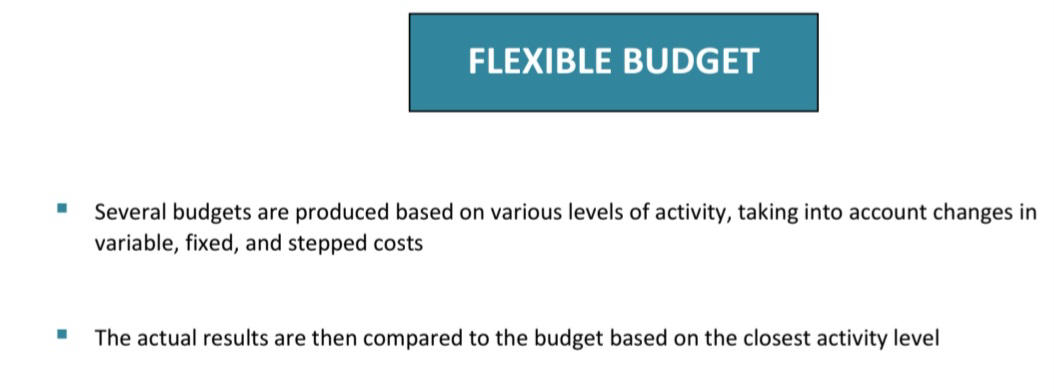
What is a flexible budget
140
How does CIMA define relevant costs and revenues?
141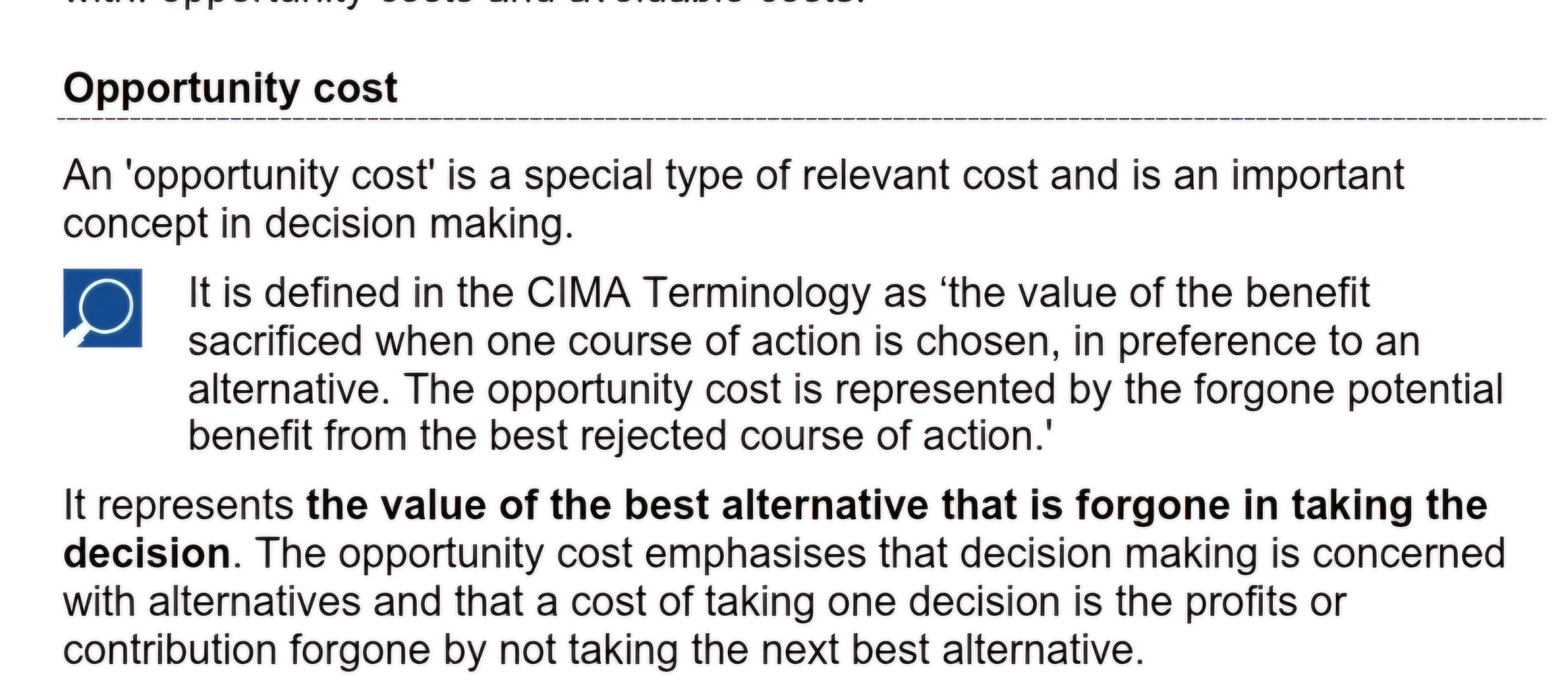
What is an opportunity cost?
142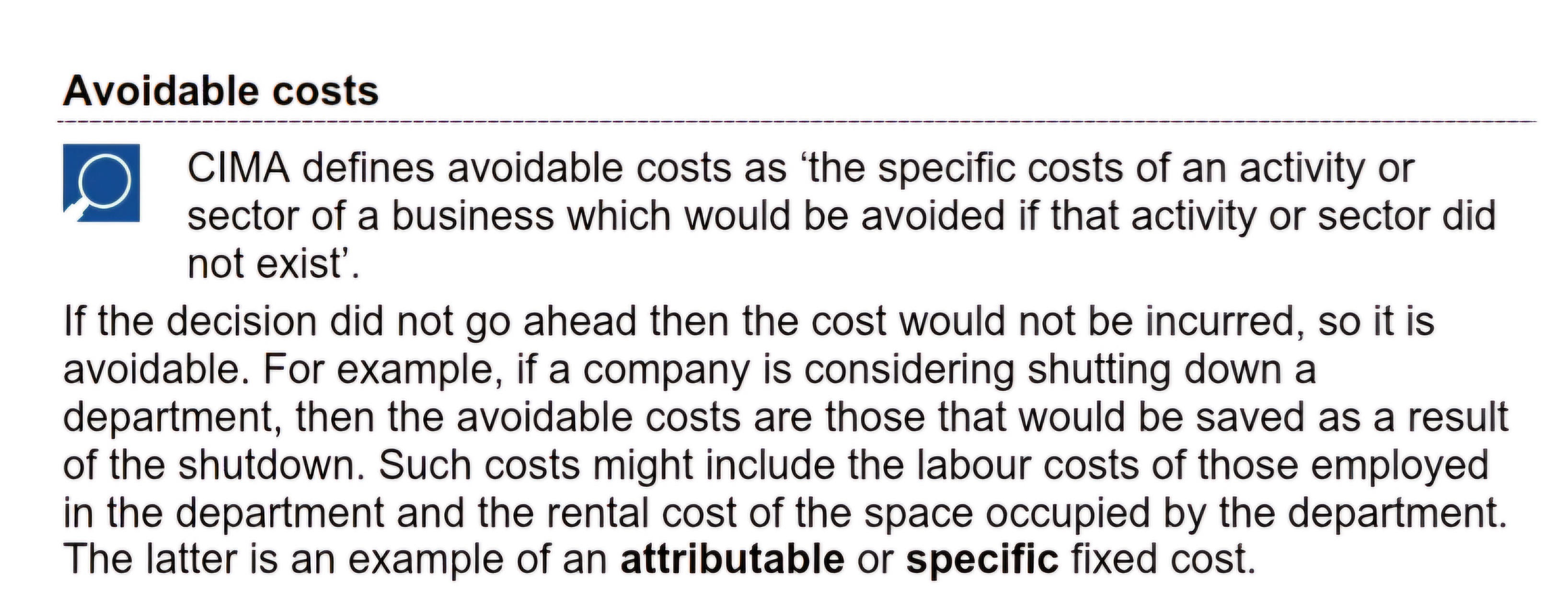
What is an avoidable cost?
143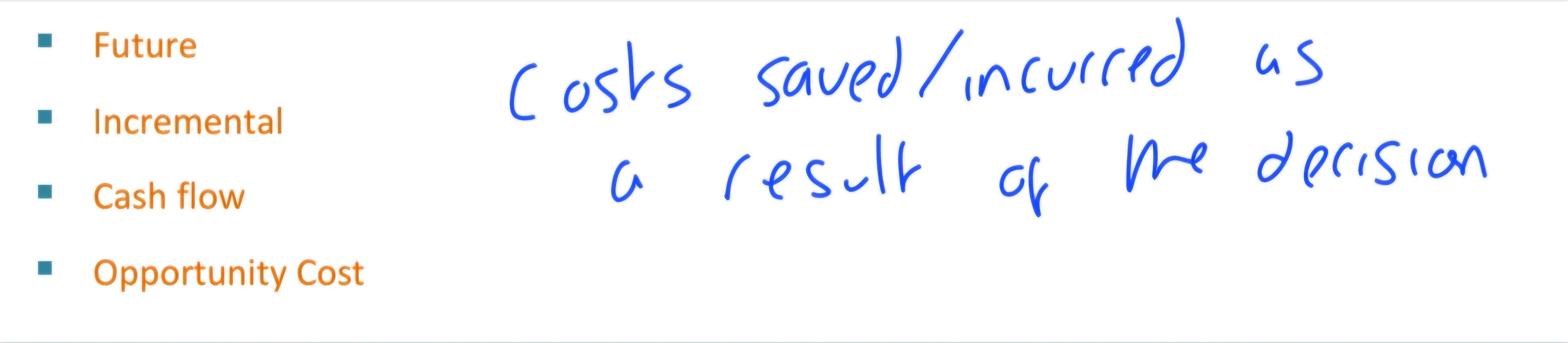
What should be included in relevant costs
144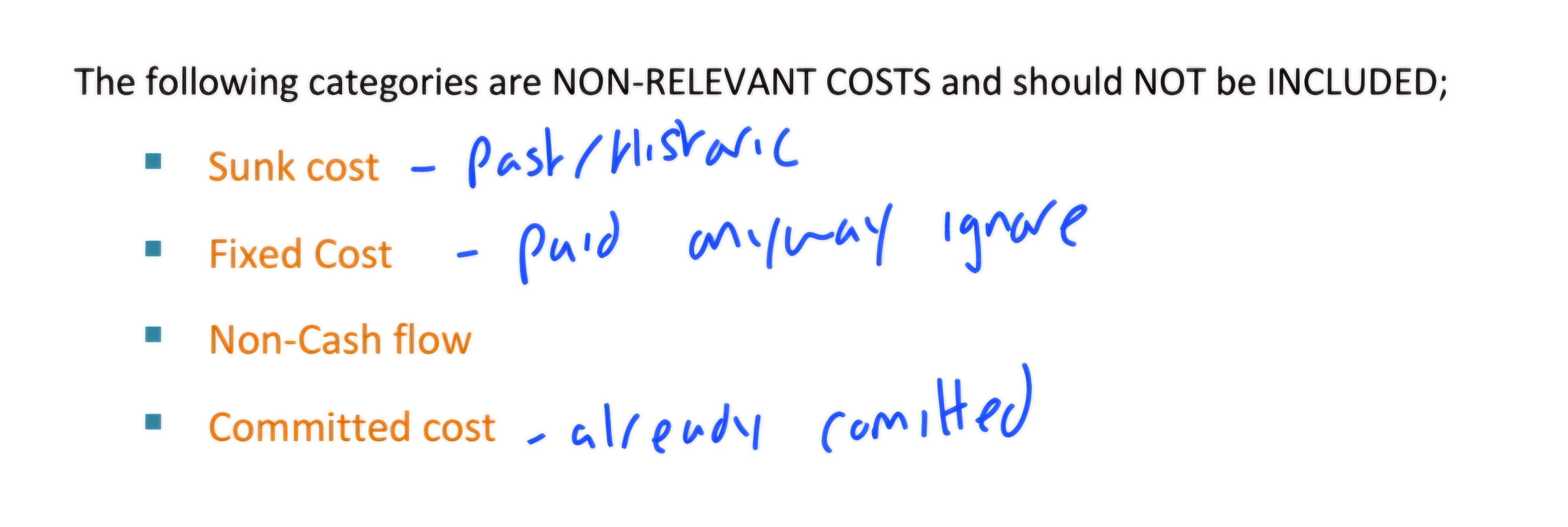
What should NOT be included in relevant costs
145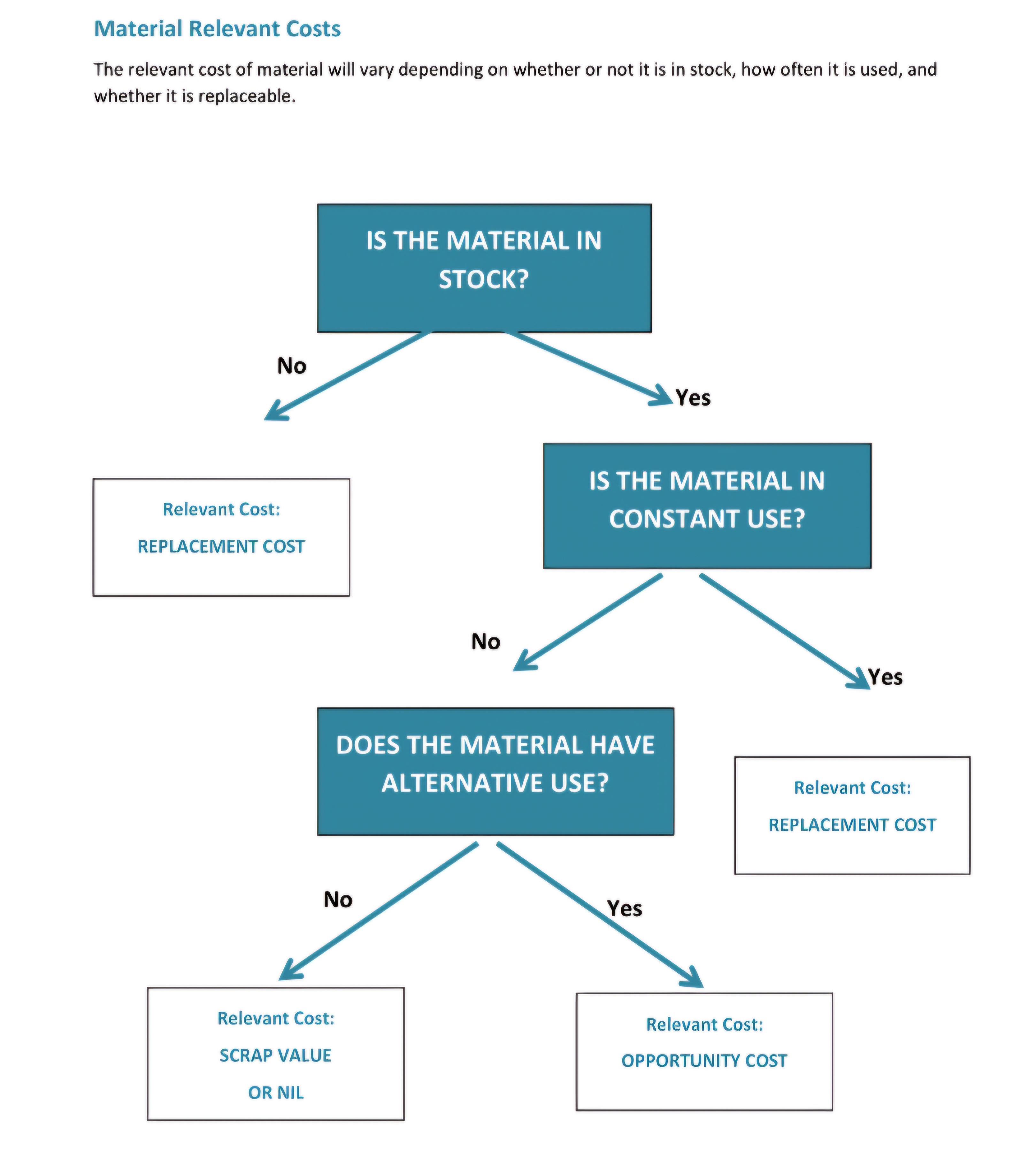
How do you determine if a material is a relevant cost
146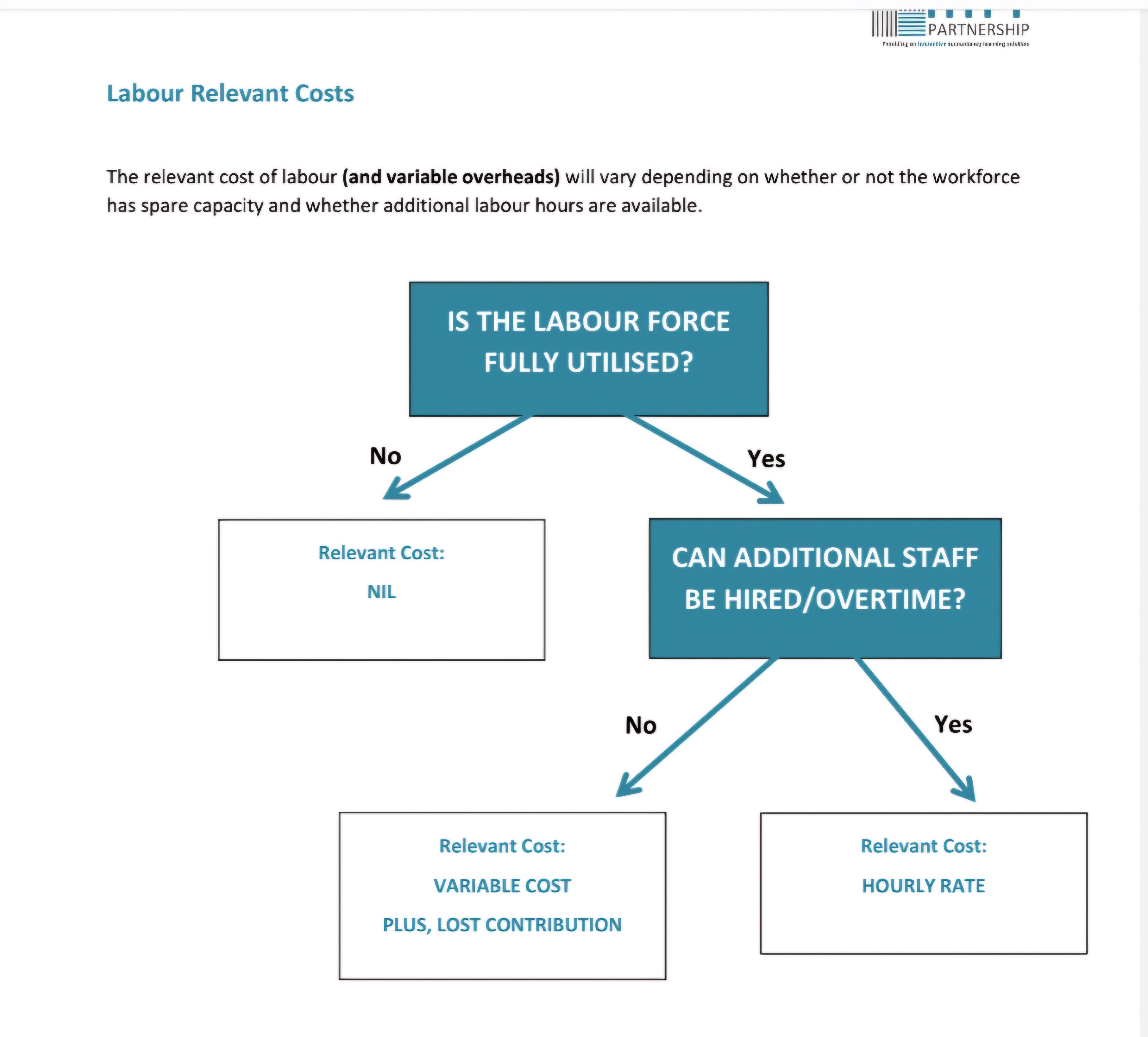
How do you determine if labour is a relevant cost
147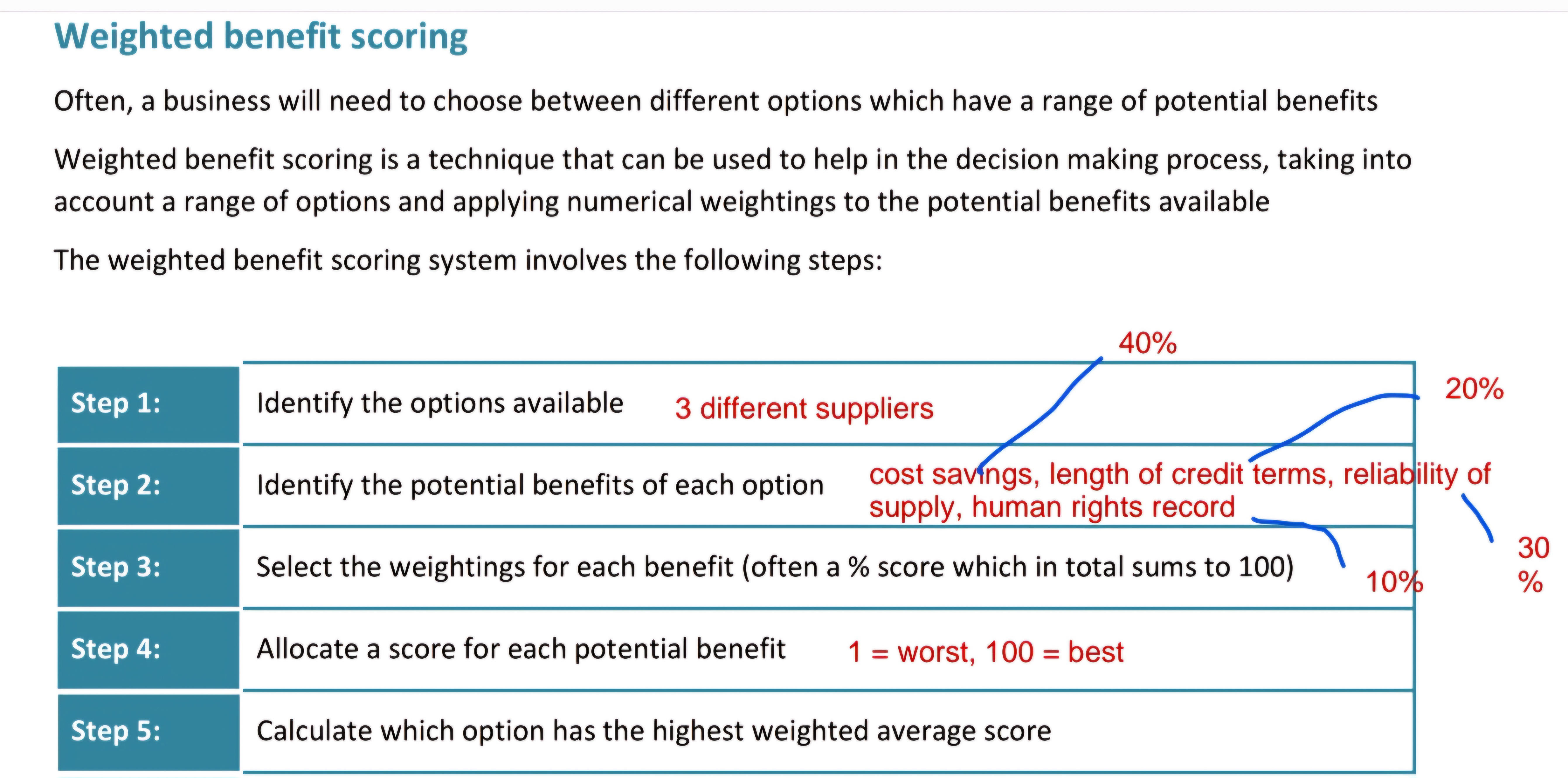
What are the 5 steps in weighted benefit scoring
148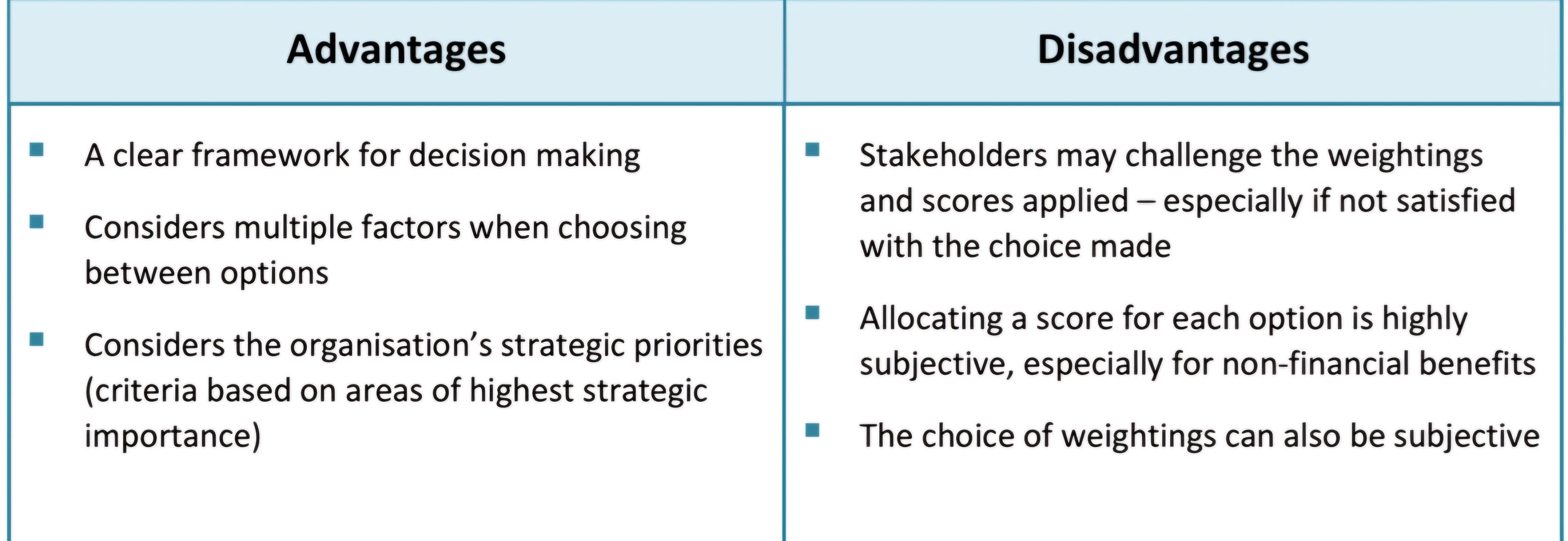
What are the advantages and disadvantages of weighted benefit scoring
149
For breakeven analysis how do you calculate contribution?
150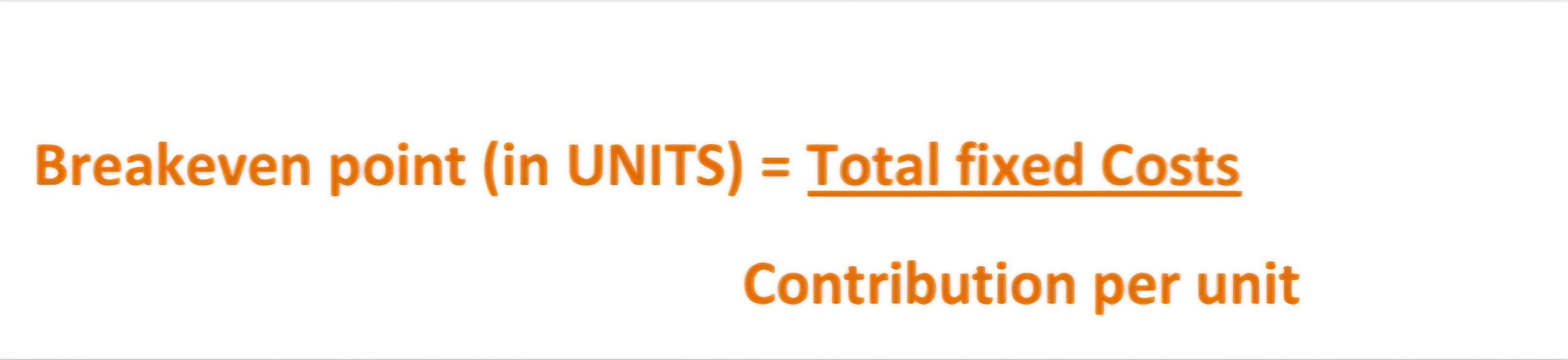
How do you calculate Breakeven point in units?
151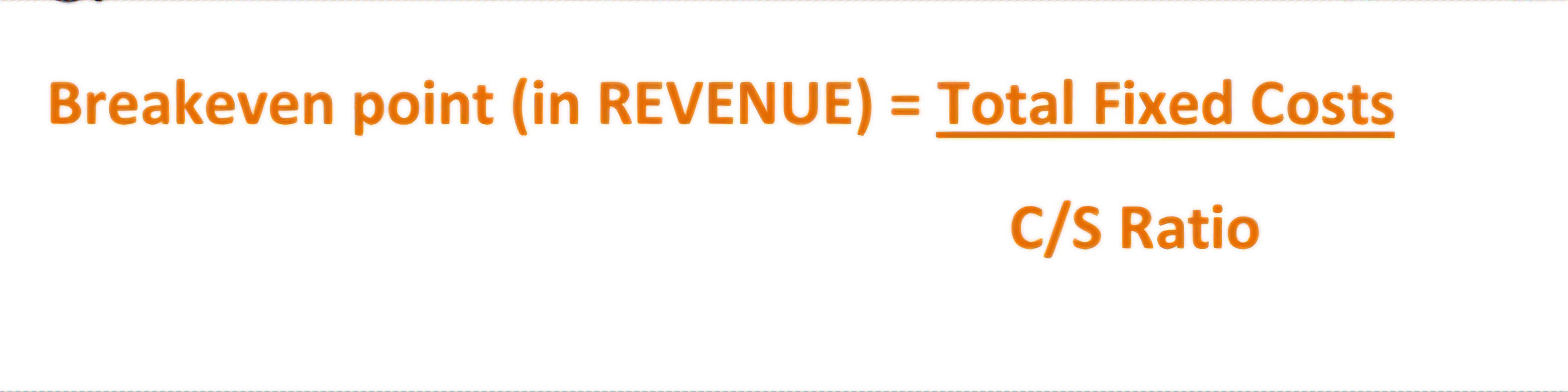
How do you calculate breakeven point in sales revenue?
152
What is the C/S ratio?
Contribution to sales ratio
153
What is another term for the C/S ratio?
154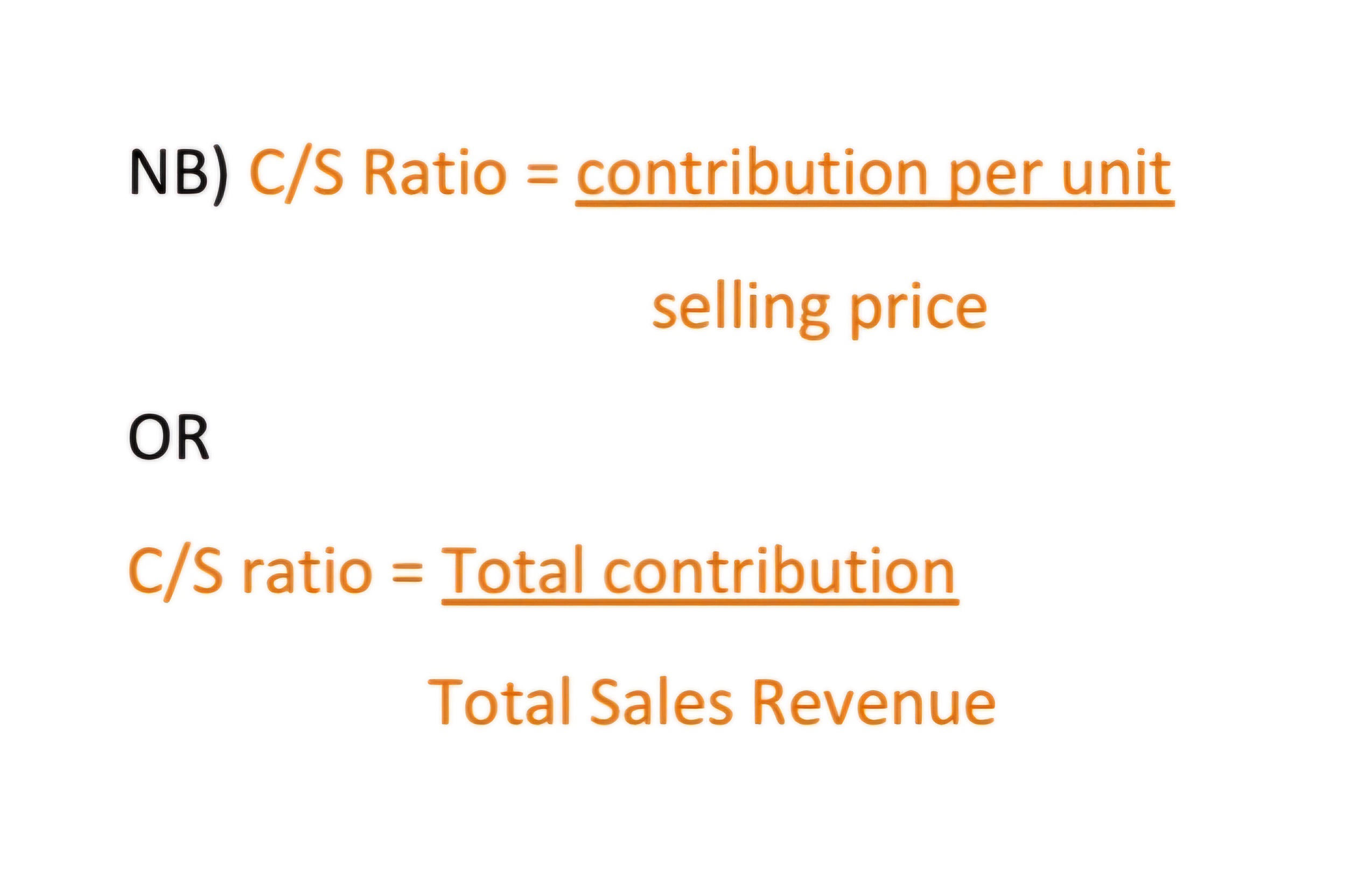
How do you calculate the C/S ratio?
155
How do you calculate margin of safety in units
156
How do you calculate margin of safety as a %
157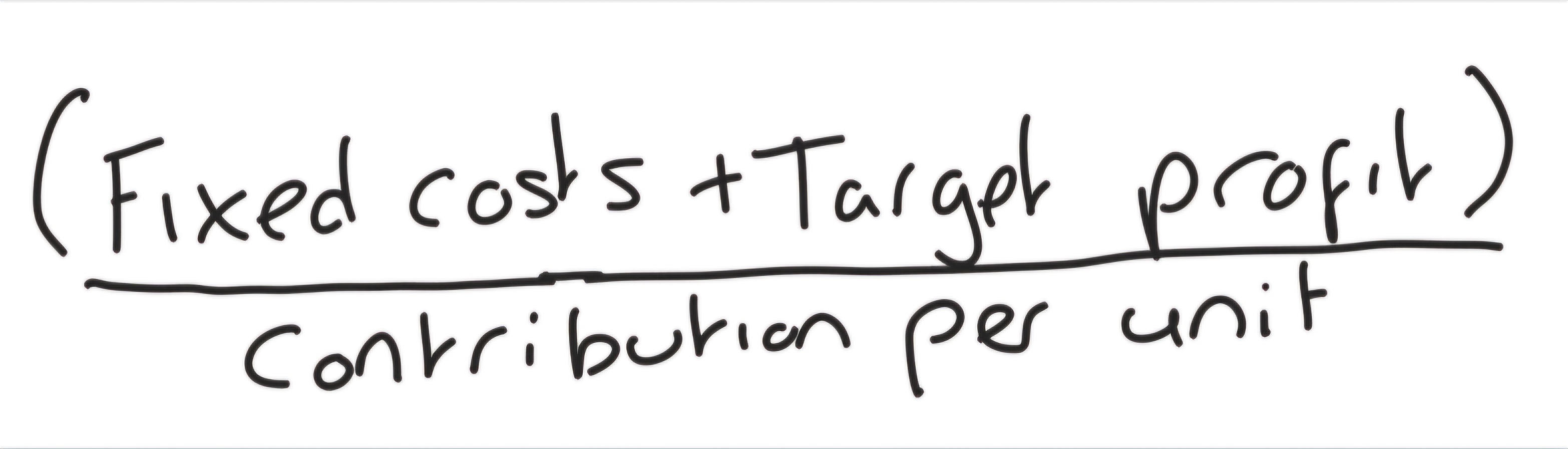
How do you calculate profit target in Units?
158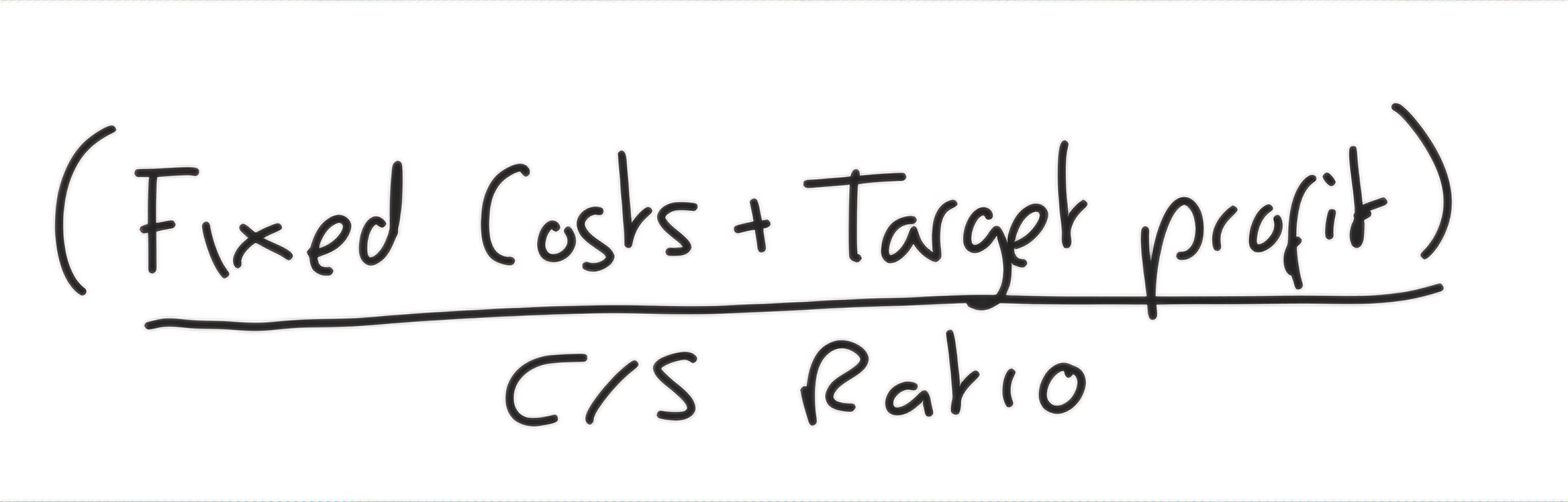
How do you calculate profit target in revenue?
159
What is operational gearing?
The proportion of Fixed costs to total costs
High operational gearing = high fixed costs, high breakeven point and high C/S ratio.
High operational gearing means profits increase rapidly after breakeven point
also means they would struggle in recession as Fixed costs hard to reduce
High operational gearing = high fixed costs, high breakeven point and high C/S ratio.
High operational gearing means profits increase rapidly after breakeven point
also means they would struggle in recession as Fixed costs hard to reduce
160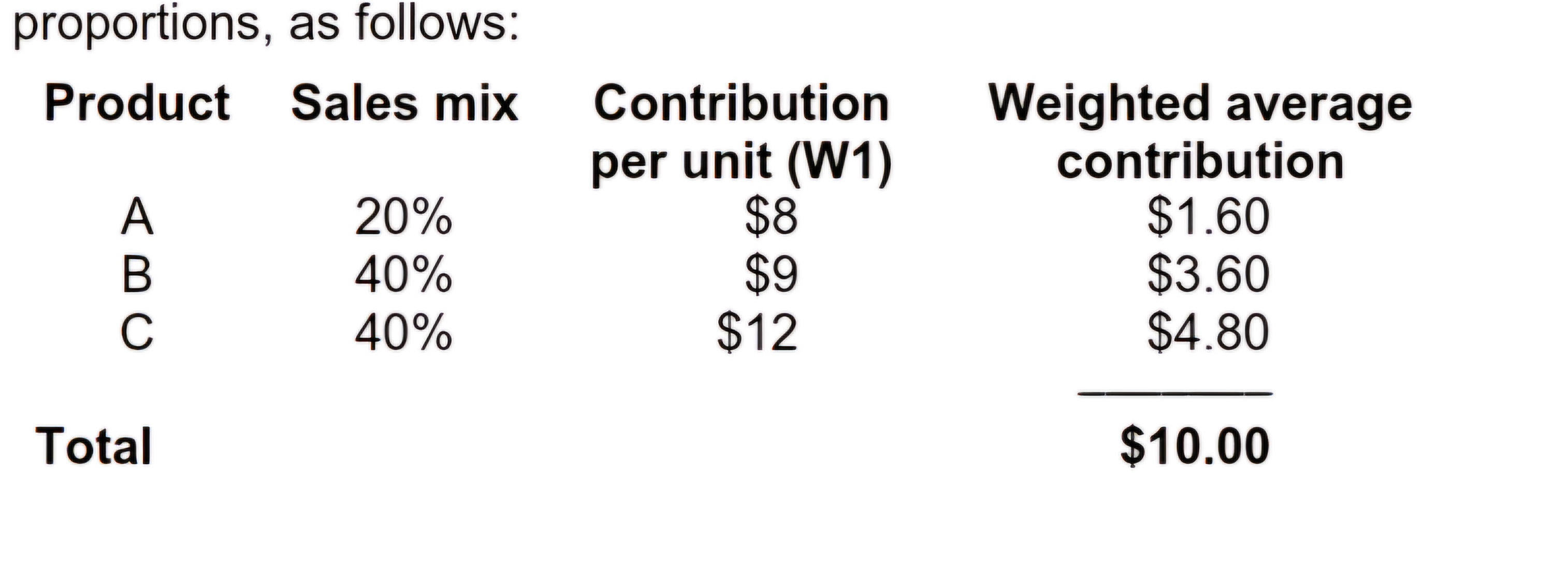
How do you calculate the weighted average contribution?
161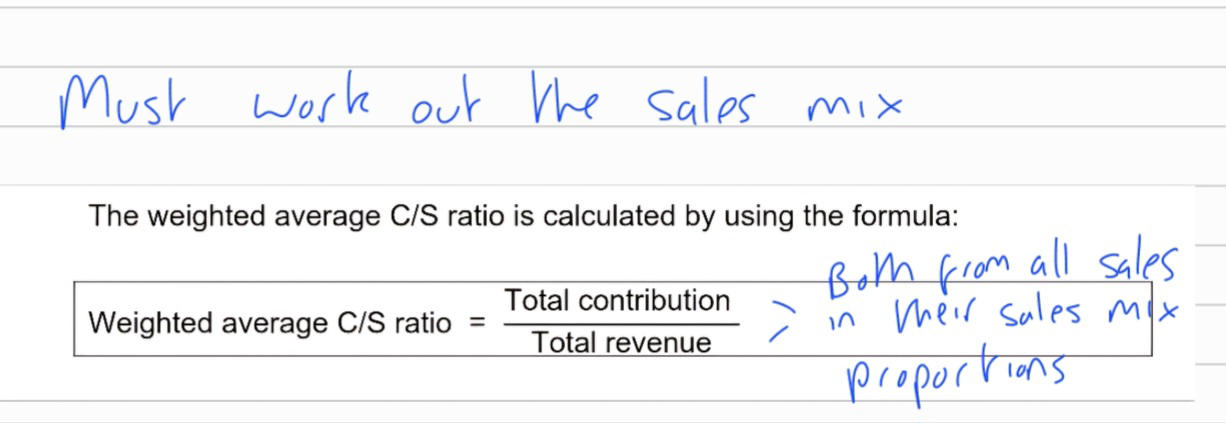
How do you calculate the weighted C/S ratio when there is a sales mix?
162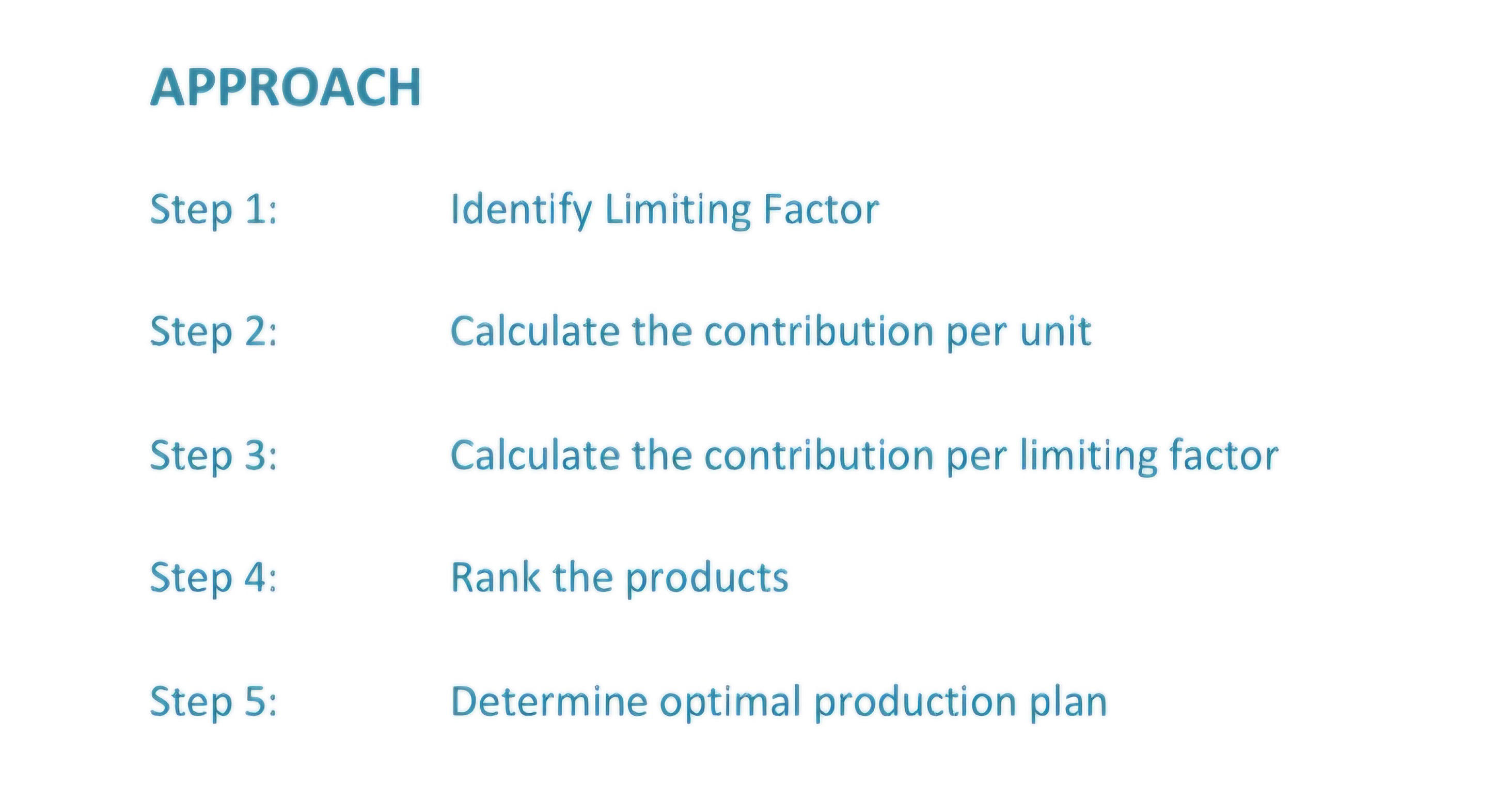
What are the 5 steps to dealing with a limiting factor?
163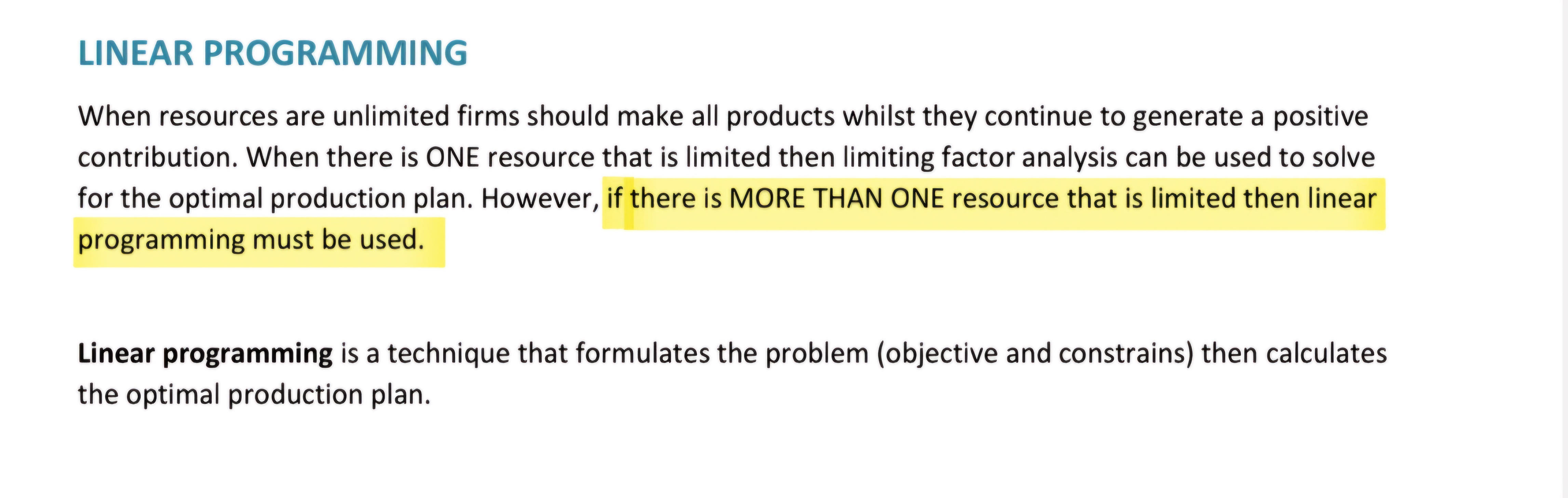
What is linear programming?
164
What are the 6 steps to Linear programming?
DOFPIS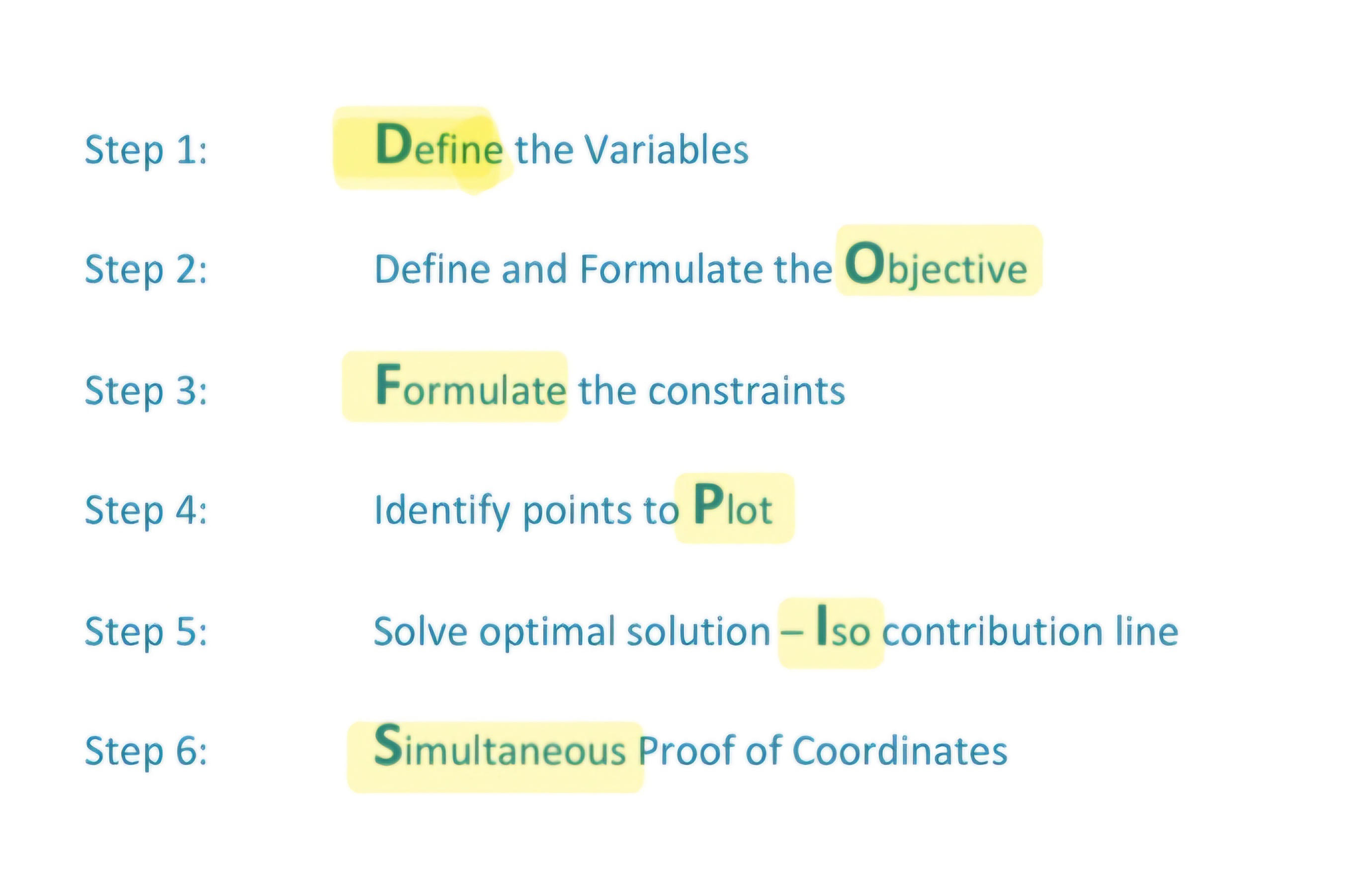
165
In step 1 of linear programming how do you DEFINE THE VARIABLES
Simplify the equations by using abbreviations for the products or variables ie use X and Y instead of product alpha and product bravo
166
In step 2 of linear programming how do you STATE THE OBJECTIVE FUNCTION
Unless told otherwise the objective is usually to maximise contribution, so, you need to express this is a formula. For example if you are using X and Y as your variables and the contribution for each is 4X and 8Y then your forlual would be contribution = 4X + 8Y
167
In step 3 of linear programming how do you STATE THE CONSTRAINTS
Restate each of the contraints in a formula. For example
Dept A: 8X + 10Y < 11,000
Dept B: 4X + 10Y <9,000
you also need a non negative contraint, for example
X,Y > 0
which simply means X & Y cant be less than zero
Dept A: 8X + 10Y < 11,000
Dept B: 4X + 10Y <9,000
you also need a non negative contraint, for example
X,Y > 0
which simply means X & Y cant be less than zero
168
In step 4 of linear programming how do you IDENTIFY POINTS TO PLOT (or draw graph)
Draw the constraint lines. If a constraint is 4X + 8Y < 8000 then make the X zero so that 8Y = 8000, this becomes 8000/8 = 1000. You can mark 1000 on the Y axis ( on the Y line) then do the same the other way around, 4X +8Y < 8000 becomes 4X + 0Y = 8000, which becomes 8000/4 = 2000. you can mark 2000 on the X axis line. Then you join the 2 points together. Repeat for each constraint. The area between zero and the crossover points is the feasable area.
169
For step 5 of linear programming How do you FIND THE OPTIMAL SOLUTION - ISO CONTRIBUTION LINE
There are 2 options.
. using simultaneous equations
. using an IS0- contribution line
Simultaneous equation = Calculate the coordinates for X and Y at each vertex (further points) on the feasible region. Then calculate the contribution for each vertex by substituting the values for X and Y into the objective function. The one with the highest contribution is the solution. If you cannot determine the numbers at all of the points then use the simultaneous equations. for example:-
if you have Dept A: 8x + 10y = 11,000
Dept B: 12x + 6y = 12000
multiply one of the sets of data to get one common denominator ie Dept A times 1.5 would mean that both x's are now 12, so this becomes
Dept A: 12x + 15y = 16,500
Dept B: 12x + 6y = 12,000
Then duduct one set of data from the other to leave 0x + 9y = 4,500. you can then dicide 4,500 by 9 to get the value for Y as 500. You can then use that value to solve the rest nto get the value of x
Iso contribution line = we need to maximise contribution so choose a value for you contributions ie if contribution is £4 for X and £8 for Y you could use 4X + 8Y = 4000. You can plot the this on the graph as y = 500 and x = 1000 for the 2 points (you changed one to zero and divided the 4000 by the remainder) then joint the 2 points to give your ISO line. Move this line outwards evenly and the last crossover point it touches in the feasible area is your optimal solution. Calculate the constribution for those levels of production
. using simultaneous equations
. using an IS0- contribution line
Simultaneous equation = Calculate the coordinates for X and Y at each vertex (further points) on the feasible region. Then calculate the contribution for each vertex by substituting the values for X and Y into the objective function. The one with the highest contribution is the solution. If you cannot determine the numbers at all of the points then use the simultaneous equations. for example:-
if you have Dept A: 8x + 10y = 11,000
Dept B: 12x + 6y = 12000
multiply one of the sets of data to get one common denominator ie Dept A times 1.5 would mean that both x's are now 12, so this becomes
Dept A: 12x + 15y = 16,500
Dept B: 12x + 6y = 12,000
Then duduct one set of data from the other to leave 0x + 9y = 4,500. you can then dicide 4,500 by 9 to get the value for Y as 500. You can then use that value to solve the rest nto get the value of x
Iso contribution line = we need to maximise contribution so choose a value for you contributions ie if contribution is £4 for X and £8 for Y you could use 4X + 8Y = 4000. You can plot the this on the graph as y = 500 and x = 1000 for the 2 points (you changed one to zero and divided the 4000 by the remainder) then joint the 2 points to give your ISO line. Move this line outwards evenly and the last crossover point it touches in the feasible area is your optimal solution. Calculate the constribution for those levels of production
170
What are slack and shadow pricing?
Shadow price is the amount ABOVE usual price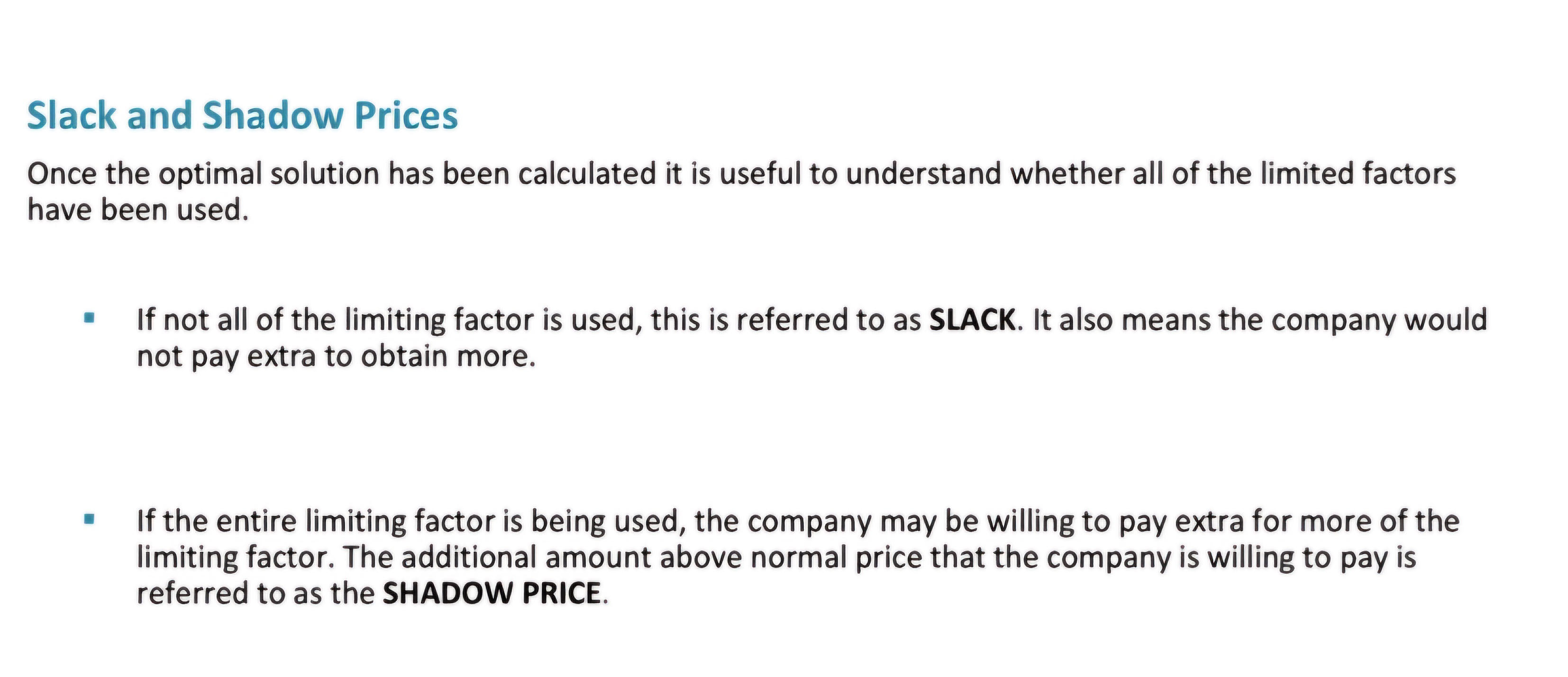
171
How does CIMA define SHADOW PRICE?
the increase in value which would be created by having available one additional unit of a limiting resource at its original cost. This represents the opportunity cost of not having the use of the one extra unit.
Only scarce resouces (binding constraints) will have a shadow price as they are fully utilised at the optimal solution
Only scarce resouces (binding constraints) will have a shadow price as they are fully utilised at the optimal solution
172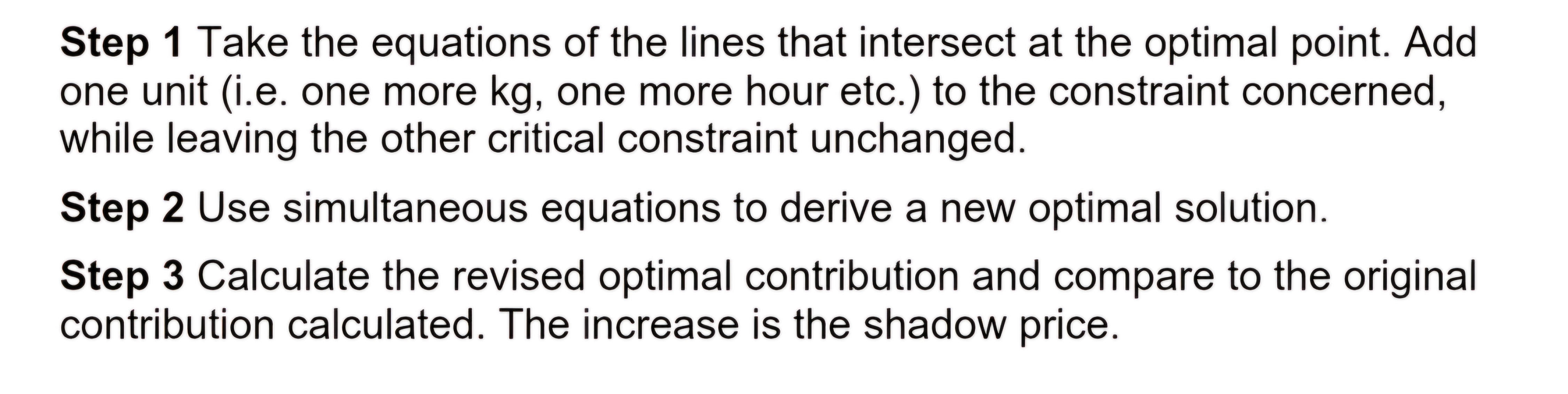
How do you calculate the shadow price for a critical constraint?
173
How does CIMA define SLACK?
The amount of each resourse which will be unused if a specific linear programming solution is implemented
174
How does CIMA define SURPLUS?
This is utilisation of a resource over and above minimum. Surpluses rend to arise in minimisation of cost problems where we have greater than or equal to constraint lines. eg. a constraint may state that it is necessary to produce a minimum of 400 units. If the optimum plan then recommends producing 450 units, the surplus in this case would be 50 units.
If the constraint is binding then the surplus will be zero
If the constraint is binding then the surplus will be zero
175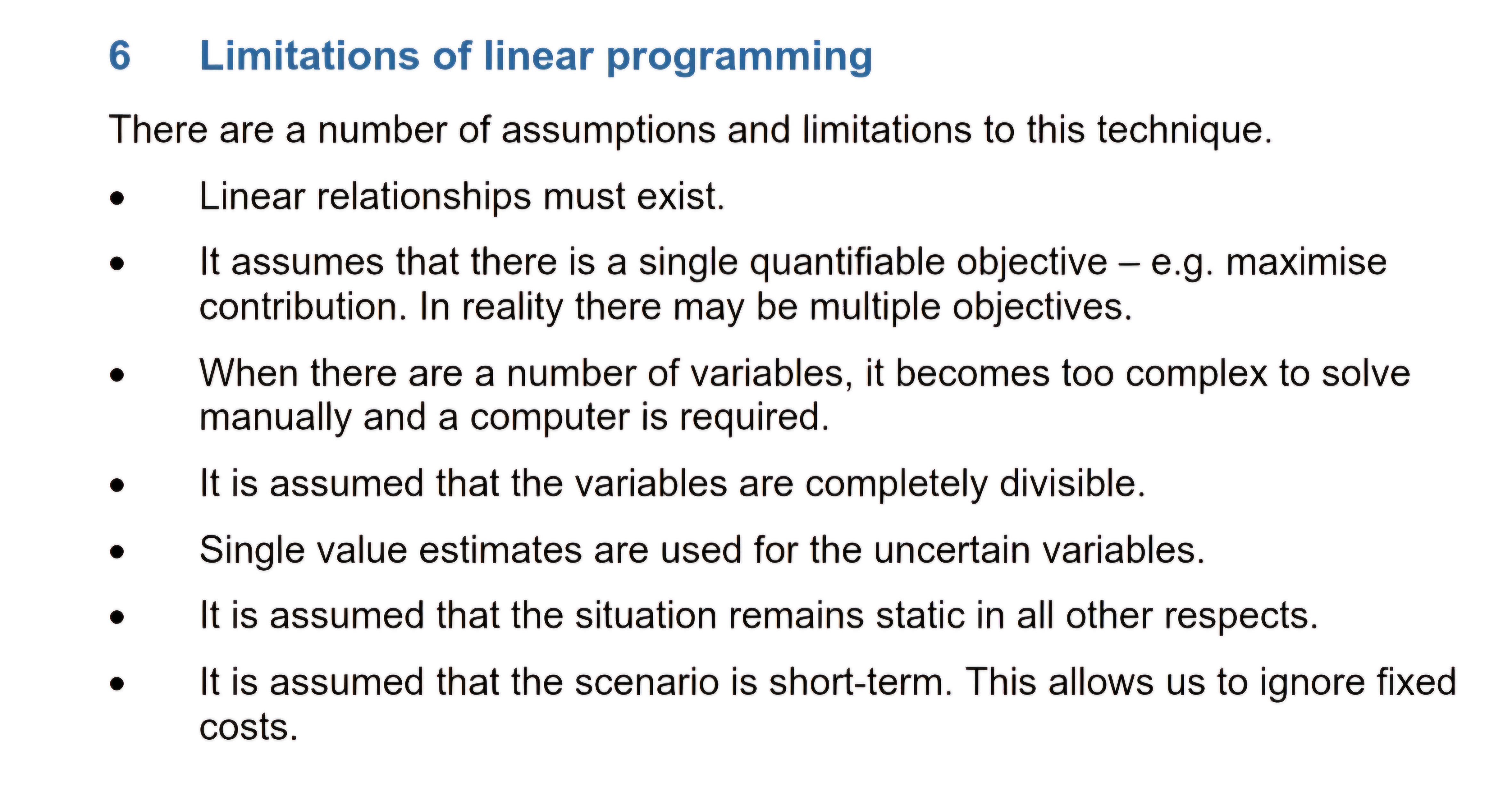
What are the limitations of linear programming? (7)
176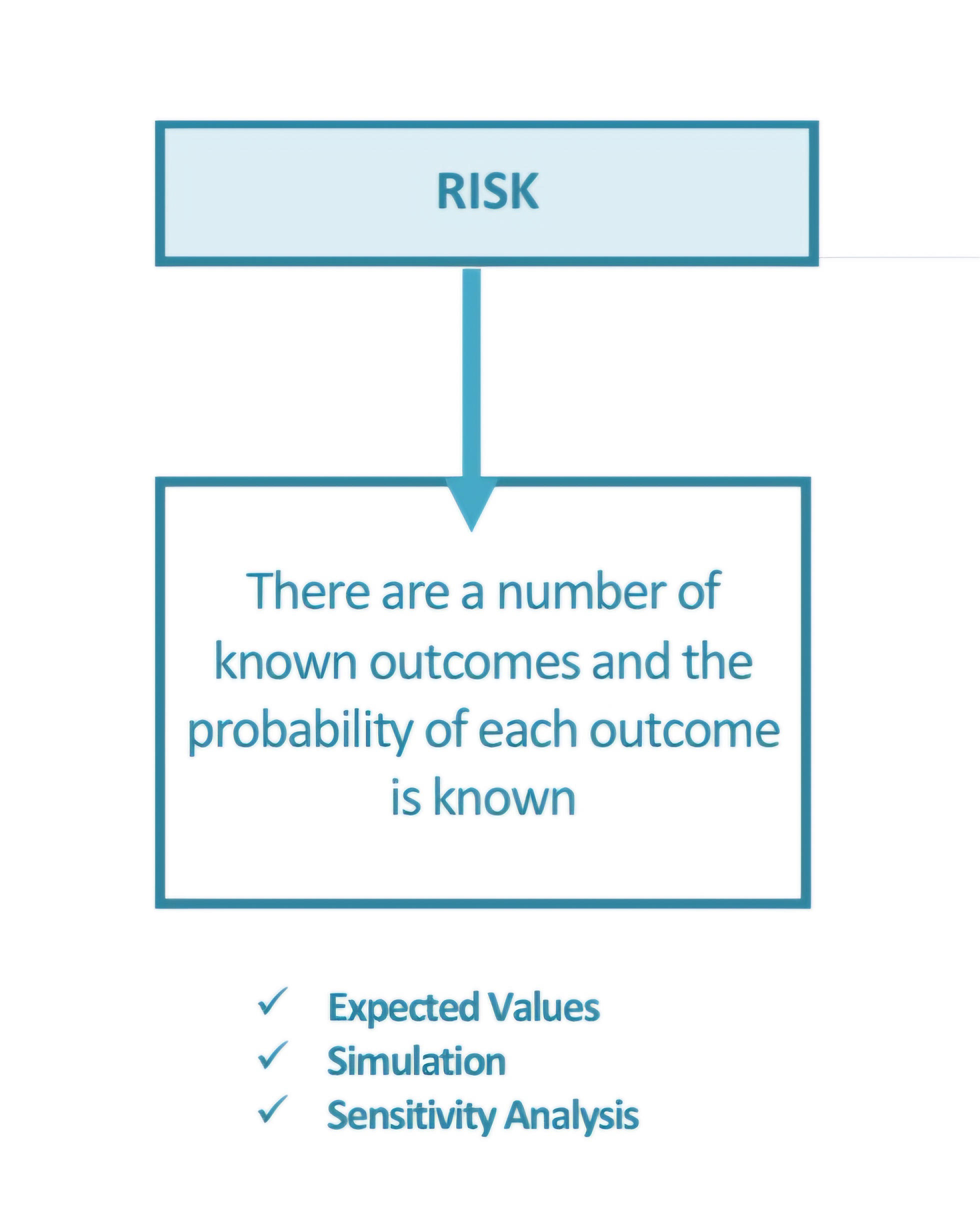
Define Risk
177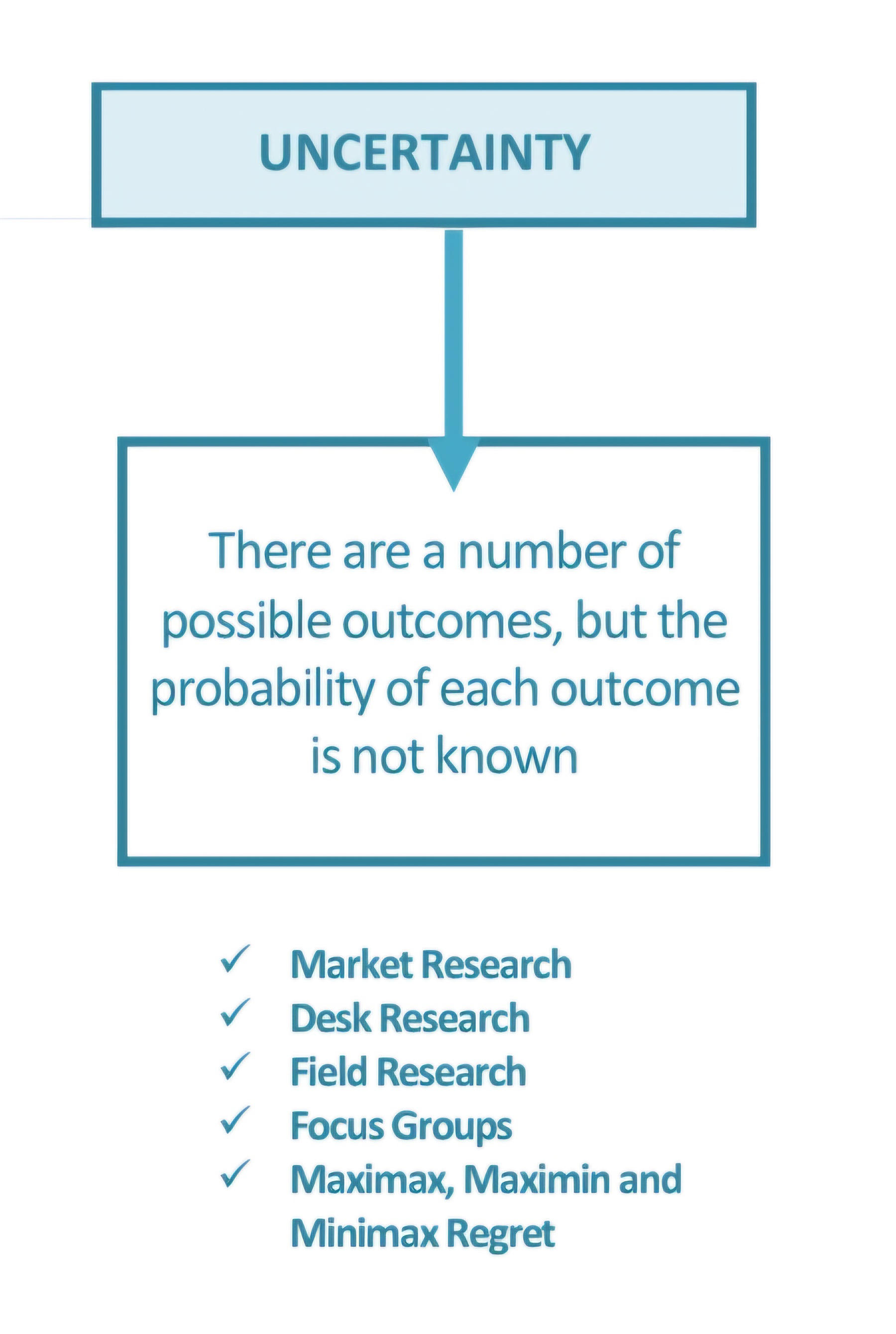
Define uncertainty
178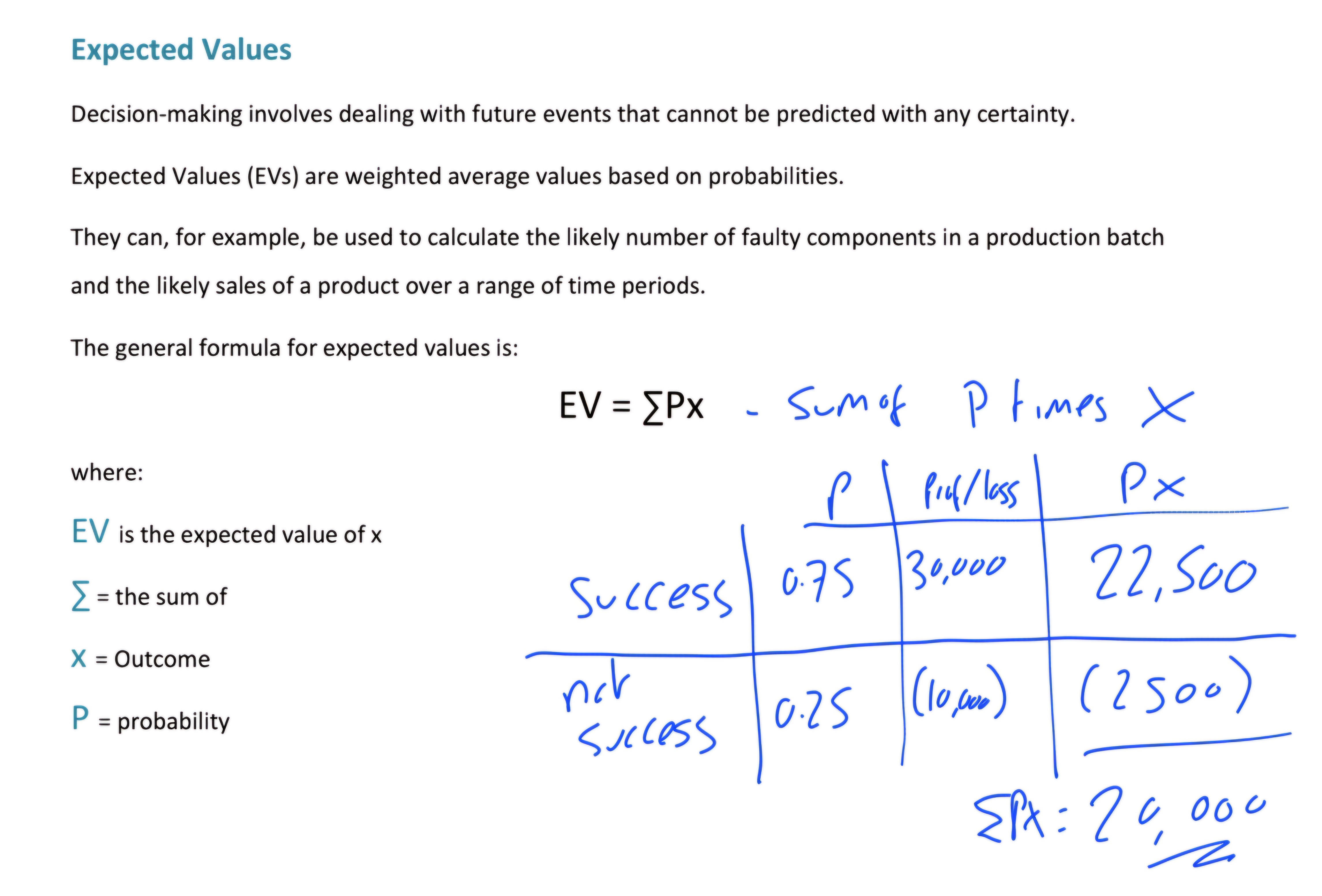
How do you calculate expected value?
179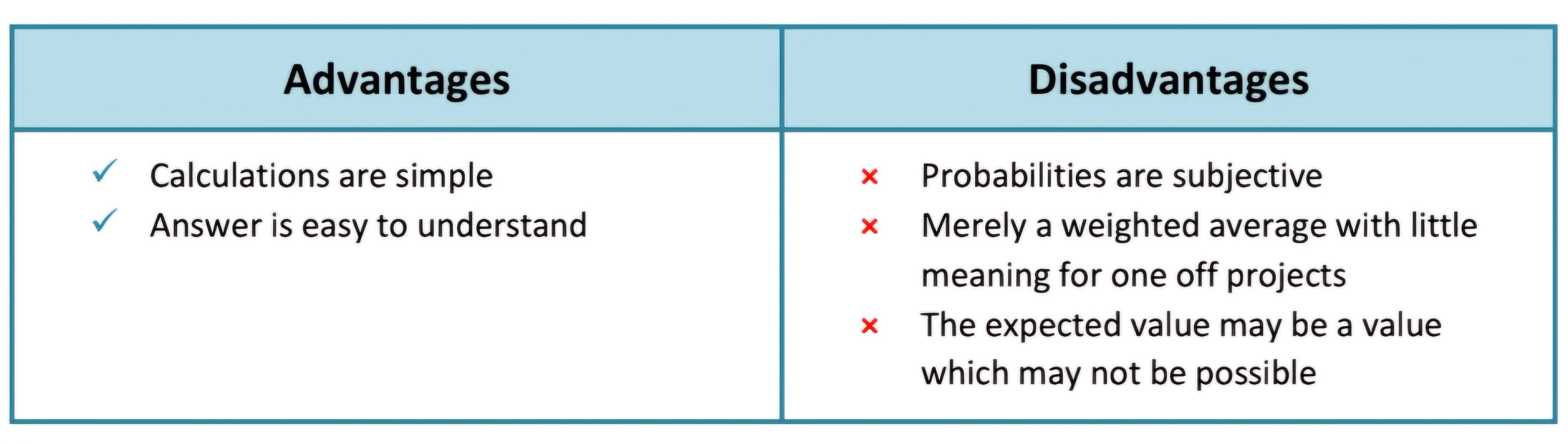
What are the advantages and disadvantages of expected values?
180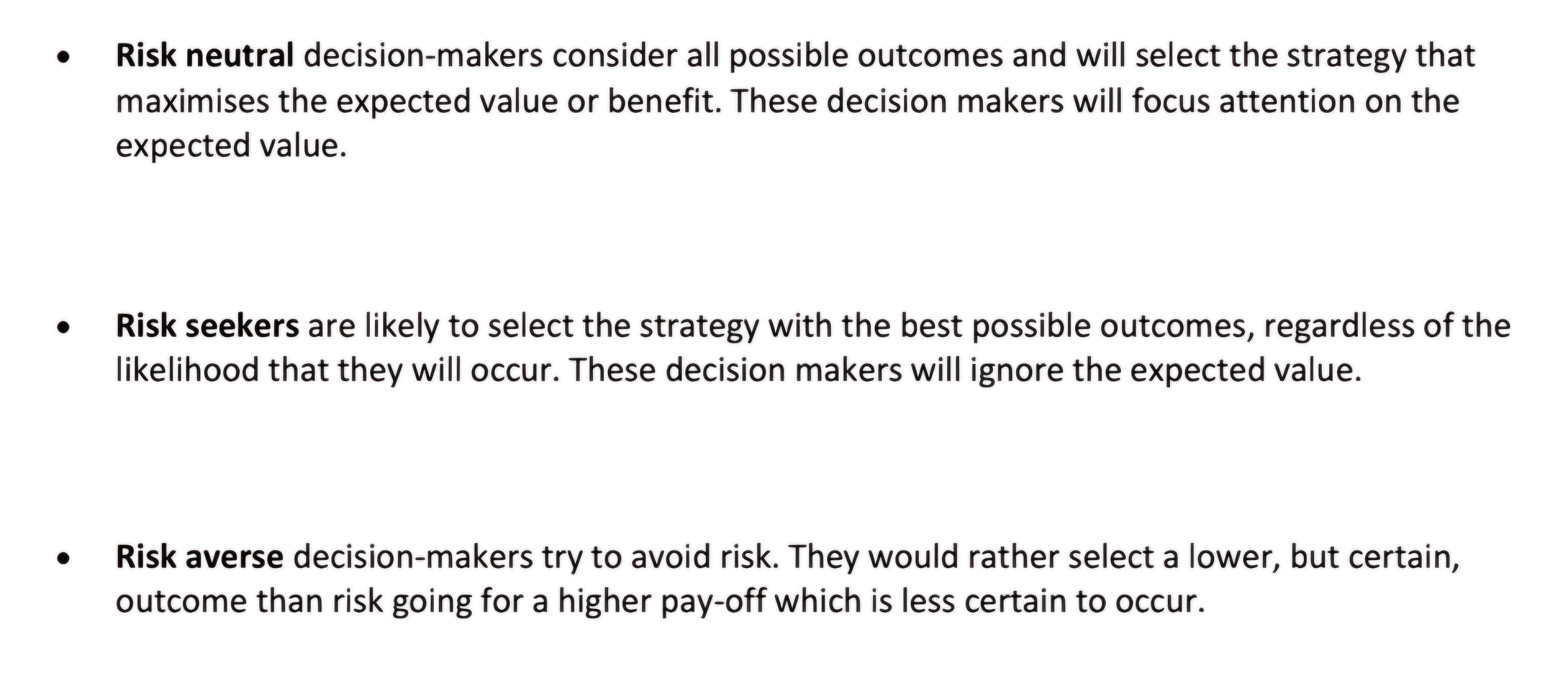
What are the 3 main risk attitudes?
181
What type of risk profile is maximax?
Risk seeker
182
What type of risk profile is a Maximin?
Risk Averse
183
What type of risk profile is a MiniMax Regret?
Risk averse (sore loser)
184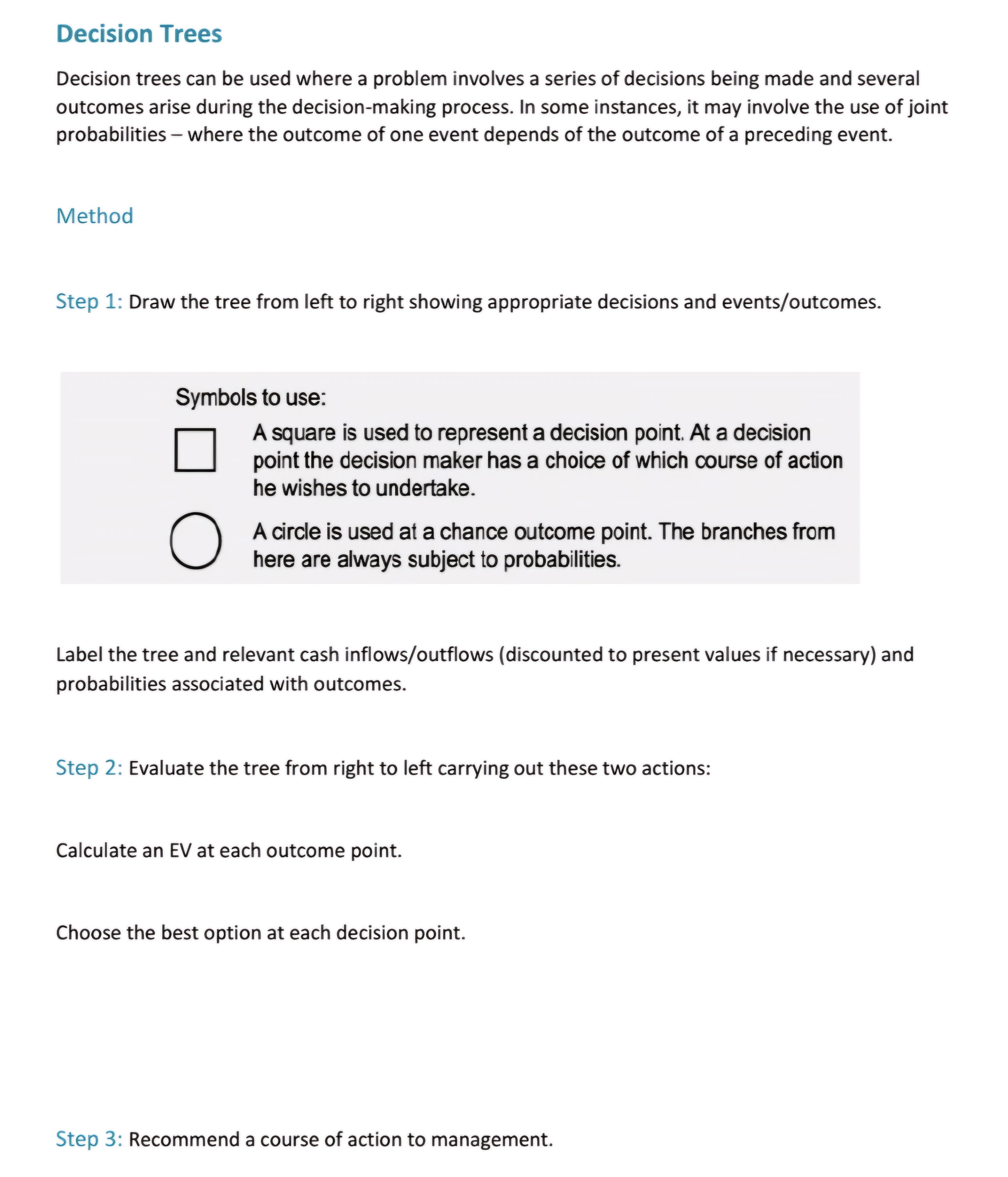
What are the 3 steps to a decision tree?
185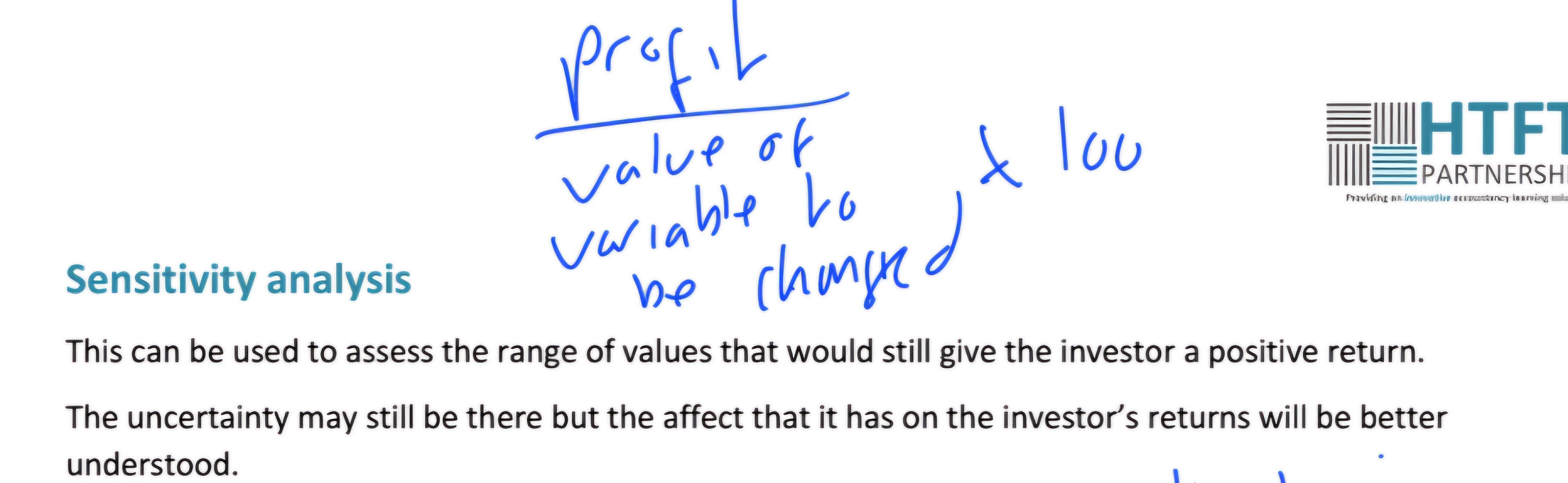
What is sensitivity analysis?
186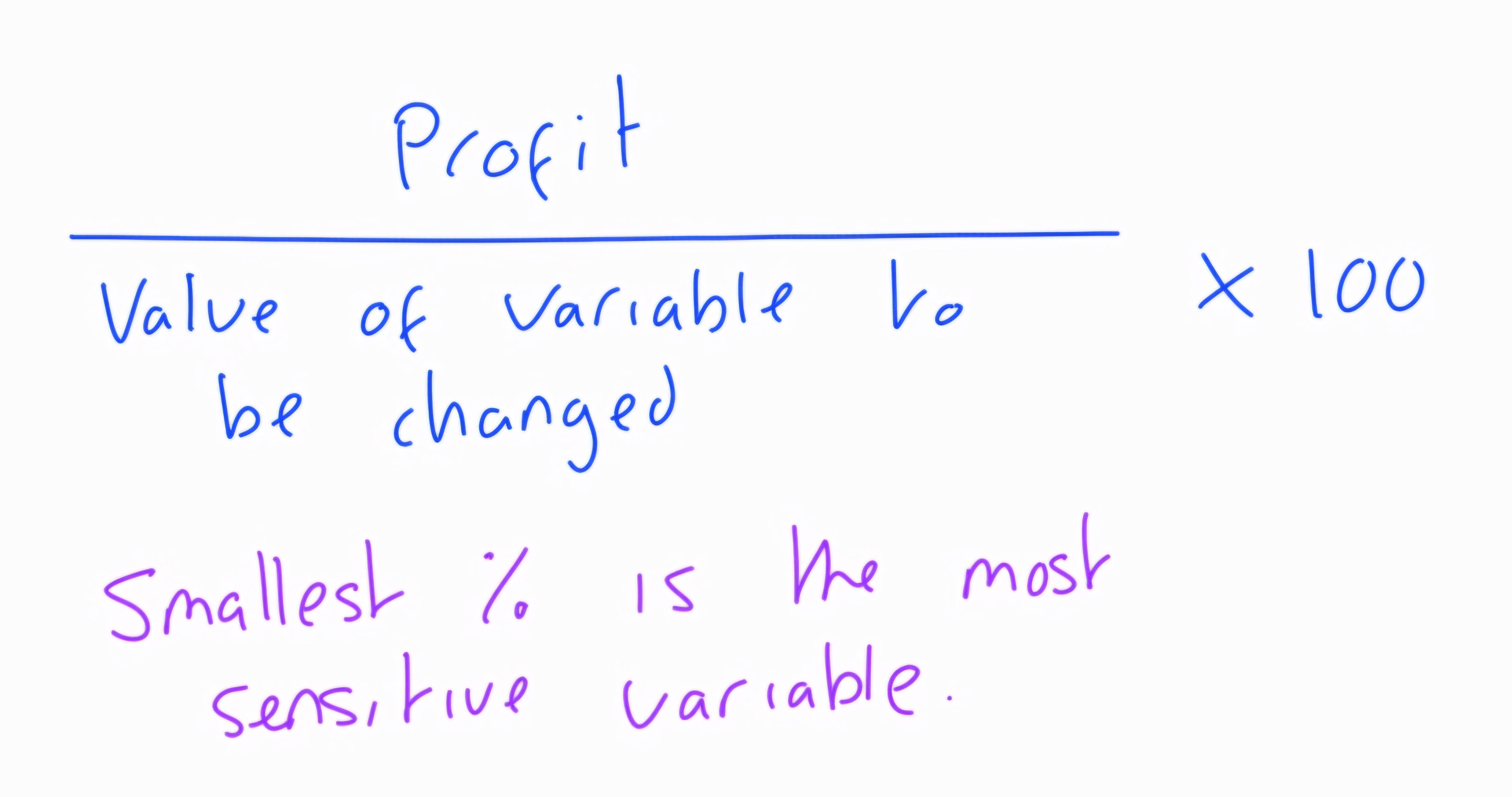
How do you calculate sensitivity?
187
How do you calcualte the sensitivity of sales VOLUME?
You do profit / CONTRIBUTION X 100
188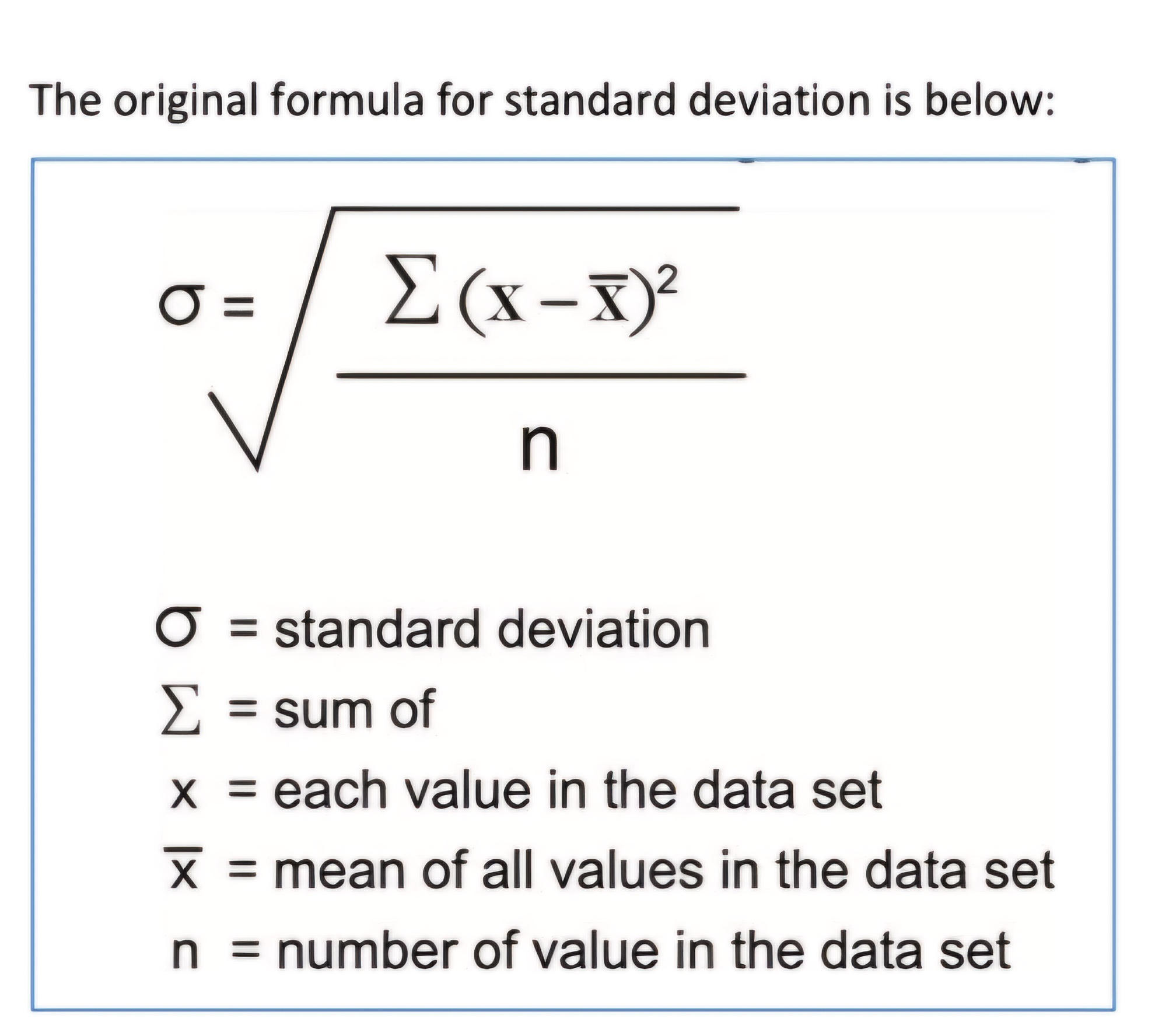
What is the original formula for calculating standard deviation?
189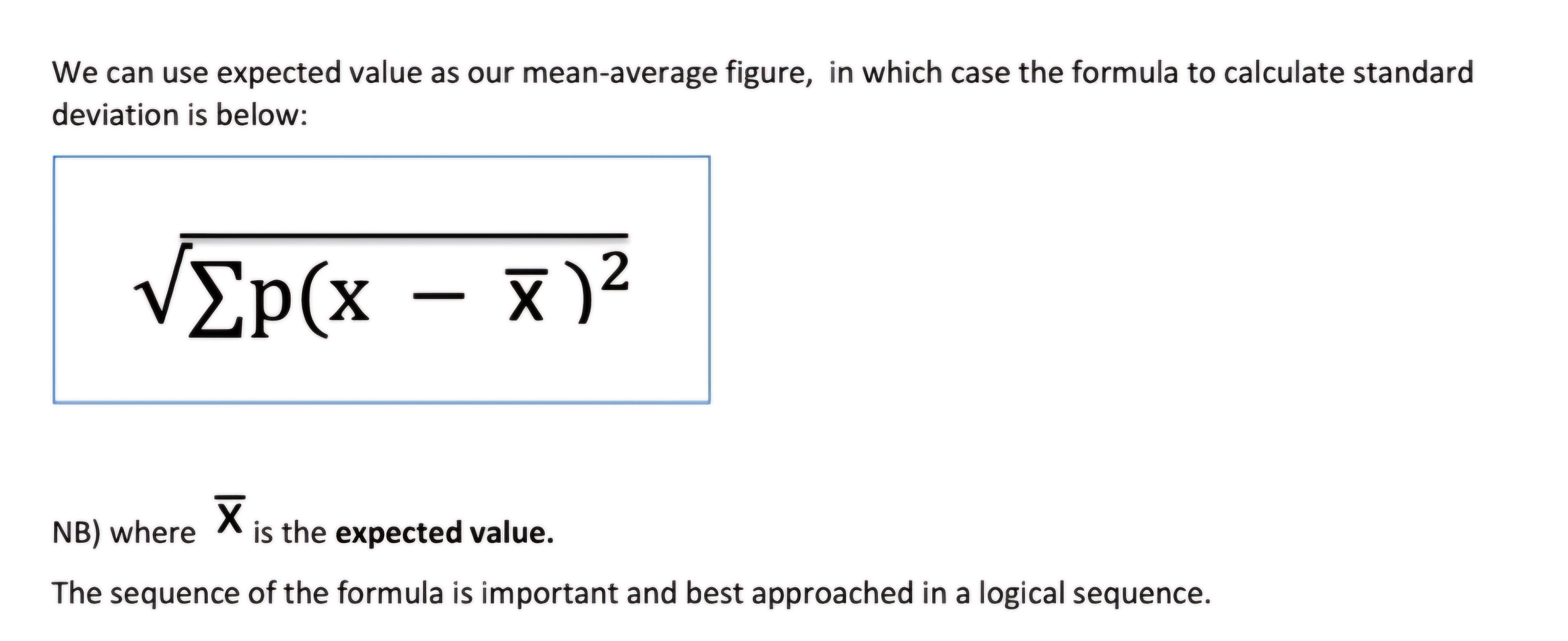
When using expected value as the mean average figure what is then the formula for standard deviation?
190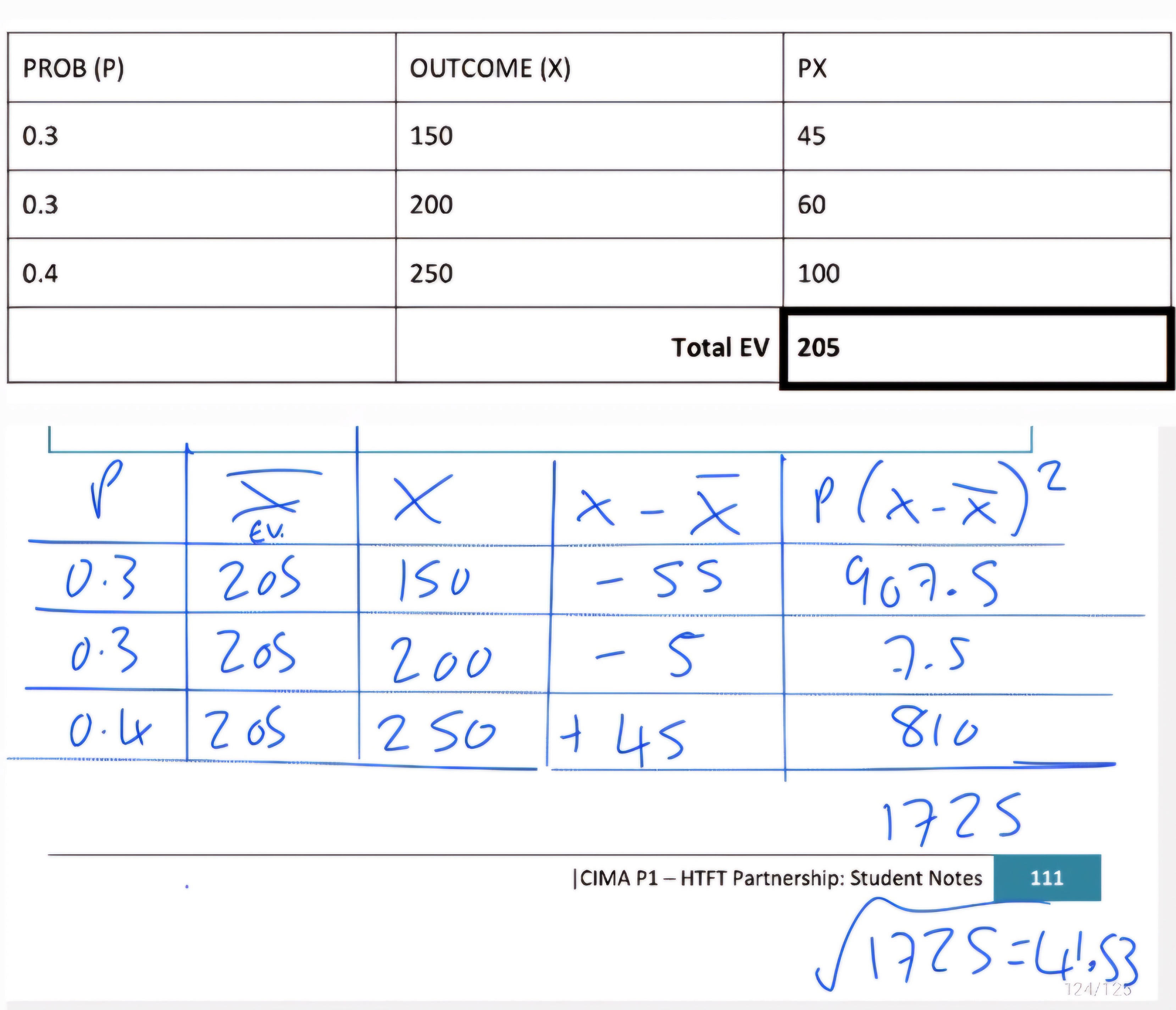
Example of how to calculate standard deviation
191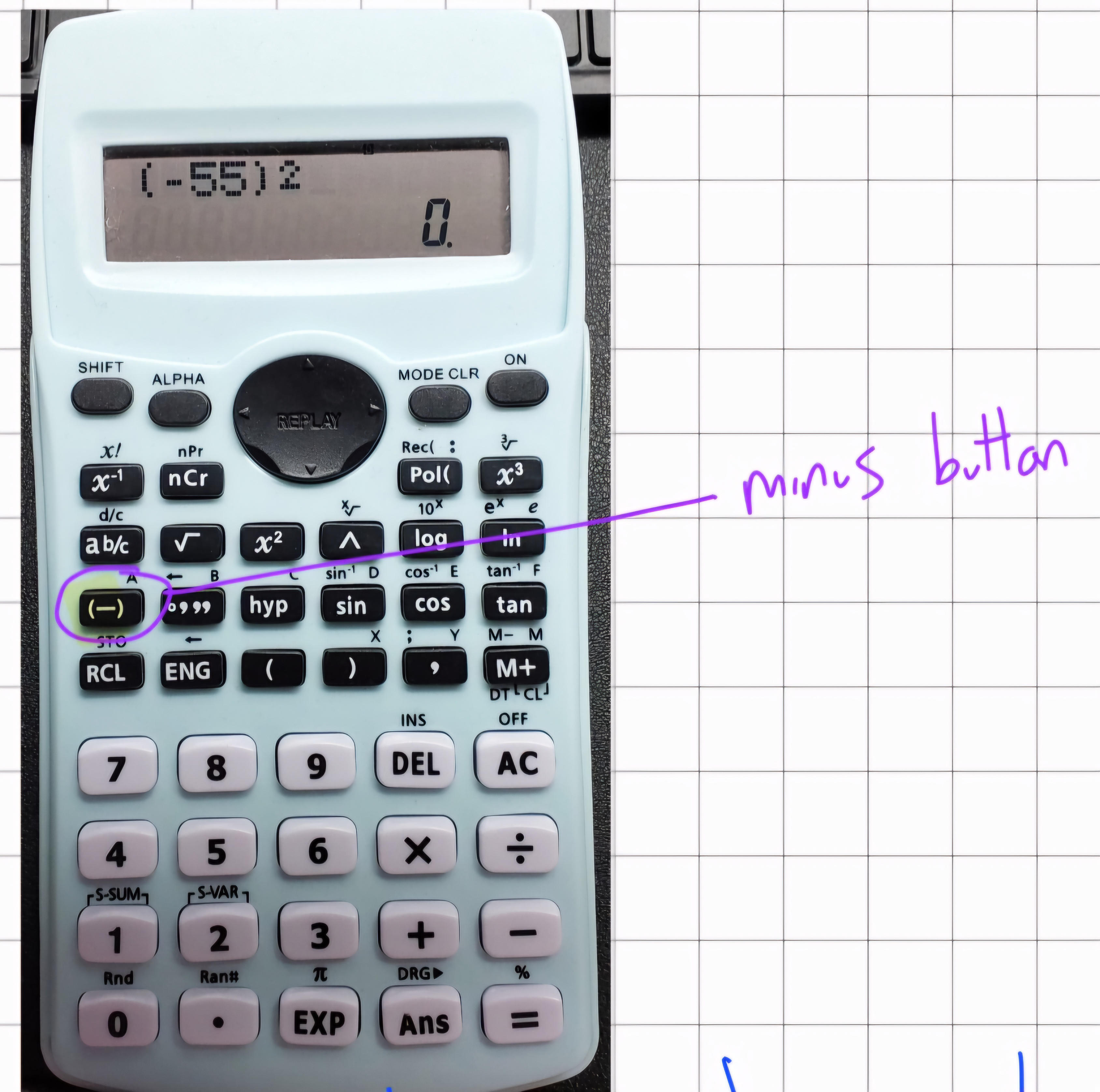
How do you square a minus figure in a calculator
192
How do you calculate the Co-efficient of Variation (CoV)
times by 100 to show as %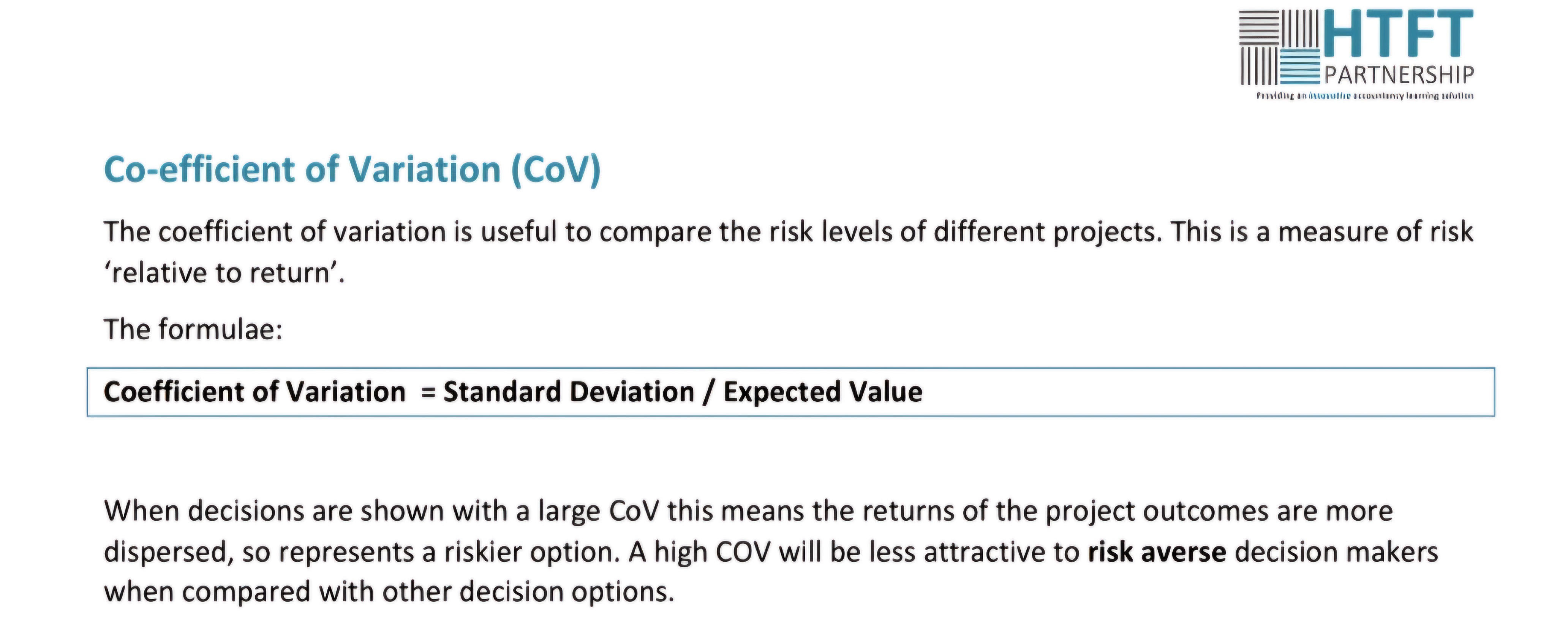
193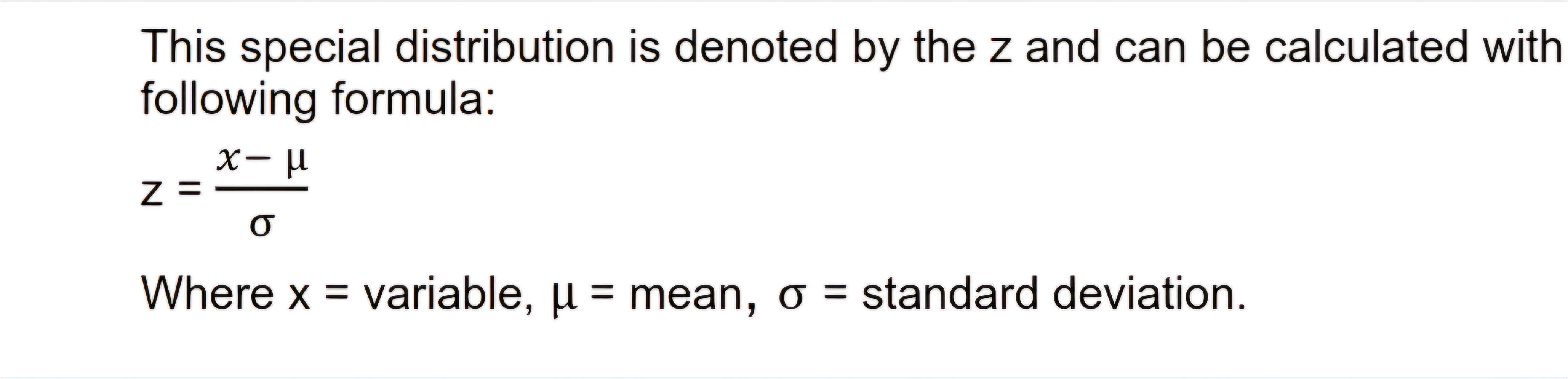
How do you determine probabilities using normal distributions?
194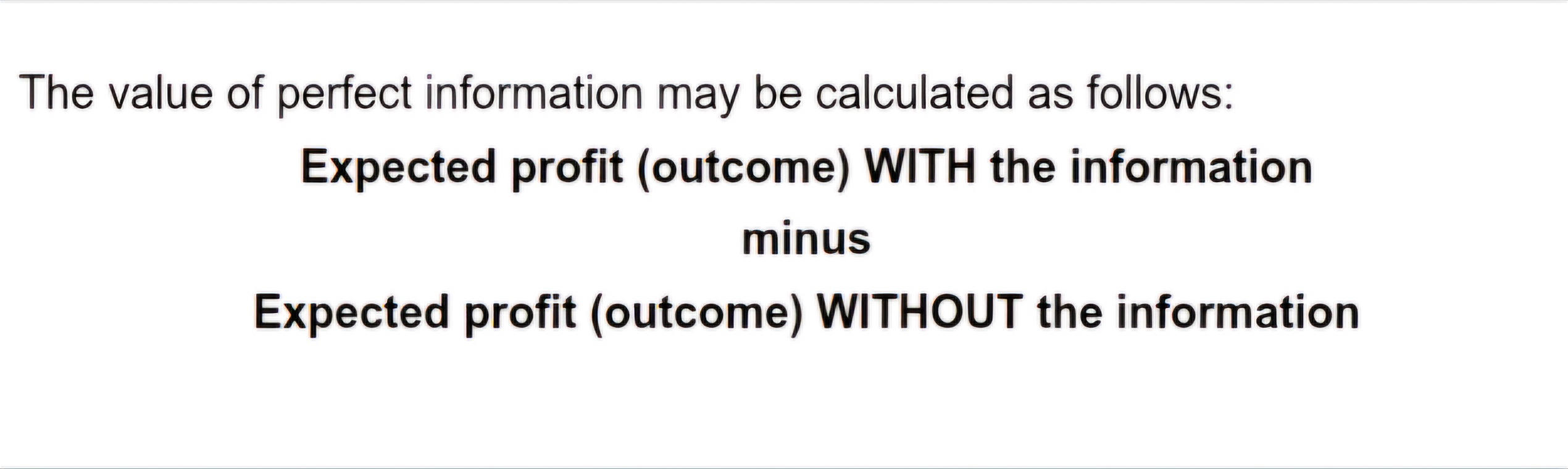
How do you calculate the value of perfect information ?