E2 Business Ecosystems
Study these flashcardsFree · spaced repetition · iPhone, Android, Mac & web
All cards
1
what is the difference between traditional markets and ecosystems
in business ecosystems organisations as a whole create more value by working collaboratively
traditional markets are linear and act with self interest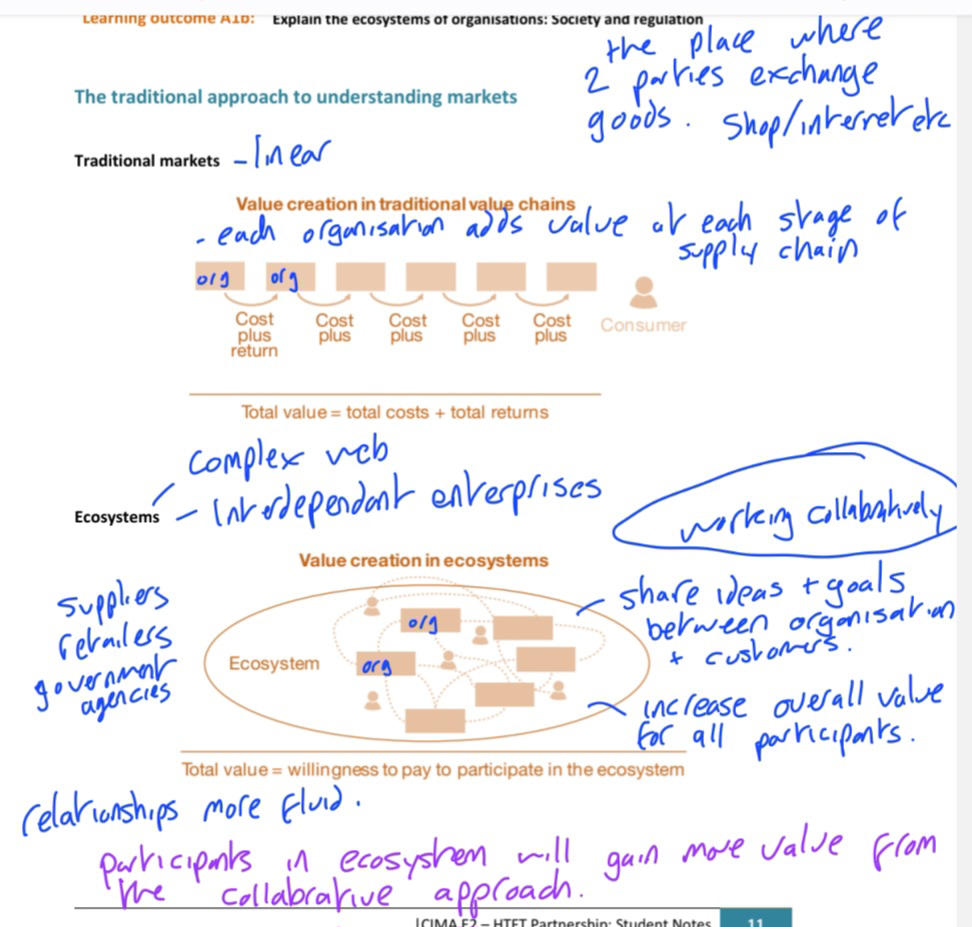
traditional markets are linear and act with self interest
2
What are the drivers of the digital revolution
* Mobile devices
* Social media
* Cloud computing
* Data analytics and visuaisation
*AI and machine learning
*Blockchain
* Cryptocurrencies
* Internet of things (smart devices)
* Bio-nanotechnology
*3D printing
* Social media
* Cloud computing
* Data analytics and visuaisation
*AI and machine learning
*Blockchain
* Cryptocurrencies
* Internet of things (smart devices)
* Bio-nanotechnology
*3D printing
3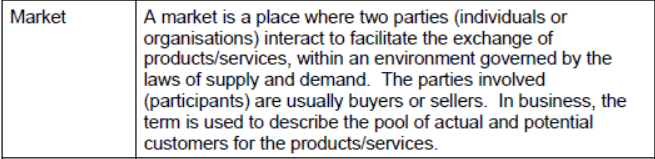
What is a market?
4
What is a physical market?
5
What is a virtual market
6
Define competition
7
What is a traditional market
8
What is a business ecosystem
A business ecosystem is a network of organisations (suppliers, distributors, customers, competitors, government agencies, etc.), who are involved in the delivery of a specific product or service through both competition and cooperation. This network will collaborate and evolve roles and capabilities to build value and increase efficiency.The idea is that each entity in the ecosystem affects and is affected by the others, creating a constantly evolving relationship in which each entity must be flexible and adaptable to survive, as is the case in a biological ecosystem.In this context, an ecosystem is a number of interdependent enterprises drawn together in complex relationships aimed at creating and allocating business value. There is a mutual and multiplicative interaction about business ecosystems whereby the whole is greater than the sum of the individual parts, thus providing the incentive for the participants to be part of the system.Business ecosystems are broad by nature, potentially spanning multiple geographies and industries, including public and private institutions, and consumers. Organisations will therefore come together to create value.In a less-competitive ecosystem, groups such as a government, charity and a community group might collaborate on health or public policy because each entity has a shared interest and goal.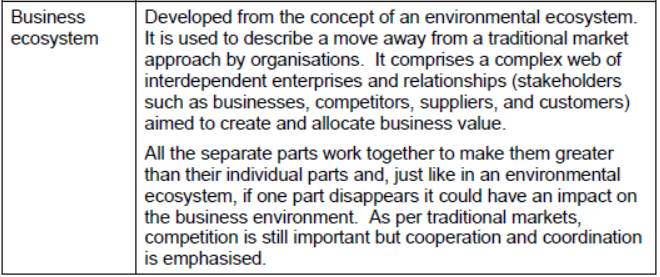
9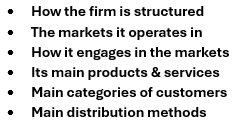
What 6 things should a business model include?
10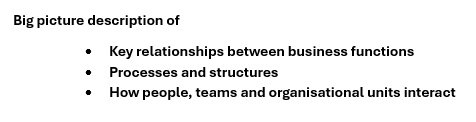
What is an operating model?
11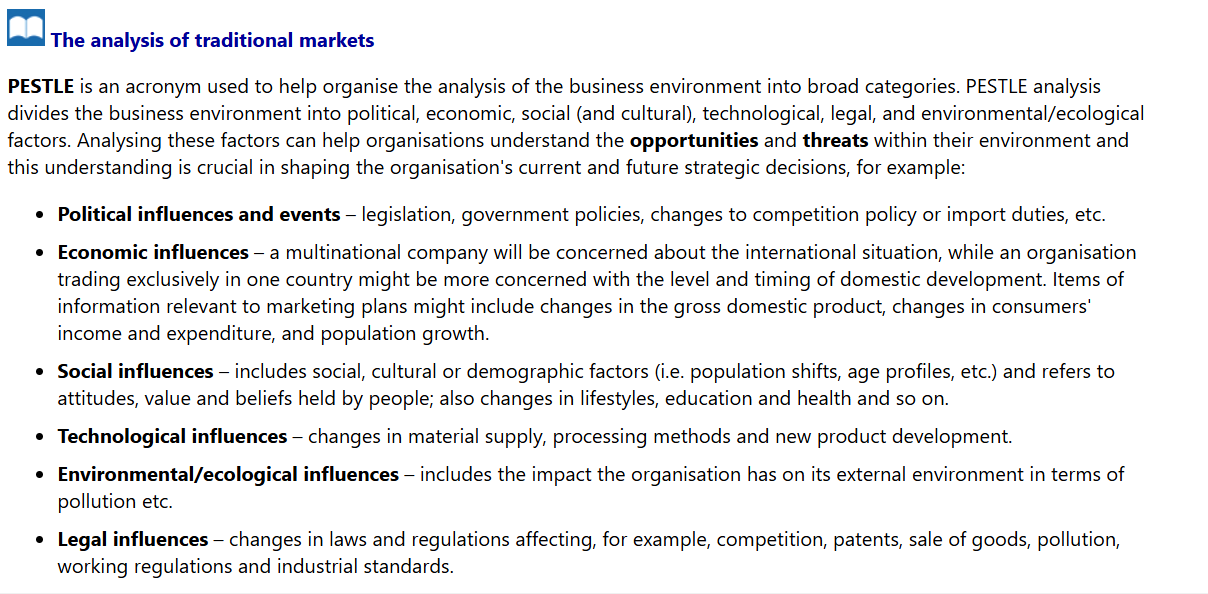
What is PESTEL analysis
12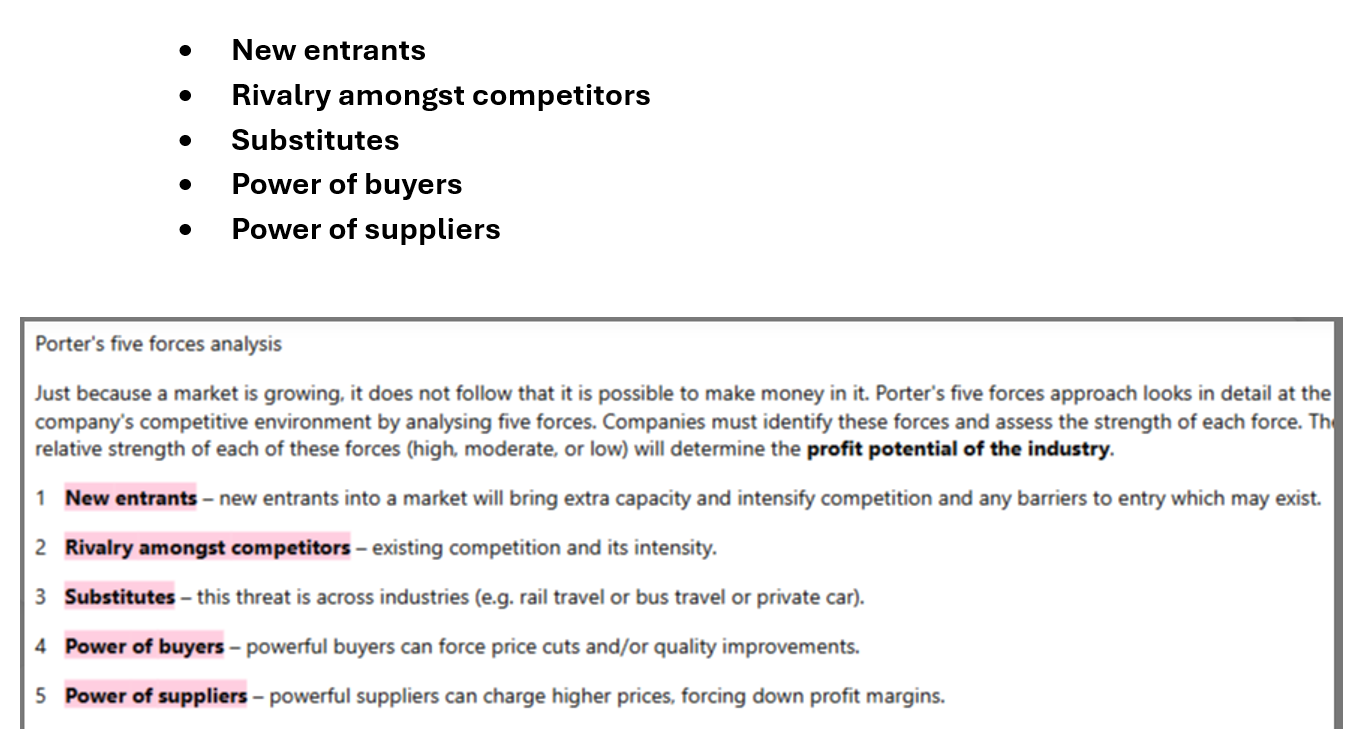
What is Porters 5 forces analysis?
13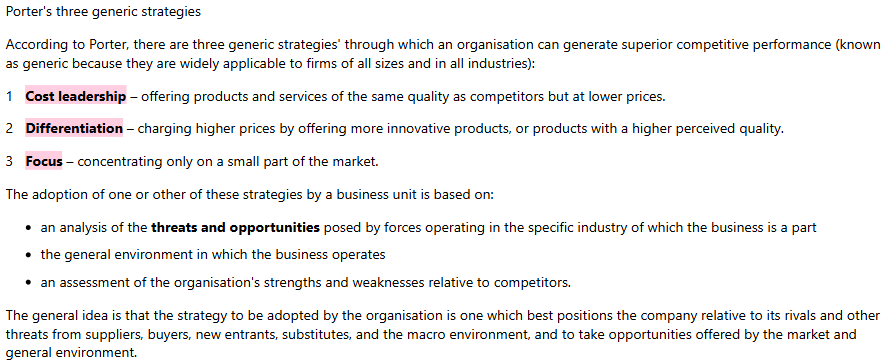
What are Porters 3 generic strategies to generate superior competitive performance?
14
Business ecosystems and traditional markets have Participants and interactions - explain participants
15
Business ecosystems and traditional markets have participants and interactions - explain interactions
16
What are the characteristics of a business ecosystem
Orchestration
Mutuality
Mutuality
17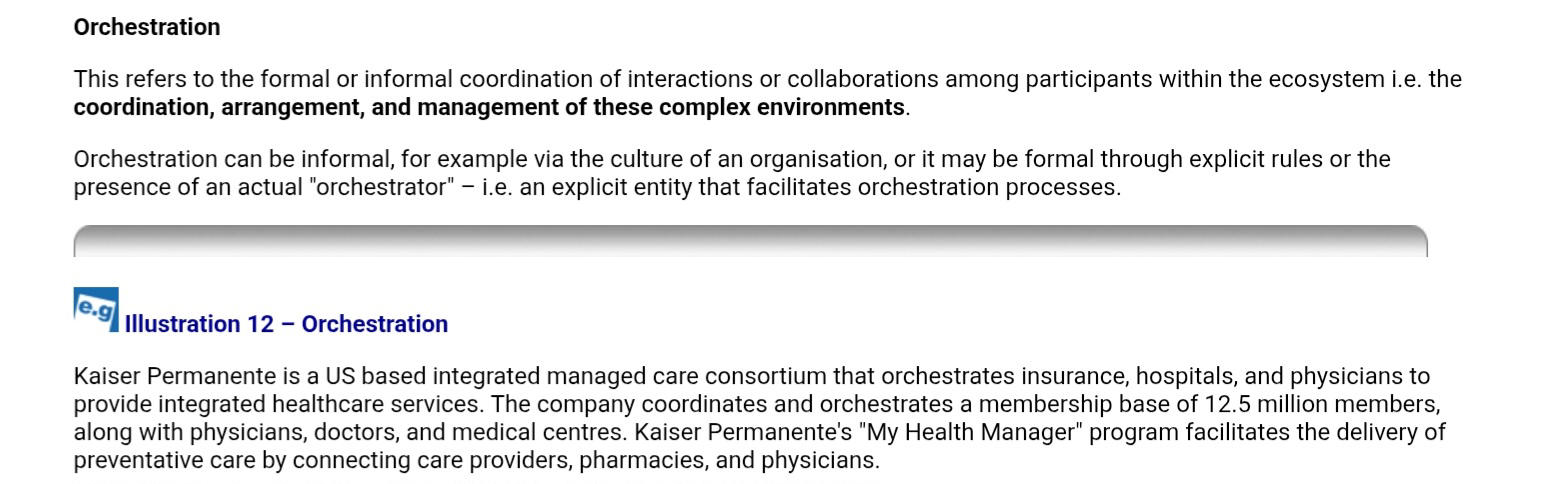
Explain Orchestration
18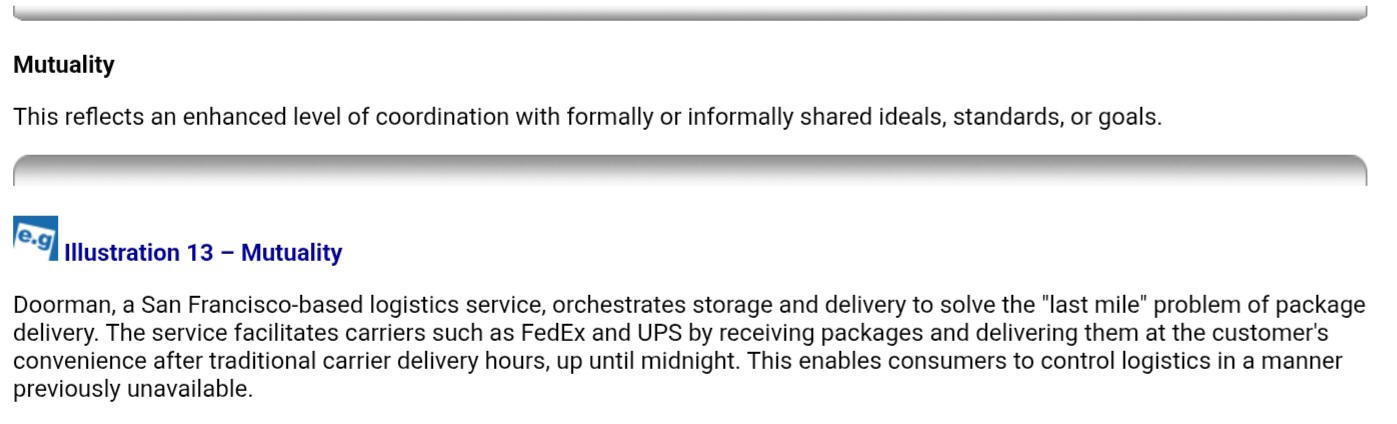
Explain mutuality
19
What are the goals of a business eco system
C Create barriers
A Address human need
C Collaborate
S Streamlining
A Accelerate learning
I Innovate
L Leverage technology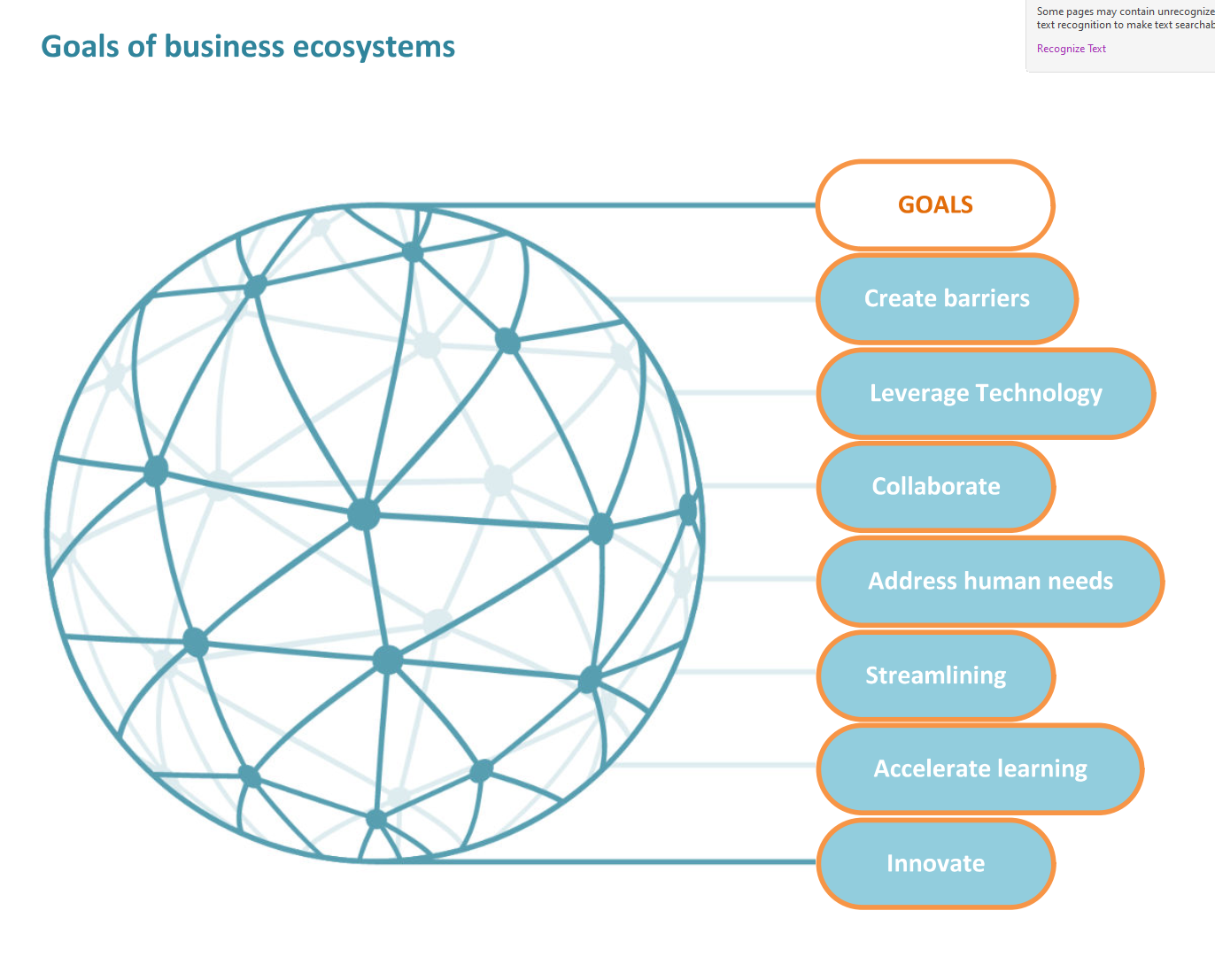
A Address human need
C Collaborate
S Streamlining
A Accelerate learning
I Innovate
L Leverage technology
20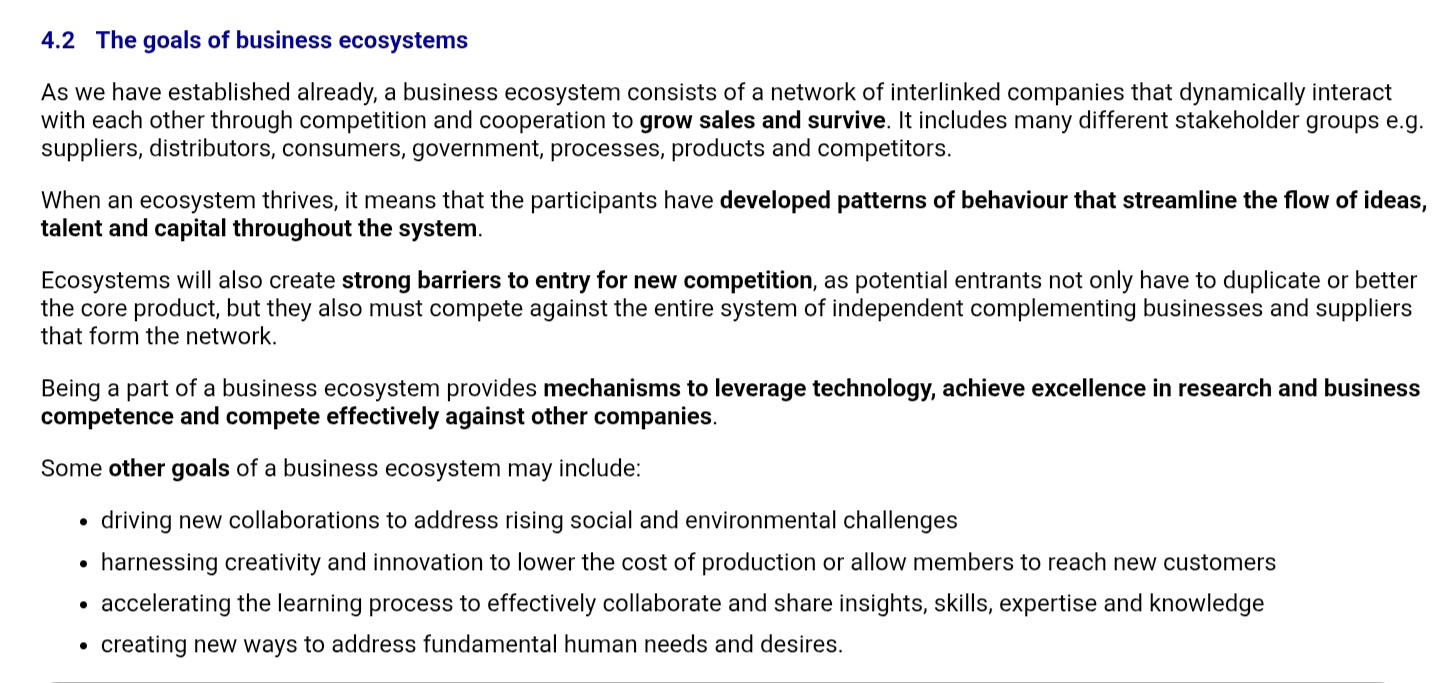
Elaborate on goals of an ecosystem
21
How is value created?
22
How is value captured?
23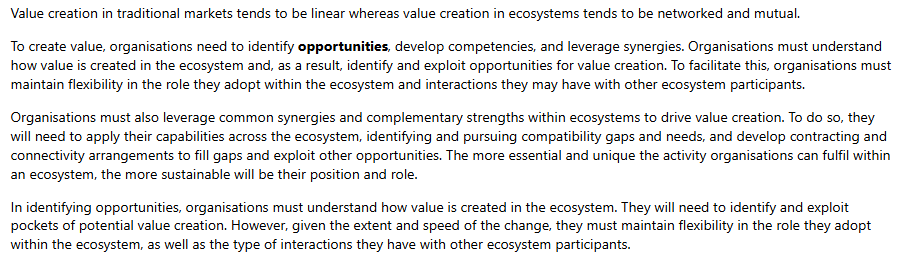
In terms of value creation how do traditional markets and eco systems differ?
24
What are the 2 types of value capture
Direct value capture
Indirect value capture
Indirect value capture
25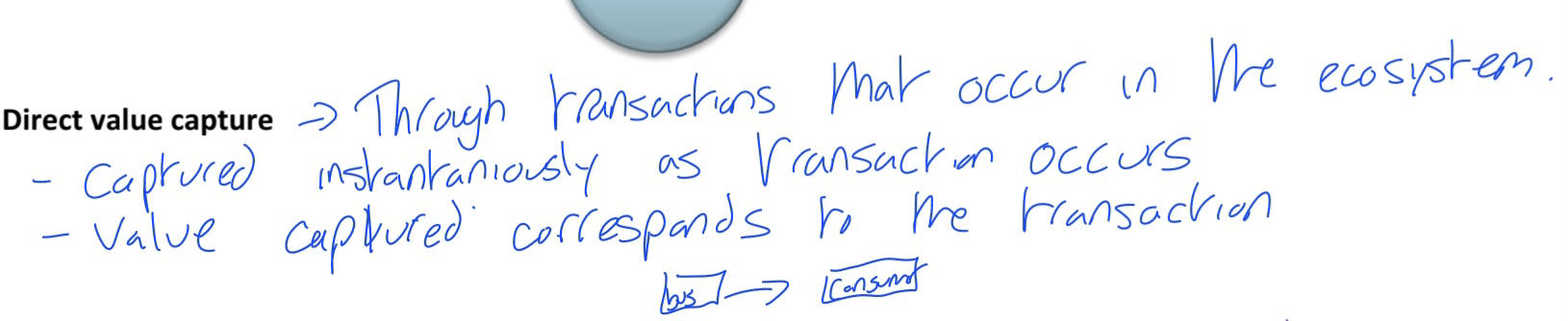
explain direct value capture
26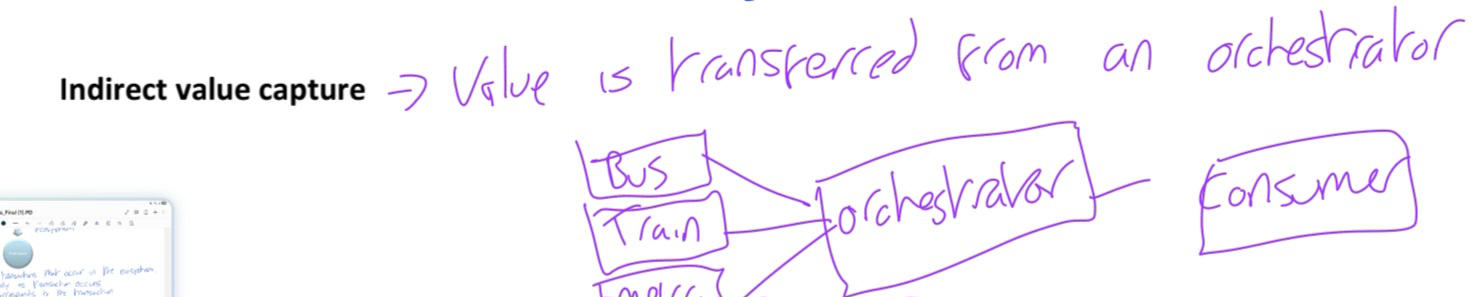
Explain indirect value capture
27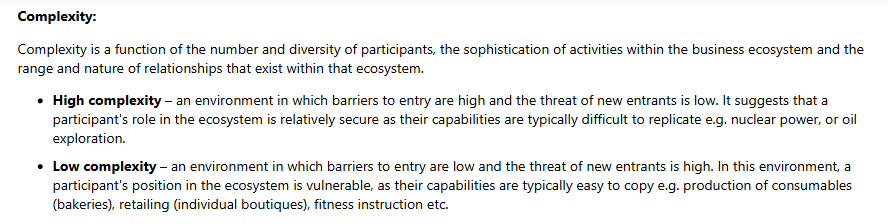
Explain Complexity (as a driver to a strategy for capturing value)
28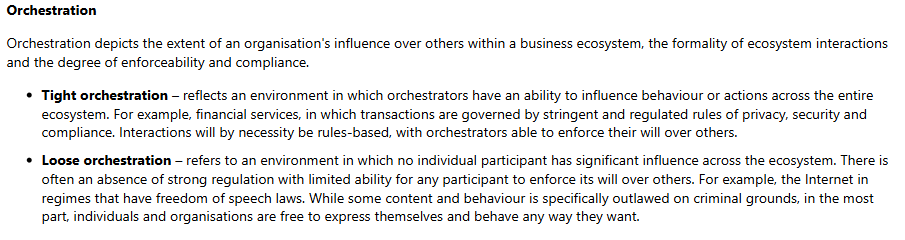
Explain Orchestration (as a driver to a strategy for capturing value)
29
What are the 4 Ecosystem archetypes
Hornets nest
Lions Pride
Sharks Tank
Wolf pack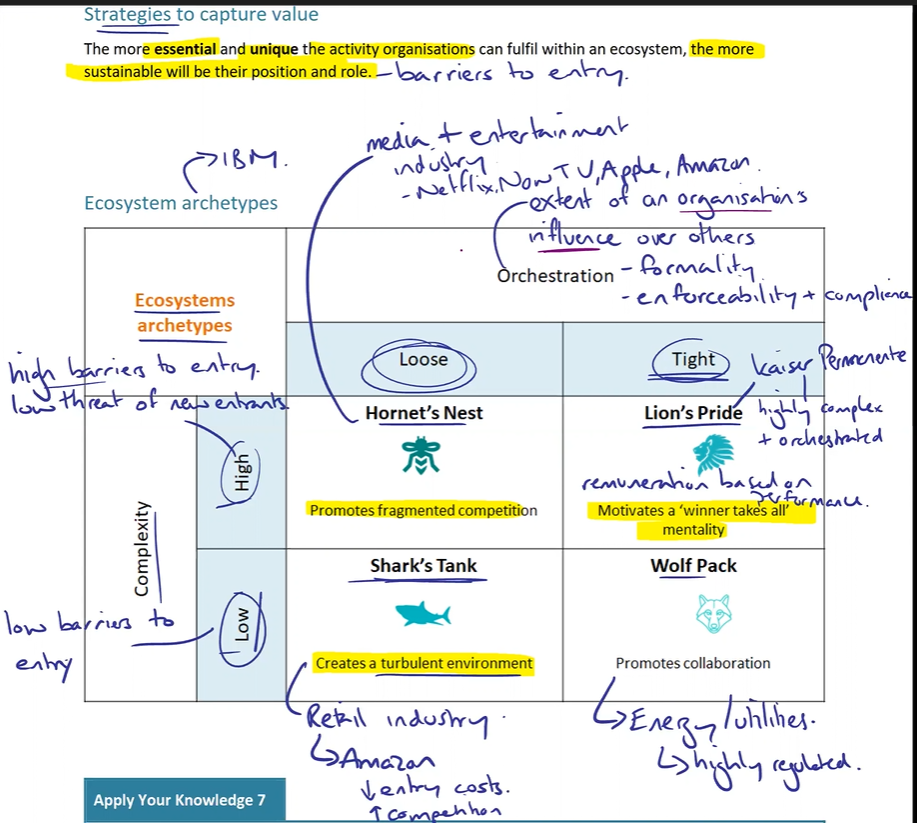
Lions Pride
Sharks Tank
Wolf pack
30
Explain the ecosystem archetype Shark Tank
31
Explain the ecosystem archetype Lions Pride
32
Explain the ecosystem archetype Hornets Nest
33
Explain the ecosystem archetype Wolf Pack
34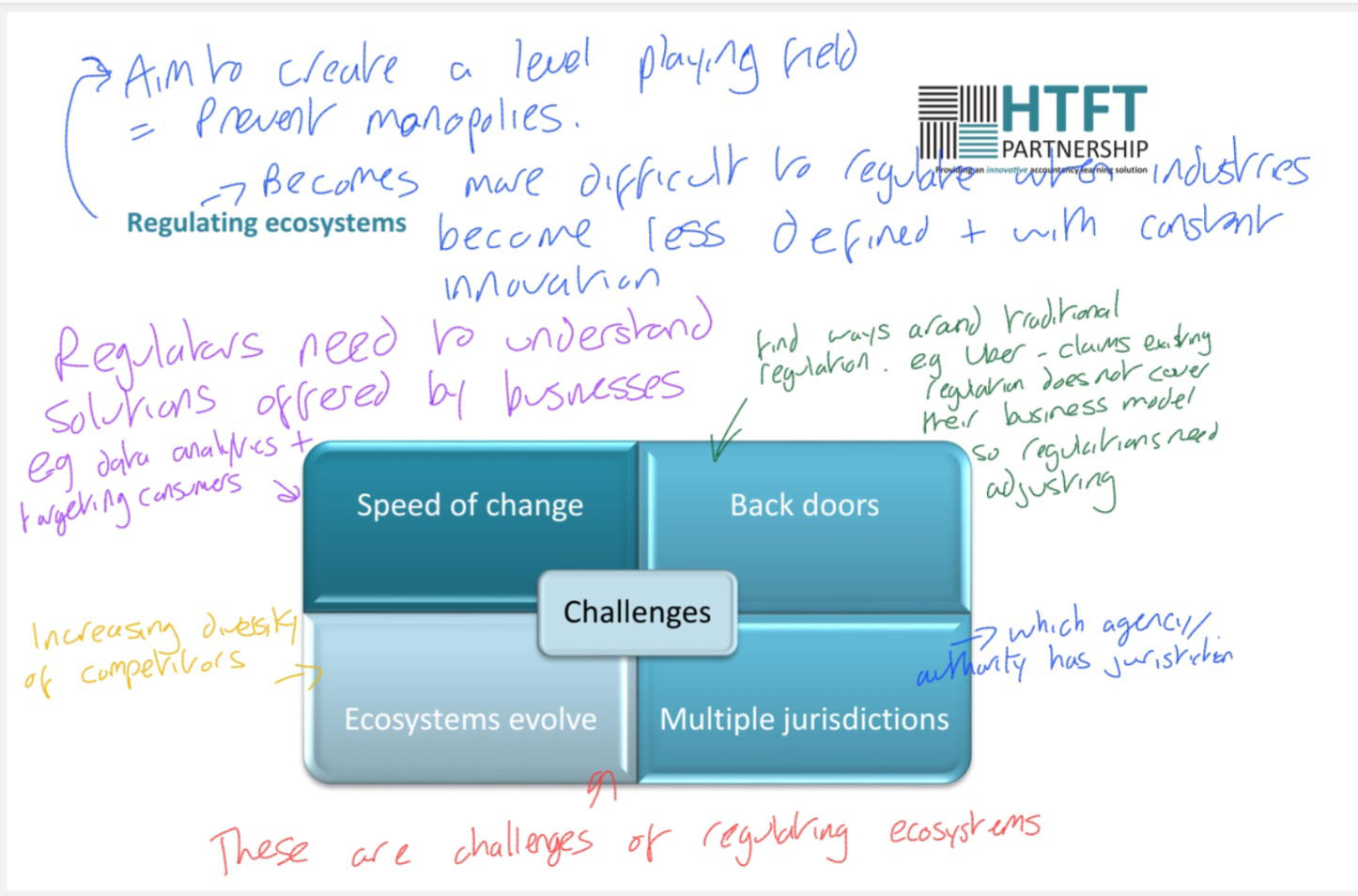
What are the 4 challenges to regulating ecosystems
35
In the challenges to regulating ecosystems explain Speed Of Change
36
In the challenges to regulating ecosystems explain Back Door
37
In the challenges to regulating ecosystems explain Ecosystems Evolve
38
In the challenges to regulating ecosystems explain Multiple Jurisdictions
39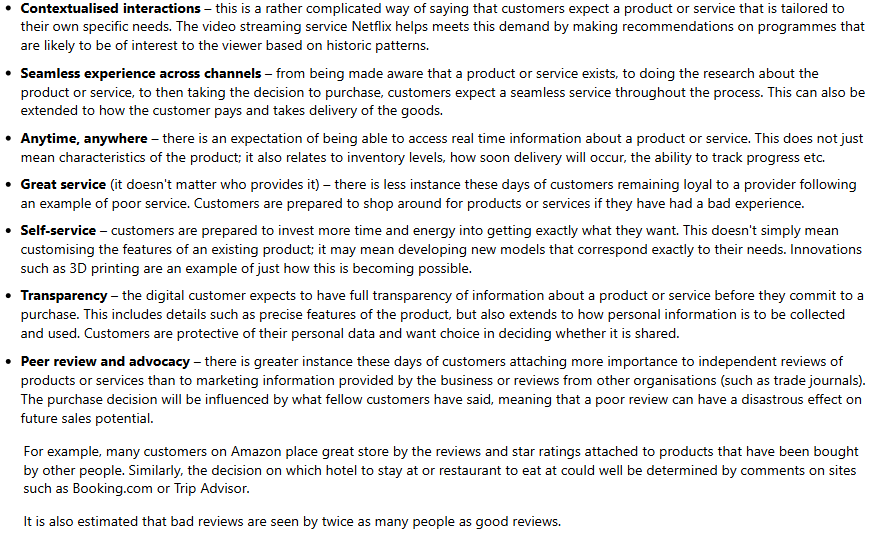
What does a digital customer want? (7)
40
How can organisations maintain a competitive advantage? (4)
Design Thinking
Experiential Pilots
Prototyping
Brand Atomisation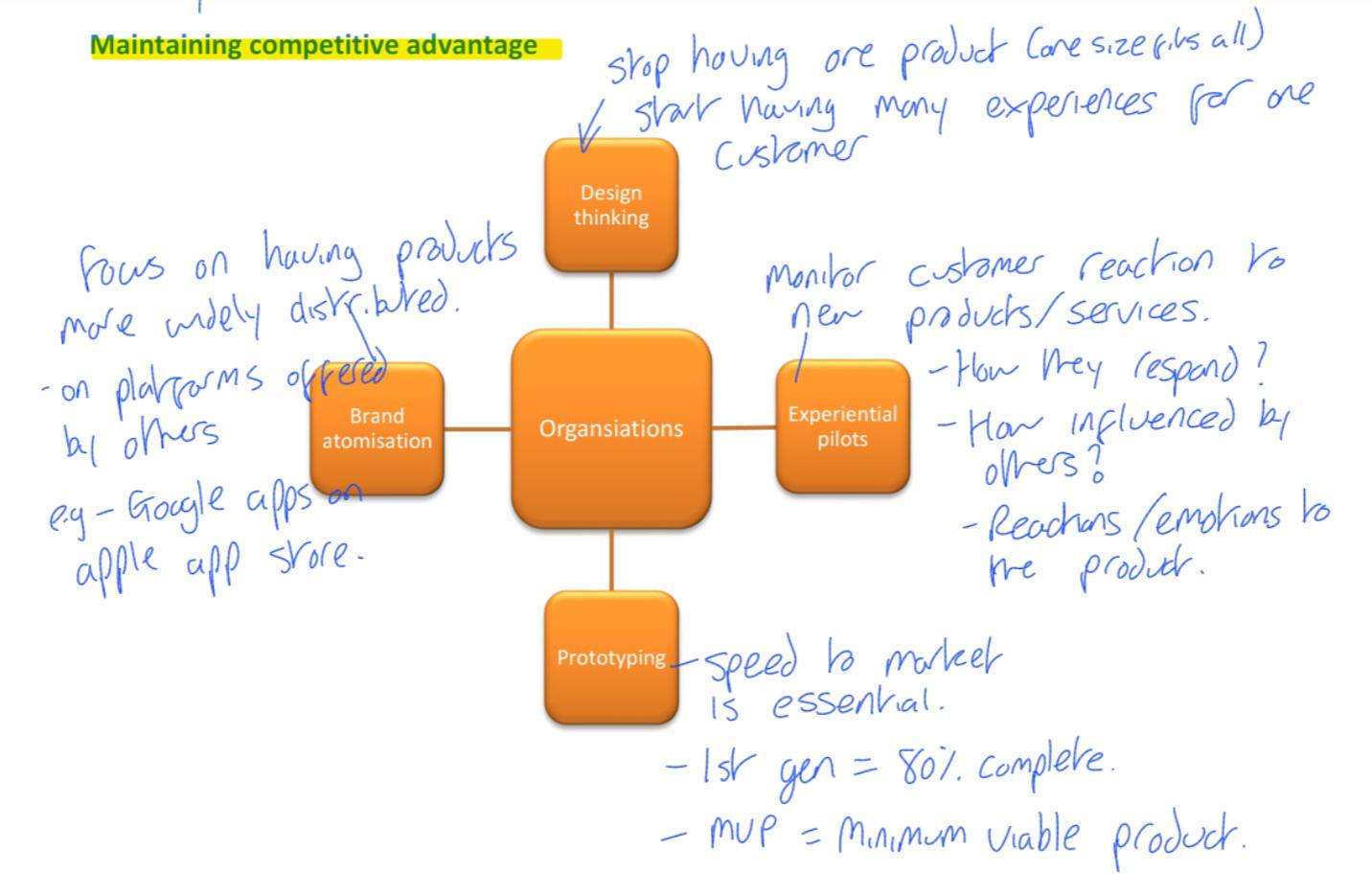
Experiential Pilots
Prototyping
Brand Atomisation
41
Explain Design Thinking
instead of designing a single product or service that can be marketed to many customers, there should be a shift in mind-set to designing many experiences for one customer. This must be mixed with the ability to constantly learn and adapt as customer needs change.
42
Explain Experiential Pilots
this refers to the need to monitor how customers behave and to gain an appreciation of their reaction to new experiences. Questions should be asked such as "How are the customers responding to a new technology in the way they engage with it? How are customers being influenced by others? What reactions, emotional and behavioural, are we seeing through the new customer experience?"
43
Explain Prototyping
instead of waiting until a new product has been perfected before bringing it to market, an organisation should recognise that speed to market is vital. So, the first generation of a product may be only about 80% ready, but it provides vital feedback in terms of customer reactions and what needs to be done with the second version.
44
Explain Atomisation
organisations will need to design their offerings so that they can be more widely distributed and be part of the platform that is offered by other providers.