Biochem Lecture 9
Study these flashcardsFree · spaced repetition · iPhone, Android, Mac & web
All cards
1
The Citric Acid Cycle: Part of Aerobic oxidation after Glycolysis.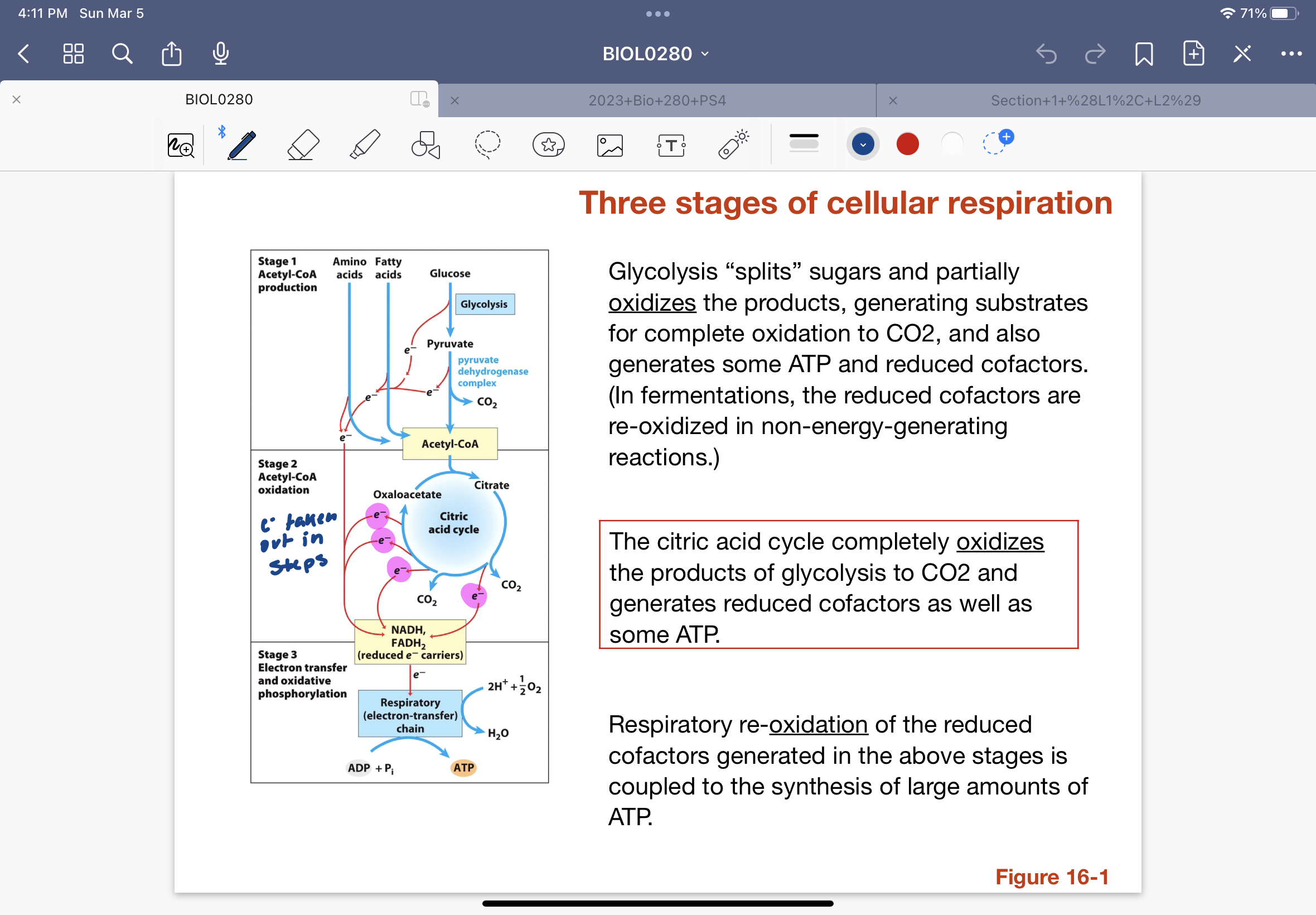
Completely oxidizes the products of Glycolysis to CO2 and generates reduced cofactors as well as some ATP.
2
The Mitochondria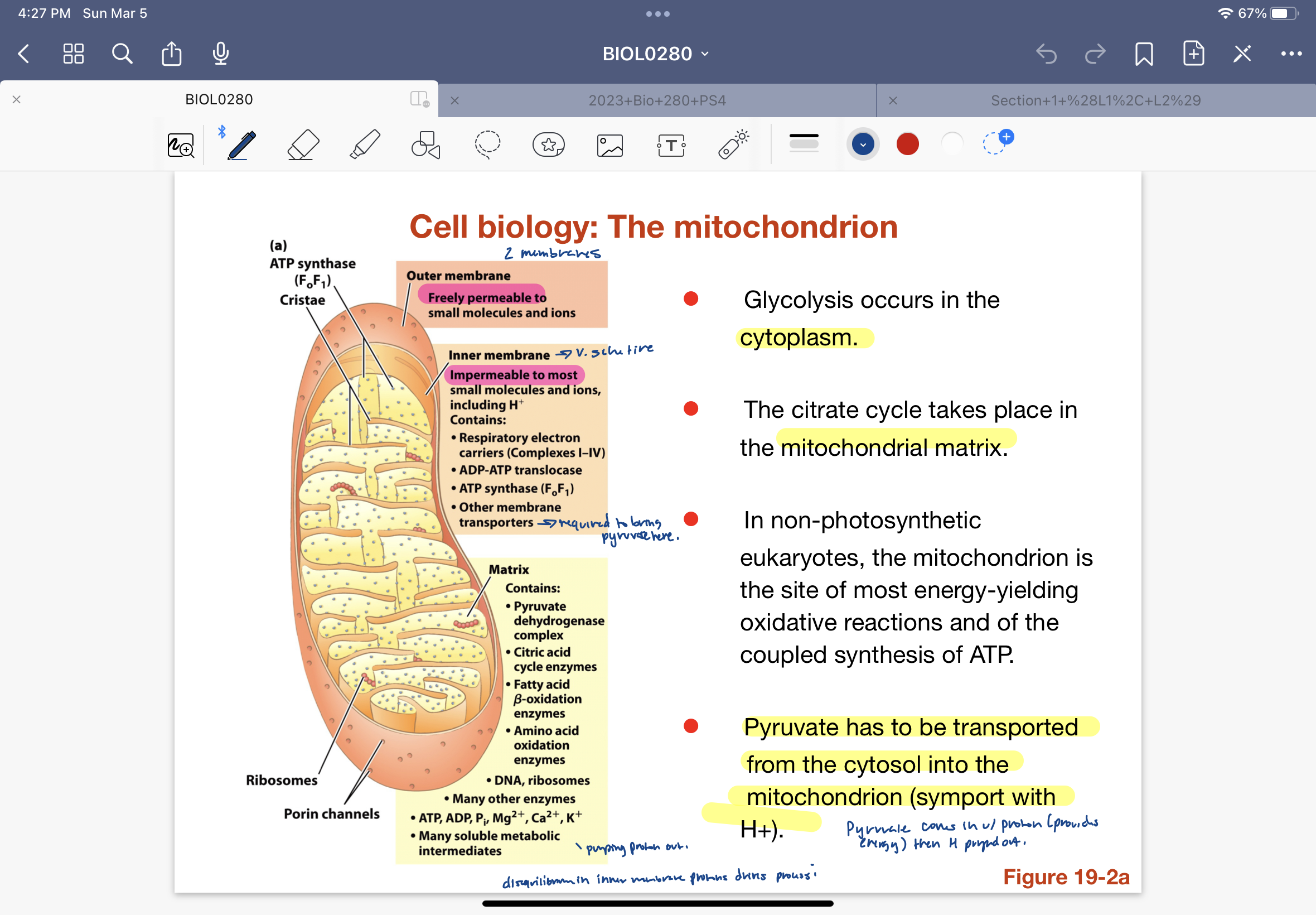
Glycolysis occurs in the cytoplasm of the cell. TCA takes place in the mitochondrial matrix. In non-photosynthetic eukaryotes, the mitochondrion is the site of most energy-yielding oxidative reactions and of the coupled synthesis of ATP. Pyruvate has to be transported from the cytosol into the mitochondrion (Pyruvate comes in with proton (provides energy) and then H pumped out). Symport with H+. Inner membrnae of mitochondrion is selective and is what requires the use of transporters.
3
Oxidation of Carbon in the Biosphere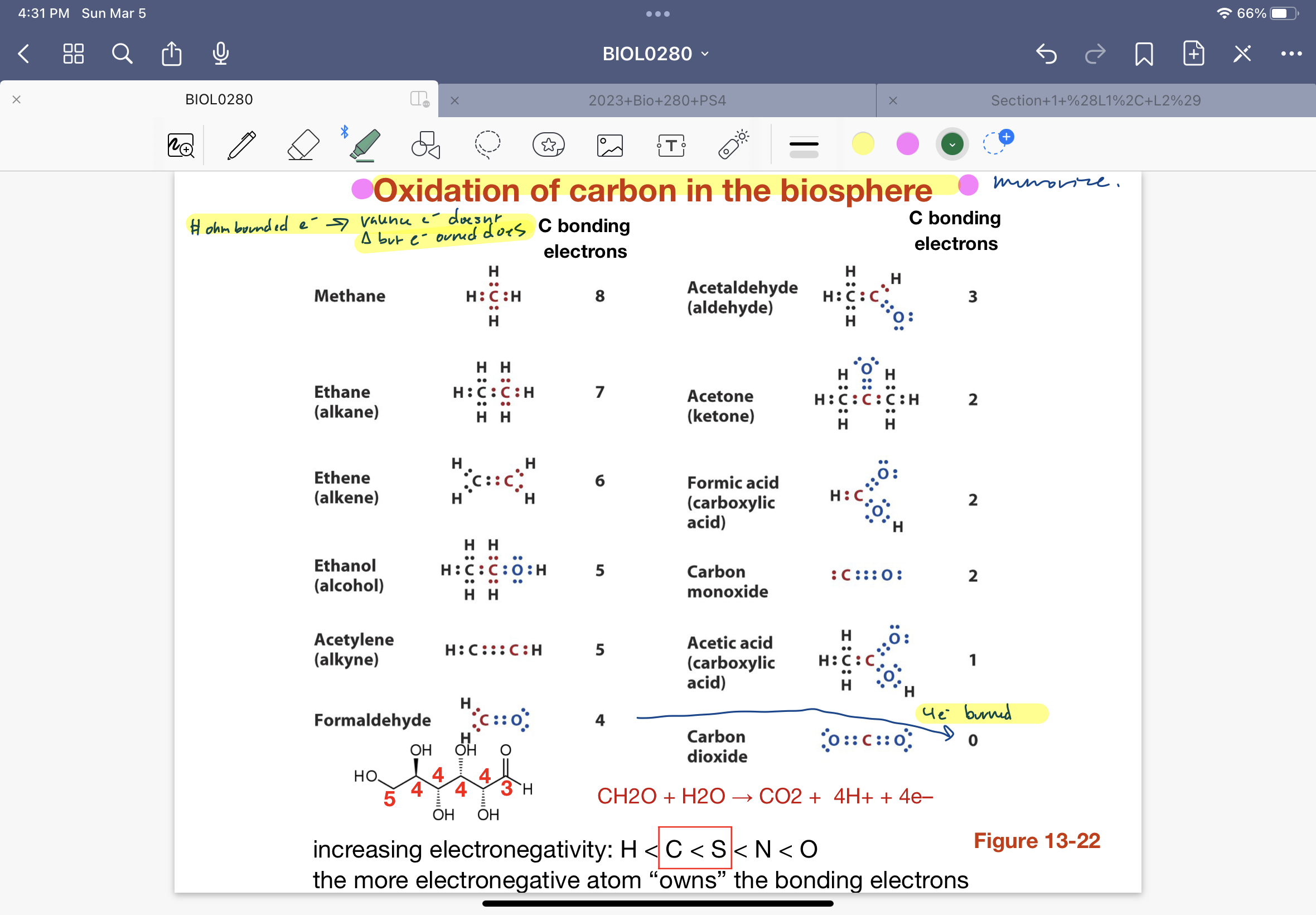
Once again, only focused on number of ohm bonded electrons, valence doesnt matter. H<C<S<N<O the more electronegative atom owns the bonding eelctrons.
4
Pyruvate Dehydrogenase reaction 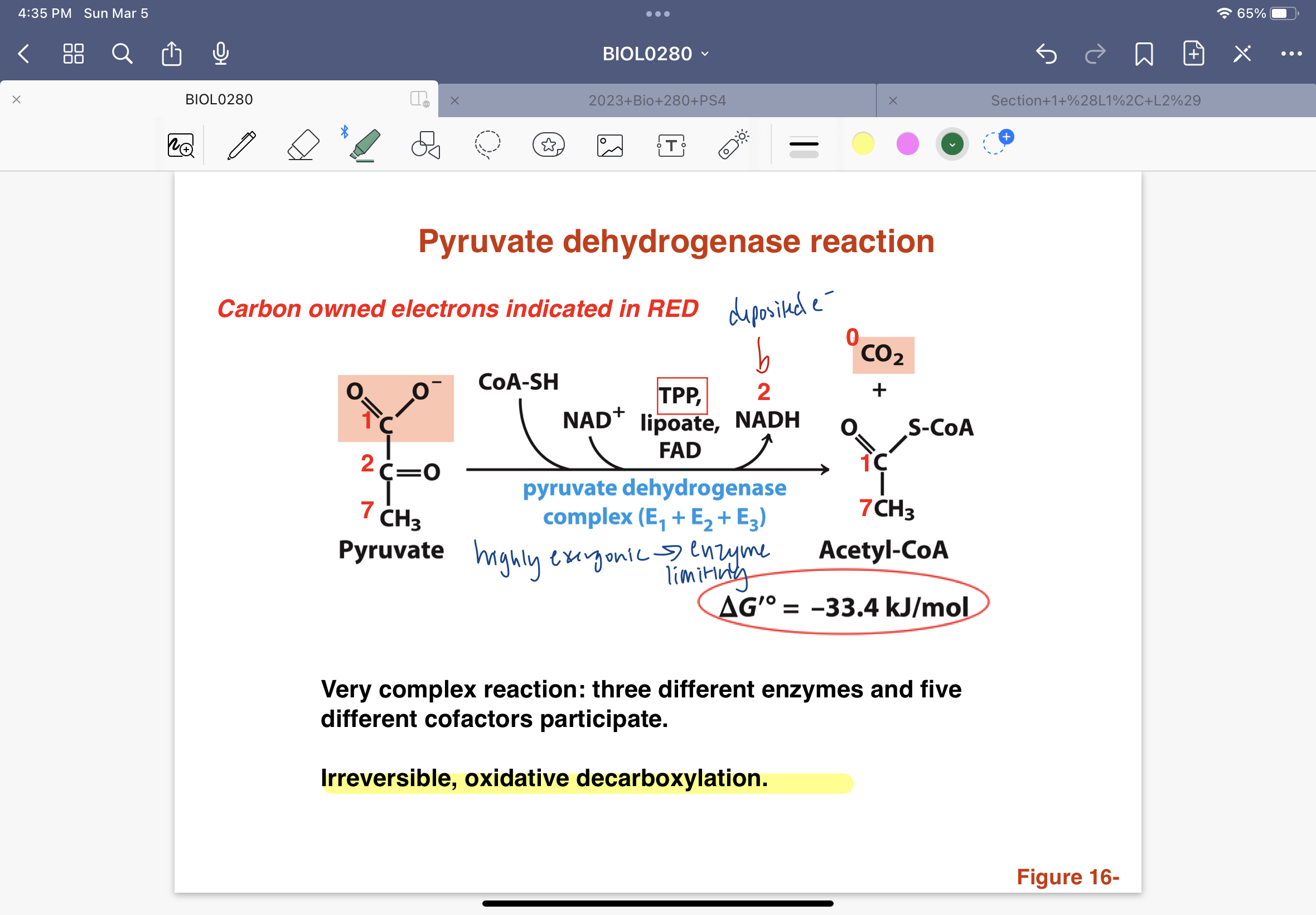
Deposits electrons on NAD+, is highly exergonic thus enxyme limiting. Very complex bc 3 different enzymes and 5 cofactors. Leads to irreversivle, oxidative decarboxylation.
5
TPP: A COenzyme used in Pyruvate Decarboxylation 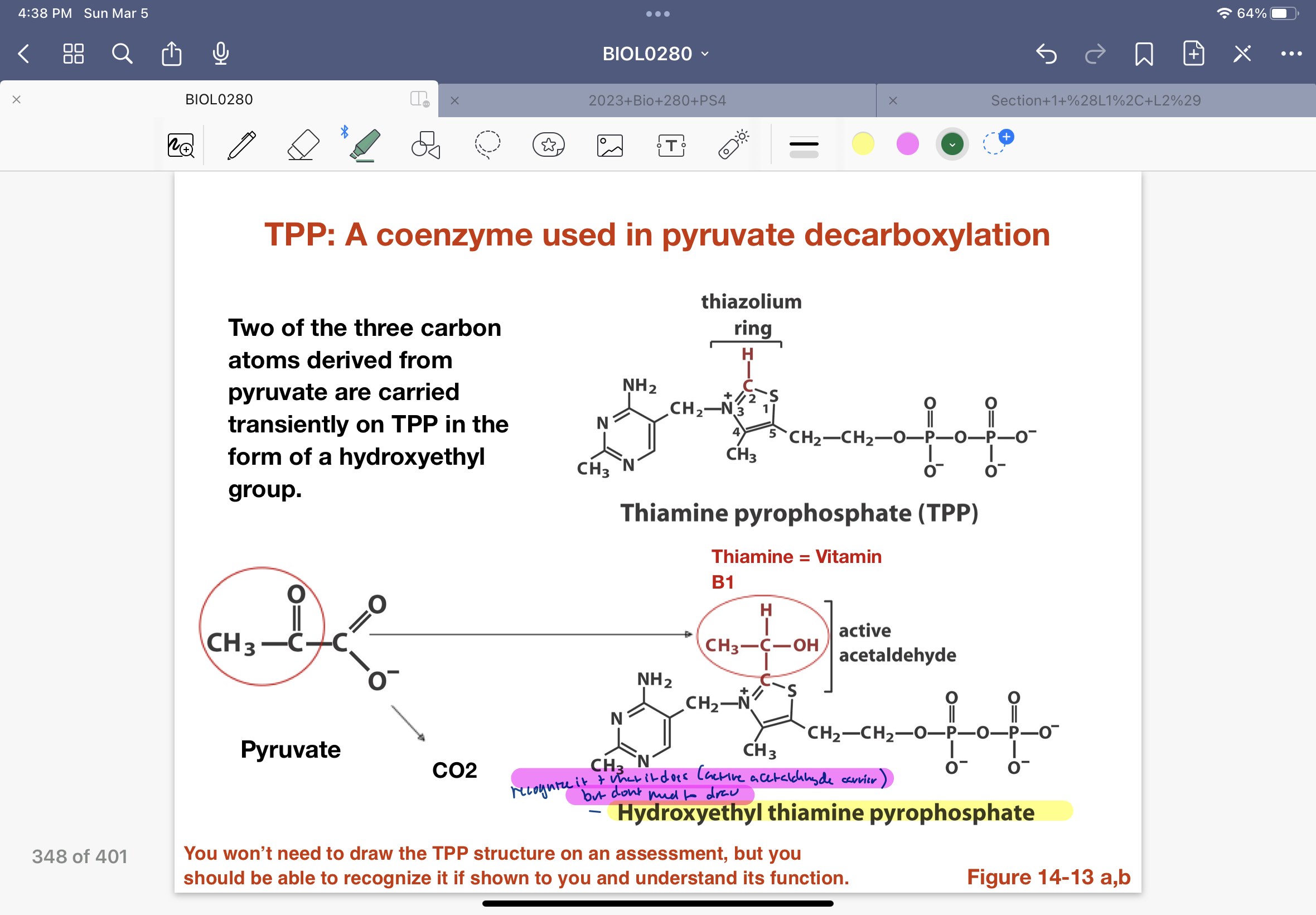
2 of 3 carbons derived from pyruvate are carried transiently on TPP in the form of a hydroxyethyl group. ( active acetylaldehyde). Carries active acetaldehyde in place of thiaazolium ring C-H. Cofactor TPP is involved in reactions in which bonds to carbonyl carbons are syntheized or cleaved. 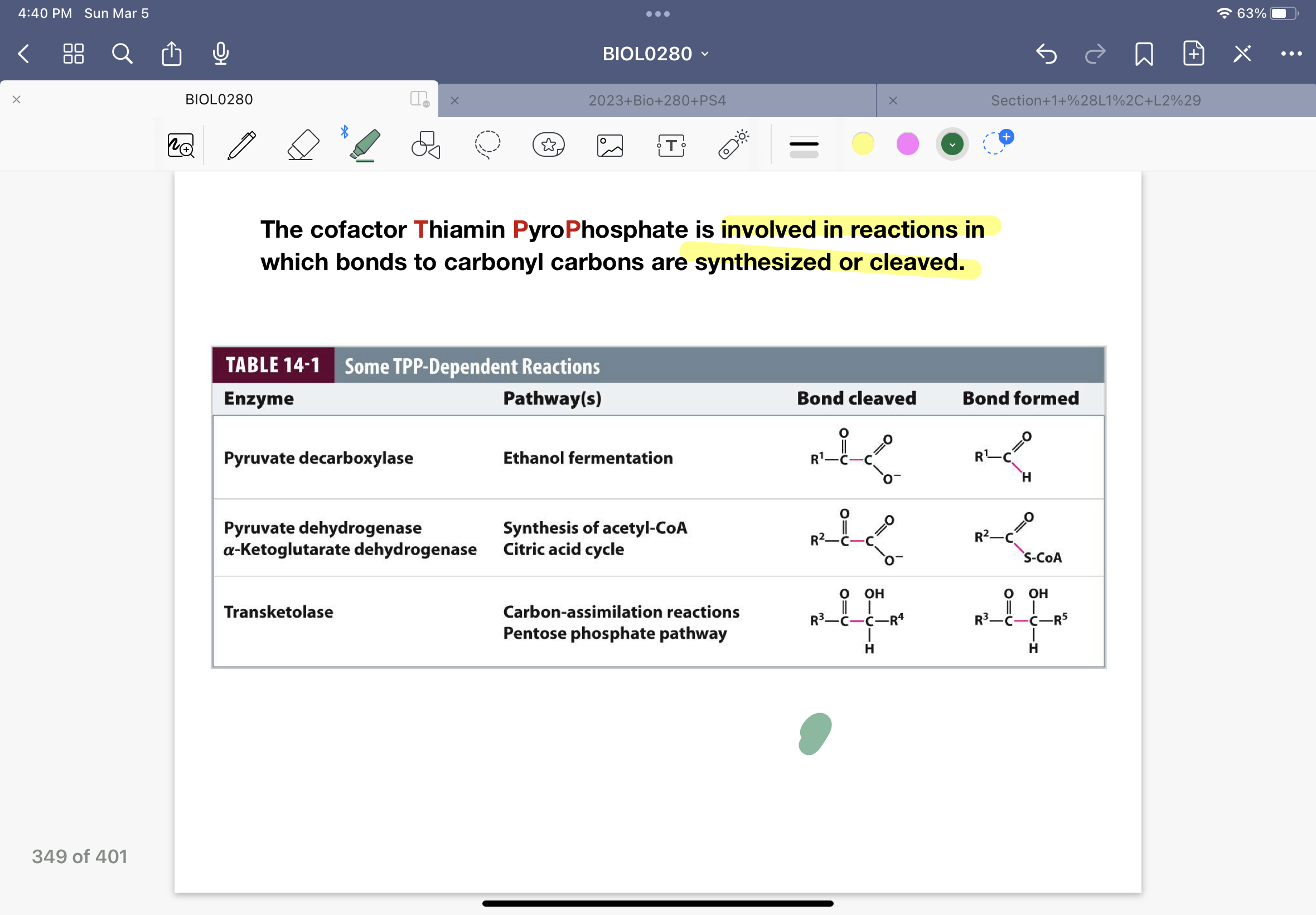
6
Alcohol Fermentation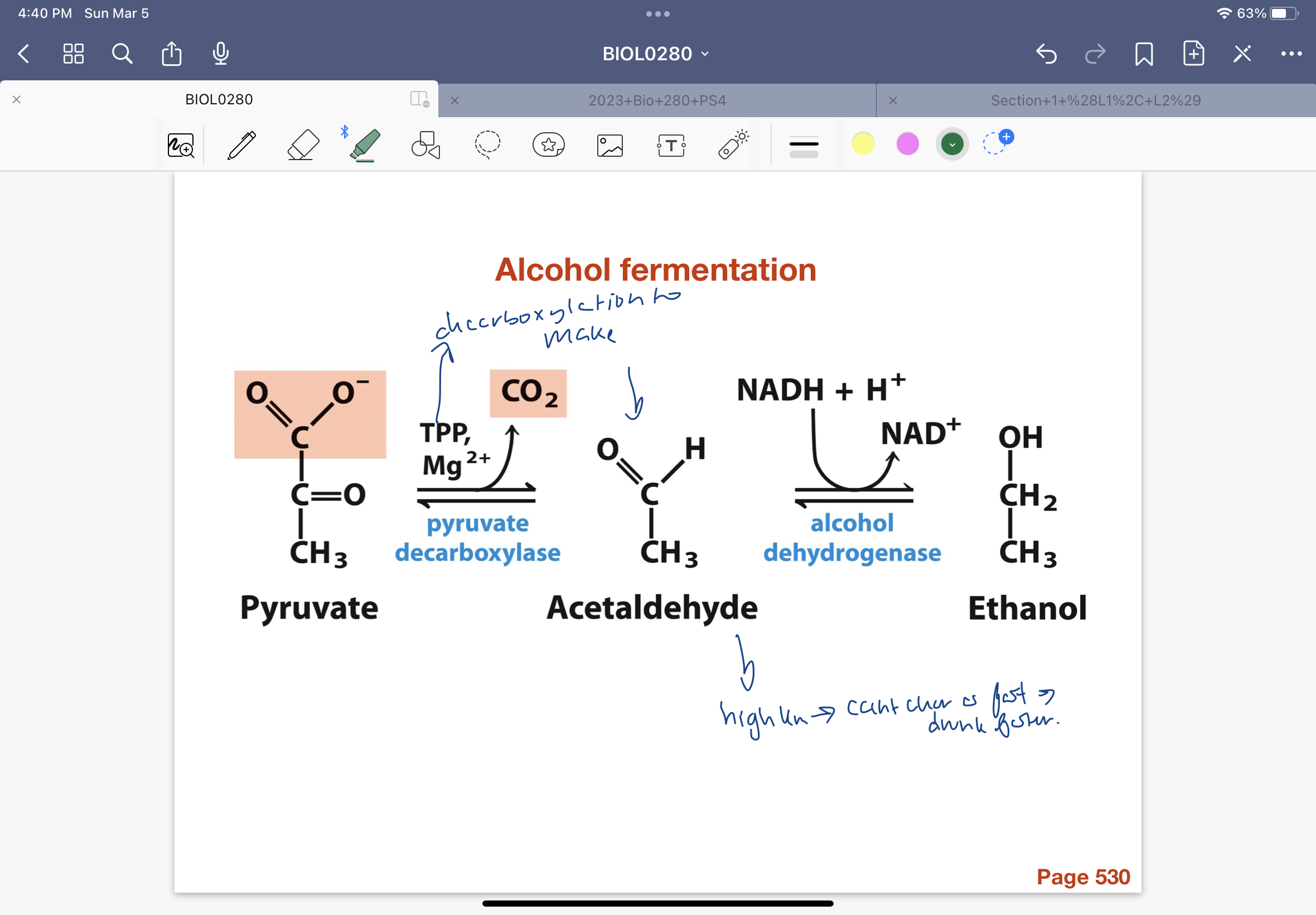
Pyruvate decarboxylation to make acetaldehyde which is dehydrogenased to make ethanol. With a high Km wont be able to clear Acetaldehyde as fast so you get drunk faster. Low km and you clear faster.
7
Pyruvate Dehydrogenase reaction: Coenzyme A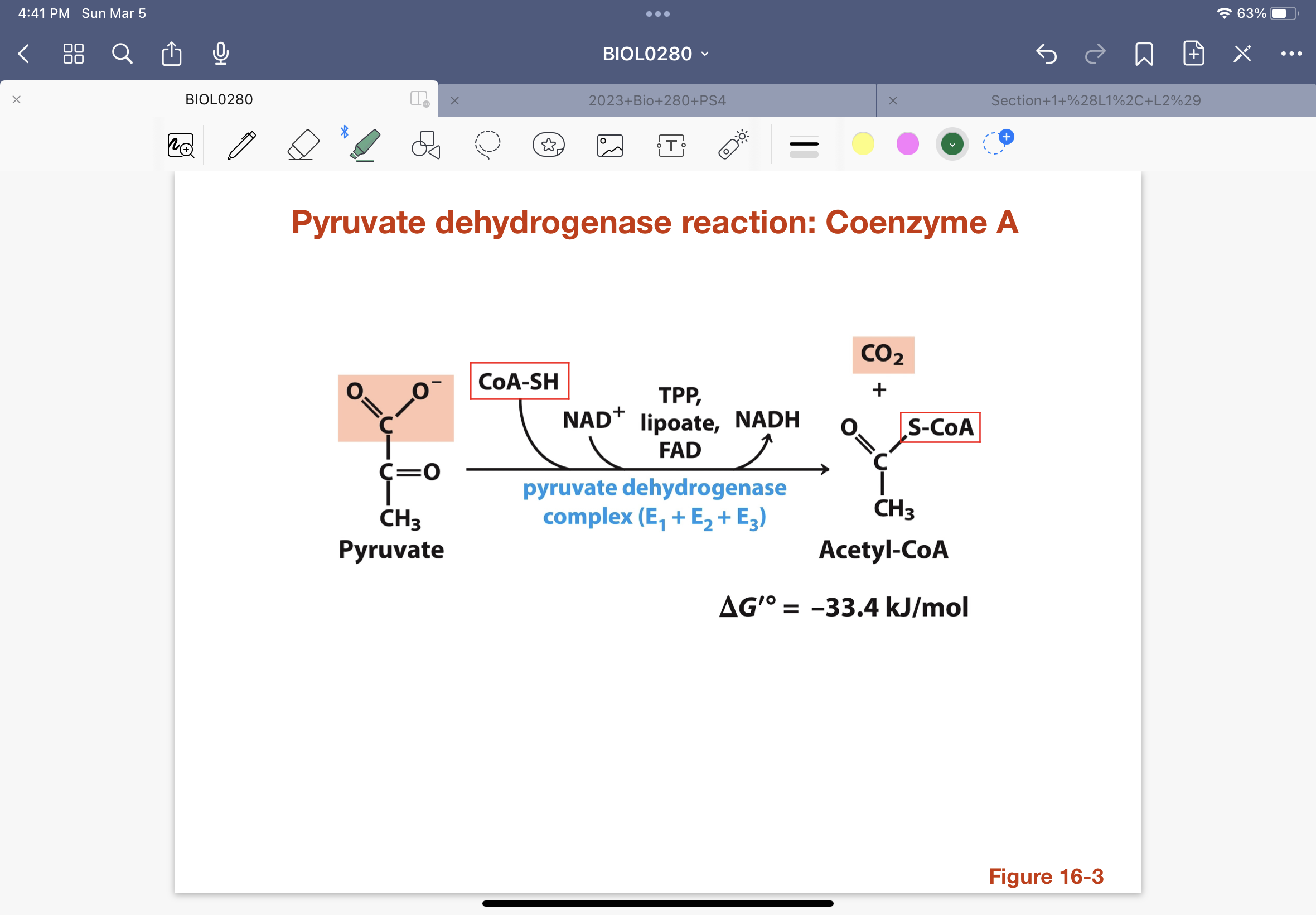
CO2 is basically cleaved by TPP and CoA-SH is attached in its place. Coenzyme A has a reactive Thiol group (SH) in its Beta Mercaptoethylamine end, followed by a pantothenic acid, followed by a 3'-phosphoadenosine diphosphate . Very large and easy to grip. Acetyl CoA is a thioester linkage. 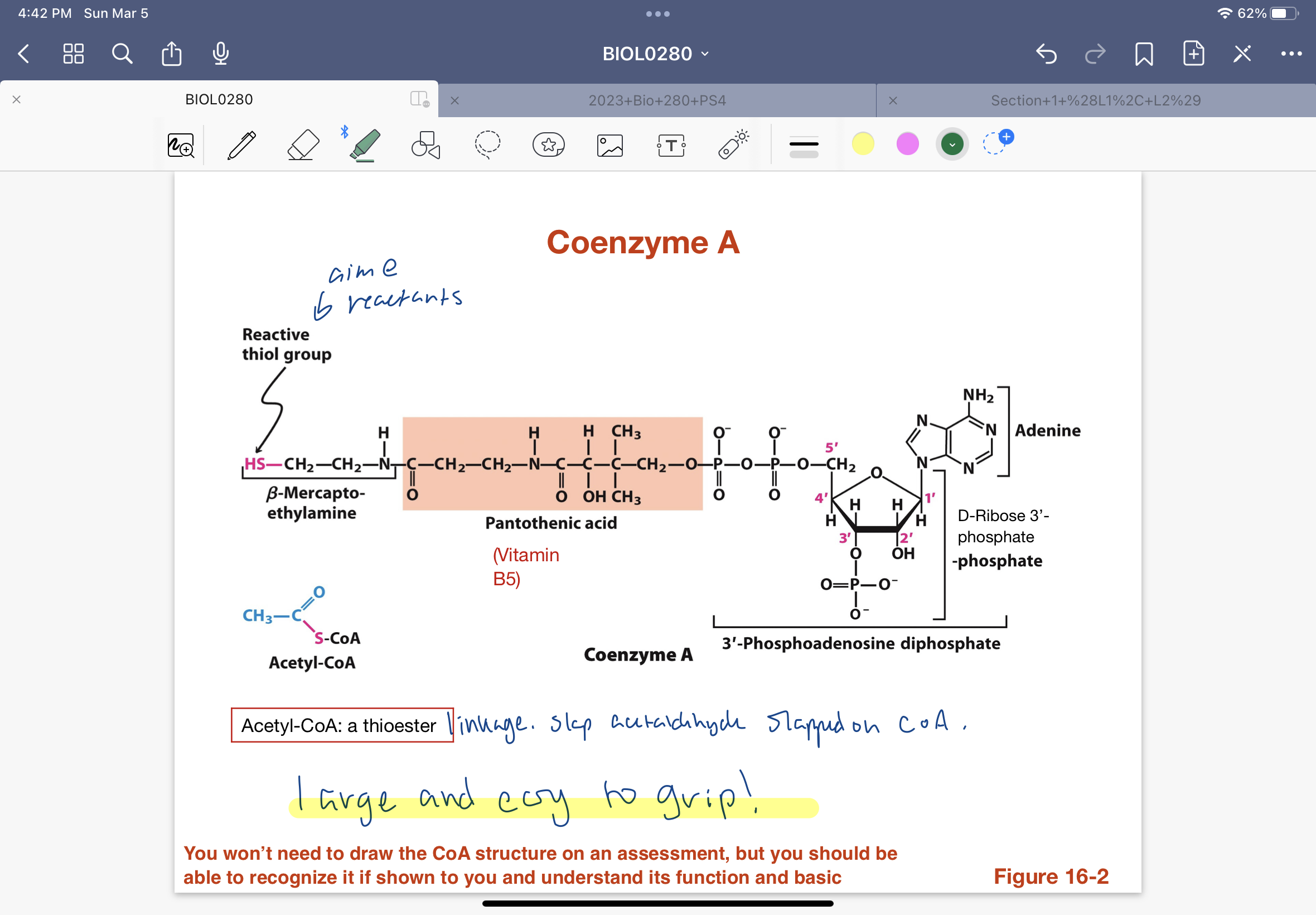
8
Pyridine Nucleotide Coenzymes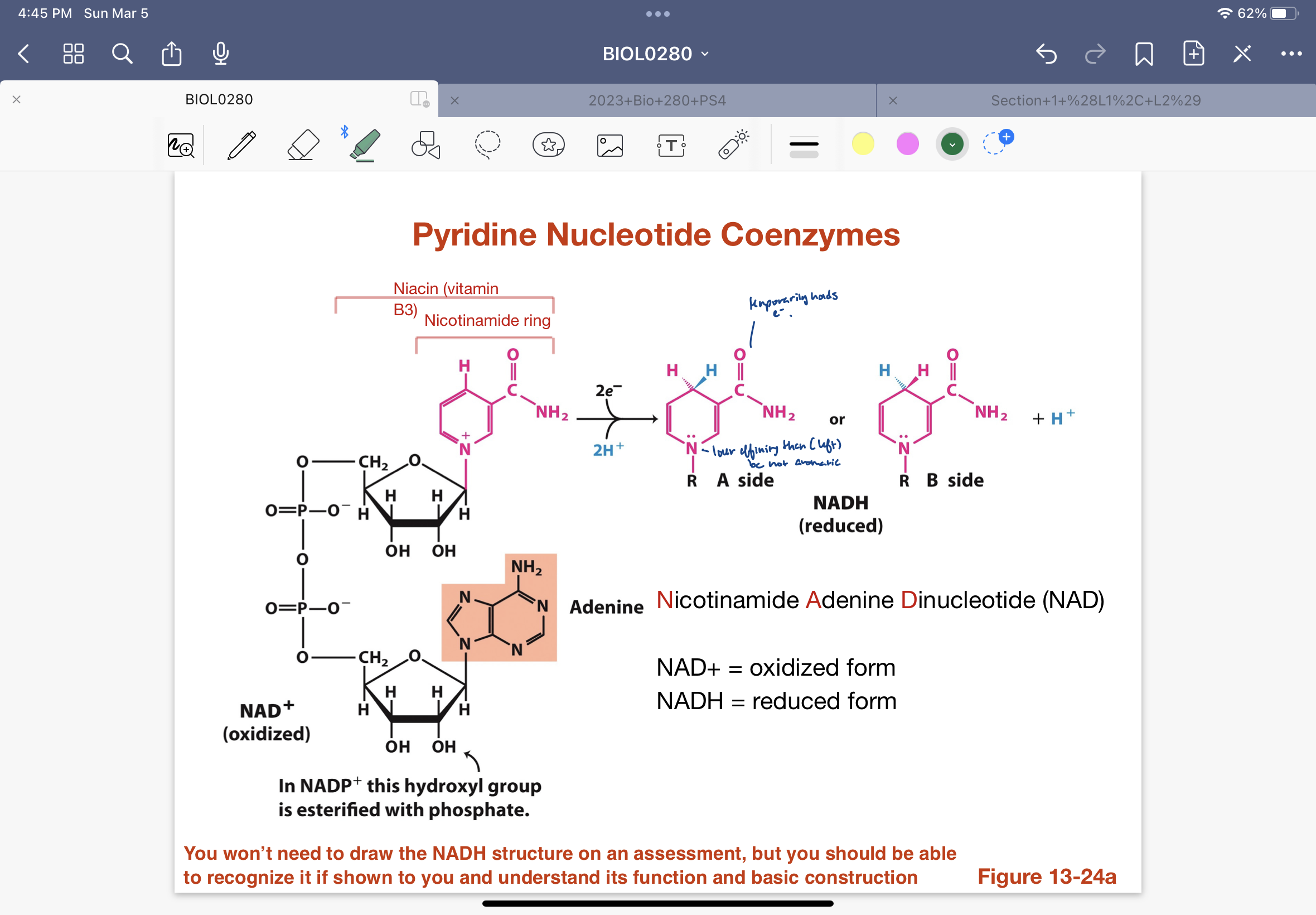
Nicotinamide Adenine Dinucleotide. has an Adenine, a Niacin with a Nicotinamide ring that can hold e- when reduced. 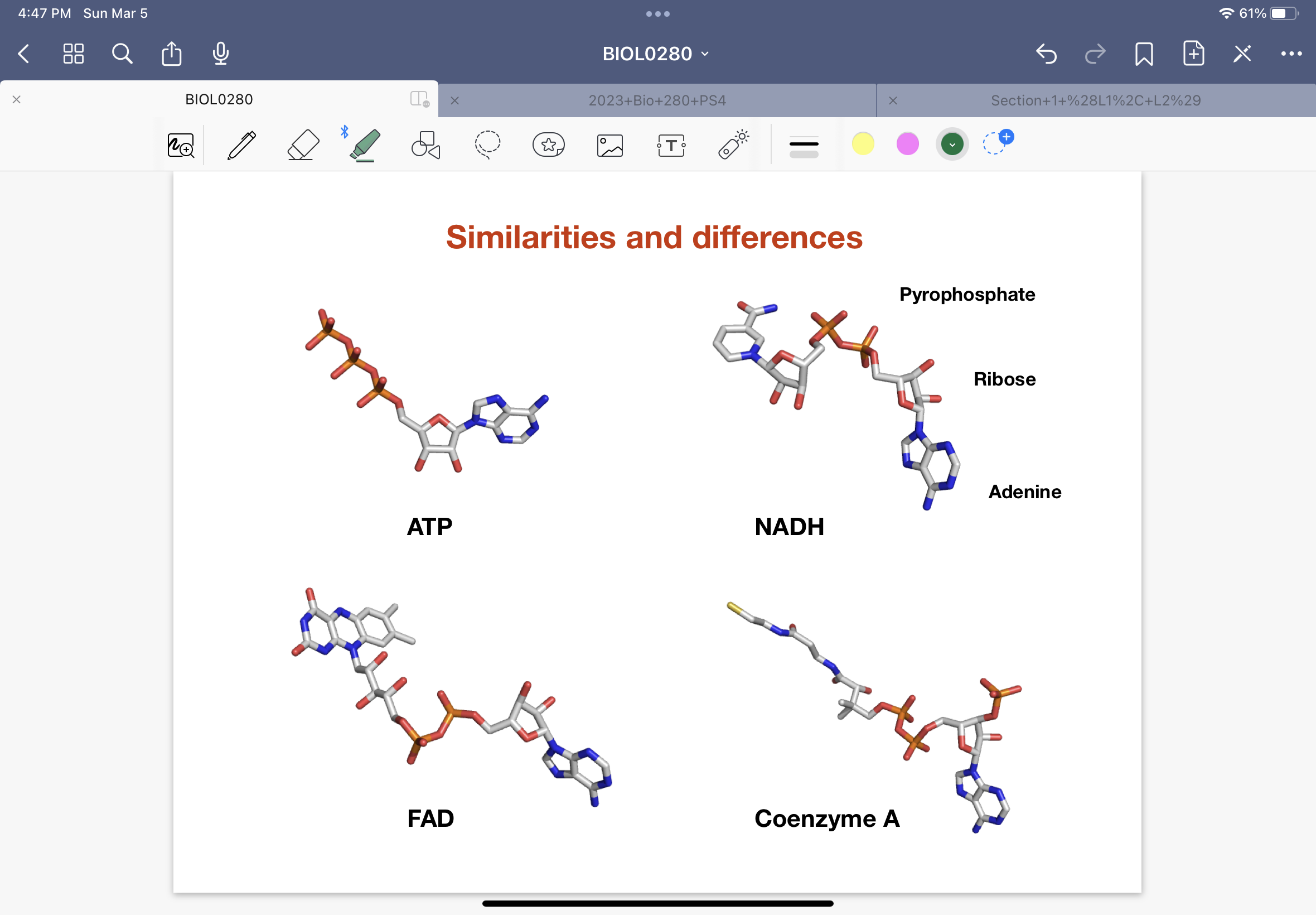
9
Flavin nucleotide cofactors 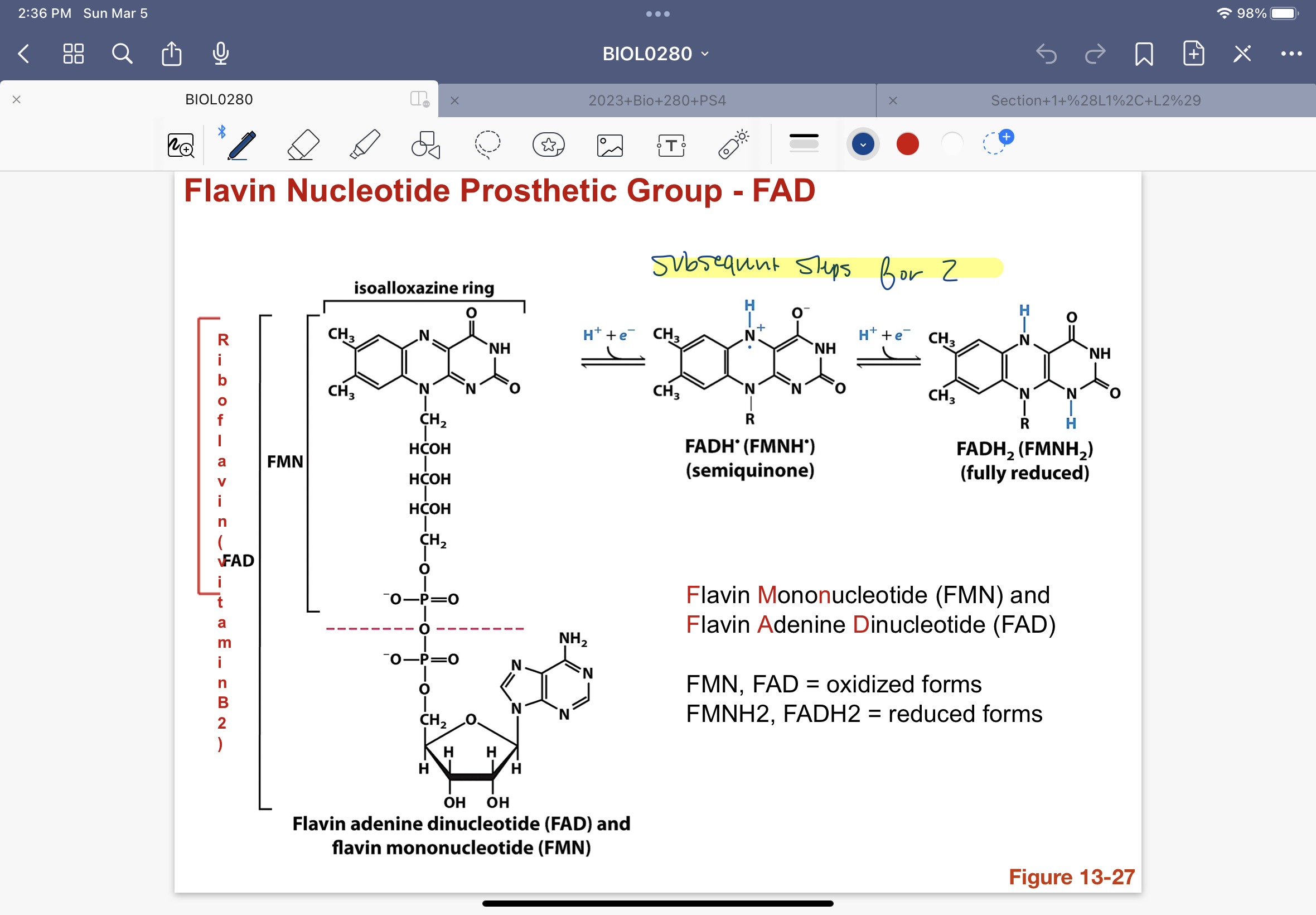
Flavin Adenine Dinucleotide (FAD) FAD is oxidized form and FADH2 is reduced form. FAD si whole thing, FMN is top part, and isoalloxazine ring is at top and can hold e- when reduced.
10
Lipoic acid 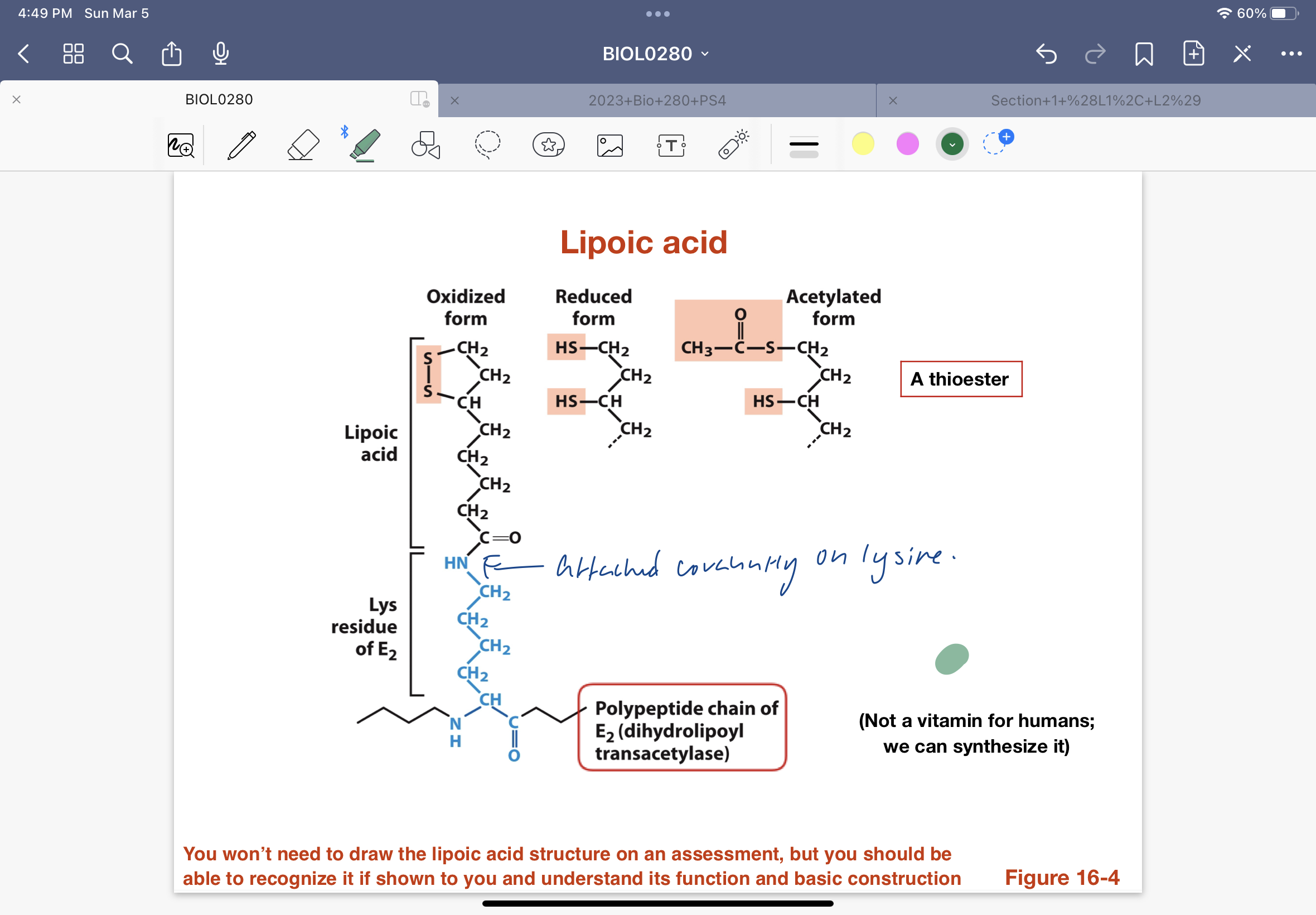
Lipoic acid at top with S-S ring, covalently followed by Lys residue of E2 wirh a polypeptide chain of E2 at bottom. Lipoic acid can split at S-S to form 2 SH bonds in reduced form, whickhcan then be acetylated to form a thioesteron one of the SH bonds.
11
The PDH complex and Pyruvate dehydrogenase reaction 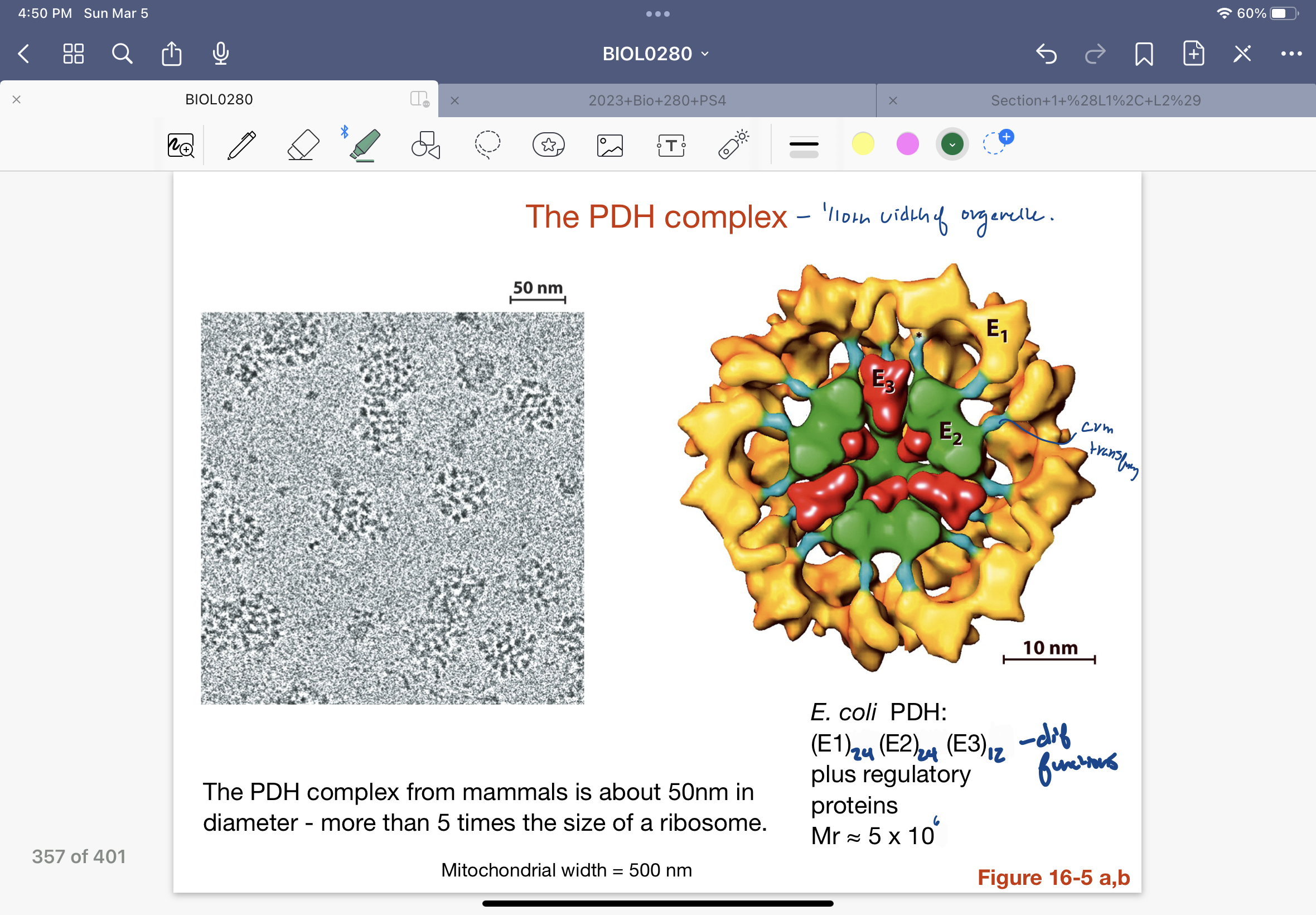
PDH is more than 5 X a robosome and 1/10th width of organellse. E1-E3 have different functions. 1) Decarboxylation of pyruvate and transfer of active acetylaldehyde to TPP. temporarily borrow TPP e- but then Chuck acet onto lipoic acid cofactor, gives back TPP e-. 2) Oxidation o the acetlyaldehyde to a carboxyl group occurs here . 2 e- shift down onto acetaldehyde 3) Transacetylation. cleave and form new bond. only 8 e- release right now 4) Re-oxidation of dihydrolipoate. FAD takes 2 e- 5) re-oxidation of FADH2. FADH2 gives 2 e- to NAD+. 2e- released and balance is retored. Enzyme bound FAD can have a more negative reduction potential than free FAD hence used rather than NAD+. Multoenzyme complex allows for substrates to only have to diffuse short distances increases the rate, allows for channeling/ direct handoffs of substrates that increases specficity and minimizes side reactions, and allows for coordinate control so that a change in one can affect the other enzymes. 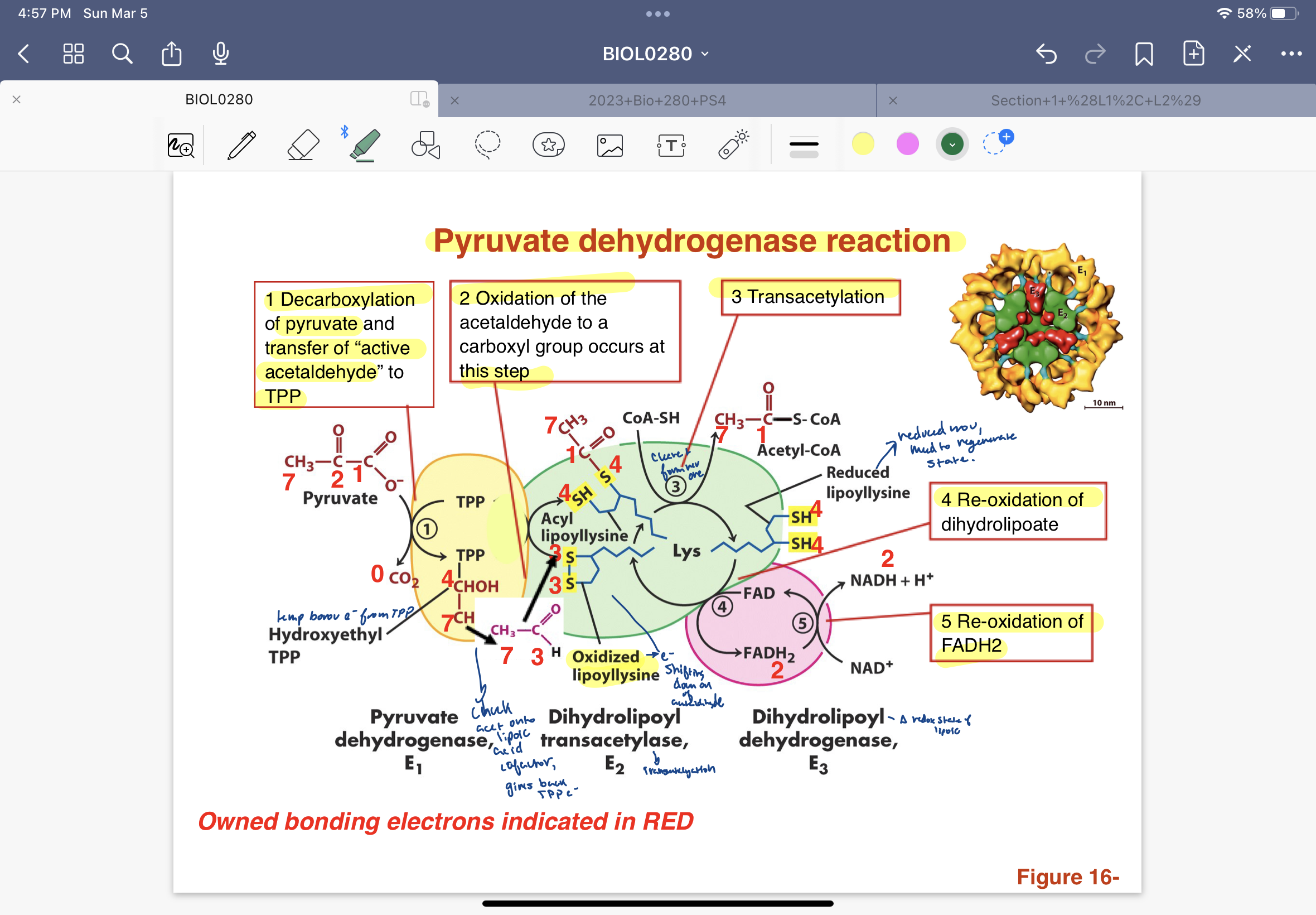
12
Regulation of PDH: the door to the furnace.
NADH and Acetyl- CoA/ fatty acids (which make acetyl coa) inhibit PDH. NAD+ and free CoA stimulate PDH. Dephosphorylation of E1 subunit (occurs only in eukaryotic PDH) allows for reversible covalent modifcation, phosphoyrlation inactivates subunit. PDH kinase (which phosphoylates and makes the enxyme inactive) is activated by ATP, NADH, and Acetyl coA. it is inhibited by pyruvate and ADP. PDH kinase and PDH phosphatase are also part of multienzyme complex.
13
TCA Step 1: The condensation reaction 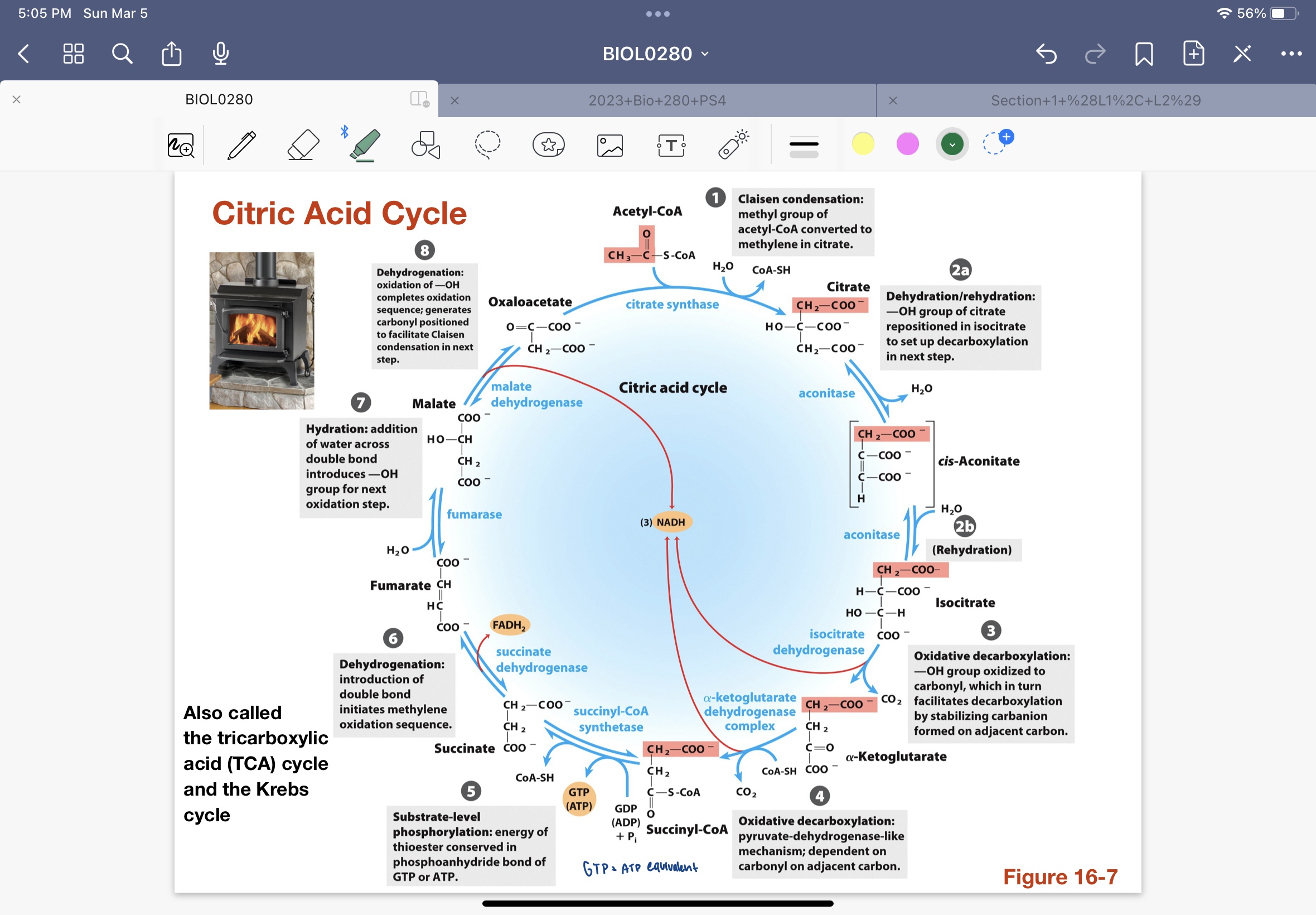
1) the formation of citrate. Thioester cleavage/ hydrolysis is very favorable. [Oxaloacetate] is very low thus the importance of exergonic citrate synthase reaction due to thioestercleavage. this reaction ocurs through an enol intermediate.. Acetyl CoA has a high acyl group trasnfer potential but only stabiliziedthere if O is attached because allows for resonance stabilization. Since S is attached then resonance cant o ccur, causing the high energy thioester that accoutns for virtually all of the driving force for citrate synthesis. 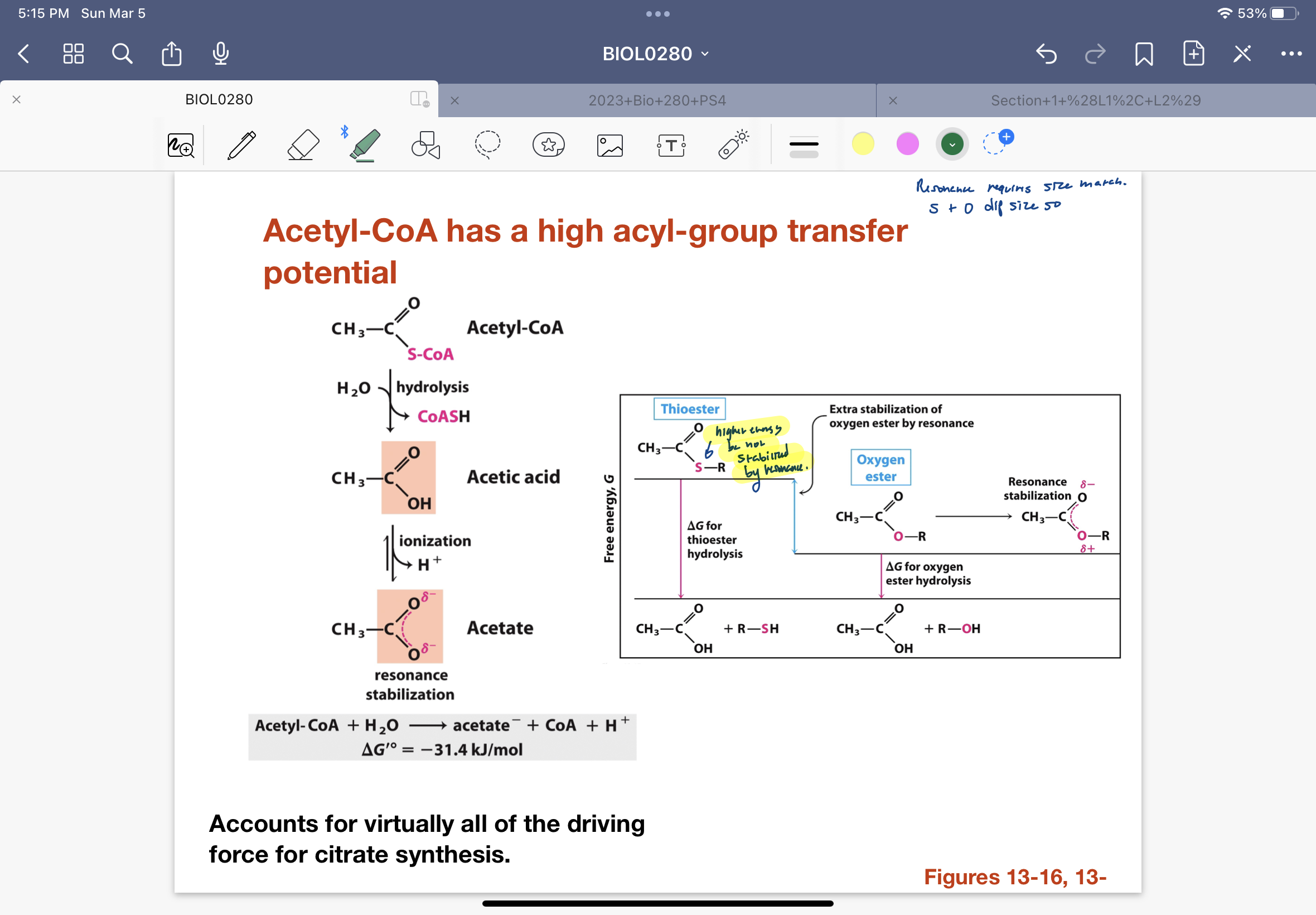
14
TCA Step 2: Isocitrate formation 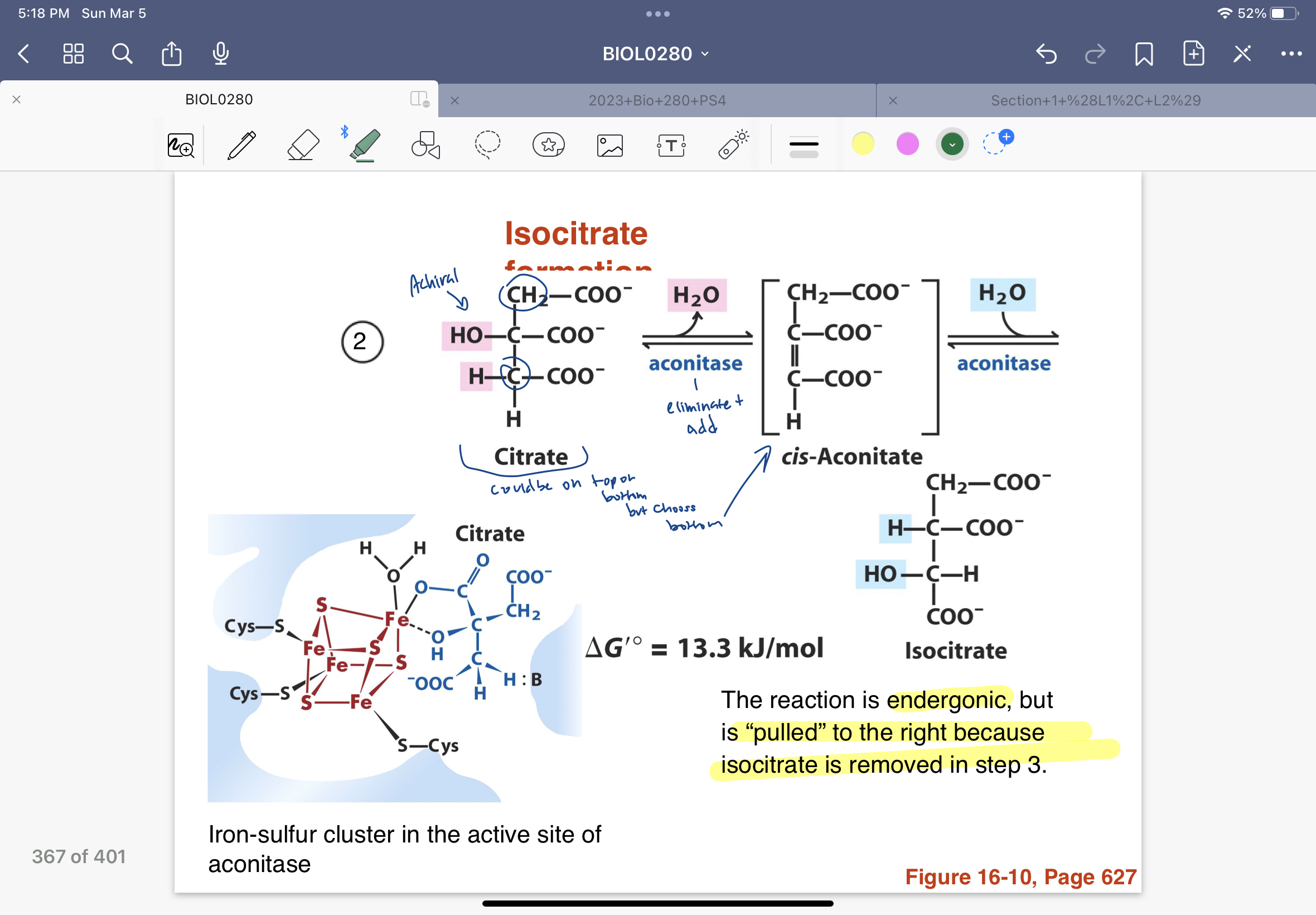
AchiralCitrate acted on bu aconitase that removes water (can eliminate or add water). Acts on bottom carbon. Another aconitase adds water but now OH is on C it acted on and not middle carbon. Overall reaction ikn endergonic but is pulled to the right becuase isocitrate producte is removed immediately in step 3.
15
Steps 3 and 4: Oxidative Decarboxylation steps (CO2 generating steps and pull steps)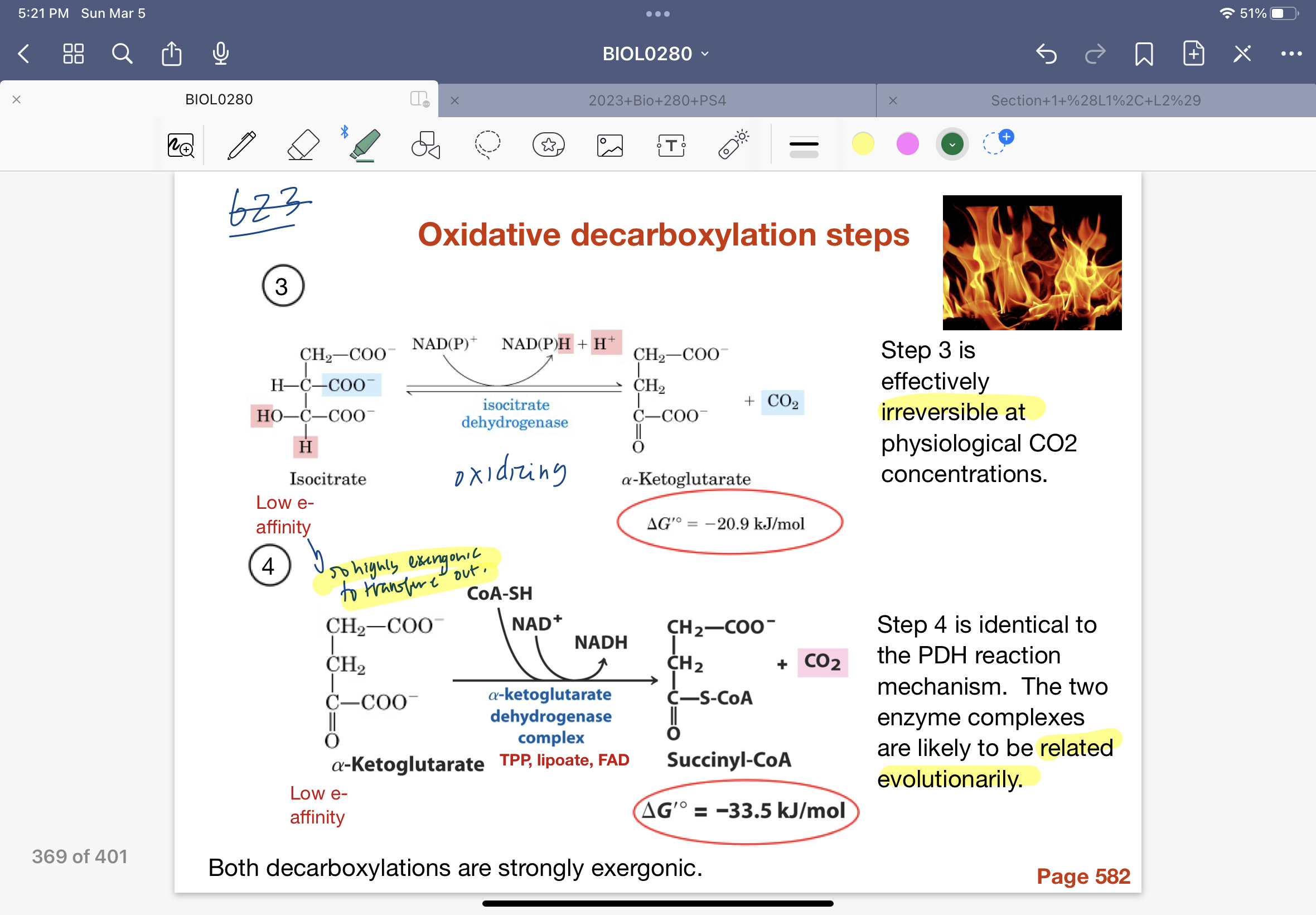
Low affinity isocitrate means its highly exergonic to trasnfer an e- out. oxidation occurs to make alpha ketoglutarate. This step is effectively irreversible at physiological [CO2]. Step 4 this is then acted on my complex that includes TPP, Lipoate, and FAD so that COO- place is removed and replaced by S-CoA. This is identical to the PDH reaction mxn. 2 enzyme complexes are liekly to be related evolutionarily.. Both decarboxylations are strongly exergonic.
16
Lipoic Acid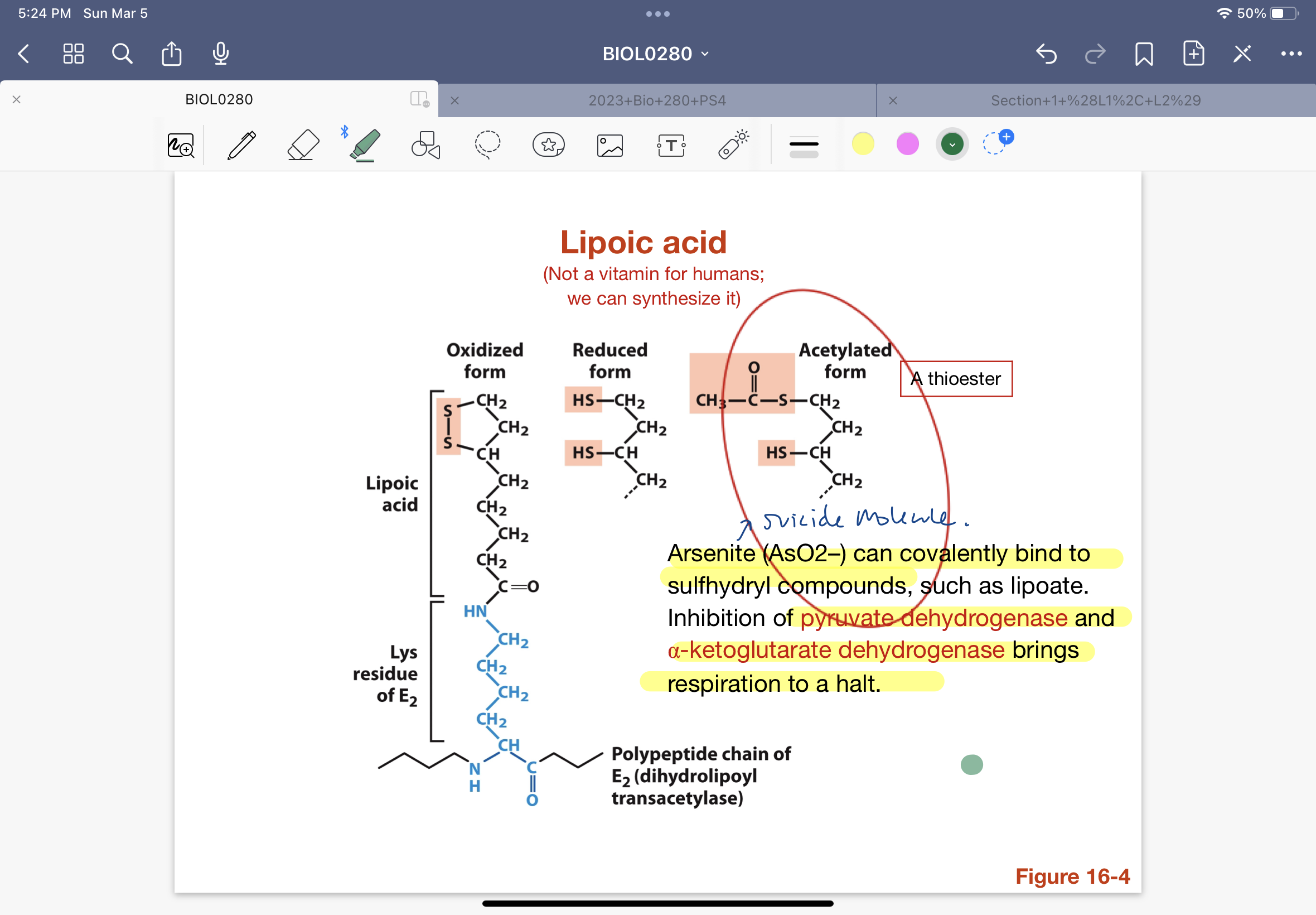
Lipoic acid top covalently bonded to lys residue of E2 with polypeptide chain of E2 on bottom. Lipoic acid can be reduced and then acetylated into a thioester Arsenite (AsO2-) can covalently bind to sulfhydryl compounds such as lipoate inhibiting them becuase they cannot be unbound and act as suicide molecules. Inhibition of pyruvate dehydrogenase and alpha ketoglutarate dehydrogenase brings respiration to a halt.
17
Step 5: Substrate level Phosphorylation 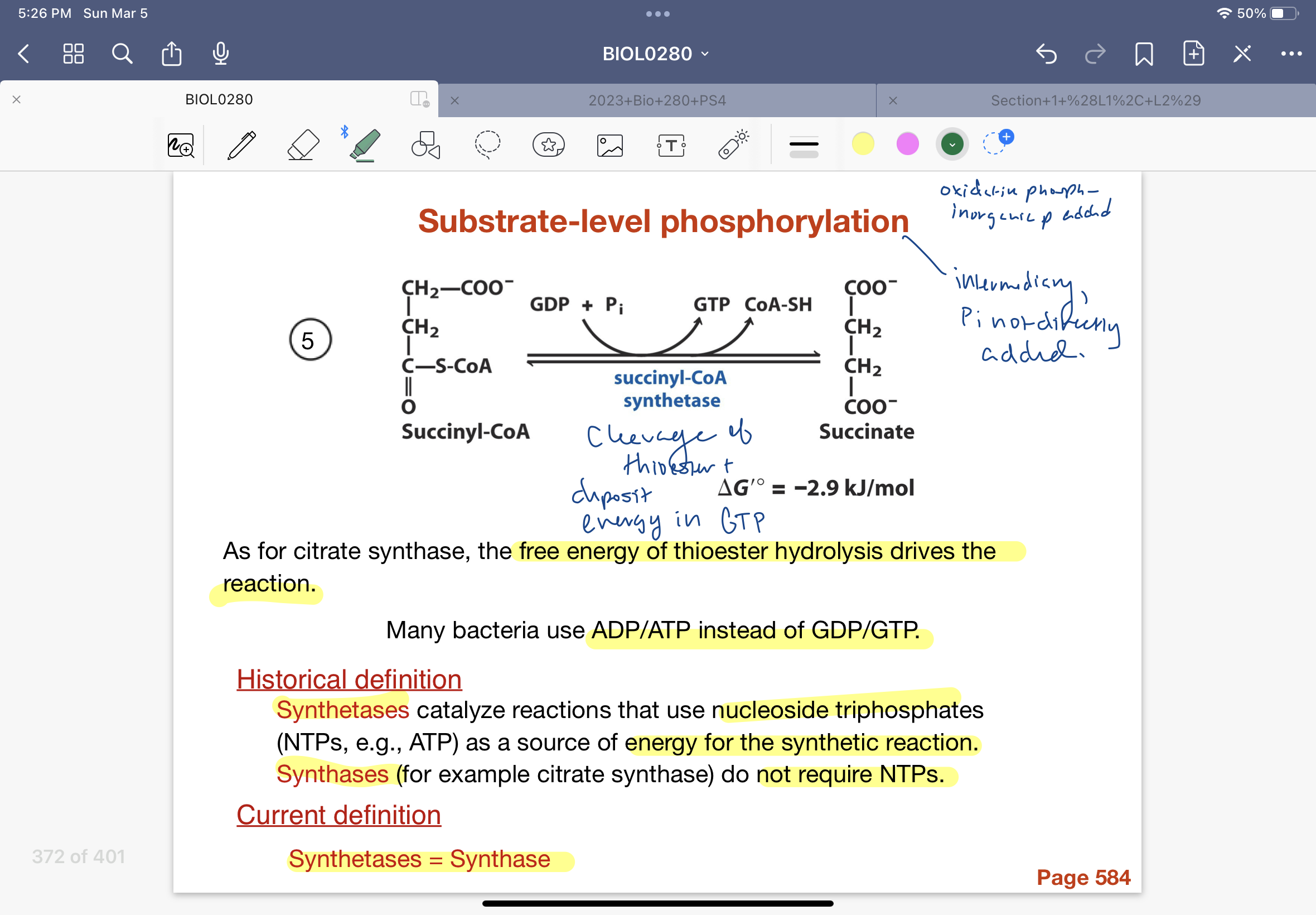
oxidative phosphorylation= inorganic P is added. SUbstrate level phosphorylation= intermediary present, Pi not directly added. Cleaving the thioesterand despoiting the energy into the GTP. Synthetasecatalyze reactions that use nuceoside striphosphates (NTP ATP) as a source of energy while Synthases do not requires NTPS (like citrate sunthase). But we now see Synthetases and SYnthases as the same thing.
18
Steps 6, 7, and 8: Alkyl Chain Oxidation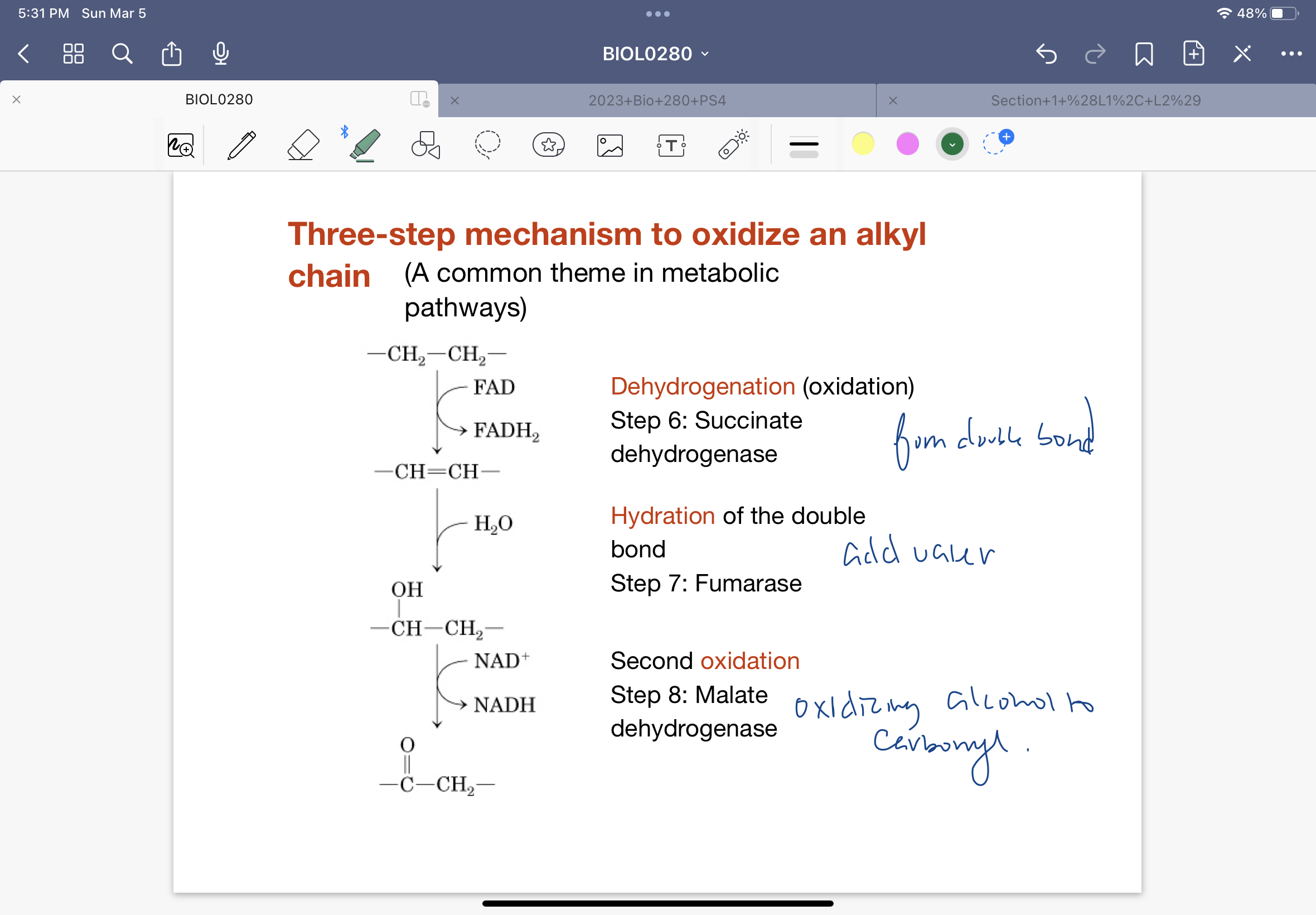
3 step mechanism to oxidize alkyl chain. 1) Dehydrogenation (oxidation) in step 6 Succinate dehydrogenase to form a double bond. 2) Hydration (add water) of the double bond in step 7 Fumerase. 3) Second oxidation in step 8 malate dehydrogenase (oxidizing alcohol to carbonyl. )
19
Step 6 Succinate Dehydrogenase (SDH)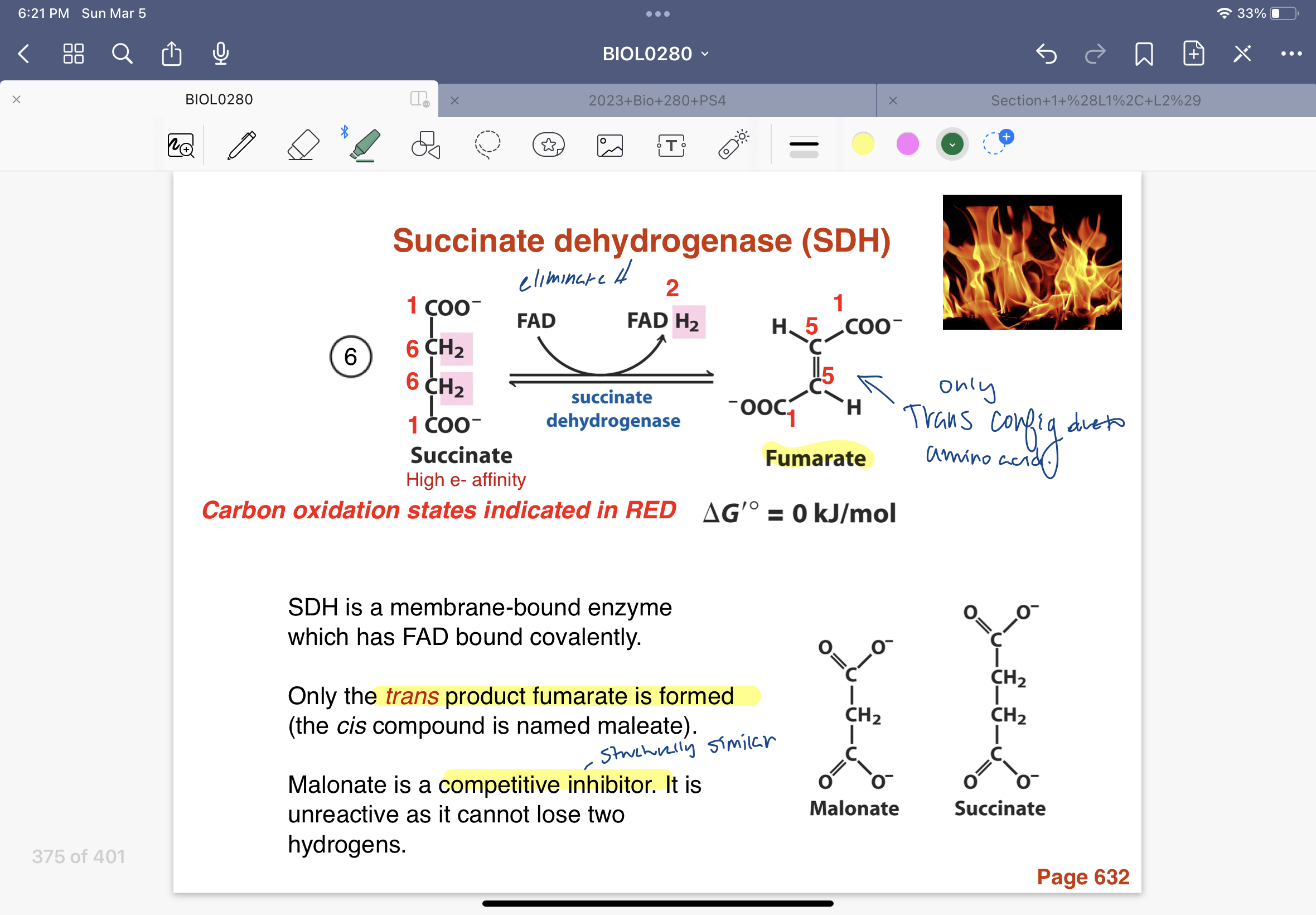
Eliminate H and place on FAD, Creating only trans configuration Fumarate. SDH is a membrane bound enzyme which has FAD bound covalently. Malonate is a competitive inhibitor becuase of its structural similarity. It is unreactive as it cannot lose two hydrogens. .
20
Step 7 Hydration to Fumarate to form Malate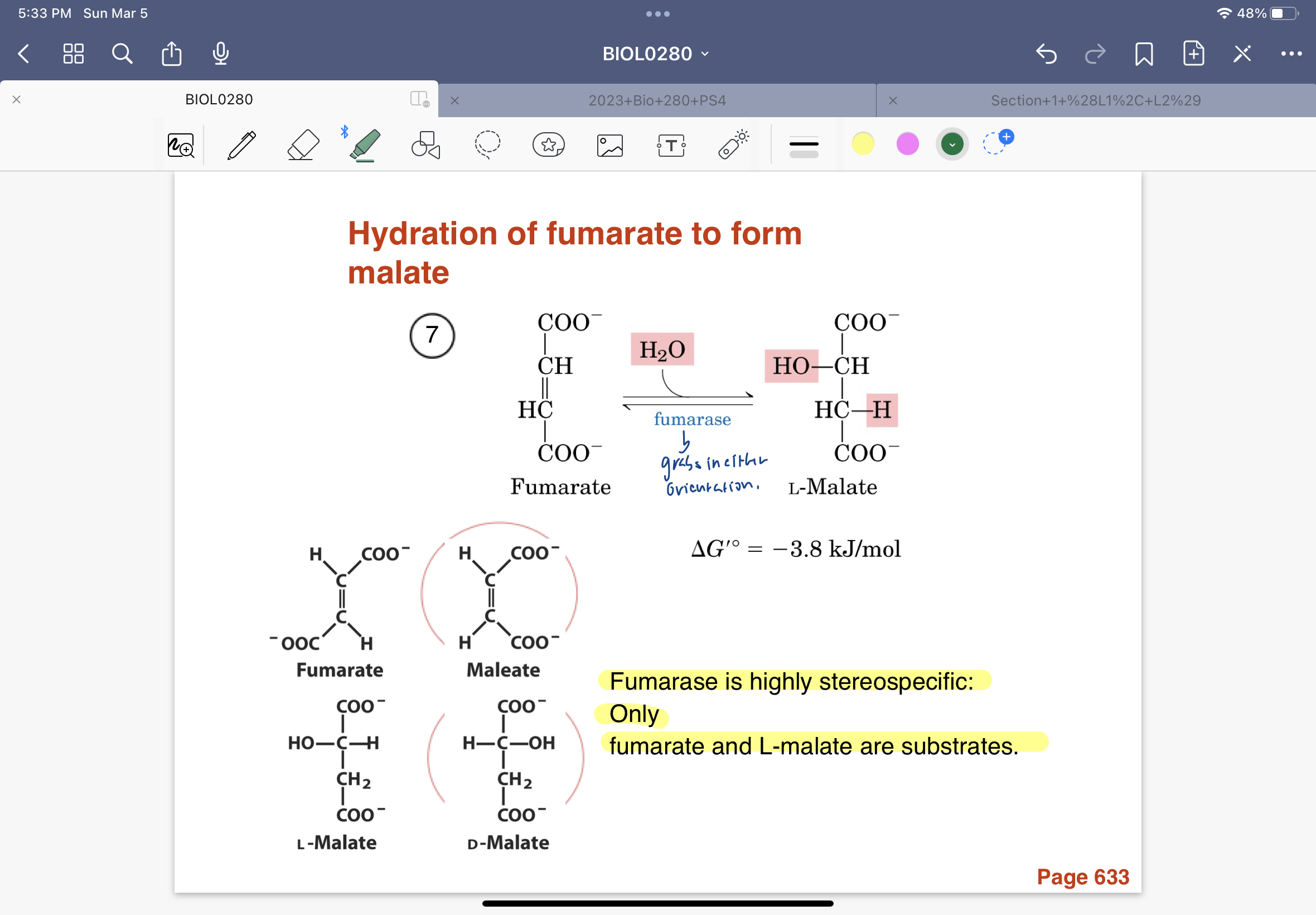
Fumarase is highly sterospecific so only Fumarate and L-Malate are sujbstrates.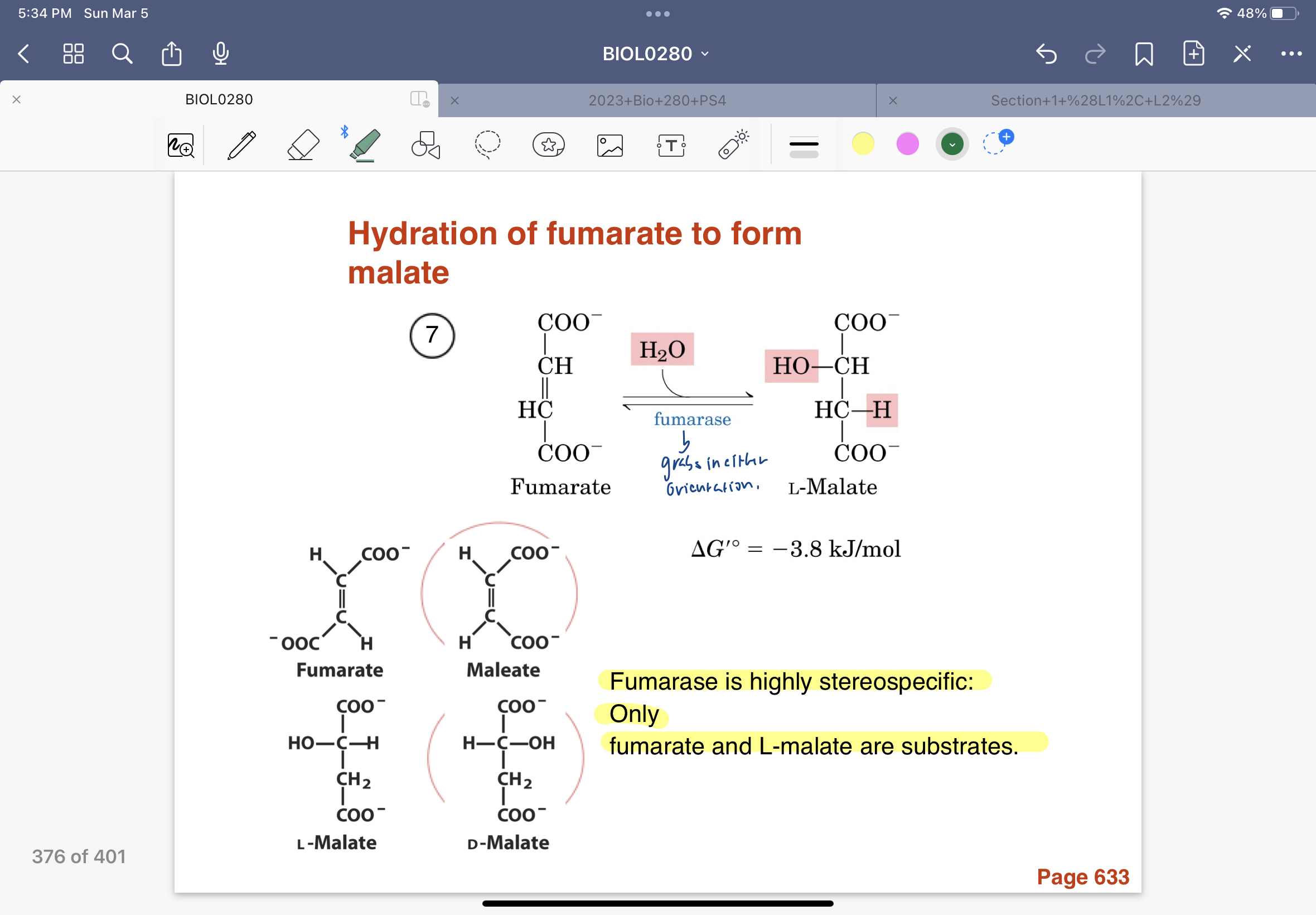
21
Step 8 formation of Oxaloacetate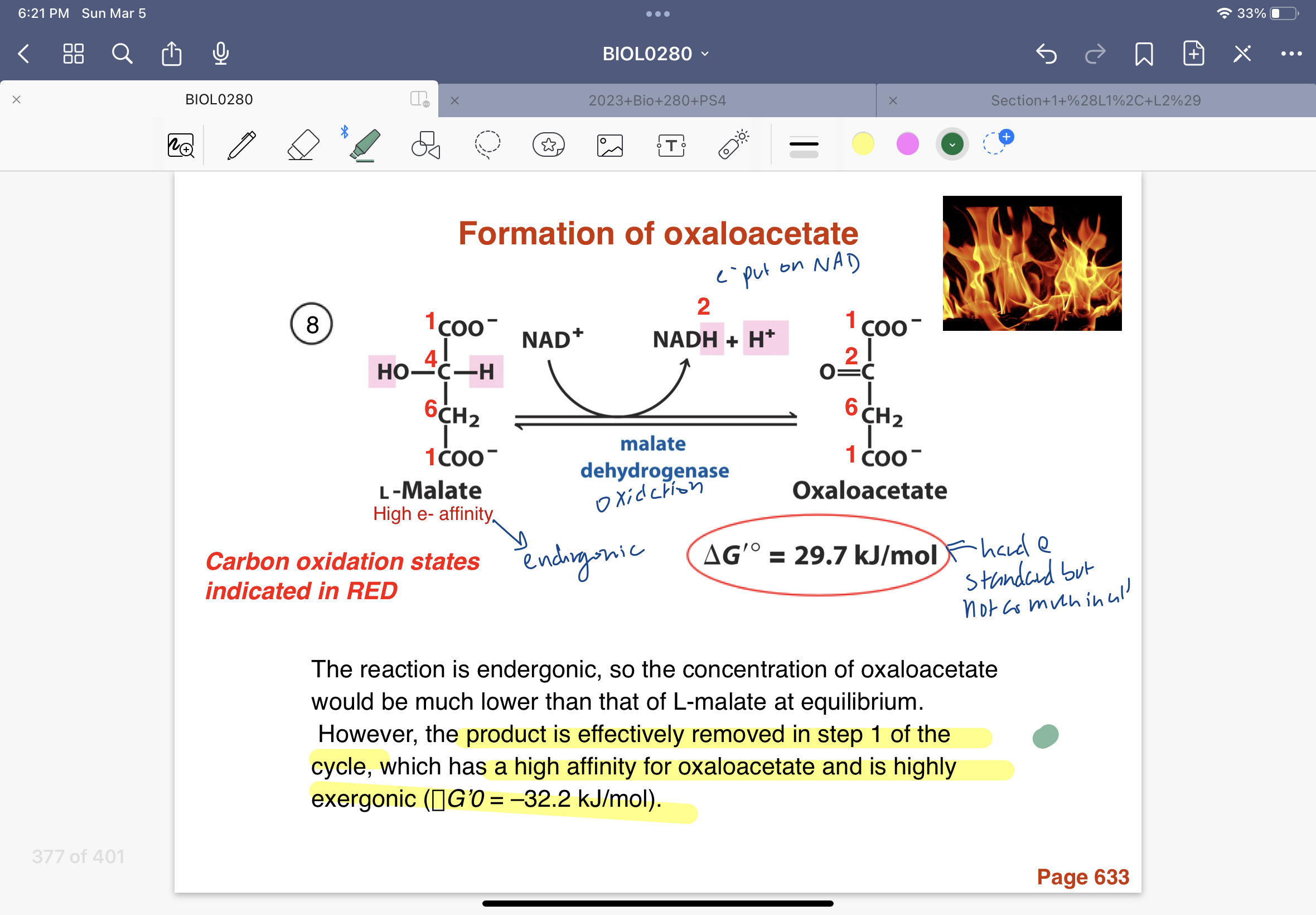
L-Malate has a high electron affinity so it will not want to give up an e- (endergonic). E- parked on NAD+ ( oxidation) to make Oxaloacetate. Overall reaction is endergonic at standard conditions so the [oxaloacetate] would be much lower than that of L-Malate at equilibrium. However, the product is effectively removed in step 1 of the cycle which has a high affinity for oxaloacetate and is highly exergonic.
22
TCA cycle summary and energy diagram 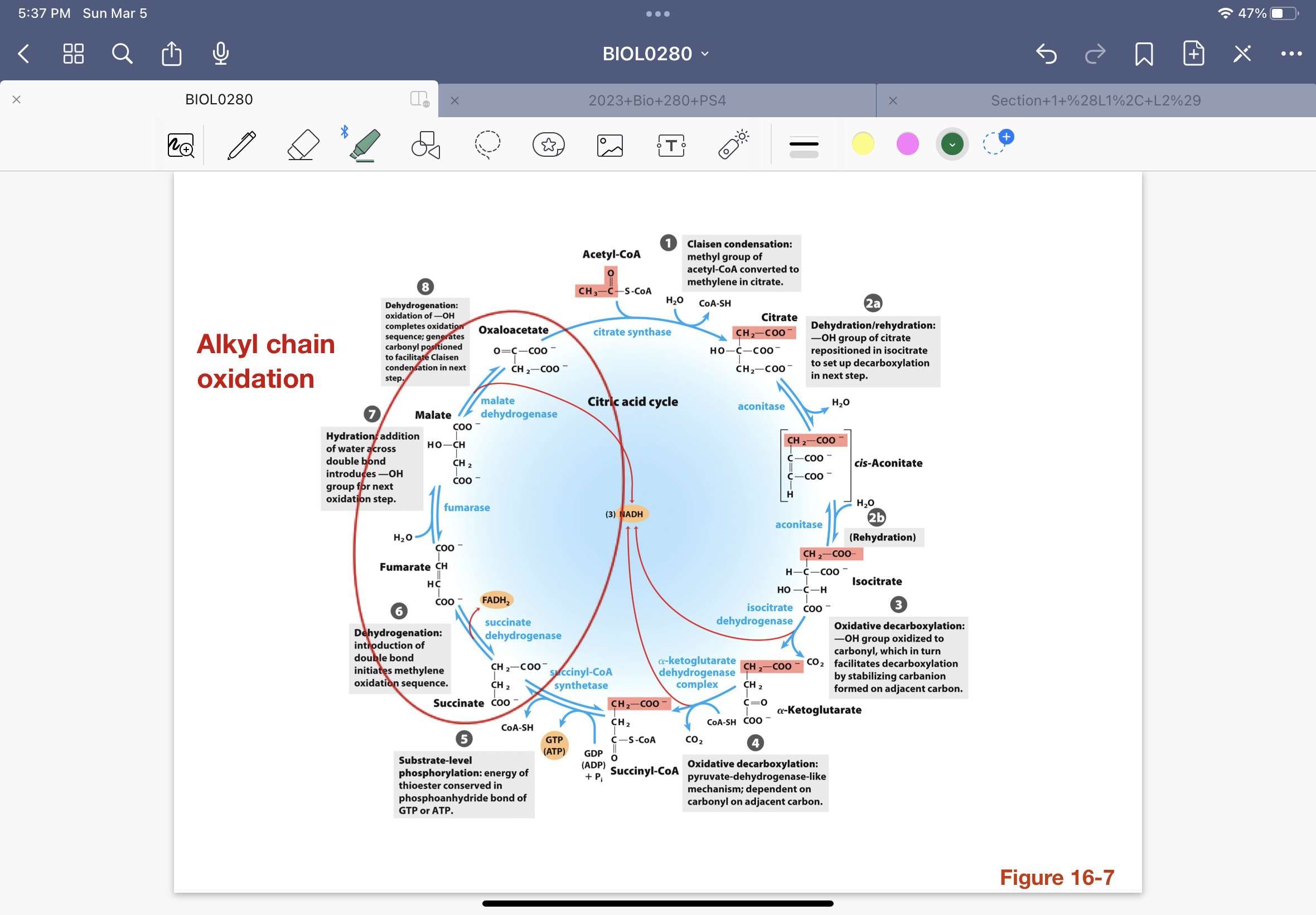
Of the energy released in the complete oxidation of one pyruvate, 2.7% is captured as GTP/ATP and another 95% is potentially obtainable from re-oxidation of NADH and FADH2. Note the 2 C atoms that enter as AcetylCoa are not the same 2 released as CO2 in the 1st turn of TCA. 1 goes aorund twice anotehr goes round and round and eventually is released.
23
Aconitase Mystery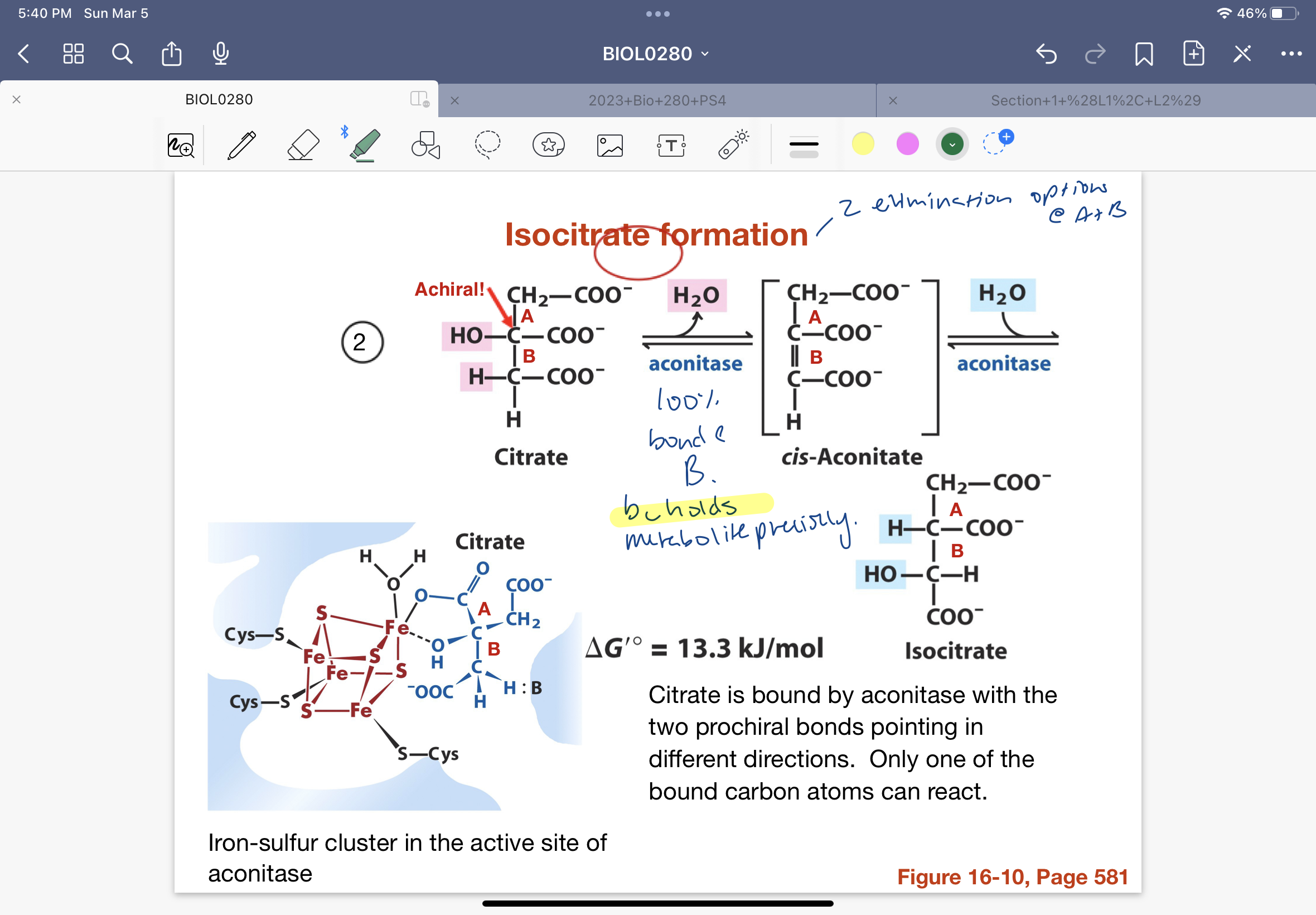
In step 2, Aconitase 100% binds to B carbon becuase it holds metabolite precisely with the 2 prochiral bonds pointing different directions. Only one of the bound carbon atoms can then react. Since citrate is a prochiral molecule ( if one of its carboxymethyl substituents were converted into a different group it would be chiral) and is reacting with an active site with complementary binding points, only one bond can be positioned correctly and attacked. 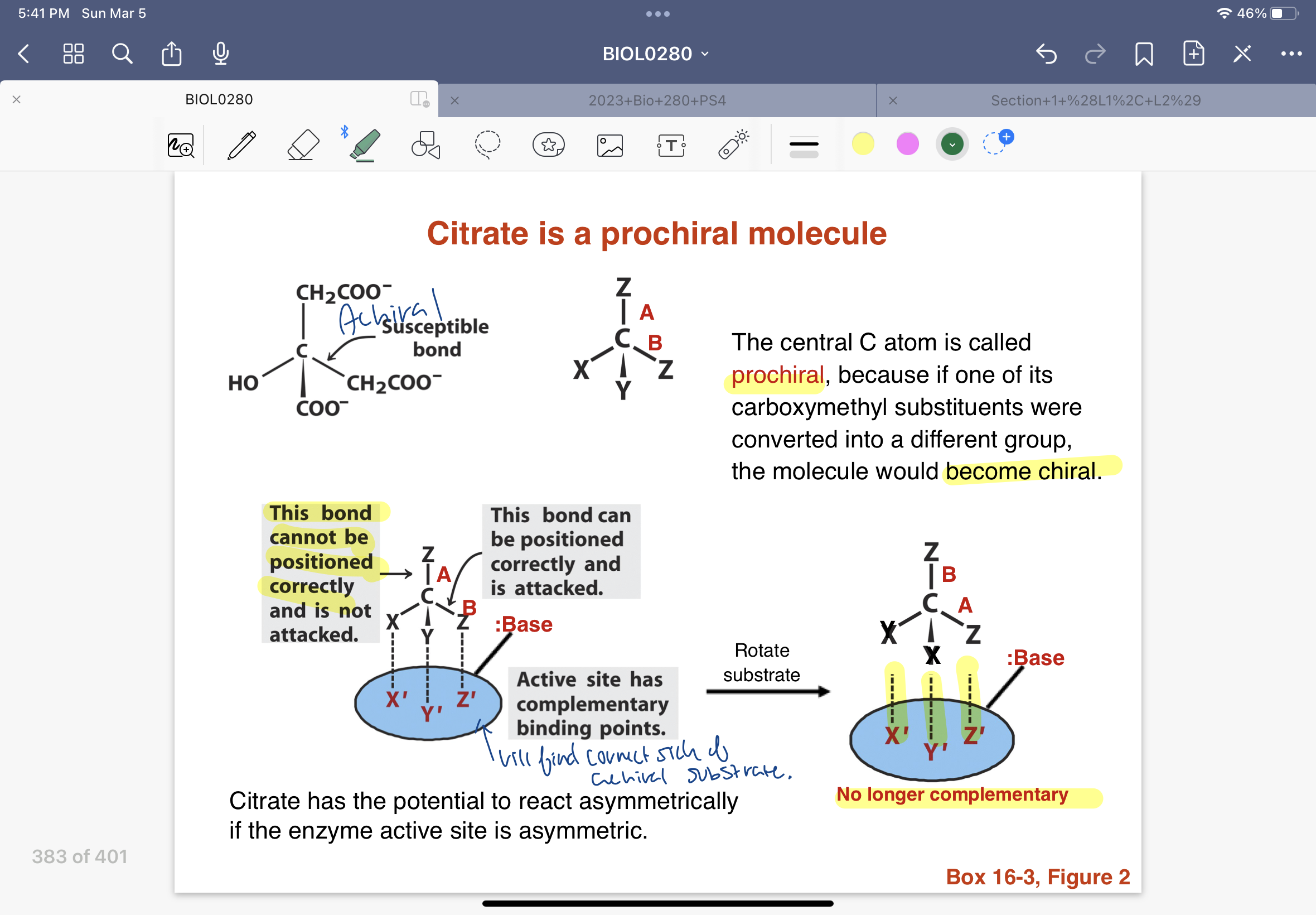
24
Regulation of the citric Acid Cycle 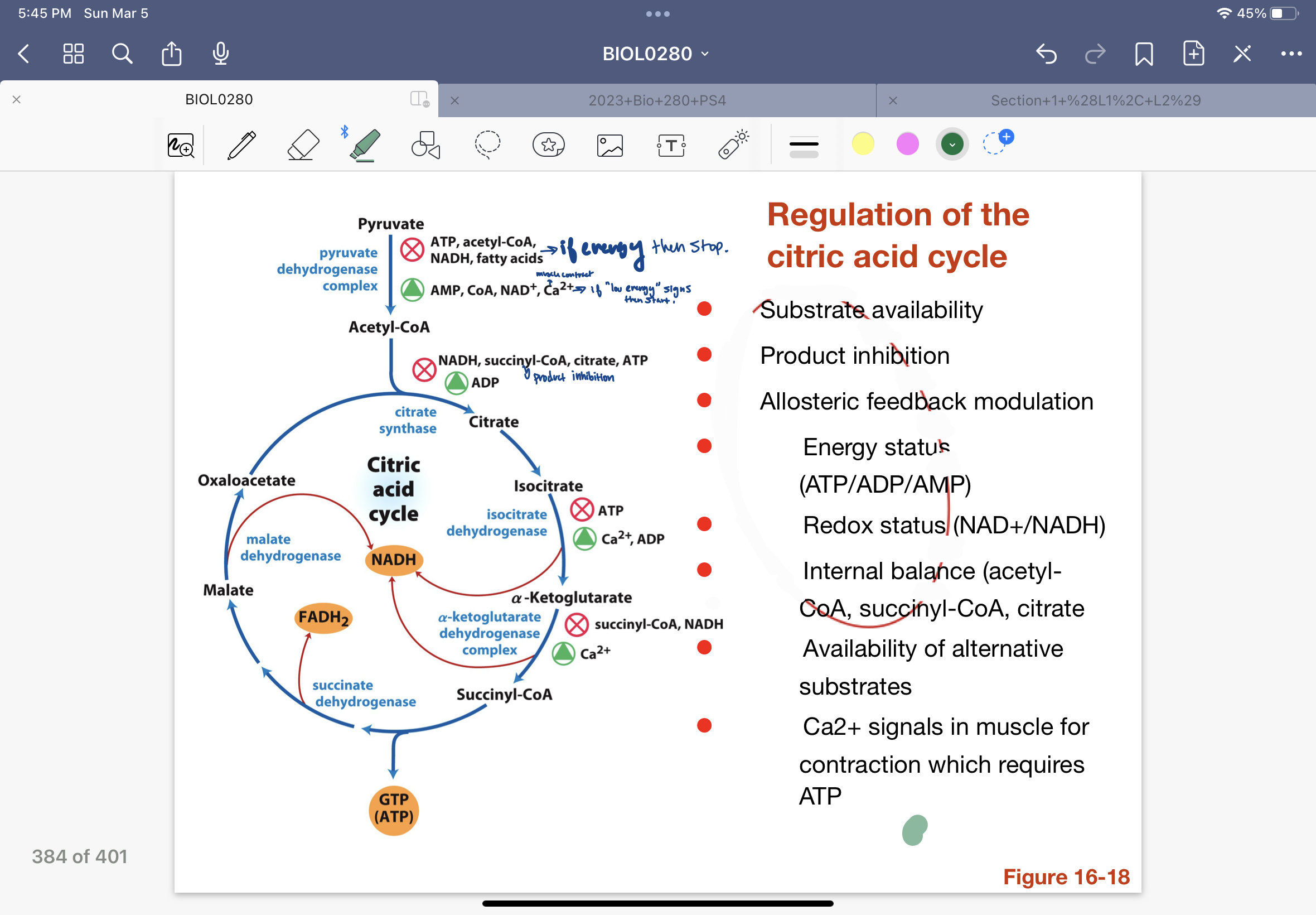
Substrate availability, product inhibition, allosteric feedback modulation, energy status (ATP/ADP/AMP), Redox status, Internal balance (acetyl-CoA, Succinyl - CoA, Citrate), Availability of alternative substrates, and Ca2+ signals in muscle for contraction which requires ATP. Essentially, if energy is present then stop, if "low energy sings" are present then start. 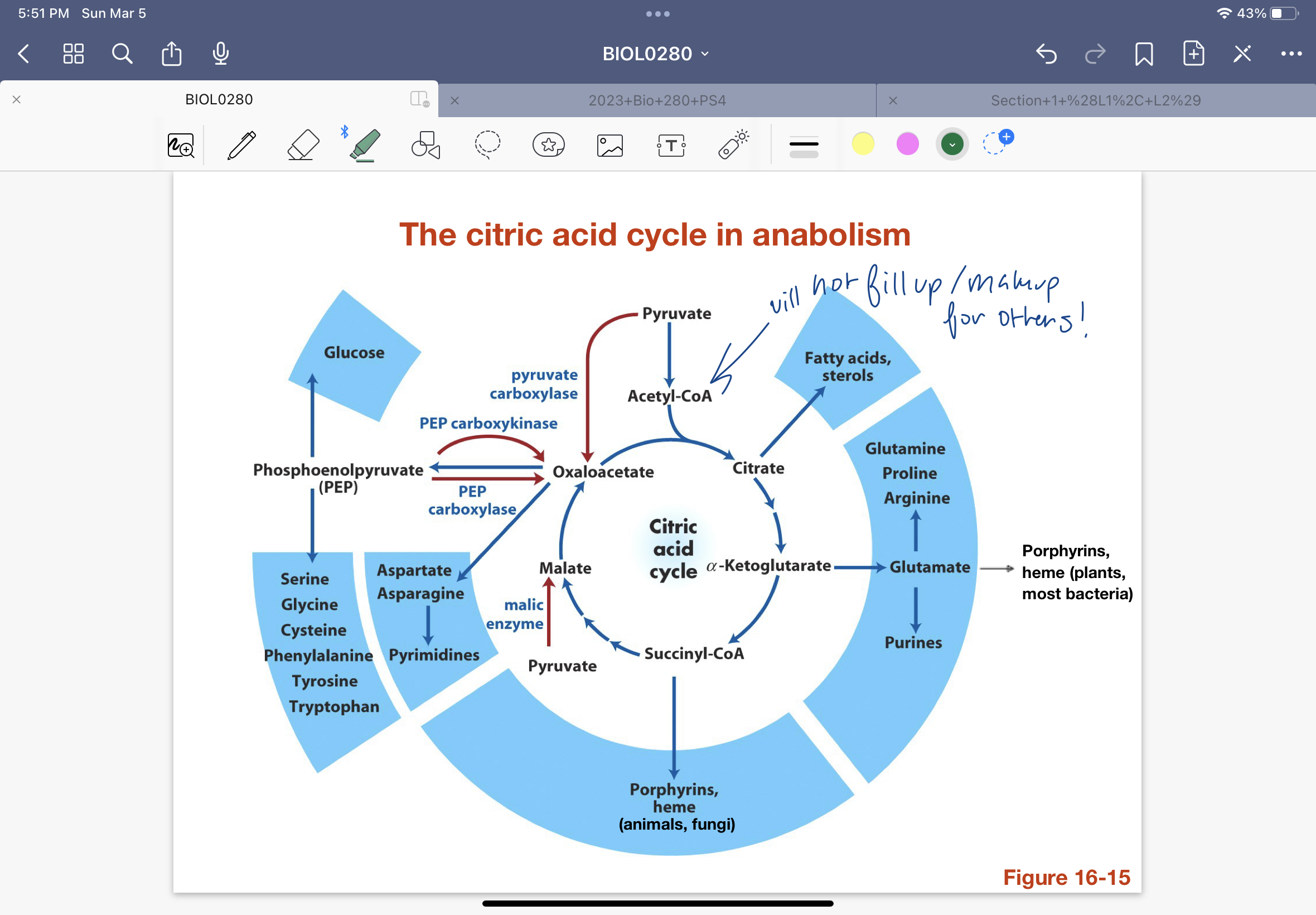
25
PFK-1 Regulation
If TCA is stopping then it will tel Glycolysis to stop too! Citrate inhibits PFK-1 allosterically. Essentially, it is exported from the mitochondria, into the cytosol to stop the input process from occuring. Thus, the rate of glycolysis is matched to the rate of citric acid cycle by citrate..
26
Why so many steps to oxidize acetate?
1) oxidation to 2 CO2 molecules occurs in 2 electron steps, 2) the citrate cycle is the hub of intermediary metabolism. 3) Intermediates and end products of catabolic pathways feed into the cycle 4) the citrate cycle is an amphibolicpathway; it also provides precursors for many biosynthetic pathways. It is both catabolic and anabolic. 5) Cycle intermediates that are removed for biosyntehtic processes need to be replenished. This is done in anaplerotic reactions (anaplerotic= filling up). 6) It is not necessary to replenish ALL intermediates, as they are part of a cycle. replenishing even one of them will eventually lead to increased levels of the others too. Having more complex building blocks allows for the creation of more complex processes.. every molecule that leaves TCA cycle as a precursor to another compound must be replaced becuase less metabolites will lead to a less efficient energy process. Acetyl-CoA cannot replenish TCA intermediates!!!!!!!!.
27
Anaplerotic reactions 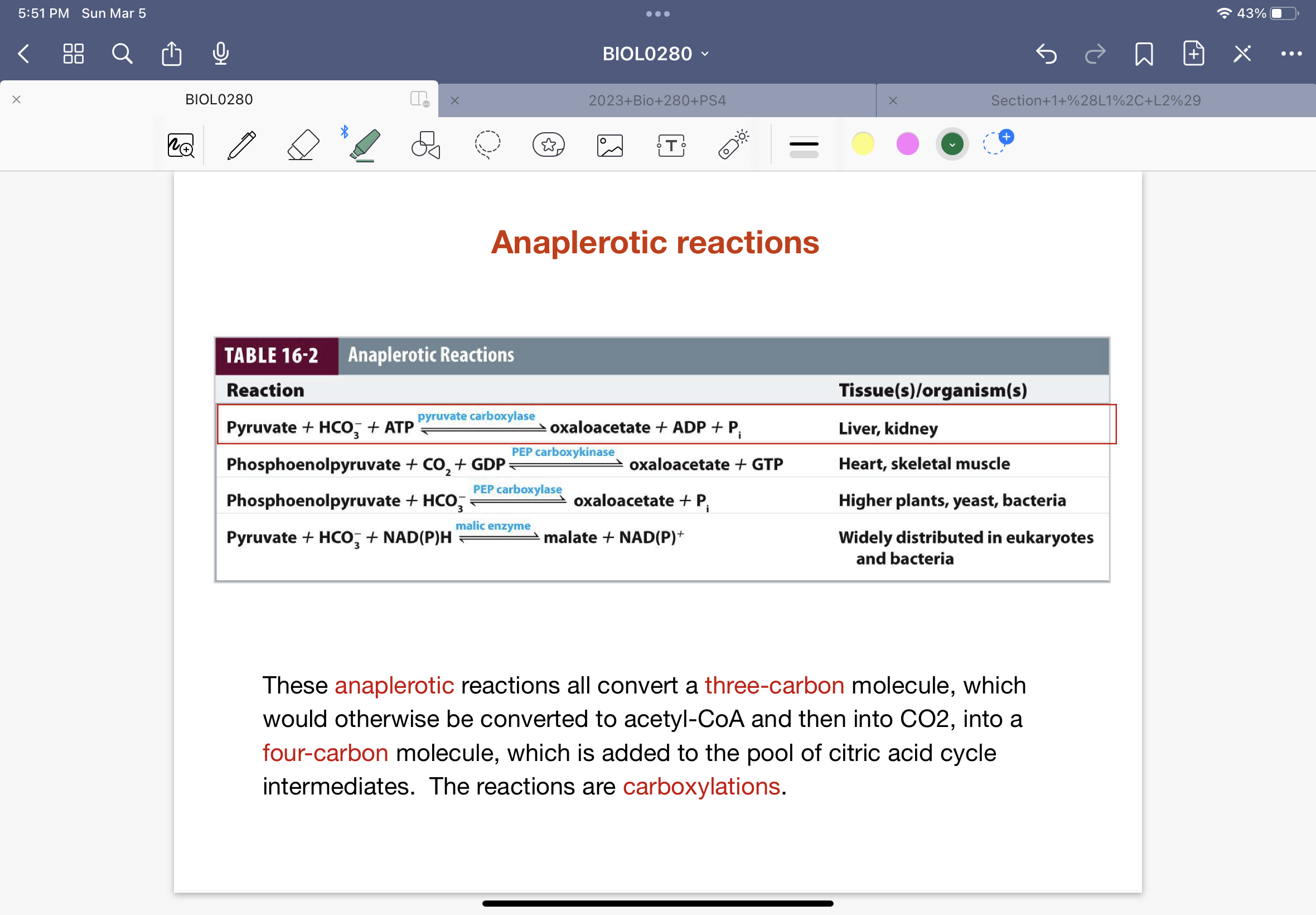
These reactions all convert 3 carbon molecules, which would otherwise be converted to acetyl-CoA and then into CO2, into a 4 carbon molecule which is then added to the pool of citric acid cycle intermediates. The reactions are carboxylations.
28
Biotin and the Pyruvate carboxylase reaction 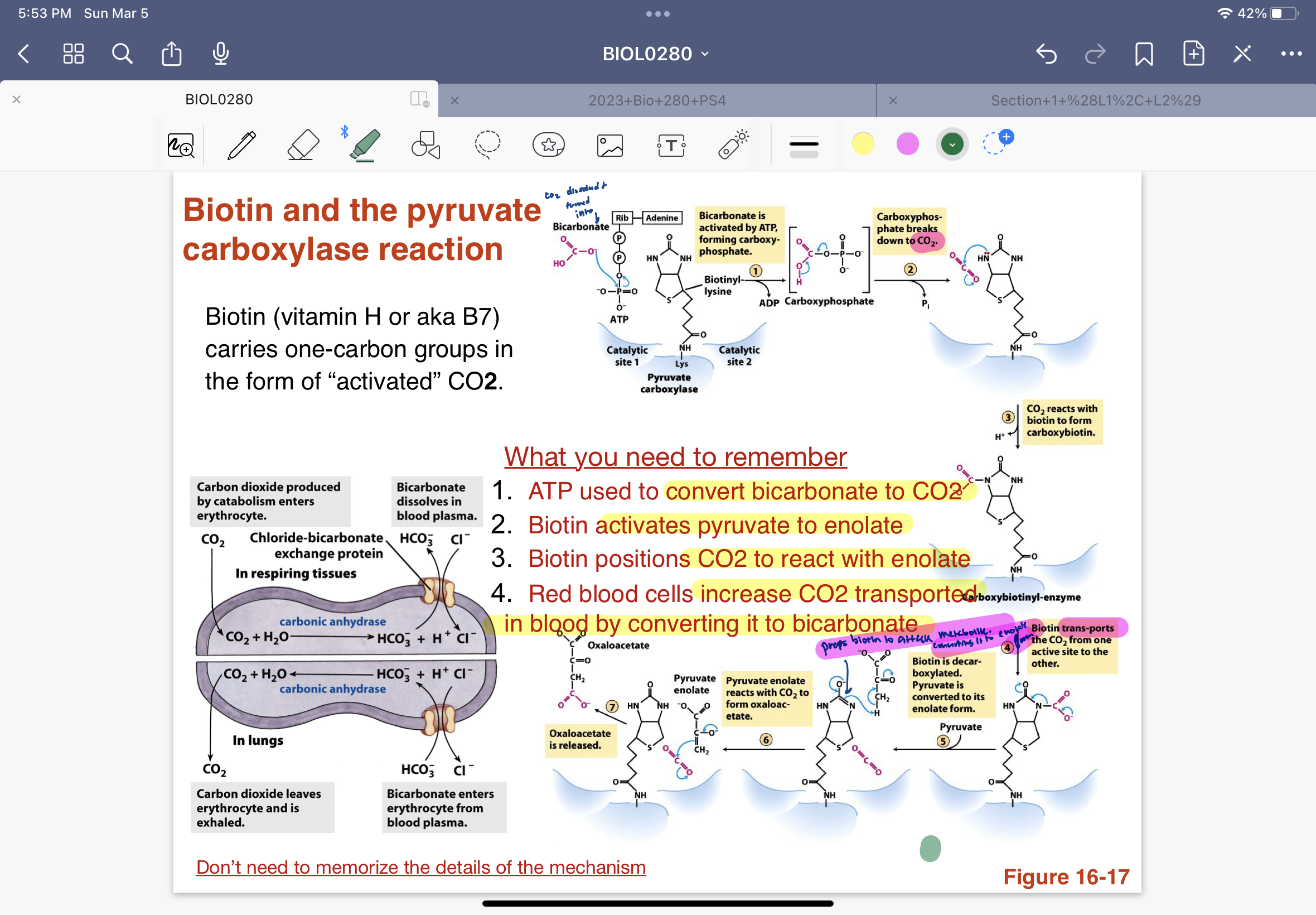
Biotin carries one carbon groups in the form of activated CO2. ATP is used to convert bicarbonate to CO2. Biotin activates pyruvate to enolate. Biotin also positions CO2 to react with enolate. Red blood cells increase CO2 transported in blood by converting it to bicarbonate.
29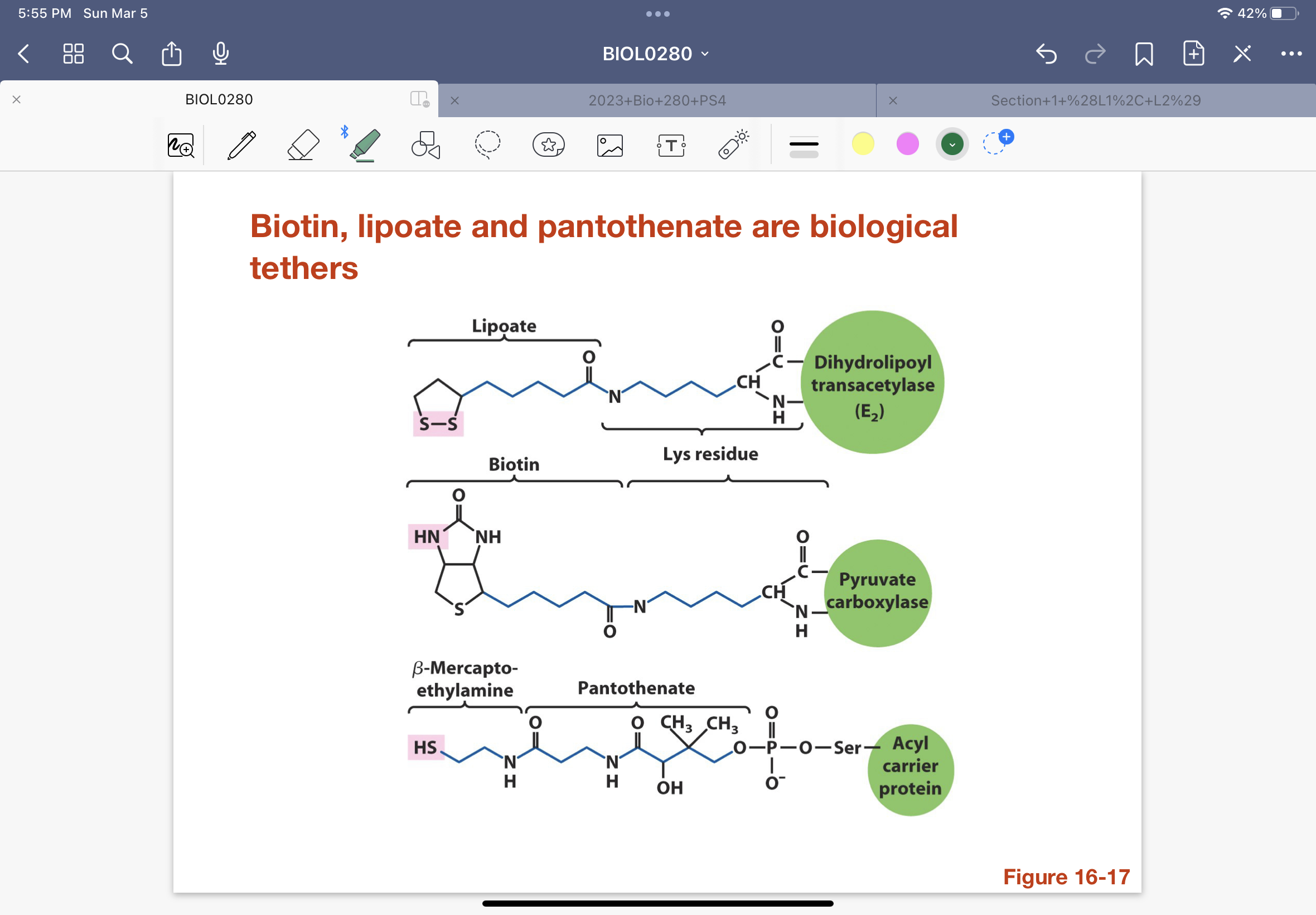
Biotin, Lipoate, and Pantothenate are biological tethers.
30
Glyoxylate Cycle 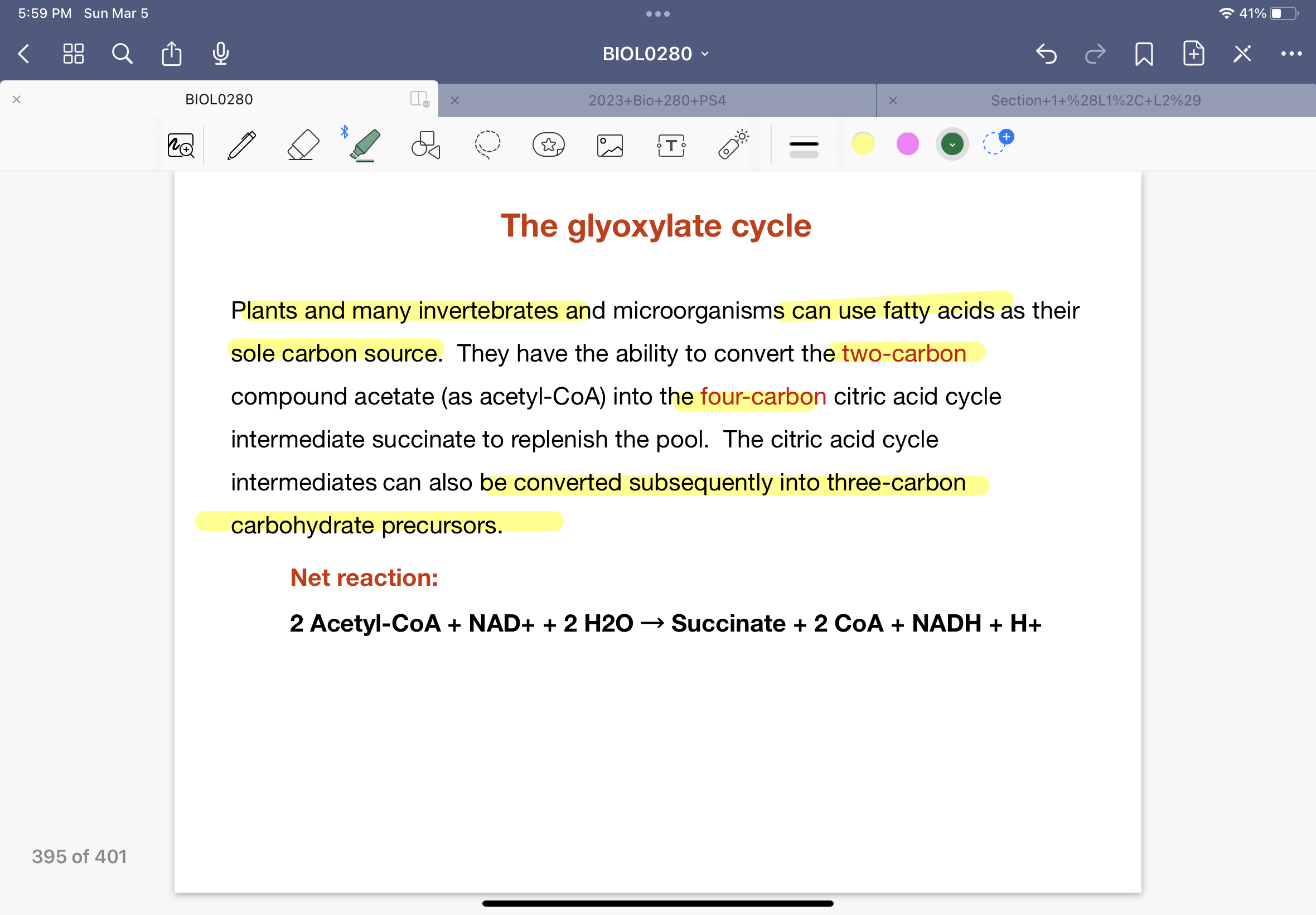
Verrtebrates cant survive only on fats because we cant convert acetate (as acetyl-CoA, and major product of fatty acid catabolism), into 3 or 4 carbon molecules. This means that we cannot use acetate to replenish the citric acid cycle pool or to form carbs or molecules derived from these. . Plants, however, can use fatty acids as their sole carbon source. They can convert 2 carbon compound acetate ( acetyl-CoA) into 4 carbon citric acid cycle intermedaite Succinate to replenish the pool. Intermediates can also be converted subsequently into 3 carbon carb precursors. Requires 2 enzymes: Isocitrase Lyase and Malate Synthase. 2 carbon glyocylate is produced by the first enzyme and combined with acetate by the second enzyme 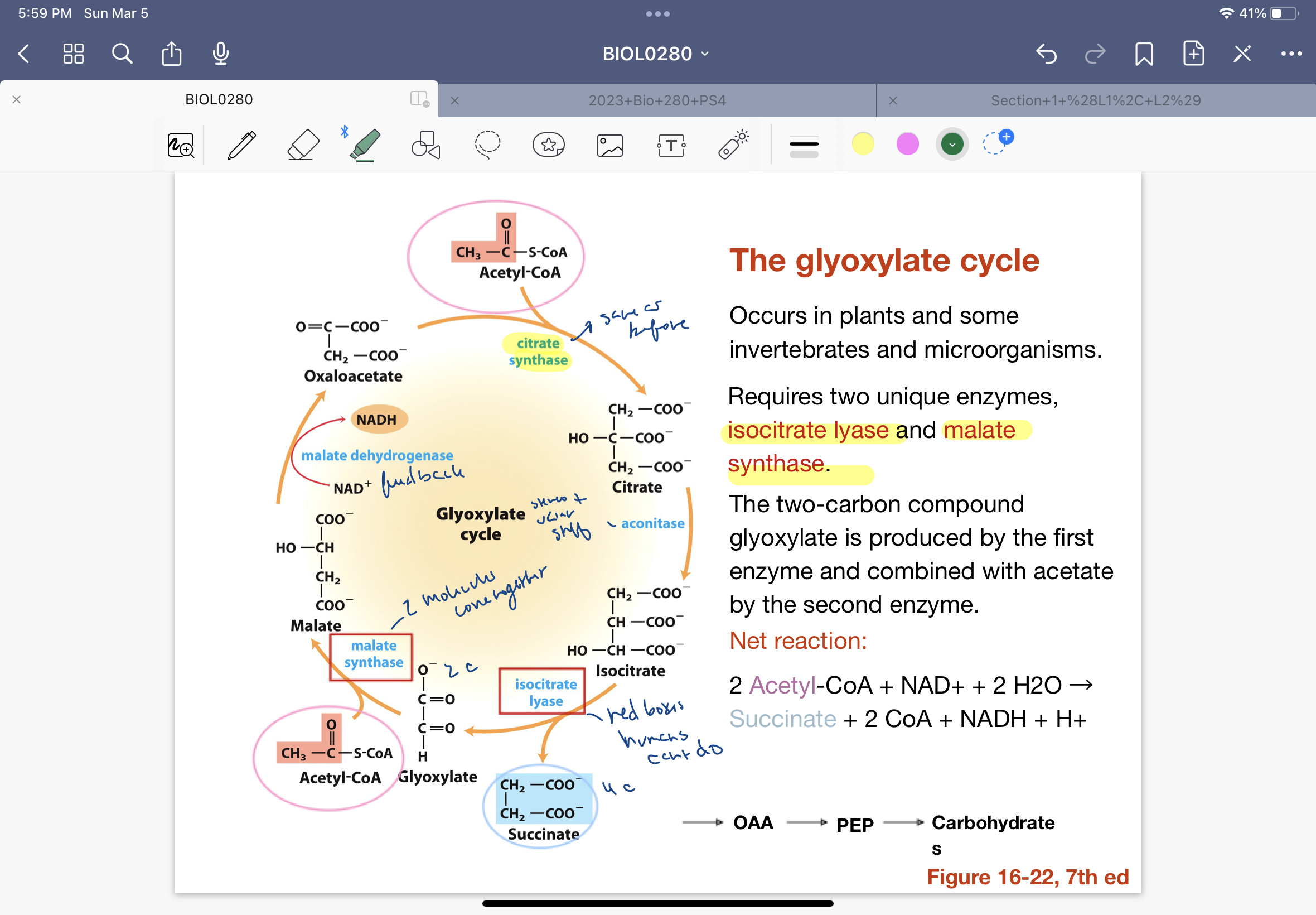
31
Relationship btwn Glyocylate and citrate cycles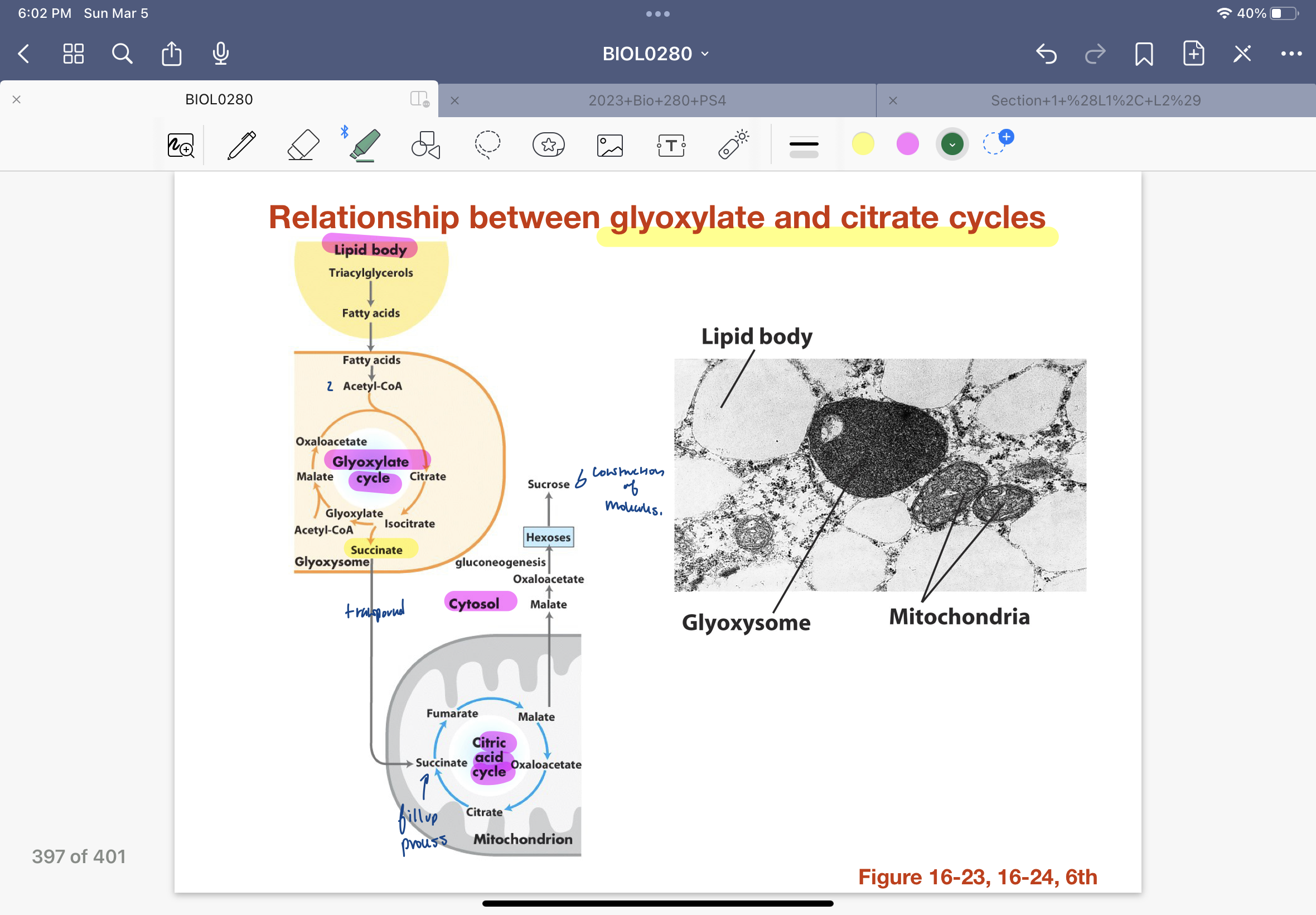
Lipid bodies feed fatty acids/ acetyl-CoA into Glyoxylate cycle which makes Succinate. Succinate from Glyoxylate cycle can be trandported into Citric Acid cycle to "fill it up" to then allow for the construction of molecules through sucrose formation.