2.6 Shapes of Molecules and Intermolecular Forces ✓
Study these flashcardsFree · spaced repetition · iPhone, Android, Mac & web
All cards
1
How do electron pairs determine the shape of molecules/ ions?
electron pairs repel eachother so arranged as far apart as possible, this minimises repulsion so holds definitive shape
2
How do you represent bonds in the plane of the paper?
solid line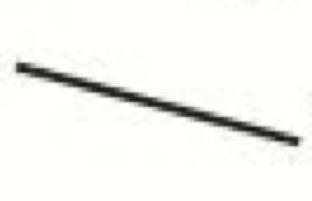
3
How do you represent bonds coming out of the plane of the paper?
solid wedge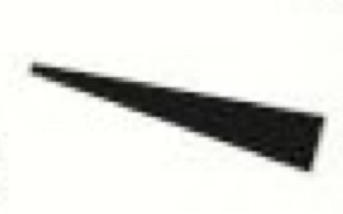
4
How do you represent bonds going into the plane of the paper?
dotted wedge
5
How does a lone pair of electrons affect bond angles? Why?
lone pair repell more strongly than bonding pair so bond angle decreases between bonded pairs of electrons
6
Why does a lone pair of electrons repell stronger than bonded pairs?
they are slightly closer to central atom and occupy more space than bonded pair
7
What is the order of increasing repulsion between types of electron pairs?
8
By how much is a bond angle reduced by due to a lone pair?
2.5 degrees
9
How many and what type of electron pairs does a tetrahedral molecule have?
4 bonded pairs
10
How many and what type of electron pairs does a pyramidal molecule have?
3 bonded pairs, 1 lone pair
11
How many and what type of electron pairs does non-linear molecule have?
2 bonded pairs, 2 lone pairs
12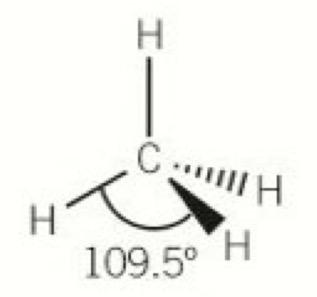
What is the shape and bond angle of a tetrahedral molecule?
13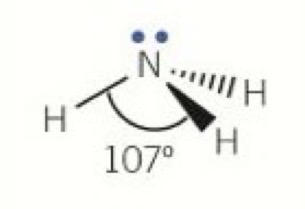
What is the shape and bond angle of a pyramidal molecule?
14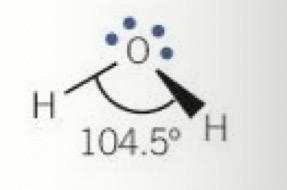
What is the shape and bond angle of a non-linear molecule?
15
How are double bonds treated when considering shapes of molecules?
as a bonding region
16
What is the shape and bond angle of a CO2 molecule?
linear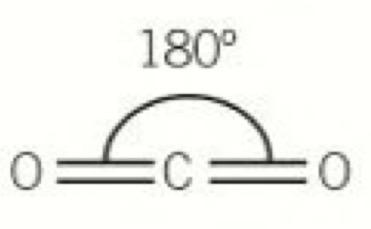
17
How many bonding regions does CO2 have?
2
18
How many bonded pairs does CO2 have?
4
19
How many electron pairs/ regions are there in trigonal planar molecules?
3
20
How many electron pairs/ regions are there in octahedral molecules?
6
21
What is electronegativity?
ability/ tendency of an atom to attract electrons in a covalent bond
22
What does a large Pauling value indicate?
very electronegative
23
What does a small Pauling value indicate?
not very electronegative
24
Why are noble gases not included in electronegativity values?
tend to not form compounds
25
Are non-metals most or least electronegative?
most
26
Are group 1 metals most or least electronegative?
least
27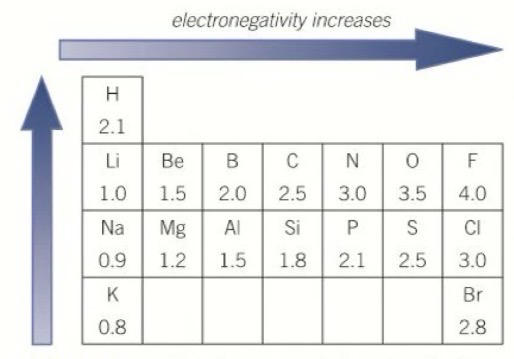
Where in the periodic table has the highest Pauling value?
28
Describe how a bond is ionic in terms of electronegativity
-when electronegativity difference is large, 1 bonded atom has greater attraction for shared pair of electrons than other atom
-more electronegative atom gained control of electrons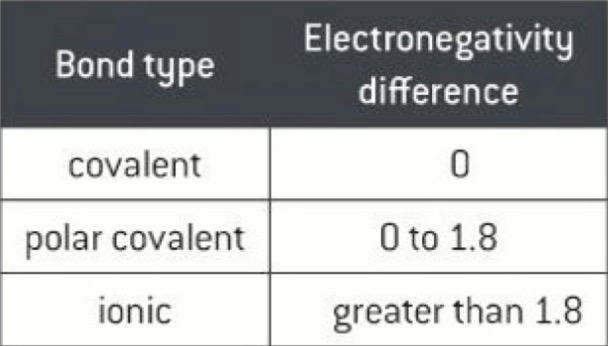
-more electronegative atom gained control of electrons
29
How are bonded electron pairs shared in non-polar bonds?
equally
30
When is a bond non-polar?
-bonded atoms are the same
-bonded atoms have same or similar electronegativity
-bonded atoms have same or similar electronegativity
31
What is a pure covalent bond?
where bonded atoms come from same element so electron pair shared equally (eg O2)
32
How are bonded electron pairs shared in polar bonds?
bonded elctron pair shared unequally between bonded atoms
33
What does it mean if a bond is polarised?
there are partial charges on the atoms involved in the bond due to unequally shared electron pair
34
What is a dipole?
separation of opposite charges caused by unequally shared electron pair
35
What happens if there are more than 1 dipoles?
depending on shape, dipoles reinforce each other to produce larger dipole or cancel out if in opposite directions
36
Which direction does a dipole go in?
from partially positive to partially negative charge
37
Describe the overall dipole in H2O
2 dipoles in differemt directions but dont oppose eachother resulting in O end being partially - and H end being partially +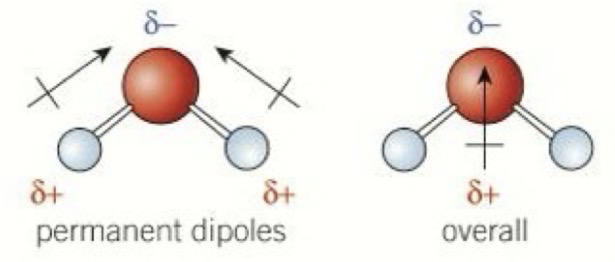
38
Describe the overall dipole in CO2
dipoles act in opposite direction so cancel each other out resulting in no dipole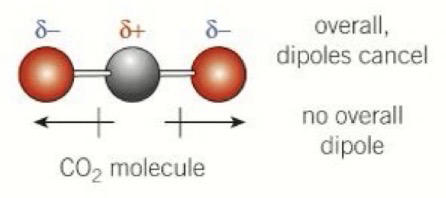
39
Is CO2 polar or non-polar?
non-polar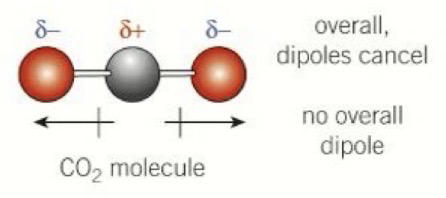
40
How do polar substances dissolve?
-water molecules attract + and - ions breaking down ionic lattice
-water molecules surround the ions with H or O side being attracted to ion depending on whether + or - ion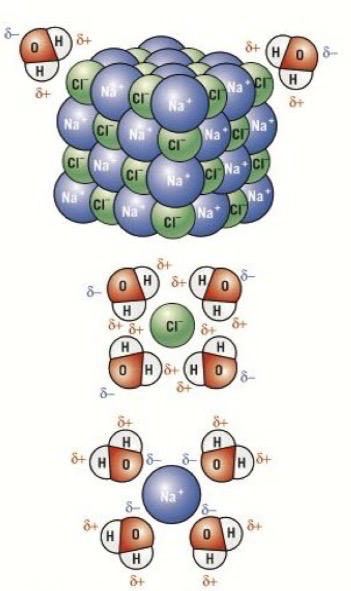
-water molecules surround the ions with H or O side being attracted to ion depending on whether + or - ion
41
Is covalent bonding strong or weak?
strong
42
The greater the number of electron pairs, the _______ the bond angle.
- smaller
- larger
43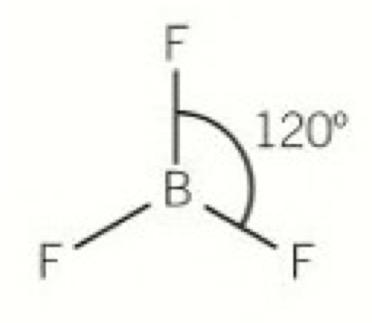
What is the shape and bond angle of a trigonal planar molecule?
44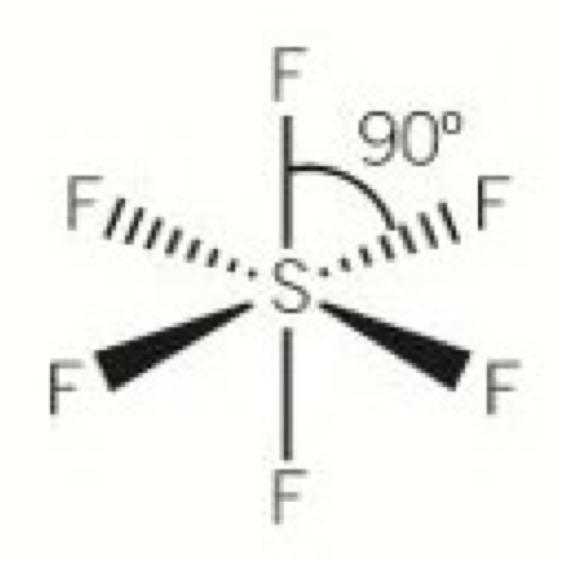
What is the shape and bond angle of a octahedral molecule?
45
What are intermolecular forces?
weak interactions
46
What are the 3 main intermolecular forces?
-induced dipole-dipole interactions (London forces)
-permanent dipole-dipole interactions
-hydrogen bonding
-permanent dipole-dipole interactions
-hydrogen bonding
47
What are intermolecular forces responsible for?
physical properties like mp and bp
48
What are covalent bonds responsible for?
identity and chemical reactions of molecules
49
Do London forces exist between all molecules?
yes
50
How are London forces created?
1) movement of electrons produces an instantaneous dipole
2) instantaneous dipole induces dipole in neighboring molecule
3) induced dipole induces further dipoles on neighboring molecules which then attract each other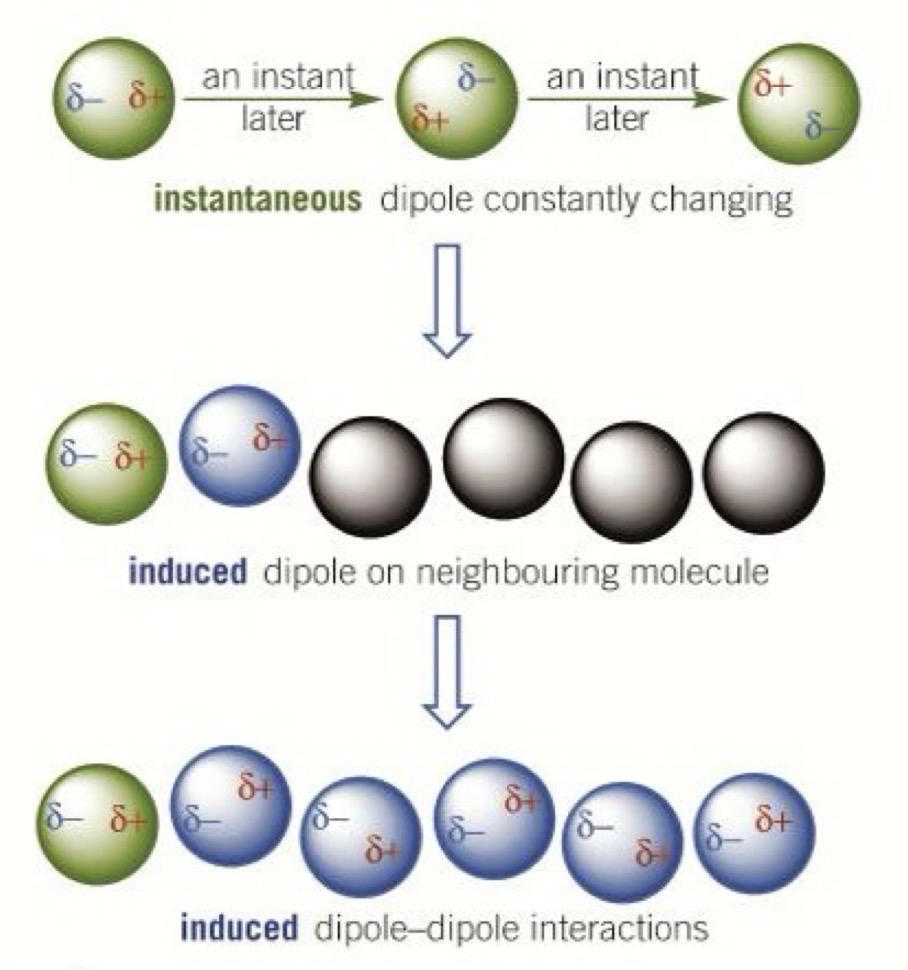
2) instantaneous dipole induces dipole in neighboring molecule
3) induced dipole induces further dipoles on neighboring molecules which then attract each other
51
Are induced dipoles permanent?
no they are only temporary
52
How do more electrons in each molecule affect the molecules?
stronger attractive forces between molecules
53
How do more electrons in each molecule affect the instantaneous + induced dipoles?
larger
54
How do more electrons in each molecule affect the induced dipole-dipole interactions?
greater London force
55
Why is the boiling point greater in molecules with more electrons?
-intermolecular forces are greater with more electrons (due to it causing a greater impact with London forces)
-more energy is required to overcome greater intermolecular forces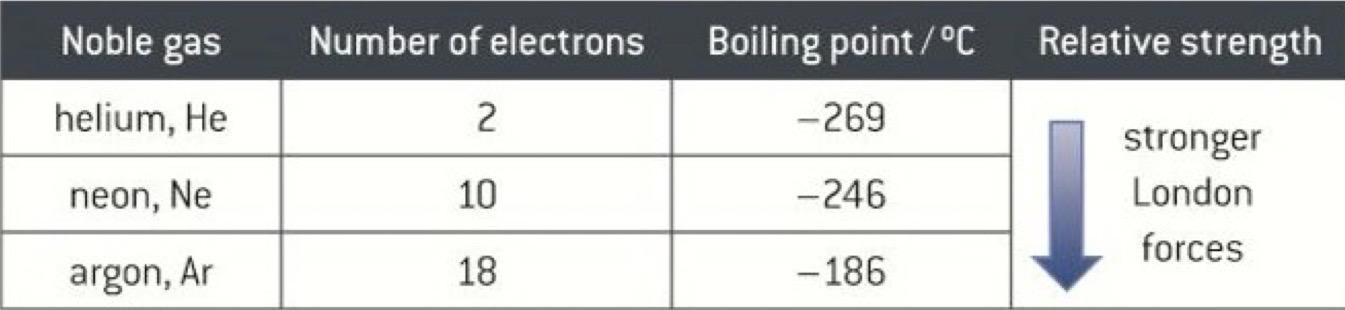
-more energy is required to overcome greater intermolecular forces
56
What will have a higher bp, F-F or H-Cl? Why?
Both have london forces but H-Cl also has permanent dipole interaction meaning more energy is required to overcome intermolecular forces in H-Cl, giving it a higher bp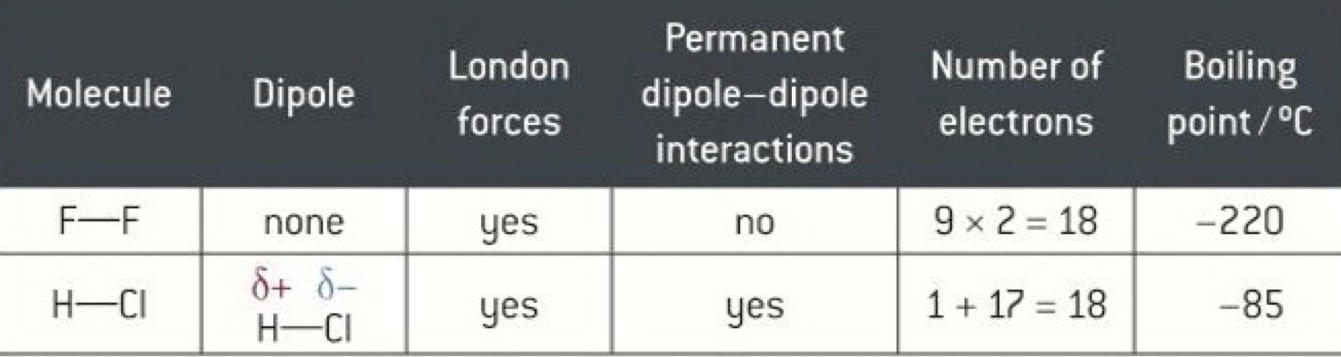
57
What is a simple molecule?
small unit containing definite number of atoms with definite molecular formula
58
Is the bp and mp high or low in simple molecular substances?
low
59
What kind of structure do simple molecules form in the solid state?
regular structure called a simple molecular lattice
60
Describe the intermolecular forces and covalent bonds in a simple molecular lattice
-molecules held in place by weak intermolecular forces
-atoms within molecules bonded together by strong covalent bonds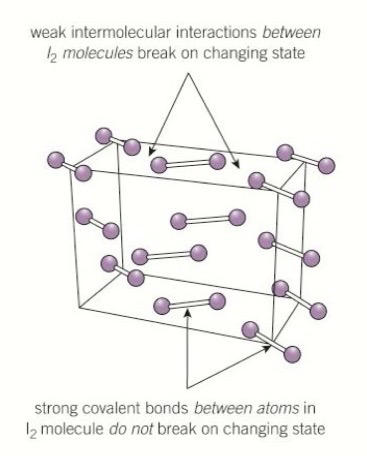
-atoms within molecules bonded together by strong covalent bonds
61
What kind of bond are all simple molecular substances?
Covalent
62
What is the order of strength of intermolecular forces? (highest to lowest)
-ionic/ covalent bonds
-hydrogen bonds
-dipole-dipole forces
-London forces
-hydrogen bonds
-dipole-dipole forces
-London forces
63
How do permanent dipole-dipole forces work?
Electron deficient atoms weakly attracted to electron rich atoms of other molecules
64
Do molecules with larger or smaller atoms tend to have stronger dipole-dipole forces?
larger
65
Do non-polar simple molecular substances tend to be soluble in non-polar solvents? Why?
yes
-intermolecular forces form between molecule and solvent
-interactions weaken intermolecular forces in simple molecular lattice
-intermolecular forces break and compound dissolves
-intermolecular forces form between molecule and solvent
-interactions weaken intermolecular forces in simple molecular lattice
-intermolecular forces break and compound dissolves
66
Do non-polar simple molecular substances tend to be soluble in polar solvents? Why?
no
-little interaction between molecules in lattice and solvent molecules
-intermolecular bonding within polar solvent too strong to be broken
-little interaction between molecules in lattice and solvent molecules
-intermolecular bonding within polar solvent too strong to be broken
67
Can polar covalent substances dissolve in polar solvents? Why/ why not?
yes as their molecules attract each other
68
What does the solubility of a polar covalent substance in a polar solvent depend on? Is the solubility easy to predict?
-strength of dipole
-hard to predict
-hard to predict
69
Why can some compounds dissolve in polar and non-polar solvents?
have polar (eg O-H) and non polar (eg carbon chain) parts
70
Are there mobile charged particles in simple molecular structures? What does this then mean
no, so nothing can complete electrical circuit making it a non-conductor
71
Are hydrophillic parts of biological molecules polar or non-polar?
polar, containing electronegative atoms (often oxygen) that can interact with water
72
Are hydrophobic parts of biological molecules polar or non-polar?
non-polar, comprised of carbon chain
73
What type of interaction is a hydrogen bond?
Permanent dipole-dipole interaction
74
What do hydrogen bonds occur between?
-hydrogen atom attached to electronegative atom
-electronegative atom with lone pair of electrons
-electronegative atom with lone pair of electrons
75
Which molecules do hydrogen bonds form in?
O-H, N-H, F-H
76
What kind of line represents a hydrogen bond?
dashed line
77
Why is ice being less dense than water good for life?
floats on tops of water forming an insulating layer and preventing the water from freezing solid
78
How many hydrogen bonds can each water molecule form?
4
79
How do the hydrogen bonds affect water’s structure?
hydrogen bonds extend outwards, holding water molecules slightly apart + forming open tetrahedral lattice full of holes
80
How does water/ice’s structure affect their density?
-holes in open lattice structure (caused by hydrogen bonds) decrease density of ice
-when melting, ice lattice collapses and molecules move closer together making it denser
-when melting, ice lattice collapses and molecules move closer together making it denser
81
Why does water have a higher boiling point than expected?
energy needed to break hydrogen bonds not just london forces
82
What happens to hydrogen bonds when water boils?
hydrogen bonds break completely
83
What happens to hydrogen bonds during melting?
their rigid arrangement is broken
84
What are other examples of anomalous properties of water?
relatively high surface tension and viscosity