3.9 Enthalpy (✓)
Study these flashcardsFree · spaced repetition · iPhone, Android, Mac & web
All cards
1
What is enthalpy?
measure of heat energy in a chemical system
2
What is a chemical system?
atoms, molecule, or ions making up chemicals
3
Can enthalpy be measured?
no
4
How do you work out enthalpy change?
enthalpy(products)-enthalpy(reactants)
5
What is the system?
reactants and products
6
What are the surroundings?
apparatus, lab etc
7
What is the universe?
everything (system + surroundings)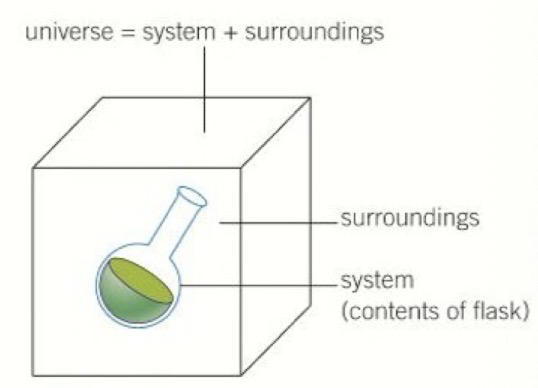
8
Describe energy movement in an endothermic change
from surroundings to system
9
Describe energy movement in an exothermic change
from system to surroundings
10
What does it mean if enthalpy change is negative?
exothermic
11
What does it mean if enthalpy change is positive?
endothermic
12
What is activation energy?
minimum energy required for reaction to take place (to break bonds)
13
Why do reactions with small activation energies take place rapidly?
energy needed to break bonds readily available
14
What is a standard enthalpy change?
enthalpy change under standard conditions
15
What is standard pressure?
100kPa
16
What is standard temperature?
298 K (25*c)
17
What is standard concentration?
1moldm-1
18
What is standard state?
physical state of a substance under standard conditions
19
What is standard enthalpy change of reaction?
enthalpy change that accompanies reaction in molar quantities shown in chemical equation under standard conditions
20
What is standard enthalpy change of formation?
enthalpy change that takes place when 1 mol of compound formed from its elements under standard conditions
21
What is standard enthalpy change for an element (1 mol of element from its element)?
0
22
What is standard enthalpy change of combustion?
enthalpy change that takes place when 1 mole of substances reacts completely with oxygen under standard conditions
23
What is the standard enthalpy change of neutralisation?
energy change that accompanies reaction of acid by base to form one mol of water under standard conditions
24
Is the value of enthalpy change of neutralisation always the same?
yes
25
What is 0K is celcius?
-273
26
What is specific heat capacity?
energy required to raise temp of 1g of substance by 1K
27
What is specific heat capacity if water?
4.18Jg-1K-1
28
What is the equation for energy change?
heat energy=mass x specific heat capacity x temp change
29
Why might heat transferred measured to water be less than expected?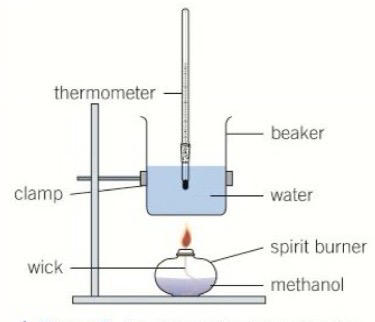
-heat loss to surroundings other than water
-incomplete combustion
-evaporation of methanol from wick
-non-standard conditions
-incomplete combustion
-evaporation of methanol from wick
-non-standard conditions
30
How can you increase accuracy of energy change?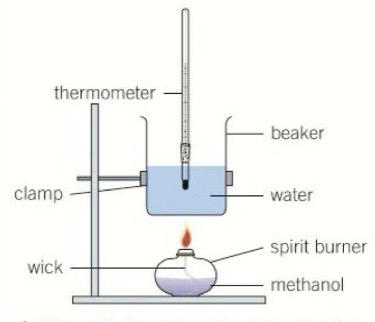
use of draught screens and input of oxygen gas
31
Where is energy transferred to in an exothermic reaction with an aqueous solution?
water
32
What is average bond enthalpy?
energy required to break one mole of specified type of bond in a gaseous molecule
33
Do bonds require energy to break?
yes
34
Are bond enthalpies always endothermic or exothermic?
endothermic
35
Do bond enthalpies always have positive or negative enthalpy value?
positive
36
What can create variation in actual bond enthalpies?
chemical environment
37
How is average bond enthalpy calculated?
actual bond enthalpies in different chemical environments
38
Is breaking bonds endothermic or exothermic?
endothermic
39
Is forming bonds endothermic or exothermic?
exothermic
40
How do you calculate enthalpy change of a reaction?
41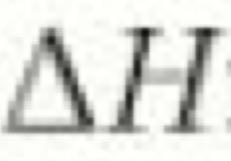
How is enthalpy change represented in symbols?
42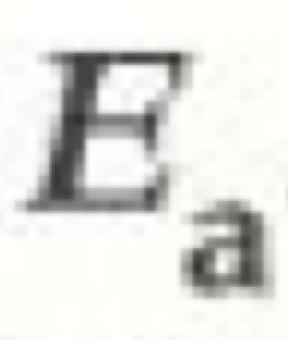
How is activation energy represented in symbols?
43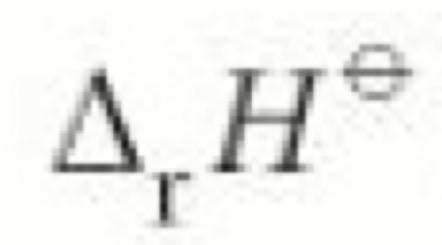
How is enthalpy change of reaction represented in symbols?
44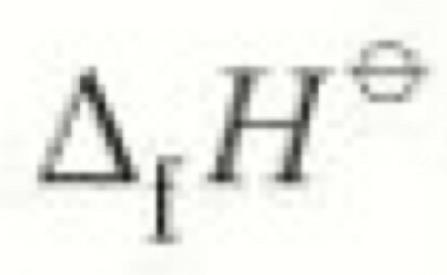
How is enthalpy change of formation represented in symbols?
45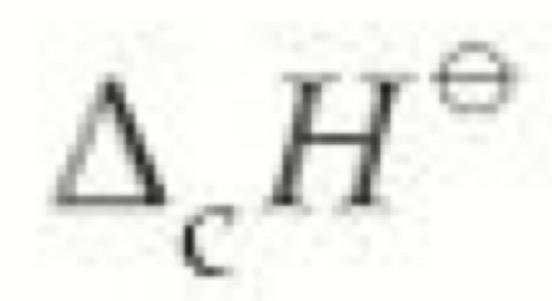
How is enthalpy change of combustion represented in symbols?
46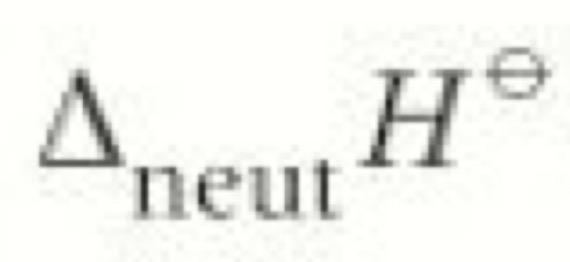
How is enthalpy change of neutralisation represented in symbols?
47
What is Hess’ law?
if a reaction takes place by 2 routes and starting and finishing conditions are the same, total enthalpy change is same for both routes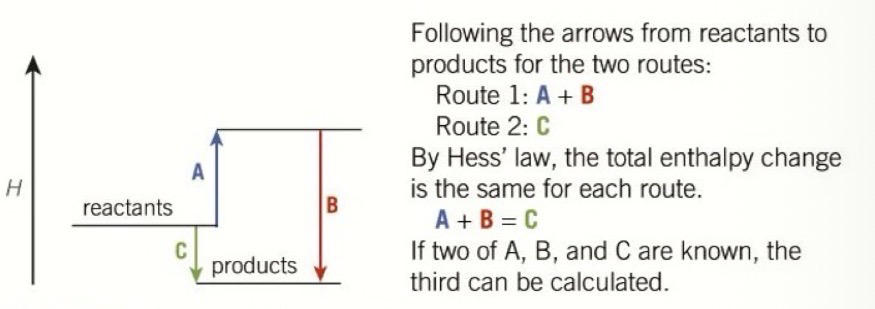
48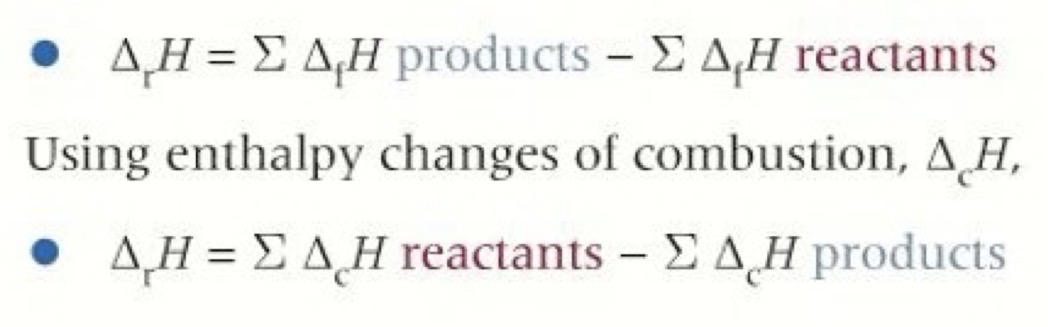
How can you find reaction enthalpy change using changes of formation and combustion?