3.8 Reactivity Trends ✓
Study these flashcardsFree · spaced repetition · iPhone, Android, Mac & web
All cards
1
What happens to a group 2 atom in a redox reaction?
oxidised, losing 2 electrons to form a 2+ ion
2
Are group 2 elements reducing or oxidising agents?
reducing
3
What is produced when group 2 elements have a redox reaction with oxygen?
metal oxide produced (general formula: MO) 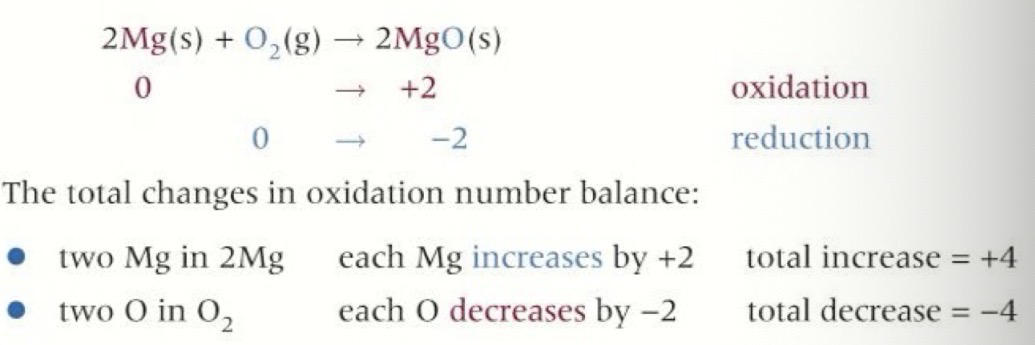
4
What is produced when group 2 elements have a redox reaction with water?
alkaline hydroxide (general formula: M(OH)2) and hydrogen gas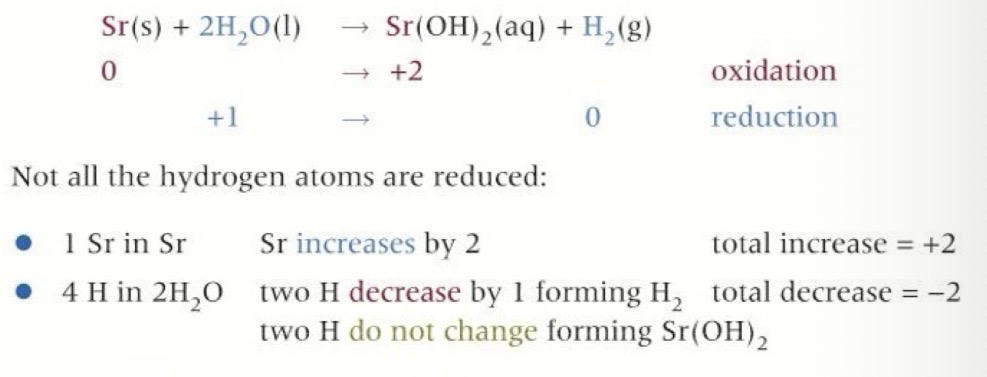
5
Does reactivity increase or decrease further down group 2?
increase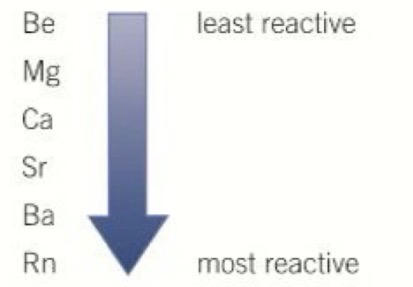
6
What is produced when group 2 elements have a redox reaction with dilute acids?
salt and hydrogen gas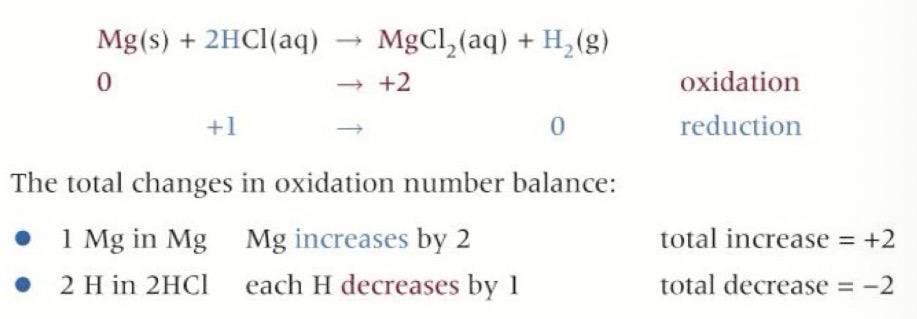
7
Why does reactivity increase going down group 2?
-formation of 2+ ions requires 2 ionisation energies
-ionisation energies decrease down the group due to attraction between nucleus + electrons decreasing due to increasing atomic radius + shielding
-ionisation energies decrease down the group due to attraction between nucleus + electrons decreasing due to increasing atomic radius + shielding
8
Does a group 2 element being more reactive make it a stronger or weaker reducing agent?
stronger
9
What is produced when group 2 oxides react with water?
-OH- ions released fmorming alkaline solutions of metal hydroxide
10
Why can reaction between water and group 2 oxide result in precipitate?
-group 2 hydroxides only slightly soluble in water
-when too saturated metal and hydroxide ions form precipitate
-when too saturated metal and hydroxide ions form precipitate
11
Does the solubility of group 2 hydroxides in water increase or decrease down the group? How does this affect the resulting solution?
increases so resulting solution contains more OH- ions and are more alkaline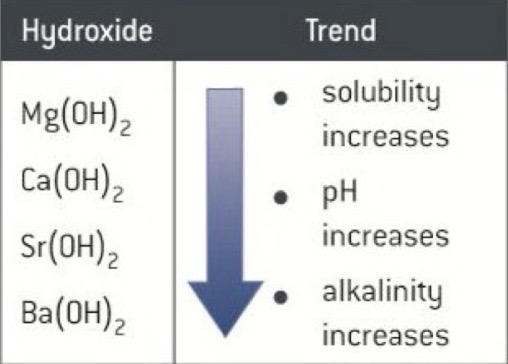
12
How are group 2 compounds used in agriculture?
calcium hydroxide is added to field as lime to increase pH of acidic soil, neutralising it
13
How are group 2 compounds used in medicine?
as antacids for treating acid indigestion
-tablets use magnesium + calcium carbonates
-‘milk of magnesia’ suspension of magnesium hydroxide in water
-tablets use magnesium + calcium carbonates
-‘milk of magnesia’ suspension of magnesium hydroxide in water
14
Which group is the most reactive non metallic group?
7
15
How do halogens occur naturally?
stable halide ions dissolved in sea water or as salts
16
How do halogens exist at room temp + pressure?
diatomic molecules
17
How do states change going down group 7 at RTP?
gas to liquid to solid
18
What structure do halogens form as a solid?
lattices with simple molecular structures
19
What is fluorines appearance at RTP?
pale yellow gas
20
What is chlorines appearance at RTP?
pale green gas
21
What is bromines appearance at RTP?
red brown liquid
22
What is iodines appearance at RTP?
shiny grey-black solid
23
Why does bp increase going down group 7?
-more electrons
-stronger london forces
-more energy required to break intermolecular forces
-stronger london forces
-more energy required to break intermolecular forces
24
Are halogens oxidising or reducing agents?
oxidising
25
How does reactivity change going down group 7? How can we show this?
decreases, displacement resction
26
What happens if halogen is added to less reactive halide?
-displacement reaction takes place
-solution changes colour
-solution changes colour
27
What does chlorine look like as a solution in water?
pale green
28
What does bromine look like as a solution in water?
orange
29
What does iodine look like as a solution in water?
brown
30
What can you do to make difference between bromine and iodine as solution in water clearer?
add organic non-polar solvent (eg cyclohexane) + shake to differentiate colours further
31
What colour is bromine in cyclohexane?
orange
32
What colour is iodine in cyclohexane?
violet
33
Why is astatine very rare?
radioactive and decays rapidly
34
Why does reactivity decrease going down group 7?
-atomic radius increase
-more inner shells so shielding increases
-less nuclear attraction to capture electron from other species
-more inner shells so shielding increases
-less nuclear attraction to capture electron from other species
35
Which halogen is strongest oxidising agent?
fluorine
36
What is disproportionation?
redox reaction where same element is oxidised and reduced
37
Why is the reaction of chlorine and water a disproportionation reaction?
one Cl oxidised, one Cl reduced
38
What happens when u add indicator to product of water and chlorine reaction?
red then colour disappears due to bleaching by chloric acid produced by reaction
39
Why is reaction of chlorine with water limited? How can this be overcome?
low solubility of Cl in water, if water contains dissolved sodium hydroxide (Cl + cold dilute aqueous sodium hydroxide)
40
How can household bleach (NaClO) be formed?
disproportionation reaction between chlorine and cold dilute aqueous sodium hydroxide 
41
Why is chlorine beneficial in water?
ensures water fit to drink and bacteria killed, otherwise water quality compromised and disease like cholera break out
42
What are risks of chlorine in water?
-respiratory irritant (small concentrations)
-fatal (large concentrations)
-can react with organic hydrocarbons to produce chlorinated hydrocarbons which are potential carcinogen
-fatal (large concentrations)
-can react with organic hydrocarbons to produce chlorinated hydrocarbons which are potential carcinogen
43
How do you test for carbonates?
1) add dilute nitric acid to solid/ solution being tested
2) bubbles could be sign of carbonate
3) test gas for CO2
2) bubbles could be sign of carbonate
3) test gas for CO2
44
How do you test for CO2?
1) bubble gas through lime water
2) if lime water is cloudy carbonate is present (due to calcium carbonate precipitate)
2) if lime water is cloudy carbonate is present (due to calcium carbonate precipitate)
45
What is lime water?
calcium hydroxide Ca(OH)2
46
Most sulfates are soluble in water but which one is very insoluble?
barium sulfate BaSO4
47
How do you test for sulfates?
1) add aqueous barium chloride or barium nitrare
2) if white precipitate forms sulfate is present (due to barium sulfate precipitate)
2) if white precipitate forms sulfate is present (due to barium sulfate precipitate)
48
Most halides are soluble in water but which one is insoluble?
silver halides
49
How do you test for halides?
1) add aqueous silver nitrate (AgNO3)
2) if precipitate forms halide present and identifyable by colour
3) add aqeous ammonia to test solubility of precipitate which allows clearer differentiation between halides
2) if precipitate forms halide present and identifyable by colour
3) add aqeous ammonia to test solubility of precipitate which allows clearer differentiation between halides
50
What colour precipitate is formed when silver nitrate reacts with bromine?
cream-coloured
51
What colour precipitate is formed when silver nitrate reacts with chlorine?
white
52
What colour precipitate is formed when silver nitrate reacts with iodine?
yellow
53
How soluble is silver chloride in ammonia?
soluble in dilute NH3
54
How soluble is silver bromide in ammonia?
soluble in concentrated NH3
55
How soluble is silver iodide in ammonia?
insoluble
56
Which order should qualitative tests be done in?
1) carbonate
2) sulfate
3) halide
2) sulfate
3) halide
57
Why should you do the carbonate test first?
neither sulfate or halide ions produce bubbles with dilute acid so test wont produce false positive
58
Why should you do the sulfate test second?
barium carbonate is white and insoluble in water so would produce a false positive so only test once no carbonate confirmed
59
Why should you do the halide test last?
silver carbonate and silver sulfate insoluble in water as precipitates so would produce a false positive meaning you should confirm there are no carbonates or sulfates first
60
How do you test a solution for multiple ions?
1) add dilute nitric acid until stops bubbling meaning all carbonate ions removed so cant react
2) add excess of barium nitrate so any sulfate precipitate out as barium sulfate
3) filter oit precipitate
4) do halide test
2) add excess of barium nitrate so any sulfate precipitate out as barium sulfate
3) filter oit precipitate
4) do halide test
61
Why should you use nitric acid for a carbonate test if testing for multiple ions in one solution?
sulfuric and hydrochloric acids contain ions that would show positive for halide and sulfate test
62
Why shouldn’t you use barium chloride for a sulfate test if testing for multiple ions in one solution?
chloride ions show positive in halide test
63
How do you test for ammonium ions?
1) add aqueous sodium hydroxide (NaOH) to solution
2) Ammonia gas produced (unlikely to see bubbles as ammonia very soluble in water)
3) warm mixture to release gas
4) may be able to smell ammonia but can test with moist pH paper (ammonia is an alkaline so paper turns blue)
2) Ammonia gas produced (unlikely to see bubbles as ammonia very soluble in water)
3) warm mixture to release gas
4) may be able to smell ammonia but can test with moist pH paper (ammonia is an alkaline so paper turns blue)