Mechanisms
Study these flashcardsFree · spaced repetition · iPhone, Android, Mac & web
All cards
1
What is a mechanism?
It is used to change 1 kind of motion into another
2
Why do we use mechanisms
To simplify our tasks by making use of our effort more effectively
3
What are the 4 types of motion?
Linear, Rotary, Reciprocating & Ocillating
4
What are the 3 functions of a mechanism
To transfer, convert and control motion
5
What is a control system
It is a system that allows some of its parts to be controlled for a specific purpose
6
What does a control system consist of
Input motion, process (the internal control mechanism that would result in the desired output) & output
7
What are the 2 types of control systems
Open loop & closed loop
8
What is an open loop control system
The output is completely dependent on the input and the input is not affected by the output as there is no feedback loop
9
What is a closed loop control system
the output is measured continuously and fed back to the input through a feedback loop and the input is adjusted accordingly by the system to achieve the desired output
10
What are the advantages of using cables for control systems
they are flexible, takes up less space & are lighter
11
What are the disadvantages of using cables for control systems
their flexibility makes it less applicable when precision is required, they produce only tension forces, it cannot be used to push a load.
12
What is a lever
It is a rigid bar resting on a pivot called the Fulcrum and arranged such that Effort is used to move a Load.
13
What are the 3 classes/orders of levers and their order of fulcrum, load and effort
1st class (Load, Fulcrum, Effort), 2nd class (Fulcrum, Load, Effort) & 3rd class (Fulcrum, Effort, Load)
14
What is mechanical advantage
It is the measure of how much a simple machine multiply a force. The larger the MA the lesser the effort is needed to lift a load.
15
What is the formula for mechanical advantage
$\frac{Length \ of \ Effort \ Arm}{Length \ of \ Load \ Arm} = \frac{Load \ (Output \ Force)}{Effort \ (Input \ Force)}$
16
What is a linkage
It is when 2 or more levers are joined together
17
What are linkages used to do
Change the direction & type of a motion, Increase the amount of a force & amplify movement
18
What is this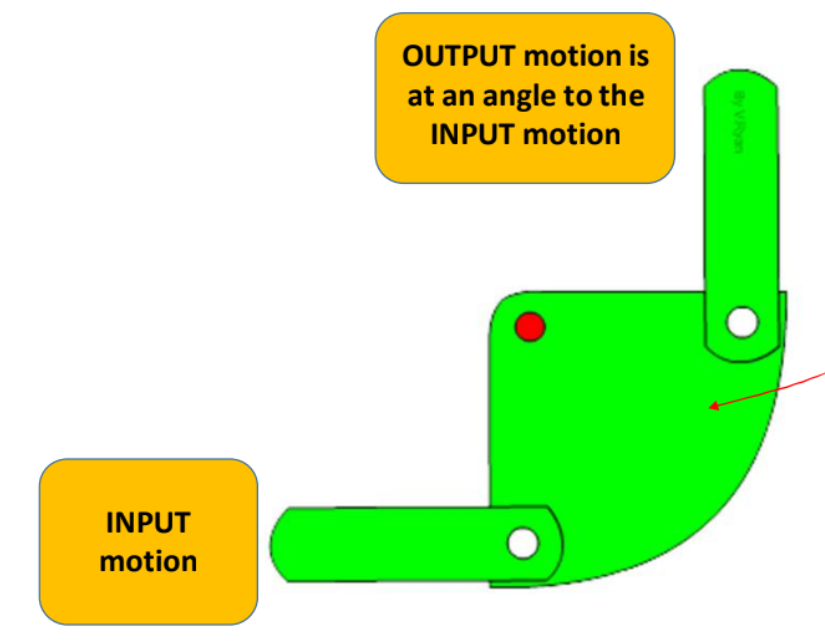
Bellcrank
19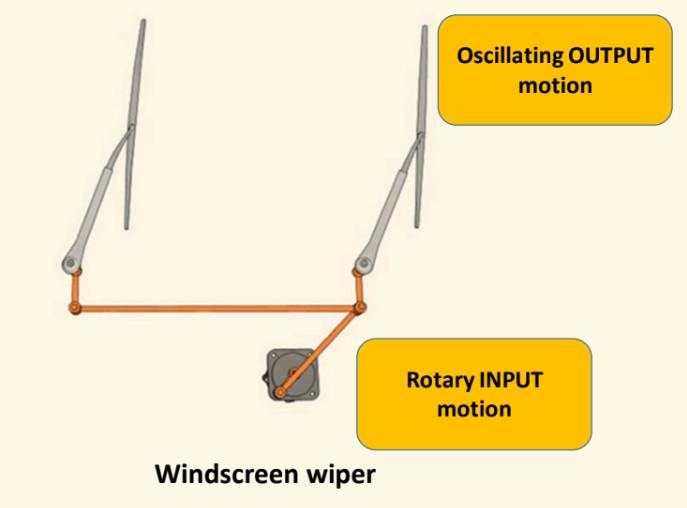
Image occlusion: name the hidden labels
20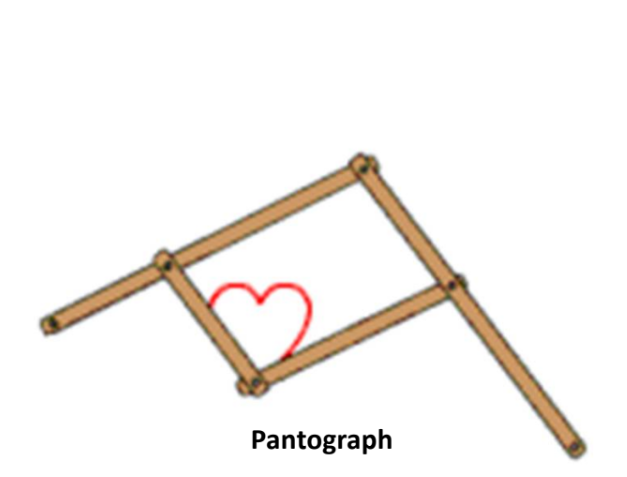
Image occlusion: name the hidden labels
21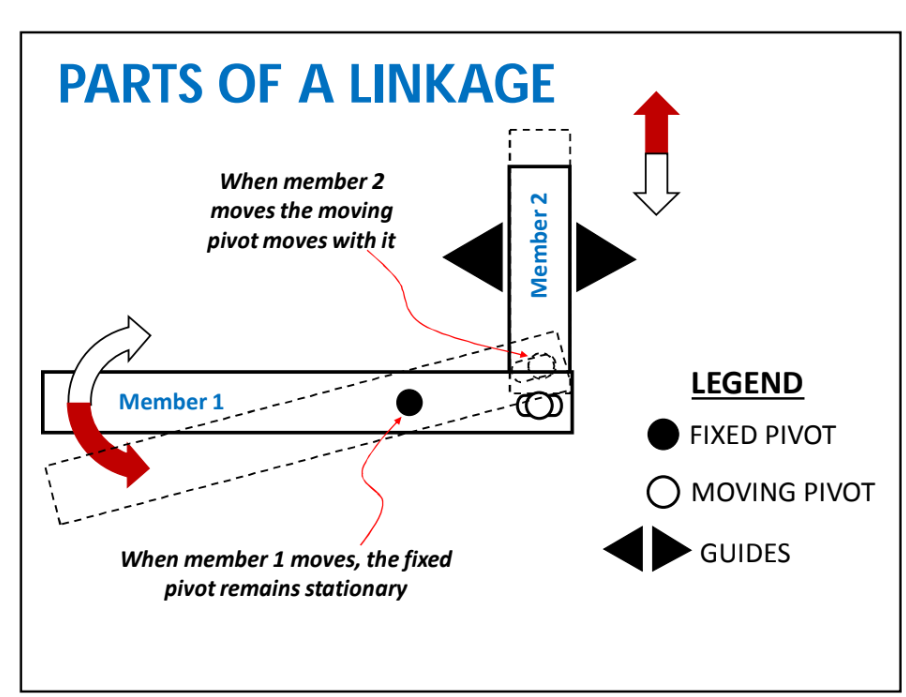
Image occlusion: name the hidden labels
22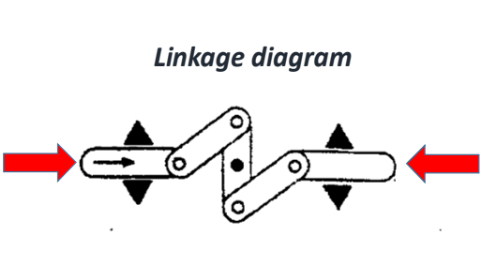
How do you represent this 1st linkage on a diagram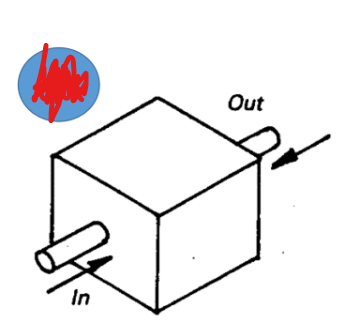
23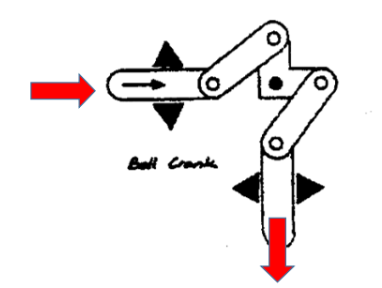
How do you represent this 2nd linkage on a diagram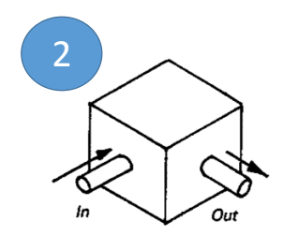
24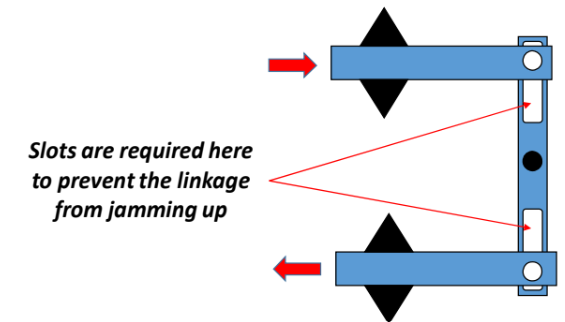
How do you represent this 3rd linkage on a diagram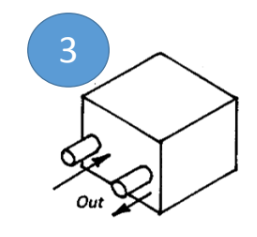
25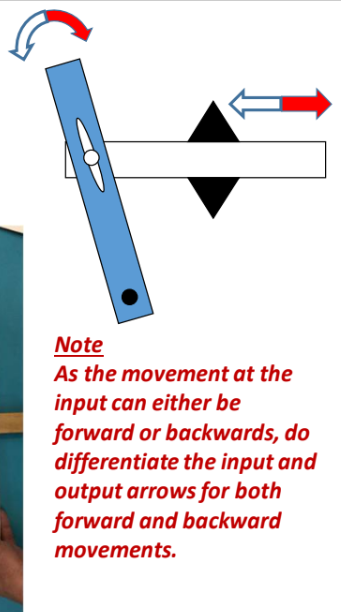
How do you represent this 4th linkage on a diagram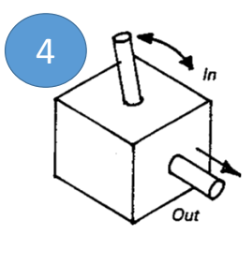
26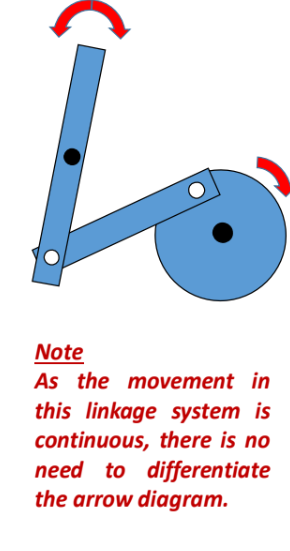
How do you represent this 5th linkage on a diagram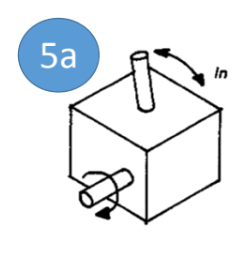
27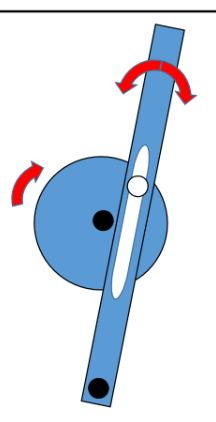
How do you represent this 6th linkage on a diagram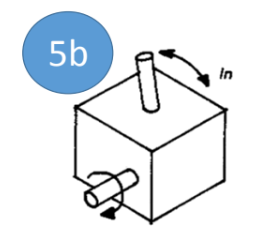
28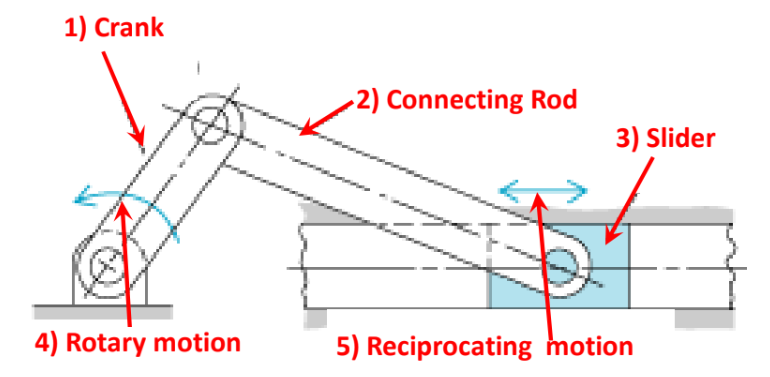
Image occlusion: name the hidden labels
29
Image occlusion: name the hidden labels
30
Image occlusion: name the hidden labels
31
Image occlusion: name the hidden labels
32
Image occlusion: name the hidden labels
33
What is a cam
A specially shaped piece of material fitted to rotating shaft, when it rotates, the follower on top of it moves up and down
34
What is the motion conversion in a cam if not pivoted at 1 end
Rotary to Reciprocating
35
What is the motion conversion in a cam if pivoted at 1 end
Rotary to Oscilating
36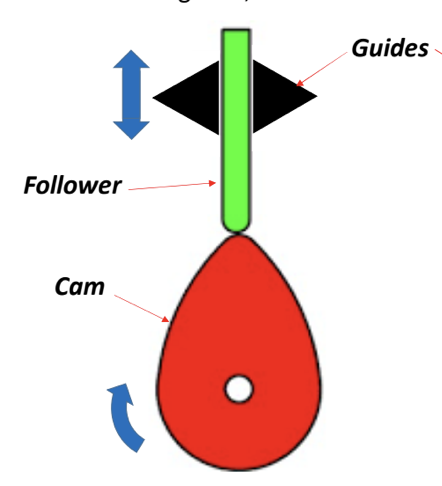
Image occlusion: name the hidden labels
37
Image occlusion: name the hidden labels
38
Image occlusion: name the hidden labels
39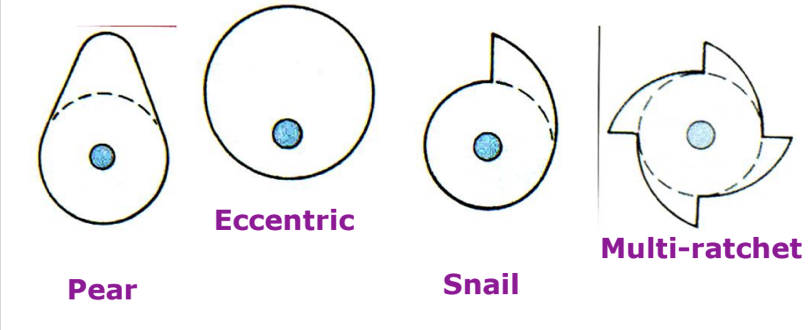
Image occlusion: name the hidden labels
40
Image occlusion: name the hidden labels
41
Image occlusion: name the hidden labels
42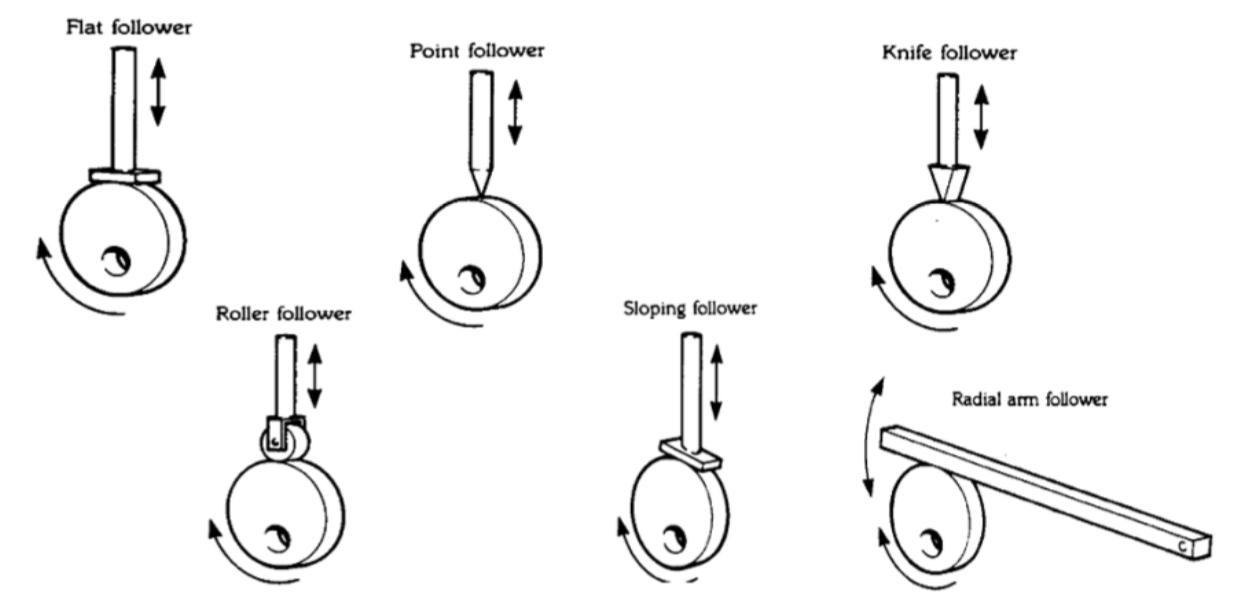
Image occlusion: name the hidden labels
43
Image occlusion: name the hidden labels
44
Image occlusion: name the hidden labels
45
Image occlusion: name the hidden labels
46
Image occlusion: name the hidden labels
47
Image occlusion: name the hidden labels
48
Image occlusion: name the hidden labels
49
What is the stroke of a cam
The distance between the highest and lowest points of the cam
50
What is dwell when referring to cams
Dwell is the period when the follower does not move
51
What is a spur gear?
A wheel with teeth around its edge
52
Purposes of gears
Controlling speed, transmitting turning force, changing direction of rotations of motors
53
Simple vs compound gear
Gear fixed to shaft vs 2 or more gears fixed to 1 shaft
54
Simple vs compound gear train
Simple gears in mesh vs compound gears in mesh
55
Driver vs Driven gear
Gear that is powered vs gear that is moved
56
How do you make the Driver and Driven gear rotate in the same directions
By adding an idle gear in the middle of the 2
57
When driver is smaller than driven
Speed is lower but turning force (torque) is higher at output
58
When driver is bigger than driven
Speed is higher but turning force (torque) is lower at output
59
What is gear/velocity ratio
The number of turns the driver rotates to the driven
60
How to calculate gear/velocity ratio
Count the number of teeth in the driver and driven and put them in a ratio and simplify
61
How to determine gear/velocity ratio for compound gear train?
$\frac{No.\space of \space teeth \space on \space B}{No. \space of \space teeth \space on \space A}\times\frac{No. \space of \space teeth \space on \space D}{No. \space of \space teeth \space on \space C}$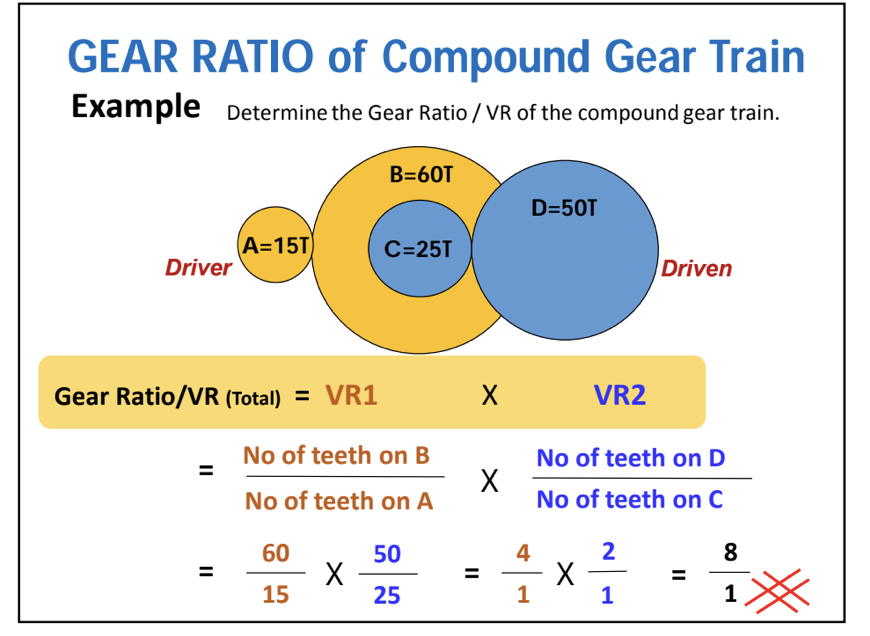
62
What are bevel gears
Gears meshed at 90 degrees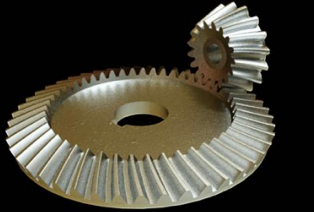
63
What are some applications of bevel gears
Hand drills and chuck and chuck key of drilling machines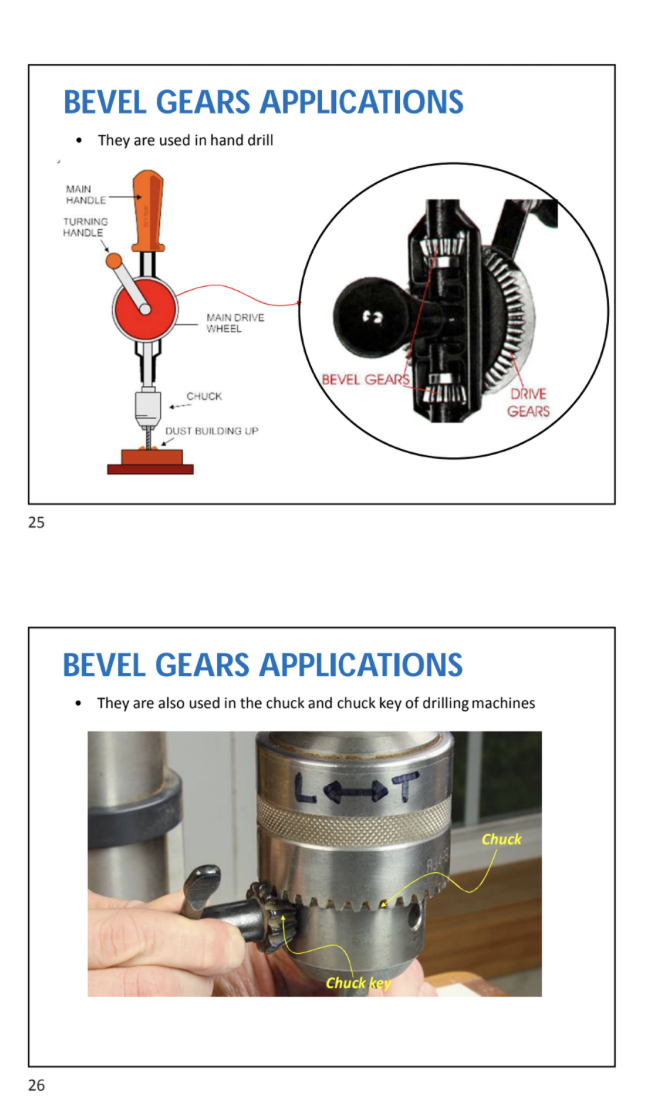
64
What is the worm and worm wheel
A worm gear looks like a screw thread attached to a drive shaft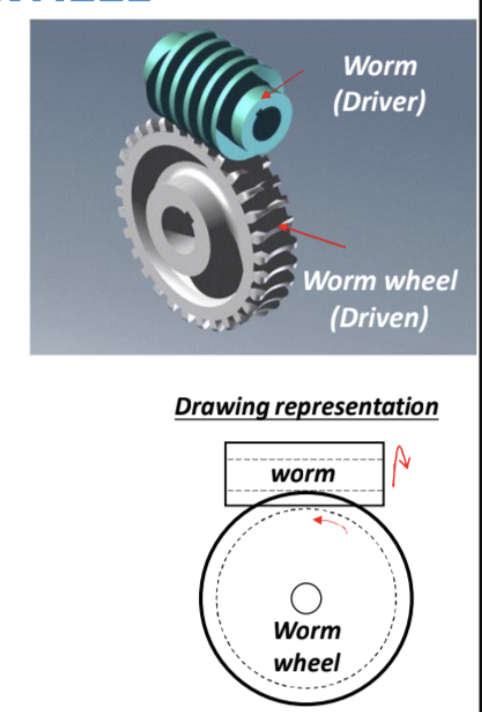
65
What are some properties of the worm and worm wheel
The worm can only drive the worm wheel, since the worm is single tooth, it has a large speed reduction and torque increase
66
What are some applications for worm and worm wheel
Tension adjuster in guitars and winch
67
What is rack and pinion
Consists of a straight toothed rack that mesges with a toothes wheel called a pinion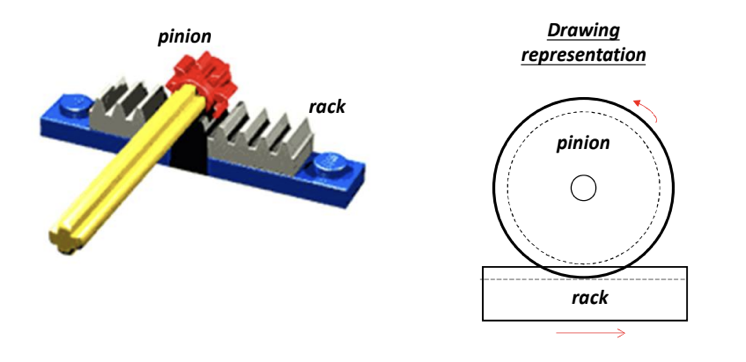
68
What is the motion conversion in rack and pinion
Rotary to linear
69
What is rachet and pawl
A wheel with saw-shaped teeth around its rim. A pawl is a small tooth that engages the ratchet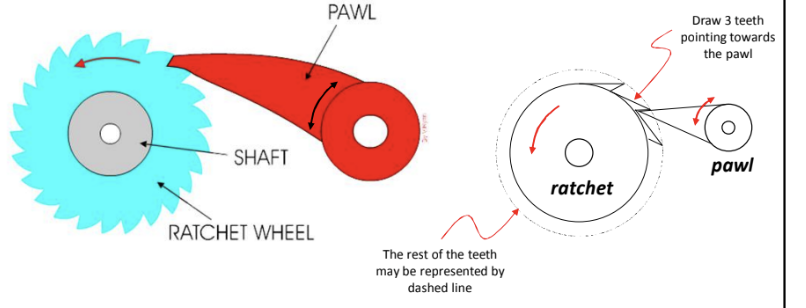
70
Why does the rachet and pawl allow movement in 1 direction only
When the ratchet wheel rotates, the pawls slides up and drops into each
tooth of the ratchet. The pawl prevents the ratchet from turning in the opposite direction
tooth of the ratchet. The pawl prevents the ratchet from turning in the opposite direction
71
What is a pulley
A wheel that rotates about an axel
72
What are the 2 systems of a pulley
Lifting to make it easier to lift a load and driving to transmit power from 1 shaft to another
73
What is a fixed pulley?
Fixed to a wall or ceiling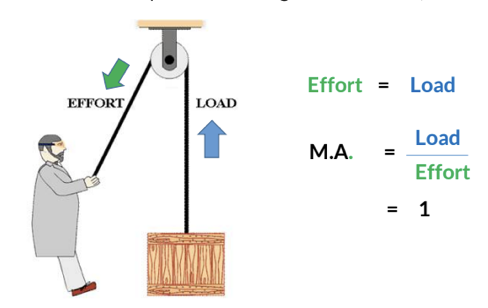
74
What is a moveable pulley?
The pulley is free to move together with the load. One end of the rope is fixed and support the weight of the load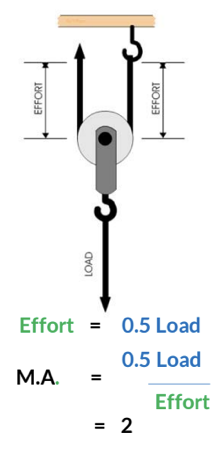
75
What is a compound pulley?
Uses a combination of fixed and moveable pulleys, has both directional and mechanical advantage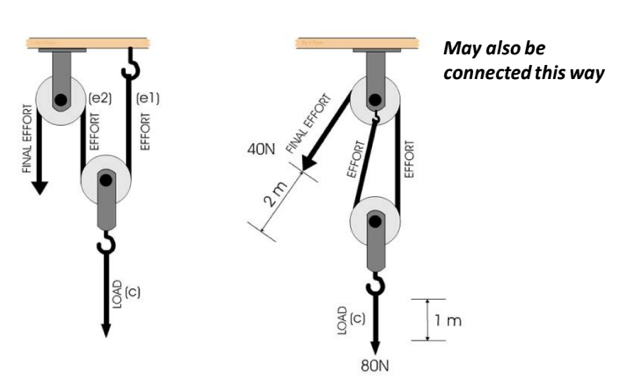
76
What is the velocity ratio of a lifting pulley
Number of pulleys in the system
77
What is the formula for efficiency
$\frac{Mechanical \ Advantage} {Velocity \ Ratio} \times 100\%$
78
What is the formula for Mechanical Advantage
Load / Effort both in Newtons
79
Can a machine be at 100% efficiency
No, generally efficiency in a machine may be lost through fricton, heat and sound
80
What is a driving pulley system?
A flexible rubber belt in tension used to transmit power between the driver and driven pulleys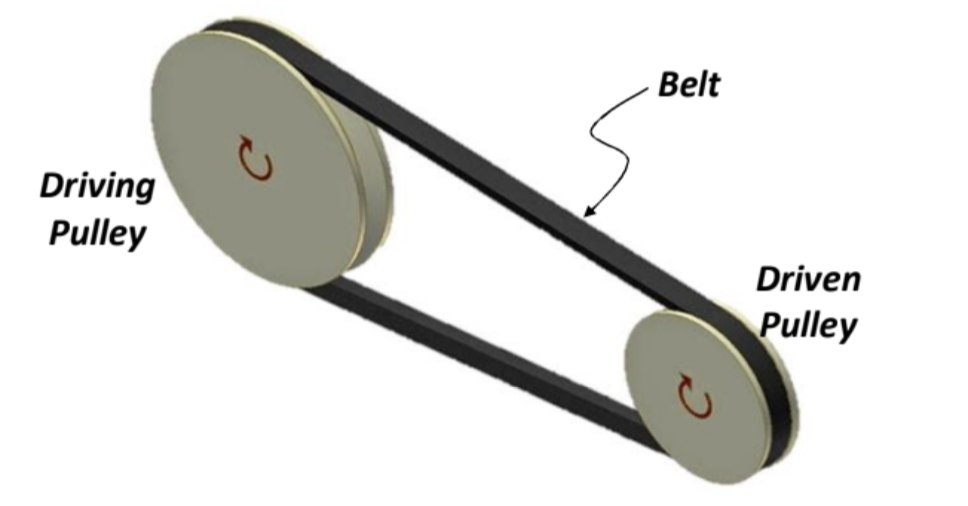
81
What are the advantages of driving pulleys?
Economical when the driver and driven shafts are separated by long distances, lubrication free and low maintenance, the shafts do not need to be parallel
82
How can you reverse the rotation between the driver and driven shafts in a pulley
By connecting the belt in a cross drive without needing an additional component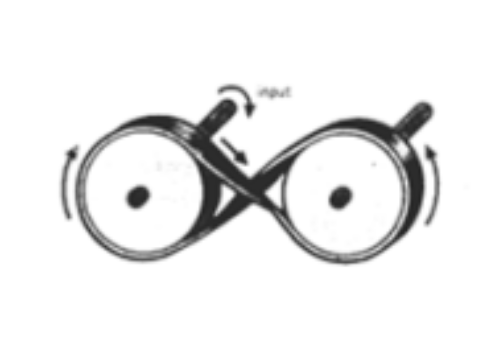
83
What are the 3 types of belts in the driving pulley system
Flat, Vee and Tooth
84
What are the advantages and disadvantages of the flat belt
Easy to install & low cost to manufacture ; Cannot transmit large load & belt slip more frequent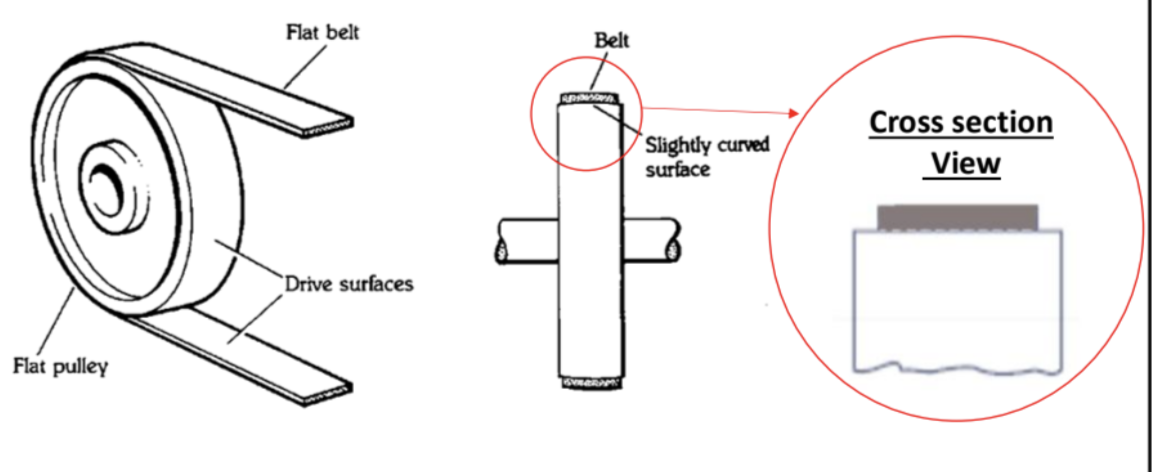
85
What are some applications of flat belts
Conveyors in manufacturing and food industries
86
What are the advantages and disadvantages of the Vee belt
Belt does not slip easily (wedge effect) & can transmit larger load than flat belt ; Harder to install and higher manufacturing cost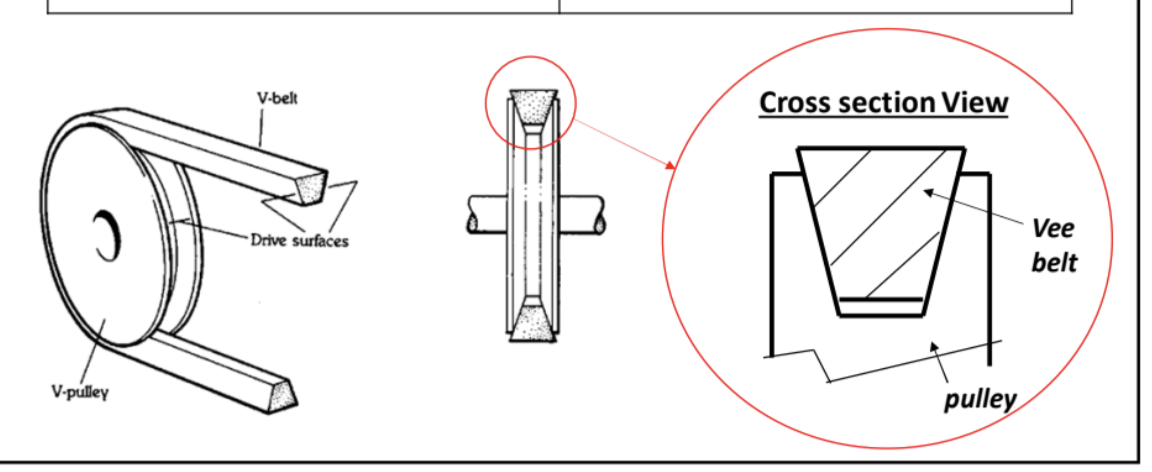
87
What is an application of Vee Belts
Drilling machine with step/cone pulleys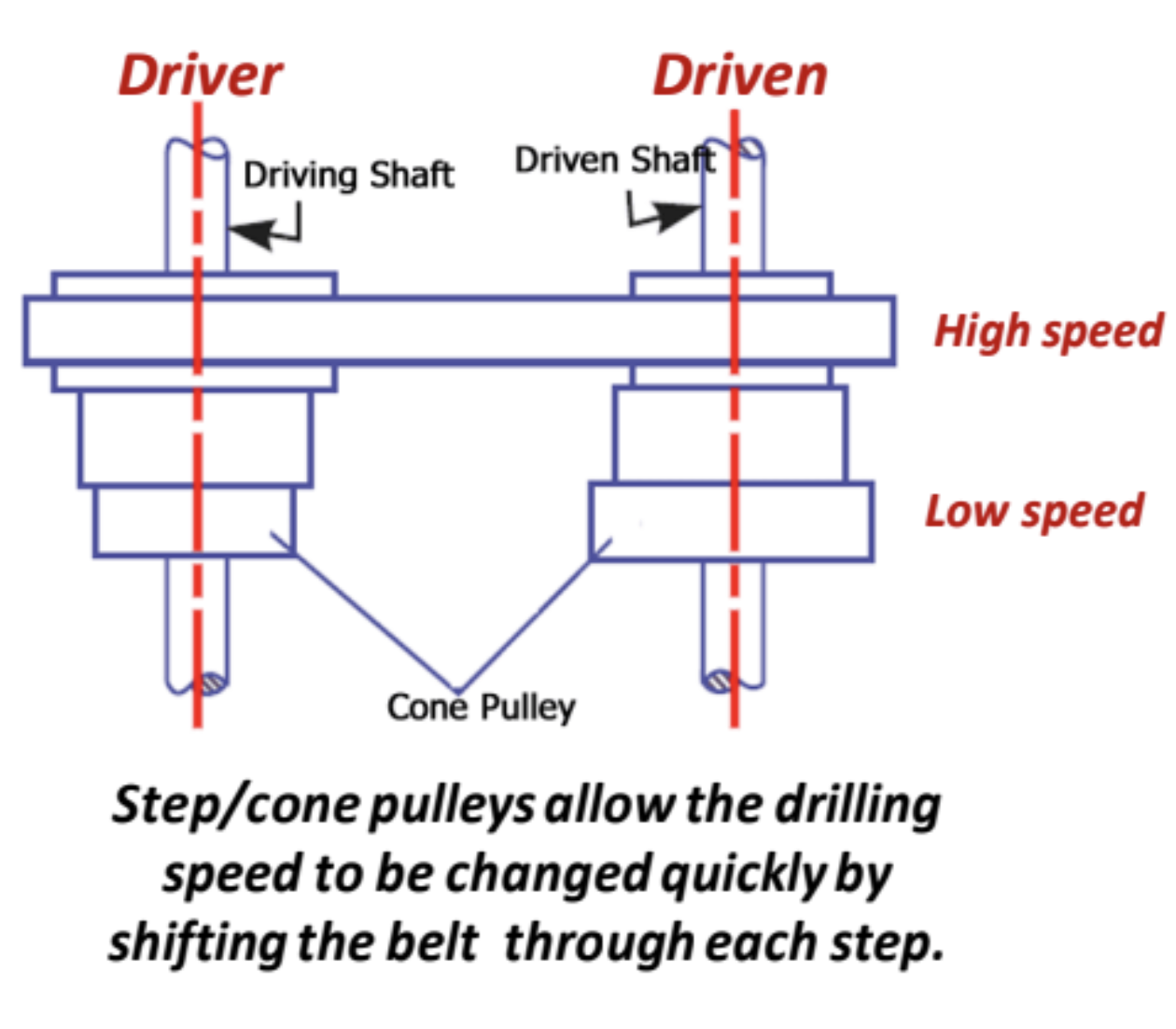
88
What are the advantages and disadvantages of toothed/timing belt
No belt slippage & useable in high load applications ; Higher manufacturing cost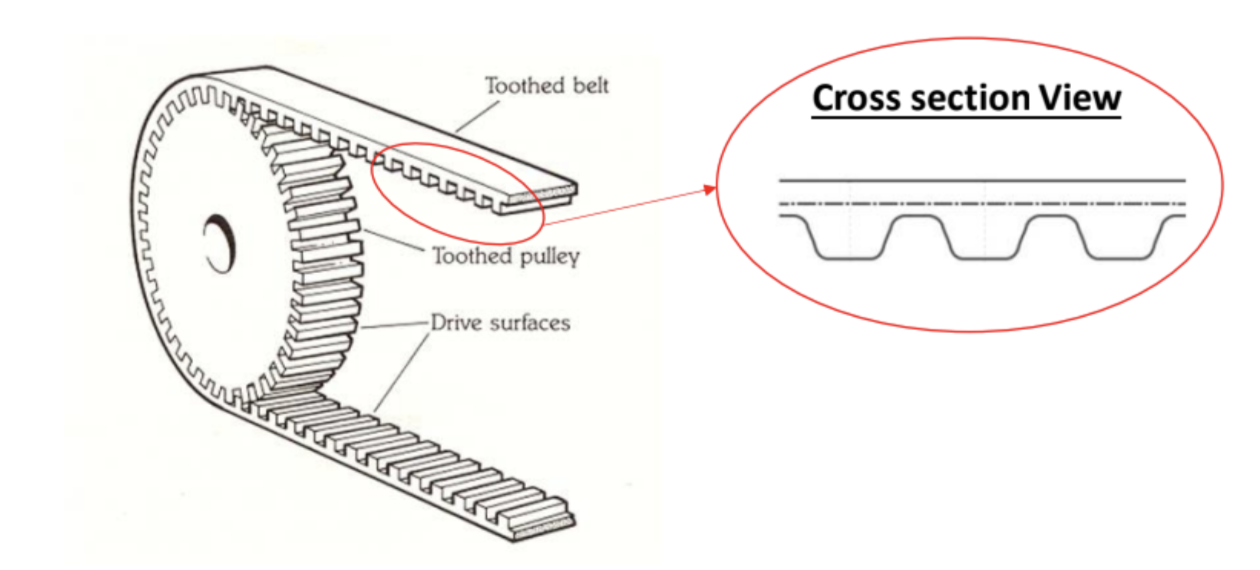
89
What are some applications of toothed/timing belt?
Used in place of sprocket and chain in bicycles and in vehicle engine drive systems
90
What is the Velocity ratio for pulleys
Diameter of driven / Diameter of driver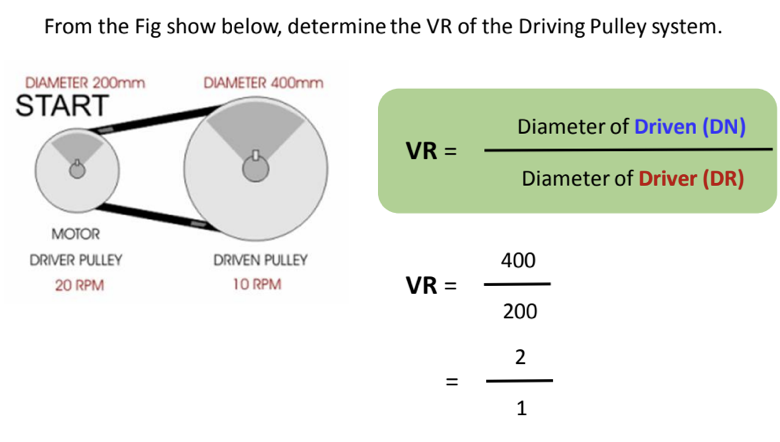
91
What is belt slack?
As belt is made of rubber, it stretches over time causing the belt to slack, reducing the tension between the driving and driven shaft, resulting in belt slippage and loss of efficiency
92
How is a tensioner pulley used to tension a belt
Using a tensioner pulley with a weight attached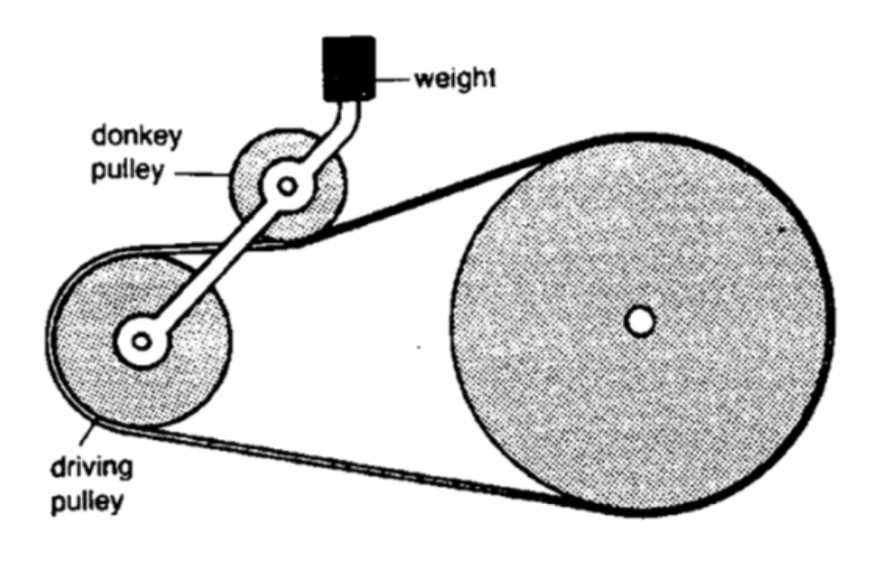
93
How is a tensioner pulley (screw) used to tension a belt
The tensioner pulley is incorporated with a slot and locking screw which
can be adjusted to tension up the belt.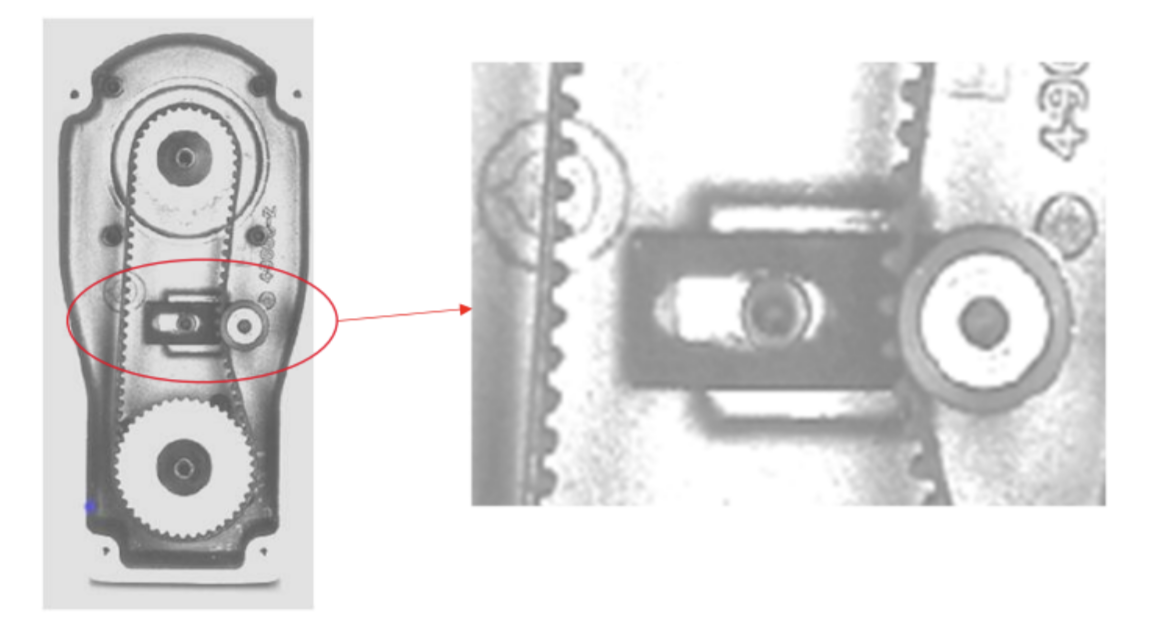
can be adjusted to tension up the belt.
94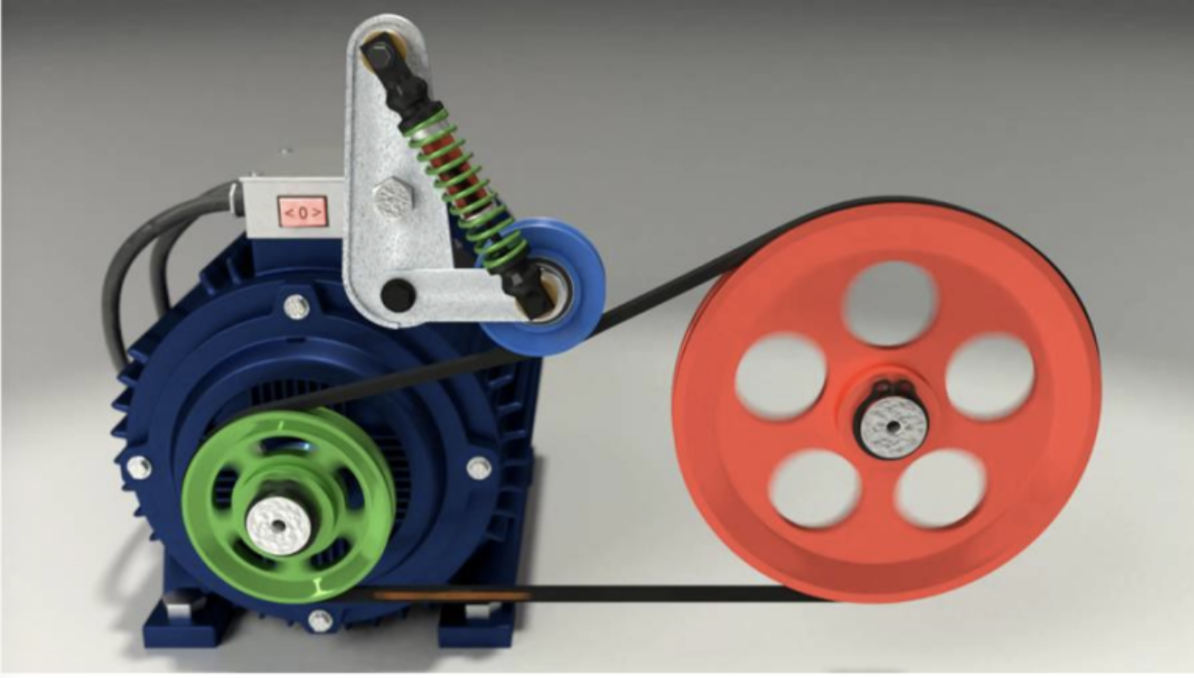
How is a tensioner pulley with a spring used to tension a belt
95
Besides using a tensioner pulley, what is one other way to tension a belt
Moving the motor away from driven shaft by mounting the motor on a slide base and adjusting screw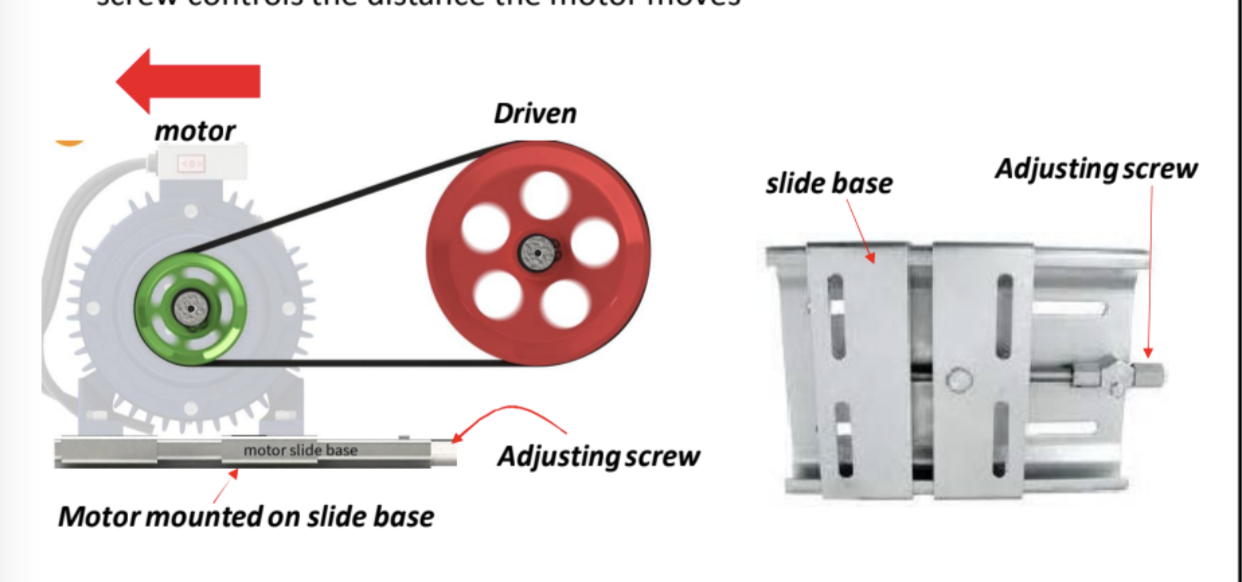
96
What is a sprocket and chain
Sprockets are strudy wheels with teeth that lock onto a chain. as the sprocket spins, the chain transmits power between the driver and driven shafts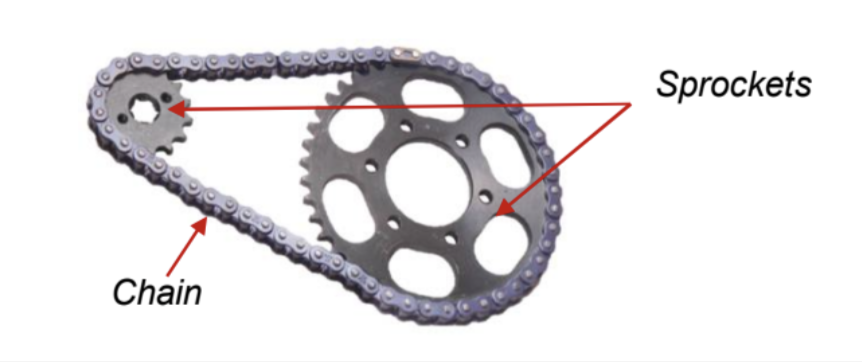
97
What are the advantages and disadvantages of sprocket and chain
No slippage & useable in high load applications ; high manufacturing cost & higher maintenance as mating parts requires lubrication to prevent wear
98
What are some applications for sprocket and chain
In bicycle drive systems and in forklifts to carry loads