Major Myths
Study these flashcardsFree · spaced repetition · iPhone, Android, Mac & web
All cards
1
Artistic Depiction: A comic scene usually depicting Dionysus to assembled deites on Olympus and/or druken Hephaistos rides a mule in the entourage of Dionysus. Sometimes the feast which made Hephaistos drunk appears.
Legend: When Hera gave birth to Hephaistos, he was born disabled, and Hera threw him out from Olympus. In spite Hephaistos sent Hera a golden throne with invisible chains that tied her to the thron when she sat in it. Hephaistos refused to listen to any of the gods on the matter until Dionysus, who he trusted, was able to get him drunk and bring him to heaven.
Legend: When Hera gave birth to Hephaistos, he was born disabled, and Hera threw him out from Olympus. In spite Hephaistos sent Hera a golden throne with invisible chains that tied her to the thron when she sat in it. Hephaistos refused to listen to any of the gods on the matter until Dionysus, who he trusted, was able to get him drunk and bring him to heaven.
"The Return" (Return of Hephaistos)
2
Artistic Depection: The only visual instance of a female figure sitting on a bull, though sometimes she just holds her horn. May include waves or sea creatures to indicate the event takes place on the coasts of the island of Crete
Legend: One of Zeus' many affairs, the venetian princess Europa was collecting flowers when Zeus approaches as a bull acting very gentle. Europa either takes hold of the horn or sits on Zeus’s back, and then Zeus takes off to rape her.
Legend: One of Zeus' many affairs, the venetian princess Europa was collecting flowers when Zeus approaches as a bull acting very gentle. Europa either takes hold of the horn or sits on Zeus’s back, and then Zeus takes off to rape her.
Rape of Europa
3
Artistic Depections: Zeus carrying a young boy, who may have a cock (love gift bird), or a young boy is pouring wine for Zeus
Legend: Another of Zeus' many affairs, he falls in love with Gamanead and takes him as lover to heaven, where he makes him the offical cup bearer
Legend: Another of Zeus' many affairs, he falls in love with Gamanead and takes him as lover to heaven, where he makes him the offical cup bearer
Abduction of Gamanead
4
Artistic Depictions: A minature but fully armed Athena appears from the head of Zeus while Hephaistos stands to the side with his axe, often includes Hera and other assorted onlookers
Legend: Hephaistos hitting Zeus in the head, or sometimes thigh, leads to Athena coming forth.
Legend: Hephaistos hitting Zeus in the head, or sometimes thigh, leads to Athena coming forth.
Birth of Athena
5
Artistic Depictions: A man is attacked by or surrounded by dogs while Artemis looks on
Legend: Achion spied on Artemis while she was bathing, and in retaliation she kills him by turning him into a stag and having his own hunting dogs kill him.
Legend: Achion spied on Artemis while she was bathing, and in retaliation she kills him by turning him into a stag and having his own hunting dogs kill him.
Killing of Achiron
6
Artistic Depiction: A female figure on a bed with rain drops coming down
Legend: - Arkrisios, king of Argos, had received a prophecy that he would have sons but a grandson that would kill him. Thus, he locked his only daughter, Danae in a dungeon, but Zeus came to her as a golden rain, and to her was born Perseus.
Legend: - Arkrisios, king of Argos, had received a prophecy that he would have sons but a grandson that would kill him. Thus, he locked his only daughter, Danae in a dungeon, but Zeus came to her as a golden rain, and to her was born Perseus.
Danae and Zeus, birth of Perseus
7
Artistic Depictions: A female figure and child either in or about to get in the chest, usually also a king holding scepter or knobby stick gesturing out to them in banishment, sometimes also a carpenter working on the chest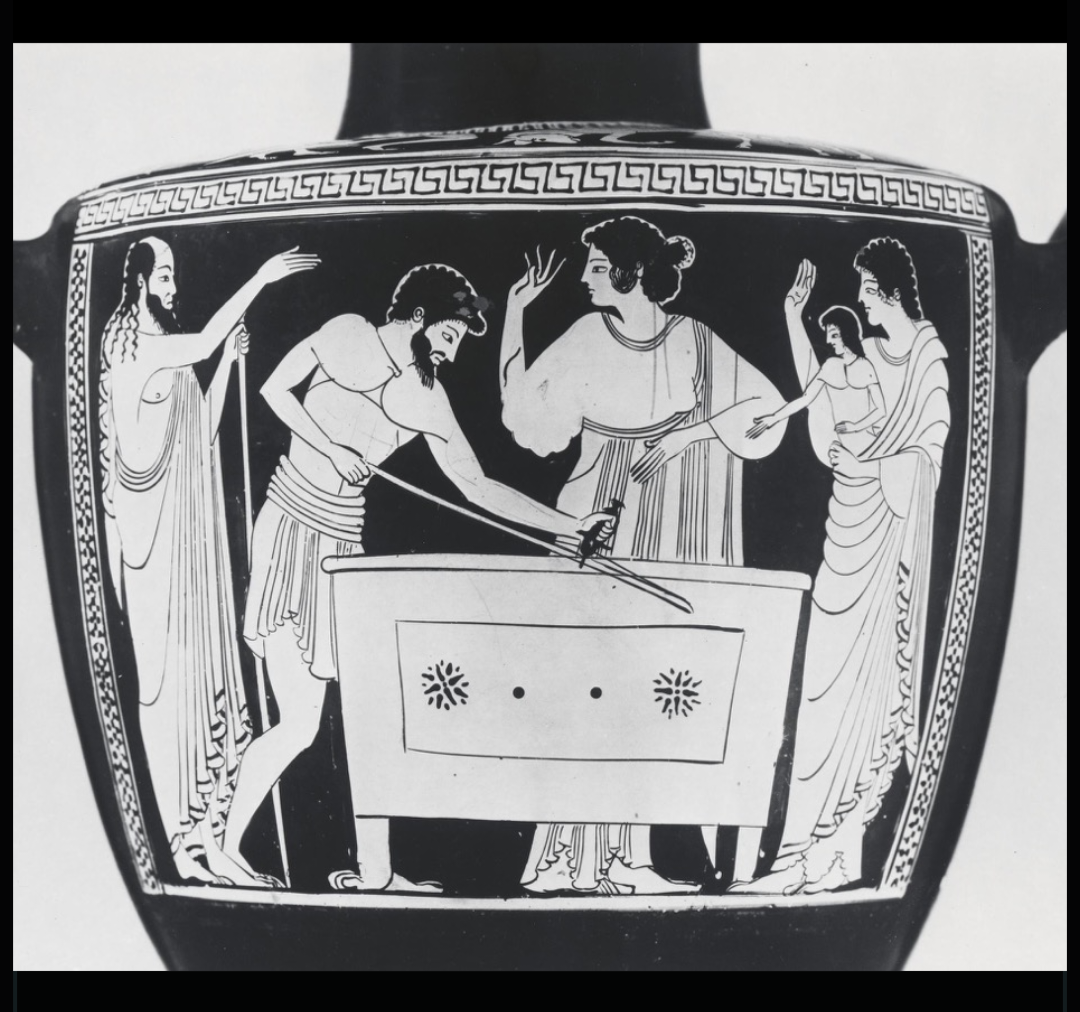
Perseus and Danae sent to sea
8
Artistic Depictions: A young man stands with blind older women, holding their eye.
Legend: Perseus persuades the Graiai the "three old women", who share one tooth and eye between them, by stealing this eye and refusing to return it until the Graiai either tell Perseus where the Naiads, river nymphs, are to give him the equipment to fight the gorgons, or tells him where the gorgons are themselves
Legend: Perseus persuades the Graiai the "three old women", who share one tooth and eye between them, by stealing this eye and refusing to return it until the Graiai either tell Perseus where the Naiads, river nymphs, are to give him the equipment to fight the gorgons, or tells him where the gorgons are themselves
Perseus prepares to fight the Gorgon
9
Artistic Depiction: While fighting, Perseus faces away from Medusa, initally using a sword but later uses a sickle, the scene often takes places just before Medusa is slain, with Perseus sneaking up on the sleeping gorgons. 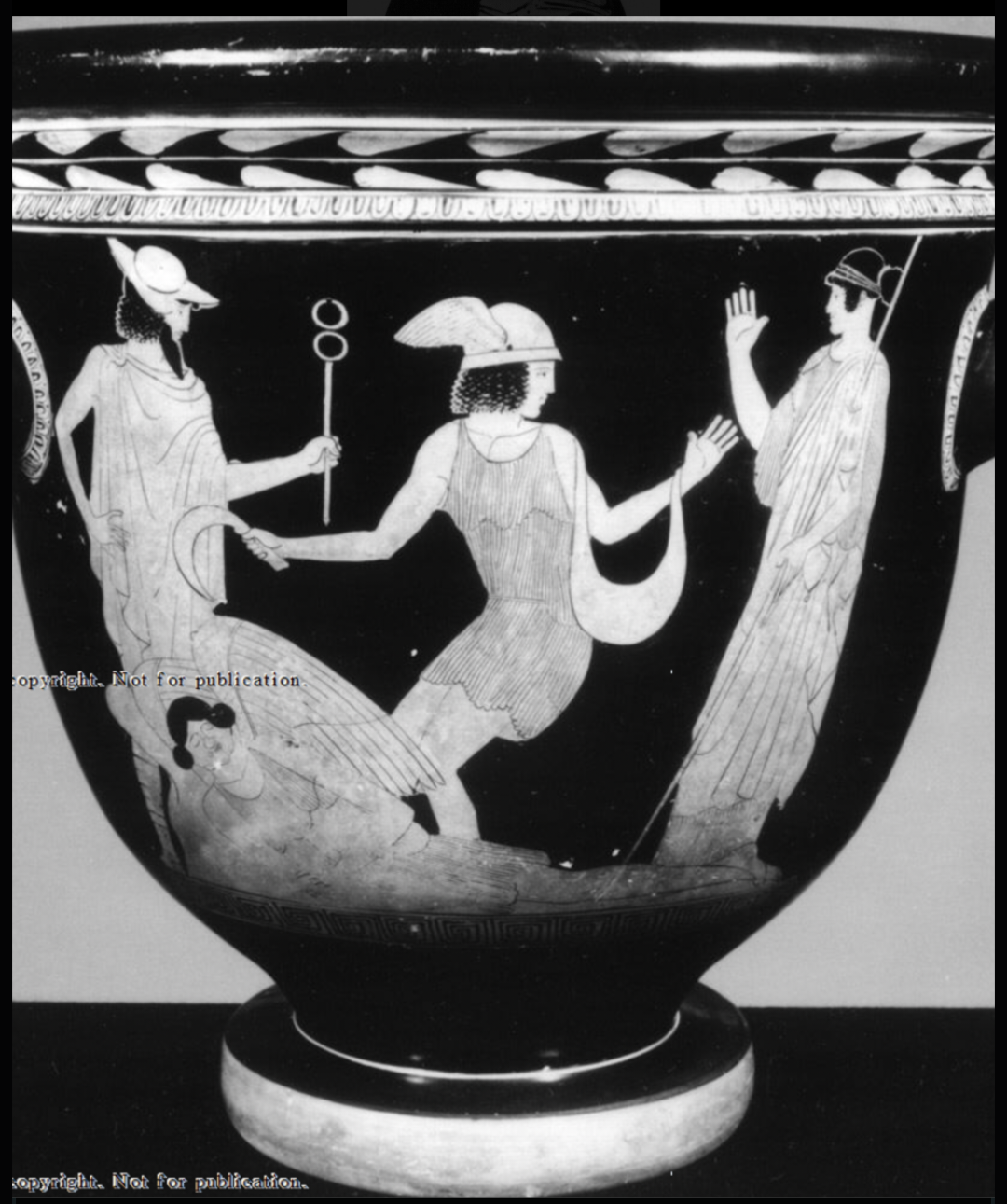
Perseus slaying the Gorgon
10
Artistic Depictions: earlier depictions feature Medusa lying headless while her sisters persue in unison, but are blocked as Perseus runs. Later Hermes joins the scene, and sometimes all three flee together
Legend: After being sent to see and washing up on the island of Seriphos, the king Polydeketes falls in love with Danea, and threatens to kidnap her if Perseus does not agree to the foolhardy task of returning with a Gorgon's head. There are 3 Gorgons, 2 immortal ones, Sthenno “the strong”, Euryale “the wide leaping” and 1 mortal, Medusa, “the ruler” or “the queen.” Medusa’s head had the power to turn the beholder to stone. In the presence of Athena, and with much equipment, Perseus is able to slay Medusa, to the anger of her sisters.
Legend: After being sent to see and washing up on the island of Seriphos, the king Polydeketes falls in love with Danea, and threatens to kidnap her if Perseus does not agree to the foolhardy task of returning with a Gorgon's head. There are 3 Gorgons, 2 immortal ones, Sthenno “the strong”, Euryale “the wide leaping” and 1 mortal, Medusa, “the ruler” or “the queen.” Medusa’s head had the power to turn the beholder to stone. In the presence of Athena, and with much equipment, Perseus is able to slay Medusa, to the anger of her sisters.
Slaying the Gorgon, fleeing the Gorgon
11
Artistic Depiction: Medusa with a winged horse and a human boy
Legend: when Medusa is slain her son Pegasos, the winged horse, and Chrysaor, the human, sprout from her neck.
Legend: when Medusa is slain her son Pegasos, the winged horse, and Chrysaor, the human, sprout from her neck.
Birth of Pegasos and Chrysaor
12
The bag intended to hold the Gorgoneion
Kibisis
13
Medusa kneeling on left leg with head / upper body facing frontally, sometimes used to ward off evil
Knielauf pose
14
Artistic Depiction: A young man pushes a rock, usually with the handle of a sword showing underneath
Legend: On the same night, Aigeus, King of Athens, and Poseidon slept with Aithra, Daughter of King Pittheus. From this was born Theseus with uncertain paternity. Regardless, “before Aegis returned to Athens, he left a sword and sandals under a rock and instructed Aithra to raise the child without saying who his father is until he could roll the rock away, at which point he should proceed to Athens and claim his inheritance."
Legend: On the same night, Aigeus, King of Athens, and Poseidon slept with Aithra, Daughter of King Pittheus. From this was born Theseus with uncertain paternity. Regardless, “before Aegis returned to Athens, he left a sword and sandals under a rock and instructed Aithra to raise the child without saying who his father is until he could roll the rock away, at which point he should proceed to Athens and claim his inheritance."
Theseus claims the gnorismata
15
Artistic Depiction: Theseus pulls down the top of a tree with one hand as he drags a reluctant Sinis towards it with the other.
Legend: on the road to athens Theseus defeats many bandits, Sinis the Pine bender used the spring of a bent pine tree to destroy his victims, and by which Theseus destroyed him in the same manner
Legend: on the road to athens Theseus defeats many bandits, Sinis the Pine bender used the spring of a bent pine tree to destroy his victims, and by which Theseus destroyed him in the same manner
Theseus fighting Sinis the pine bender
16
Artistic Depiciton: Theseus stands with a large pig and sometimes older women who begs for the pig's life.
Legend: Theseus went out of his way to fight the Krommyonian sow, possibly named Phaia after the mistress who cared for the sow (?), and of who did not want Theseus to hurt the pig.
Legend: Theseus went out of his way to fight the Krommyonian sow, possibly named Phaia after the mistress who cared for the sow (?), and of who did not want Theseus to hurt the pig.
Theseus fighting the Krommyonian Sow
17
Artistic Depicition: Theseus and a man on a rocky outcropping, usually with a tree and a turtle.
Legend: Skiron commanded a narrow passage through the rocks near Megara and forced passers-by to wash his feet, and as they did so he kicked them off the rocks into the sea where they were devoured by a large turtle. Theseus tossed Skiron from the same rocks.
Legend: Skiron commanded a narrow passage through the rocks near Megara and forced passers-by to wash his feet, and as they did so he kicked them off the rocks into the sea where they were devoured by a large turtle. Theseus tossed Skiron from the same rocks.
Theseus fighting Skiron
18
Artistic Depiction: Theseus attacks a man with an axe or hammer while he falls back onto his bed
Legend: Prokrustes would offer beds in his home near Eleusis to passers-by. But when they lay on the bed, he adjusted their sizes to match the bed, lopping off pieces from those who were too long and hammering out those who were too short. As with the rest, Theseus killed him using the means the villain had used to murder others.
Legend: Prokrustes would offer beds in his home near Eleusis to passers-by. But when they lay on the bed, he adjusted their sizes to match the bed, lopping off pieces from those who were too long and hammering out those who were too short. As with the rest, Theseus killed him using the means the villain had used to murder others.
Theseus fighting Prokrustes
19
Artistic Depiction: a beardless man wrestles with a bull, or stands with the bull already tethered
Legend: Aigeus had married a witch Medea, who knew of Theseus and sought to destroy him. She urged Aigeus to not trust the young stranger (for he did not recognize Theseus) and to send him to fight the “savage bull", Theseus captured the bull, led it through the city, and sacrificed it to Apollo.
Legend: Aigeus had married a witch Medea, who knew of Theseus and sought to destroy him. She urged Aigeus to not trust the young stranger (for he did not recognize Theseus) and to send him to fight the “savage bull", Theseus captured the bull, led it through the city, and sacrificed it to Apollo.
Capturing the Marathonian Bull
20
Artisic Depiction: A young man stands or wrestles with a half bull half person, sometimes with onlooking athenean boys and girls. Theseus sometimes holds a spool of yarn.
Legend: Some say that Androgeos, son of Minos of Crete, had been killed by the bull and that this had led to the tribute of seven boys and girls Athens paid to Minos each year. The youngsters sent to Crete were shut up in a labyrinth designed by Diadalos to conatin the Minotaur. Theseus either volunteered or was selected to be part of the tribute, and when there another tributee, airadne gives him her yarn to make a path to follow in the maze, and kill the minotaur.
Legend: Some say that Androgeos, son of Minos of Crete, had been killed by the bull and that this had led to the tribute of seven boys and girls Athens paid to Minos each year. The youngsters sent to Crete were shut up in a labyrinth designed by Diadalos to conatin the Minotaur. Theseus either volunteered or was selected to be part of the tribute, and when there another tributee, airadne gives him her yarn to make a path to follow in the maze, and kill the minotaur.
Theseus fighting the minotaur.
21
Artistic Depiciton: a wrestling match with Herakles on the left moving towards the right, and the lion trying to claw at Herakles with hind paw. Herakles usually unbearded here.
Legend: Herakles was told by Delphi to serve Eurystheus for twelve years and accomplish the ten labors imposed upon him, where he would then become immortal. The first labor was to kill this lion.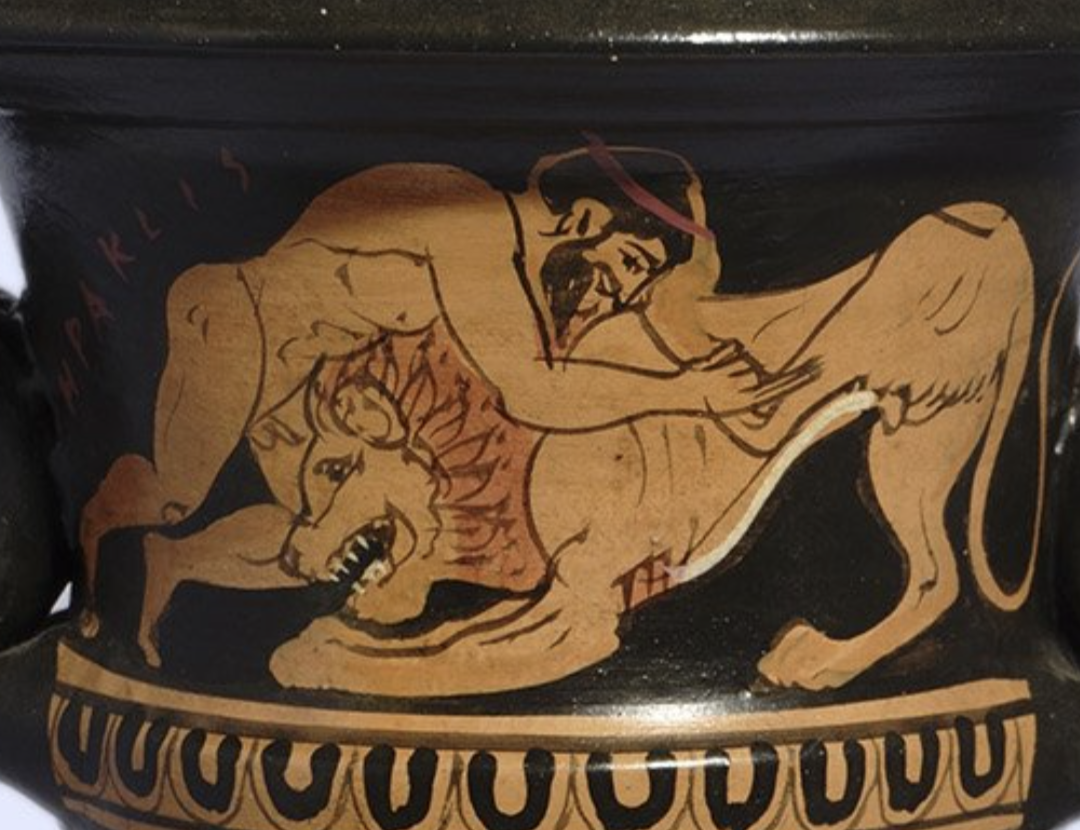
Legend: Herakles was told by Delphi to serve Eurystheus for twelve years and accomplish the ten labors imposed upon him, where he would then become immortal. The first labor was to kill this lion.
Fighting the Nemean Lion
22
Artistic Depiction: Herkles and usually Iolaos fight monster, Herakles often with swornd and Iolaos cauterizing (sealing with fire) the heads. Athena stands to the side by a chariot, where she sometimes holds a oinochoe to collect the hydra’s posion blood. The crab is often also featured.
Legend: a. The hydra had nine heads, one of which was immortal, Each time Herakles cut off a head, two grew to replace it. Hera also sent a crab to bite his ankles while he fought. he asked Iolaos for help and according to some versions had him cauterize the stumps as he cut off the heads. After he finally cut off and buried the immortal head he dipped his arrows in the Hydra’s blood, a particularly potent posion which would later cause him much suffering.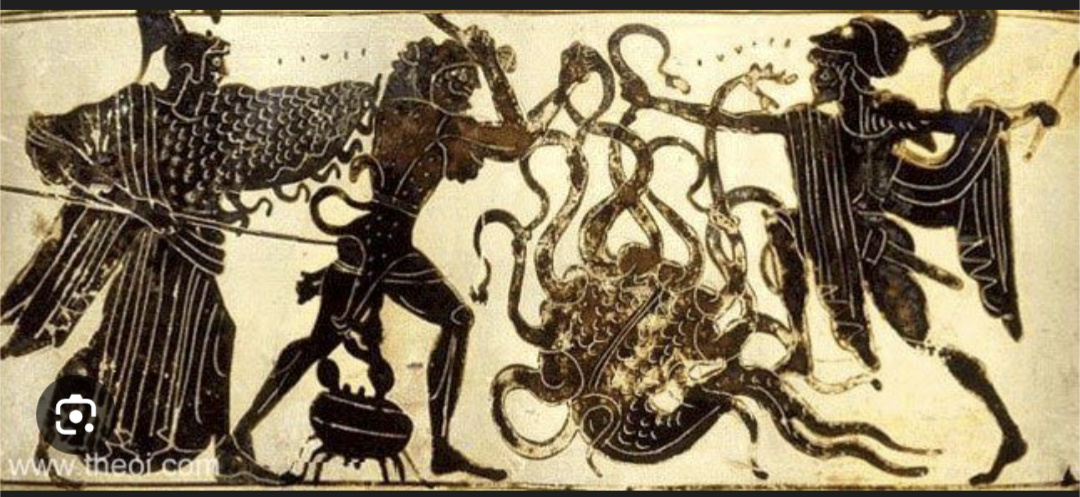
Legend: a. The hydra had nine heads, one of which was immortal, Each time Herakles cut off a head, two grew to replace it. Hera also sent a crab to bite his ankles while he fought. he asked Iolaos for help and according to some versions had him cauterize the stumps as he cut off the heads. After he finally cut off and buried the immortal head he dipped his arrows in the Hydra’s blood, a particularly potent posion which would later cause him much suffering.
Killing the Lernaean Hydra
23
Artistic Depiction: Varied, but include Herakles with a deer, sometimes horned.
Legend: The hind supposedly had golden horns and was sacred to Artemis. Herakles hunted the hind for a year before wounding it with an arrow. While carrying the deer back Artemis and Apollo stopped him, but Herakles was able to convince them of their cause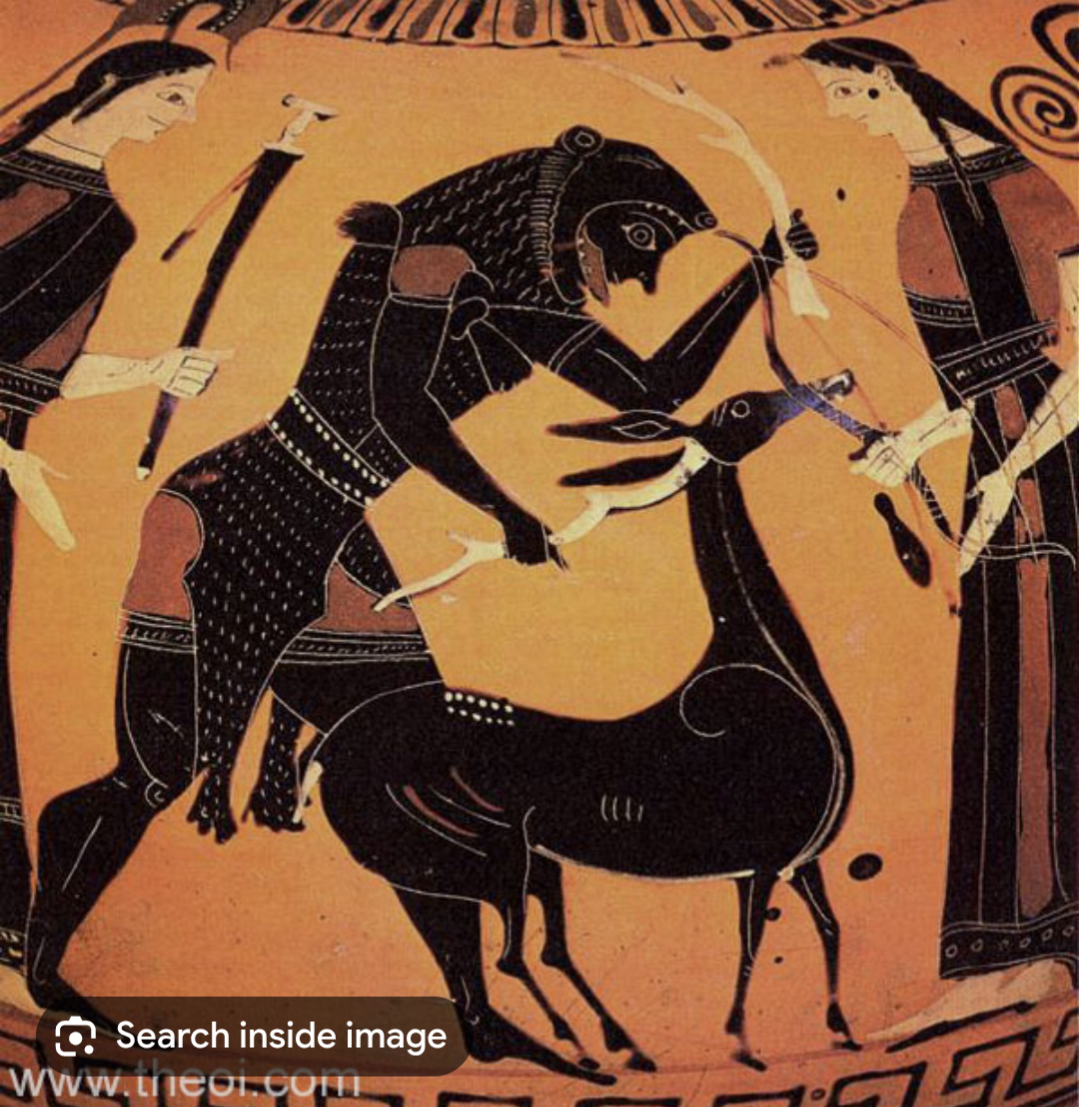
Legend: The hind supposedly had golden horns and was sacred to Artemis. Herakles hunted the hind for a year before wounding it with an arrow. While carrying the deer back Artemis and Apollo stopped him, but Herakles was able to convince them of their cause
Capturing the Keryneian hind
24
Artistic Depiction: Typically features Herakles pursuing the centaurs while Pholos watches sometimes holding Kantharos, sometimes he has his bow, other times bow is resting in cave with Pholos. Sometimes scene takes place before the attack, with just Pholos, Herakles, and the pithos. Key Attribute: The great pithos is featured as a half buried jar in the ground.
Legend: While finding the boar herakles was entertained by the centaur Pholos who at Herakles request gave him wine from a great pithos that was common property to all centaurs. It’s smell attracted other centaurs who attacked Herakles, and resulted in the fatal wounding of Chiron with an arrow dipped in the Hydra’s blood. Pholos also passes after dropping a poisoned arrow on his foot.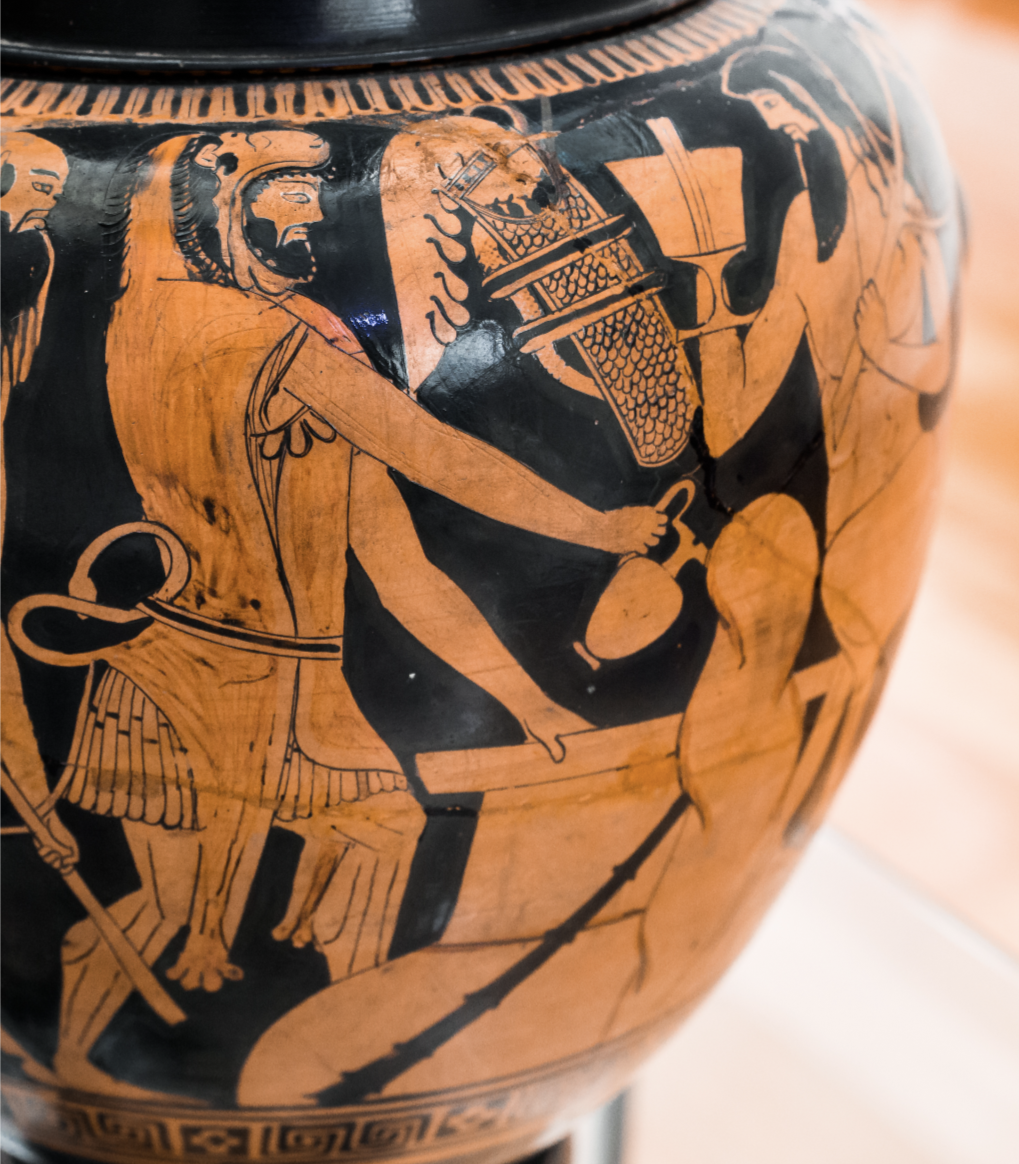
Legend: While finding the boar herakles was entertained by the centaur Pholos who at Herakles request gave him wine from a great pithos that was common property to all centaurs. It’s smell attracted other centaurs who attacked Herakles, and resulted in the fatal wounding of Chiron with an arrow dipped in the Hydra’s blood. Pholos also passes after dropping a poisoned arrow on his foot.
Herakles routing the centaurs
25
Artisitc Depiciton: Eurytheus cowers in a great pithos as Herakles stands over him with boar on his shoulder, threatening to drop it
Legend: Another of Herakles labors, he must bring the ravaging boar of Mount Erymanthos back to Eurytheseus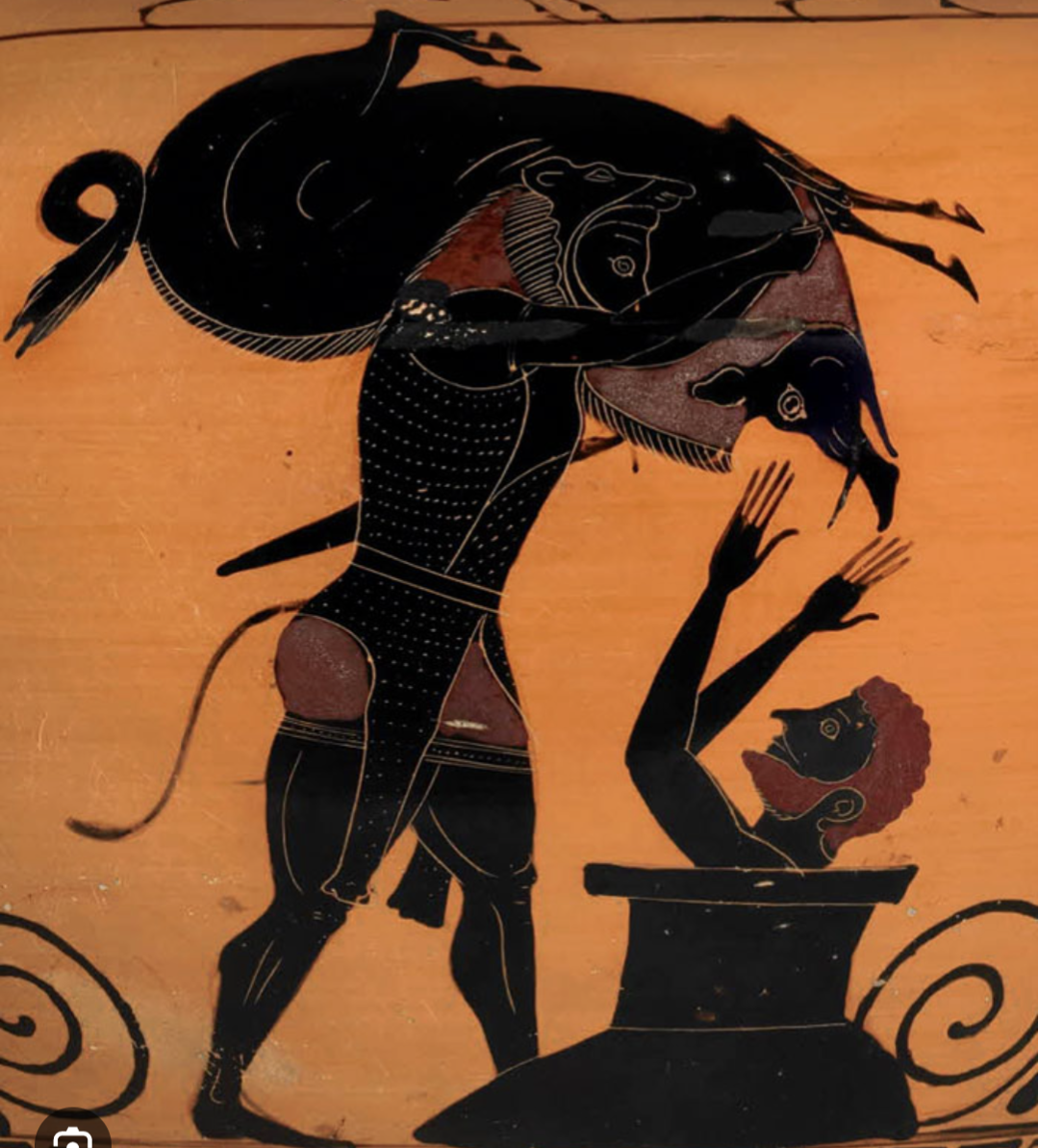
Legend: Another of Herakles labors, he must bring the ravaging boar of Mount Erymanthos back to Eurytheseus
Capturing the Erymanthian Boar
26
Artistic Depiction: Herakles uses a crowbar to breach the walls of a stable and divert a river into them, with Athena usually onlooking.
Legend: Another labor of Herakles, King Elis had vast herds of cattle, but Herakles accomplished the task by diverting the Alpheus and Penus rivers through the stable
Legend: Another labor of Herakles, King Elis had vast herds of cattle, but Herakles accomplished the task by diverting the Alpheus and Penus rivers through the stable
Clean in 1 day the stable of Augeas, King of Elis
27
Artistic Depicition: varied but usally involve Herakles shooting a flock of birds
Legend: b. The last labor of the Peloponnesian group, according to Pausanias the birds were man-eating, Herakles frightened the birds with a Krotala made by Hephaistos, which was given to Herakles by Athena. After which he shot the birds.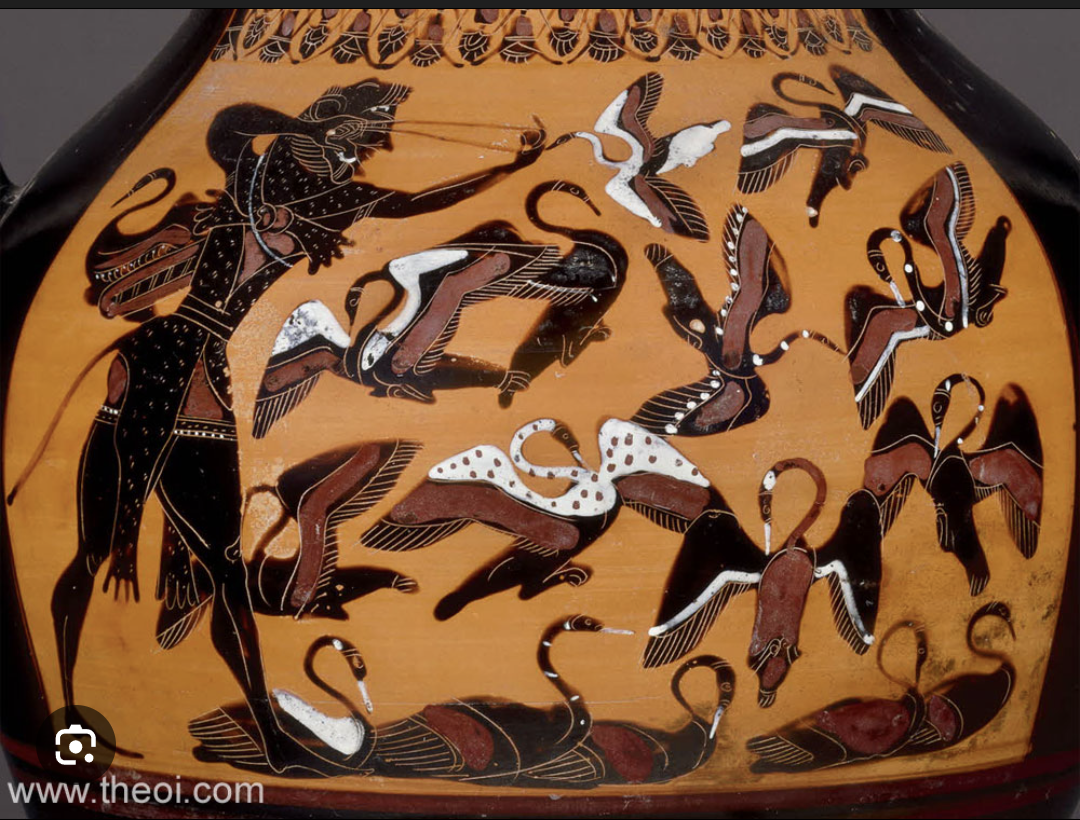
Legend: b. The last labor of the Peloponnesian group, according to Pausanias the birds were man-eating, Herakles frightened the birds with a Krotala made by Hephaistos, which was given to Herakles by Athena. After which he shot the birds.
Killing the Stymphalian birds
28
Artistic depiction: a man rushing forward and grasping a bull around the neck
Legend: Another labor of Herakles. The bull was in Crete and he brought to Mycenae, after showing it to Eurystheus, in some versions Herakles let the bull go, where it made its way to Marathon and Theseus later subdued it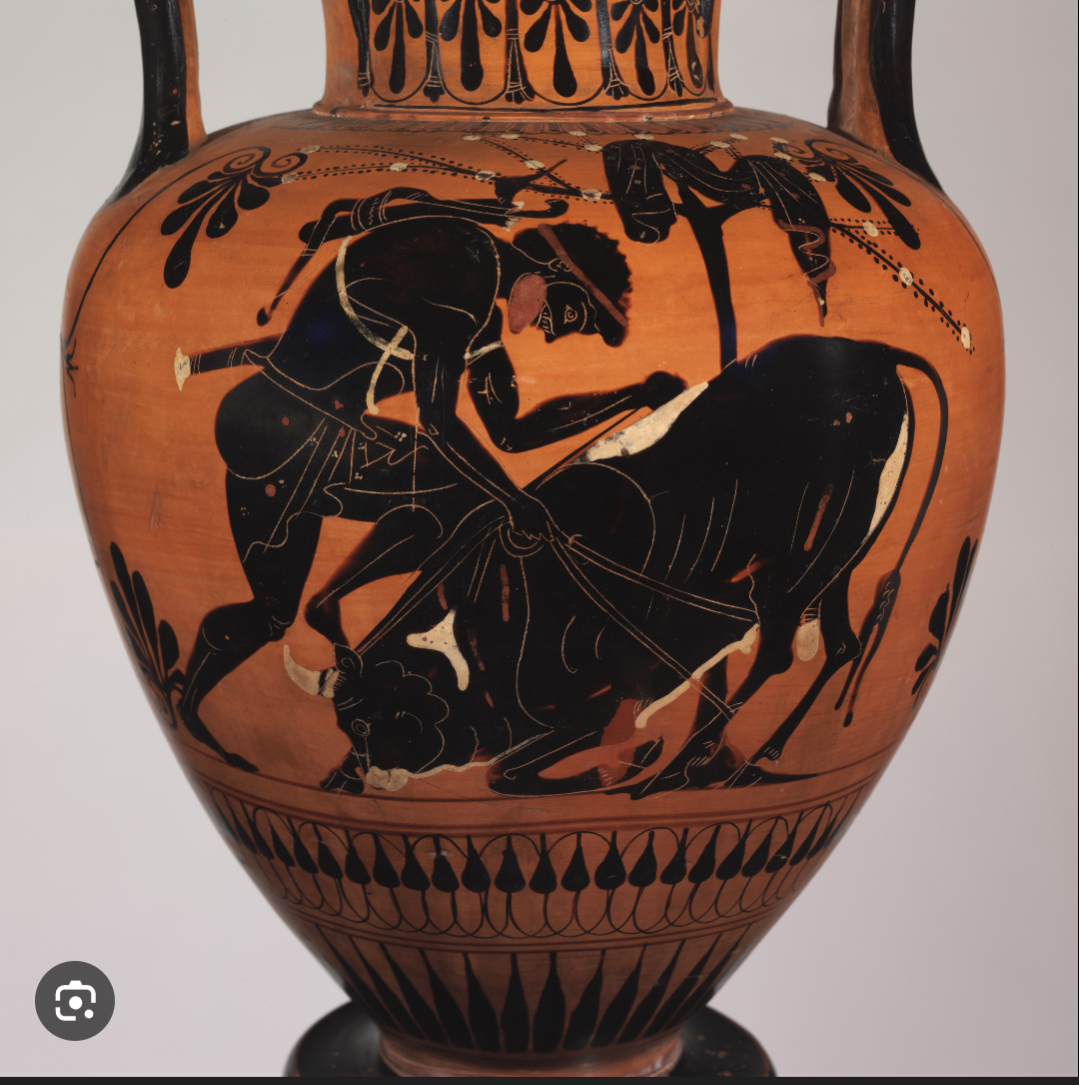
Legend: Another labor of Herakles. The bull was in Crete and he brought to Mycenae, after showing it to Eurystheus, in some versions Herakles let the bull go, where it made its way to Marathon and Theseus later subdued it
Capturing The Cretean bull
29
Artistic Depiction: Herakles struggles against a horse or group of horses, sometimes with body parts from their mouths.
Legend: a. Diomedes a son of Ares who was King of Bistones, Herakles went alone or with a group of warriors, killed Diomedes, either in battle or by feeding him to his horses, and successfully brought the mares back to Mycenae.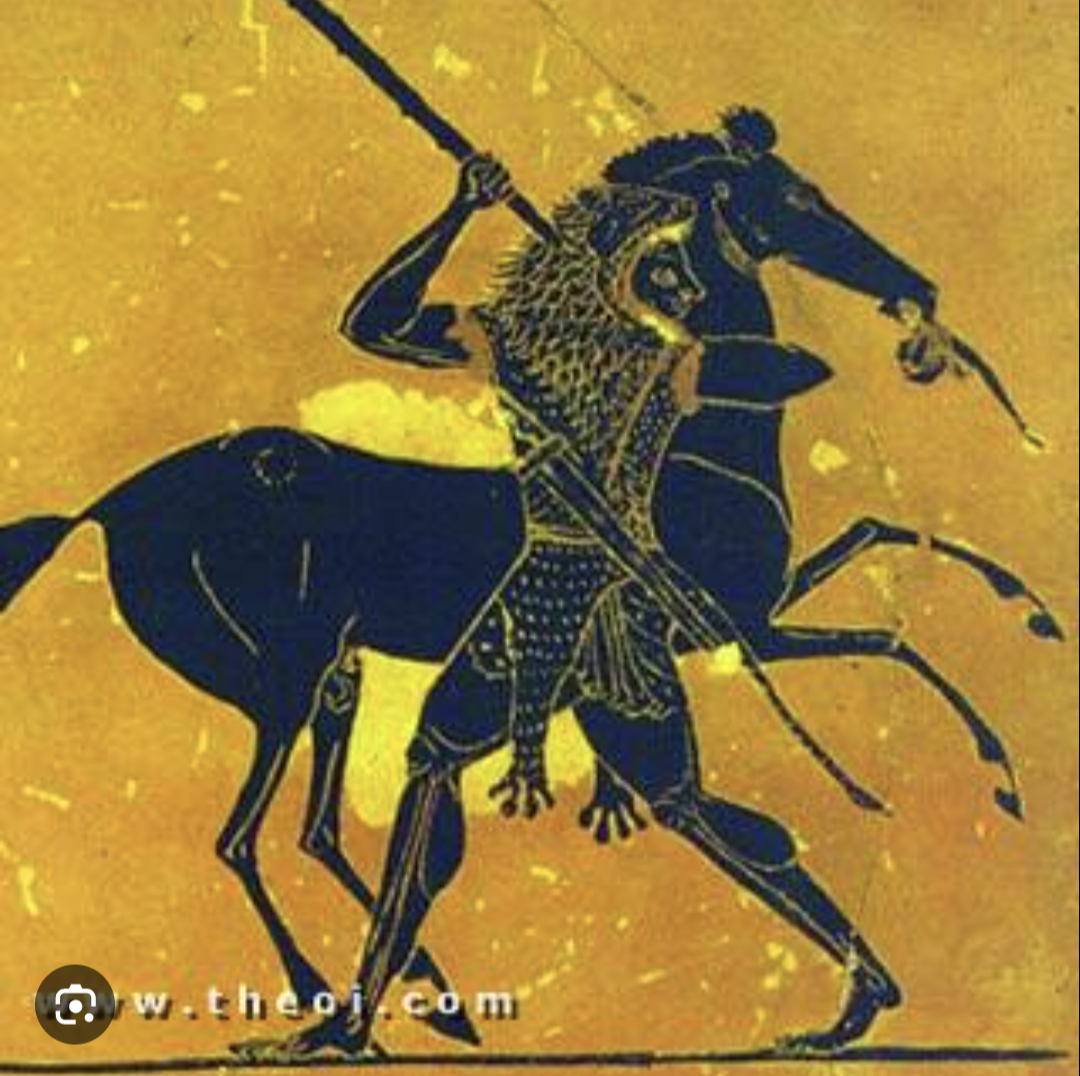
Legend: a. Diomedes a son of Ares who was King of Bistones, Herakles went alone or with a group of warriors, killed Diomedes, either in battle or by feeding him to his horses, and successfully brought the mares back to Mycenae.
Bring back the man-eating mares of Diomedes
30
Artistic Depiction: Herakles fights a group of female warriors, an Amazonomachy
Legend: Another labor of Herakles, he went either with an army or alone, to retrieve the belt of Hippolyte, an amazonian queen, though she is usually not depicted on vase paintings.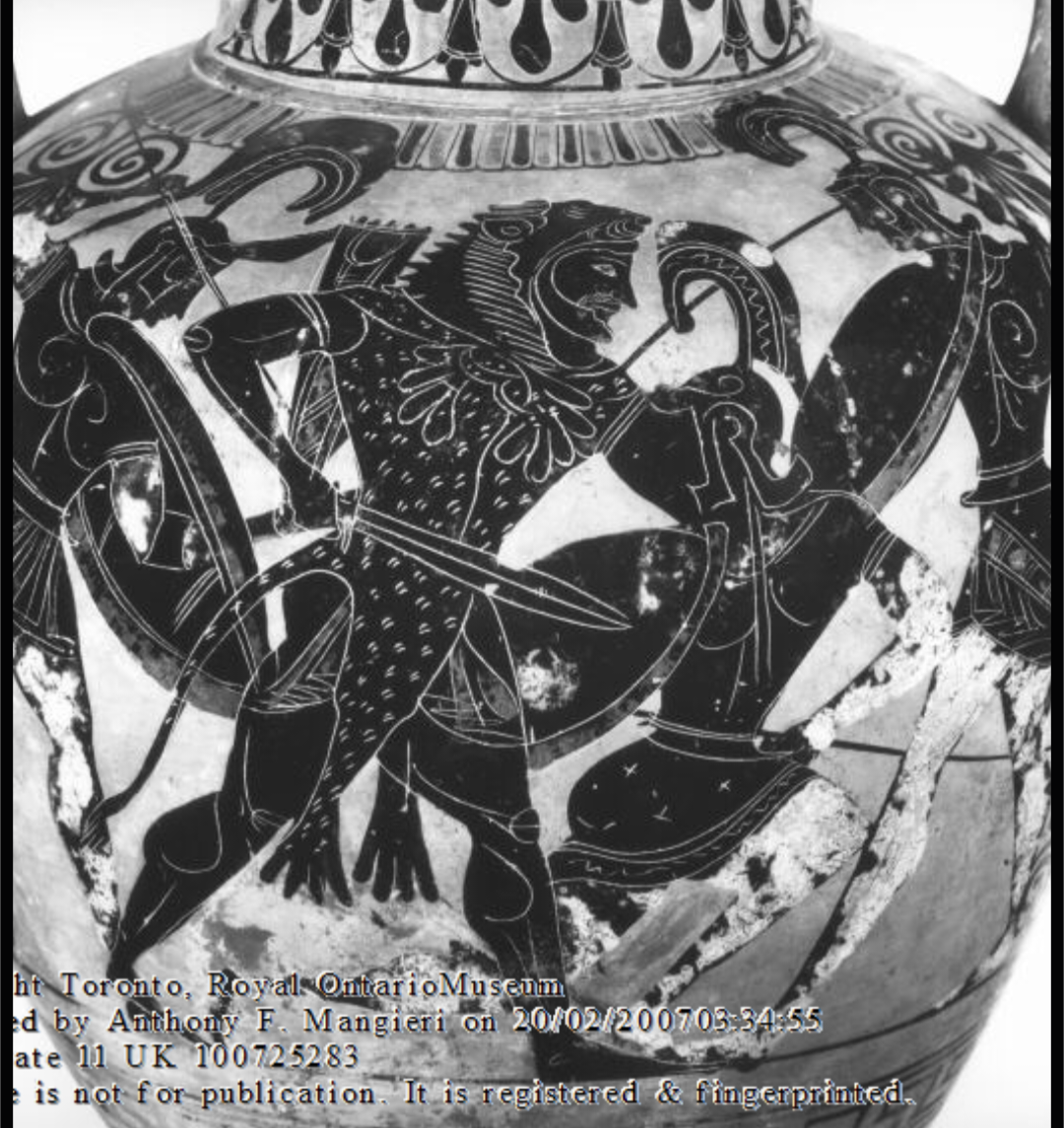
Legend: Another labor of Herakles, he went either with an army or alone, to retrieve the belt of Hippolyte, an amazonian queen, though she is usually not depicted on vase paintings.
Retrieve the belt of Hippolyte
31
Not a labor, but scene from the time, “During his return voyage to Mycenae after his encounter with the amazons, Herakles came upon Hesione, the daughter of King Laomedon of Troy, chained to a rock and about to be devoured by a sea monster. Poseidon, who had built the walls of Troy, sent the monster to ravage the countryside when Laomedon reneged on payment. An oracle had told that the monster could only be appeased if the king’s daughter were sacrificed to it.” Herakles frees Hesione and fights the sea monster.
Fighting the Sea Monster of Troy
32
Artistic Depiction: Herakles fights a warrior with 3 heads and 6 legs, often covered by a sheild in the middle, a man and a dog may lie on the ground defeated, and cattle may surround the scene. Athena might look on.
Legend: Another of Herakles labors, Herakles fought the formidable three-bodied warrior of Geryon for his herd of cattle, as well as his herdsman Eurytion and the 2 headed gaurd dog Orthos.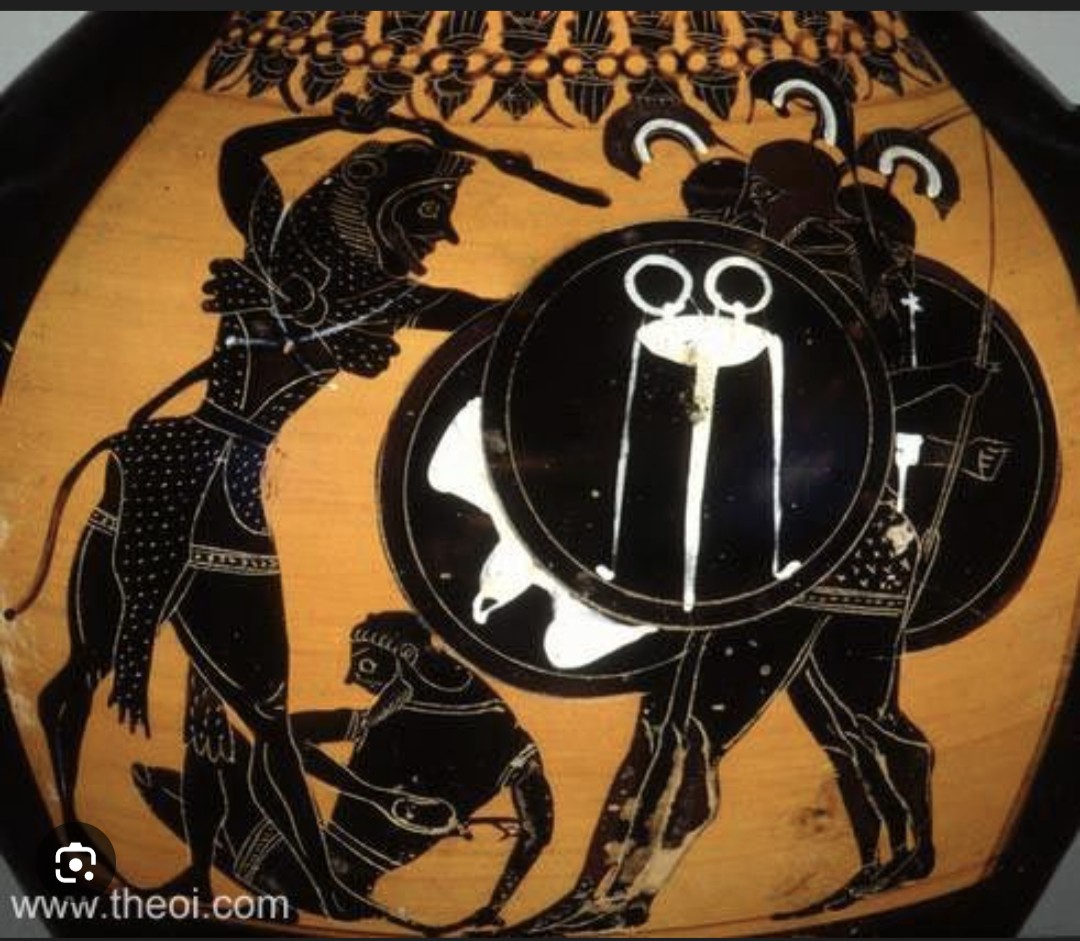
Legend: Another of Herakles labors, Herakles fought the formidable three-bodied warrior of Geryon for his herd of cattle, as well as his herdsman Eurytion and the 2 headed gaurd dog Orthos.
Acquire the cattle of Geryon
33
Artistic Depiction: Herakles wrestles with a figure with a fish tail and an old man or multi-formed upper half. In later depictions he is wholly human but holds a fish for identification.
Legend: Part of the labor to bring a golden apple from the garden of Hesperides. Herakles had to catch Nereus, the old man of the sea, to find the way to Hesperides. Herakles came upon the old man while asleep and clung to him as he changed into various animals, water, and fire to escape.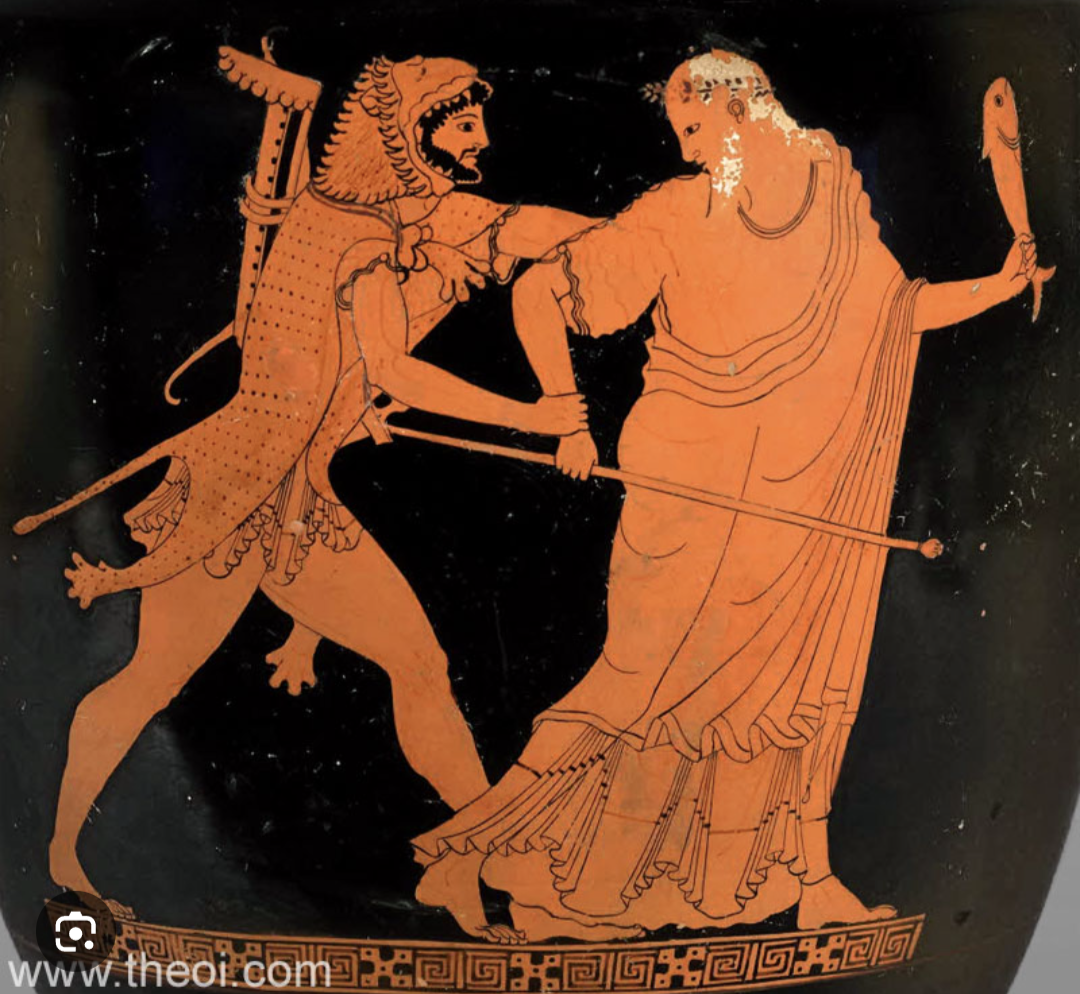
Legend: Part of the labor to bring a golden apple from the garden of Hesperides. Herakles had to catch Nereus, the old man of the sea, to find the way to Hesperides. Herakles came upon the old man while asleep and clung to him as he changed into various animals, water, and fire to escape.
Herakles Catches Nereus
34
Artistic Depiction: Herakles wrestles with a giant male figure, or in later depictions of Herakles lifting Antaios off the ground.
Legend: After learning the way to the garden of Hesperides, Herakles went to Libya where he was forced to wrestle with Antaios, son of Poseidon and Gaia, who was said to roof his father’s temple with skulls of his victims. In later versions he was said to renew his strength through contact with his mother, Earth, and Herakles defeated him by lifting him off the ground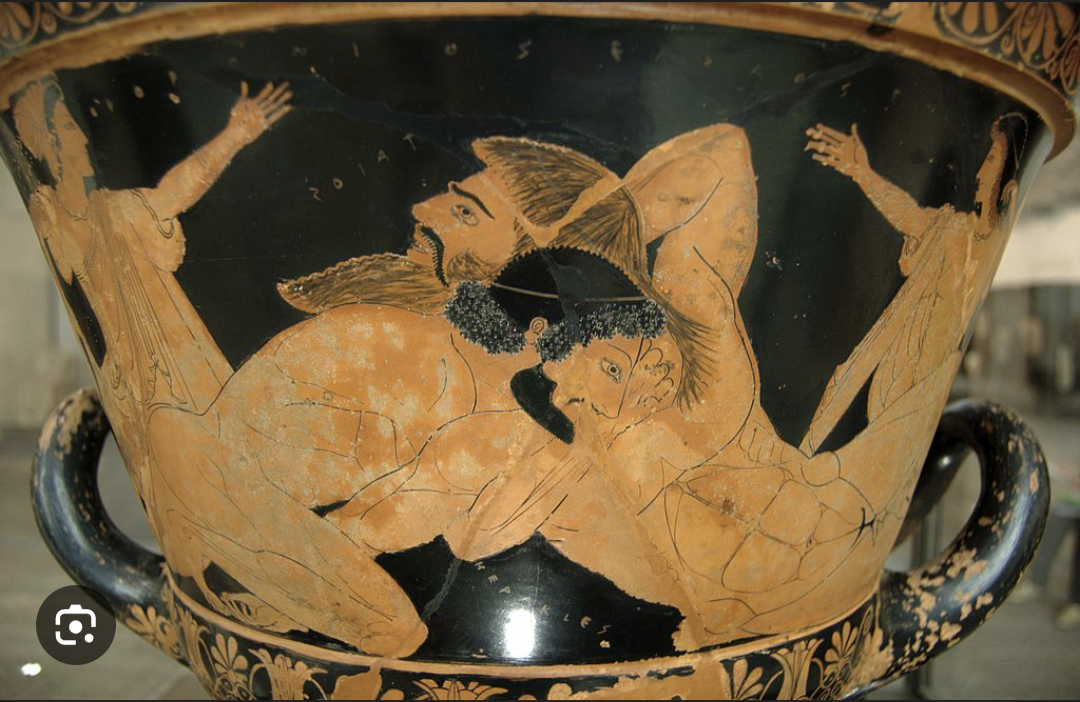
Legend: After learning the way to the garden of Hesperides, Herakles went to Libya where he was forced to wrestle with Antaios, son of Poseidon and Gaia, who was said to roof his father’s temple with skulls of his victims. In later versions he was said to renew his strength through contact with his mother, Earth, and Herakles defeated him by lifting him off the ground
Herakles fights Antaios
35
Artistic Depiction: Herakles fights Egyptians around an altar
Legend: On his way to the garden of Hesperides, Herakles went to Egypt where Busiris, another son of Poseidon, and king, tried to sacrifice Herakles to fulfill his prophecy that Busiris should sacrifice a stranger every year to protect against plagues. When Herakles realized he broke away and killed Busiris and his son.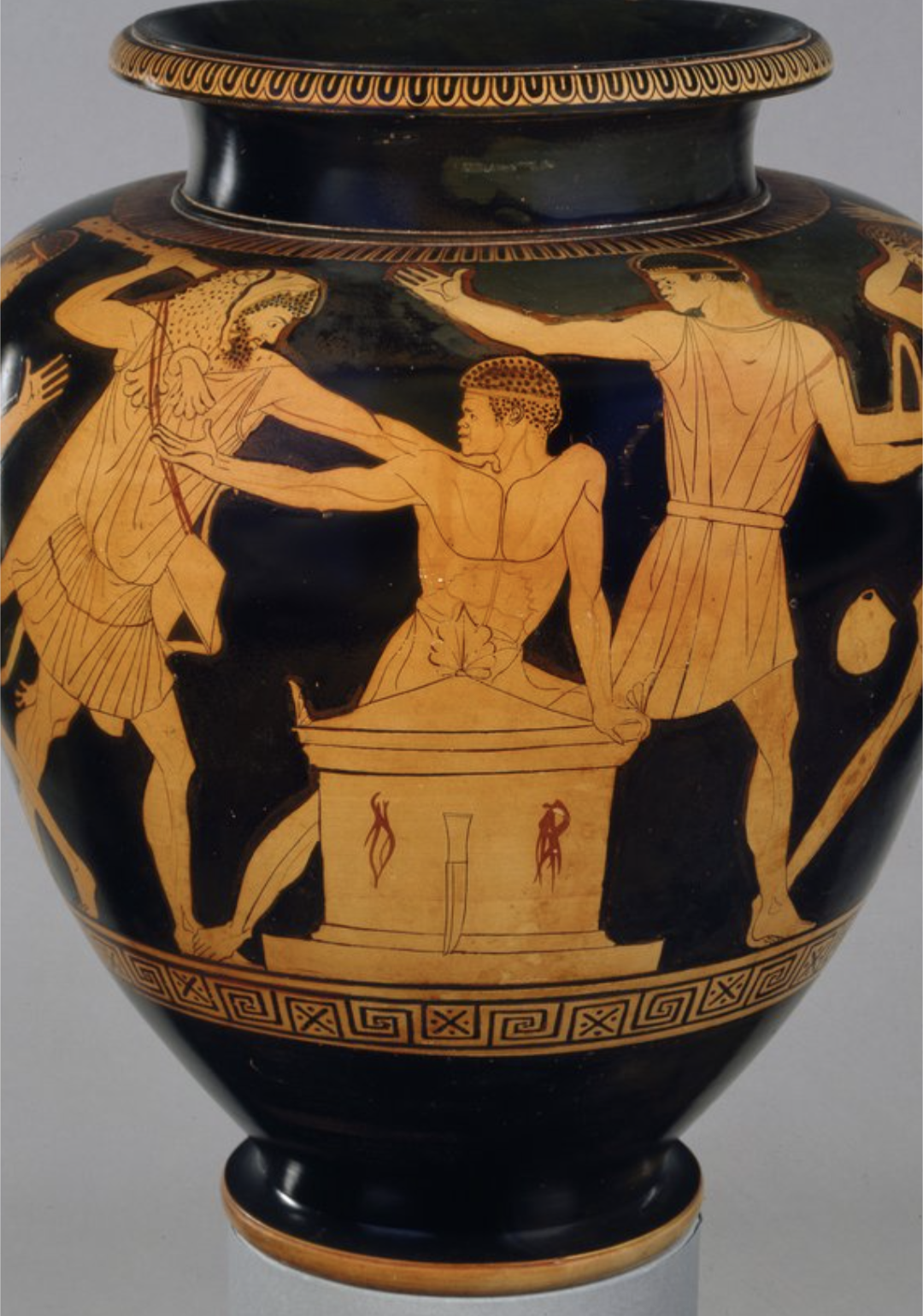
Legend: On his way to the garden of Hesperides, Herakles went to Egypt where Busiris, another son of Poseidon, and king, tried to sacrifice Herakles to fulfill his prophecy that Busiris should sacrifice a stranger every year to protect against plagues. When Herakles realized he broke away and killed Busiris and his son.
Herakles fights Busiris
36
Artistic Depiction: Herakles holding a large stone, usually with Athena's help, holding the palce of Olympus on top, while Atlas gets apples.
Legend: On his travels to Hesperides, Herakles reaches the Caucaus and frees the Titan Prometheus from his bondage. “According to one version of the myth, Prometheus told Herakles not to go to the garden himself, but to send the Titan Atlas, Prometheus’ brother, in his place. Atlas, whose role it was to support the heavens on his back, agreed to get the golden apples if Herakles would temporarily relieve him of his burden. When he eventually returned he was in no hurry to take back the heavens, and it was only through trickery that Herakles managed to unburden himself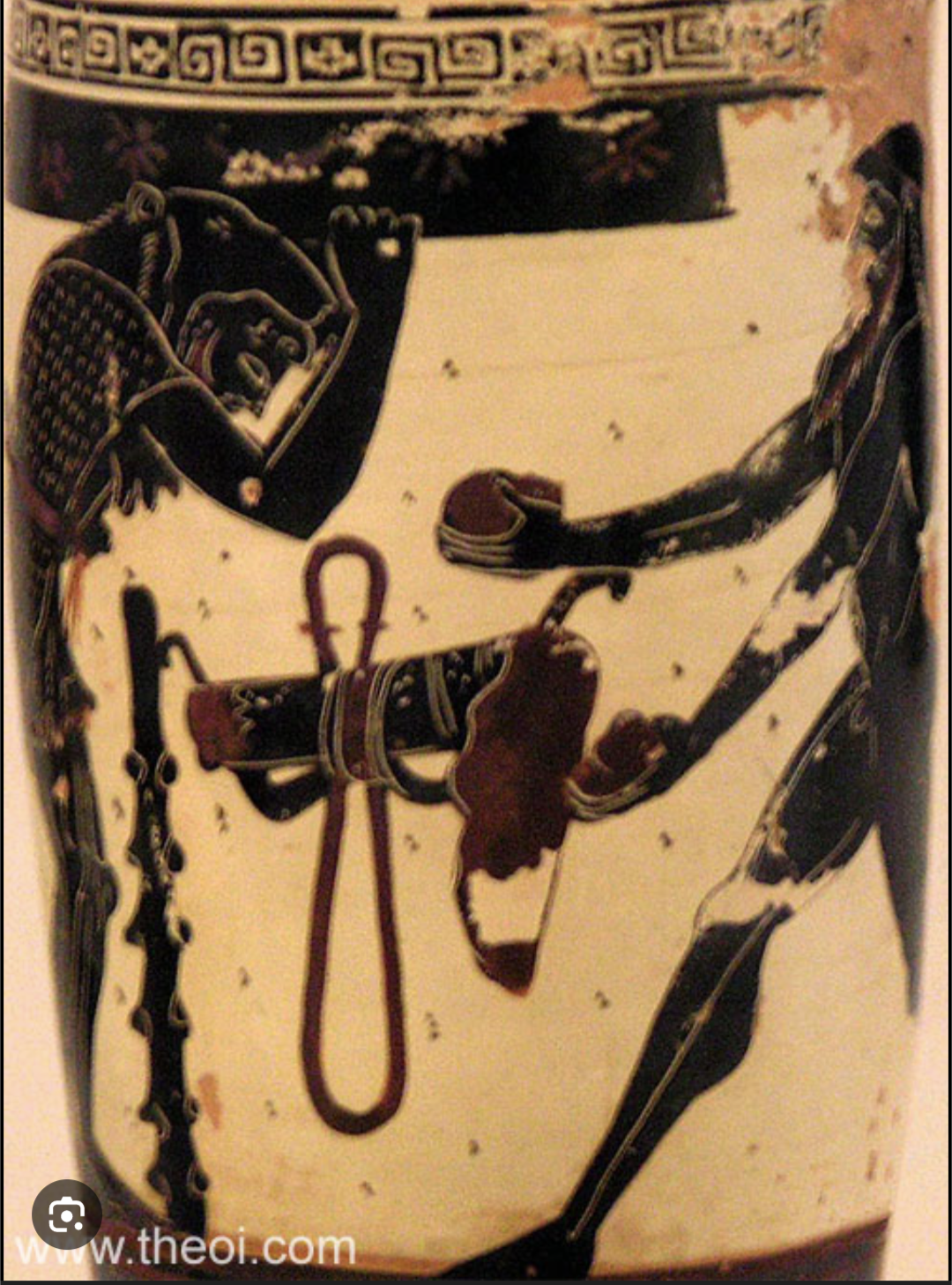
Legend: On his travels to Hesperides, Herakles reaches the Caucaus and frees the Titan Prometheus from his bondage. “According to one version of the myth, Prometheus told Herakles not to go to the garden himself, but to send the Titan Atlas, Prometheus’ brother, in his place. Atlas, whose role it was to support the heavens on his back, agreed to get the golden apples if Herakles would temporarily relieve him of his burden. When he eventually returned he was in no hurry to take back the heavens, and it was only through trickery that Herakles managed to unburden himself
Herakles hold the heavens for Atlas
37
Artistic Depictions: Herakles beside a tree with a snake coiled around it, possibly with an apple, and Athena as onlookers
Legend: Another labor of Herakles, he must bring golden apples from the garden of Hesperides, a wedding gift from Gaia to Hera which rests at the outer reaches of the world. In some versions instead of traveling many lands and meeting many figures, he makes it to the garden and kills the gaurdian snake then either picks the apples or persuades Hesperides to pick them for him.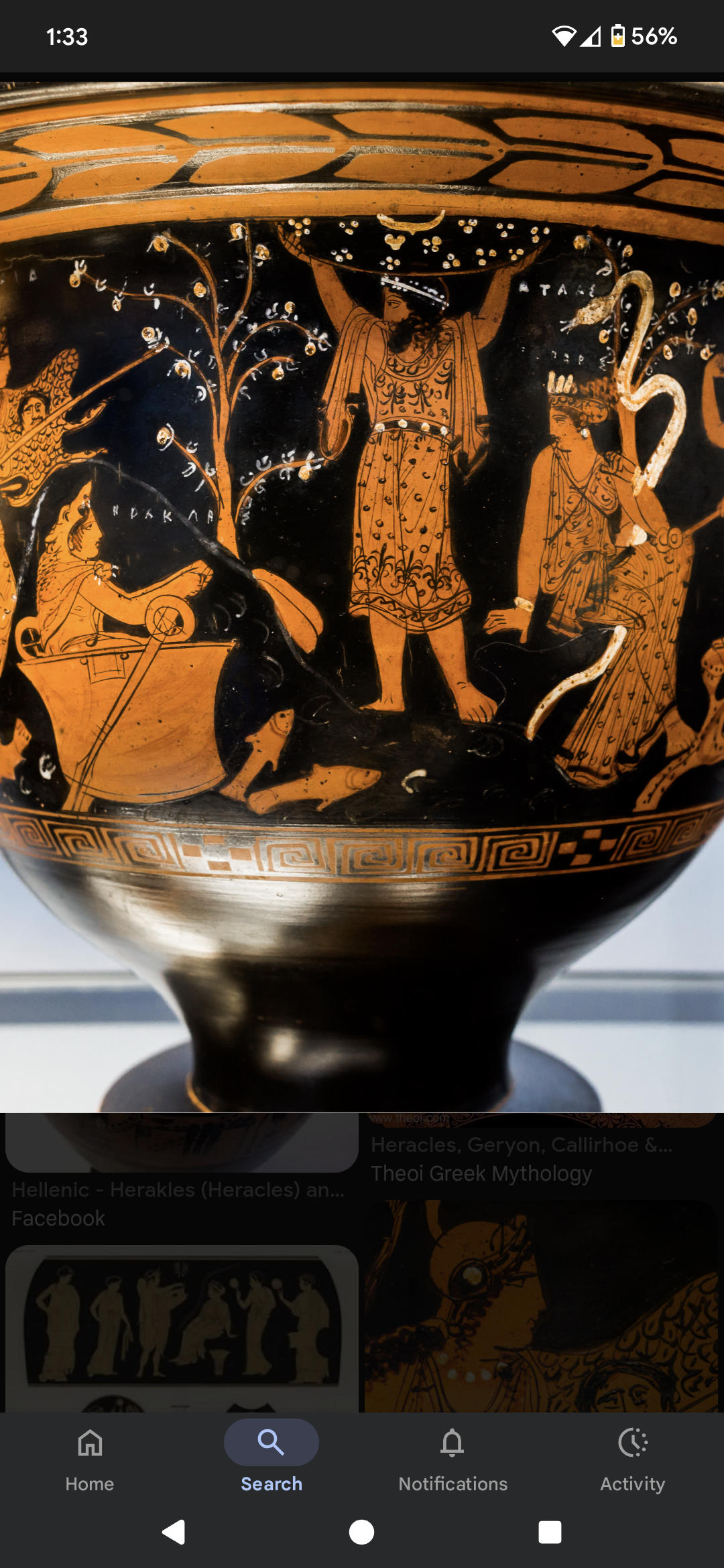
Legend: Another labor of Herakles, he must bring golden apples from the garden of Hesperides, a wedding gift from Gaia to Hera which rests at the outer reaches of the world. In some versions instead of traveling many lands and meeting many figures, he makes it to the garden and kills the gaurdian snake then either picks the apples or persuades Hesperides to pick them for him.
Herakles acquires the golden apples of the garden of Hesperides
38
Artistic Depiction: Herakles approaches a multi-headed, snake tailed dog, or leads the dog by the chain. Usally accompained by Athena and Hermes while Hades, and Persephone may look on.
Legend: Another Labor of Herakles, b. Herakles desceneded to the underworld and was able to negotiate with Hades to loan Kerberos to Herakles so long as he didn’t use weapons on him, Herakles depended on his strength and courage to bring Kerberos to Eurysthues.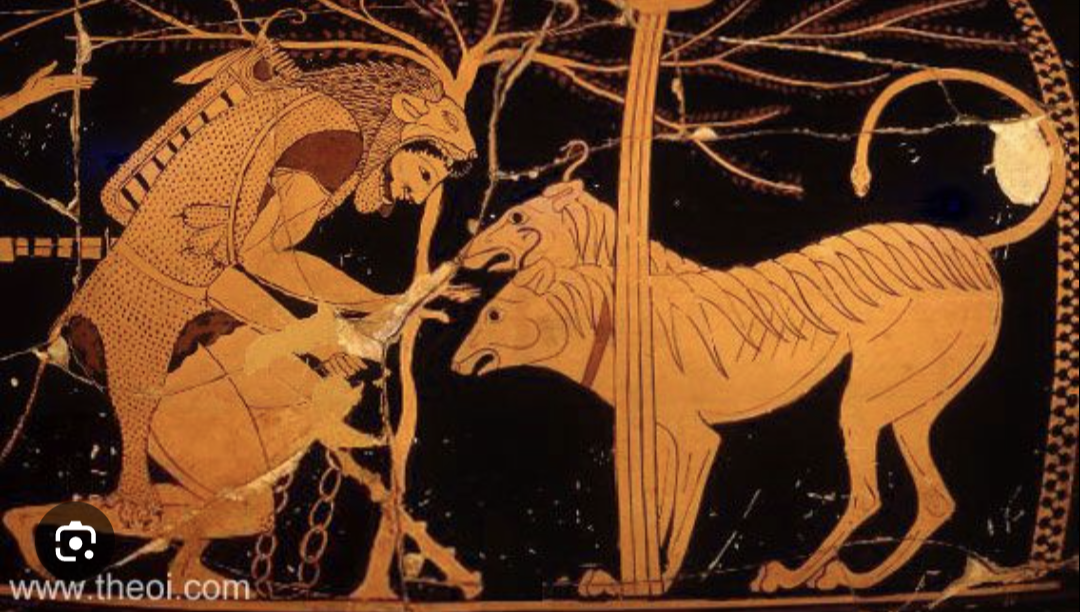
Legend: Another Labor of Herakles, b. Herakles desceneded to the underworld and was able to negotiate with Hades to loan Kerberos to Herakles so long as he didn’t use weapons on him, Herakles depended on his strength and courage to bring Kerberos to Eurysthues.
Herakles brings Kerberos