3.1 BIOLOGICAL MOLECULES
Study these flashcardsFree · spaced repetition · iPhone, Android, Mac & web
All cards
1
whats a condensation reaction
joins two molecules by forming a bond while removing a h20
2
whats hydrolysis
breaks a bond between two molecules by using a h20
3
what are three monosaccharides we need to know
glucose fructose galactose
4
tell me the disaccharides we need to know and what forms em
glucose + glucose = maltose
glucose + galactose = lactose
glucose + fructose = sucrose
glucose + galactose = lactose
glucose + fructose = sucrose
5
structure of galactose?
two OH top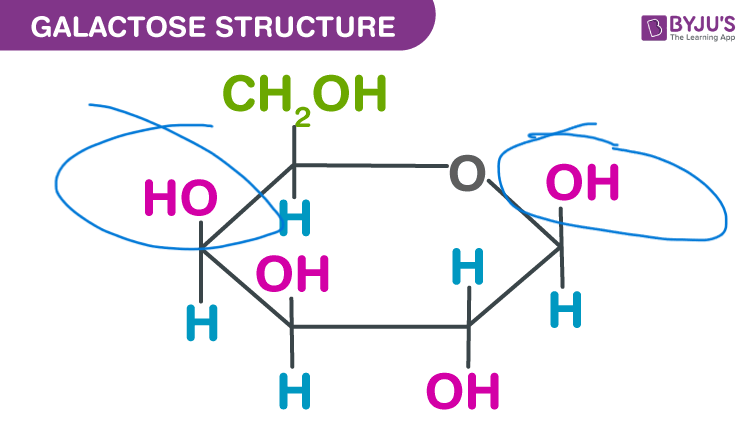
6
structure of alpha glucose
two H top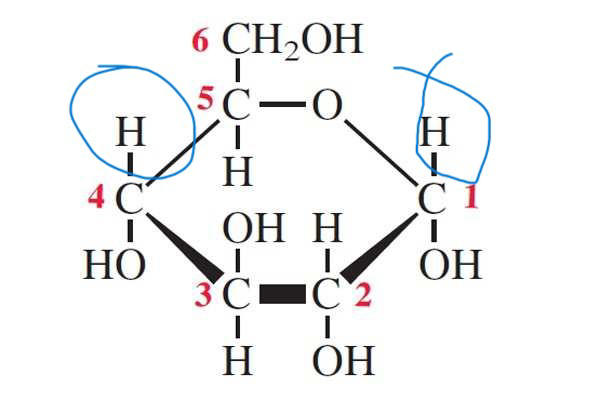
7
strucute of beta glucose
one H and one OH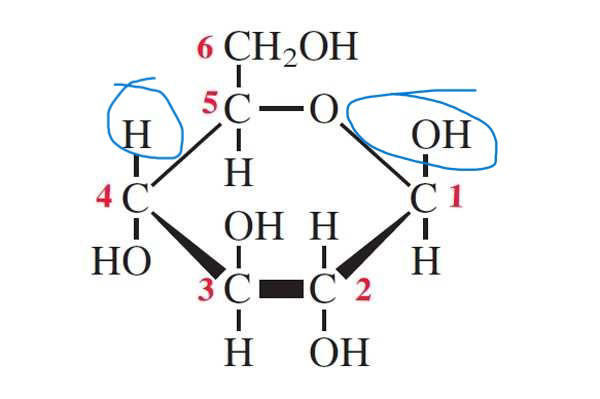
8
If a beta glucose (1st) bonded to an alpha glucose what would its bond be called?
beta-1,4-glycosidic bond
9
What is cellulose made up of?
long straight chains of beta glucose, running parallel to other chains allowing hydrogen bonds to form and these are then grouped into micro fibrils then macro fibrils giving lots of strength and rigidity
10
What are glycogen and starch made up of?
Made up of alpha glucose for starch, chains may be branched or not and the unbranched are wound into tight coils. Glycogen is similar but has shorter chains and is more branched
11
Properties of starch/ glycogen
For storage:
cant cross cell membrane as its too big
insoluble so doesn't affect water potential
compact
For respiration:
Has branches so more ends for hydrolysing enzymes
cant cross cell membrane as its too big
insoluble so doesn't affect water potential
compact
For respiration:
Has branches so more ends for hydrolysing enzymes
12
What does the benedict test, tests for?
Reducing sugars
13
How do benedict test
1) add 2cm^3 of food sample to a test tube
2)Add same volume of benedict reagent to it
3)Gently warm it up via water bath
- If reducing should show a traffic light colour
2)Add same volume of benedict reagent to it
3)Gently warm it up via water bath
- If reducing should show a traffic light colour
14
Test for non reducing sugars
1)Do benedict test giving negative result
2)Add another 2cm^3 of food sample to 2cm^3 of dilute HCL acid
3) Gently warm it up via water bath for 5 mins
4) Add sodium hydrogen carbonate solution to neutralise it
5)Add 2cm^3 of benedict and warm it up
2)Add another 2cm^3 of food sample to 2cm^3 of dilute HCL acid
3) Gently warm it up via water bath for 5 mins
4) Add sodium hydrogen carbonate solution to neutralise it
5)Add 2cm^3 of benedict and warm it up
15
Test for starch
1) Add drops of food sample to a spotting tile
2)Add drops of iodine solution
- if theres starch a blue black colour should appear
2)Add drops of iodine solution
- if theres starch a blue black colour should appear
16
What are fatty acids made up of
A hydrocarbon chain and a carboxyl group
17
How does a glycerol and a fatty acid bond
They form an ester bond via condensation reactions.
18
Fatty acids can take up a variety of forms and so what are they
saturated fatty acids which means they have no double bond in hydrocarbon chain and unsaturated fatty acids which means they have one or more double bonds in hydrocarbon chain.
19
Structure of oil
Made up of unsaturated fatty acids which contain bends which causes the molecules to be further away from each other weakening the INFS so form liquids.
20
Strucutre of solid fats
Saturated so they can be packed closer together donc form stronger INFS so solid
21
Properties of tryglycerides
large
non polar
insoluble in water
Low mass to energy ratio
High carbon & hydrogen : oxygen ratio
non polar
insoluble in water
Low mass to energy ratio
High carbon & hydrogen : oxygen ratio
22
Functions of trilglycerides
Heat and electrical insulation
Energy and water source
Storage molecules
Energy and water source
Storage molecules
23
What are phospholipids
They are made up of a phosphate which is polar and a glycerol and two fatty acids which are non polar. Insoluble in water
24
Functions of phospholipids
Forms the cell surface membranes and separates the inside and outside of the cell
Control movement of molecules
Enable cell recognition as they can form glycolipids
Control movement of molecules
Enable cell recognition as they can form glycolipids
25
Emulsion test
1) Add 2cm^3 of food sample to test tube
2) Add 5cm^3 of ethanol and thoroughly shake it
3) Add 5cm^3 of water and gently shake it
If positive it should become a milky white colour
2) Add 5cm^3 of ethanol and thoroughly shake it
3) Add 5cm^3 of water and gently shake it
If positive it should become a milky white colour
26
Strucutre of amino acid?
amine group H2N
carboxyl group COOH
variable side group R
hydrogen and a centre carbon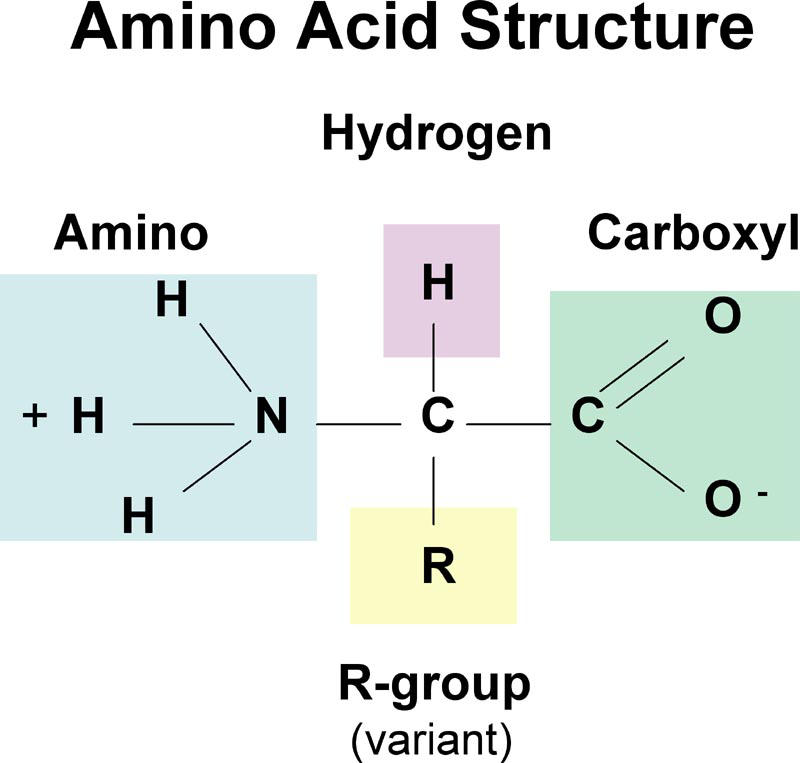
carboxyl group COOH
variable side group R
hydrogen and a centre carbon
27
PEPTIDE BONDS
Bond between amino acids made by condensation reactions
28
PRIMARY STRUCTURE
The sequence of amino acids in a polypeptide chain
29
SECONDARY STRUCTURE
Hydrogen bonds form between oxygens and hydrogens in the peptide bond causing the chain to start folding and form alpha helices or beta pleated sheet
30
TERTIARY STRUCTURE
Further folding occurs to make it 3D and is held by hydrogen, ionic and disulphide bonds by side groups
31
QUATERNARY STRUCTURE
2 or more polypeptide chains join together and can contain non protein parts called prosthetic groups
32
PROTEIN TEST?
1) Add some of the food sample and add same volume of sodium hydroxide solution in test tube
2) Add few drops of dilute copper sulphate solution and mix gently
If protein a lilac or purple colour appears
2) Add few drops of dilute copper sulphate solution and mix gently
If protein a lilac or purple colour appears
33
Two shapes proteins can take
Globular
Fibrous
Fibrous
34
Factors that affect protein shape
Primary structure
pH
pH
35
what is the optimum temperature
The temperature at which the enzyme works at its best and is maximum temperature before denaturing.
36
what is competitive inhibiter
A molecule similiar in shape to a substrate allowing it to bind to active site, preventing a substrate from binding.
Reduces amt of E-S complexes but leaves after some time so can be overcome by increasing substrate concentration
Reduces amt of E-S complexes but leaves after some time so can be overcome by increasing substrate concentration
37
what is non competitive inhibter
A molecule which binds to an enzyme via an allosteric site and changes its tertiary structure so no substrate cant fit.
No E-S complex so can not be overcome by increasing substrate concentration
No E-S complex so can not be overcome by increasing substrate concentration
38
Structure of nucleotides?
Pentose sugar
Phosphate group
nitrogen-containing base
Phosphate group
nitrogen-containing base
39
Whats different between the pentose sugars in RNA and DNA
DNA has deoxyribose with one less oxygen than RNA ribose
40
How do bonds form between nucleotides
The hydroxyl group in pentose forms a phosphodiester bond with the phosphate group of another nucleotide. This is a condensation reaction
41
DNA structure?
Its a polymer made up of nucleotides
2 polynucleotides strands are held together by hydrogen bonds forming a double helix
The two strands run antiparallel to each other
2 polynucleotides strands are held together by hydrogen bonds forming a double helix
The two strands run antiparallel to each other
42
Other difference of RNA to DNA
RNA is found in cytoplasm compared to DNA in nucleus
RNA is a much shorter molecule than DNA
RNA is one strand while DNA is two
RNA is a much shorter molecule than DNA
RNA is one strand while DNA is two
43
How dna replication?
1) DNA helicase breaks the hydrogen bonds between the strands and these become separated
2) Strands now act as templates as free nucleotides starts to complementarily bind to them
3) DNA polymerase then joins up these free nucleotides by phosphodiester bonds through a condensation reaction
2) Strands now act as templates as free nucleotides starts to complementarily bind to them
3) DNA polymerase then joins up these free nucleotides by phosphodiester bonds through a condensation reaction
44
What does semi conservative replication mean
IT means that new DNA molecule consists of one original strand and one newly replicated strand