3.3.4 ALKENEEES
Study these flashcardsFree · spaced repetition · iPhone, Android, Mac & web
All cards
1
Test for alkenes?
Add bromine water to alkenes and itll turn colourless
2
General mechanism of electrophilic addition
1)Pair of electrons from C=C double bond forms bond with X+ atom. Releasing Y- ion WITH LONE PAIR
2)This forms a carbocation
3)Lone pair on Y- ion forms bond with C+ atom
2)This forms a carbocation
3)Lone pair on Y- ion forms bond with C+ atom
3
Why does double bond react?
Contains high electron density region attracting electrophiles
4
mechanism of electrophilic addition with H-Br
Partially positive H is attracted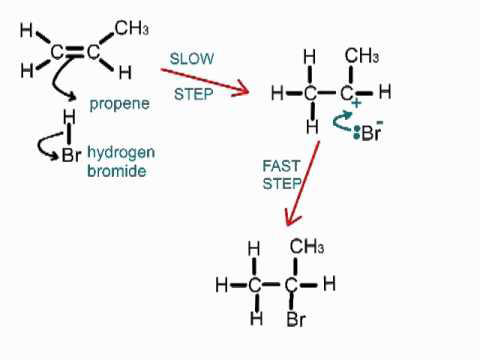
5
Conditions of H-Br
Alkene gas passed thru concentrated HBR or HBR dissolved in an inert solvent
6
mechanism of electrophilic addition with halogen
Electron high density causes temporary polar bond on BR2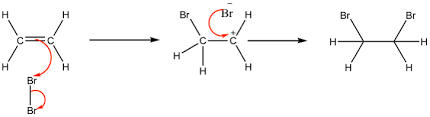
7
Conditions with halogen?
Alkene gas passed thru concentrated halogen
8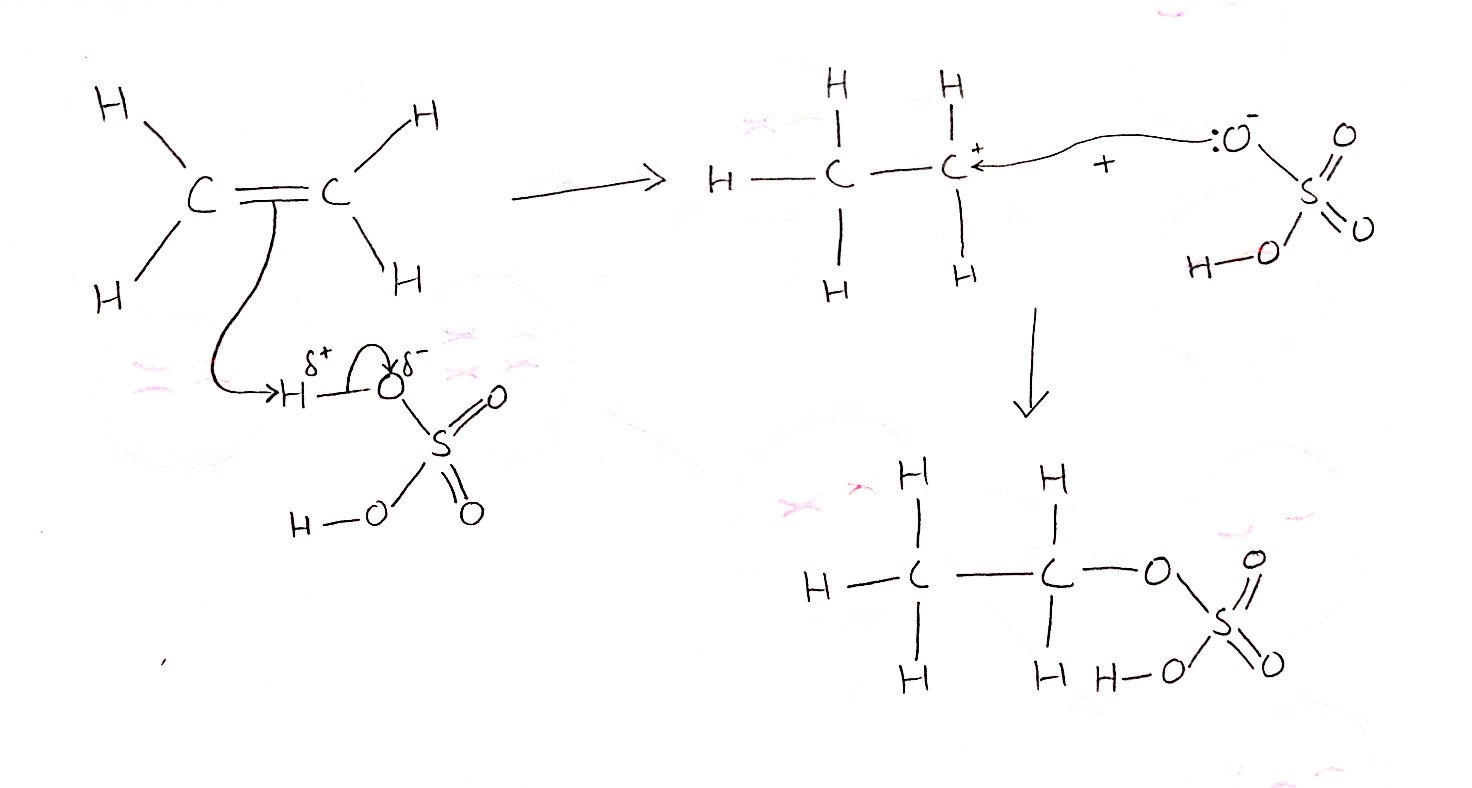
mechanism of electrophilic addition with sulfuric acid
9
Conditions with sulfuric acid
Alkene gas passed thru cold concentrated sulphuric acid.
10
Major and minor product?
Major is always produced from the more stable carbocation
Minor less
Minor less
11
What does tertiary secondary primary carbocation mean?
Tertiary = 3 alkyl groups bonded to C+
Secondary = 2 alkyl groups bonded to C+
Primary = 1 alkyl group bonded to C+
Secondary = 2 alkyl groups bonded to C+
Primary = 1 alkyl group bonded to C+
12
how do alkyl groups make c+ more stable???
Alkyl groups give electron density to C+ making it more stable
13
Polymerisation?
High temps/pressure leads to double bond in alkenes to open up
14
what are addition polymers made up of?
Alkenes which turn into alkanes
15
What does plasticiser do
Small molecule that fits between polymer chains weakening INFS. Making it more flexible