Statistical tests?
Study these flashcardsFree · spaced repetition · iPhone, Android, Mac & web
All cards
1
What are the three tests you need to know?
Chi squared
Correlation coefficient
Student t test
Correlation coefficient
Student t test
2
Advantage of using SD then range?
SD shows spread of data around mean while range is only difference between highest and lowest value
SD reduces effects of anomalies while range includes anomalies
SD can be used to see if the difference between results are significant
SD reduces effects of anomalies while range includes anomalies
SD can be used to see if the difference between results are significant
3
What do you need to do to confirm if results are significant different or not after calculating its SD
Do a statistical test
4
When would you use student t test?
Investigating difference between two means(continuous data measureable not countable)
5
Unpaired and paired degrees of fredom?
Unpaired = Sets of data calculated not from same individual so different sample sizes = n1+n2 -2
Paired = Sets of data calculated from same individual so same sample size = n-1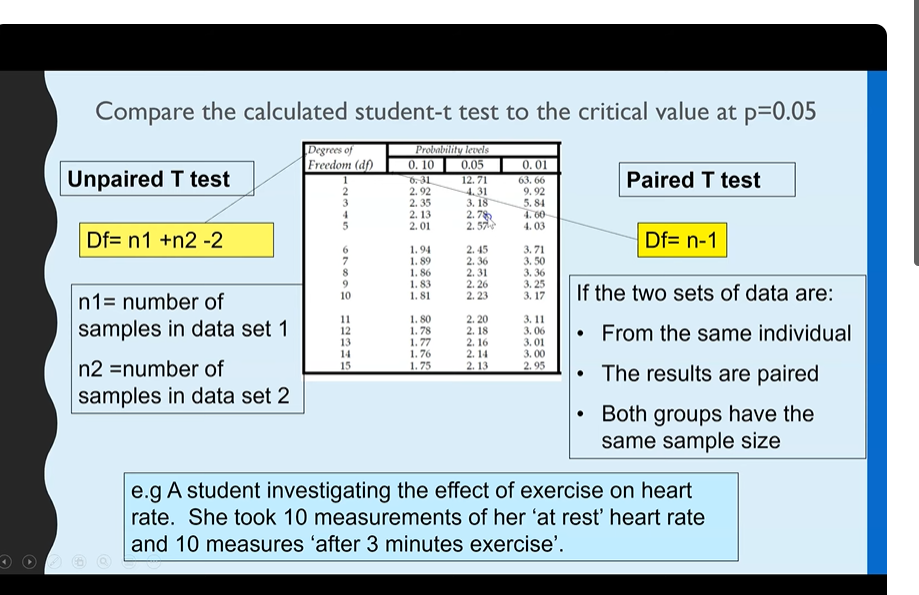
Paired = Sets of data calculated from same individual so same sample size = n-1
6
When would you use chi square?
Investigating difference between expected and observed frequencies(frequency data)
7
Example of null hypothesis for investigation of difference in number of corn kernels with particular colours
No significant difference between expected and observed frequency/number of colour of corn kernels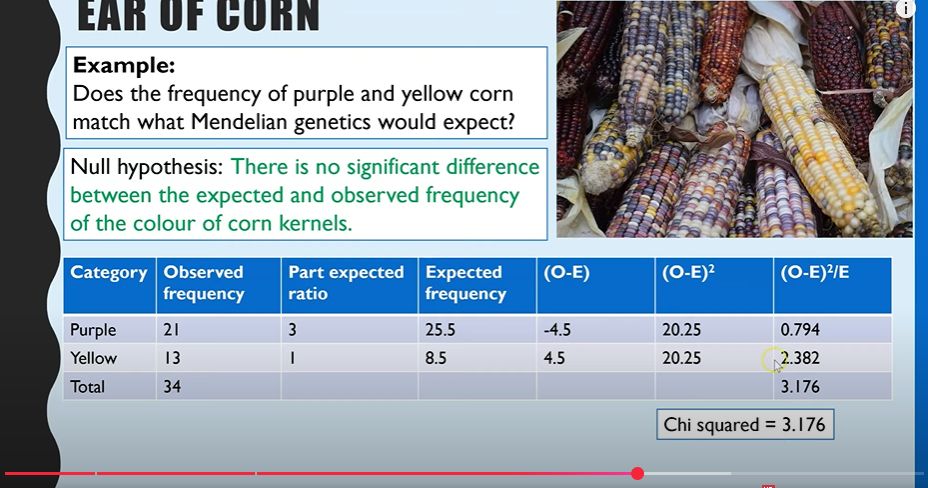
8
When would you use correlation coefficienct?
Looking at two continuous variables where you are investigating the correlation/association between these two variables(measurements)
9
Example of null hypothesis for investigation into effect of temp on enzyme ror?
No significant correlation between tempearature and enzyme ror
10
-1,0, 1 spearmans value?
-1 = perfect negative correlation
0 = no correlation
1= perfect positive correlation
0 = no correlation
1= perfect positive correlation
11
Why do we use log scales?
Helps compare values with huge range (eg 0.01 to 1000000)
Log10 converts value into how many times 10 has been times by itself to get that value(eg 100 = 2
Log uses original units of data used
Log10 converts value into how many times 10 has been times by itself to get that value(eg 100 = 2
Log uses original units of data used
12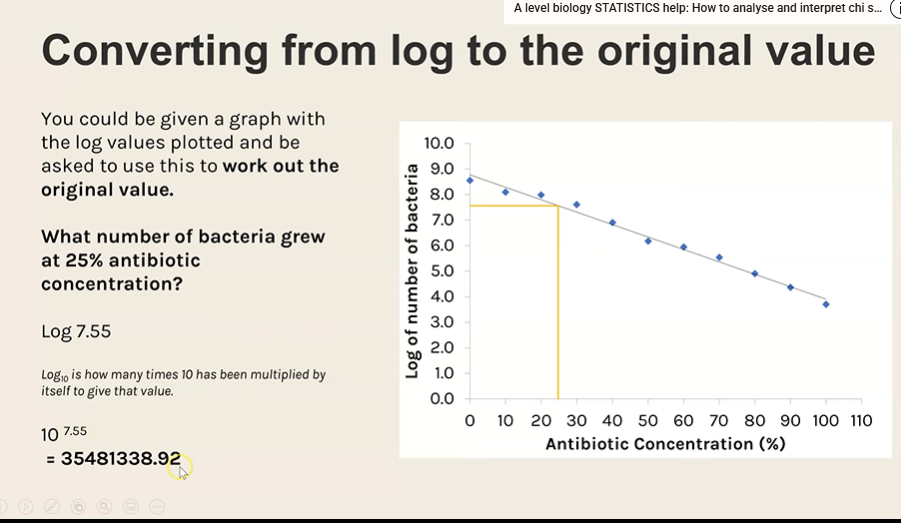
Image occlusion: name the hidden labels
13
How to reduce uncertainty?
increase resolution of instrument used
Method used(taking repeated readings)
changes the size of increment available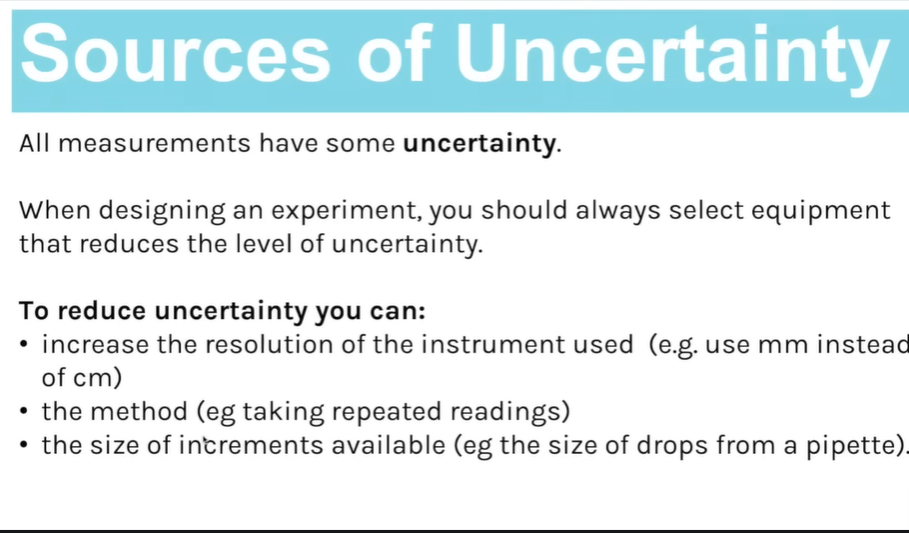
Method used(taking repeated readings)
changes the size of increment available
14
Reading and measurements?
Reading = value found from single judgement when using equipment like thermometer
Measurements = Value taken as difference between judgement of two value like taking measurements with ruler. Leads to TWO points of uncertainty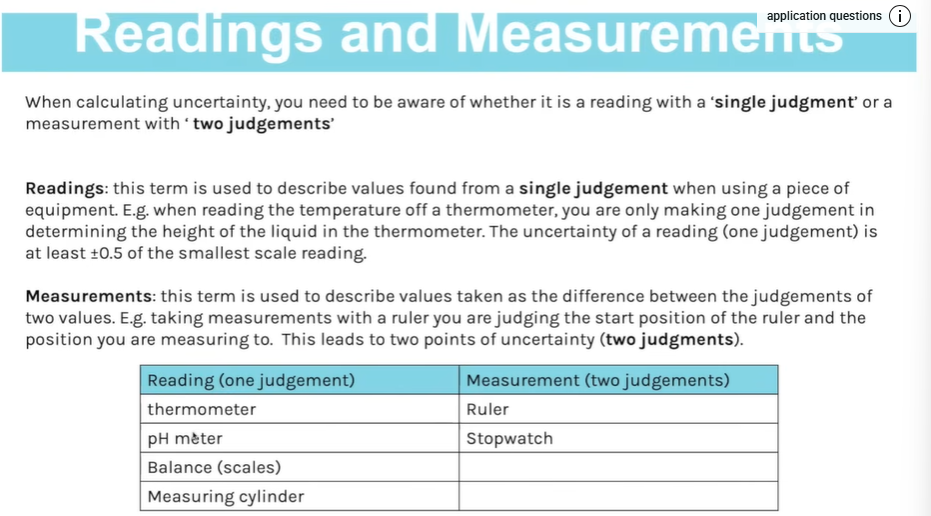
Measurements = Value taken as difference between judgement of two value like taking measurements with ruler. Leads to TWO points of uncertainty
15
Uncertainty calculation?
Reading = Half of the increments/subdivision (eg if goes up in ones = ±0.5
Measurement = Equals to the increments/subdivision (eg if goes up in one = ±0.5 x 2 = ±1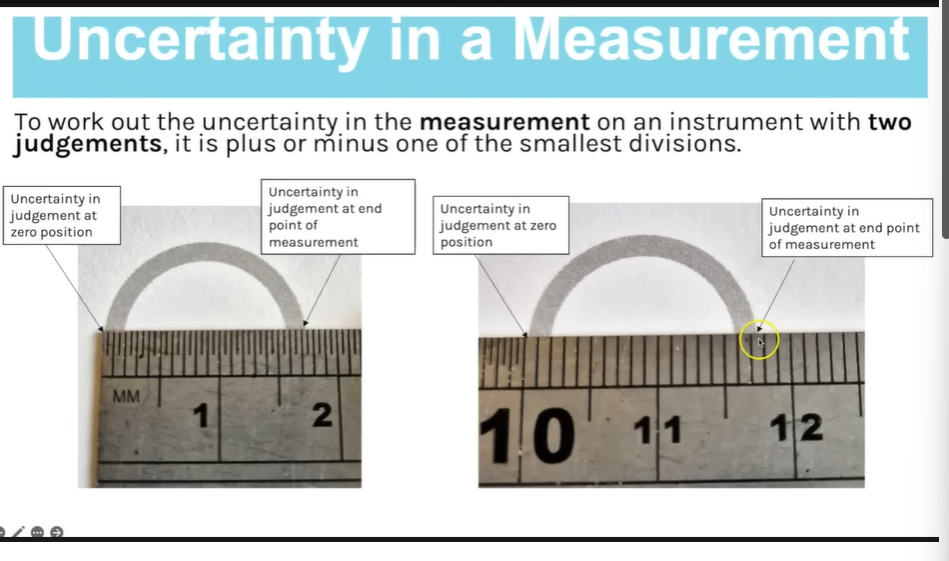
Measurement = Equals to the increments/subdivision (eg if goes up in one = ±0.5 x 2 = ±1
16
WHAT IF THEY ONLY GIVE U A NUMBER HOW TO CALCULATE UNCERTAINTLY
Itill be the ±1_ of the last significant digit
eg 1660mg = ±10 (0s dont count)
eg 1660mg = ±10 (0s dont count)
17
Percentage uncertainty:
Uncerainty/value X 100
18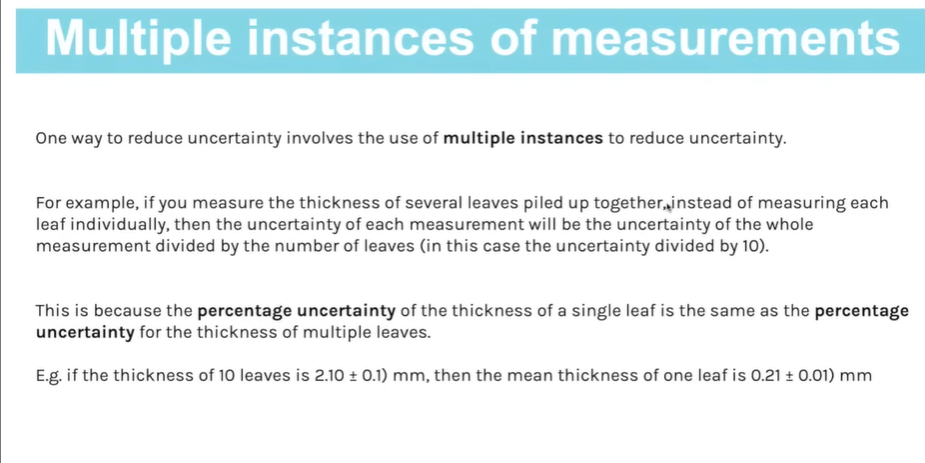
Image occlusion: name the hidden labels