NMR spectroscopy
Study these flashcardsFree · spaced repetition · iPhone, Android, Mac & web
All cards
1
Types of nmr spectroscopy?
Carbon 13- gives info of how carbon atoms are arranged in a molecule
Proton - gives info of how hydrogen atom are arranged in a molecule
Proton - gives info of how hydrogen atom are arranged in a molecule
2
What is an environment?
Basically what is carbon or hydrogen attached to.
(Note that this can be affected by stuff which the carbon/hydrogen isnt straight up attached to could be 2 bonds away or so)
(Note that this can be affected by stuff which the carbon/hydrogen isnt straight up attached to could be 2 bonds away or so)
3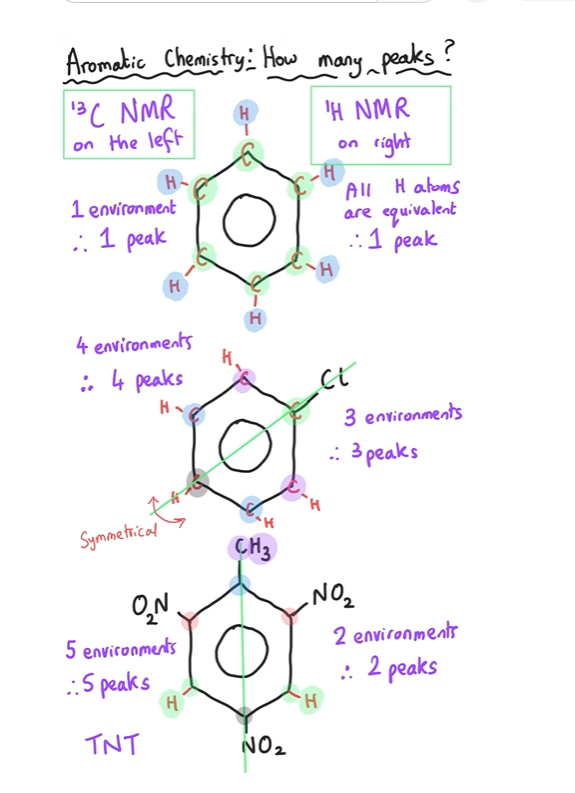
Say how many environments there are for proton or hydrogen for these 3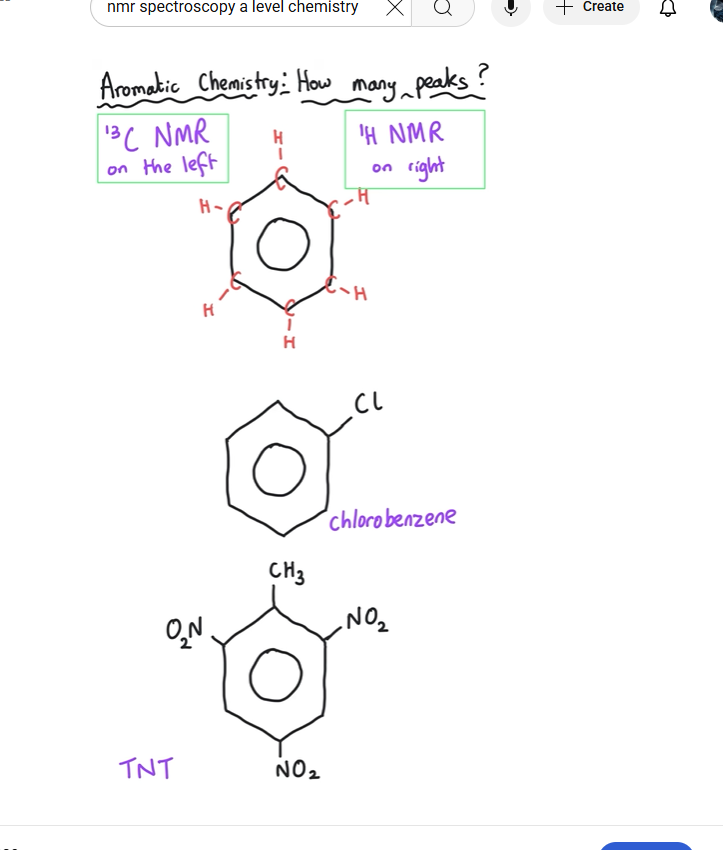
4
What must be done b4 doing nmr?
Dissolve it in a solvent which doesnt intefere with spectrum
For non polar sample: Tetrachloromethane = CCL4
For polar sample:CDCL3. D= deuterium(hydrogen-2)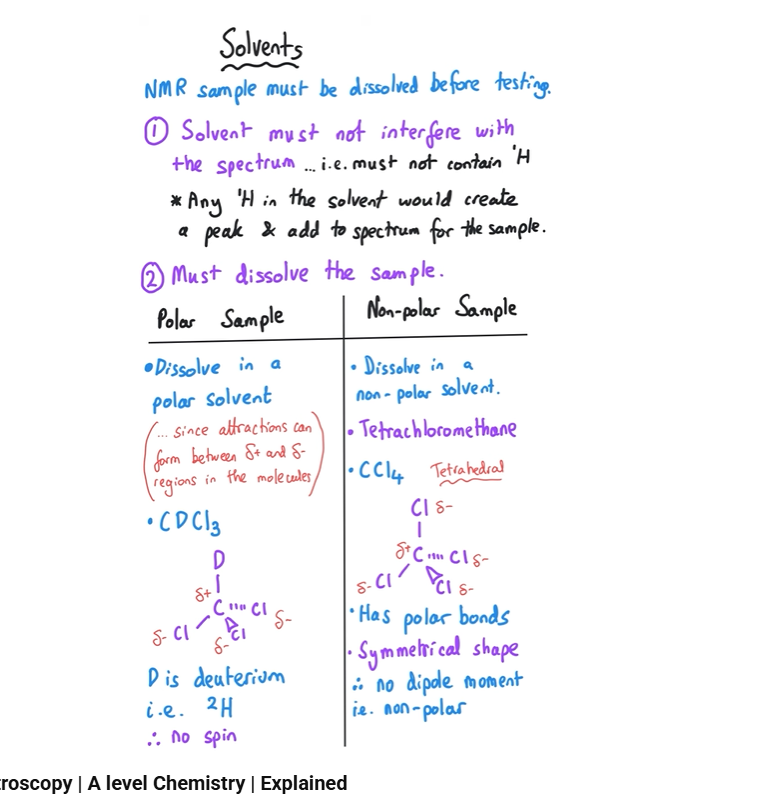
For non polar sample: Tetrachloromethane = CCL4
For polar sample:CDCL3. D= deuterium(hydrogen-2)
5
Chemical shift?
NMR needs a standard / reference substance.
Energy absorbed by sample is compared and CHEMICAL SHIFT is measure of energy difference.
We use tetra methyl silance for this:
-Give single peak which is far from sample ones ie =0
-Inert
-Non toxic
-Volatile easy to separate
Energy absorbed by sample is compared and CHEMICAL SHIFT is measure of energy difference.
We use tetra methyl silance for this:
-Give single peak which is far from sample ones ie =0
-Inert
-Non toxic
-Volatile easy to separate
6
Integration ratio/value?
Area/size of peak = number of h atoms in peak
If they give decimal ratios divide all by smallest.
Ratios will add up to total number of hydrogen in molecule(in exams mostly)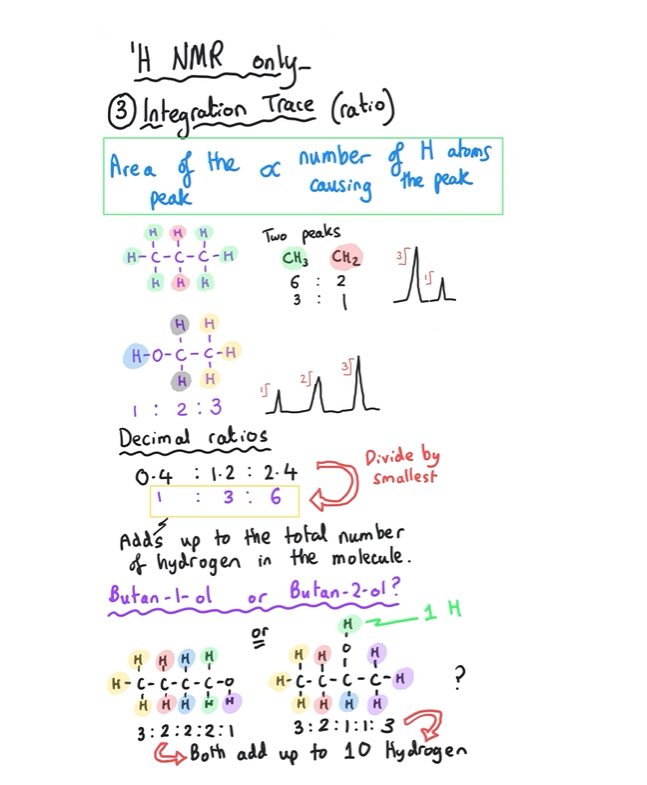
If they give decimal ratios divide all by smallest.
Ratios will add up to total number of hydrogen in molecule(in exams mostly)
7
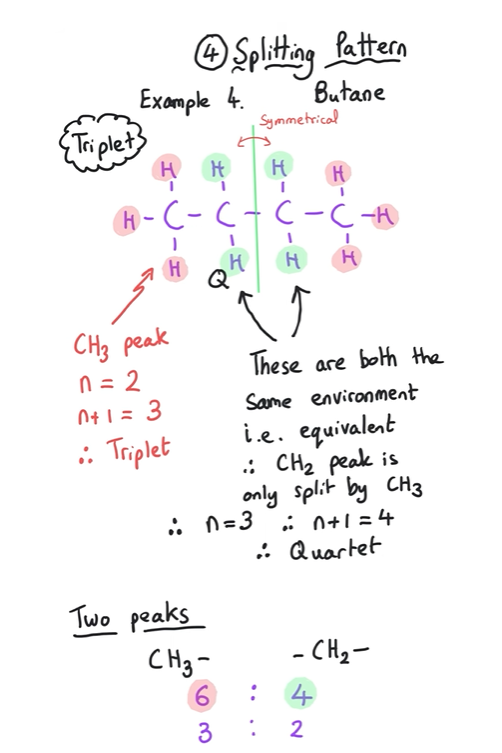
Splitting pattern?(for high resolution nmr)
n+1 = amount of splits in a peak
n = number of hydrogen on adjacent carbon
singlet = one split
doublet = 2 split
triplet = 3 split
quartet = 4 split
ALSO if adjacent hydrogens are same environment it doesnt cause more SPLIT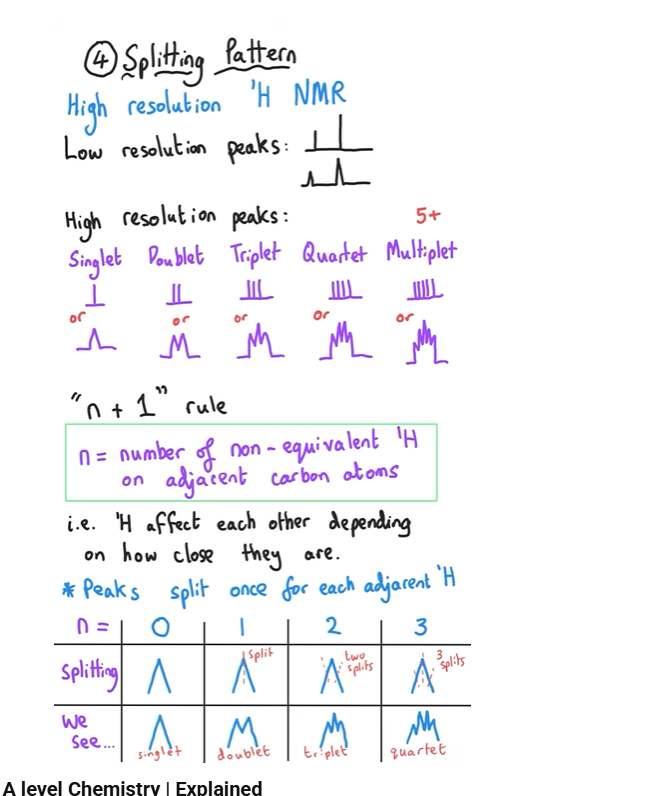
n = number of hydrogen on adjacent carbon
singlet = one split
doublet = 2 split
triplet = 3 split
quartet = 4 split
ALSO if adjacent hydrogens are same environment it doesnt cause more SPLIT
8
Identify the peaks and calculate integration ratio and splitting pattern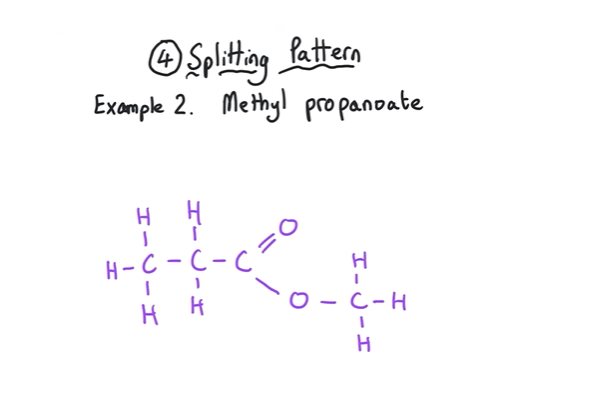
triplet then quadrat may suggest CH3CH2-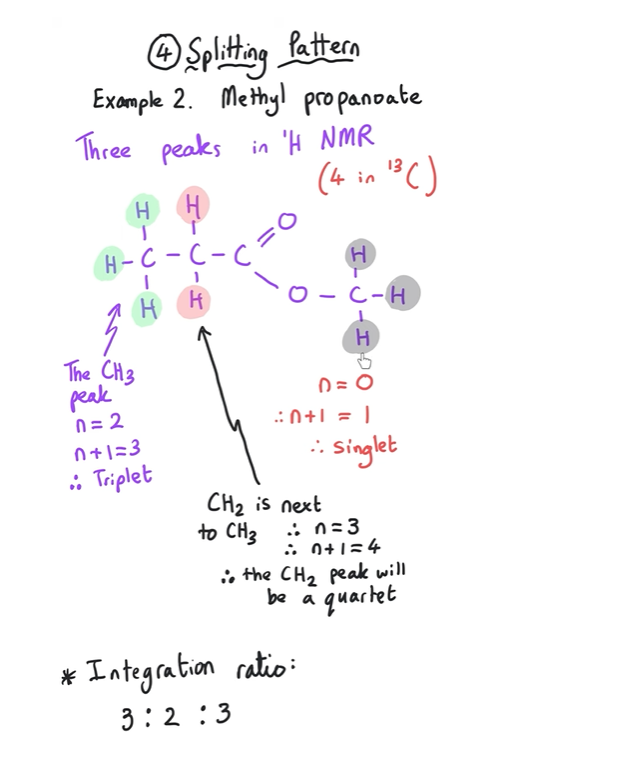
9
Identify the peaks and calculate integration ratio and splitting pattern 2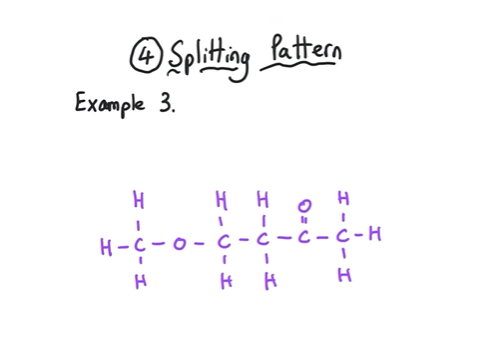
2 triplets in a row MAY suggests -CH2-CH2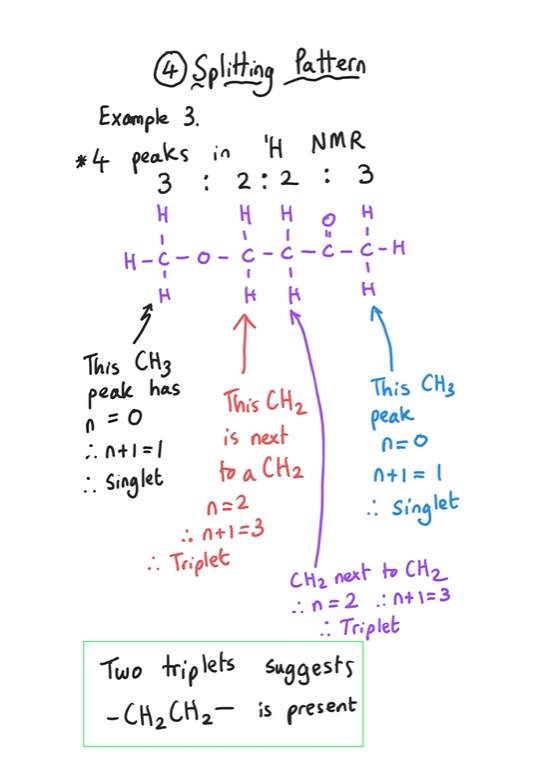
10
Identify the peaks and calculate integration ratio and splitting pattern 3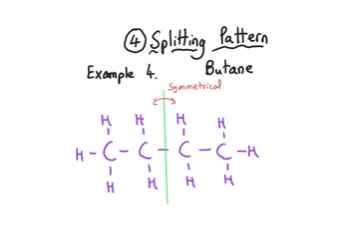
REMEMBER IF ADJACENT IS SAME ENVIRONMENT IT DOESNT CAUSE SPLIT ie dont increase splitting pattern value