3.3.12 Polymers
Study these flashcardsFree · spaced repetition · iPhone, Android, Mac & web
All cards
1
Condensation polymerisation
Where 2 different monomers with at least 2 functional groups react.
Form link and water removed
Form link and water removed
2
How polyamides formed
Via reacting dicarboxylic acids and diamines. Forms AMIDE LINK
OH removed from acid and H removed from amine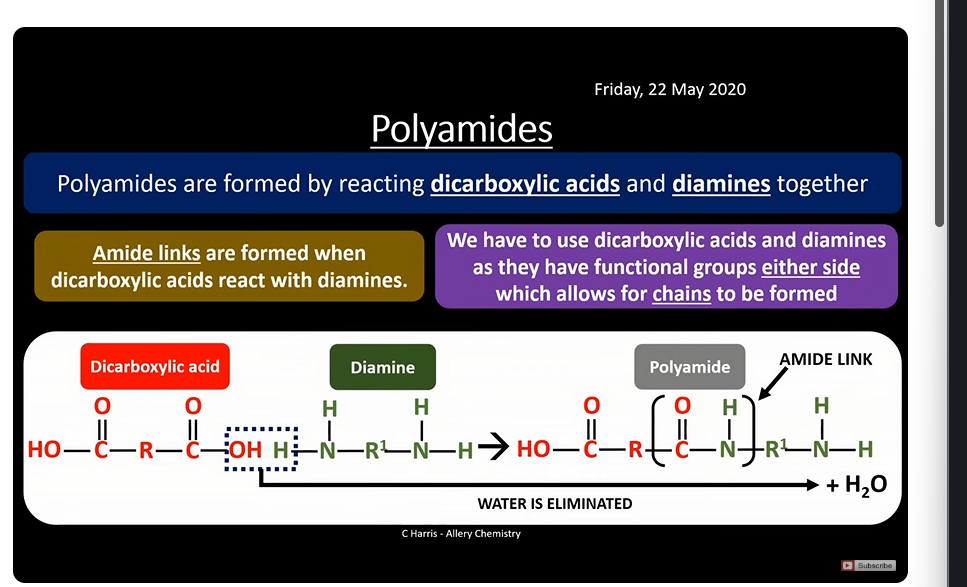
OH removed from acid and H removed from amine
3
Kevlar?
Polyamide for bulletproof vest,car tyres
Made from benzene-1,4-dicarboxylic acid and 1,4-diaminobenzene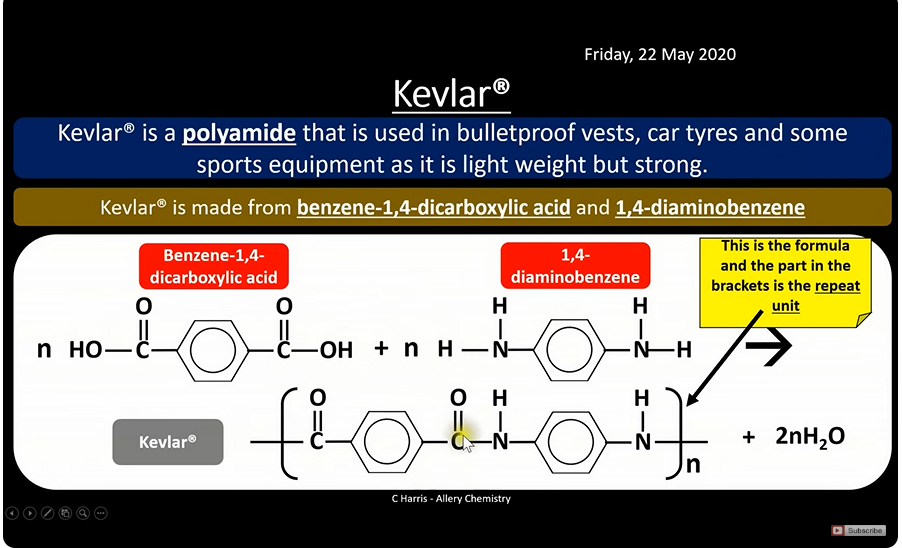
Made from benzene-1,4-dicarboxylic acid and 1,4-diaminobenzene
4
Nylon 6,6
Polyamide for ropes,clothing, carpet
Made from hexanedioc acid and 1,6 diaminohexane
Made from hexanedioc acid and 1,6 diaminohexane
5
Polyesters?
React dicarboxylic acids and diols and forms ester links and releases H20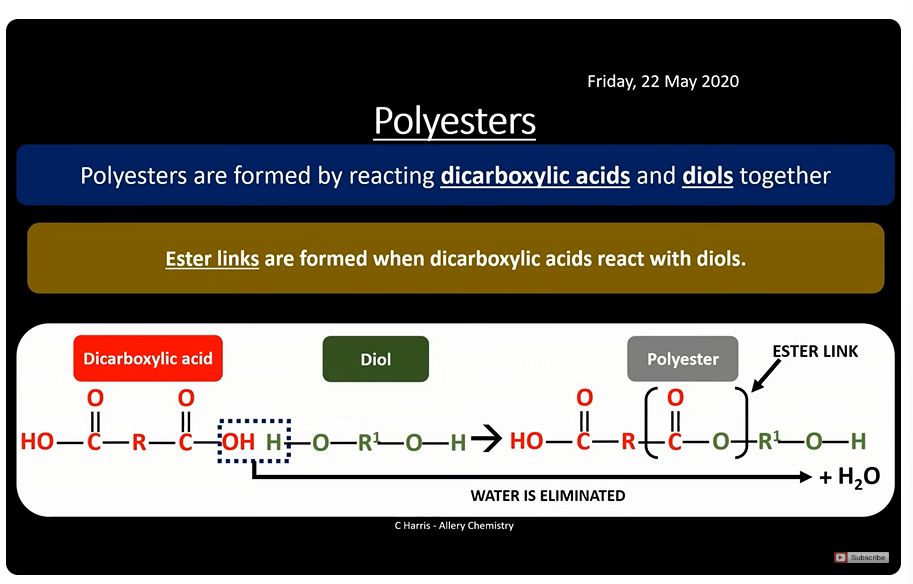
6
Terylene?
Polyester for bottles,clothes,sheeting
Made from benzene-1,4-dicarboxylic acid and ethane-1,2-diol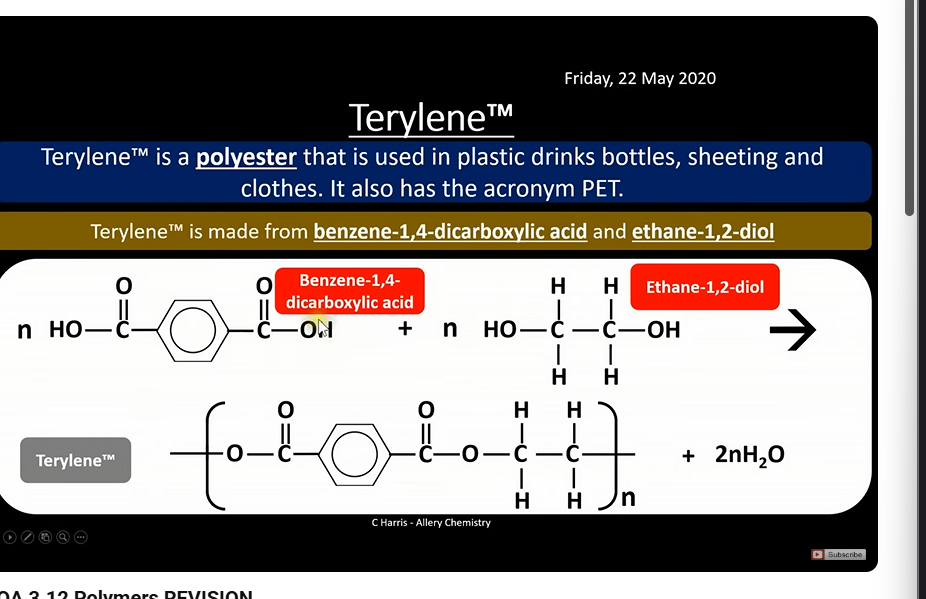
Made from benzene-1,4-dicarboxylic acid and ethane-1,2-diol
7
Hydrolysis of condensation polymers?
Can be hydrolysed via water to produce original monomers.
Straight up reverse
Straight up reverse
8
Polarity in condensation polymers?
Have polar bonds by C-O and C-N which can interact with other chains and form strong INFS.
So they are susceptible from nucleophile attacks.
Biodegradable and broken down by hydrolysis slowly unlike addion polymers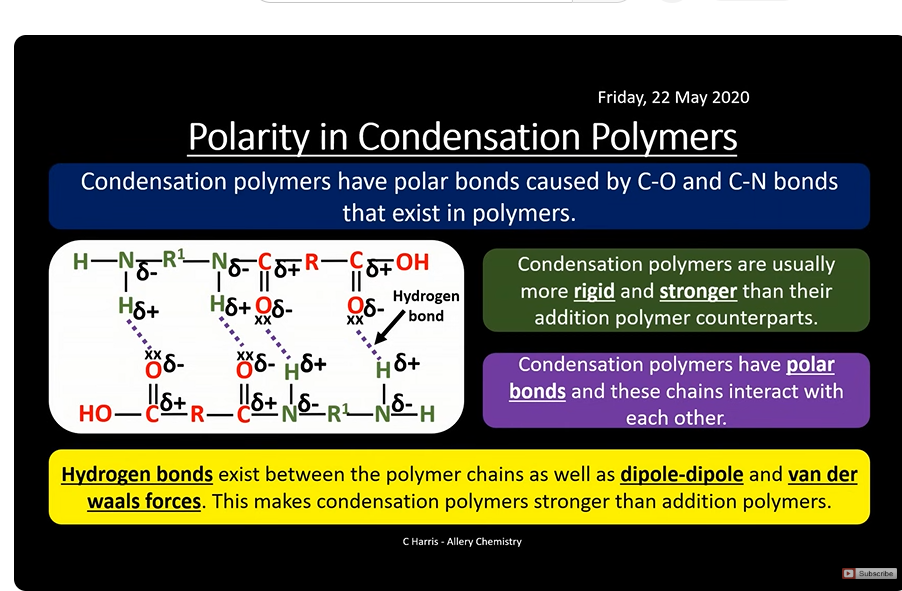
So they are susceptible from nucleophile attacks.
Biodegradable and broken down by hydrolysis slowly unlike addion polymers
9
Ways to dispose plastic
Landfill
Incineration
Recycle
Incineration
Recycle
10
Disposal of plastic?(1st way)
Landfill useful for disposing plastics which are too difficult to recycle/not worth doing
The decomposition leads to greenshouse gases and risk of water contamination via leaching
Not sustainable and expensive
The decomposition leads to greenshouse gases and risk of water contamination via leaching
Not sustainable and expensive
11
Disposal of plastic (2nd way)
Incineration can be used for unrecyclable plastic.
Energy from burning can be used to generate electricity
Produces toxic fumes and flue gas scruppers used to netrulastix acidic gas(hcl)
Energy from burning can be used to generate electricity
Produces toxic fumes and flue gas scruppers used to netrulastix acidic gas(hcl)
12
Disposal of plastic (3rd way)
Recycling leads to less dependency on crude oil
Some plastic can be recycled and remoulded
Some plastic can be recycled and remoulded
13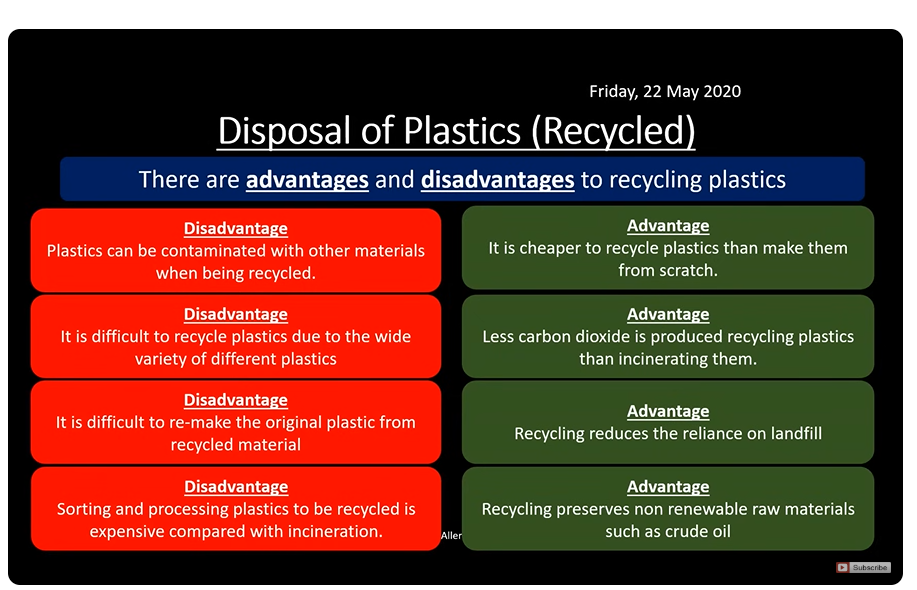
Pros and cons of recycle.