3.3.11 AMINES AAA
Study these flashcardsFree · spaced repetition · iPhone, Android, Mac & web
All cards
1
Quaternary ammonium salts?
Used to make cleaning products like shampoo/soap
Made up of a positive end and attracted to negative ions
Salts with long hydrocarbon tails called cationic surfactants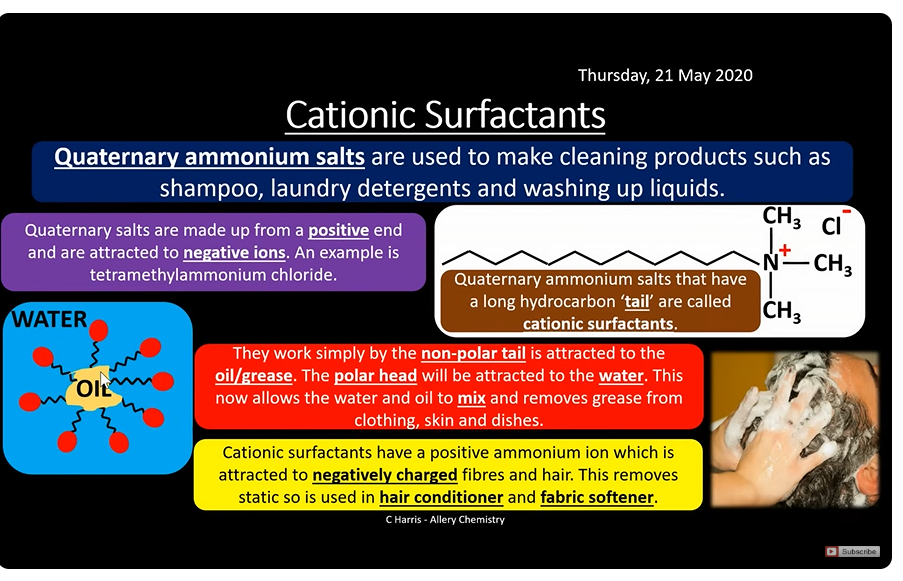
Made up of a positive end and attracted to negative ions
Salts with long hydrocarbon tails called cationic surfactants
2
Naming scheme amines?
amino- when lower priority and amine group is substituent
-amine - when higher priority and simple amine molecule
-amine - when higher priority and simple amine molecule
3
Strength of amine base?
Depends on the availability of the lone pair of electrons on nitrogen. The higher electron density, the higher the availability
4
Order?
Strongest:
Primary aliphatic amines- alkyl groups donate electron density
Ammonia- neutral
Aromatic amines- benzene withdraws/takes in elecron density
Primary aliphatic amines- alkyl groups donate electron density
Ammonia- neutral
Aromatic amines- benzene withdraws/takes in elecron density
5
2 ways to form aliphatic amines?
React a haloalkane with excess ammonia (nucleophillic substition) or reduce nitrile
6
Creating aliphatic amine via haloalkane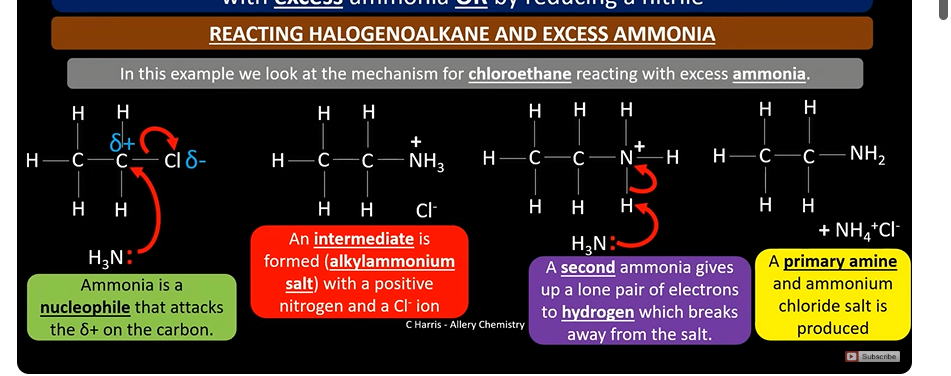
it downside tho as it produces also secondary,tertiary and quaternary salts as it can keep on reacting.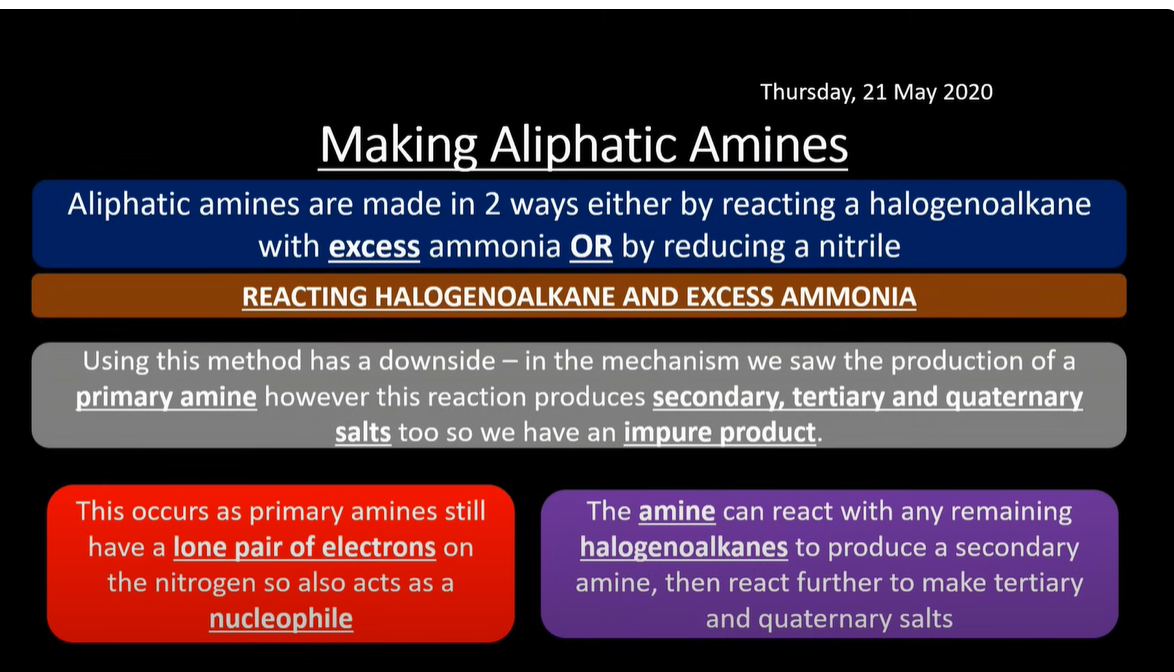
7
Creating aliphatic amine via nitrile first way
Reduce nitrile by using/adding hydrogen with nickel/platinum catalyst at high pressure/temps.
Called catalytic hydrogenation.
Pure product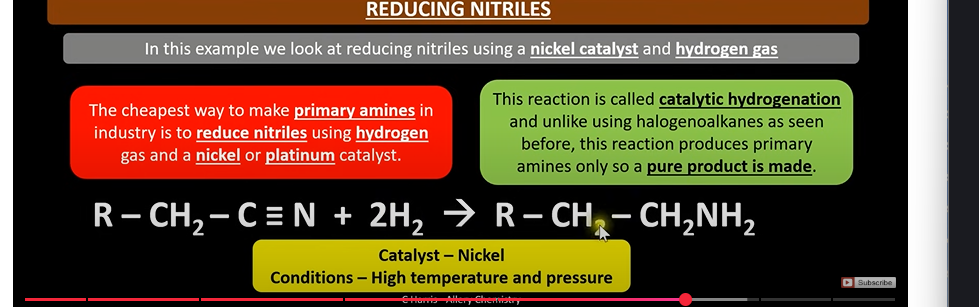
Called catalytic hydrogenation.
Pure product
8
Creating aliphatic amine via nitrile 2nd way
Reduce nitrile via strong reducing agent LiAlH4 and dilute acid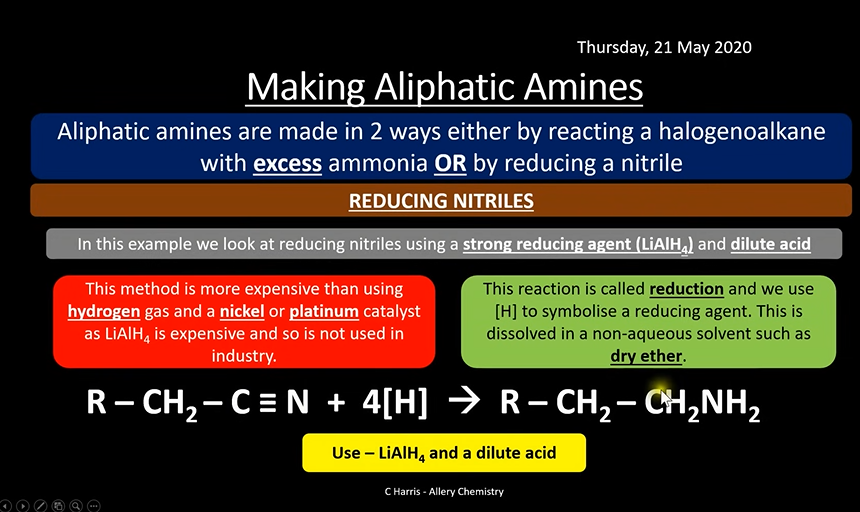
9
How to form aromatic amine?
Produced via reducing nitro compounds like nitrobenzene. Used for dyes and pharmaceuticals
1) Heat under reflux nitrobenzene with concentrated HCL and tin catalyst. Forms salt
2)Heat under reflux Salt with alkali like NaOH forming aromatic amine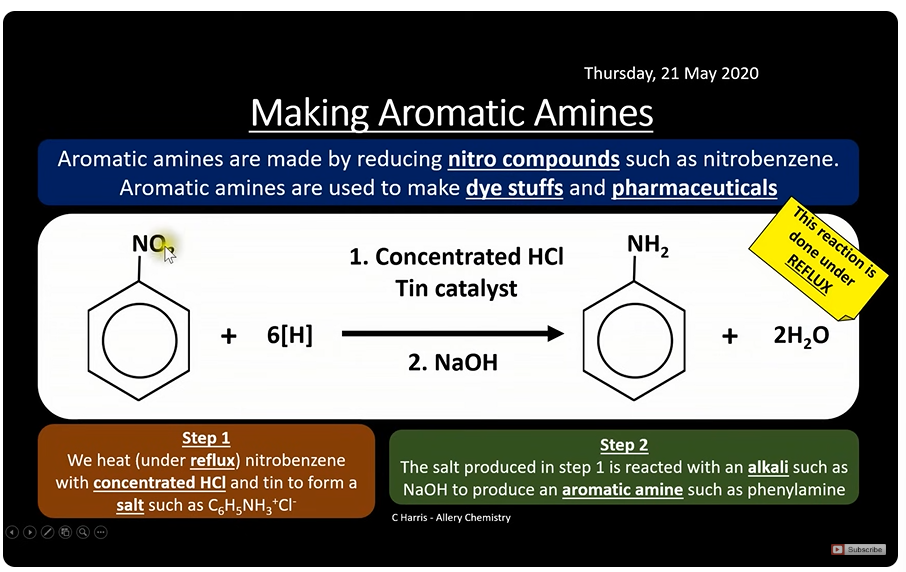
1) Heat under reflux nitrobenzene with concentrated HCL and tin catalyst. Forms salt
2)Heat under reflux Salt with alkali like NaOH forming aromatic amine
10
Amides?
Derivatives of carboxylic acid and have functional group -C=ONH2
Amides have carbonyl while amines dont.
N-substituted has one of hydrogen in amine group substituted for alkyl group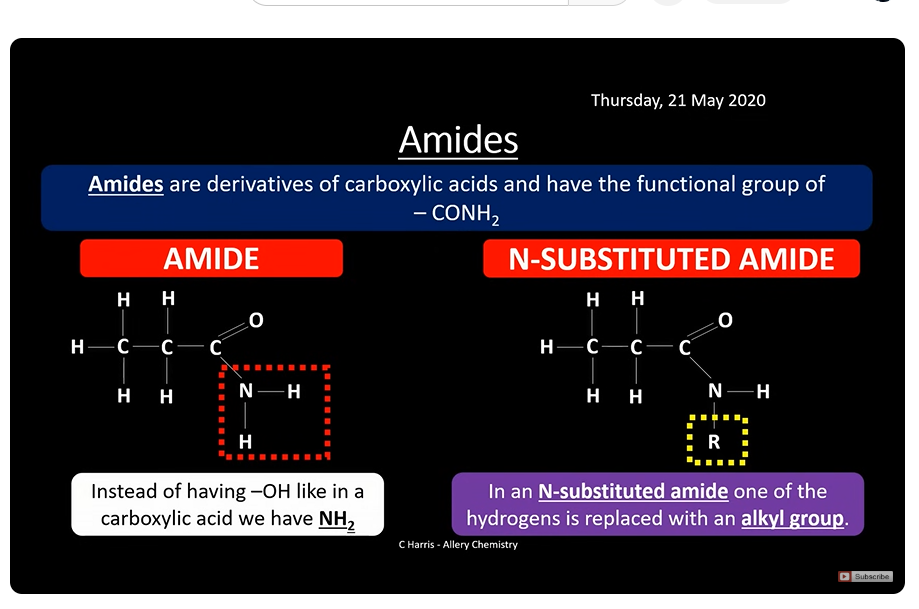
Amides have carbonyl while amines dont.
N-substituted has one of hydrogen in amine group substituted for alkyl group