Chapter 5
Study these flashcardsFree · spaced repetition · iPhone, Android, Mac & web
All cards
1
Simple sugars or the monomers of carbohydrates. Simple sugars are the basic building blocks of polysaccharides.
Monosaccharides
2
What are the 3 most common monosaccharides?
Glucose, Fructose, Galactose
3
The _____ _____ serves as one of the monosaccharides most distinguishing features.
Carbonyl Group
4
What are the two configurations of the Carbonyl group in sugar?
Aldose and Ketose
5
A carbohydrate wth a carbonyl group (C=) at the end of the carbon chain. (ex.Glucose)
Aldose
6
A carbohydrate with a carbonyl group with (C=O) with carbon (Non-terminal carbonyl group). (ex.Ribulose)
Ketose
7
A chemically organic functional group composed of a carbon atom double bonded to an oxygen atom.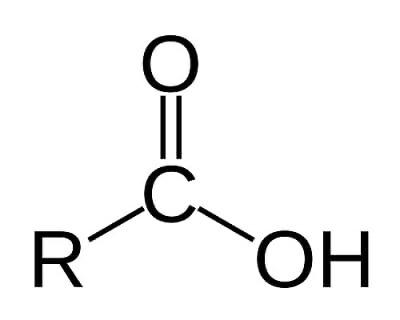
Carbonyl Group
8
A functional group with the chemical formula -OH and composed of one oxygen atom covalently bonded to one hydrogen atom.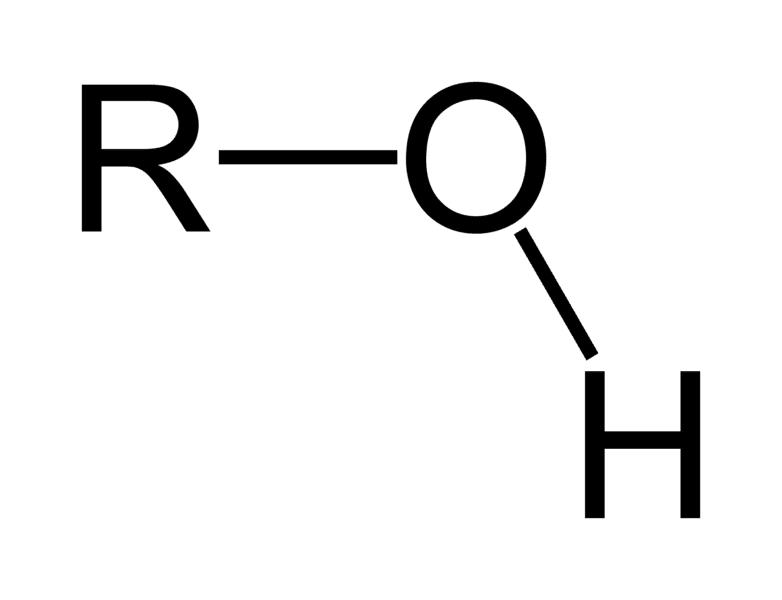
Hydroxyl Group
9
What is the msot abundant class of biomolecules on Earth due to mass.
Carbohydrates
10
Major classes of biomolecules are long chains of carbohydrate molecules, composed of several smaller monosaccharides.
Polysaccharides
11
Large biological molecules- carbohydrates, lipids, proteins, and nucleic acids.
Major Classes of Biological Macromolecules
12
What do all monosaccharides contain?
At least three carbon atoms with a carbonl group attatched to one carbon and a hydroxyl group attached to the others.
13
Having three or more hydroxyl functional groups.
Polyhydroxy Aldehydes
14
The sugar subunit of RNA
Ribose
15
The most important monosaccharide in the chemistry of life/ a hexose with a terminal group
Glucose
16
A six-carbon sugar.
Hexos
17
A chemical bond in the form of a covalent connection that connects a carbohydrate (sugar) molecule to another group whether it is another carbohydrate or not (ex. Cellulose on the wood of plants.)
Glycosidic Linkage
18
A general term for a variety of reactions that introduce one or more enclosed circular formations into molecules.
Ring Formation
19
What formations are the most stable?
Ring Formations
20
The bond of a carbon of the first monosaccharide unit directed downward
Alpha Linkage
21
The bond of a carbon unit that is pointing up
Beta Linkage
22
Three carbon sugars
Trioses
23
What do monosaccharides vary in?
Carbon count, location of the carbonyl group, and spatial arrangement of atoms.
24
When simple sugars covalently link to form chains of varyign lengths.
Complex Carbohydrates
25
When two sugars link together
Disaccharide
26
The process of creating polymers.
Polymerization
27
A common form of chemical reaction where water is mostly used to break down the chemcial bonds that exist between a particular substance.
Hydrolysis
28
Glycosidic Linkeges = ______.
Peptide Bonds = ______.
Phosphodiester Linkages = ______.
Peptide Bonds = ______.
Phosphodiester Linkages = ______.
Carbohydrates, Proteins, Nucleic Acids
29
Glycosidic linkages form between _____ gorups.
Hydroxyl
30
The most common polysaccharides found in oragnisms
Starch, Glycogen, Cellulose, Chitin, Peptidoglycan
31
What is created when monosaccharides are polymerized and stored for later use.
Starch
32
What two polymers is starch made out of? (______ and ______)
Amylose and Amnylopectin
33
A hyghly branched storage polysaccharide composed of glucose monomers joined by alpha-1, 4-and alpha 1-g glycosidic linkages. The major form of stored carbohydrate in animals
Glycogen
34
A fiborous protective layer found outside the plasma membrane fo most bacteria and archae and many eukaryotes.
Cell Wall
35
A polymer made from B-glucose monomers joined by B-1, 4-glycosidic linkages that is a building block of plant cells and fiber
Cellulose
36
A polysaccharide that stiffens the cell walls of fungi
Chitin
37
A complext structural polysaccharide found in bacterial cell walls.
Peptidoglycan
38
A lipid that has been glycosylated (meaning it has one or more covalently attatched carbohydrates).
Glycolipid
39
A protein taht has been glycosylated (meaning it has one or more covaletnly attached carbohydrates.
Glycoprotine
40
The complex biological process that converts light energy into chemical energy stored in the carbohydrate G3P. Occurs in most plants, algae, and some bacteria.
Photosynthesis
41
Which bonds have the highest potential energy?
- C=O bonds
- C-H bonds
42
A polymer containing a small number of monosaccharides.
Oligosaccharide
43
Long chains of carbohydrate molecules composed of several smaller monosaccharides.
Polysaccharide
44
All carbohydrates are made of ____C_______, __O_________, and ___H_________ atoms.
Carbon, Oxygen, Hydrogen
45
Having three or more hydroxyl functional groups.
Polyhydroxy Aldehydes
46
The sugar subunit of RNA, is a pentose
Ribose
47
The most important monosaccharide in the chemistry of life/ a hexose with a terminal group.
Glucose
48
A polysaccharide is made of many monosaccharides that are linked together through a bond called a ____________________.
Glycolic Linkage
49
Polymerizes monosaccharides for storage and later usage in plants. The function of
Starch
50
a-1, 4 glycosidic linages with amylose
a-1, 6 glycosidic linkages with amylopectin
These are the types of bonds between the monomers in:
a-1, 6 glycosidic linkages with amylopectin
These are the types of bonds between the monomers in:
Starch
51
Glucose monomers are involved with...
Starch
52
Alpha D glucose monomers are involved with...
Glycogen
53
a-1,4-glycosidic bonds
a-1,6-glycosidic bonds
These bonds are associated with...
a-1,6-glycosidic bonds
These bonds are associated with...
Glycogen
54
The major form of stored carbohydrate in animals for later usage. This is the funciton of...
Glycogen
55
Beta Glucose monomers are involved in....
Cellulose
56
B-1, 4-glycosidic linkages
are the bonds involved in...
are the bonds involved in...
Cellulose
57
A building block of plant cells and fiber. This is the function of...
Cellulose
58
N-acetyl glucosamine (NAG) is the monomer involved in... ______ and ______
Chitin, Peptidoglycan
59
B-1, 4 covalent bonds
These are the bonds involved in...
These are the bonds involved in...
Chitin
60
A polysaccharide that stiffens the cell walls of fungi. This is the function of...
Chitin
61
β-1,4-glycosidic linkages
These are the bonds involved in...
These are the bonds involved in...
Peptidoglycan
62
A complex structural polysaccharide found in bacterial cell walls. This is the function of...
Peptidoglycan
63
Six-carbon sugar
Hexose
64
A chemical bond in the form of a covalent connection that connects a carbohydrate (sugar) molecule to another group whether it is another carbohydrate or not.
Glycosidic Linkage
65
The bond of a carbon of the first monosaccharide unit is directed downward.
Alpha Linkage
66
The bond of a carbon unit that is pointing up.
Beta Linkage
67
Three carbon sugars.
Trioses
68
When simple sugars covalently link to form chains of varying lengths.
Complex Carbohydrates
69
The process of creating polymers.
Polymerization