All cards
1
If the angular momentum quantum number
l = 2, what is the type of subshell?
A. s
B. p
C. d
D. f
E. g
l = 2, what is the type of subshell?
A. s
B. p
C. d
D. f
E. g
C. d
2
What is the maximum number of electrons
that can occupy the 3p subshell?
A. 2
B. 4
C. 6
D. 8
E. 10
that can occupy the 3p subshell?
A. 2
B. 4
C. 6
D. 8
E. 10
C. 6
3
In the lewis structure of H2O, how many lone
pairs of electrons are present on the oxygen
atom?
A. 0
B. 1
C. 2
D. 3
E. 4
pairs of electrons are present on the oxygen
atom?
A. 0
B. 1
C. 2
D. 3
E. 4
C. 2
4
A double bond (C = C) contains:
A. 2 sigma and 1 pi bond
B. 1 sigma bond only
C. 2 pi bonds
D. 2 sigma bonds
E. 1 sigma bond and 1 pi bond
A. 2 sigma and 1 pi bond
B. 1 sigma bond only
C. 2 pi bonds
D. 2 sigma bonds
E. 1 sigma bond and 1 pi bond
E. 1 sigma bond and 1 pi bond
5
Which element pairing forms an ionic bond, often leading to a polar compound?
A. O-O
B. N-N
C. Cl-Cl
D. Na-Cl
E. C-H
A. O-O
B. N-N
C. Cl-Cl
D. Na-Cl
E. C-H
D. Na-Cl
6
Which of the following molecules is nonpolar?
A. H2O
B. CH4
C. NH3
D. HCl
E. SO2
A. H2O
B. CH4
C. NH3
D. HCl
E. SO2
B. CH4
7
Combustion of hydrocarbons always produces:
A. CO + H20
B. C + H2
C. CH4 + 02
D. CO2 + H2
E. CO2 + H20
A. CO + H20
B. C + H2
C. CH4 + 02
D. CO2 + H2
E. CO2 + H20
D. CO2 + H2
8
The reaction between an alcohol and a carboxylic acid in the presence of acid catalyst to form ester and water is called:
A. Esterification
B. Neutralization
C. Elimination
D. Oxidation
E. Polymerization
A. Esterification
B. Neutralization
C. Elimination
D. Oxidation
E. Polymerization
A. Esterification
9
Which element pairing forms an ionic bond, often leading to a polar compound?
A. 0-0
B. N-N
C. CI-CI
D. Na-Cl
E. C-H
A. 0-0
B. N-N
C. CI-CI
D. Na-Cl
E. C-H
C. Na-Cl
10
According to Arrhenius Theory, an acid is a substance that:
A. Produces OH- ions in water
B. Produces H+ (protons) in water
C. Donates an electron pair
D. Accepts an electron pair
E. Neutralizes a base
A. Produces OH- ions in water
B. Produces H+ (protons) in water
C. Donates an electron pair
D. Accepts an electron pair
E. Neutralizes a base
B. Produces H+ (protons) in water
11
The brick red flame in a flame test is due to:
A. Calcium
B. Barium
C. Strontium
D. Sodium
E. Potassium
A. Calcium
B. Barium
C. Strontium
D. Sodium
E. Potassium
A. Calcium
12
The element that gives a green flame is:
A. Potassium
B. Stronium
C. Barium
D. Calcium
E. Sodium
A. Potassium
B. Stronium
C. Barium
D. Calcium
E. Sodium
C. Barium
13
Group Il cations (Cu2+, Cd2+, Bi3+, Pb2+, As3+, Sb3+, Sn2+) are precipitated as sulfides by passing H2S in:
A. Basic solution
B. Neutral solution
C. Acidic solution
D. Concentrated ammonia
E. Strong alkali
A. Basic solution
B. Neutral solution
C. Acidic solution
D. Concentrated ammonia
E. Strong alkali
C. Acidic solution
14
Group IV cations (Ba2+, Sr2+, Ca2+) are precipitated as carbonates using:
A. NaOH
B. NH4OH
C. (NH4)2CO3 in the presence of NH4Cl
D. H2SO4
E. NaCl
A. NaOH
B. NH4OH
C. (NH4)2CO3 in the presence of NH4Cl
D. H2SO4
E. NaCl
C. (NH4)2CO3 in the presence of NH4Cl
15
What is the antidote for phosphorus poisoning?
A. Sodium bicarbonate
B. Copper sulfate
C. Sodium thiosulfate
D. Calcium gluconate
E. Deferoxamine
A. Sodium bicarbonate
B. Copper sulfate
C. Sodium thiosulfate
D. Calcium gluconate
E. Deferoxamine
B. Copper sulfate
16
What is the antidote for magnesium toxicity?
A. setronenadonale
C. Calcium gluconate
D. Sodium chloride
:. Sodium thiosulfate
A. setronenadonale
C. Calcium gluconate
D. Sodium chloride
:. Sodium thiosulfate
C. Calcium gluconate
17
What is the common name of sulfuric acid (H2SO4)?
A. Aqua regia
B. Oil of vitriol
C. Blue vitriol
D. Red vitriol
E. Acidum hydrochloricum
A. Aqua regia
B. Oil of vitriol
C. Blue vitriol
D. Red vitriol
E. Acidum hydrochloricum
B. Oil of vitriol
18
What is the common name of sodium bicarbonate?
A. Soda ash
B. Baking soda
C. Pearl ash
D. Washing soda
E. Cream of tartar
A. Soda ash
B. Baking soda
C. Pearl ash
D. Washing soda
E. Cream of tartar
B. Bakng soda
19
What is the common name of sodium sulfate (Na2SO4)?
A. Glauber's salt
B. Rochelle sat
C. Soda ash
D. Baking soda
E. Cream of tartar
A. Glauber's salt
B. Rochelle sat
C. Soda ash
D. Baking soda
E. Cream of tartar
A. Glauber's salt
20
What is the common name of magnesium sulfate?
A. Rochellesalt
B. Epsom salt
C. Milk of magnesia
D. Calcinied magnesia
E. White vitriol
A. Rochellesalt
B. Epsom salt
C. Milk of magnesia
D. Calcinied magnesia
E. White vitriol
B. Epsom salt
21
What element is naturally a calcium channel blocker?
A. Sodium
B. Potassium
C. Magnesium
D. Zinc
E. Barium
A. Sodium
B. Potassium
C. Magnesium
D. Zinc
E. Barium
C. Magnesium
22
What element is the most abundant metal in the Earth's crust?
A. Aluminum
B. Magnesium
C. Iron
D. Calcium
E. Copper
A. Aluminum
B. Magnesium
C. Iron
D. Calcium
E. Copper
A. Aluminum
23
What element is present in chlorophyll?
A. Zinc
B. Copper
C. Magnesium
D. Manganese
E. Nickel
A. Zinc
B. Copper
C. Magnesium
D. Manganese
E. Nickel
C. Magnesium
24
What flame is produced by barium compounds in pyrotechnics?
A. Green
B. Red
C. Blue
D. Yellow
E. Violet
A. Green
B. Red
C. Blue
D. Yellow
E. Violet
A. Green
25
What element toxicity causes Wilson's disease?
A. Mercury
B. Copper
C. Zinc
D. Lead
E. Bismuth
A. Mercury
B. Copper
C. Zinc
D. Lead
E. Bismuth
B. Copper
26
What element deficiency causes rickets or osteomalacia?
A. Zinc
B. Calcium
C. Iron
D. Magnesium
E. Copper
A. Zinc
B. Calcium
C. Iron
D. Magnesium
E. Copper
B. Calcium
27
What is the pharmaceutical use of zinc oxide (ZnO)?
A. Antiseptic
B. Topical protectant
C. Antidote
D. Vasodilator
E. Antihelminthic
A. Antiseptic
B. Topical protectant
C. Antidote
D. Vasodilator
E. Antihelminthic
B. Topical protectant
28
What is the common name of ferrous sulfate?
A. White vitriol
B. Green vitriol
C. Vitriol of Mars
D. Blue vitriol
E. Oil of vitriol
A. White vitriol
B. Green vitriol
C. Vitriol of Mars
D. Blue vitriol
E. Oil of vitriol
B. Green vitriol
29
What type of poisoning causes Minamata disease?
A. Arsenic
B. Cadmium
C. Mercury
D. Lead
E. Silver
A. Arsenic
B. Cadmium
C. Mercury
D. Lead
E. Silver
C. Mercury
30
What is the name of the condition caused by silver toxicity?
A. Argyria
B. Plumbism
C. Baritosis
D. Itai-itai
E. Minamata Disease
A. Argyria
B. Plumbism
C. Baritosis
D. Itai-itai
E. Minamata Disease
A. Argyria
Plumbism - Lead Baritosis - Barium
Itai-itai - Cadmium
Minamata - Mercury
Plumbism - Lead Baritosis - Barium
Itai-itai - Cadmium
Minamata - Mercury
31
What is the second most abundant extracellular anion?
A. Chloride
B. Bicarbonate
C. Sulfate
D. Nitrate
E. Phosphate
A. Chloride
B. Bicarbonate
C. Sulfate
D. Nitrate
E. Phosphate
B. Bicarbonate
Chloride - most abundant
Chloride - most abundant
32
What is the predominant intracellular cation?
A. Calcium
B. Sodium
C. Magnesium
D. Potassium
E. Zinc
A. Calcium
B. Sodium
C. Magnesium
D. Potassium
E. Zinc
D. Potassium
Sodium - predominant extracellular cation
"PiSp"
Sodium - predominant extracellular cation
"PiSp"
33
What is the second most abundant element on Earth?
A. Aluminum
B. Silicon
C. Carbon
D. Iron
E. Calcium
A. Aluminum
B. Silicon
C. Carbon
D. Iron
E. Calcium
B. Silicon
Oxygen - most
Aluminum - 3rd most element, most abundant metal
Oxygen - most
Aluminum - 3rd most element, most abundant metal
34
What condition is caused by bismuth toxicity?
A. Argyria
B. Plumbism
C. Blue-black gums
D. Baritosis
E. Lobster skin appearance
A. Argyria
B. Plumbism
C. Blue-black gums
D. Baritosis
E. Lobster skin appearance
C. Blue-black gums
Baritosis - Barium
Lobster skin - Boric acid
Baritosis - Barium
Lobster skin - Boric acid
35
What is the common name of sodiu hydrogen phosphate (NaH2PO4
A. Fleet Enema
B. Soda ash
C. Pearl ash
D. Milk of magnesia
E. Rochelle salt
A. Fleet Enema
B. Soda ash
C. Pearl ash
D. Milk of magnesia
E. Rochelle salt
A. Fleet Enema
36
Theory which postulates that a receptor will always be in a state of equilibrium between active and inactive tissues
a. Macromolecular Perturbation Theory
b. Activation-Aggregation Theory
c. Rate Theory
e. Once-ly Theory
a. Macromolecular Perturbation Theory
b. Activation-Aggregation Theory
c. Rate Theory
e. Once-ly Theory
B. Activation-Aggregation Theory
Macromolecular: rate & ratio (induced-fit and rate theory combination)
Rate Theory: total number of encounters, onset & offset
Occupancy: number of occupied receptors
Induced-fit: specific conformational change
Macromolecular: rate & ratio (induced-fit and rate theory combination)
Rate Theory: total number of encounters, onset & offset
Occupancy: number of occupied receptors
Induced-fit: specific conformational change
37
rovides 2nd pass metabolism for drug aving the live
A. Kidneys
B. GI mucosa
C. Lungs
D. Nasal Passages
E. NOTA
A. Kidneys
B. GI mucosa
C. Lungs
D. Nasal Passages
E. NOTA
C. Lungs
38
Which of the following Anti-TB & Anti-Leprosy drug/s cannot penetrate the cerebrospinal fluid:
A. Clofazimine
B. Streptomycin
C. Dapsone
D. Both A&B
E. Both B&C
A. Clofazimine
B. Streptomycin
C. Dapsone
D. Both A&B
E. Both B&C
D. Both A&B
39
Should be given with caution to patients with gout.
A. Aminosalicylic Acid
B. Rifampin
C. Isoniazid
D. Ethambutol
E. Pyrazinamide
A. Aminosalicylic Acid
B. Rifampin
C. Isoniazid
D. Ethambutol
E. Pyrazinamide
E. Pyrazinamide
Pyrazinamide and its metabolites are reported to interfere with uric acid excretion
Pyrazinamide and its metabolites are reported to interfere with uric acid excretion
40
MDR-TB is resistant to which of the following drugs?
A. Ethambutol & Ethionamide
B. Isoniazid & Rifampicin
C. Rifampicin & Pyrazinamide
D. Streptomycin & Aminosalicylic Acid
E. Pyrazinamide & Isoniazid
A. Ethambutol & Ethionamide
B. Isoniazid & Rifampicin
C. Rifampicin & Pyrazinamide
D. Streptomycin & Aminosalicylic Acid
E. Pyrazinamide & Isoniazid
B. Isoniazid & Rifampicin
Resistant to the two most powerful 1st line drugs
Resistant to the two most powerful 1st line drugs
41
Rate & Ratio determines the receptor's biological response
A. Activation-Aggregation Theory
B. Macromolecular Perturbation Theory
C. Induced-fit Theory
D. Occupancy Theory
E. Rate Theory
A. Activation-Aggregation Theory
B. Macromolecular Perturbation Theory
C. Induced-fit Theory
D. Occupancy Theory
E. Rate Theory
B. Macromolecular Perturbation Theory
"Rate and ratio"
"Rate and ratio"
42
Has lesser side effects compared to Streptomycin:
A. Neomycin Sulfate
B. Kanamycin sulfate
C. Tobramycin
D. Amikacin
A. Neomycin Sulfate
B. Kanamycin sulfate
C. Tobramycin
D. Amikacin
A. Neomycin Sulfate
43
Less toxic than Gentamicin
A. Kanamycin Sulfate
B. Amikacin
C. Tobramycin
D. Streptomycin
A. Kanamycin Sulfate
B. Amikacin
C. Tobramycin
D. Streptomycin
B. Amikacin
44
Solution of Clindamycin that can last until 32
days when refrigerated:
A. Clindamycin Phosphate
B. Clindamycin Palmitate HCI
C. Clindamycin HCI
D. Both A & B
E. Both B & C
days when refrigerated:
A. Clindamycin Phosphate
B. Clindamycin Palmitate HCI
C. Clindamycin HCI
D. Both A & B
E. Both B & C
A. Clindamycin Phosphate
Clindamycin Palmitate HCI - stable for 2 weeks at room temp, should not be refrigerated
Clindamycin Palmitate HCI - stable for 2 weeks at room temp, should not be refrigerated
45
Salt form of this drug prolong its duration of action
A. Phenoxymethylpenicillin
B. Mezlocillin Sodium
C. Benzylpenicillin
D. Carbenicillin Indanyl Sodium
E. Isoxazoyl Penicillin
A. Phenoxymethylpenicillin
B. Mezlocillin Sodium
C. Benzylpenicillin
D. Carbenicillin Indanyl Sodium
E. Isoxazoyl Penicillin
C. Benzylpenicillin
46
Drug that is not affected by the food and fluid volume content of the gut:
A. Clarithromycin
B. Erythromycin Estolate
C. Sythromycin Stearate
D. Erythromycin Ethylsuccinate
A. Clarithromycin
B. Erythromycin Estolate
C. Sythromycin Stearate
D. Erythromycin Ethylsuccinate
B. Erythromycin Estolate
Ethylsuccinate - absorption is enhanced by the presence of food
Stearate - film coated to protect it from acid degradation
Ethylsuccinate - absorption is enhanced by the presence of food
Stearate - film coated to protect it from acid degradation
47
Which is/are side effect/s of Dapsone:
A. Optic Neuritis
B. Peripheral Neuritis
C. Peripheral Neuropathy
D. Both A & B
E. Both B & C
A. Optic Neuritis
B. Peripheral Neuritis
C. Peripheral Neuropathy
D. Both A & B
E. Both B & C
E. Both B & C
48
Co-administration of Pyridoxine with Isoniazid |E. NOTA induces what side effect?
A. Optic Neuritis
B. Peripheral Neuritis
C. Paraesthesias
D. Nephrotoxicity
E. NOTA
A. Optic Neuritis
B. Peripheral Neuritis
C. Paraesthesias
D. Nephrotoxicity
E. NOTA
E. NOTA
Pyridoxine with Isoniazid prevents peripheral neuritis
Pyridoxine with Isoniazid prevents peripheral neuritis
49
Account for the activity produced by inverse agonists:
A. Macromolecular Perturbation Theory
B. Rate Theory
C. Induced-fit theory
D. Occupancy theory
E. Activation-Aggregation Theory
A. Macromolecular Perturbation Theory
B. Rate Theory
C. Induced-fit theory
D. Occupancy theory
E. Activation-Aggregation Theory
E. Activation-Aggregation Theory
50
Considered as the most effective drug out of a series of acyclic nucleosides which exhibits an antiviral activity but needs to be converted to its triphosphate form for it to be activated:
A. Acyclovir
A. Acyclovir
B. Idoxuridine
C. Foscarnet
D. Vidarabine
E. Trifluridine
A. Acyclovir
A. Acyclovir
B. Idoxuridine
C. Foscarnet
D. Vidarabine
E. Trifluridine
A. Acyclovir
51
Ampicillin + Sulbactam
A. Timentin
B. Unasyn
C. Zosyn
D. Augmentin
E. NOTA
A. Timentin
B. Unasyn
C. Zosyn
D. Augmentin
E. NOTA
B. Unasyn
Timentin: Ticarcillin + Cavulanate Zosyn:
Piperacillin + Tazobactam
Augmentin: Amoxicillin + Clavulanic Acid
Timentin: Ticarcillin + Cavulanate Zosyn:
Piperacillin + Tazobactam
Augmentin: Amoxicillin + Clavulanic Acid
52
Not effective against MRSA and it is not hydrolyzed by dehydropeptidase-l:
A. Sulbactam
B. Meropenem
C. Tazobactam
D. Imipenem
E. NOTA
A. Sulbactam
B. Meropenem
C. Tazobactam
D. Imipenem
E. NOTA
B. Meropenem
53
A widely known side effect of Ethambutol
A. Peripheral Neuritis
B. Thrombocytopenia purpura
C. Optic Neuritis
D. Hyperuricemia
E. Paresthesia
A. Peripheral Neuritis
B. Thrombocytopenia purpura
C. Optic Neuritis
D. Hyperuricemia
E. Paresthesia
C. Optic Neuritis
"EYEthambutol (hehe twitter)
Hyperuricemia; Pyrazinamide
Thrombocytopenia: Rifampicin
Paraesthesia: Streptomycin
"EYEthambutol (hehe twitter)
Hyperuricemia; Pyrazinamide
Thrombocytopenia: Rifampicin
Paraesthesia: Streptomycin
54
Based on the given photo, optimal activity of Aminosalicylic acid is seen when the amino and carboxyl groups are in what position?
A. Meta position
B. Para position
C. Ortho position
D. Both A & B
E. Both A & C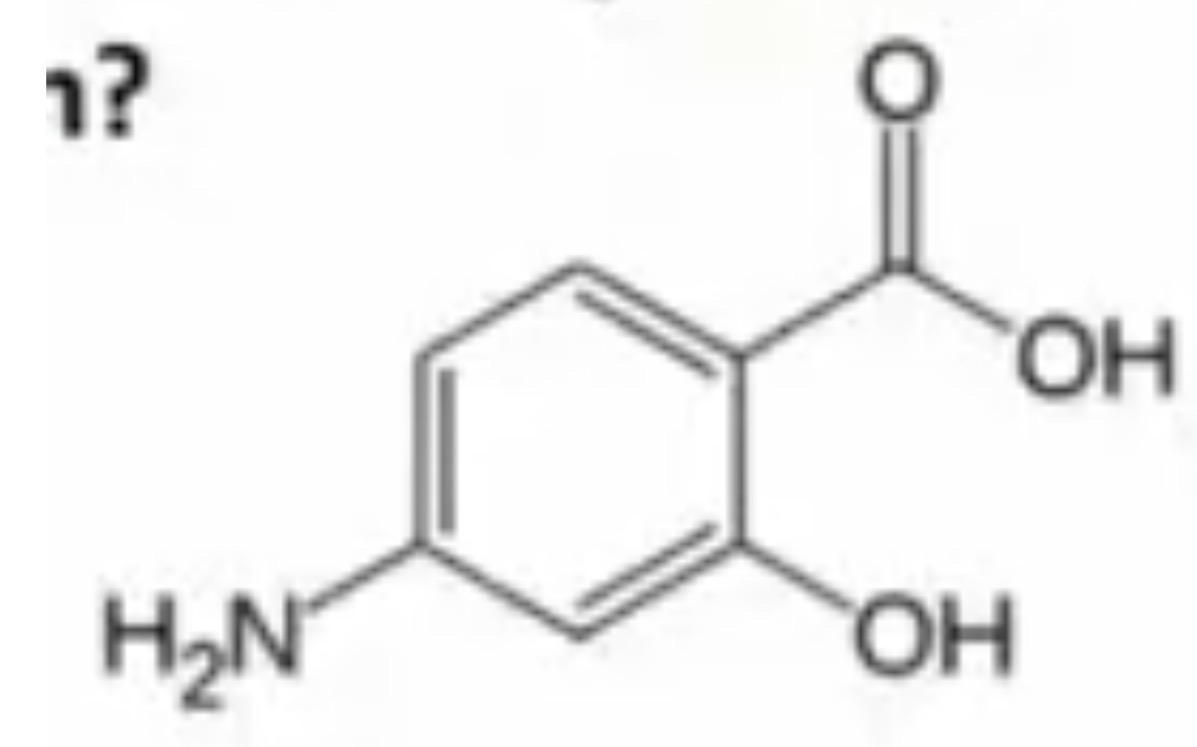
A. Meta position
B. Para position
C. Ortho position
D. Both A & B
E. Both A & C
B. Para position
55
This drug targets Mycobacterium by inhibiting the enzyme DNA-dependent RNA polymerase:
a. Pyrazinamide
b. Streptomycin
c. Rifampin
d. Isoniazid
e. Ethambutol
a. Pyrazinamide
b. Streptomycin
c. Rifampin
d. Isoniazid
e. Ethambutol
C. Rifampin
56
A 4th generation cephalosporin:
A. Cefquinome
B. Cefexime
C. Cefotetan
D. Both A & B
E. Both B & C
A. Cefquinome
B. Cefexime
C. Cefotetan
D. Both A & B
E. Both B & C
A. Cefquinome
"Quinoa pi"
"Quinoa pi"
57
Binds to 50s subunit and inhibits polypeptide chain elongation
A. Minocycline
B. kanamycin
C. Chloramphenicol
D. Erythromycin
E. NOTA
A. Minocycline
B. kanamycin
C. Chloramphenicol
D. Erythromycin
E. NOTA
D. Erythromycin
58
Which of the ff drug/s is/are metabolized faster by women?
A. Chlodiazepoxide
B. Caffeine
C. Diazepam
D. Both A & B
E. Both B & C
A. Chlodiazepoxide
B. Caffeine
C. Diazepam
D. Both A & B
E. Both B & C
E. Both B & C
By women: Caffeine, Diazepam, Acetaminophen
By men: Propranolol, Chlordiazepoxide, Lidocaine, Steroids
By women: Caffeine, Diazepam, Acetaminophen
By men: Propranolol, Chlordiazepoxide, Lidocaine, Steroids
59
Which of the following is an oral cephalosporin?
A. Ceftriaxone
B. Cefixime
C. Cefoxitin
D. Both A & B
E. Both A & C
A. Ceftriaxone
B. Cefixime
C. Cefoxitin
D. Both A & B
E. Both A & C
B. Cefixime
60
Drug that can inhibit both Thymidylate
Synthetase & DNA Polymerase
A. Trifluridine
B. Vidarabine
C. Foscarnet
D. Desciclovir
Synthetase & DNA Polymerase
A. Trifluridine
B. Vidarabine
C. Foscarnet
D. Desciclovir
A. Trifluridine
61
In general, what happens to a drug if there is no presence of bulky groups?
A. Susceptible to acid degradation
B. Resistant to acid degradation
C. Susceptible to Penicillinase
D.Resistant to degradation of Penicillinase
E. NOTA
A. Susceptible to acid degradation
B. Resistant to acid degradation
C. Susceptible to Penicillinase
D.Resistant to degradation of Penicillinase
E. NOTA
C. Susceptible to Penicillinase
62
Piperacillin sodium has activity against the following except:
A. Citrobacter
B. Staphylococcus
C. Serratia marcescens
D. Proteus
E. NOTA
A. Citrobacter
B. Staphylococcus
C. Serratia marcescens
D. Proteus
E. NOTA
B. Staphylococcus
63
Group that can increase a 3rd generation Cephalosporin's affinity to transpeptidase enzyme
a. Iminomethoxy group
b. Furan ring
c. Aminothiazloe ring
d. Both A & B
e. Both B & C
a. Iminomethoxy group
b. Furan ring
c. Aminothiazloe ring
d. Both A & B
e. Both B & C
E. Both B & C
64
What does the encircled group contribute to the drug's characteristics?
A. Resistance to Penicillinase
B. Susceptibility to Penicillinase
C. Makes the drug acid resistant
D. Makes the drug acid labile
E. NOTA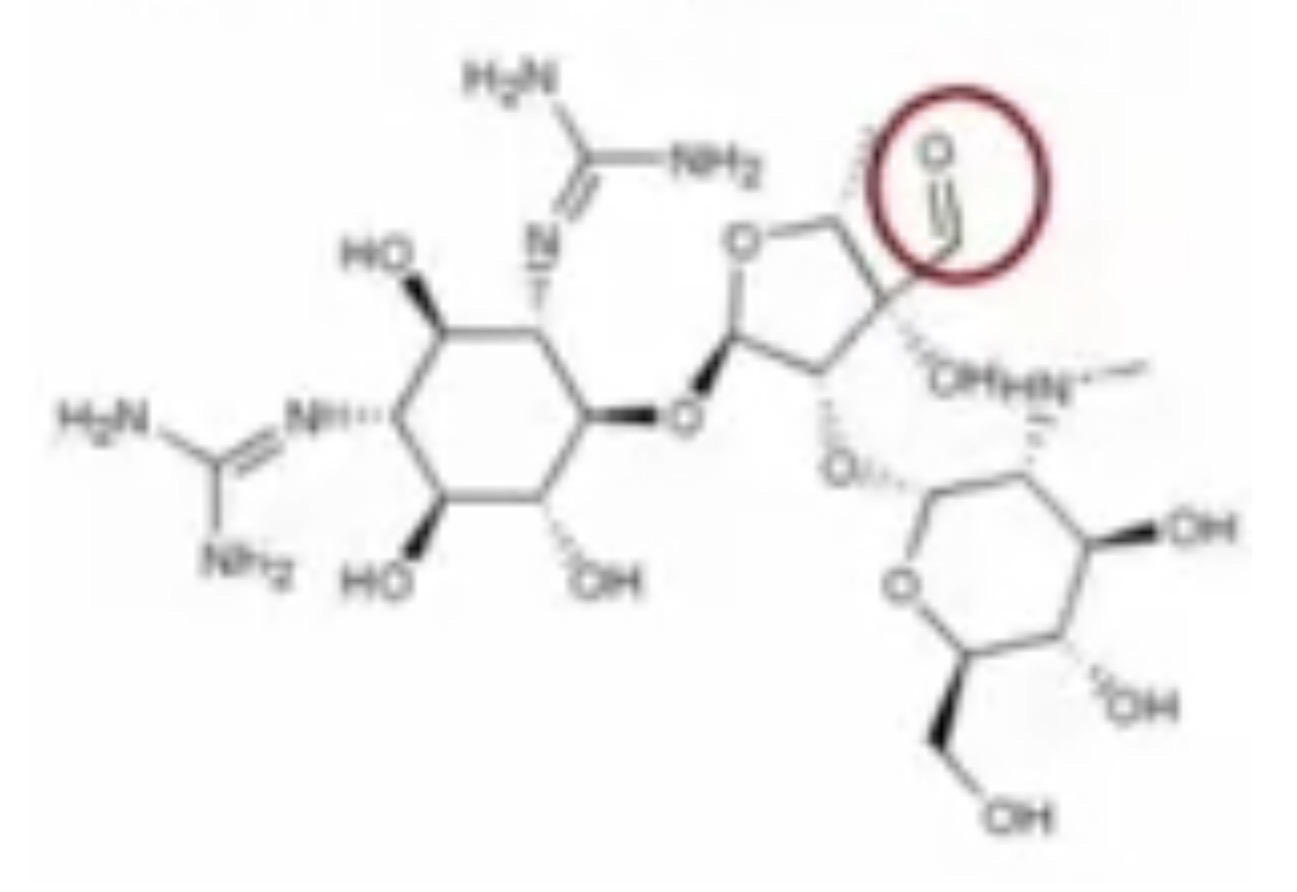
A. Resistance to Penicillinase
B. Susceptibility to Penicillinase
C. Makes the drug acid resistant
D. Makes the drug acid labile
E. NOTA
C. Makes the drug acid resistant
65
Based on the gicen drug and its MIC, which of the following choices is considered as the most potent?
A. Sparfloxacin: 0.125-0.5
B. Trovafloxacin: 0.007-0.25
C. Ciprofloxacin: 0.5-2
D. Temafloxacin: 0.5-1
E. NOTA
A. Sparfloxacin: 0.125-0.5
B. Trovafloxacin: 0.007-0.25
C. Ciprofloxacin: 0.5-2
D. Temafloxacin: 0.5-1
E. NOTA
B. Trovafloxacin: 0.007-0.25
Low MIC = High Potency
Low MIC = High Potency
66
What is the classification of Abaacavir?
A. Protease Inhibitor
B. NNRTI
C. DNA Polymerase Inhibitor
D. Neuraminidase Inhibitor
E. NRTI
A. Protease Inhibitor
B. NNRTI
C. DNA Polymerase Inhibitor
D. Neuraminidase Inhibitor
E. NRTI
E. NRTI
67
What happens to the activity of Penicillin if the carboxylic acid is modified into an ester?
A. Increase activity
B. Decrease activity
C. Inactive
D. Retain activity
A. Increase activity
B. Decrease activity
C. Inactive
D. Retain activity
B. Decrease activity
68
Accounts for the activity produced by inverse agonists:
A. Macromolecular Perturbation Theory
B. Rate Theory
C. Induced-fit Theory
D. Activation-aggregation Theory
E. Occupancy Theory
A. Macromolecular Perturbation Theory
B. Rate Theory
C. Induced-fit Theory
D. Activation-aggregation Theory
E. Occupancy Theory
D. Activation-aggregation Theory
69
The following are 5th generation
Cephalorsporins, except:
A. Ceftolozane
B. Ceftaroline
C. Cefotazime
D. Both A & B
E. Both A & C
Cephalorsporins, except:
A. Ceftolozane
B. Ceftaroline
C. Cefotazime
D. Both A & B
E. Both A & C
C. Cefotazime
"Ceft + ol"
"Ceft + ol"
70
Cephalosporins given parenterally;
A. Ceftriaxone
B. Cefixime
C. Cefprozil
D. Both A & B
E. Both B & C
A. Ceftriaxone
B. Cefixime
C. Cefprozil
D. Both A & B
E. Both B & C
A. Ceftriaxone
71
What is used to rescue normal cells trom methotrexate toxicity?
A. MESNA
B. Leucovorin
C. Amifostine
D. Probenecio
E. Dactinomycin
A. MESNA
B. Leucovorin
C. Amifostine
D. Probenecio
E. Dactinomycin
B. Leucovorin
MESNA - Cyclophosphamide toxicity
Amifostine- Cisplatin toxicity
MESNA - Cyclophosphamide toxicity
Amifostine- Cisplatin toxicity
72
5-Fluorouracil inhibits which enzyme?
A. Dihydrofolate reductase
B. Topoisomerase I
C. Thymidylate synthase
D. Topoisomerase I|
E. DNA polymerase
A. Dihydrofolate reductase
B. Topoisomerase I
C. Thymidylate synthase
D. Topoisomerase I|
E. DNA polymerase
C. Thymidylate synthase
Dihydrofolate - methotrexate moa
Topoisomerase I - "tecans"
Topoisomerase II - "posides"
Dihydrofolate - methotrexate moa
Topoisomerase I - "tecans"
Topoisomerase II - "posides"
73
Which toxicity is associated with 5-fluorouracil?
A. Cardiotoxicity
B. Pulmonary Fibrosis
C. Hemorrhagic Cystitis
D. Hand-foot syndrome
E. Neurotoxicity
A. Cardiotoxicity
B. Pulmonary Fibrosis
C. Hemorrhagic Cystitis
D. Hand-foot syndrome
E. Neurotoxicity
D. Hand-foot syndrome
Cardiotoxicity - Doxorubicin & Daunorubicin
Pulmonary Fibrosis - Busulfan
Hemorrhagic Cystitis - Ifosphamiden& Cyclophosphamide
Neurotoxicity - Vinblastine & Vincristine
Cardiotoxicity - Doxorubicin & Daunorubicin
Pulmonary Fibrosis - Busulfan
Hemorrhagic Cystitis - Ifosphamiden& Cyclophosphamide
Neurotoxicity - Vinblastine & Vincristine
74
Which plant alkaloid prevents microtubule disassembly?
A. Vincristine
B. Docetaxel
C. Irinotecan
D. Etoposide
E. Topotecan
A. Vincristine
B. Docetaxel
C. Irinotecan
D. Etoposide
E. Topotecan
B. Docetaxel
Vincristine - assembly
Vincristine - assembly
75
Camptothecins (irinotecan, topotecan) inhibit which enzyme?
A. Topoisomerase |
B. Topoisomerase lI
C. DNA Polymerase
D. RNA Polymerase
E. Tyrosine kinase
A. Topoisomerase |
B. Topoisomerase lI
C. DNA Polymerase
D. RNA Polymerase
E. Tyrosine kinase
A. Topoisomerase I
76
Etoposide and teniposide inhibit which enzyme?
A. Topoisomerase I
B. Topoisomerase II
C. DNA Polymerase
D. Thymidylate synthase
E. Dihydrofolate reductase
A. Topoisomerase I
B. Topoisomerase II
C. DNA Polymerase
D. Thymidylate synthase
E. Dihydrofolate reductase
B. Topoisomerase II
77
Alkylating agents act mainly in which phase of the cell cycle?
A. G0
B. G1
C. S
D. G2
E. M
A. G0
B. G1
C. S
D. G2
E. M
B. G1
S - antitumor, antimetabolites
G2 - camptothecins, podophylotoxins
M - vinca alkaloids, taxanes
S - antitumor, antimetabolites
G2 - camptothecins, podophylotoxins
M - vinca alkaloids, taxanes
78
Which anticancer antibiotics work by intercalating into DNA and generating oxygen species?
A. Methotrexate
B. Doxorubicin
C. Busulfan
D. Vinblastine
E. Cisplatin
A. Methotrexate
B. Doxorubicin
C. Busulfan
D. Vinblastine
E. Cisplatin
B. Doxorubicin
Busulfan - alkylating agent
Vinblastine - inhibits microtubule assembly
Cisplatin- alkylating agent
Busulfan - alkylating agent
Vinblastine - inhibits microtubule assembly
Cisplatin- alkylating agent
79
Evaluate the following adrenergic drug:
A. The drug can be degraded by COMT
B. The drug cannot be degraded by COMT
C. The drug can be degraded by MAO
D. The drug has more affinity to alpha receptors
E. The drug has more affinity to muscarinic receptors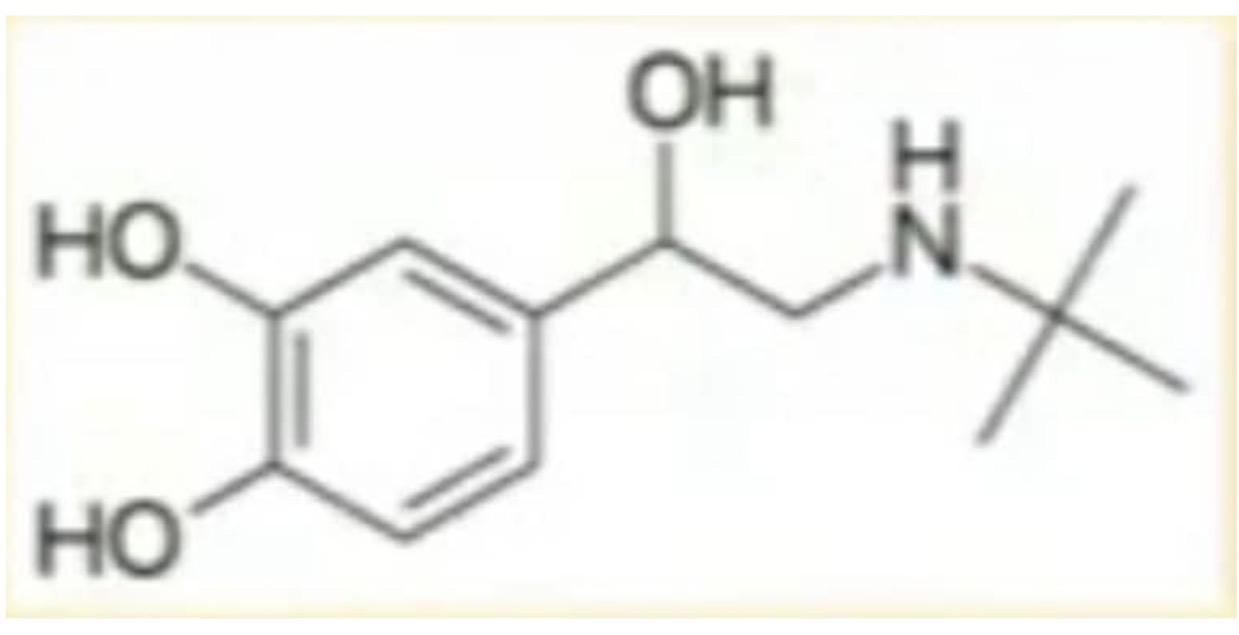
A. The drug can be degraded by COMT
B. The drug cannot be degraded by COMT
C. The drug can be degraded by MAO
D. The drug has more affinity to alpha receptors
E. The drug has more affinity to muscarinic receptors
A. The drug can be degraded by COMT
80
Naphthoxylactic acid is a major metabolite of which of the following drugs?
A. Prazosin
B. Propranolol
C. Dobutamine
D. Terbutaline
E. Phenylephrine
A. Prazosin
B. Propranolol
C. Dobutamine
D. Terbutaline
E. Phenylephrine
B. Propranolol
81
Identify the type of bond exist between the pointed area:
A. Van der Waals forces of attraction
B. lonic bonding
C. Dipole-dipole attraction
D. Dipole-induced dipole attraction
E. Hydrogen bonding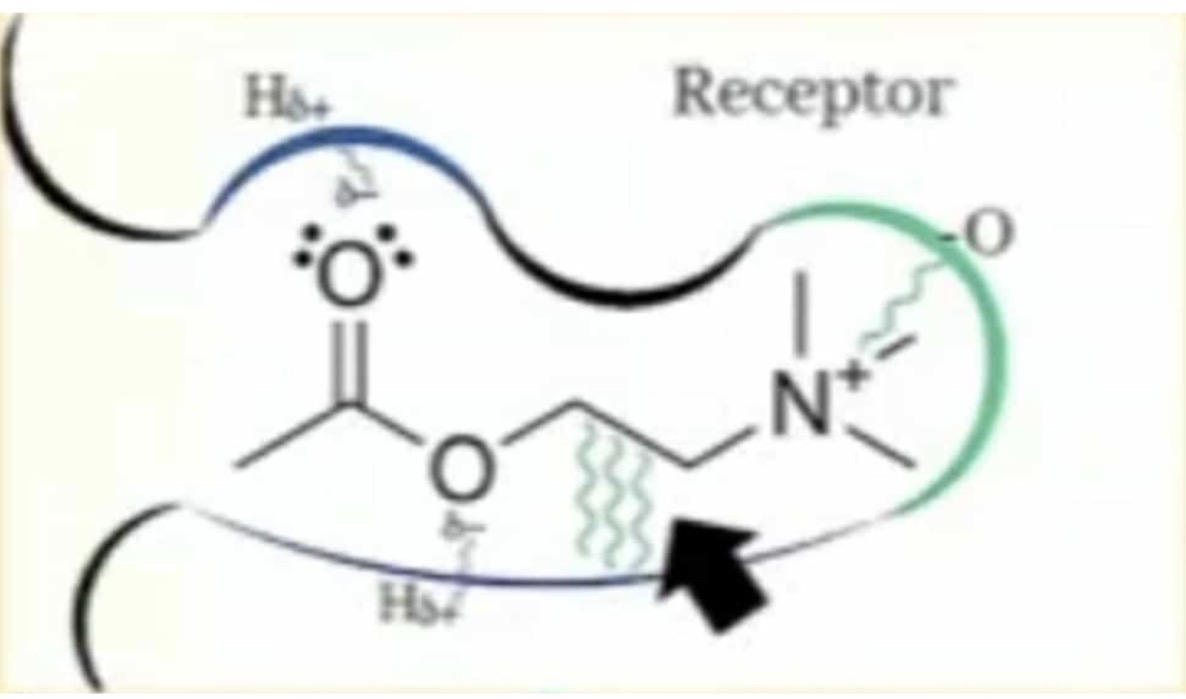
A. Van der Waals forces of attraction
B. lonic bonding
C. Dipole-dipole attraction
D. Dipole-induced dipole attraction
E. Hydrogen bonding
A. Van der Waals forces of attraction
82
Identify the type of bond exist between the pointed area:
A. Van der Waals forces of attraction
B. lonic bonding
C. Dipole-dipole attraction
D. Dipole-induced dipole attraction
E. Hydrogen bonding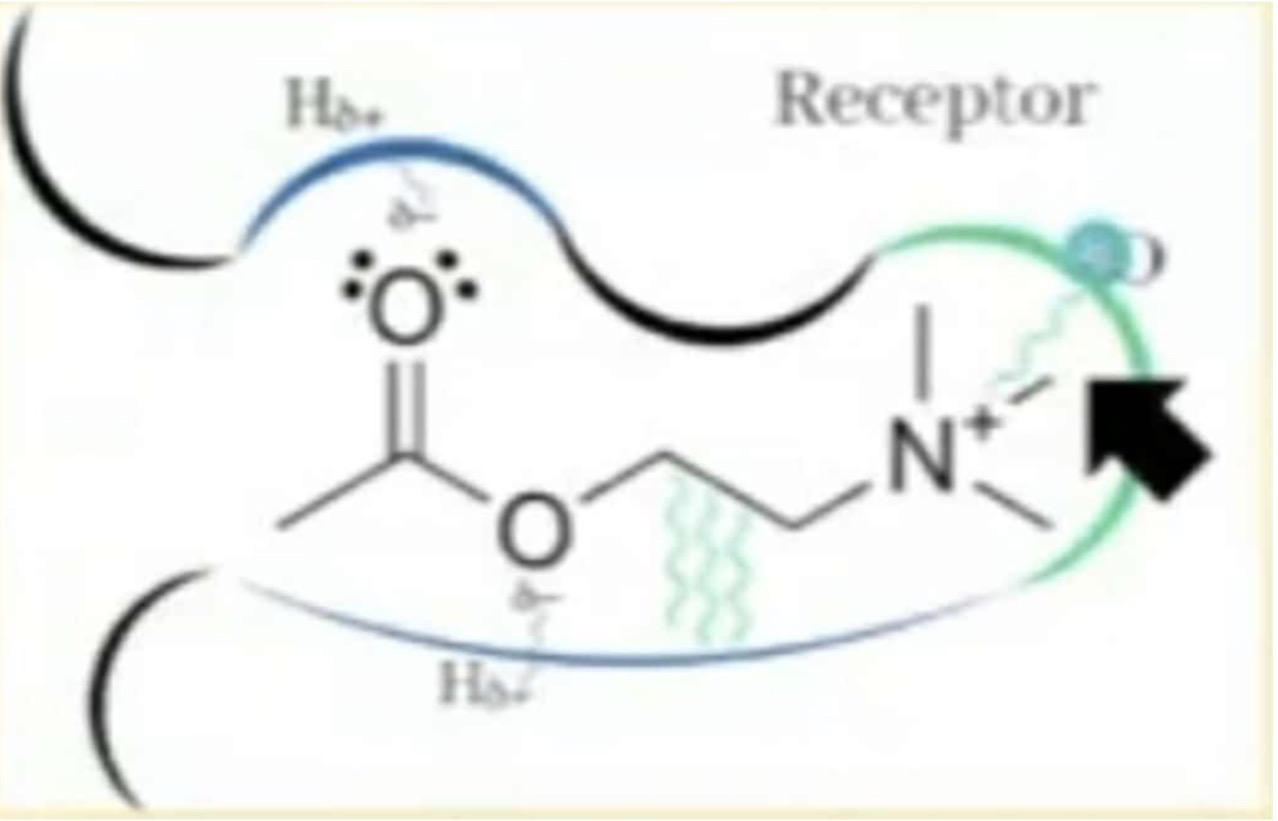
A. Van der Waals forces of attraction
B. lonic bonding
C. Dipole-dipole attraction
D. Dipole-induced dipole attraction
E. Hydrogen bonding
B. lonic bonding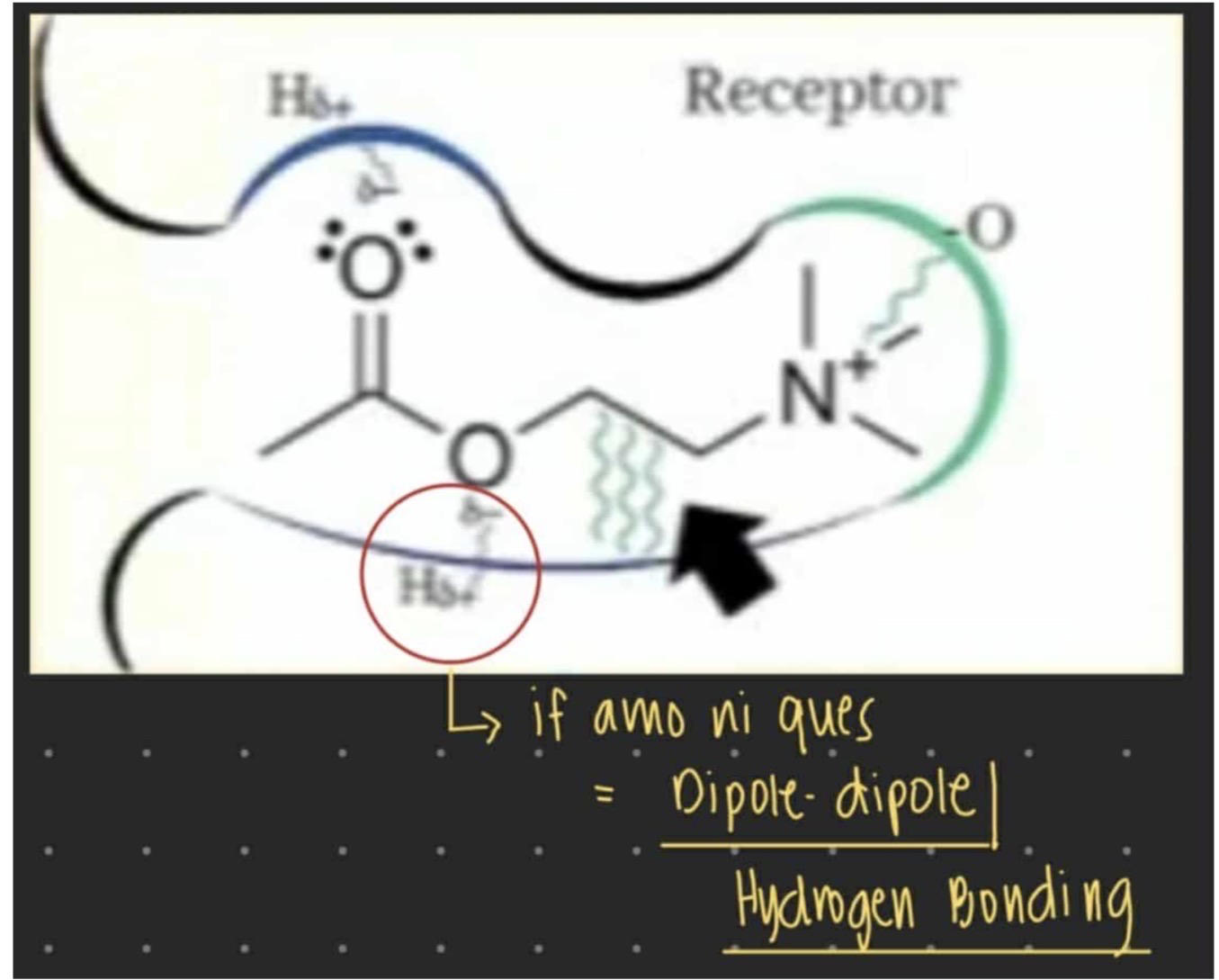
83
Which of the following blocks muscarinic receptors?
A. Bethanecol
B. Ecothiopate
C. Atropine
D. Neostigmine
E. Pancuronium
A. Bethanecol
B. Ecothiopate
C. Atropine
D. Neostigmine
E. Pancuronium
C. Atropine
84
Which of the following benzo has a duration of action of 3-8 hours
ATemazepar
B. Diazepar
C. Alprazolam
D. Oxazepam
E. Lorazepam
ATemazepar
B. Diazepar
C. Alprazolam
D. Oxazepam
E. Lorazepam
D. Oxazepam
Short (3-8 hours)
Intermediate (10-20 hours: Temazepam,
Alprazolam, Lorazepam
Long-acting (1-3 days): Diazepam
Short (3-8 hours)
Intermediate (10-20 hours: Temazepam,
Alprazolam, Lorazepam
Long-acting (1-3 days): Diazepam
85
Whixh drug is used as nerve poisons ar ave been used in warfare and bioterroris and as agricultural insecticides?
A. Ipratropium
B. Organophosphate
C. Bethanecol
D. Benztropine
E. Atropine
A. Ipratropium
B. Organophosphate
C. Bethanecol
D. Benztropine
E. Atropine
B. Organophosphate
86
Which of the following types of alcohol has the highest CNS depressant activity?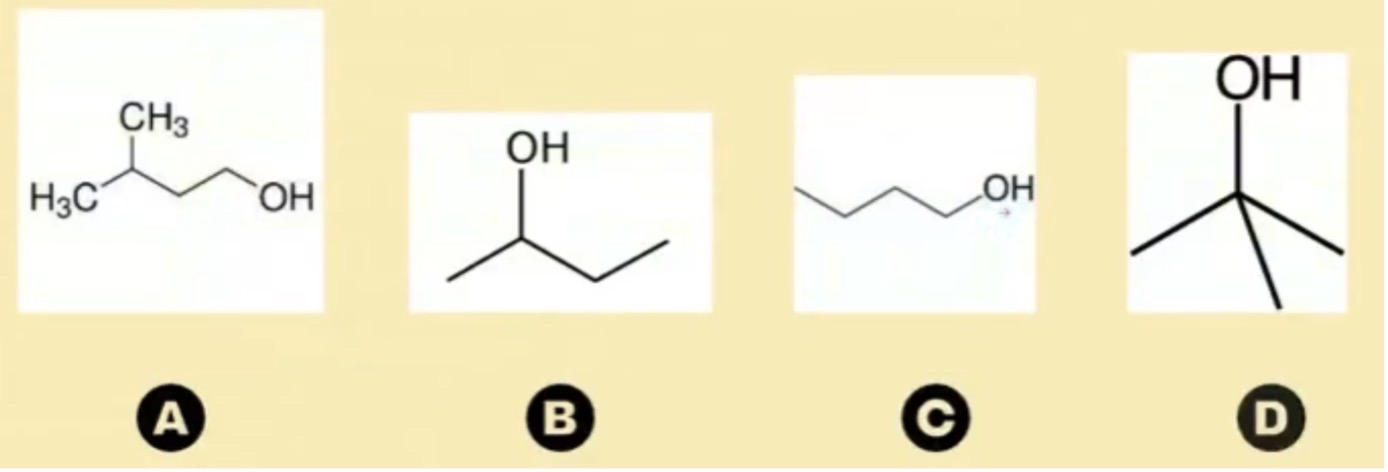
D.
Highest is tertiary = Letter D structure
Lowest is primary = Letter A & C structures
Highest is tertiary = Letter D structure
Lowest is primary = Letter A & C structures
87
Which of the following phenothiazines has more anticholinergic activity?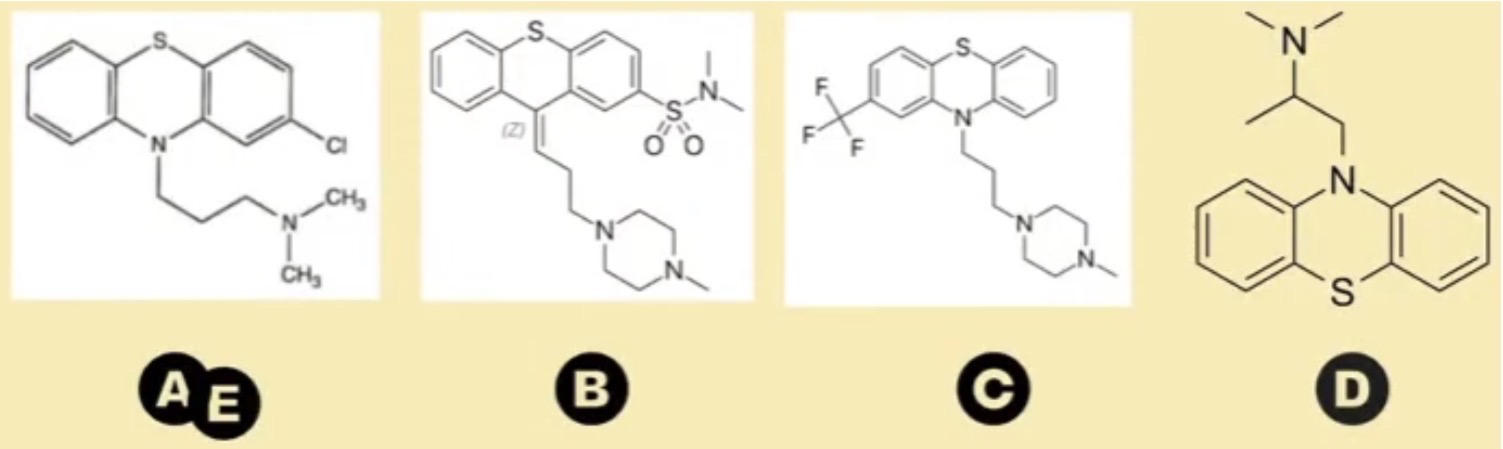
D.
Anticholinergic: 2 C between nitrogens
Anticholinergic: 2 C between nitrogens
88
Which of the ff causes extrapyramidal symptoms?
a. Olanzapine
b. Aripiprazole
c. Ziprasidone
d. Haloperidol
e. Risperidone
a. Olanzapine
b. Aripiprazole
c. Ziprasidone
d. Haloperidol
e. Risperidone
d. Haloperidol
89
Which of the ff drugs share a similar chemical D. Glutethimide structure with phenobarbital?
A. Mephensin
B. Chloral hydrate
C. Chlorpromazine
D. Glutethimide
E. Diazepan
A. Mephensin
B. Chloral hydrate
C. Chlorpromazine
D. Glutethimide
E. Diazepan
D. Glutethimide
90
Which is the least stable direct acting cholinergic agonist?
A. Bethanecol
B. Methacholine
C. Acetylcholine
D. Carbachol
E. Pilocarpine
A. Bethanecol
B. Methacholine
C. Acetylcholine
D. Carbachol
E. Pilocarpine
C. Acetylcholine
Bethanecol - most stable
Bethanecol - most stable
91
Which drugs block muscarinic receptors?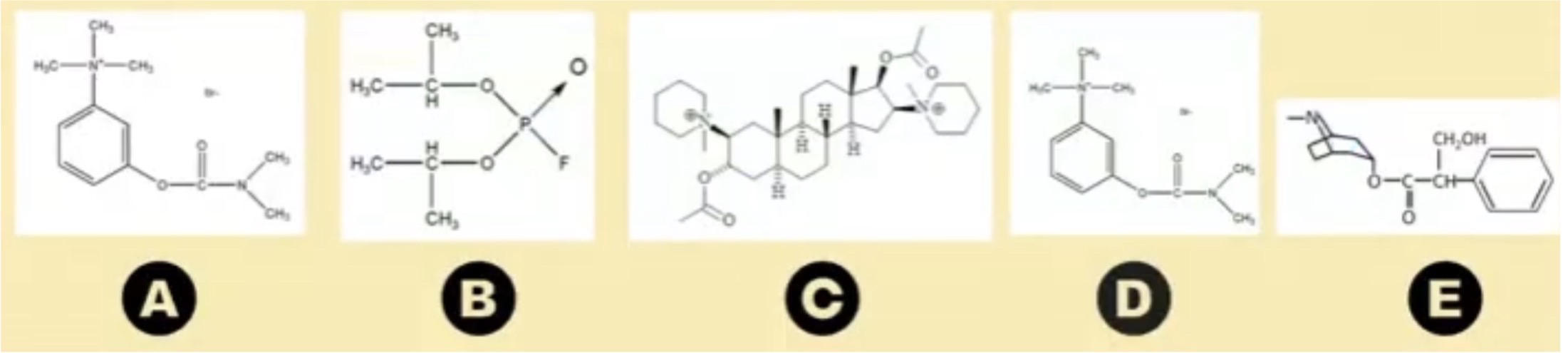
E.
"Umbrella structure"
A & D: indirect reversible
B: indirect irreversible
C: neuromuscular blocker
"Umbrella structure"
A & D: indirect reversible
B: indirect irreversible
C: neuromuscular blocker