photosynthesis
Study these flashcardsFree · spaced repetition · iPhone, Android, Mac & web
All cards
1
what is photosynthesis?
“how plants make food”
2
equation for photosynthesis (in words)
carbon dioxide + water + light yields sugar + oxygen
3
equation for photosynthesis
6CO2 + 6H2O + energy —> C6H12O6 + 6O2
4
reactants of photosynthesis
carbon dioxide, water, sunlight
5
products of photosynthesis
glucose, oxygen
6
what organelle is responsible for photosynthesis?
the chloroplast
7
where does the plant get water for photosynthesis?
veins (and roots from osmosis)
8
where does the plant get carbon dioxide from for photosynthesis?
the stomata. it takes in carbon dioxide and gives of oxygen
9
where does the plant get light from for photosynthesis?
from the chloroplasts, located in the mesophyll
10
how does the plant move food?
the phloem
11
what are the parts of the chloroplast?
the inner and outer membrane, the thylakoids stacked in stacks called grana/ granum, and the liquid inside called the stroma.
12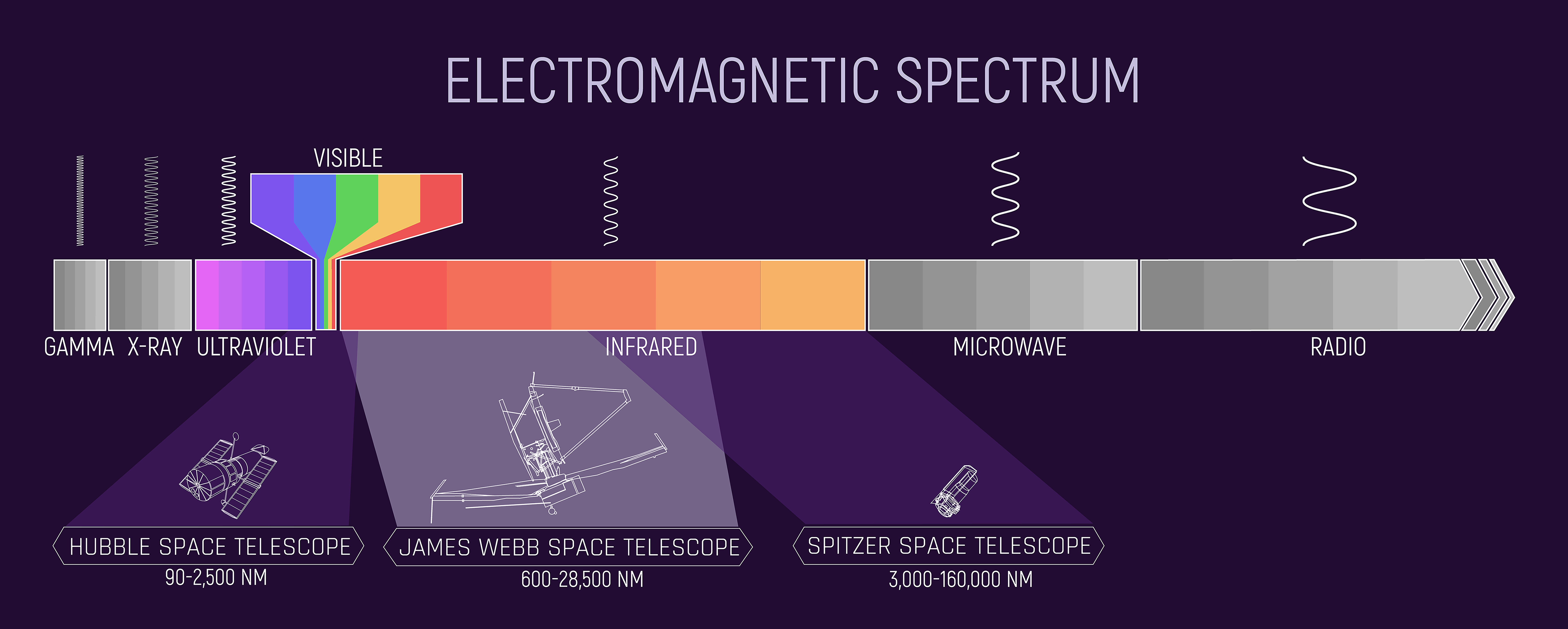
what is the electromagnetic spectrum?
13
what are the two stages of photosynthesis?
the light dependent reactions and the calvin cycle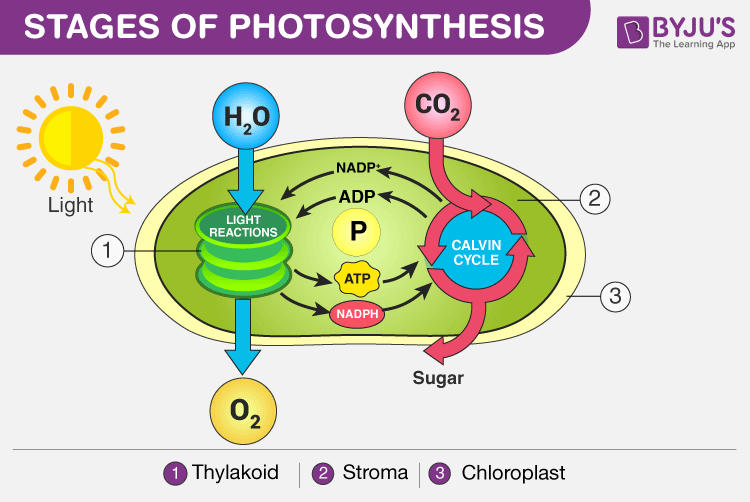
14
where do the light dependent reactions occur?
in the thylakoid
15
what is needed to start the light dependent reactions?
water and sunlight
16
what comes out of the light dependent reactions?
ATP, NADPH, O2
17
what happens in the light dependent reactions?
Light hits the pigment cells in photosystem II, which excites them into moving an electron through photosystem II into electron carriers into photosystem I. more light hits photosystem I, which again excites the cells into moving an electron, which turns NADP+ into NADPH.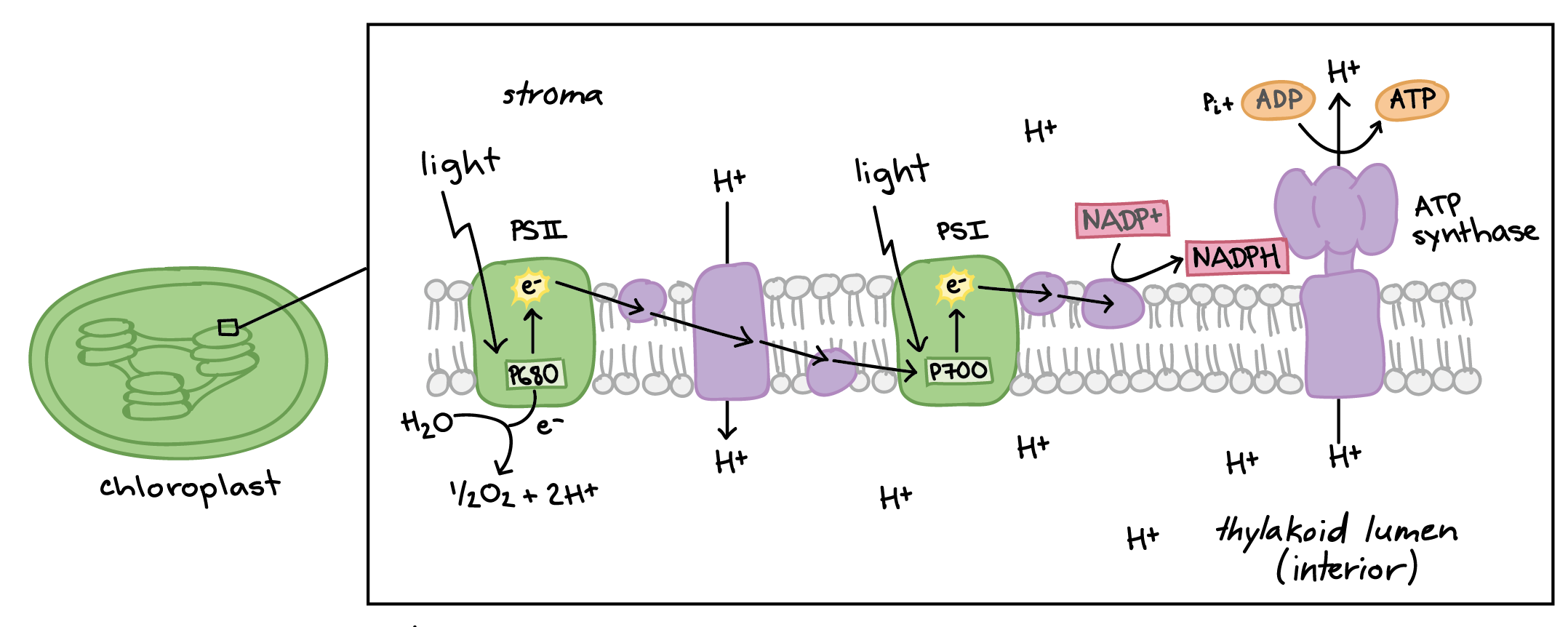
18
photosystem II
the first photosystem (AKA P680). splits the water brought into the cell into H2 and O. the Oxygen is spit out as it is not needed. The hydrogen and its electrons are used in the electron transport chain and ATP synthase.
19
electron transport chain
series of electron carrier proteins that shuttle high-energy electrons during ATP-generating reactions
20
what is chemiosmosis?
the use of energy in a H+ gradient to drive cellular work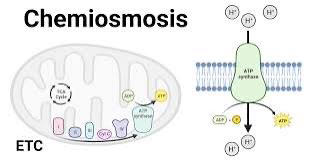
21
the two two protein carriers in the electron transport chain
plastoquinone (PQ) and protein complex (PC)
22
photosystem I
the second photosystem (AKA P700). creates NADPH from NADP+ using the electrons from hydrogen.
23
ATP synthase
Large protein that uses energy from H+ ions to bind ADP and a phosphate group together to produce ATP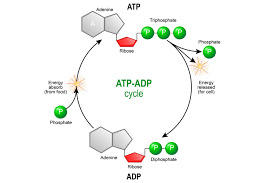
24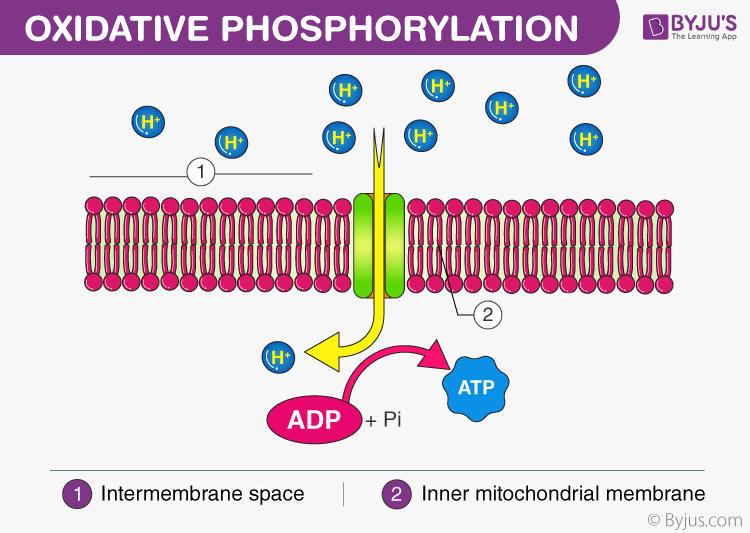
also ATP synthase
25
where does the calvin cycle occur?
in the stroma
26
what goes into the calvin cycle?
ATP, NADPH, CO2, RuBP
27
what comes out of the calvin cycle?
G3P, ADP, NADP+, RuBP
28
what happens in the calvin cycle?
three stages: the carbon fixation, reduction, and RuBP regeneration 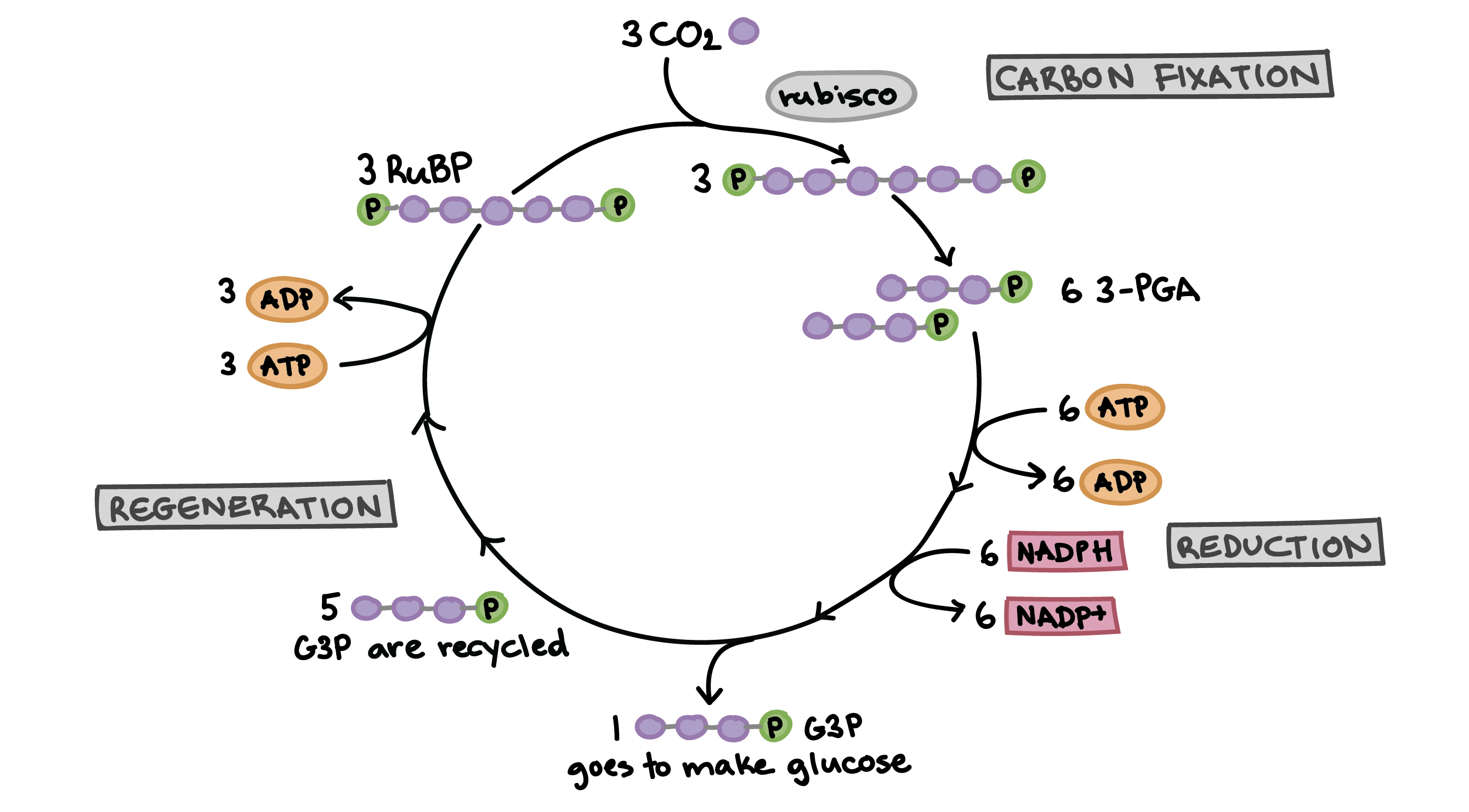
29
carbon fixation:
Three molecules of carbon dioxide are added to three molecules of a five-carbon sugar abbreviated RuBP. These molecules are then rearranged to form six molecules called 3-PGA, which have three carbons each.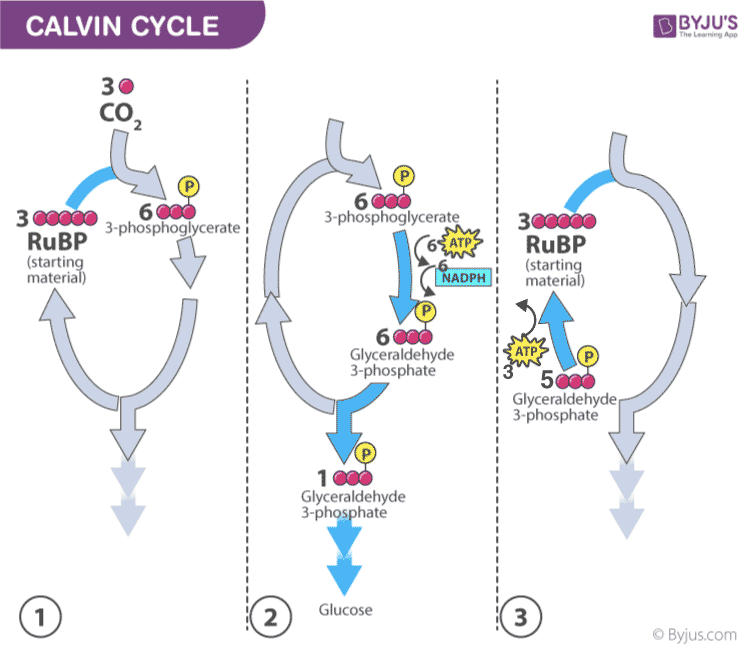
30
reduction:
PGA is converted to G3P with high energy electrons from NADPH and energy from ATP
31
RuBP regeneration:
The remaining G3P is used in reactions that use ATP to regenerate RuBP
32
how many times does the calvin cycle have to run to produce one glucose molecule?
twice
33
what is G3P?
glyceraldehyde 3-phosphate. A molecule that is made in the Calvin cycle; glucose is formed when two of these molecules combine
34
what is RuBP?
ribulose biphosphate; a five-carbon carbohydrate that combines with CO2 to form two molecules of PGA in the first step of the Calvin Cylce.
35
what is RUBISCO?
an enzyme that adds CO2 to RuBP in the carbon fixation stage
36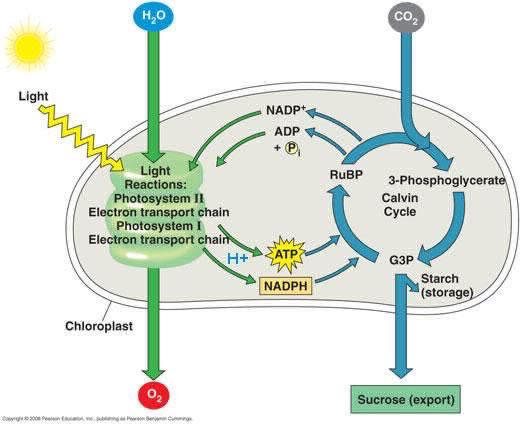
all together, this is photosynthesis:
37
Leo the lion says Ger
LEO: lose electrons = oxidation GER: gain electrons = reduction
38
NADP+ —> NADPH is a…
reduction
39
pigments
chlorophyll a + b, anthocyanin, xanthophyll, carotenes/carotenoids
40
Chlorophyll A + B
the two types of chlorophyll. A is lighter than B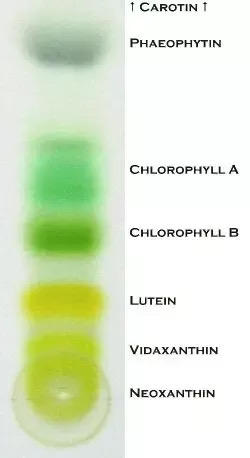
41
anthocyanin
a red pigment
42
carotenes/carotenoids
orange pigment
43
xanthophyll
yellow/ brown pigment
44
when light hits a pigment molecule:
it can absorb (what we see//what is used in photosynthesis), reflect (feel), or transmit (go straight through)
45
chromatography equation
rf = $\frac{dye}{solvent}$
46
solution = solute + solvent
solute: Substance being dissolved solvent: substance dissolving another substance ex: salt water. salt is the solute, water is the solvent.
47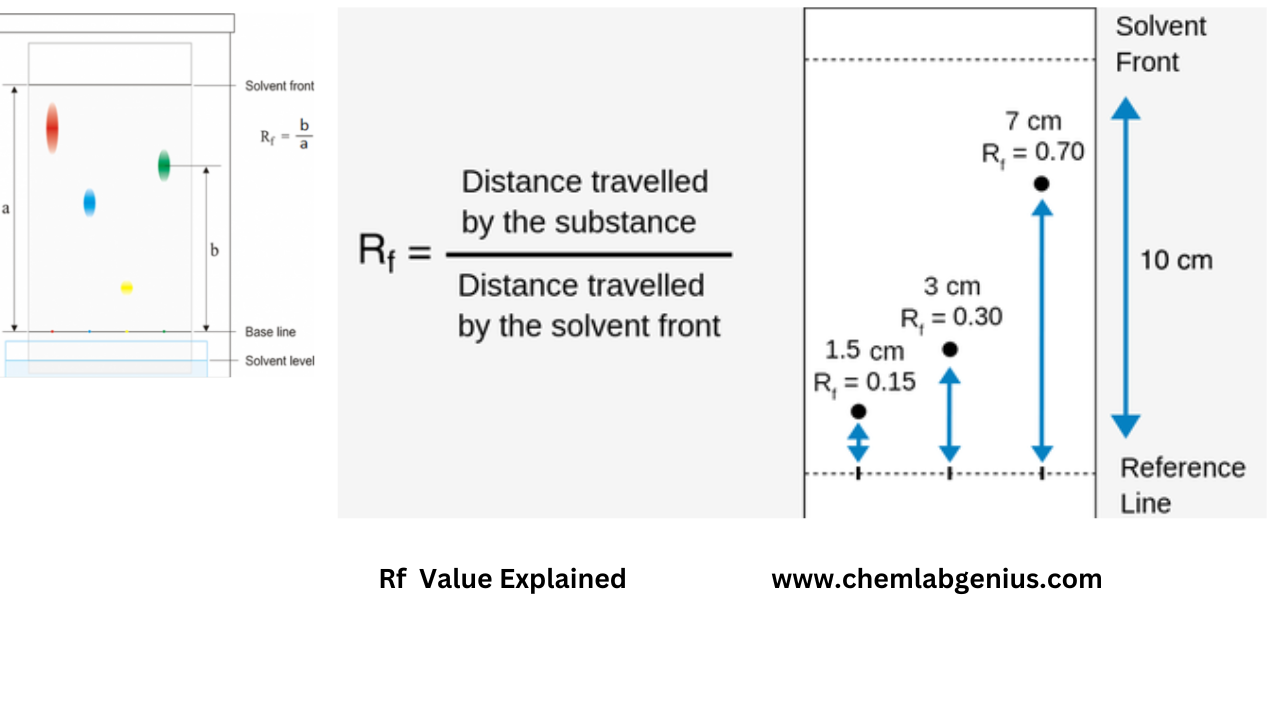
rf values:
48
spectrophotometry
measuring how light wavelengths change things. learn about the substance and how it reacts. measures transmittance and absorbance
49
what is dpip?
dichlorphenolindophenol - a dye used to monitor light reactions in photosynthesis (NADPH production). competes with NADP+ to grab high energy electrons