All cards
1
what is biology
Biology is the science that studies living things.
Living things are diverse and complex, therefore it is quite difficult, even for
scientists, to define life in simple terms that everyone would agree with.
Living things are diverse and complex, therefore it is quite difficult, even for
scientists, to define life in simple terms that everyone would agree with.
2
what are the 5 properties of living things
1. living organisms are made up of one or more cells.
2. They are the products of biological evolution, and species and populations
continue to evolve today.
3. Living organisms process different types of information.
4. Genetic information is encoded in DNA within every cell, and is passed on
when cells reproduce. Organisms are also able to sense their environment; they respond to
environmental signals in order to maintain stable internal conditions, and to
communicate.
5. all living things depend on energy to stay alive and reproduce.
2. They are the products of biological evolution, and species and populations
continue to evolve today.
3. Living organisms process different types of information.
4. Genetic information is encoded in DNA within every cell, and is passed on
when cells reproduce. Organisms are also able to sense their environment; they respond to
environmental signals in order to maintain stable internal conditions, and to
communicate.
5. all living things depend on energy to stay alive and reproduce.
3
Living systems are _______ that exchange ______ and ______ with their
environment
environment
open systems, energy, and matter
4
what are autotrophs
capture sunlight energy and convert it to chemical energy which they store
into organic molecules through the process of photosynthesis
into organic molecules through the process of photosynthesis
5
unicellular vs multicellular
one vs 2 or more
6
what is a plasma membrane
A cell is a living unit with a defined boundary, called the plasma membrane;
The plasma membrane is a double layer of phospholipids and proteins that
surrounds the cell and separates the interior of the cell from the outside
environment;
The plasma membrane is a double layer of phospholipids and proteins that
surrounds the cell and separates the interior of the cell from the outside
environment;
7
what is cytoplasm
The interior of a cell is a fluid called cytoplasm
8
what is DNA
All cells are able to store and transmit genetic information, encoded in one or
more molecules of DNA called chromosomes;
more molecules of DNA called chromosomes;
9
what is a ribosome
All cells contain structures called ribosomes that they use to produce
proteins.
proteins.
10
characterisitc of cell
all cells acquire energy and matter from the environment to power
their activities, and to build or repair their components.
their activities, and to build or repair their components.
11
prokaryote cells
usually do not have any internal membranes or compartments and has cell walls + plasma membrane
12
shared characterisircs
contain a fluid cytoplasm
surrounded by a plasma membrane, contain ribosomes, and have DNA as genetic material
surrounded by a plasma membrane, contain ribosomes, and have DNA as genetic material
13
eukaryote
have internal compartments surrounded by membranes,
such as the nucleus, and a variety of organelles
such as the nucleus, and a variety of organelles
14
dna carries what
genetic information
15
rna
encodes for protien
16
darwins belief w respect to mutation
descent w modification
17
natural selectiom
operates on phenotypic variations that are due to genetic mutations.
- genetically determined traits that increase their fitness in
a given environment have a greater likelihood of reproducing and passing on
their genes to their offspring.
- genetically determined traits that increase their fitness in
a given environment have a greater likelihood of reproducing and passing on
their genes to their offspring.
18
what is the process of evolution
All known life forms are related to one another by common ancestry. All
species come from preexisting species, and all species can eventually be
traced back to a single common ancestor
species come from preexisting species, and all species can eventually be
traced back to a single common ancestor
19
which domains are associated w bacteria
bacteria and archaea
20
bacteria vs archea
cell walls made of peptoglycan vs cell wall made of not peptoglycan
21
eukaryotes contain what domains
plants, animals, fungi, and protists
22
plants are_______ that can reproduce via _______. Their cell walls are made of ________
autotrophs, sexual and asexually, and cellulose.
23
animals are _______ that reproduce via _______. Instead of cell walls they have _________________.
heterotrophs, sexual some asexual, extracellular matrix.
24
fungi are _________ that reproduce via__________. they have cell walls made of what______.
heterotrophs, sexual or asexual, and chitin
25
protists are ___________ AND ___________. They can reproduces____________________.
heterotophs, autotrophs, sexual and asexual
26
matter is defined as
anything that occupies space and has mass.
27
what elements are the most abundant in the human body
CNOPHS
28
what is a covalent bond
interaction between two atoms, in which the atoms share
electrons.
electrons.
29
ex of covalent bomds
c-h, c-c, H2, H2O, NH3, CH4
30
what fumctional groups would readily dissasociate
phosphate, amino acid , carboxyl COO
31
glucose in water
just hydrogen bonds to water molecules but it is not necessarily releasinf any ions
32
salt in water
hydration shells are formed
33
adhesion
tendency for wayer molecules to stick to a surface or other molecules
34
acidic is lower than 7
true bc more H+
35
10^-9
nm to um
36
what is this group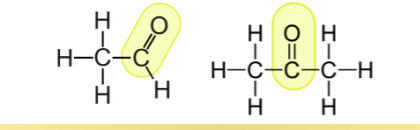
CO
37
what is this group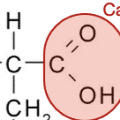
carboxyl group
38
what is this group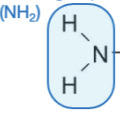
amino
39
what is this group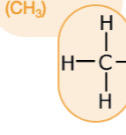
methyl
40
what os this group 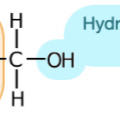
hydroxyl
41
what is this group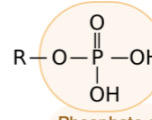
phosphate
42
amino group is ______ and temds to ______ protoms
basic, lose
43
carboxylic group is ______ and temds to _________ protons
acidic, gain
44
phosphate ________ and tends to ——- protons
acidic, gain
45
monosaccharides
“one” sugar
46
ex. of polysaccharides
dna, rna, protien, starch, cellulose
47
4 molecules
protiens, lipids, nucleic acid, and carbohydrate
48
ex of carbohydrates
starch glycogen, cellulose, chitin, peptoglycan
49
ex. of lipids
fats, steroids, phospholipids
50
sugars store______
energy
51
what are lipids
insouluble in water
52
fatty acid structure
long hydrocebon with a OH group
53
what are the components of phospholipids
glycerol, and 2 fatty acid chains
54
lipids are
amphipathic
55
amphipathic molecules spontaneously arrange themselves due to
hydrophobic effect
56
longer tails mean a permiability
lesser
57
shorter tails mean a. permianility
greater
58
bilayers can diffuse
small nonpolar molecules and small uncharged polar molecules
59
membrane contains
cholesteol and membrane protiens, integral or transmembrane
60
glycolipids are present on
the exterior of the membrane
61
membrane is considered a fluid mosaic
bc its composed of one or more type of molecules and membrane protien are able to move laterally within ,embrane
62
integral membrane protiens must be
amphipathix as well as a hydrophobic region thaf attachs fo phospholipid tails
63
integral membranes functions include.
intercellular joinings, enzymatic activity, transpirt, cell-cell recognitiom, anchorage, and signal transductjon
64
what type of protiens alter membrane permisbility
transport, channel, carrier, and pumps
65
cytoplasm maintains a solute compisition than the extracellular fluid
different
66
all cells have a plasma membrane regardless of cell wall T or F
T
67
bacterial phospholipids are most similar ro
eukaryotic phospholips
68
archean phospholipids
have highly branched isoprenoid chains bout to glycerol
69
what does the plasma membrane do
seperates cytoplasm from extracellular enviorment ans regulates the exchange of substances jn and out of the cell
70
can ions cross the hydrophobic bilayer
not on their own
71
what is simple diffusion
a small incharged molecule moving from a higher concnetration to a lower concentration and it is spontameous
72
what is facilitated diffusion
it requires membrane protiens to move hydrophillic large molecules. protien channels ans carrier protiens
73
ex of protien carrier
GLUT-1
74
what is osmosis
the movemnt of water accross a membrane to a higher solute concentration, it needs a protien but if no concmetration was involved it wpuld not need one
75
hypertonic solution
- cell grows
- cell shrinks
- nothing happems
76
ions need what to difuse
protien channels and they create a gradient
77
what is active transport
hydrolysis of atp and it require a pump protiem
78
what is a antiporter
if two substances are moving simultaneously in opposite directions
79
what is a primary active transport
ATP is hydrolysized ans the energy released to harness the energy
80
secomdary active transport
uses the gradient from primary active tramsport to move
81
ex of secomdary active transporter
Na+/ glucose