Lecture 3 - Antigens, Antigen Recogn, MHC
Study these flashcardsFree · spaced repetition · iPhone, Android, Mac & web
All cards
1
What is an immunogen?
a substance which is able to induce an immune (adaptive) response
2
Are immunogens antigens?
ALL immunogens are antigens, but not all vice versa
ex: food antigens
ex: food antigens
3
What factors influece the immune response?
1. Age
2. Overall health
3. Route of innoculation
4. Dose
5. Genetic composition determines whether an immune response can be made or not
2. Overall health
3. Route of innoculation
4. Dose
5. Genetic composition determines whether an immune response can be made or not
4
Elaborate on the factor influencing immune response:
1. Age
1. Age
- older individuals - decreased response to antigenic stimulation
- neonates - immune system not fully developed
- neonates - immune system not fully developed
5
Elaborate on the factor influencing immune response:
2. Overall health
2. Overall health
- malnutrition
- fatigue
- stress
- fatigue
- stress
6
Elaborate on the factor influencing immune response:
3. Route of inoculation
3. Route of inoculation
• Intravenous-carried by blood to spleen
• Intradermal
• Subcutaneous - goes to local lymph nodes
• Oral- can lead to oral tolerance,Ag delivered via GI tract are ignored by the adaptive immunity
• Intradermal
• Subcutaneous - goes to local lymph nodes
• Oral- can lead to oral tolerance,Ag delivered via GI tract are ignored by the adaptive immunity
7
Elaborate on the factor influencing immune response:
4. Dose
4. Dose
• The larger the amount of immunogen exposed to, the greater the immune response
• Very large doses can induce tolerance
• Very large doses can induce tolerance
8
Elaborate on the factor influencing immune response:
5. Genetic composition
5. Genetic composition
determines whether an immune response can be made or not - MHC system genes
9
What are the most important genes in the immune system?
MHC system genes
10
What are MHC system genes?
a system of genes that code for all cell surface molecules that play an important role in antigen recognition
11
What are some traits of antigens/immunogens?
1. immunogenicity
2. BCR and TCR react to specific proteins but to different levels of protein structures
3. Pure nucleic acids or lipids are not immunogenic by themselves unless bound to specific carriers:
2. BCR and TCR react to specific proteins but to different levels of protein structures
3. Pure nucleic acids or lipids are not immunogenic by themselves unless bound to specific carriers:
12
What is immunogenicity?
ability of an antigen to stimulate a host response depends on:
1. macromolecular size
2. foreignness
3. chemical composition and molecular complexity
4. ability to be processed and presented within MHC molecules
1. macromolecular size
2. foreignness
3. chemical composition and molecular complexity
4. ability to be processed and presented within MHC molecules
13
Elaborate on the host immunogenicity depending on:
1. macromolecular size
1. macromolecular size
The immunogen MUST be at least 10000 D in size to be recognized by the immune system, the most effective immunogens are > 100000 D, the larger the immunogen the more potent it will be
14
Elaborate on the host immunogenicity depending on:
2. Foreigness (unrelatedness to the host)
2. Foreigness (unrelatedness to the host)
The more taxonomically different, the more successful it is as an immunogen. For example, a plant antigen is more immunogenic for an animal than an antigen from the same animal, substances should be recognized as non-self
15
Elaborate on the host immunogenicity depending on:
3. Chemical composition and molecular complexity
3. Chemical composition and molecular complexity
• Proteins are stronger than polysaccharides, lipids or nucleic acids. Proteins are more complex (amino acid sequence, secondary, tertiary and quaternary structures)
• Carbohydrates most often occur in the form of glycolipids or glycoproteins (e.g., ABO blood group antigens), not repeating units. Polysaccharides (repeating units) are less immunogen than proteins.
• Carbohydrates most often occur in the form of glycolipids or glycoproteins (e.g., ABO blood group antigens), not repeating units. Polysaccharides (repeating units) are less immunogen than proteins.
16
What are the different levels of protein structures that BCR and TCR react to?
• T cells (TCR) recognize “peptide” (hence primary structure or amino acid sequence) of a protein molecule only when that peptide is held (cradled) within MHC molecules
• BCR is activated by binding to amino acids on the exterior of a protein (recognize tertiary or quaternary structure of a protein antigen)
• BCR is activated by binding to amino acids on the exterior of a protein (recognize tertiary or quaternary structure of a protein antigen)
17
Explain the difference in polysaccharides and proteins in immunogenicity:
Polysaccharides are less immunogenic than proteins because they cannot activate T cells (T cells can not recognize polysaccharides), however, B cells can recognize some polysaccharides without help from T cells (memory not generated)
18
Discuss the different examples for protein structure:
- A, B, H antigens from ABH blood group system are glycolipid
- Rh antigens are protein
- P system antigens are CHO, MNSs are glycoprotein
- Kidd, Duffy, Kell, and Lutheran are protein, …………
- Rh antigens are protein
- P system antigens are CHO, MNSs are glycoprotein
- Kidd, Duffy, Kell, and Lutheran are protein, …………
19
Give an example of specific carriers that pure nucleic acids or lipids must bind to require to be immunogenic:
• For instance, in systemic lupus erythematosus (SLE), the anti-DNA antibodies are basically specific to DNA-protein (nucleoprotein) complex
NOT DNA itself
NOT DNA itself
20
What is the key portion of the immunogen that is actually recognized in the immune response called?
determinant site, or epitope
21
For example, what is the epitope in the blood group antigen A?
N-acetyl-D-galactosamine (aka immunodominant sugar) in the whole structure of the Ag
22
What is an epitope?
• Epitopes are molecular shapes or configurations that are recognized by B or T lymphocytes.
• Large molecules may have numerous epitopes, but each epitope can trigger a specific Ab or activate a specific T cell.
• Large molecules may have numerous epitopes, but each epitope can trigger a specific Ab or activate a specific T cell.
23
What is a linear epitope?
• Sequential
• Example: amino acids following one another on a single chain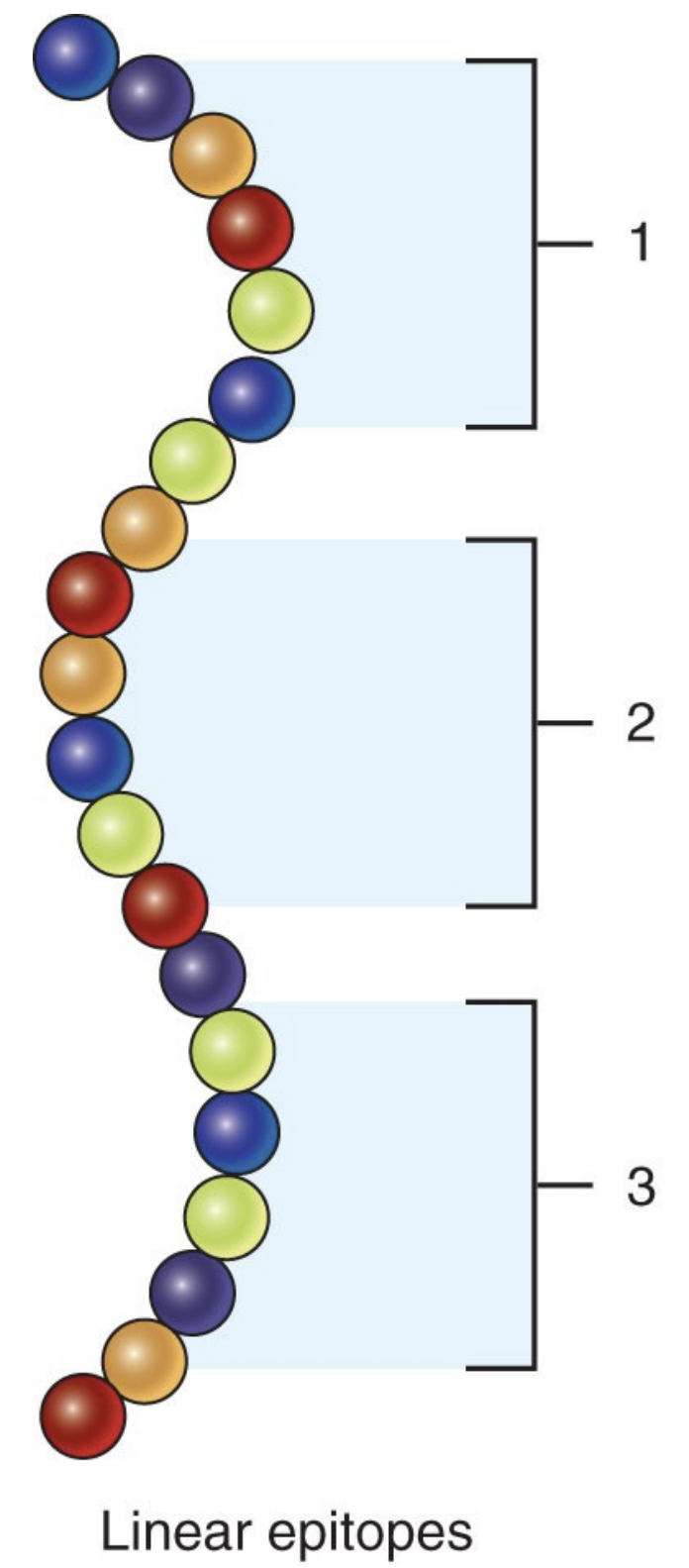
• Example: amino acids following one another on a single chain
24
What is a conformational epitope?
• Has folding of one or more chains
• Allows amino acids from different segments to come into close proximity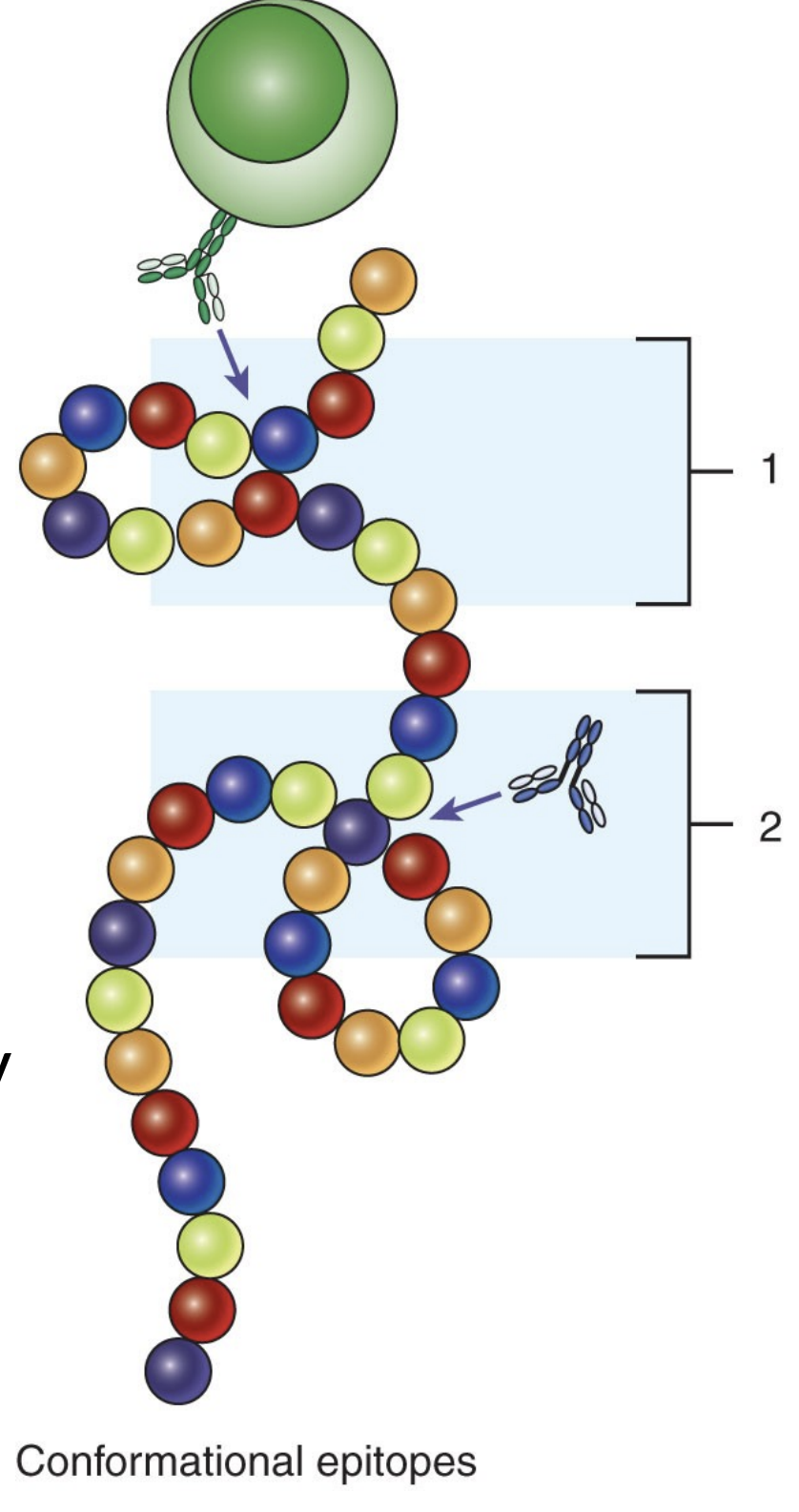
• Allows amino acids from different segments to come into close proximity
25
What type of epitopes do B cells recognize?
BOTH linear and conformational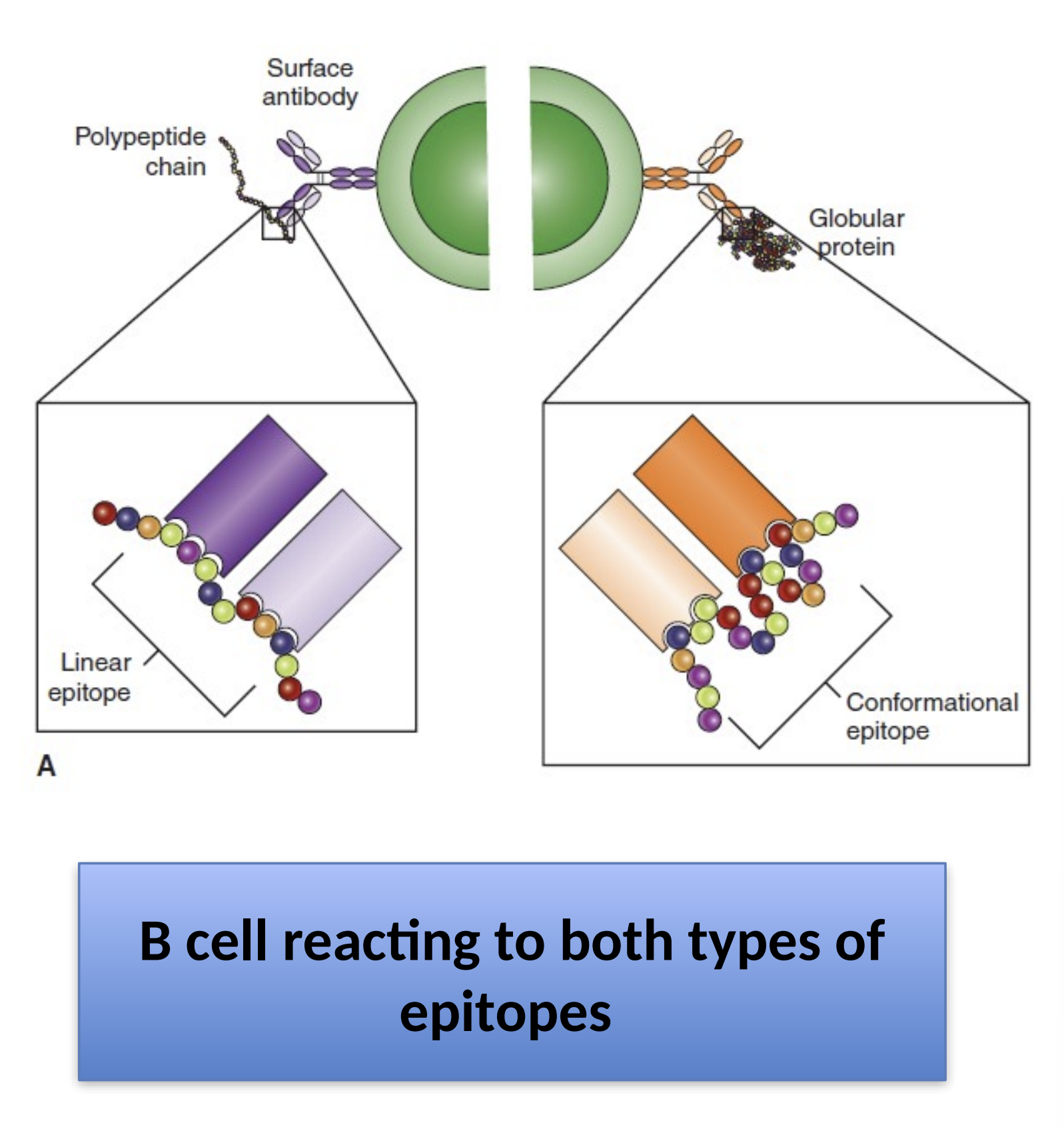
26
What type of epitopes do T cells recognize?
linear epitopes only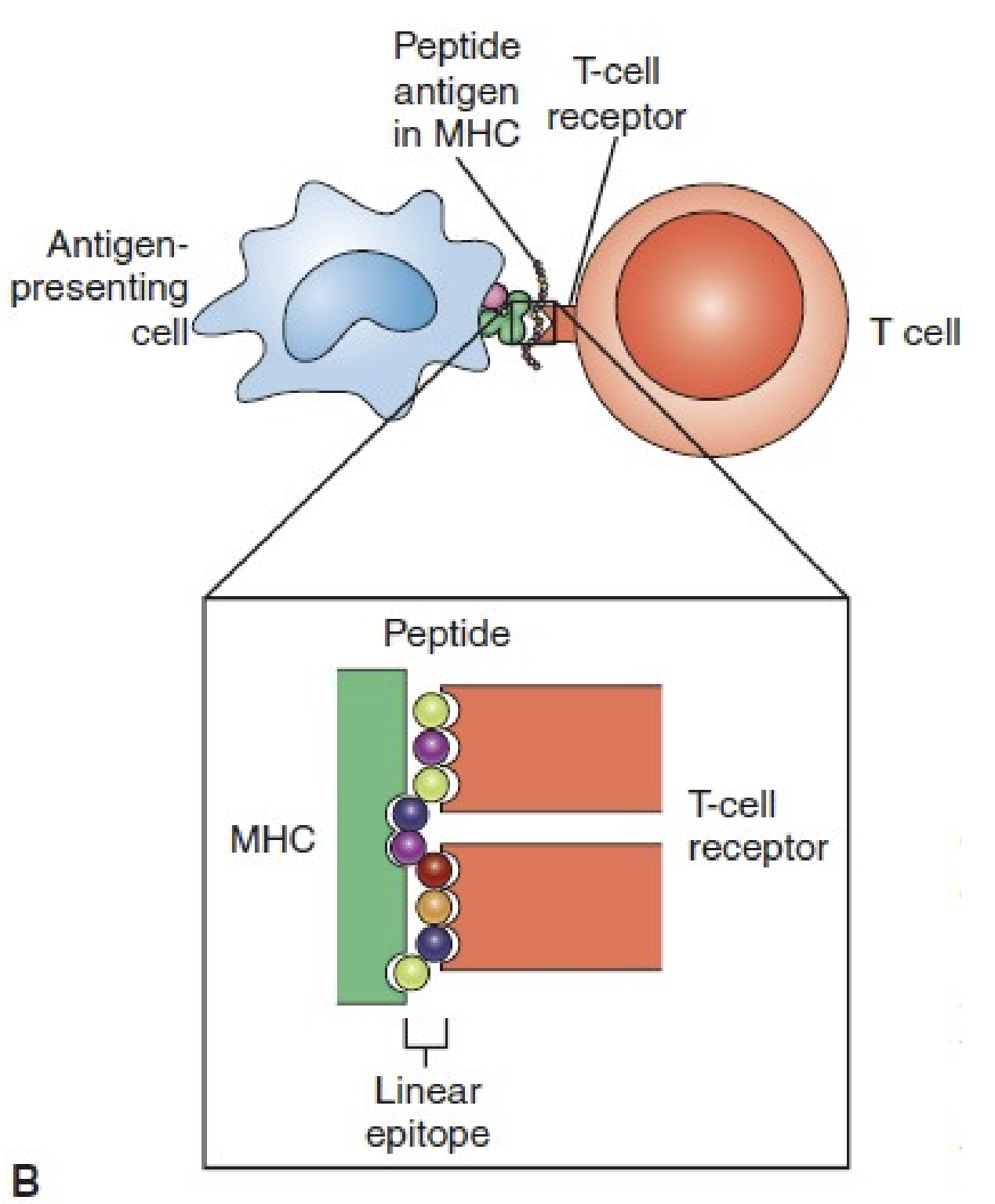
27
What are haptens?
nonimmunogenic materials (too small to be recognized by B cells), however, when combined with a larger carrier molecule, they can create new antigenic determinants and trigger an immune response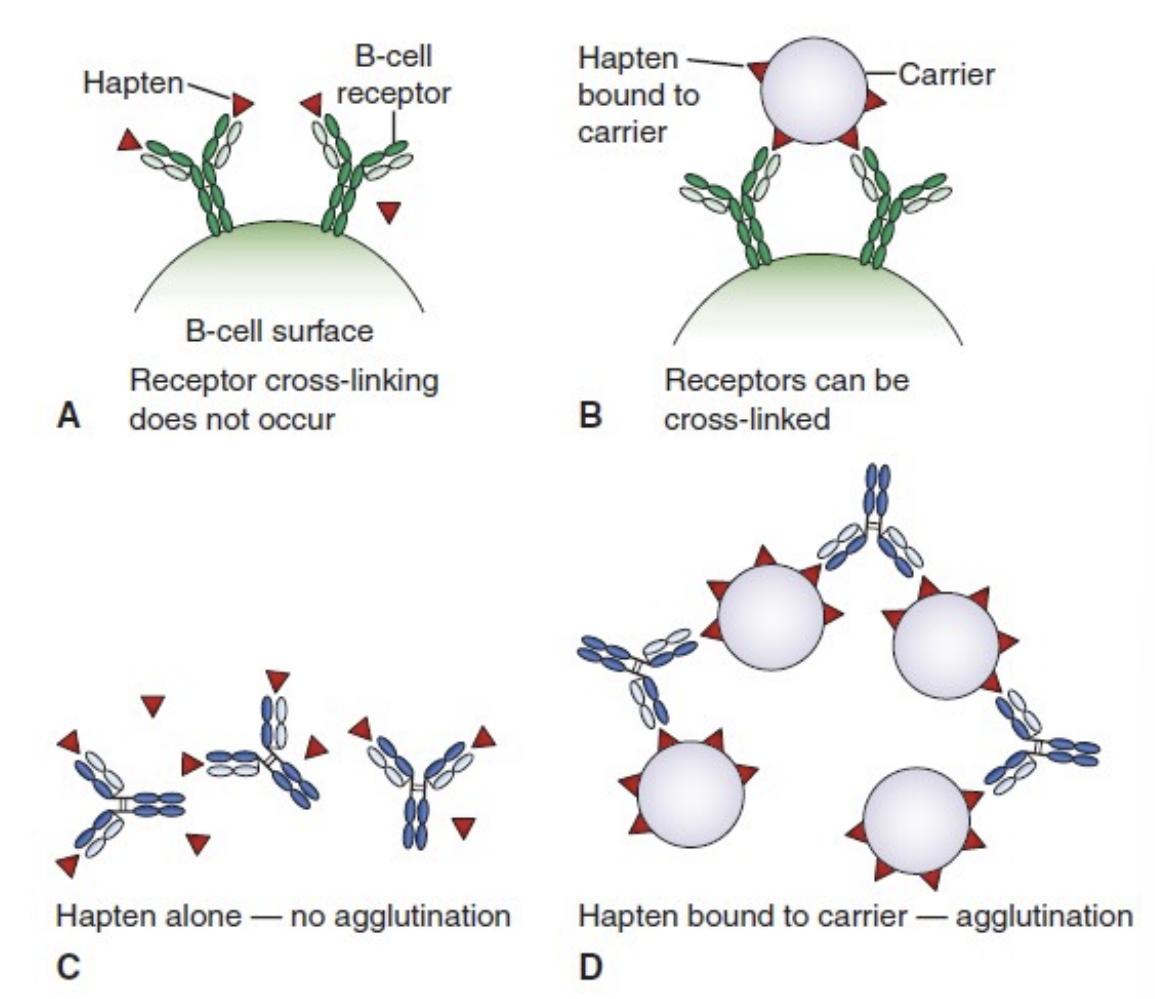
28
Are haptens an immunogen?
NO! they are an antigen, but not an immunogen
29
Can haptens initiate precipitation or agglutination?
Haptens by themselves cannot initiate precipitation or agglutination reactions due to small size and because cross-linking of more than one antibody molecule does not occur
30
What are some examples of haptens?
• Penicillin is a hapten but when bound to normal proteins in the body can cause dangerous allergic reaction
• Catechols in the poisonous plant Ivy (in nature), if bound to dermal proteins they will cause allergic dermatitis
• Catechols in the poisonous plant Ivy (in nature), if bound to dermal proteins they will cause allergic dermatitis
31
What are adjuvants?
substances delivered simultaneosly with antigen for the purpose of potentiating or enhacing the immune response by:
1. prolonging
2. stimulating
3. increasing
4. accelerating
1. prolonging
2. stimulating
3. increasing
4. accelerating
32
Elaborate how the adjuvant enhances the immune response by:
1. prolonging
1. prolonging
Prolonging the existence of immunogen in the area (by preventing antigen from diffusing away from a site of inoculation)
33
Elaborate how the adjuvant enhances the immune response by:
2. stimulating
2. stimulating
Stimulating innate immune receptors such as TLRs which sense the danger
34
Elaborate how the adjuvant enhances the immune response by:
3. Increasing
3. Increasing
Increasing the number of macrophages and dendritic cells
(APCs) involved in antigen processing
(APCs) involved in antigen processing
35
Elaborate how the adjuvant enhances the immune response by:
4. Accelerating
4. Accelerating
Accelerating the immune response, including duration of protection and it also decreases need for boosters (helpful in immunizations)
36
What are autoantigens?
Autoantigens are those antigens that belong to the host. These do not
evoke an immune response under normal circumstances
evoke an immune response under normal circumstances
37
What are alloantigens?
Alloantigens are from other members of the host’s species
38
What are heteroantigens?
Heteroantigens -from other species-plants, animals, microorganisms
39
What are heterophile antigens?
Heterophile antigens -heteroantigens that exist in unrelated plants or
animals but are either identical or closely related in structure so that an
antibody against either antigen will cross-react with the other.
animals but are either identical or closely related in structure so that an
antibody against either antigen will cross-react with the other.
40
What is an example of heterophile antigens?
1. Human blood group A and B antigens which are related to bacterial poly
saccharides
2. Reaction of a heterophile antibody in the serum of patients with infectious
mononucleosis (IM) with sheep red blood cells (SRBCs): principle of Paul-Bunnell test.
saccharides
2. Reaction of a heterophile antibody in the serum of patients with infectious
mononucleosis (IM) with sheep red blood cells (SRBCs): principle of Paul-Bunnell test.
41
What is the Rapid Mono Test?
reaction of the heterophile Ab with horse or bovine RBCs
42
What is MHC?
Major histocompatibility complex
• In humans called HLA (human leukocyte antigen) following discovery an antibody response to circulating WBCs
• Now named MHC (Major Histocompatibility Complex) because they determine whether a tissue transplant is accepted by the (compatible with the) recipient or rejected, thus extremely important in organ transplantation
• In humans called HLA (human leukocyte antigen) following discovery an antibody response to circulating WBCs
• Now named MHC (Major Histocompatibility Complex) because they determine whether a tissue transplant is accepted by the (compatible with the) recipient or rejected, thus extremely important in organ transplantation
43
Where are MHC found?
Are found on all nucleated cells (Class I) in the body, and they play a pivotal
role in the development of both humoral and cellular immunity.
role in the development of both humoral and cellular immunity.
44
What is the main function of MHC?
Their main function is to bring antigen to the cell surface for recognition by T
cells, because T-cell activation will occur only when antigen is combined
with MHC molecules
cells, because T-cell activation will occur only when antigen is combined
with MHC molecules
45
Where are MHC molecules encoded?
encoded by the genes of the most polymorphic gene systems in humans
46
What is polymorphic in MHC?
- each HLA allele varies greatly among different individuals
- The polymorphism of the MHC system is essential to our survival, because MHC molecules play a pivotal role in triggering the immune response to diverse immunogens.
- The polymorphism of the MHC system is essential to our survival, because MHC molecules play a pivotal role in triggering the immune response to diverse immunogens.
47
Where are the genes that encode for MHC found?
on the short arm of chromosome 6 and are divided into 3 categories/classes
48
What are the 3 classes in MHC genes?
- Class I
- Class II
- Class III
- Class II
- Class III
49
Where is MHC Class I found?
found in three different loci (designated as A, B, and C)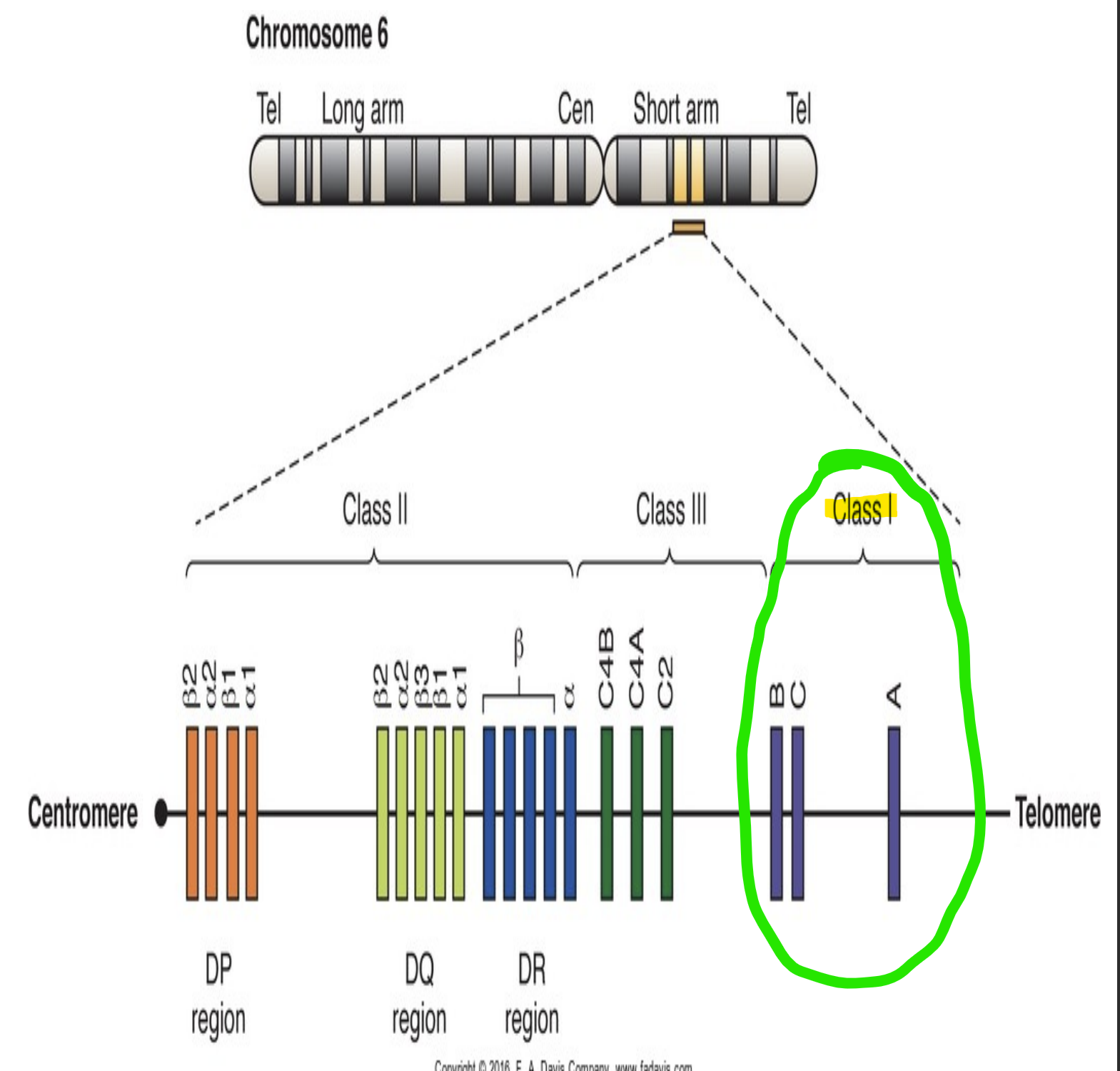
50
Where is MHC Class II found?
found on the D region (designated as DR, DQ, and DP)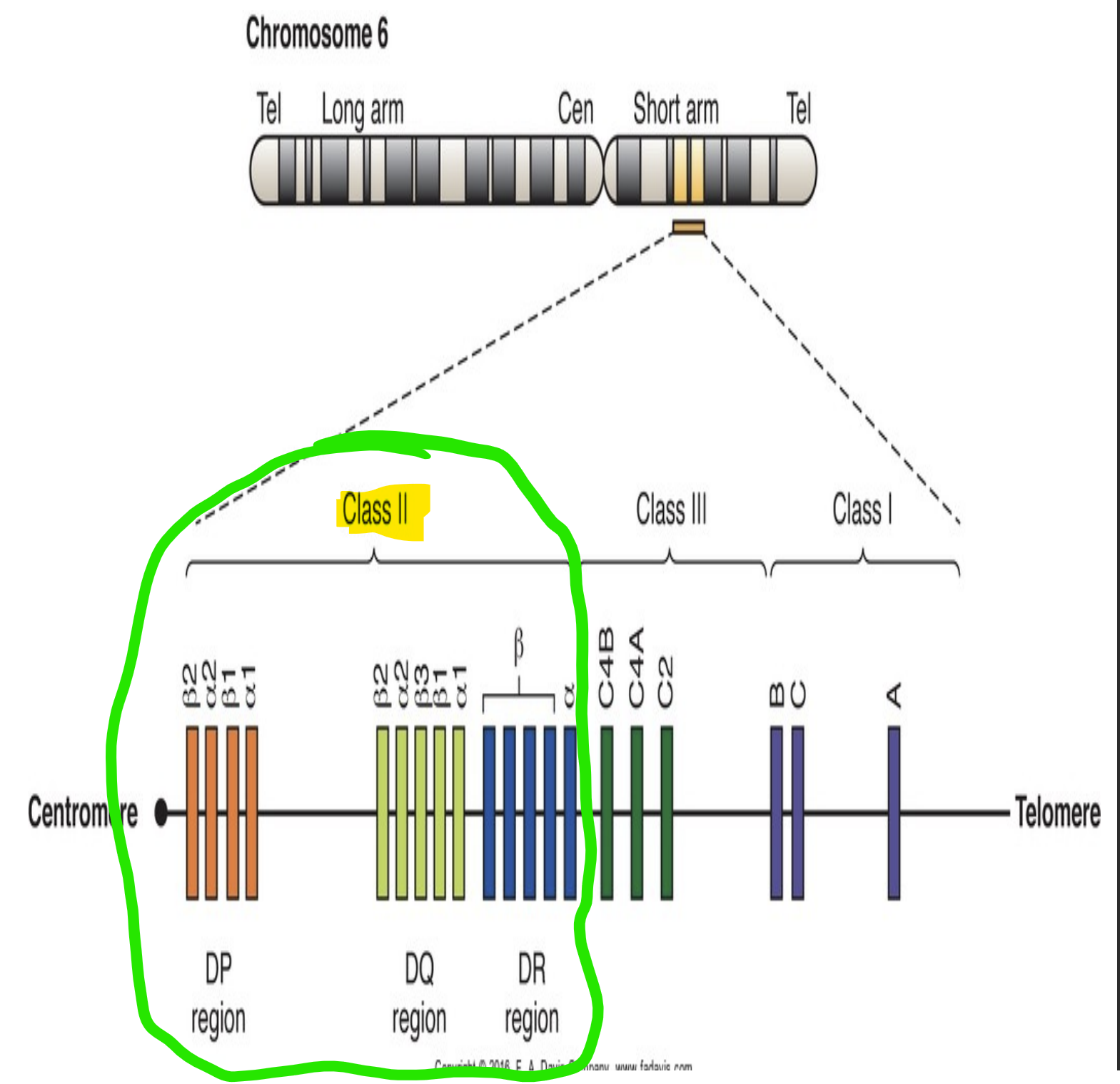
51
Where is MHC Class III found?
found in a region between class I and II, and codes for C4A, C4B, C2, and B complement proteins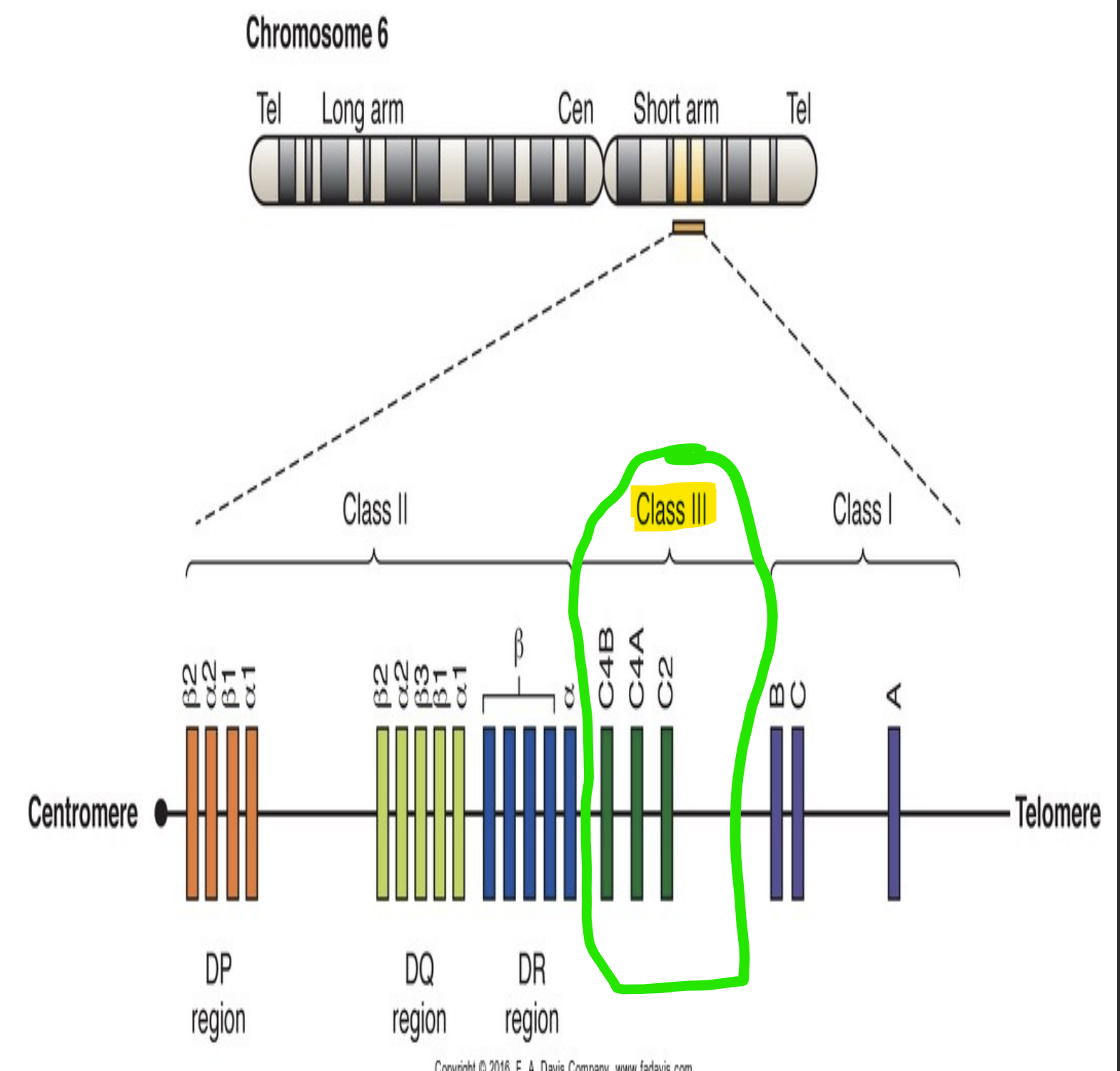
52
What are the functions of Class I and II?
Class I and II gene products are involved in antigen recognition and
influence the repertoire of antigens to which T cells can respond
influence the repertoire of antigens to which T cells can respond
53
What are the functions of Class III?
Class III proteins are secreted proteins that have an immune function, but they are not expressed on cell surfaces.
54
Do many alternate forms of MHC genes exist?
YES - Within human population, many alternate forms or alleles of MHC
genes exist
genes exist
55
What are alleles?
Alleles are alternate forms of a gene that code for a slightly different variety of the same product)
56
Why is the MHC system described as highly polymorphic?
because there are so many possible alleles at each location
57
Which chromosome are the MCH genes located?
short arm of chromosome 6
58
How many copies of chromosome 6 is inherited?
Each person inherits 2 copies of chromosome 6, thus it is possible to have
2 different alleles for each gene unless the person is homozygous for that
allele
2 different alleles for each gene unless the person is homozygous for that
allele
59
MHC genes are codominant -
These MHC genes are described as being codominant meaning all alleles
that an individual inherits code for products that are expressed on cells
that an individual inherits code for products that are expressed on cells
60
What is the inheritance called for the grouping of the closely linked MHC genes?
- haplotype
- one haplotype is inherited from each parent, and each haplotype consists
of a package of genes for A, B, C, DR, DP, and DQ
- one haplotype is inherited from each parent, and each haplotype consists
of a package of genes for A, B, C, DR, DP, and DQ
61
The full genotype of MHC consists of two what?
The full genotype would consist of two of each gene at a particular locus
62
The polymorphism of the MHC system has implications for?
- organ donation
- paternity testing
- paternity testing
63
What are the possible MHC inheritance for this mother and father?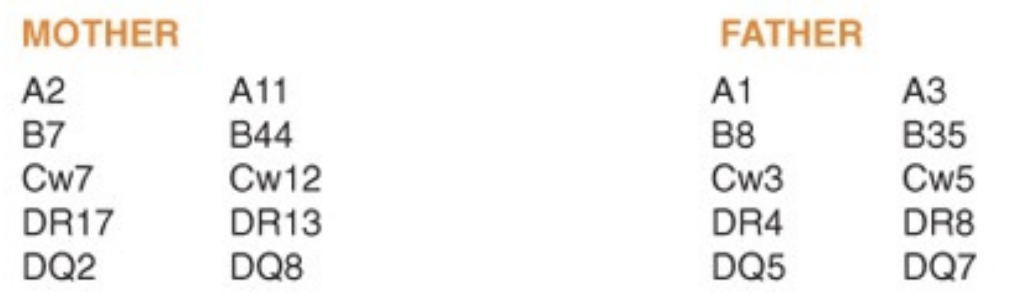
64
What cells express MHC I?
- ALL nucleated cells, although they differ in the level of expression
- highest expression on lymphocytes
- highest expression on lymphocytes
65
What is the structure of the MHC I molecules?
Glycoprotein dimers made up of 2 noncovalently linked polypeptides:
- alpha chain - has 3 domains, alpha1,2, 3. a3 binds to CD8 on T cells
- Beta 2 microglobulin - not polymorphic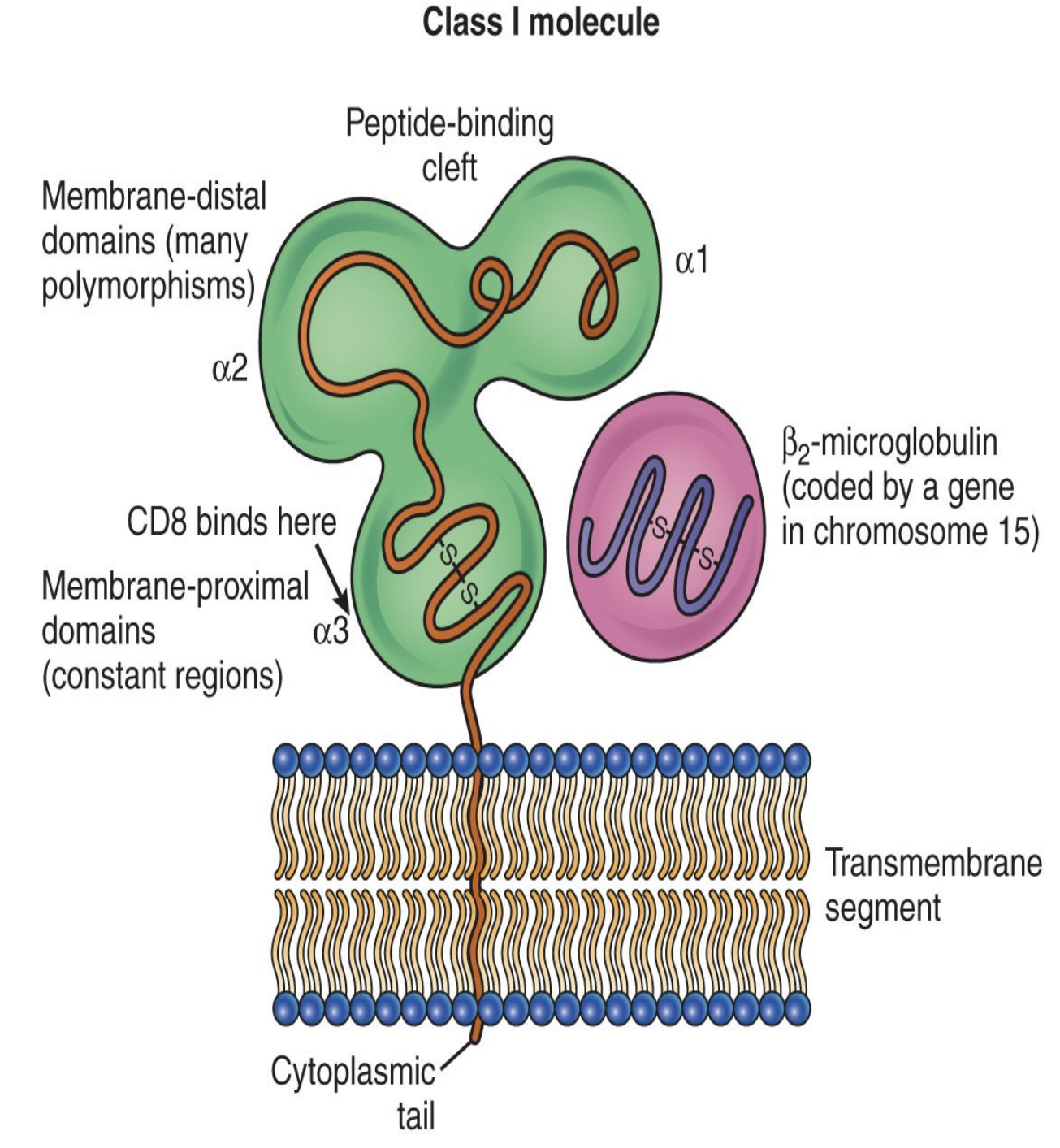
- alpha chain - has 3 domains, alpha1,2, 3. a3 binds to CD8 on T cells
- Beta 2 microglobulin - not polymorphic
66
Where is the peptide-binding cleft on MHC I?
the top - in between a1 and a2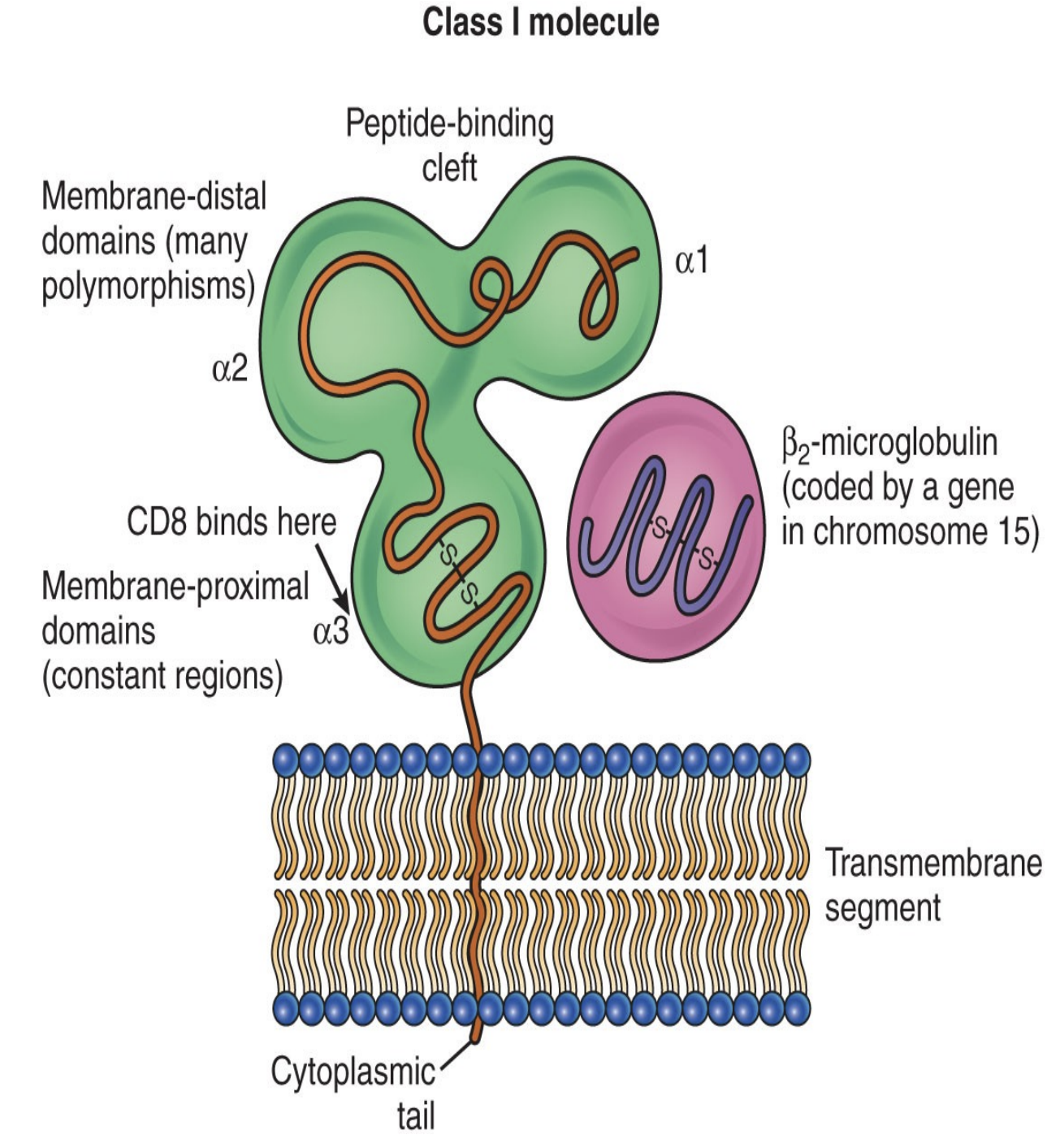
67
What domain does the CD8 bind to on MHC I?
a3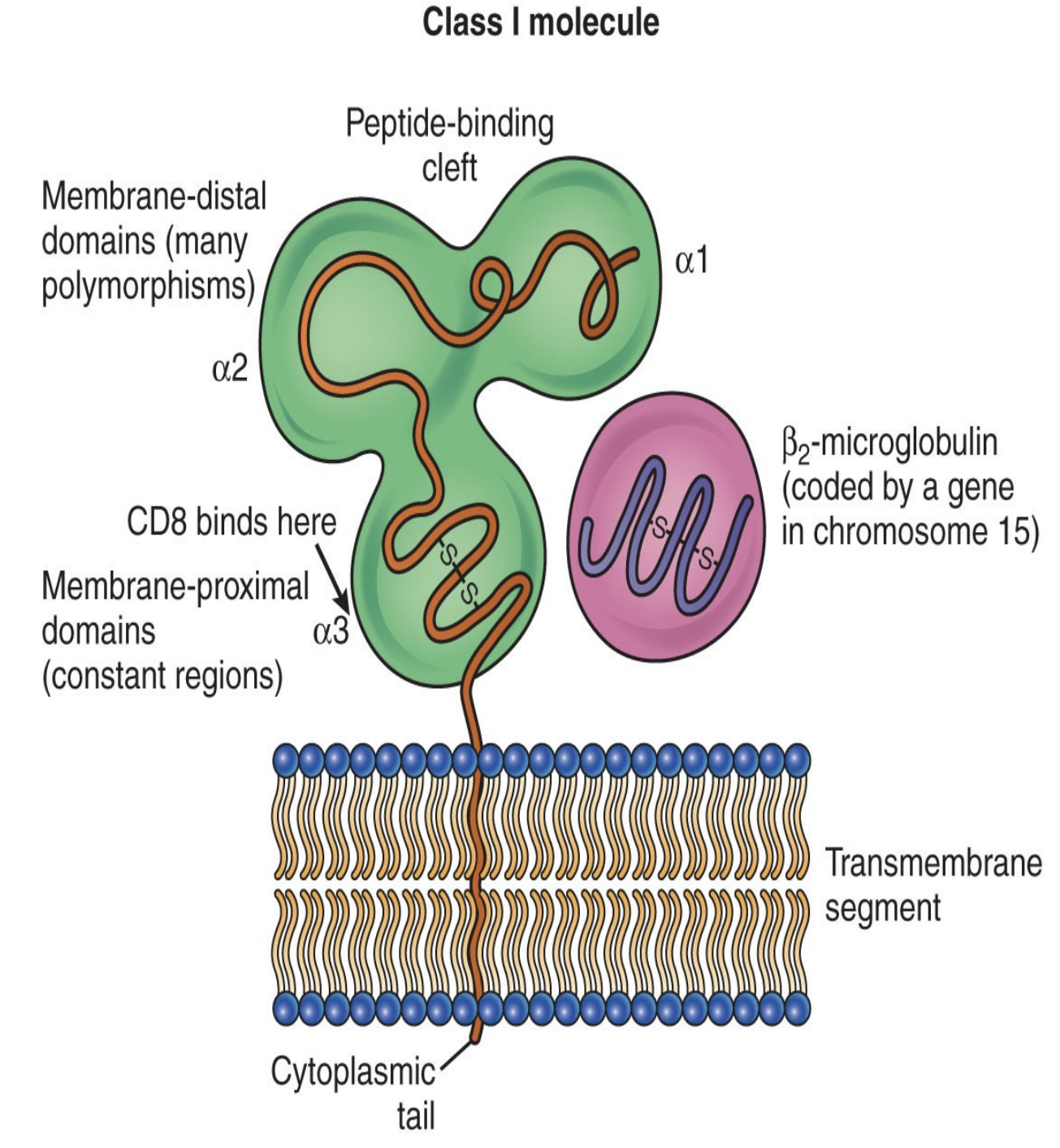
68
What cells express MHC II?
primarily on APCs like B lymphs, monocytes, macs, and dendritic cells
69
What are the major class II molecules?
DP
DQ
DR
DQ
DR
70
Elaborate on the class II molecules:
- two noncovalently bound polypeptides (heterodimers) that are encoded by separate genes in the MHC complex
- DR - expressed at highest level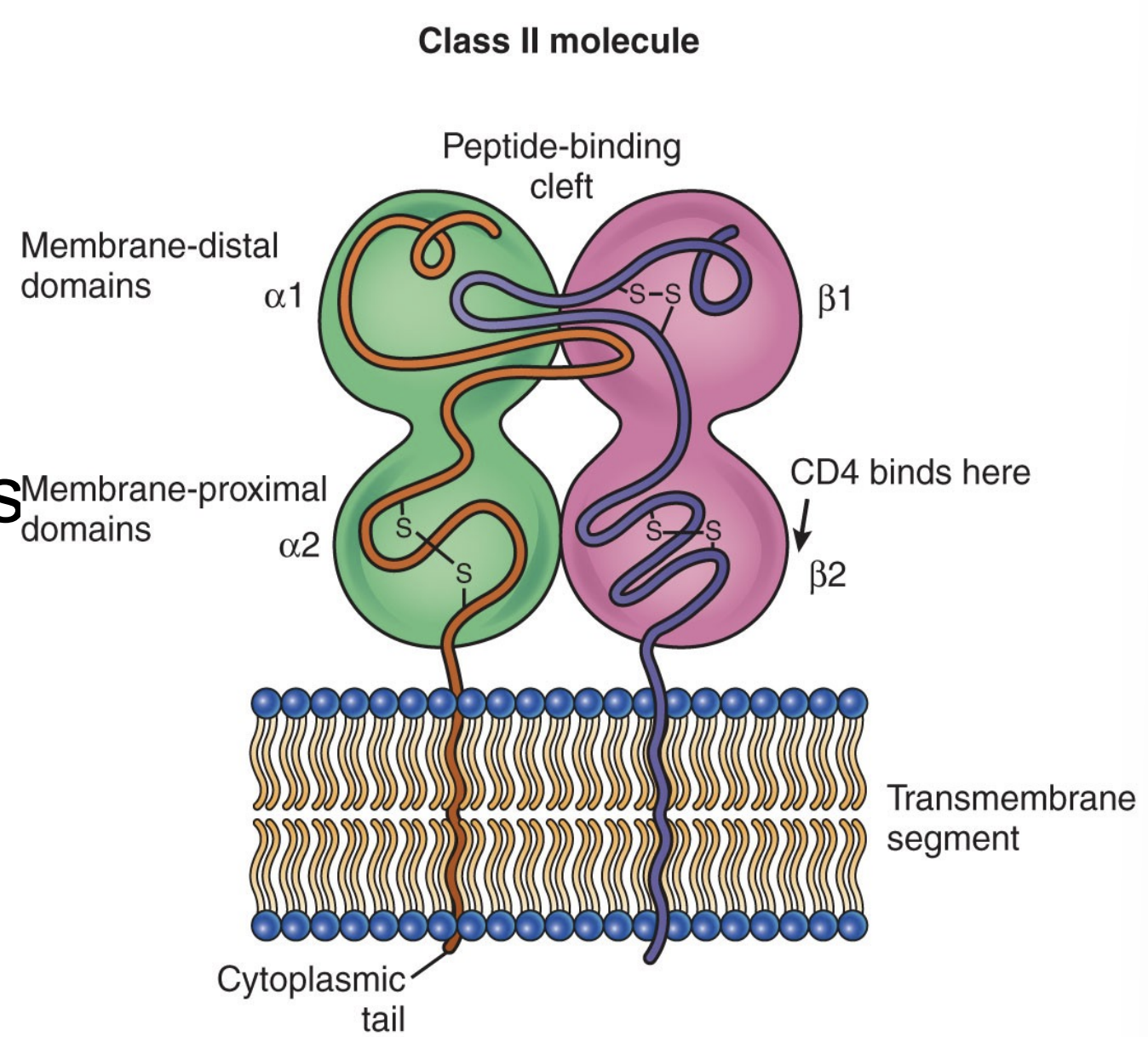
- DR - expressed at highest level
71
Which cells have the highest MHC II expression?
dendritic cells - most effective APCs that have the higest level of Class II
72
What is the structure of the MHC II molecules?
- 2 alpha and 2 beta chains, which are BOTH anchored to the cell membrane
- both ends of the peptide-binding cleft are open, and this allows for capture of longer peptides than is the case for class I molecules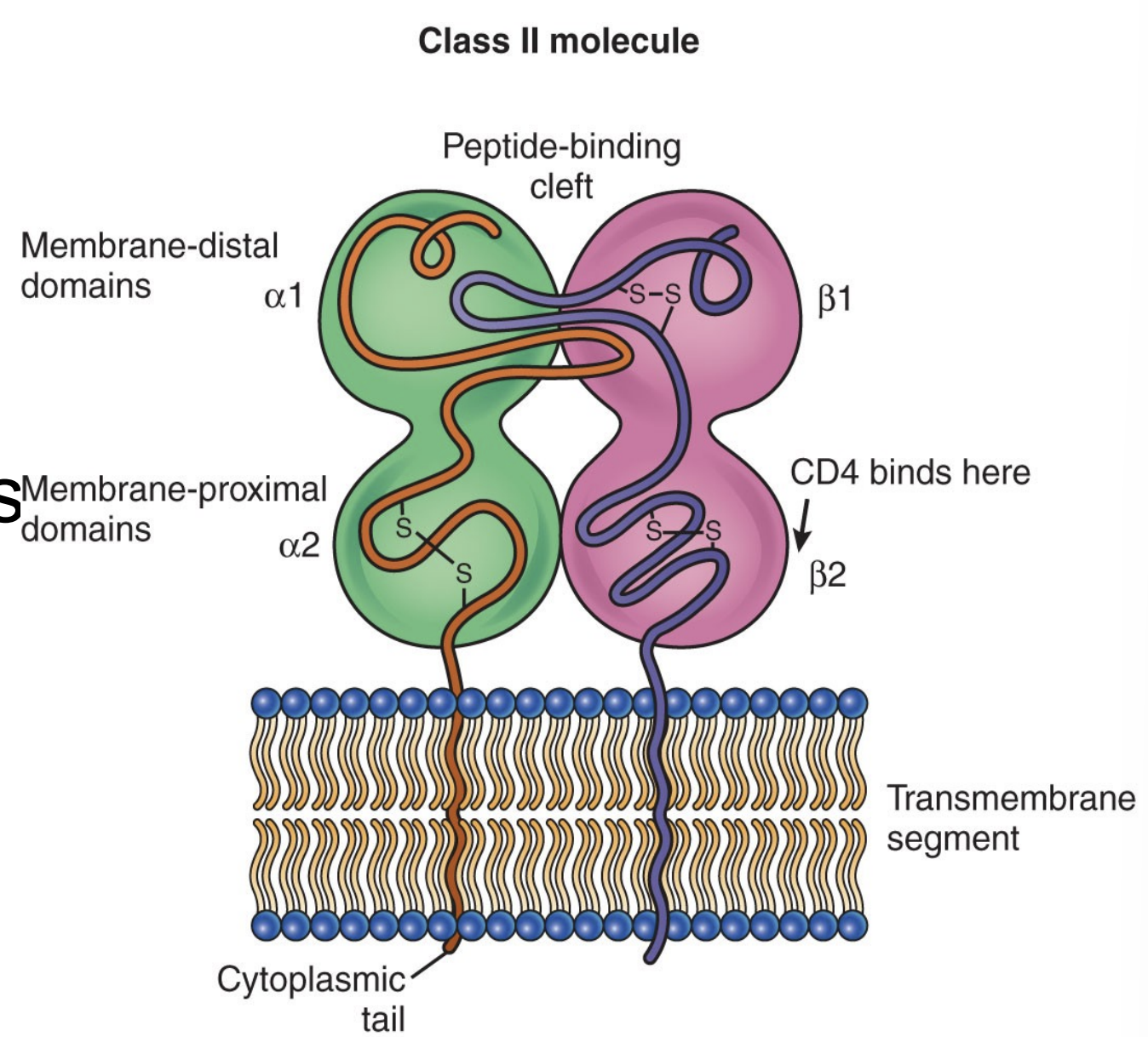
- both ends of the peptide-binding cleft are open, and this allows for capture of longer peptides than is the case for class I molecules
73
Where is the peptide-binding cleft on MHC II?
the top - between a1 and b1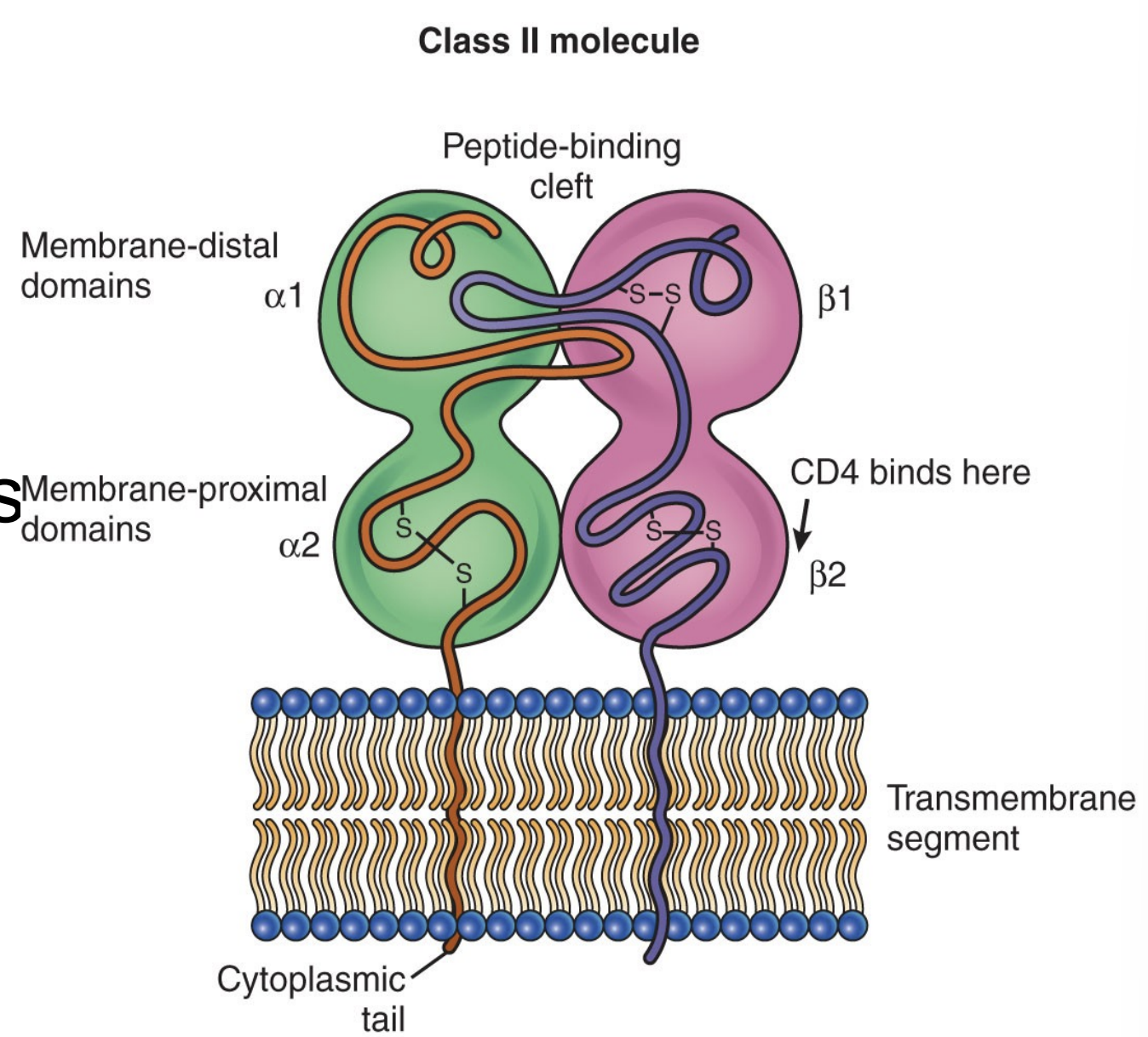
74
What domain does the CD4 bind to on MHC II?
b2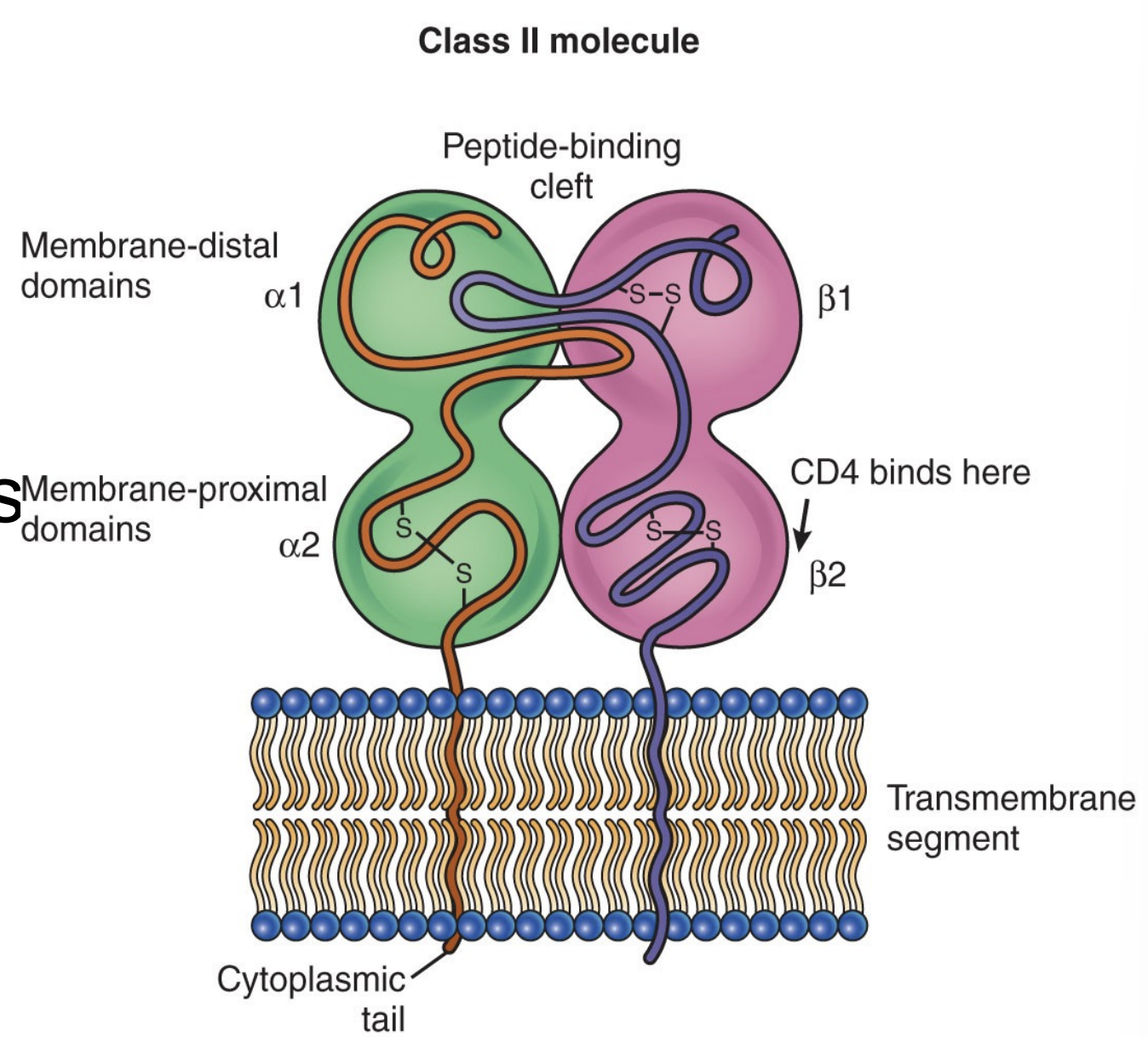
75
Where do MHC I and II bind peptides?
they bind peptides within cells and transport them to the plasms membrane, where T cells can recognize them in the phenomenon, known as antigen presentation
76
What is antigen presentation?
degraded peptides within cells are transported to the plasma membrane where T cells can then recognize them
77
T cells can only "see" and "respond" to antigens when?
when they are combined with MHC molecules (or cradles by MHC molecules)
78
What are the two types of infectious agents?
- those that attack cells from outside - Bacteria
- those that attack cells from inside - viruses and intracellular bacteria
- those that attack cells from inside - viruses and intracellular bacteria
79
What type of peptides do Class I MHC present?
- they present peptides synthesized within cell to CD3+, CD8+ cytotoxic cell
- example: viral, tumor and parasitiv Ags
- example: viral, tumor and parasitiv Ags
80
What type of peptides do Class II MHC present?
- they preent exogenouse proteins taken INTO the cell from outside and degraded (bacteria) to CD3+, CD4+ T helper cells
81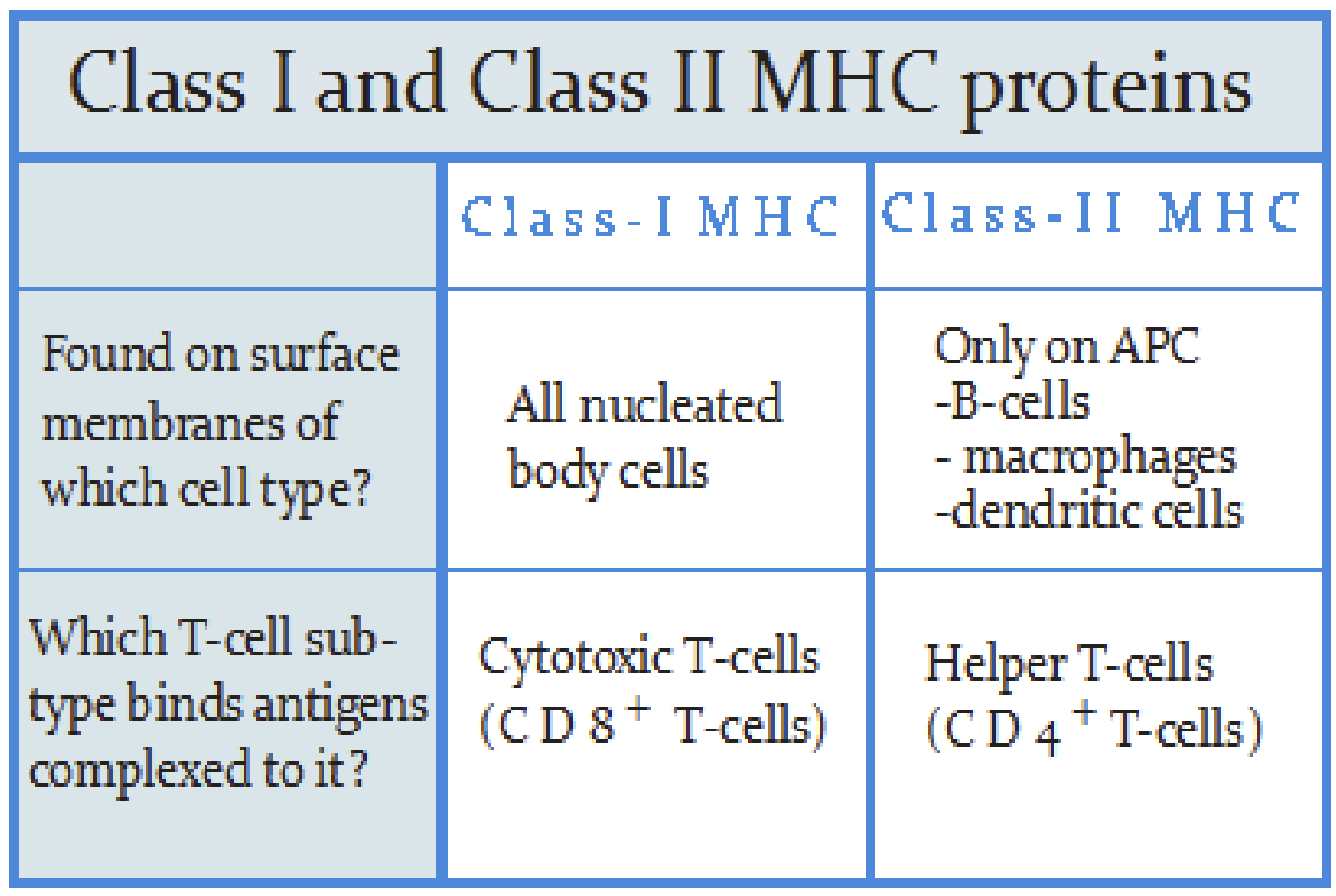
Which MHC Class is associated with what?
82
What type of Ag peptide pathway is used for MHC I?
Endogenous pathway
83
What is the endogenous pathway?
antigen is endogenous (inclue viral, tumor, or even some intracellular bacterial Ags)
84
How long are the peptides associated with Class I molecules?
Peptides that associate with the class I molecules are approximately 8-10 amino acids long and are derived from partial digestion of proteins processed
in the cytoplasm
in the cytoplasm
85
What do T cells do to self peptides?
Self peptides ignored by T cells --> (healthy individual)
86
What does the display of hundreds of class I molecules complexed to antigen allow for CD8+ T cells?
Display of hundreds of class I molecules complexed to antigen allows CD8 positive T cells to continuously check cell surfaces for the presence of non-self antigens.
87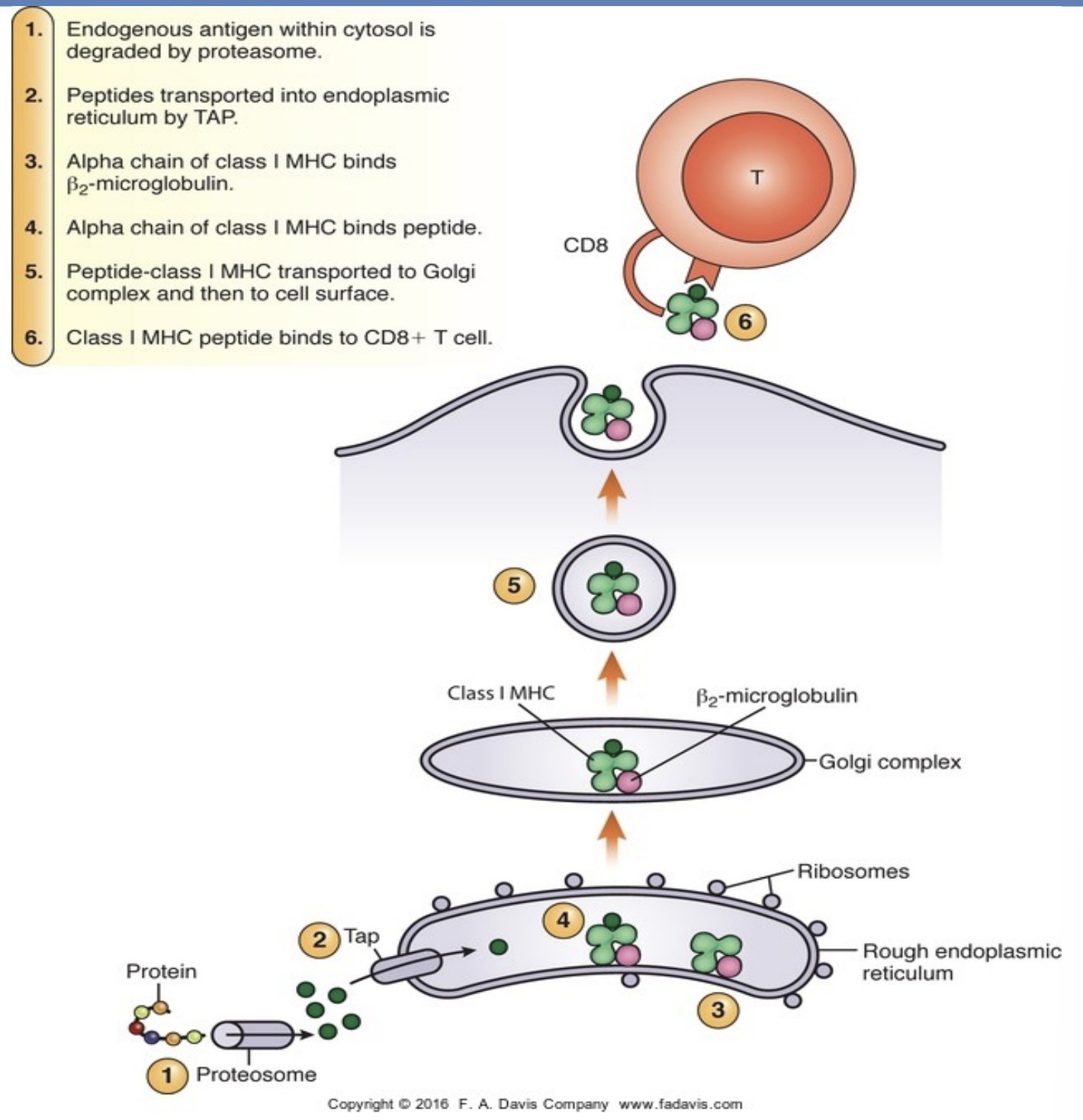
What are the steps of the MHC Class II endogenous pathway?
88
What happens once CD8+ T cells bind to a cell with the Class I MHC?
- intracellular processing of Ag and Class I MHC interaction
- expressed on surface of cell CD3+8+ cytotoxic T cell recognizes it as foreign via TCR
- cytokines are produced, which release perforins and granzymes to the binded cell ----> apoptosis of cell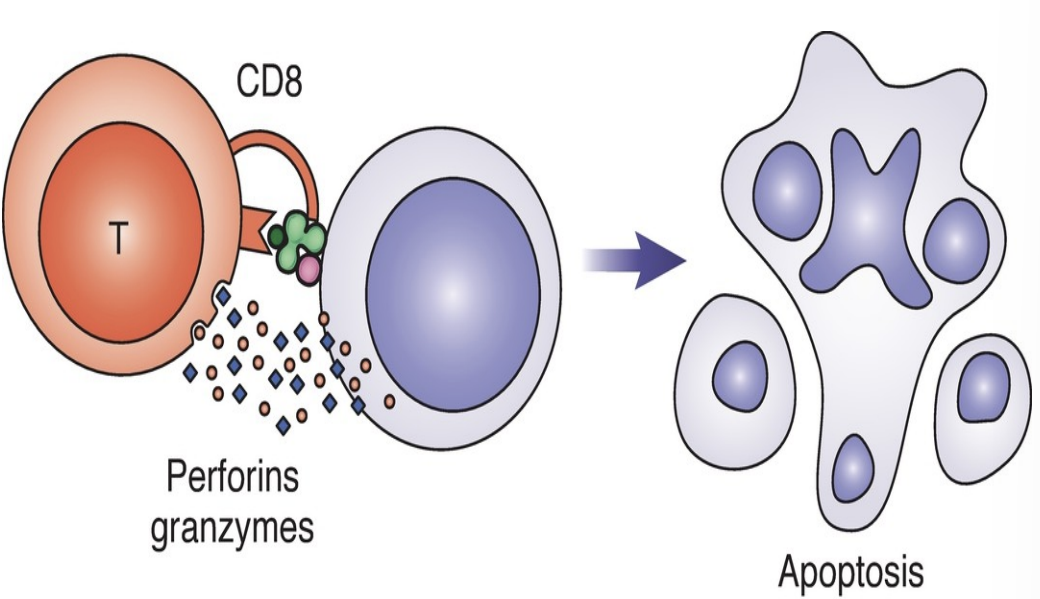
- expressed on surface of cell CD3+8+ cytotoxic T cell recognizes it as foreign via TCR
- cytokines are produced, which release perforins and granzymes to the binded cell ----> apoptosis of cell
89
Which T cell is associated with Class I MHC?
CD8+ - cytotoxic T cells ---> force cells to apoptosis
90
What type of Ag peptide pathway is used for MHC II?
EXOgenous pathway
91
What is the exogenous pathway?
- Ag (bacteria) taken in from outside through phagocytosis (especially by DC)
- this leads to B cell activation --> plasma cells --> antibodies
- this leads to B cell activation --> plasma cells --> antibodies
92
Where are MHC II molecules synthesized?
MHC II molecules are synthesized in the ER and associated with a protein called the invariant chain (Ii)
93
Which cells are the most potent activators of Th cells?
DCs are the most potent activators of T cells, and they are excellent at capturing and digesting exogenous antigens such as bacteria
94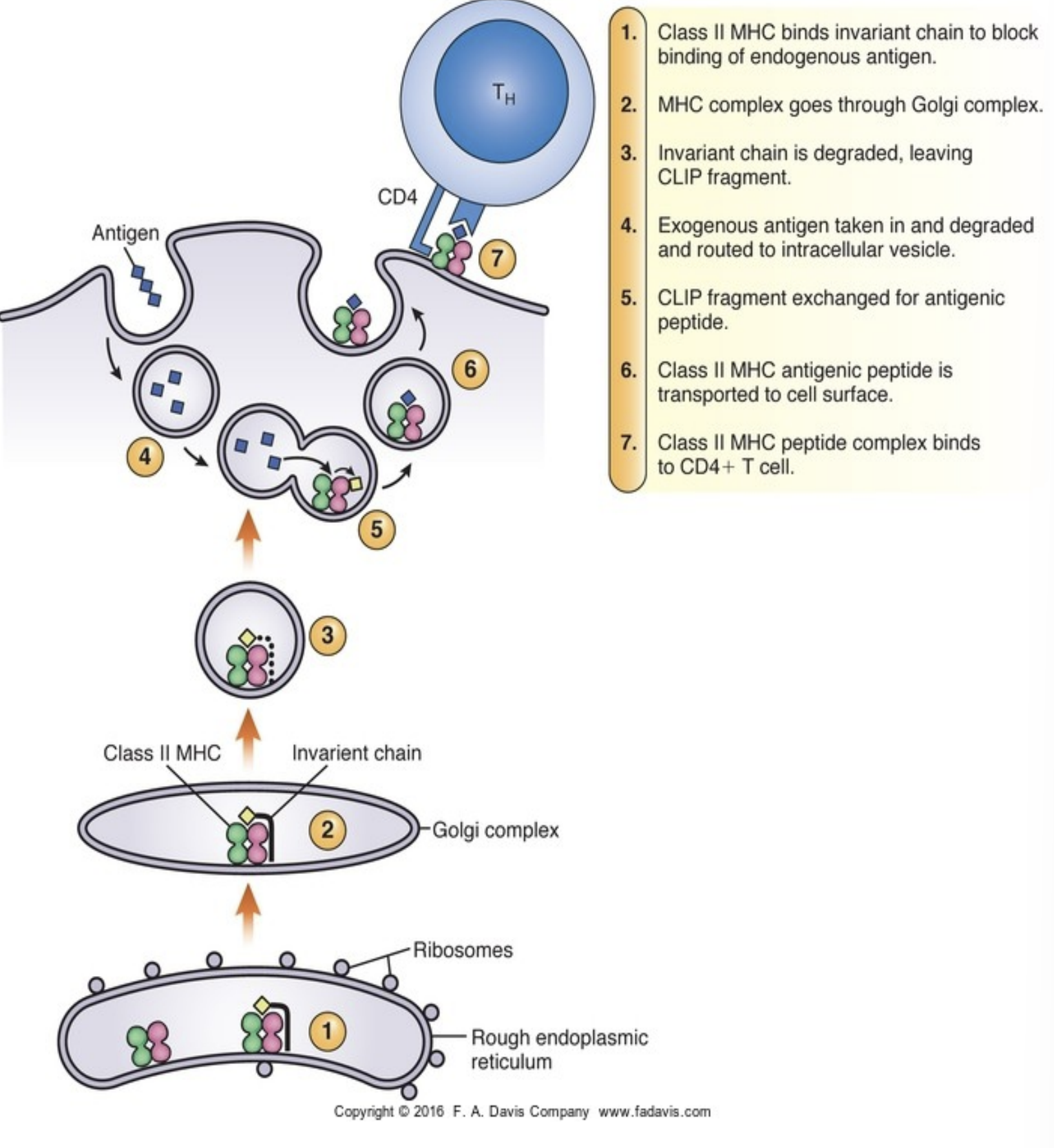
What are the steps of the exogenous pathway?
95
What happens once CD4+ Th cells bind to a cell with the Class II MHC?
- Class II MHC and Ag peptide expressed on outside of cell and CD4+ T cell (Th) recognizes via TCR
- Th cell will proliferate or induce B cell ---> proliferate into plasma cells --> produce antibodies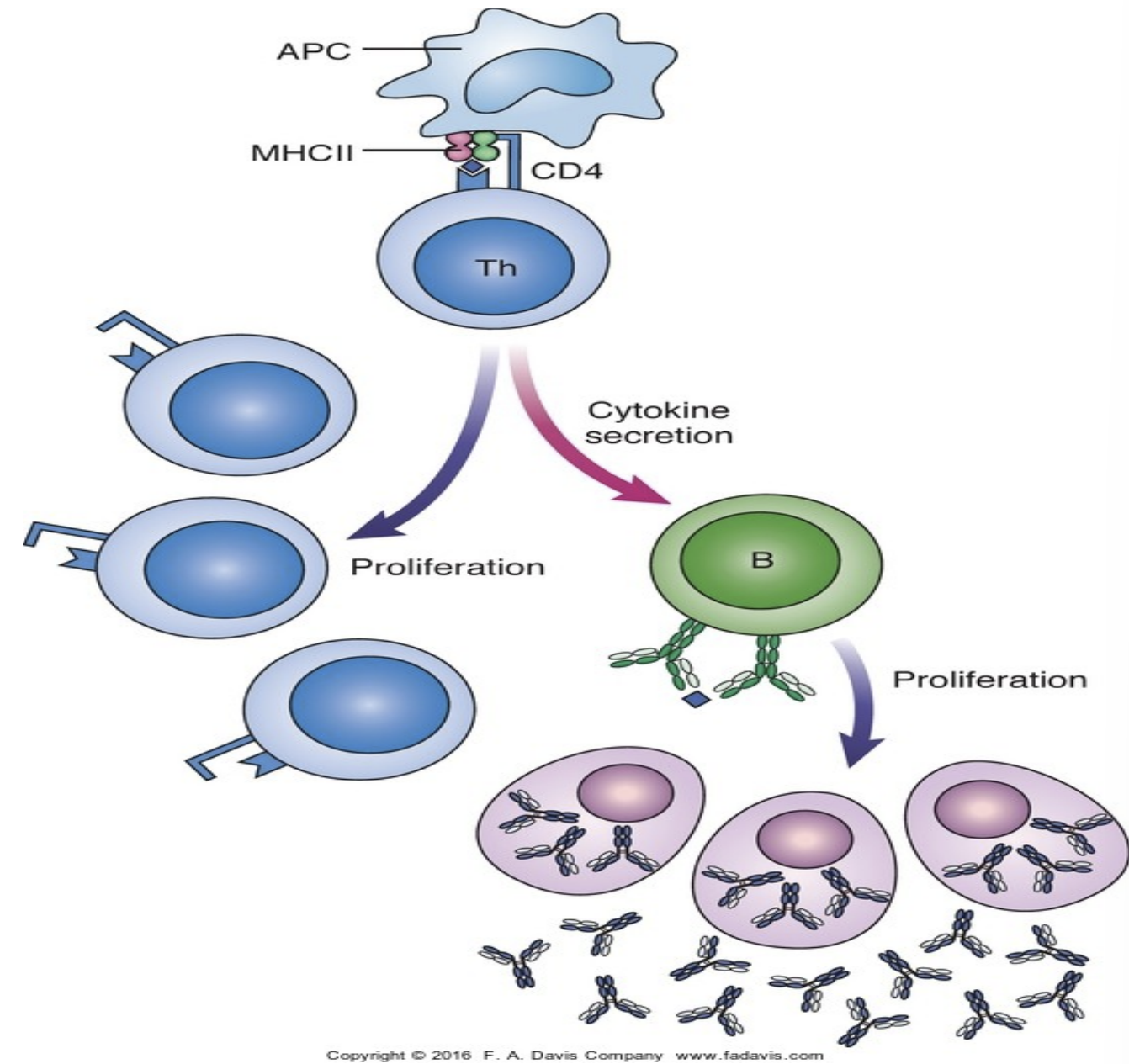
- Th cell will proliferate or induce B cell ---> proliferate into plasma cells --> produce antibodies
96
What is the clinical significance of MHC?
• Important in tissue transplant procedures
• Classes I and II can induce graft rejection
• Appear to play a role in development of autoimmune diseases
• Classes I and II can induce graft rejection
• Appear to play a role in development of autoimmune diseases
97
What are some diseases associated with MHC inherited alleles?
these are autoimmine diseases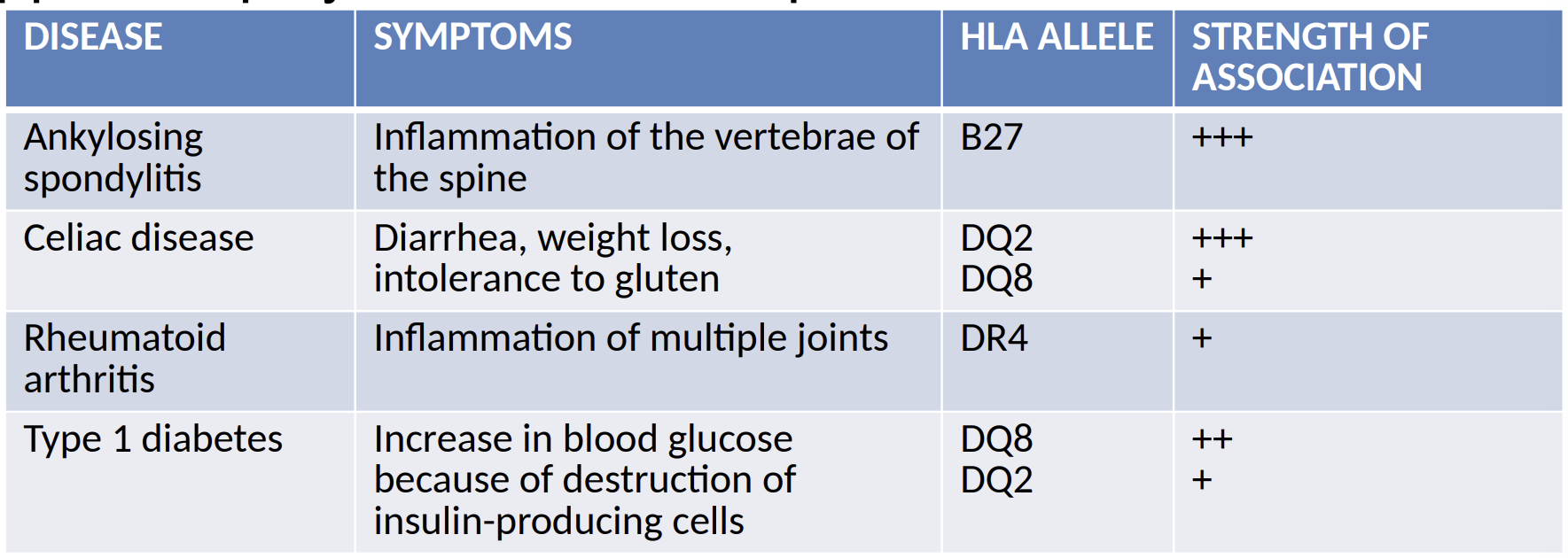
98
Which disease is associated with the B27 HLA allele?
ankylosing spondylitis
- inflammation of the vertebrae of the spine
- inflammation of the vertebrae of the spine
99
Which disease is associated with DQ2 and DQ8, diarrhea, weight loss, and intolerance to gluten?
celiac disease
100
Which disease is associated with DQ2 and DQ8, increase in blood glucose because of destruction of insulin-producing cells?
Type I diabetes
101
Which disease is associated with DR4?
Rheumatoid arthritis
- inflammation of multiple joints
- inflammation of multiple joints
102
What is the lymphocytotoxicity test method used for?
- HLA typing
- serologic identification
- serologic identification
103
What is the lymphocytotoxicity test method?
Complement and dye are used to determine whether is antigen-antibody recognition
104
What is a positive or negative result in the lymphocytotoxicity test method?
- positive - will take up the dye and stain dark
- negative - will not take up the dye and have no color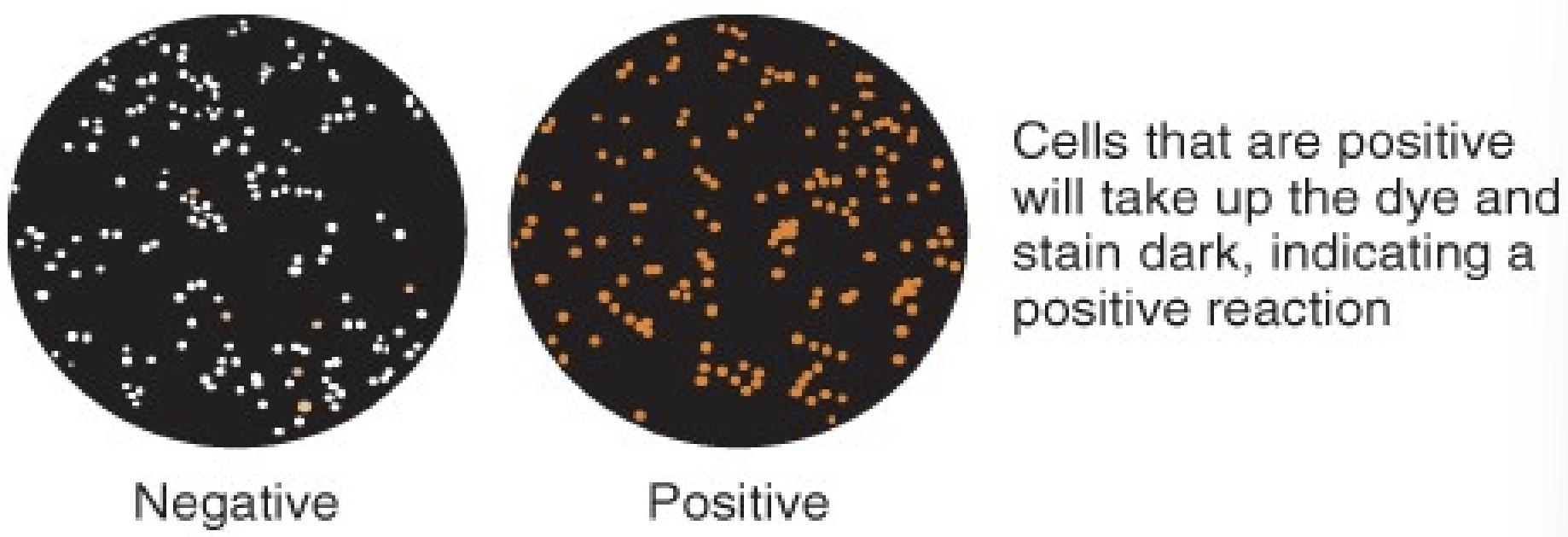
- negative - will not take up the dye and have no color
105
How can patients become sensitized to HLAs:
Exposure to the following:
1. pregnancy
2. blood transfusions
3. previous transplant
1. pregnancy
2. blood transfusions
3. previous transplant
106
How can pregnancy make you sensitized to HLAs?
• 30% to 50% of women (3 or more pregnancies) develop HLA antibodies
• antibodies present for weeks to months or possibly many years
• antibodies present for weeks to months or possibly many years
107
How can blood transfusions make you sensitized to HLAs?
• About 50% of patients receiving multiple blood transfusions develop antibodies against HLA molecules
• Leukocyte-reduced blood: decreases chances for patient sensitization to donor HLA antigens
• Leukocyte-reduced blood: decreases chances for patient sensitization to donor HLA antigens
108
How can previous transplant make you sensitized to HLAs?
• About 90% of patients develop HLA antibodies within 2 weeks of failed graft (for successful transplantation: ABO compatibility, careful HLA matching)