Lecture 2 - Lymphoid System - Develop & Fxn of B/T Cells, Antibody Structure & Fxn
Study these flashcardsFree · spaced repetition · iPhone, Android, Mac & web
All cards
1
What are the two branches of adaptive immunity?
- cell-mediated immunity (T cells key component)
- humoral immunity (B lymphocytes and antibodies)
- humoral immunity (B lymphocytes and antibodies)
2
What happens before the T cells migrate to the thymus?
- Soon after their formation in the bone marrow, they leave and circulate to the thymus (primary lymphoid organ)
- once in the thymus, the T-cell precursors are called thymocytes
- chemokines drive migration of T-cell precursors to the cortex of the thymus
- thymocytes at this stage LACK both CD4 and CD8 surface markers
- once in the thymus, the T-cell precursors are called thymocytes
- chemokines drive migration of T-cell precursors to the cortex of the thymus
- thymocytes at this stage LACK both CD4 and CD8 surface markers
3
What are the two regions in the thymus?
- cortex
- medulla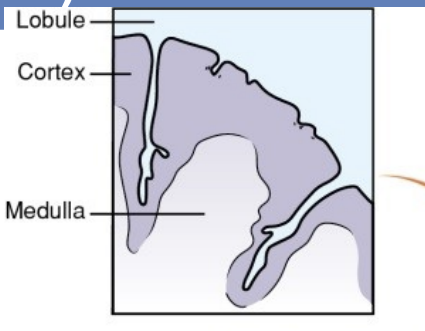
- medulla
4
What are chemokines?
cytokines that control the movement of cells
5
What CD markers do thymocytes lack once they enter the cortex of the thymus?
CD4 and CD8
6
What does CD stand for in CD markers?
- cluster of differentiation - surface markers found on immune cells
like fingerprints
- these can be determined by flow cytometry using flueorescent-tagged antibody reagents
like fingerprints
- these can be determined by flow cytometry using flueorescent-tagged antibody reagents
7
What are the main stages in T-Cell differentiation?
- Double negative (DN) stage
- Double positive (DP) stage
- Single-positive (SP) stage
- Mature T cells stage
- Double positive (DP) stage
- Single-positive (SP) stage
- Mature T cells stage
8
What are double-negative thymocytes?
thymocytes when they recently arrive in the thymus - they lack CD4 and CD8
9
Which T cells contain either CD4 or CD8?
CD4 - T helper cells
CD8 - T cytotoxic cells
CD8 - T cytotoxic cells
10
What occurs in the double-negative stage in the thymus?
- thymocytes undergo rearrangement of genes coding for the beta chain of the T-cell receptor (TCR)
- gene segments are selected and joined together to produce a unique antigen-binding site
- gene segments are selected and joined together to produce a unique antigen-binding site
11
What is the CD3/TCR complex?
- alpha and beta chains recognize antigen
- six other chains (in 3 pairs) assist with intracellular signaling after antigen binds to TCR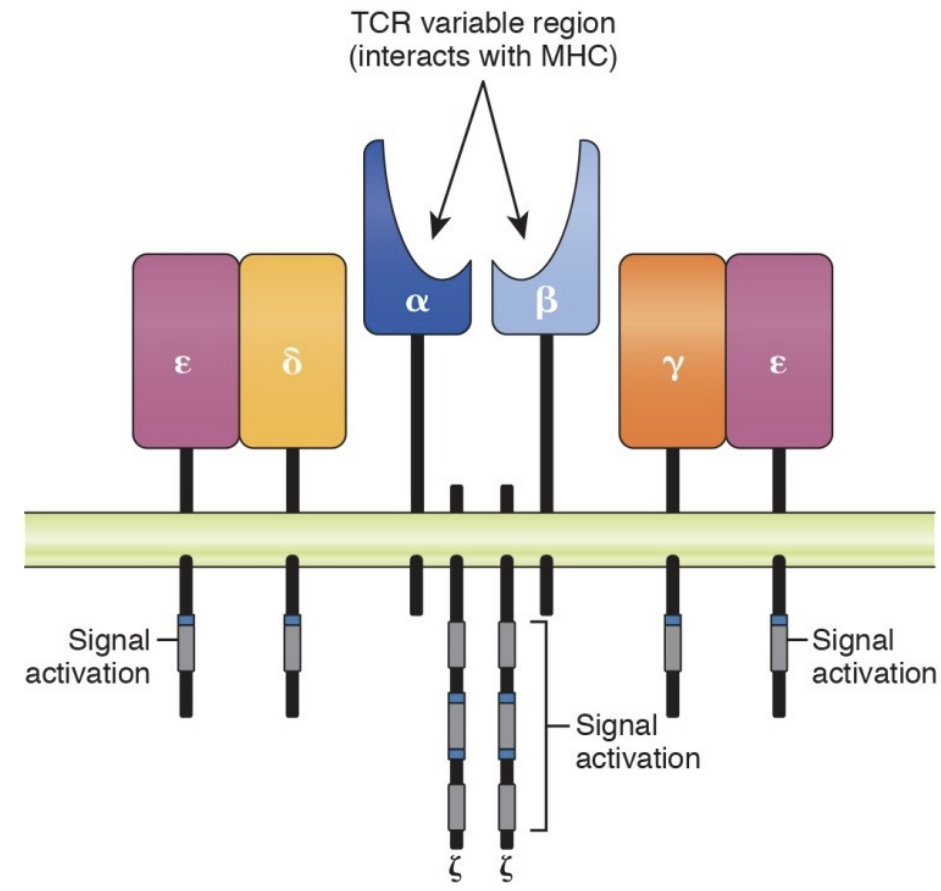
- six other chains (in 3 pairs) assist with intracellular signaling after antigen binds to TCR
12
What happens in the the double-positive (DP) stage in T-cell differentiation?
- Thymocytes express both CD4 and CD8 ---> double-positive
- Positive selection occurs ---> thymocytes survive if their TCR MODERATELY recognizes MHC antigens on stromal cells in the cortex (checkpoint)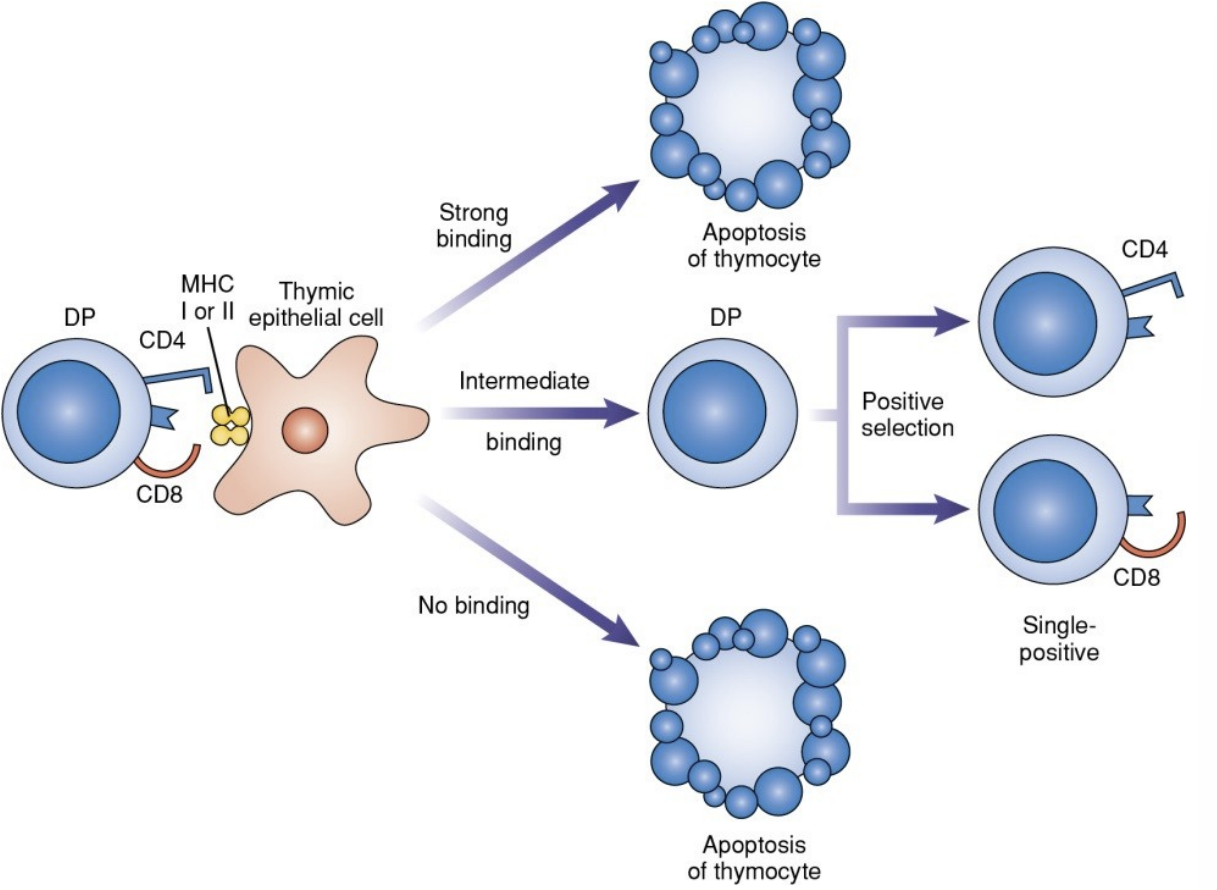
- Positive selection occurs ---> thymocytes survive if their TCR MODERATELY recognizes MHC antigens on stromal cells in the cortex (checkpoint)
13
What happens in the single-positive (SP) stage in T cell differentiation?
- cells are positive for either CD4 or CD8
- negative selection (check for TCR/MHC binding - rids of bad T cells)
thymoctes that bind to self-antigens on thymic stromal cells undergo apoptosis
takes place in the corticomedullary region and medulla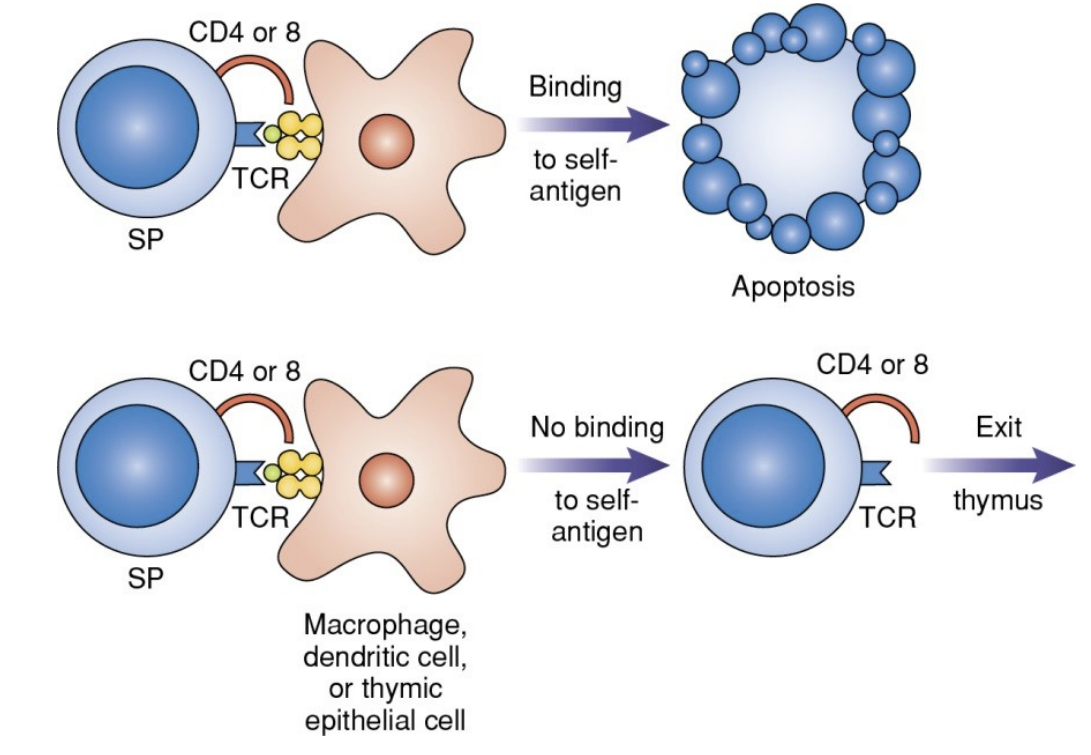
- negative selection (check for TCR/MHC binding - rids of bad T cells)
thymoctes that bind to self-antigens on thymic stromal cells undergo apoptosis
takes place in the corticomedullary region and medulla
14
What happens in negative selection?
negative selection of positively selected thymocytes in the thymic medulla are presented self-antigens and peptide fragments from thymic stromal cells
- If a strong binding occurs ---> apoptosis due to high autoreactivity (are negatively selected)
- If a strong binding occurs ---> apoptosis due to high autoreactivity (are negatively selected)
15
What happens in the mature T cell stage?
- survivors of positive and negative selection exit the thymus and recirculate between the blood and lymphatics
16
Which T cells exit the thymus and recirculate?
- CD4 T cells - T helper and T regulatory cells: they secrete cytokines and influence antibody production
- CD8 T cells - cytotoxic T cells: they kill target cells
- CD8 T cells - cytotoxic T cells: they kill target cells
17
What are the main stages in B-cell differentiation?
Antigen-independent phase --> mature B cells that have not been exposed to antigen contains 4 main stages:
- Pro B cells
- Pre B cells
- Immature B cells
- Mature B cells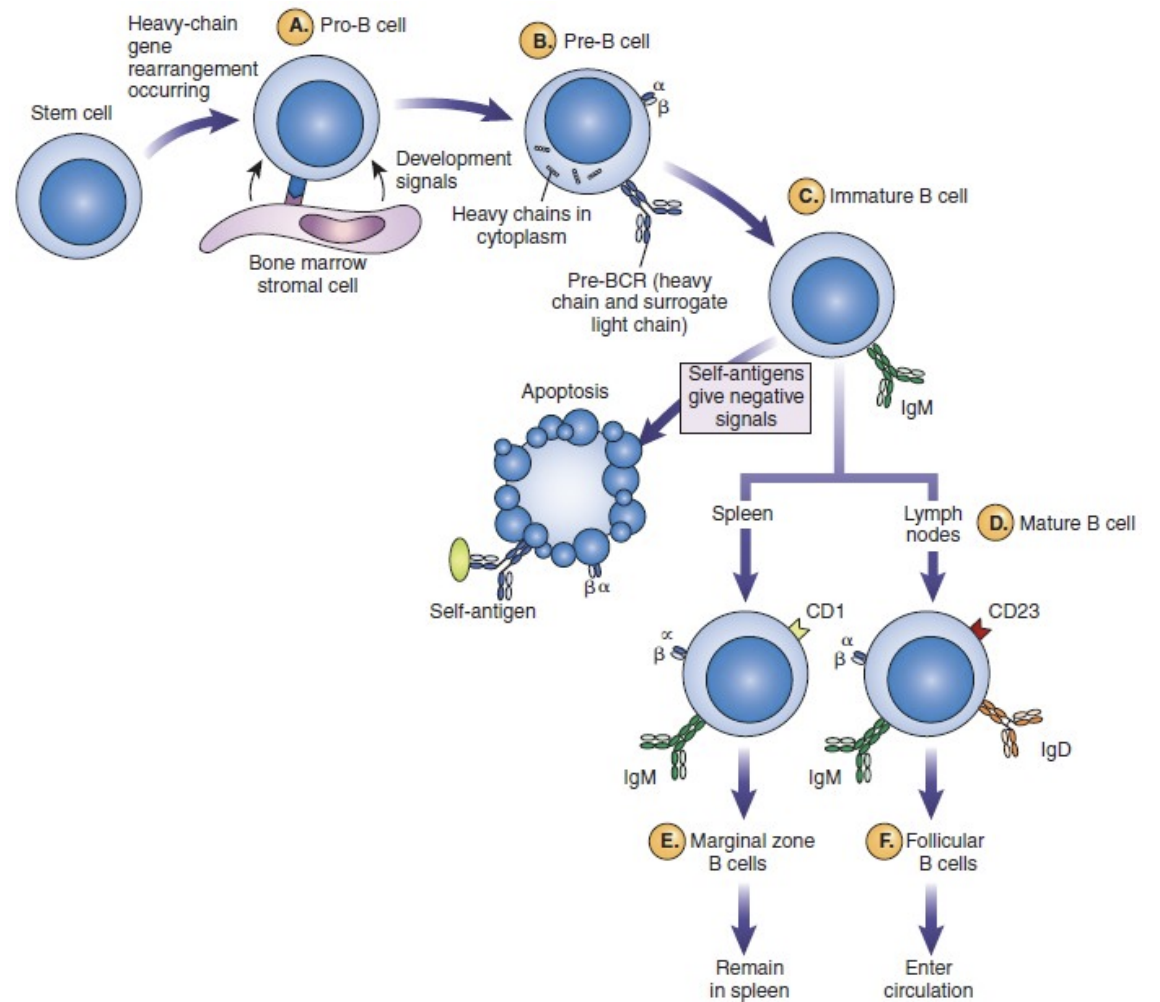
- Pro B cells
- Pre B cells
- Immature B cells
- Mature B cells
18
What occurs in the Pro-B cell stage?
- rearrangement of genes that code for heavy and light chains of antibody molecules occurs
- this creates a variable region with specificity for a particular antigen in each cell
- the cells must successfully rearrange one set of heavy-chain genes to become pre-B cells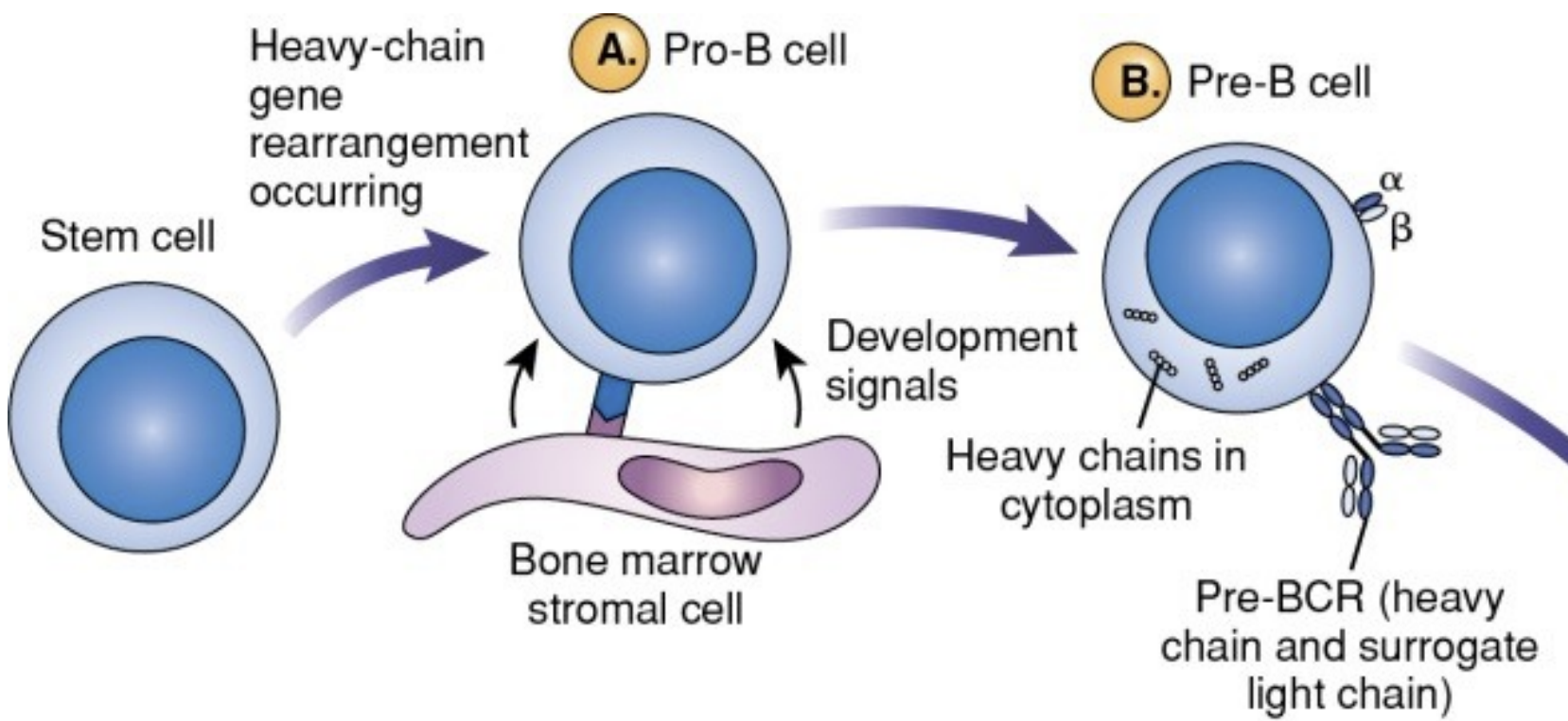
- this creates a variable region with specificity for a particular antigen in each cell
- the cells must successfully rearrange one set of heavy-chain genes to become pre-B cells
19
What occurs in the Pre-B cell stage?
- heavy u chains of IgM class accumulate in cytoplasm
- They combine with short Ig-alpha and Ig-beta chains to form a pre-B cell receptor (pre-BCR) on the B cell surface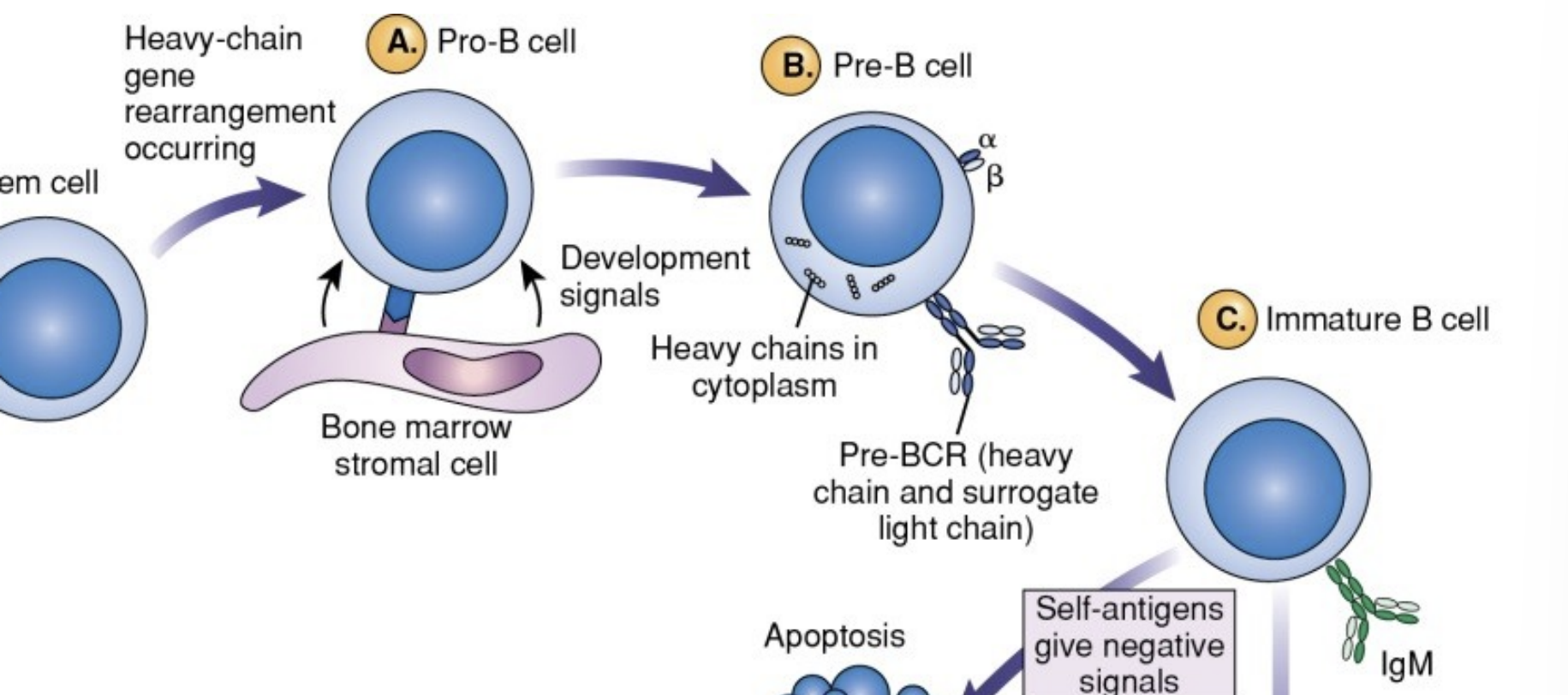
- They combine with short Ig-alpha and Ig-beta chains to form a pre-B cell receptor (pre-BCR) on the B cell surface
20
What occurs in the immature B-cell stage?
- preBRC replaced with functional BCR with 2 light and 2 heavy chains of the IgM class
- BCR contains variable region - determines specificity and antigen receptor
- B cells with self-antigen receptors are deleted in bone marrow
- BCR contains variable region - determines specificity and antigen receptor
- B cells with self-antigen receptors are deleted in bone marrow
21
Which CD markers are expressed at the immature B-cell stage?
CD21, CD40, MHC-II
22
What occurs in the Mature B-Cell stage?
- immature B cells that progress migrate to spleen for further development
- in spleen
- exhibit cell surface IgM and IgD
- surface Ig's provide activating signal to b-cells when contact with antigen occurs
- when stimulated, enter the ag-dependent phase, forming:
- memory b cells
- antibody secreting plasma cells
- in spleen
- exhibit cell surface IgM and IgD
- surface Ig's provide activating signal to b-cells when contact with antigen occurs
- when stimulated, enter the ag-dependent phase, forming:
- memory b cells
- antibody secreting plasma cells
23
What occurs at the Plasma cell stage?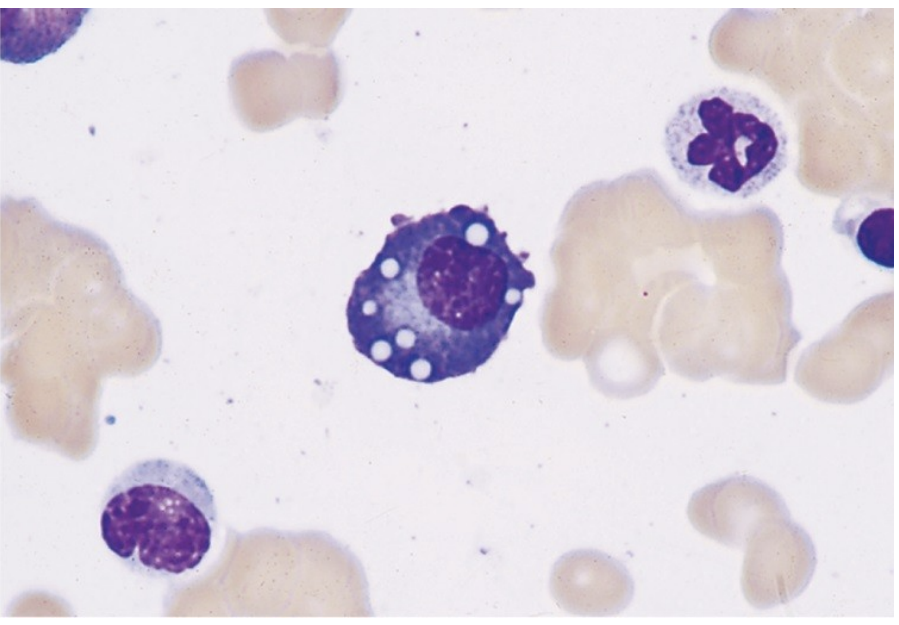
- found in bone marrow and peripheral lymphoid organs
- they produce antibodies
- abundant cytoplasmic Ig but little or no surface Ig
- Have CD 138 on cell surface
- they produce antibodies
- abundant cytoplasmic Ig but little or no surface Ig
- Have CD 138 on cell surface
24
Where are plasma cells normally found?
In the bone marrow - not in peripheral blood --> if so, it indicates an issue
25
What CD marker is found on a plasma cell surface?
CD 138
26
What is antigen presentation?
- When infection occurs in a tissue, APCs are the first innate immune cells to be activated (to respond to antigens)
27
What do APC's express, which sense the danger (pathogens antigens) they engulf (and process) the antigens and carry them to lymph nodes
TLR's
28
What do APC's present to T cells in the lymph nodes?
they present peptide antigens to these cells in the context of MHC molecules to initiate adaptive immune response
29
The T cell receptor (TCR) binds to the entire length of what?
antigenic peptide which is secured within the MHC molecule
30
Where do T cells circulate and what do they do?
- bloodstream, lymph nodes, and secondary lymphoid tissue
- they look for APCs displaying specific antigen fragments complexed with MHC
- they look for APCs displaying specific antigen fragments complexed with MHC
31
What drives T cell differentiation into subsets?
cytokines
32
Which MHC class is associated with CD8+?
MHC I
33
Which MHC class is associated with CD4+?
MHC II
34
What are the main subsets and Tregs of CD4+ T cells?
- TH1
- TH17
- Treg
- TH2
- TH17
- Treg
- TH2
35
Which is the most important CD4+ T cell?
Th1 cells
36
What cytokines induce differentiation for Th1 cells?
IL-12
IFN-gamma
IFN-gamma
37
What cytokines do Th1 cells produce?
- IFN-g
- IL-2
- TNF-beta
- IL-2
- TNF-beta
38
What is the function of Th1 cells?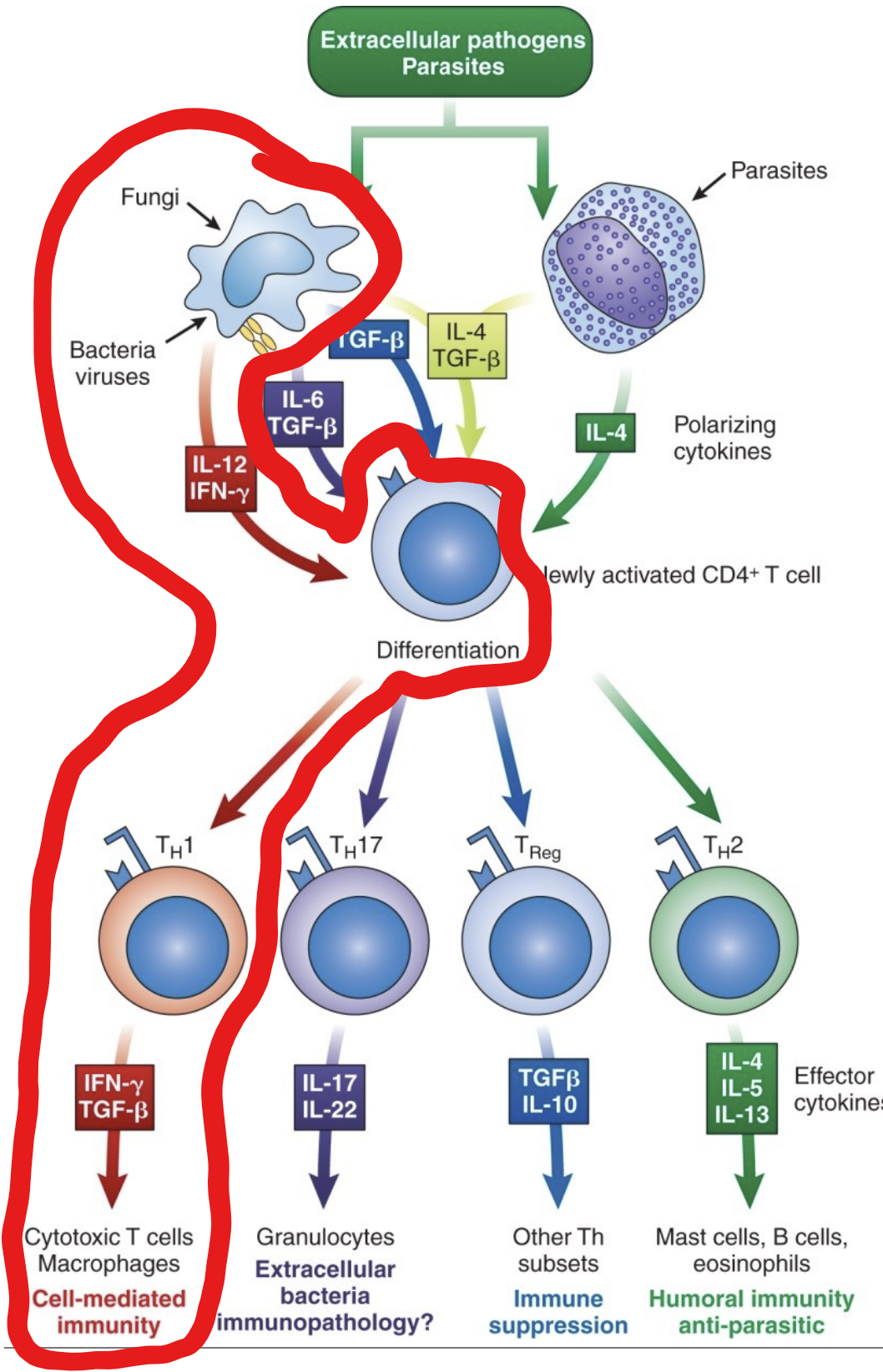
- activate Tc and macrophages to fight intracellular pathogens in cell-mediated immunity
39
Which CD4+ T cell is associated with the inflammatory response?
Th2 cells
40
What cytokines induce differentiation for Th2 cells?
IL-4
41
What cytokines do Th2 cells produce?
Interleukins 4, 5, 6, 9, 10, and 13
42
What is the function of Th2 cells?
- helps B cells produce antibodies
- promote clearance of extracellular parasites and have a role in allergy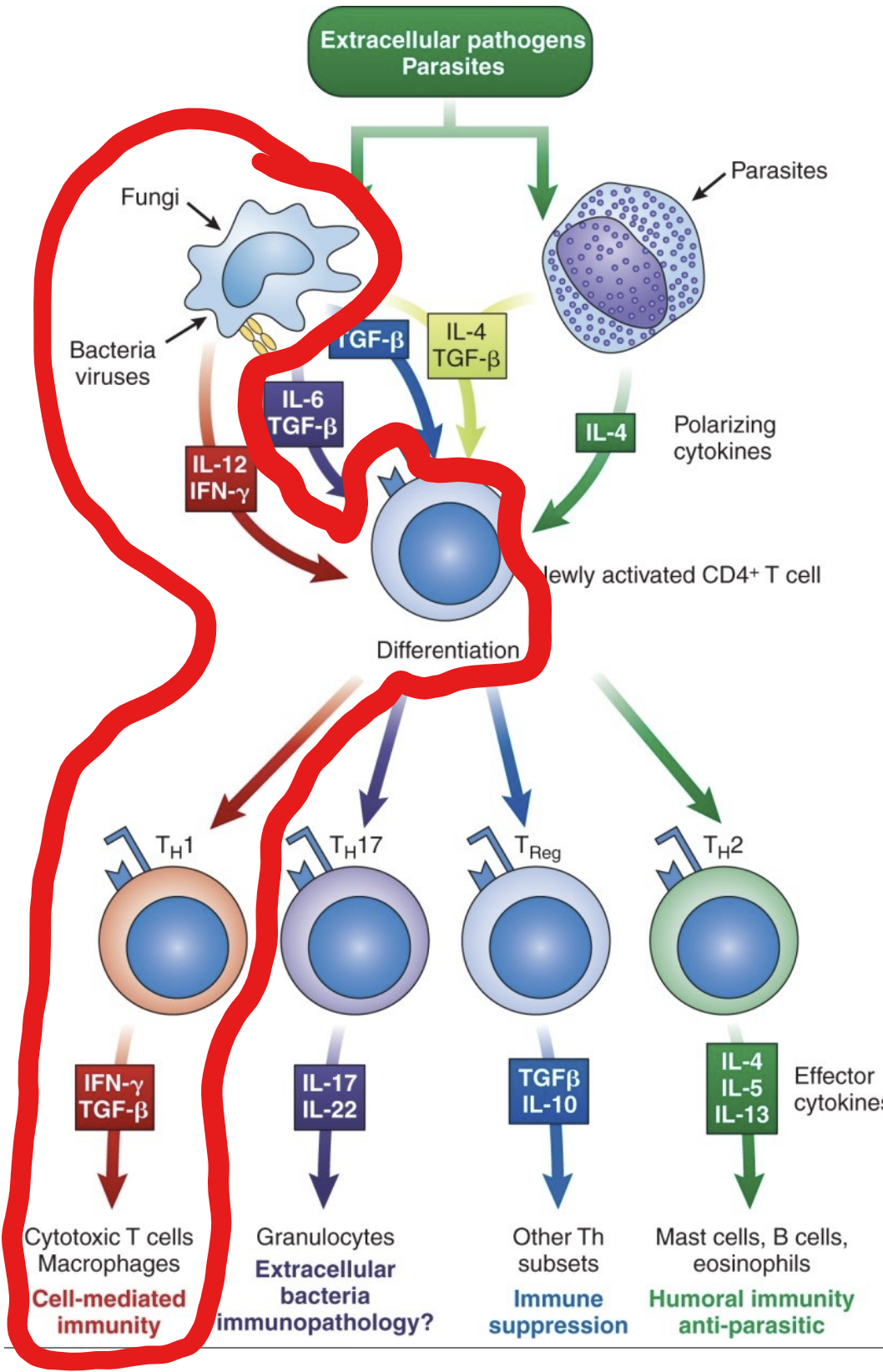
- promote clearance of extracellular parasites and have a role in allergy
43
What cytokines induce differentiation for Th17?
IL-6 and TGF-beta
44
What cytokines are produced from Th17?
IL-17
IL-22
IL-22
45
What is the function of Th17 cells?
- recruit granulocytes to fight bacterial infections
- may be associated with pathology in some diseases
- may be associated with pathology in some diseases
46
What cytokines induce differentiation for Treg cells?
TGF-beta
47
What cytokines are produced by Treg cells?
TGF-beta
IL-10
IL-10
48
What CD markers are expressed on Treg cells?
CD4 and CD5
49
What % of cells do Treg cells comprise of all CD4+ T cells?
5%
50
What is the function of Treg cells?
- they suppress the immune response to self-antigens and harmless antigens
- they secrete inhibitory cytokines to inhibit proliferation of other T-cell populations
- they secrete inhibitory cytokines to inhibit proliferation of other T-cell populations
51
Are Treg cells antigen-specific in their response?
YES - they are antigen-specific
52
What is another name for cytotoxic T cells (TC)?
cytotoxic T lymphocytes (CTLs)
53
What CD marker is found on cytotoxic T cells?
CD8
54
Are cytotoxic T cells antigen specific?
YES! They recognize peptide Ag with MHC-I
55
What is the function of cytotoxic T cells?
-bind to and destroy cells infected with intracellular parasites and viruses
56
What do cytotoxic T cells release when activated?
- release cytotoxic granules containing perforin and granzymes
- ligation of death receptors (Fas/FasL)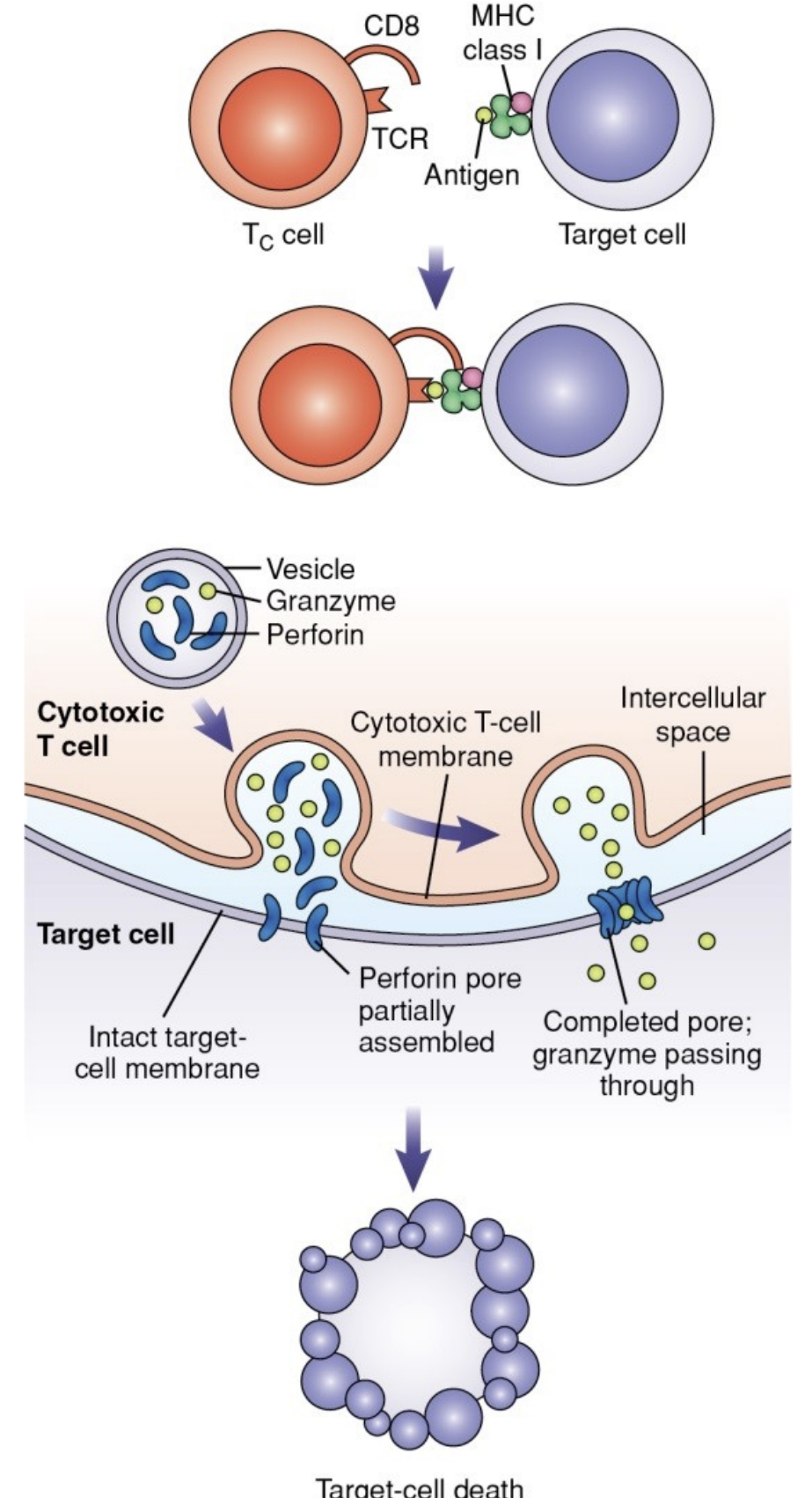
- ligation of death receptors (Fas/FasL)
57
What type of Ags do follicular B cells (in lymph nodes) respond to?
T-dependent Ags
58
What are T-dependent Ags?
- they require help fro Th cells to respond (Bcells)
- they are proteins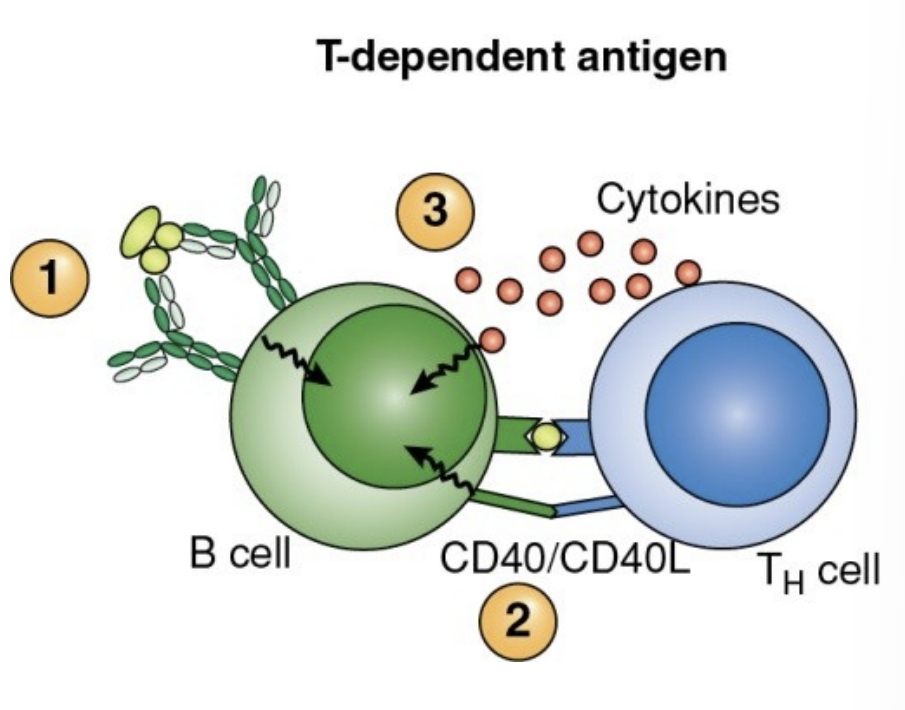
- they are proteins
59
Which lymph cell can switch form production of IgM to another antibody class (like Ig)?
B cells
60
What is it called when the cell can switch production of IgM to another antibody class?
Isotype switching
61
What occurs to the affinity of BCR during the immune response?
The affinity increases
62
What is it called when affinity of BCR increases during the immune response?
affinity maturation
63
Are memory cells generated with T-dependent Ags?
YES - memory cells are generated with T-dependent Ags
64
Do marginal zone B cells (in spleen) require help from Th cells to respond to Ags?
NO - they respond to T-independent Ags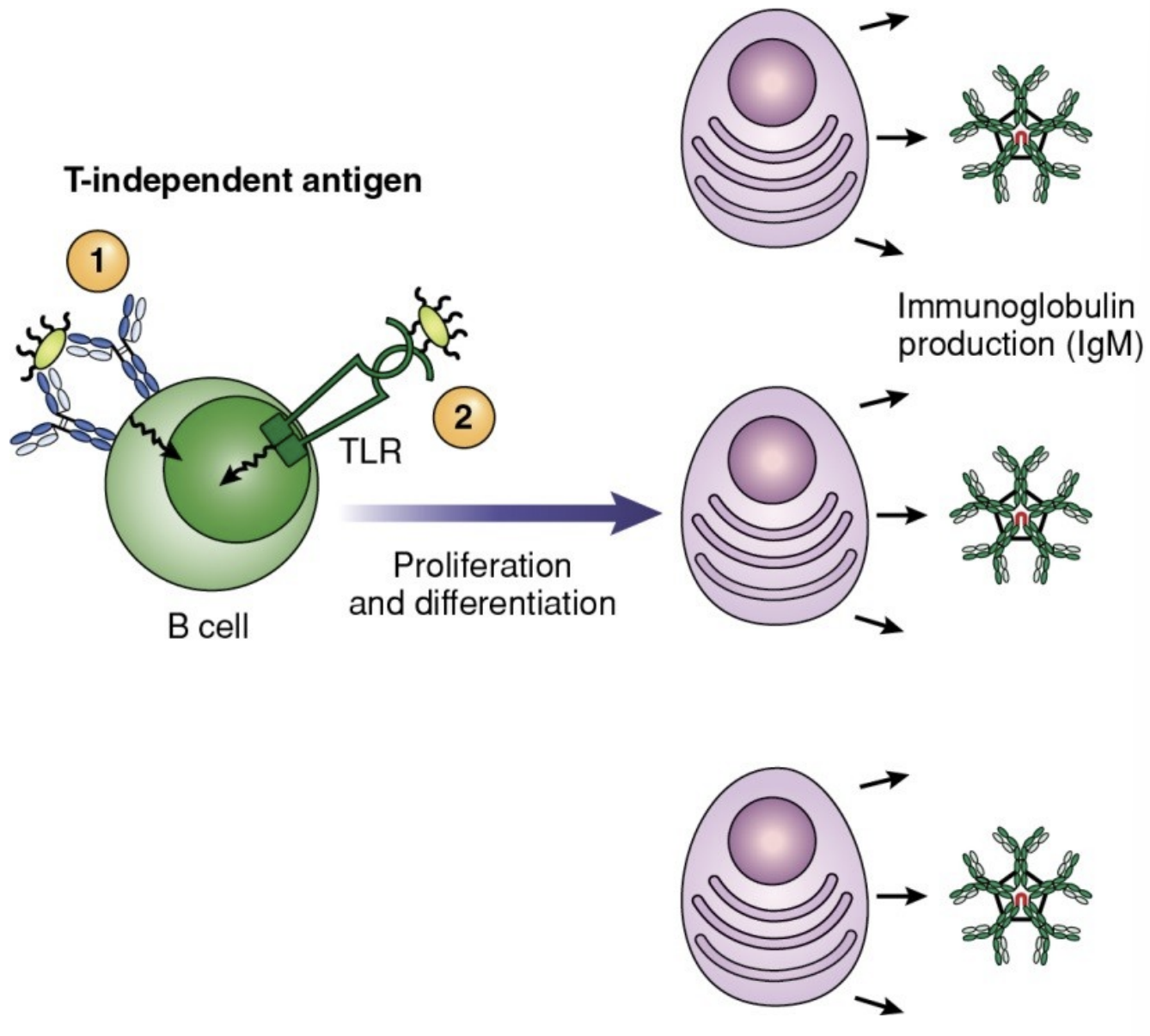
65
Which B cell is T-dependent? (Follicular [lymph nodes] or marginal [spleen])
Follicular B cells found in the lymph nodes
66
What are T-independent Ags?
usually polysaccharides in which many repeating elements cross-link multiple BCRs
67
What type of Ig is produced in marginal zone B cells in the spleen?
only IgM is produced
68
What is the best example of T-independent Ags?
ABO blood group - ex: anti-B antibody is IgM
69
Is memory generated in marginal zone B cells?
YES - memory is generated
70
What is this interaction?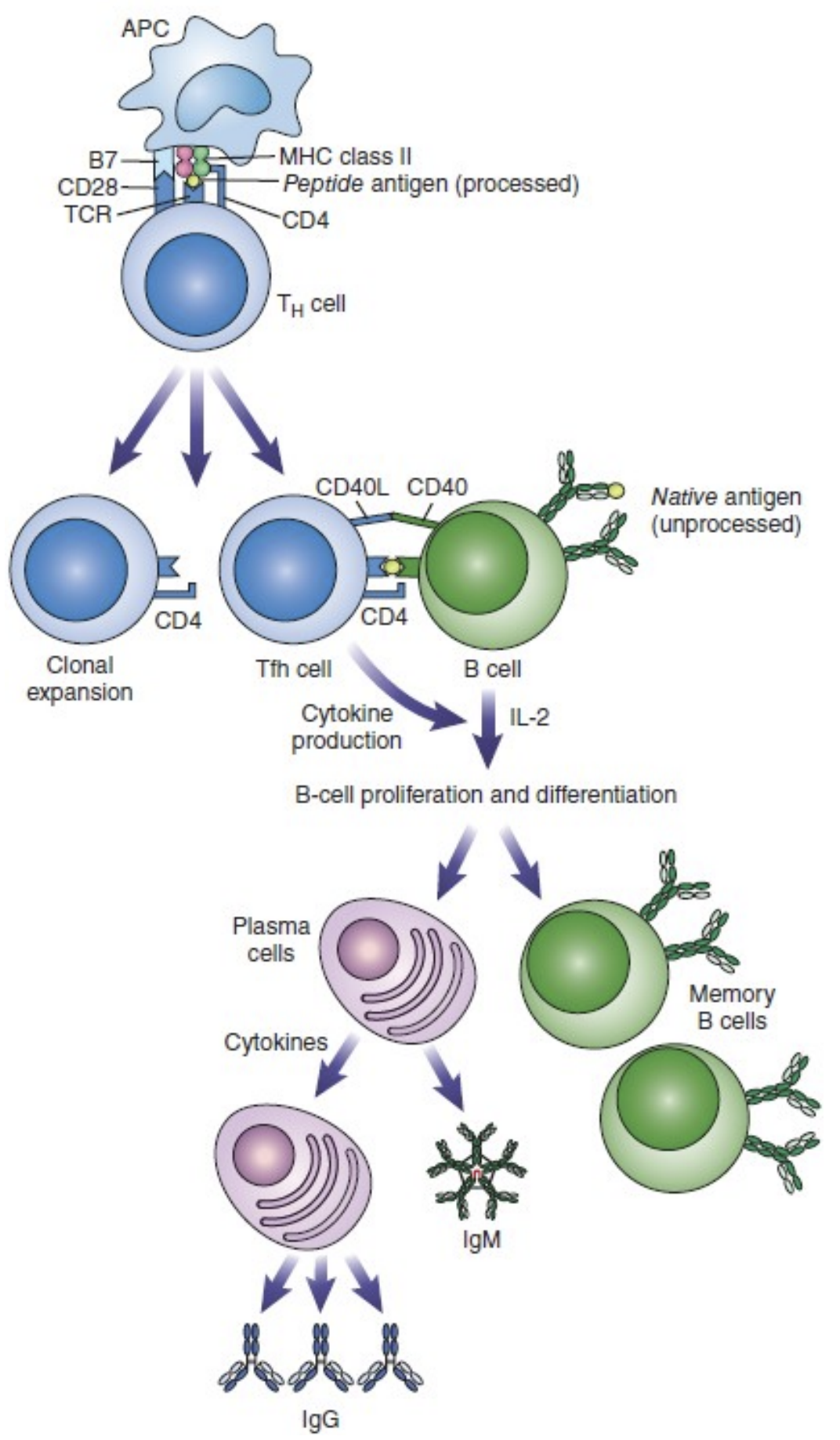
cooperation between B and T cells in the immune response
71
What is the first step between B and T cell cooperation in the immune response? APC presents to T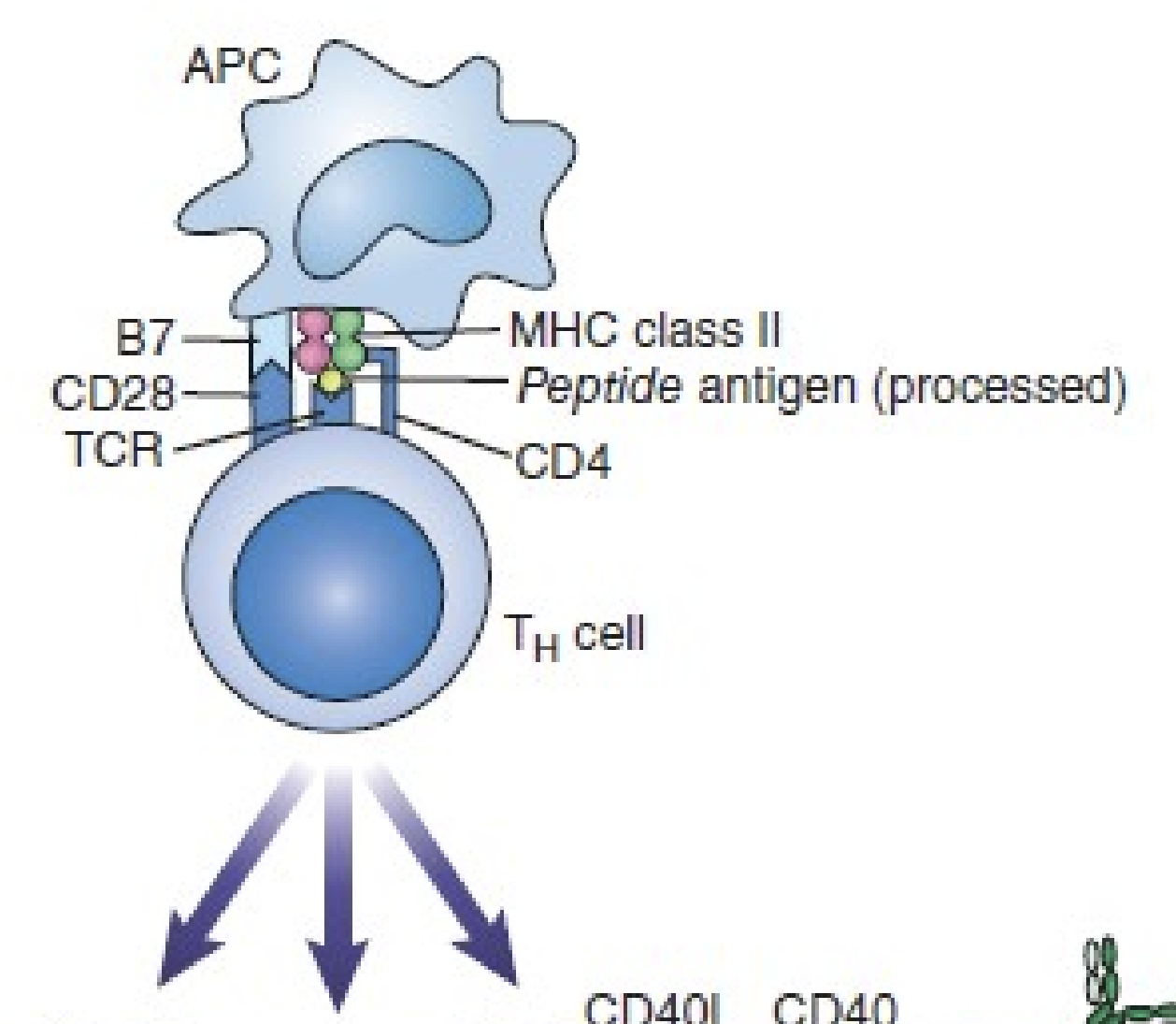
- the APC presents "peptide" Ag with MHC II to Th (CD4+) cells
- CD28 and B7 binding enhances interaction between cells
- Th cells go through clonal expansion and produce cytokines, including IL-2
- CD28 and B7 binding enhances interaction between cells
- Th cells go through clonal expansion and produce cytokines, including IL-2
72
What is the next step after clonal expansion after T cell binds to B cell response?
- B cells able to respond to same Ag, present antigen to Th cells through MHC II
- TCR binds Ag, and CD4 binds to MHC II
- CD40L binds to costimulatory molecule CD40, enhancing the reaction
- TCR binds Ag, and CD4 binds to MHC II
- CD40L binds to costimulatory molecule CD40, enhancing the reaction
73
What is the next step after Th cell presents Ag to B cell?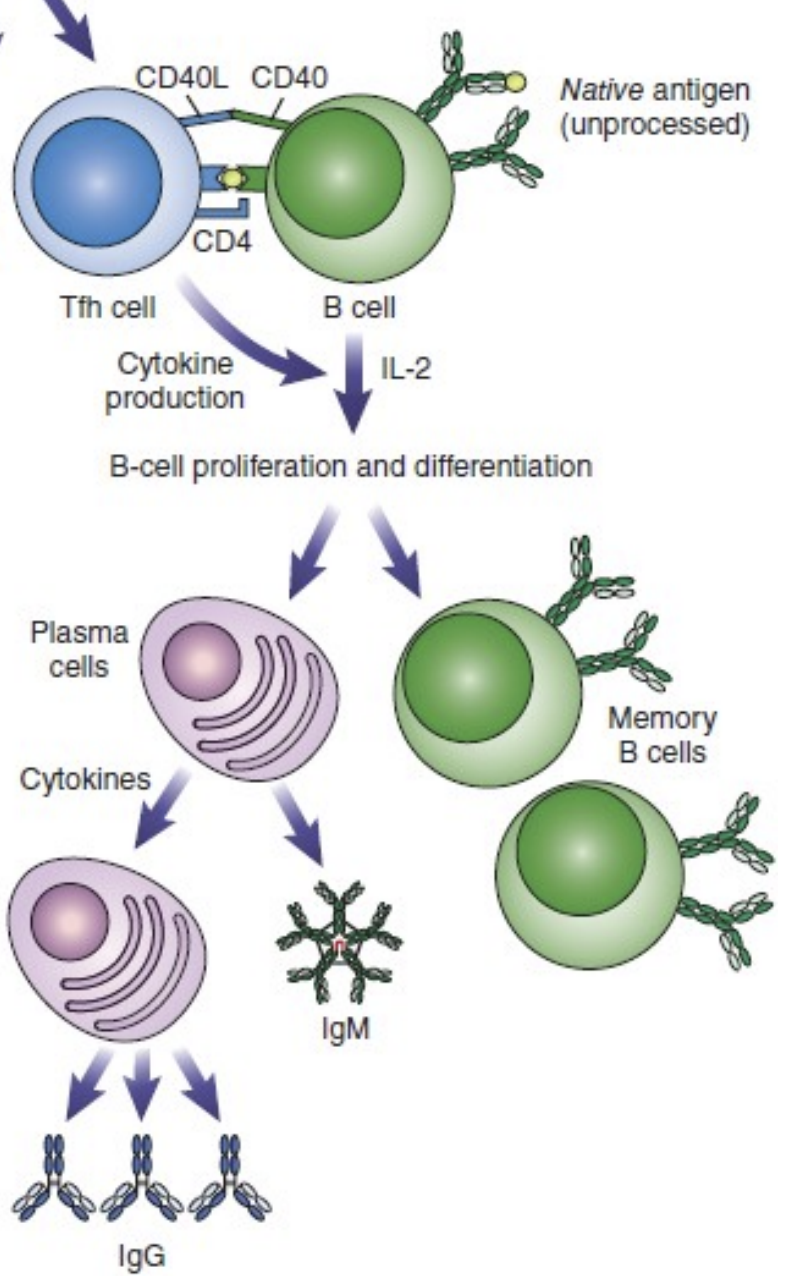
- cytokine production by the T cell (IL-2) induces B cell proliferation and differentiation, and produce plasma cells
- these secrete antibody
- these secrete antibody
74
What are antibodies?
- immunoglobulins (Ags)
- glycoproteins founds in the serum
- 82% - 96% polypeptide and 2-14% carbohydrate
- there are five major classes of IG
- glycoproteins founds in the serum
- 82% - 96% polypeptide and 2-14% carbohydrate
- there are five major classes of IG
75
What are the five major classes of IG?
- IgG (gamma heavy chain)
- IgM (mu heavy chain)
- IgA (alpha heavy chain)
- IgD (delta heavy chain)
- IgE (epsilon heavy chain)
- IgM (mu heavy chain)
- IgA (alpha heavy chain)
- IgD (delta heavy chain)
- IgE (epsilon heavy chain)
76
What is/are the key component(s) of the humoral immune response?
antibodies - immunoglobulins
77
Where do antibodies show up on SPE (serum protein electrophoresis)?
slowest moving fraction and appear primarily in the gamma globulin band with sereum electrophoreses at pH 8.6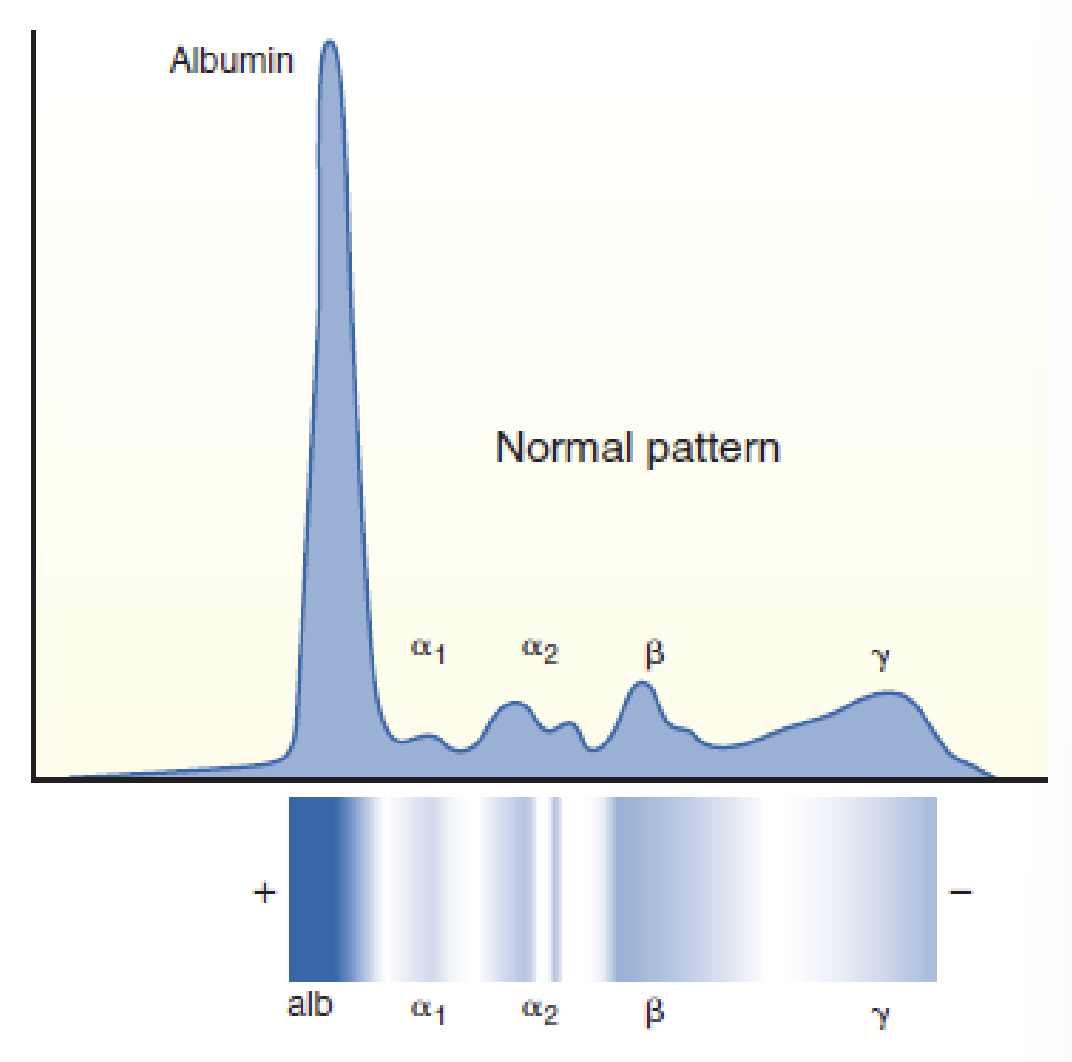
78
What are the main components found in the tetrapeptide structure of immunoglobulins?
- basic four-chain polypeptide (2 light and 2 heavy chains)
- held together by noncovalent forces and disulfide interchain bridges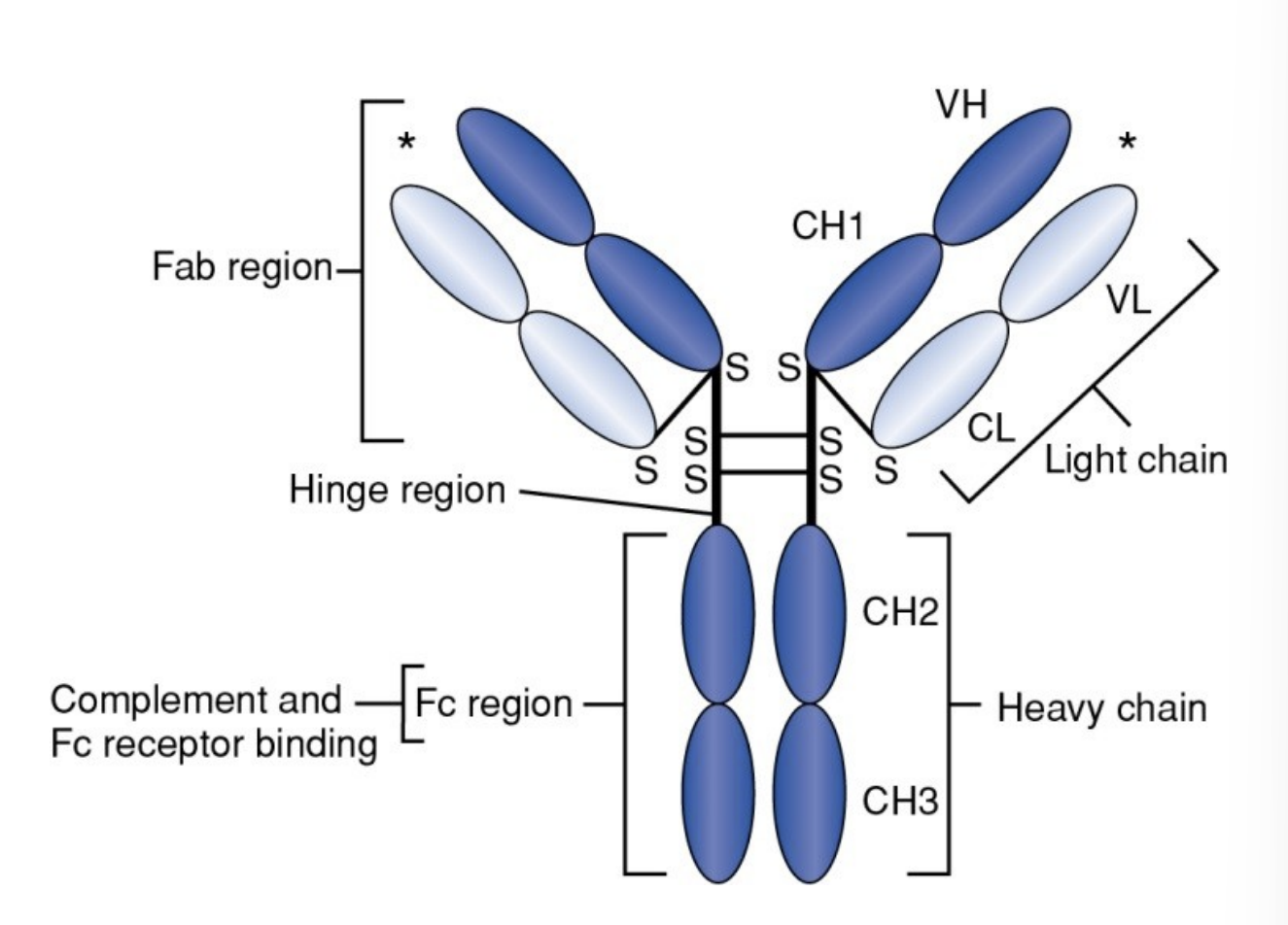
- held together by noncovalent forces and disulfide interchain bridges
79
What are the components of the 4 chain polypeptide?
- 2 large peptide chains - heavy (H) chains
- 2 small peptide chains - light (L) chains
- 2 small peptide chains - light (L) chains
80
What are the immunoglobulins held together by?
noncovalent forces and disulfide interchain bridges
81
The heavy chains are denoted by?
Greek letters for each Ig class
82
The light chains contain?
- Kappa (K), Lambda
- found in all 5 classes of Igs but ONLY one type is present in a single Ig molecule
- found in all 5 classes of Igs but ONLY one type is present in a single Ig molecule
83
The unique variable region (amino-terminal end) binds to?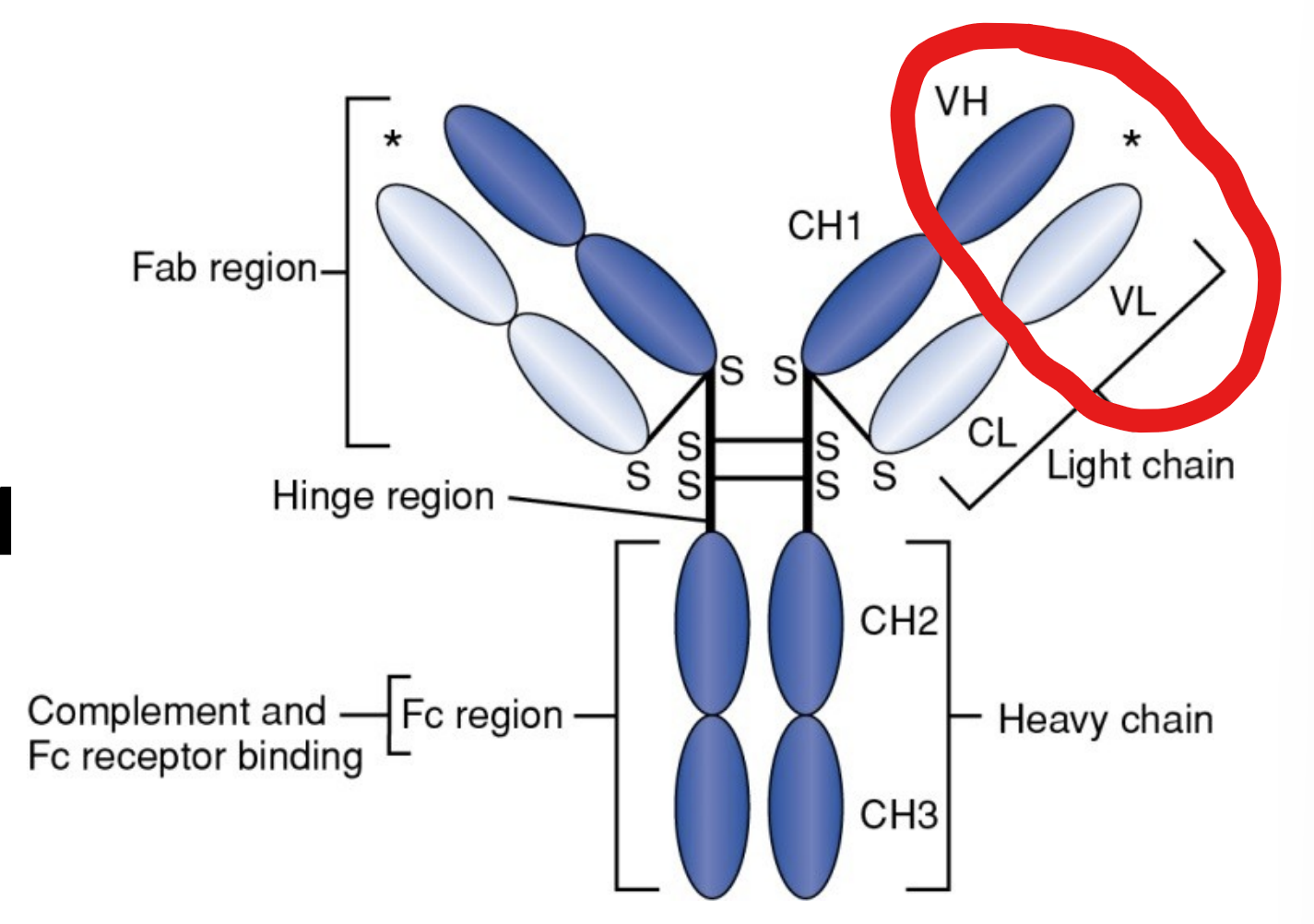
specific binding to a particular antigen
84
The 3-4 constant regions (carboxyl-terminal end) are responsible for?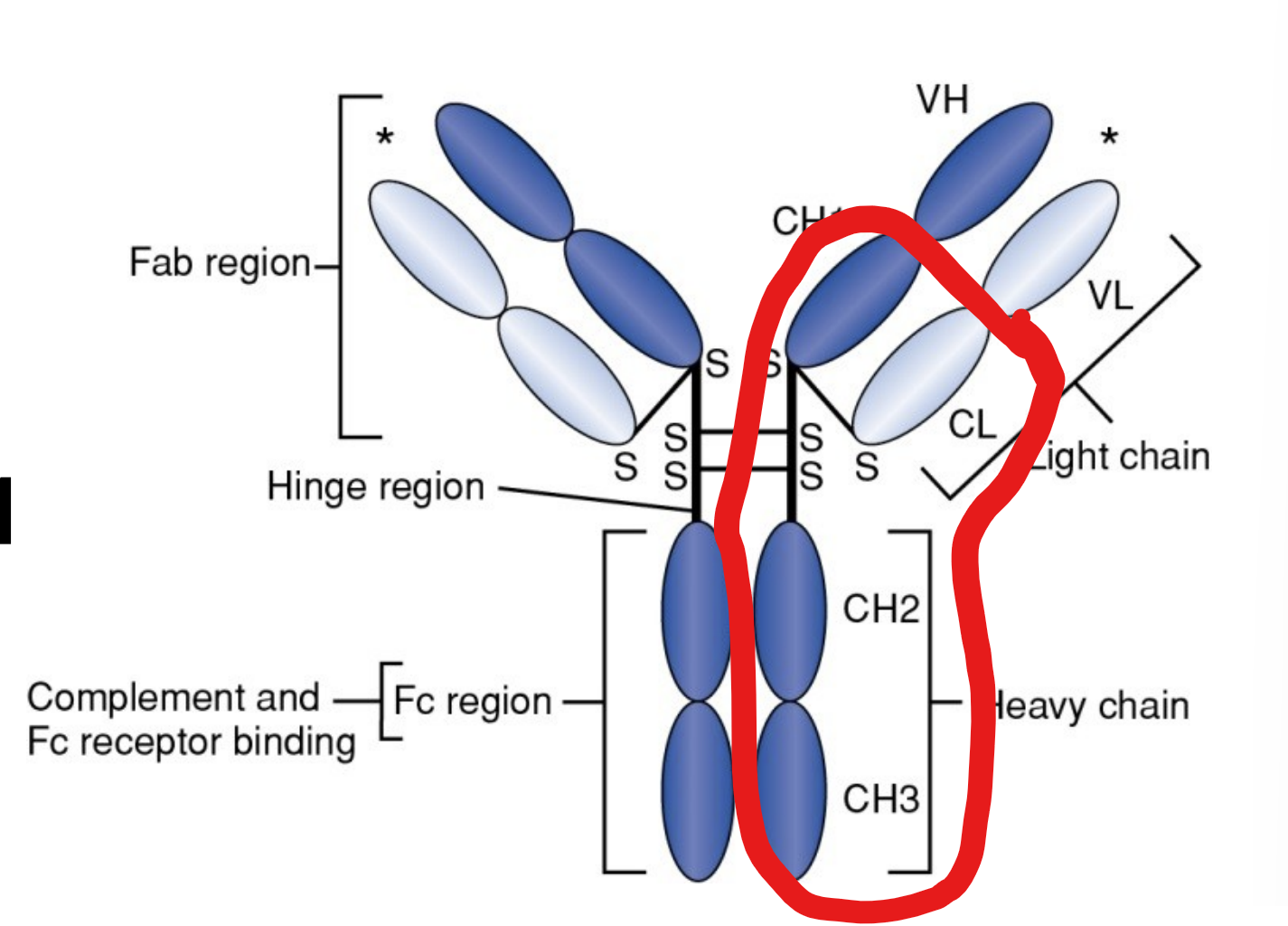
biological functions of antibody
85
What is the hinge region?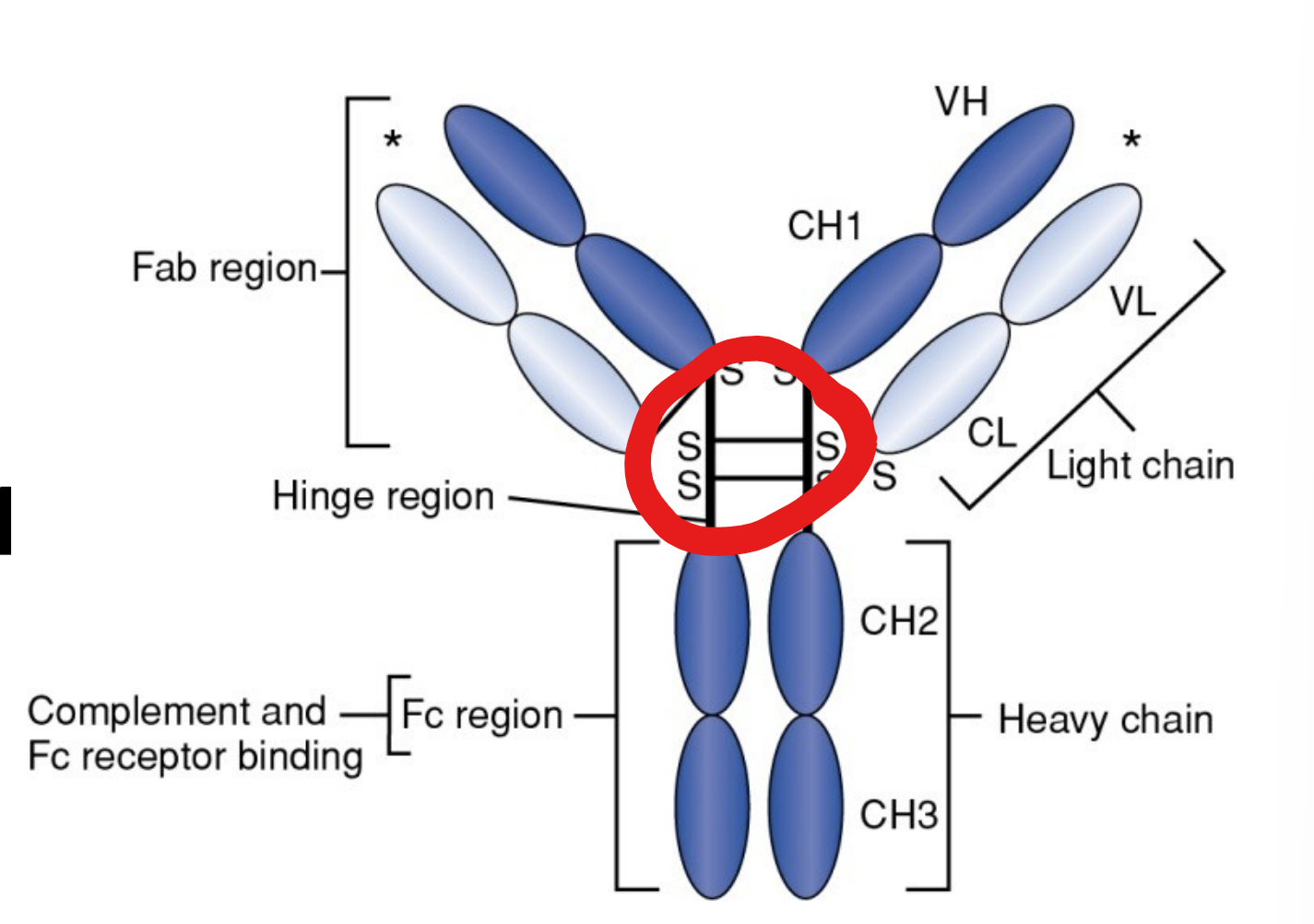
- segment of H chain between the CH1 and CH2 regions
- allows for flexibility
- 2 antigen-binding sites can operate independently
- assists in intitiation of complement cascade and Fc receptor binding
- allows for flexibility
- 2 antigen-binding sites can operate independently
- assists in intitiation of complement cascade and Fc receptor binding
86
What occurs when IG is treated with papain?
Two Fab fragments
• One L chain plus one-half of an H
chain held together by S=S
• Contains antigen-binding sites
One Fc fragment
• The carboxy-terminal halves of two
H chains held together by S=S
•Important in effector functions of Igs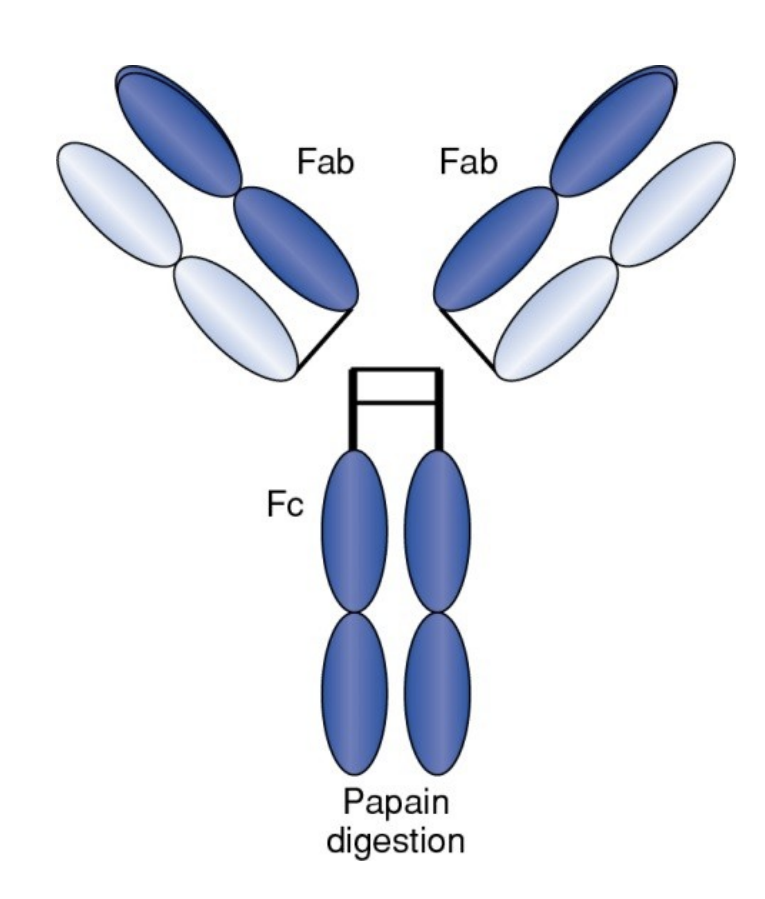
• One L chain plus one-half of an H
chain held together by S=S
• Contains antigen-binding sites
One Fc fragment
• The carboxy-terminal halves of two
H chains held together by S=S
•Important in effector functions of Igs
87
What occurs when IG is treated with pepsin?
Pepsin cleaves the Ig above the
set of disulfide bonds that hold
the heavy chains together
F(ab’)2 created
• Contains two antigen-binding
sites held together
• Fc’ portion in nonfunctional
pieces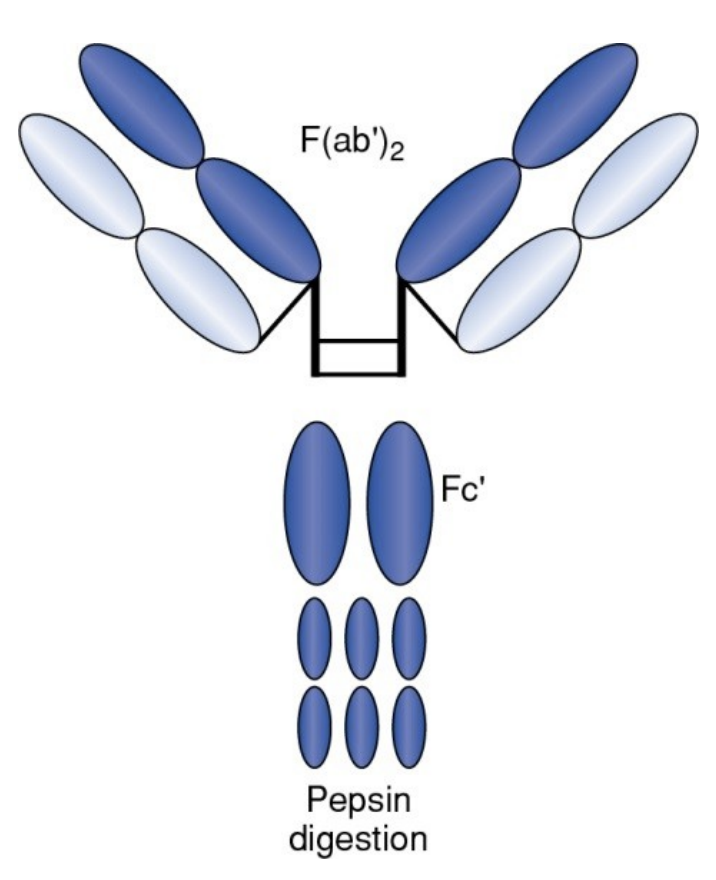
set of disulfide bonds that hold
the heavy chains together
F(ab’)2 created
• Contains two antigen-binding
sites held together
• Fc’ portion in nonfunctional
pieces
88
What are the amino acid sequences in immunoglobulins?
antigenic determinants
- they can react with antibodies produced by immunization of heterologous species
- they can react with antibodies produced by immunization of heterologous species
89
What are the 3 types of antigenic determinants?
- isotypes
- allotypes
- idiotypes
- allotypes
- idiotypes
90
What are isotypes?
- the are unique amino acid sequences common to all Igs of a given class or subclass
- identical in all individuals of a species and differ between species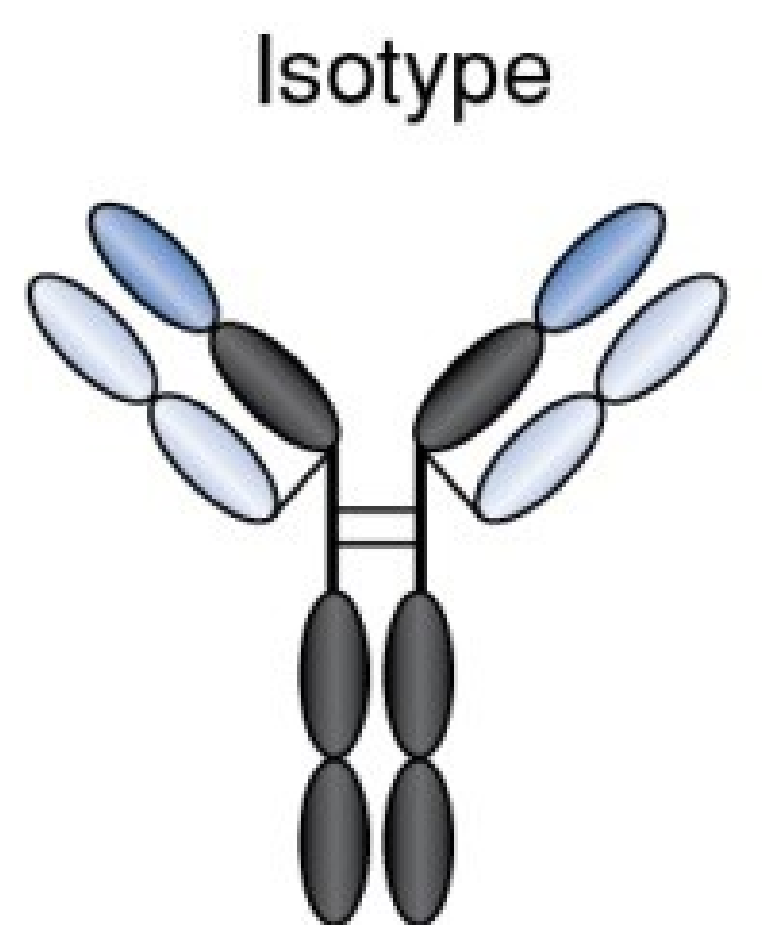
- identical in all individuals of a species and differ between species
91
Where are isotypes located?
located in constant regions of heavy chainsand are denoted by Greek letts for each Ig glass:
IgG - gamma chain
IgM - mu chain
IgA - alpha chain
IgD - delta chain
IgE - epsilon chain
IgG - gamma chain
IgM - mu chain
IgA - alpha chain
IgD - delta chain
IgE - epsilon chain
92
What are allotypes?
- minor variations of amino acid sequences that are present in some individuals of the SAME species, but NOT others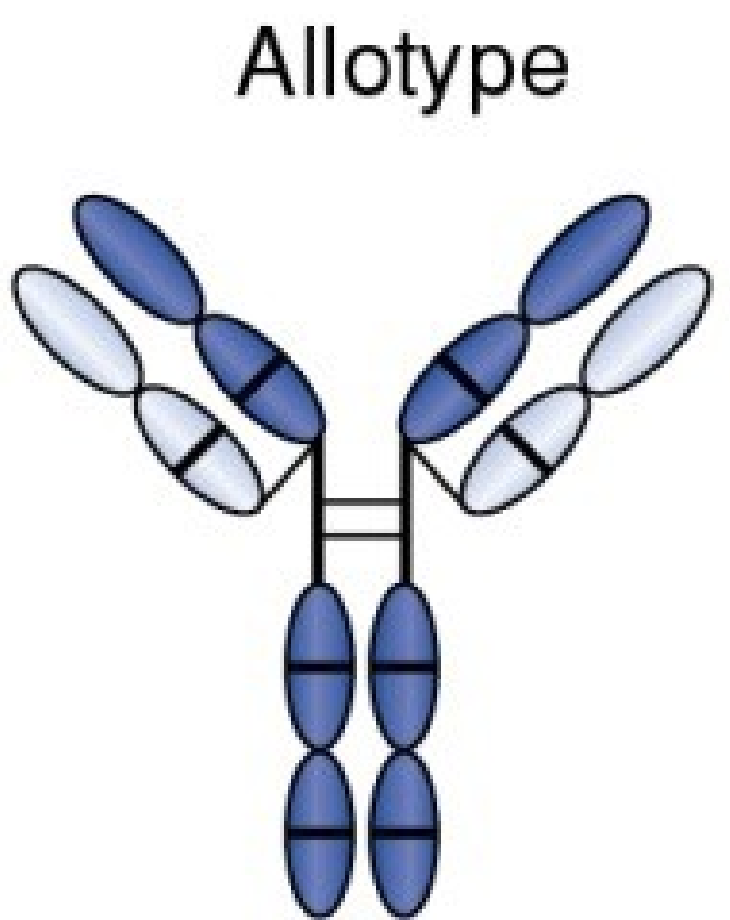
93
Where are allotypes located?
they are located in the constant regions of all 4 IgG subclasses (IgG1-IgG4), one IgA subclass, and the lambda light chain
94
What are idiotypes?
- variations in variable regions that give individual antibody molecules specificity
- essential to the formation of the antigen-binding site
- together, they serve as the antigen-recognition unit
- essential to the formation of the antigen-binding site
- together, they serve as the antigen-recognition unit
95
Which is the predominant immunoglobulin in humans?
IgG
96
What is the half-life of IgG?
23 days
97
What is the structure of IgG?
monomer with a molecular weight of 150,000 daltons and a sedimentation coefficient of 7S
98
What is the sedimentation coefficient?
or number of Svedburg units, is a measure of the rate by which the molecule sediments in a high-speed ultracentrifuge, and S-value reflets the molecular weight of the molecule
99
What are the 4 subclasses of IgG, and % of each?
IgG1: 66%
IgG2: 23%
IgG3: 7%
IgG4: 4%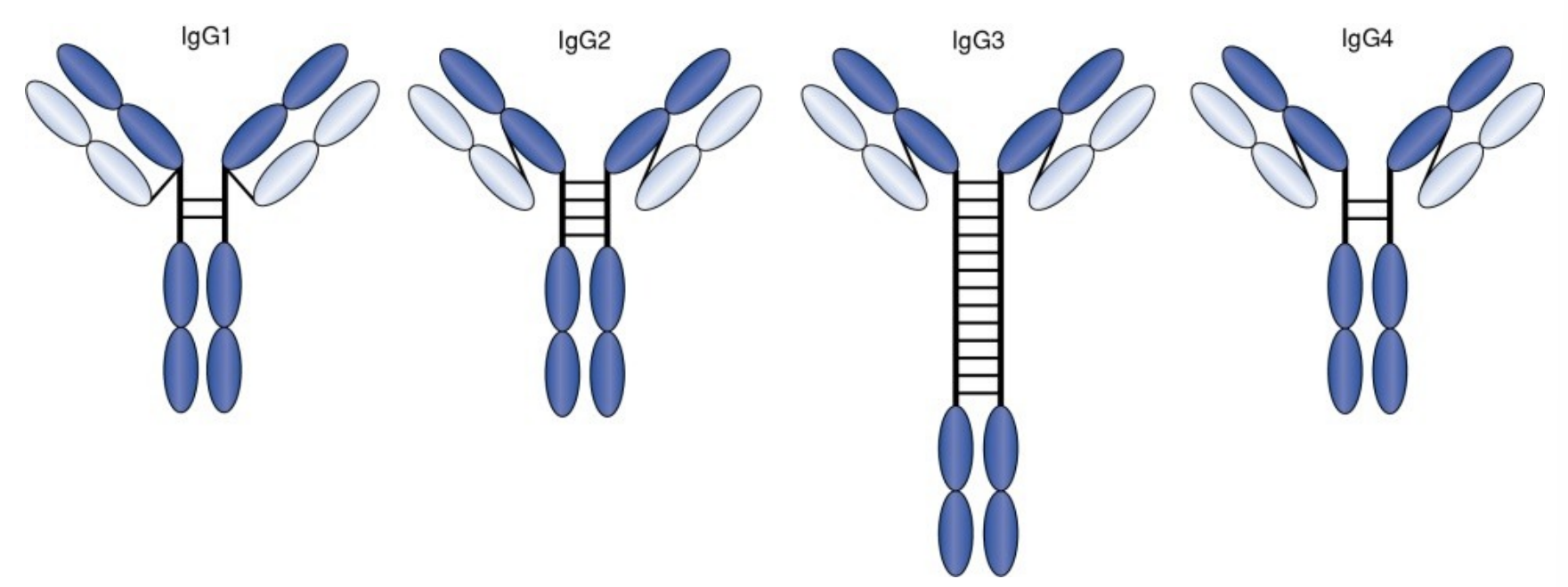
IgG2: 23%
IgG3: 7%
IgG4: 4%
100
What are the differences between the 4 subclasses of IgG?
- slight differences in constant region amino acide sequences
- differ in number and position of disulfide bridges between the gamma chains
- differ in functions
- differ in number and position of disulfide bridges between the gamma chains
- differ in functions
101
Which IgG subtype is this?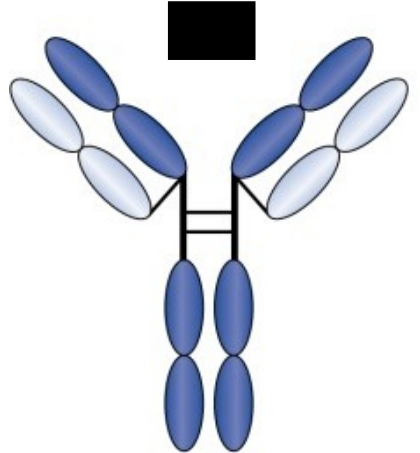
IgG1
- basic immunoglobbulin look
- basic immunoglobbulin look
102
Which IgG subtype is this?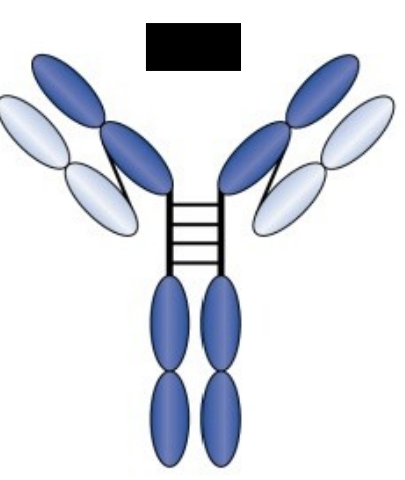
IgG2
- difference from IgG1 by diagonal disulfide bridge and extra disulfide bridge at hinge region
- difference from IgG1 by diagonal disulfide bridge and extra disulfide bridge at hinge region
103
Which IgG subtype is this?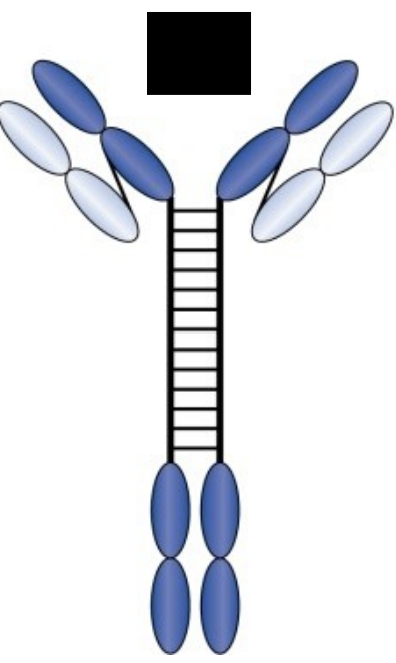
IgG3
- difference from IgG1 by diagonal disulfide bridge and multiple extra disulfide bridges at hinge region
- difference from IgG1 by diagonal disulfide bridge and multiple extra disulfide bridges at hinge region
104
Which IgG subtype is this?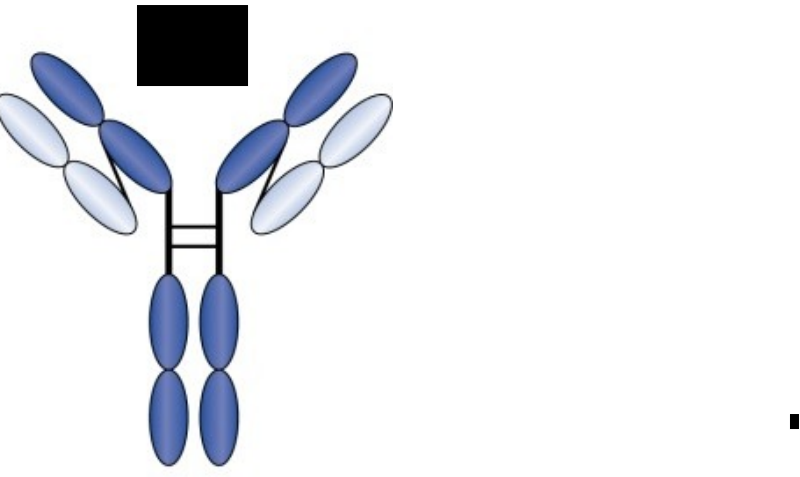
IgG4
- difference from IgG1 by diagonal disulfide bridge
- difference from IgG1 by diagonal disulfide bridge
105
What are the major functions of IgG?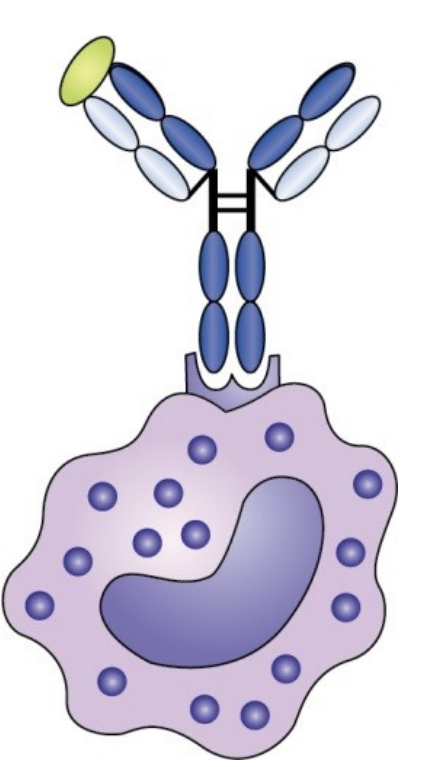
1. CH2 region is able to bind to complement
2. An important mediator of opsonization
3. Role in antibody-dependent cellular cytotoxicity (ADCC)
4. Ability to bind and neutralize toxins and viruses
5. ONLY IgG can cross the placenta
6. Agglutination and precipitation
2. An important mediator of opsonization
3. Role in antibody-dependent cellular cytotoxicity (ADCC)
4. Ability to bind and neutralize toxins and viruses
5. ONLY IgG can cross the placenta
6. Agglutination and precipitation
106
Elaborate on the IgG function:
1. CH2 region is able to bind to complement
1. CH2 region is able to bind to complement
- leads to inflammation and destructon of foreign cells such as bacteria
- IgG3 is most efficient, followed by IgG1
- IgG2 and IgG4 cannot bind complement or bind very poorly
- IgG3 is most efficient, followed by IgG1
- IgG2 and IgG4 cannot bind complement or bind very poorly
107
What are the IgG subtypes associated with?
- IgG1 and IgG3 are produced in response to protein antigens
- IgG2 and IgG4 are associated with polysaccharide antigens (for instance,
antibodies raised against blood group antigens from Rh, Kell, Kidd, Duffy, …..
are mostly IgG1 or IgG3)
- IgG2 and IgG4 are associated with polysaccharide antigens (for instance,
antibodies raised against blood group antigens from Rh, Kell, Kidd, Duffy, …..
are mostly IgG1 or IgG3)
108
Elaborate on the function:
2. An important mediator of opsonization
2. An important mediator of opsonization
- coating the bacteria which enhances the phagocytosis
- monocytes, neutrophils and macrophages have receptors for Fc portion of Ig
- CH3 region of IgG binds to the Fc receptor and enhances contact between Ag and the phagocyte hence enhancement of phagocytosis IgG1 and IgG3 are strongest opsonins
- monocytes, neutrophils and macrophages have receptors for Fc portion of Ig
- CH3 region of IgG binds to the Fc receptor and enhances contact between Ag and the phagocyte hence enhancement of phagocytosis IgG1 and IgG3 are strongest opsonins
109
Elaborate on the function:
3. Role in antibody-dependent cellular cytotoxicity (ADCC)
3. Role in antibody-dependent cellular cytotoxicity (ADCC)
- in ADCC - IgG binds to Fc receptors on the surface of macs, monos, neuts and NK cells
- the outcome is NOT phagocytosis, but rather activation of these cells and release of enzymes which destroy the pathogens extracellularly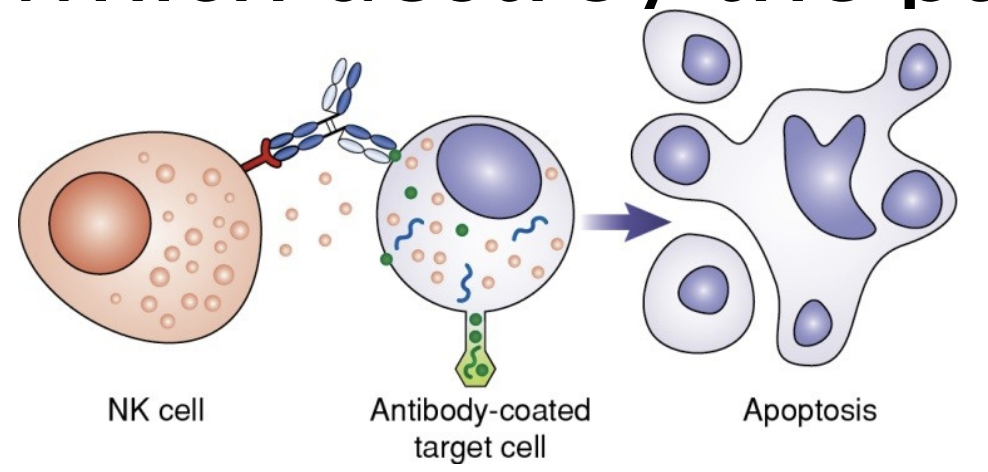
- the outcome is NOT phagocytosis, but rather activation of these cells and release of enzymes which destroy the pathogens extracellularly
110
Elaborate on the function:
4. Ability to bind and neutralize toxins and viruses
4. Ability to bind and neutralize toxins and viruses
IgG is most effective in this process since it has a high diffusion coefficient that allows it to enter extrascular spaces more readily than the other Ig types
111
Elaborate on the function:
5. ONLY IgG can cross the placenta
5. ONLY IgG can cross the placenta
- provides immunity ot newborn
- efficiency: IgG1, IgG4, IgG3 and then IgG2
- IgG2 is least effiient in crossing the placenta
- efficiency: IgG1, IgG4, IgG3 and then IgG2
- IgG2 is least effiient in crossing the placenta
112
Elaborate on the function:
6. Agglutination and precipitation
6. Agglutination and precipitation
- these rxns take place in vitro
113
What is IgM?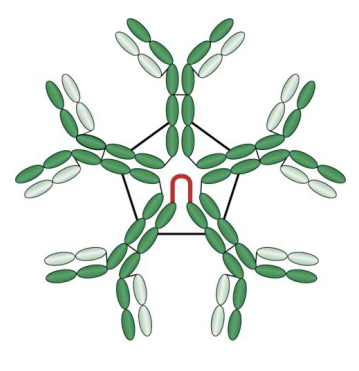
- known as the MACROglobulin since it is the largest Ig
- molecular weight of ~900,000 d
- accounts for 5-10% of all serum Igs'
- half life of 6 days
- can exist as: monomer (B cell surface) and pentamer (in blood)
- held together by J chain
- star shape with 10 antigen-binding sites
- molecular weight of ~900,000 d
- accounts for 5-10% of all serum Igs'
- half life of 6 days
- can exist as: monomer (B cell surface) and pentamer (in blood)
- held together by J chain
- star shape with 10 antigen-binding sites
114
What are the functions of IgM?
1. complement fixation (full activation)
2. agglutination (strong RBC agglutination)
3. Neutralization of bacterial toxins and viruses
4. Known as the primary response antibody
2. agglutination (strong RBC agglutination)
3. Neutralization of bacterial toxins and viruses
4. Known as the primary response antibody
115
What are the naturally-occuring Abs in the ABO blood group system?
IgM - strong agglutinins
116
Elaborate on this function of IgM:
4. Known as the primary response antibody
4. Known as the primary response antibody
- appears first after antigenic stimulation and in the maturing infant
- synthesized only as long as antigen remains present and may be used to diagnose acute infection
- synthesized only as long as antigen remains present and may be used to diagnose acute infection
117
What is IgA?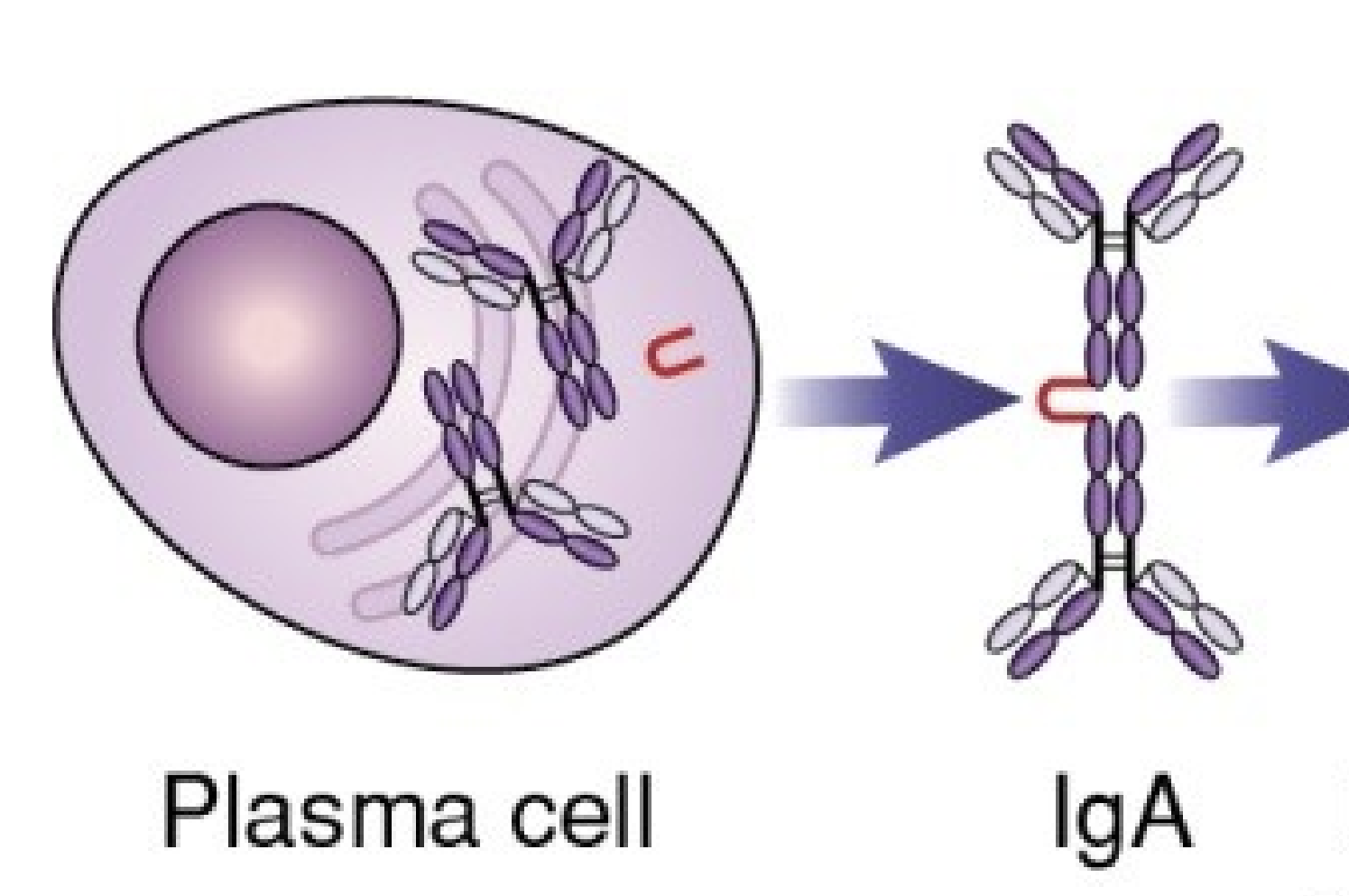
- Accounts for 10-15% of all circulating Igs in serum
- Serum IgA - a monomer with three constant regions and a molecular weight of 160,000 d
- Serum IgA - a monomer with three constant regions and a molecular weight of 160,000 d
118
What is secretory IgA?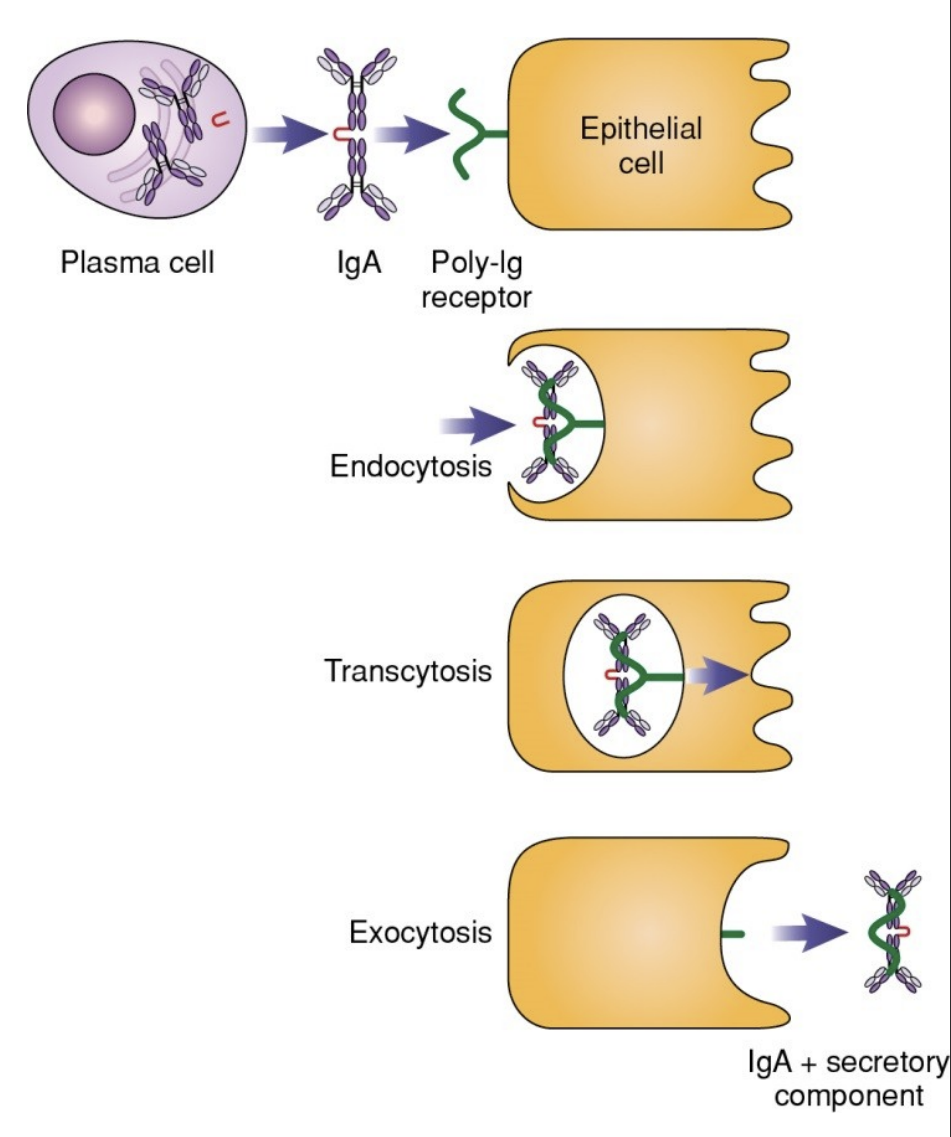
- mainly synthesized by plasma cells in MALT
- released as a dimer held together by a J chain
- contains a secretory component (SC) dereived from epithelial cells
- released as a dimer held together by a J chain
- contains a secretory component (SC) dereived from epithelial cells
119
What are the functions of IgA?
1. secretory IgA patrols mucosal surfaces and acts as a first line of defense
2. passively transers immunity to newborn during breastfeeding
3. IgA can act as an opsonin
4. aggregation of IgA immune complexes may trigger alternative pathway of complement
2. passively transers immunity to newborn during breastfeeding
3. IgA can act as an opsonin
4. aggregation of IgA immune complexes may trigger alternative pathway of complement
120
Elaborate on this function for IgA:
1. secretory IgA patrols mucosal surfaces and acts as a first line of defense
1. secretory IgA patrols mucosal surfaces and acts as a first line of defense
- neutralizses toxins produced by microorganisms
- prevents bacteria from adhering to mucosal surfaces and penetrating farther into body
- prevents bacteria from adhering to mucosal surfaces and penetrating farther into body
121
What is IgD?
- extremely scarce
- short-life (1-3 days)
- no protective fxn
- found on surface of immunocompetent but unstimulated B lymphs
- not as important
- short-life (1-3 days)
- no protective fxn
- found on surface of immunocompetent but unstimulated B lymphs
- not as important
122
What is IgE?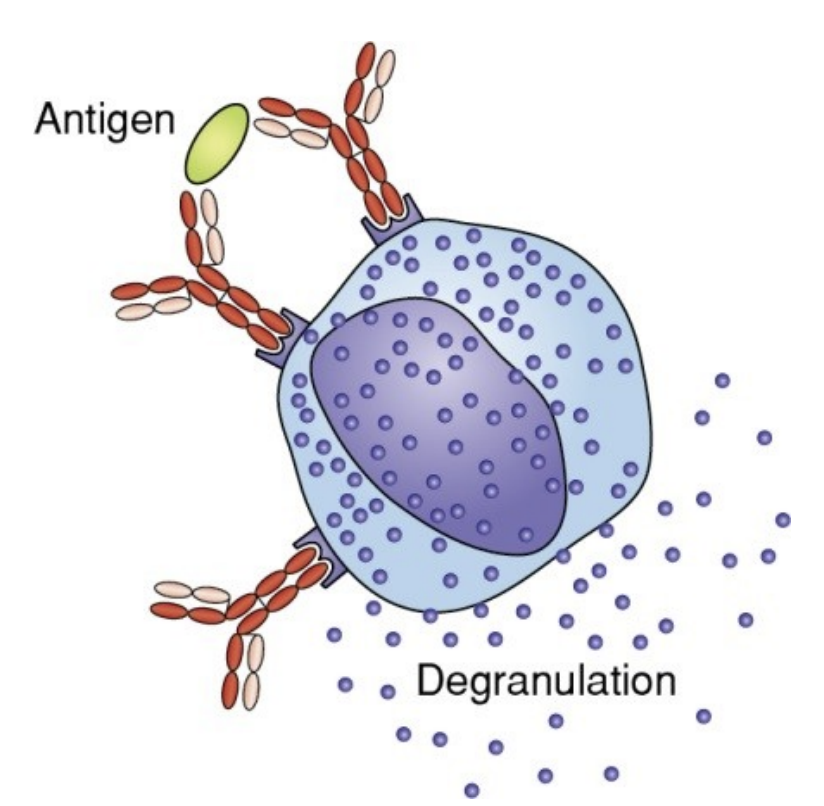
- normally 0.0005% of total serum immunoglobulins
- a monomer
- a monomer
123
What are the functions of IgE?
- binding of IgE to eosinophils results in release of enzymes that destroy large antigens like parasitic worms
- 2 adjacent IgE molecules on a mast cell bind a specific antigen
- cascade of cellular events results in degranulation of mast cells and release of vasoactive amines (such as histamine and heparin)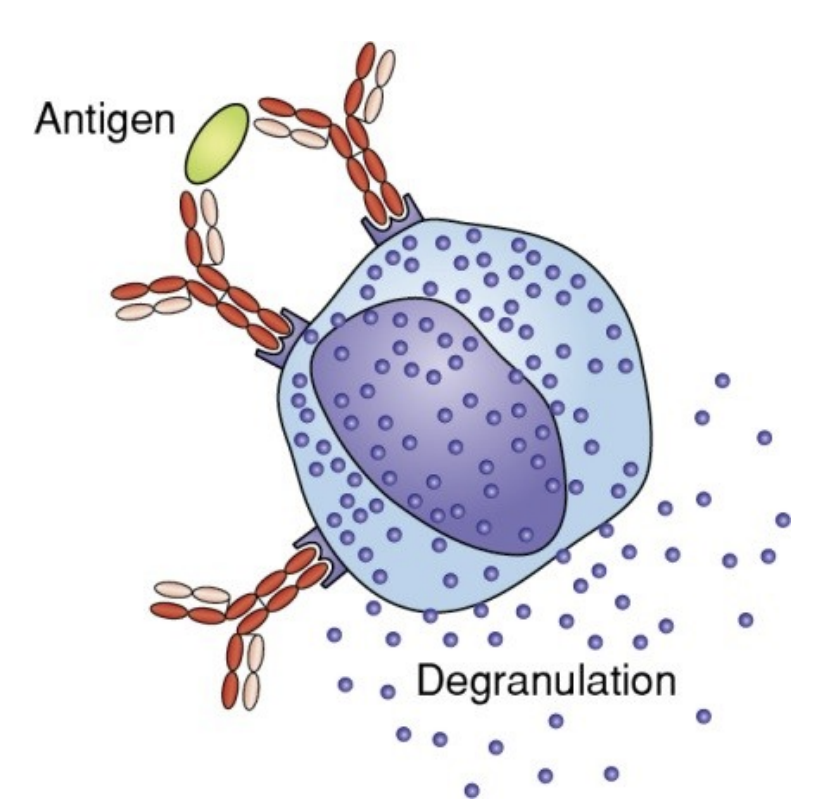
- 2 adjacent IgE molecules on a mast cell bind a specific antigen
- cascade of cellular events results in degranulation of mast cells and release of vasoactive amines (such as histamine and heparin)
124
What is the importance of primary VS secondary antibody response?
- primary response - first antigen exposure, slow response 4-7 days until antibodies are produced - IgM produced first and then IgG
- secondary response - second response, fast response (1-3 days), IgM produced and declines, memory B cells activate into plasma and secrete IgG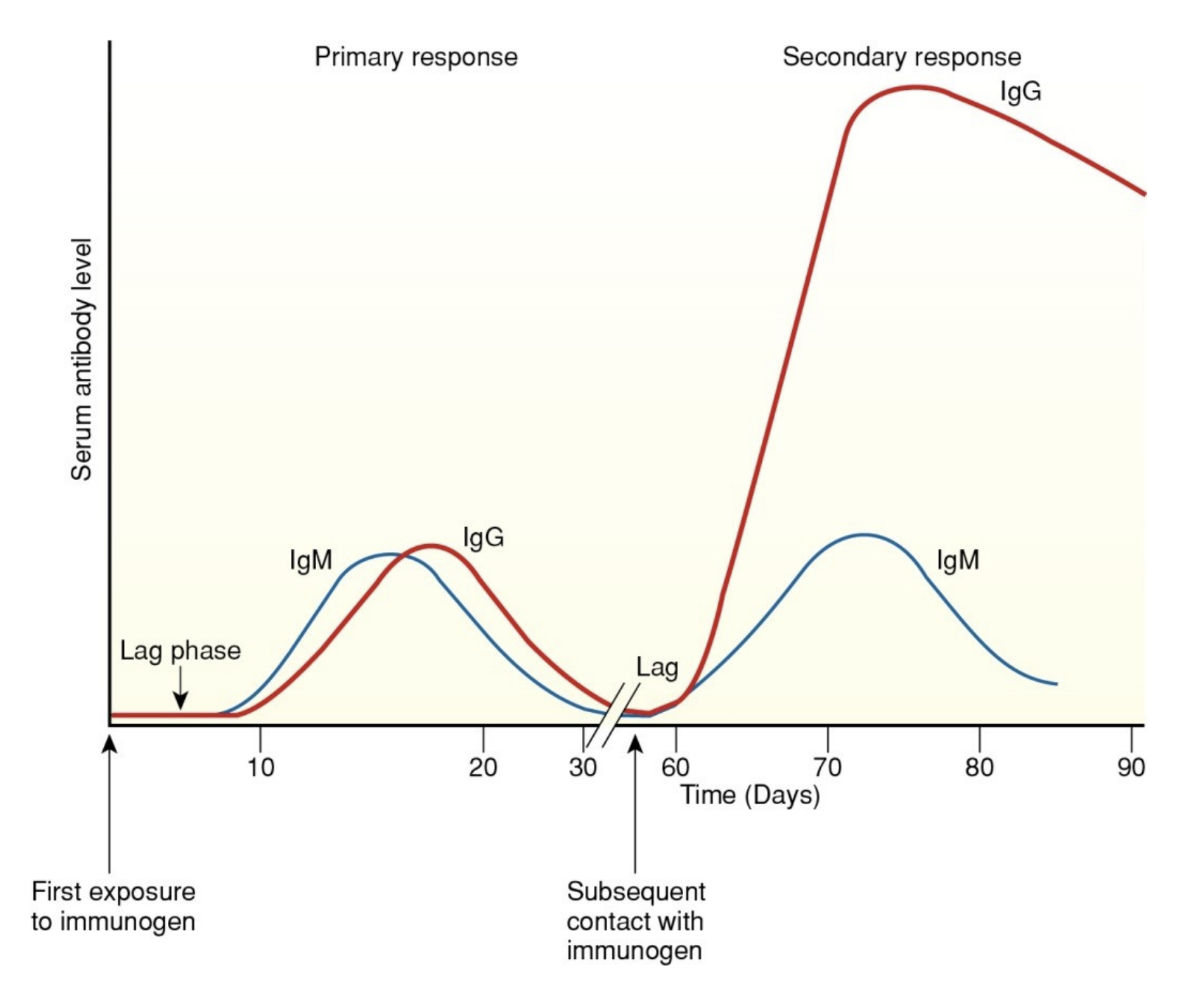
- secondary response - second response, fast response (1-3 days), IgM produced and declines, memory B cells activate into plasma and secrete IgG
125
What is the importance of antibody specificity and diversity?
- adaptive immune system is able to respond specifically to a "diverse array"
- estimated we can respond to 10^7 - 10^9 Ags, yet the response to each Ag is highly specific
- this is possible due to clonal selection and Ig genetics
- estimated we can respond to 10^7 - 10^9 Ags, yet the response to each Ag is highly specific
- this is possible due to clonal selection and Ig genetics
126
What is clonal selection?
- each B cell has a BCR specific for a particular antigen
- when Ag enters - it binds only to the B cells that possess BCRs specific to it (memory B cells)
- only those B cells proliferate and differentiate into antibody-producing plasma cells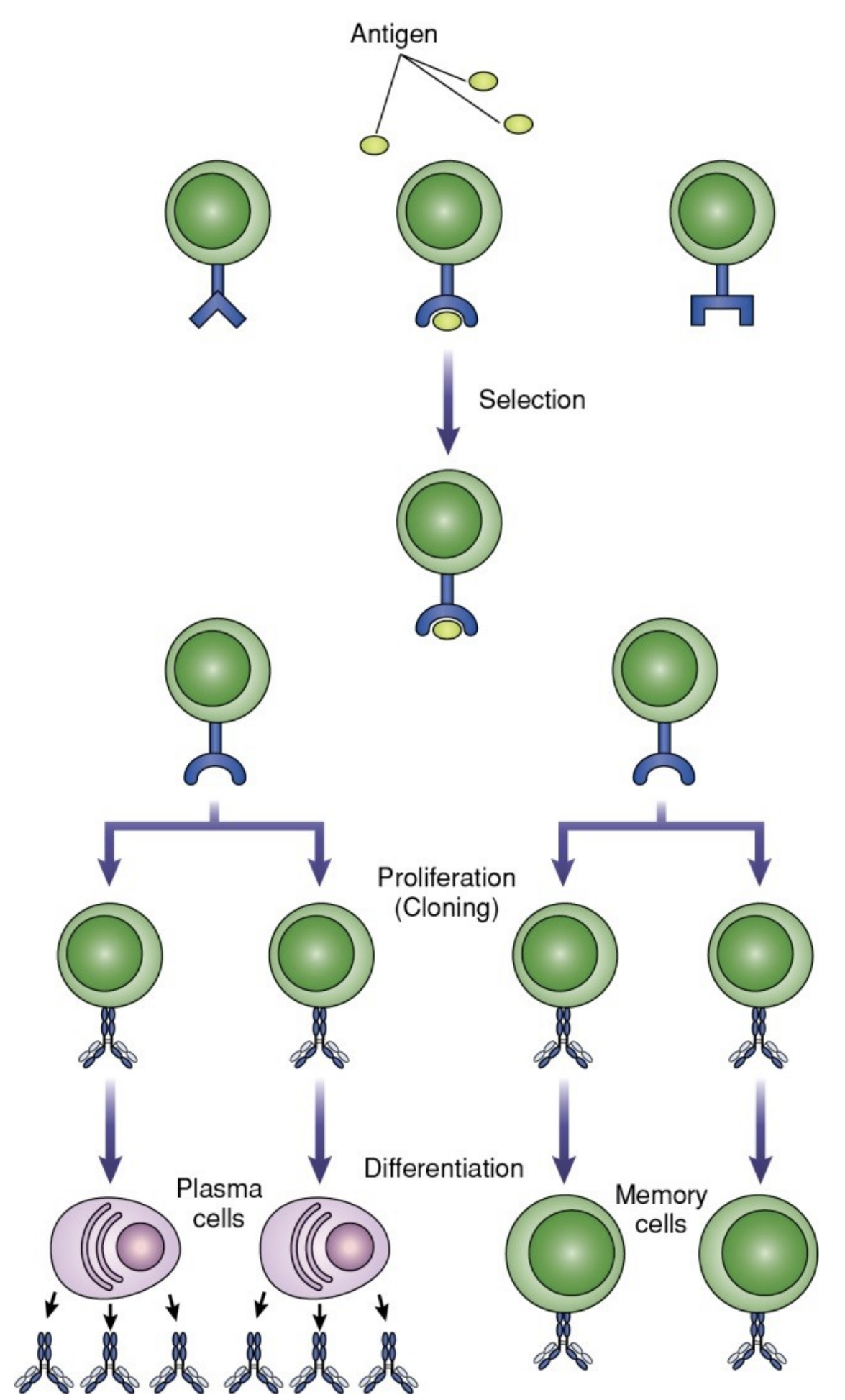
- when Ag enters - it binds only to the B cells that possess BCRs specific to it (memory B cells)
- only those B cells proliferate and differentiate into antibody-producing plasma cells
127
What are monoclonal antibodies?
Abs' derived from a single parent antibody-producing cell that has reproduced many times to form a clone
- all the cells in the clone are identical, and the Ab's produced are identical
- all the cells in the clone are identical, and the Ab's produced are identical
128
What is the importance of monoclonal antibodies in laboratory testing and therapy?
- developed based on knowledge that B cell is genetically preprogrammed to synthesize a very specific antibody
- derived from a hybrid cell line (hybridoma) generated from a single antibody-producing B cell and a myeloma cell
- technique developed in 1975 by Georges Kohler and Cesar Milstein
- derived from a hybrid cell line (hybridoma) generated from a single antibody-producing B cell and a myeloma cell
- technique developed in 1975 by Georges Kohler and Cesar Milstein
129
What is a hybridoma and why were these developed?
- fusion between a B cell and a myeloma cancerous cell
- developed due to normal B cells having a short life in culture, while a myeloma cancerous cell can grow indefinitely
- developed due to normal B cells having a short life in culture, while a myeloma cancerous cell can grow indefinitely
130
What is the hybridoma technique?
1. immunize a mouse with a specific antigen (mouse becomes sensitized)
2. harvest spleen cells
3. combine spleen cells with myeloma cells in the presence of PEG (polyethylene glycol) - helps with fusion
4. select fused cells and screen for presence of desired antibody
5. grow positive cells in larger quantities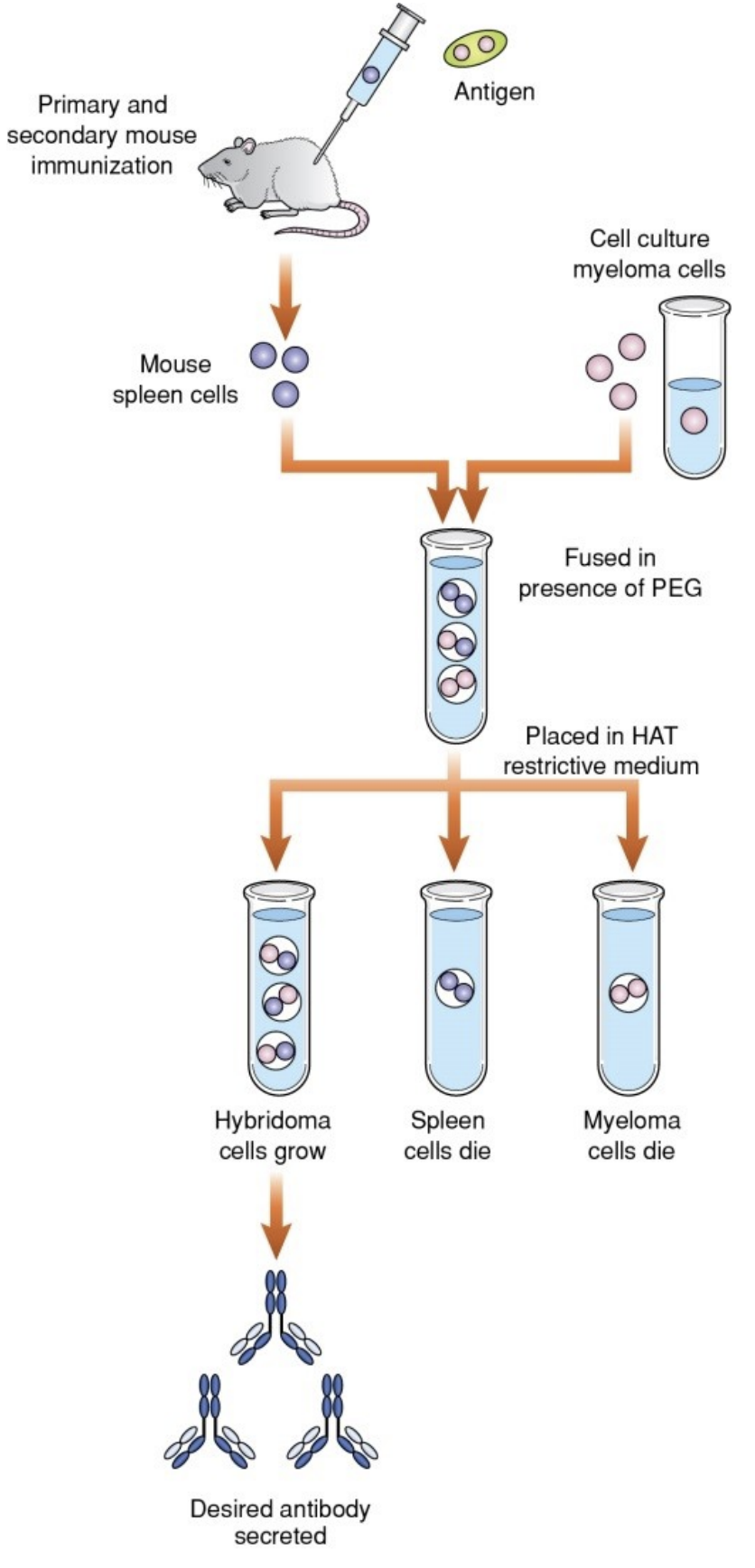
2. harvest spleen cells
3. combine spleen cells with myeloma cells in the presence of PEG (polyethylene glycol) - helps with fusion
4. select fused cells and screen for presence of desired antibody
5. grow positive cells in larger quantities