09 Transfusion Therapy
Study these flashcardsFree · spaced repetition · iPhone, Android, Mac & web
All cards
1
When to transfuse?
1. what is normal
2. do lab tests that support a need
3. is the patient symptomatic
4. does the benefit outweight the risks
5. Do i need to do anything "special"
2. do lab tests that support a need
3. is the patient symptomatic
4. does the benefit outweight the risks
5. Do i need to do anything "special"
2
What are the normal Hematology values in Hgb?
Female: 12 - 16 g/dL
Male: 13 - 18 g/dL
Male: 13 - 18 g/dL
3
What are the normal HCT values?
Female: 36% - 48%
Male: 39% - 54%
Male: 39% - 54%
4
What are the normal values of platelets?
150,000 - 450,000 / uL
5
There are coagulation values
Bleeding time, TT, PT, PTT, Coag factors
6
What is the normal values for bleeding time?
~ 8 min
7
What is the normal values for Thrombin Time (TT)?
17 - 23 secs
8
What is the normal values for Prothrombin Time (PT)?
11 - 13 secs
9
What is the normal values for Partial Thromboplastin Time (PTT)?
25 - 35 secs
10
What are some transfusion triggers?
1. Anemia - low hgb/hct ( LOW RBCS)
➢ Hgb - ≤ 7.0 g/dL / 21.0% …as opposed to 10 g/dL
2. Thrombocytopenia - low Plt ct
➢ < 50,000/μL for pre-surgical patient
➢ < 10,000/μL for therapeutic non-bleeding
3. Coagulopathy / Coagulation Deficiencies or Acute
Hemorrhaging; could include Plt therapy, too
➢ FFP -INR* > 1.5 * International Normalized Ratio (Prothrombin Time Test calc)
➢ Cryo - Fibrinogen < 80-100 mg/dL
➢ Hgb - ≤ 7.0 g/dL / 21.0% …as opposed to 10 g/dL
2. Thrombocytopenia - low Plt ct
➢ < 50,000/μL for pre-surgical patient
➢ < 10,000/μL for therapeutic non-bleeding
3. Coagulopathy / Coagulation Deficiencies or Acute
Hemorrhaging; could include Plt therapy, too
➢ FFP -INR* > 1.5 * International Normalized Ratio (Prothrombin Time Test calc)
➢ Cryo - Fibrinogen < 80-100 mg/dL
11
What is transfusion therapy?
the transfusion of blood and other blood components
12
What are some Transfusion Statuses?
1. Routine / ASAP (As Soon As Possible
2. Emergency
3. Refusal
2. Emergency
3. Refusal
13
What are Routine/ ASAP transfusion statuses?
1. Therapeutic
✓ Oncology
✓ Coagulation Deficiencies (non-bleeding)
✓ Neonate
2. Surgery
✓ SBOS-Surgical Blood Order Schedule
✓ TS / T&S-Type & Screen
✓ Autologous
✓ Oncology
✓ Coagulation Deficiencies (non-bleeding)
✓ Neonate
2. Surgery
✓ SBOS-Surgical Blood Order Schedule
✓ TS / T&S-Type & Screen
✓ Autologous
14
What are the Emergency transfusion statuses?
▪ STAT(L: Statim)
▪ Massive Transfusion Protocol (MTP)
▪ Massive Transfusion Protocol (MTP)
15
What is the ROUTINE transfusion therapy?
not needed until hours later or next day (not priority)
16
What is the ASAP transfustion therapy?
needed within the next few hours
- patient going to surgery
- low Hgb
- patient going to surgery
- low Hgb
17
What is the treatment for ROUTINE transfusion therapy?
usually give blood when ready (after all tests, compatibility, etc)
18
What is the Treatment Objective for RBCs?
corrects anemia via maintaining oxygen-carrying capacity to all the vital organs, e.g., heart, brain, liver, etc.
19
What is the Treatment Objective for Plasma?
Maintains coagulation scheme; corrects coagulopathy, blood volume, and osmotic pressure
20
What is the Treatment Objective for Platelets?
corrects thrombocytopenia & maintains clotting mechanism
21
What is the category for EMERGENCY transfusion therapy?
STAT (L: Statim) - IMMEDIATE without delay (PRIORITY)
22
What is the immediate treatment for EMERGENCY transfusion therapy?
STOP the bleeding
23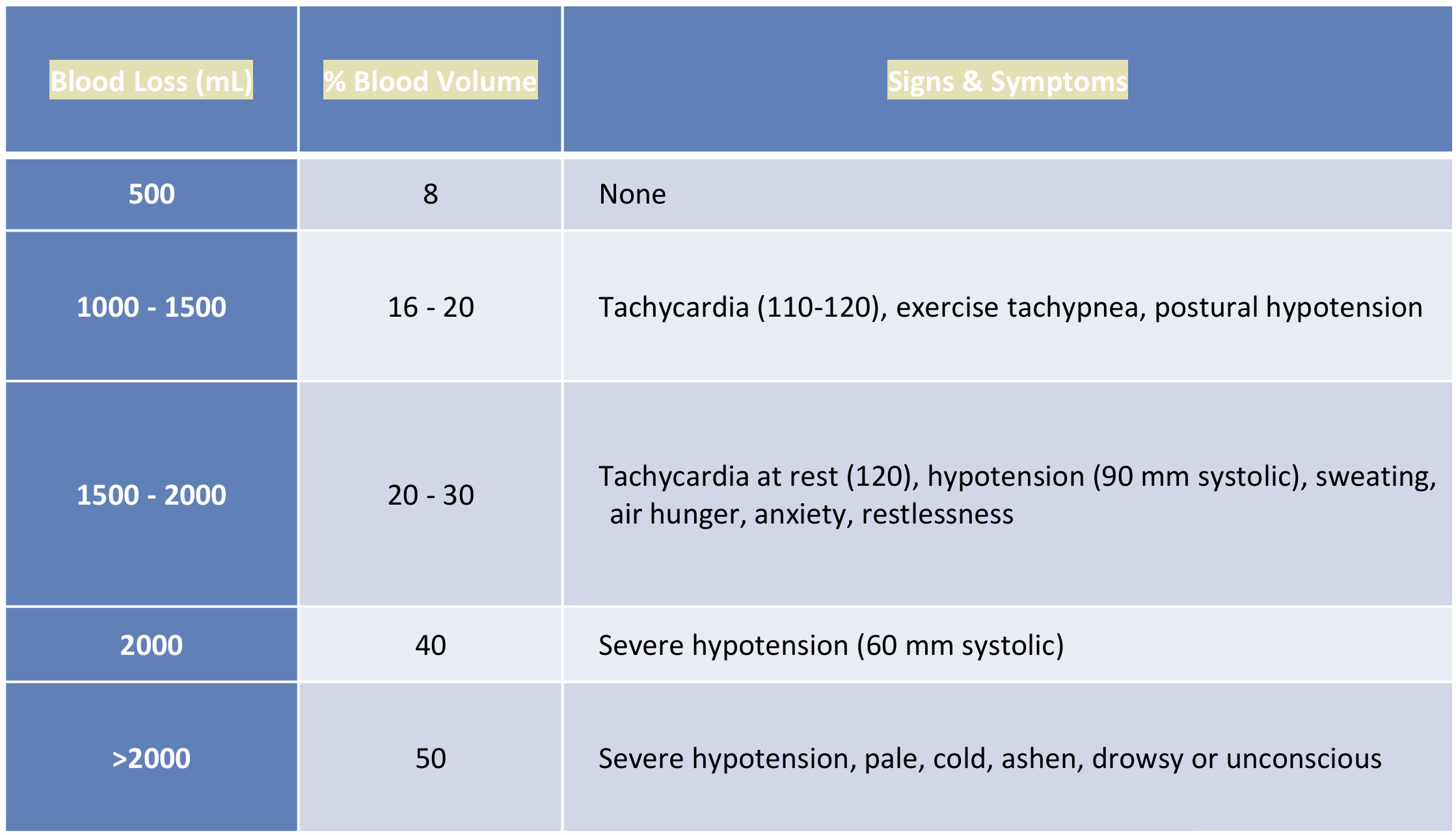
What can happen in blood loss?
24
What are some "Old" Thoughts of Immediate Trauma Treatment in hemorrhaging
patient:
patient:
❑ Infuse osmotic-balanced solutions, e.g., crystalloids, colloids until blood / blood components arrive.
❑ However, these clear fluids (because of the osmotic imbalance) do NOT stay within the intravascular vessels. It goes extravascularly into the tissue area which results in extreme edema.
❑ Plasma is the preferred product; use "AB" plasma only, if ABO blood type is unknown.
❑ However, these clear fluids (because of the osmotic imbalance) do NOT stay within the intravascular vessels. It goes extravascularly into the tissue area which results in extreme edema.
❑ Plasma is the preferred product; use "AB" plasma only, if ABO blood type is unknown.
25
What are the "Current" primary treatments?
❑The less clear fluid you give the trauma patient, the better off the patient will be!
❑Give LTOWB
❑Plasmas (osmotic-balanced fluids) -FFP, thawed plasma, & liquid plasma
❑ Can use "A" plasma on patients of unknown ABO blood type.
❑ Cold-Stored Platelets, if available and usually used enroute to the hospital
❑Give LTOWB
❑Plasmas (osmotic-balanced fluids) -FFP, thawed plasma, & liquid plasma
❑ Can use "A" plasma on patients of unknown ABO blood type.
❑ Cold-Stored Platelets, if available and usually used enroute to the hospital
26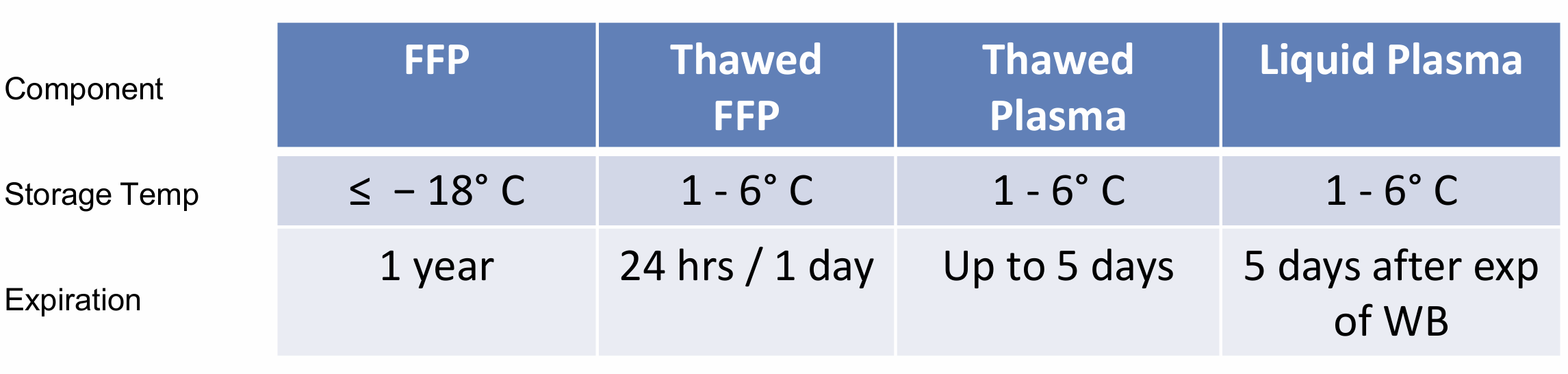
What are the stroage temps and expirations of plasmas?
27
What is the treatment objective in an EMERGENCY transfusion therapy?
❑ Oxygen-carrying capacity to all the vital organs, e.g., heart, brain, liver, etc.
❑ Coagulation scheme & clotting mechanisms
❑ Balanced osmotic pressure
❑ Body temperature (37°C) or close to it
➢ Warm (as opposed to cold) blood by using blood warmer
➢ Trauma room ambient temperature may be warmer than other rooms in the ED or Surgery
❑ Coagulation scheme & clotting mechanisms
❑ Balanced osmotic pressure
❑ Body temperature (37°C) or close to it
➢ Warm (as opposed to cold) blood by using blood warmer
➢ Trauma room ambient temperature may be warmer than other rooms in the ED or Surgery
28
What to do in the emergency transfusion therapy: MASSIVE BLEEDING/HEMORRHAGING?
❑ Massive Transfusion Protocol (MTP) - usually seen in Trauma cases or in certain types of surgeries; 1:1:1 ratio (RBC:Plsm:Plt)
❑ Special Procedure used to issue large quantities of blood & blood products in a very short time to a severely hemorrhaging patient
❑ This is a focal point where "routine" BB tasks are set aside and the BB CLSs come together as a "Team" to issue blood
❑ Can issue a MTP packet every 5 - 10 minutes
❑ Special Procedure used to issue large quantities of blood & blood products in a very short time to a severely hemorrhaging patient
❑ This is a focal point where "routine" BB tasks are set aside and the BB CLSs come together as a "Team" to issue blood
❑ Can issue a MTP packet every 5 - 10 minutes
29
What is an MTP?
Massive transfusion protocol - special procedure used to issue large quantities of blood & blood products n a very short time to a secerely hemorrhading patient
30
What happens when given the MTP?
Within a few hour period, a patient could use enough blood to completely exchange all of his / her total blood volume greater than 1 time.
In general, after the patient receives approx. 10 WB units (or 20 component units [half pint each]), it is considered as "an exchange". The human body contains about 10 ± 2 pints of blood or 5 L.
OR
2 MTP Batches / Packets (≈12 WB units)
In general, after the patient receives approx. 10 WB units (or 20 component units [half pint each]), it is considered as "an exchange". The human body contains about 10 ± 2 pints of blood or 5 L.
OR
2 MTP Batches / Packets (≈12 WB units)
31
Can life-saving transfusions be refused?
YES!
32
What groups of people refuse blood transfusions?
Jehovah's Witness
Certain religious groups
Adults have the right to refuse - their right - considered an "assault" if violating the request
Certain religious groups
Adults have the right to refuse - their right - considered an "assault" if violating the request
33
Which group of people cannot necessarily refuse even due to religious reasons?
➢ On the other hand, if the patient is a minor, it is considered that "they lack experience / knowledge to make a sound judgement related to the consequences", therefore, the courts can intervene.
➢ Court orders may or may not grant approval unless the lack of blood results in end organ failure or death of the patient.
➢ Court orders may or may not grant approval unless the lack of blood results in end organ failure or death of the patient.
34
There are passages in the bible of the Jehovah's witness:
Blood is sacred / the prohibition to "eating" of blood:
35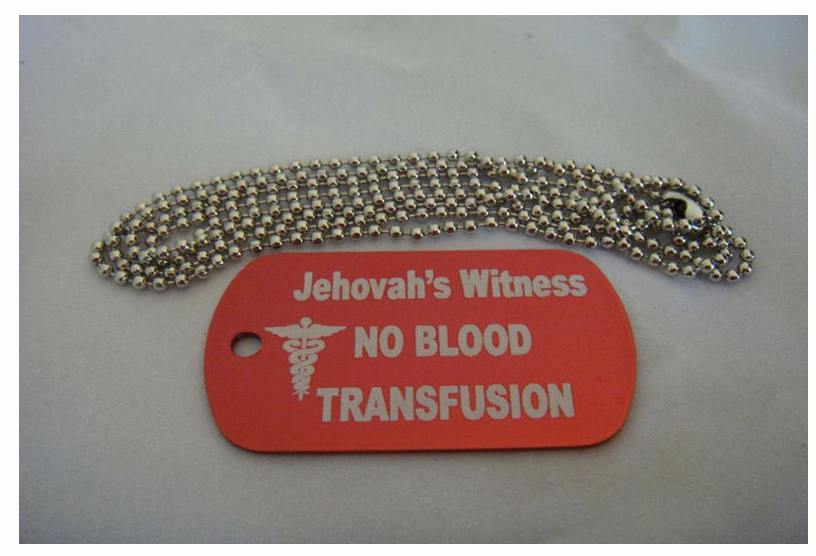
This is the medical alert tag worn
36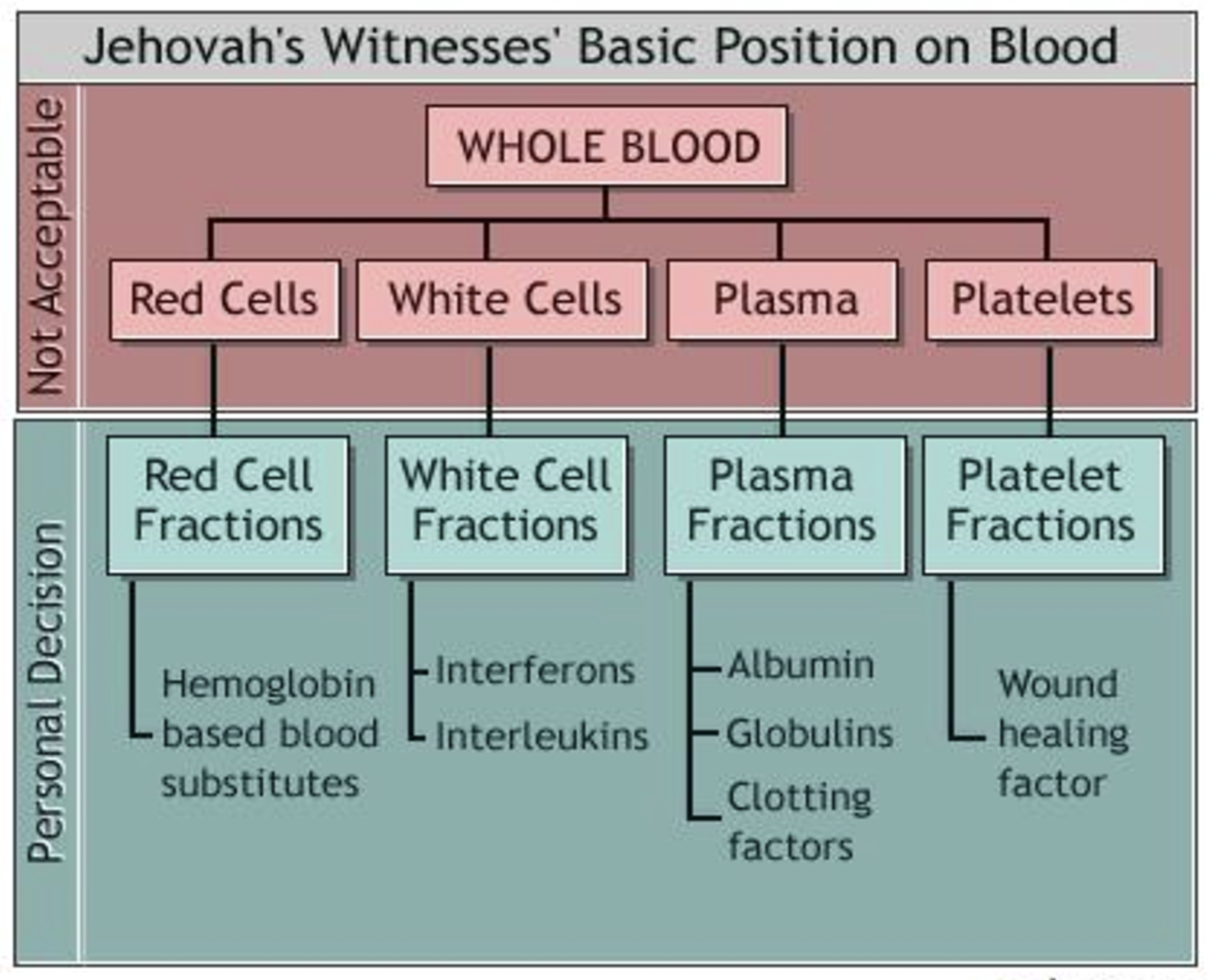
What is the Jehovah's witness stance on blood?
37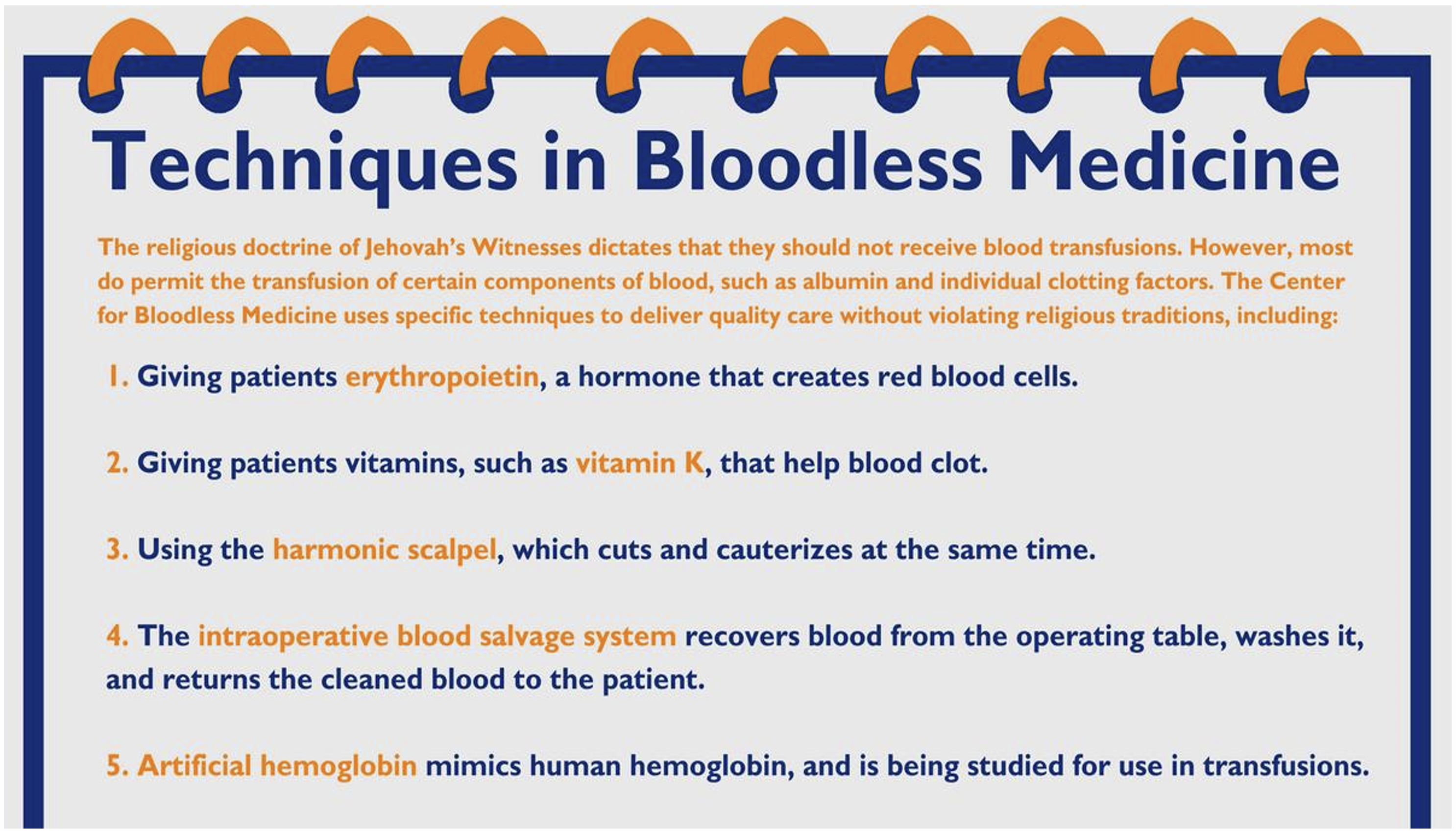
What are the techniques in Bloodless Medicine?
38
What are the types of artificial blood?
1. Perfluorocarbons (PFCs)
2. Hemoglobin-based oxygen carriers (HBOC)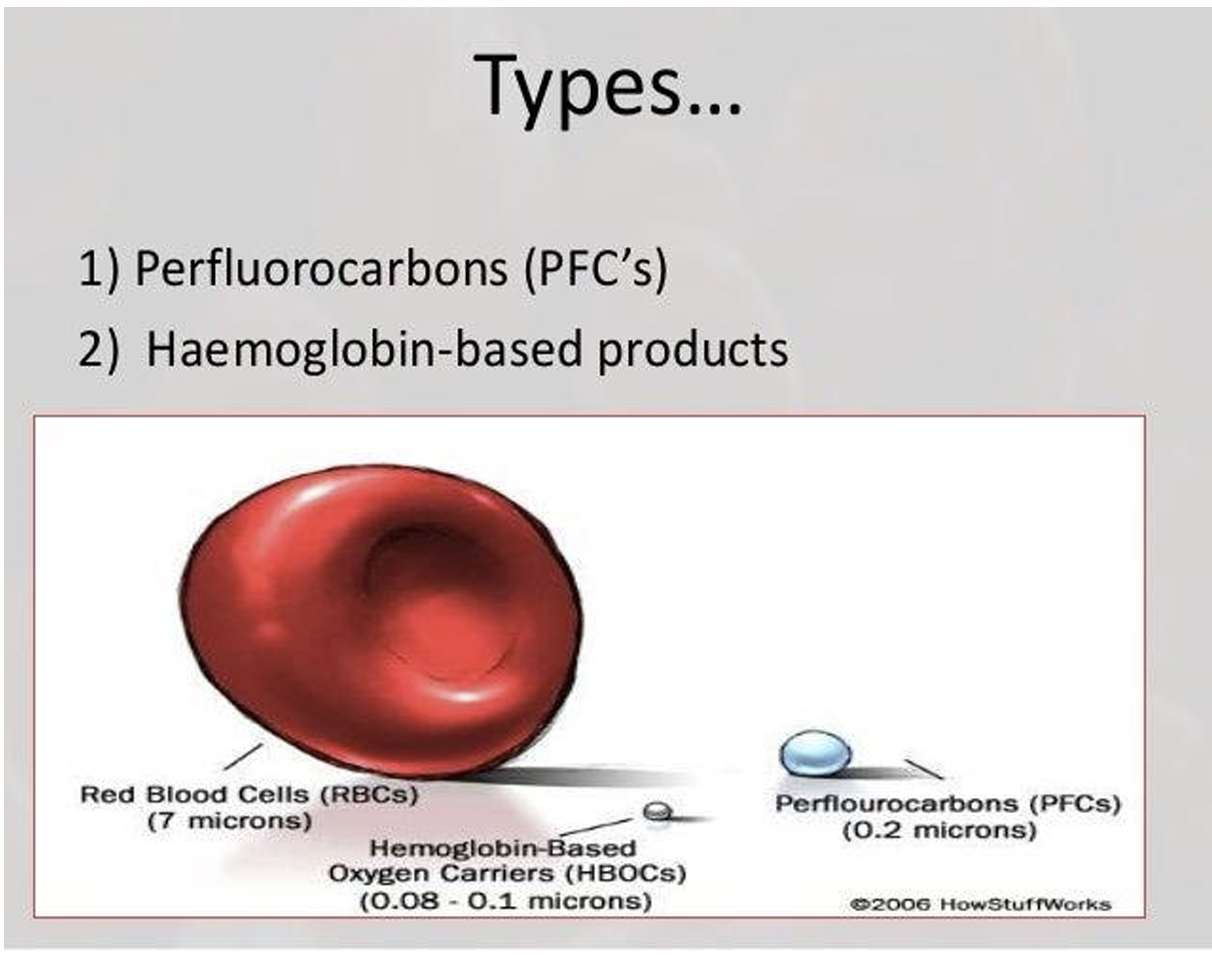
2. Hemoglobin-based oxygen carriers (HBOC)
39
What are perfluorocarbons (PFCs)?
- artificial blood
- a white-colored emulsion
- a chemical compound that can carry and release oxygen
- a white-colored emulsion
- a chemical compound that can carry and release oxygen
40
What are hemoglobin-based oxygen carriers (HBOC)?
- artificial blood
- derived from animal (Bovine) or artificially via recombinant technology
- derived from animal (Bovine) or artificially via recombinant technology
41
Is artificial blood FDA approved?
NO! Not yet
42
What are some issues with artificial blood?
➢ Adverse effects & toxicity
➢ Inefficient oxygen delivery in the microvasculature (lacks resuscitation abilities)
➢ Retention of PFC compound in liver
➢ Can not mimic blood & its properties (plts & coag)
➢ Inefficient oxygen delivery in the microvasculature (lacks resuscitation abilities)
➢ Retention of PFC compound in liver
➢ Can not mimic blood & its properties (plts & coag)
43
What is ErythroMer?
- artificial RBC
➢ A synthetic artificial cell that uses nanoencapusulated human hgb
➢ Has capability to release O2 in the body
➢ Stable on shelf for several months
➢ No need for blood typing or Xmat
➢ A synthetic artificial cell that uses nanoencapusulated human hgb
➢ Has capability to release O2 in the body
➢ Stable on shelf for several months
➢ No need for blood typing or Xmat
44
What is SynthoPlate?
- artifical platelet
- A synthetic nanoparticle that mimics and amplifies platelet adhesion, activation, aggregation, & prothrombotic functions (clotting mechanism)
- A synthetic nanoparticle that mimics and amplifies platelet adhesion, activation, aggregation, & prothrombotic functions (clotting mechanism)
45
What are some special considerations for transfusions?
1. Leuko-reduced blood
2. CMV - Negative Blood
3. Irradiation of Blood Products
2. CMV - Negative Blood
3. Irradiation of Blood Products
46
Why is leuko-reduced blood desired?
Reduces the following:
➢ Febrile Reactions
➢ HLA antibody alloimmunization
➢ Febrile Reactions
➢ HLA antibody alloimmunization
47
What is CMV Negative Blood?
Reduces the following:
➢ Cytomegalo Virus (CMV) Infections - can cause death in neonates
➢ Cytomegalo Virus (CMV) Infections - can cause death in neonates
48
What is Irradiation of Blood Products?
- Prevents a condition called, Transfusion-Associated Graft-vs-Host Disease (TA-GVHD), occurring in an immunocompromised recipient (patient).
- Irradiation "kills" (renders inactive) the donor WBCs (specifically T-lymphocytes) found in the unit of blood.
- Irradiation "kills" (renders inactive) the donor WBCs (specifically T-lymphocytes) found in the unit of blood.
49
What can occur if the immunocompromised patient receives non-irradiated blood products?
They fail to suppress the transfused donor T-cells which become "activated" because it's in the patient's environment. The activated donor lymphocytes causes organ rejection in the patient.
50
What is an immunocompromised patient?
✓ A cancer patient who underwent massive chemotherapy
✓ An immune medical condition or disease
✓ A neonate.
✓ An immune medical condition or disease
✓ A neonate.
51
What can occur to the RBCs under irradiation?
it also effects the integrity of the RBC membrane causing it to become weak (lesions) which, during storage, allows K+ & Hgb to leach out into the unit.
52
How are blood components administered?
- must use blood filter (170 micron) for all blood / blood component transfusion
- a new filter is used for each unit of blood
- a new filter is used for each unit of blood
53
What is the total transfusion time limit?
≤ 4 hrs, but commonly, 1 - 2 hrs; slower, if patient has cardiac complications
54
What is administered with the transfusion?
- Use of normal saline (NS) only
- NO other medications or IV solutions (ex. Ringers Lactate) are allowed to be used
- NO other medications or IV solutions (ex. Ringers Lactate) are allowed to be used
55
How many RNs need to verify before administering the transfused unit, and how do they check?
2 RNs must verify / compare the TRF info against the attached patient's armband / wristband to the unit's affixed label
56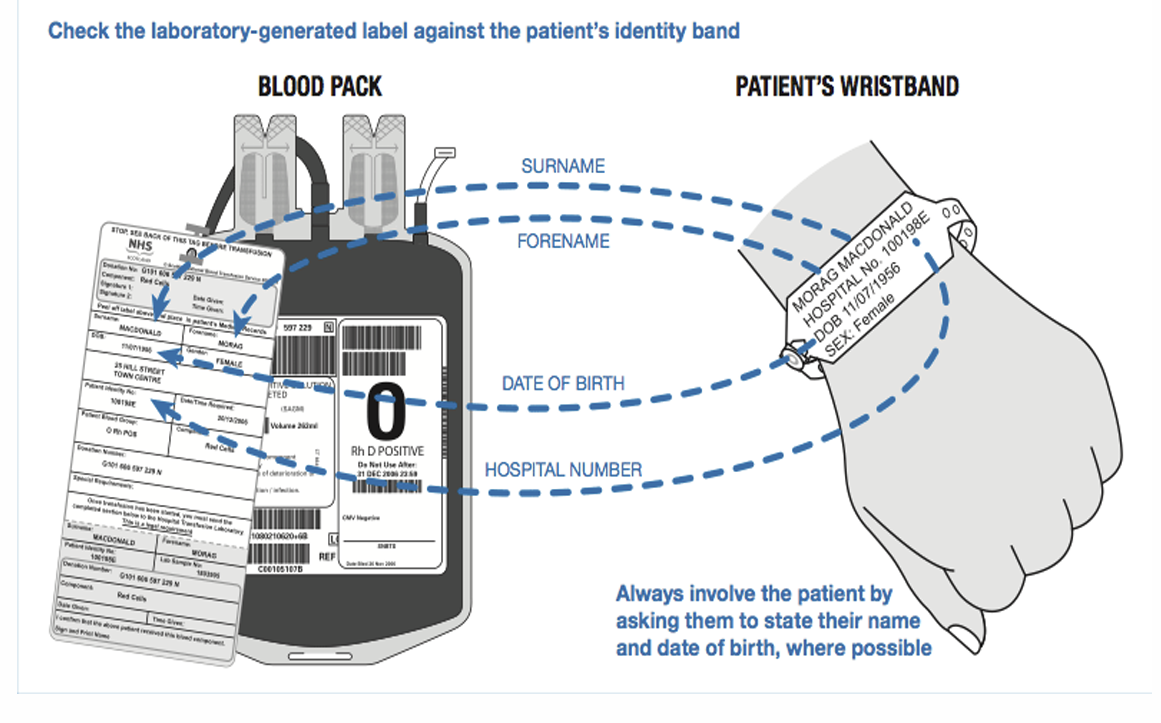
How must the patient unit be verified?
57
What is the correct patient identification process for a CONSCIOUS patient?
❑ Do NOT ask a "yes" or "no" question, e.g., Are you Mr. John Smith?
❑ Instead, ask a question(s) that requires the patient's conscientious verbal response, e.g., "What is your full name?"
❑ Instead, ask a question(s) that requires the patient's conscientious verbal response, e.g., "What is your full name?"
58
What is the correct patient identification process for a NON-CONSCIOUS patient?
❑ RN / physician / anesthesiologist must check the patient's wrist band along with the medical record
❑ In these cases, the patient's proper identification rests on the hospital's proper identification processes that occurred prior to surgery
❑ If the patient enters the hospital in an unconscious state, many times the family members verify the patient's name and give the patient's info
❑ In these cases, the patient's proper identification rests on the hospital's proper identification processes that occurred prior to surgery
❑ If the patient enters the hospital in an unconscious state, many times the family members verify the patient's name and give the patient's info
59
Who is the Transfusionist?
❑ The Transfusionist (RN, MD, PA, or Perfusionist) is ultimately responsible for ensuring that the patient's and unit information are correct prior to initiating the transfusion; LVNs are not licensed to perform IVs.
❑ Any questions or discrepancies must be resolved prior to infusing the unit.
❑ It is common practice for the RN / MD to call the Blood Bank and ask questions.
❑ Any questions or discrepancies must be resolved prior to infusing the unit.
❑ It is common practice for the RN / MD to call the Blood Bank and ask questions.
60
How long must the RN monitor the patient after transfusion?
- the first 15 minutes
- Within the first 15 minutes, if patient exhibits any adverse reaction to the transfusion, the transfusion MUST STOP IMMEDIATELY and the Blood Bank must be notified immediately
- Within the first 15 minutes, if patient exhibits any adverse reaction to the transfusion, the transfusion MUST STOP IMMEDIATELY and the Blood Bank must be notified immediately
61
What occurs when there is an adverse reaction?
❑ The transfusion MUST STOP IMMEDIATELY and the Blood Bank must be notified immediately
❑ The Blood Bank must immediately perform the Transfusion Reaction Investigation process / testing
❑ The Blood Bank Medical Director (a Pathologist) must review the testing results, evaluate / interpret the test results, and conclude whether further patient medical treatment is warranted.
❑ The Blood Bank must immediately perform the Transfusion Reaction Investigation process / testing
❑ The Blood Bank Medical Director (a Pathologist) must review the testing results, evaluate / interpret the test results, and conclude whether further patient medical treatment is warranted.
62
What are some common errors in transfusion?
1. Emergent & in a hurry
2. Stressed & in a hurry
3. Not paying "close" attention
4. Distracted
5. Multi-tasking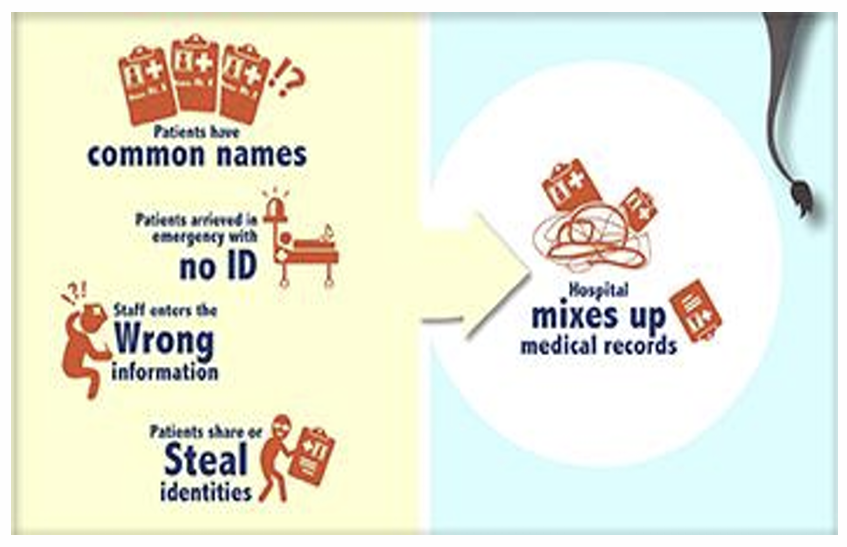
2. Stressed & in a hurry
3. Not paying "close" attention
4. Distracted
5. Multi-tasking
63
What is the Hospital Transfusion Committee or Safety / Quality Committee?
Peer review for the appropriateness of all blood / blood component transfusions
64
What is the Hospital Patient Blood Mangement (PBM) Program?
➢ Established transfusion criteria / triggers that must be adhered:
✓ Hgb-≤ 7.0 g/dL …as opposed to 10 g/dL
✓ Plt Ct- ≤ 10,000/μL …as opposed to 20,000/μL
➢ Review any "outliers", e.g., coagulopathies, FFP transfusions, cryo uses, etc.
✓ Hgb-≤ 7.0 g/dL …as opposed to 10 g/dL
✓ Plt Ct- ≤ 10,000/μL …as opposed to 20,000/μL
➢ Review any "outliers", e.g., coagulopathies, FFP transfusions, cryo uses, etc.
65
Who is the Transfusion Safety Officer (TSO)?
➢ Usually an RN
➢ Has extensive clinical knowledge
➢ Has been extensively trained in Transfusion Medicine
➢ Monitors PBM & the transfusion criteria
➢ Speaks to blood ordering / transfusing MDs & RNs
➢ Has extensive clinical knowledge
➢ Has been extensively trained in Transfusion Medicine
➢ Monitors PBM & the transfusion criteria
➢ Speaks to blood ordering / transfusing MDs & RNs