Lecture 4 - Cytokines, Complement System
Study these flashcardsFree · spaced repetition · iPhone, Android, Mac & web
All cards
1
What are cytokines?
- small proteins that bind receptors on target cells
- produced by many immune and non-immune cells
- produced by many immune and non-immune cells
2
What is the function of cytokines?
- they generate a form of communication between immune cells to orchestrate immune response
- many of hem are produced in response to infectious stimuli
- many of hem are produced in response to infectious stimuli
3
What are the 3 types of cytokines?
- autocrine
- paracrine
- endocrine
- paracrine
- endocrine
4
What are autocrine cytokines?
cytokines that affect them same cells from which they were secreted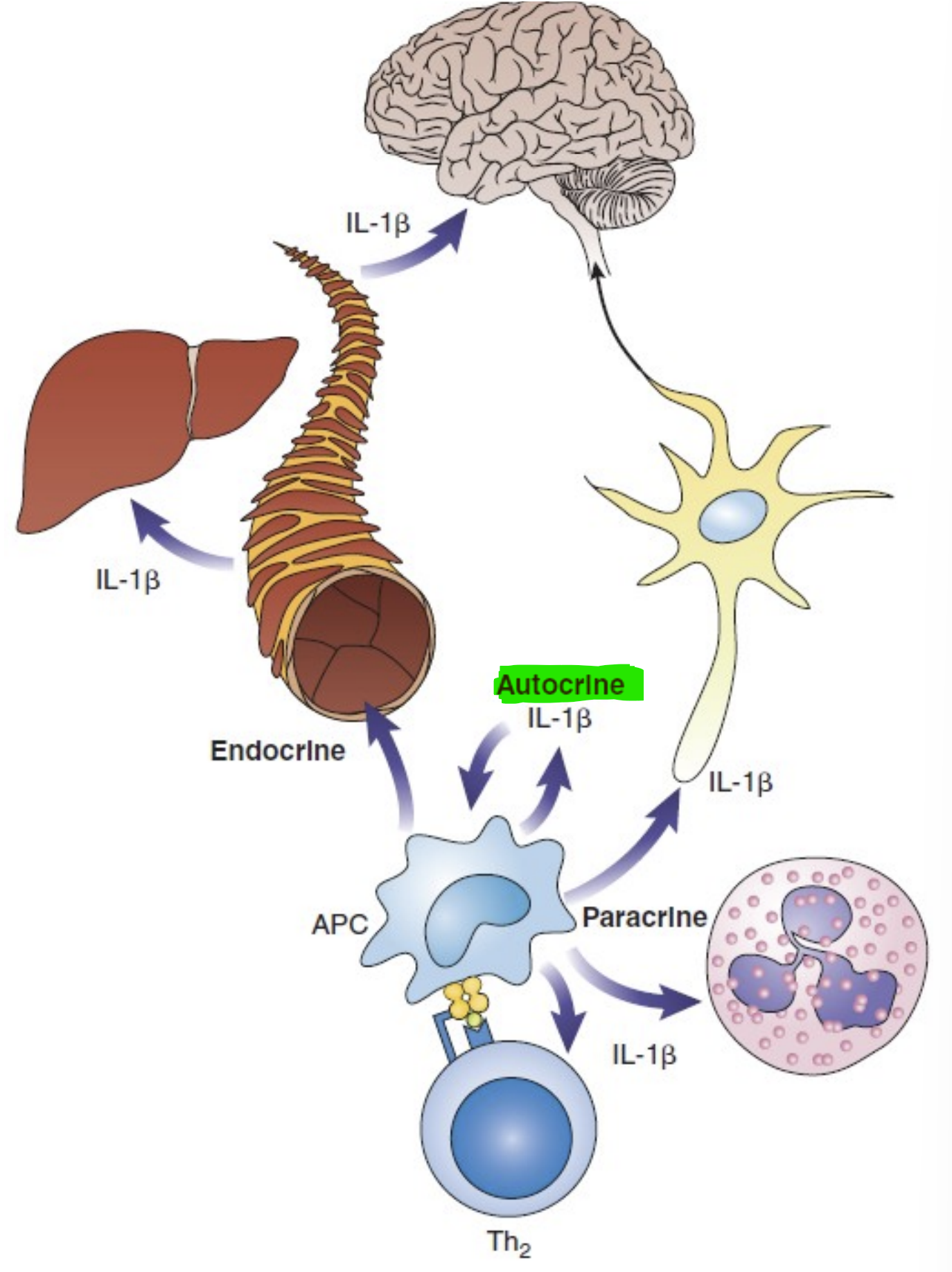
5
What are paracrine cytokines?
cytokines that affect cells within the tissue surrounding their cellular source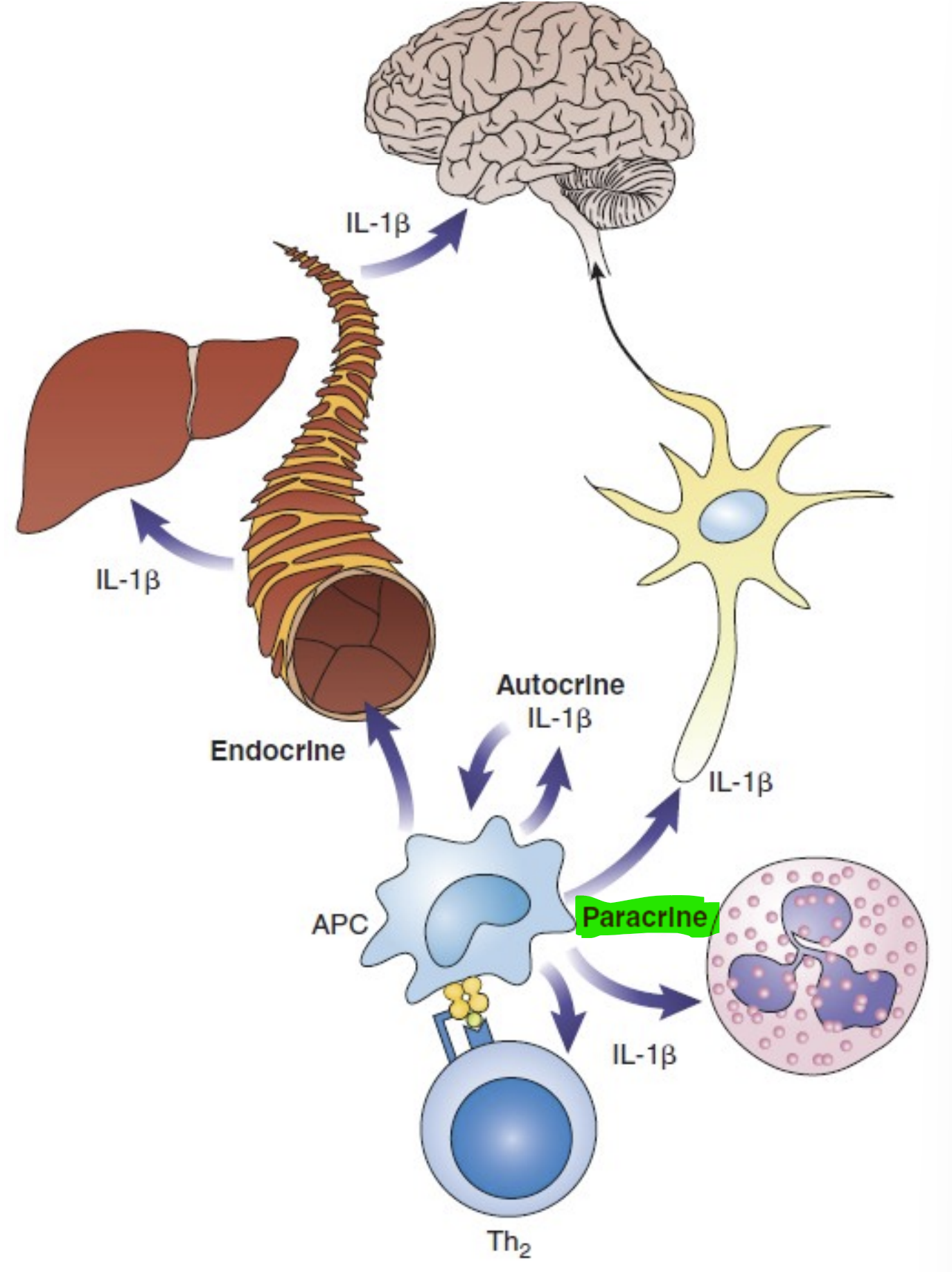
6
What are endocrine cytokines?
cytokines that travel in the blood to distant targets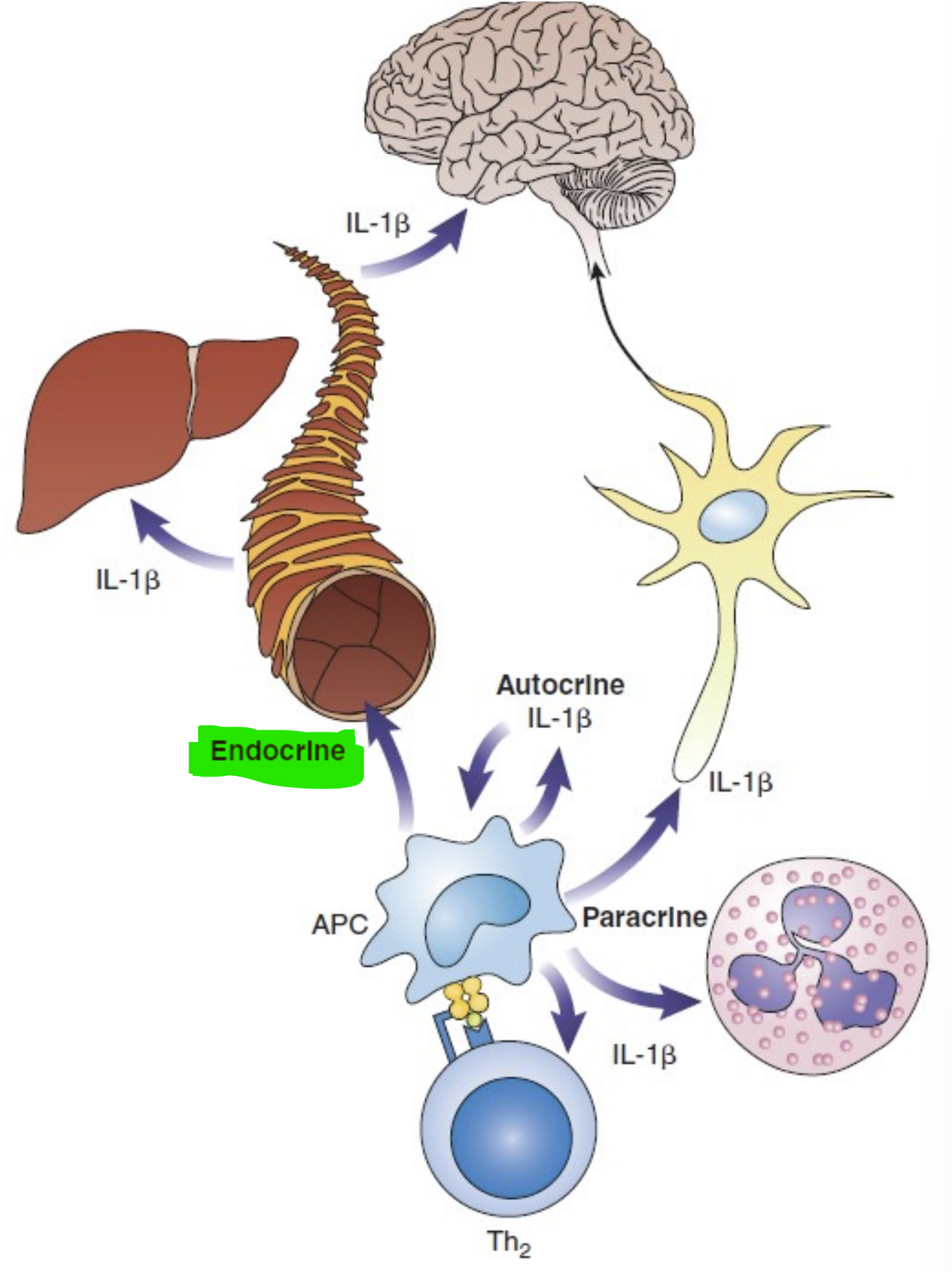
7
What is the cytokine storm?
Hyperstimulation of the immune response or hypercytokinemia due to massive overproduction and dysregulation of Cytokines in extreme situations (may lead to multi-organ damage)
8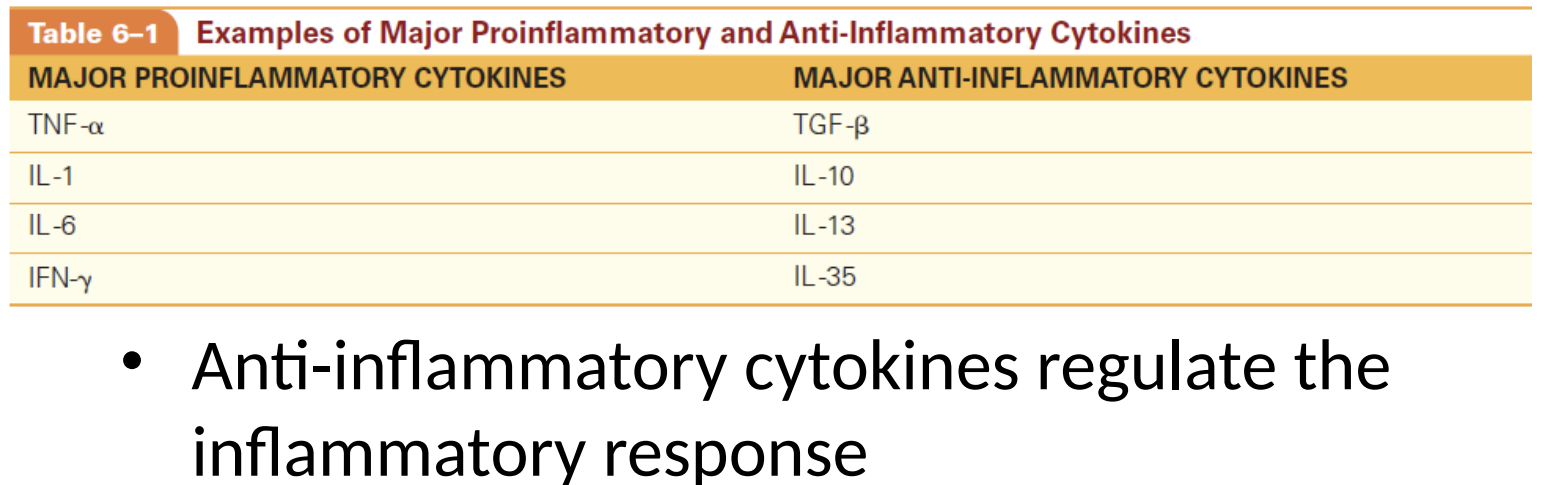
Memorize this chart! Only list of cytokines to know!
9
List the major proinflammatory cytokines:
TNF-alpha
IL-1
IL-6
IFN-gamma
IL-1
IL-6
IFN-gamma
10
What does TNF stand for?
tumor necrosis factor
11
What does IL stand for?
interleukin
12
What does IFN stand for?
interferon
13
List the major anti-inflammatory cytokines:
TGF-beta
IL-10
IL-13
IL-35
IL-10
IL-13
IL-35
14
What does TGF stand for?
transforming growth factor
15
What is the relationship between anti-inflammatory cytokines and proinflammatory cytokines?
anti-inflammatory cytokines help regulate the inflammatory response
16
What type of cytokine production occurs when DCs and macs (first soldiers) confront the pathogen, TLR activation?
pro-inflammatory cytokine production
17
What type of cytokines are produced in severe bacterial infections?
IL-1β, TNF-α, IL-6:
are responsible for fever, increased release of immune cells (from BM), recruiting effector cells like neutrophils and monocytes, general subjective feeling of being “ill”
are responsible for fever, increased release of immune cells (from BM), recruiting effector cells like neutrophils and monocytes, general subjective feeling of being “ill”
18
Which cytokine is considered the "endogenous pyrogen?"
IL-1β
19
What are the TNF cytokine family?
TNFs (tumor necrosis factor) are a family of membrane-bound cytokines, released in times of stimulation
• TNF-α is a major inflammatory cytokine (induced by bacterial LPS)
• TNF-β (lymphotoxin) produced by lymphocytes and causes cell death, or cytotoxicity, in many different types of cells
• TNF-α is a major inflammatory cytokine (induced by bacterial LPS)
• TNF-β (lymphotoxin) produced by lymphocytes and causes cell death, or cytotoxicity, in many different types of cells
20
Which major inflammatory cytokine is induced by bacterial LPS?
TNF-α
21
Which cytokine is a lymphotoxin produced by lymphocytes and causes cell death, or cytotoxicity, in many different types of cells?
TNF-β
22
Which cytokine is produced mainly by macrophages and monocytes, but many other cell types can also make it (e.g., endothelial cells, fibroblasts)?
IL-6
23
What are the functions of IL-6
- effect on liver to produce CRP
- release of neutrophils from BM
- activation of B and T cells
- release of neutrophils from BM
- activation of B and T cells
24
What are chemokines?
- derived from cytokine and chemotaxis
- involved in induction of migration and mobility of their target cells
- they have receptors (CRR)
- involved in induction of migration and mobility of their target cells
- they have receptors (CRR)
25
What is the major function of chemokines?
recruitment of leukocytes to site of inflammation or tissue damage
26
What are the 4 major subgroups of chemokines?
1. CXC group (one amino acid “X” between cysteines
2. CC group (no amino acid)
3. C group (one cysteine)
4. CX3C group (3 amino acids between the two cysteines)
2. CC group (no amino acid)
3. C group (one cysteine)
4. CX3C group (3 amino acids between the two cysteines)
27
What is the Transforming growth factor-β (TGF-β)?
• Mostly stops cell growth and proliferation, so as a control brake it downregulates immune response when it is not needed anymore
• Inhibits activation of macrophages
• Inhibits release of inflammatory cytokines from T cells (IL-12 and IFN-γ)
• Inhibits proliferation of activated B cells (controls Ab production)
• Inhibits activation of macrophages
• Inhibits release of inflammatory cytokines from T cells (IL-12 and IFN-γ)
• Inhibits proliferation of activated B cells (controls Ab production)
28
What is an Interferon?
First identified as soluble substances produced by virusinfected cells and interfered with virus replication in the infected cell.
• 3 types: I, II, III, type I are the most important ones in viral infections, and
include IFN-α and IFN-β
• 3 types: I, II, III, type I are the most important ones in viral infections, and
include IFN-α and IFN-β
29
What is the difference between IFN-α and IFN-?
IFN-α is mainly produced by DCs and macrophages, but IFN-β by any infected cells
30
What are the functions of IFNs?
• IFNs inhibit virus replication through several mechanisms, e.g, they induce expression of RNase which degrades viral RNA
• Type I IFNs are strong activators of NK cells: most important innate immune response in viral infections
• IFNs have therapeutic applications too: in MS and malignancies (IFN-α in hairy cell leukemia)
• Type I IFNs are strong activators of NK cells: most important innate immune response in viral infections
• IFNs have therapeutic applications too: in MS and malignancies (IFN-α in hairy cell leukemia)
31
Where are cytokines involved in adaptive immunity produced?
CD4+ T helper (Th) cells
there are 4 Th subsets
there are 4 Th subsets
32
What are the 4 Th subsets?
Th1
Th2
Treg
Th17
Th2
Treg
Th17
33
What cytokines are involved with Th1?
IFN-γ and IL-2
• IL-2: drives the growth and differentiation of both T and B cells and enhances the lytic activity of NK cells
• IFN-γ: enhances cell mediated immune response by increasing the expression of MHC-I, II molecules on APCs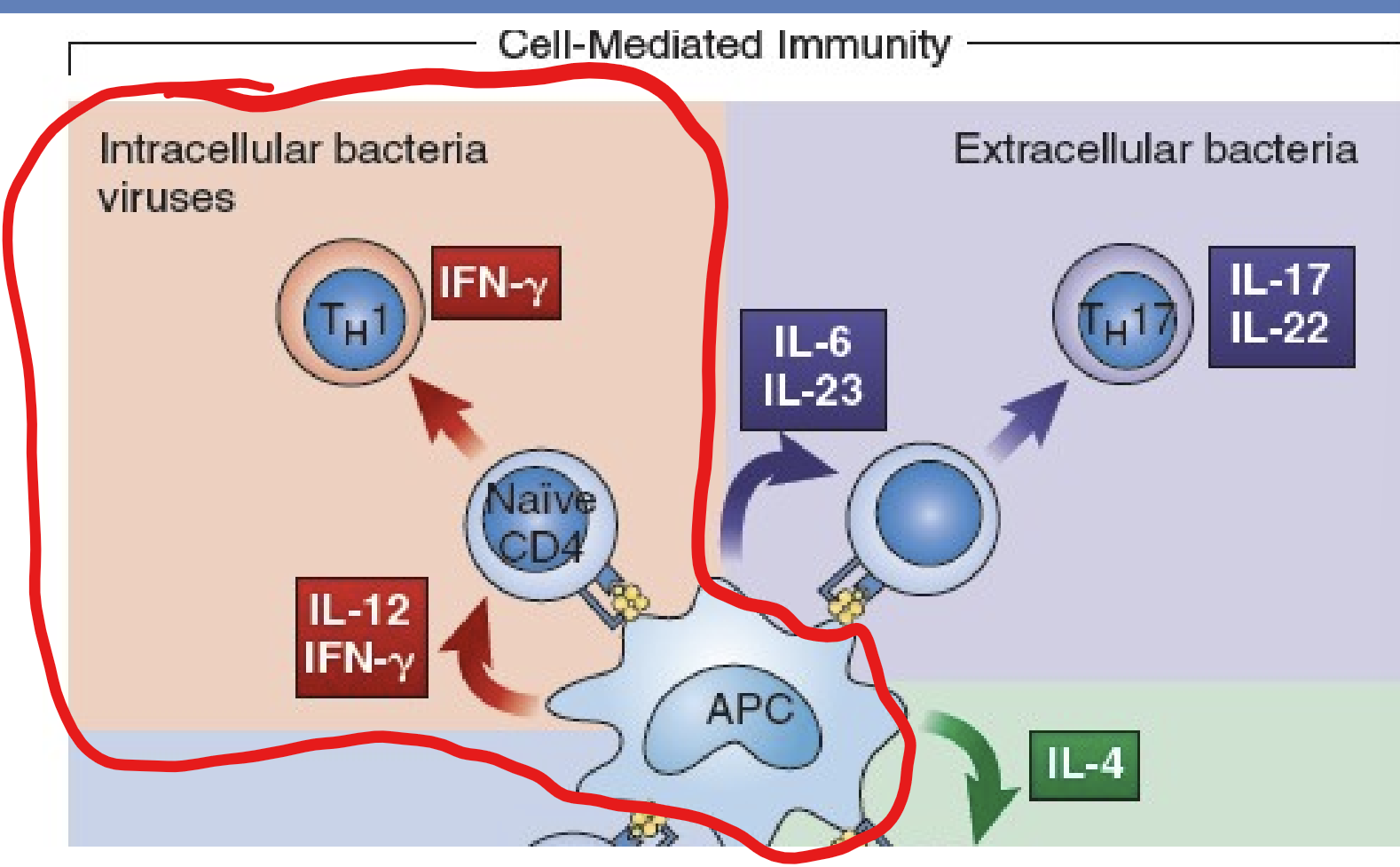
• IL-2: drives the growth and differentiation of both T and B cells and enhances the lytic activity of NK cells
• IFN-γ: enhances cell mediated immune response by increasing the expression of MHC-I, II molecules on APCs
34
What type of pathogens are associated with Th1?
- intracellular bacteria and viruses
- cell-mediated immunity
- cell-mediated immunity
35
What cytokines are associated with Th2?
IL-4 and IL-10
• IL-4: inflammatory cytokine, allergic reactions)
• IL-10: anti-inflammatory and suppressor of Th1 cells and inhibition of IFN-gamma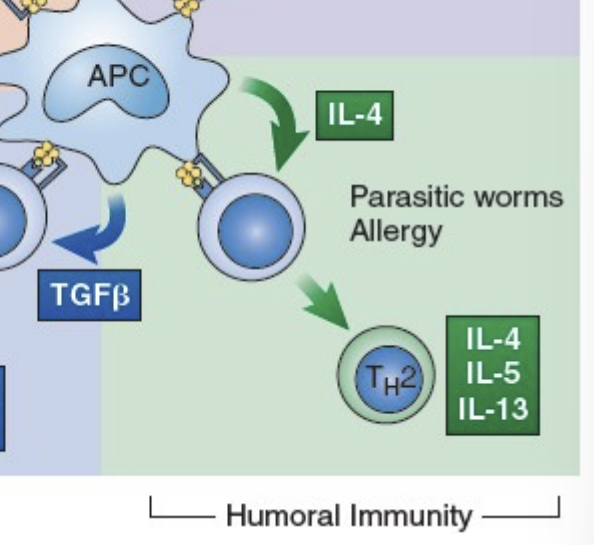
• IL-4: inflammatory cytokine, allergic reactions)
• IL-10: anti-inflammatory and suppressor of Th1 cells and inhibition of IFN-gamma
36
What pathogens are associated with Th2?
parasitic worms
allergies
allergies
37
What are Tregs?
Express CD4, CD25 and FOXP3, involved in establishing tolerance to self antigens especially food antigens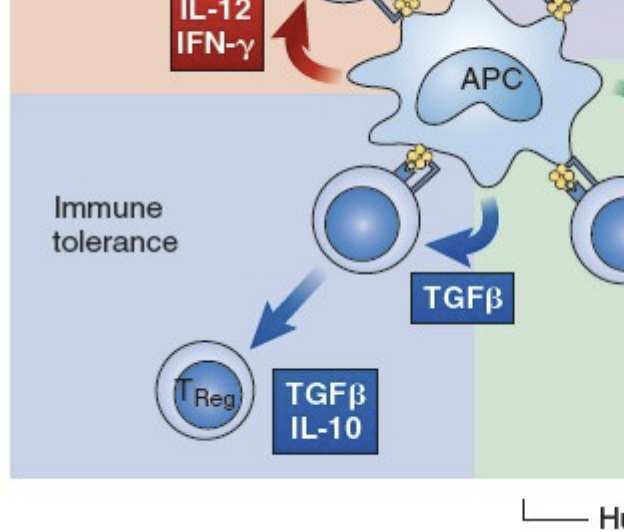
38
What are Th17?
• Produce IL-17 family of cytokines (pro-inflammatory)
• Derived from Th cells by the action of TGFβ, IL-6, and IL-23.
• Play an important role in defense against bacterial and fungal infections at mucosal surfaces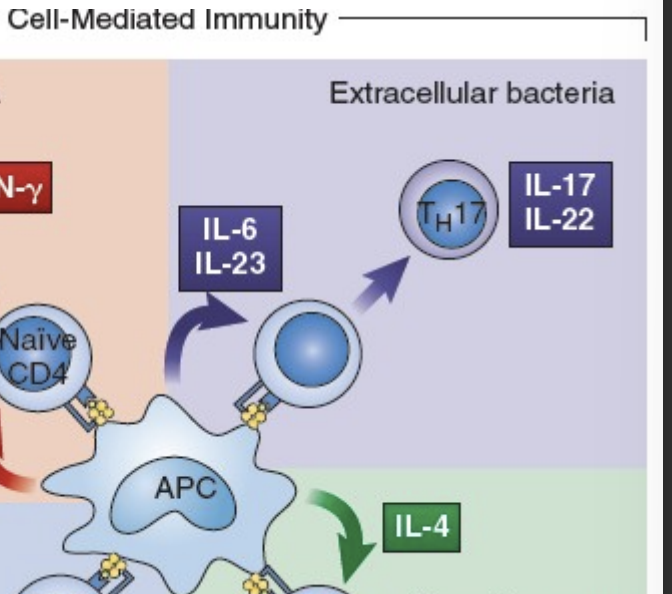
• Derived from Th cells by the action of TGFβ, IL-6, and IL-23.
• Play an important role in defense against bacterial and fungal infections at mucosal surfaces
39
What is complement?
Complement is a series of more than 50 soluble and cell-bound proteins of the innate immune system that interact to enhance host defense mechanisms against foreign cells
40
Where are most plasma complement proteins synthesized?
LIVER!!
exception:
‒ C1 components (produced by intestinal epithelial cells)
‒ Factor D (made in adipose tissue)
exception:
‒ C1 components (produced by intestinal epithelial cells)
‒ Factor D (made in adipose tissue)
41
White blood cells are additional sources of which early complement components?
C1
C2
C3
C4
C2
C3
C4
42
The majority of complement proteins are what type of proteins?
zymogens that are converted to active exnzymes in a very precise order
43
What are zymogens?
an inactive protein that is converted into an active enzyme by a biochemical change
44
What are the functions of complement components?
- Cause lysis of foreign cells (e.g., B group RBCs in a A group plasma)
- Act as opsonins:
• Specific receptors are present on phagocytic cells
• Enhance clearance of immune complexes
- Increase vascular permeability
- Recruit monocytes and neutrophils to the area of antigen concentration
- Trigger secretion of immunoregulatory molecules that amplify the
immune response
- Act as opsonins:
• Specific receptors are present on phagocytic cells
• Enhance clearance of immune complexes
- Increase vascular permeability
- Recruit monocytes and neutrophils to the area of antigen concentration
- Trigger secretion of immunoregulatory molecules that amplify the
immune response
45
What are 3 pathways for complement system activation:
- Classical Pathway
- Lectin Pathway
- Alternative Pathway
- Lectin Pathway
- Alternative Pathway
46
Can more than one pathway be activated?
YES! - more than one pathway can be activated simultaneously
47
What is the end product of full complement system activaton?
lysis of the invading cell using MAC
48
What are the 3 stages of the Classical Pathway?
1. Recognition Unit
2. Activation Unit
3. Membrane Attack Complex (MAC)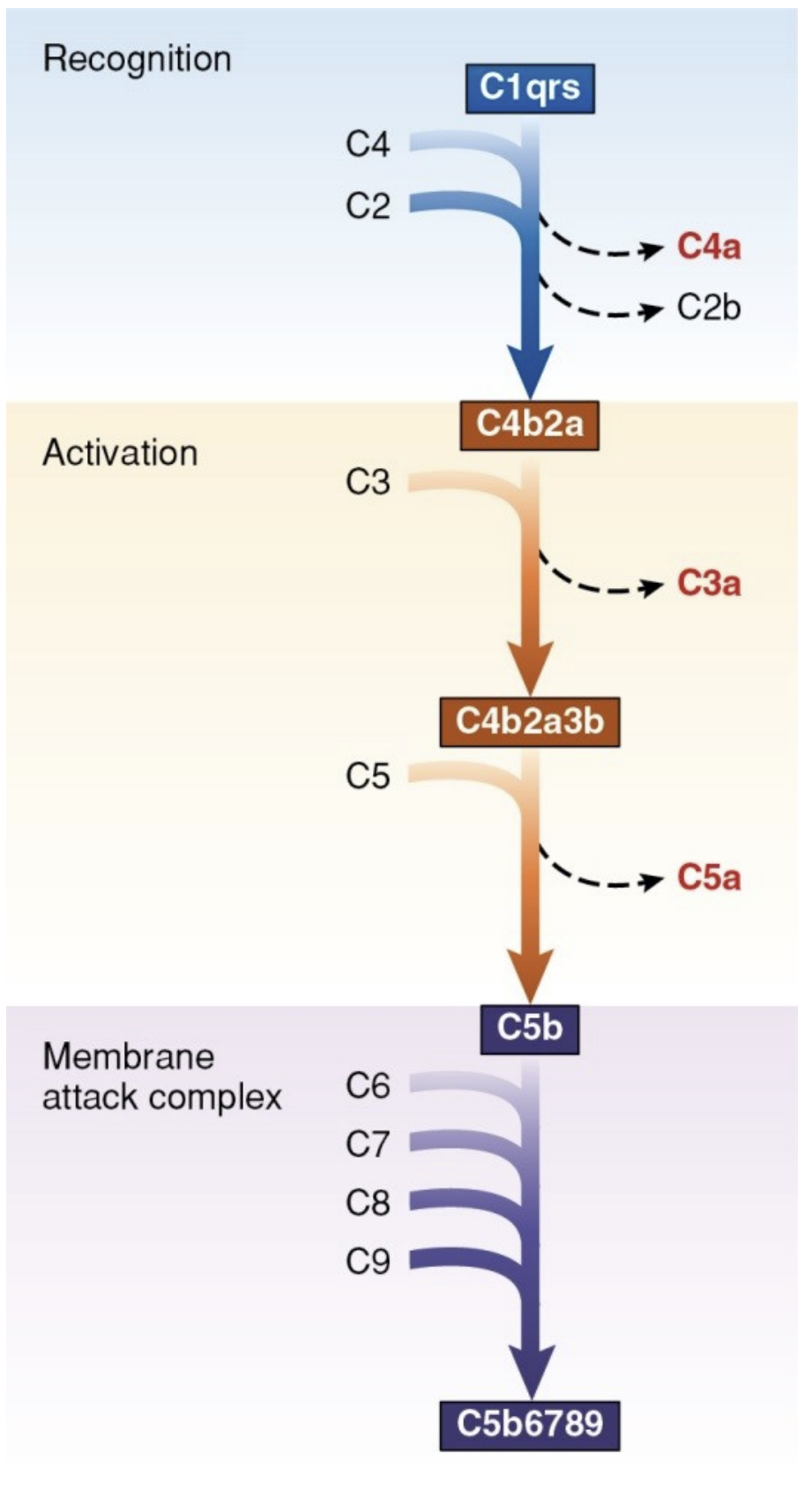
2. Activation Unit
3. Membrane Attack Complex (MAC)
49
What happens in the Recognition unit stage?
C1 binds to antigen-antibody complexes or other substances to initiate the pathway followed by activation of C4, C2 and formation of C4b2a (C3 convertase)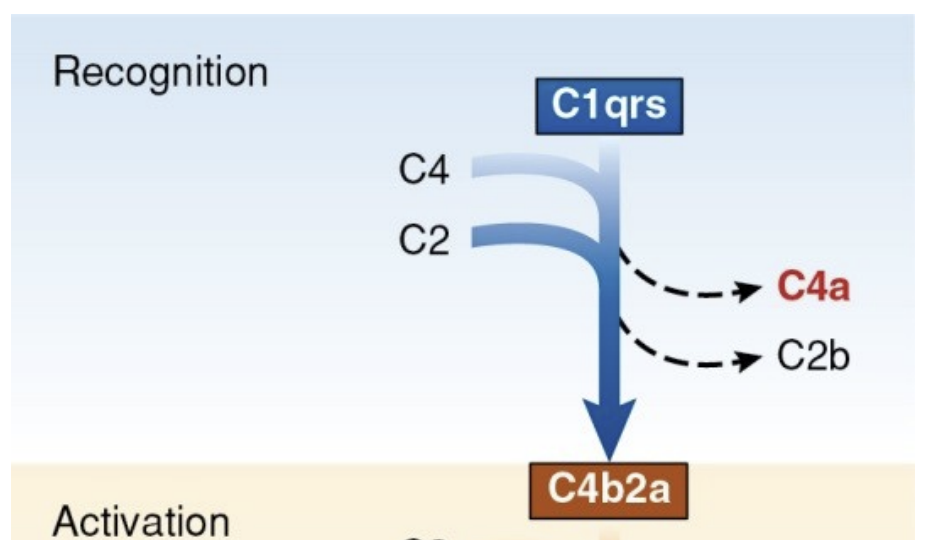
50
What happens in the Activation unit stage?
C3 will be activated, fragments are created and combine to form C5 convertase (C4b2a3b)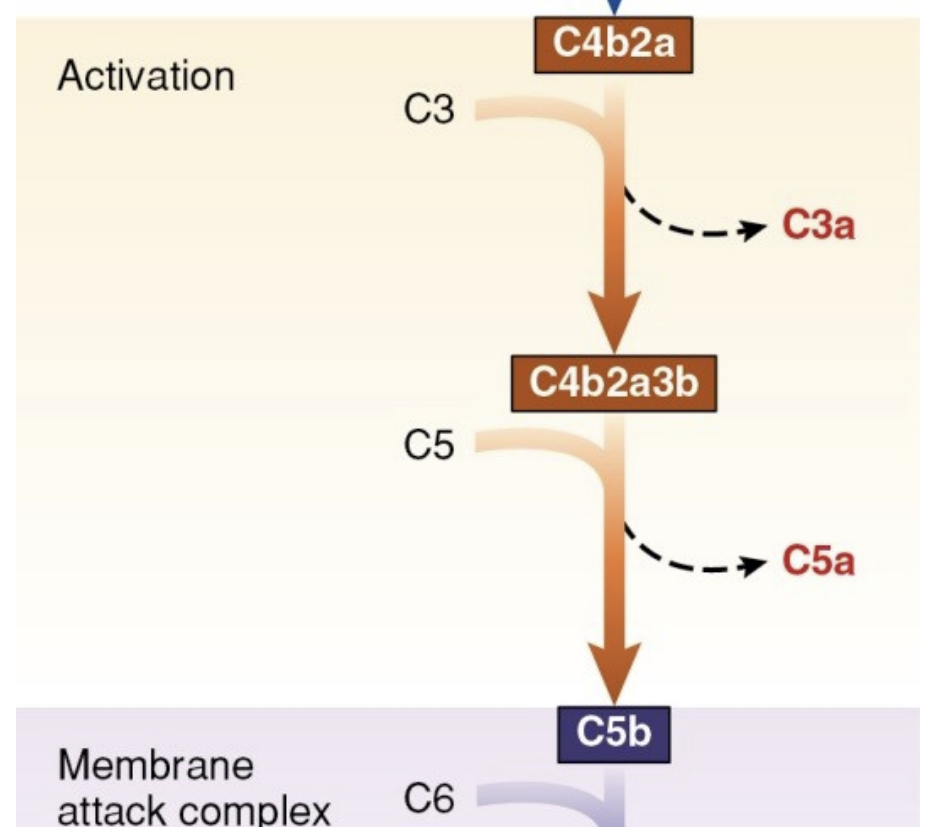
51
What happens in the Membrane Attack Complex (MAC) stage?
MAC is formed following successive activation of C5 through C9 (C5b6789) that causes cell lysis (creates a gateway into the cell causing it to lyse)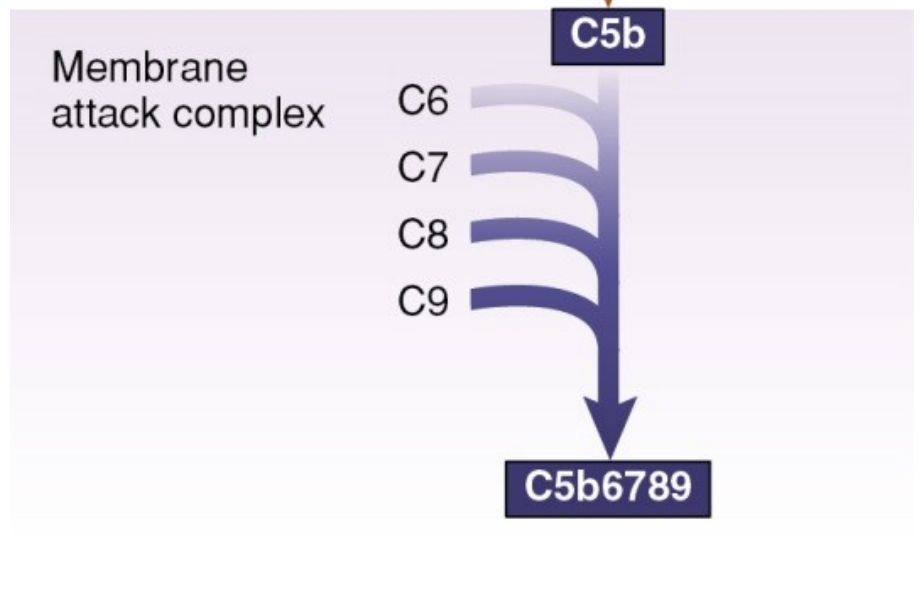
52
What are some substances that initiate the Classical Pathway?
• Antibodies (IgG or IgM) bound to antigen
• C-reactive protein bound to ligand
• Certain viruses*
• Mycoplasmas*
• Certain gram-negative bacteria (E. Coli)*
• Some protozoa*
• C-reactive protein bound to ligand
• Certain viruses*
• Mycoplasmas*
• Certain gram-negative bacteria (E. Coli)*
• Some protozoa*
53
The Classical pathway begins with C1. What is C1?
• First complement component to bind (it is inactive at first)
• Consists of three subunits: C1q, C1r, C1s
• At least two of the globular heads of Clq must be bound to antibody to initiate the pathway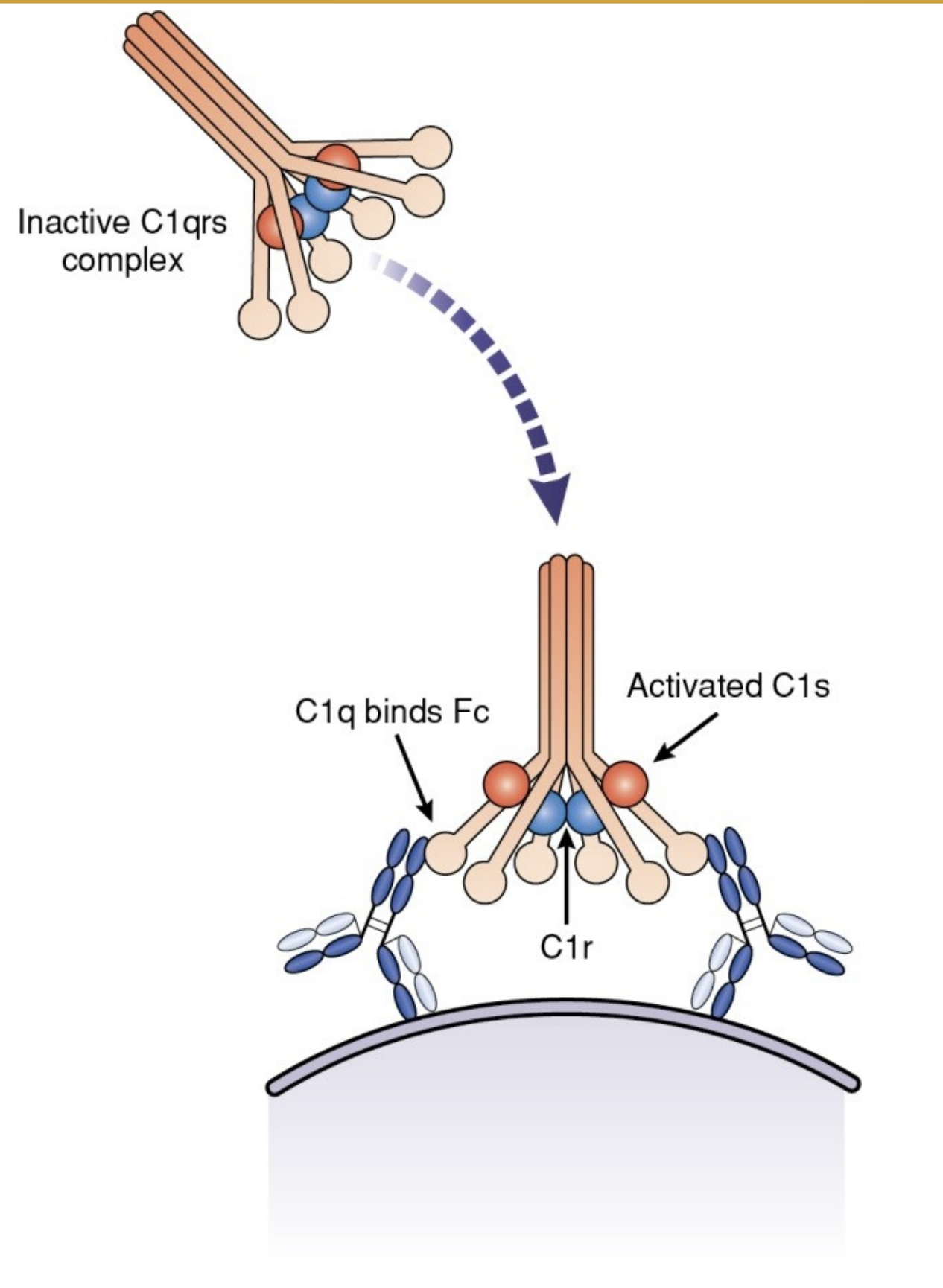
• Consists of three subunits: C1q, C1r, C1s
• At least two of the globular heads of Clq must be bound to antibody to initiate the pathway
54
What part of C1 binds to the Fc portion of an antibody?
C1q - which recognizes The Fc region of 2 adjacent Ab molecules
55
Which Abs can activate complement?
IgG or IgM
56
What must IgG or IgM first be bound to in order for C1q to bind?
These antibodies must first be bound to antigen in order for complement (C1q) to bind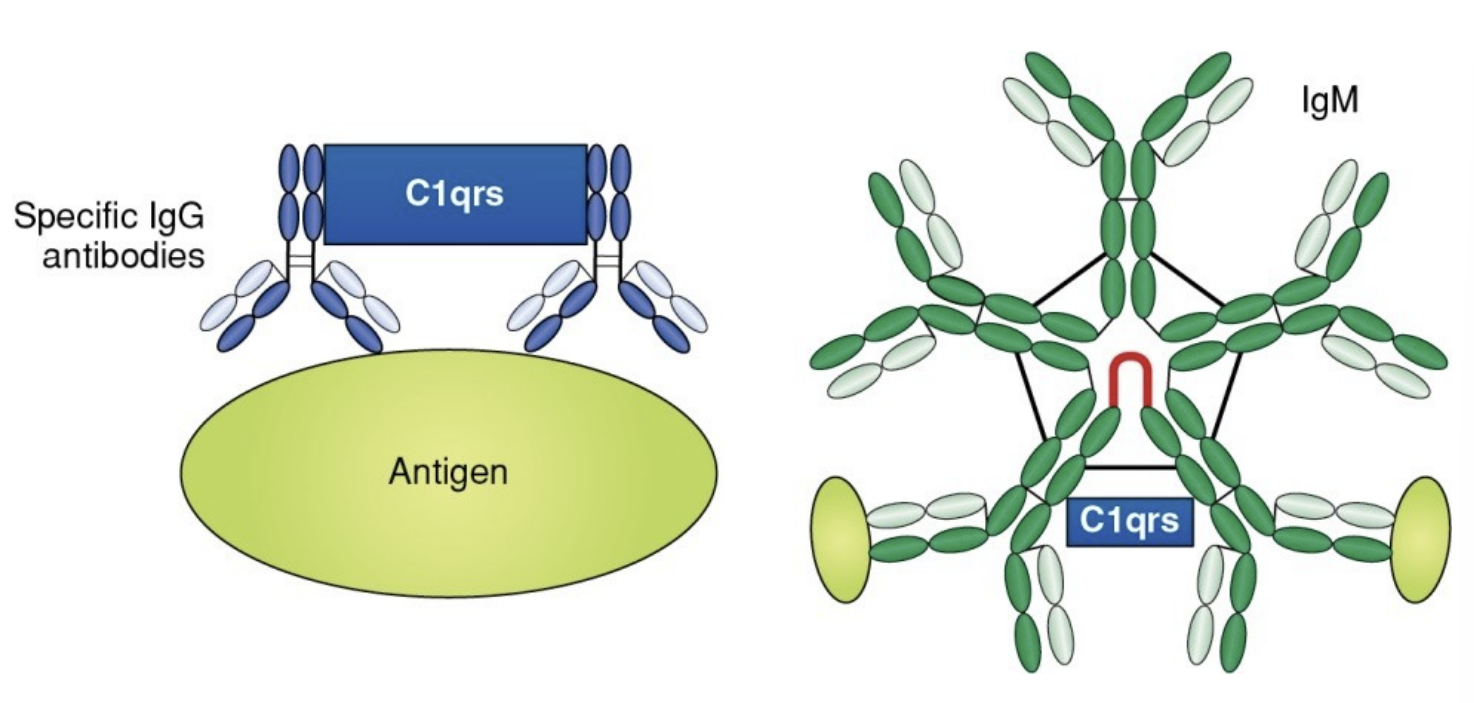
57
How many IgG or IgM molecules must be attached to antigen in order for complement to bind?
• Two IgG molecules must attach to antigen within 30 to 40 nm of each other before complement can bind
• Because IgM is a pentamer, it takes only one IgM molecule attached to two adjacent antigenic determinants to initiate the cascade.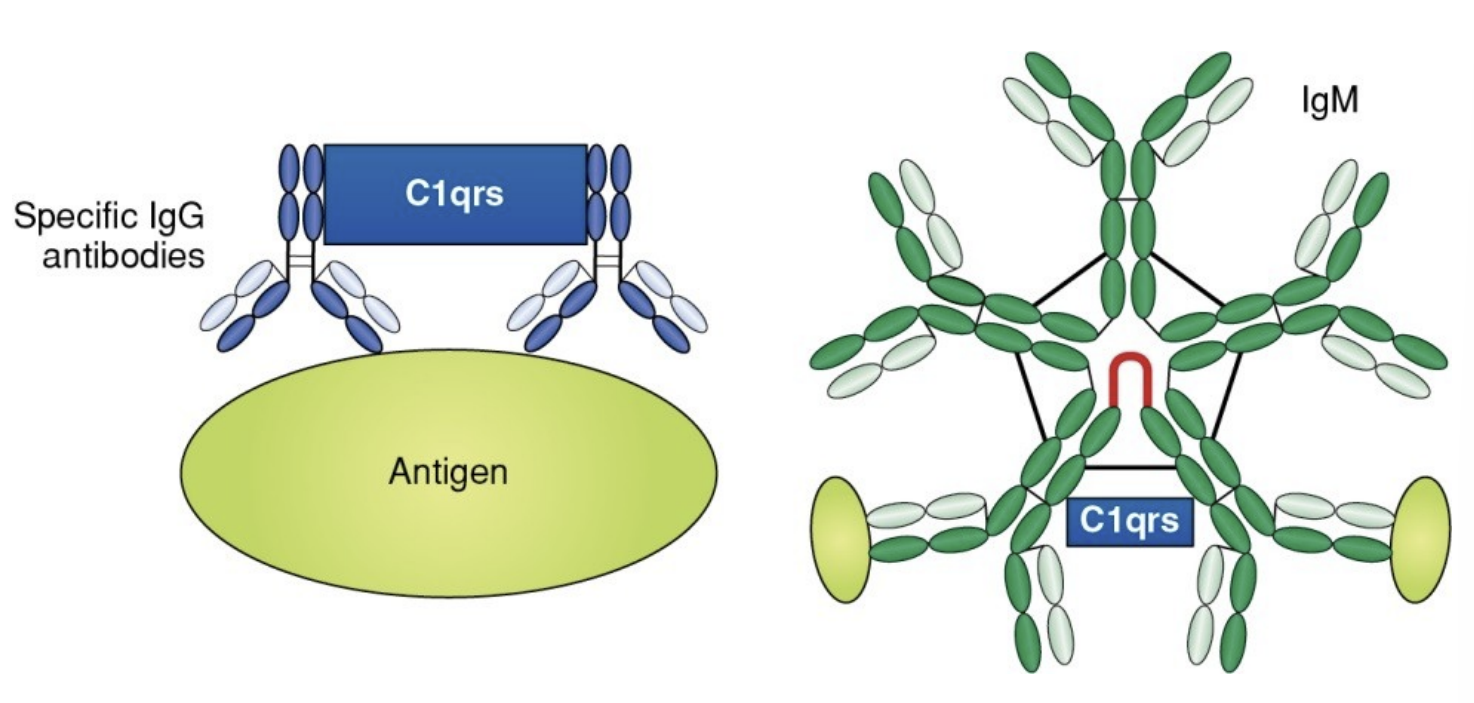
• Because IgM is a pentamer, it takes only one IgM molecule attached to two adjacent antigenic determinants to initiate the cascade.
58
Within the IgG group, which is the most effective at binding to complement?
Within the IgG group, IgG3 is the most effective, followed by IgG1 and then IgG2
59
Besides IgG or IgM, can other Ig's activate complement?
IgG4, IgA, or IgE cannot activate complement
60
Explain the steps in The Classical Pathway: Recognition Unit:
1. The zymogens C1r and C1s are converted into active enzymes as binding of C1q occurs.
2. Autoactivation of C1r results from a change that takes place as C1q is bound.
3. When activated, C1r cleaves a thioester bond on C1s, which activates it.
4. C1s has a limited specificity, with its only substrates being C4 and C2.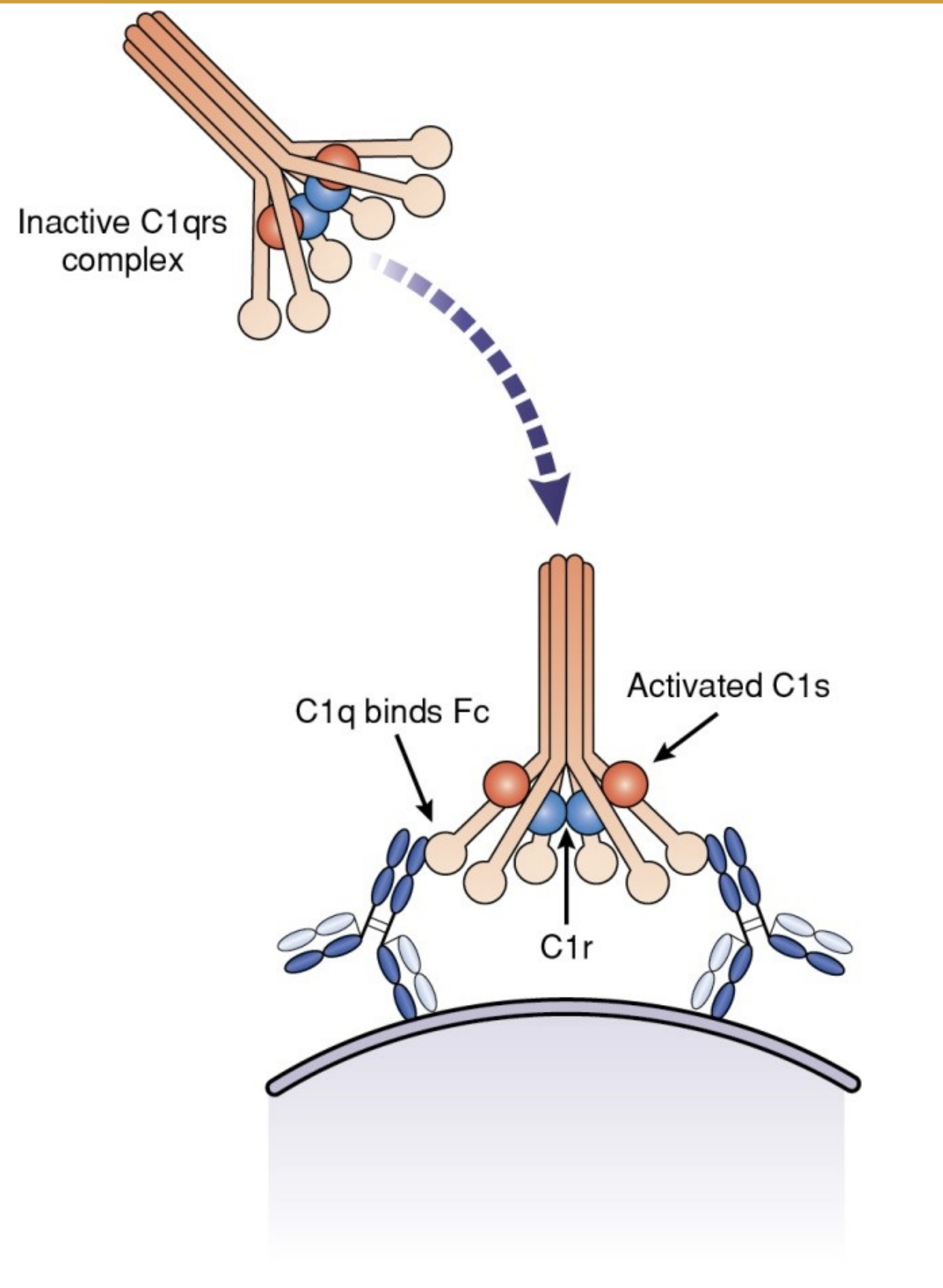
2. Autoactivation of C1r results from a change that takes place as C1q is bound.
3. When activated, C1r cleaves a thioester bond on C1s, which activates it.
4. C1s has a limited specificity, with its only substrates being C4 and C2.
61
What are the steps in The Classical Pathway - The Activation Unit:
1. C1s cleaves C4 to create C4a (released into circulation) and C4b, and it cleaves C2 to create C2a and C2b. C4b and C2a combine to form C4b2a which is called C3 convertase.
2. C3 convertase cleaves C3 to C3a (released into circulation) and C3b which is bound to C4b2a to form C4b2a3b known as C5 convertase.
3. C5 convertase cleaves C5 to C5a (released into circulation) and C5b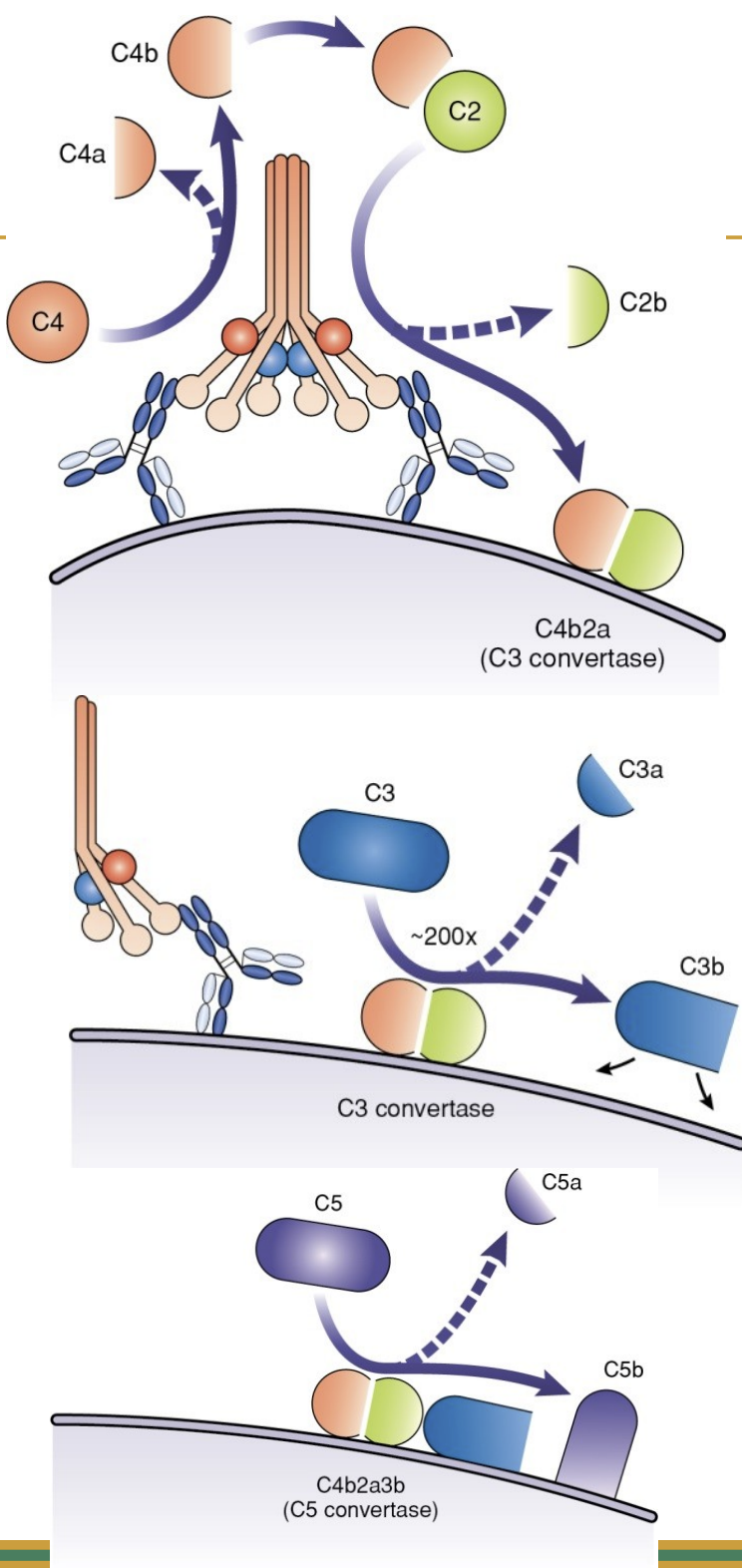
2. C3 convertase cleaves C3 to C3a (released into circulation) and C3b which is bound to C4b2a to form C4b2a3b known as C5 convertase.
3. C5 convertase cleaves C5 to C5a (released into circulation) and C5b
62
What are the steps in The Classical Pathway - Membrane Attack Complex:
1. C5 convertase splits C5 into C5a and C5b.
2. C5b attaches to the cell membrane and binds to C6 which is followed by sequential binding of C7, C8, C9 to initiate formation of the MAC (C5b6789).
3. MAC produces a pore of 70 to 100Å that allows ions to pass in and out of the membrane. Destruction of target cells actually occurs through an influx of water and a corresponding loss of electrolytes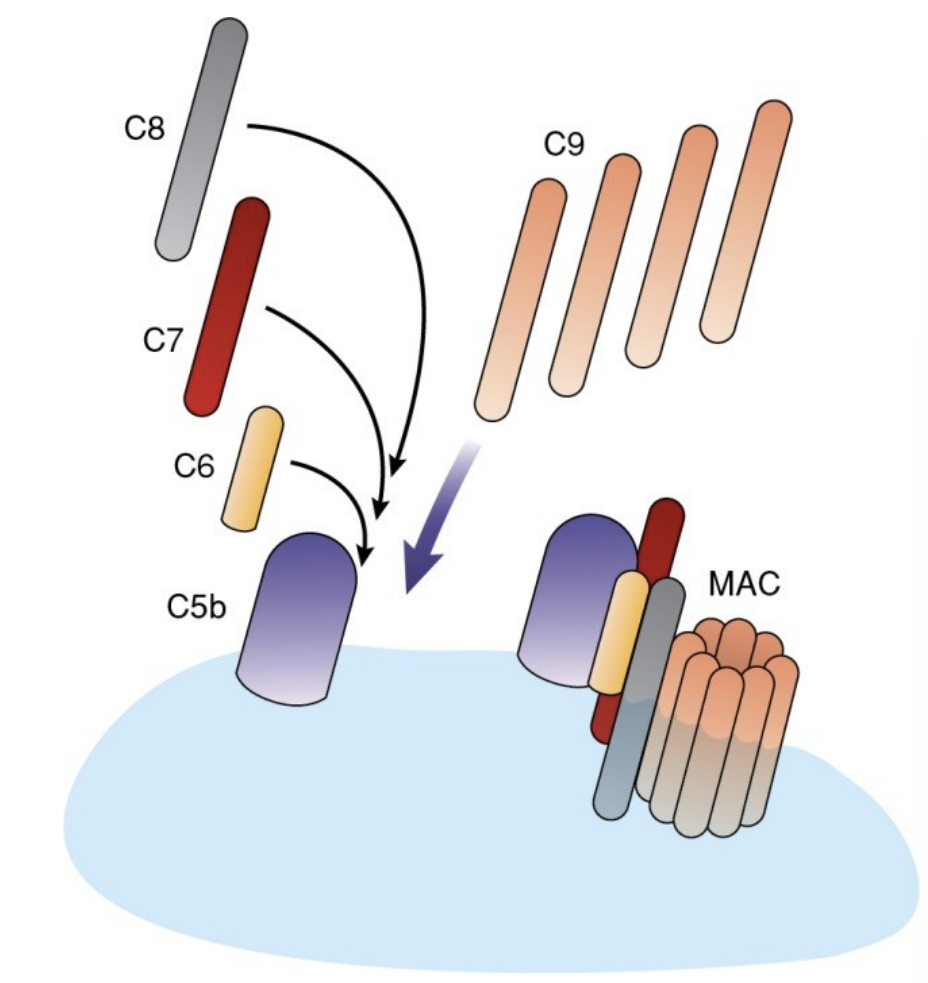
2. C5b attaches to the cell membrane and binds to C6 which is followed by sequential binding of C7, C8, C9 to initiate formation of the MAC (C5b6789).
3. MAC produces a pore of 70 to 100Å that allows ions to pass in and out of the membrane. Destruction of target cells actually occurs through an influx of water and a corresponding loss of electrolytes
63
What activates The Lectin Pathway?
Rather than activating complement through antibody binding (Classical), the Lectin pathway is activated by surface moieties on microbial cell walls (pathogens)
64
What are the 3 classes of recognition molecules in The Lectin Pathway?
- lectins
- ficolins
- collecins
- ficolins
- collecins
65
What components are shared between the Lectin and Classical pathway?
C4 and C2 are shared between this pathway and classical, after they are cleaved the rest of the pathway is like classical
66
What is a key protein, in the Lectin Pathway, that binds to mannose or related sugars in a calcium-dependent manner to initiate this pathway?
Mannan-binding lectin (MBL)
67
What is mannan-binding lectin (MBL) and what is the importance of it?
- an acute-phase protein - produced in liver and normally present in serum, but increases during initial inflammatory response
- binds to mannose or related sugars on microbes (bacteria, yeasts, viruses, and some parasites) to initiate the complement pathway
- binds to mannose or related sugars on microbes (bacteria, yeasts, viruses, and some parasites) to initiate the complement pathway
68
What is The Alternative Pathway?
• Acts mainly as an amplification loop for classical or lectin pathways
• Can be activated directly by bacterial or fungal cell walls, viruses, tumor cells, or some parasites
• Involves C3, C5 – C9, Factors B, D, and P (properdin)
• Can be activated directly by bacterial or fungal cell walls, viruses, tumor cells, or some parasites
• Involves C3, C5 – C9, Factors B, D, and P (properdin)
69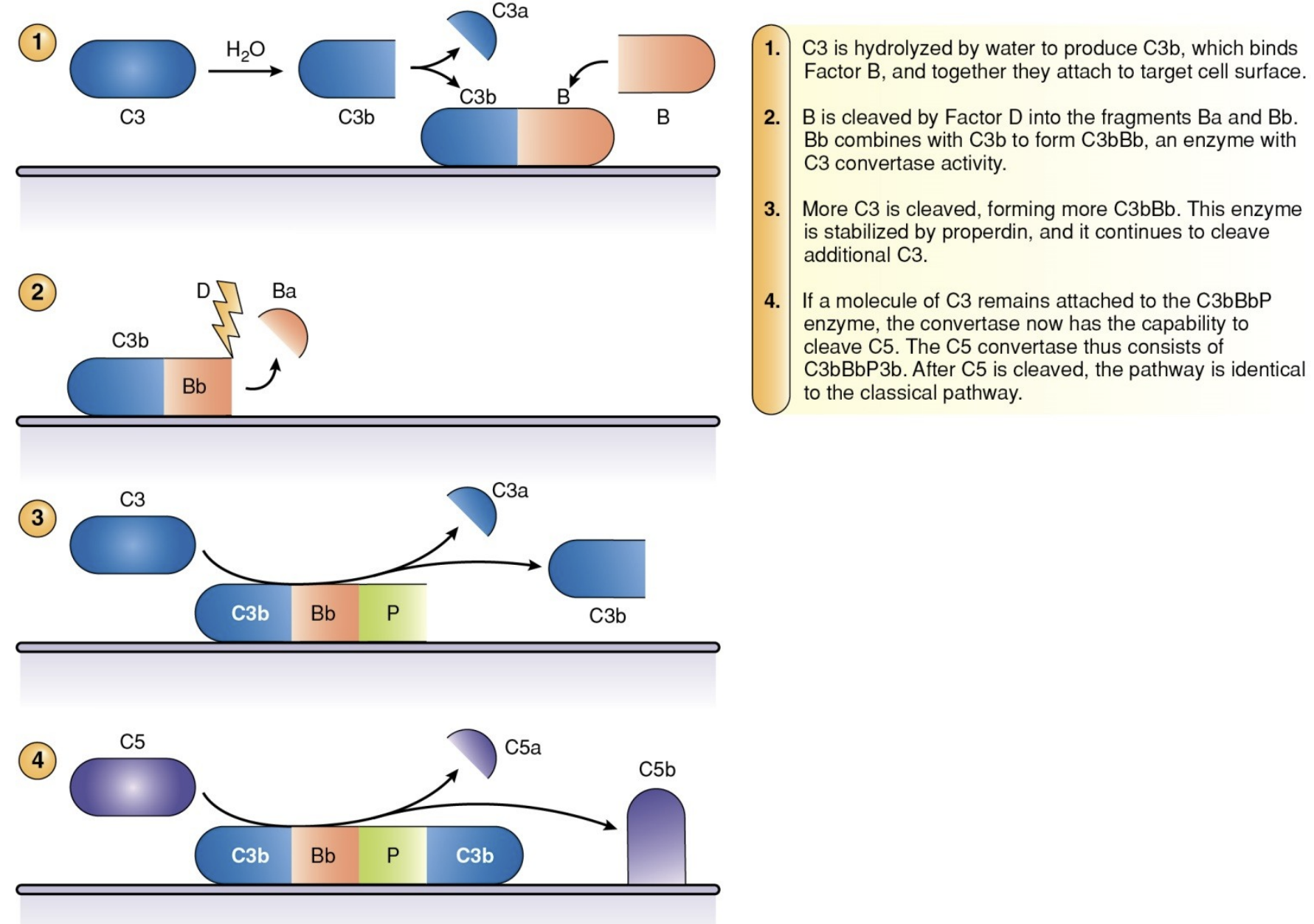
What are the steps in the Alternative Pathway?
70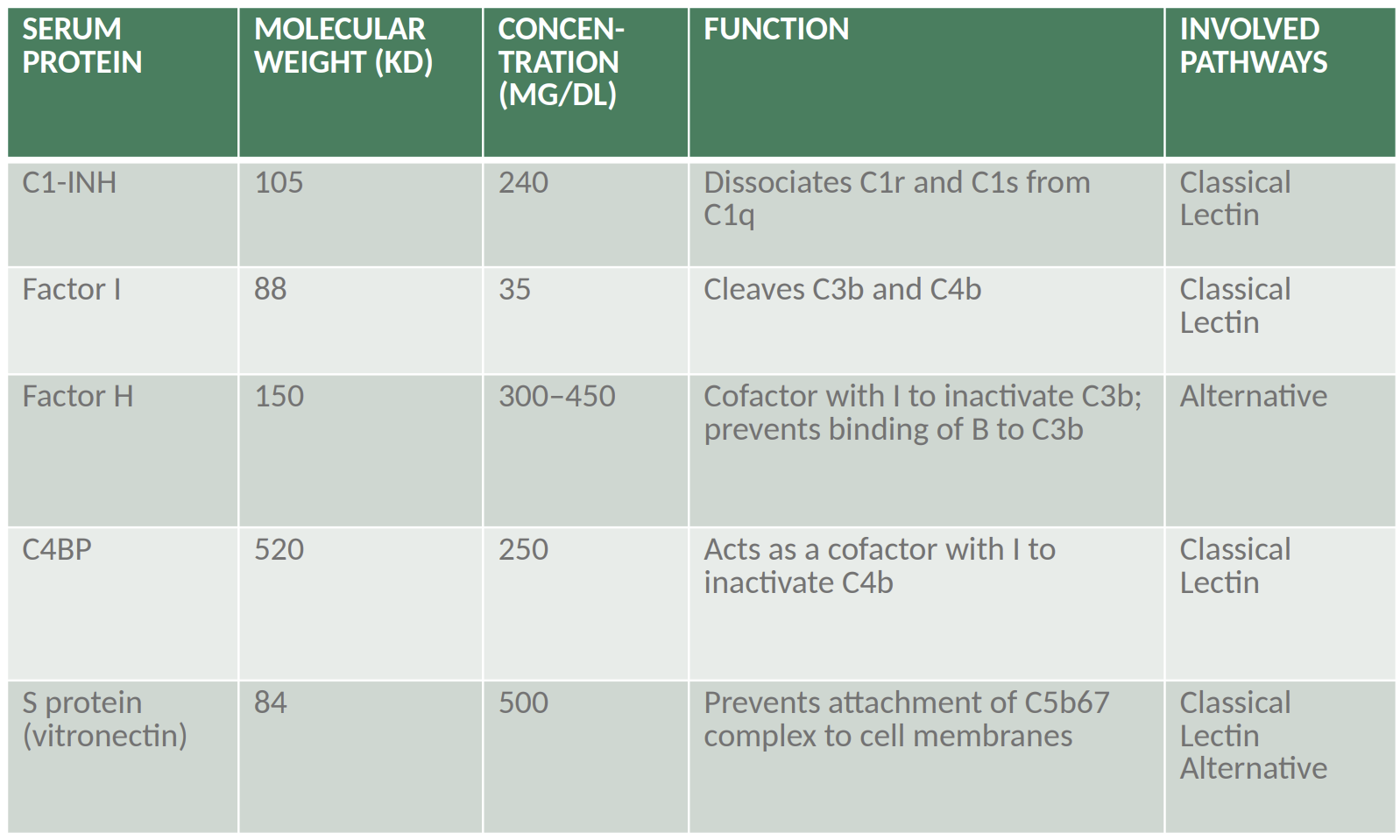
What are some System Controls in Plasma?
71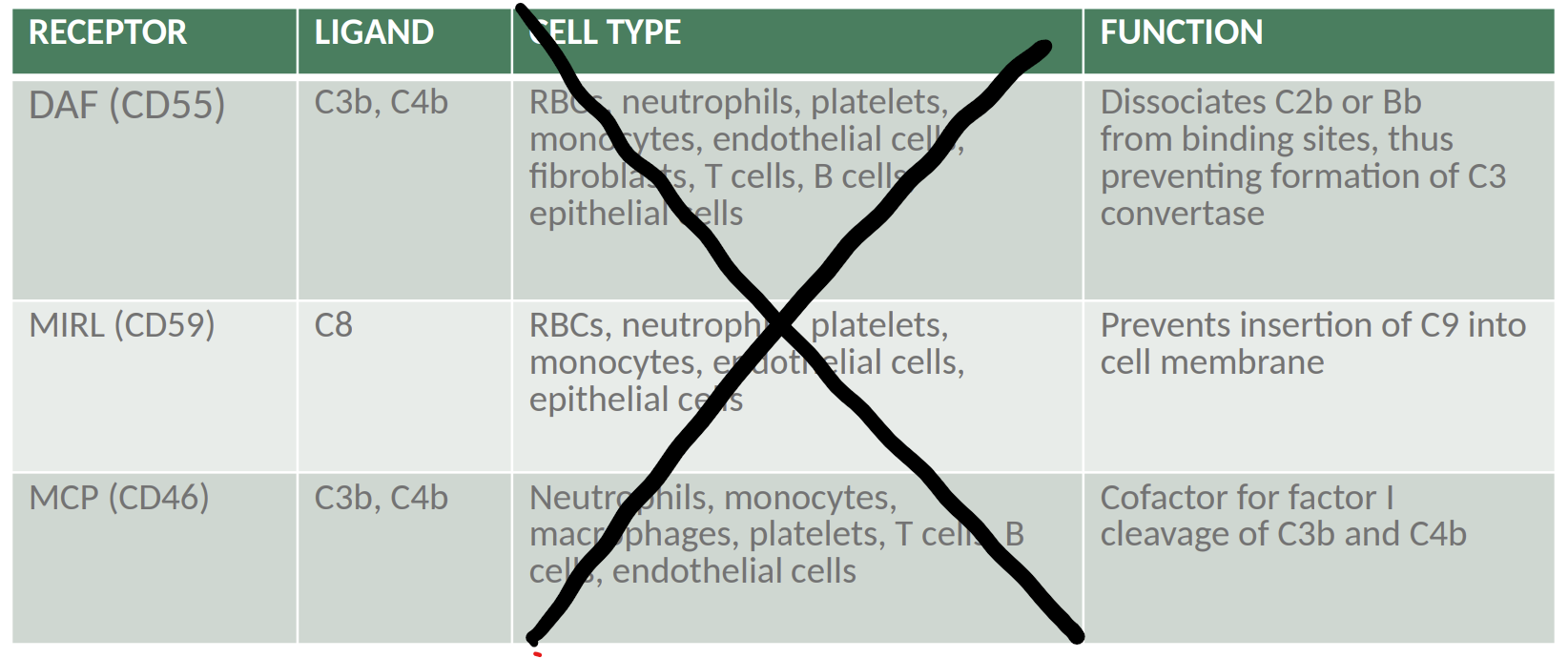
What are some Cellular Complement Controls?
72
What does DAF stand for?
decay accelerating factor
73
What does MIRL stand for?
membrane inhibitor of reactive lysis
74
What does MCP stand for?
monocyte chemotactic protein
75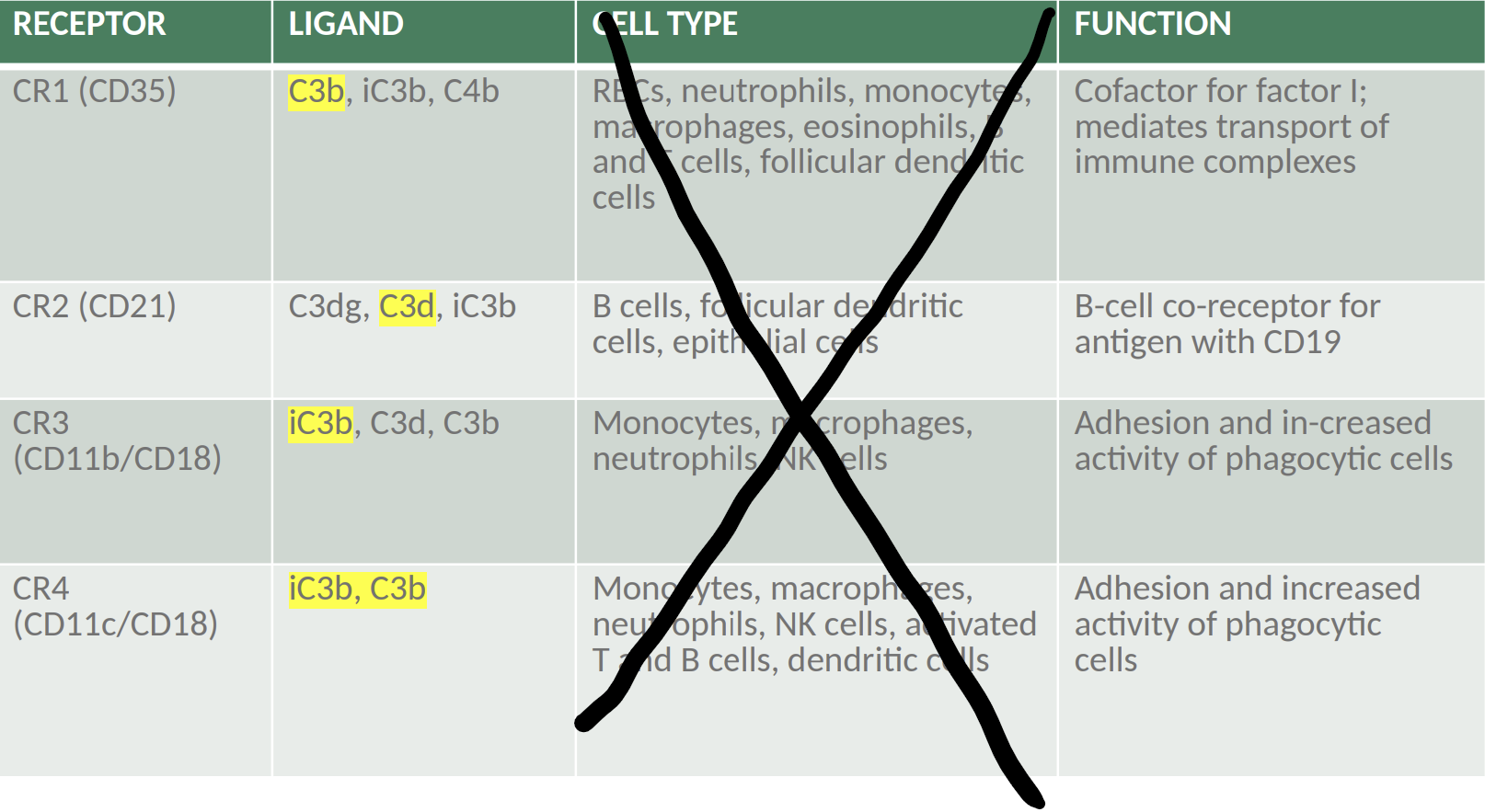
What are the biological roles of complement receptors?
76
What are the Biological Manifestations of Complement?
• Amplifies inflammatory response
- Anaphylatoxins (C5a, C3a)
- Chemotaxins (C5a)
- Opsonins (C3b, C4b, iC3b, C3dg)
• Role in uptake and presentation of antigens in adaptive immune response
• Facilitates B-cell activation
• Role in neural development
- Anaphylatoxins (C5a, C3a)
- Chemotaxins (C5a)
- Opsonins (C3b, C4b, iC3b, C3dg)
• Role in uptake and presentation of antigens in adaptive immune response
• Facilitates B-cell activation
• Role in neural development
77
Complement can cause disease states and be harmful if:
• It is activated systemically on a large scale, as in gram-negative septicemia (systemic rxn in blood - causes high inflammation unlike apoptosis).
• It is activated by tissue necrosis and results in obstruction of the blood supply, as in myocardial infarction.
• Lysis of RBCs occurs, as in cold agglutinin disease or autoimmune hemolytic anemia.
• It is activated by tissue necrosis and results in obstruction of the blood supply, as in myocardial infarction.
• Lysis of RBCs occurs, as in cold agglutinin disease or autoimmune hemolytic anemia.
78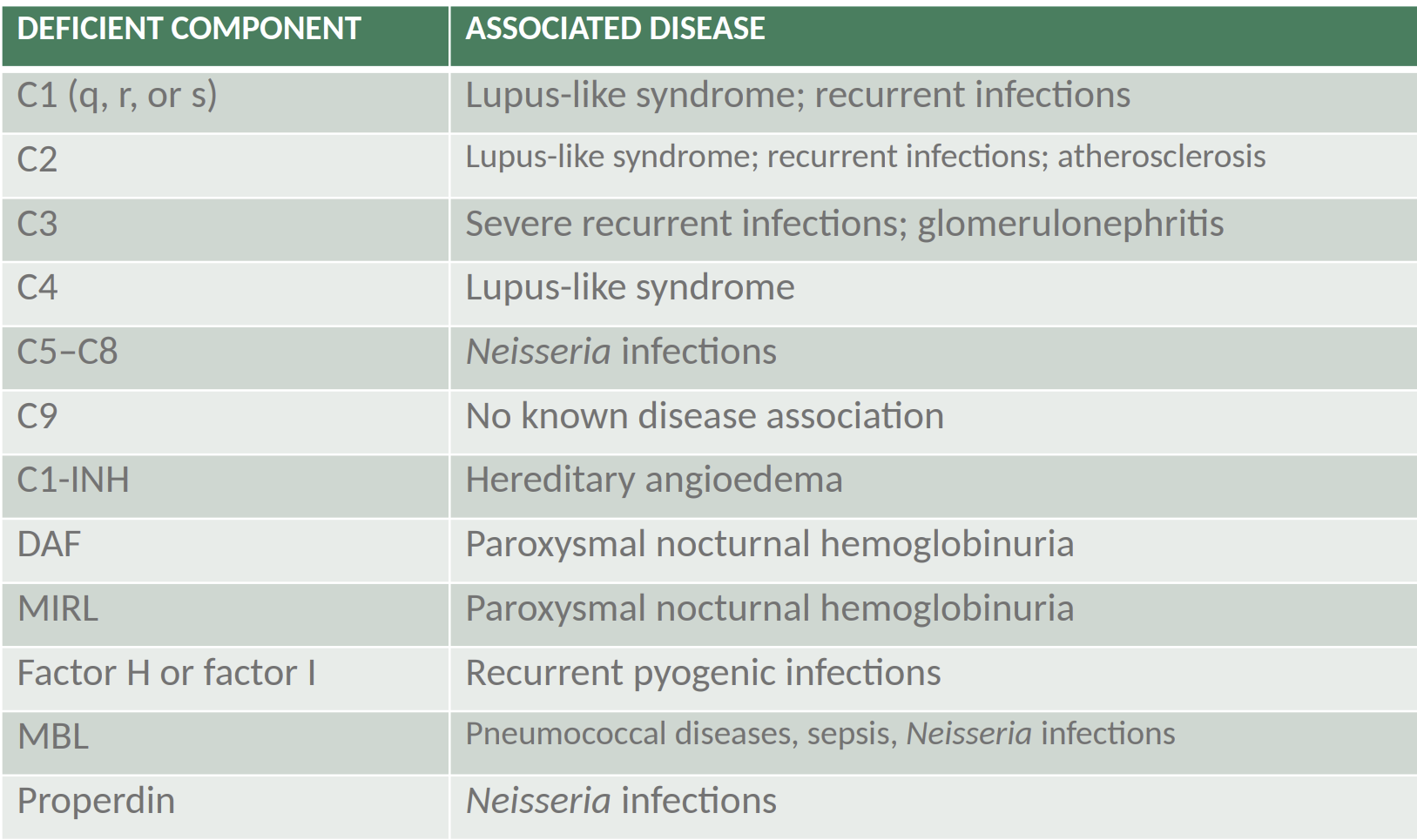
What are some complement deficiencies?
79
What disease is associated with a deficiency in C1 (q, r, or s)?
Lupus-like syndrome; recurrent infections
80
What disease is associated with a deficiency in C2?
Lupus-like syndrome; recurrent infections; atherosclerosis
81
What disease is associated with a deficiency in C3?
Severe recurrent infections; glomerulonephritis
82
What disease is associated with a deficiency in C4?
Lupus-like syndrome
83
What disease is associated with a deficiency in C5-C8?
Neisseria infections
84
What disease is associated with a deficiency in C9?
No known disease association
85
What disease is associated with a deficiency in C1-INH?
Hereditary angioedema
86
What disease is associated with a deficiency in DAF?
Paroxysmal nocturnal hemoglobinuria (PNH)
87
What disease is associated with a deficiency in MIRL?
Paroxysmal nocturnal hemoglobinuria (PNH)
88
What disease is associated with a deficiency in Factor H or factor I?
Recurrent pyogenic infections
89
What disease is associated with a deficiency in MBL?
Pneumococcal diseases, sepsis, Neisseria infections
90
What disease is associated with a deficiency in Properdin?
Neisseria infections
91
What are some other complement abnormalities?
- Atypical hemolytic uremic syndrome (aHUS)
- C3 glomerulopathy
- C3 glomerulopathy
92
What is Atypical Uremic Syndrome?
• Rare kidney disorder that results in acute renal failure in children.
• Caused by mutations in genes coding for Factor H, MCP, Factor I, Factor B, C3 or thrombomodulin; or to autoantibodies against Factor H.
• Caused by mutations in genes coding for Factor H, MCP, Factor I, Factor B, C3 or thrombomodulin; or to autoantibodies against Factor H.
93
Whare are some techniques involved in the Laboratoy Detection of Complement Abnormalities?
• Measurement of components as antigens in serum
• Measurement of functional activity of complement pathways
• Measurement of functional activity of complement pathways
94
Whare are some immunologic assays of individual components involved in the Laboratoy Detection of Complement Abnormalities?
• Automated nephelometry or immunoturbidimetry
• Radial immunodiffusion (RID)
• Radial immunodiffusion (RID)
95
Whare are some Classical pathway assays involved in the Laboratoy Detection of Complement Abnormalities?
‒ Hemolytic titration (CH50) assay
‒ CH50 test for lysis of liposomes
‒ ELISA to detect C9 epitopes exposed after binding in MAC
‒ CH50 test for lysis of liposomes
‒ ELISA to detect C9 epitopes exposed after binding in MAC
96
Whare are some Alternative pathway assays involved in the Laboratoy Detection of Complement Abnormalities?
• AH50
• ELISA to detect C3bBbP or C3bP
• ELISA to detect C3bBbP or C3bP
97
What is the CH50 test?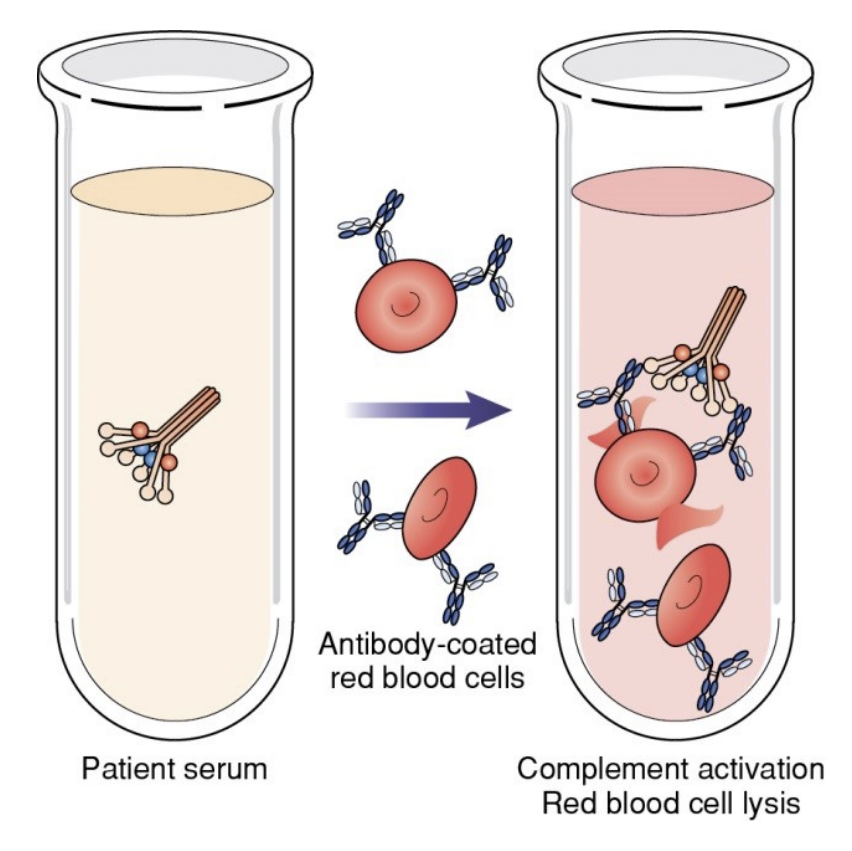
A CH50 blood test, also known as a total complement test or CH100, measures the level and activity of complement proteins in the blood.
98
How is the CH50 test done?
- serum to be tested is diluted seriall yand added to sensitized sheep red blood cells
- the tubes are incubated at 37C and then centrifuged to pellet the unlysed cells
- the CH50 is defined as the reciprocal of the dilution that causes lysis of 50% of the cells used in the assay
- in the example shown, the CH50 would be about 80 U/mL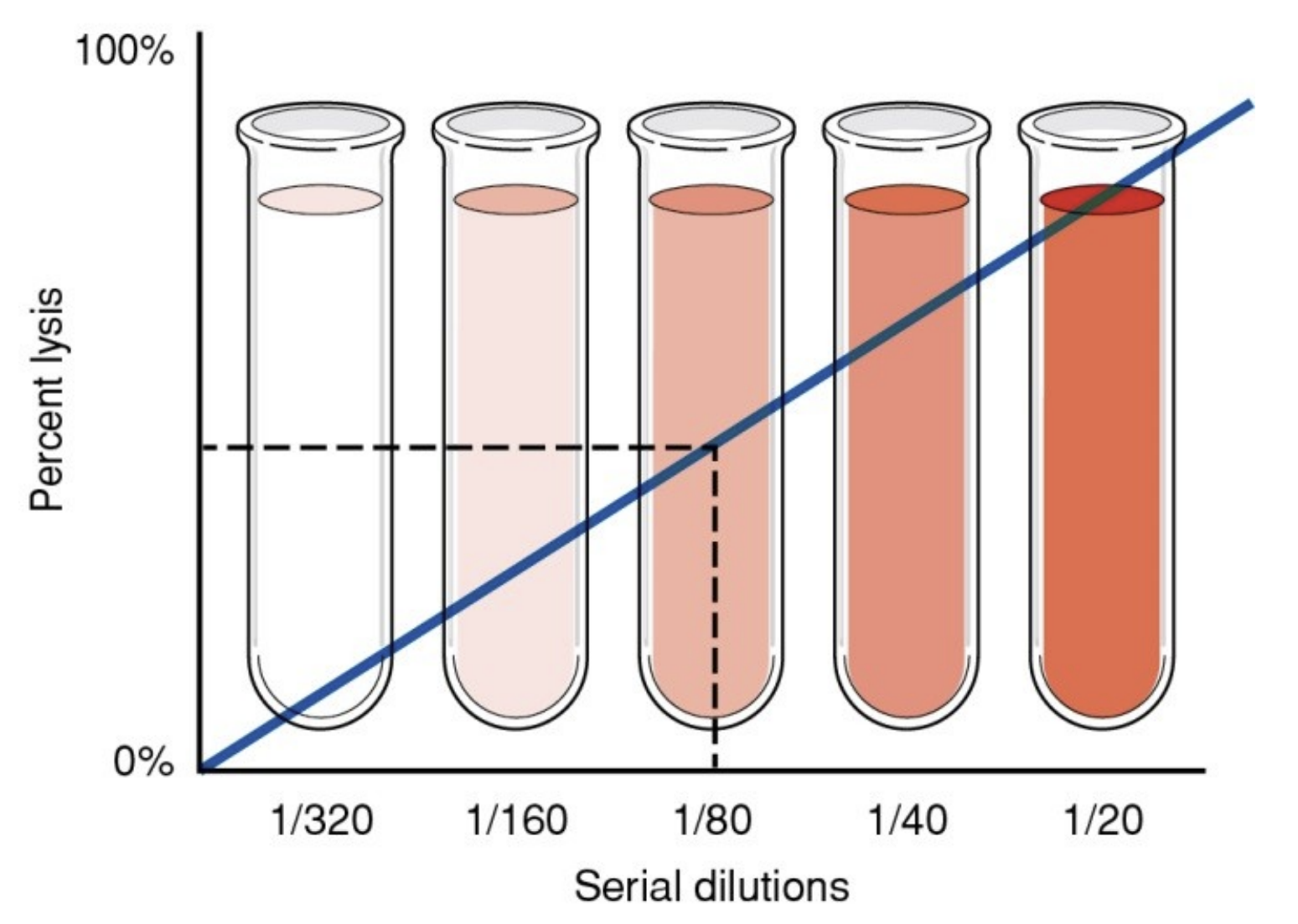
- the tubes are incubated at 37C and then centrifuged to pellet the unlysed cells
- the CH50 is defined as the reciprocal of the dilution that causes lysis of 50% of the cells used in the assay
- in the example shown, the CH50 would be about 80 U/mL
99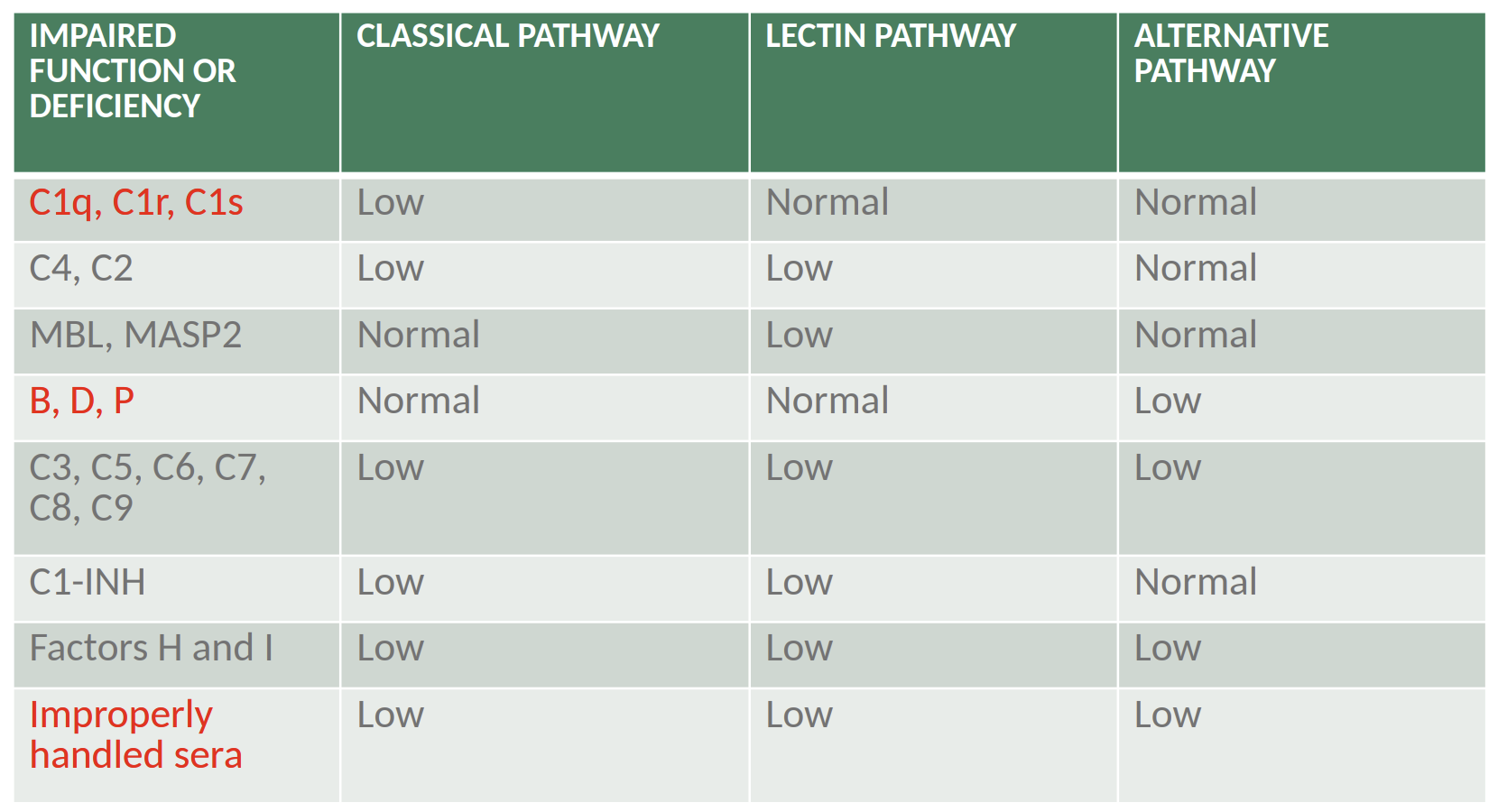
Memorize the chart - Know which pathways are affected from impaired fxn or deficiency with certain components
100
Which pathways are affected if there is an impaired fxn or deficiency in the following: C1q, C1r, C1s
Classical: Low
Lectin: Normal
Alternative: Normal
Lectin: Normal
Alternative: Normal
101
Which pathways are affected if there is an impaired fxn or deficiency in the following: C4, C2
Classical: Low
Lectin: Normal
Alternative: Normal
Lectin: Normal
Alternative: Normal
102
Which pathways are affected if there is an impaired fxn or deficiency in the following: MBL, MASP2
Classical: Normal
Lectin: Low
Alternative: Normal
Lectin: Low
Alternative: Normal
103
Which pathways are affected if there is an impaired fxn or deficiency in the following: B, D, P
Classical: Normal
Lectin: Normal
Alternative: Low
Lectin: Normal
Alternative: Low
104
Which pathways are affected if there is an impaired fxn or deficiency in the following: C3, C5, C6, C7, C8, C9
Classical: Low
Lectin: Low
Alternative: Low
Lectin: Low
Alternative: Low
105
Which pathways are affected if there is an impaired fxn or deficiency in the following: C1-INH
Classical: Low
Lectin: Low
Alternative: Normal
Lectin: Low
Alternative: Normal
106
Which pathways are affected if there is an impaired fxn or deficiency in the following: Factors H and I
Classical: Low
Lectin: Low
Alternative: Low
Lectin: Low
Alternative: Low
107
Which pathways are affected if there is an impaired fxn or deficiency in the following: Improperly handled sera
Classical: Low
Lectin: Low
Alternative: Low
Lectin: Low
Alternative: Low
108
What are complement therapeutics?
they target key points in the complement pathways to treat disease
109
Which complement component is used to treat HAE (hereditary angioedema)?
Recombinant C1-INH
110
Which monoclonal antibody is used to block formation of C5a and the MAC?
monoclonal antibody to C5 (eculizumab)
111
What is monoclonal antibody to C5 (eculizumab), which is used to block formation of C5a and the MAC, used for?
- used to treat aHUS and PNH
- leads to decreases in soluble C5b-9 levels, CH50, and AH50
- leads to decreases in soluble C5b-9 levels, CH50, and AH50