Lecture 1 - Intro to Immune System
Study these flashcardsFree · spaced repetition · iPhone, Android, Mac & web
All cards
1
What is immunology?
Study of host's reactions to foreign substances termed "antigens":
2
What are antigens?
Foreign substances that induce a host response
3
What are some examples of antigens?
- pollen proteins
- components of bacterial pathogens
- components of bacterial pathogens
4
What is immunity?
The condition of being resistant to infection
5
What are the 2 types of immunity?
active and passive
6
What is an example of active immunity?
when you get the flu
7
What is an example of passive immunity?
when you receive an antibody specific to an infectious agent
8
What is an example of an antibody specific to an infectious agent?
Hepatitis B Immunoglobulin (HBIG)
9
What happened in the 15th century, China and Turkey?
People inhaled powder from smallpox scabs to prevent smallpox
10
What did Dr. Edward Jenner develop on the 1700s?
Developed smallpox vaccine from cowpox material?
11
What did Dr. Louis Pasteur develop in the 1800s?
several vaccines through attenuation
12
What is attenuation?
pathogens made less virulent through heat, aging, or chemical treatment
13
What are the two types of immune systems?
- innate/natural immunity
- adaptive/ acquired immunity
- adaptive/ acquired immunity
14
What type of response occurs in innate/natural immunity?
non-specific responses
15
What type of response occurs in adaptive/ acquired immunity?
specific response
16
What is the 1st line in innate/natural immunity?
- skin
- mucous membrans & secretions
- normal flora
- mucous membrans & secretions
- normal flora
17
What is in the 2nd line in innate/ natural immunity?
- innate immune cells
- inflammation
- complement
- antimicrobial substances
- inflammation
- complement
- antimicrobial substances
18
What is in the 3rd line in adaptive/ acquired immunity?
Specialized lymphocytes
- B cells: produce antibodies
- T cells
- Helper T cells
- Killer T cells
- B cells: produce antibodies
- T cells
- Helper T cells
- Killer T cells
19
Innate immunity
• Also known as natural immunity
• Ability to resist infection through normally present body
functions
• Nonspecific: responses are the same for all pathogens
or foreign substances
• Prior exposure not required
• Effect is immediate
• Memory not generated
• Ability to resist infection through normally present body
functions
• Nonspecific: responses are the same for all pathogens
or foreign substances
• Prior exposure not required
• Effect is immediate
• Memory not generated
20
Innate immunity is AKA?
natural immunity
21
What is innate immunity?
the ability to resist infection through normally present body fxns
22
Which immunity is nonspecific?
Innate immunity
23
What is nonspecific?
responses are the same for all pathogens or foreign substances
24
Which immunity occurs where prior exposure is not required?
innate immunity
25
Which immunity's effect is immediate?
Innate immunity
26
Memory is not generated in which immunity?
Innate immunity
27
Adaptive immunity?
• Characterized by specificity for each antigen (e.g., individual pathogens)
• Memory is generated
• The immune system “remembers” a prior exposure to an antigen and mounts an increased response upon repeated exposure
• Memory and specificity lead to a stronger immune response upon repeated exposures
• Has two branches: CMI and HMI
• Memory is generated
• The immune system “remembers” a prior exposure to an antigen and mounts an increased response upon repeated exposure
• Memory and specificity lead to a stronger immune response upon repeated exposures
• Has two branches: CMI and HMI
28
Which is characterized by specificity for each antigen, memory generated, and has two branches (CMI and HMI)?
adaptive immunity
29
What are the leukocytes?
white blood cells (WBC)
30
Where are these leukocytes found?
in the peripheral blood and lymphoid tissues
31
What do the leukocytes play key roles in?
innate and adaptive immunity
32
What are the leukocyte types?
Granulocytes
Monocytes/Macrophages
Mast cells
Dendritic cells
Monocytes/Macrophages
Mast cells
Dendritic cells
33
What WBC's are the granulocytes?
Neutrophils
Eosinophils
Basophils
Eosinophils
Basophils
34
All leukocytes are produced by the?
Hematopoietic stem cell (HSC)
35
Where does the HSC produce leukocytes?
Bone marrow - through hematopoiesis
36
HSC gives rise to?
Common myeloid progenitors (CMP)
Common lymphoid progenitors (CLP)
Common lymphoid progenitors (CLP)
37
What do the CMPs develop into?
WBCs that perform phagocytosis
38
What to the CLPs develop into?
lymphocytes
39
Neutrophils comprise of what % of WBC's in peripheral blood?
50% - 70%
40
What is the primary function of neutrophils?
phagocytosis and destruction of foreign particles
41
Describe a neutrophil:
multi-lobed nucleus and neutral staining granules in cytoplasm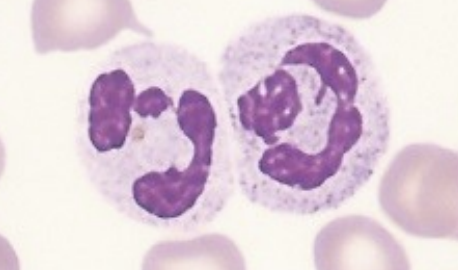
42
Eosinophils comprise of what % of WBC's in peripheral blood?
1 - 4%
43
What are the functions of eosinophils?
• Phagocytosis (less efficient than neutrophils)
• Neutralization of products released in allergic reactions (e.g., histamine)
• Killing of parasites (e.g., helminths)
• Release of cytokines
• Neutralization of products released in allergic reactions (e.g., histamine)
• Killing of parasites (e.g., helminths)
• Release of cytokines
44
Describe an eosinophil:
Contain a bilobed or ellipsoidal nucleus and red-orange cytoplasmic granules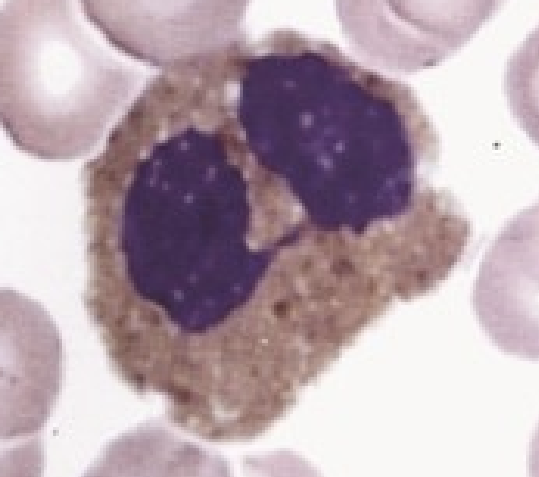
45
Basophils comprise of what % of WBC's in peripheral blood?
less than 1% of circulating WBCs
46
What are the functions of a basophil?
Release histamine and other granular contents, which induce and maintain allergic reactions
47
Describe a basophil:
Contain a bilobed nucleus and deep blue-purple cytoplasmic granules
48
Which leukocyte is increased in allergic reactions?
Basophils
49
Monocytes comprise of what % of WBC's in peripheral blood?
2 - 10% of WBC's
50
How long do monocytes stay in the peripheral blood?
up to 30h then migrate to tissues to become tissue-resident macrophages
51
Macrophages originate from?
monocytes that have migrated to the tissues
52
Describe a monocyte:
Large cells with a horseshoe-shaped nucleus, dull grayish blue cytoplasm, and fine granules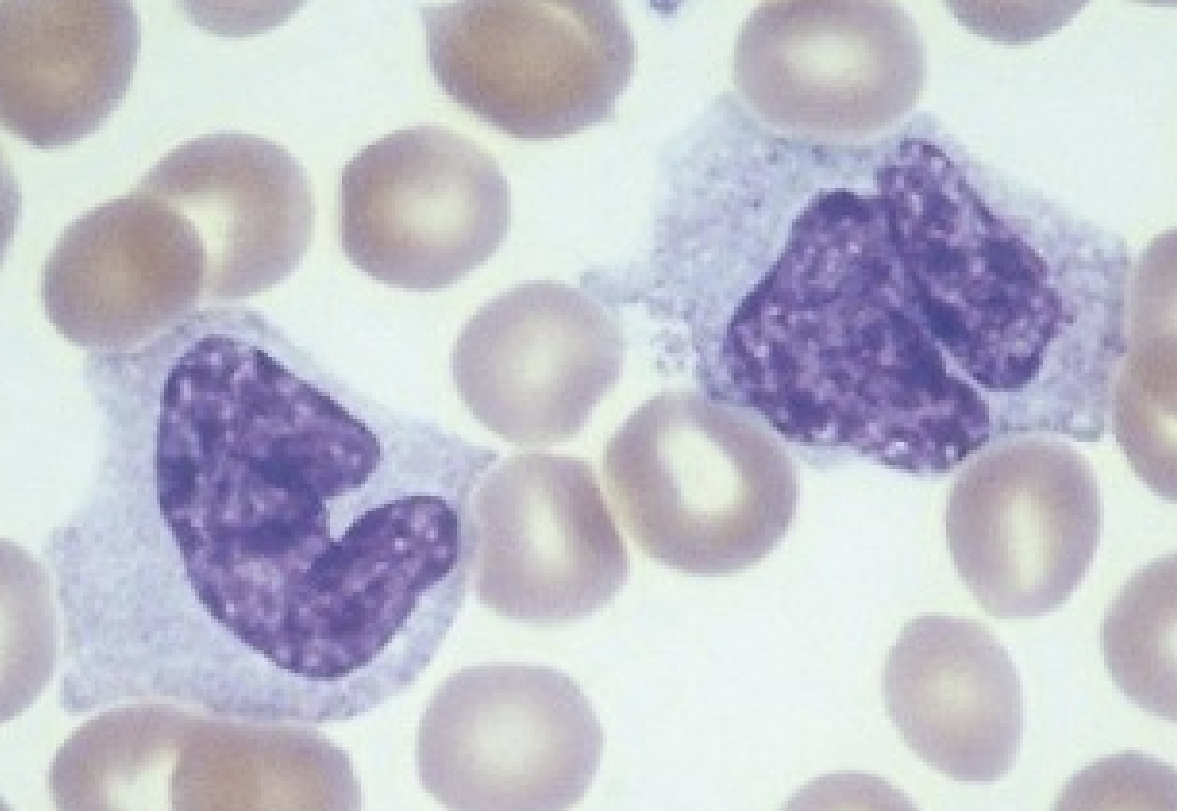
53
Macrophages are active in which immune system?
Innate AND adaptive
54
What are the innate immune functions in macrophages?
• Phagocytosis and microbial killing
• Anti-tumor cell activity
• Intracellular parasite eradication
• Secretion of cell mediators
• Anti-tumor cell activity
• Intracellular parasite eradication
• Secretion of cell mediators
55
What are the adaptive immune responses in macrophages?
• Process and present antigens to T cells
• Produce cytokines that regulate immune responses
• Produce cytokines that regulate immune responses
56
What are mast cells?
• Resemble basophils but come from a different lineage
• Present in tissues (e.g., skin, connective tissue)
• Induce and maintain allergic reactions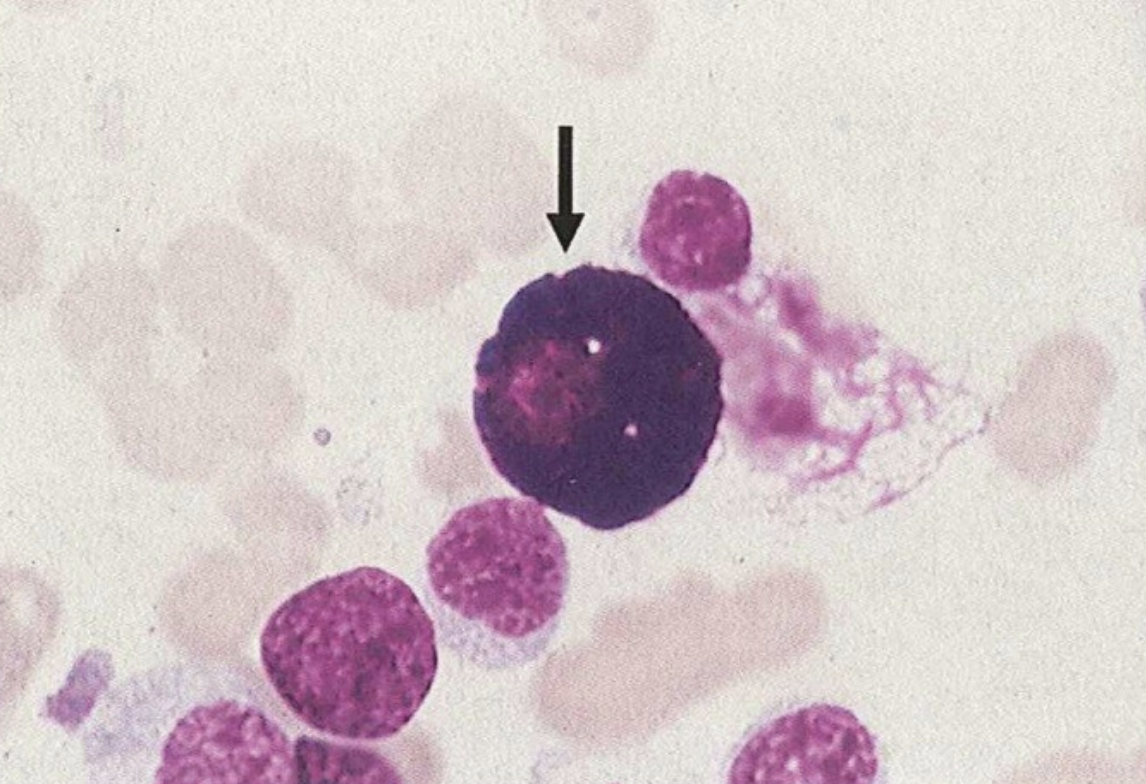
• Present in tissues (e.g., skin, connective tissue)
• Induce and maintain allergic reactions
57
What are dendritic cells?
• Have long membranous extensions that resemble nerve cell dendrites
• Roles in both innate and adaptive immunity
• Most potent phagocytic cell
• Most effective antigen-presenting cell (APC)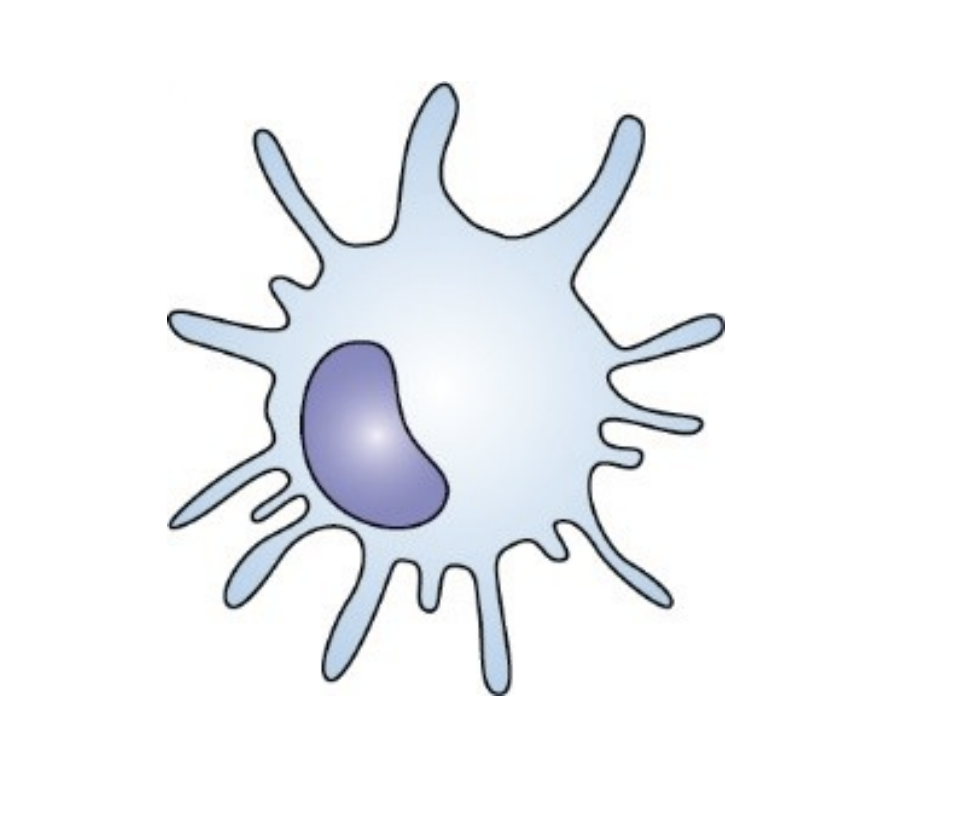
• Roles in both innate and adaptive immunity
• Most potent phagocytic cell
• Most effective antigen-presenting cell (APC)
58
What are the cells of the adaptive immune system?
Lymphocytes
59
Lymphocytes comprise of what % of WBC's in peripheral blood?
20-40%
60
What are the 3 types of lymphocytes?
• B cells
• T cells
• Natural killer (NK) cells
• T cells
• Natural killer (NK) cells
61
Describe a lymphocyte:
Small cells with a large, round nucleus, and sparse, light blue cytoplasm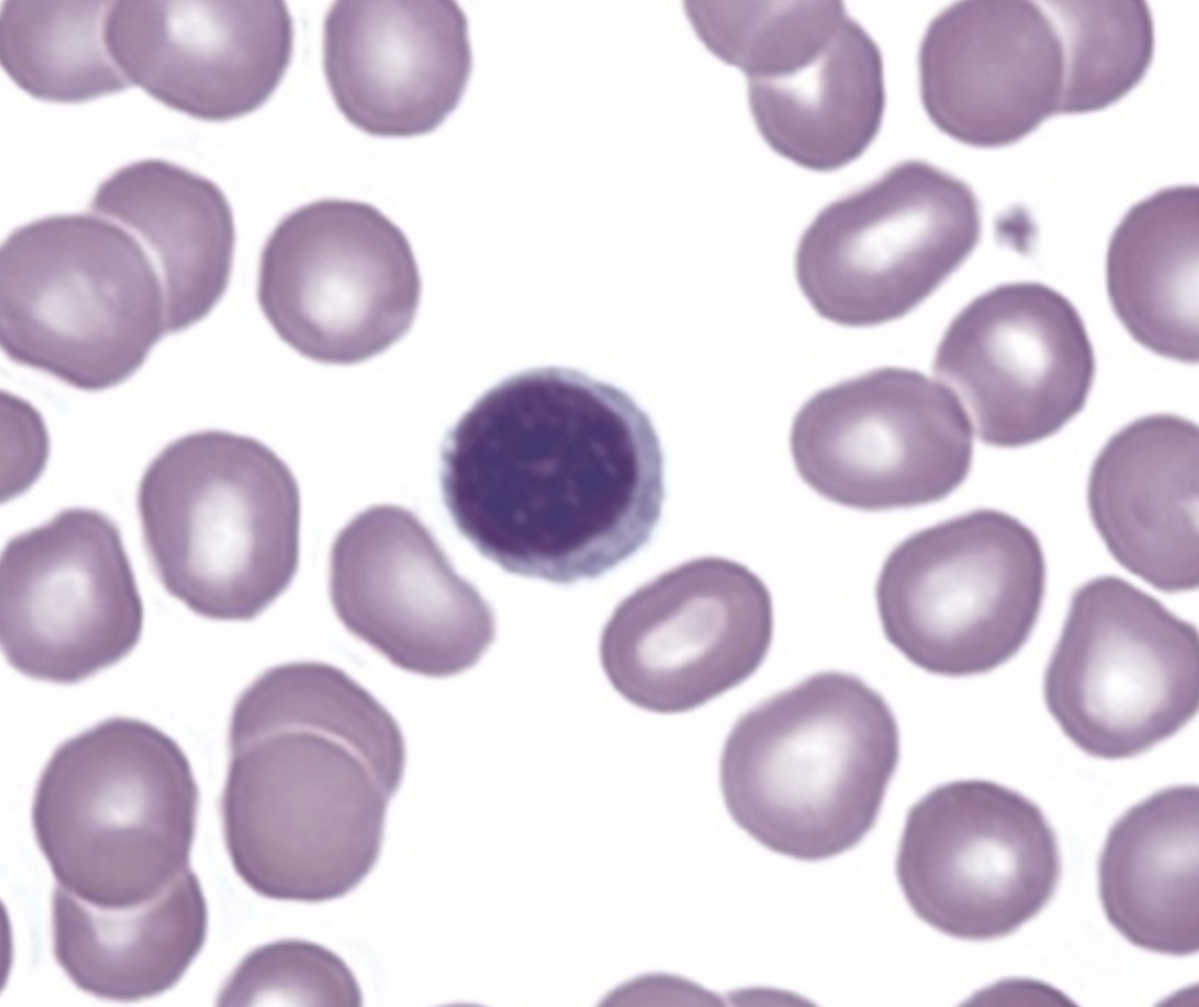
62
B cells derive from?
CLP
63
Which lymphocyte plays a major role in antibody production?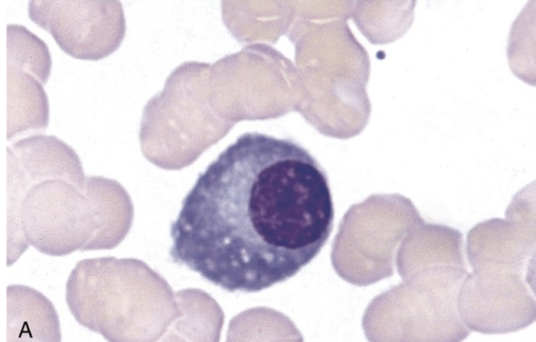
B cells --> Plasma cells --> secrete antibodies
64
What are the B cell surface markers?
Surface Ig
CD19
CD20
CD21
MHC Class II
CD19
CD20
CD21
MHC Class II
65
What Lymphs differentiate into plasma cells after contacting antigen
B cells
66
Which cells are fully differentiated B cells?
Plasma cells
67
Where do T lymphs mature?
Thymus
68
What marker is on all T lymphs?
CD3+
69
What are the T subtypes?
- Helper T cells (Th; CD4+)
- Regulatory T cells (Treg; CD4+)
- Cytotoxic T cells (Tc; CD8+)
- Regulatory T cells (Treg; CD4+)
- Cytotoxic T cells (Tc; CD8+)
70
What is the function of Helper T cells?
produce cytokines that stimulate B cells in antibody production - and assist other T cells in cell-mediated immunity
71
What is the function of Regulatory T cells?
they inhibit immune responses
72
What is the function of Cytotoxic T cells?
they destroy tumor cells and virus-infected cells
73
What are Innate lymphoid cells (ILC)?
they have important roles in innate imunity and tissue remodeling
74
What is the major type of ILC?
Natural killer (NK) cell
75
What is the morphology of ILCs?
They are large cells with kidney-shaped nuclei and granular cytoplasm
aka large granular lymphocyte (LGL)
aka large granular lymphocyte (LGL)
76
What CD markers are NK cells positive for?
CD16
CD56
CD56
77
What is the % of NK cells in peripheral blood?
10-15%
78
What is the function of NK cells?
- Kill virus-infected cells and turmor cells without previous exposure
- destroy antibody-coated target cells (Ab-dependent cell cytotoxicity or ADCC)
- destroy antibody-coated target cells (Ab-dependent cell cytotoxicity or ADCC)
79
What are the primary organs of the immune system?
Bone marrow
Thymus
Thymus
80
What is the bone marrow and its function?
- a primacy lymphoid organ
- large tissue that fill the cor of all long flat bones
- main source of HSC's
- location of B cell maturation and T cell development
- large tissue that fill the cor of all long flat bones
- main source of HSC's
- location of B cell maturation and T cell development
81
What do hematopoietic stem cells (HSCs) do?
- they develop into:
erythrocytes
granulocytes
monocytes
platelets
lymphocytes
erythrocytes
granulocytes
monocytes
platelets
lymphocytes
82
What is the thymus and its function?
- a small flat, bilobed organ found in the thorax
- location of T cell maturation
- location of T cell maturation
83
What is the function of the secondary lymphoid organs?
they receive mature lymphocytes from primary lymph organs
function as sites for contact with foreign antigens
function as sites for contact with foreign antigens
84
What are the secondary lymphoid organs?
Spleen
lymph nodes
mucosal-associated lymphoid tissue (MALT)
cutaneous-associated lymphoid tissue (CALT)
lymph nodes
mucosal-associated lymphoid tissue (MALT)
cutaneous-associated lymphoid tissue (CALT)
85
What is the spleen?
- largest secondary organ
- located in the upper left quadrant of abdomen, just below diaphragm
- contains red and white pulp
- located in the upper left quadrant of abdomen, just below diaphragm
- contains red and white pulp
86
What is in the red pulp of the spleen?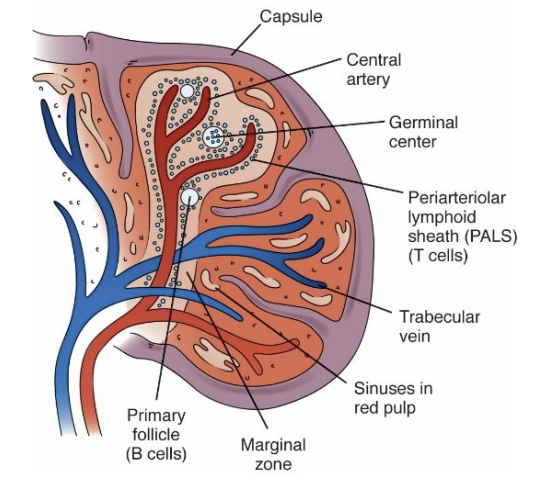
rich in macrophages
destroys old RBCs
destroys old RBCs
87
What is in the white pulp of the spleen?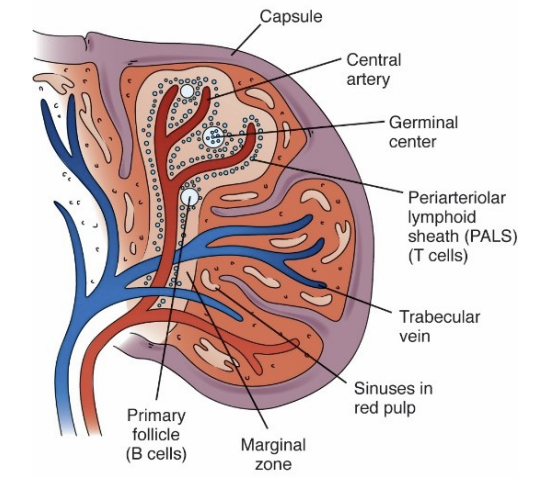
- 20% of the total weight of the spleen
- contains lymph tissue arranged around arterioles in a paerarteriolar sheath containing T cells
- B cells are in follicles attached to the sheath
- contains lymph tissue arranged around arterioles in a paerarteriolar sheath containing T cells
- B cells are in follicles attached to the sheath
88
What are the lymph nodes?
- secondary lymphoid organ
- located along lymphatic ducts, especially near joints and where arms and legs join the body
- they collect lymph fluid from adjacent tissues
- located along lymphatic ducts, especially near joints and where arms and legs join the body
- they collect lymph fluid from adjacent tissues
89
Where do lymphocytes and foreign antigens enter the lymph nodes from?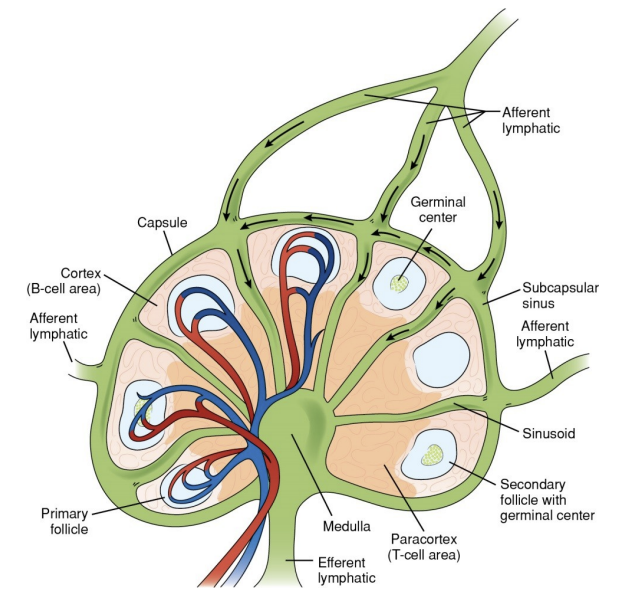
afferent lymphatic vessels
90
Where are the T cells mainly located in the lymph node?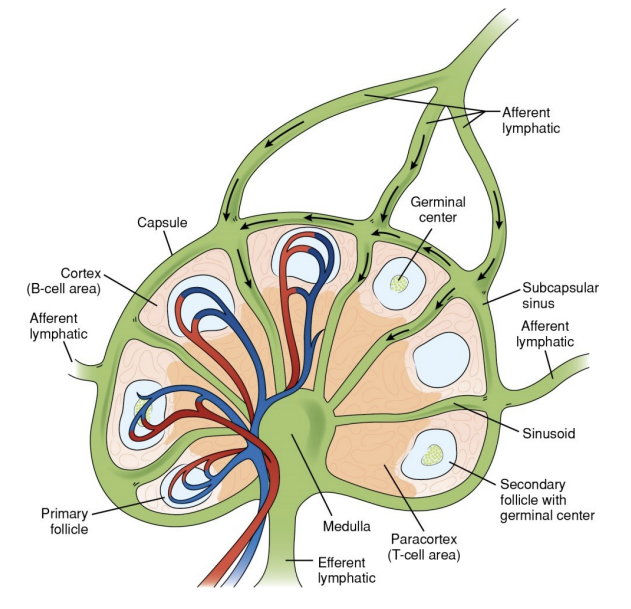
paracortex
91
What is MALT?
- mucosa-associated lymphoid tissue (MALT)
- secondary lymphoid tissue
- found on the mucosal surfaces of the gastrointestinal, respiratory, and urogenital tracts
- main port of entry for foreign antigens
- numerous macs and lymphs present
- secondary lymphoid tissue
- found on the mucosal surfaces of the gastrointestinal, respiratory, and urogenital tracts
- main port of entry for foreign antigens
- numerous macs and lymphs present
92
What are some examples of MALT tissue?
tonsils
appendix
Peyers patches
appendix
Peyers patches
93
What is CALT?
- cutaneous-associated lymphoid tissue
- T cells, monocytes, macs, and dendritic cells found the SKIN
- T cells, monocytes, macs, and dendritic cells found the SKIN
94
What is the innate immune system?
- lines or layers of defense that act immediately when a host is attached by a pathogen
- nonspecific
- Two types: external and internal defense systems
- nonspecific
- Two types: external and internal defense systems
95
What is the external defense system?
- type of innate immune system
- anatomical barriers to keep microorganisms from entering the body
- anatomical barriers to keep microorganisms from entering the body
96
Name examples of the external defense system:
1. skin
2. mucous membranes
3. respiratory membranes
4. respiratory tract
5. digestive tract
6. genitourinary tract
7. microbiota (normal flora)
2. mucous membranes
3. respiratory membranes
4. respiratory tract
5. digestive tract
6. genitourinary tract
7. microbiota (normal flora)
97
Describe this external defense system: skin
physical barrier to pathogen entry
secretions discourage microorganism growth (sweat)
secretions discourage microorganism growth (sweat)
98
Describe the layers of the physical barrier and fxn of the skin:
Epidermis - tightly packed epithelial cells coated in keratin (keratinocytes)
Dermis - connective tissue with blood vessels, hair follicles, sebaceous glands, and WBCs
Dermis - connective tissue with blood vessels, hair follicles, sebaceous glands, and WBCs
99
Describe the secretions that discourage microorganism growth on the skin:
- lactic acid and fatty acids that maintain the sin at a pH of ~5.6
- proteins with antibacterial effects (ex. psoriasin)
- proteins with antibacterial effects (ex. psoriasin)
100
Descibe this external defense: Mucous membranes
- they line the respiratory, digestive, and genitourinary tracts
- serve as a physical barrier to pathogen entry
- mucous secretions contain surfectants that block bacteria adhering to epithelial cells
- serve as a physical barrier to pathogen entry
- mucous secretions contain surfectants that block bacteria adhering to epithelial cells
101
Descibe this external defense: respiratory tract
- contain cilia in nasopharyngeal passages that clear deposited material
- coughing and sneezing remove pathogens
- coughing and sneezing remove pathogens
102
Descibe this external defense: digestive tract
- stomachs hydrochloric acid keeps the pH as low as 1, prohibiting microorganism growth
- lysozyme in tears and saliva attacks cell walls of gram-POSITIVE bacteria
- lysozyme in tears and saliva attacks cell walls of gram-POSITIVE bacteria
103
Describe this external defense: genitourinary tract
It flushes out pathogens
contains lactic acid that keeps the vagina at a pH ~5
contains lactic acid that keeps the vagina at a pH ~5
104
Describe this external defense: microbiota (normal flora)
helps to keep pathogens from establishing themselves in the body
105
What is the internal defense system of the innate immune response?
It is compose of cells and soluble factors that NONSPECIFICALLY defend against foreign invaders
106
List the cells and soluble factors in the internal defense system:
- pattern-recognition receptors (PRRs)
- acute-phase reactants
- inflammation
- phagocytic cells
- natural killers (NK) cells
- innate lymphoid cells (ILCs)
- acute-phase reactants
- inflammation
- phagocytic cells
- natural killers (NK) cells
- innate lymphoid cells (ILCs)
107
What are pattern-recognition receptors (PRRs)?
- receptors that recognize molecules from infectious organisms - PAMPS
- part of the internal defense system
- part of the internal defense system
108
What are PAMPS?
- pathogen-associated molecular patterns (PAMPs) that are molecules from pathogens
- when bound to a pathogen, they activate phagocytic cells
- when bound to a pathogen, they activate phagocytic cells
109
Where are PRRs found?
on the surface of macrophages, dendritic cells, neutrophils, eosinophils, monocytes, mast cells, T cells, and epithelial cells
110
What are some examples of PRRs?
Toll-like receptors (TLRs)
C-type lectin receptors (CLRs)
RIG-1-like receptors (RLRs)
NOD-like receptors (NLRs)
C-type lectin receptors (CLRs)
RIG-1-like receptors (RLRs)
NOD-like receptors (NLRs)
111
What are TLRs?
- PRRs that are toll-like receptors
- glycoproteins that bind to microbial substances, activating cytokine and chemokine production and other processes
- phagocytosis is enhanced and adaptive immunity is triggered, destroyiing pathogens before disease sets in
- glycoproteins that bind to microbial substances, activating cytokine and chemokine production and other processes
- phagocytosis is enhanced and adaptive immunity is triggered, destroyiing pathogens before disease sets in
112
How many TLRs have been found in humans - so far?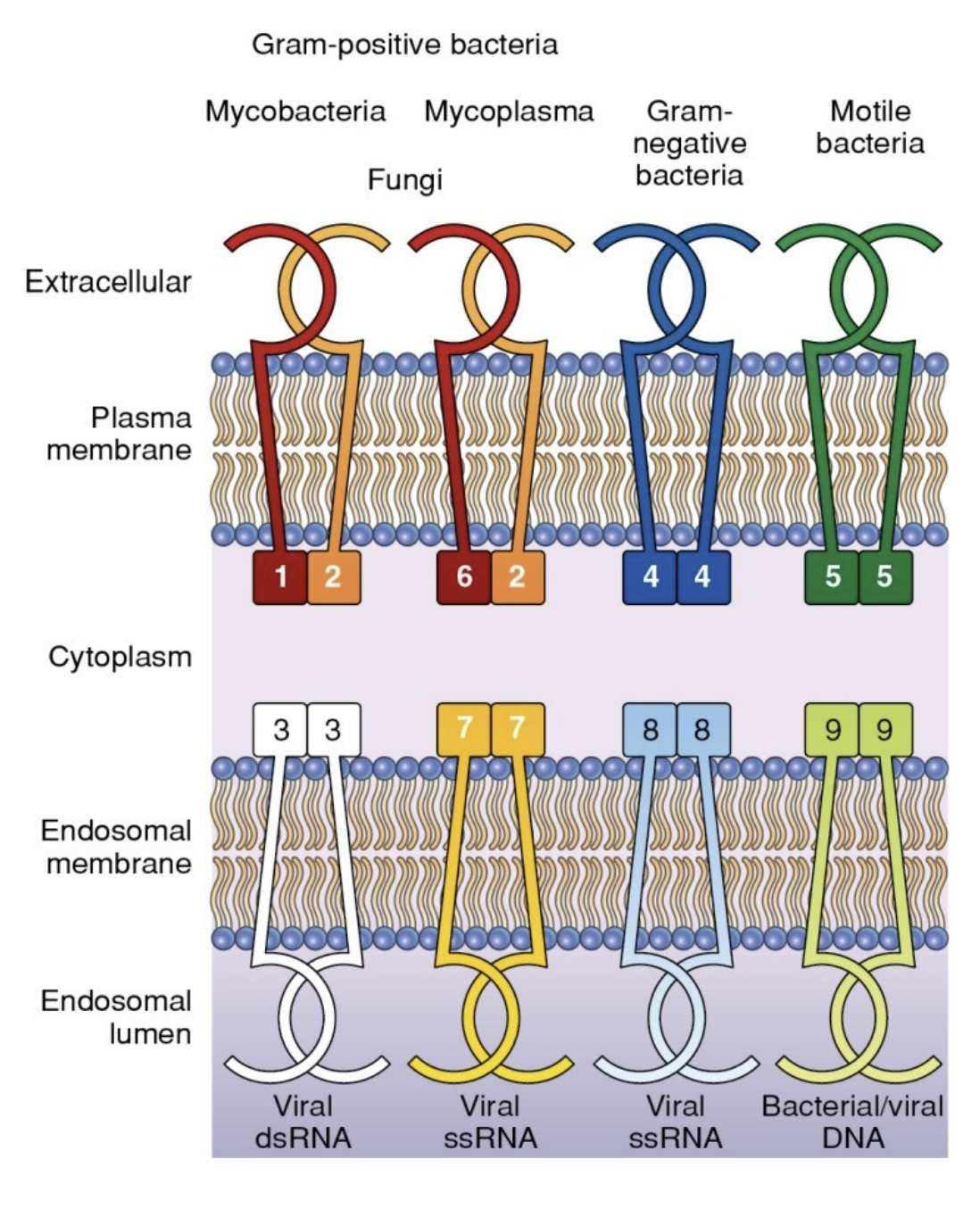
- 10 types
- some on cell surfaces (1, 2, 4, 5, 6)
- some in the cytoplasm (3, 7, 9)
- some on cell surfaces (1, 2, 4, 5, 6)
- some in the cytoplasm (3, 7, 9)
113
What are acute phase reactants (APRs)?
type of PRR that are soluble factors normally found in serum
part of the internal defense system
part of the internal defense system
114
What do APRs do?
- increase rapidly in response to infection, injury, trauma
- facilitate contact btwn microbes and phagocytic cells
- limit host tissue destruction caused by proteolytic enzyme release during phagocytosis
- bind to, and recyle important proteins and minerals during inflammation
- facilitate contact btwn microbes and phagocytic cells
- limit host tissue destruction caused by proteolytic enzyme release during phagocytosis
- bind to, and recyle important proteins and minerals during inflammation
115
What are some important acute phase reactants (APRs)?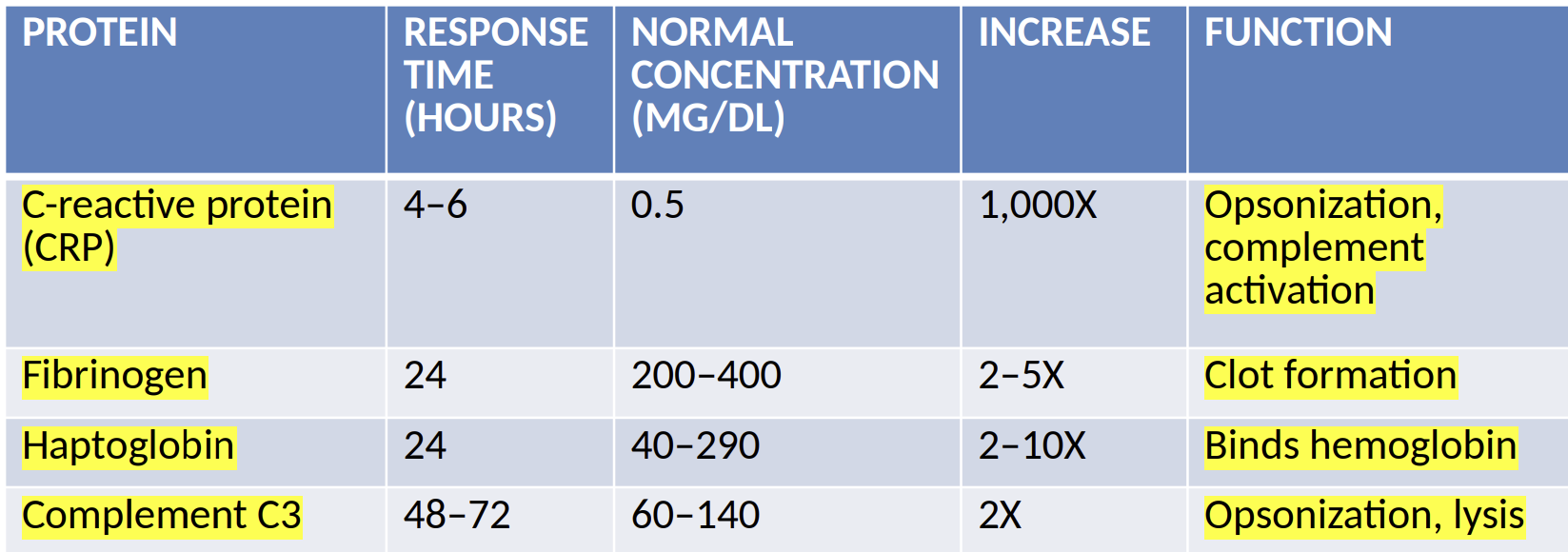
1. C-reactive protein (CRP)
2. Fibrinogen
3. Haptoglobin
4. Complement C3
2. Fibrinogen
3. Haptoglobin
4. Complement C3
116
What is the function of C-reactive protein (CRP)?
- opsonization
- complement activation
- complement activation
117
What is the function of fibrinogen?
clot formation
118
What is the function of haptoglobin?
- opsonization
- lysis
- lysis
119
What is inflammation?
- part of the internal defense system
- the body's overall rxn to injury or invasion by an infectious agent
- there are 4 cardinal signs and symptoms
- the body's overall rxn to injury or invasion by an infectious agent
- there are 4 cardinal signs and symptoms
120
What are the 4 cardinal signs of inflammation?
- redness (erythema)
- swelling (edema)
- heat
- pain
- swelling (edema)
- heat
- pain
121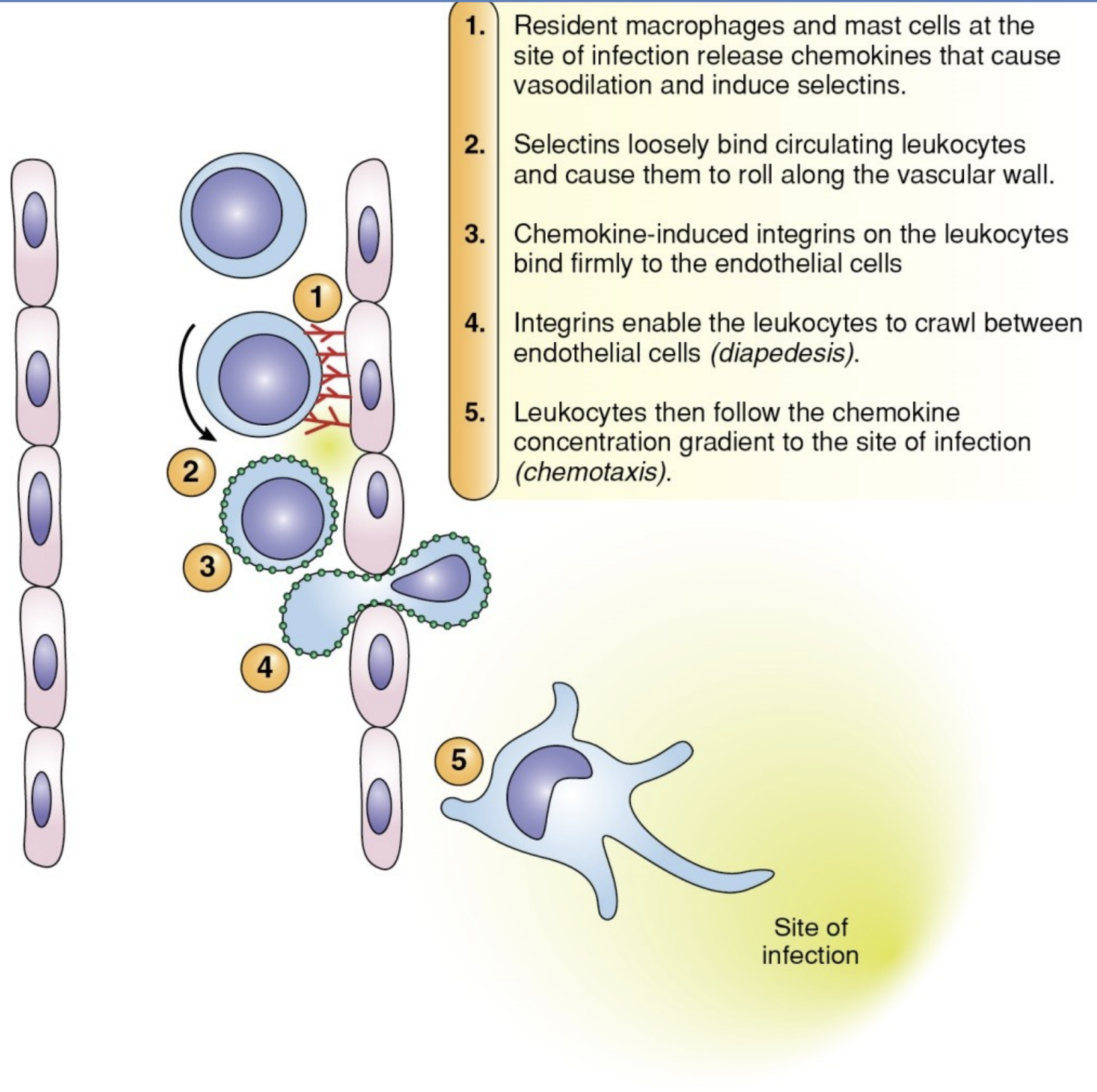
What are the major events involved in acute inflammation?
122
Acute inflammation - selectins and integrins:
selectin and integrins are ADHESION molecules required for binding of phagocyte to endothelial cells on the vessel wall
123
Acute inflammation - chemotaxis:
chemotaxis is the directional movement of phagocytes towared the pathogen (infection site) along a density gradient
124
Acute inflammaton - chemotactic factors:
Chemotactic factors attract phagocytes to inflammation/infection site, such as LPS (lipopolysacharide), cytokines such as IL-8
125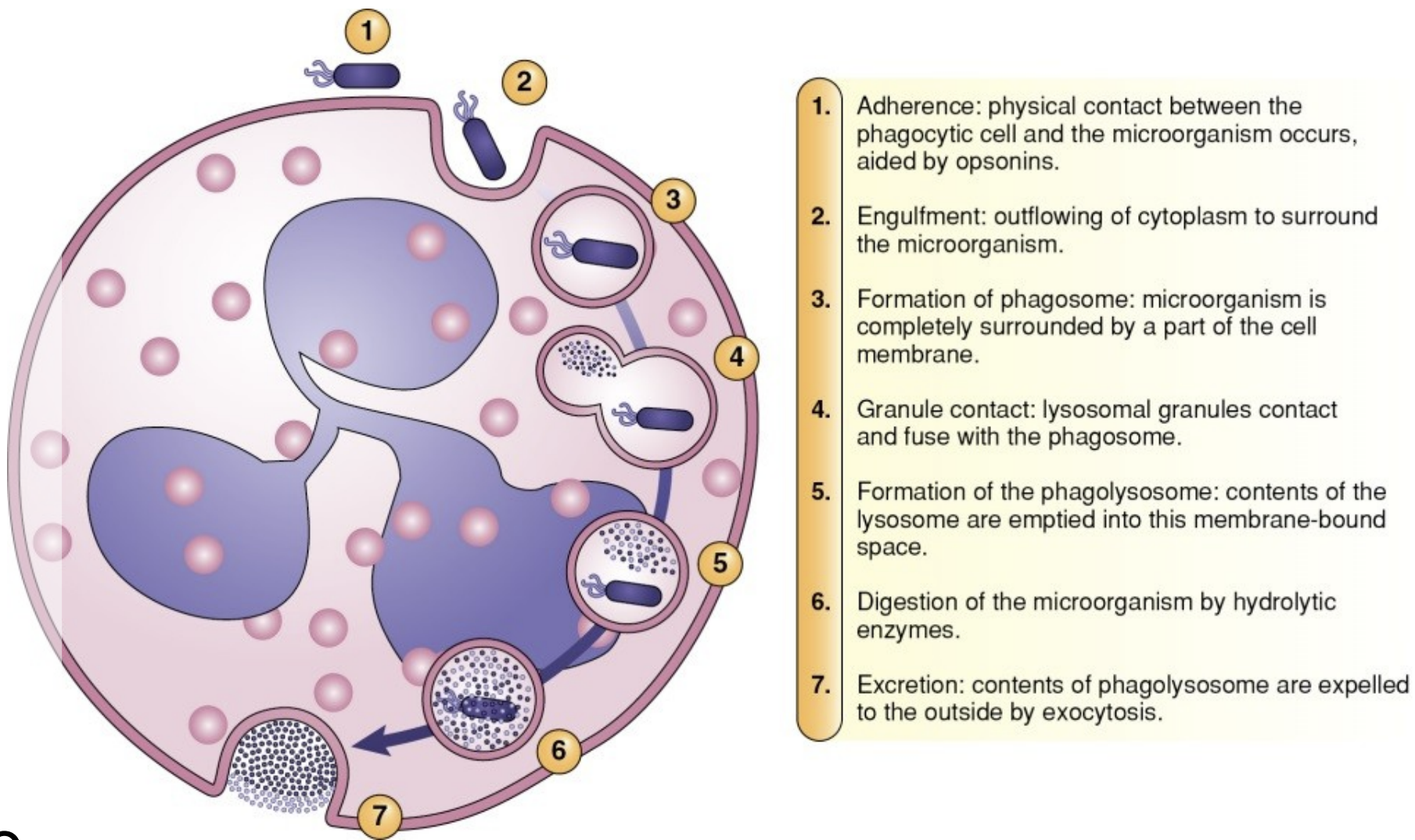
What is the phagocytosis process in inflammation?
126
Describe the phagocytosis process in inflammation?
- phagocytic cells attracted to site of inflammation
- process is enhanced by opsonins like CRP
- process is enhanced by opsonins like CRP
127
What is an opsonin?
- a substance that covers (coats) the pathogen which is phagocytized faster and more effectively
- process is called opsonization
- process is called opsonization
128
What are examples of opsonin?
- C reactive protein (CRP)
- antibody (immunoglobulin)
- C3b molecules
- antibody (immunoglobulin)
- C3b molecules
129
What are the two types of intracellular killing of pathogens?
- oxidative burst
- O2 independent pathway
- O2 independent pathway
130
What occurs in the process of oxidative burst?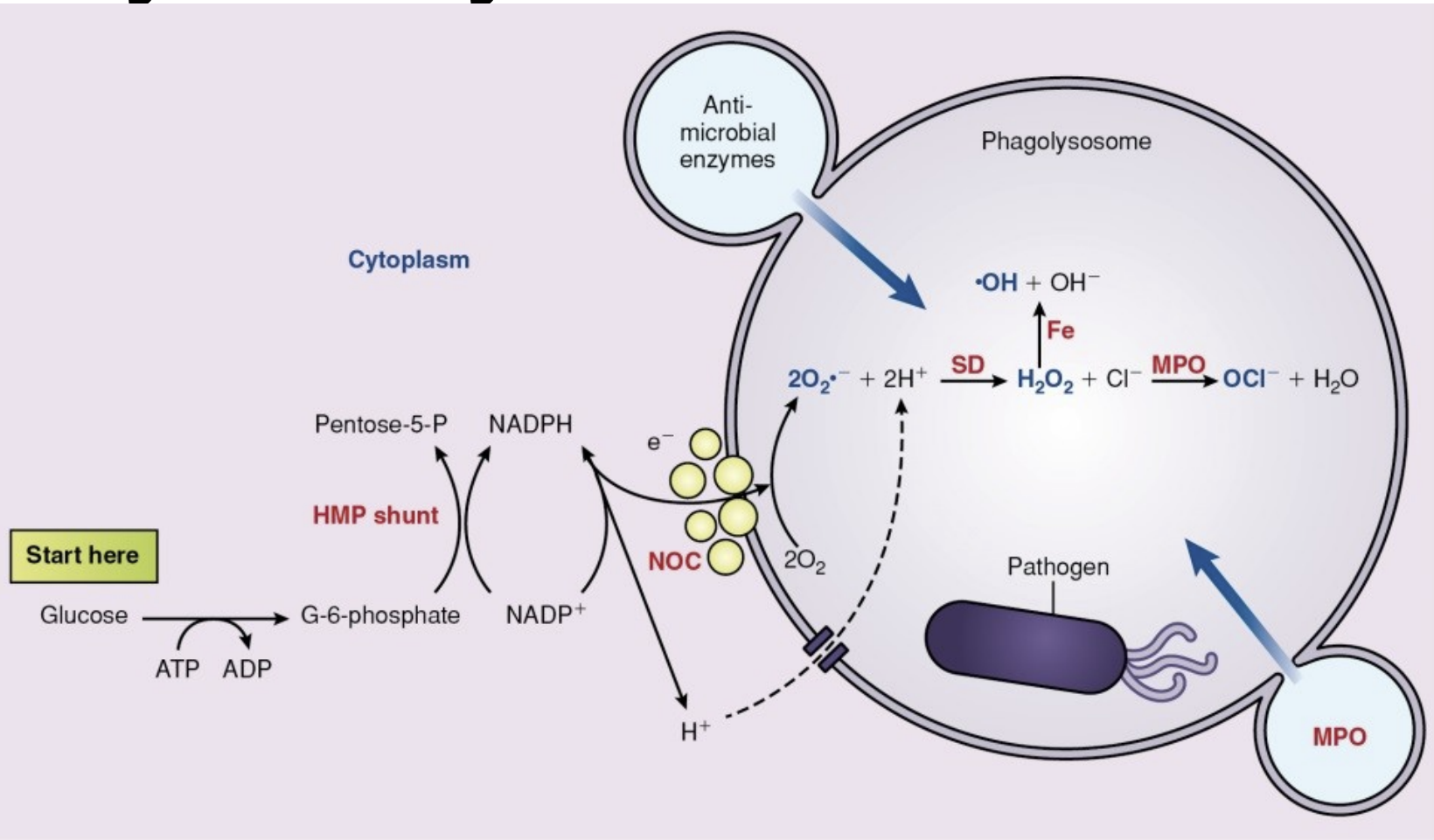
HMP shunt converts NADP to NADPH
O2 is converted to O2-
then O2- to H2O2 and OH-
O2 is converted to O2-
then O2- to H2O2 and OH-
131
What occurs in the process of O2 independent pathway?
The pH of the cell is altered, leading to activation of lytic enzymes such as defensins
132
What are natural killer (NK) cells?
- part of the internal defense system
- they are the first line of defense against cells that are virally infected, cells infected iwht other intracellular pathogens, and tumor cells
- they recognize altered structures on damaged cells and can eliminate them without prior exposure
- they are the first line of defense against cells that are virally infected, cells infected iwht other intracellular pathogens, and tumor cells
- they recognize altered structures on damaged cells and can eliminate them without prior exposure
133
Describe NK activity:
- it is enhanced by certain cytokines (IL-2, IFM-alpha, IFN-beta), which rise rapidly during viral infections
- they produce other cytokines that recruit T cells and aid in development of granulocytes and macrophages
- they produce other cytokines that recruit T cells and aid in development of granulocytes and macrophages
134
What are the the mechanisms of NK cell cytoxicity?
- Inhibition
- Activation
- Antibody-coated target cell
- Activation
- Antibody-coated target cell
135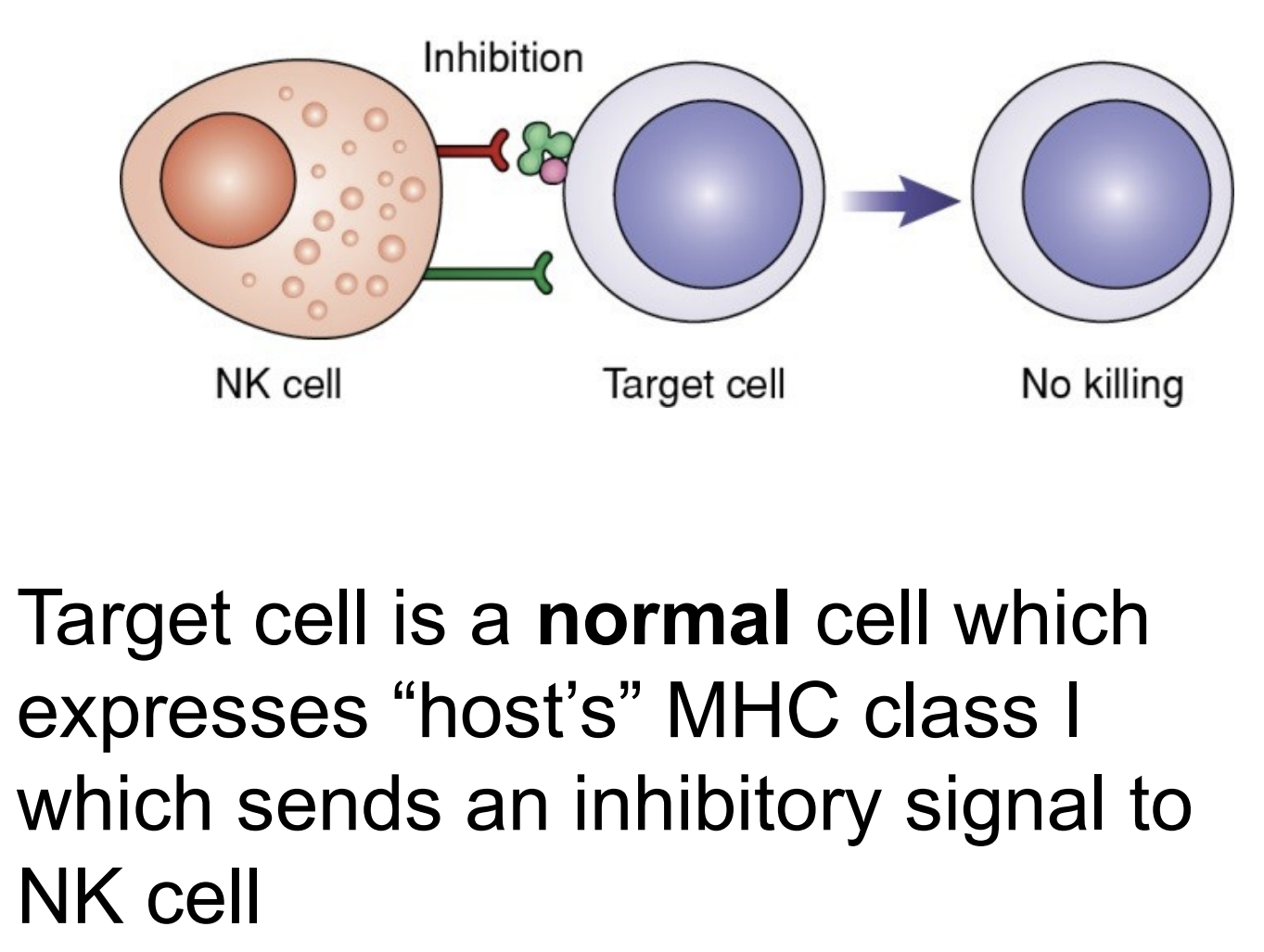
What happens in NK cell cytotoxicity inhibition?
136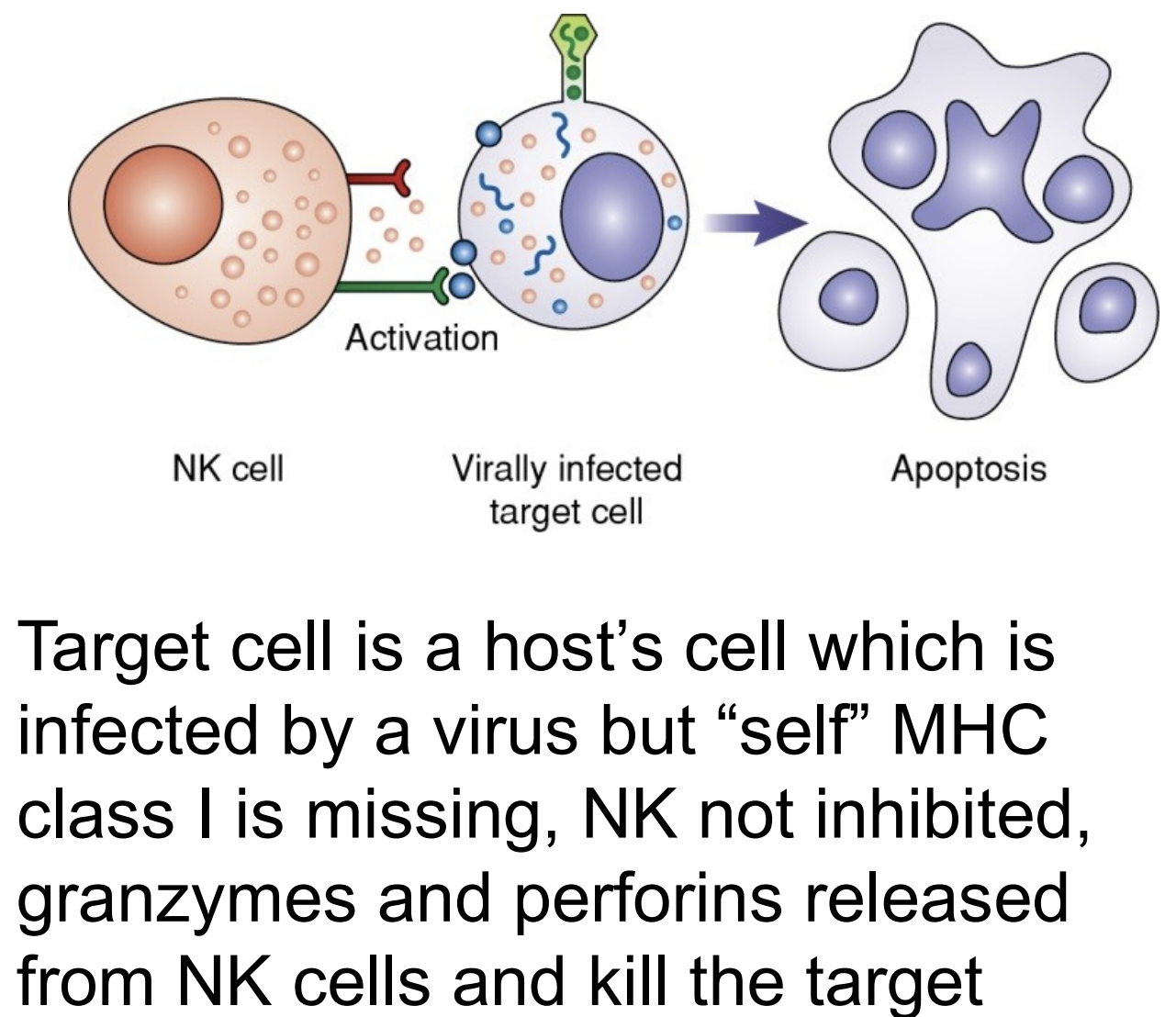
What happens in NK cell cytotoxicity activation?
137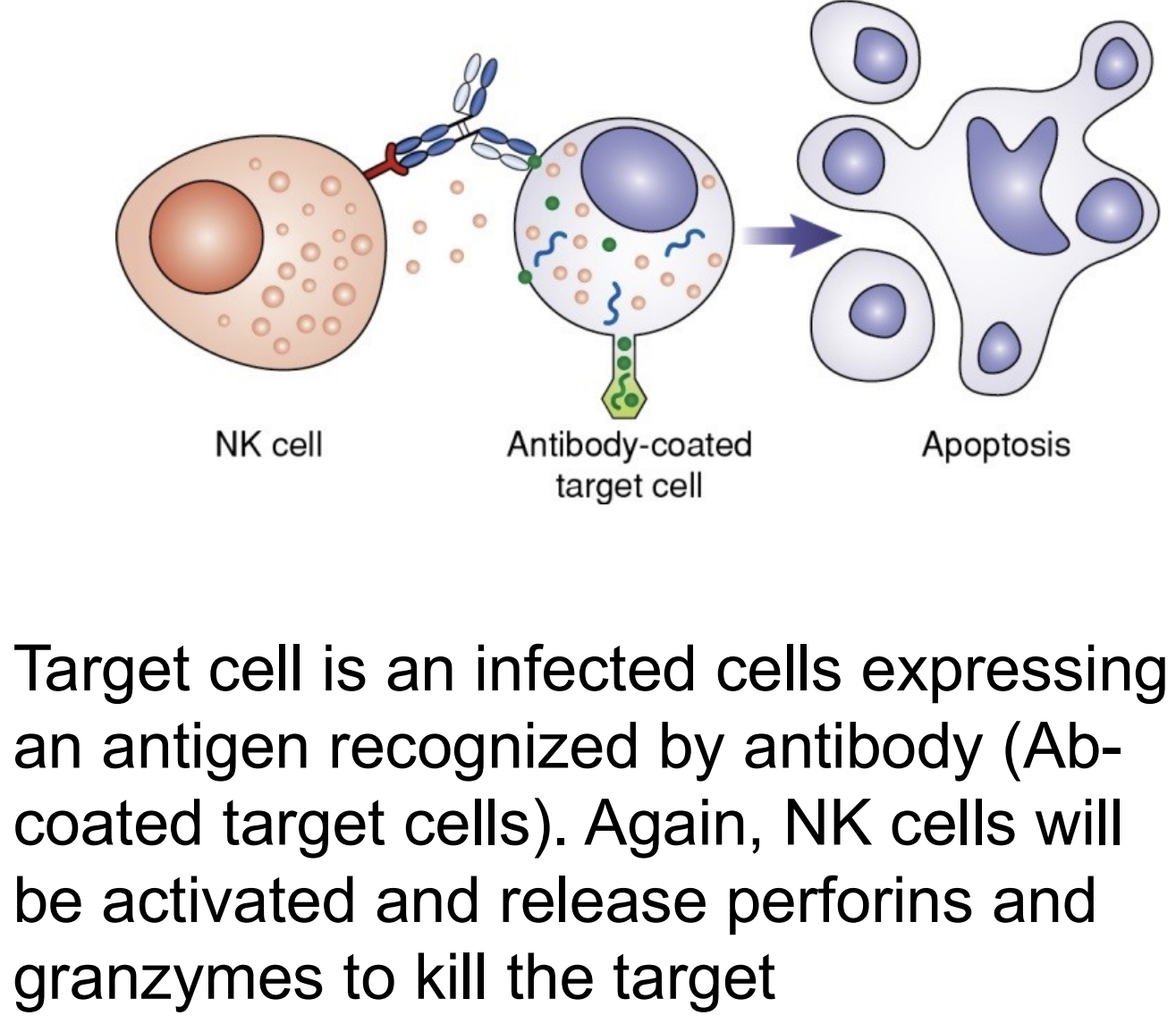
What happens in NK cell cytotoxicity antibody-coated target cell activation?
138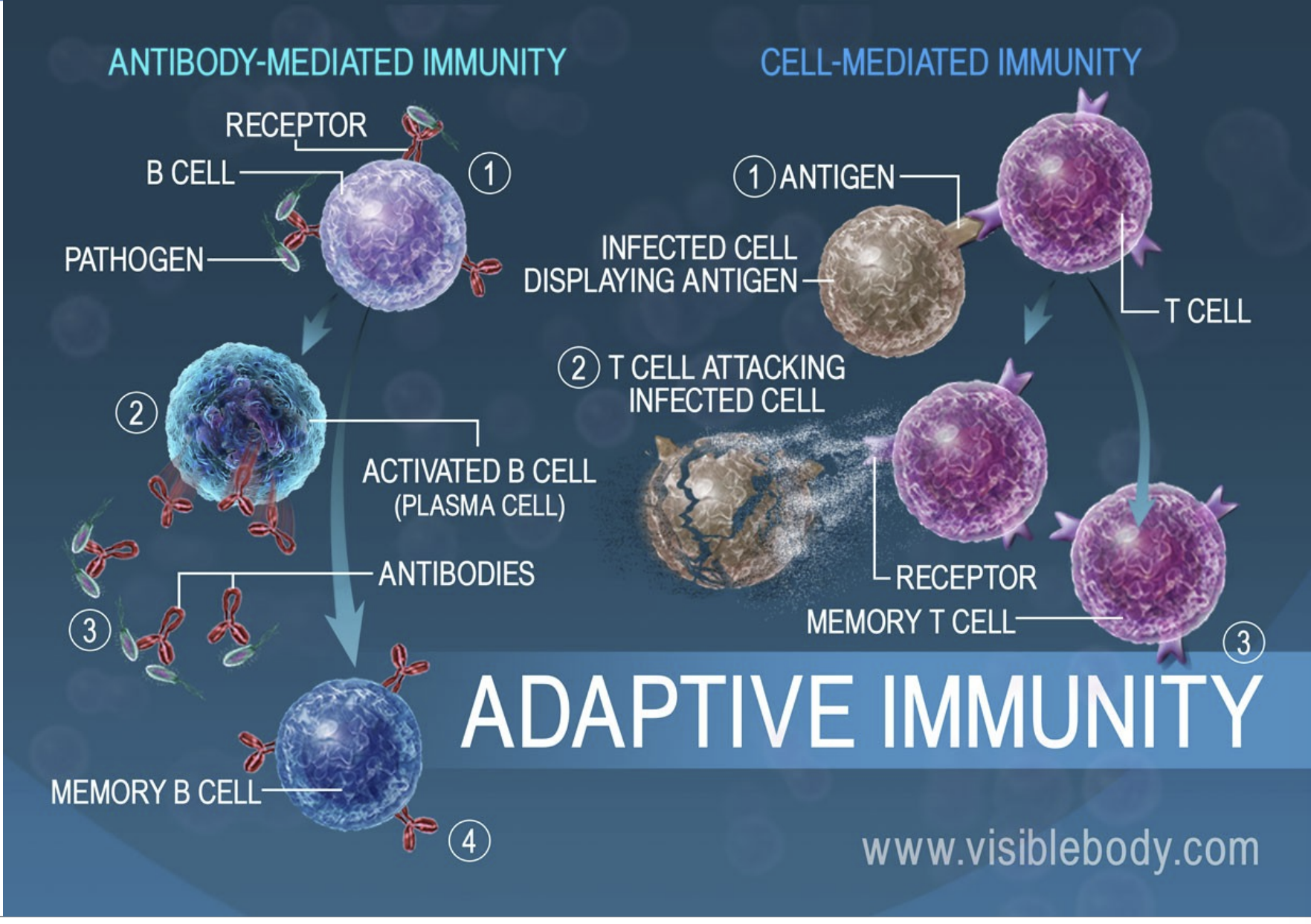
What happens in adaptive immunity?
139
What is the adaptive immune system?
- specific to each pathogen or microbial agent
- remembers prior exposure due to clonal selection, expansion and differentiation of antigen-specific T and B cells
- increases response to a pathogen upon repeated exposure
- initially, takes longer to become activated but is longer lasting
- involves T and B lymphocytes
- remembers prior exposure due to clonal selection, expansion and differentiation of antigen-specific T and B cells
- increases response to a pathogen upon repeated exposure
- initially, takes longer to become activated but is longer lasting
- involves T and B lymphocytes
140
In short, adaptive immunity is:
- tailored response
- specificity for earch pathogen
- memory
- increased and faster secondary response
- takes time with the first exposure
- specificity for earch pathogen
- memory
- increased and faster secondary response
- takes time with the first exposure