10 Adverse Effects of Transfusion AKA Transfusion Reactions
Study these flashcardsFree · spaced repetition · iPhone, Android, Mac & web
All cards
1
What is an IMMEDIATE adverse effects of transfusion?
immune or non-immune reaction to a current transfusion
2
What is a DELAYED adverse effects of transfusion?
Immune or non-immune reaction subsequent to / after the completion of the transfusion, aka, post-transfusion
3
What are the reactions for an IMMEDIATE (ACUTE) transfusion reaction?
➢ Immunologic
✓ Hemolytic
✓ Febrile
✓ Allergic
✓ Transfusion-Related Acute Lung Injury
➢ Non-Immunologic
✓ Bacterial Contamination
✓ Transfusion-Associated Circulatory Overload
✓ Hemolytic
✓ Febrile
✓ Allergic
✓ Transfusion-Related Acute Lung Injury
➢ Non-Immunologic
✓ Bacterial Contamination
✓ Transfusion-Associated Circulatory Overload
4
What are the reactions for an DELAYED transfusion reaction?
➢ Immunologic
✓ Hemolytic
✓ Graft vs Host Disease
✓ Cytomegalovirus
➢ Non-Immunologic
✓ Iron Overload
✓ Disease Transmission
✓ Hemolytic
✓ Graft vs Host Disease
✓ Cytomegalovirus
➢ Non-Immunologic
✓ Iron Overload
✓ Disease Transmission
5
What is the common procedure taken for a Transfusion Reaction?
1. STOP the transfusion
2. Open the IV line for administration of medication, when needed
3. Monitor the patient
4. Blood Bank performs Transfusion Reaction Investigation
5. Blood / blood component (including IV set) returned to the Blood Bank, when indicated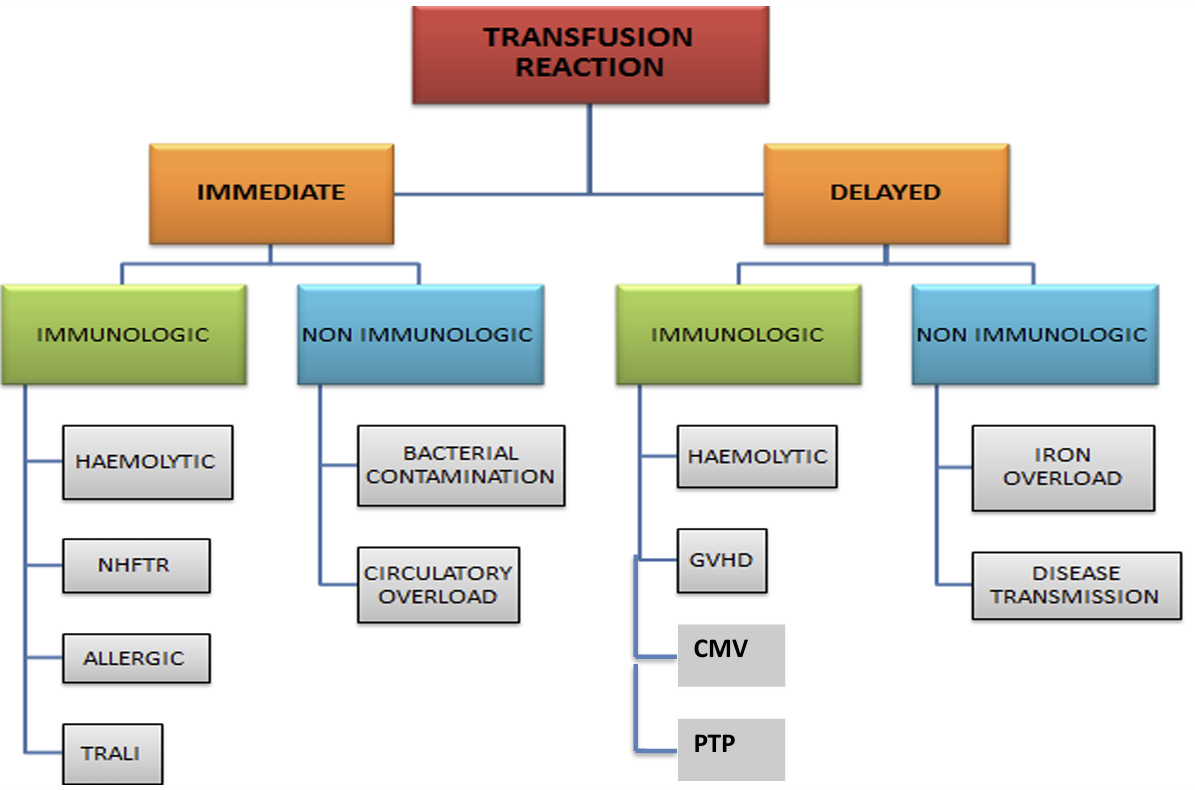
2. Open the IV line for administration of medication, when needed
3. Monitor the patient
4. Blood Bank performs Transfusion Reaction Investigation
5. Blood / blood component (including IV set) returned to the Blood Bank, when indicated
6
What is ACUTE HTR?
- acute hemolytic transfusion reaction
- immediate reaction
- immediate reaction
7
What are the signs & symptoms for ACUTE HTR?
➢ Feeling of heat along the infusion arm
➢ Anxiety / Apprehension / Immediate "Feeling of Doom"
➢ Tachycardia / Dyspnea
➢ Severe hypotension* / Shock / Drastic drop in blood pressure
➢ Hemolysis (Intravascular)* / Hemoglobinemia / DIC (Disseminated Intravascular Coagulation)
➢ Low Back Pain
➢ Chest Pain
➢ Hematuria (bloody urine)
➢ Kidney Failure*
➢ Could cause death*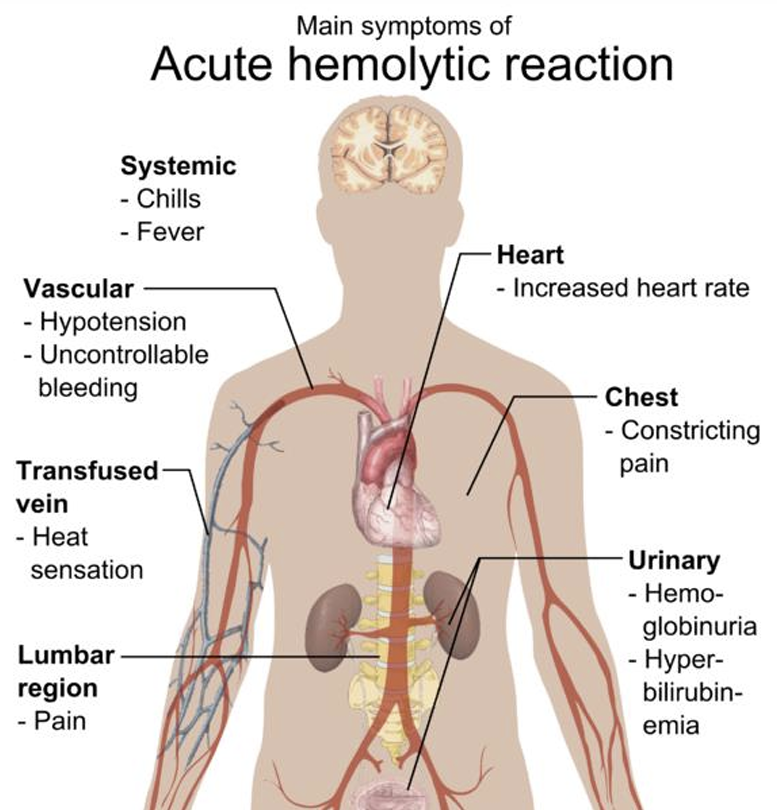
➢ Anxiety / Apprehension / Immediate "Feeling of Doom"
➢ Tachycardia / Dyspnea
➢ Severe hypotension* / Shock / Drastic drop in blood pressure
➢ Hemolysis (Intravascular)* / Hemoglobinemia / DIC (Disseminated Intravascular Coagulation)
➢ Low Back Pain
➢ Chest Pain
➢ Hematuria (bloody urine)
➢ Kidney Failure*
➢ Could cause death*
8
What are the causes of ACUTE HTR?
❑ Common Cause
➢ ABO Incompatibility
➢ As little as 5-20 mls of RBCs transfused
❑ Human Error (70%) Causes
➢ Mis-identification of Patient
➢ Staff Hurriedness and Wrong Patient Transfused
➢ Patient Relocated and Wrong Patient Transfused
➢ Mass Casualties and Poorly-Identified Patient
➢ ABO Incompatibility
➢ As little as 5-20 mls of RBCs transfused
❑ Human Error (70%) Causes
➢ Mis-identification of Patient
➢ Staff Hurriedness and Wrong Patient Transfused
➢ Patient Relocated and Wrong Patient Transfused
➢ Mass Casualties and Poorly-Identified Patient
9
What is the treatment for ACUTE HTR?
➢ Administer, when appropriate
✓ Diuretics
✓ Analgesics
✓ Pressors for hypotension
➢ Infusion of hemostatic components, if bleeding
✓ Diuretics
✓ Analgesics
✓ Pressors for hypotension
➢ Infusion of hemostatic components, if bleeding
10
How can ACUTE HTR be prevented?
➢ Proper Identification of Patient / Ensure Positive Identification; Do NOT Use Room # as an Identifier
➢ Mass Casualties - Triage Properly and Properly Identified Patient
➢ Properly labeled specimen
➢ ABO Match to Patient / Accurate Testing
➢ Accurate labeling of unit to patient
➢ Mass Casualties - Triage Properly and Properly Identified Patient
➢ Properly labeled specimen
➢ ABO Match to Patient / Accurate Testing
➢ Accurate labeling of unit to patient
11
What are the most common causes for Transfusion Fatality?
1. Wrong blood in tube (WBIT)
2. Lack of electronic systems for patient identifacation
3. Manual laboratory processes
2. Lack of electronic systems for patient identifacation
3. Manual laboratory processes
12
Why can't O platelets be given to an AB patient?
O platelets contain anti-A, anti-B, and anti-A,B
13
What is a Febrile (non-hemolytic) transfusion reaction?
A "non-hemolytic febrile reaction" refers to a transfusion reaction where a patient experiences a fever (often with chills) during or shortly after receiving a blood product, but without any damage to the red blood cells (hemolysis) occurring; it's usually caused by an immune response to white blood cells present in the donated blood, most commonly seen in patients with antibodies against donor leukocyte antigens due to prior transfusions or pregnancy.
14
What are the signs & symptomes of Febrile (non-hemolytic) transfusion reaction?
❑ Signs & Symptoms
➢ Fever
➢ Chills
➢ Headache
➢ Anxiety
➢ Tachycardia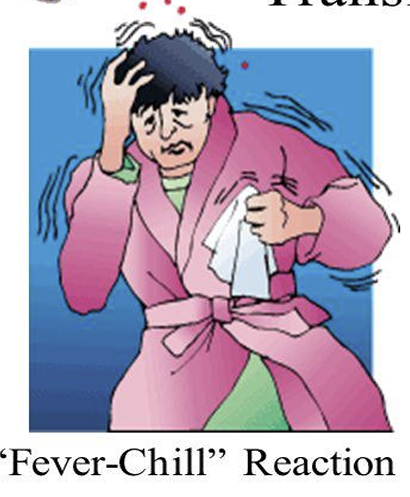
➢ Fever
➢ Chills
➢ Headache
➢ Anxiety
➢ Tachycardia
15
What are the common causes for a non-hemolytic febrile reaction?
➢ WBCs Found in Blood / Blood Components
➢ Platelets Found in Blood / Blood Components
➢ Platelets Found in Blood / Blood Components
16
What is the treatment for a non-hemolytic febrile reaction?
➢ Antipyretic medication (Usually Tylenol)
17
How can non-hemolytic febrile reaction be prevented?
➢ Transfuse Leuko-reduced Blood / Blood Components
18
What is an allergic reaction?
- immediate reaction
- can be mild or severe
- can be mild or severe
19
What are the signs and symptoms of an allergic reaction?
❑ Signs & Symptoms
➢ Urticaria / Sudden Rash Appearance
✓ Neck Area
✓ Arms
✓ Chest / Back Area
➢ Itching / Pruritis
➢ Flushing
❑ Advanced Signs & Symptoms
➢ Dyspnea
➢ Throat Swelling / Tongue Swelling
➢ Hypotension
➢ Cardiac Arrhythmia
➢ Urticaria / Sudden Rash Appearance
✓ Neck Area
✓ Arms
✓ Chest / Back Area
➢ Itching / Pruritis
➢ Flushing
❑ Advanced Signs & Symptoms
➢ Dyspnea
➢ Throat Swelling / Tongue Swelling
➢ Hypotension
➢ Cardiac Arrhythmia
20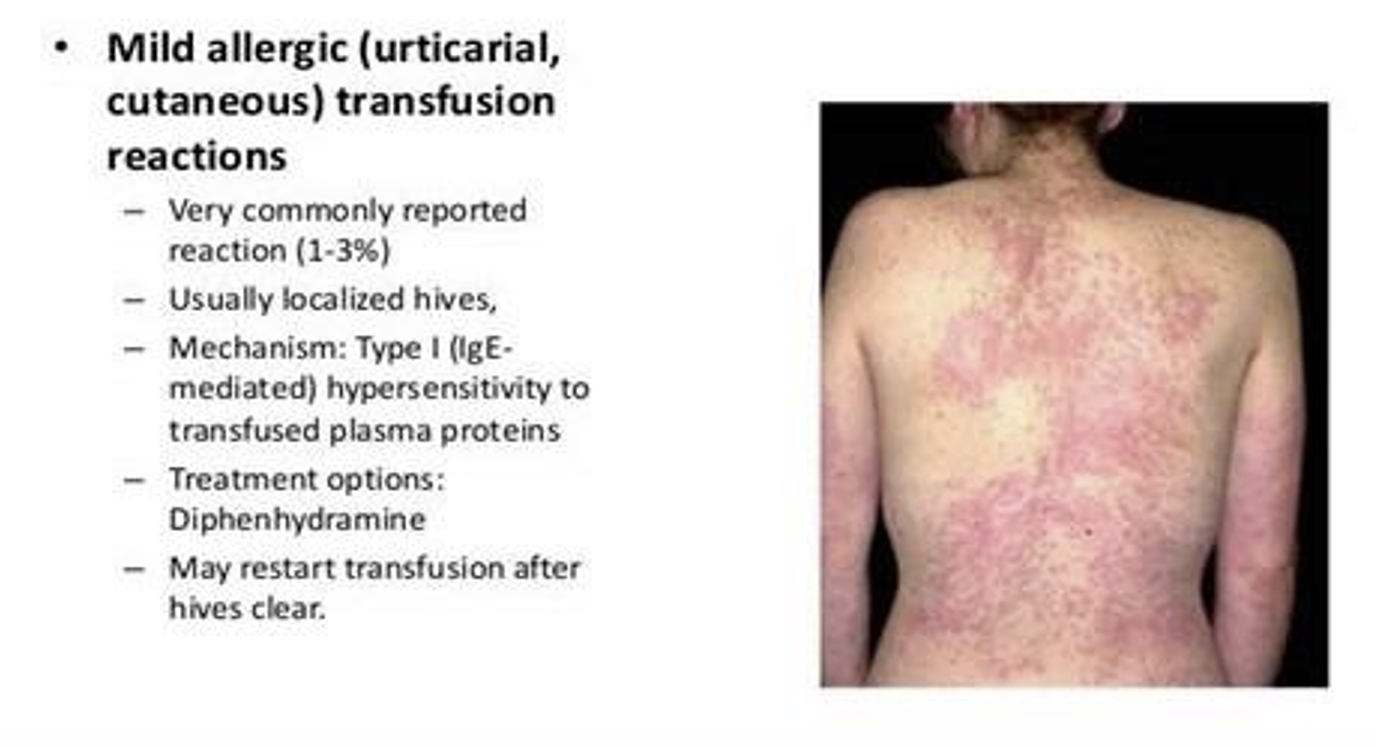
What is the mechanism for a mild allergic transfusion rxn?
21
What is the common cause for an allergic reaction?
➢ Something in the donor's blood that caused the recipient to
react
➢ Plasma proteins (IgA Deficiency - rare genetic condition) - very
severe and is life threatening
react
➢ Plasma proteins (IgA Deficiency - rare genetic condition) - very
severe and is life threatening
22
What blood can be given to an IgA deficient patient?
IgA deficient blood!
23
What is the treatment for a MILD allergic reaction?
➢ Antihistamines, e.g., Benadryl
➢ Slow down transfusion rate
➢ Slow down transfusion rate
24
What is the treatment for a SEVERE allergic reaction?
Diphenhydramines or epinephrine
25
How can a transfusion allergic reaction be prevented?
➢ For patients with a history of allergic reactions, the patient is given antihistamine / Benadryl prior to transfusion.
➢ Give IgA deficient blood / blood products; rare donor
➢ In RBC products, additive solutions, e.g., Adsol® is used to replace residual plasma component.
➢ In platelet products, InterSol®, a platelet additive solution, replaces the plasma component.
➢ Give IgA deficient blood / blood products; rare donor
➢ In RBC products, additive solutions, e.g., Adsol® is used to replace residual plasma component.
➢ In platelet products, InterSol®, a platelet additive solution, replaces the plasma component.
26
Again, what are the 7 main IMMEDIATE transfusion reactions?
1. ACUTE HTR or AHTR
2. Transfusion Fatality
3. Febrile (non-hemolytic) transfusion reaction
4. Allergic Reaction
5. TRALI
6. Bacterial Contamination
7. TACO
2. Transfusion Fatality
3. Febrile (non-hemolytic) transfusion reaction
4. Allergic Reaction
5. TRALI
6. Bacterial Contamination
7. TACO
27
What is TRALI?
transfusion related acute lung injury
❑ The second leading cause of transfusion-related mortality in the USA in 2021
❑ Incidence - 1:5,000 transfusion
❑ The second leading cause of transfusion-related mortality in the USA in 2021
❑ Incidence - 1:5,000 transfusion
28
What are the signs and symptoms of TRALI?
➢ Occurs during or within 6 hrs following transfusion
➢ Respiratory Distress / Severe Hypoxemia / ARDS (Acute
Respiratory Distress Syndrome)
➢ Dyspnea or Tachypnea
➢ Hypotension
➢ Pulmonary Edema
➢ Respiratory Distress / Severe Hypoxemia / ARDS (Acute
Respiratory Distress Syndrome)
➢ Dyspnea or Tachypnea
➢ Hypotension
➢ Pulmonary Edema
29
What can usually determine TRALI?
XRAY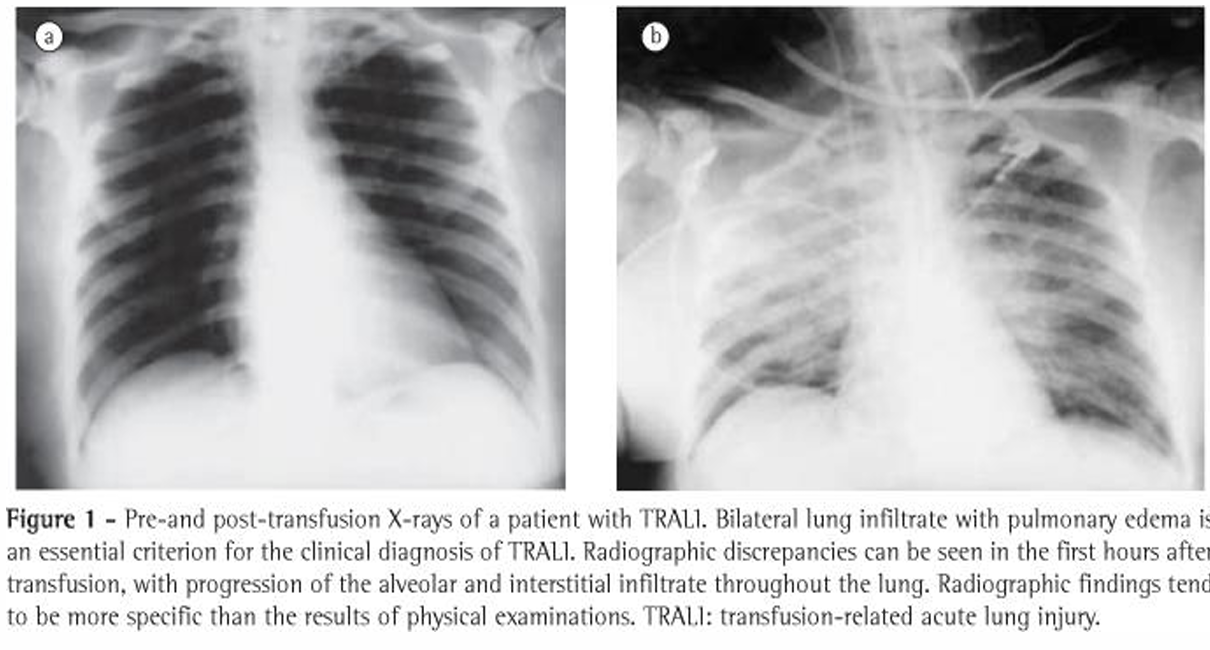
30
What is the common cause for TRALI?
➢ HLA antibodies found in blood / blood products - donors were usually from multiparous females
31
What is the treatment for TRALI?
➢ O2support
➢ Mechanical Ventilatory Support / Intubation
➢ Improvement seen within 48 hrs from treatment
➢ Mechanical Ventilatory Support / Intubation
➢ Improvement seen within 48 hrs from treatment
32
How can TRALI be prevented?
➢ Blood products from males
➢ Blood products from females tested for HLA Abs
➢ Blood products from females tested for HLA Abs
33
What is bacterial contamination?
Transfused blood contaminated with bacteria
34
What can happen if there is bacterial contamination in a blood transfusion?
- Although UNCOMMON, can have rapid onset and high mortality in recipients
- it can lead to febrile reactions, or even more serious like septic or endotoxic shock
- it can lead to febrile reactions, or even more serious like septic or endotoxic shock
35
What is bacterial contamination commonly caused by?
an endotoxin from a bacteria which is capable of growing in cold temps, such as: Pseudomonas species, E. coli, Yarsinia enterocolitica
36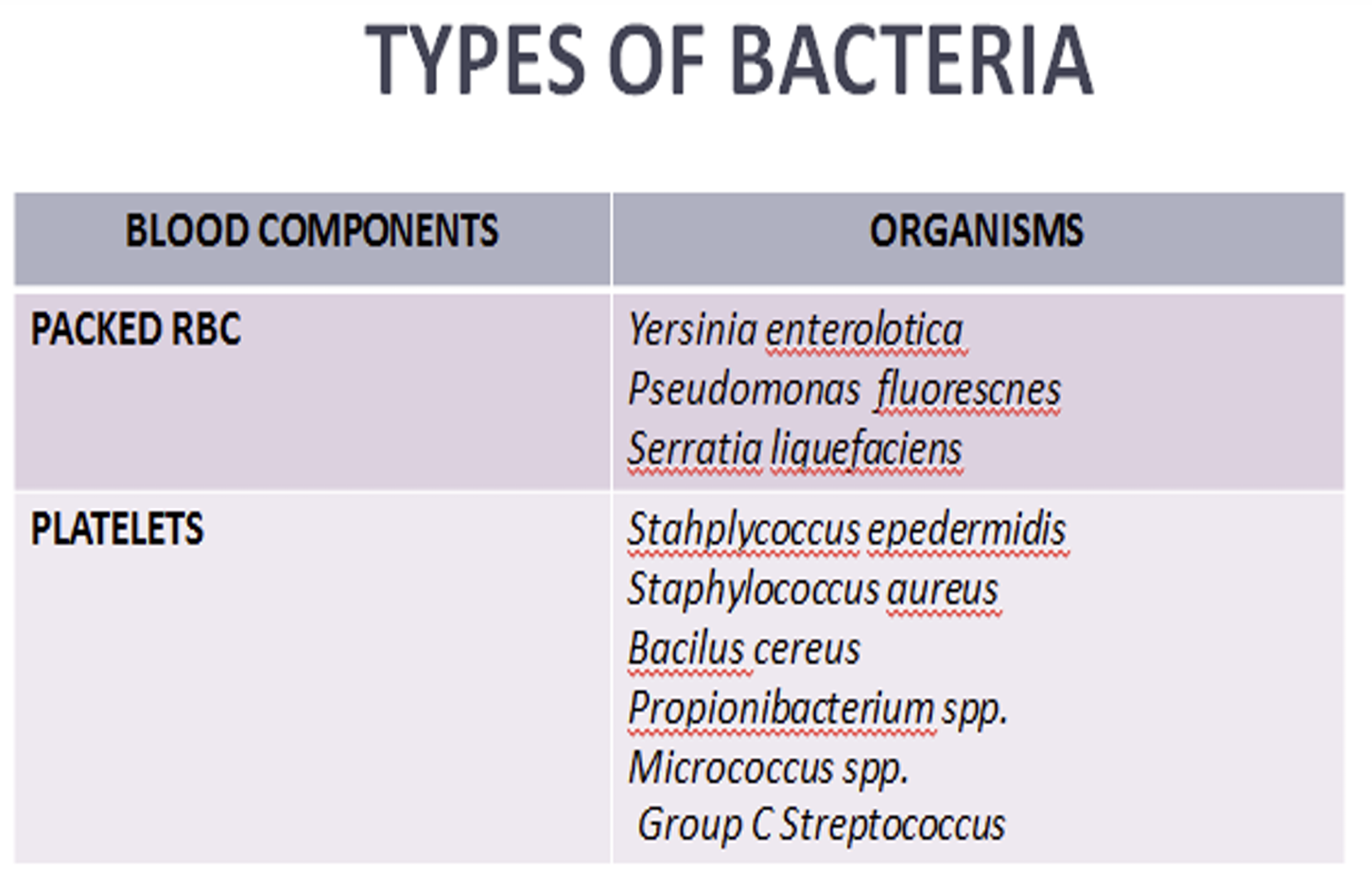
What other types of bacteria are the common cause for bacterial contamination?
37
What is the treatment for bacterial contamination?
Initiate IV antibiotic therapy
38
How can bacterial contamination be prevented?
➢ Use aseptic technique, when collecting donor blood
➢ Use sterile docking technique, when transferring aliquots of products
➢ Use bacterial tests prior to transfusion
➢ Use Pathogen Reduction Technology (PRT)
➢ Use sterile docking technique, when transferring aliquots of products
➢ Use bacterial tests prior to transfusion
➢ Use Pathogen Reduction Technology (PRT)
39
What is TACO?
Transfusion-associated circulatory overload
- a serious complication that can occur during a blood transfusion, where the patient's circulatory system becomes overloaded with too much fluid,
- a serious complication that can occur during a blood transfusion, where the patient's circulatory system becomes overloaded with too much fluid,
40
What is the leading caue of transfusion-related mortality in the USA in 2021?
TACO
41
What are the signs and symptoms of TACO?
➢ Occurs within 12 hrs following transfusion
➢ Respiratory Distress / Hypoxemia accompanied by cough, chest tightness
➢ Dyspnea
➢ Hypertension
➢ Jugular Vein Distention
➢ Pulmonary Edema
➢ Respiratory Distress / Hypoxemia accompanied by cough, chest tightness
➢ Dyspnea
➢ Hypertension
➢ Jugular Vein Distention
➢ Pulmonary Edema
42
How can TACO be recognized besides signs and symptoms?
XRAY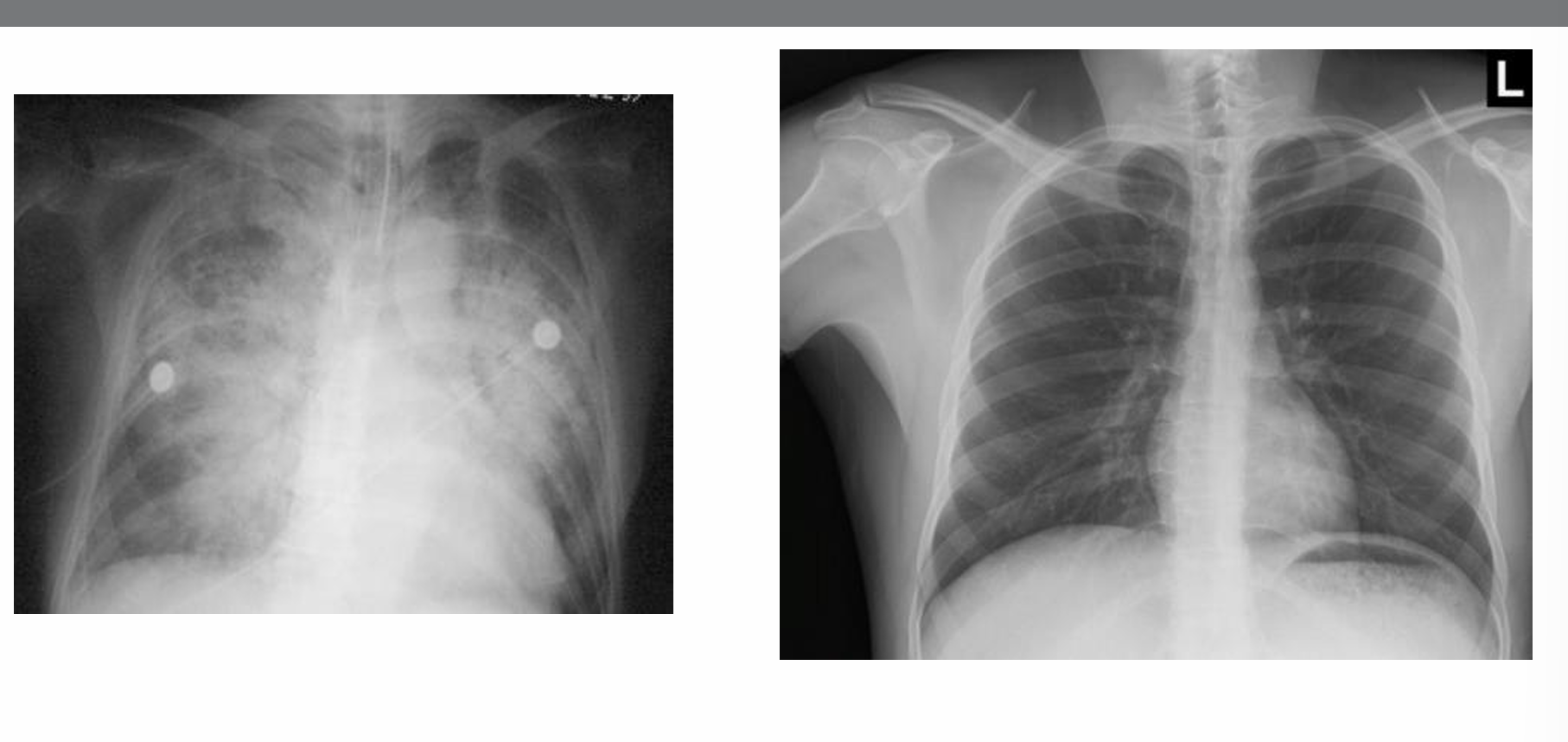
43
What is the common cause for TACO?
Fluid overload from blood transfusion, either by single (babies, elderly) or multiple (normal adults) units
44
What is the treatment for TACO?
➢ Place patient in the upright (sitting) position
➢ Administer O2, when indicated
➢ Administer diuretics, when indicated
➢ Administer O2, when indicated
➢ Administer diuretics, when indicated
45
What are the DELAYED transfusion reactions?
1. Delayed Hemolytic Transfusion Reaction (DHTR)
2. Transfusion-Associated (TA) Graft VS Host Disease (GVHD) aka TA-GVHD
3. Cytomegalovirus (CMV) Infection
4. Post-Transfusion Purpura (PTP)
2. Transfusion-Associated (TA) Graft VS Host Disease (GVHD) aka TA-GVHD
3. Cytomegalovirus (CMV) Infection
4. Post-Transfusion Purpura (PTP)
46
What is DHTR?
- Delayed hemolytic transfusion reaction (DHTR)
- a late-onset adverse reaction to a blood transfusion that occurs more than 24 hours after the transfusion
- a late-onset adverse reaction to a blood transfusion that occurs more than 24 hours after the transfusion
47
What causes DHTR?
- usually caused by an undetecetd RBC antibody (Ex. anti-Jka)
48
Is the patient usually symptomatic for DHTR?
patient is usually asymptomatic with only a drop in Hgb / Hct
49
When does DHTR occur?
about 7-14 days after transfusion
50
How is DHTR detected?
❑ Usually extravascular hemolysis is seen
❑ Lab test evidence:
✓ Smoky grey serum may be seen
✓ Weak Positive or Positive DAT
✓ Weak reacting Ab; C' is bounded to RBC
❑ Lab test evidence:
✓ Smoky grey serum may be seen
✓ Weak Positive or Positive DAT
✓ Weak reacting Ab; C' is bounded to RBC
51
What happens if the patient is symptomatic for DHTR?
➢ Fever
➢ Malaise
➢ Malaise
52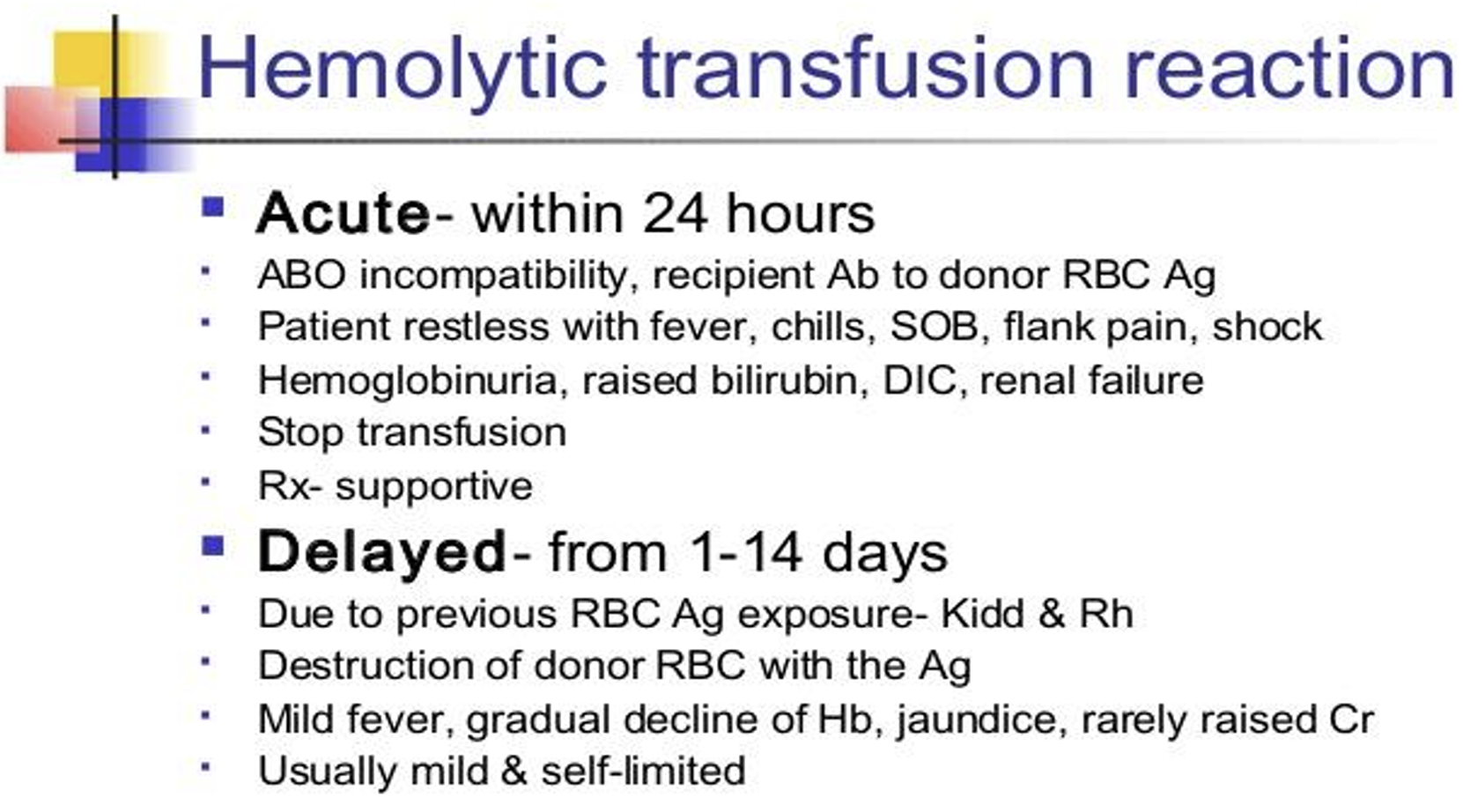
What is the difference between Acute and Delayed Hemolytic transfusion reactions?
53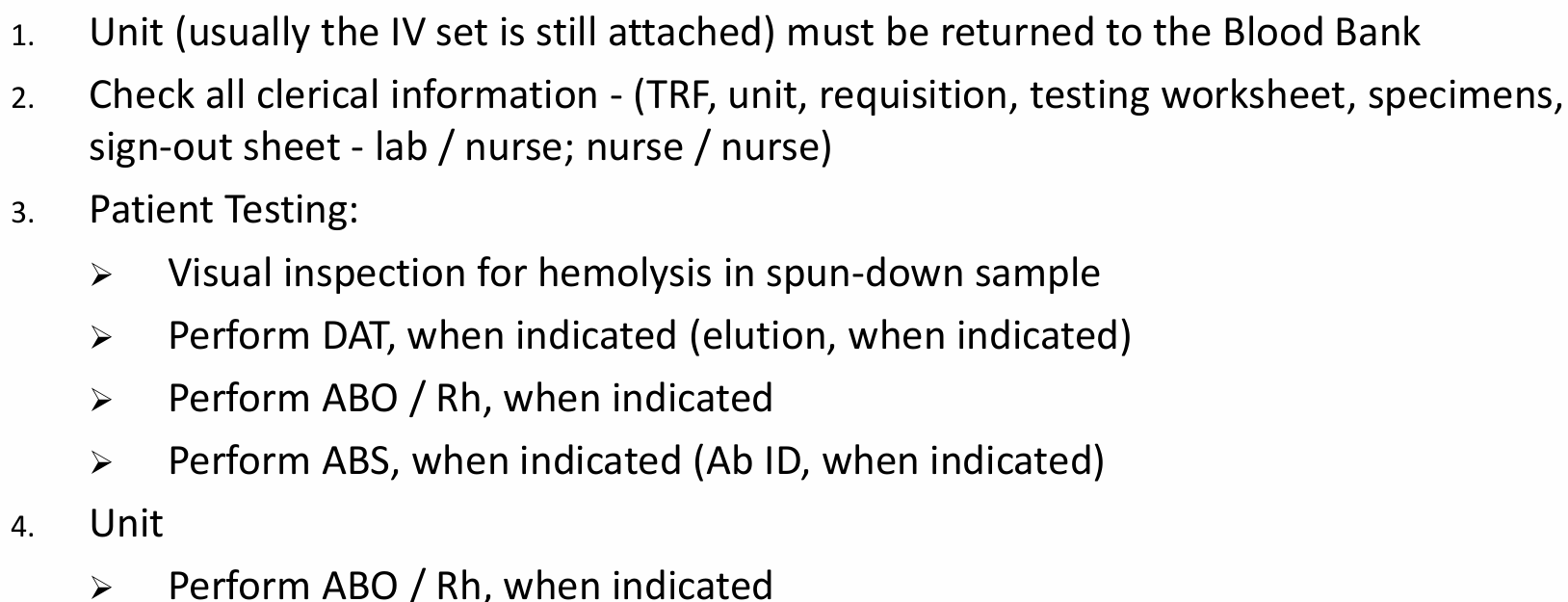
What is the transfusion reaction workup?
54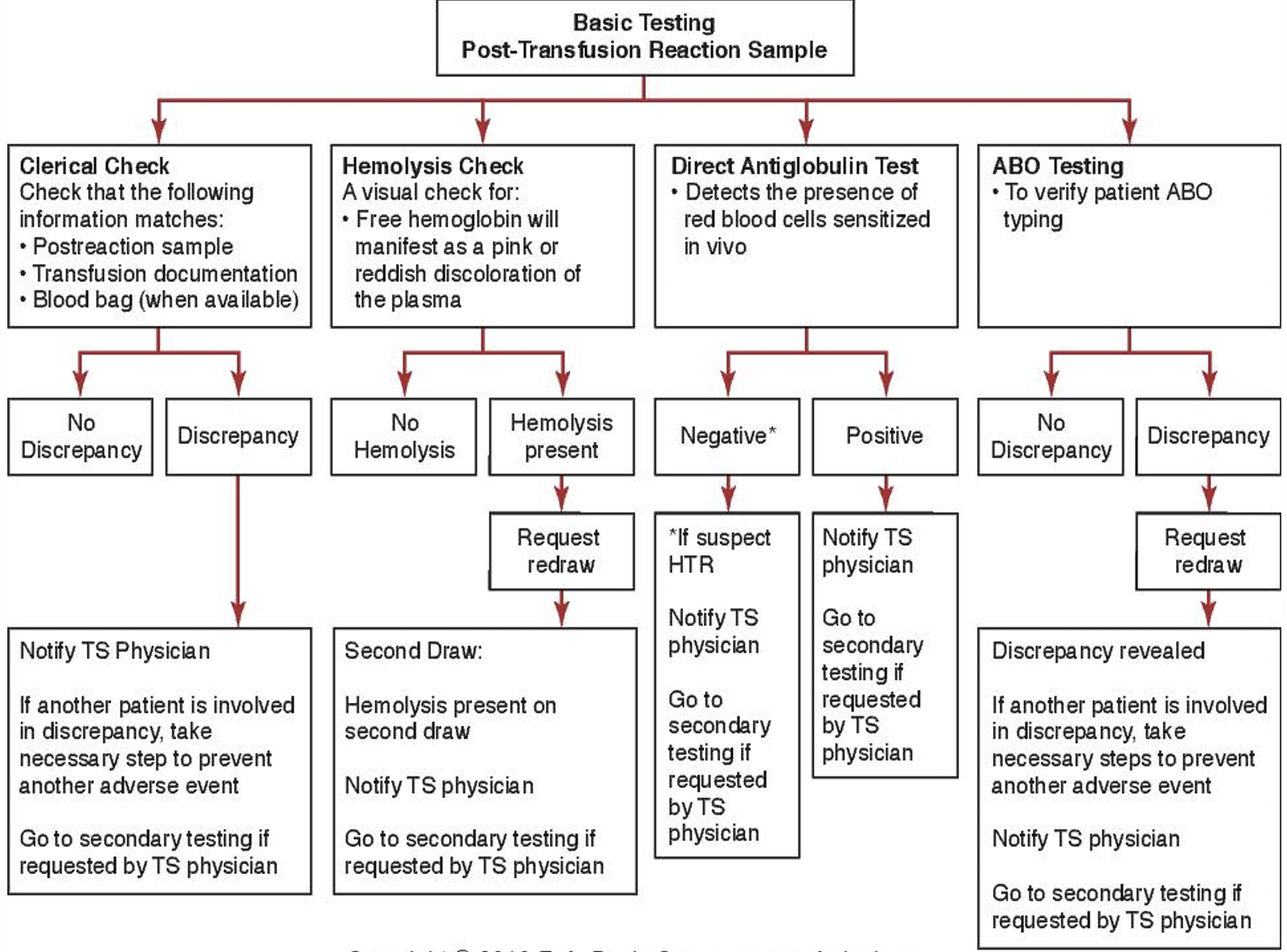
What is the full transfusion reaction workup from basic testing the Post-transfusion reaction sample?
55
What is TA-GVHD?
Transfusion-associated (TA) Graft VS Host disease (GVHD)
56
Who does TA-GVHD usually occur in?
- Occurs in immunosuppressed recipients (e.g., neonates, cancer patients on chemotherapy).
- Fatality is extremely high (> 90%) once the disease progresses.
- Fatality is extremely high (> 90%) once the disease progresses.
57
What is the common cause for TA-GVHD?
- T-lymphs
- The common cause is the transfusion of donor T-lymphocytes (T-cells) into an immunocompromised recipient whose own immune system fails to suppress the transfused donor T-cells. The donor T-cells acknowledge the "foreign" environment (not in the original donor's body), rapidly replicate, and begin to attack the recipient's organs & skin.
- The common cause is the transfusion of donor T-lymphocytes (T-cells) into an immunocompromised recipient whose own immune system fails to suppress the transfused donor T-cells. The donor T-cells acknowledge the "foreign" environment (not in the original donor's body), rapidly replicate, and begin to attack the recipient's organs & skin.
58
How long does it take for TA-GVHD to manifest?
2 days to 6 weeks after transfusion
59
What are the signs and symptoms of TA-GVHD?
➢ Rash & Fever
➢ Diarrhea
➢ Pancytopenia
➢ Liver Dysfunction / Jaundice
➢ Diarrhea
➢ Pancytopenia
➢ Liver Dysfunction / Jaundice
60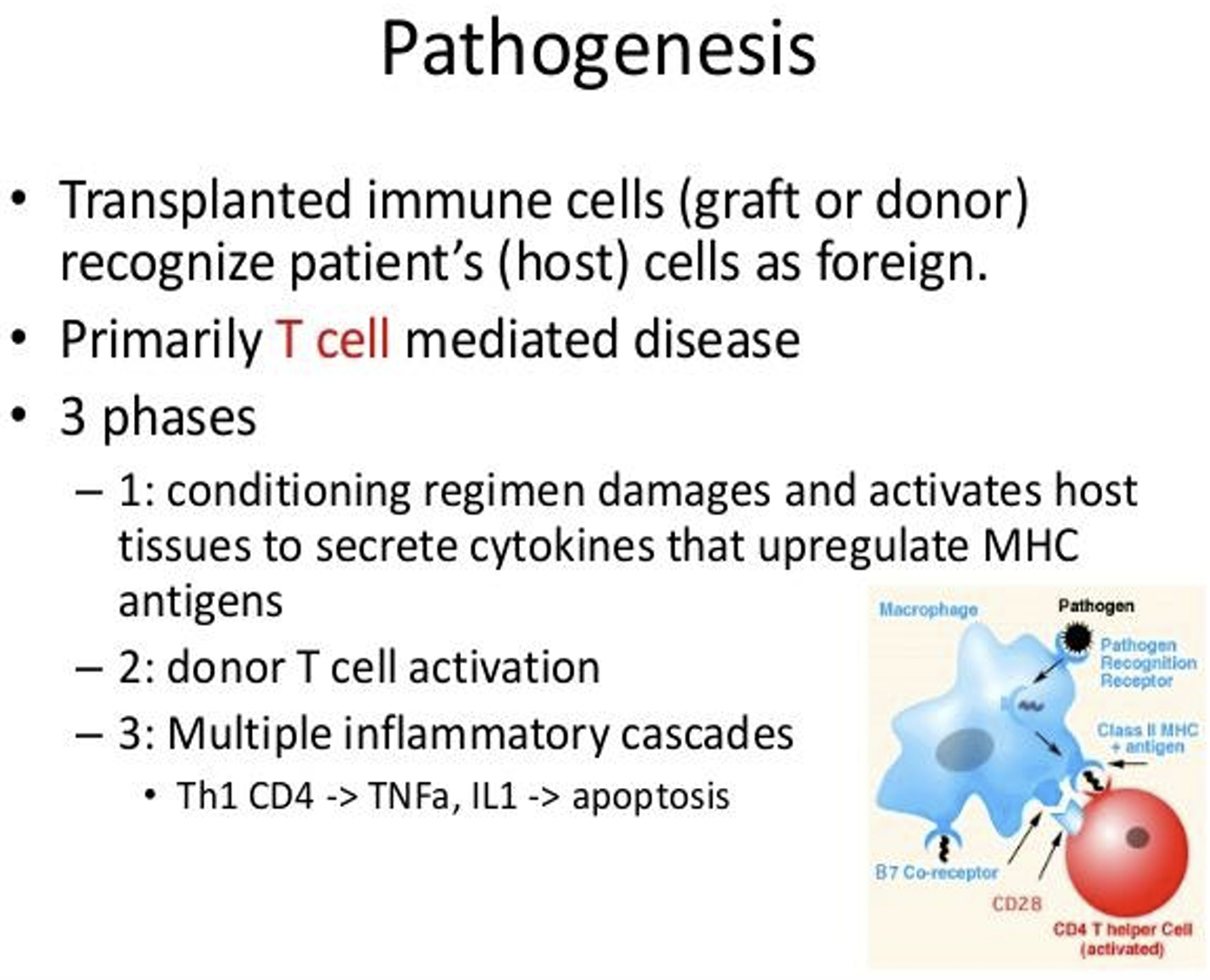
What is the pathogenesis of TA-GVHD?
61
Is mortality high in TA-GVHD?
EXTREMELY HIGH
prevention is the BEST treatment
prevention is the BEST treatment
62
What are the prevention treatments for TA-GVHD?
➢ Irradiated Blood / Blood Components
➢ HLA-matched organ donor
➢ HLA-matched organ donor
63
What is the treatment for TA-GVHD?
➢ Administration of anti-rejection medication therapy, e.g., immunosuppressants, prior to and following transplantation
64
What is Cytomegalovirus (CMV) infection?
It is caused by a virus, herpesvirus
65
What can CMV cause?
Can cause death in neonates and in allogeneic Bone Marrow Transplant (BMT) patients
66
What cells is CMV primarily found in?
WBCs
67
What are the signs and symptoms of CMV?
➢ Infant - rash; jaundice; enlarged liver / spleen; pneumonia; seizures
➢ Adults - sometimes asymptomatic; can exhibit flu-like / mononucleosis symptoms; leukopenia; gastroenteritis, or pneumonia.
➢ Adults - sometimes asymptomatic; can exhibit flu-like / mononucleosis symptoms; leukopenia; gastroenteritis, or pneumonia.
68
What is the common cause of CMV infections?
➢ Transfusion of CMV positive blood where blood donor was not tested for CMV / donor status for CMV is unknown
69
How long does it take fo CMV infection to manifest?
20 - 60 days after transfusion
70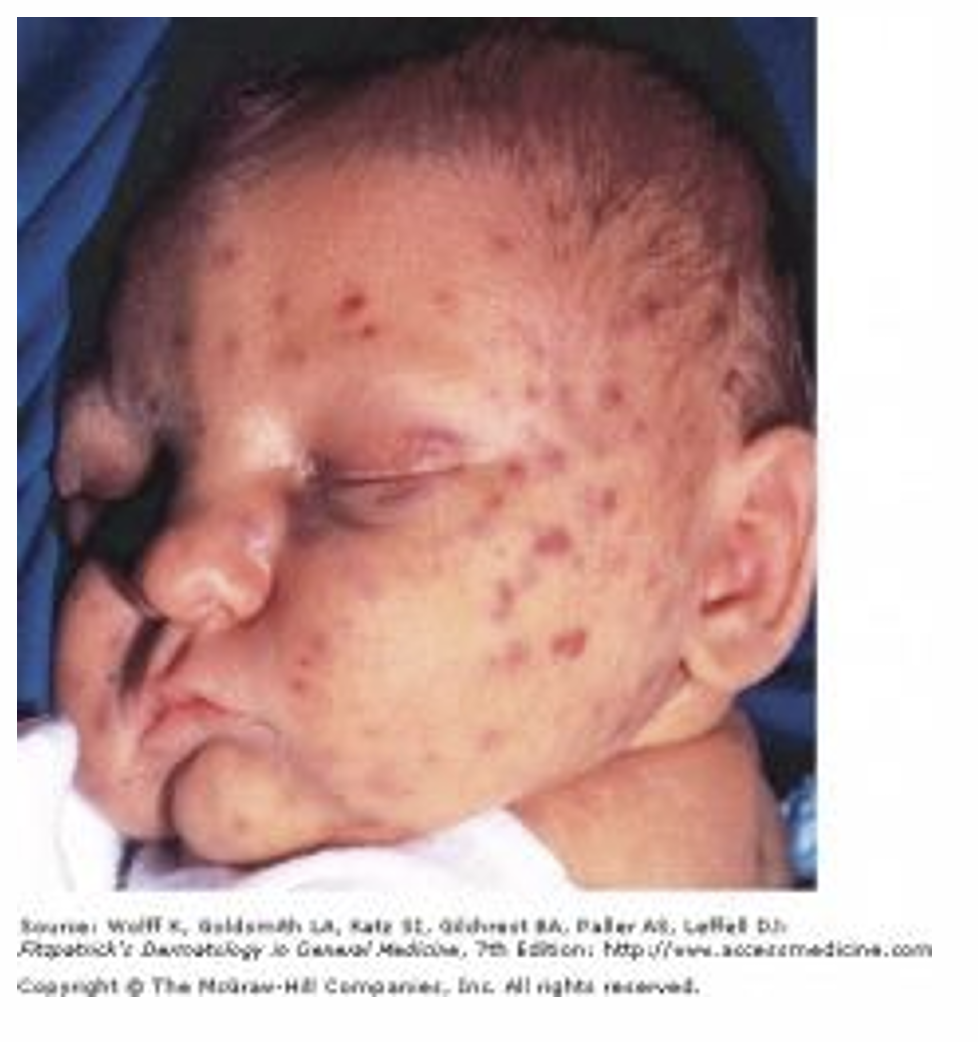
What does CMV in a baby look like?
71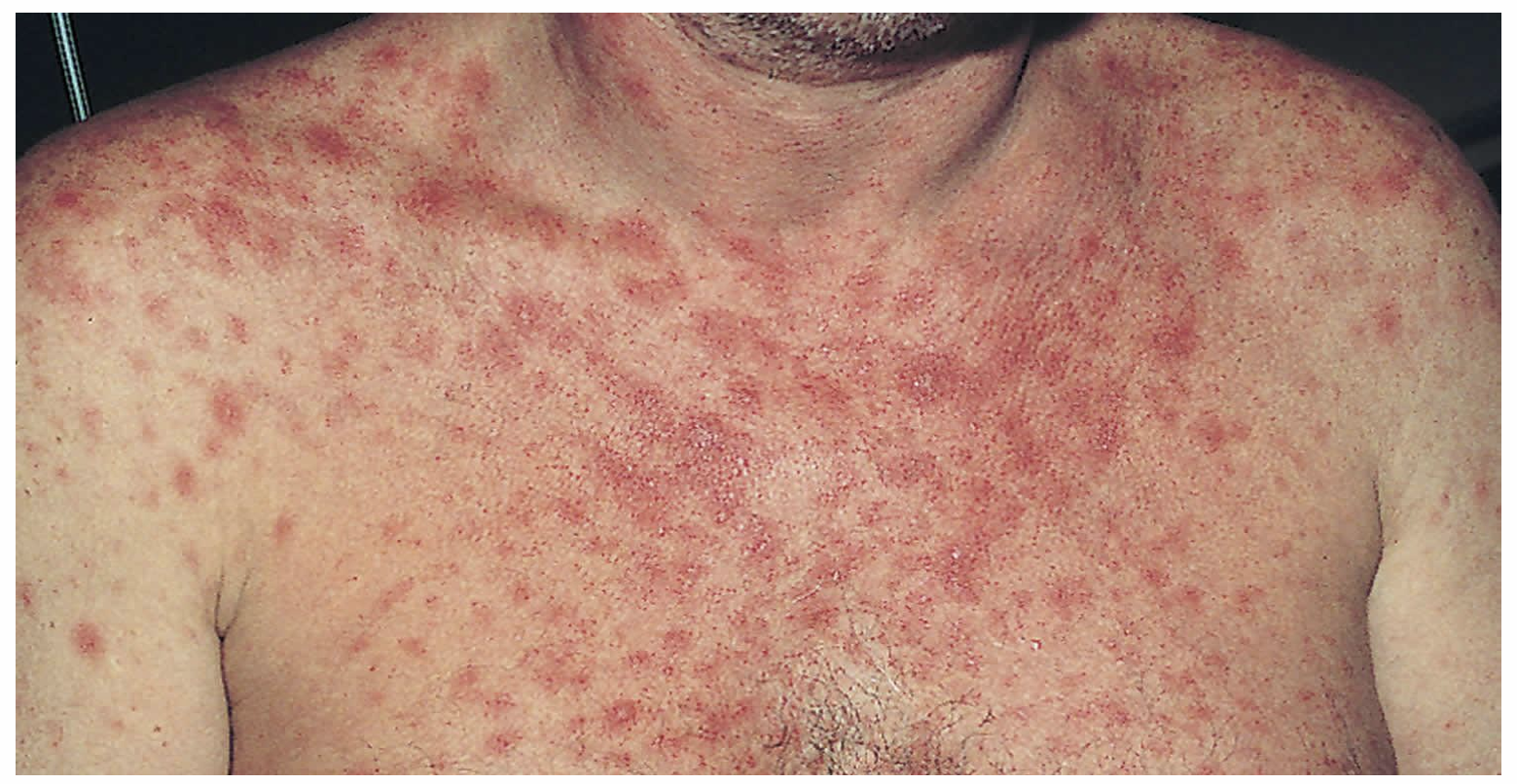
What does CMV in an adult look like?
72
What is the treatment for CMV infection?
antiviral therapy (Oral or IV)
73
How can CMV be prevented?
➢ Serologic test for CMV. If found negative, blood is labeled as "CMV Neg."
74
What is PTP?
- post-transfusion purpura (PTP)
- delayed immune complication presented
- a rare but serious complication that can occur after a blood transfusion
- delayed immune complication presented
- a rare but serious complication that can occur after a blood transfusion
75
What happens in PTP?
- Thrombocytopenic purpura appears
- bleeding from mucous membranes (eg. nose or gums), GI bleeding, hematuria
- bleeding from mucous membranes (eg. nose or gums), GI bleeding, hematuria
76
What is thrombocytopenic purpura?
a rare autoimmune blood disorder that causes a low platelet count, which leads to easy bruising and bleeding
77
How long does it take for PTP to manifest?
5-10 days post-transfusion
78
What are the symptoms of PTP?
Usually febrile reaction symptoms - so fever symptoms
79
What causes PTP?
usually caused by platelet AB (eg. anti-HPA-1a)
80
What is the treatment for PTP?
IV Ig
81
What are the NON-IMMUNE transfusion adverse effects?
1. Iron Overload . Hemosiderosis
2. Air Embolus
3. Hypocalcemia
4. Hypothermia
2. Air Embolus
3. Hypocalcemia
4. Hypothermia
82
What is Hemosiderosis aka iron overload?
❑ Condition typically seen in chronically-transfused patients, e.g., Sickle Cell, Thalassemia, etc.
❑ Liver & cardiac iron concentration noted with MRI; Fe+2 lab test elevated
❑ Liver & cardiac iron concentration noted with MRI; Fe+2 lab test elevated
83
What is the treatment for Hemosiderosis?
➢ Reduce frequency of transfusion - by erythropoietin administration; stimulates patient to make his / her own RBCs
➢ Infusion of iron-chelating agents
➢ Infusion of iron-chelating agents
84
What are the symptoms of hemosiderosis (Iron overload)?
❑ Chronic fatigue
❑ Frequent infections
❑ Nerve system disorders
❑ Joint pain
❑ Hair or skin pigment changes
❑ Frequent infections
❑ Nerve system disorders
❑ Joint pain
❑ Hair or skin pigment changes
85
What is an air embolus?
- a rare but potentially fatal complication that can occur during a blood transfusion when an air bubble blocks a blood vessel
- air infusion via IV line
- air infusion via IV line
86
What are the signs and symptoms of an air embolus?
➢ Sudden shortness of breath
➢ Coughing
➢ Hypotension
➢ Acute cyanosis - bluish tint to skin
➢ Coughing
➢ Hypotension
➢ Acute cyanosis - bluish tint to skin
87
What is the treatment for an air embolus?
➢ Lay patient on left side for mild cases
➢ Hyperbaric chamber treatment for severe cases
➢ Hyperbaric chamber treatment for severe cases
88
What is hypocalcemia?
medical condition where there is too little calcium in the blood
89
What are the signs & symptoms of hypocalcemia?
➢ Tingling sensation / Paresthesia
➢ Cardiac arrhythmia
➢ Tetany - muscle tightens/locks
➢ Cardiac arrhythmia
➢ Tetany - muscle tightens/locks
90
What is the treatment for hypocalcemia?
infusion of calcium supplements
91
What is hypothermia?
medical emergency when the body temperature drops below 95F (35C)
92
What is the cause of hypothermia from a blood transfusion?
rapid infusion of cold blood / blood products
93
What are the signs and symptoms of hypothermia?
- feeling cold / shivering
- cardiac arrhythmia
- cardiac arrhythmia
94
What is the treatment for hypothermia?
use blood warmer
95
Besides IMMEDIATE and DELAYED, what other transfusion adverse effects are there?
Disease transmission! - certain diseases can be transmitted via a blood / blood component transfusion
96
What disease was considered a transmissable disease in the 1970s?
Hepatititis B
97
What disease was considered a transmissable disease in the 1980s?
HIV
98
What disease was considered a transmissable disease in the 1990s?
Hepatitis C
99
What diseases are considered a transmissable disease today?
- Herpes Simplex Virus (both HSV1 & HSV2)
- Group B Streptococcus (GBS)
- Cytomegalovirus (CMV)
- Group B Streptococcus (GBS)
- Cytomegalovirus (CMV)
100
Why is there more concern in todays disease?
these diseases can be passed onto the developig fetus
101
What tests can help detect these diseases?
Molecular diagnostic tests