Blood groups and transfusions
Study these flashcardsFree · spaced repetition · iPhone, Android, Mac & web
All cards
1
What are blood group antigens?
Molecules on the surface of red blood cells, usually proteins, glycoproteins, or glycolipids, that can be recognised by antibodies.
2
What are antibodies, and when are they produced?
Antibodies are immunoglobulins produced in response to specific antigens
3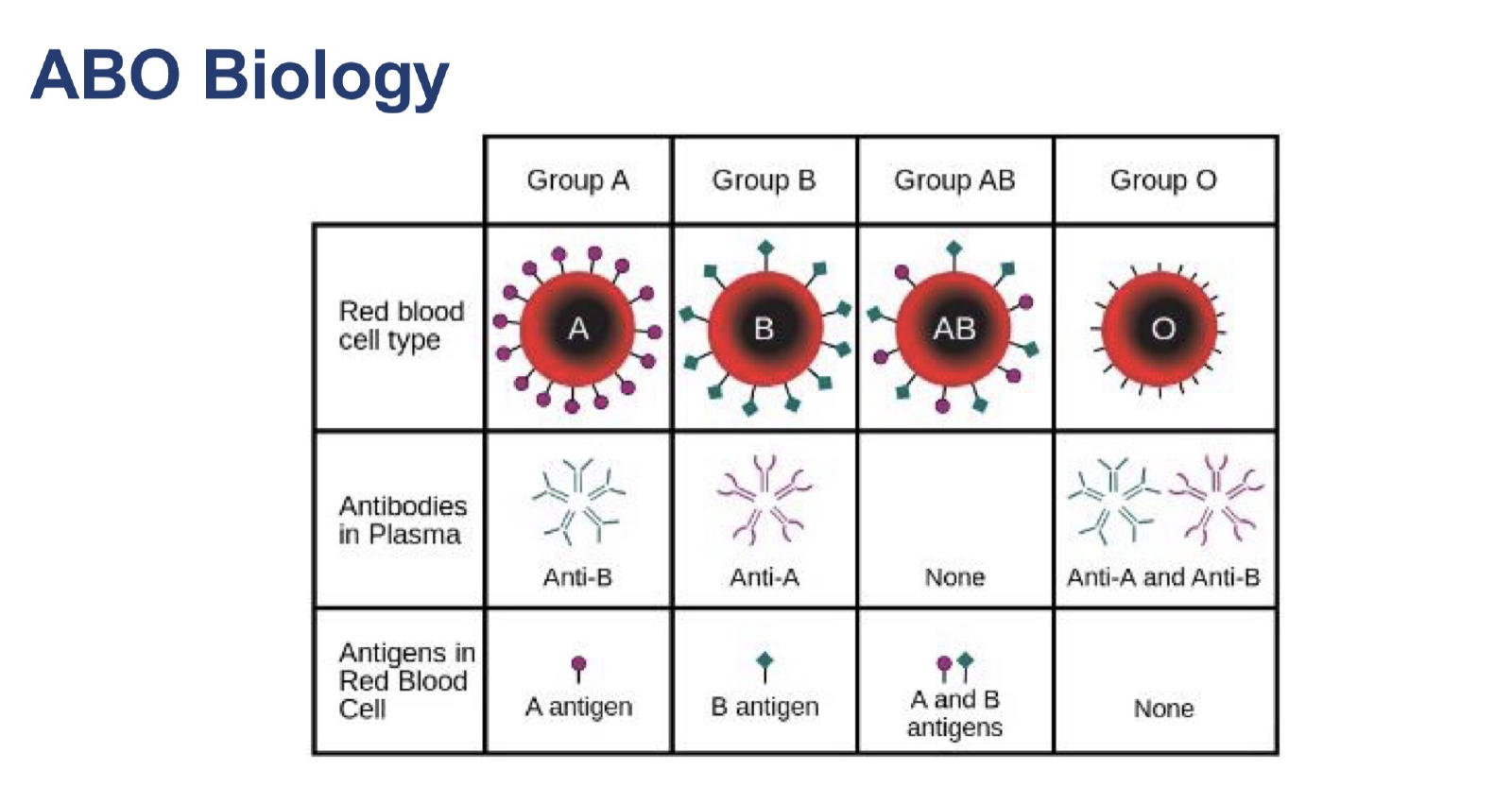
To look at
4
What is agglutination?
Clumping of red blood cells when antibodies bind to antigens on their surfaces and cross-link the cells.
5
How do naturally occurring blood group antibodies develop?
They develop following exposure to environmental antigens, such as those from bacteria, that resemble red cell blood group antigens.
6
How do immune or acquired blood group antibodies develop?
They develop after exposure to foreign red cell antigens, usually through transfusion or pregnancy, which stimulates an immune response.
7
Which antigens determine the ABO blood group system?
A and B antigens; group O red cells lack both A and B antigens.
8
Which naturally occurring antibodies are associated with the ABO blood group system?
Anti-A and anti-B antibodies, depending on the individual's ABO blood group.
9
What antibodies are present in the plasma of a person with blood group A?
Anti-B antibodies.
10
Which ABO antigens are codominant?
A and B; both are expressed in people with blood group AB.
11
What is a blood group phenotype?
The observable blood group characteristics determined by the antigen on the blood cell surface membrane
12
What is a blood group genotype?
The combination of inherited alleles that determines a person's blood group antigen expression.
13
Why must donor red blood cells be compatible with the recipient's ABO group?
Recipient anti-A or anti-B antibodies can bind incompatible donor red cells, causing agglutination and potentially severe acute intravascular haemolysis.
14
What is the universal red blood cell donor group?
Group O negative for routine red cell transfusion when ABO and RhD compatibility are considered; other blood group antigens must also be considered.
15
What is the universal red blood cell recipient group?
Group AB positive, because these individuals generally lack anti-A and anti-B antibodies and are RhD positive; compatibility testing is still required.
16
What is the Rh blood group system?
A blood group system consisting of red cell membrane proteins, especially the D, C, c, E, and e antigens.
17
How is RhD status inherited?
The presence of the RHD gene usually results in expression of the D antigen and an RhD-positive phenotype; absence or certain variants of the gene can result in an RhD-negative phenotype.
18
Which RhD phenotype is more common?
RhD positive, although prevalence varies between populations.
19
Why is RhD compatibility important during pregnancy?
An RhD-negative pregnant person can become sensitised to RhD-positive fetal red cells and produce anti-D IgG, which can cross the placenta and cause haemolytic disease of the fetus and newborn in a current or subsequent pregnancy.
20
How is RhD-associated haemolytic disease of the fetus and newborn prevented?
Anti-D immunoglobulin is given to eligible unsensitised RhD-negative pregnant people to prevent sensitisation to fetal RhD-positive red cells.
21
When is routine antenatal anti-D prophylaxis given in pregnancy?
Usually around 28 weeks, either as a single-dose or two-dose regimen depending on the local protocol; it may also be needed after sensitising events and after birth if the baby is RhD positive.
22
Why should RhD-positive red cells generally not be transfused to an RhD-negative recipient?
Exposure can sensitise the recipient to the D antigen, leading to anti-D antibody formation and an increased risk of haemolytic transfusion reactions with subsequent exposure.
23
What are the main components of blood?
Plasma, red blood cells, white blood cells, and platelets.
24
What are the main steps in the blood transfusion process?
Decision and consent → request → pre-transfusion sample collection and identification → sample receipt → compatibility testing → component selection and issue → collection and bedside identity checks → prescription/authorisation → administration, monitoring, and documentation.
25
What is pre-transfusion sampling?
Collection of a correctly identified patient blood sample, labelled at the bedside according to local procedures, for blood group testing and compatibility testing.
26
What is an acute haemolytic transfusion reaction?
A potentially life-threatening reaction in which transfused red blood cells are rapidly destroyed, commonly due to ABO incompatibility and complement-mediated intravascular haemolysis.
27
What are the symptoms of an acute haemolytic transfusion reaction?
Fever or chills, restlessness, chest or loinack pain, pain at the infusion site, breathlessness, nausea, and a feeling of impending doom; symptoms can vary.
28
What are the clinical signs of an acute haemolytic transfusion reaction?
Fever, tachycardia, hypotension, haemoglobinuria, and abnormal bleeding or disseminated intravascular coagulation; renal impairment may develop.
29
What are the potential consequences of an acute haemolytic transfusion reaction?
Shock, acute kidney injury, disseminated intravascular coagulation, multi-organ failure, and death.
30
What should be done immediately if an acute haemolytic transfusion reaction is suspected?
Stop the transfusion immediately, assess and stabilise the patient, maintain IV access with compatible fluids using new tubing, urgently notify the clinical team and transfusion laboratory, and follow the local transfusion-reaction protocol.
31
What is a delayed haemolytic transfusion reaction?
An immune-mediated reaction in which transfused red cells are destroyed, usually extravascularly, several days to weeks after transfusion, commonly around 5–14 days later.