Lecture 3_ Autoimmunity_pt1
Study these flashcardsFree · spaced repetition · iPhone, Android, Mac & web
All cards
1
Q: Who coined the term “horror autotoxicus,” and what does it mean?
A: Paul Ehrlich coined it in the 1900s; it means “fear of self-poisoning.”
2
Q: What did the phenomenon of “horror autotoxicus” later become known as?
A: Autoimmune diseases.
3
Q: What happens in autoimmune diseases?
A: Immune responses are targeted toward self-antigens, causing damage to organs and tissues in the body.
4
Q: Autoimmune diseases can be mediated by which immune components?
A: They can be T cell–mediated or due to antibodies (Abs) against host antigens (Ags).
5
Q: How many autoimmune diseases have been discovered?
A: More than 100.
6
Q: Can autoimmune diseases affect multiple organ systems?
A: Yes, they can involve various organ systems.
7
Q: What are autoimmune diseases a leading cause of?
A: Chronic illness and death.
8
Q: What percentage of the world’s population is affected by autoimmune diseases?
A: About 5%.
9
Q: Approximately how many people in the United States have autoimmune diseases?
A: More than 20 million.
10
Q: What is self-tolerance?
A: The ability of the immune system to discriminate “self” from “non-self” or “foreign,” showing unresponsiveness to self antigens (Ags).
11
Q: What must happen for self-tolerance to develop?
A: Lymphocytes must be “educated” at two levels (layers of protection) during development or immune response.
12
Q: What happens during central tolerance?
A: Self-reactive immature T cells and B cells are deleted, change their specificity (B cells only), or (in the case of CD4+ T cells) develop into Treg cells.
13
Q: What happens during peripheral tolerance?
A: Self-reactive mature T cells or B cells in the peripheral tissues may be inactivated or suppressed by regulatory T cells.
14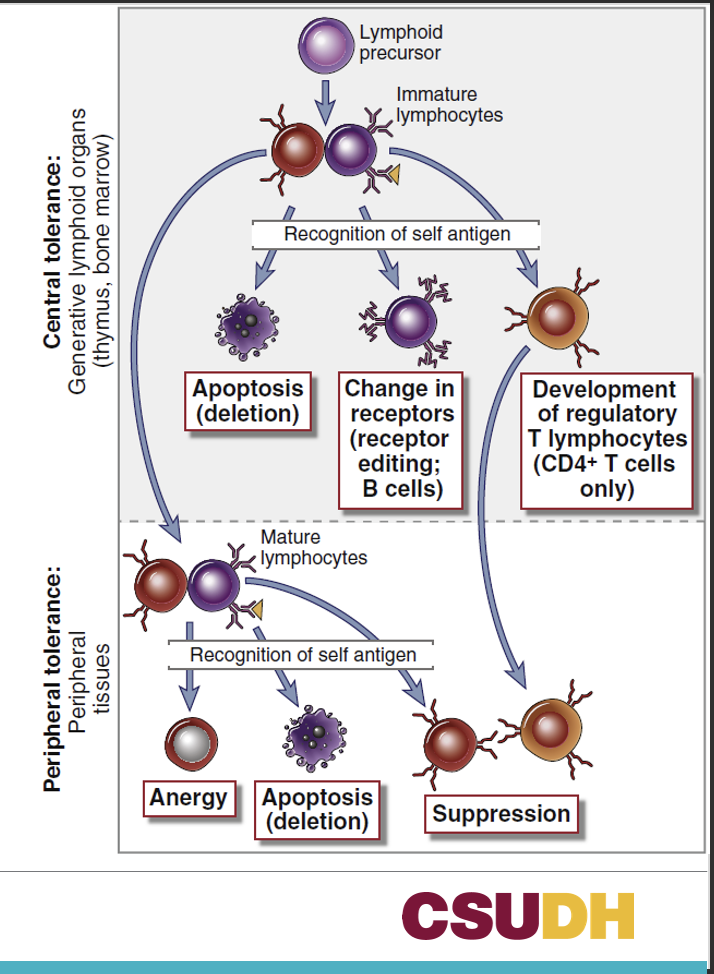
central tolerance vs peripheral tolerance
15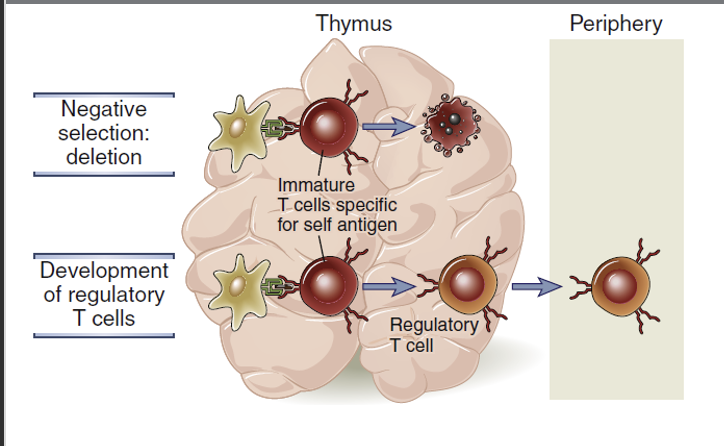
T cell central tolerance
16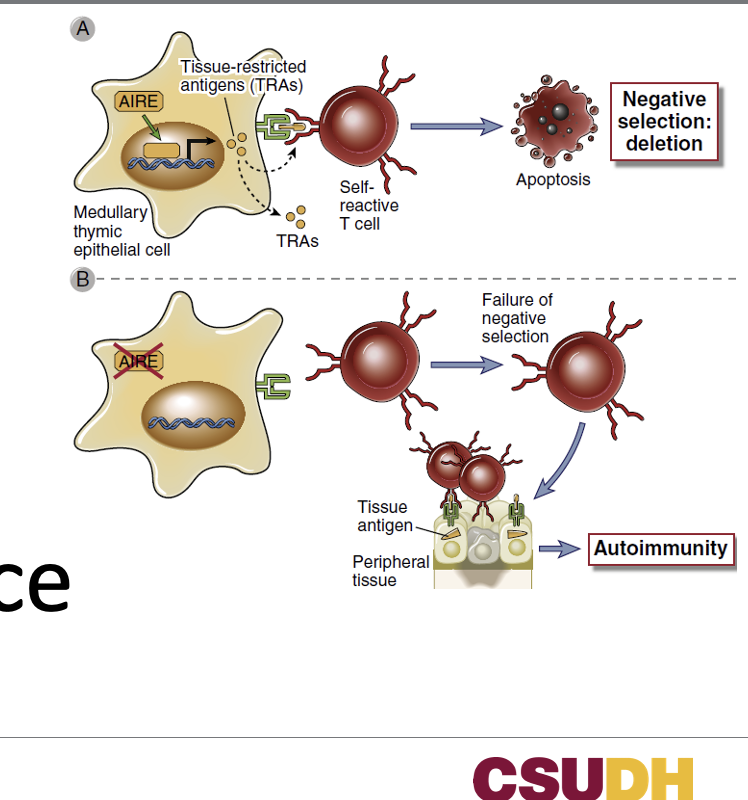
T cell central tolerance
17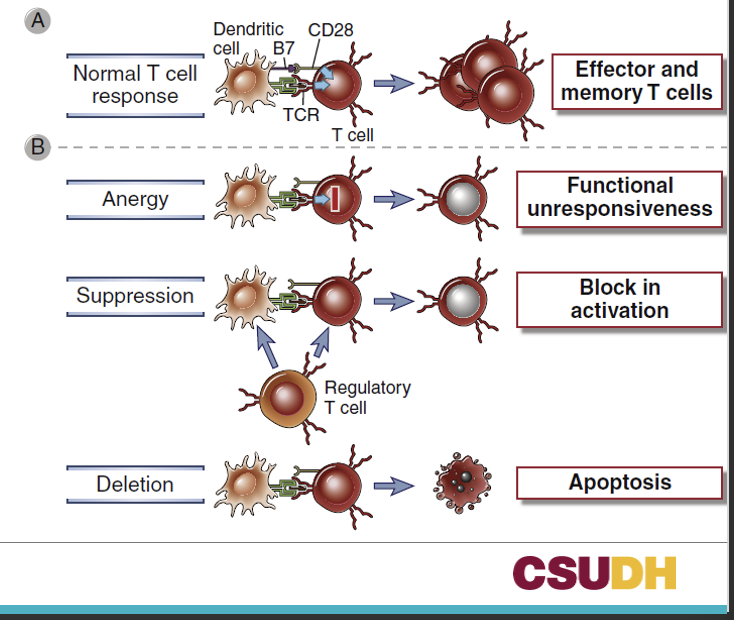
T-cell peripheral tolerance
18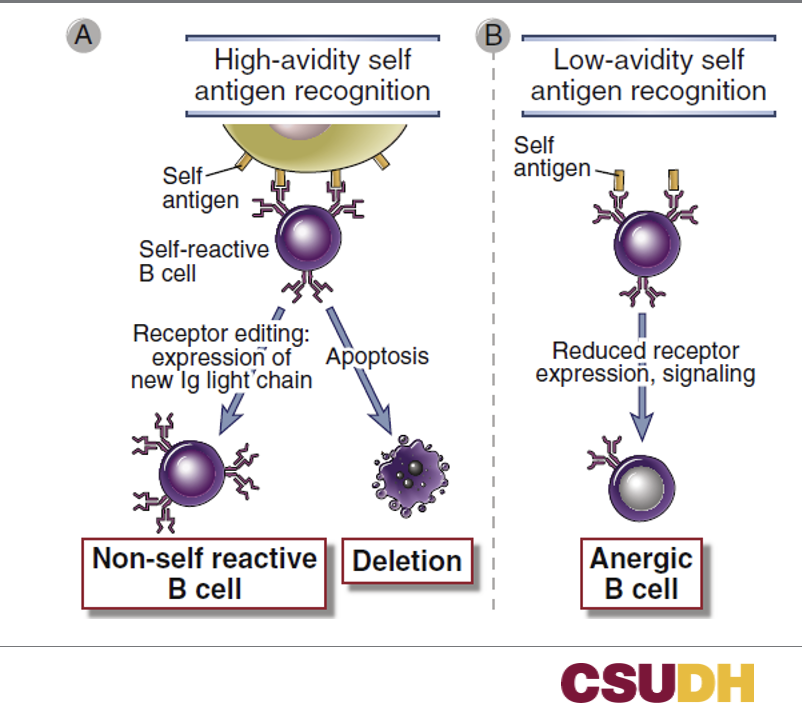
B-cell central tolerance
19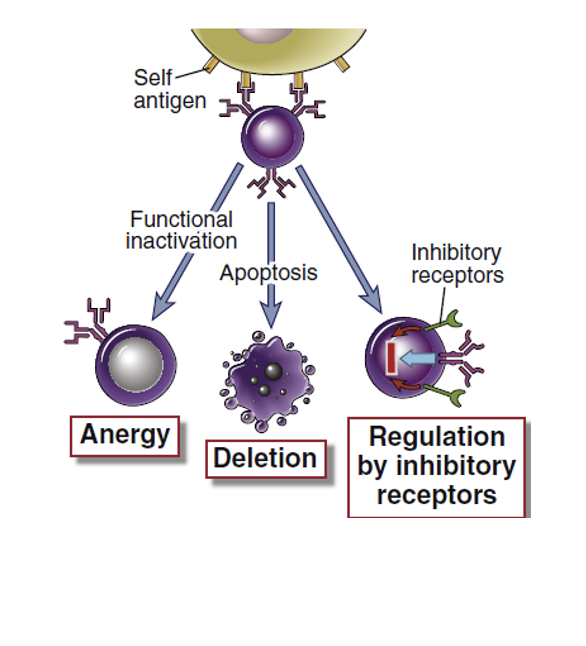
B-cell peripheral tolerance
20
Q: Why is genetics an important factor in autoimmune diseases?
A: Autoimmune diseases are more prevalent among family members and more common in monozygotic (genetically identical) twins than dizygotic (non-identical) twins or siblings.
21
Q: What genes are most studied in humans for autoimmune diseases?
A: MHC genes.
22
Q: Give an example of a genetic link between MHC genes and autoimmune disease.
A: People inheriting the HLA-B27 allele are at 100 times higher risk of developing ankylosing spondylitis.
23
Q: Besides MHC genes, what other genes can be involved in autoimmune diseases?
A: Polymorphism in non-MHC genes.
24
Q: Give an example of a non-MHC gene involved in autoimmune diseases.
A: IL2RA gene, which is involved in T-cell activation and maintenance of Tregs.
25
Q: About how many genes are required for most autoimmune diseases?
A: Around 20–30 genes.
26
Q: What type of factors can influence the development of autoimmune diseases?
A: Endogenous and environmental factors.
27
Q: Which gender is at higher risk of developing autoimmune diseases?
A: Women. >:(
28
Q: How do estrogens and androgens influence immune responses?
A: Estrogens promote Th2 response (more B-cell activation and antibody production), while androgens promote Th1 response with activation of CD8+ T cells.
29
Q: What can expose cryptic antigens and trigger autoimmune responses?
A: Tissue damage caused by infections, toxins, or injury.
30
Q: Give examples of autoantibody formation after tissue damage.
A:
Autoantibodies to the lens of the eye after ocular injury
Autoantibodies to sperm after vasectomy
Autoantibodies to DNA or skin cells after UV damage
Autoantibodies to the lens of the eye after ocular injury
Autoantibodies to sperm after vasectomy
Autoantibodies to DNA or skin cells after UV damage
31
Q: What can cause epigenetic and self-antigen modification leading to autoimmune diseases?
A: Exposure to environmental toxins, ingestion of harmful foods or drugs, or the aging process.
32
Q: What effect do post-translational modifications of self-antigens have?
A: They make self-antigens more immunogenic.
33
Q: Give examples of post-translational modifications linked to autoimmune diseases.
A: Citrullination of collagen may play a role in rheumatoid arthritis (RA), and glycosylation of myelin may be involved in multiple sclerosis (MS).
34
Q: What is the main mechanism by which microbial infections can cause autoimmune diseases?
A: Molecular mimicry.
35
Q: How can molecular mimicry lead to autoimmunity?
A: Exposure to viral or bacterial antigens may trigger immune responses that cross-react with similar self-antigens.
36
Q: What is an example of molecular mimicry causing autoimmune disease?
A: The association between Streptococcus pyogenes and rheumatic fever, which affects the joints and heart.
37
Q: What causes autoimmune diseases according to current evidence?
A: Complex interactions between genetic and environmental factors.
38
Q: What are examples of environmental and endogenous triggers for autoimmune diseases?
A: Female hormones, tissue injury and release of self-antigens, microbial infections, and epigenetic factors (toxins, foods, drugs, aging, post-translational modifications).
39
Q: What characterizes a genetically susceptible individual?
A: Possession of certain HLA or other genes.
40
Q: What does loss of immunologic tolerance involve?
A: Activation of self-reactive T cells and B cells and development of immune responses to self-antigens.
41
Q: What is the result of genetic susceptibility and loss of immunologic tolerance?
A: Development of autoimmune disease.
42
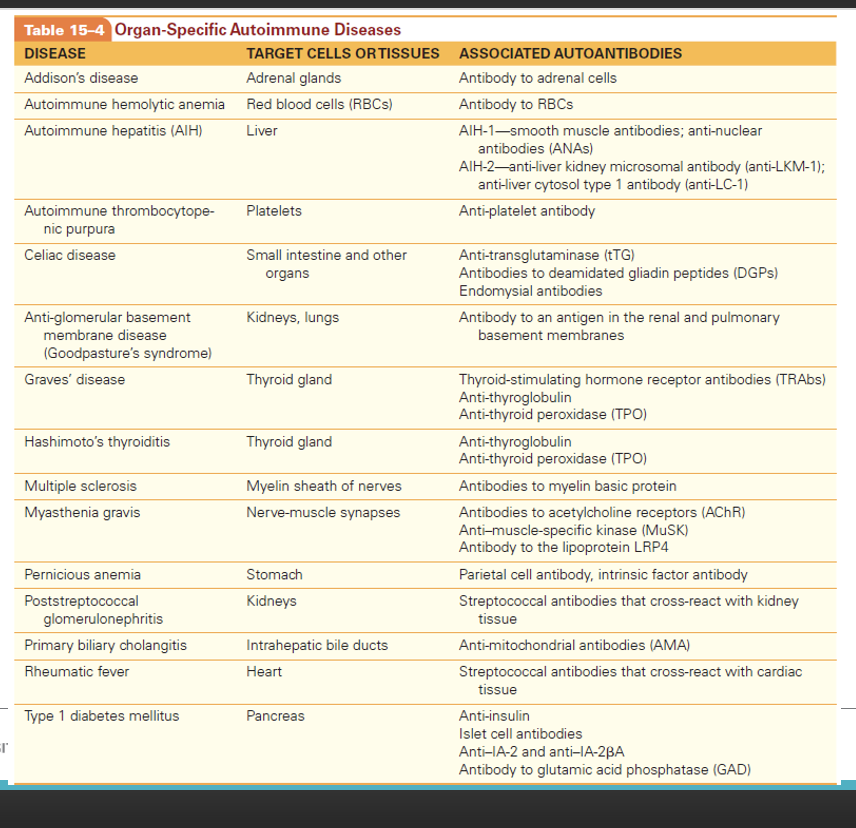
know name of diseases; no need to know polymyositits and granulomatosis 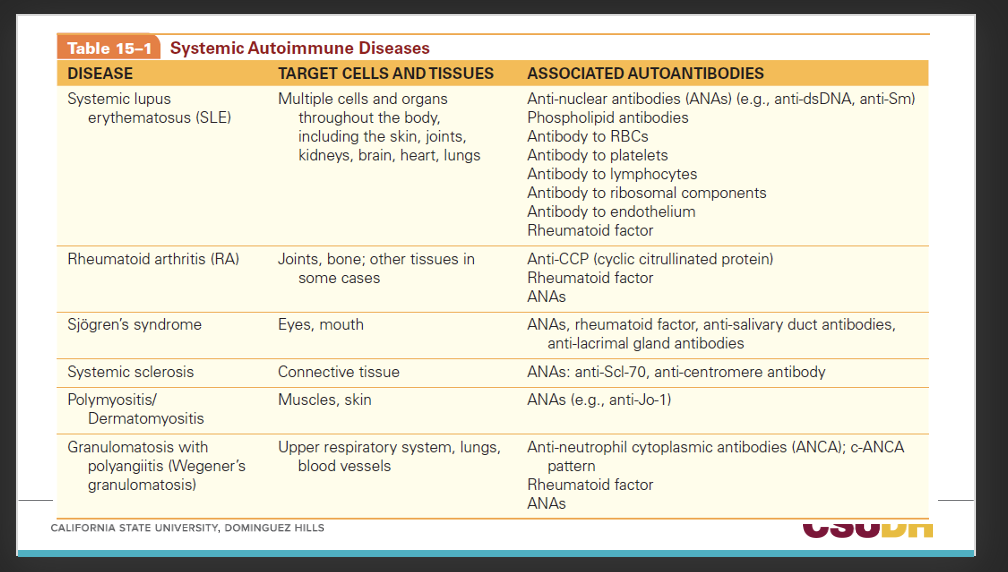
43
know name of diseases; no need to know automimmune hepatitis