Lecture 5 - Protozoa (Blood and Tissue Dwelling): Amoeba and Sporozoa
Study these flashcardsFree · spaced repetition · iPhone, Android, Mac & web
All cards
1
What are the 4 malarias?
Plasmodium vivax
Malariae
Ovale
Falciparum
Malariae
Ovale
Falciparum
2
List the sporozoa, blood tissue dwelling protozoa.
Malarias (Plasmodium vivax, malariae, ovale, falciparum)
Babesia
Toxoplasma gondii
Pneumocystis jirovecii (pneumocystis carinii) [fungus]
Babesia
Toxoplasma gondii
Pneumocystis jirovecii (pneumocystis carinii) [fungus]
3
List the amoeba that are blood and tissue dwelling protozoa.
Naegleria fowleri
Acanthamobea histolytica
Acanthamobea histolytica
4
What is this?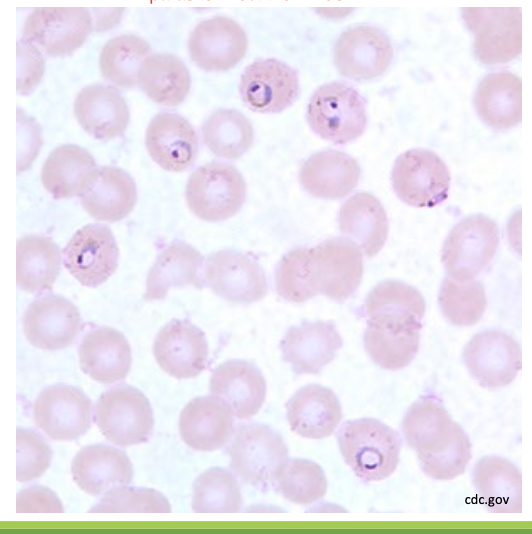
Malaria
5
How many species of Plasmodium are there and how many are considered true human parasites?
>150 species
4 are true human parasites.
4 are true human parasites.
6
Which parasite is still considered a zoonotic malaria associated with macaque monkeys?
P. knowlesi
7
What mosquito is responsible for malaria?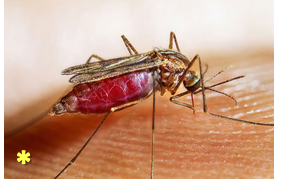
Anopholes spp. (female)
8
Which region is mostly affected by malaria?
African region
9
Why are children under 5 at high risk for malaria?
becuase they have low immunity.
10
What is another risk of transmission beside vector-borne?
Bloodborne: transfusion, contaminated needles.
11
How is Malaria prevented?
Vector control
Chemoprophylaxis drugs
RTS,S/AS01 malaria vaccine (2021)
Chemoprophylaxis drugs
RTS,S/AS01 malaria vaccine (2021)
12
What are the 2 core interventions for vector control?
Insecticide-treated nets (ITNs)
Indoor residual spraying (IRS)
Indoor residual spraying (IRS)
13
When should chemoprophylaxis drugs be taken prior to exposure?
2-3 weeks prior to exposure and 4 weeks post exposure to be effective at preventing malarial infection ( this covers any malaria hiding in the liver)
14
Whom is RTS,S/AS01 malaria vaccine (2021) intended for?
Children in areas endemic for P. falciparum
15
What are the 3 cycles seen in the 4 Plasmodium species?
1. Sporogonic Cycle (mosquito)
2. Exo-erythrocytic Cycle (liver)
3. Erythrocytic Cycle (rbcs)
2. Exo-erythrocytic Cycle (liver)
3. Erythrocytic Cycle (rbcs)
16
What 2 stages are within the Erythrocytic Cycle of Plasmodium species?
1. Symptomatic stage
2. Diagnostic stage
2. Diagnostic stage
17
What cycle is this in Plasmodium species?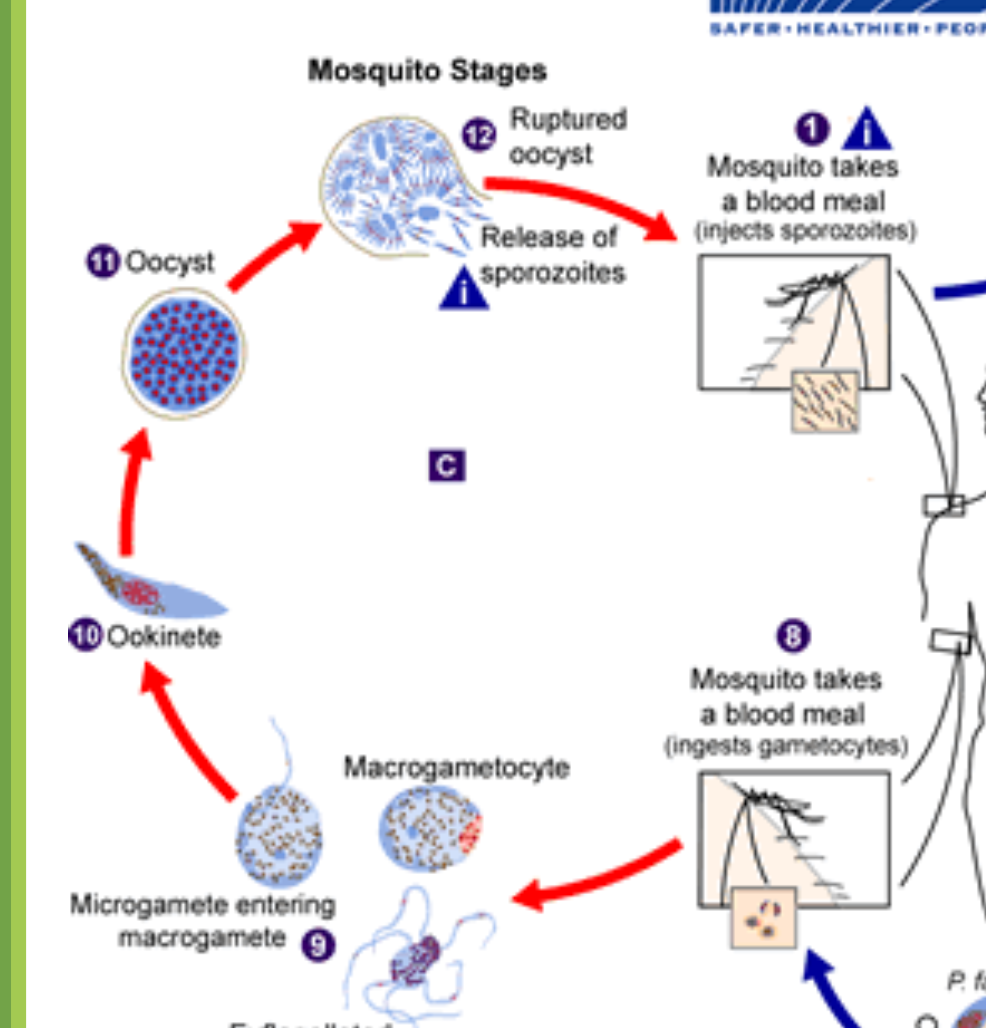
Sporogonic Cycle
18
What cycle is this in Plasmodium species?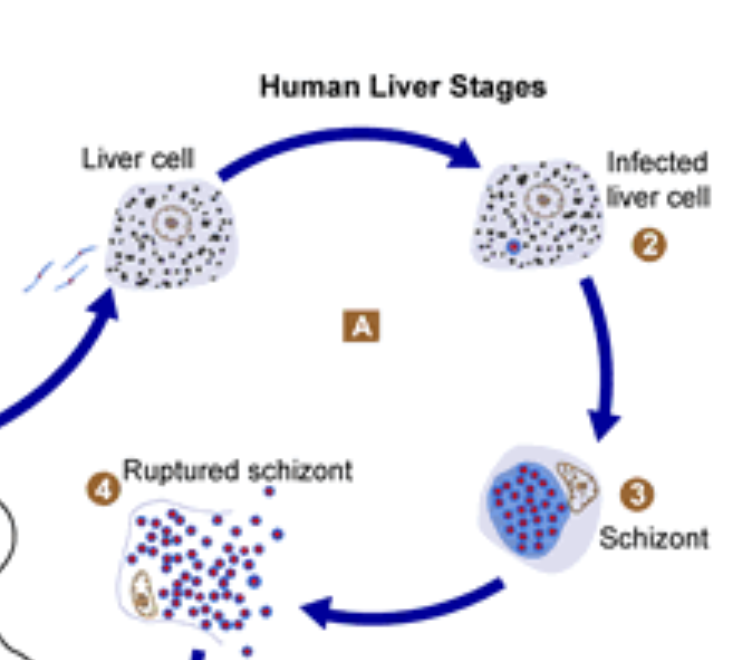
Exo-erythrocytic Cycle
19
What cycle is this in Plasmodium species?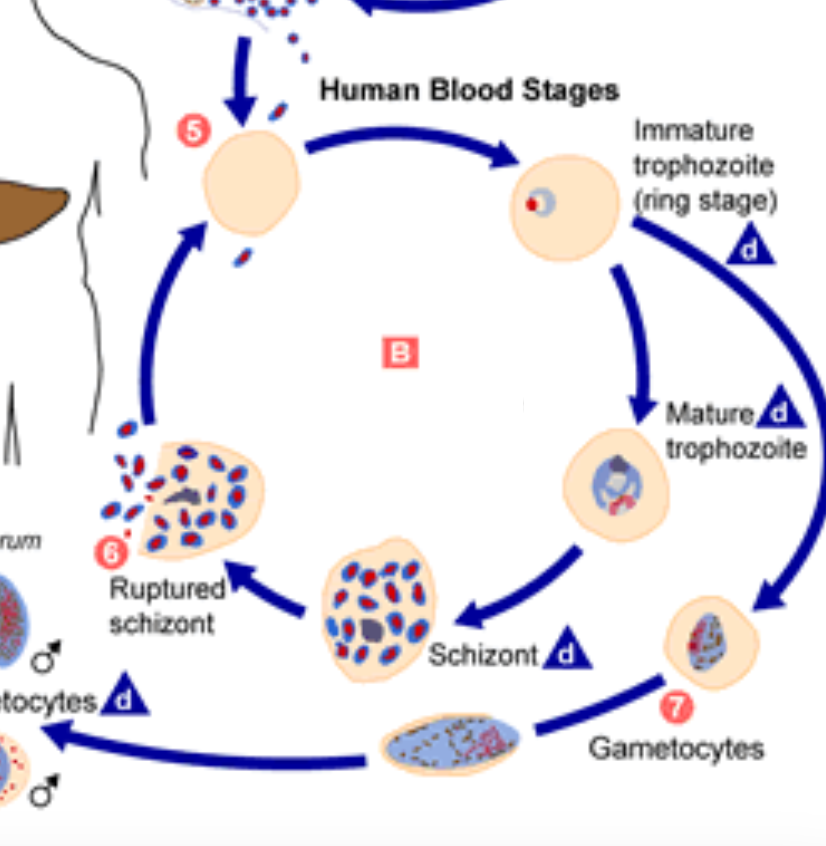
Erythrocytic Cycle
20
How many hosts are the life cycle of Plasmodium species?
2: human and mosquito
21
When the mosquito bites a human with malaria, what does it ingest?
Gametocytes
22
To form an ookinete, what do the gametocytes do?
Exflagellated microgametocyte enters the macrogametocyte.
23
After the ookinete is formed, what is the next step in the life cycle of Plasmodium species?
Oocyst
24
After an Oocyst if formed, what happens?
The oocyst ruptures and releases sporozoites (in salivary glands)
25
How are the sporozoites transmitted to a human?
inject sporozoites through a blood meal.
26
What is the next stage after the sporogonic cycle for Plasmodium species?
Exo-erythrocytic cycle
27
What happens in the Exo-erythrocytic cycle?
Sporozoites infect liver cells -> infected liver cell -> schizont is formed within the liver cell -> ruptured schizont and releases merozoites
28
What is a schizont?
a cell that is part of the asexual development of a parasite, such as the malaria parasite.
29
What cycle is after the Exo-erythrocytic cycle?
Erythrocytic cycle (in RBCs)
30
What happens in the erythrocytic cycle of Plasmodium?
merozoites enter RBCs -> immature trophozoite (ring stage) -> splits up into 2 paths.
31
To form gametocytes, what happens after the immature trophozoites (ring stage)?
Gametocytes are formed
32
What are the 2 different paths the immature trophozoite ( ring stage) can undergo?
gametocyte formation and more schizont formation.
33
Do form schizonts, what does this organimsm have to undergo?
Mature trophozoites -> schizont -> ruptured schizont
34
Which organism creates the banana shaped gametocyte?
P. falciparum 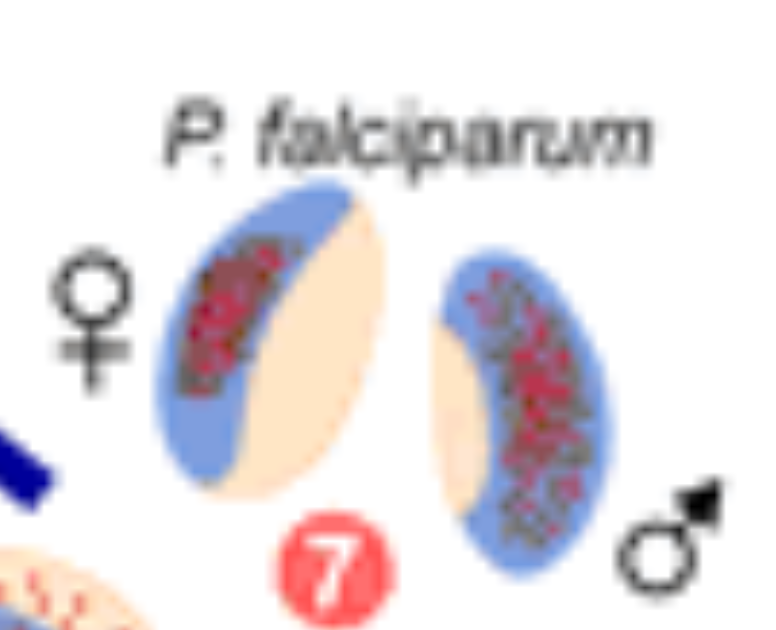
35
What type of maturation of gametocytes is this?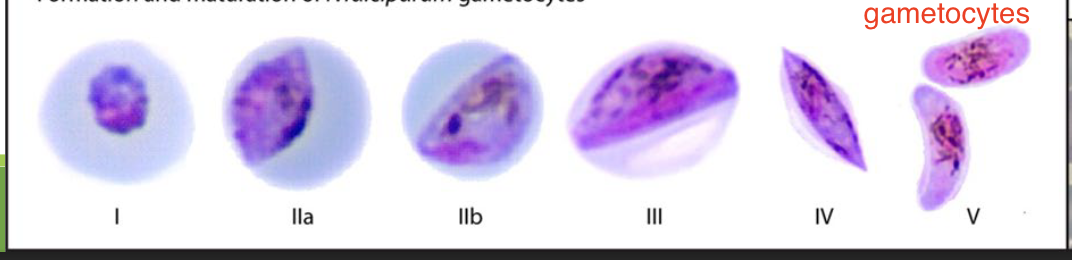
P. falciparum
36
What is the clinical manifestation for Malaria?
fever, chills (most common): when merozoites release into the blood
37
What is one clue that can aid in the diagnosis of plasmodium species?
Time and frequency of fever can aid
38
What are other symptoms that one can experience for malaria?
Headahce, myalgias, arthralgias, weakness
Diarrhea, vomiting
Splenomegaly
Anemia
Thrombocytopenia
Pulmonary/ renal dysfunction
Neurologic changes
Diarrhea, vomiting
Splenomegaly
Anemia
Thrombocytopenia
Pulmonary/ renal dysfunction
Neurologic changes
39
Which of the Plasmodium speices in most likely to be sever/potentially fatal?
P. falciparum
40
What symptoms does P. falciparum elicit?
CNS involvement (cerebral malaria). high mortality rate
Severe anemia
Acute respiratory distress syndrome
"Blackwater fever" = red/ black urine. Caused by ruptured RBCs/hemoglobin in urine. Can lead to renal failure, death.
Severe anemia
Acute respiratory distress syndrome
"Blackwater fever" = red/ black urine. Caused by ruptured RBCs/hemoglobin in urine. Can lead to renal failure, death.
41
what happens if P. falciparum malaria is left untreated?
Can progress to severe illness and death within 24 hrs!
42
What type of complications can be seen for P. vivax?
Splenomegaly (which sometimes causes spleen to rupture)
43
What type of complications can be seen for P. malariae?
Nephortic syndrome (clue: protein in urine)
44
How is Blackwater fever characterized by?
Massive intravascular hemolysis with resulting severe anemia
Dark-red to black color urine; hemoglobinuria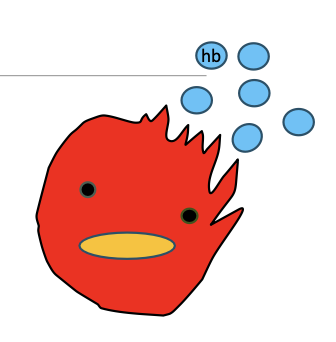
Dark-red to black color urine; hemoglobinuria
45
How does Blackwater Fever occur?
still some debate but....
1. rapid destruction of RBCs due to heavy parasitic infection: hemoglobin is released during the extensive destruction of RBCs
2. Autoimmune reaction with treatment (usually associated with quinine)
1. rapid destruction of RBCs due to heavy parasitic infection: hemoglobin is released during the extensive destruction of RBCs
2. Autoimmune reaction with treatment (usually associated with quinine)
46
What are the 3 cases that give a natural resistance to Malaria?
Duffy-antigen negative
Sickle-cell trait
Hemoglobin C trait and disease
Sickle-cell trait
Hemoglobin C trait and disease
47
Which Plasmodium species is associated with natural resistance to malaria?
P. vivax
48
What happens when P.vivax bind to duffy antigens?
Merozoites bind to Duffy antigens on RBCs to gain entry into the cell. If person lacks this anitgen, P.vivax can NOT enter/infect cell.
49
Hemoglobin C trait and disease is protective against which Plasodium species?
P. falciparum. Hemoglobin C interferes with the ability of the parasite to remodel host cell cytoskeleton.
50
What is the GOLD STANDARD for malarial diagnosis?
Microscopy -- morphology
51
What other laboratory tests are done for malarial diagnosis besides microscopy?
Molecular Diagnosis (PCR)
Antibody Detection (Indirect Fluorescent Antibody = IFA)
Rapid Antigen Testings (onle 1 kit approved is US)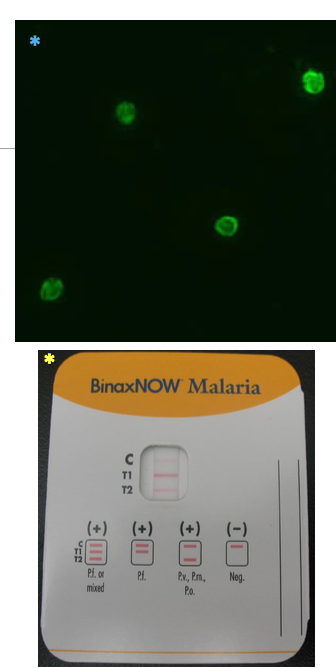
Antibody Detection (Indirect Fluorescent Antibody = IFA)
Rapid Antigen Testings (onle 1 kit approved is US)
52
What color do the malarial parasites glow under a fluorescence microscope?
apple green
53
What type of smear are done on microscopy for malarial diagnosis?
THICK vs thin blood smears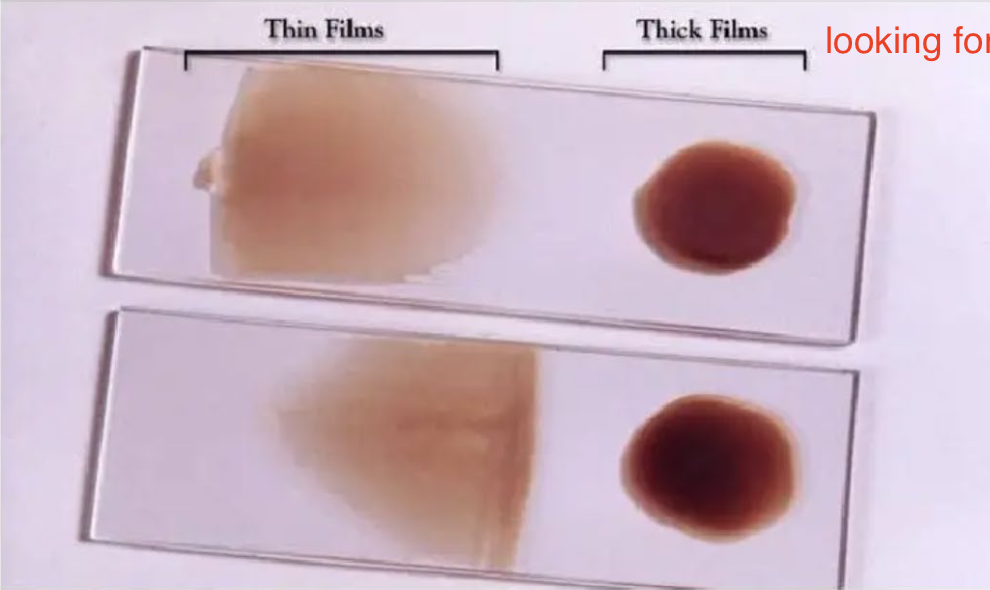
54
What should be used if the thick smear is positive for malaria parasites?
Thin smear should be used for species identification.
55
What should you NOT fix thick smears with?
Methanol or heat
56
What should you do if there is a delay in staining smears?
Dip the thick smear briefly in water to hemolyse the RBCs.
57
What stain is preferred when making smears? and why?
Giemsa because you can see the Schuffner's dots
58
Which has a higher sensitivity: thick or thin blood smears?
Thick smears
59
Which blood smear contains pieces of the parasites?
Thick blood smear
60
Thick or thin blood smear?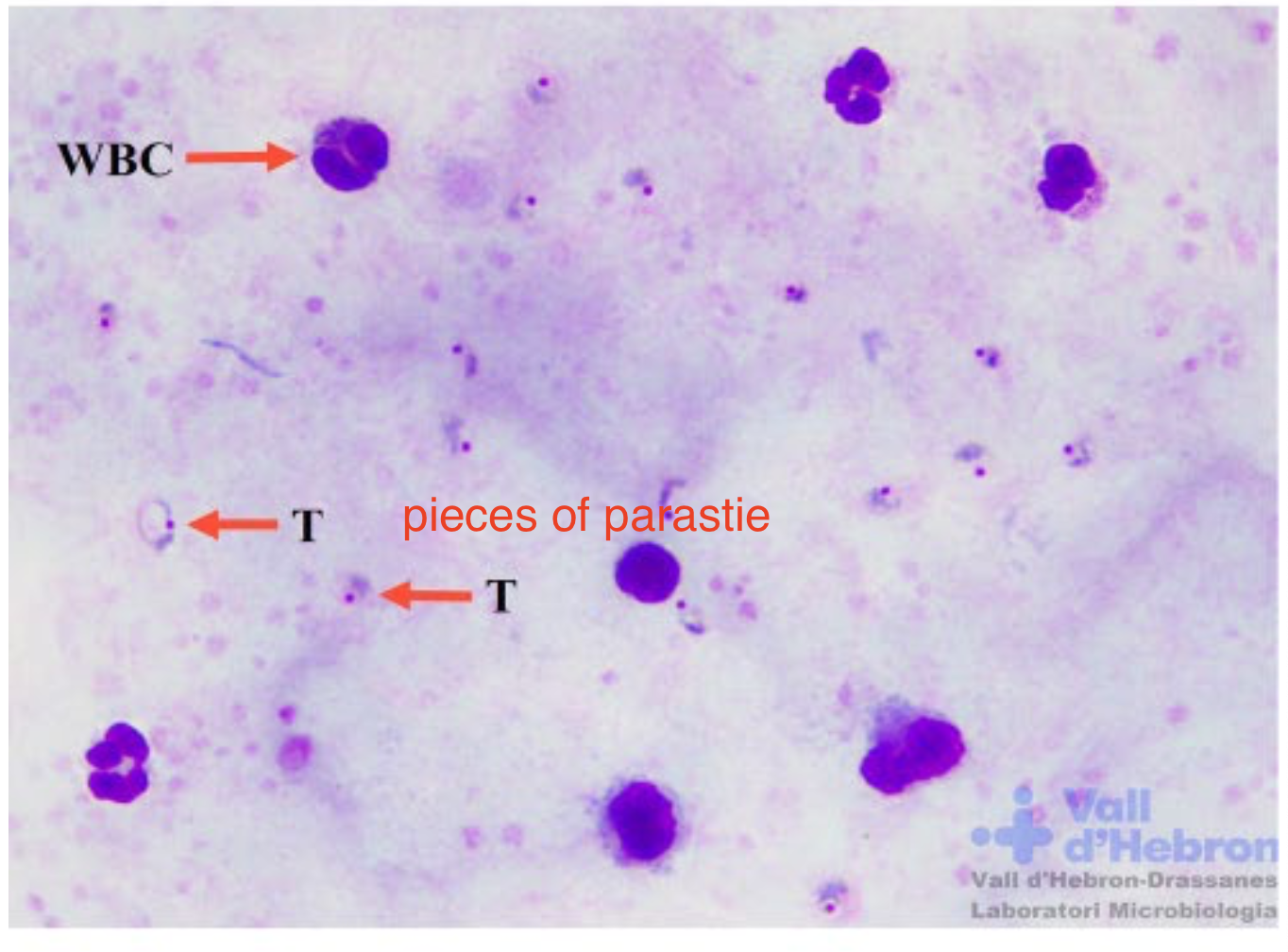
Thick blood smear
61
Thick or thin blood smear?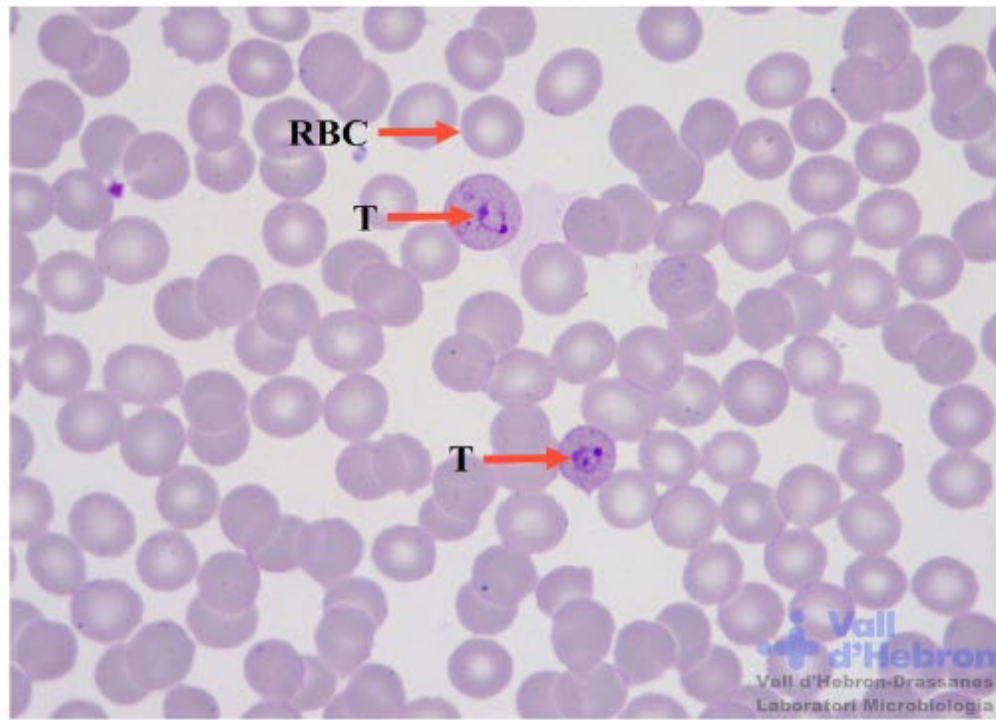
Thin blood smear
62
What is this organism?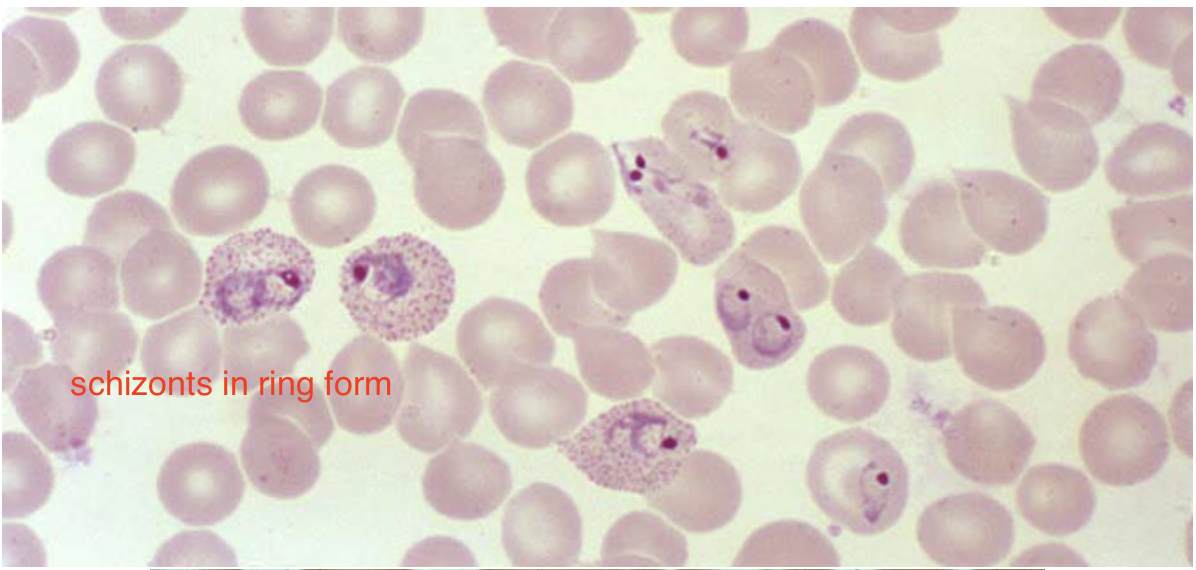
P. vivax
63
Which ones are the thick vs. thin blood smear? and what are they?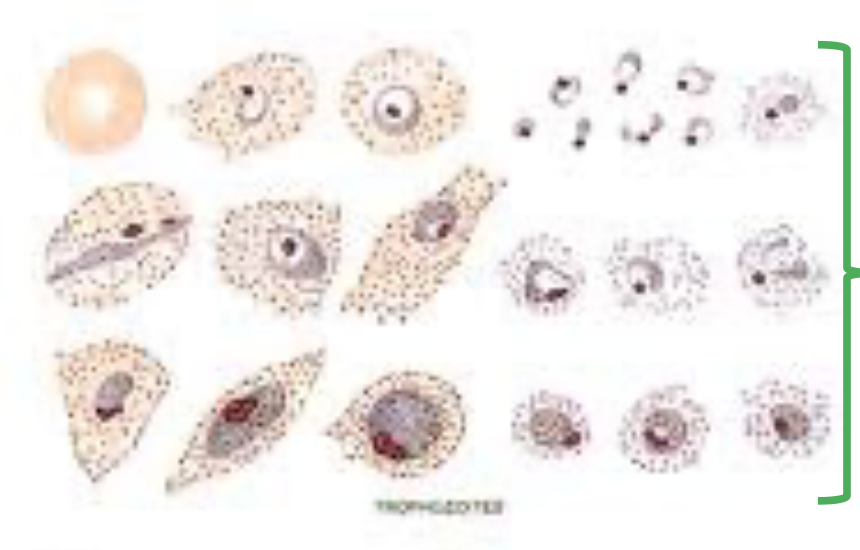
Left: thin
Right: thick
Trophozoites - P. vivax
Right: thick
Trophozoites - P. vivax
64
Which ones are the thick vs. thin blood smear? and what are they?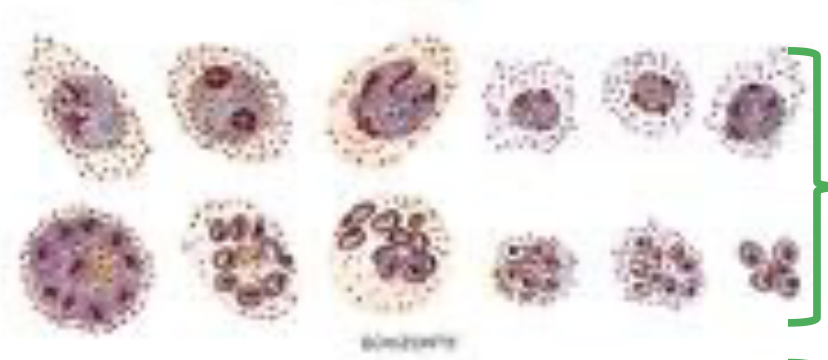
Left: thin
Right: thick
Schizonts - P. vivax
Right: thick
Schizonts - P. vivax
65
Which ones are the thick vs. thin blood smear? and what are they?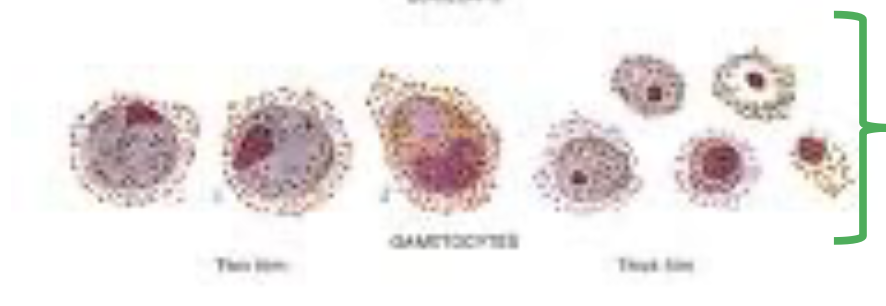
Left: thin
Right: thick
Gametocytes - P. vivax
Right: thick
Gametocytes - P. vivax
66
What organism is this?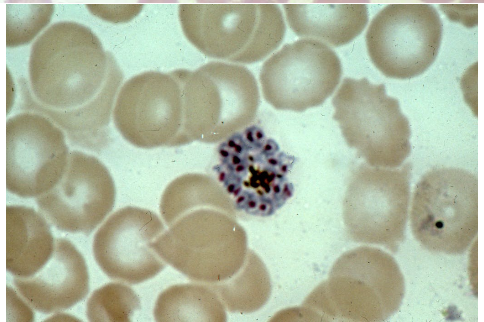
P. vivax
67
What organism is this?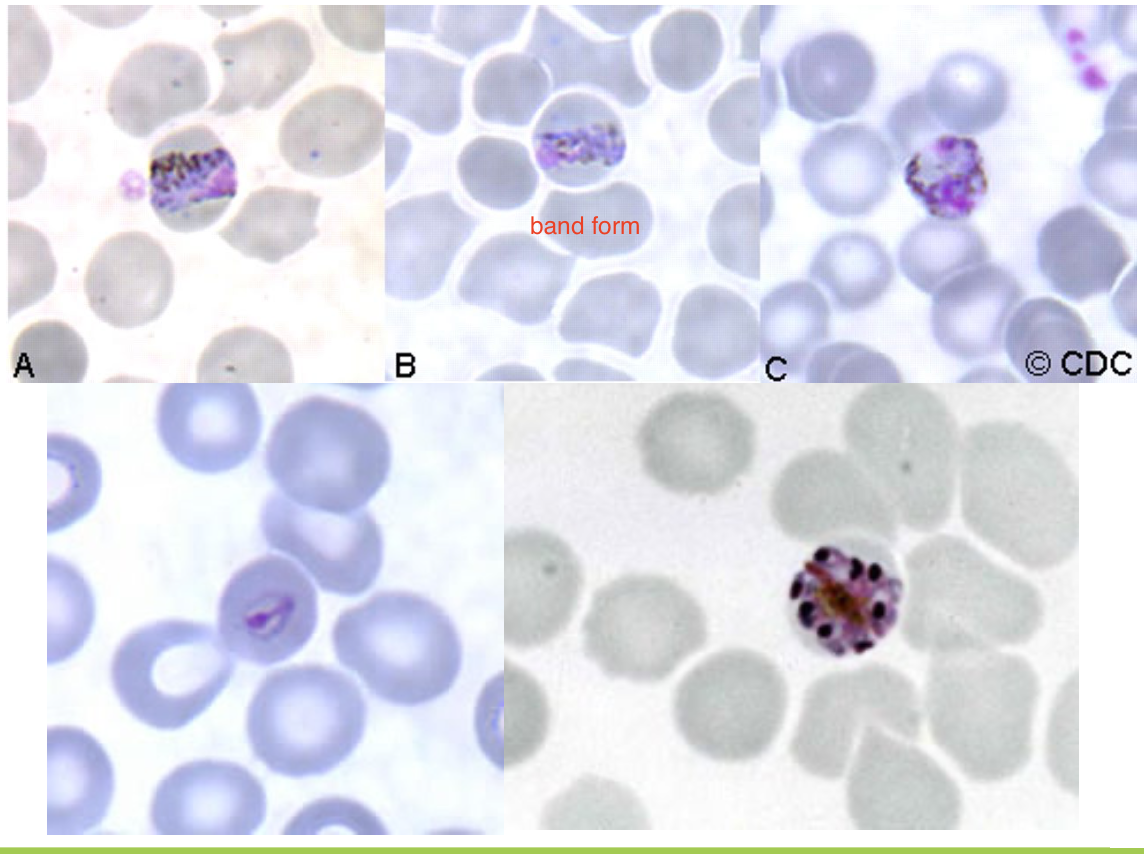
P.malariae
68
Which ones are the thick vs. thin blood smear? and what are they?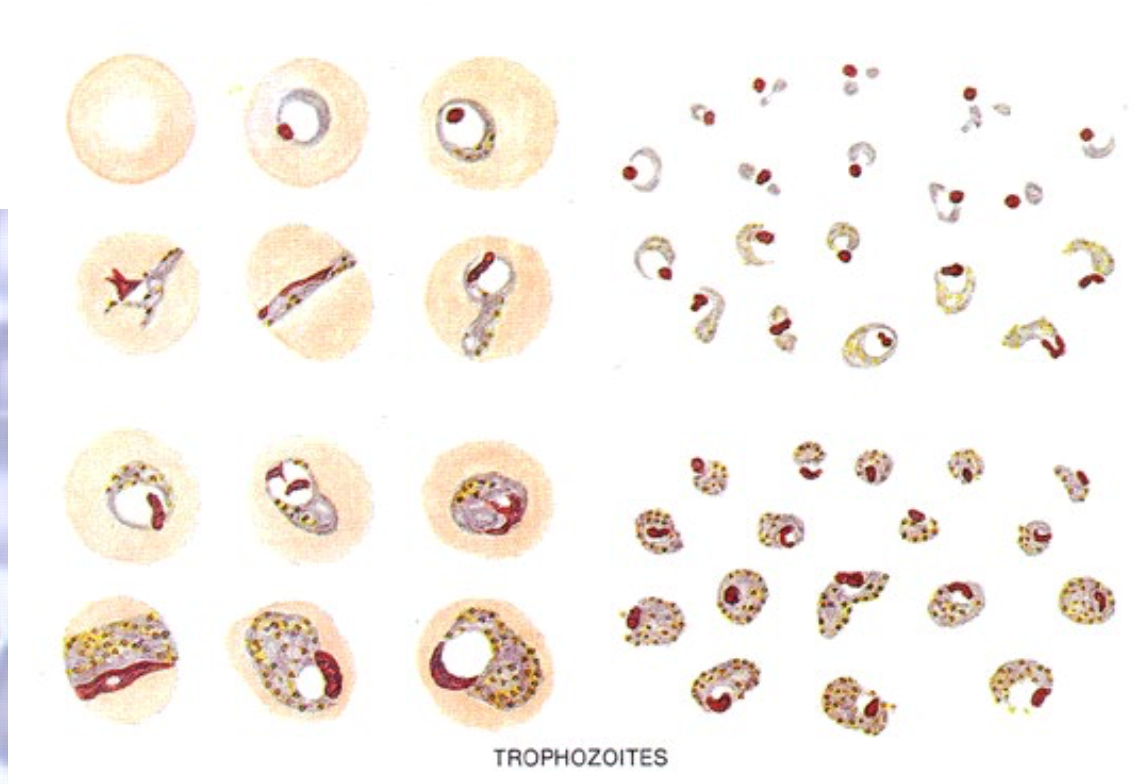
Left: thin
Right: thick
Trophozoites - P.malariae
Right: thick
Trophozoites - P.malariae
69
Which ones are the thick vs. thin blood smear? and what are they?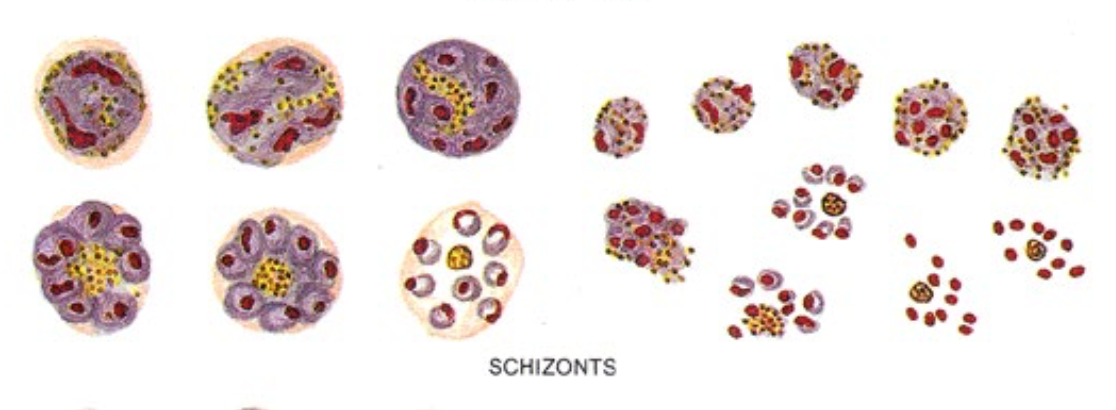
Left: thin
Right: thick
Schizonts - P.malariae
Right: thick
Schizonts - P.malariae
70
Which ones are the thick vs. thin blood smear? and what are they?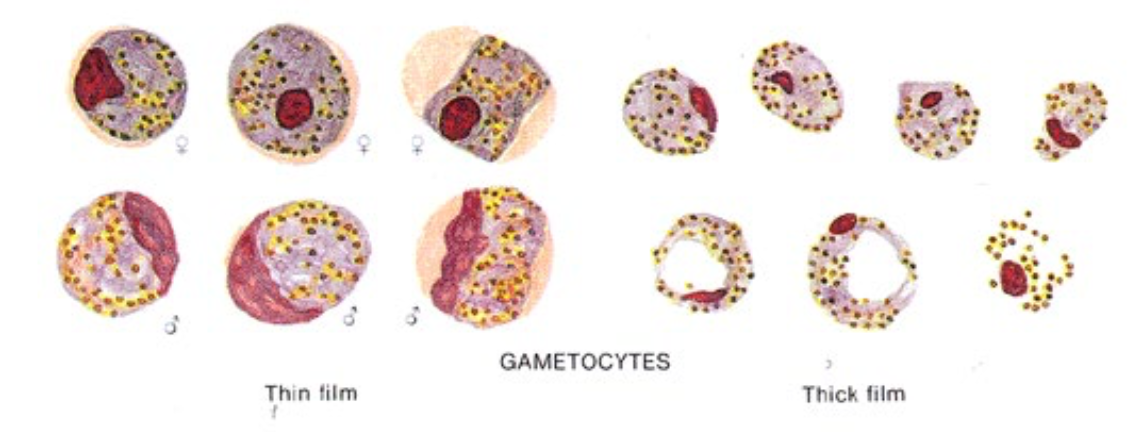
Left: thin
Right: thick
Gametocytes - P.malariae
Right: thick
Gametocytes - P.malariae
71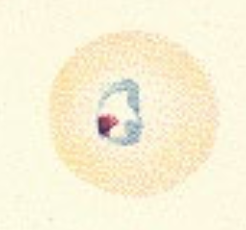
ring form - P.malariae
72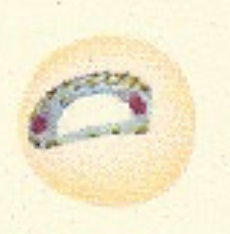
early band form "basket form" - P. malariae
73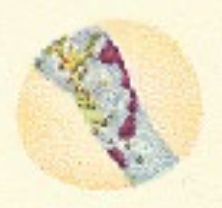
band form P. malariae
74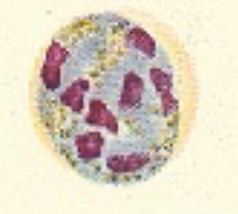
early schizont P.malariae
75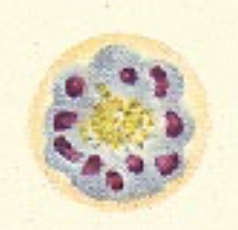
mature schizont; rosette pattern - P.malariae
76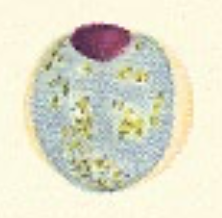
female gametocyte - P.malariae
77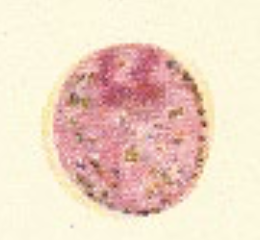
male gametocyte - P.malariae
78
What organism is this?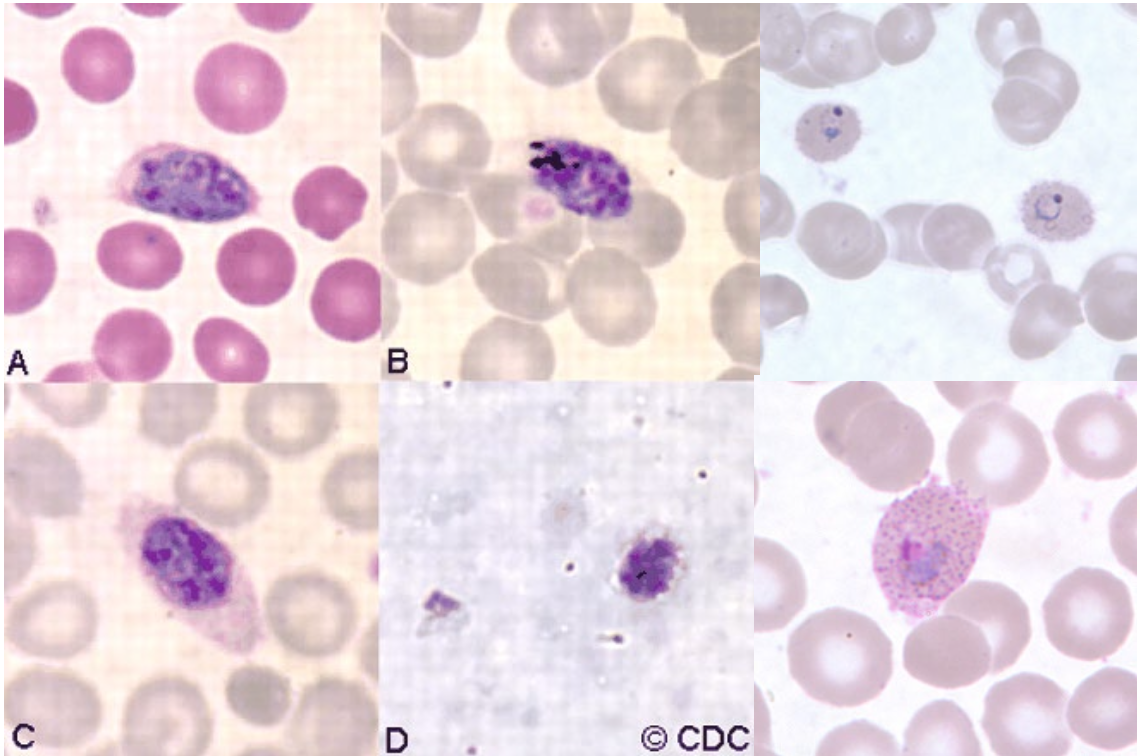
P.ovale
79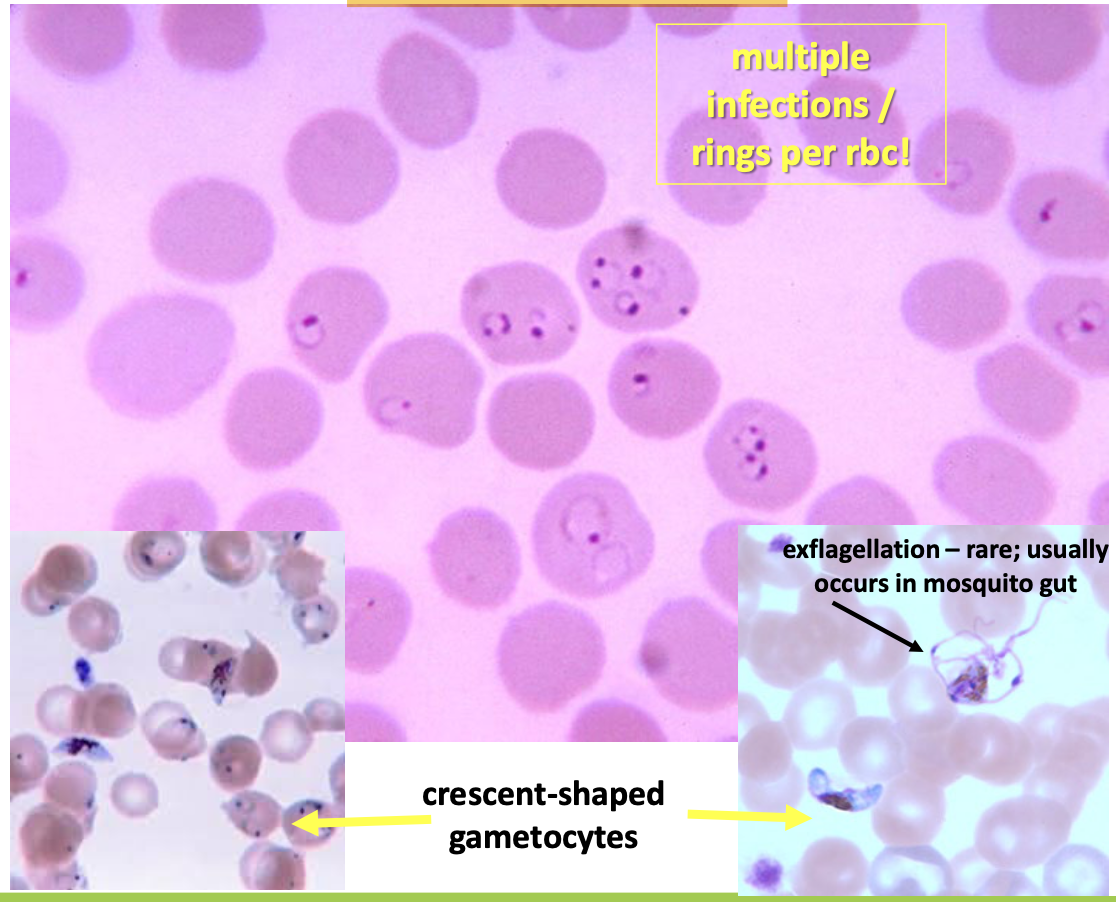
P.falciparum
80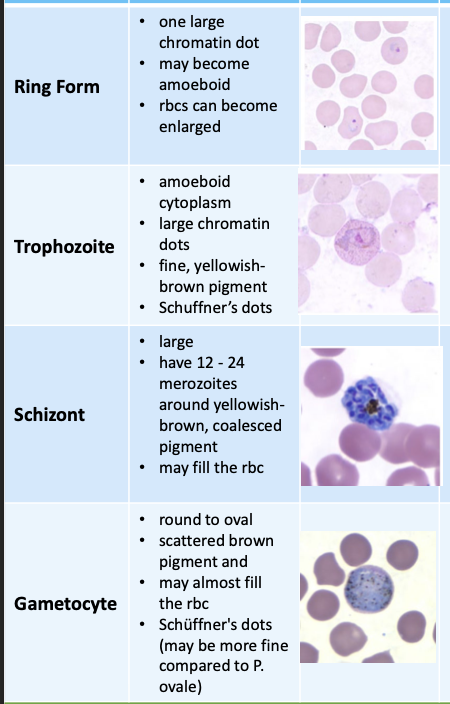
P.vivax
81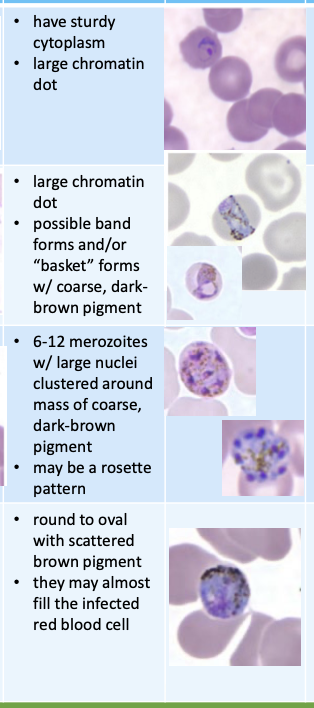
P.malariae
82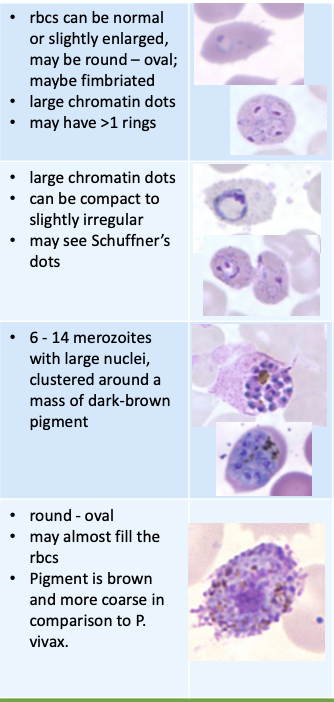
P.ovale
83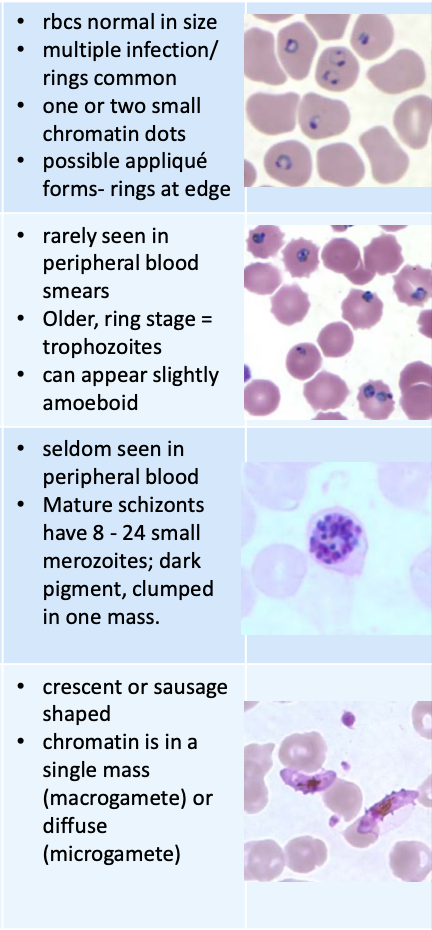
P.falciparum
84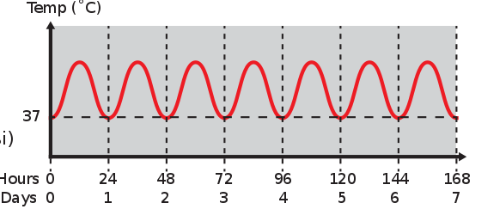
P.falciparum & P.knowlesi
85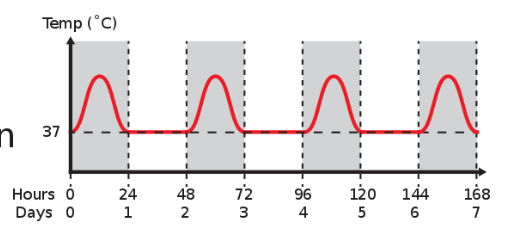
P.vivax, P.ovale
86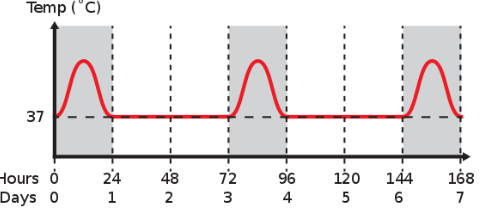
P.malariae
87
Which organisms have a 48hr fever pattern?
P.vivax/ovale
88
Which organisms have a 72hr fever pattern?
Malariae
89
What organism is this?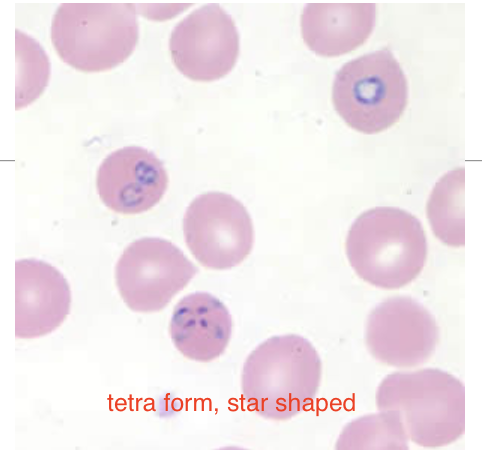
Babesia
90
What does Babesia cause?
Babesiosis
91
Which organisms are associated to Babesia?
B. microti, B.divergens, B.duncani, MO-1 (unnamed strain)
92
What is the definitive host and transmission by?
'blak-legged' TICK (Ixodes)
93
What other diseases can Ticks carry?
Lyme Disease and other pathogenic organisms
94
Who is the dead-end hosts in Babesia?
humans
95
What can Babesia be misidentified as? why?
Malaria; infect RBCs; ring forms can be easily misidentified.
96
What type of testing is recommend for Babesia?
PCR
97
What are the 2 hosts for Babesia microti?
rodent and ticks
98
What is the first step for the life cycle of Babesia microti?
Babesia-infected tick introduces sporozoites into the mouse (host)
99
What is the 2nd step for the life cycle of Babesia microti?
Sporozoites enter rodent erythrocytes (trophozoites) and undergo asexual reproduction (budding), (merozoites)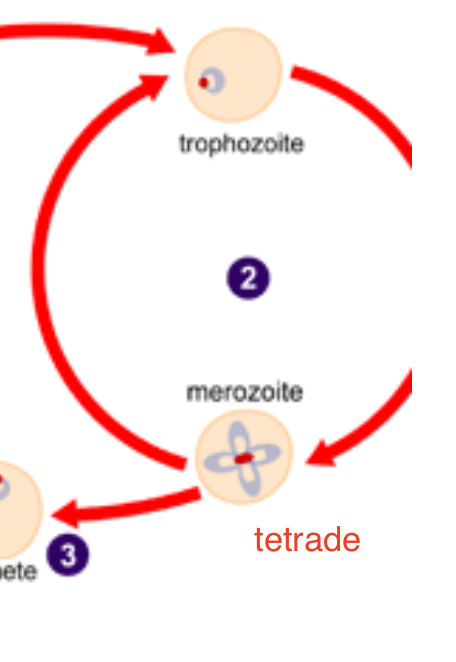
100
What is the 3rd step for the life cycle of Babesia microti?
Some parasites differentiate into male and female gametes (indistinguishable morphologically)
101
What is the 4th/5th step for the life cycle of Babesia microti?
Once ingested by an appropriate tick, gametes unite and undergo a sporogonic cycle resulting in sporozoites. 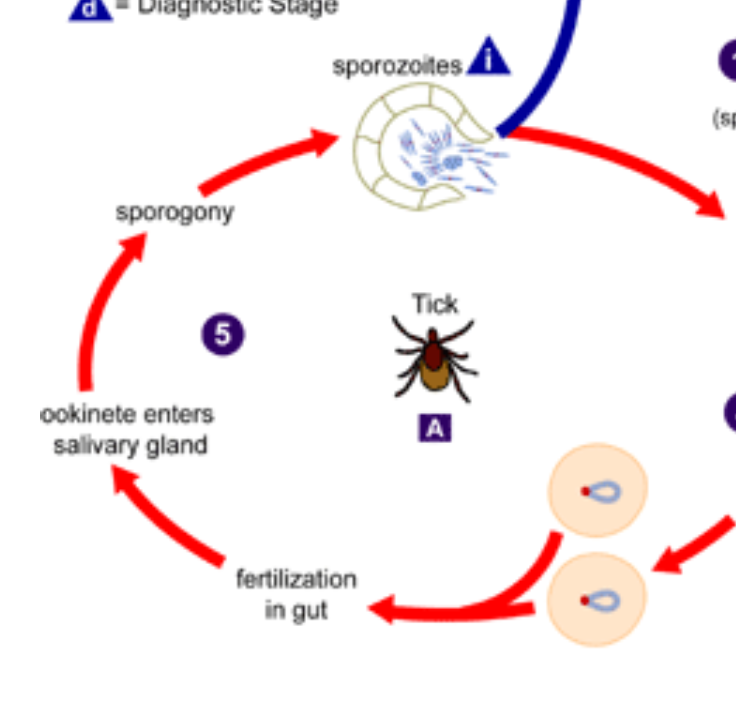
102
What is the 6th step for the life cycle of Babesia microti?
Humans: accidental/dead-end hosts - parasite does not produce gametes in human RBCs to complete life cycle. 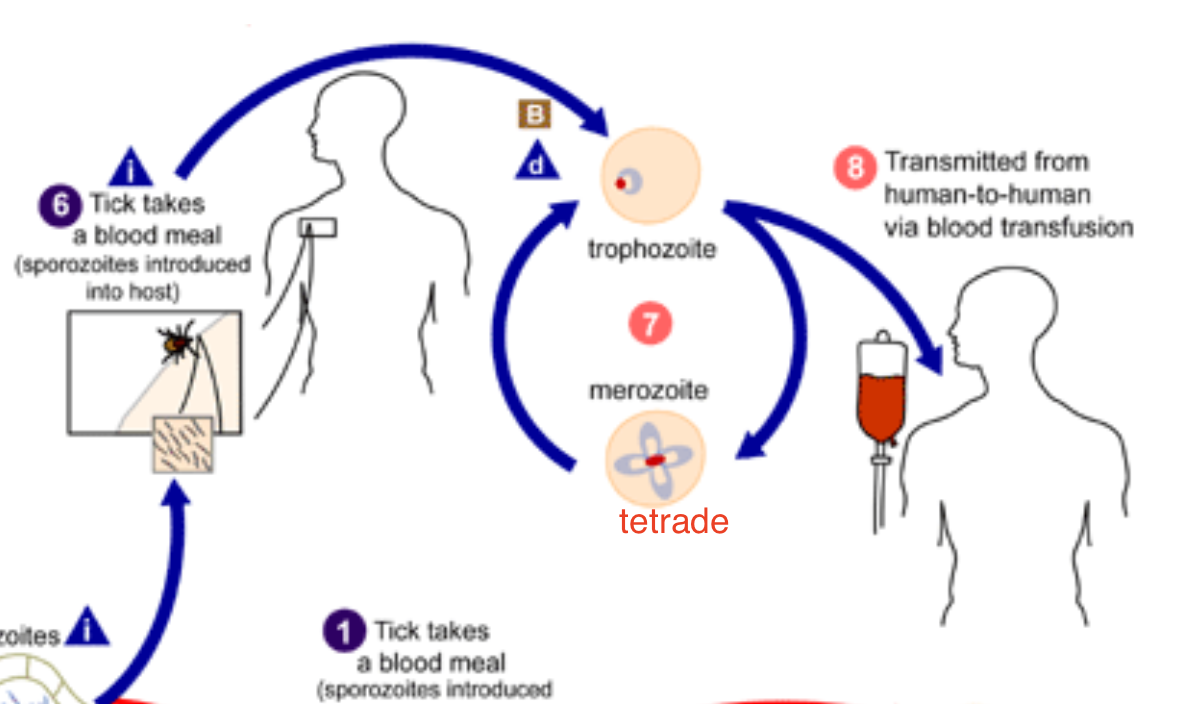
103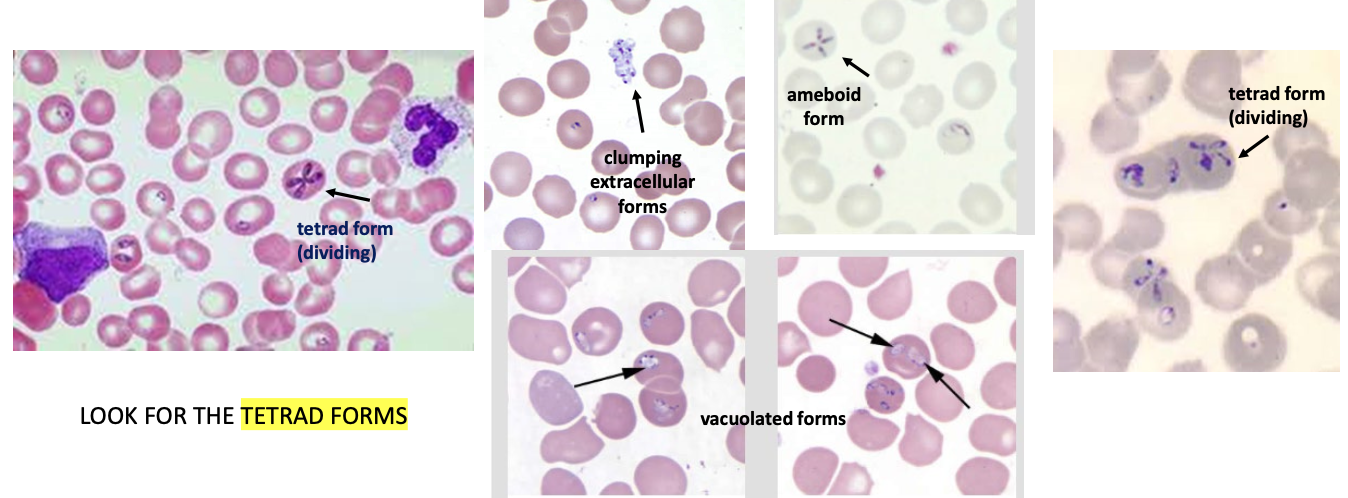
Babesia morphology
104
What diagnostic testing is done for Babesia?
Peripheral blood morphology
Molecular testing
Antibody Detection
Molecular testing
Antibody Detection
105
what should you look for in the peripheral blood morphology of Babesia?
tetrad forms
106
What can babesia be mistaken with?
P.falciparum
107
What Molecular testing is done for Babesia?
PCR
Used to ID to species level
Used to ID to species level