Lecture 1 - Quality Assurance and Safety
Study these flashcardsFree · spaced repetition · iPhone, Android, Mac & web
All cards
1
What falls under the Pre-analytic phase?
Patient/Client Prep Sample collection
Sample Transport
Sample Receipt and Accessioning
Sample Transport
Sample Receipt and Accessioning
2
What falls under Analytic phase?
Personnel Competency Test Evaluations
Quality control Testing
Quality control Testing
3
What falls under the Post-Analytic phase?
Reporting
Record Keeping
Record Keeping
4
What is Quality Assurance (QA)?
A program of checks and balances to ensure the quality of a lab's services.
5
What is the purpose of quality assurance (QA)?
obtain accurate results to see if the mechanism is not giving us errors.
6
What does Quality Assurance (QA) encompass?
Preanalytical
Analytical
Postanalytical
Analytical
Postanalytical
7
What should you check to make sure the results are accurate?
Standard Operation Procedure (SOP)
8
what is internal quality control (IQC)?
QC/maintenance
9
what is external quality control (IQC)?
CAP & CDC samples
10
What is SHIFT in QCs?
QC data is on one side the mean. Can't be accepted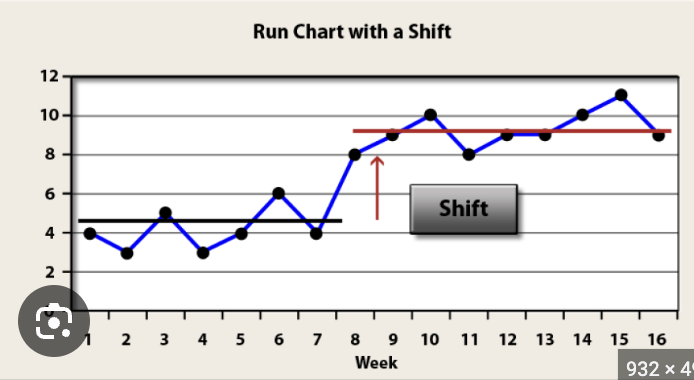
11
Why is there a shift in QCs?
New lot, instrument issue, calibration was inaccurate.
12
What should you do when there is a shift in QCs?
Change reagents, use new QCs
13
What is a TREND in QCs?
QC values move up or down from the mean and outside of the range. 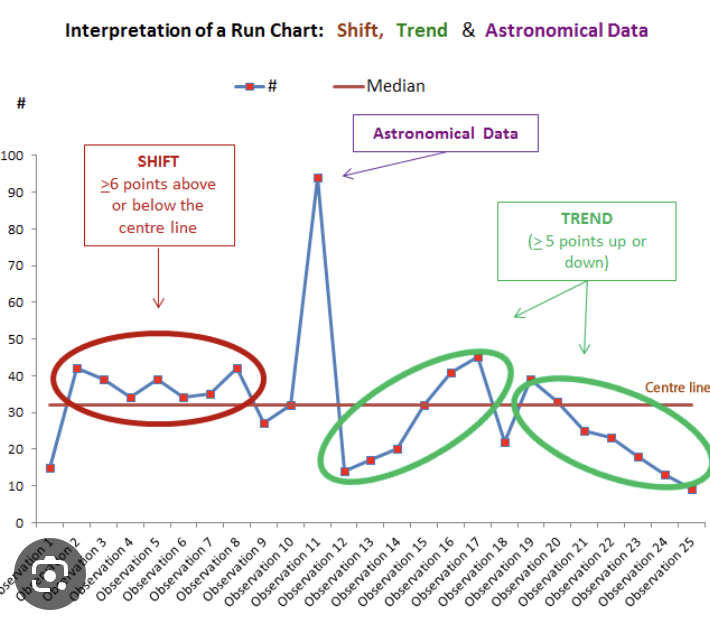
14
Why does a trend in QCs happen?
Might be the end of a lot
15
What to do when a trend occurs?
Change QCs
16
What is the goal of effective QA program?
Obtain consistently accurate and reproducible results
17
You should document everything you do (TRUE/FALSE)
TRUE
18
What are the 4 types of assay validation?
Analytical Method Validation
Equipment Validation
Process Validation
Cleaning Validation
Equipment Validation
Process Validation
Cleaning Validation
19
What is accuracy?
How closely a computed/measured value agrees with true value
20
What is precision?
How closely individual computer/measured values agree with each other
21
Label which ones are accurate and which ones are precise.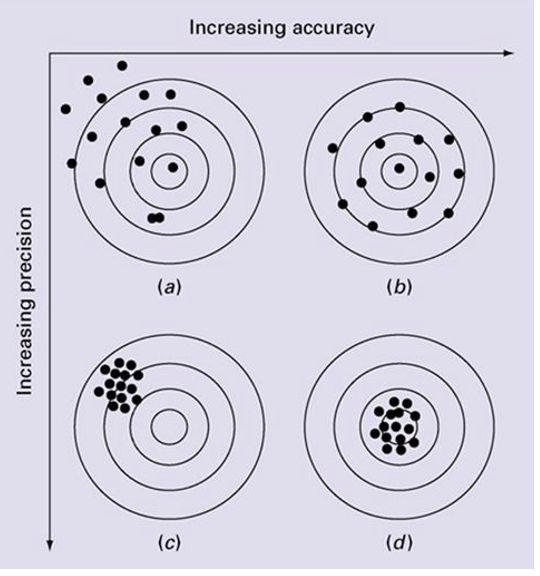
a) inaccruate and imprecise
b) accurate and imprecise
c) inaccurate and precise
d) accurate and precise
b) accurate and imprecise
c) inaccurate and precise
d) accurate and precise
22
Who establishes formal regulation of health and safety for all employees?
Occupational Health and Safety Act of 1970 (OSHA)
23
How to establish a range for a set of data points?
First, calculate mean
Second, SD
Third, calculate 2*SD
Fourth, write ranges: mean +/- 2SD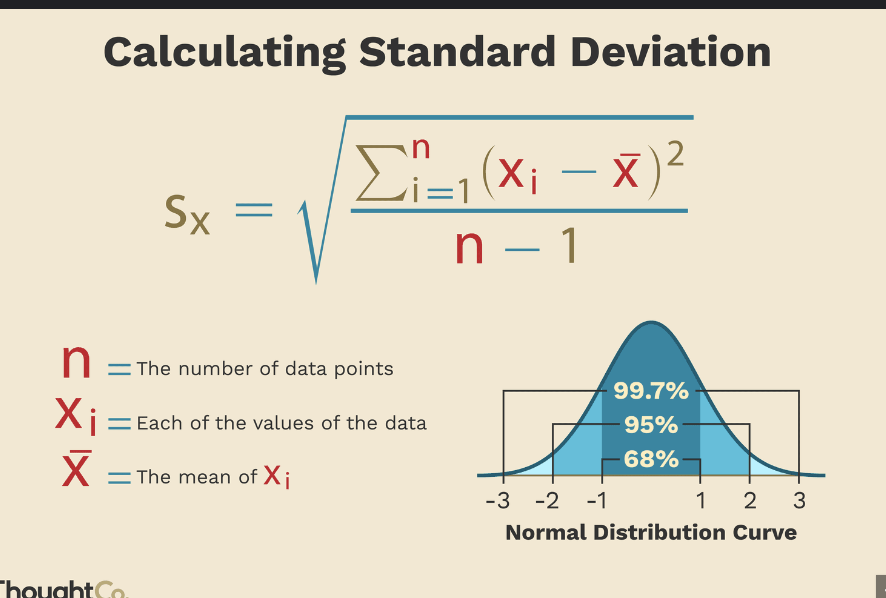
Second, SD
Third, calculate 2*SD
Fourth, write ranges: mean +/- 2SD
24
What type of samples are considered biological hazards?
all body fluids except sweat.
25
What are the 3 categories of transmission-based precautions?
Airborne precautions
Contact precautions
Droplet precautions
Contact precautions
Droplet precautions
26
What should you do when there is a chemical spill?
consult Material Safety Data Sheets (MSDS)