Lecture 1 - Intro to Mycology
Study these flashcardsFree · spaced repetition · iPhone, Android, Mac & web
All cards
1
What is mycology?
the study of fungi
2
Are fungi eukaryotic or prokaryotic?
Eukaryotic
3
What classifies fungi as eukaryotic?
have membrane-bound nucleus, mitochondria
4
Are fungi aerobic or anaerobic?
aerobic
5
What is the ideal pH for fungi?
Neutral
6
What are saprobes?
organisms that live on dead/ decaying matter
7
What are symbionts?
live together, mutually benefit
8
What are commensals?
live together, one benefits and other neutral.
9
What are parasites?
benefits from host (nutrition), while often harming host (pathogens)
10
Fungus that live on us are called?
endogenous
11
Fungus that live around us are called?
exogenous
12
Why aren't fungi making us sick all the time?
Generally, healthy, IMMUNOCOMPETENT people have a high innate resistance to fungal infections.
13
What is a primary pathogenic fungi?
fungi that can initiate infection in immunocompetent (healthy) host
14
What is the process of infection for a primary pathogenic fungi?
Colonize host -> EVADE HOST DEFENSES -> survive/thrive in host -> multiply/ spread within host.
15
Primary pathogenic fungi are agents of what?
respiratory infection
16
What is dimorphism?
when a primary pathogenic fungi has a saprobic phase (in environment) and parasitic phase (in you)
17
When does an opportunistic pathogenic fungi cause infection?
Break in skin
Disruption of mucous membranes
Defect in host immune system
Disruption of mucous membranes
Defect in host immune system
18
Give examples of primary pathogens. (4)
Blastomyces dermatitidis
Coccidioides immitis
Histoplasma capsulatum
Paracoccidioides brasiliensis
Coccidioides immitis
Histoplasma capsulatum
Paracoccidioides brasiliensis
19
Give examples of opportunistic pathogens (3).
Candida spp.
Cryptococcus neoformans
Aspergillus spp.
Cryptococcus neoformans
Aspergillus spp.
20
How is the fungal phyla classification set up as?
Base of Phylogenetic (genealogies of species)
21
Each branch on the Fungal Phyla means 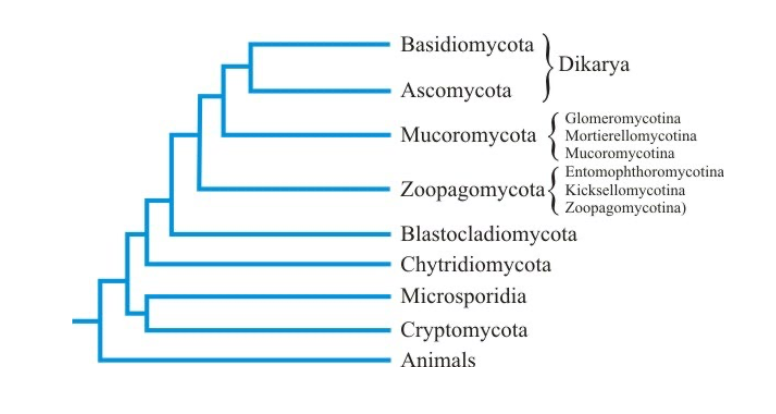
ancestral species.
22
Where can dermatophytes cause lesions of skin and appendages?
superficial and cutaneous
23
What is the site of infection for pathogenic fungi which cause infections through the skin?
subcutaneous
24
What type of pathogen is the most virulet, cause deep, systemic disease in normal AND immunocompromised?
Systemic pathogens
25
What type of fungi from the environment and/ or normal flora causes disease in immunocompromised?
Opportunistic fungi
26
What is the first layer of the skin called?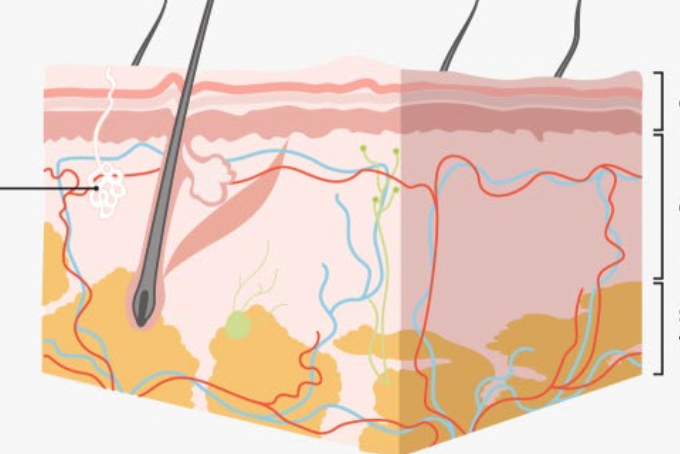
epidermis
27
What is the second layer of the skin called?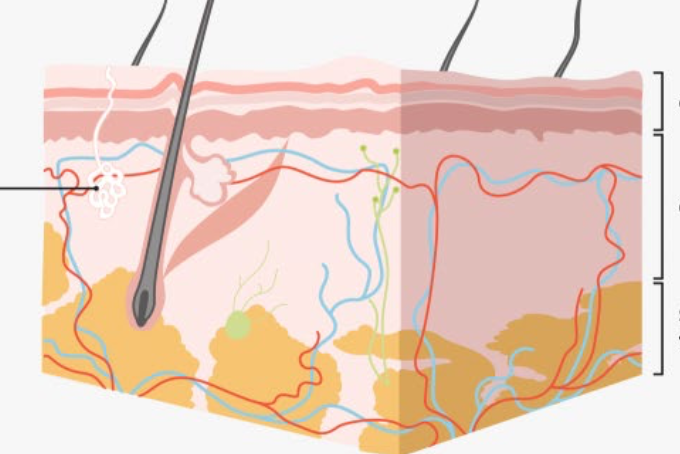
dermis
28
What is the third layer of the skin called?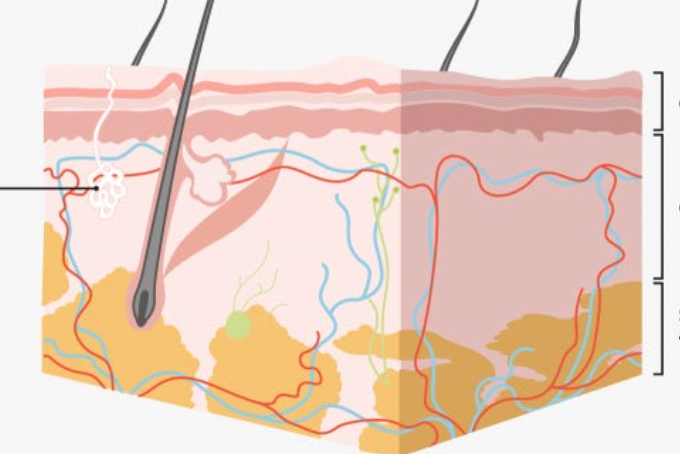
subcutaneous
29
What type of response does our immune system have to defend from a fungal attack?
Innate and adaptive
30
Which cells are under the innate immune response?
Macrophages, neutrophils, dendritic cells, and complement fixation.
31
Which cells are under the adaptive immune response?
T-cells (T-helper 1 & 17)
32
What do macrophages do?
phagocytize and kill
33
What do neutrophils do?
Phagocytize and kill
34
What are dendritic cells and what do they do?
Antigen presenting cells; link innate and adaptive cells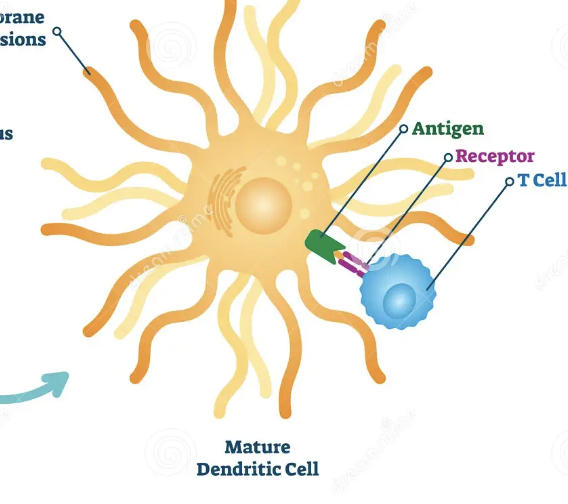
35
What is complement fixation?
a process in immunology that occurs when complement binds to an antigen-antibody complex
36
T-cells are activated by _____
Innate response
37
What do T-helper 1 cells do?
Secret cytokines to activate other cells (macrophages) to attack pathogen & differentiation of other T cells.
38
What do T-helper 17 cells do?
Secrete IL-17 that recruit neutrophils to site of infeciton.
39
How does the immune sytem recognize fungal cells?
By their cell wall sugar molecules.
40
What consists of the cell wall sugar molecules of fungal cells?
1. Glucans (polymers of glucose)
2. Mannans (chains of mannose)
3. Chitin (polysaccharide substance of fungal cell walls)
2. Mannans (chains of mannose)
3. Chitin (polysaccharide substance of fungal cell walls)
41
Which one are the glucans?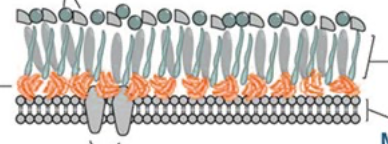
Top right
42
Which one are the Mannans?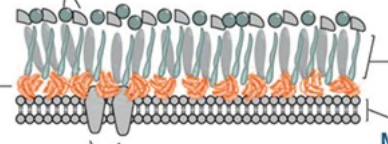
Top - phopholipid heads
43
Which on are the Chitin?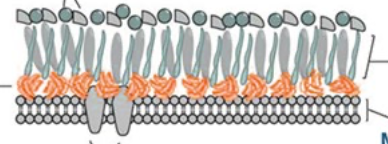
Orange ones
44
What is ergosterol?
a sterol found in the cell membranes of fungi and protozoa that has many functions similar to cholesterol in animal cells:
45
Where is ergosterol located?
Part of the membrane
46
Which receptors in the immune system detect fungal molecules?
TLR (toll-like receptor) 2, 4, 9
Dectin 1
C-type lectin receptor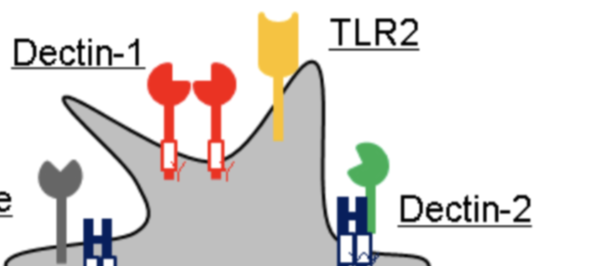
Dectin 1
C-type lectin receptor
47
Are fungi slow or fast growing?
slowwww
48
How long can you keep fungi plates?
30 days or 1 month.