WBC: Lecture 1 -Leukopoiesis, WBC function
Study these flashcardsFree · spaced repetition · iPhone, Android, Mac & web
All cards
1
What are the different types of WBCs seen?
Granulocytes
Neutrophils (segmented, band)
Eosinophils
Basophils
Monocytes
Lymphocytes
T cells (Th, Treg, CTL)
B cells and plasma cells
NK cells
Neutrophils (segmented, band)
Eosinophils
Basophils
Monocytes
Lymphocytes
T cells (Th, Treg, CTL)
B cells and plasma cells
NK cells
2
In Neutrophil development, what is the common progenitor shared with monocytes?
Common progenitor with monocytes (CFU-GM).
3
What does CMP stand for?
CMP: common myeloid progenitor.
4
What does GMP stand for?
GMP: granulocyte-monocyte progenitor.
5
What is the role of the stem cell pool?
Stem cell pool: self-renewal and differentiation.
6
What is the function of the mitotic pool?
Mitotic pool: high proliferation (cell division) capacity.
7
What is the characteristic of the storage pool?
Storage pool: cells not able to divide, just continue with maturation.
8
How do you recognize CMP and GMP?
add ;
CMP = “Common” → broad, can still make all myeloid lineages.
GMP = “Granulocyte/Monocyte” → narrower focus, no more red cells/platelets
CMP = “Common” → broad, can still make all myeloid lineages.
GMP = “Granulocyte/Monocyte” → narrower focus, no more red cells/platelets
9
What is the first cell type in the stem cell pool?
Hematopoietic stem cell.
10
Which cytokine drives hematopoietic stem cell differentiation into CMP?
IL-3.
11
Which cytokine drives CMP into GMP?
IL-3, GM-CSF.
12
Which cytokines influence GMP differentiation into myeloblast?
IL-3, GM-CSF, G-CSF.
13
What is the first and second cell type in the mitotic pool?
Myeloblast →Promyelocyte → Myelocyte.
14
Which is the Cellular maturation sequence in the storage pool?
Metamyelocyte → Band → Neutrophil
15
What are the three main pools in neutrophil development?
Stem cell pool, Proliferation (mitotic) pool, Maturation (storage) pool.
16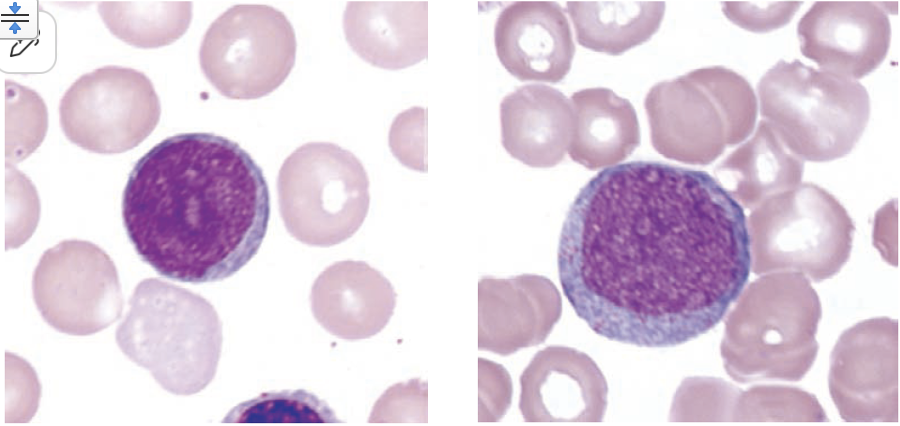
Granulocytic cell line; Myeloblasts
17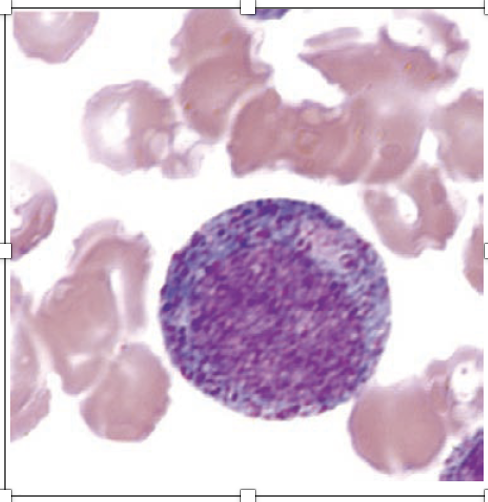
Promyelocyte
18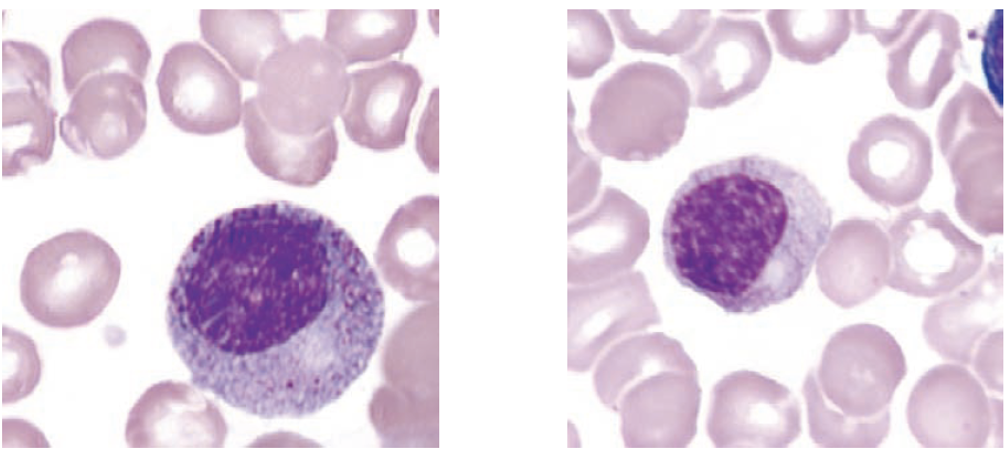
myelocyte
19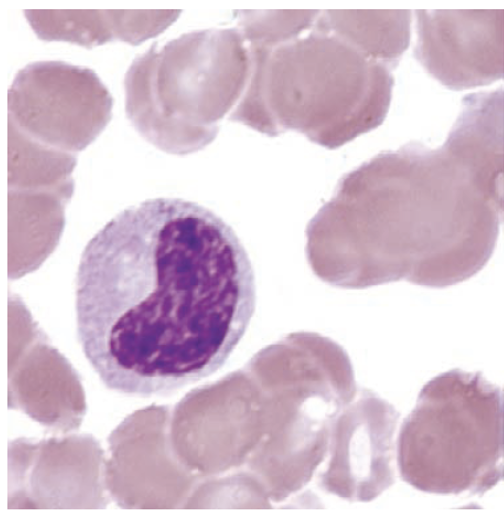
metamyelocyte
20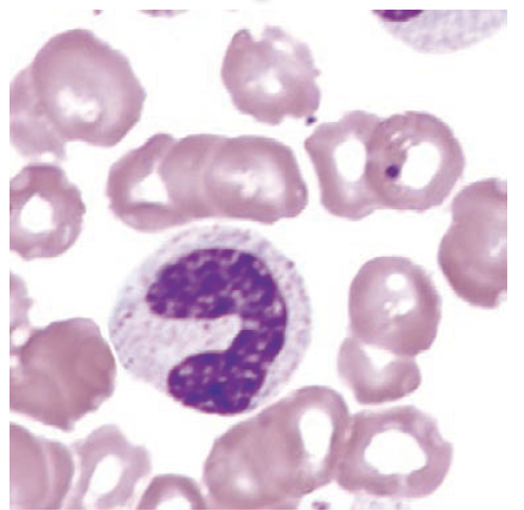
band
21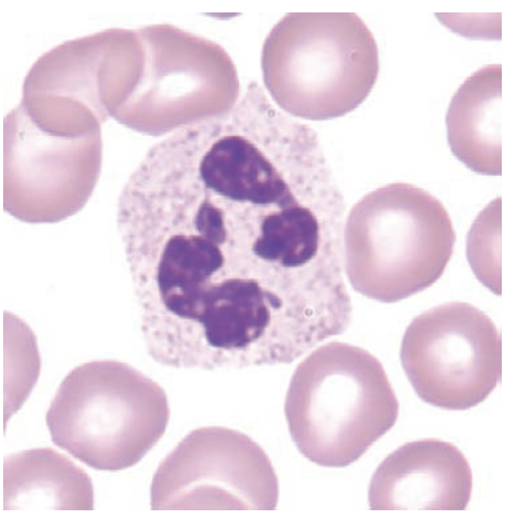
Segmented neutrophil
22
What is the daily production of neutrophils? (amount)
Daily production around one billion /kbw.
23
What is the transit time from myeloblast through myelocyte?
Transit time from myeloblast through myelocyte around 6 days, and through maturation pool is around 4-6 days Common progenitor with monocytes (CFU-GM)
24
What are the two pools of neutrophils in circulation?
Circulating neutrophil pool (CNP)
and
Marginated neutrophil pool (MNP)
(almost 50:50 distribution)
and
Marginated neutrophil pool (MNP)
(almost 50:50 distribution)
25
What process do PMNs undergo after their 7-hour half-life in circulation, and what are the possible outcomes?
After 7 h it will leave circulation for tissues by diapedesis process (either involve in inflammation/infection, or spontaneous apoptosis).
26
What is the main function of neutrophils?
Main function is phagocytosis.
27
What are the steps of phagocytosis? (in neutrophils)
- Recognition and attachment
- Ingestion
- Killing and digestion (O2-dependent and O2-independent)
- Formation of neutrophil extracellular traps
- Ingestion
- Killing and digestion (O2-dependent and O2-independent)
- Formation of neutrophil extracellular traps
28
What are primary (azurophilic) granules and when do they develop?
contain MPO (most important one).
Primary (azurophilic): develop at promyelo stage,
Primary (azurophilic): develop at promyelo stage,
29
What do secondary (specific) granules contain and when are they formed?
contain collagenase, lactoferrin.
Secondary (specific): formed during myelo and metamyelo
Secondary (specific): formed during myelo and metamyelo
30
What do tertiary granules contain and when are they formed?
contain lysozyme.
Tertiary: formed during metamyelo and band,
Tertiary: formed during metamyelo and band,
31
What are secretory vesicles and when are they formed?
Secretory (vesicles): formed during band and segmented neut. They contain some complement components.
32
At which stage does the eosinophil separate from the myeloid line?
Separates from myeloid line at promyelocyte stage but microscopically identified as eosinophilic at myelocyte stage.
33
How can eosinophilic promyelocytes be identified?
Eosinophilic promyelocytes can be identified by detection of Charcot-Leyden crystal protein in their primary granules.
34
What percentage of eosinophils are found in peripheral blood?
1-3% in peripheral blood.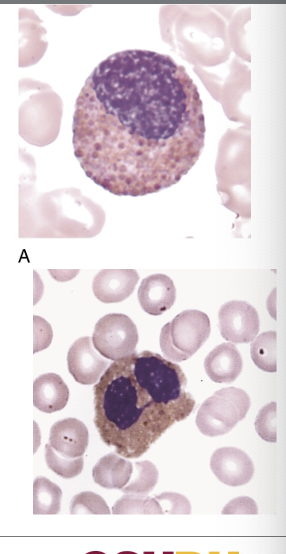
35
Which cytokine is specific for eosinophils?
IL-5 is the specific cytokine.
36
What is the half-life of eosinophils in circulation?
In the circulation, half-life is around 18h.
37
What are the functions of eosinophils?
Functions: immune reactions (allergies), killing the parasites (helminths) extracellularly by secreting major basic protein (MBP).
38
What cells are basophils similar to and what do they likely share?
Similar to mast cells, probably have the same progenitor.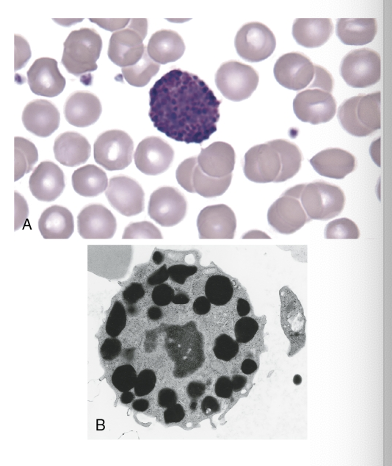
39
Are mast cells leukocytes?
Mast cells is not a leukocyte, but a tissue-resident cell (uses blood as a transit system).
40
How well are basophil kinetics understood?
Kinetics poorly understood (very low number).
41
What is the half-life of basophils compared to other granulocytes?
Half-life is longer than other granulocytes (around 30h).
42
What is the main function of basophils?
Main function: inflammatory response, they produce large amount of IL-4 and IL-13 (Th2 cytokines).
43
What do basophils synthesize that is important in allergic reactions?
Synthesize IgE (most important cytokine in allergic reactions).
44
What receptors do basophils have and what happens when allergens cross-link them?
They have receptors for IgE: cross-linking by allergens trigger granular release of histamine (degranulation).
45
How is the development of mononuclear cells related to neutrophils?
Development similar to neutrophils (both derived from GMP).
46
What is the main cytokine responsible for mononuclear cell development?
The main cytokine responsible for development is M-CSF.
47
What are the stages of mononuclear cell development?
Stages: monoblast, promonocyte, monocyte.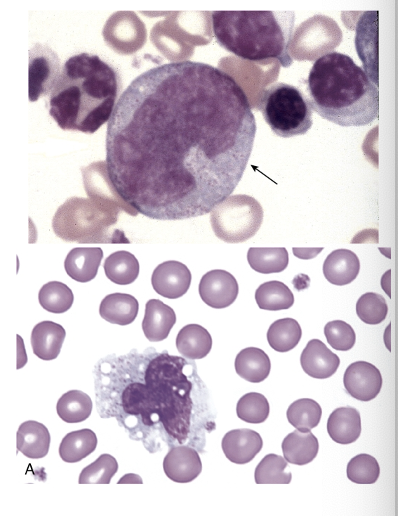
48
What are the features of a promonocyte?
Promonocyte: light blue cytoplasm, delicate chromatin, 1-2 nucleoli, folded or indented nucleus, azurophilic granules (less than promyelo).
49
What are the features of a monocyte?
Monocyte: mostly indented or folded nucleus, sometimes vacuoles, irregular in overall shape, fine (lacy) chromatin, few granules in cytoplasm (ground glass appearance).
50
Do monocytes have a storage pool in the bone marrow?
Kinetics: no storage pool in BM (released immediately after maturation).
51
Q: In peripheral blood, what pools do monocytes exist in?
A: Circulating pool and marginal pool (marginal is 3.5× larger than circulating).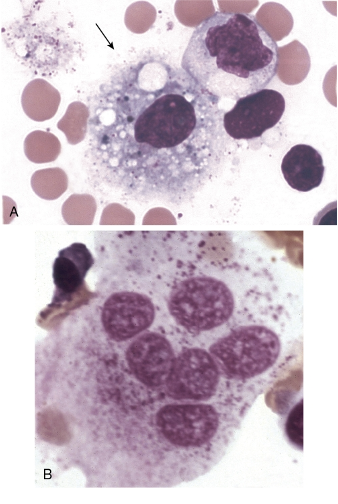
52
What do monocytes transform into when they enter tissues?
In tissues they transform into tissue-resident macrophages:
Kupffer cells, Langerhans cells (epidermis (the outermost layer)), dendritic cells, osteoclasts, microglia.
Kupffer cells, Langerhans cells (epidermis (the outermost layer)), dendritic cells, osteoclasts, microglia.
53
What is one function of monocytes/macrophages in innate immunity?
A: Produce nitric oxide (NO), express Toll-like receptors (TLRs) and Fcγ receptors.
54
Q: How do macrophages contribute to adaptive immunity?
A: They present antigens and activate T and B cells.
55
What is the housekeeping role of monocytes/macrophages?
Housekeeping:
-debris removal (dead cells at infection/inflammation site),
-old RBC destruction,
-production of many proteins (some coag factors, complement proteins, interleukins, growth factors, enzymes).
-debris removal (dead cells at infection/inflammation site),
-old RBC destruction,
-production of many proteins (some coag factors, complement proteins, interleukins, growth factors, enzymes).
56
What percentage of lymphocytes are found in adult blood?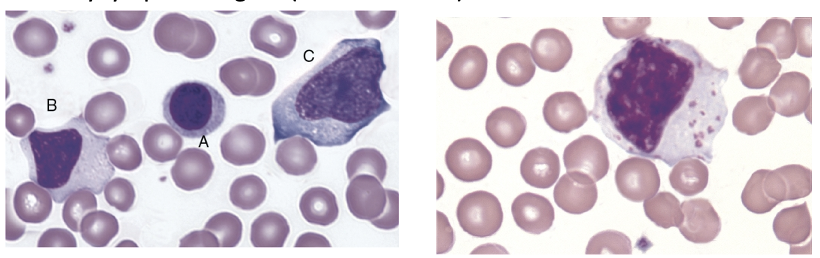
In adults, 18-42% (20-40%) in blood.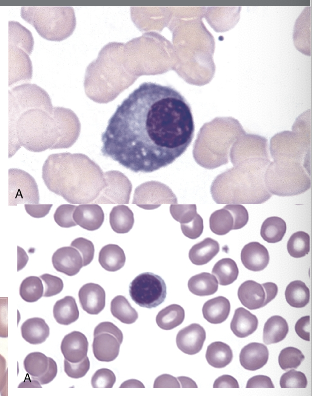
57
Which mature cells in the blood are able to proliferate?
Lymphocytes are the only mature cells which are able to proliferate (blast transformation).
58
What are the proportions of B cells, T cells, and NK cells among lymphocytes in blood?
B cells, T cells, NK cells: of all lymphs in blood
3-21% B cells,
51-88% T cells,
4-29% NK cells.
3-21% B cells,
51-88% T cells,
4-29% NK cells.
59
Where do B cells develop and where do they move after development?
B cells: develop in BM (pro-B, pre-B, Immature B) and move to secondary lymphoid organs (as naïve B cells).
60
Where do T cells develop and where do they move after development?
T cells: develop in thymus (pro-T, pre-T, immature T) and move to secondary lymphoid organs (as naïve T cells).