Heavy Metal Poisonings
Study these flashcardsFree · spaced repetition · iPhone, Android, Mac & web
All cards
1
Heavy Metal
• High density naturally occurring elements
• Metals vs Metalloids
• Environmental and human toxicity
• Acute or Chronic exposure
• Human exposure:
• Inhalation
• Ingestion
• Skin contact
• Metals vs Metalloids
• Environmental and human toxicity
• Acute or Chronic exposure
• Human exposure:
• Inhalation
• Ingestion
• Skin contact
2
Lead
• Atomic number = 82
• Atomic weight = 207.21 Da
• Whole blood = < 5 mcg/dL (0.24 mmol/L)
• Atomic weight = 207.21 Da
• Whole blood = < 5 mcg/dL (0.24 mmol/L)
3
Lead poisoning
common occupational practice
• Inorganic Lead
• Brightly colored & variable solubility
• Paints
• Lead chromate (yellow)
• Lead oxide (red)
• Organic Lead
• Gasoline additives (tetraymethyl & tetraethyl lead)
• Complexes with several ligands common to biologic molecules, including –OH, -
SH, and NH2
• No known physiologic role
• Inorganic Lead
• Brightly colored & variable solubility
• Paints
• Lead chromate (yellow)
• Lead oxide (red)
• Organic Lead
• Gasoline additives (tetraymethyl & tetraethyl lead)
• Complexes with several ligands common to biologic molecules, including –OH, -
SH, and NH2
• No known physiologic role
4
Lead Sources
Environmental
• Lead paint (especially pre-1978 homes)
• Leaded gasoline
• Lead plumbing (pipes)
• Dietary supplements
• Moonshine
Occupational
• Metal welders
• Painters
• Automobile factory workers
• Plastics manufacturing
• Plumbers
• Lead paint (especially pre-1978 homes)
• Leaded gasoline
• Lead plumbing (pipes)
• Dietary supplements
• Moonshine
Occupational
• Metal welders
• Painters
• Automobile factory workers
• Plastics manufacturing
• Plumbers
5
Lead Absorption
Gastrointestinal = 10 - 15 %
Inhaled = 30 - 40 %
Cutaneous through intact skin = 0.06%
99% bound to erythrocytes
Inhaled = 30 - 40 %
Cutaneous through intact skin = 0.06%
99% bound to erythrocytes
6
Lead Distribution
Tissue distribution results in majority of toxicity - Accumulation throughout life
5% distributed to major lead storage sites $\rightarrow$ Liver, Kidney, Bone marrow, Brain
95% of lead burden is stored in the bones
5% distributed to major lead storage sites $\rightarrow$ Liver, Kidney, Bone marrow, Brain
95% of lead burden is stored in the bones
7
Lead accumulation in children
Increased GI absorption
• 40-50% vs 10-15%
Greater volume of inhaled air per body size
• 2.7-fold higher lung deposition rate
Thinner skin →Increased cutaneous absorption
Rapidly crosses the placental barrier
Bone lead burden
• 70% vs 95% in adults
• 40-50% vs 10-15%
Greater volume of inhaled air per body size
• 2.7-fold higher lung deposition rate
Thinner skin →Increased cutaneous absorption
Rapidly crosses the placental barrier
Bone lead burden
• 70% vs 95% in adults
8
Blood Lead Reference Level
• Identifies children with higher levels of lead in their blood compared to most children
•1960: >60 mcg/dL
•1978: >30 mcg/dL
•1985: >25 mcg/dL
•2012: >5 mcg/dL
•TODAY (as of May 2021): >3.5 mcg/dL
•1960: >60 mcg/dL
•1978: >30 mcg/dL
•1985: >25 mcg/dL
•2012: >5 mcg/dL
•TODAY (as of May 2021): >3.5 mcg/dL
9
Lead Toxicity
• Binds and impact numerous enzymatic, receptor, and structural proteins
• Interferes with metabolic pathways in mitochondria and in second-messenger systems regulating cellular energy metabolism
• Affects nucleic acids
• Alteration of DNA methylation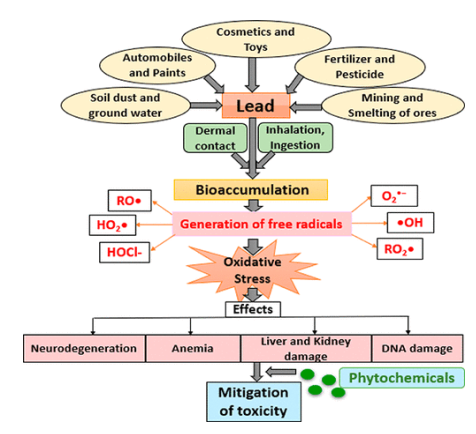
• Interferes with metabolic pathways in mitochondria and in second-messenger systems regulating cellular energy metabolism
• Affects nucleic acids
• Alteration of DNA methylation
10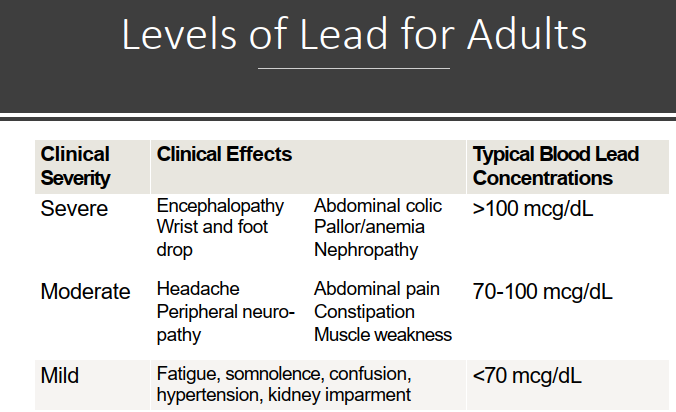
Image occlusion: name the hidden labels
11
Image occlusion: name the hidden labels
12
Image occlusion: name the hidden labels
13
Image occlusion: name the hidden labels
14
Image occlusion: name the hidden labels
15
Image occlusion: name the hidden labels
16
Image occlusion: name the hidden labels
17
Image occlusion: name the hidden labels
18
Image occlusion: name the hidden labels
19
Lead Neurotoxicity
• Blockade of calcium influx at voltage-sensitivecalcium channels
• Neurotransmitter release, receptor activity, and intracellular signaling
• Adversely affect ”synaptic pruning”
• Adverse protein conformational affects
• Associated with Alzheimer's and Parkinson’s
• Cerebral edema
• Memory & learning deficits
• Neurotransmitter release, receptor activity, and intracellular signaling
• Adversely affect ”synaptic pruning”
• Adverse protein conformational affects
• Associated with Alzheimer's and Parkinson’s
• Cerebral edema
• Memory & learning deficits
20
Neurotoxicity Clinical Signs and Symptoms
Acute
• Encephalopathy
• Seizures
• AMS
• Ataxia
• Optic neuritis
Chronic
• Headache
• Irritability
• Depression
• Fatigue
• Memory deficit
• Sleep disturbance
• Encephalopathy
• Seizures
• AMS
• Ataxia
• Optic neuritis
Chronic
• Headache
• Irritability
• Depression
• Fatigue
• Memory deficit
• Sleep disturbance
21
Lead Hematologic Toxicity
• Inhibition of enzymes in heme biosynthetic pathway
• Kidney injury → decreased erythropoietin
• Increased membrane fragility → shortened erythrocyte life span
• Occur more frequently with acute poisoning
• Iron deficiency
• Acts synergistically to toxicity, may increase GI lead absorption
• Signs and Symptoms
• Lead induced anemia/hemolytic anemia
• Kidney injury → decreased erythropoietin
• Increased membrane fragility → shortened erythrocyte life span
• Occur more frequently with acute poisoning
• Iron deficiency
• Acts synergistically to toxicity, may increase GI lead absorption
• Signs and Symptoms
• Lead induced anemia/hemolytic anemia
22
Lead Skeletal/Neuromuscular Toxicity
• Inhibition of new bone formation
• Growth stunting
• “Lead lines”
• Altered calcium flux and synaptic
transmission
• Signs and symptoms
• Peripheral neuropathy
• ”Lead palsy”
• Wrist and foot drop
• Growth stunting
• “Lead lines”
• Altered calcium flux and synaptic
transmission
• Signs and symptoms
• Peripheral neuropathy
• ”Lead palsy”
• Wrist and foot drop
23
Other Lead Toxicities
• GI toxicity
• Constipation, vomiting,severe abdominal pain
• “Lead colic” at levels >80 mcg/dL
• Cardiotoxicity
• Hypertension–altered calciumconduction
• Direct cardiotoxicity rare
• Nephrotoxicity
• Acuterenal tubular necrosis
• Reproductive toxicity
• Infertility, reduced sperm count
• Premature births
• >40 mcg/dL leadconcentration
• Constipation, vomiting,severe abdominal pain
• “Lead colic” at levels >80 mcg/dL
• Cardiotoxicity
• Hypertension–altered calciumconduction
• Direct cardiotoxicity rare
• Nephrotoxicity
• Acuterenal tubular necrosis
• Reproductive toxicity
• Infertility, reduced sperm count
• Premature births
• >40 mcg/dL leadconcentration
24
Lead Toxicity Diagnosis
• Detailed Exposure History
• Occupational, environmental, travel-related, recreational
• Definitive diagnosis
• Blood lead level (results may take days)
• CBC (anemia)
• X-ray
• Ingested lead containing particles/objects
• Lead lines
• Children
• Assess for PICA
• Consider diagnosis in all patients presenting with acute encephalopathy
• Occupational, environmental, travel-related, recreational
• Definitive diagnosis
• Blood lead level (results may take days)
• CBC (anemia)
• X-ray
• Ingested lead containing particles/objects
• Lead lines
• Children
• Assess for PICA
• Consider diagnosis in all patients presenting with acute encephalopathy
25
Lead Toxicity Management
• Removal of exposure from lead
Consult Medical Toxicologist/PoisonControl
• Imaging (X-ray)
Depends on:
• Age
• Blood level concentration
• Clinical presentation
Consult Medical Toxicologist/PoisonControl
• Imaging (X-ray)
Depends on:
• Age
• Blood level concentration
• Clinical presentation
26
Lead Toxicity Treatment
GI decontamination
• Imaging shows foreign bodies
• Whole-bowel irrigation (polyethylene glycol)
Chelation
• Forms complexes with lead, increases urinary lead excretion and reduces blood concentrations
• **Start ASAP in symptomatic patients with known exposure, do not wait for lab confirmation**
Acute encephalopathy (seizures)
• Benzodiazepines
• Imaging shows foreign bodies
• Whole-bowel irrigation (polyethylene glycol)
Chelation
• Forms complexes with lead, increases urinary lead excretion and reduces blood concentrations
• **Start ASAP in symptomatic patients with known exposure, do not wait for lab confirmation**
Acute encephalopathy (seizures)
• Benzodiazepines
27
Dimercaprol (BAL)
• Indicated when neurotoxicity or high blood levels
present
• Crosses the blood brain barrier
• Sulfhydryl group forms nontoxic soluble chelates excreted in urine
• Caution in:
• Hepatic dysfunction, G6PD deficiency
• Oil based (peanut)
• Contraindicated in peanut allergies
• Dosing:
• Children: 75 mg/m2 IM injection q4h x 3-5 days
• Adults: 4 mg/kg IM q4h x 3-5 days
present
• Crosses the blood brain barrier
• Sulfhydryl group forms nontoxic soluble chelates excreted in urine
• Caution in:
• Hepatic dysfunction, G6PD deficiency
• Oil based (peanut)
• Contraindicated in peanut allergies
• Dosing:
• Children: 75 mg/m2 IM injection q4h x 3-5 days
• Adults: 4 mg/kg IM q4h x 3-5 days
28
Calcium Disodium Edetate (CaNa2EDTA)
• Binds Lead to displace calcium forming a stable ring compound
• Bone is primary source of chelation
• Used in conjunction with Dimercaprol for Lead > 100 mcg/dL
• Used alone for Lead 45 - 70 mcg/dL
• Monitor renal function
• Dosing:
• 1,000 – 1,500 mg/m2/day continuous IV infusion for 5 days
• Given 4 hours after dimercaprol – prevents redistribution of lead to the CNS
• May limit or reduce dose to minimize nephrotoxicity
• Bone is primary source of chelation
• Used in conjunction with Dimercaprol for Lead > 100 mcg/dL
• Used alone for Lead 45 - 70 mcg/dL
• Monitor renal function
• Dosing:
• 1,000 – 1,500 mg/m2/day continuous IV infusion for 5 days
• Given 4 hours after dimercaprol – prevents redistribution of lead to the CNS
• May limit or reduce dose to minimize nephrotoxicity
29
Combined Therapy for Lead Toxicity
• Two-drug regimen resulted in a more rapid decline in blood lead concentration and greater urinary lead excretion
• Dimercaprol – higher lipophilicity, mobilized lead and shifted it extracellularly
• Calcium EDTA – more stable chelate can then be formed
• Dimercaprol – higher lipophilicity, mobilized lead and shifted it extracellularly
• Calcium EDTA – more stable chelate can then be formed
30
Succimer (DMSA)
• FDA approved oral metal chelator
• Blood levels > 45 mcg/dL
• Prevents deleterious effect of lead on heme synthesis, blood pressure, and behavior
• Most common adverse events = GI
• Less common = LFT elevation, neutropenia, rash
• Outpatient →Patient still at risk for lead exposure
• Dosing:
• 700 – 1,050 mg/m2/day
• 10 mg/kg (350 mg/m2 in children) PO q8h x 5 days, then 10 mg/kg PO q12h x 2 weeks
• 19 days total therapy
• Blood levels > 45 mcg/dL
• Prevents deleterious effect of lead on heme synthesis, blood pressure, and behavior
• Most common adverse events = GI
• Less common = LFT elevation, neutropenia, rash
• Outpatient →Patient still at risk for lead exposure
• Dosing:
• 700 – 1,050 mg/m2/day
• 10 mg/kg (350 mg/m2 in children) PO q8h x 5 days, then 10 mg/kg PO q12h x 2 weeks
• 19 days total therapy
31
D-Penicillamine
• ***Only recommended when unacceptable adverse reactions to both succimer and CaNa2EDTA occur or are unavailable***
• High side effect profile
• Life-threatening hematologic disorders and dermatologic/ renal adverse effects
• Much less effective than other treatments
• Dosing:
• Optimal dose not defined
• 25-40 mg/kg/day for 4-12 weeks
depending on urine lead concentration
• High side effect profile
• Life-threatening hematologic disorders and dermatologic/ renal adverse effects
• Much less effective than other treatments
• Dosing:
• Optimal dose not defined
• 25-40 mg/kg/day for 4-12 weeks
depending on urine lead concentration
32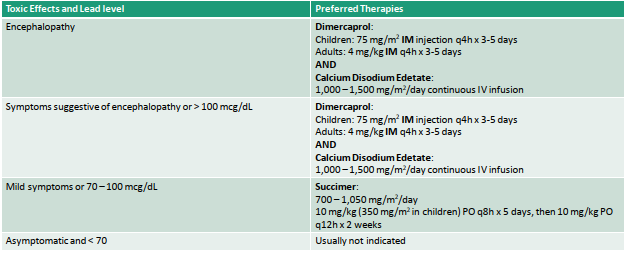
Image occlusion: name the hidden labels
33
Image occlusion: name the hidden labels
34
Image occlusion: name the hidden labels
35
Image occlusion: name the hidden labels
36
Image occlusion: name the hidden labels
37
Image occlusion: name the hidden labels
38
Image occlusion: name the hidden labels
39
Image occlusion: name the hidden labels
40
Image occlusion: name the hidden labels
41
Image occlusion: name the hidden labels
42
Arsenic
• Atomic number = 33
• Atomic weight = 74.92 Da
• Normal concentrations:
• Whole blood = < 5 mcg/mL (0.067 umol/L)
• Urine (24-hour) = < 50 mcg/L (0.67 umol/L
• < 100 mcg/g creatinine(1.33 umol/g creatinine)
• Atomic weight = 74.92 Da
• Normal concentrations:
• Whole blood = < 5 mcg/mL (0.067 umol/L)
• Urine (24-hour) = < 50 mcg/L (0.67 umol/L
• < 100 mcg/g creatinine(1.33 umol/g creatinine)
43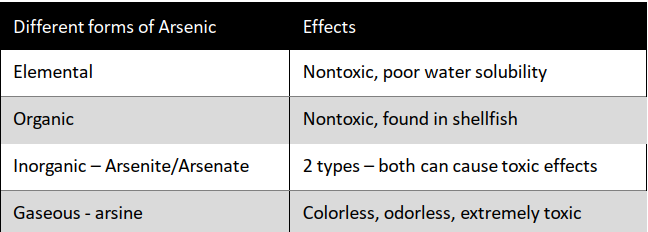
Image occlusion: name the hidden labels
44
Image occlusion: name the hidden labels
45
Image occlusion: name the hidden labels
46
Image occlusion: name the hidden labels
47
Image occlusion: name the hidden labels
48
Image occlusion: name the hidden labels
49
Image occlusion: name the hidden labels
50
Image occlusion: name the hidden labels
51
Image occlusion: name the hidden labels
52
Image occlusion: name the hidden labels
53
Arsenic Sources
Contaminated soil, water, and food are the primary sources of arsenic for the general population.
Primarily environmental and occupational
• Animal feed
• Computer chips (semiconductors)
• Herbicides/insecticides
• Smelting
• Wood preservatives
Medications
• Herbals/alternative medicines
• Chemotherapeutics
Other
• Moonshine
• Well Water (contaminated)
Primarily environmental and occupational
• Animal feed
• Computer chips (semiconductors)
• Herbicides/insecticides
• Smelting
• Wood preservatives
Medications
• Herbals/alternative medicines
• Chemotherapeutics
Other
• Moonshine
• Well Water (contaminated)
54
Arsenic Absorption
Tasteless and odorless
Absorbed in the GI tract, respiratory, IV, and mucosal routes
• GI ~ 70% absorbed
• Respiratory – depends on particulate size, compound, and solubility
• Dermal – no toxicity for acute, potential for chronic
Dissolved As2O3 is more toxic than eaten As2O3
• Greater than 90% bioavailability
Cleared from the body in 3 phases
Absorbed in the GI tract, respiratory, IV, and mucosal routes
• GI ~ 70% absorbed
• Respiratory – depends on particulate size, compound, and solubility
• Dermal – no toxicity for acute, potential for chronic
Dissolved As2O3 is more toxic than eaten As2O3
• Greater than 90% bioavailability
Cleared from the body in 3 phases
55
Arsenic Mechanism of toxicity
• Inhibits pyruvate dehydrogenase complex
• Decreased citric acid cycle activity →Decreased ATP
• Disruption of oxidative phosphorylation
• Hydrogen peroxide and oxygen radicals
• Decreased gluconeogenesis →worsening hypoglycemia
• Disruption in biotin carboxylation due to decreased acetyl-CoA activity
• Decreased citric acid cycle activity →Decreased ATP
• Disruption of oxidative phosphorylation
• Hydrogen peroxide and oxygen radicals
• Decreased gluconeogenesis →worsening hypoglycemia
• Disruption in biotin carboxylation due to decreased acetyl-CoA activity
56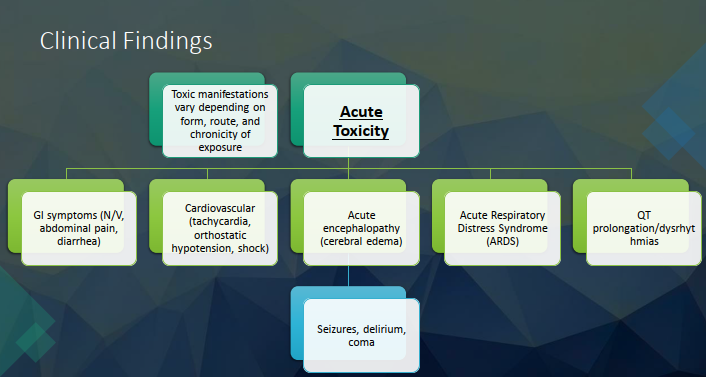
Image occlusion: name the hidden labels
57
Image occlusion: name the hidden labels
58
Image occlusion: name the hidden labels
59
Image occlusion: name the hidden labels
60
Image occlusion: name the hidden labels
61
Image occlusion: name the hidden labels
62
Image occlusion: name the hidden labels
63
Image occlusion: name the hidden labels
64
Image occlusion: name the hidden labels
65
Image occlusion: name the hidden labels
66
Image occlusion: name the hidden labels
67
Image occlusion: name the hidden labels
68
Image occlusion: name the hidden labels
69
Image occlusion: name the hidden labels
70
Image occlusion: name the hidden labels
71
Image occlusion: name the hidden labels
72
Image occlusion: name the hidden labels
73
Image occlusion: name the hidden labels
74
Image occlusion: name the hidden labels
75
Image occlusion: name the hidden labels
76
Image occlusion: name the hidden labels
77
Arsenic Clinical Findings
• Chronic Toxicity
• ”Mees” lines (after 30 days of exposure)
• Hypertension
• Diabetes Mellitus (DM)
• Cardiovascular disease
• Cerebral Vascular disease
• Malignant and Nonmalignant skin changes
• Also lung, bladder, hepatic, malignancies
• ”Mees” lines (after 30 days of exposure)
• Hypertension
• Diabetes Mellitus (DM)
• Cardiovascular disease
• Cerebral Vascular disease
• Malignant and Nonmalignant skin changes
• Also lung, bladder, hepatic, malignancies
78
Arsenic Toxicity Diagnosis
• Exposure history
• Urine and Blood
• 24-hour urinary concentration equal to or greater than 50 mcg/L, 100
mcg/g creatinine, or 100 mcg total arsenic
• Blood testing is unreliable
• Seafood ingestion
• Arsenobetaine
• Transiently elevates urinary total arsenic excretion up to 1,700 mcg/L
• Hair and Nails (detected within 30 hours of ingestion)
• X-ray
• Urine and Blood
• 24-hour urinary concentration equal to or greater than 50 mcg/L, 100
mcg/g creatinine, or 100 mcg total arsenic
• Blood testing is unreliable
• Seafood ingestion
• Arsenobetaine
• Transiently elevates urinary total arsenic excretion up to 1,700 mcg/L
• Hair and Nails (detected within 30 hours of ingestion)
• X-ray
79
Arsenic Poisoning Management
• GI Decontamination
• Controversial, not generally recommended
• Not absorbed by activated charcoal, cholestyramine, bentonite
• N/V, AMS →Airway protection
• Whole bowel irrigation – reasonable with radiopaque material visualized
• Chelation
• Dimercaprol (BAL)
• Succimer
• Dimaval (DMPS) – not approved or marketed in US
• HD? (controversial)
• Controversial, not generally recommended
• Not absorbed by activated charcoal, cholestyramine, bentonite
• N/V, AMS →Airway protection
• Whole bowel irrigation – reasonable with radiopaque material visualized
• Chelation
• Dimercaprol (BAL)
• Succimer
• Dimaval (DMPS) – not approved or marketed in US
• HD? (controversial)
80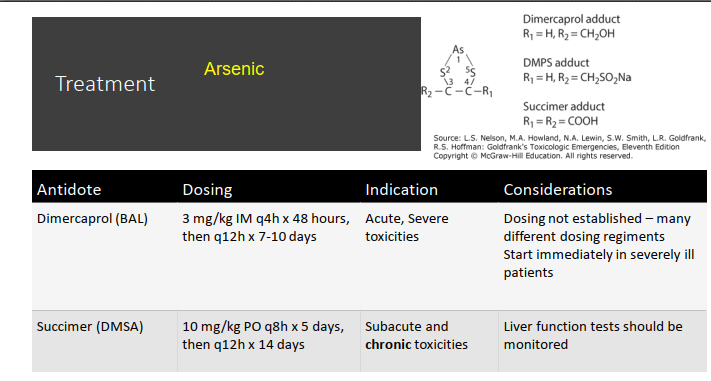
Image occlusion: name the hidden labels
81
Image occlusion: name the hidden labels
82
Image occlusion: name the hidden labels
83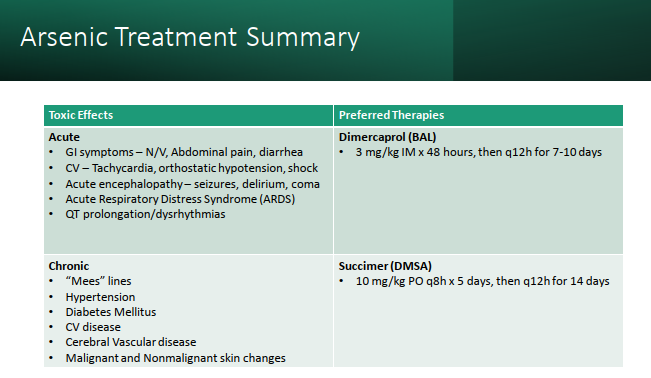
Image occlusion: name the hidden labels
84
Image occlusion: name the hidden labels
85
Image occlusion: name the hidden labels
86
Image occlusion: name the hidden labels
87
Image occlusion: name the hidden labels
88
Image occlusion: name the hidden labels
89
Image occlusion: name the hidden labels
90
Image occlusion: name the hidden labels
91
Image occlusion: name the hidden labels
92
Image occlusion: name the hidden labels
93
Image occlusion: name the hidden labels
94
Image occlusion: name the hidden labels
95
Image occlusion: name the hidden labels
96
Mercury
• Atomic number = 80
• Atomic weight = 200.59 Da
• Normal concentrations:
• Whole blood = 10 mcg/L (50 nmol/L)
• Urine = 20 mcg/L (100 mol/L)
• Atomic weight = 200.59 Da
• Normal concentrations:
• Whole blood = 10 mcg/L (50 nmol/L)
• Urine = 20 mcg/L (100 mol/L)
97
Historical Uses of Mercury
• Cathartic
• Gastroenteric irritant effect used to treat constipation
• Diuretic
• Diuretic effect used to treat syphilis by “flushing the virus out”
• Antiseptic
• Antiparasitic
• Preservative in vaccines
• Gastroenteric irritant effect used to treat constipation
• Diuretic
• Diuretic effect used to treat syphilis by “flushing the virus out”
• Antiseptic
• Antiparasitic
• Preservative in vaccines
98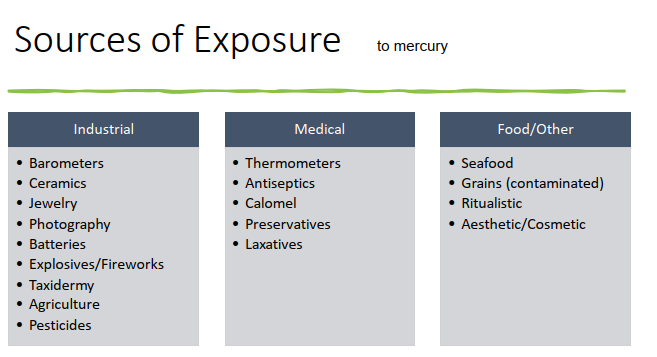
Image occlusion: name the hidden labels
99
Image occlusion: name the hidden labels
100
Image occlusion: name the hidden labels
101
Image occlusion: name the hidden labels
102
Image occlusion: name the hidden labels
103
Image occlusion: name the hidden labels
104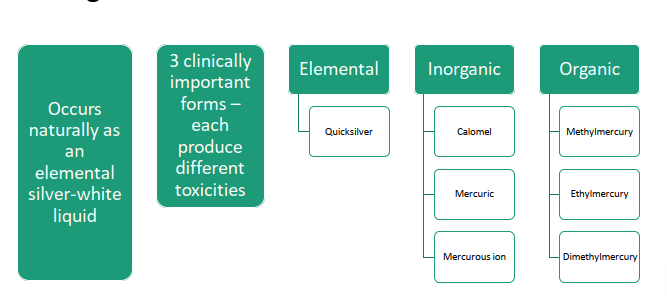
Image occlusion: name the hidden labels
105
Image occlusion: name the hidden labels
106
Image occlusion: name the hidden labels
107
Image occlusion: name the hidden labels
108
Image occlusion: name the hidden labels
109
Image occlusion: name the hidden labels
110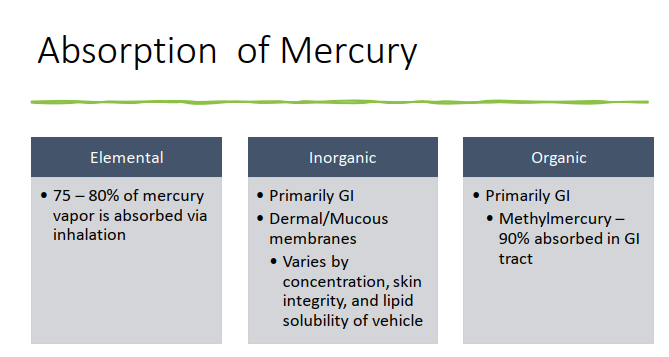
Image occlusion: name the hidden labels
111
Image occlusion: name the hidden labels
112
Image occlusion: name the hidden labels
113
Image occlusion: name the hidden labels
114
Image occlusion: name the hidden labels
115
Image occlusion: name the hidden labels
116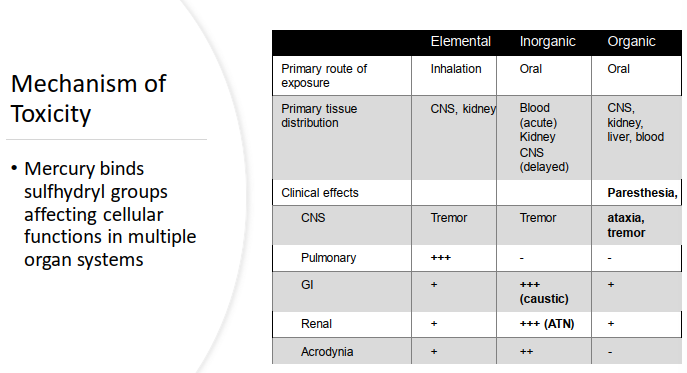
Image occlusion: name the hidden labels
117
Image occlusion: name the hidden labels
118
Image occlusion: name the hidden labels
119
Image occlusion: name the hidden labels
120
Image occlusion: name the hidden labels
121
Image occlusion: name the hidden labels
122
Image occlusion: name the hidden labels
123
Image occlusion: name the hidden labels
124
Image occlusion: name the hidden labels
125
Image occlusion: name the hidden labels
126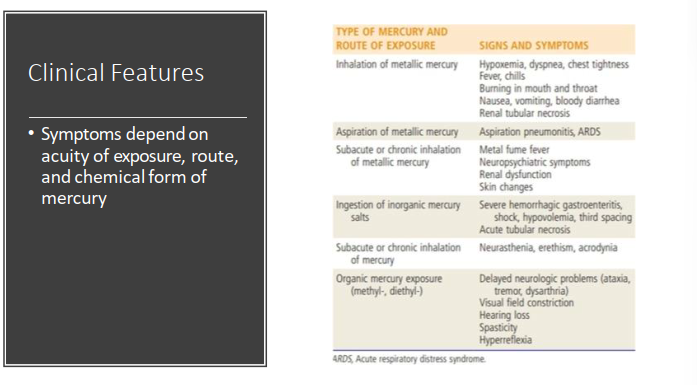
Image occlusion: name the hidden labels
127
Image occlusion: name the hidden labels
128
Image occlusion: name the hidden labels
129
Image occlusion: name the hidden labels
130
Image occlusion: name the hidden labels
131
Image occlusion: name the hidden labels
132
Image occlusion: name the hidden labels
133
Image occlusion: name the hidden labels
134
Image occlusion: name the hidden labels
135
Image occlusion: name the hidden labels
136
Image occlusion: name the hidden labels
137
Image occlusion: name the hidden labels
138
Image occlusion: name the hidden labels
139
Image occlusion: name the hidden labels
140
Image occlusion: name the hidden labels
141
Image occlusion: name the hidden labels
142
Image occlusion: name the hidden labels
143
Image occlusion: name the hidden labels
144
Image occlusion: name the hidden labels
145
Image occlusion: name the hidden labels
146
Image occlusion: name the hidden labels
147
Diagnosis of Mercury Toxicity
• Exposure history
• 24 hour urineconcentration
• Correlates roughlywith exposure severity for inorganic compounds
• Serum concentration for organic compounds due to fecal elimination
• 24 hour urineconcentration
• Correlates roughlywith exposure severity for inorganic compounds
• Serum concentration for organic compounds due to fecal elimination
148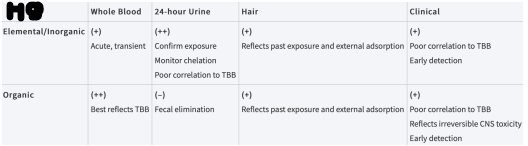
Image occlusion: name the hidden labels
149
Image occlusion: name the hidden labels
150
Image occlusion: name the hidden labels
151
Mercury Imaging
Elemental(metallic) mercury is radiopaque on plain radiographs, which can be ordered in cases of
injection or ingestion of elemental mercury
injection or ingestion of elemental mercury
152
Image occlusion: name the hidden labels
153
Image occlusion: name the hidden labels
154
Image occlusion: name the hidden labels
155
Image occlusion: name the hidden labels
156
Image occlusion: name the hidden labels
157
Image occlusion: name the hidden labels
158
Image occlusion: name the hidden labels
159
Image occlusion: name the hidden labels
160
Image occlusion: name the hidden labels
161
Image occlusion: name the hidden labels
162
Image occlusion: name the hidden labels
163
Image occlusion: name the hidden labels
164
Image occlusion: name the hidden labels
165
Image occlusion: name the hidden labels
166
Image occlusion: name the hidden labels
167
Image occlusion: name the hidden labels
168
Iron
• Molecular weight = 55.86 Da
• Serum normal concentration:
• 80 = 180 mcg/dL
• 14 = 32 umol/L
• Serum normal concentration:
• 80 = 180 mcg/dL
• 14 = 32 umol/L
169
Iron Background
• Participation in oxygen delivery as part of
hemoglobin
• Stored within the body in the form of ferritin
• Totaliron body stores = 3-4g in adults
• 0.5 to 1g of elemental iron stored as ferritinand hemosiderin
• Primarily in the bone marrow, spleen,liver
• Mobilized from stores in times of iron deficiency
hemoglobin
• Stored within the body in the form of ferritin
• Totaliron body stores = 3-4g in adults
• 0.5 to 1g of elemental iron stored as ferritinand hemosiderin
• Primarily in the bone marrow, spleen,liver
• Mobilized from stores in times of iron deficiency
170
Iron Mechanism of Toxicity
• Iron is found in many over the counter multivitamins
• Iron toxicity is classified as corrosive or cellular.
• Caustic injury to GI mucosa →hematemesis, perforation, and peritonitis
• Iron impairs cellular metabolism in the heart, liver, and central nervous system.
• Free iron enters mitochondria → disrupts oxidative phosphorylation, catalyzes lipid
peroxidation, forms free radicals → Cell death
• When cellular injury occurs, metabolic acidosis is common.
• Life threatening toxicity associated with pediatrics
• Iron toxicity is classified as corrosive or cellular.
• Caustic injury to GI mucosa →hematemesis, perforation, and peritonitis
• Iron impairs cellular metabolism in the heart, liver, and central nervous system.
• Free iron enters mitochondria → disrupts oxidative phosphorylation, catalyzes lipid
peroxidation, forms free radicals → Cell death
• When cellular injury occurs, metabolic acidosis is common.
• Life threatening toxicity associated with pediatrics
171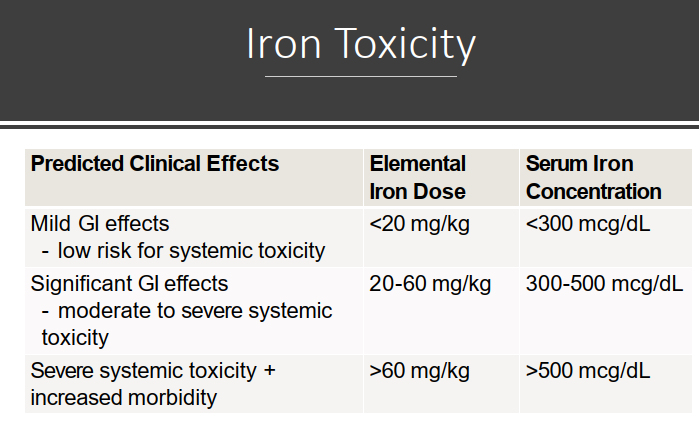
Image occlusion: name the hidden labels
172
Image occlusion: name the hidden labels
173
Image occlusion: name the hidden labels
174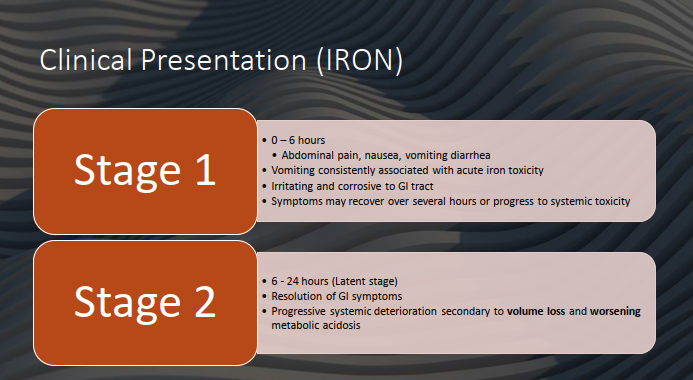
Image occlusion: name the hidden labels
175
Image occlusion: name the hidden labels
176
Image occlusion: name the hidden labels
177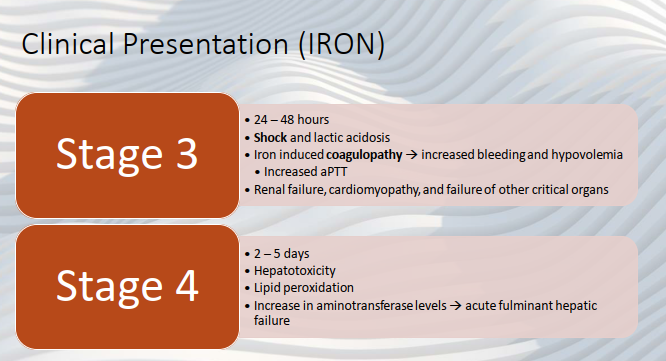
Image occlusion: name the hidden labels
178
Image occlusion: name the hidden labels
179
Image occlusion: name the hidden labels
180
Clinical Presentation of Iron Toxicity (Stage 5)
• 4 – 6 weeks
• Delayed sequalae
• Gastric outlet obstruction secondary to the corrosive effects of iron on the pyloric mucosa
• May present in or skip any of the 5 stages
• Determination of iron toxicity should be based on symptoms & clinical manifestations
• Delayed sequalae
• Gastric outlet obstruction secondary to the corrosive effects of iron on the pyloric mucosa
• May present in or skip any of the 5 stages
• Determination of iron toxicity should be based on symptoms & clinical manifestations
181
Diagnosis of Iron Toxicity
History of Ingestion
Corresponding signs
Vitals
Labs
Corresponding signs
Vitals
Labs
182
Imaging for iron
• Standard ferrous sulfate tablets & reduced iron
• Radiopaque and frequently visibly on routine imaging
• May help guide GI decontamination
• Many preparations are not detected
• Chewable, liquid
• Absence does not exclude iron
ingestion
• Radiopaque and frequently visibly on routine imaging
• May help guide GI decontamination
• Many preparations are not detected
• Chewable, liquid
• Absence does not exclude iron
ingestion
183
Iron Toxicity Management
• Do not give ipecac syrup, activated charcoal, cathartics, oral sodium bicarbonate, or phosphosoda.
• Whole bowel irrigation
• Endoscopy/Laparoscopic Gastrotomy
• Chelation
• Patients with:
• Repetitive vomiting
• Lethargy
• Hypotension/shock
• Metabolic acidosis
• Iron concentration > 500 mcg/dL (drawn after 4-6 hours = peak overdose)
• Whole bowel irrigation
• Endoscopy/Laparoscopic Gastrotomy
• Chelation
• Patients with:
• Repetitive vomiting
• Lethargy
• Hypotension/shock
• Metabolic acidosis
• Iron concentration > 500 mcg/dL (drawn after 4-6 hours = peak overdose)
184
Deferoxamine
• Derived from Streptomyces pilosus
• Binds free iron from inside cells and mitochondria
• but not iron bound to organicmolecules
• 100 mg of deferoxamine can bind 9 mg of elemental iron
• Forms ferrioxamine complex →Renally excreted
• Binds free iron from inside cells and mitochondria
• but not iron bound to organicmolecules
• 100 mg of deferoxamine can bind 9 mg of elemental iron
• Forms ferrioxamine complex →Renally excreted
185
When to stop Deferoxamine
• Patient appears well / resolution of systemic toxicity
• Anion gap acidosis resolving
• No further change in urinary color
• Reached 24h
• Anion gap acidosis resolving
• No further change in urinary color
• Reached 24h
186
Vin Rosé Urine
• Clinical recovery of the patient is the most important factor guiding the decision to
terminate deferoxamine therapy
• Measured iron levels are artificially depressed by the presence of deferoxamine and urine color
change can be unreliable
• Deferoxamine chelates freeiron
• Colorationof urine due to excretedferrioxamine complex
• Limited use - not consistently seen inpractice
terminate deferoxamine therapy
• Measured iron levels are artificially depressed by the presence of deferoxamine and urine color
change can be unreliable
• Deferoxamine chelates freeiron
• Colorationof urine due to excretedferrioxamine complex
• Limited use - not consistently seen inpractice