Allergies and Angioedema
Study these flashcardsFree · spaced repetition · iPhone, Android, Mac & web
All cards
1
Adverse Drug Reaction
Drug Hypersensitivity Reactions ~15%
Immune-Mediated Reactions ~6-10%
Immune-Mediated Reactions ~6-10%
2
Drug Hypersensitivity Reactions
Heterogenous reactions clinically resemble an allergy
May or may not be mediated via immune response
up to 15% of ADRs
E.g. urticaria from radiocontrast, aspirin induced asthma, opiate-related pruritis
flushing after vanco infusion
May or may not be mediated via immune response
up to 15% of ADRs
E.g. urticaria from radiocontrast, aspirin induced asthma, opiate-related pruritis
flushing after vanco infusion
3
Immune-Mediated Reactions
Drug Allergies
Definition per World Health Organization: “immunologically mediated
hypersensitivity reaction to a drug in a sensitized person”
Reserved for drug reactions in which a definite immune mechanism has
been proven
Account for 6-10% of all adverse drug reactions
Examples
Anaphylaxis from beta-lactam antibiotics
Halothane hepatitis
Steven-Johnson Syndrome from carbamazepine
Heparin-inducted thrombocytopenia
Definition per World Health Organization: “immunologically mediated
hypersensitivity reaction to a drug in a sensitized person”
Reserved for drug reactions in which a definite immune mechanism has
been proven
Account for 6-10% of all adverse drug reactions
Examples
Anaphylaxis from beta-lactam antibiotics
Halothane hepatitis
Steven-Johnson Syndrome from carbamazepine
Heparin-inducted thrombocytopenia
4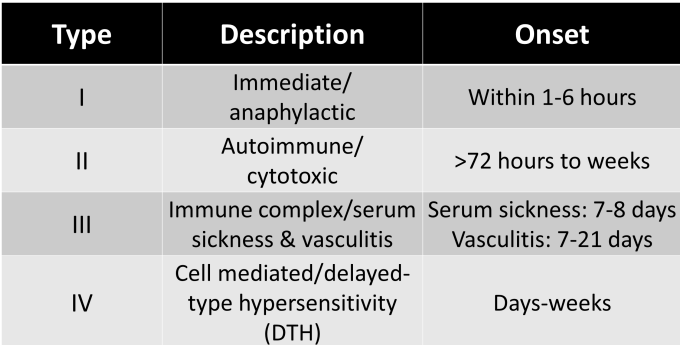
Image occlusion: name the hidden labels
5
Image occlusion: name the hidden labels
6
Image occlusion: name the hidden labels
7
Image occlusion: name the hidden labels
8
Image occlusion: name the hidden labels
9
Image occlusion: name the hidden labels
10
Image occlusion: name the hidden labels
11
Image occlusion: name the hidden labels
12
Image occlusion: name the hidden labels
13
Image occlusion: name the hidden labels
14
Type I Allergy
”Immediate” Allergy
IgE Mediated
Requires sensitization
Symptoms occur within minutes
Binding of allergen to IgE causes release of vasoactive amines (histamine) and leukotrienes from mast cells
Anaphylaxis, acute asthma, urticaria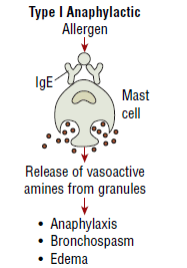
IgE Mediated
Requires sensitization
Symptoms occur within minutes
Binding of allergen to IgE causes release of vasoactive amines (histamine) and leukotrienes from mast cells
Anaphylaxis, acute asthma, urticaria
15
Histamine
Stored in basophil and mast cell granules
4 Types of histamine receptors (H1-H4)
Histamine receptors in vascular smooth muscle (mostly H1 and some H2) most important for allergy
Effects on smooth muscle
• Increased capillary permeability
• Bronchial and vascular smooth
muscle contraction
• Mucus gland hypersecretion
4 Types of histamine receptors (H1-H4)
Histamine receptors in vascular smooth muscle (mostly H1 and some H2) most important for allergy
Effects on smooth muscle
• Increased capillary permeability
• Bronchial and vascular smooth
muscle contraction
• Mucus gland hypersecretion
16
Most common culprits for Type 1 Allergies
1. Penicillins (45.9/10,000 pts)
2. Sulfonamides (15.1/10,000 pts)
3. NSAIDs (13.0/10,000 pts)
4. Opiates (9.8/10,000 pts)
5. Cephalosporins (6.1/10,000 pts)
6. Macrolides (3.8/10,000 pts)
7. Fluoroquinolones (3.7/10,000 pts)
2. Sulfonamides (15.1/10,000 pts)
3. NSAIDs (13.0/10,000 pts)
4. Opiates (9.8/10,000 pts)
5. Cephalosporins (6.1/10,000 pts)
6. Macrolides (3.8/10,000 pts)
7. Fluoroquinolones (3.7/10,000 pts)
17
Type II Allergy
Autoimmune allergy
IgG or IgM Mediated
Drug binds to cell (typically a blood cell) as a hapten causing antibodies (IgG or IgM) to be
produced. Binding of antibodies to drug-cell complex initiates cytolytic reaction.
End result is cell destruction by either activation of complement system or phagocytic cells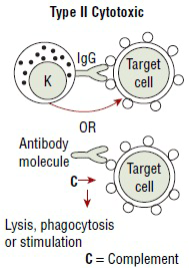
IgG or IgM Mediated
Drug binds to cell (typically a blood cell) as a hapten causing antibodies (IgG or IgM) to be
produced. Binding of antibodies to drug-cell complex initiates cytolytic reaction.
End result is cell destruction by either activation of complement system or phagocytic cells
18
Examples of Type II Reactions
Hemolytic Anemia
• Cephalosporins
• Methyldopa
• Penicillin
• Phenazopyridine
Thrombocytopenia
• Heparin
• Quinidine
Agranulocytosis
• Cephalosporins
• Methyldopa
• Penicillin
• Phenazopyridine
Thrombocytopenia
• Heparin
• Quinidine
Agranulocytosis
19
Type III Allergy
Immune Complex Allergies
IgG or IgM Mediated
Drug binds to antibodies, drug-antibody complexes deposit in tissues resulting in local or disseminated inflammatory reactions
Tissue Damage
Serum sickness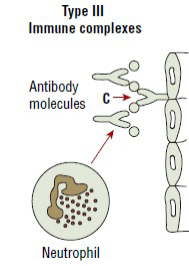
IgG or IgM Mediated
Drug binds to antibodies, drug-antibody complexes deposit in tissues resulting in local or disseminated inflammatory reactions
Tissue Damage
Serum sickness
20
Serum Sickness
Most commonly associated with use of antiserums containing donor antigens (antitoxins &
antivenins)
Typically occurs 7-14 days after antigen administration
Fever, malaise, lymphadenopathy most common
May also have arthralgias, urticaria, morbilliform skin eruption
antivenins)
Typically occurs 7-14 days after antigen administration
Fever, malaise, lymphadenopathy most common
May also have arthralgias, urticaria, morbilliform skin eruption
21
Type IV Allergy
Delayed-Type Hypersensitivity
T-Cell Mediated
Exposure to antigen causes T-cell mediated inflammatory response via secretion of cytokines
Occurs within 1-3 days after contact
Typically manifests as dermatologic events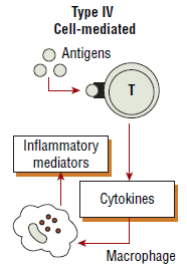
T-Cell Mediated
Exposure to antigen causes T-cell mediated inflammatory response via secretion of cytokines
Occurs within 1-3 days after contact
Typically manifests as dermatologic events
22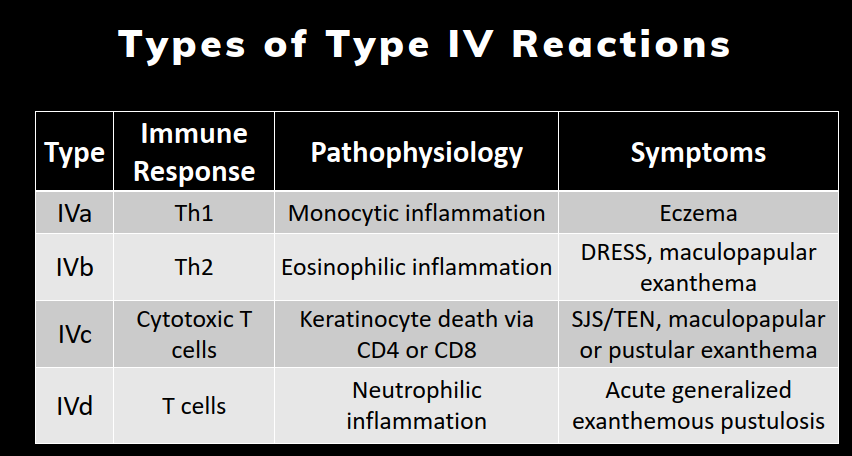
Image occlusion: name the hidden labels
23
Image occlusion: name the hidden labels
24
Image occlusion: name the hidden labels
25
Image occlusion: name the hidden labels
26
Image occlusion: name the hidden labels
27
Image occlusion: name the hidden labels
28
Image occlusion: name the hidden labels
29
Image occlusion: name the hidden labels
30
Image occlusion: name the hidden labels
31
Image occlusion: name the hidden labels
32
Collection
Medication History
Allergy History
Subjective findings of the allergic reaction
Objective Data
• BP, HR, RR
• Labs
• Physical exam (observe rash/skin
involvement if applicable)
Allergy History
Subjective findings of the allergic reaction
Objective Data
• BP, HR, RR
• Labs
• Physical exam (observe rash/skin
involvement if applicable)
33
Assessment
Timing of reaction relative to the initiation of each of the patient’s current medications
Likelihood of cross-reactivity relative to documented allergy history
Presence of risk factors
Severity of the reaction
Likelihood of cross-reactivity relative to documented allergy history
Presence of risk factors
Severity of the reaction
34
Clinical Manifestations of Drug Allergies/Drug Hypersensitivity Reactions
Dermatologic Reactions (SJS/TEN
Hematologic
Serum sickness
Drug rash with eosinophilia and
systemic symptoms (DRESS)
Anaphylaxis
Hematologic
Serum sickness
Drug rash with eosinophilia and
systemic symptoms (DRESS)
Anaphylaxis
35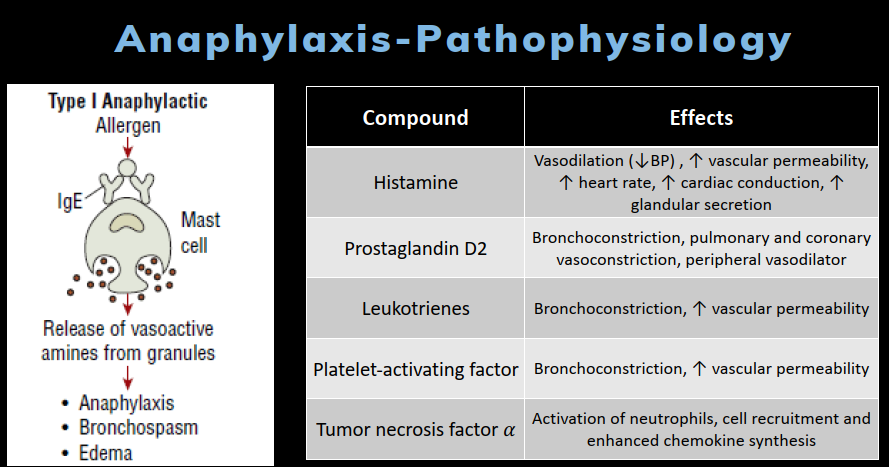
Image occlusion: name the hidden labels
36
Image occlusion: name the hidden labels
37
Image occlusion: name the hidden labels
38
Image occlusion: name the hidden labels
39
Image occlusion: name the hidden labels
40
Image occlusion: name the hidden labels
41
Image occlusion: name the hidden labels
42
Image occlusion: name the hidden labels
43
Image occlusion: name the hidden labels
44
Image occlusion: name the hidden labels
45
Image occlusion: name the hidden labels
46
Image occlusion: name the hidden labels
47
Image occlusion: name the hidden labels
48
Image occlusion: name the hidden labels
49
Image occlusion: name the hidden labels
50
Image occlusion: name the hidden labels
51
Image occlusion: name the hidden labels
52
Image occlusion: name the hidden labels
53
Image occlusion: name the hidden labels
54
Image occlusion: name the hidden labels
55
Image occlusion: name the hidden labels
56
Image occlusion: name the hidden labels
57
Image occlusion: name the hidden labels
58
Image occlusion: name the hidden labels
59
Image occlusion: name the hidden labels
60
Image occlusion: name the hidden labels
61
Image occlusion: name the hidden labels
62
Image occlusion: name the hidden labels
63
Image occlusion: name the hidden labels
64
Image occlusion: name the hidden labels
65
Image occlusion: name the hidden labels
66
Image occlusion: name the hidden labels
67
Image occlusion: name the hidden labels
68
Image occlusion: name the hidden labels
69
Image occlusion: name the hidden labels
70
Image occlusion: name the hidden labels
71
Image occlusion: name the hidden labels
72
Image occlusion: name the hidden labels
73
Image occlusion: name the hidden labels
74
Image occlusion: name the hidden labels
75
Image occlusion: name the hidden labels
76
Image occlusion: name the hidden labels
77
Image occlusion: name the hidden labels
78
Image occlusion: name the hidden labels
79
Image occlusion: name the hidden labels
80
Image occlusion: name the hidden labels
81
Image occlusion: name the hidden labels
82
Image occlusion: name the hidden labels
83
Image occlusion: name the hidden labels
84
Image occlusion: name the hidden labels
85
Image occlusion: name the hidden labels
86
Clinical Criteria for Anaphylaxis
Must fulfill at least one of the following three criteria:
1. Acute onset with skin-mucosal involvement and at least one of the following:
• Respiratory compromise
• Decrease BP, syncope or collapse
2. Two or more after exposure to likely allergen
• Skin-mucosal involvement
• Respiratory compromise
• Decreased BP, syncope or collapse
• GI symptoms
3. Decreased blood pressure after exposure to known allergen
1. Acute onset with skin-mucosal involvement and at least one of the following:
• Respiratory compromise
• Decrease BP, syncope or collapse
2. Two or more after exposure to likely allergen
• Skin-mucosal involvement
• Respiratory compromise
• Decreased BP, syncope or collapse
• GI symptoms
3. Decreased blood pressure after exposure to known allergen
87
Anaphylaxis
Rapid onset and potentially fatal
Evaluate airway, breathing, circulation!
~50% of anaphylaxis fatalities occur within the first hour
Lifetime risk ~1-3%
Major causes
1. Drugs (highest fatality rate)
2. Venom
Hymenoptera (bee) stings
3. Food
Shellfish
Soybeans
Nuts
Wheat
Milk
Evaluate airway, breathing, circulation!
~50% of anaphylaxis fatalities occur within the first hour
Lifetime risk ~1-3%
Major causes
1. Drugs (highest fatality rate)
2. Venom
Hymenoptera (bee) stings
3. Food
Shellfish
Soybeans
Nuts
Wheat
Milk
88
Anaphylaxis Signs and Symptoms
Cutaneous
Urticaria and angioedema (85-90%)
Flushing (45-55%)
Pruritis without rash (2-5%)
Respiratory
Upper airway angioedema (50-60%)
Dyspnea, wheezing (45-50%)
Cardiovascular
Hypotension (30-35%)
Abdominal
N/V/D 25-30%
Urticaria and angioedema (85-90%)
Flushing (45-55%)
Pruritis without rash (2-5%)
Respiratory
Upper airway angioedema (50-60%)
Dyspnea, wheezing (45-50%)
Cardiovascular
Hypotension (30-35%)
Abdominal
N/V/D 25-30%
89
Anaphylaxis Management
Activate emergency response system
Epinephrine
Recumbent position with lower extremity elevation
Oxygen, fluids
Antihistamines, H1 blocker, H2 blocker
Corticosteroids
Inhaled beta-agonists
Epinephrine
Recumbent position with lower extremity elevation
Oxygen, fluids
Antihistamines, H1 blocker, H2 blocker
Corticosteroids
Inhaled beta-agonists
90
Epinephrine
Non-selective adrenergic agonist (𝛼 and 𝛽 activity)
Rapidly increases systemic vascular resistance, increases
cardiac output, reverses bronchoconstriction and mucosal
edema and stabilizes mast cells and basophils.
Dose for anaphylaxis is 0.01mg/kg, max 0.5 mg IM for adults,
0.3mg IM for children
IV administration is generally not recommended given increased
risk of medication errors
Continuous infusion may be considered for anaphylactic shock
Rapidly increases systemic vascular resistance, increases
cardiac output, reverses bronchoconstriction and mucosal
edema and stabilizes mast cells and basophils.
Dose for anaphylaxis is 0.01mg/kg, max 0.5 mg IM for adults,
0.3mg IM for children
IV administration is generally not recommended given increased
risk of medication errors
Continuous infusion may be considered for anaphylactic shock
91
Adjunctive Therapy for Anaphylaxis
Neither antihistamines nor glucocorticoids urgently treat life
threatening cardiovascular (hypotension) or respiratory
(bronchospasm) symptoms.
Limited evidence to support benefit, may be helpful in
addressing symptoms of anaphylaxis but take time to reach peak effect
Antihistamines
H1 – Diphenhydramine (IV)
H2 – Famotidine (IV)
Glucocorticoids
Methylprednisolone IV
threatening cardiovascular (hypotension) or respiratory
(bronchospasm) symptoms.
Limited evidence to support benefit, may be helpful in
addressing symptoms of anaphylaxis but take time to reach peak effect
Antihistamines
H1 – Diphenhydramine (IV)
H2 – Famotidine (IV)
Glucocorticoids
Methylprednisolone IV
92
Penicillin Allergies
Penicillin is the most common drug allergy (45.9/10,000 pts) however; true IgE mediated reactions are still rare (~0.459%).
10-20% of patients report penicillin allergies of patients who report
penicillin allergies, only ~10-20% have a positive skin test
Incidence of anaphylaxis amongst patients treated with penicillins is estimated at 0.01%
10-20% of patients report penicillin allergies of patients who report
penicillin allergies, only ~10-20% have a positive skin test
Incidence of anaphylaxis amongst patients treated with penicillins is estimated at 0.01%
93
Penicillin Allergies : The Problem
Patients with reported penicillin allergy had significantly:
• More exposure to fluoroquinolones, clindamycin, and vancomycin (P < .0001)
• Longer hospital stay (0.59 days, 9.9%; 95% CI, 0.47-0.71)
• Higher incidence of C. difficile by 23.4% (95% CI, 15.6% to 31.7%)
• Higher incidence of MRSA infections by 14.1% (95% CI, 7.1% to 21.6%)
• Higher incidence of VRE by 30.1% (95% CI, 12.5% to 50.4%) than expected compared
with control subjects
• More exposure to fluoroquinolones, clindamycin, and vancomycin (P < .0001)
• Longer hospital stay (0.59 days, 9.9%; 95% CI, 0.47-0.71)
• Higher incidence of C. difficile by 23.4% (95% CI, 15.6% to 31.7%)
• Higher incidence of MRSA infections by 14.1% (95% CI, 7.1% to 21.6%)
• Higher incidence of VRE by 30.1% (95% CI, 12.5% to 50.4%) than expected compared
with control subjects
94
Penicillin Allergy Mechanism
Penicillins covalently bind to plasma proteins to create hapten—carrier complexes
Various haptens are created depending on binding site
• Penicilloyl (Major)
• Penicillanyl (Minor)
• Penicillenate (Minor)
Various haptens are created depending on binding site
• Penicilloyl (Major)
• Penicillanyl (Minor)
• Penicillenate (Minor)
95
Aminopenicillins
All four types of immune mediated reactions (I-IV) have been reported with penicillin
IgE mediated reactions directed at R-group side chain
Wide variety of idiopathic reactions also occur
Cutaneous reactions are common, up to 8% of patients taking aminopenicillins
Incidence of rash is ~100% in patients receiving ampicillin with viral infections
IgE mediated reactions directed at R-group side chain
Wide variety of idiopathic reactions also occur
Cutaneous reactions are common, up to 8% of patients taking aminopenicillins
Incidence of rash is ~100% in patients receiving ampicillin with viral infections
96
Cephalosporins
idence of anaphylaxis with cephalosporins ranges from 0.0001-0.1%
Early cephalosporins produced from Penicillium mold and then chemically modified.
• Cephalosporins produced between 1960-1980’s had minor contamination by penicillin.
• Early risk of cross-reactivity estimated at 10-15%
Rate of cross-reactivity (if penicillin allergic) is predicted by R1 chain similarity.
Early cephalosporins produced from Penicillium mold and then chemically modified.
• Cephalosporins produced between 1960-1980’s had minor contamination by penicillin.
• Early risk of cross-reactivity estimated at 10-15%
Rate of cross-reactivity (if penicillin allergic) is predicted by R1 chain similarity.
97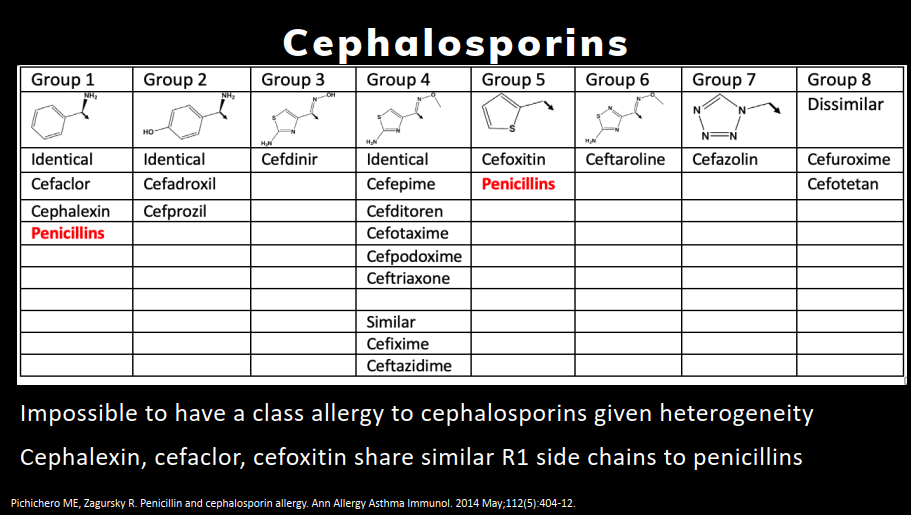
Image occlusion: name the hidden labels
98
Image occlusion: name the hidden labels
99
Image occlusion: name the hidden labels
100
Other Beta-Lactams
Carbapenems
• Incidence of cross-reactivity if penicillin allergic is low
• Estimated at 0.9-11%
Aztreonam
• No cross reactivity if penicillinallergy
• Significant antimicrobial resistance
• Incidence of cross-reactivity if penicillin allergic is low
• Estimated at 0.9-11%
Aztreonam
• No cross reactivity if penicillinallergy
• Significant antimicrobial resistance
101
Sulfonamides
Compounds containing sulfa (SO2NH2) moiety
• Antibiotics (e.g. TMP/SMX)
• Thiazide and loop diuretics
• Oral hypoglycemics (e.g. sulfonylureas)
• Carbonic anhydrase inhibitors (e.g.acetazolamide)
Incidence ~4.8% sulfonamide antibiotics, 2% sulfonamide nonantibiotics
IgE mediated reactions are uncommon
Limited/no evidence of cross-reactivity between sulfonamide antibiotics and nonantibiotics
• Antibiotics (e.g. TMP/SMX)
• Thiazide and loop diuretics
• Oral hypoglycemics (e.g. sulfonylureas)
• Carbonic anhydrase inhibitors (e.g.acetazolamide)
Incidence ~4.8% sulfonamide antibiotics, 2% sulfonamide nonantibiotics
IgE mediated reactions are uncommon
Limited/no evidence of cross-reactivity between sulfonamide antibiotics and nonantibiotics
102
Aspirin & NSAIDs
Associated with eight types of drug
hypersensitivity reactions
• Rhinitis, sinusitis, asthma
• Urticaria
• Angioedema
• Anaphylaxis
• Pneumonitis
• Aseptic meningitis
Two most common aspirin sensitivity reactions are respiratory (asthma and rhinorrhea) and
urticaria/angioedema
Urticaria/angioedema may be IgE or non-IgE-mediated
hypersensitivity reactions
• Rhinitis, sinusitis, asthma
• Urticaria
• Angioedema
• Anaphylaxis
• Pneumonitis
• Aseptic meningitis
Two most common aspirin sensitivity reactions are respiratory (asthma and rhinorrhea) and
urticaria/angioedema
Urticaria/angioedema may be IgE or non-IgE-mediated
103
Desensitization/Induction of Drug Tolerance
Induction of temporary drug tolerance may be used for patients with a history
of immediate reaction to a drug for which no reasonable alternatives exist (e.g
penicillin G for neurosyphilis)
Involves a stepwise process of incremental dosing of the drug or related
compound
Incremental exposure allows gradual mast cell degranulation to prevent allergic
reactions.
Reactions amenable to desensitization
• Dermatologic (flushing, pruritis, urticaria, angioedema)
• Respiratory (sneezing, dyspnea, wheezing)
• Gastrointestinal (abdominal pain, nausea, vomiting)
• Cardiovascular (hypotension)
of immediate reaction to a drug for which no reasonable alternatives exist (e.g
penicillin G for neurosyphilis)
Involves a stepwise process of incremental dosing of the drug or related
compound
Incremental exposure allows gradual mast cell degranulation to prevent allergic
reactions.
Reactions amenable to desensitization
• Dermatologic (flushing, pruritis, urticaria, angioedema)
• Respiratory (sneezing, dyspnea, wheezing)
• Gastrointestinal (abdominal pain, nausea, vomiting)
• Cardiovascular (hypotension)
104
Angioedema
Localized subcutaneous or submucosal swelling resulting from dilation
of vascular structures and extravasation of fluid into interstitial tissues.
May occur in isolation, accompanied by urticaria or as a component of
anaphylaxis.
Urticaria & angioedema share the same pathophysiology but differ in
the level of skin involved
• Urticaria: dilation of vascular structures in superficial dermis
• Angioedema: dilation of vascular structures in deeper dermis and
subcutaneous tissues
of vascular structures and extravasation of fluid into interstitial tissues.
May occur in isolation, accompanied by urticaria or as a component of
anaphylaxis.
Urticaria & angioedema share the same pathophysiology but differ in
the level of skin involved
• Urticaria: dilation of vascular structures in superficial dermis
• Angioedema: dilation of vascular structures in deeper dermis and
subcutaneous tissues
105
Angioedema Presentation
Typically affects areas with loose connective tissue, such as face, lips, mouth, throat, larynx,
uvula, extremities, genitalia, bowel wall.
Symptoms include: urticaria, flushing, pruritis, bronchospasm, abdominal pain, vomiting
Lasts for hours to days
Swelling of airway may be life-threatening
uvula, extremities, genitalia, bowel wall.
Symptoms include: urticaria, flushing, pruritis, bronchospasm, abdominal pain, vomiting
Lasts for hours to days
Swelling of airway may be life-threatening
106
Angioedema Etiology
Angioedema can occur for a variety of reasons but can be sorted into three categories: mast-cell mediated etiologies, bradykinin mediated etiologies and idiopathic.
Mast-cell mediated etiologies:
• Allergic/IgE mediated reactions
• Immunologic and other non-IgE mediated mast cell activation
Bradykinin mediated etiologies
• Hereditary angioedemas
• Inhibition of enzymes involved in bradykinin degradation
Mast-cell mediated etiologies:
• Allergic/IgE mediated reactions
• Immunologic and other non-IgE mediated mast cell activation
Bradykinin mediated etiologies
• Hereditary angioedemas
• Inhibition of enzymes involved in bradykinin degradation
107
Mast Cell-Mediated Angioedema
Occurs as a result of activation of mast cells which release inflammatory mediators which
cause venodilation, increased vascular permeability and resultant tissue edema.
Typically associated with urticaria and/or pruritis
Given similar etiology, treated similarly to anaphylaxis (epinephrine, antihistamines,
glucocorticoids)
cause venodilation, increased vascular permeability and resultant tissue edema.
Typically associated with urticaria and/or pruritis
Given similar etiology, treated similarly to anaphylaxis (epinephrine, antihistamines,
glucocorticoids)
108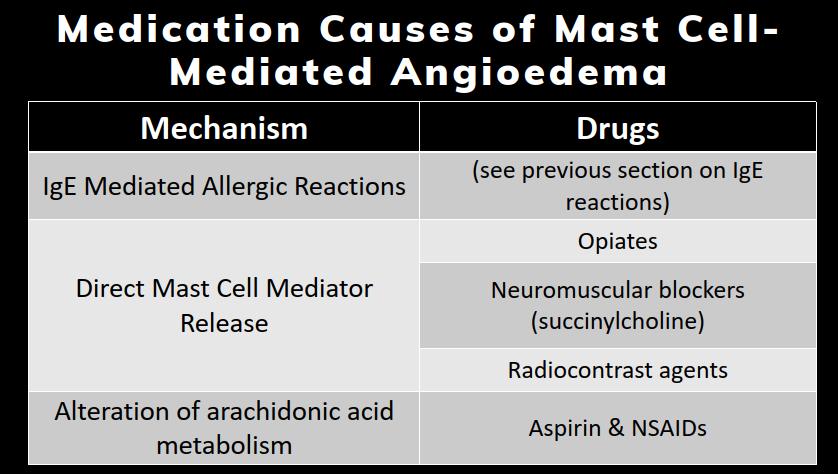
Image occlusion: name the hidden labels
109
Image occlusion: name the hidden labels
110
Image occlusion: name the hidden labels
111
Image occlusion: name the hidden labels
112
Image occlusion: name the hidden labels
113
Image occlusion: name the hidden labels
114
Image occlusion: name the hidden labels
115
Image occlusion: name the hidden labels
116
Image occlusion: name the hidden labels
117
Image occlusion: name the hidden labels
118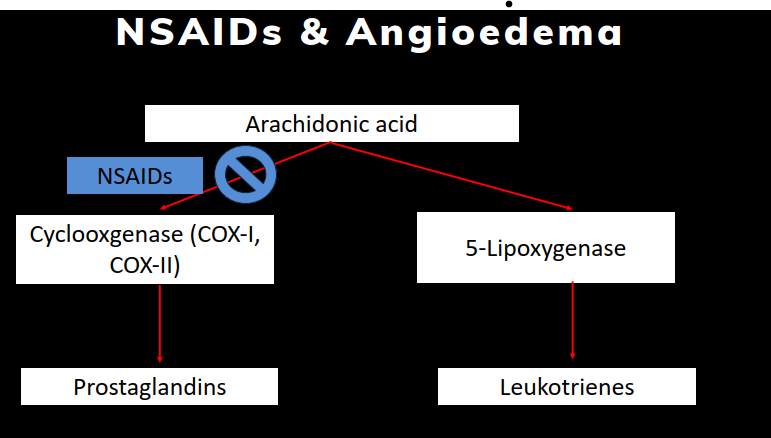
Image occlusion: name the hidden labels
119
Image occlusion: name the hidden labels
120
Image occlusion: name the hidden labels
121
Image occlusion: name the hidden labels
122
Image occlusion: name the hidden labels
123
Image occlusion: name the hidden labels
124
Image occlusion: name the hidden labels
125
Image occlusion: name the hidden labels
126
Image occlusion: name the hidden labels
127
Image occlusion: name the hidden labels
128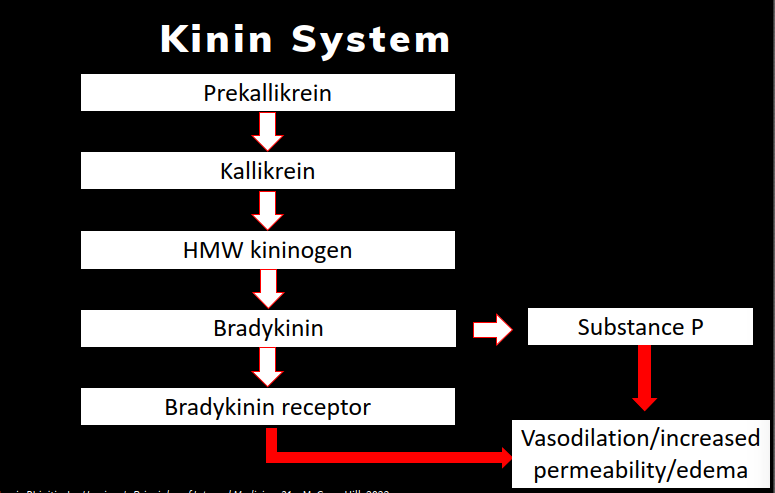
Image occlusion: name the hidden labels
129
Image occlusion: name the hidden labels
130
Image occlusion: name the hidden labels
131
Image occlusion: name the hidden labels
132
Image occlusion: name the hidden labels
133
Image occlusion: name the hidden labels
134
Image occlusion: name the hidden labels
135
Image occlusion: name the hidden labels
136
Image occlusion: name the hidden labels
137
Image occlusion: name the hidden labels
138
Image occlusion: name the hidden labels
139
Image occlusion: name the hidden labels
140
Image occlusion: name the hidden labels
141
Image occlusion: name the hidden labels
142
Image occlusion: name the hidden labels
143
Image occlusion: name the hidden labels
144
Image occlusion: name the hidden labels
145
Image occlusion: name the hidden labels
146
Image occlusion: name the hidden labels
147
Image occlusion: name the hidden labels
148
Image occlusion: name the hidden labels
149
Bradykinin-Mediated Angioedema
Occurs as a result of either overproduction of bradykinin or inhibition of bradykinin degradation
Urticaria and pruritis are absent (no mast cell involved)
More commonly involves GI mucosa, presenting with bowel edema
Does not respond to epinephrine, antihistamines, and glucocorticoids
Urticaria and pruritis are absent (no mast cell involved)
More commonly involves GI mucosa, presenting with bowel edema
Does not respond to epinephrine, antihistamines, and glucocorticoids
150
ACE-Inhibitor Angioedema
Accounts for ~30% of all angioedema cases presenting to the emergency department.
Overall incidence of 0.1-0.7% (more common than with ARB’s)
Risk factors: black race, history of angioedema, age > 65 years, aspirin or NSAID use, female sex, smoking, seasonal allergies
Risk is highest within one week of initiation but can occur at any time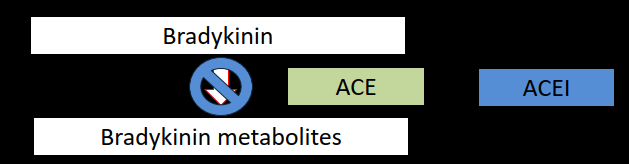
Overall incidence of 0.1-0.7% (more common than with ARB’s)
Risk factors: black race, history of angioedema, age > 65 years, aspirin or NSAID use, female sex, smoking, seasonal allergies
Risk is highest within one week of initiation but can occur at any time
151
Dipeptidyl Peptidase-4 Inhibitor Angioedema
DPP-IV Inhibitors: sitagliptin, saxagliptin, linagliptin, alogliptin
May occur independent of ACE inhibitors, risk greatly increased with concomitant therapy with ACE inhibitors
True incidence is unknown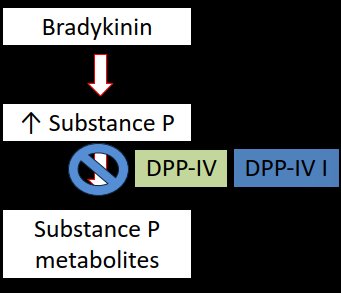
May occur independent of ACE inhibitors, risk greatly increased with concomitant therapy with ACE inhibitors
True incidence is unknown
152
Hereditary Angioedema (HAE)
Inherited alterations that cause bradykinin-mediated angioedema. Typically starts in childhood
Characterized by recurrent attacks
• Cutaneous angioedema without angioedema and severe abdominal symptoms are most common
features
• Genital, bladder, muscle and joint swelling are rarebut may occur.
• Laryngeal episodes are less common (0.9% of attacks) but >50% of patients with HAE will have a laryngeal attack during their lifetime
Characterized by recurrent attacks
• Cutaneous angioedema without angioedema and severe abdominal symptoms are most common
features
• Genital, bladder, muscle and joint swelling are rarebut may occur.
• Laryngeal episodes are less common (0.9% of attacks) but >50% of patients with HAE will have a laryngeal attack during their lifetime
153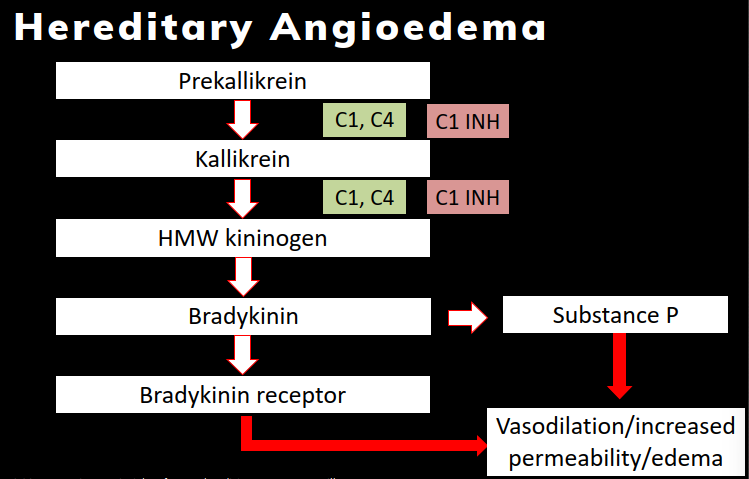
Image occlusion: name the hidden labels
154
Image occlusion: name the hidden labels
155
Image occlusion: name the hidden labels
156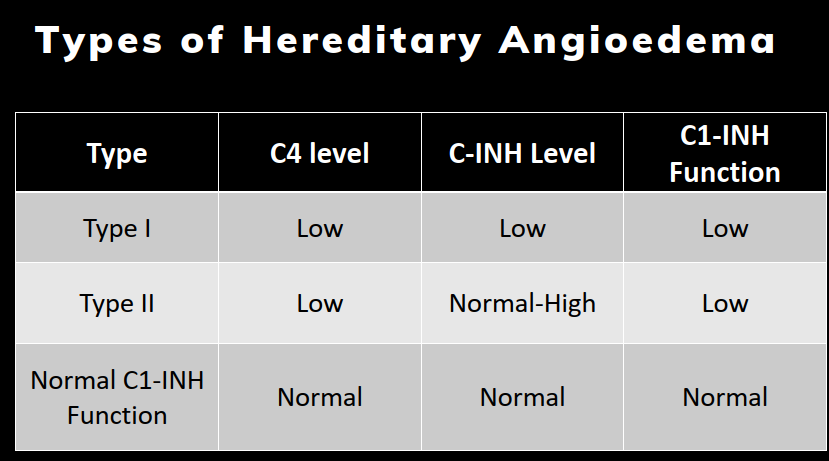
Image occlusion: name the hidden labels
157
Image occlusion: name the hidden labels
158
Image occlusion: name the hidden labels
159
Image occlusion: name the hidden labels
160
Image occlusion: name the hidden labels
161
Image occlusion: name the hidden labels
162
Hereditary Angioedema Management
Before 2009 no FDA-approved therapies existed for HAE attacks
Fresh Frozen Plasma (FFP) was often used given it contained C1-INH however concerns existed that FFP may worsen HAE as it also contains other substrates such as bradykinin, substance P etc.
Specific agents are now available for prophylaxis and acute management of HAE attacks
Patients typically have two doses of on-demand therapy for acute attacks and receive prophylaxis as needed
Fresh Frozen Plasma (FFP) was often used given it contained C1-INH however concerns existed that FFP may worsen HAE as it also contains other substrates such as bradykinin, substance P etc.
Specific agents are now available for prophylaxis and acute management of HAE attacks
Patients typically have two doses of on-demand therapy for acute attacks and receive prophylaxis as needed
163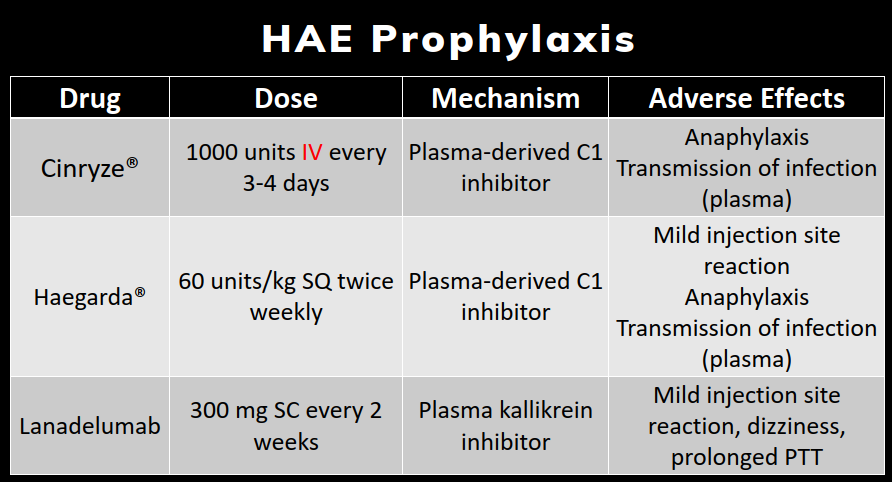
Image occlusion: name the hidden labels
164
Image occlusion: name the hidden labels
165
Image occlusion: name the hidden labels
166
Image occlusion: name the hidden labels
167
Image occlusion: name the hidden labels
168
Image occlusion: name the hidden labels
169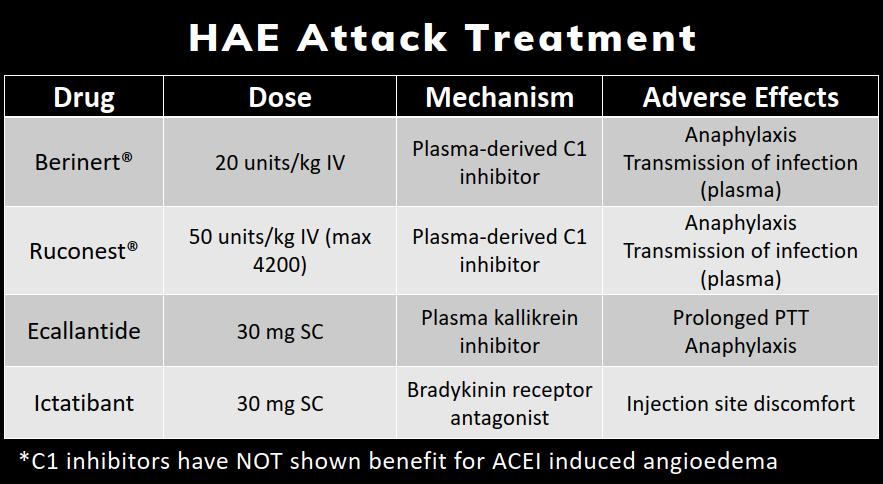
Image occlusion: name the hidden labels
170
Image occlusion: name the hidden labels
171
Image occlusion: name the hidden labels
172
Image occlusion: name the hidden labels
173
Image occlusion: name the hidden labels
174
Image occlusion: name the hidden labels
175
Image occlusion: name the hidden labels
176
Image occlusion: name the hidden labels
177
Image occlusion: name the hidden labels
178
Image occlusion: name the hidden labels
179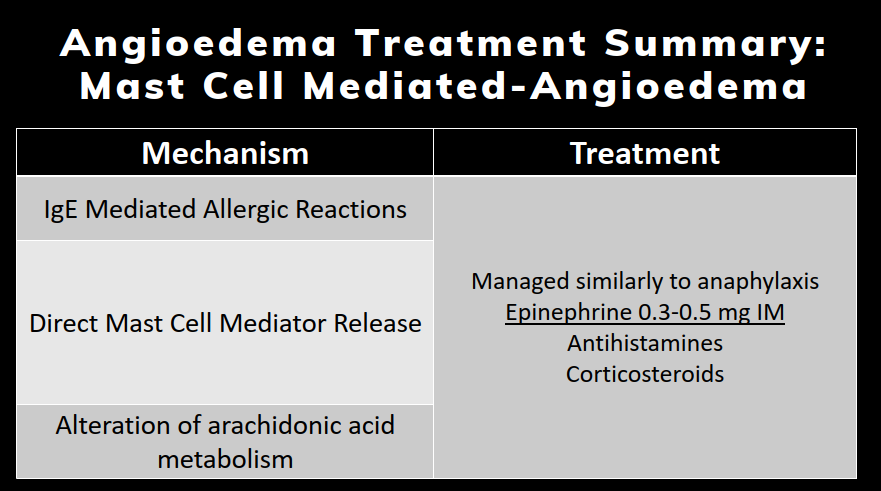
Image occlusion: name the hidden labels
180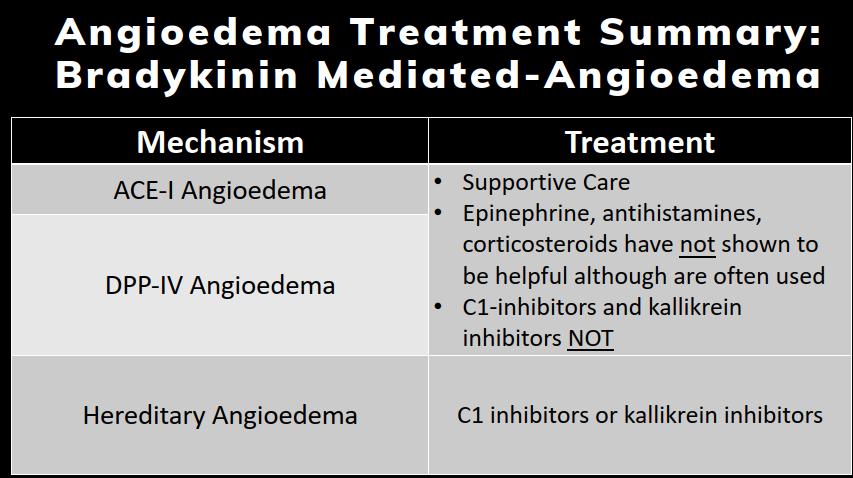
Image occlusion: name the hidden labels
181
Image occlusion: name the hidden labels
182
Image occlusion: name the hidden labels