Principles of Pharmacogenomics (PGx)
Study these flashcardsFree · spaced repetition · iPhone, Android, Mac & web
All cards
1
Pharmacogenomics
Pharmacogenomics is the study of how genes affect a person’s response to drugs. This relatively new field combines pharmacology (the science of drugs) and genomics (the study of genes and their functions) to develop effective, safe medications and doses that will be
tailored to a person’s genetic makeup. - NIH
tailored to a person’s genetic makeup. - NIH
2
Clinical Pharmacogenomics
Goals, based on an individual's genetic profile:
Optimize medication therapy
Limit toxicity
Aims to use genetic information to choose medication/dose
that will have the greatest likelihood of achieving therapeutic outcomes with the least potential harm
Common therapeutic areas where PGx is used:
Cancer
Cystic Fibrosis
Cardiology
Infectious Disease
Psychiatry
Neurology
Pain Management
Optimize medication therapy
Limit toxicity
Aims to use genetic information to choose medication/dose
that will have the greatest likelihood of achieving therapeutic outcomes with the least potential harm
Common therapeutic areas where PGx is used:
Cancer
Cystic Fibrosis
Cardiology
Infectious Disease
Psychiatry
Neurology
Pain Management
3
Image occlusion: name the hidden labels
4
Image occlusion: name the hidden labels
5
Image occlusion: name the hidden labels
6
Image occlusion: name the hidden labels
7
Image occlusion: name the hidden labels
8
Image occlusion: name the hidden labels
9
Image occlusion: name the hidden labels
10
Image occlusion: name the hidden labels
11
Image occlusion: name the hidden labels
12
Image occlusion: name the hidden labels
13
Image occlusion: name the hidden labels
14
Image occlusion: name the hidden labels
15
Image occlusion: name the hidden labels
16
Image occlusion: name the hidden labels
17
Image occlusion: name the hidden labels
18
Image occlusion: name the hidden labels
19
Image occlusion: name the hidden labels
20
Image occlusion: name the hidden labels
21
Image occlusion: name the hidden labels
22
Image occlusion: name the hidden labels
23
Image occlusion: name the hidden labels
24
Image occlusion: name the hidden labels
25
Image occlusion: name the hidden labels
26
Image occlusion: name the hidden labels
27
Image occlusion: name the hidden labels
28
Image occlusion: name the hidden labels
29
Image occlusion: name the hidden labels
30
Image occlusion: name the hidden labels
31
Image occlusion: name the hidden labels
32
Image occlusion: name the hidden labels
33
Image occlusion: name the hidden labels
34
Image occlusion: name the hidden labels
35
Image occlusion: name the hidden labels
36
Image occlusion: name the hidden labels
37
Image occlusion: name the hidden labels
38
Image occlusion: name the hidden labels
39
Image occlusion: name the hidden labels
40
Image occlusion: name the hidden labels
41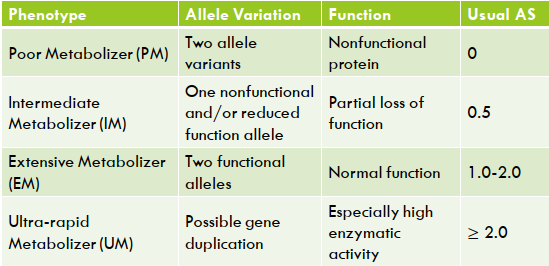
Image occlusion: name the hidden labels
42
Image occlusion: name the hidden labels
43
Image occlusion: name the hidden labels
44
Image occlusion: name the hidden labels
45
Image occlusion: name the hidden labels
46
Image occlusion: name the hidden labels
47
Image occlusion: name the hidden labels
48
Image occlusion: name the hidden labels
49
Image occlusion: name the hidden labels
50
Image occlusion: name the hidden labels
51
CYP2D6
Second to CYP3A4 in the number of commonly used drugs that it metabolizes
Activity is polymorphically distributed
PM: slower elimination rates and lower clearance of substrate drugs → higher steady state (ss) concentrations and longer time until ss is achieved
◼ Most common in European and African-derived populations
◼ Least common in Asian populations
UM: very low ss parent drug concentrations and an abbreviated time to ss
◼ Most common in East African, Middle Eastern, and Oceania population
Activity is polymorphically distributed
PM: slower elimination rates and lower clearance of substrate drugs → higher steady state (ss) concentrations and longer time until ss is achieved
◼ Most common in European and African-derived populations
◼ Least common in Asian populations
UM: very low ss parent drug concentrations and an abbreviated time to ss
◼ Most common in East African, Middle Eastern, and Oceania population
52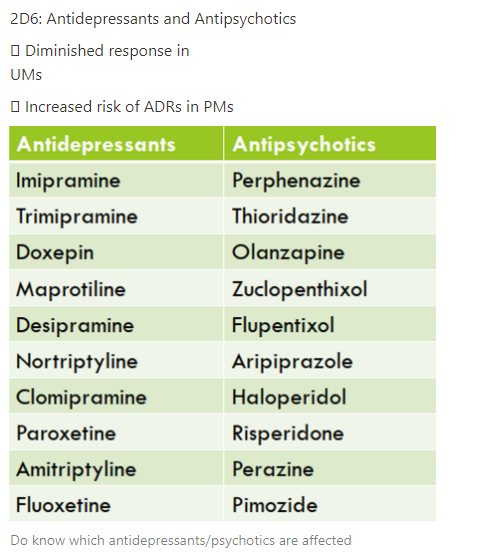
Image occlusion: name the hidden labels
53
Image occlusion: name the hidden labels
54
Image occlusion: name the hidden labels
55
2D6: Recommendations for Specific Antidepressants
TCAs:
PM: Consider avoiding or reducing dose by 50%
IM: Consider reducing dose by 25%
UM: Consider alternative or increasing dose by 140-180%
Paroxetine: select alternative drug not predominantly metabolized by CYP2D6 if PM or UM
Venlafaxine: consider dosage reductions if PM
Vortioxetine: maximum recommended dose is 10 mg/day if PM
PM: Consider avoiding or reducing dose by 50%
IM: Consider reducing dose by 25%
UM: Consider alternative or increasing dose by 140-180%
Paroxetine: select alternative drug not predominantly metabolized by CYP2D6 if PM or UM
Venlafaxine: consider dosage reductions if PM
Vortioxetine: maximum recommended dose is 10 mg/day if PM
56
2D6: Recommendations for Specific Antipsychotics – Poor Metabolizers
Aripiprazole: administer no more than 10 mg/day or 300 mg/month (67–75% of the standard maximum
dose)
Brexpiprazole: use 50% of the standard dose
Clozapine: dosage reductions may be necessary
Iloperidone: use 50% of the standard dose
Pimozide: dosages should not be increased earlier than 14 days and the dose should be reduced:
Adult: 4 mg/day maximum
Pediatric: 0.05 mg/kg/day maximum
Thioridazine: contraindicated
dose)
Brexpiprazole: use 50% of the standard dose
Clozapine: dosage reductions may be necessary
Iloperidone: use 50% of the standard dose
Pimozide: dosages should not be increased earlier than 14 days and the dose should be reduced:
Adult: 4 mg/day maximum
Pediatric: 0.05 mg/kg/day maximum
Thioridazine: contraindicated
57
2D6 - Opioids
Codeine: prodrug that requires bio-activation to morphine via CYP2D6
Tramadol: metabolized via CYP2D6 to more potent active metabolite, O- desmethyltramadol
Hydrocodone: metabolized via CYP2D6 to the minor metabolite, hydromorphone
Tramadol: metabolized via CYP2D6 to more potent active metabolite, O- desmethyltramadol
Hydrocodone: metabolized via CYP2D6 to the minor metabolite, hydromorphone
58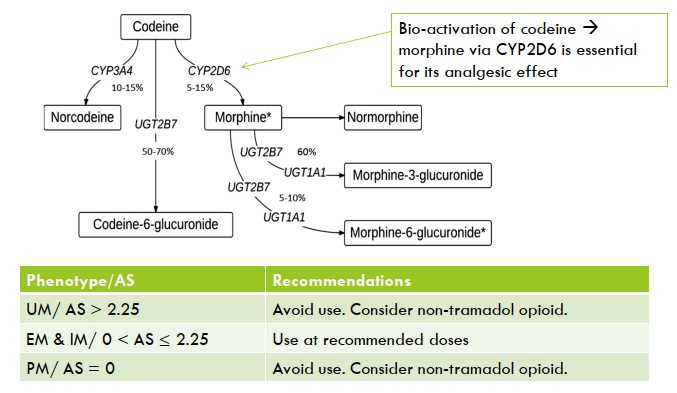
Image occlusion: name the hidden labels
59
Image occlusion: name the hidden labels
60
Image occlusion: name the hidden labels
61
Image occlusion: name the hidden labels
62
Image occlusion: name the hidden labels
63
Image occlusion: name the hidden labels
64
Image occlusion: name the hidden labels
65
Image occlusion: name the hidden labels
66
Image occlusion: name the hidden labels
67
Image occlusion: name the hidden labels
68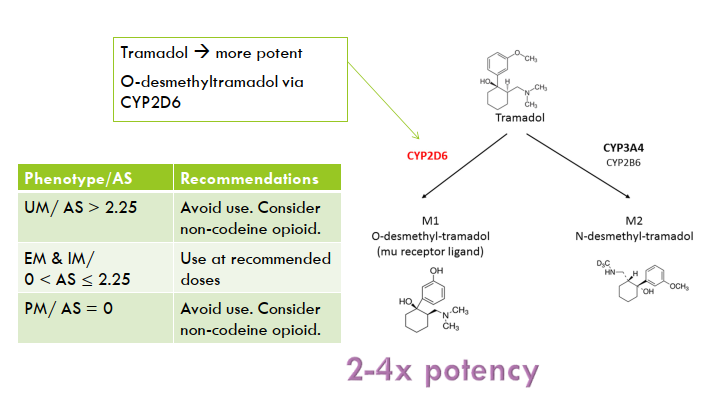
Image occlusion: name the hidden labels
69
Image occlusion: name the hidden labels
70
Image occlusion: name the hidden labels
71
Image occlusion: name the hidden labels
72
Image occlusion: name the hidden labels
73
Image occlusion: name the hidden labels
74
Image occlusion: name the hidden labels
75
Image occlusion: name the hidden labels
76
Image occlusion: name the hidden labels
77
Image occlusion: name the hidden labels
78
Image occlusion: name the hidden labels
79
Image occlusion: name the hidden labels
80
Image occlusion: name the hidden labels
81
Image occlusion: name the hidden labels
82
Image occlusion: name the hidden labels
83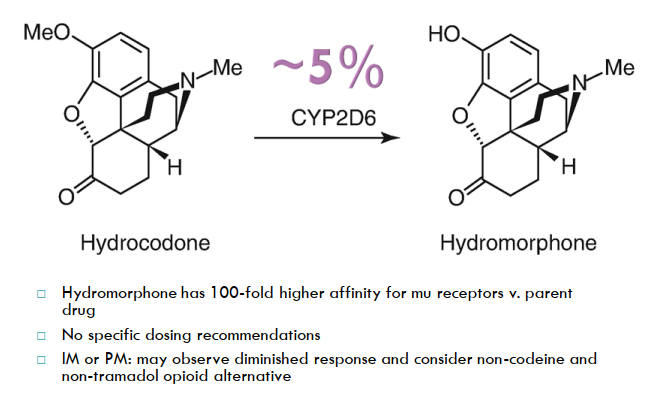
Image occlusion: name the hidden labels
84
CYP2C19
PM phenotype:
2-3% among general population
20% among Asians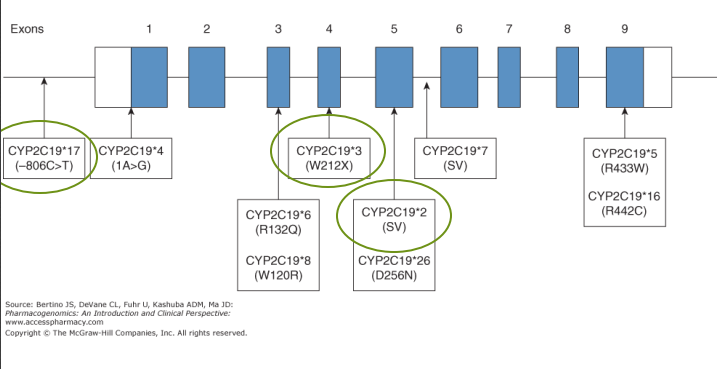
2-3% among general population
20% among Asians
85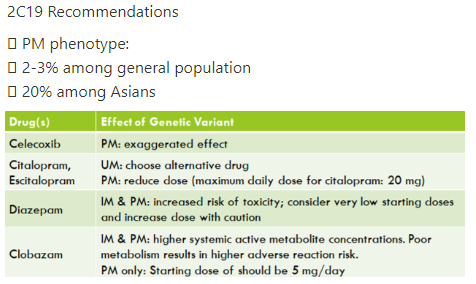
Image occlusion: name the hidden labels
86
Image occlusion: name the hidden labels
87
Image occlusion: name the hidden labels
88
Image occlusion: name the hidden labels
89
Image occlusion: name the hidden labels
90
Image occlusion: name the hidden labels
91
Image occlusion: name the hidden labels
92
Image occlusion: name the hidden labels
93
Image occlusion: name the hidden labels
94
Image occlusion: name the hidden labels
95
Image occlusion: name the hidden labels
96
Image occlusion: name the hidden labels
97
Image occlusion: name the hidden labels
98
Image occlusion: name the hidden labels
99
Image occlusion: name the hidden labels
100
Image occlusion: name the hidden labels
101
RYR1
The RYR1 protein, a subunit of the homotetrameric calcium release channel, is embedded in the
sarcoplasmic reticulum membrane.
RYR1-mediated calcium release predominantly manifests in skeletal muscle fibers where it plays a
crucial role in excitation-contraction coupling (which triggers muscle contraction).
The RYR1 gene is the primary locus for the trait of Malignant Hyperthermia Susceptibility (MHS)
sarcoplasmic reticulum membrane.
RYR1-mediated calcium release predominantly manifests in skeletal muscle fibers where it plays a
crucial role in excitation-contraction coupling (which triggers muscle contraction).
The RYR1 gene is the primary locus for the trait of Malignant Hyperthermia Susceptibility (MHS)
102
MHS
Pharmacogenetic disorder of skeletal muscle calcium regulation
Associated with uncontrolled skeletal muscle hypermetabolism in the presence of precipitating drug(s)
Manifestations of MHS:
• Acidosis
• Hypercapnia
• Tachycardia
• Hyperthermia
• Muscle rigidity
• Compartment syndrome
• Rhabdomyolysis
• Hyperkalemia
• Myoglobinuria
Associated with uncontrolled skeletal muscle hypermetabolism in the presence of precipitating drug(s)
Manifestations of MHS:
• Acidosis
• Hypercapnia
• Tachycardia
• Hyperthermia
• Muscle rigidity
• Compartment syndrome
• Rhabdomyolysis
• Hyperkalemia
• Myoglobinuria
103
MHS Triggers
Depolarizing Muscle Relaxant: succinylcholine
**Volatile Anesthetics:**
Sevoflurane
Halothane
Enflurane
Isoflurane
Methoxyflurane
Desflurane
**Volatile Anesthetics:**
Sevoflurane
Halothane
Enflurane
Isoflurane
Methoxyflurane
Desflurane
104
MHS: Treatment of Manifestations
Without proper and prompt treatment, mortality is extremely high
**Treatment in acute episode:**
Discontinuation of potent inhalation agents and succinylcholine
Increase in minute ventilation to lower end-tidal CO2
Administration of intravenous dantrolene sodium
Cooling measures
Treatment of cardiac arrythmias
Management of metabolic abnormalities
**Treatment in acute episode:**
Discontinuation of potent inhalation agents and succinylcholine
Increase in minute ventilation to lower end-tidal CO2
Administration of intravenous dantrolene sodium
Cooling measures
Treatment of cardiac arrythmias
Management of metabolic abnormalities
105
MHS: Prevention of Primary Manifestations
Individuals should carry proper identification
Do not expose to potent volatile agents and succinylcholine
Consider use of other options as appropriate
Examples: local anesthesia, nerve block, epidural, spinal anesthesia, total intravenous general anesthetic
If general anesthesia is > 30 minutes in duration, use electronic temperature probe to monitor
temperature
Do not expose to potent volatile agents and succinylcholine
Consider use of other options as appropriate
Examples: local anesthesia, nerve block, epidural, spinal anesthesia, total intravenous general anesthetic
If general anesthesia is > 30 minutes in duration, use electronic temperature probe to monitor
temperature
106
Image occlusion: name the hidden labels
107
Image occlusion: name the hidden labels
108
Image occlusion: name the hidden labels
109
Image occlusion: name the hidden labels
110
Image occlusion: name the hidden labels
111
Image occlusion: name the hidden labels
112
Image occlusion: name the hidden labels
113
Image occlusion: name the hidden labels
114
Image occlusion: name the hidden labels
115
Image occlusion: name the hidden labels
116
Image occlusion: name the hidden labels
117
Image occlusion: name the hidden labels
118
Image occlusion: name the hidden labels
119
Image occlusion: name the hidden labels
120
Image occlusion: name the hidden labels
121
Image occlusion: name the hidden labels
122
Challenges with Pharmacogenomics
• Predicting phenotype from genotype
• Assay validity and reproducibility
• Questionable impact on clinical outcomes
• Lack of alternative therapies when evidence is compelling
• Inconsistencies among and between recommendations
• Lack of full insurance coverage for testing and timeliness of results in some settings
• Assay validity and reproducibility
• Questionable impact on clinical outcomes
• Lack of alternative therapies when evidence is compelling
• Inconsistencies among and between recommendations
• Lack of full insurance coverage for testing and timeliness of results in some settings