Pain Management
Study these flashcardsFree · spaced repetition · iPhone, Android, Mac & web
All cards
1
Pain
An unpleasant sensory and emotional experience associated with actual or potential tissue damage or described in terms of such damage
Subjective
Subjective
2
Epidemiology
Affects > 100 million people in US
Chief complaint or is due to co-morbid condition
Now being recognized as a disease state rather than a condition
More than \$600 billion spent annually on pain, which includes direct and indirect costs
Chief complaint or is due to co-morbid condition
Now being recognized as a disease state rather than a condition
More than \$600 billion spent annually on pain, which includes direct and indirect costs
3
Consequences of Pain
Anxiety/Depression
Impaired Sleep
Decreased Mobility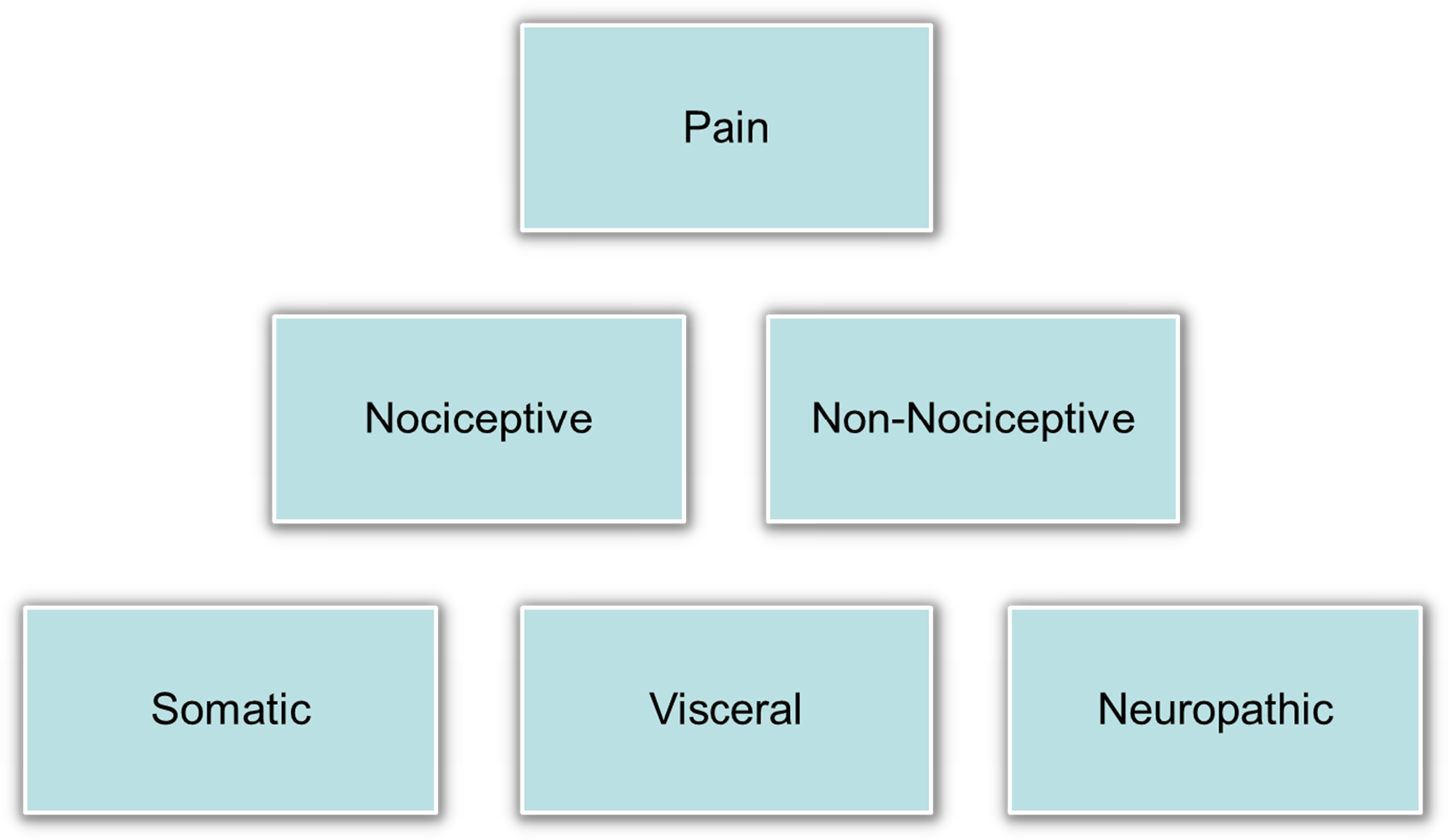
Impaired Sleep
Decreased Mobility
4
Nociceptive vs. Neuropathic Pain
nociceptive pain is caused by physical damage or potential damage to the body while neuropathic pain is caused by damage to the nervous system.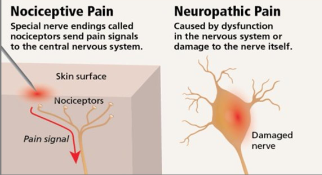
5
Pain Pathophysiology
Injury → Inflammation → Transduction Conduction → Modulation → Perception
6
Acute vs. Chronic Pain
Acute
Usually nociceptive
Improves over time and subsides once healing resolved
Commonly due to surgery, acute illness, trauma, labor, or medical procedures
Chronic
Persists from months to years
Can worsen over time
Cancer pain or non-cancer pain
Disease, treatment, diagnostic procedures
Usually nociceptive
Improves over time and subsides once healing resolved
Commonly due to surgery, acute illness, trauma, labor, or medical procedures
Chronic
Persists from months to years
Can worsen over time
Cancer pain or non-cancer pain
Disease, treatment, diagnostic procedures
7
Acute Pain
**Sign & Symptoms**
sharp, dull, shock like, tingling, shooting, radiating, fluctuating in intensity, vary in location
occurs in a timely relationship to noxious stimuli
Objective: ↑ BP, ↑ HR, diaphoresis, mydriasis, pallor
Can have no obvious physical signs
Subjective: Severity/intensity
sharp, dull, shock like, tingling, shooting, radiating, fluctuating in intensity, vary in location
occurs in a timely relationship to noxious stimuli
Objective: ↑ BP, ↑ HR, diaphoresis, mydriasis, pallor
Can have no obvious physical signs
Subjective: Severity/intensity
8
Chronic Pain
**Sign & Symptoms**
Same as acute pain
Over time, the pain stimulus may cause symptoms that completely change
No temporal relation to noxious stimuli
Most have no obvious physical signs, but may have comorbid conditions due to pain (anxiety, depression, insomnia)
Subjective: Severity/intensity
Consider Vit D, TSH, Vit B12
Same as acute pain
Over time, the pain stimulus may cause symptoms that completely change
No temporal relation to noxious stimuli
Most have no obvious physical signs, but may have comorbid conditions due to pain (anxiety, depression, insomnia)
Subjective: Severity/intensity
Consider Vit D, TSH, Vit B12
9
Pain Assessment
Pain Experience- social, history
Physical Experience
Site of pain
Focus on musculoskeletal and nervous system
Cognitive function
Non-verbal pain behaviors
Functional Assessment
Diagnostic
Medical history/psychiatric history
Laboratory or radiographic evaluation is directed by the goals of care
Physical Experience
Site of pain
Focus on musculoskeletal and nervous system
Cognitive function
Non-verbal pain behaviors
Functional Assessment
Diagnostic
Medical history/psychiatric history
Laboratory or radiographic evaluation is directed by the goals of care
10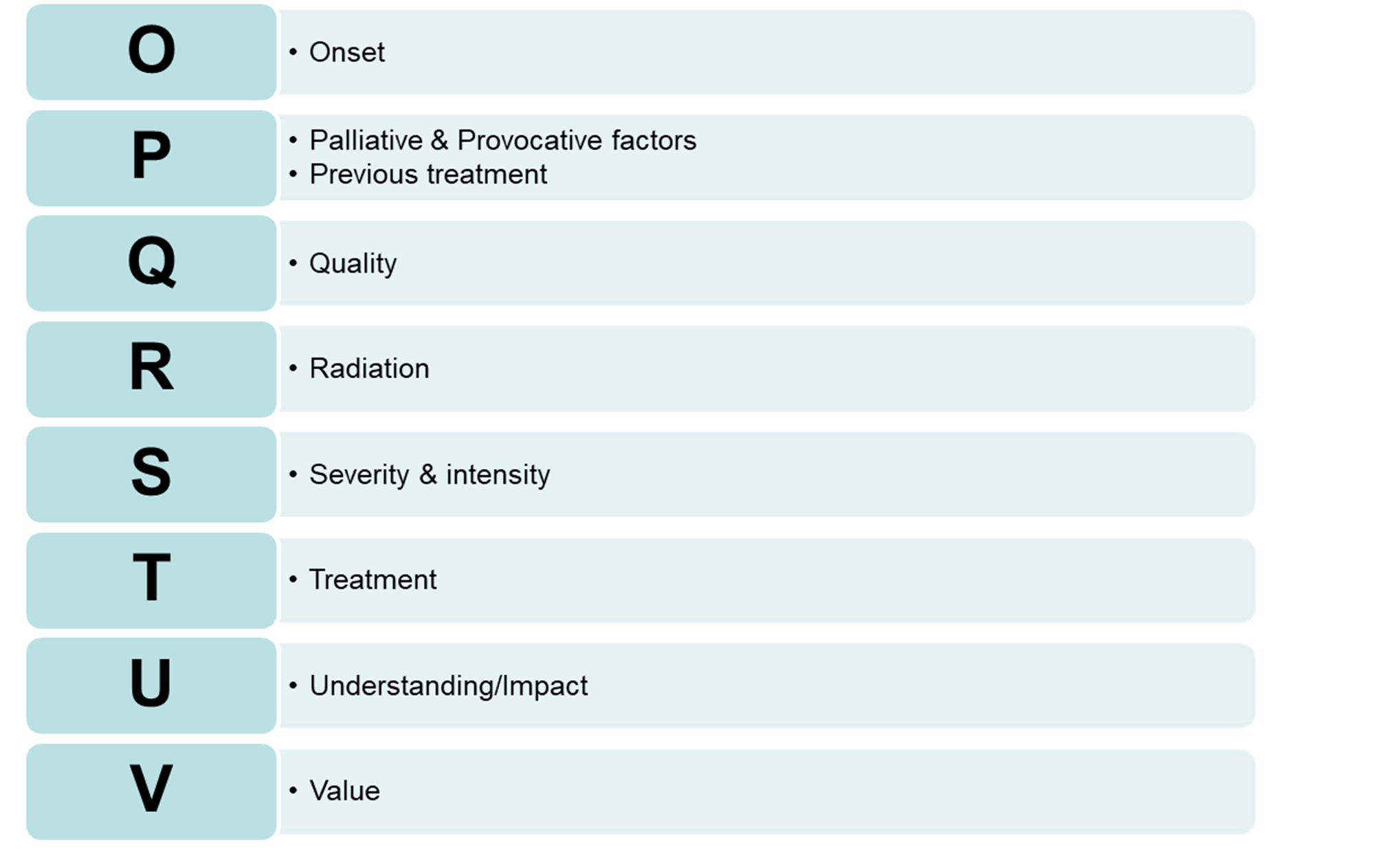
Image occlusion: name the hidden labels
11
Image occlusion: name the hidden labels
12
Image occlusion: name the hidden labels
13
Image occlusion: name the hidden labels
14
Image occlusion: name the hidden labels
15
Image occlusion: name the hidden labels
16
Image occlusion: name the hidden labels
17
Image occlusion: name the hidden labels
18
Image occlusion: name the hidden labels
19
Image occlusion: name the hidden labels
20
Image occlusion: name the hidden labels
21
Image occlusion: name the hidden labels
22
Image occlusion: name the hidden labels
23
Image occlusion: name the hidden labels
24
Image occlusion: name the hidden labels
25
Image occlusion: name the hidden labels
26
Image occlusion: name the hidden labels
27
Image occlusion: name the hidden labels
28
Image occlusion: name the hidden labels
29
Image occlusion: name the hidden labels
30
Image occlusion: name the hidden labels
31
Image occlusion: name the hidden labels
32
Image occlusion: name the hidden labels
33
Image occlusion: name the hidden labels
34
Image occlusion: name the hidden labels
35
Image occlusion: name the hidden labels
36
Image occlusion: name the hidden labels
37
Image occlusion: name the hidden labels
38
Image occlusion: name the hidden labels
39
Image occlusion: name the hidden labels
40
Image occlusion: name the hidden labels
41
Image occlusion: name the hidden labels
42
Image occlusion: name the hidden labels
43
Image occlusion: name the hidden labels
44
Image occlusion: name the hidden labels
45
Image occlusion: name the hidden labels
46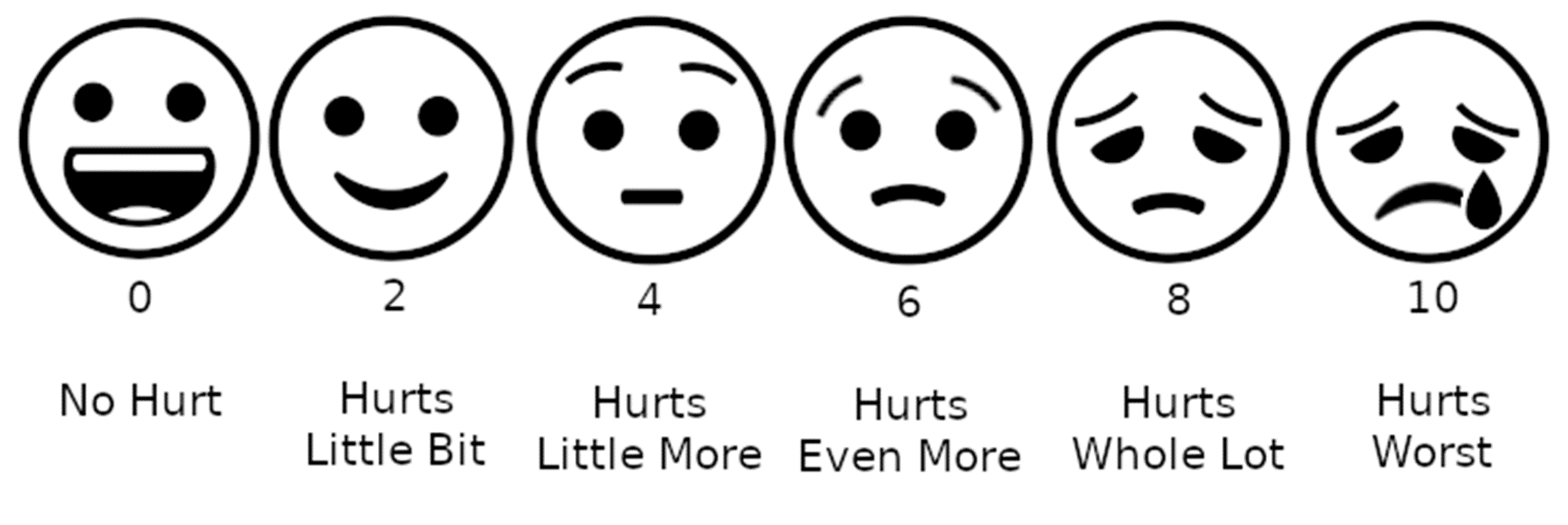
Wong-Baker Faces Pain Rating Scale
47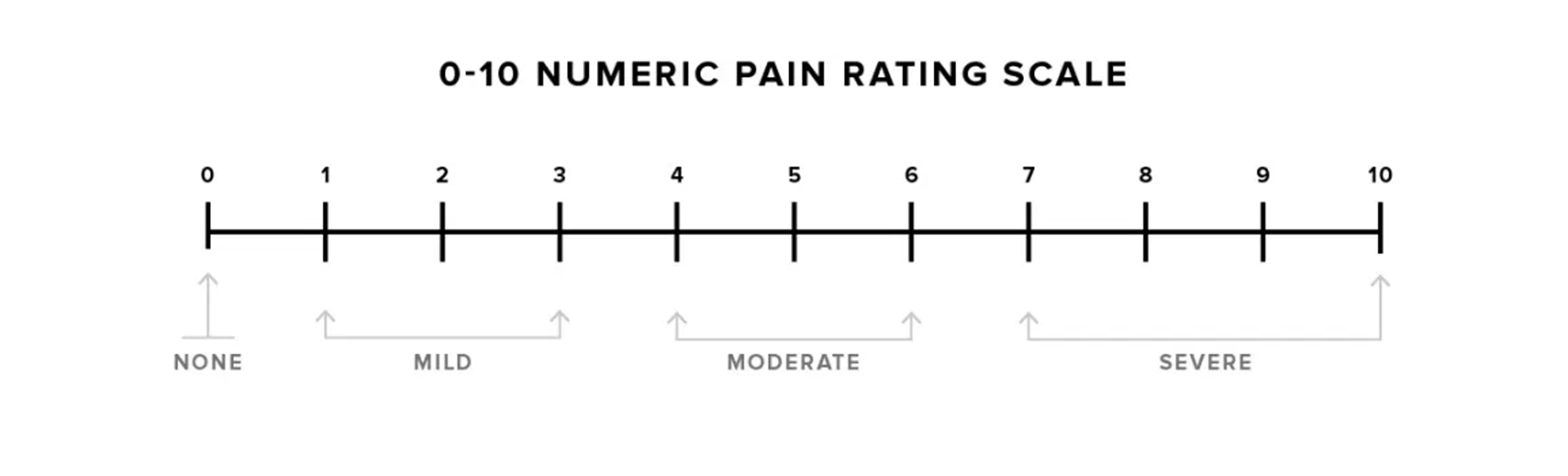
Numerical Rating Scale
48
Behavioral Pain Scale (BPS)
3 = no pain, 12 = max pain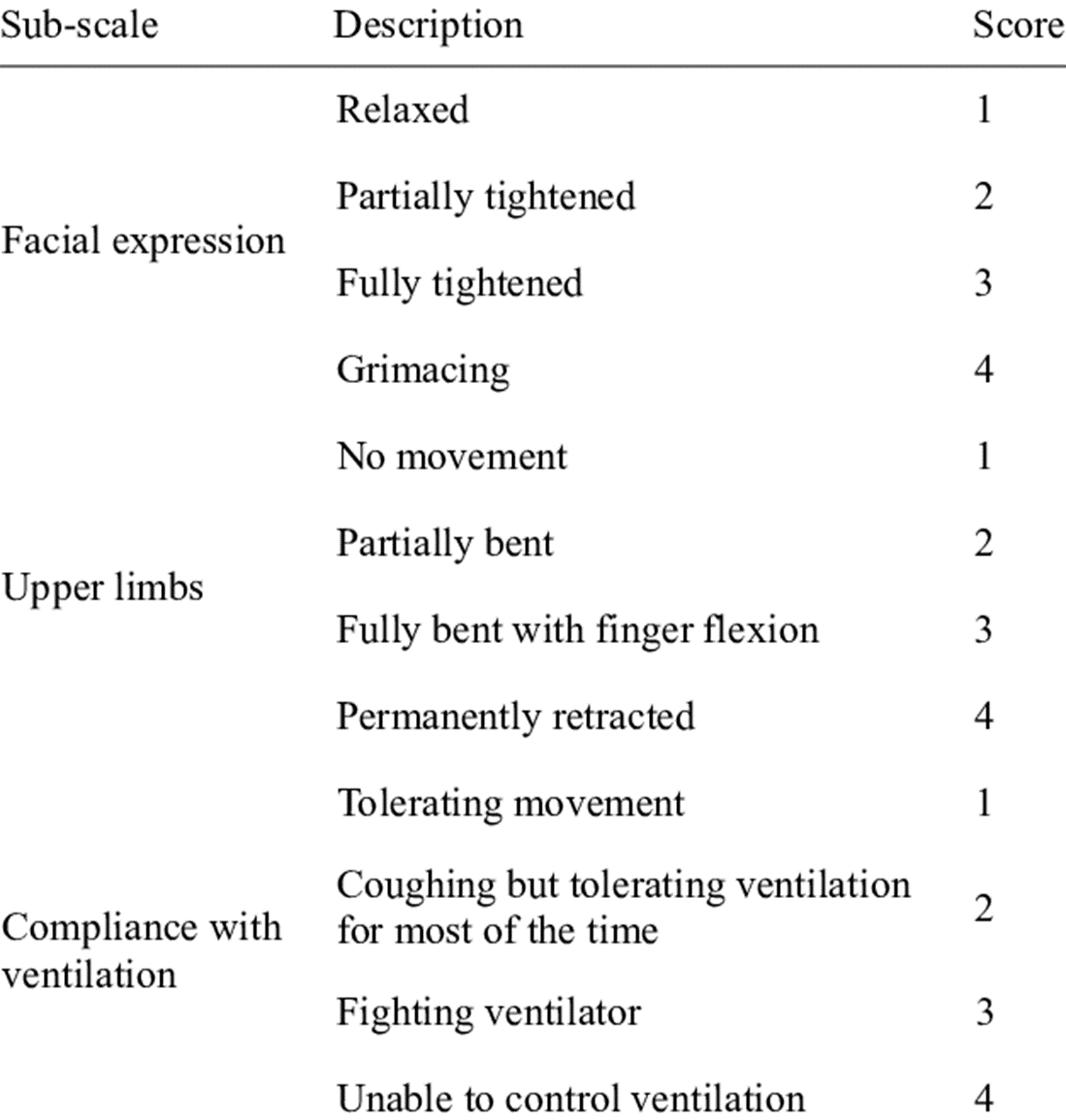
49
Critical Care Pain Observation Tool (CPOT)
0 = no pain, 8 = max pain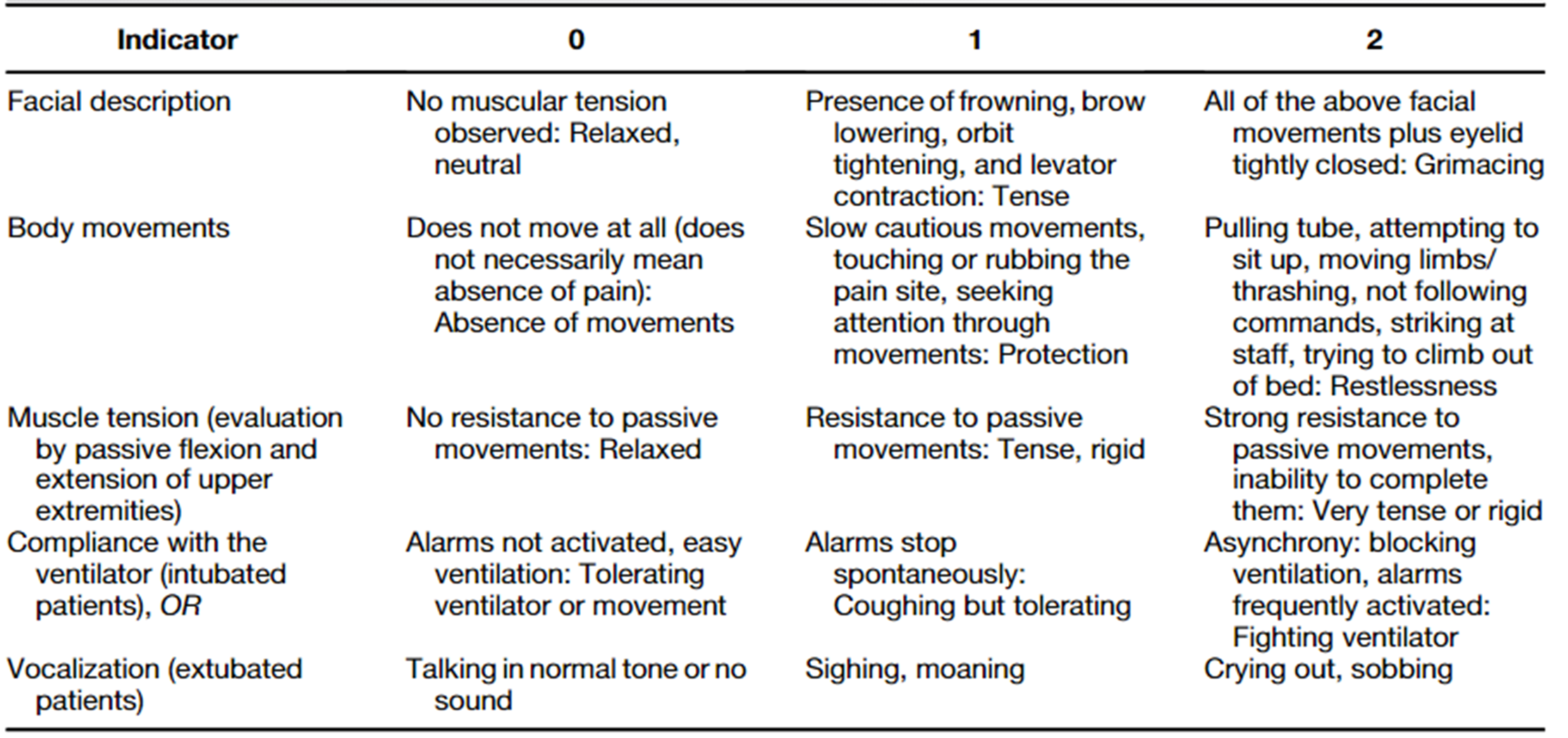
50
Goals of Treatment
Analgesia: Optimize pain relief
Acute: relieve or decrease intensity
Chronic: improving daily function
Activity: Optimize activities of daily living
Aberrant drug behavior: Avoid addiction-related outcomes
Adverse effects: Minimize adverse drug events (ADE)
Affect: Relationship between pain and mood
Acute: relieve or decrease intensity
Chronic: improving daily function
Activity: Optimize activities of daily living
Aberrant drug behavior: Avoid addiction-related outcomes
Adverse effects: Minimize adverse drug events (ADE)
Affect: Relationship between pain and mood
51
Principles of Pain Management
Education
Pharmacologic
Non-pharmacologic
Pharmacologic
Non-pharmacologic
52
Nonpharmacologic
Heat/ice therapy
Accupuncture
Psychological treatment cognitive behavioral therapy (CBT)
Electric nerve stimulation
Physical therapy and mobility
Surgery
Accupuncture
Psychological treatment cognitive behavioral therapy (CBT)
Electric nerve stimulation
Physical therapy and mobility
Surgery
53
Pharmacologic
Step 1 - non-opioid +/- adjuvant
Step 2 - non-opioid +/- weak opioid +/- adjuvant
Step 3 = Non-opioid +/- strong opioid +/- adjuvant
Step 2 - non-opioid +/- weak opioid +/- adjuvant
Step 3 = Non-opioid +/- strong opioid +/- adjuvant
54
Multimodal Analgesia
Use of more than one pharmacological class of analgesic medication targeting different receptors along the pain pathway with the goal of improving analgesia while reducing individual class-related side effects.
55
Non-opioid Analgesics
Acetaminophen (Tylenol)
Non-steroidal anti-inflammatory drugs (NSAID)
Non-steroidal anti-inflammatory drugs (NSAID)
56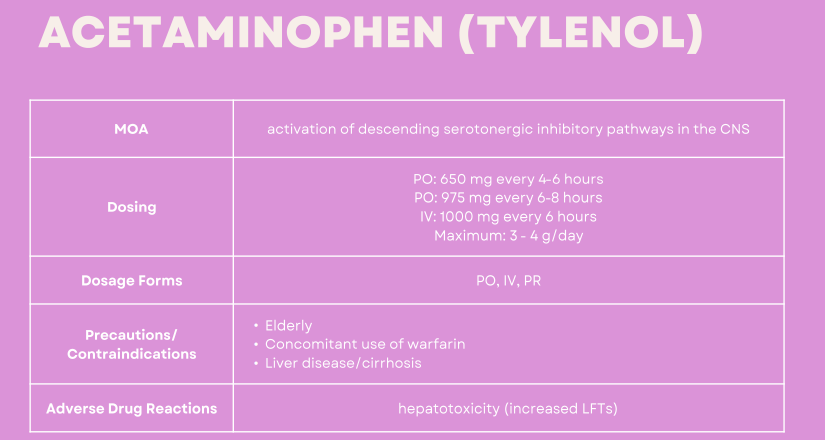
Image occlusion: name the hidden labels
57
Image occlusion: name the hidden labels
58
Image occlusion: name the hidden labels
59
Image occlusion: name the hidden labels
60
Image occlusion: name the hidden labels
61
Image occlusion: name the hidden labels
62
Image occlusion: name the hidden labels
63
Image occlusion: name the hidden labels
64
Image occlusion: name the hidden labels
65
Image occlusion: name the hidden labels
66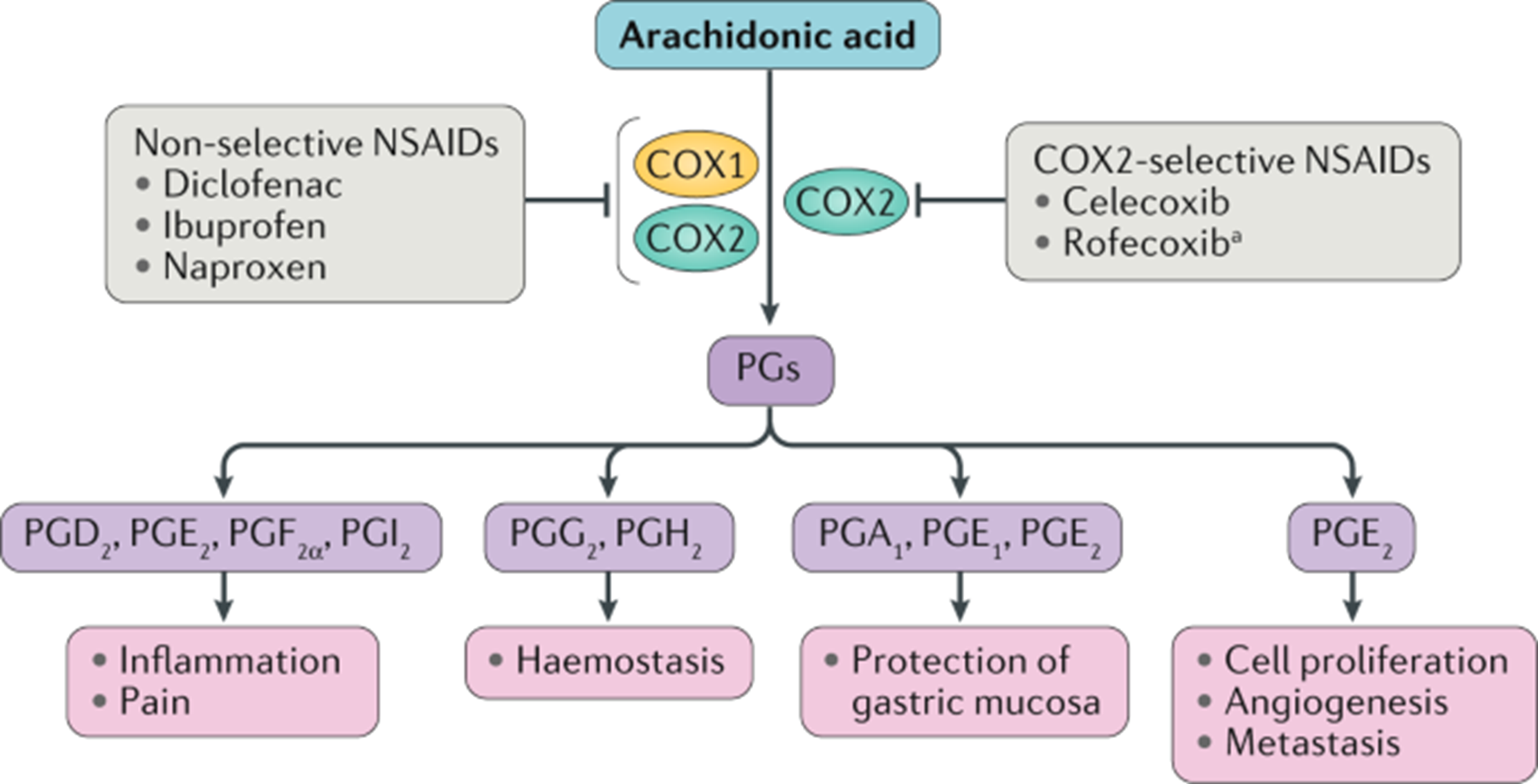
Image occlusion: name the hidden labels
67
Image occlusion: name the hidden labels
68
Image occlusion: name the hidden labels
69
Image occlusion: name the hidden labels
70
Image occlusion: name the hidden labels
71
Image occlusion: name the hidden labels
72
Image occlusion: name the hidden labels
73
Image occlusion: name the hidden labels
74
Image occlusion: name the hidden labels
75
Image occlusion: name the hidden labels
76
Image occlusion: name the hidden labels
77
Image occlusion: name the hidden labels
78
Image occlusion: name the hidden labels
79
Image occlusion: name the hidden labels
80
Image occlusion: name the hidden labels
81
Image occlusion: name the hidden labels
82
Image occlusion: name the hidden labels
83
Image occlusion: name the hidden labels
84
Image occlusion: name the hidden labels
85
Image occlusion: name the hidden labels
86
Image occlusion: name the hidden labels
87
Image occlusion: name the hidden labels
88
Image occlusion: name the hidden labels
89
Image occlusion: name the hidden labels
90
Image occlusion: name the hidden labels
91
Image occlusion: name the hidden labels
92
Image occlusion: name the hidden labels
93
Image occlusion: name the hidden labels
94
Image occlusion: name the hidden labels
95
Image occlusion: name the hidden labels
96
Image occlusion: name the hidden labels
97
Image occlusion: name the hidden labels
98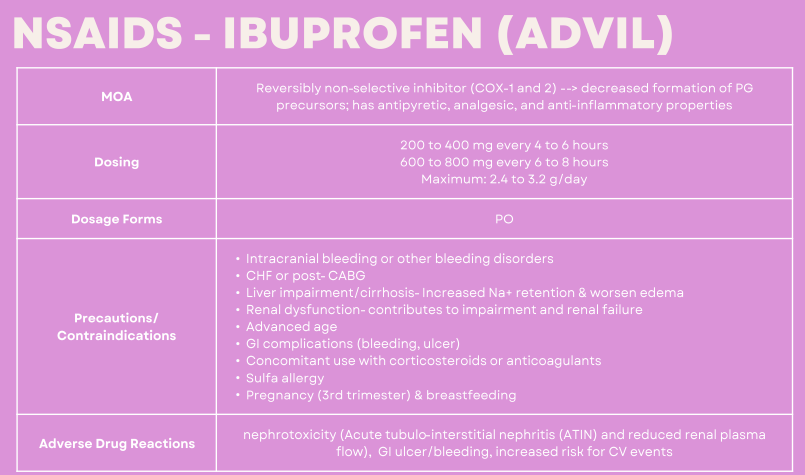
Image occlusion: name the hidden labels
99
Image occlusion: name the hidden labels
100
Image occlusion: name the hidden labels
101
Image occlusion: name the hidden labels
102
Image occlusion: name the hidden labels
103
Image occlusion: name the hidden labels
104
Image occlusion: name the hidden labels
105
Image occlusion: name the hidden labels
106
Image occlusion: name the hidden labels
107
Image occlusion: name the hidden labels
108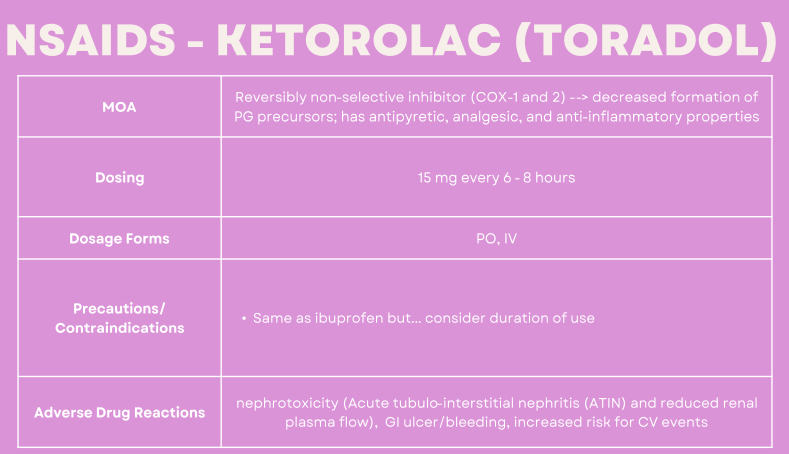
Image occlusion: name the hidden labels
109
Image occlusion: name the hidden labels
110
Image occlusion: name the hidden labels
111
Image occlusion: name the hidden labels
112
Image occlusion: name the hidden labels
113
Image occlusion: name the hidden labels
114
Image occlusion: name the hidden labels
115
Image occlusion: name the hidden labels
116
Image occlusion: name the hidden labels
117
Image occlusion: name the hidden labels
118
Ketorolac Boxed Warning
Systemic ketorolac is indicated for short-term (≤5 days) use in adults for treatment of moderately severe acute pain requiring opioid-level analgesia.
119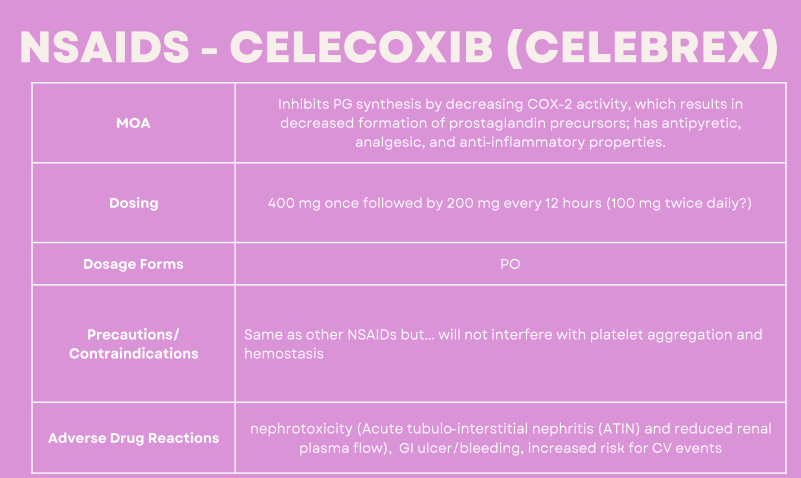
Image occlusion: name the hidden labels
120
Image occlusion: name the hidden labels
121
Image occlusion: name the hidden labels
122
Image occlusion: name the hidden labels
123
Image occlusion: name the hidden labels
124
Image occlusion: name the hidden labels
125
Image occlusion: name the hidden labels
126
Image occlusion: name the hidden labels
127
Image occlusion: name the hidden labels
128
Image occlusion: name the hidden labels
129
Adjuvant Analgesics
Topical agents
Local anesthetics
Regional anesthetics
Antispasmodic agents
Local anesthetics
Regional anesthetics
Antispasmodic agents
130
Topical Agents
Capsaicin cream
Depletes substance P in the periphery and down regulates the TRPV1 receptors
Higher concentration dose forms (ex: 8% patch) available for medical office use
Other agents considered may include: Bengay, Icy-Hot, etc
Depletes substance P in the periphery and down regulates the TRPV1 receptors
Higher concentration dose forms (ex: 8% patch) available for medical office use
Other agents considered may include: Bengay, Icy-Hot, etc
131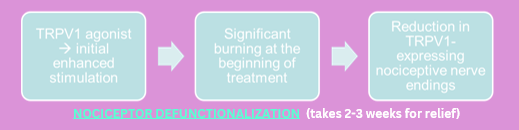
Image occlusion: name the hidden labels
132
Image occlusion: name the hidden labels
133
Image occlusion: name the hidden labels
134
Image occlusion: name the hidden labels
135
Image occlusion: name the hidden labels
136
Image occlusion: name the hidden labels
137
Image occlusion: name the hidden labels
138
Image occlusion: name the hidden labels
139
Image occlusion: name the hidden labels
140
Image occlusion: name the hidden labels
141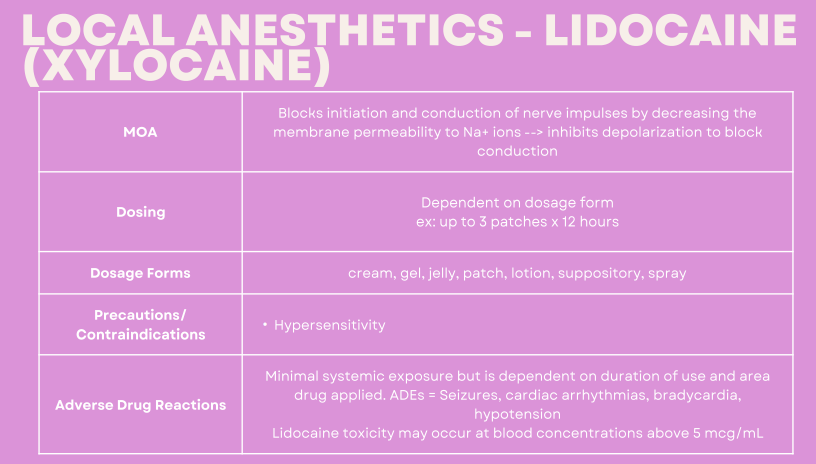
Image occlusion: name the hidden labels
142
Image occlusion: name the hidden labels
143
Image occlusion: name the hidden labels
144
Image occlusion: name the hidden labels
145
Image occlusion: name the hidden labels
146
Image occlusion: name the hidden labels
147
Image occlusion: name the hidden labels
148
Image occlusion: name the hidden labels
149
Image occlusion: name the hidden labels
150
Image occlusion: name the hidden labels
151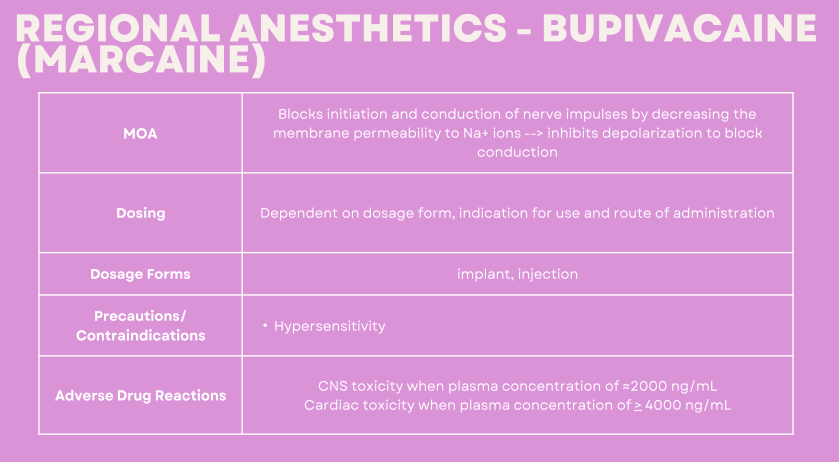
Image occlusion: name the hidden labels
152
Image occlusion: name the hidden labels
153
Image occlusion: name the hidden labels
154
Image occlusion: name the hidden labels
155
Image occlusion: name the hidden labels
156
Image occlusion: name the hidden labels
157
Image occlusion: name the hidden labels
158
Image occlusion: name the hidden labels
159
Image occlusion: name the hidden labels
160
Image occlusion: name the hidden labels
161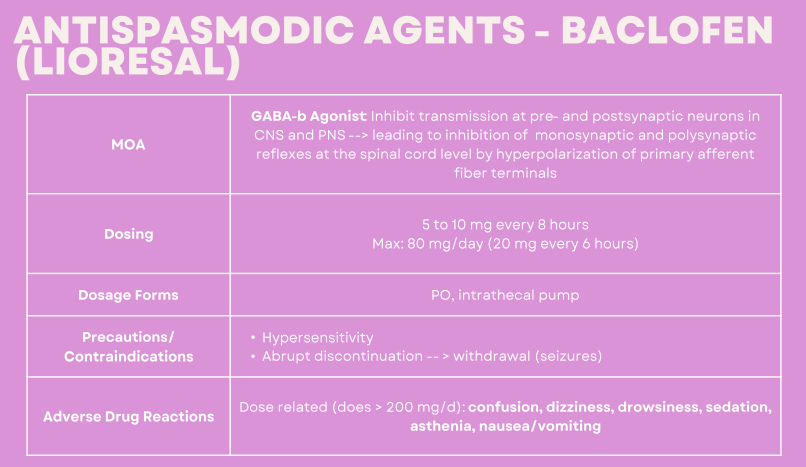
Image occlusion: name the hidden labels
162
Image occlusion: name the hidden labels
163
Image occlusion: name the hidden labels
164
Image occlusion: name the hidden labels
165
Image occlusion: name the hidden labels
166
Image occlusion: name the hidden labels
167
Image occlusion: name the hidden labels
168
Image occlusion: name the hidden labels
169
Image occlusion: name the hidden labels
170
Image occlusion: name the hidden labels
171
Opioid Epidemic
Overdose deaths remain a leading cause of injury-related death in the US
Increased deaths involving synthetic opioids (e.g., fentanyl) and stimulants (e.g., cocaine)
68,630 overdose deaths in 2020 (74.8% of all overdose deaths) involved opioids
82.3% of opioid-involved overdose deaths involved synthetic opioids
Increased deaths involving synthetic opioids (e.g., fentanyl) and stimulants (e.g., cocaine)
68,630 overdose deaths in 2020 (74.8% of all overdose deaths) involved opioids
82.3% of opioid-involved overdose deaths involved synthetic opioids
172
Opioids
Natural and synthetic substances
Will determine risk for allergy
3 major types of opioid receptors: μ (mu) , delta and kappa
Most target μ-opioid receptors
Variable potency and formulations
Will determine risk for allergy
3 major types of opioid receptors: μ (mu) , delta and kappa
Most target μ-opioid receptors
Variable potency and formulations
173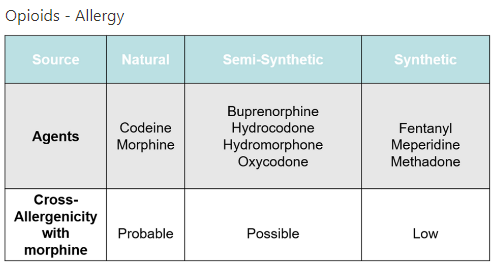
Image occlusion: name the hidden labels
174
Image occlusion: name the hidden labels
175
Image occlusion: name the hidden labels
176
Image occlusion: name the hidden labels
177
Image occlusion: name the hidden labels
178
Image occlusion: name the hidden labels
179
Opioids - Morphine (Duramorph)
Natural alkaloid - opiate
Pure μ-receptor agonist
Hypotension, pruritus
Avoid in renal disease (CKD, AKI)
Liver metabolism to **morphine-3-glucuronide** (M3G - inactive analgesic) and **M6G (active analgesic)**
Available for PO (IR and ER), IV, IM
- Start with immediate release (shorter duration of action); provides ability to titrate dose
- We do not start with ER products; reserved for opioid tolerant patients
- IV dosing - 2-4 mg IV
ER: MS contin(q8-12h), Kadian (q12h)
Pure μ-receptor agonist
Hypotension, pruritus
Avoid in renal disease (CKD, AKI)
Liver metabolism to **morphine-3-glucuronide** (M3G - inactive analgesic) and **M6G (active analgesic)**
Available for PO (IR and ER), IV, IM
- Start with immediate release (shorter duration of action); provides ability to titrate dose
- We do not start with ER products; reserved for opioid tolerant patients
- IV dosing - 2-4 mg IV
ER: MS contin(q8-12h), Kadian (q12h)
180
Opioids - Oxycodone (Roxicodone)
Semi-synthetic derivative of morphine (more potent)
Safer in renal and hepatic impairment
**Only available as PO (IR and ER)**
normally start with 5-10 mg; q4-6 hours for IR (still short acting)
ER: Oxycontin q12h
Often in combination with APAP
Associated with increased euphoria & abuse potential
No ceiling effect → you may see massive doses of opioids (does not mean it is wrong; tolerance)
Safer in renal and hepatic impairment
**Only available as PO (IR and ER)**
normally start with 5-10 mg; q4-6 hours for IR (still short acting)
ER: Oxycontin q12h
Often in combination with APAP
Associated with increased euphoria & abuse potential
No ceiling effect → you may see massive doses of opioids (does not mean it is wrong; tolerance)
181
Opioids - Hydromorphone (Dilaudid)
Semi-synthetic derivative of morphine → 7 x more potent
Safer in renal and hepatic impairment
Liver metabolism to H3G (inactive)
Available for PO (IR and ER), IV, IM, SC
- PO IR start low because it is so potent
- IV (0.2, 0.3 mg) - very low doses q2-4h
ER: Exalgo (q24h)
Associated with increased euphoria & abuse potential
Safer in renal and hepatic impairment
Liver metabolism to H3G (inactive)
Available for PO (IR and ER), IV, IM, SC
- PO IR start low because it is so potent
- IV (0.2, 0.3 mg) - very low doses q2-4h
ER: Exalgo (q24h)
Associated with increased euphoria & abuse potential
182
Codeine
Natural alkaloid - opiate
Weak opioid
Available by itself and in combination with APAP
Metabolized by CYP 2D6
Causes more nausea
Weak opioid
Available by itself and in combination with APAP
Metabolized by CYP 2D6
Causes more nausea
183
Hydrocodone
Semi-synthetic opioid
Available by itself and in combination with APAP and ibuprofen
New ER formulations:
Zohydro ER®
Hysingla ER®
Available by itself and in combination with APAP and ibuprofen
New ER formulations:
Zohydro ER®
Hysingla ER®
184
Oliceridine
Newest IV opioid - less respiratory depression & nausea
48 hour duration of use
48 hour duration of use
185
Opioids - Equianalgesic Switch
Why switch?
Lack of efficacy
Intolerable side effects
Inability to use certain formulations
Moving to/from inpatient or outpatient
Availability
Cost or formulary issues
Does NOT take into account individual variability or incomplete cross tolerance
Generally calculate total daily dose and decrease by up to 50%
20-30% if pain well controlled
Take into account organ dysfunction
Dosing titrated to effect
Lack of efficacy
Intolerable side effects
Inability to use certain formulations
Moving to/from inpatient or outpatient
Availability
Cost or formulary issues
Does NOT take into account individual variability or incomplete cross tolerance
Generally calculate total daily dose and decrease by up to 50%
20-30% if pain well controlled
Take into account organ dysfunction
Dosing titrated to effect
186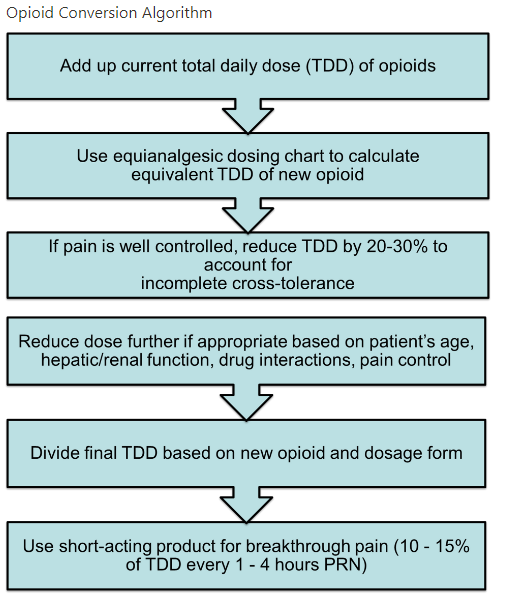
Image occlusion: name the hidden labels
187
Image occlusion: name the hidden labels
188
Image occlusion: name the hidden labels
189
Image occlusion: name the hidden labels
190
Image occlusion: name the hidden labels
191
Image occlusion: name the hidden labels
192
Image occlusion: name the hidden labels
193
Image occlusion: name the hidden labels
194
Image occlusion: name the hidden labels
195
Image occlusion: name the hidden labels
196
Image occlusion: name the hidden labels
197
Image occlusion: name the hidden labels
198
Image occlusion: name the hidden labels
199
Image occlusion: name the hidden labels
200
Image occlusion: name the hidden labels
201
Image occlusion: name the hidden labels
202
Image occlusion: name the hidden labels
203
Image occlusion: name the hidden labels
204
Image occlusion: name the hidden labels
205
Image occlusion: name the hidden labels
206
Image occlusion: name the hidden labels
207
Opioids Methadone
Fully synthetic
μ receptor agonist and NMDA receptor antagonist
Reserved for opioid tolerant patients - more than 60 mg of MME/day for more than 7 days
Also used to treat opioid use disorder (OUD)
PK/PD highly variable (T½ up to 60 hours)
Equianalgesic dosing not recommended
Estimate % of TDD morphine-equivalent
QTc prolongation and cardiac arrhythmias ← inhibit cardiac potassium channels
μ receptor agonist and NMDA receptor antagonist
Reserved for opioid tolerant patients - more than 60 mg of MME/day for more than 7 days
Also used to treat opioid use disorder (OUD)
PK/PD highly variable (T½ up to 60 hours)
Equianalgesic dosing not recommended
Estimate % of TDD morphine-equivalent
QTc prolongation and cardiac arrhythmias ← inhibit cardiac potassium channels
208
Fentanyl
Fully synthetic
100 x more potent than morphine
Reserved for opioid tolerant patients ≥60 mg of morphine daily x 7 days
Acute vs. chronic pain
- Acute - IV
- Chronic - topical (q72hours), buccal, SL, IN
— Avoid topical in fever or cachexia
- Safe in renal and hepatic impairment
dosing = mcg/hour
100 x more potent than morphine
Reserved for opioid tolerant patients ≥60 mg of morphine daily x 7 days
Acute vs. chronic pain
- Acute - IV
- Chronic - topical (q72hours), buccal, SL, IN
— Avoid topical in fever or cachexia
- Safe in renal and hepatic impairment
dosing = mcg/hour
209
Tramadol - Dual Mechanism Opioid
Weak μ receptor agonist and a weak serotonin-norepinephrine reuptake inhibitor
Schedule IV controlled substance
Used in neuropathic pain
Schedule IV controlled substance
Used in neuropathic pain
210
Tapentadol - Dual Mechanism Opioid
μ receptor agonist and a norepinephrine reuptake inhibitor
Schedule II controlled substance
ER formulation indicated for diabetic peripheral neuropathy
Schedule II controlled substance
ER formulation indicated for diabetic peripheral neuropathy
211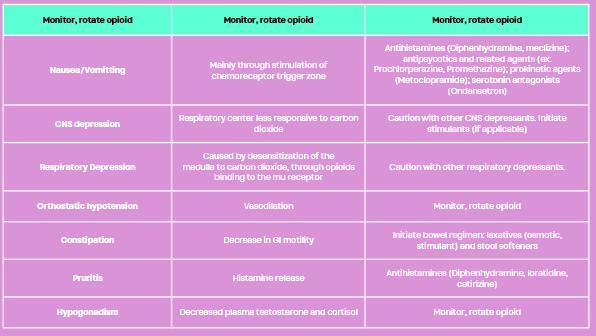
Image occlusion: name the hidden labels
212
Image occlusion: name the hidden labels
213
Image occlusion: name the hidden labels
214
Naloxone
MOA: μ-receptor antagonist
Quick onset/offset
Available: IV, IM, SC, IN
Caution in chronic opioid users
Unmask pain
Precipitate withdrawal
ADRs: pain, agitation, hypertension, nausea/vomiting, diarrhea
FDA approved IN formulation for EMS and caregivers to administer
Some states made it available OTC
Quick onset/offset
Available: IV, IM, SC, IN
Caution in chronic opioid users
Unmask pain
Precipitate withdrawal
ADRs: pain, agitation, hypertension, nausea/vomiting, diarrhea
FDA approved IN formulation for EMS and caregivers to administer
Some states made it available OTC
215
Buprenorphine
Semi synthetic
20 - 50 x more potent
High-affinity binding to mu receptors → Partial mu agonist
- knocks off opioids already bound to the receptor
Weak kappa antagonist
Treatment of pain and OUD
Can precipitate withdrawal in chronic opioid users or OUD
Available: buccal, IM, SL, TD, SC
20 - 50 x more potent
High-affinity binding to mu receptors → Partial mu agonist
- knocks off opioids already bound to the receptor
Weak kappa antagonist
Treatment of pain and OUD
Can precipitate withdrawal in chronic opioid users or OUD
Available: buccal, IM, SL, TD, SC
216
Ketamine
Not first line; normally adjunctive
NMDA receptor antagonist
Blocks glutamate
Low (subanesthetic) doses --> analgesia
Modulate central sensitization (refractory pain)
Attenuate opioid tolerance
Available as: PO, IN, IV, topical
ADR: nausea, vomiting, and psychomimetic effects
NMDA receptor antagonist
Blocks glutamate
Low (subanesthetic) doses --> analgesia
Modulate central sensitization (refractory pain)
Attenuate opioid tolerance
Available as: PO, IN, IV, topical
ADR: nausea, vomiting, and psychomimetic effects
217
Neuropathic Pain
Damage to nerves outside of the brain or spinal cord (CNS)
Nerve compressed, injured, crushed or severed
Neuropathy or peripheral neuropathy (PN)
Often associated with certain disease states or trauma
Burning or shooting pain
Numbness or tingling in extremeties (hands or feet)
Nerve compressed, injured, crushed or severed
Neuropathy or peripheral neuropathy (PN)
Often associated with certain disease states or trauma
Burning or shooting pain
Numbness or tingling in extremeties (hands or feet)
218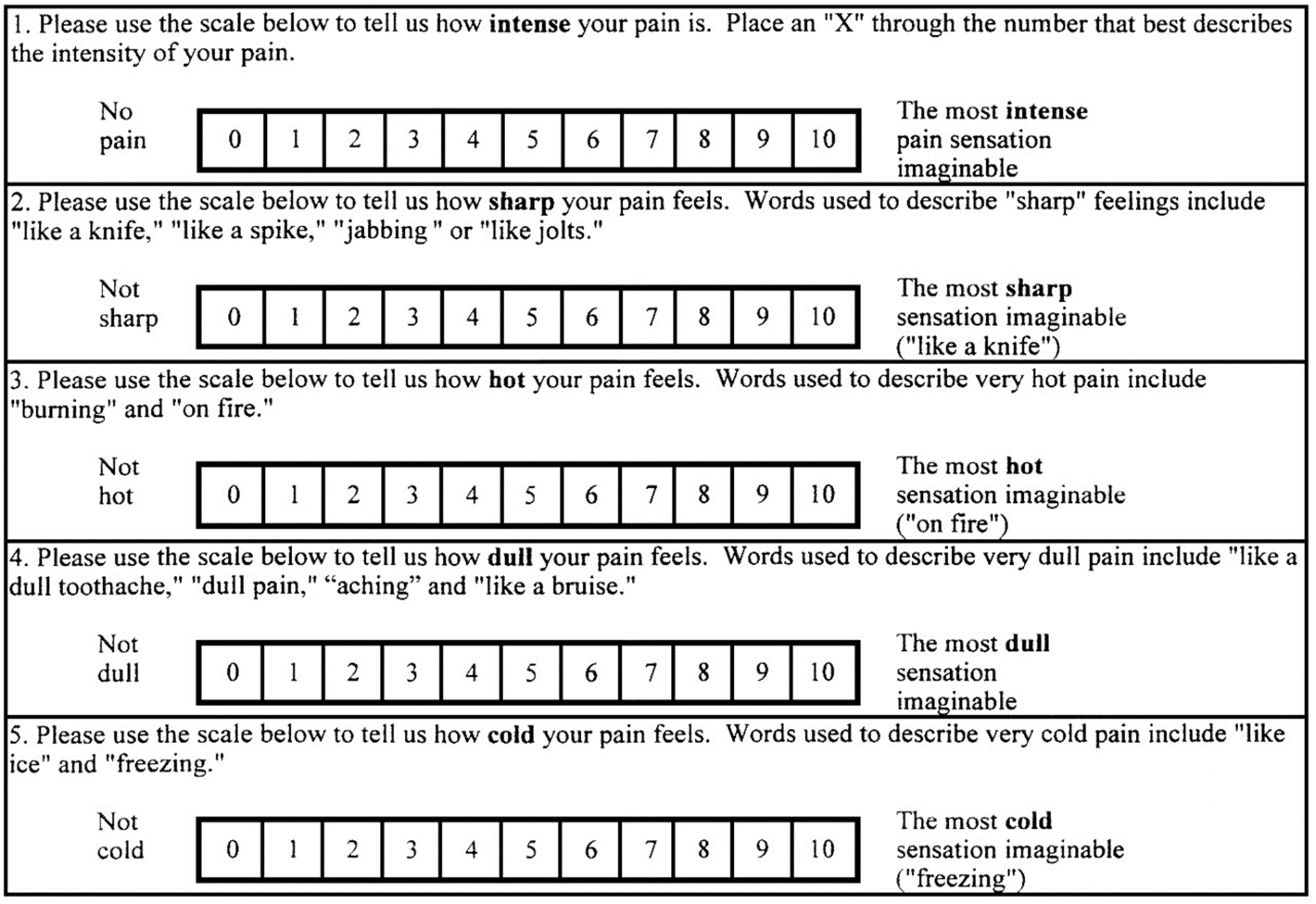
Neuropathic Pain Scale (NPS)
219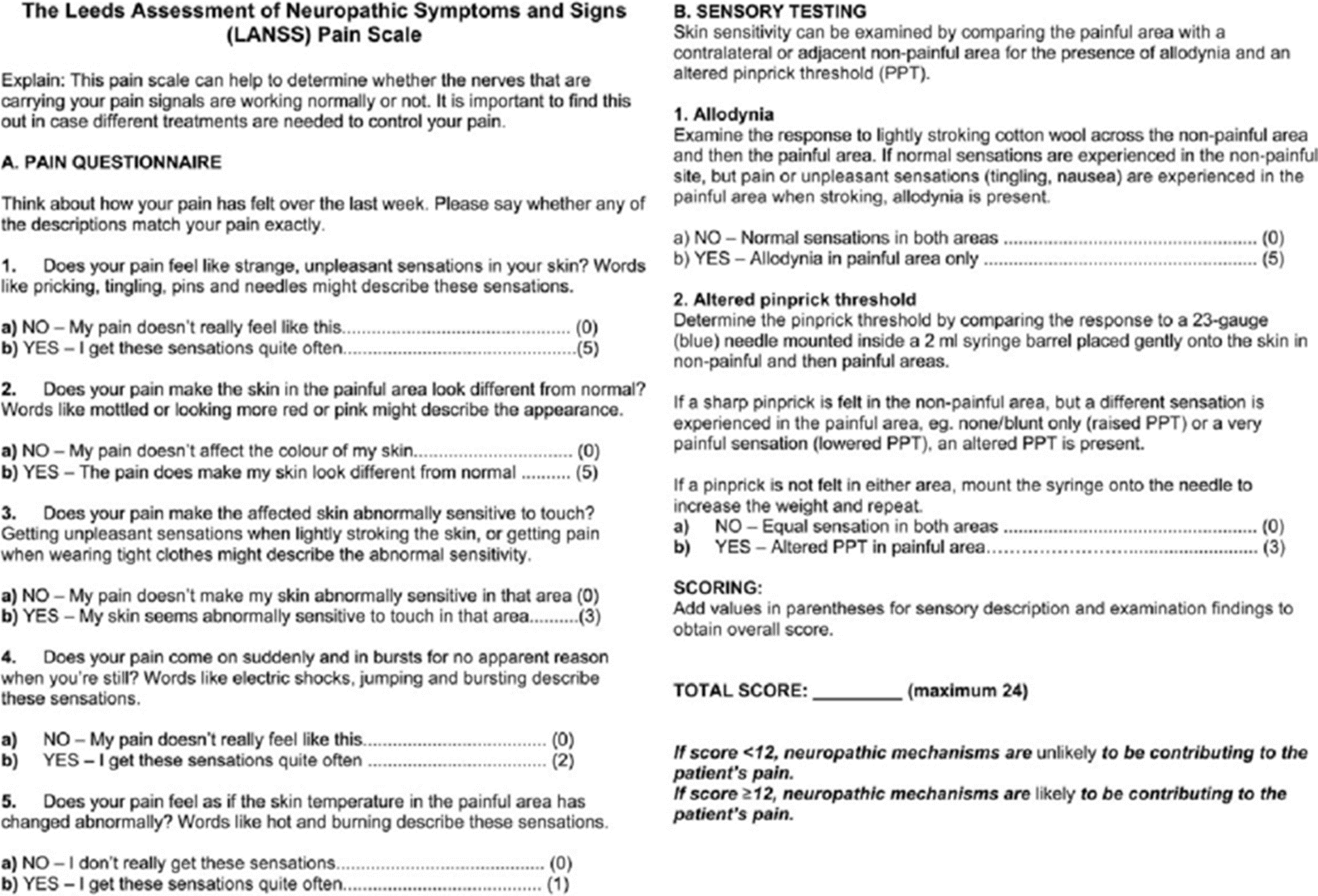
LANSS Pain Scale
220
Diabetic PN (DPN)
In the setting of diabetes without other causes of PN
~ 56% with DPN complain pain affects their quality of life (QOL)
Affects men and women equally
**Risk Factors**
Age
Duration of diabetes
Arterial hypertension
Impaired glucose tolerance
Obesity with low HDL and high TGs
Genetic factors
**Acute sensorimotor neuropathy**
Uncontrolled glycemic levels
Development of ketoacidosis
**Chronic sensorimotor neuropathy**
Most common form of PN
Symptoms include distal, symmetrical burning pain that involves the feet initially and gradually moves upward
~ 56% with DPN complain pain affects their quality of life (QOL)
Affects men and women equally
**Risk Factors**
Age
Duration of diabetes
Arterial hypertension
Impaired glucose tolerance
Obesity with low HDL and high TGs
Genetic factors
**Acute sensorimotor neuropathy**
Uncontrolled glycemic levels
Development of ketoacidosis
**Chronic sensorimotor neuropathy**
Most common form of PN
Symptoms include distal, symmetrical burning pain that involves the feet initially and gradually moves upward
221
Goals of Therapy for DPN
Goals of therapy
Protect lower limbs from damage from sensory loss
Relieve pain to enhance the QOL and functionality
Opioids not recommended first line
Glycemic control
DPN pathogenesis -->Hyperglycemia and insulin deficiency
Glycemic control is one of the most effective treatments to slow progression of the disease and delay its onset
Protect lower limbs from damage from sensory loss
Relieve pain to enhance the QOL and functionality
Opioids not recommended first line
Glycemic control
DPN pathogenesis -->Hyperglycemia and insulin deficiency
Glycemic control is one of the most effective treatments to slow progression of the disease and delay its onset
222
Gabapentinoids
Structurally related to gamma-aminobutyric acid (GABA)
No direct GABA effects (GABA-A or -B)
No change in GABA degradation/uptake
No direct GABA effects (GABA-A or -B)
No change in GABA degradation/uptake
223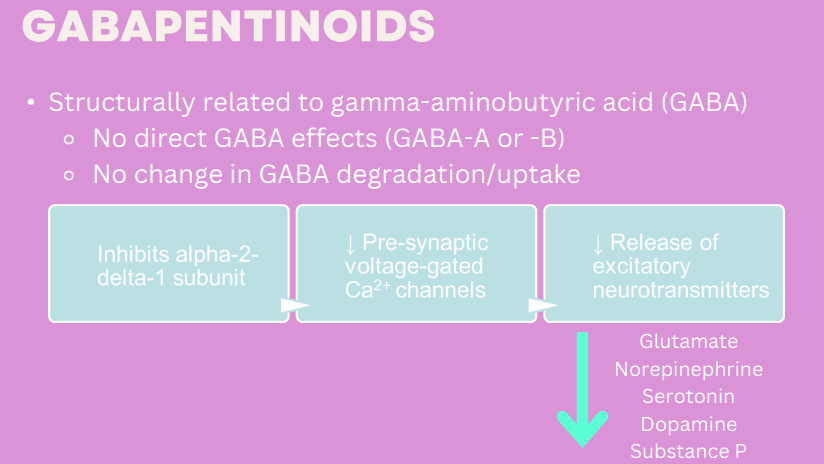
Image occlusion: name the hidden labels
224
Image occlusion: name the hidden labels
225
Image occlusion: name the hidden labels
226
Image occlusion: name the hidden labels
227
Image occlusion: name the hidden labels
228
Image occlusion: name the hidden labels
229
Image occlusion: name the hidden labels
230
Image occlusion: name the hidden labels
231
Image occlusion: name the hidden labels
232
Image occlusion: name the hidden labels
233
Gabapentin
Available only as PO
Dosing: 100 - 3600 mg/day
Requires renal dose adjustment
Potential for withdrawal when stopped abruptly
Not a controlled substance
Dosing: 100 - 3600 mg/day
Requires renal dose adjustment
Potential for withdrawal when stopped abruptly
Not a controlled substance
234
Pregabalin
Available only as PO
Dosing: 25- 600 mg/day
Requires renal dose adjustment
Potential for withdrawal when stopped abruptly
Controlled substance (C-V)
Dosing: 25- 600 mg/day
Requires renal dose adjustment
Potential for withdrawal when stopped abruptly
Controlled substance (C-V)
235
Pregabalin and Gabapentin ADRs
CNS or respiratory depression, dizziness, drowsiness
236
Antidepressants
First line for most neuropathic pain syndromes
The onset of effect may be rapid
Tricyclics (TCAs)
Inexpensive and easily administered once daily
Anticholinergic adverse effects
Amitriptyline > nortriptyline
Orthostatic hypotension and urinary retention in elderly
May cause cardiac arrhythmias with higher doses
The onset of effect may be rapid
Tricyclics (TCAs)
Inexpensive and easily administered once daily
Anticholinergic adverse effects
Amitriptyline > nortriptyline
Orthostatic hypotension and urinary retention in elderly
May cause cardiac arrhythmias with higher doses
237
Duloxetine (Cymbalta)
FDA approved for DPN
Dosing: 60-100 mg/day
Avoid use CrCl < 60 mL/min
Contraindicated in patients with liver disease or those who drink alcohol
Dosing: 60-100 mg/day
Avoid use CrCl < 60 mL/min
Contraindicated in patients with liver disease or those who drink alcohol
238
Venlafaxine (Effexor)
No FDA approval for DPN
Use extrapolated from Duloxetine
Recommended dose reduction for renal or hepatic dysfunction
Use extrapolated from Duloxetine
Recommended dose reduction for renal or hepatic dysfunction
239
Venlafaxine and Duloxetine ADRs
drowsiness, fatigue, nausea/vomiting, GI change(diarrhea, constipation), diaphoresis, weight loss
240
Anticonvulsants
Used in various neuropathic pain syndromes
Post-herpetic neuralgia (PHN)
DPN
**Not used first line due to:**
Need for therapeutic drug monitoring
Carbamazepine (4-12 mcg/mL)
Administration two or three times daily
Caution with renal or hepatic impairment
Risk for drug-drug interactions
Post-herpetic neuralgia (PHN)
DPN
**Not used first line due to:**
Need for therapeutic drug monitoring
Carbamazepine (4-12 mcg/mL)
Administration two or three times daily
Caution with renal or hepatic impairment
Risk for drug-drug interactions
241
Corticosteroids
maybe in refractory cases; dexamethasone
242
Post-Herpetic Neuralgia (PHN)
- Post-Herpetic Neuralgia (PHN)
Varicella zoster is a virus --> chicken pox (varicella shingles) --> herpes zoster (HZ)
HZ develops secondary to reactivation of varicella virus from its latent state
PHN may occur 2 weeks after the presence of HZ and is the chronic form of the disease
Very debilitating pain
Control of pain is difficult
Risk factors: age, rash severity during acute phase, female, acute pain severity
Varicella zoster is a virus --> chicken pox (varicella shingles) --> herpes zoster (HZ)
HZ develops secondary to reactivation of varicella virus from its latent state
PHN may occur 2 weeks after the presence of HZ and is the chronic form of the disease
Very debilitating pain
Control of pain is difficult
Risk factors: age, rash severity during acute phase, female, acute pain severity
243
PNH Treatment - Prevention and Acute Phase
Zoster (shingles) vaccine decreases incidence of HZ & PHN
Acute phase (shingles)
Acyclovir, famciclovir, and valacyclovir
Initiate within 72 hours
Equally effective in increasing rate of healing/decreasing pain
Prophylaxis data for PHN inconsistent
Symptomatic Tx - acetaminophen, NSAIDs, opioids
Corticosteroids relieve pain intensity, not duration
Acute phase (shingles)
Acyclovir, famciclovir, and valacyclovir
Initiate within 72 hours
Equally effective in increasing rate of healing/decreasing pain
Prophylaxis data for PHN inconsistent
Symptomatic Tx - acetaminophen, NSAIDs, opioids
Corticosteroids relieve pain intensity, not duration
244
PNH Treatment - Chronic Phase (PNH)
Topical Analgesics
5% lidocaine patch or 4% to 10% lidocaine cream
Effective in controlling PHN pain from allodynia
Safe due to minimal systemic absorption & no DDI
Capsaicin cream or high-concentration patch
Potential benefit in treating PHN
First application exacerbation of the burning sensation
Continued use desensitizes nerve root endings to decrease hyperalgesia
5% lidocaine patch or 4% to 10% lidocaine cream
Effective in controlling PHN pain from allodynia
Safe due to minimal systemic absorption & no DDI
Capsaicin cream or high-concentration patch
Potential benefit in treating PHN
First application exacerbation of the burning sensation
Continued use desensitizes nerve root endings to decrease hyperalgesia
245
Personalized Pharmacotherapy
Genetic differences in pain transmission and response inter-individually
Differences also seen with genders, ages, ethnicity
Pharmacogenomic variability of analgesic response to both opioid and non-opioid analgesics
Qualitative genotyping
Help identify those who may require higher doses or may have greater toxicity
Differences also seen with genders, ages, ethnicity
Pharmacogenomic variability of analgesic response to both opioid and non-opioid analgesics
Qualitative genotyping
Help identify those who may require higher doses or may have greater toxicity
246
Evaluation of Therapeutic Outcomes
1. Consistent monitoring necessary for optimized therapy
2. Utilization of assessment tools (chronic pain)
3. Utilize 5 A’s (see Goals of Treatment slide) as an initial and continuous evaluation of therapy
2. Utilization of assessment tools (chronic pain)
3. Utilize 5 A’s (see Goals of Treatment slide) as an initial and continuous evaluation of therapy