Toxidromes
Study these flashcardsFree · spaced repetition · iPhone, Android, Mac & web
All cards
1
Toxidromes
"Toxic Syndromes"
2
Vital Signs
Pulse, respiratory rate, and temperature were incorporated into the bedside chart “vital signs”
play an important role beyond assessing and monitoring the overall status of a patient
• provide valuable physiologic clues to the toxicologic etiology
• severity of an illness
• Valuable parameter to assess and monitor a patient’s response to treatment
play an important role beyond assessing and monitoring the overall status of a patient
• provide valuable physiologic clues to the toxicologic etiology
• severity of an illness
• Valuable parameter to assess and monitor a patient’s response to treatment
3
EKG Monitoring
needed for comparison at later time
• Treatment and mixed ingestions
• Treatment and mixed ingestions
4
Respiratory Rate
• Opioid ingestion --> Naloxone given
5
Hyperthermia
• $\uparrow$drug metabolism
• No EKG changes $\rightarrow$ unless due to underlying abnormality
• i.e. Hyperkalemia; cocaine ingestion
• No EKG changes $\rightarrow$ unless due to underlying abnormality
• i.e. Hyperkalemia; cocaine ingestion
6
Hypothermia
• $\downarrow$ drug metabolism
• EKG changes $\rightarrow$ Osborn waves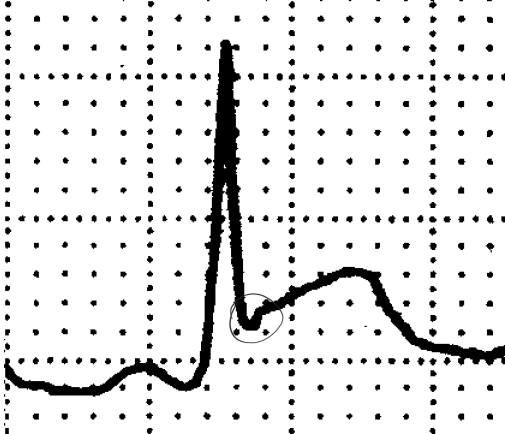
• EKG changes $\rightarrow$ Osborn waves
7
Neurologic Findings
Depressed or agitated (mental status)
Eyes $\rightarrow$ may be only findings; miosis (constricted), mydriasis (dilated)
Eyes $\rightarrow$ may be only findings; miosis (constricted), mydriasis (dilated)
8
Classic Toxidromes
• Sympathomimetic
• Opioid
• Cholinergic
• Anticholinergic
• Sedative/ hypnotic
• Opioid
• Cholinergic
• Anticholinergic
• Sedative/ hypnotic
9
Unique Toxidromes
• Serotonin Syndrome
• Neuroleptic Malignant Syndrome
• Neuroleptic Malignant Syndrome
10
Sympathomimetic
Excessive SYMPATHETIC stimulation involving:
• Epinephrine, norepinephrine, dopamine
• Enhance release of excitatory catecholamines
• Serotonin and NE reuptake inhibitors (SNRI)
• Block presynaptic reuptake of catecholamines
• Lengthen activation of postsynaptic terminal
• Epinephrine, norepinephrine, dopamine
• Enhance release of excitatory catecholamines
• Serotonin and NE reuptake inhibitors (SNRI)
• Block presynaptic reuptake of catecholamines
• Lengthen activation of postsynaptic terminal
11
What Happens with Sympathomimetics
• CV: Tachycardia, arrhythmias, hypertension +/‐ ICH
• CNS: Confusion with agitation, seizures
• RENAL: rhabdomyolysis, renal failure can result
• Diaphoresis, dilated pupils
• Anticholinergic pupils are non- reactive
• CNS: Confusion with agitation, seizures
• RENAL: rhabdomyolysis, renal failure can result
• Diaphoresis, dilated pupils
• Anticholinergic pupils are non- reactive
12
Sympathomimetic Treatment
Supportive care
•Monitor airway, diagnose ICH, rhabdo
• IVF for insensible loses and volume repletion
• Benzos, benzos, benzos, benzos!!
• BP management, if severe
•Monitor airway, diagnose ICH, rhabdo
• IVF for insensible loses and volume repletion
• Benzos, benzos, benzos, benzos!!
• BP management, if severe
13
Opioid
•Primarily bind to the mu, kappa or delta opioid receptor
•Opioid act as agonists to these receptors
•Opioid act as agonists to these receptors
14
What happens with opioids
• Sedation, coma, miosis, respiratory depression, CNS depression
• Peripheral vasodilation,
Orthostatic hypotension, Flushing (histamine), Bronchospasm, Pulmonary edema, Seizures (meperidine,propoxyphene), EKG changes (meperidine, propoxyphene)
• Peripheral vasodilation,
Orthostatic hypotension, Flushing (histamine), Bronchospasm, Pulmonary edema, Seizures (meperidine,propoxyphene), EKG changes (meperidine, propoxyphene)
15
Opioid Treatment
• Competitive opioid ($\mu$ receptor) antagonist : naloxone
• 0.4mg IVP or 2mg intranasal
• Goal of return of spontaneous respirations sufficient to ventilate the patient appropriately
• May have to redose as opiates may act longer than antagonist
• There are other longer acting opioid antagonists such as nalmefene and naltrexone but these are not often used
• 0.4mg IVP or 2mg intranasal
• Goal of return of spontaneous respirations sufficient to ventilate the patient appropriately
• May have to redose as opiates may act longer than antagonist
• There are other longer acting opioid antagonists such as nalmefene and naltrexone but these are not often used
16
Sedative/Hypnotic
• Different agents have different mechanisms
• Many interfere in the GABA system
• GABA-A receptor
• BZD are positive allosteric modulators
• Many interfere in the GABA system
• GABA-A receptor
• BZD are positive allosteric modulators
17
What Happens with Sedatives
• CNS depression, lethargy, somnolence, decreased responsive to stimuli
• Pure BZD OD—”normal vital signs”, coma when BZD are the only drug ingested
• In combination with opioids or other drugs
• Respiratory depression
• Bradycardia, hypotension
• Pure BZD OD—”normal vital signs”, coma when BZD are the only drug ingested
• In combination with opioids or other drugs
• Respiratory depression
• Bradycardia, hypotension
18
Treatment of Sedatives/Hypnotics
• Supportive care
• Be wary of the benzo “antidote”: flumazenil
• Antagonist at the benzo receptor (GABA-A)
• RARELY INDICATED
• If seizures develop either because of benzo withdrawal, a coingestant or metabolic
derangements, have to use 2nd line agents, barbiturates, for seizure control
• Be wary of the benzo “antidote”: flumazenil
• Antagonist at the benzo receptor (GABA-A)
• RARELY INDICATED
• If seizures develop either because of benzo withdrawal, a coingestant or metabolic
derangements, have to use 2nd line agents, barbiturates, for seizure control
19
Anticholinergics
• By definition, these agent ANTAGONIZE the effects of endogenous Acetylcholine
• Ach receptors are either nicotinic or muscarinic
The “anti‐cholinergic” drugs just block the muscarinic receptors
• Ach receptors are either nicotinic or muscarinic
The “anti‐cholinergic” drugs just block the muscarinic receptors
20
What Happens with Anticholinergics?
CNS muscarinic blockade:
•Confusion, Agitation
•Myoclonus, Tremor
•Picking movements
•Abnormal speech
•Hallucinations
•Coma
Peripheral muscarinic effects:
•Mydriasis, Anhidrosis
•Tachycardia, Urinary retention
•Ileus
•Confusion, Agitation
•Myoclonus, Tremor
•Picking movements
•Abnormal speech
•Hallucinations
•Coma
Peripheral muscarinic effects:
•Mydriasis, Anhidrosis
•Tachycardia, Urinary retention
•Ileus
21
Treatment of Anticholinergics
Supportive care
▪ IVF to replace insensible losses from agitation, hyperthermia
• Benzos to stop agitation
Physostigmine (controversial)
• Induces cholinergic effects
• Short acting
• May help with uncontrollable delirium
• Do not use if ingestion not known
▪ IVF to replace insensible losses from agitation, hyperthermia
• Benzos to stop agitation
Physostigmine (controversial)
• Induces cholinergic effects
• Short acting
• May help with uncontrollable delirium
• Do not use if ingestion not known
22
Cholinergics
• Block acetylcholinesterase from working
• End up with excess of acetylcholine in synapses
• Leads to excess stimulation of the muscarinic and nicotinic systems
• Parasympathetic response
• Rest and digest
• End up with excess of acetylcholine in synapses
• Leads to excess stimulation of the muscarinic and nicotinic systems
• Parasympathetic response
• Rest and digest
23
What happens with cholinergics?
Muscarinic
• D ‐ Diarrhea
• U ‐ Urination
• M ‐ Miosis
• BBB – Bradycardia,
• Bronchorrhea, Bronchospasm
• E ‐ Emesis
• L ‐ Lacrimation
• S ‐ Salivation
Nicotinic
• M‐ Mydriasis
• T ‐ Tachycardia
• W ‐ Weakness
• (t) H ‐ Hypertension
• D ‐ Diarrhea
• U ‐ Urination
• M ‐ Miosis
• BBB – Bradycardia,
• Bronchorrhea, Bronchospasm
• E ‐ Emesis
• L ‐ Lacrimation
• S ‐ Salivation
Nicotinic
• M‐ Mydriasis
• T ‐ Tachycardia
• W ‐ Weakness
• (t) H ‐ Hypertension
24
Cholinergic Treatment
Antagonize Muscarinic Symptoms: Atropine
Stop aging of enzyme blockade
Pralidoxime (aka 2‐PAM)
Prevent and terminate seizures
• Diazepam
Supportive care
Stop aging of enzyme blockade
Pralidoxime (aka 2‐PAM)
Prevent and terminate seizures
• Diazepam
Supportive care
25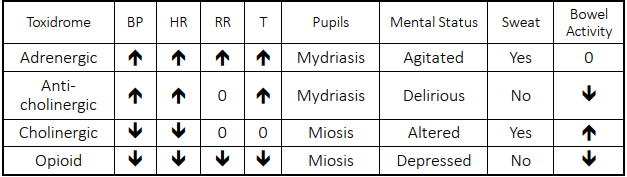
Image occlusion: name the hidden labels
26
Image occlusion: name the hidden labels
27
Image occlusion: name the hidden labels
28
Image occlusion: name the hidden labels
29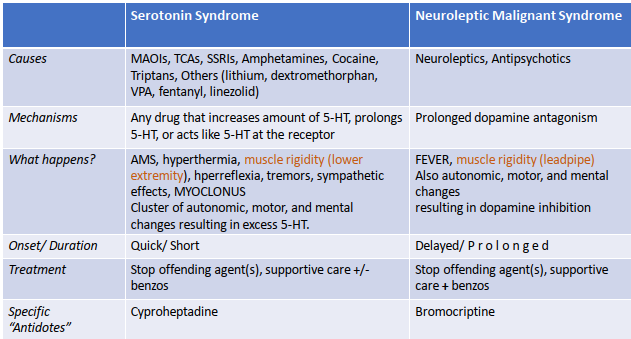
Image occlusion: name the hidden labels
30
Image occlusion: name the hidden labels