Toxicity of Cardiovascular Agents
Study these flashcardsFree · spaced repetition · iPhone, Android, Mac & web
All cards
1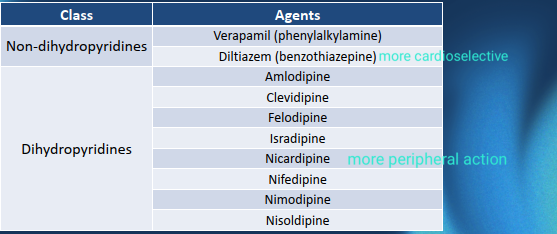
Image occlusion: name the hidden labels
2
Image occlusion: name the hidden labels
3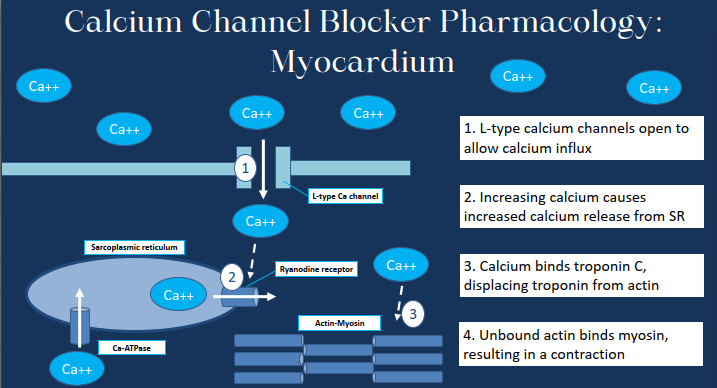
Image occlusion: name the hidden labels
4
Image occlusion: name the hidden labels
5
Image occlusion: name the hidden labels
6
Image occlusion: name the hidden labels
7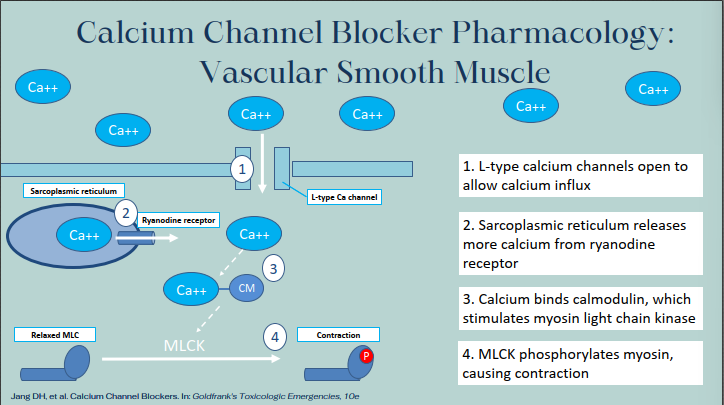
Image occlusion: name the hidden labels
8
Image occlusion: name the hidden labels
9
Image occlusion: name the hidden labels
10
Image occlusion: name the hidden labels
11
Voltage-gated calcium channels are found in...
Myocardial Cells
Smooth Muscle Cells
$\beta$-islet cells of the pancreas
Smooth Muscle Cells
$\beta$-islet cells of the pancreas
12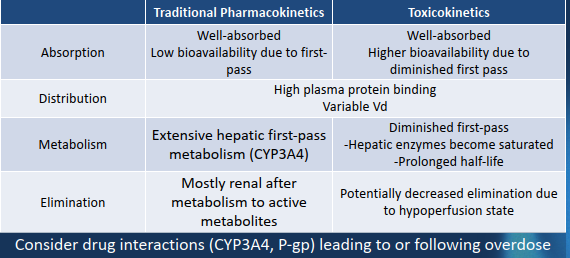
Image occlusion: name the hidden labels
13
Image occlusion: name the hidden labels
14
Image occlusion: name the hidden labels
15
Image occlusion: name the hidden labels
16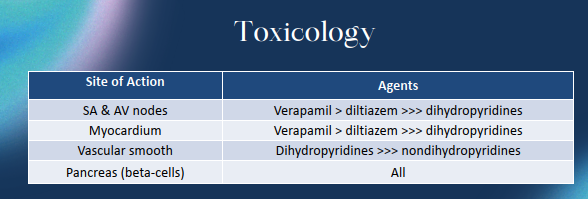
Image occlusion: name the hidden labels
17
Image occlusion: name the hidden labels
18
Image occlusion: name the hidden labels
19
Image occlusion: name the hidden labels
20
CCB Toxicology
Selectivity may be lost at supratherapeutic doses
Inhibition of L-type Ca channels results in:
• Decreased inotropy
• Decreased chronotropy/dromotropy
• Peripheral vasodilation
• Hyperglycemia
Inhibition of L-type Ca channels results in:
• Decreased inotropy
• Decreased chronotropy/dromotropy
• Peripheral vasodilation
• Hyperglycemia
21
Clinical Manifestations of CCB Toxicity
Hallmark symptoms: hypotension & bradycardia
Severe symptoms of conduction blockade
• Idioventricular rhythms
• AV conduction abnormalities & complete heart block
Cardiogenic shock may occur in patients even after asymptomatic presentation
Overdose with dihydropyridine agents often leads to reflex (baroreceptor) tachycardia if selectivity is not lost
CNS symptoms: fatigue, dizziness, lightheadedness
Respiratory symptoms: ARDS (severe poisoning)
Severe symptoms of conduction blockade
• Idioventricular rhythms
• AV conduction abnormalities & complete heart block
Cardiogenic shock may occur in patients even after asymptomatic presentation
Overdose with dihydropyridine agents often leads to reflex (baroreceptor) tachycardia if selectivity is not lost
CNS symptoms: fatigue, dizziness, lightheadedness
Respiratory symptoms: ARDS (severe poisoning)
22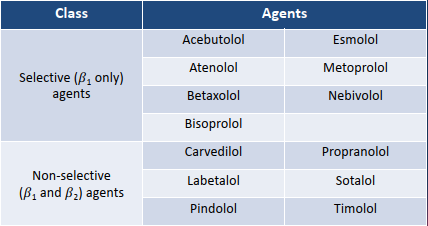
Image occlusion: name the hidden labels
23
Image occlusion: name the hidden labels
24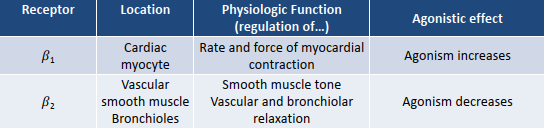
Image occlusion: name the hidden labels
25
Image occlusion: name the hidden labels
26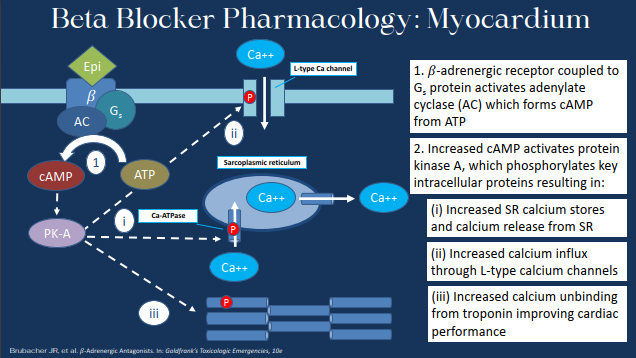
Image occlusion: name the hidden labels
27
Image occlusion: name the hidden labels
28
Image occlusion: name the hidden labels
29
Image occlusion: name the hidden labels
30
Image occlusion: name the hidden labels
31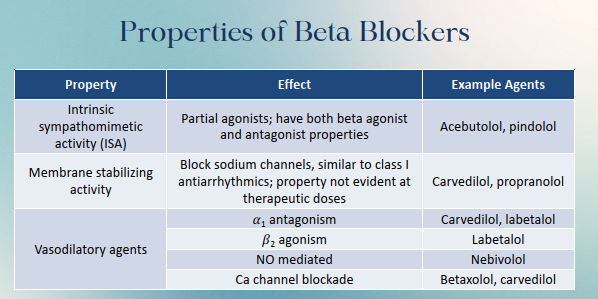
Image occlusion: name the hidden labels
32
Image occlusion: name the hidden labels
33
Image occlusion: name the hidden labels
34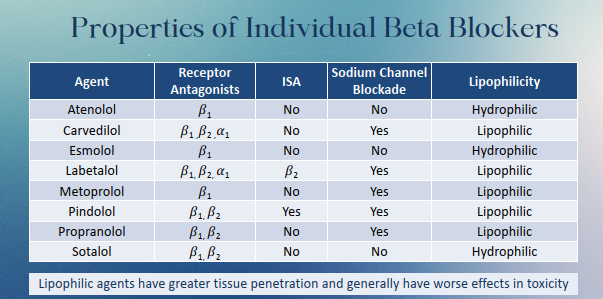
Image occlusion: name the hidden labels
35
Beta Blocker Toxicology
Most of the toxicity of beta blocker overdose is at cardiac beta-adrenergic receptors
($\beta_1$>>$\beta_2$ ,
-In overdose, cardioselectivity is largely lost
-Peripheral vascular effects are less prominent in overdose
Beta blockers competitively antagonize beta-adrenergic receptors leading to
*conduction delays, decreased inotropy and chronotropy
Sotalol overdose cases have documented QT prolongation (K channel blockade)
($\beta_1$>>$\beta_2$ ,
-In overdose, cardioselectivity is largely lost
-Peripheral vascular effects are less prominent in overdose
Beta blockers competitively antagonize beta-adrenergic receptors leading to
*conduction delays, decreased inotropy and chronotropy
Sotalol overdose cases have documented QT prolongation (K channel blockade)
36
Clinical Manifestations of Beta Blocker Toxicity
• Hallmark symptoms: hypotension & bradycardia
-Some patients may be asymptomatic
• Reduced cardiac output
-Decreased inotropy, decreased chronotropy
• Depressed SA node function
-Decreased inotropy, decreased chronotropy
• Impaired AV conduction
-Prolonged PR, QRS, or QT intervals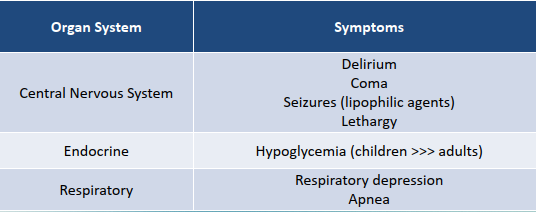
-Some patients may be asymptomatic
• Reduced cardiac output
-Decreased inotropy, decreased chronotropy
• Depressed SA node function
-Decreased inotropy, decreased chronotropy
• Impaired AV conduction
-Prolonged PR, QRS, or QT intervals
37
Image occlusion: name the hidden labels
38
Image occlusion: name the hidden labels
39
Image occlusion: name the hidden labels
40
Image occlusion: name the hidden labels
41
Image occlusion: name the hidden labels
42
Image occlusion: name the hidden labels
43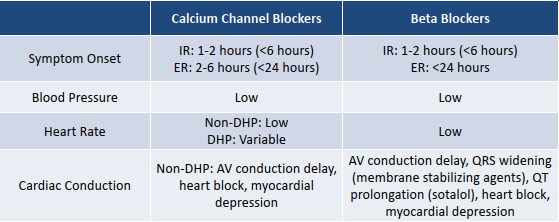
Image occlusion: name the hidden labels
44
Image occlusion: name the hidden labels
45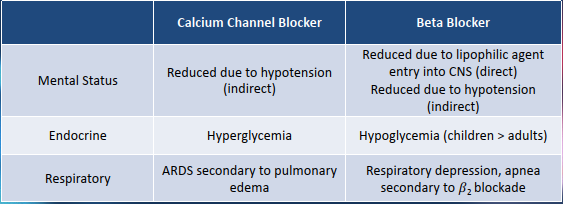
Image occlusion: name the hidden labels
46
Image occlusion: name the hidden labels
47
Gastrointestinal Decontamination
• BB/CCB overdose are leading causes of poisoning fatalities, attempts to prevent absorption from the GI tract are recommended unless contraindicated
• Always important to evaluate airway!
• GI decontamination may cause nausea/vomiting
• Aspiration may be fatal with unprotected airway
• Activated charcoal, whole bowel irrigation recommended for BB/CCB overdose, OG lavage rarely performed
• Always important to evaluate airway!
• GI decontamination may cause nausea/vomiting
• Aspiration may be fatal with unprotected airway
• Activated charcoal, whole bowel irrigation recommended for BB/CCB overdose, OG lavage rarely performed
48
Initial Resuscitation
• IV crystalloids if hypotensive
• 10-20 mL/kg (repeat as needed)
• Dose with caution given risk for cardiogenic shock, limit in patients with CHF, ARDS, CKD
• Atropine if bradycardic (symptomatic)
• Increases HR and CO through blocking Ach effect from vagus
• Generally ineffective for severe poisonings
• 0.5-1mg IV q2-3 minutes, max 3mg
• Monitor GI motility in patients receiving GI decontamination
These measures are generally ineffective in severe poisonings
• 10-20 mL/kg (repeat as needed)
• Dose with caution given risk for cardiogenic shock, limit in patients with CHF, ARDS, CKD
• Atropine if bradycardic (symptomatic)
• Increases HR and CO through blocking Ach effect from vagus
• Generally ineffective for severe poisonings
• 0.5-1mg IV q2-3 minutes, max 3mg
• Monitor GI motility in patients receiving GI decontamination
These measures are generally ineffective in severe poisonings
49
Calcium
• Increases extracellular calcium concentration and transmembrane concentration gradient
• Reverses negative inotropy, impaired conduction, and hypotension
• Effect on BP is greater than effect on HR
• Effect often short-lived
• Potential concern if coingestion with digoxin (“Stone Heart Syndrome”)
• Reverses negative inotropy, impaired conduction, and hypotension
• Effect on BP is greater than effect on HR
• Effect often short-lived
• Potential concern if coingestion with digoxin (“Stone Heart Syndrome”)
50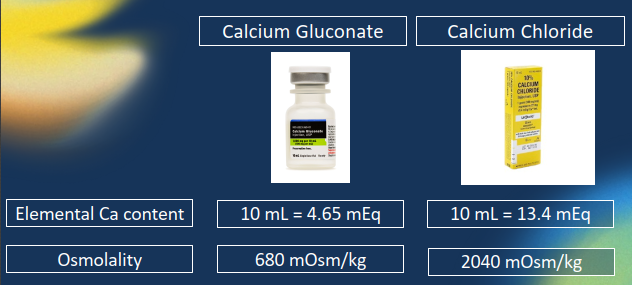
Image occlusion: name the hidden labels
51
Image occlusion: name the hidden labels
52
Image occlusion: name the hidden labels
53
Image occlusion: name the hidden labels
54
Calcium Monitoring
• Ionized calcium levels q30min
• S/S of calcium toxicity (confusion & lethargy), hypercalcemia, hypophosphatemia
• S/S of calcium toxicity (confusion & lethargy), hypercalcemia, hypophosphatemia
55
Glucagon Mechanism
Endogenous hormone secreted by pancreatic $\alpha$ cells in response to hypoglycemia and catecholamines
• Produces positive inotropic and chronotropic effects
• Stimulates production of cAMP via Gs protein
• Independent of beta receptor stimulation
• Recommended for beta-blocker overdose (limited evidence), not recommended for calcium channel blocker overdose
• Produces positive inotropic and chronotropic effects
• Stimulates production of cAMP via Gs protein
• Independent of beta receptor stimulation
• Recommended for beta-blocker overdose (limited evidence), not recommended for calcium channel blocker overdose
56
Glucagon Monitoring
• Hyperglycemia
• Hypokalemia
• Nausea and vomiting
• Tachyphylaxis
• Hypokalemia
• Nausea and vomiting
• Tachyphylaxis
57
Vasopressors
• Often administered once first-line therapies fail
• Indicated if patient progresses to cardiogenic shock despite initial therapies
• Can increase SVR and HR (therefore CO and BP)
• Increase myocardial oxygen demand
• Variable success in CCB and BB poisoning
• No single agent shown to be consistently effective/superior
• Indicated if patient progresses to cardiogenic shock despite initial therapies
• Can increase SVR and HR (therefore CO and BP)
• Increase myocardial oxygen demand
• Variable success in CCB and BB poisoning
• No single agent shown to be consistently effective/superior
58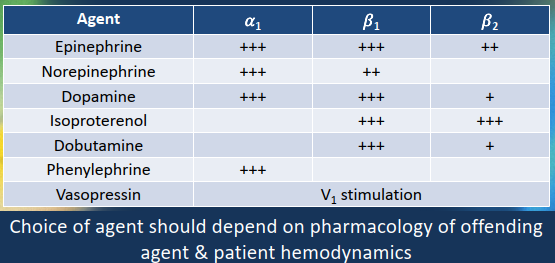
Image occlusion: name the hidden labels
59
Insulin Mechanism of Action
Multiple Proposed Mechanisms
1. Increased intracellular glucose transport
• Stressed myocardium primarily uses glucose a preferred energy substrate
• Insulin increases rate of intracellular glucose transport increasing carbohydrate metabolism
2. Vascular dilatation
• Vasodilation of systemic, coronary, and pulmonary vasculature -> increased cardiac output
3. Increase inotropy
• Result of increased glucose transport, vascular dilation as well as possible improved calcium handling and increased coronary blood flow.
1. Increased intracellular glucose transport
• Stressed myocardium primarily uses glucose a preferred energy substrate
• Insulin increases rate of intracellular glucose transport increasing carbohydrate metabolism
2. Vascular dilatation
• Vasodilation of systemic, coronary, and pulmonary vasculature -> increased cardiac output
3. Increase inotropy
• Result of increased glucose transport, vascular dilation as well as possible improved calcium handling and increased coronary blood flow.
60
High Dose Insulin Euglycemic Therapy (HDIET)
Treatment of choice for patients with significant poisoning
• Likely greater benefit for CCB rather than BB poisoning but recommended for significant cases of each.
Beneficial when myocardial dysfunction is present
Improves myocardial glucose utilization and consequent hemodynamic function
• Likely greater benefit for CCB rather than BB poisoning but recommended for significant cases of each.
Beneficial when myocardial dysfunction is present
Improves myocardial glucose utilization and consequent hemodynamic function
61
HDIET Monitoring
Electrolytes
• K, Mg, PO4 abnormalities are expected and should be monitored and corrected
• *Lower levels/replacement thresholds may be appropriate given intracellular shifts
Blood Glucose
• Monitoring q15-30 minutes until stable then q1-2h
• Titrate dextrose infusion to maintain BG between 100-250 mg/dL
• K, Mg, PO4 abnormalities are expected and should be monitored and corrected
• *Lower levels/replacement thresholds may be appropriate given intracellular shifts
Blood Glucose
• Monitoring q15-30 minutes until stable then q1-2h
• Titrate dextrose infusion to maintain BG between 100-250 mg/dL
62
HDIET Response
• BP and contractility typically improve within 15-60 minutes
• Goals of HDIET
• Maintain organ perfusion
• MAP > 65 mmHg
• SBP >100 mmHg
• HR > 50 bpm
• Monitor clinical parameters
• Mental status, skin warmth, urine output, vital signs, lactate, pH, echocardiography
• Goals of HDIET
• Maintain organ perfusion
• MAP > 65 mmHg
• SBP >100 mmHg
• HR > 50 bpm
• Monitor clinical parameters
• Mental status, skin warmth, urine output, vital signs, lactate, pH, echocardiography
63
IV Lipid Emulsion
• Proposed mechanisms:
• Activation of ion channels
• Enhancement of intracellular metabolism
• Acting as a lipid sink to sequester lipid-soluble drugs
• May theoretically benefit highly lipophilic CCB and BB
• Concern that increasing lipid content of blood may increase absorption of oral lipophilic drugs
• Limited data with significant publication bias, considered last resort
• Activation of ion channels
• Enhancement of intracellular metabolism
• Acting as a lipid sink to sequester lipid-soluble drugs
• May theoretically benefit highly lipophilic CCB and BB
• Concern that increasing lipid content of blood may increase absorption of oral lipophilic drugs
• Limited data with significant publication bias, considered last resort
64
Adjunctive Therapies
The most severely poisoned patients may not respond to any pharmacologic treatment
Additional options: levosimendan, methylene blue
Cardiac pacing
Intra-aortic balloon counterpulsation
Extracorporeal membrane oxygenation (ECMO)
Cardiopulmonary bypass machines
Major adsorbent recirculating system (MARS)
Additional options: levosimendan, methylene blue
Cardiac pacing
Intra-aortic balloon counterpulsation
Extracorporeal membrane oxygenation (ECMO)
Cardiopulmonary bypass machines
Major adsorbent recirculating system (MARS)
65
Image occlusion: name the hidden labels
66
Image occlusion: name the hidden labels
67
Image occlusion: name the hidden labels
68
Image occlusion: name the hidden labels
69
Image occlusion: name the hidden labels
70
Image occlusion: name the hidden labels
71
Image occlusion: name the hidden labels
72
Image occlusion: name the hidden labels
73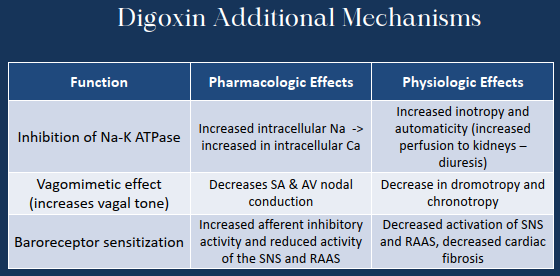
Image occlusion: name the hidden labels
74
Image occlusion: name the hidden labels
75
Image occlusion: name the hidden labels
76
Digoxin Mechanism of Action
• Direct effect:
• Increased inotropy (force)
• Increased automaticity (ease of contracting)
• Indirect effects:
• Decreased chronotropy (rate)
• Decreased dromotropy (rhythm)
• Decreased circulating norepinephrine and renin
• Increased inotropy (force)
• Increased automaticity (ease of contracting)
• Indirect effects:
• Decreased chronotropy (rate)
• Decreased dromotropy (rhythm)
• Decreased circulating norepinephrine and renin
77
Digoxin Clinical Uses
• Congestive heart failure
• Improves contractility and slows ventricular rate to allow for maximal ventricular filling
• Improves cardiac output (CO = HR x SV)
• Atrial fibrillation
• Decreased chronotropy for rate control
Narrow therapeutic index 0.5-2 ng/mL
• Afib: 0.8-1.2 ng/mL
• CHF: 0.5-0.9 ng/mL
• Improves contractility and slows ventricular rate to allow for maximal ventricular filling
• Improves cardiac output (CO = HR x SV)
• Atrial fibrillation
• Decreased chronotropy for rate control
Narrow therapeutic index 0.5-2 ng/mL
• Afib: 0.8-1.2 ng/mL
• CHF: 0.5-0.9 ng/mL
78
Digoxin Tachydysrhythmias
Excessive inhibition of Na-K ATPase pump increases intracellular Na which causes increased intracellular Ca
Increased Na and Ca in the cell results in an increase in resting membrane potential (phase 4)
This sensitizes cardiac myocytes, making it easier to initiate an action potential (phase 0)
Results in possibility for tachydysrhythmias & extrasystoles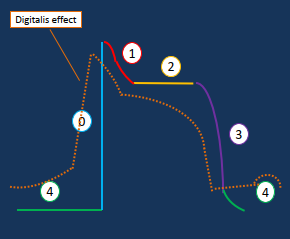
Increased Na and Ca in the cell results in an increase in resting membrane potential (phase 4)
This sensitizes cardiac myocytes, making it easier to initiate an action potential (phase 0)
Results in possibility for tachydysrhythmias & extrasystoles
79
Digoxin Bradydysrhythmias
• Reduced conduction through AV node (vagomimetic effect –increased vagal tone)
• AV nodal block (action potential does not pass from atria to ventricles)
• Increased PR interval on EKG (time from initiation of P wave to the beginning of the QRS complex)
• AV nodal block (action potential does not pass from atria to ventricles)
• Increased PR interval on EKG (time from initiation of P wave to the beginning of the QRS complex)
80
Image occlusion: name the hidden labels
81
Image occlusion: name the hidden labels
82
Digoxin Electrolyte Manifestations
Hyperkalemia
• Results from inhibition of Na-K-ATPase pump (less K going into
myocardium)
• More common in acute poisoning, but can occur in chronic
• Important prognostic implications in acute poisoning (K >5)
Hypokalemia
• Can occur in chronic toxicity (where serum K is often variable)
Hypomagnesemia, hypercalcemia, and hypo/hyperkalemia can augment toxicity of digoxin
• Results from inhibition of Na-K-ATPase pump (less K going into
myocardium)
• More common in acute poisoning, but can occur in chronic
• Important prognostic implications in acute poisoning (K >5)
Hypokalemia
• Can occur in chronic toxicity (where serum K is often variable)
Hypomagnesemia, hypercalcemia, and hypo/hyperkalemia can augment toxicity of digoxin
83
Risk Factors for Digoxin Toxicity
Commonly involves PK and DDI
Absorption
• Can be increased with concomitant use of antibiotics (macrolides, tetracyclines)
• Gut bacteria can inactivate up to 40% of digoxin before it is absorbed
Elimination
• Can be reduced by drugs competing for the same elimination
mechanism (70% renal elimination)
• P-gp inhibitors also decrease elimination in the kidney
(amiodarone, quinidine, verapamil, diltiazem)
Renally compromised patients (AKI)
• Decrease in renal blood flow due to acute decompensated HF, shock
• Drug-induced: NSAIDs, ACE-I, ARBs, aminoglycosides
Hypothyroidism
• Decreased volume of distribution and renal clearance
Dosing errors
• Especially in pediatrics and unintentional ingestions in younger children
Absorption
• Can be increased with concomitant use of antibiotics (macrolides, tetracyclines)
• Gut bacteria can inactivate up to 40% of digoxin before it is absorbed
Elimination
• Can be reduced by drugs competing for the same elimination
mechanism (70% renal elimination)
• P-gp inhibitors also decrease elimination in the kidney
(amiodarone, quinidine, verapamil, diltiazem)
Renally compromised patients (AKI)
• Decrease in renal blood flow due to acute decompensated HF, shock
• Drug-induced: NSAIDs, ACE-I, ARBs, aminoglycosides
Hypothyroidism
• Decreased volume of distribution and renal clearance
Dosing errors
• Especially in pediatrics and unintentional ingestions in younger children
84
Diagnosis of Digoxin Toxicity
Properly obtain a digoxin and potassium level
• Interpret levels in conjunction with clinical condition of the patient
Digoxin level considerations
• Digoxin has biphasic distribution
• Takes ~8-12 hours to distribute from serum into tissues (70x higher concentration in tissues)
• Levels drawn within 6 hours of an oral dose or 4 hours of an IV dose may be falsely elevated.
Even appropriately timed digoxin levels do not always correlate well
with toxicity
• Interpret levels in conjunction with clinical condition of the patient
Digoxin level considerations
• Digoxin has biphasic distribution
• Takes ~8-12 hours to distribute from serum into tissues (70x higher concentration in tissues)
• Levels drawn within 6 hours of an oral dose or 4 hours of an IV dose may be falsely elevated.
Even appropriately timed digoxin levels do not always correlate well
with toxicity
85
Approach to Management of Digoxin Toxicity
• Supportive care (airway, breathing, circulation)
• Discontinue digoxin therapy
• Obtain and monitor vitals & EKG
• Obtain relevant lab values
• Decontamination
• Antidotal therapy
• Discontinue digoxin therapy
• Obtain and monitor vitals & EKG
• Obtain relevant lab values
• Decontamination
• Antidotal therapy
86
Decontamination of Digoxin
Digoxin is rapidly absorbed in the GI tract, however undergoes enterohepatic recirculation.
Activated charcoal may be used in acute poisoning (not chronic)
• Binds drug that is recirculated enterohepatically
• Prevents reabsorption from GI tract and reduces serum half-life
• Consider if antidotal therapy not available or renal impairment
Multidose activated charcoal is recommended to reduce enterohepatic recirculation
Dosing: 1 g/kg PO or NGT every 2-4 hours for up to 4 doses
Activated charcoal may be used in acute poisoning (not chronic)
• Binds drug that is recirculated enterohepatically
• Prevents reabsorption from GI tract and reduces serum half-life
• Consider if antidotal therapy not available or renal impairment
Multidose activated charcoal is recommended to reduce enterohepatic recirculation
Dosing: 1 g/kg PO or NGT every 2-4 hours for up to 4 doses
87
Electrolyte Therapy
Potassium
• Potassium abnormalities worsen digoxin toxicity and should be corrected.
• Correction of life-threatening/severe potassium deficiencies should precede antidotal therapy
Calcium
• Calcium has traditionally been considered contraindicated in digoxin
toxicity given concern for “stone heart syndrome”
• Increasing intracellular calcium may produce irreversible non-contractile
state due to increased calcium-troponin C binding.
• Case reports of harm have been published but larger studies have not
observed
• Potassium abnormalities worsen digoxin toxicity and should be corrected.
• Correction of life-threatening/severe potassium deficiencies should precede antidotal therapy
Calcium
• Calcium has traditionally been considered contraindicated in digoxin
toxicity given concern for “stone heart syndrome”
• Increasing intracellular calcium may produce irreversible non-contractile
state due to increased calcium-troponin C binding.
• Case reports of harm have been published but larger studies have not
observed
88
Management of Overdose
Bradycardia
• Atropine antagonizes cardiac glycoside vagal activation, increasing heart rate
• May initially respond to atropine (0.5-1 mg q 5 minutes)
• Dopamine may be considered, monitor closely for rhythm disturbances
Hypotension
• Hydration with IV fluids
Digoxin-specific antibody fragments for life-threatening toxicity.
• Atropine antagonizes cardiac glycoside vagal activation, increasing heart rate
• May initially respond to atropine (0.5-1 mg q 5 minutes)
• Dopamine may be considered, monitor closely for rhythm disturbances
Hypotension
• Hydration with IV fluids
Digoxin-specific antibody fragments for life-threatening toxicity.
89
Digoxin-specific antibody fragments (DSFab)
Digibind® (38 mg vial) and Digifab (40 mg vial)
• Interchangeable, derived from immunized sheep
Mechanism of action
• Digoxin has a higher binding affinity for DSFab than for Na-K ATPase
• Creates a concentration gradient which causes digoxin to diffuse out of cells which can then be bound and excreted
• Interchangeable, derived from immunized sheep
Mechanism of action
• Digoxin has a higher binding affinity for DSFab than for Na-K ATPase
• Creates a concentration gradient which causes digoxin to diffuse out of cells which can then be bound and excreted
90
Indications for Digifab
• Digoxin-related life-threatening dysrhythmias
• VT, VF, 2nd/3rd degree AV block, bradycardia resistant to atropine
• Serum potassium > 5 mEq/L in acute digoxin poisoning
• Elevation of digoxin level associated with dysrhythmias, significant GI symptoms, or altered mental status
• Digoxin level ≥ 15 ng/mL at any time
• Digoxin level ≥ 10 ng/mL at 6 hours post-ingestion
• Acute ingestion of 10 mg of digoxin (4 mg in child)
• Poisoning with non-digoxin cardioactive steroid
• VT, VF, 2nd/3rd degree AV block, bradycardia resistant to atropine
• Serum potassium > 5 mEq/L in acute digoxin poisoning
• Elevation of digoxin level associated with dysrhythmias, significant GI symptoms, or altered mental status
• Digoxin level ≥ 15 ng/mL at any time
• Digoxin level ≥ 10 ng/mL at 6 hours post-ingestion
• Acute ingestion of 10 mg of digoxin (4 mg in child)
• Poisoning with non-digoxin cardioactive steroid