Anticoagulant Reversal
Study these flashcardsFree · spaced repetition · iPhone, Android, Mac & web
All cards
1
Hemostasis
Complex process where multiple components of the blood clotting system are activated in response to
vessel injury to control bleeding
Steps
▪ Primary hemostasis
▪ Formation of platelet plug and vasoconstriction at the site of injury
▪ Secondary hemostasis
▪ Initiation of the intrinsic and extrinsic pathways within the coagulation cascade
▪ Fibrin clot formation and stabilization
▪ Inhibition of coagulation
▪ Inhibition of thrombin generation
▪ Fibrinolysis
vessel injury to control bleeding
Steps
▪ Primary hemostasis
▪ Formation of platelet plug and vasoconstriction at the site of injury
▪ Secondary hemostasis
▪ Initiation of the intrinsic and extrinsic pathways within the coagulation cascade
▪ Fibrin clot formation and stabilization
▪ Inhibition of coagulation
▪ Inhibition of thrombin generation
▪ Fibrinolysis
2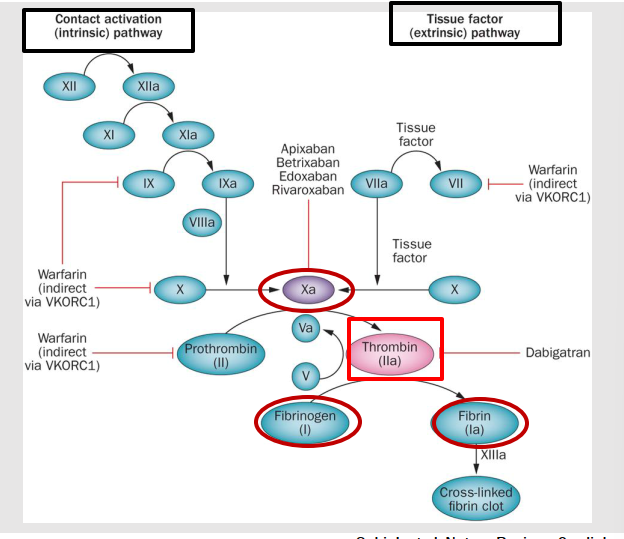
Image occlusion: name the hidden labels
3
Image occlusion: name the hidden labels
4
Image occlusion: name the hidden labels
5
Image occlusion: name the hidden labels
6
Vitamin K Antagonists
Warfarin
7
Direct Thrombin Inhibitors
Dabigatran (Pradaxa)
8
Factor Xa Inhibitors
•Rivaroxaban(Xarelto®)
•Apixaban (Eliquis®)
•Edoxaban (Savaysa™)
•Apixaban (Eliquis®)
•Edoxaban (Savaysa™)
9
Heparin
•Unfractionated heparin
•Low molecularweight heparin (Lovenox®)
•Low molecularweight heparin (Lovenox®)
10
Indications for Anticoagulants
VTE (PE/DVT)
Stroke (A fib)
MI (Post-Op Surgery)
Stroke (A fib)
MI (Post-Op Surgery)
11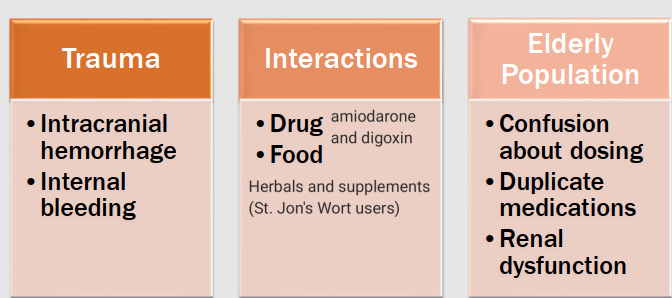
Image occlusion: name the hidden labels
12
Image occlusion: name the hidden labels
13
Image occlusion: name the hidden labels
14
Risk Factors for Bleeding with Anticoagulant Therapy
Age > 75 years
Previous bleeding
Malignancy
Renal failure
Liver failure (responsible for making coagulation factors)
Thrombocytopenia
Antiplatelet therapy/NSAIDS
Previous stroke
Anemia
Recent surgery
Frequent falls
Alcohol abuse
Poor anticoagulant control
Uncontrolled Hypertension
Previous bleeding
Malignancy
Renal failure
Liver failure (responsible for making coagulation factors)
Thrombocytopenia
Antiplatelet therapy/NSAIDS
Previous stroke
Anemia
Recent surgery
Frequent falls
Alcohol abuse
Poor anticoagulant control
Uncontrolled Hypertension
15
Indications for Reversal
Monitoring parameters
Upcoming invasive procedure
Bleeding (major vs non major)
Upcoming invasive procedure
Bleeding (major vs non major)
16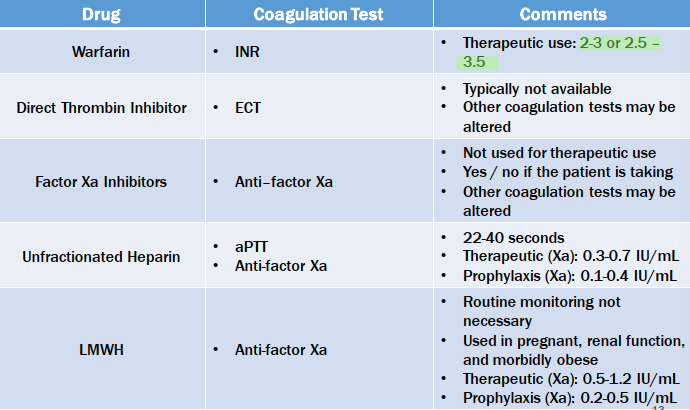
Image occlusion: name the hidden labels
17
Image occlusion: name the hidden labels
18
Image occlusion: name the hidden labels
19
Image occlusion: name the hidden labels
20
Image occlusion: name the hidden labels
21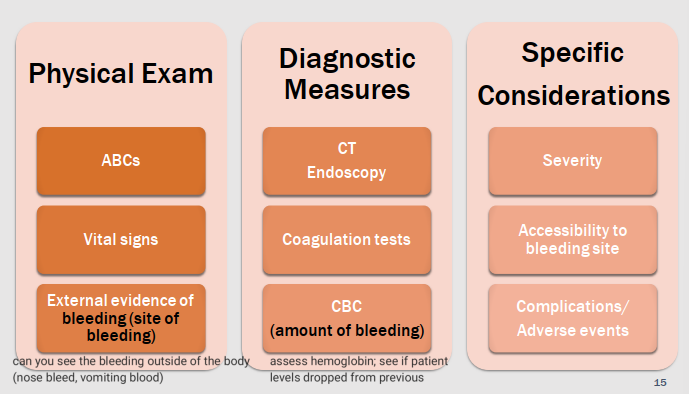
Image occlusion: name the hidden labels
22
Image occlusion: name the hidden labels
23
Image occlusion: name the hidden labels
24
Warfarin
Inhibits vitamin K epoxide reductase complex → depletes factors II, VII, IX, X and protein C & S
25
Activated Charcoal and Warfarin
Only effective in an ACUTE ingestion-NOT FOR INCREASED INR!
Adsorbs toxic substances, thus inhibiting GI absorption and preventing systemic toxicity
Multiple doses may interrupt enteroenteric, enterohepatic, and enterogastric circulation of some drugs
May also adsorb any unabsorbed drug which remains in the gut
Single Dose: 25-100g
Adsorbs toxic substances, thus inhibiting GI absorption and preventing systemic toxicity
Multiple doses may interrupt enteroenteric, enterohepatic, and enterogastric circulation of some drugs
May also adsorb any unabsorbed drug which remains in the gut
Single Dose: 25-100g
26
Vitamin K and Warfarin
Neutralizes the anticoagulation activity of warfarin to allow for endogenous activation of coagulation
factors
Promotes liver synthesis of clotting factors (II, VII, IX, X); however, the exact mechanism as to this stimulation is unknown
factors
Promotes liver synthesis of clotting factors (II, VII, IX, X); however, the exact mechanism as to this stimulation is unknown
27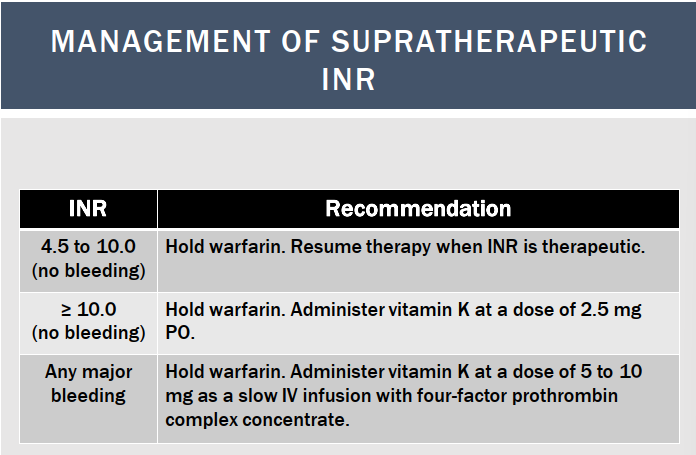
Image occlusion: name the hidden labels
28
Image occlusion: name the hidden labels
29
Image occlusion: name the hidden labels
30
Fresh Frozen Plasma (FFP) and Warfarin
Contains factors II, V, VII, VIII, IX, X
Manufactured from whole blood
▪ Must be ABO compatible
Frozen components must be thawed
Risk of infectious transmission (not a huge concern anymore)
▪ Human Immunodeficiency Virus (HIV)
▪ Hepatitis B
▪ Hepatitis C
Risk of transfusion-associated circulator y overload
▪ ~ one “unit” of FFP=200-250mL
▪ Initial dose=15ml/kg
INR of FFP = 1.4-1.6 (this is the lowest INR you can get)
Anaphylactoid-like reactions
Manufactured from whole blood
▪ Must be ABO compatible
Frozen components must be thawed
Risk of infectious transmission (not a huge concern anymore)
▪ Human Immunodeficiency Virus (HIV)
▪ Hepatitis B
▪ Hepatitis C
Risk of transfusion-associated circulator y overload
▪ ~ one “unit” of FFP=200-250mL
▪ Initial dose=15ml/kg
INR of FFP = 1.4-1.6 (this is the lowest INR you can get)
Anaphylactoid-like reactions
31
Prothrombin Complex Concentrate
Derived from pooled human plasma
PCC contains:
▪ Factors II, VII (responsible for lowering INR), IX, and X
▪ Protein C and S
▪ Antithrombin III
▪ Heparin
Both products (3 and 4) contain clotting factors in their inactivated form
Works super fast
PCC contains:
▪ Factors II, VII (responsible for lowering INR), IX, and X
▪ Protein C and S
▪ Antithrombin III
▪ Heparin
Both products (3 and 4) contain clotting factors in their inactivated form
Works super fast
32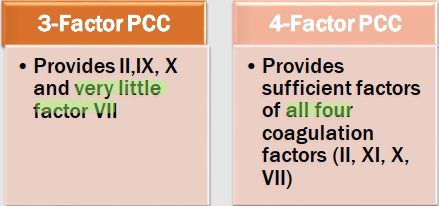
Image occlusion: name the hidden labels
33
Image occlusion: name the hidden labels
34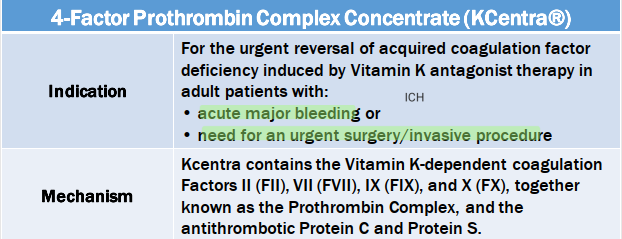
Image occlusion: name the hidden labels
35
Image occlusion: name the hidden labels
36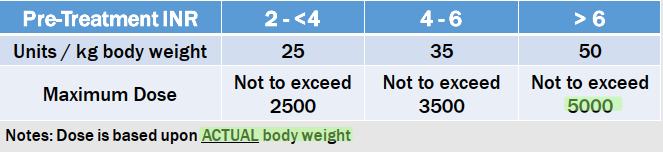
Image occlusion: name the hidden labels
37
Image occlusion: name the hidden labels
38
Image occlusion: name the hidden labels
39
Image occlusion: name the hidden labels
40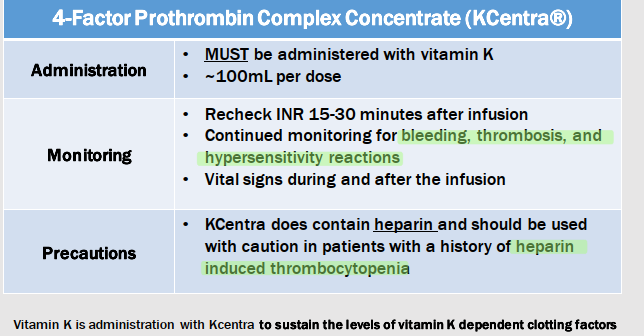
Image occlusion: name the hidden labels
41
Image occlusion: name the hidden labels
42
Image occlusion: name the hidden labels
43
Image occlusion: name the hidden labels
44
Considerations between FFP and PCC
Rate of administration: PCC >>> FFP
Rate of INR correction: PCC >>> FFP
Time for preparation: PCC >>> FFP
Hemostasis: PCC ≈ FFP
Complications: Thrombosis with PCC versus pathogenic transmission and transfusion-associated events with FFP
Fluid >>FFP
Cost: PCC >>> FFP
Rate of INR correction: PCC >>> FFP
Time for preparation: PCC >>> FFP
Hemostasis: PCC ≈ FFP
Complications: Thrombosis with PCC versus pathogenic transmission and transfusion-associated events with FFP
Fluid >>FFP
Cost: PCC >>> FFP
45
Factor Eight Inhibitor Bypass Activity (FEIBA)
AKA as Activated PCC
Contains mainly activated therapeutic levels of factors II, IX, and X and mainly activated factor VII (VIIa)
FEIBA does not contain heparin
- Should be used in patients who have a history of HIT and cannot receive 4F-PCC
Higher risk of thromboembolic complications compared to FFP
- Lack of anticoagulant (heparin, protein C, or protein S) to balance procoagulant effect
Contains mainly activated therapeutic levels of factors II, IX, and X and mainly activated factor VII (VIIa)
FEIBA does not contain heparin
- Should be used in patients who have a history of HIT and cannot receive 4F-PCC
Higher risk of thromboembolic complications compared to FFP
- Lack of anticoagulant (heparin, protein C, or protein S) to balance procoagulant effect
46
Recombinant Factor VIIA
Novoseven® (rFVIIa) is approved for patients with hemophilia
Most pronounced clotting ability of all products available to promote coagulation
Shown to successfully reverse VKA toxicity
▪ Off-label
Higher risk of thrombotic events ( 5 -10%)
▪ FDA’s Adverse Event Reporting System database found that the majority of these complications arose in patients who received rFVIIa for off-label purposes
Most pronounced clotting ability of all products available to promote coagulation
Shown to successfully reverse VKA toxicity
▪ Off-label
Higher risk of thrombotic events ( 5 -10%)
▪ FDA’s Adverse Event Reporting System database found that the majority of these complications arose in patients who received rFVIIa for off-label purposes
47
Dabigatran (Pradaxa)
DOAC
Indication
Treatment of DVT and PE
Reduction in the risk of recurrent DVT and PE following initial therapy
Atrial Fibrillation
Prophylaxis of DVT and PE Following Hip Replacement Surgery
Indication
Treatment of DVT and PE
Reduction in the risk of recurrent DVT and PE following initial therapy
Atrial Fibrillation
Prophylaxis of DVT and PE Following Hip Replacement Surgery
48
Hemodialysis and Dabigatran
Hemodialysis removes ~57% over 4 hours
“Rebound phenomenon”: reflects large volume of distribution and redistribution of the drug from the tissues into the plasma
Correction of coagulation parameters may not reflect cessation of bleeding
“Rebound phenomenon”: reflects large volume of distribution and redistribution of the drug from the tissues into the plasma
Correction of coagulation parameters may not reflect cessation of bleeding
49
Praxbind and Pradaxa
Indication
Reversal of the anticoagulant effects of dabigatran for
• emergency surgery/urgent procedures or
• life-threatening or uncontrolled bleeding
Reversal of the anticoagulant effects of dabigatran for
• emergency surgery/urgent procedures or
• life-threatening or uncontrolled bleeding
50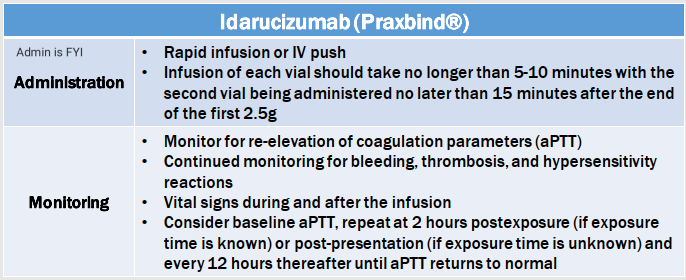
Image occlusion: name the hidden labels
51
Rivoroxaban (Xarelto)
Indication
Treatment of DVT and PE
Reduction in the risk of recurrent DVT and PE following initial therapy
Atrial Fibrillation
Prophylaxis of DVT and PE Following Hip and Knee Replacement Surgery
Treatment of DVT and PE
Reduction in the risk of recurrent DVT and PE following initial therapy
Atrial Fibrillation
Prophylaxis of DVT and PE Following Hip and Knee Replacement Surgery
52
Apixaban (Eliquis)
Indication
Treatment of DVT and PE
Reduction in the risk of recurrent DVT and PE following initial therapy
Atrial Fibrillation
Prophylaxis of DVT and PE Following Hip and Knee Replacement Surgery
Treatment of DVT and PE
Reduction in the risk of recurrent DVT and PE following initial therapy
Atrial Fibrillation
Prophylaxis of DVT and PE Following Hip and Knee Replacement Surgery
53
Edoxaban (Savaysa)
Indication
Treatment of DVT and PE
Atrial Fibrillation
Treatment of DVT and PE
Atrial Fibrillation
54
Antidotes for XA Inhibitors
Activated Charcoal - if within 2 hours
4F-PCC
Andexanet alfa (recombinat Fxa) - approved for apixaban and rivoroxaban; off-label for edoxaban
4F-PCC
Andexanet alfa (recombinat Fxa) - approved for apixaban and rivoroxaban; off-label for edoxaban
55
Andexanet Alfa
Binds and sequesters the factor Xa inhibitors
IV infusion
IV infusion
56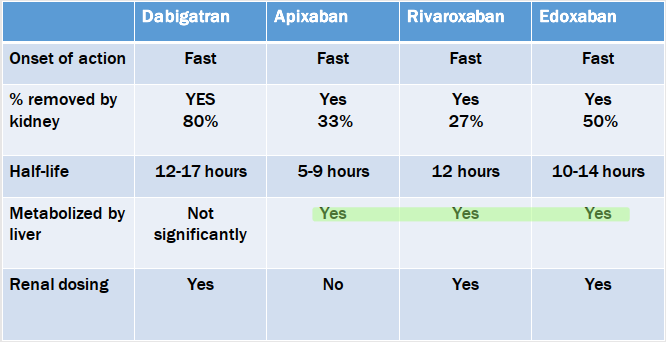
Image occlusion: name the hidden labels
57
Image occlusion: name the hidden labels
58
Image occlusion: name the hidden labels
59
Image occlusion: name the hidden labels
60
The anticoagulant effect of DOACs wears off in...
1-2 days; can be longer if kidney or liver function has worsened
61
Unfractionate Heparin
Potentiates the action of antithrombin III and thereby inactivates thrombin (as well as activated
coagulation factors IX, X, XI, XII, and plasmin) and prevents the conversion of fibrinogen to fibrin
coagulation factors IX, X, XI, XII, and plasmin) and prevents the conversion of fibrinogen to fibrin
62
Enoxaparin
Binds to antithrombin to form a complex that irreversibly inactivates clotting factor Xa
LMWH
Indication
Treatment of DVT and PE
Thromboprophylaxis
Prophylaxis of DVT and PE Following Hip and Knee Replacement Surgery
LMWH
Indication
Treatment of DVT and PE
Thromboprophylaxis
Prophylaxis of DVT and PE Following Hip and Knee Replacement Surgery
63
Protamine Sulfate
Indication
for heparin overdose
Mechanism
• When administered alone, protamine has an anticoagulant effect
• When given in the presence of heparin, a stable salt is formed which results in the loss of anticoagulant activity of both drugs
for heparin overdose
Mechanism
• When administered alone, protamine has an anticoagulant effect
• When given in the presence of heparin, a stable salt is formed which results in the loss of anticoagulant activity of both drugs
64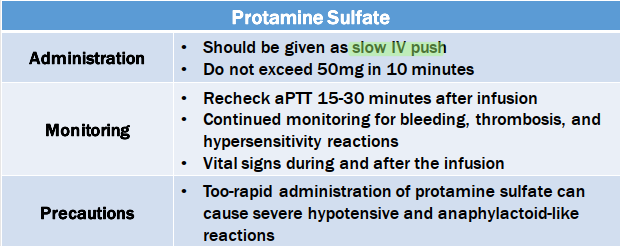
Image occlusion: name the hidden labels
65
Image occlusion: name the hidden labels
66
Image occlusion: name the hidden labels
67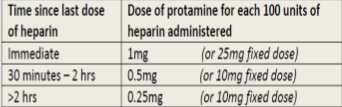
Image occlusion: name the hidden labels
68
Image occlusion: name the hidden labels
69
Image occlusion: name the hidden labels
70
Protamine Sulfate with LMWH
Incomplete neutralization of LMWH with protamine may occur when used for reversal (partial neutralization (~ 60%)
• Due to the lower molecular weight of these products
• Due to the lower molecular weight of these products