MS and ALS
Study these flashcardsFree · spaced repetition · iPhone, Android, Mac & web
All cards
1
What is Multiple Sclerosis (MS)?
• Permanent, disabling, unpredictable autoimmune disorder
• Myelin sheath is damaged, resulting in breakdown of communication between CNS and periphery
• “Snowflake disease”
• MS is not contagious or fatal
• Active lesions = areas of inflammation
• Plaques = scar tissue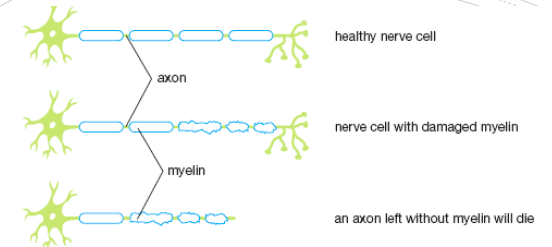
• Myelin sheath is damaged, resulting in breakdown of communication between CNS and periphery
• “Snowflake disease”
• MS is not contagious or fatal
• Active lesions = areas of inflammation
• Plaques = scar tissue
2
MS Epidemiology
▪ >2 million cases worldwide
▪ US cases: approaching 1,000,000
▪ First symptoms between ages of 20 – 50
▪ Median onset of 30 years
▪ Women are 2-3x more likely than men
▪ Less common near equator (40-degree north/south)
▪ Vitamin D deficiency?
▪ More common in Caucasians
▪ Environmental factors
▪ Smoking
▪ MS susceptibility may be increased if a family member has MS
▪ US cases: approaching 1,000,000
▪ First symptoms between ages of 20 – 50
▪ Median onset of 30 years
▪ Women are 2-3x more likely than men
▪ Less common near equator (40-degree north/south)
▪ Vitamin D deficiency?
▪ More common in Caucasians
▪ Environmental factors
▪ Smoking
▪ MS susceptibility may be increased if a family member has MS
3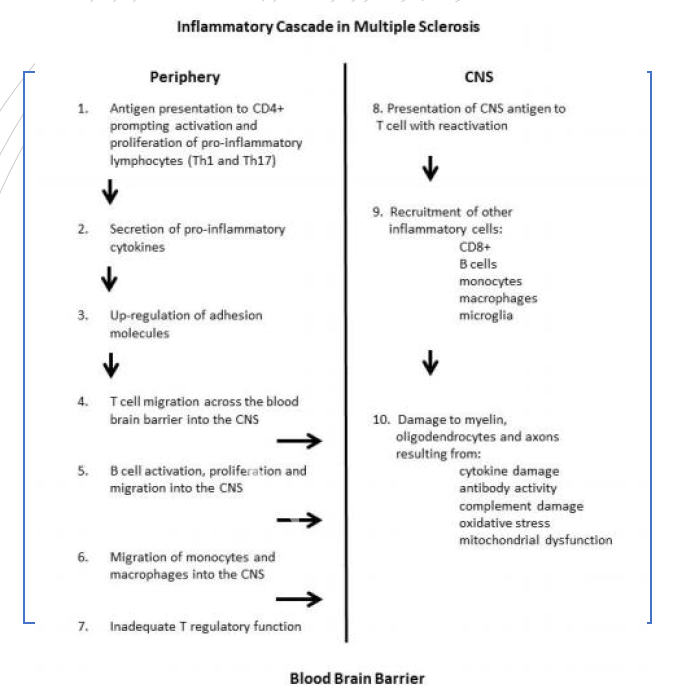
Image occlusion: name the hidden labels
4
Image occlusion: name the hidden labels
5
Image occlusion: name the hidden labels
6
Image occlusion: name the hidden labels
7
Image occlusion: name the hidden labels
8
Image occlusion: name the hidden labels
9
Image occlusion: name the hidden labels
10
Image occlusion: name the hidden labels
11
Image occlusion: name the hidden labels
12
Image occlusion: name the hidden labels
13
MS Etiology: Autoimmune Theories
Molecular Mimicry
Viral infection occurs and an immune response is generated to the antigen (virus)
Virus shares a similar structure to myelin basic protein (MBP)
Immune system not only attacks the virus but begins attacking the MBP
Viral infection occurs and an immune response is generated to the antigen (virus)
Virus shares a similar structure to myelin basic protein (MBP)
Immune system not only attacks the virus but begins attacking the MBP
14
MS Etiology: Microbial??
▪ Mostly observational; lacking strong evidence
▪ Transient or persistent infections may activate T-cells
▪ Breach BBB, release CNS antigens
▪ Repeated inflammation and demyelination
▪ Direct injury to oligodendracytes
▪ HHV-6, Adenovirus, CMV
▪ Epstein Bar Virus (EBV): high titers = highly likely to develop MS
▪ Gut dysbiosis?
▪ Transient or persistent infections may activate T-cells
▪ Breach BBB, release CNS antigens
▪ Repeated inflammation and demyelination
▪ Direct injury to oligodendracytes
▪ HHV-6, Adenovirus, CMV
▪ Epstein Bar Virus (EBV): high titers = highly likely to develop MS
▪ Gut dysbiosis?
15
MS Other (Unproven) Theories
▪ Canine distemper
▪ Allergies
▪ Exposure to heavy metals
▪ Physical trauma
▪ Aspartame
▪ Chronic Cerebrospinal Venous Insufficiency (CCSV)
▪ Allergies
▪ Exposure to heavy metals
▪ Physical trauma
▪ Aspartame
▪ Chronic Cerebrospinal Venous Insufficiency (CCSV)
16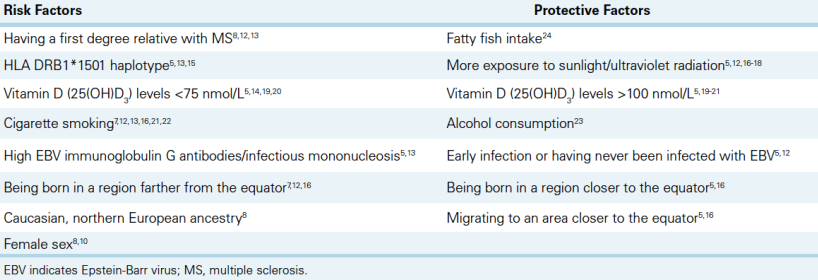
Image occlusion: name the hidden labels
17
Image occlusion: name the hidden labels
18
MS S/S
▪ Initial symptom
▪ Optic neuritis in 14 – 23% of patients
▪ Pain, blurry/double vision, nystagmus
▪ Primary
▪ Directly related
▪ Secondary
▪ Complications from primary
▪ Tertiary
▪ Quality of life
▪ Optic neuritis in 14 – 23% of patients
▪ Pain, blurry/double vision, nystagmus
▪ Primary
▪ Directly related
▪ Secondary
▪ Complications from primary
▪ Tertiary
▪ Quality of life
19
MS Diagnosis
MS-Associated Pain
▪ Acute neuropathic pain
▪ Trigeminal neuralgia
▪ Lhermitte’s sign
▪ MS hug
▪ Paroxysmal spasms
▪ Chronic neuropathic pain
▪ Dysesthesias
▪ Pruritis (itching)
▪ Musculoskeletal pain
▪ Acute neuropathic pain
▪ Trigeminal neuralgia
▪ Lhermitte’s sign
▪ MS hug
▪ Paroxysmal spasms
▪ Chronic neuropathic pain
▪ Dysesthesias
▪ Pruritis (itching)
▪ Musculoskeletal pain
20
Expanded Disability Status Scale (EDSS)
▪ Most clinically accepted disability scale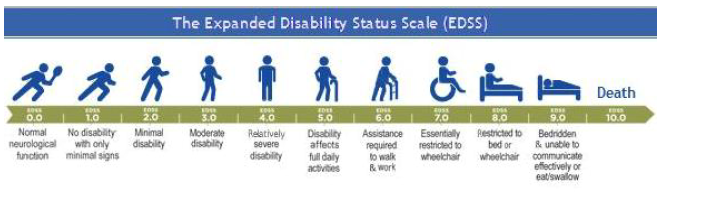
21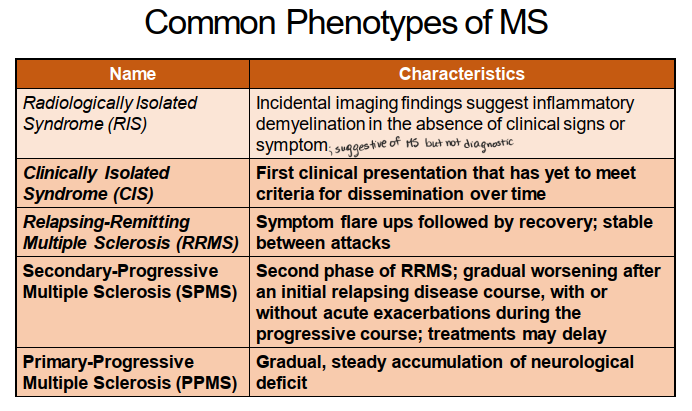
Image occlusion: name the hidden labels
22
Image occlusion: name the hidden labels
23
Image occlusion: name the hidden labels
24
Image occlusion: name the hidden labels
25
Image occlusion: name the hidden labels
26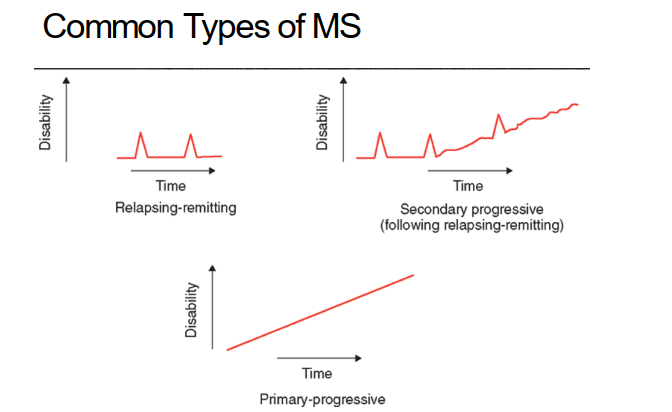
Image occlusion: name the hidden labels
27
Image occlusion: name the hidden labels
28
Image occlusion: name the hidden labels
29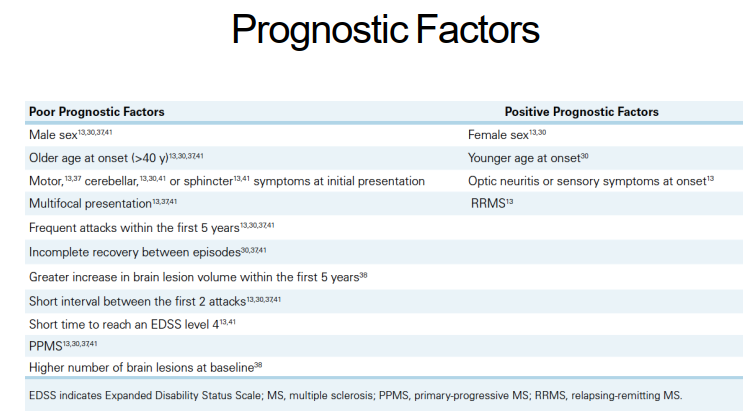
Image occlusion: name the hidden labels
30
Aggravating Factors
▪Infections
▪Heat
▪Sleep deprivation
▪Stress
▪Malnutrition
▪Anemia
▪Organ dysfunction
▪Exertion
▪Heat
▪Sleep deprivation
▪Stress
▪Malnutrition
▪Anemia
▪Organ dysfunction
▪Exertion
31
Treating Acute Exacerbations
▪ Glucocorticoids (for severe exacerbations only)
▪ Methylprednisolone: 500-1000 mg IV daily for 3-10 days followed by an oral taper (usually prednisone)
▪ Could use other glucocorticoids
▪ Glucocorticoids as long term therapy??
▪ Plasmapheresis or IVIG may also be options
▪ Rehabilitation
▪ Methylprednisolone: 500-1000 mg IV daily for 3-10 days followed by an oral taper (usually prednisone)
▪ Could use other glucocorticoids
▪ Glucocorticoids as long term therapy??
▪ Plasmapheresis or IVIG may also be options
▪ Rehabilitation
32
MS Goals of Therapy
▪Slow down progression and accumulationof brain lesions
▪Prevent and manage relapses
▪Manage symptoms
▪Preserve quality of life
▪Prevent and manage relapses
▪Manage symptoms
▪Preserve quality of life
33
Disease-Modifying Therapy (DMT)
▪Start early
▪ Use of IFN at first episode may prevent clinically definite MS
▪ Note: Not all agents are approved for CIS
▪Primary goal is to alter natural course of disease
▪ Reduce frequency/severity of relapses
▪ Prevent chronic progressive phase
▪ Slow progression of disability
▪ Slow rate of accumulation of new brain lesions on MRI
▪All drugs approved for relapsing MS
▪ Progressive MS much more limited
▪ Use of IFN at first episode may prevent clinically definite MS
▪ Note: Not all agents are approved for CIS
▪Primary goal is to alter natural course of disease
▪ Reduce frequency/severity of relapses
▪ Prevent chronic progressive phase
▪ Slow progression of disability
▪ Slow rate of accumulation of new brain lesions on MRI
▪All drugs approved for relapsing MS
▪ Progressive MS much more limited
34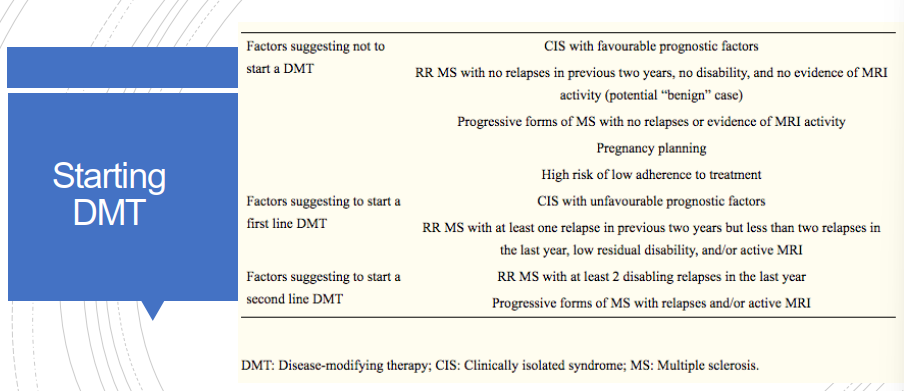
Image occlusion: name the hidden labels
35
Image occlusion: name the hidden labels
36
Image occlusion: name the hidden labels
37
Interferon-β-1b
Betaseron®, Extavia®
▪ Synthetically produced in Escherichia coli
▪ Proposed mechanisms
▪ Immunomodulator
▪ Enhance apoptosis of autoreactive T-cells
▪ Down-regulation of antigen presentation
▪ Restores T-regulatory cells
▪ Decrease BBB permeability
▪ Synthetically produced in Escherichia coli
▪ Proposed mechanisms
▪ Immunomodulator
▪ Enhance apoptosis of autoreactive T-cells
▪ Down-regulation of antigen presentation
▪ Restores T-regulatory cells
▪ Decrease BBB permeability
38
Interferon-β-1a
Avonex®,Rebif®, Plegridy®
▪ Produced in recombinant hamster ovary cells
▪ Proposed mechanism: same as IFN-β-1b
▪ Produced in recombinant hamster ovary cells
▪ Proposed mechanism: same as IFN-β-1b
39
ADRs and Monitoring of Interferon-β
Adverse drug effects
▪ Injection site necrosis, flu-like symptoms, depression, hepatotoxicity, leukopenia, anemia,
suicidal thoughts, polyneuropathy. Caution in seizure disorders
▪ Injection site necrosis, flu-like symptoms, depression, hepatotoxicity, leukopenia, anemia,
suicidal thoughts, polyneuropathy. Caution in seizure disorders
40
Interferons
▪Autoantibody production
▪ After 3 years of treatment with IFN-β-1b, 38% of patients developed neutralizing antibodies
(Nabs)
▪Methods for minimizing skin reactions
▪ Let IFN warm prior to administration
▪ Rotate injection sites
▪ Apply ice before and after injection
▪ Pre/post treatment with NSAIDs or steroids
▪Optimal dose is controversial; however, current evidence supports use of highest dose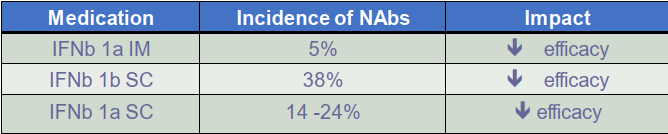
▪ After 3 years of treatment with IFN-β-1b, 38% of patients developed neutralizing antibodies
(Nabs)
▪Methods for minimizing skin reactions
▪ Let IFN warm prior to administration
▪ Rotate injection sites
▪ Apply ice before and after injection
▪ Pre/post treatment with NSAIDs or steroids
▪Optimal dose is controversial; however, current evidence supports use of highest dose
41
Glatiramer Acetate
Copaxone®, Glatopa™(generic equivalent)
▪ Mechanism of action
▪ Antigenically similar to MBP
▪ Induce and activates T-lymphocyte suppressor cells
▪ Interferes with APC
▪ Switching to glatiramer acetate is an option in patients failing IFN
▪ Generally relapse rate improves when switching from IFN to GA if the switch was due to ineffectiveness
▪ If switched due to ADRs then no significant change in relapse rate
▪ Incidence of NAbs – 0%
▪ Mechanism of action
▪ Antigenically similar to MBP
▪ Induce and activates T-lymphocyte suppressor cells
▪ Interferes with APC
▪ Switching to glatiramer acetate is an option in patients failing IFN
▪ Generally relapse rate improves when switching from IFN to GA if the switch was due to ineffectiveness
▪ If switched due to ADRs then no significant change in relapse rate
▪ Incidence of NAbs – 0%
42
IFN vs. GA
▪ Is either treatment better than the other?
▪ Both IFN and GA are comparable in terms of efficacy (~70 – 80% reduction in relapse rates)
▪ REGARD study
▪ BEYOND study
▪ What about in combination?
▪ CombiRx study
▪ Both IFN and GA are comparable in terms of efficacy (~70 – 80% reduction in relapse rates)
▪ REGARD study
▪ BEYOND study
▪ What about in combination?
▪ CombiRx study
43
Mitoxantrone
Novatrone®
▪ Approved for RRMS and SPMS
▪ Anthracenedione chemotherapeutic agent, disrupts DNA synthesis
and repair
▪ Cardiotoxic! (Max lifetime cumulative dose: 140 mg/m2)
▪ Adverse Drug Effects
▪ Nausea, alopecia, menstrual disorder, amenorrhea, infection, leukopenia
▪ Blue discoloration of sclera and urine
▪ Cardiac/LVEF, liver, kidney function, CBC
▪ Patients should not become pregnant
▪ Reserved for patients with rapidly progressing disease or those who failed other treatments
▪ Approved for RRMS and SPMS
▪ Anthracenedione chemotherapeutic agent, disrupts DNA synthesis
and repair
▪ Cardiotoxic! (Max lifetime cumulative dose: 140 mg/m2)
▪ Adverse Drug Effects
▪ Nausea, alopecia, menstrual disorder, amenorrhea, infection, leukopenia
▪ Blue discoloration of sclera and urine
▪ Cardiac/LVEF, liver, kidney function, CBC
▪ Patients should not become pregnant
▪ Reserved for patients with rapidly progressing disease or those who failed other treatments
44
Natalizumab
Tysrabi®
▪Recombinant monoclonal antibody against alpha 4 integrin, reducing trafficking of lymphocytes into CNS
▪Pulled from market after only four months in February 2005 due to 3 reported cases of progressive multifocal leukoencephalopathy (PML)
▪Back on the market June 2006
▪Requires registration of patient, pharmacy, and prescriber (TOUCH® REMS program)
▪Recombinant monoclonal antibody against alpha 4 integrin, reducing trafficking of lymphocytes into CNS
▪Pulled from market after only four months in February 2005 due to 3 reported cases of progressive multifocal leukoencephalopathy (PML)
▪Back on the market June 2006
▪Requires registration of patient, pharmacy, and prescriber (TOUCH® REMS program)
45
Risk factors for PML with Natalizumab
▪ Longer treatment duration, particularly >2 years
▪ Prior immunosuppressant treatment
▪ Presence of anti-JC Virus antibodies
▪ Prior immunosuppressant treatment
▪ Presence of anti-JC Virus antibodies
46
When To Consider Natalizumab?
Patients who…
▪ Have had a suboptimal response to IFN or glatirameracetate
▪ Cannot tolerate IFN or glatiramer acetate
▪ Failed other novel treatments
▪ Fall into a poor prognosis category (aggressive disease) $-$ May be considered first line in this case
▪ Have had a suboptimal response to IFN or glatirameracetate
▪ Cannot tolerate IFN or glatiramer acetate
▪ Failed other novel treatments
▪ Fall into a poor prognosis category (aggressive disease) $-$ May be considered first line in this case
47
Fingolimod
Gilenya®
▪ Sphingosine-1-phosphate (S1P) receptor modulator
▪ Sequesters circulating lymphocytes into secondary lymphoid organs
▪ Peripheral reduction of CD3+, CD4+, CD8+, CD45RA+ (naive T cells), CD45RO+ (memory T cells) and CD19+
cells
▪ No effect on lymphocyte induction, proliferation, or memory function
▪ May inhibit the production of IL-17
▪ If patient has not had chicken pox (varicella), he/she should get vaccinated ≥1 month prior to initiation
▪ First dose given in monitored setting (physician's office)
▪ Risk of severe bradycardia
▪ Baseline eye exam and 2 – 3 month follow-up
▪ May cause macular edema
▪ Possible teratogen
▪ Avoid pregnancy for 2 months after discontinuation
▪ Sphingosine-1-phosphate (S1P) receptor modulator
▪ Sequesters circulating lymphocytes into secondary lymphoid organs
▪ Peripheral reduction of CD3+, CD4+, CD8+, CD45RA+ (naive T cells), CD45RO+ (memory T cells) and CD19+
cells
▪ No effect on lymphocyte induction, proliferation, or memory function
▪ May inhibit the production of IL-17
▪ If patient has not had chicken pox (varicella), he/she should get vaccinated ≥1 month prior to initiation
▪ First dose given in monitored setting (physician's office)
▪ Risk of severe bradycardia
▪ Baseline eye exam and 2 – 3 month follow-up
▪ May cause macular edema
▪ Possible teratogen
▪ Avoid pregnancy for 2 months after discontinuation
48
Siponimod (Mayzent®)
▪ Approved 2019 for RRMS, SPMS with active disease, and CIS
▪ Active SPMS = progression of disability with acute relapses or new MRI activity
▪ S1P modulator
▪ Dosing
▪ Begin at 0.25mg, titrate to maintenance dose of 2mg daily
▪ Dosing depends on CYP 2C9 Genotype
▪ Similar side effects/precautions as fingolimod
▪ Avoid pregnancy for 10 days after discontinuation
▪ Active SPMS = progression of disability with acute relapses or new MRI activity
▪ S1P modulator
▪ Dosing
▪ Begin at 0.25mg, titrate to maintenance dose of 2mg daily
▪ Dosing depends on CYP 2C9 Genotype
▪ Similar side effects/precautions as fingolimod
▪ Avoid pregnancy for 10 days after discontinuation
49
Teriflunomide
Aubagio®
▪ Active metabolite of leflunomide
▪ Inhibits de novo pyrimidine synthesis by reversibly and non-competitively inhibiting dihydroorotate dehydrogenase (DHODH)
▪ Cytostatic effect of rapidly dividing T- and B lymphocytes in the periphery
▪ Ultimately prevents destruction of myelin sheath
▪ Oral – 7 mg or 14 mg daily
▪ Active metabolite of leflunomide
▪ Inhibits de novo pyrimidine synthesis by reversibly and non-competitively inhibiting dihydroorotate dehydrogenase (DHODH)
▪ Cytostatic effect of rapidly dividing T- and B lymphocytes in the periphery
▪ Ultimately prevents destruction of myelin sheath
▪ Oral – 7 mg or 14 mg daily
50
Teriflunomide and Pregnancy
▪ It may take up to two years to decrease to a safe plasma level
▪ Teriflunomide half-life decreased to approximately 24 hours with administration of colestyramine 8
grams TID for 11 days
▪ Alternative: 50 grams oral activated charcoal powder every 12 hours for 11 days
▪ Teriflunomide half-life decreased to approximately 24 hours with administration of colestyramine 8
grams TID for 11 days
▪ Alternative: 50 grams oral activated charcoal powder every 12 hours for 11 days
51
Teriflunomide– Adverse Effects
▪ Gastrointestinal
▪ Nausea, diarrhea, pain
▪ Other
▪ Hair thinning, liver enzyme elevation, weight loss, hypertension
▪ Decreased neutrophils, lymphocytes, platelets
▪ Reported with leflunomide
▪ Cases of pulmonary infection, including TB
▪ 1 PML case in SLE patient who had been on multiple immunosuppressant therapy
▪ No increase in malignancies
▪ Should be up to date with vaccinations (no live vaccines)
▪ Nausea, diarrhea, pain
▪ Other
▪ Hair thinning, liver enzyme elevation, weight loss, hypertension
▪ Decreased neutrophils, lymphocytes, platelets
▪ Reported with leflunomide
▪ Cases of pulmonary infection, including TB
▪ 1 PML case in SLE patient who had been on multiple immunosuppressant therapy
▪ No increase in malignancies
▪ Should be up to date with vaccinations (no live vaccines)
52
Dimethyl Fumarate
Tecfidera®
▪Derived from Fumaderm® (oral therapy of fumaric acid esters approved to treat psoriasis in Germany)
▪Mechanism not completely understood
▪ Increases production of anti-inflammatory IL-10
▪ Activates protective antioxidant Nrf2 pathway in the CNS
▪For RRMS
▪Dose 120 mg PO BID x 7d then 240 mg PO BID
▪Derived from Fumaderm® (oral therapy of fumaric acid esters approved to treat psoriasis in Germany)
▪Mechanism not completely understood
▪ Increases production of anti-inflammatory IL-10
▪ Activates protective antioxidant Nrf2 pathway in the CNS
▪For RRMS
▪Dose 120 mg PO BID x 7d then 240 mg PO BID
53
Diroximel fumarate
▪ Vumerity®
▪ Approved Oct. 2019 for CIS, RRMS, active SPMS
▪ Similar to Dimethyl Fumarate except less GI symptoms
▪ Take with food to avoid flushing (avoid high fat meal)
▪ Approved Oct. 2019 for CIS, RRMS, active SPMS
▪ Similar to Dimethyl Fumarate except less GI symptoms
▪ Take with food to avoid flushing (avoid high fat meal)
54
Alemtuzumab (Lemtrada®)
▪ Approved 2014 for the treatment of patients with relapsing forms of MS who have had an inadequate response to two or more MS therapies
▪ Humanized monoclonal antibody directed at CD52
▪ T and B lymphocytes, resulting in their depletion and subsequent repopulation
▪ Dosing: 12 mg daily for 5 consecutive days followed 12 months later by 12 mg daily for 3 consecutive days
▪ Premedication with methylprednisolone 1 gram IV for 1st 3 days
▪ CARE-MS I trial: reduced proportion of patients relapsed at 2 years by 54.9% compared to SubCut IFN-β-1a
▪ Humanized monoclonal antibody directed at CD52
▪ T and B lymphocytes, resulting in their depletion and subsequent repopulation
▪ Dosing: 12 mg daily for 5 consecutive days followed 12 months later by 12 mg daily for 3 consecutive days
▪ Premedication with methylprednisolone 1 gram IV for 1st 3 days
▪ CARE-MS I trial: reduced proportion of patients relapsed at 2 years by 54.9% compared to SubCut IFN-β-1a
55
Ocrelizumab (Ocrevus®)
▪ Recombinant human CD-20 monoclonal antibody
▪ Approved March 2017 for RRMS and PPMS
▪ In RRMS: reduced relapse rate and MRI lesions vs. IFN-β
▪ Given as 300 mg IV infusion, followed by second 300 mg infusion 2 weeks later
▪ Pre-medicate with methylprednisolone and diphenhydramine
▪ Contraindicated with active hepatitis B infection (screening required)
▪ ADRs: dose-limiting infusion reactions, infection, possible malignancy, hepatitis B reactivation
▪ Administer necessary vaccines six weeks prior to therapy
▪ Approved March 2017 for RRMS and PPMS
▪ In RRMS: reduced relapse rate and MRI lesions vs. IFN-β
▪ Given as 300 mg IV infusion, followed by second 300 mg infusion 2 weeks later
▪ Pre-medicate with methylprednisolone and diphenhydramine
▪ Contraindicated with active hepatitis B infection (screening required)
▪ ADRs: dose-limiting infusion reactions, infection, possible malignancy, hepatitis B reactivation
▪ Administer necessary vaccines six weeks prior to therapy
56
Cladribine (Mavenclad®)
▪ Also marketed as Leustatin® for hairy cell leukemia
▪ Oral tablet approved in 2019 for RRMS, SPMS, for patients who failed other drugs
▪ Not recommended for patients with CIS due to safety profile
▪ Mechanism: Purine analog, impairs DNA synthesis leading to lymphocyte depletion
▪ Warnings: malignancy, teratogenicity, infections (herpes), GVHD, PML, cardiac failure
▪ BBW: malignancies, teratogenicity
▪ Oral tablet approved in 2019 for RRMS, SPMS, for patients who failed other drugs
▪ Not recommended for patients with CIS due to safety profile
▪ Mechanism: Purine analog, impairs DNA synthesis leading to lymphocyte depletion
▪ Warnings: malignancy, teratogenicity, infections (herpes), GVHD, PML, cardiac failure
▪ BBW: malignancies, teratogenicity
57
Ponesimod (Ponvory®)
▪ Approved in March 2021 for RRMS and SPMS
▪ Mechanism: once-daily oral selective sphingosine-1-phosphate receptor 1 (S1P1) modulator
▪ Dose: 14 day starter pack, then 20 mg once daily thereafter
▪ Warnings: infections, bradycardia, breathing issues, liver problems, increased blood pressure, skin cancer, macular edema, severe worsening of MS after stopping therapy
▪ Nine in 10 PONVORY® -treated patients did not have worsening of 3-month disability, and PONVORY® showed a numerical benefit in delaying disability progression.
▪ Mechanism: once-daily oral selective sphingosine-1-phosphate receptor 1 (S1P1) modulator
▪ Dose: 14 day starter pack, then 20 mg once daily thereafter
▪ Warnings: infections, bradycardia, breathing issues, liver problems, increased blood pressure, skin cancer, macular edema, severe worsening of MS after stopping therapy
▪ Nine in 10 PONVORY® -treated patients did not have worsening of 3-month disability, and PONVORY® showed a numerical benefit in delaying disability progression.
58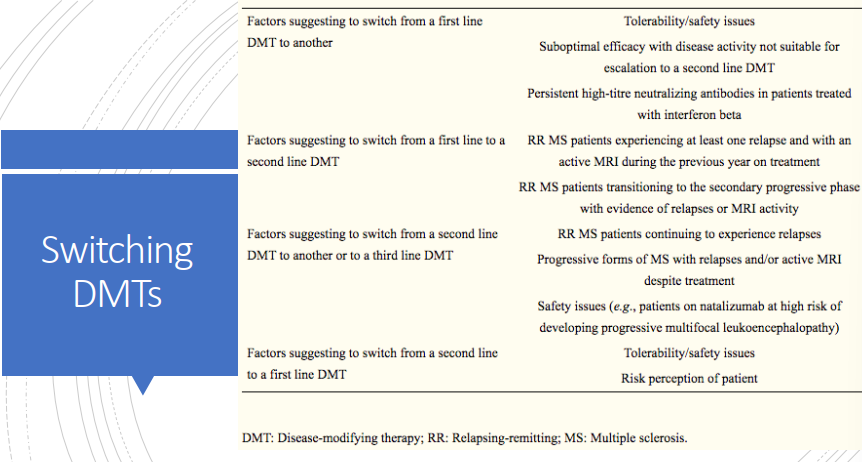
Image occlusion: name the hidden labels
59
Image occlusion: name the hidden labels
60
Image occlusion: name the hidden labels
61
Image occlusion: name the hidden labels
62
Is DMT Cost-Effective?
▪ The cost-effectiveness of all DMTs far exceeded
\$800,000/QALY
▪ Generally cost-effective is considered < \$50,000/QALY
▪ Cost-effectiveness improved if started earlier or if the drug costs were reduced
\$800,000/QALY
▪ Generally cost-effective is considered < \$50,000/QALY
▪ Cost-effectiveness improved if started earlier or if the drug costs were reduced
63
Investigational Treatment Approaches
▪ Laquinimod
▪ Ibudilast
▪ D3 supplementation
▪ Cyclophosphamide
▪ Rituximab
▪ Hematopoietic Stem-Cell Transplant
▪ Ibudilast
▪ D3 supplementation
▪ Cyclophosphamide
▪ Rituximab
▪ Hematopoietic Stem-Cell Transplant
64
“Comprehensive Care”
Non-pharmacologic treatments
▪PT, OT, speech
▪Support groups
▪Mental health
▪Counseling
▪Nutrition
▪PT, OT, speech
▪Support groups
▪Mental health
▪Counseling
▪Nutrition
65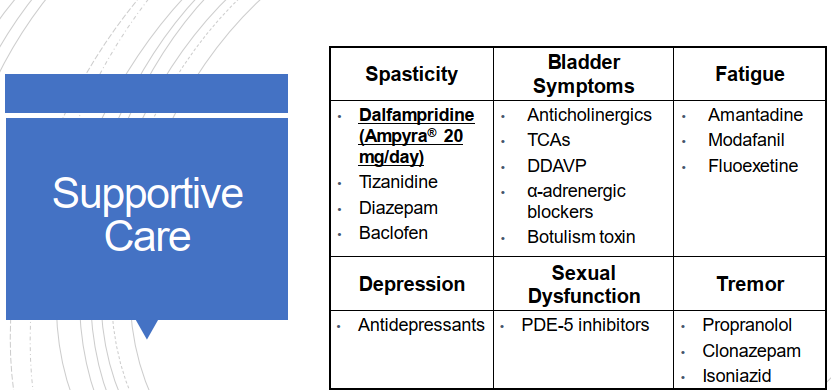
Image occlusion: name the hidden labels
66
Image occlusion: name the hidden labels
67
Image occlusion: name the hidden labels
68
Image occlusion: name the hidden labels
69
Image occlusion: name the hidden labels
70
Image occlusion: name the hidden labels
71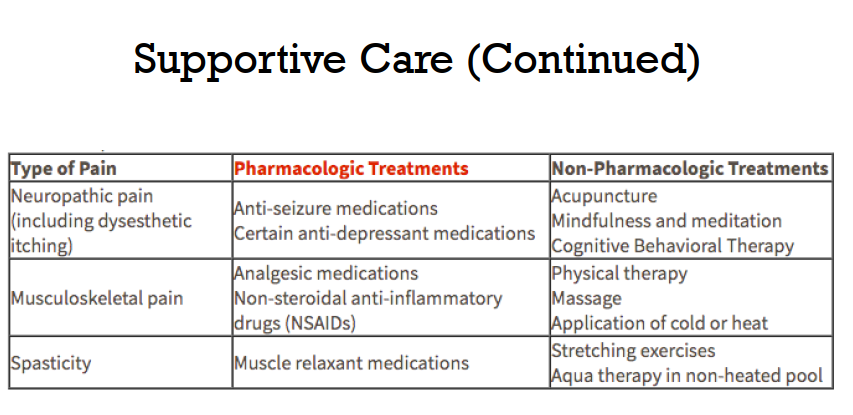
Image occlusion: name the hidden labels
72
Image occlusion: name the hidden labels
73
Image occlusion: name the hidden labels
74
Motor Neuron Diseases
Upper Motor Neuron Diseases - PLS
Lower Motor Neuron Diseases - progressive muscular atrophy, progessive bulbar palsy
Both - Amyotrophic Lateral Sclerosis (ALS)
Lower Motor Neuron Diseases - progressive muscular atrophy, progessive bulbar palsy
Both - Amyotrophic Lateral Sclerosis (ALS)
75
Amyotrophic Lateral Sclerosis
As ALS progresses, the motor neurons that control muscles gradually degenerate and die, leading to muscle weakness, twitching, and wasting. This eventually leads to complete paralysis of the muscles, including those used for breathing and swallowing, which can be fatal.
The cause of ALS is not completely understood, but it is believed to be a combination of genetic and environmental factors. There is no cure for ALS, and treatment options aim to manage symptoms and improve quality of life.
The cause of ALS is not completely understood, but it is believed to be a combination of genetic and environmental factors. There is no cure for ALS, and treatment options aim to manage symptoms and improve quality of life.
76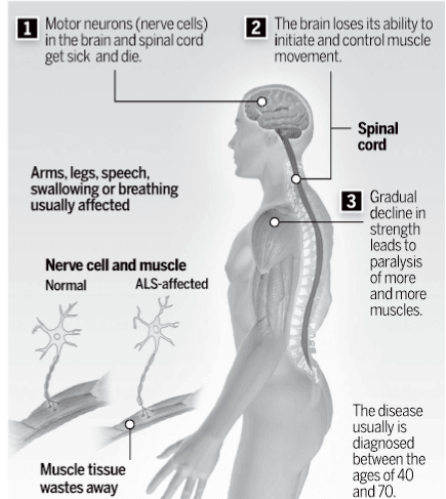
Image occlusion: name the hidden labels
77
Image occlusion: name the hidden labels
78
Image occlusion: name the hidden labels
79
ALS Pathogenesis
▪ Oxidative damage
▪ Mitochondrial dysfunction
▪ Caspase activation and apoptosis
▪ Defects in axonal transport
▪ Reduced expression of VEGF
▪ Enhanced glutamate activity
▪ Aggregation of abnormal proteins
▪ Predominately begins distally; progresses to proximal muscle groups
▪ Gradual onset, painless
▪ Lower motor neurons: loss of muscle tone, atrophy, fasciculations
▪ Upper motor neurons: hyperreflexia, spasticity, increased muscle tone
▪ Spared cognitive function
▪ Mitochondrial dysfunction
▪ Caspase activation and apoptosis
▪ Defects in axonal transport
▪ Reduced expression of VEGF
▪ Enhanced glutamate activity
▪ Aggregation of abnormal proteins
▪ Predominately begins distally; progresses to proximal muscle groups
▪ Gradual onset, painless
▪ Lower motor neurons: loss of muscle tone, atrophy, fasciculations
▪ Upper motor neurons: hyperreflexia, spasticity, increased muscle tone
▪ Spared cognitive function
80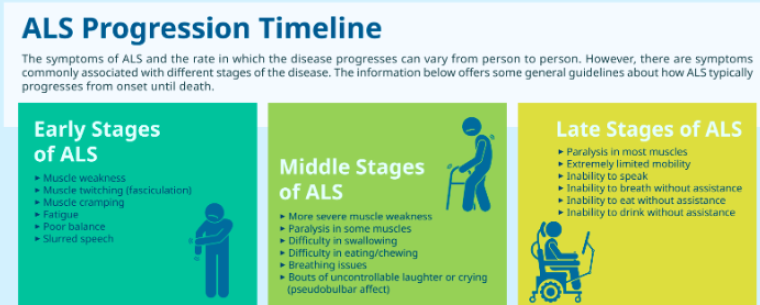
Image occlusion: name the hidden labels
81
Image occlusion: name the hidden labels
82
Image occlusion: name the hidden labels
83
Characteristic Findings and Diagnosis
▪ Effects lower and upper motor neurons
▪ Affects muscles involved in voluntary movement
▪ Preservation of extraocular movements, sensation, bowel and bladder function
▪ Dysarthria, dysphagia, pseudobulbar affect, frontal lobe dysfunction
▪ Diagnosis
▪ EMG (electromyography)
▪ Nerve conduction studies
▪ Presence of fasciculation
▪ NEW: Blood tests
▪ Compared with several other neurological diseases, previous studies have shown higher concentrations of neurofilaments in CSF in ALS.
▪ Measuring neurofilaments levels in the blood has previously been difficult since they occur at much lower concentrations compared to CSF.
▪ In recent years, however, new and more sensitive analytical methods have generated new scope for doing so.
▪ Affects muscles involved in voluntary movement
▪ Preservation of extraocular movements, sensation, bowel and bladder function
▪ Dysarthria, dysphagia, pseudobulbar affect, frontal lobe dysfunction
▪ Diagnosis
▪ EMG (electromyography)
▪ Nerve conduction studies
▪ Presence of fasciculation
▪ NEW: Blood tests
▪ Compared with several other neurological diseases, previous studies have shown higher concentrations of neurofilaments in CSF in ALS.
▪ Measuring neurofilaments levels in the blood has previously been difficult since they occur at much lower concentrations compared to CSF.
▪ In recent years, however, new and more sensitive analytical methods have generated new scope for doing so.
84
ALS Etiology
▪90 – 95% of all cases are sporadic
▪Familial cases (5 – 10%); 20% associated with genetic defect in copper-zinc superoxide dismutase enzyme (SOD1)
▪ Apoptosis
▪ Excitotoxicity
▪ Oxidative stress
▪Theories
▪ Excess glutamate
▪ Viral or inflammatory
▪Familial cases (5 – 10%); 20% associated with genetic defect in copper-zinc superoxide dismutase enzyme (SOD1)
▪ Apoptosis
▪ Excitotoxicity
▪ Oxidative stress
▪Theories
▪ Excess glutamate
▪ Viral or inflammatory
85
Goal: Symptom Management
▪ Physical therapy/occupational therapy
▪ Noninvasive or invasive ventilation
▪ Secretion management
▪ Chest percussion or suctioning, anticholinergics
▪ Fatigue
▪ Modafinil
▪ Spasticity
▪ Baclofen, tizanidine
▪ Pseudobulbar effect (emotional incontinence)
▪ Dextromethorphan/quinidine (Nuedexta®)
▪ SSRIs, TCAs
▪ Depression, Insomnia
▪ Counseling
▪ Noninvasive or invasive ventilation
▪ Secretion management
▪ Chest percussion or suctioning, anticholinergics
▪ Fatigue
▪ Modafinil
▪ Spasticity
▪ Baclofen, tizanidine
▪ Pseudobulbar effect (emotional incontinence)
▪ Dextromethorphan/quinidine (Nuedexta®)
▪ SSRIs, TCAs
▪ Depression, Insomnia
▪ Counseling
86
Goal: Slow Progression
Riluzole (Rilutek®) (Tiglutik® - oral suspension)
▪ Glutamate pathway antagonist
▪ Mechanism in ALS is unknown
▪ Adverse effects
▪ GI, decreased lung function, CV, increased LFTs,
neutropenia
▪ Drug Interactions: Substrate of CYP1A2
▪ High fat meals decrease absorption
▪ Monitoring: LFTs
▪ Decreased clearance in renal disease, females, and Japanese patients
▪ Improved tracheostomy-free survival, slows progression
▪ Glutamate pathway antagonist
▪ Mechanism in ALS is unknown
▪ Adverse effects
▪ GI, decreased lung function, CV, increased LFTs,
neutropenia
▪ Drug Interactions: Substrate of CYP1A2
▪ High fat meals decrease absorption
▪ Monitoring: LFTs
▪ Decreased clearance in renal disease, females, and Japanese patients
▪ Improved tracheostomy-free survival, slows progression
87
Patients Most Likely to Benefit From Riluzole
▪ Definite or probable ALS, in whom other causes of progressive muscle atrophy have been ruled out
▪ Symptoms present for less than five years
▪ Vital capacity (VC) greater than 60 percent of predicted
▪ No tracheostomy
▪ Symptoms present for less than five years
▪ Vital capacity (VC) greater than 60 percent of predicted
▪ No tracheostomy
88
Edaravone (Radicava®)
Approved in Japan and South Korea in 2015, in US in May 2017
▪ Free radical scavenger, reduces oxidative stress
▪ Slowed disease progression at 24 months vs. placebo based on decline in ALS Functional Rating Scale-Revised (ALSFRS-R) score
▪ Patients had high baseline scores, VC >80% expected, and disease duration < 2 years
▪ Used as an adjunct to riluzole
▪ ADRs: injection site bruise, abnormal gait, headache
▪ Free radical scavenger, reduces oxidative stress
▪ Slowed disease progression at 24 months vs. placebo based on decline in ALS Functional Rating Scale-Revised (ALSFRS-R) score
▪ Patients had high baseline scores, VC >80% expected, and disease duration < 2 years
▪ Used as an adjunct to riluzole
▪ ADRs: injection site bruise, abnormal gait, headache
89
Sodium Phenylbutyrate and Taurursodiol (Relyvrio)
▪ Approved in Sept 2022 for ALS
▪ Mechanism of Action: Unknown, combo reduces neuronal cell death in vitro
▪ Warnings: bile acid changes, sodium retention
▪ ADRs: diarrhea, abdominal pain, nausea, upper respiratory tract infection
▪ Mechanism of Action: Unknown, combo reduces neuronal cell death in vitro
▪ Warnings: bile acid changes, sodium retention
▪ ADRs: diarrhea, abdominal pain, nausea, upper respiratory tract infection
90
Investigational Therapies for ALS
No proven benefit:
▪ Corticosteroids, plasmapheresis, IVIG, cyclophosphamide, cyclosporine, minocycline, vitamin E, N-acetylcysteine, metformin, seleginine, melatonin, creatine, topiramate, gabapentin, lamotrignine, ceftriaxone, pyrimethamine, dexpramipexole, talampanel, ozanezumab
Investigational therapies:
▪ NP001 (regulator of macrophage activation)
▪ Tirasemtiv (enhances signaling at neuromuscular junction)
▪ Arimoclomol (decreases protein aggregates)
▪ GM604 (multi-target, master regulator signaling peptide)
Biomarkers:
▪ RNA-binding protein TDP-43
▪ Corticosteroids, plasmapheresis, IVIG, cyclophosphamide, cyclosporine, minocycline, vitamin E, N-acetylcysteine, metformin, seleginine, melatonin, creatine, topiramate, gabapentin, lamotrignine, ceftriaxone, pyrimethamine, dexpramipexole, talampanel, ozanezumab
Investigational therapies:
▪ NP001 (regulator of macrophage activation)
▪ Tirasemtiv (enhances signaling at neuromuscular junction)
▪ Arimoclomol (decreases protein aggregates)
▪ GM604 (multi-target, master regulator signaling peptide)
Biomarkers:
▪ RNA-binding protein TDP-43
91
Both ALS and MS are qualifying conditions for...
medical cannabis in NJ