All cards
1
what are the functions of the vertebral column
support the head & CNS
protects the spinal cord
anchor the shoulder & pelvic girdles
protects the spinal cord
anchor the shoulder & pelvic girdles
2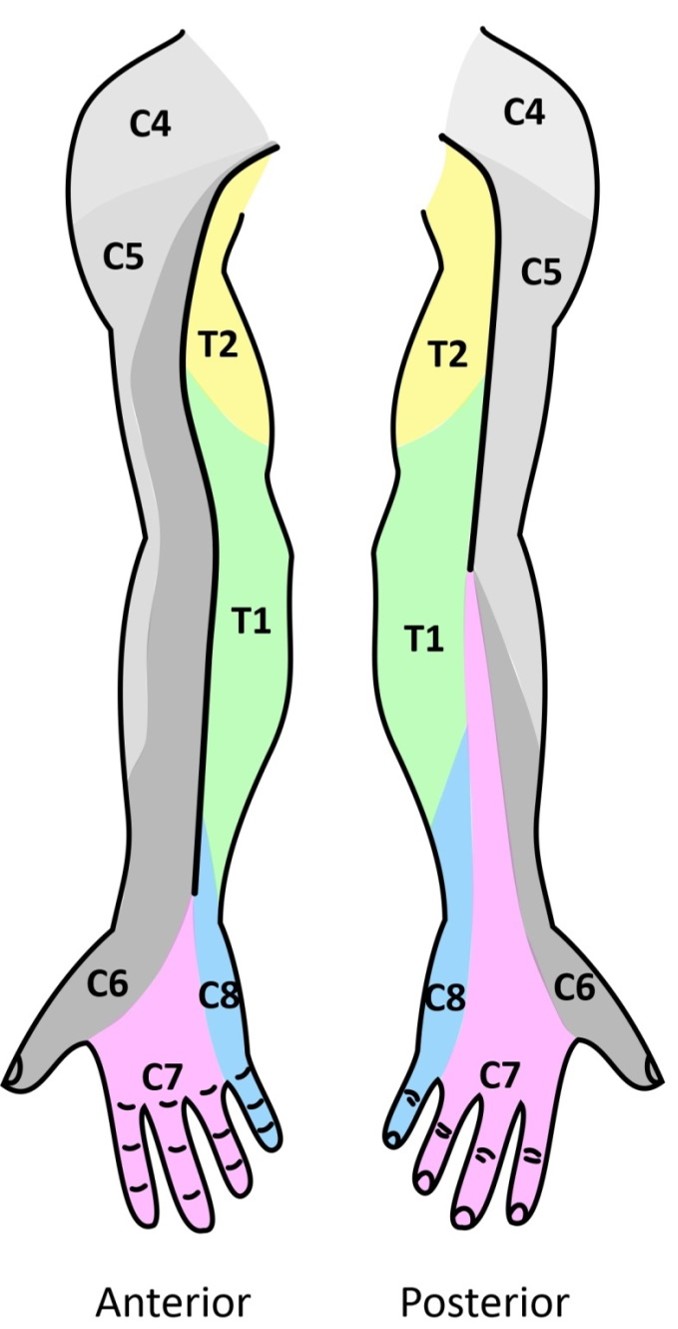
Image occlusion: name the hidden labels
3
Image occlusion: name the hidden labels
4
Image occlusion: name the hidden labels
5
Image occlusion: name the hidden labels
6
Image occlusion: name the hidden labels
7
Image occlusion: name the hidden labels
8
Image occlusion: name the hidden labels
9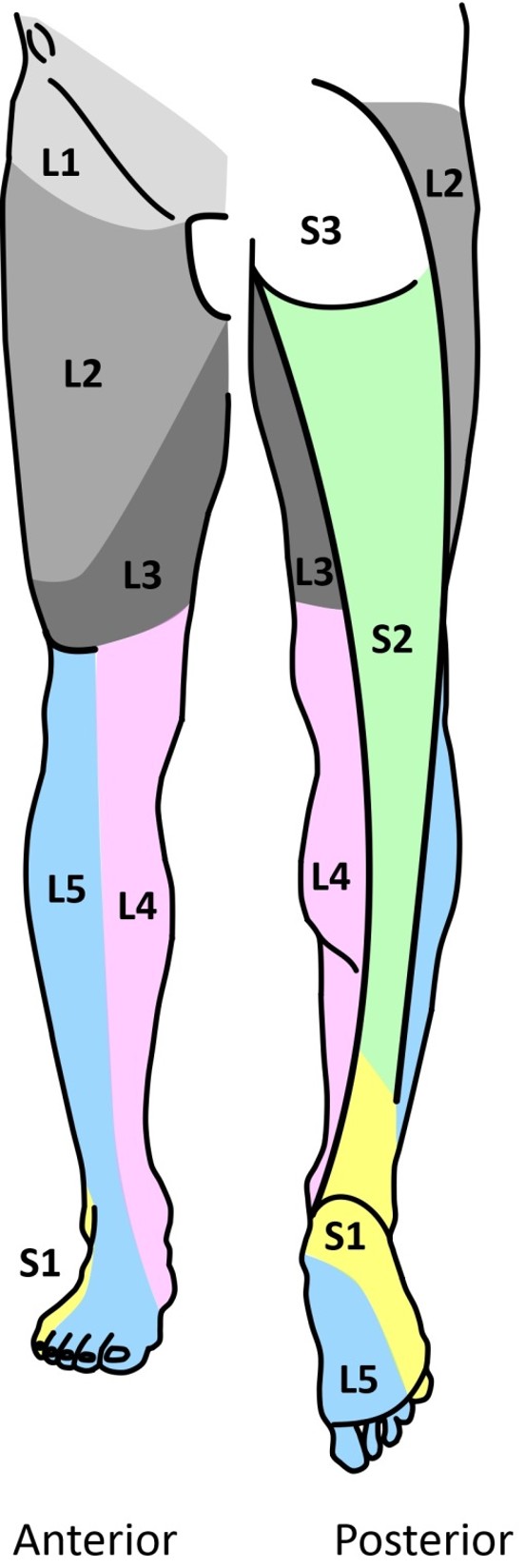
Image occlusion: name the hidden labels
10
Image occlusion: name the hidden labels
11
Image occlusion: name the hidden labels
12
Image occlusion: name the hidden labels
13
Image occlusion: name the hidden labels
14
Image occlusion: name the hidden labels
15
Image occlusion: name the hidden labels
16
Image occlusion: name the hidden labels
17
what innervates the biceps
C5, C6
18
what innervates the brachioradiallis
C5, C6
19
what innervates the patellar
L2-L4
20
what innervates the achilles
S1, S2
21
injury/compression of a spinal nerve root; most common cause is disc herniation
radiculopathy
22
what innervates the triceps (spinal levels for reflex)
C7, C8
23
what are the primary curves; secondary?
primary: thoracic and sacral <
secondary: secrvical and lumbar >
secondary: secrvical and lumbar >
24
what is this?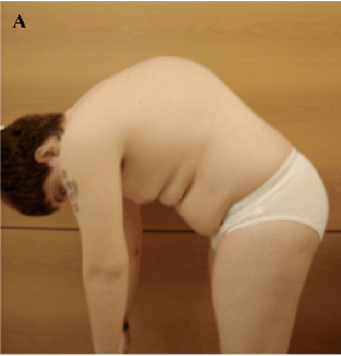
kyphosis
25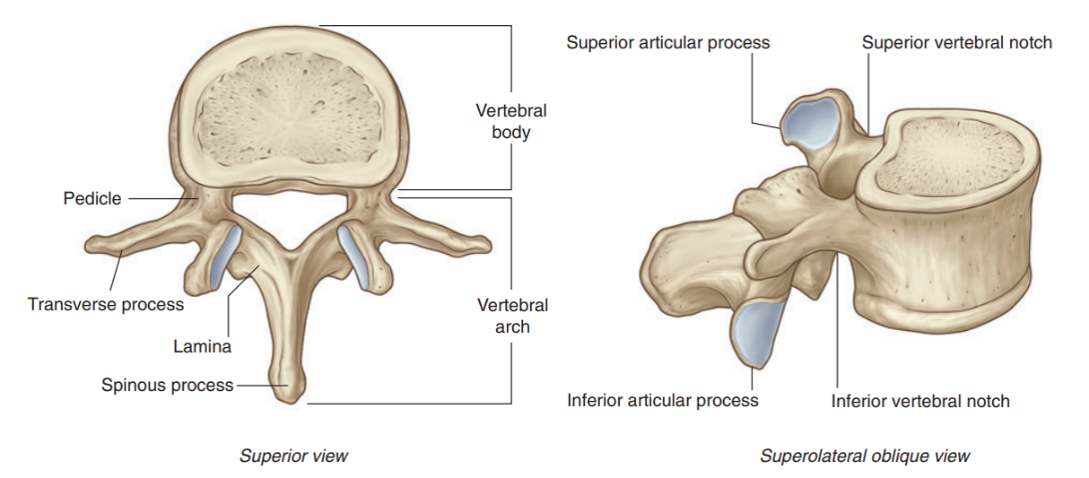
Image occlusion: name the hidden labels
26
Image occlusion: name the hidden labels
27
Image occlusion: name the hidden labels
28
Image occlusion: name the hidden labels
29
Image occlusion: name the hidden labels
30
Image occlusion: name the hidden labels
31
what is the purpose of the superior and inferior articular processes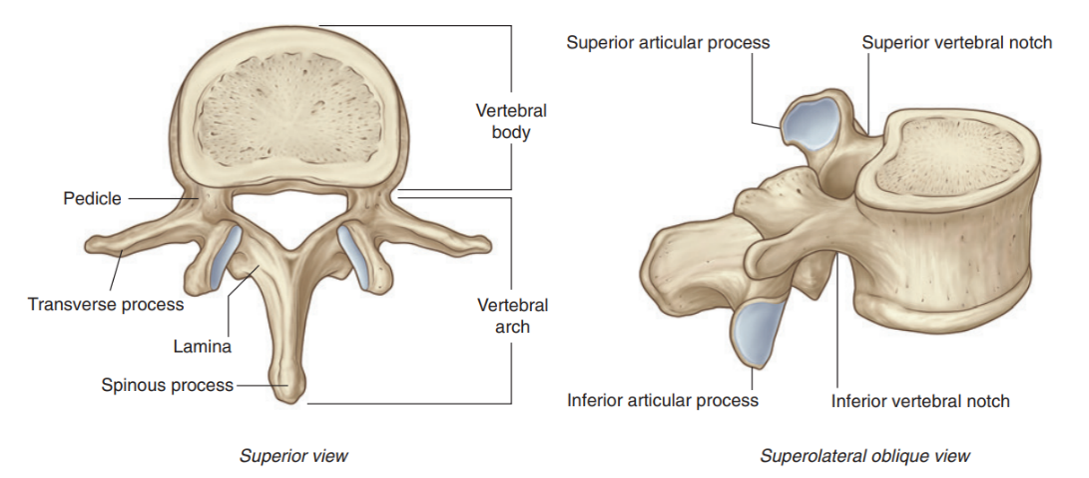
connect the vertebra to each other
32
what is the purpose of the intervertebral foramen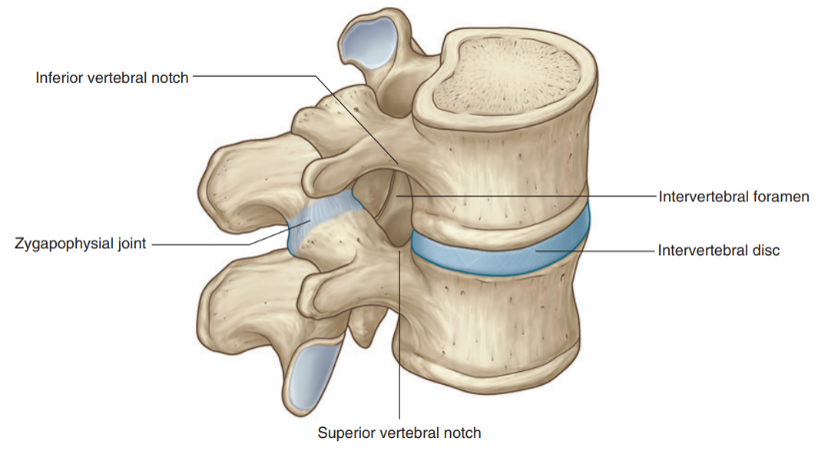
spinal nerve goes through there
33
what is the purpose of the transverse foramen in Cervical vertebrae
vertebral artery travels through it
34
what kind of joint is the intervertebral discs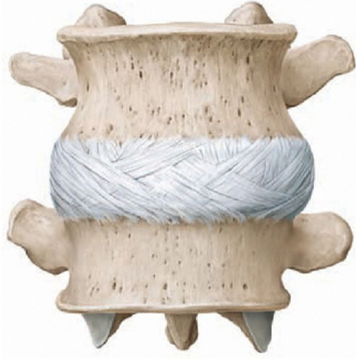
secondary cartilagineous joints
35
red?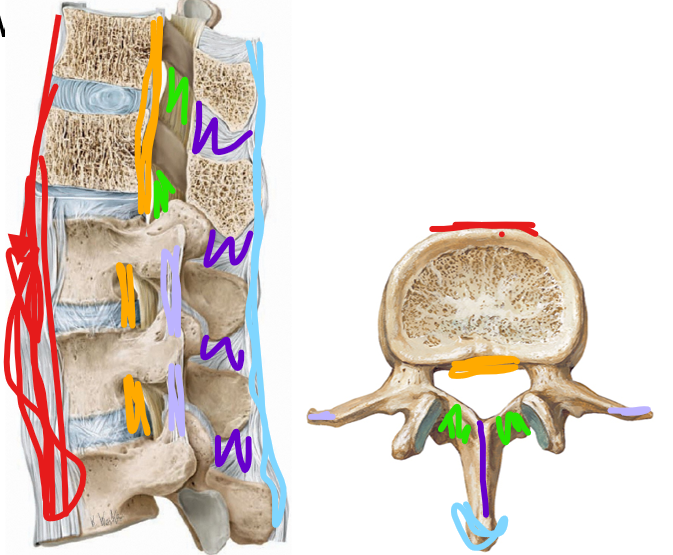
anterior longitudinal ligament
36
yellow?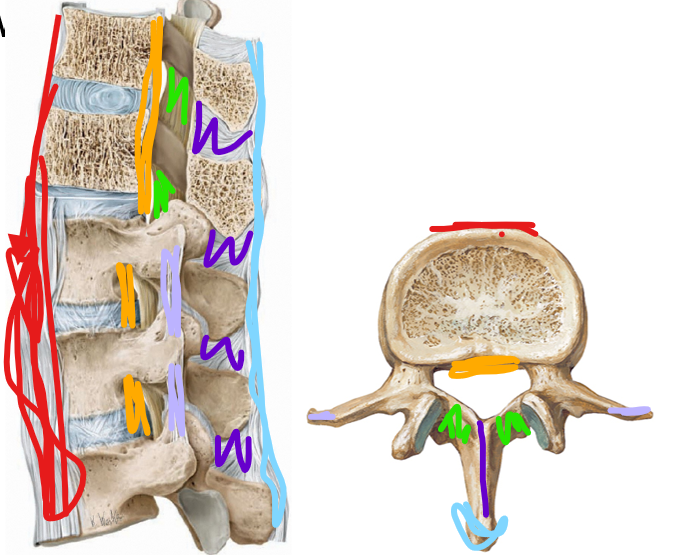
posterior longitudinal ligament?
37
green?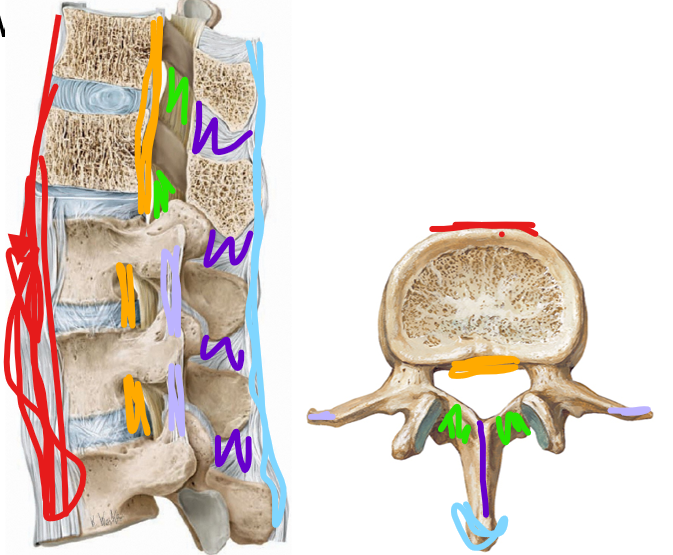
ligament flavum
38
blue?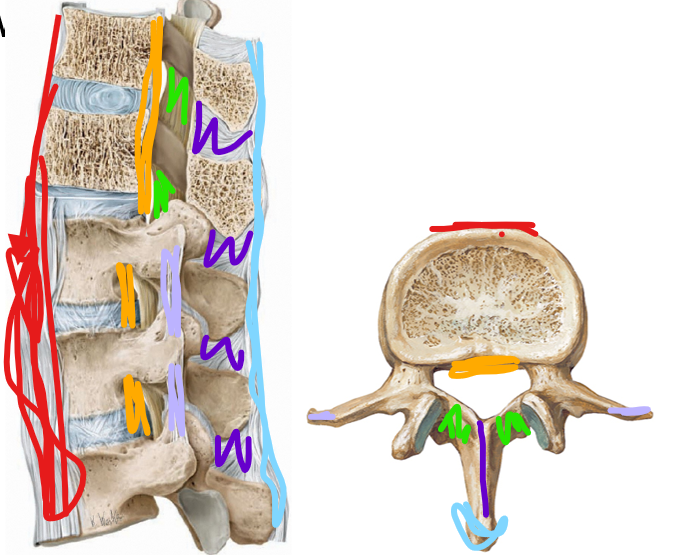
supraspinous
39
what is the dark purple?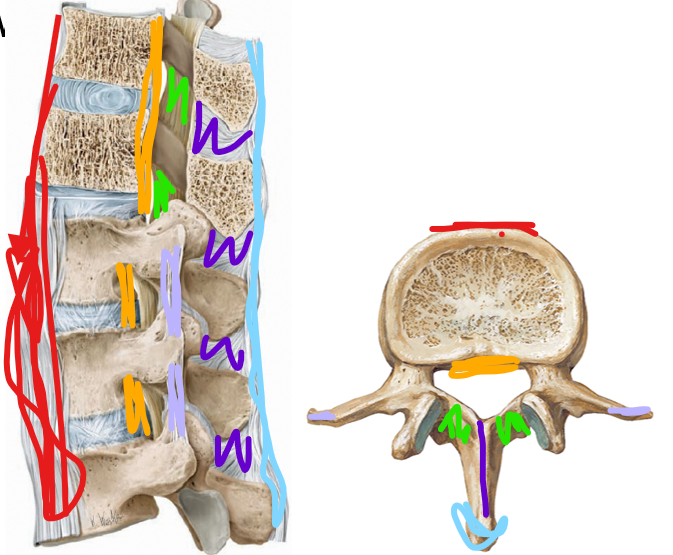
interspinous
40
light purple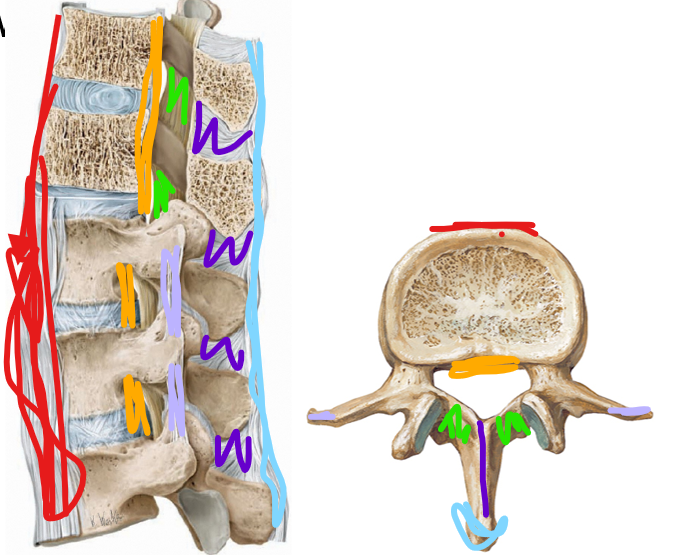
intertransversus
41
what type of joint is the atlano-occipital joint?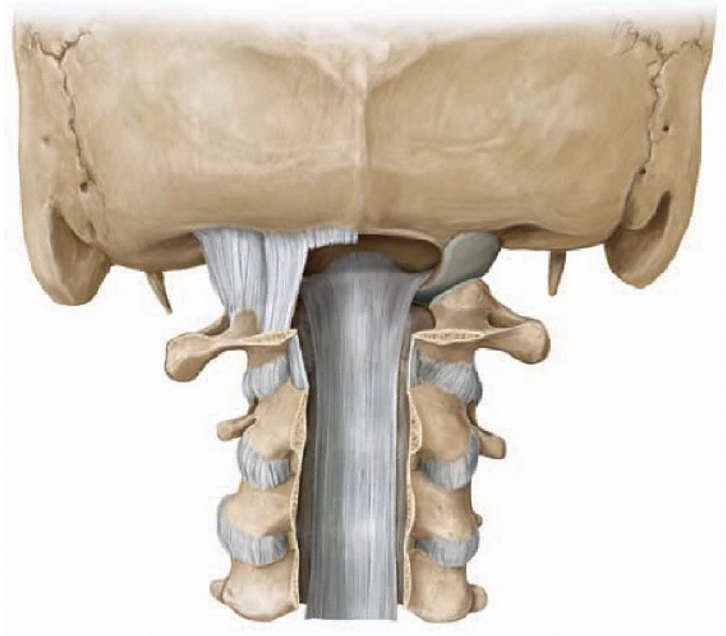
condyloid (synovial) on Atlas
pictured under the skull to the left
pictured under the skull to the left
42
what joint type is the atlanto-axial joint?
2 plane joints and 1 pivot joint
43
what ligament is this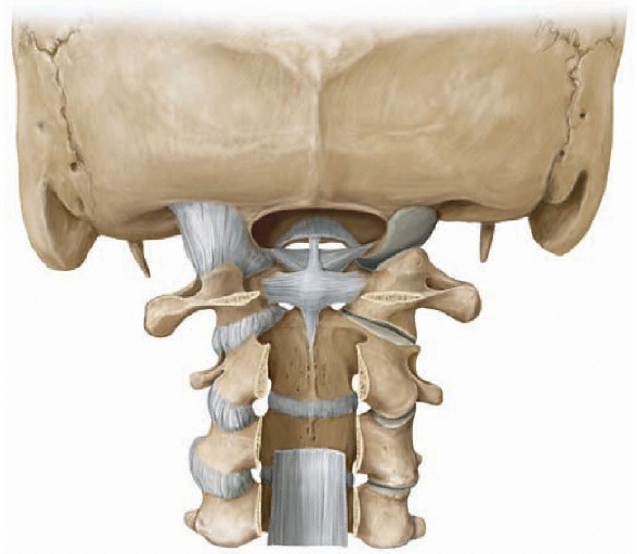
cruciform ligament
44
what happens if this lihament is damaged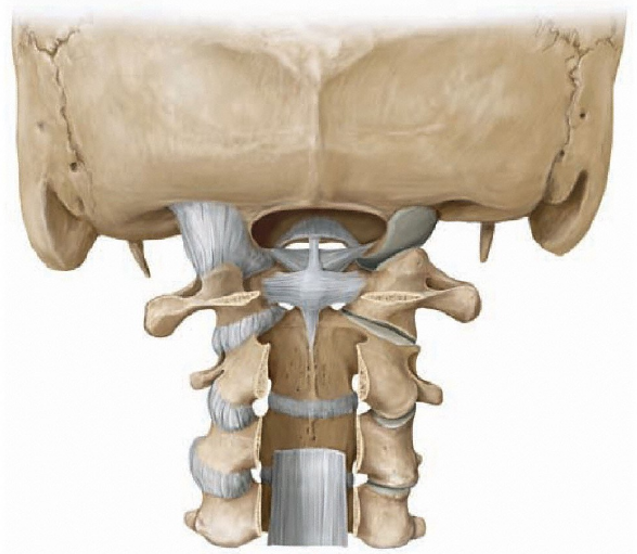
dens cant be held in place; cervical instability, seen in people with down syndrome
45
what is the function of the alar ligament
prevenmts the head from ovarly rotating
46
what is a jefferson fracture
fracture (burst) of C1 vertebra at one or multiple points
47
what is a hangman fracture
fracture at the pars interarticularis in Axis
48
what type of jints are the zygapophyseal joints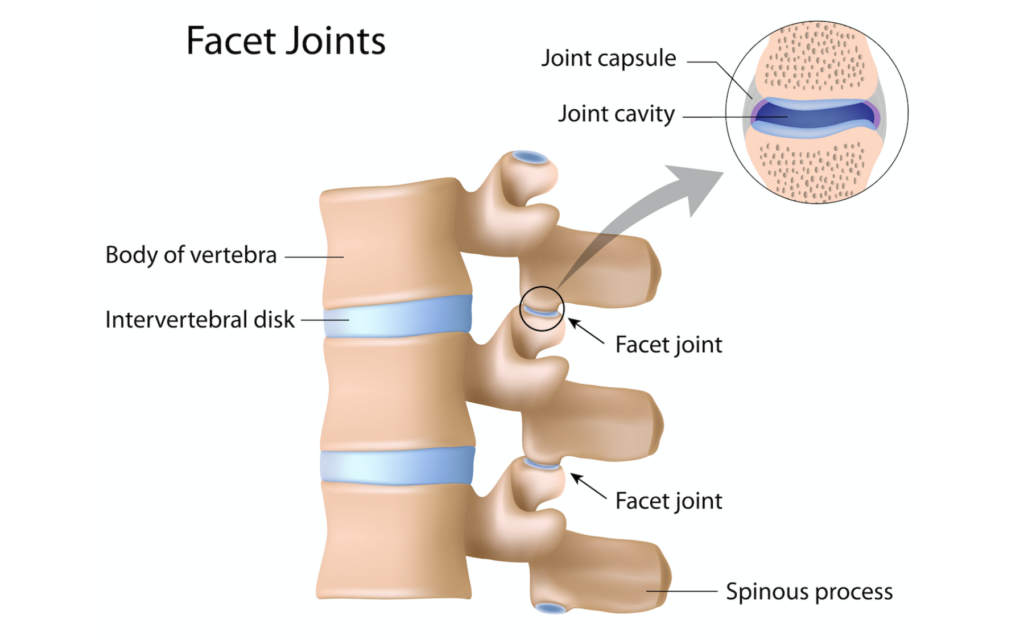
plane synovial joints
49
when there is a bilateral fracture of the pars interarticularis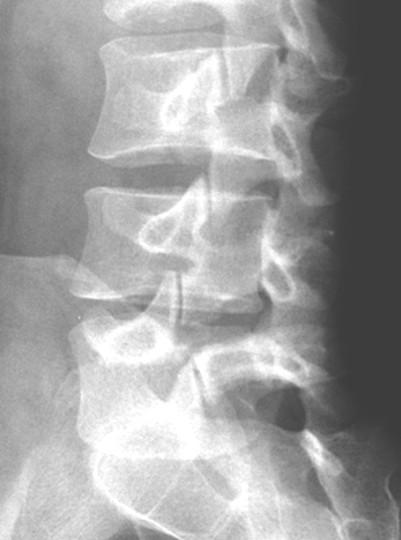
spondylolysis
50
when there is a pars interarticularis fracture with spinal displacement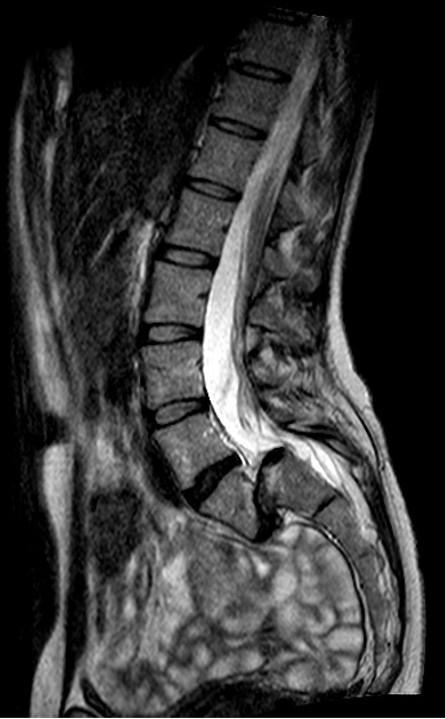
spondyloisthesis
51
trapezius origin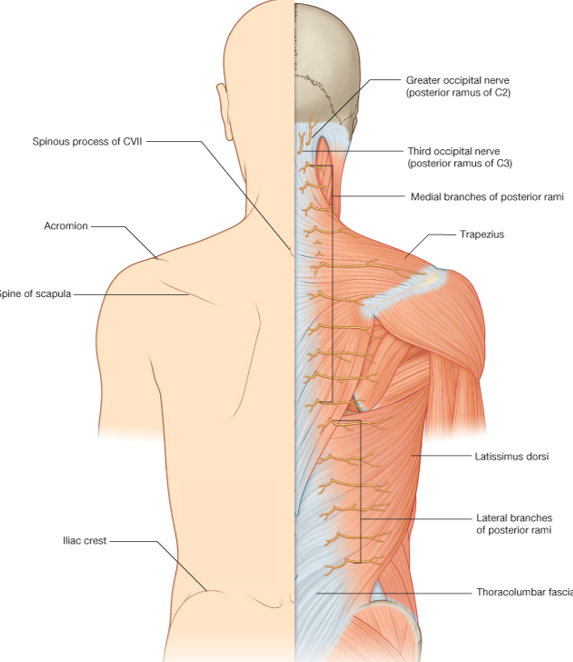
Superior nuchal line, external occipital protuberance, ligamentum nuchae, spinous processes of CVII to TXII
52
insertion of traps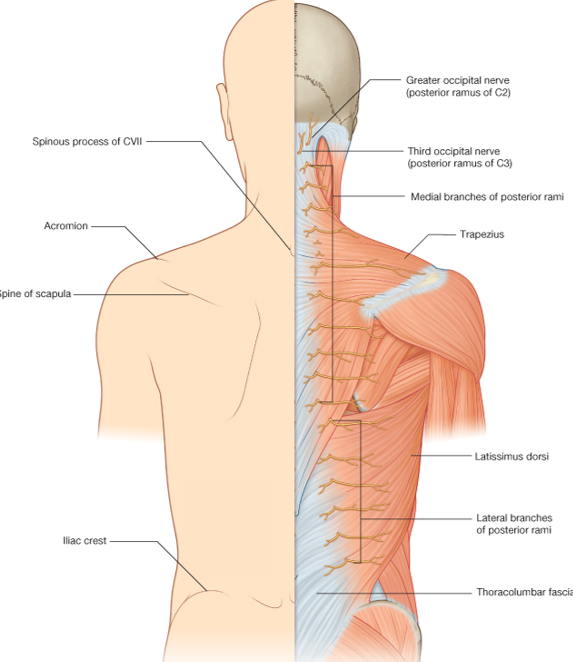
Lateral one-third of clavicle, acromion, spine of scapula
53
innervation of traps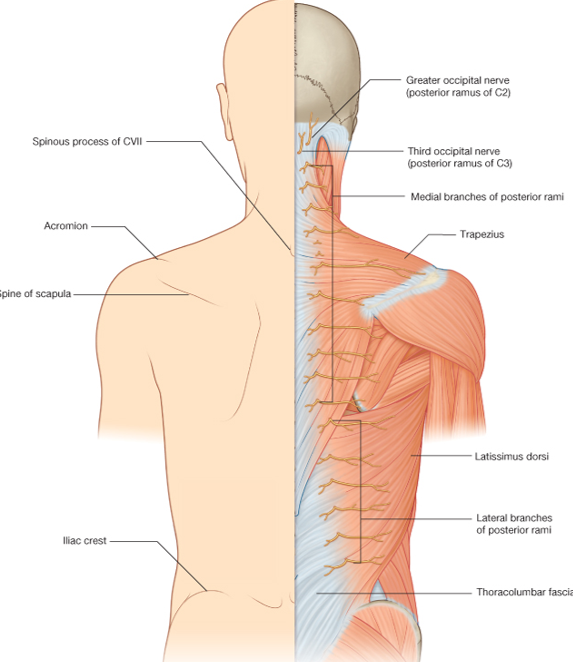
spinal accessory nerve (motor), C3 and C4 (sensory)
54
traps function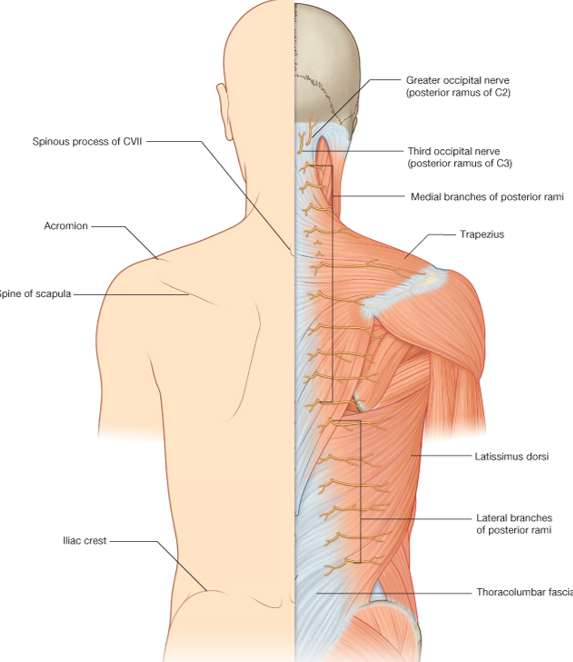
Assists in rotating the scapula during abduction of humerus above horizontal; upper fibers elevate, middle fibers adduct, and lower fibers depress scapula
55
Lats origin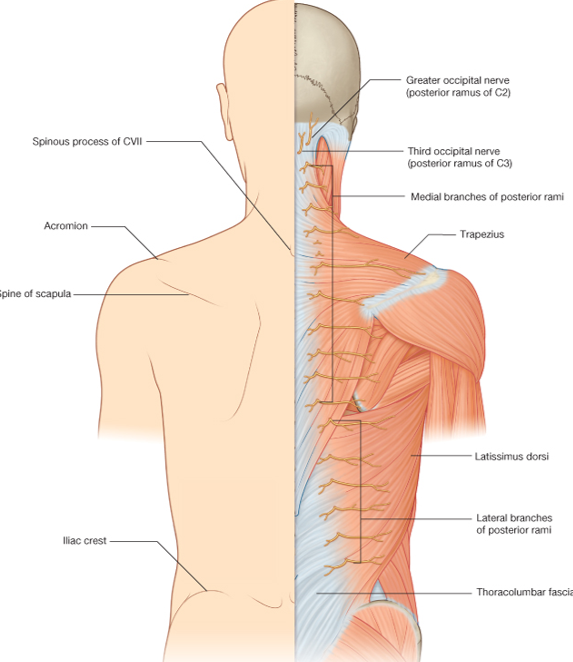
spinous process of T7-L5, sacrum, illiac crest, ribs 10-12
56
what is the insertion of the lats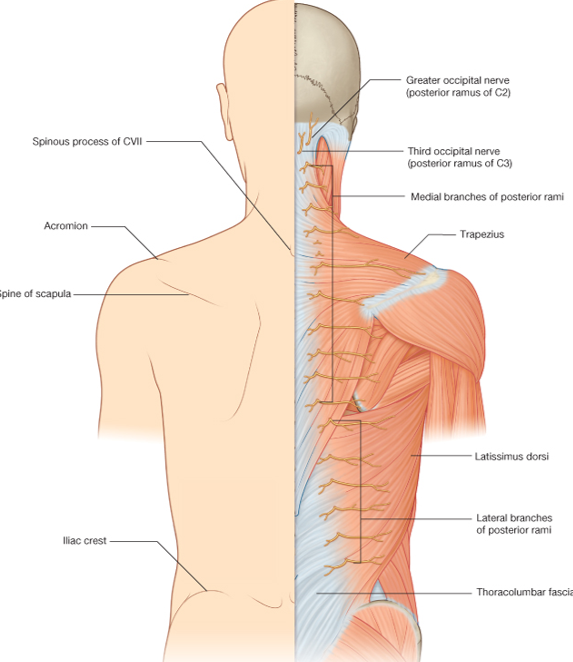
intertubercular sulcus of humerus
57
what is the innervatiuon of the lats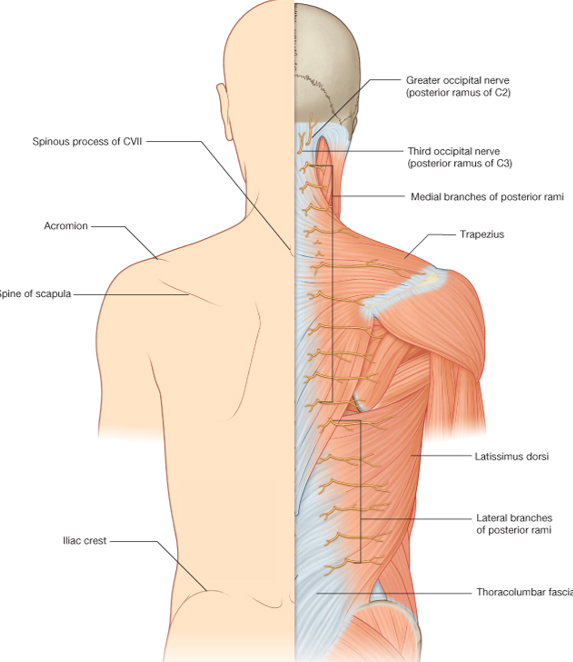
thoracoforsal nerve
58
what is the function of the lats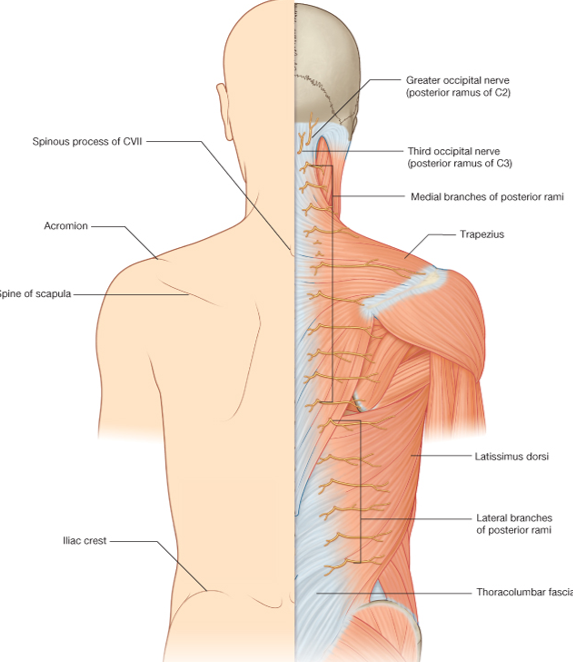
extends, adducts, and medially rotates the humerus
59
origin levator scapilae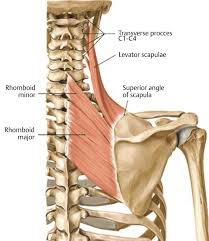
transverse process C1-4
60
insertion levator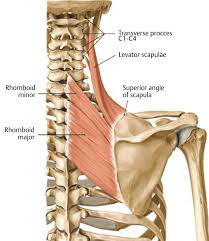
upper portion medial border scapula
61
innervation levator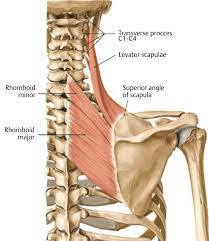
dorsal scapular nerve
62
action levator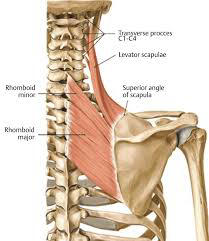
elevatesscapula
63
rhomboids origin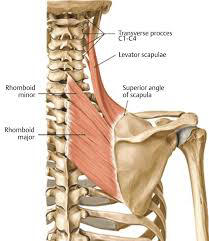
Spinous process T2-TV; C7-T1
64
rhomboids insertion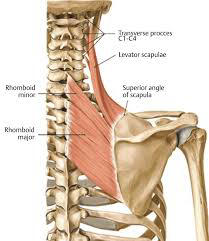
medial border pf scapula
65
rhomboids innervation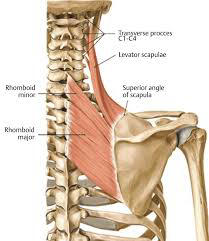
dorsal scapular nerve
66
rhomboids action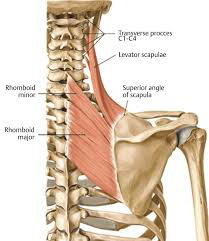
retracts (adducts) and elevates scapula
67
serratus posterior sup origin
Lower portion of ligamentum nuchae, spinous processes of CVII to TIII, and supraspinous ligament
68
serratus posterior sup insertion
Upper border of ribs II to V
69
seratus posterior sup innervation
intercostal nerves
70
serratus posterior sup function
elevates ribs 2-5
71
serratus post infer origin
Spinous processes of TXI to LIII and supraspinous ligament
72
seratus post inf insertin
Lower border of ribs IX to XII
73
serratus post inf innervation
intercoatsl nerves
74
serratus post inf action
Depresses ribs IX to XII
75
good for hearing lung sounds (green)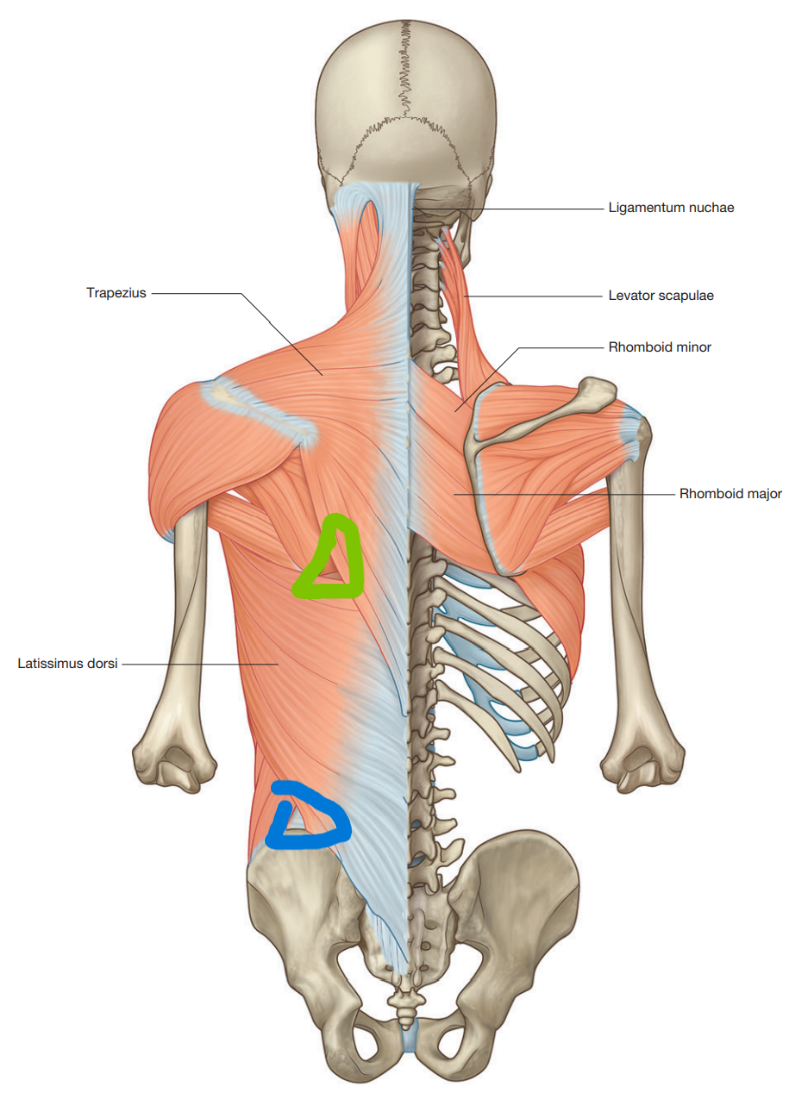
triangle of auscultation
76
where an inferior lumbar hernia can occur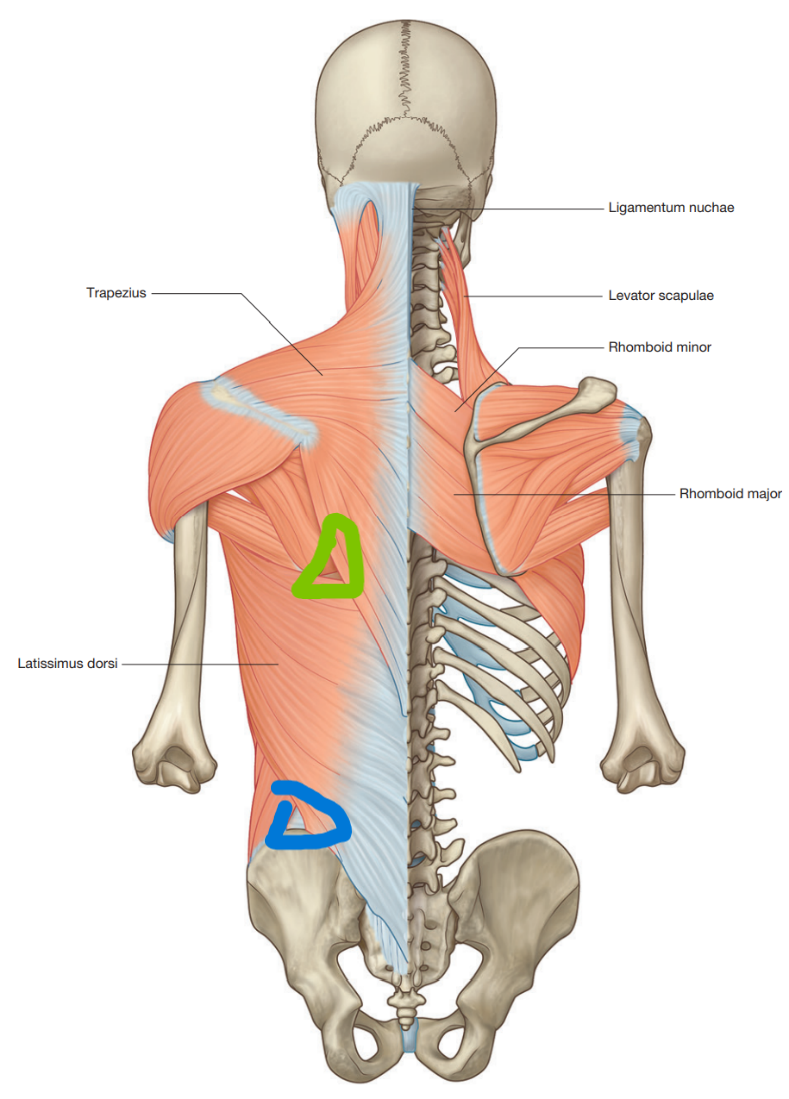
lumbar triangle
77
surrounds the deep muscles of the back
superiorly blends in with the deep fascia of the neck
is “deep” to serratus posterior muscles
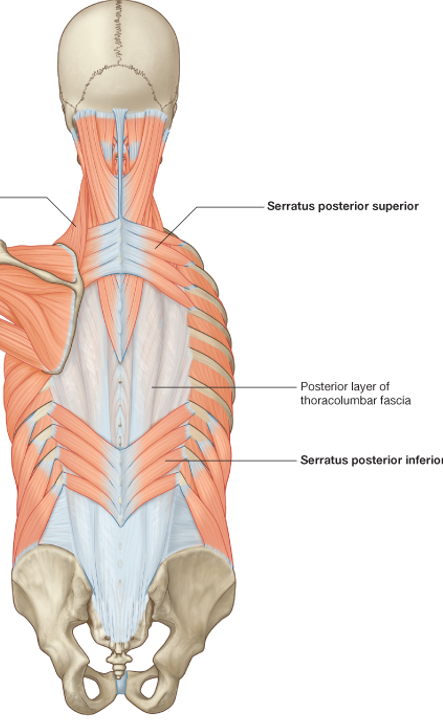
superiorly blends in with the deep fascia of the neck
is “deep” to serratus posterior muscles
thoracolumbar fascia
78
what are all of the deep back muscles innervated by
posterior rami
79
what are the spinotransversales? (x2)
splenius cervicis, splenius capitis
80
what are the actions of the spinotransversales?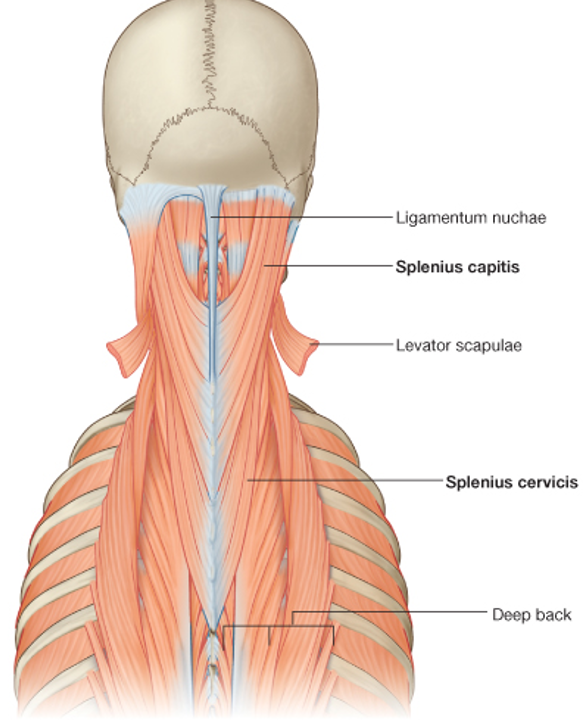
rotate head (ipsilaterally), extends neck
81
what are the prox and distal attachements of the splenius cervicis?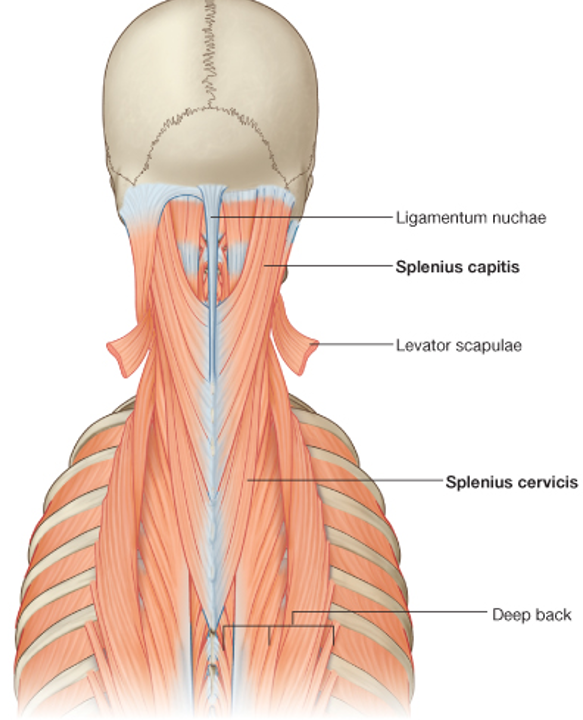
or: spinous process T4-T6
inser: atlas
inser: atlas
82
what are the prox and distal attach of the splenius capitis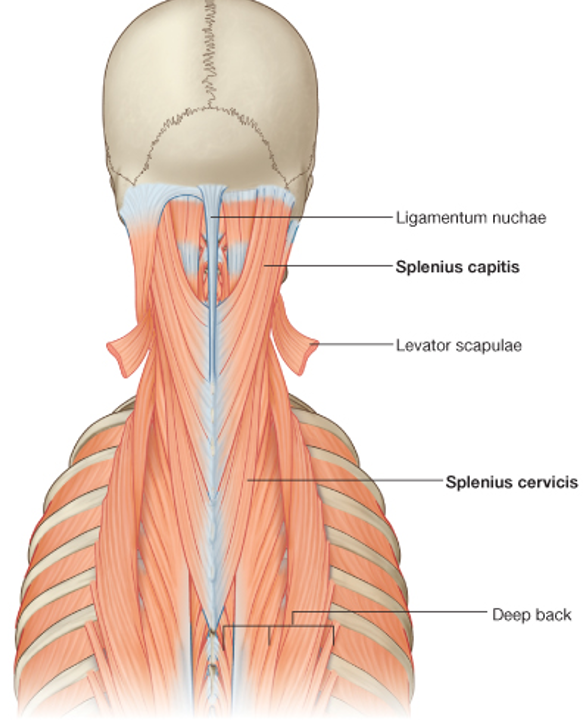
prox: c6-T3
distal: mastoid process
distal: mastoid process
83
what are the erector spinae?
spinalis, longissimus, iliocostalis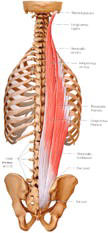
84
what are the actios of the erector spinae?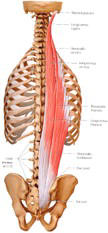
sidebending (1 at a time), both sides: keep you upright
85
what is the prox and distal attach of the spinalis
spinous process C2-T12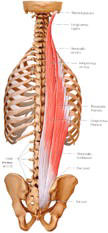
86
what is the prox and dist attach longissimus
transverse C2-S3; sacrum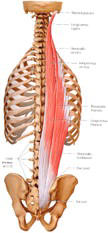
87
what is the prox and dist attach of iliocostalis
ribs posterior, sacrum, illium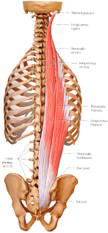
88
what are the transversospinal muscles?
rotatores, multifidus, semispinalis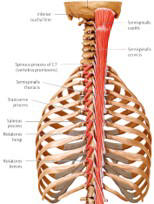
89
rotatores prox dist attach
transverse to spinous (thoracic) (1-2 vert)
90
multifidus prox dst attach
tranverse to spinous (lumbar) 2-4 vert
91
semispinalis prox dist attach
tranvserse to spinous (thorac/cervical) 4-6 vert
92
action semispinalis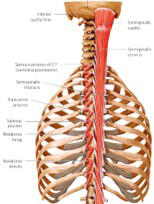
controlateral rotation
93
interspinous attachments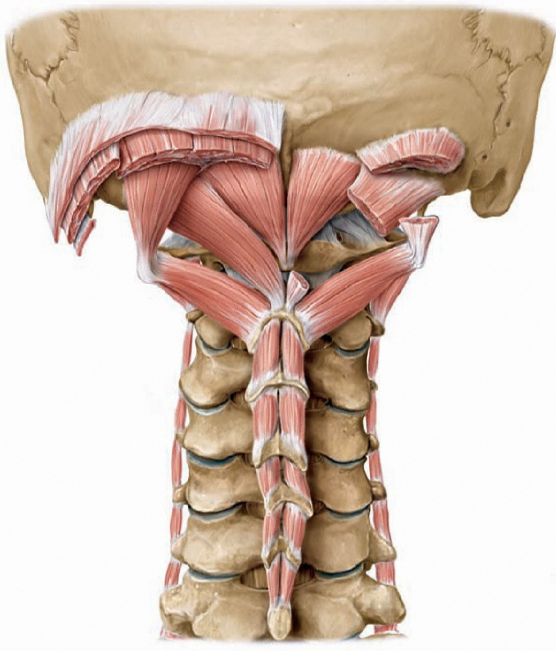
spine to spine
94
intertransverse attachement
transverse to transverese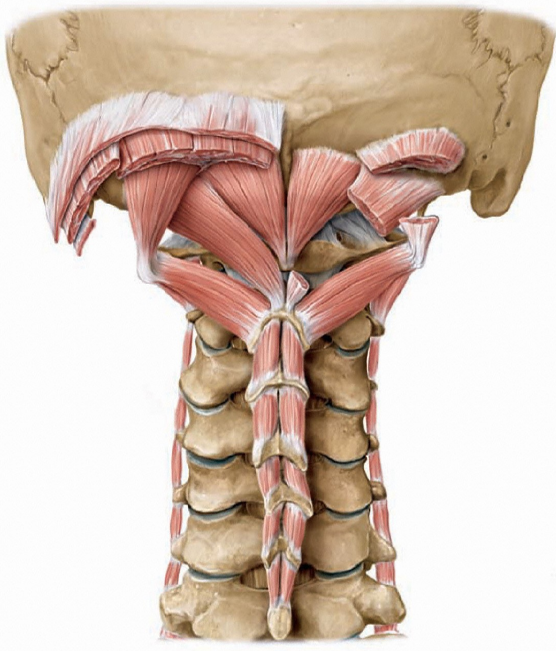
95
interspinales and intertranversarii actions
proprioceptors, sense position in space
96
levator costarum action
elevate the ribs for respiration
97
this nerve is the posterior ramus of C2 and innervates the back of the head
greater occipital nerve
98
what is in the suboccipital triangle
vertebral artery, vertebral vein, suboiccipital nerve (posterior ramus C1)
99
grey matter CNS
nucleus
100
grey matter PNS
ganglion (sensory or motor)
101
white matter CNS
tracts
102
white matter PNS
roots, rami, nerves
103
afferent is to ____________ as efferent is to _______
sensory; motor
104
Functional PNS axon controls skeletal muscle
GSE
105
functional PNS axon controls smooth muscle and glands
GVE
106
Functional PNS axon sense info from everythong that isnt viscera
GSA
107
the dorsal/posterior horn and roots are always ________ and the anterior/ventral hornoot are always ___________
sensory; motor
108
Injury to sympathetic GVEs distributing to ___________ can result in ___________ and ________
Disc herniations affecting cervical and lower lumbar (L3 and below) spinal nerves typically ____- impair ANS fxn.
Disc herniations affecting cervical and lower lumbar (L3 and below) spinal nerves typically ____- impair ANS fxn.
body wall; loss of vascular tone and loss of gland function; Do not
109
what is the length of the spinal cord
skull to L2
110
cervical enlargement length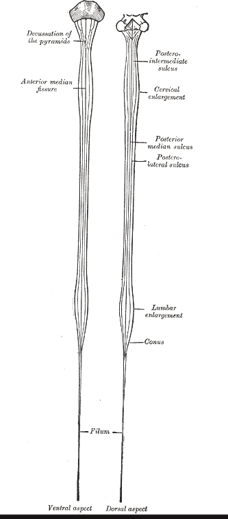
C3-T2
111
lumbar enlargement length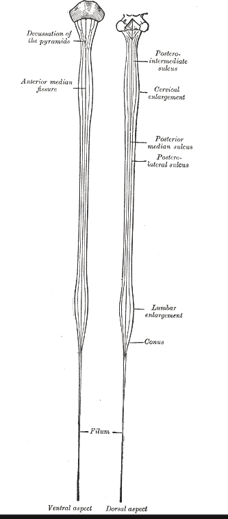
L1-S3
112
this lies bellow the lumbar enlargement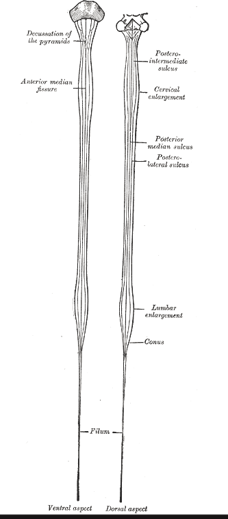
conus medullarus
113
multiple nerve roots affected by larger herniation, tumor, etc (light blue)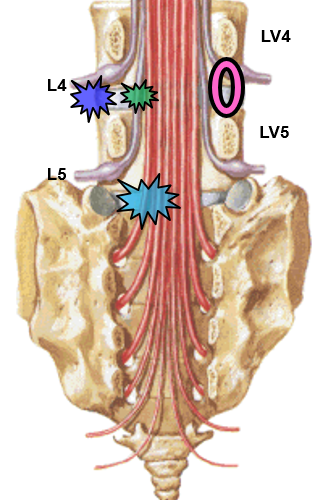
cauda equina syndrome
114
what would a stenosis of the intervertebral foramen effect?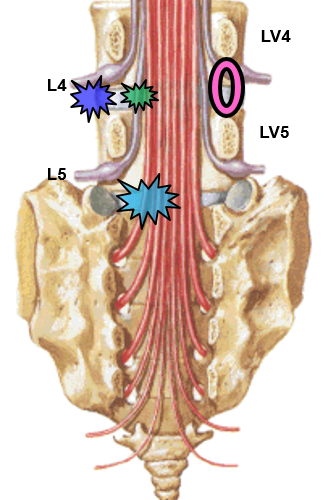
the spinal nerve exiting at that level
115
a surgical procedure to remove a portion of a herniated disc in the spine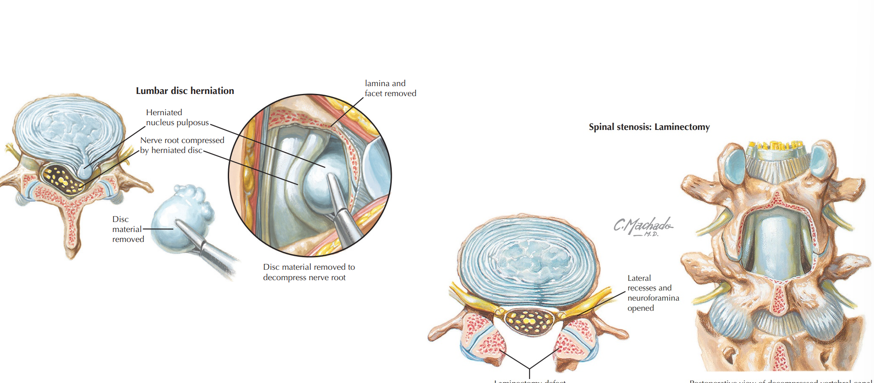
discectomy
116
a surgical procedure that involves removing part or all of the lamina, a bony structure on the back of the vertebra, to relieve pressure on the spinal cord or nerves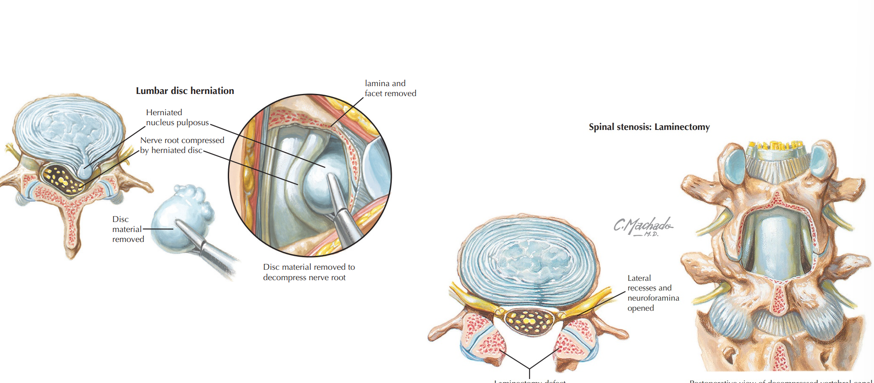
laminectomy
117
disc herniation test for cervical vertebrae herniation
spurling's test
118
disc herniation test for lumbar herniation
straight leg test
119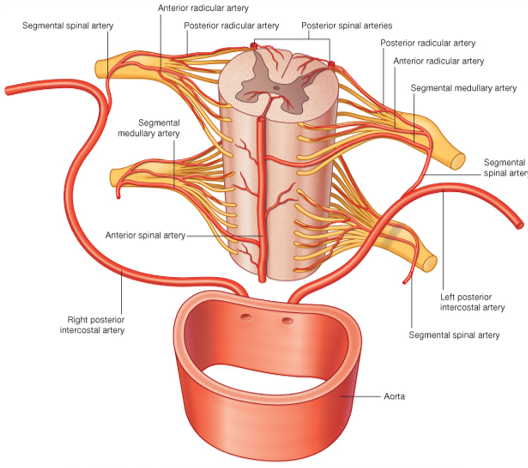
Image occlusion: name the hidden labels
120
Image occlusion: name the hidden labels
121
Image occlusion: name the hidden labels
122
Image occlusion: name the hidden labels
123
Image occlusion: name the hidden labels
124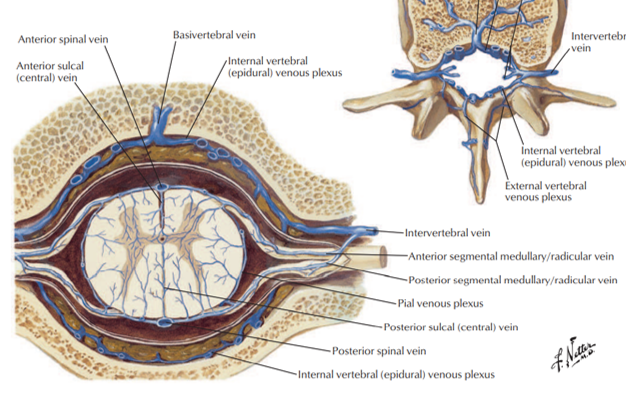
Image occlusion: name the hidden labels
125
Image occlusion: name the hidden labels
126
Image occlusion: name the hidden labels
127
Image occlusion: name the hidden labels
128
Image occlusion: name the hidden labels
129
what are 2 locations that cancer can metasticise from intoi the batson's plexus to the spinal cord
breasts and pelvis
130
between the dura and periostium of the vertebrae
epidural space
131
potentail space between the dura and the arachnoid that contains serous fkuid
subdural space
132
between arachnoid and pia, contains CSF blood vessels and connective tissue
subarachnoid space
133
L2-S2, cauda equina and CSF located here
lumbar cistern
134
from pia, hold the SC in place and anchor it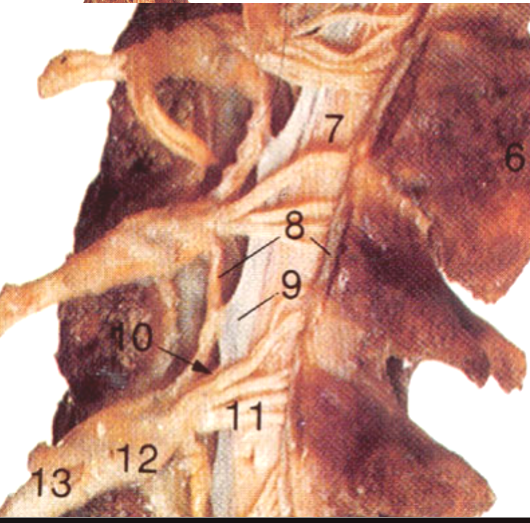
denticulate ligament
135
filum terminale internum
descends to the level of S2 where it is joined by dura
136
filum terminale externum
descends to coccygeal levels and anchors the spinal cord in the dura sac
137
results from trauma directed (usually from above) through the skull and
occipital condyles onto the atlas, bursting the arch; the spinal cord is typically not injured
occipital condyles onto the atlas, bursting the arch; the spinal cord is typically not injured
jefferson fracture
138
not exclusive to “hanging” injuries; results from a traumatic, hyperextension injury
that breaks the pars interarticularis of the axis bilaterally
that breaks the pars interarticularis of the axis bilaterally
hangman fracture
139
caused by deficiency in Ca++ metabolism and characterized by loss of bone density;
common in senioreriatric patients; key signs and symptoms:
a. Thoracic/lumbar back pain
b. Dysfunction in deep back muscles
c. Fractures in vertebral bodies: results in thoracic kyphosis, loss of lumbar lordosis (together
Dowanger’s hump), decreased height
common in senioreriatric patients; key signs and symptoms:
a. Thoracic/lumbar back pain
b. Dysfunction in deep back muscles
c. Fractures in vertebral bodies: results in thoracic kyphosis, loss of lumbar lordosis (together
Dowanger’s hump), decreased height
osteoporosis
140
may result in avascular necrosis of the dens
b. fragments of the dens may lacerate the spinal cord
b. fragments of the dens may lacerate the spinal cord
fractyure of the dens
141
any narrowing of the vertebral canal
spinal stenosis
142
inflammation of vertebral joints and ligaments, especially in the lumbar and
sacroiliac regions
sacroiliac regions
ankylosing spondylitis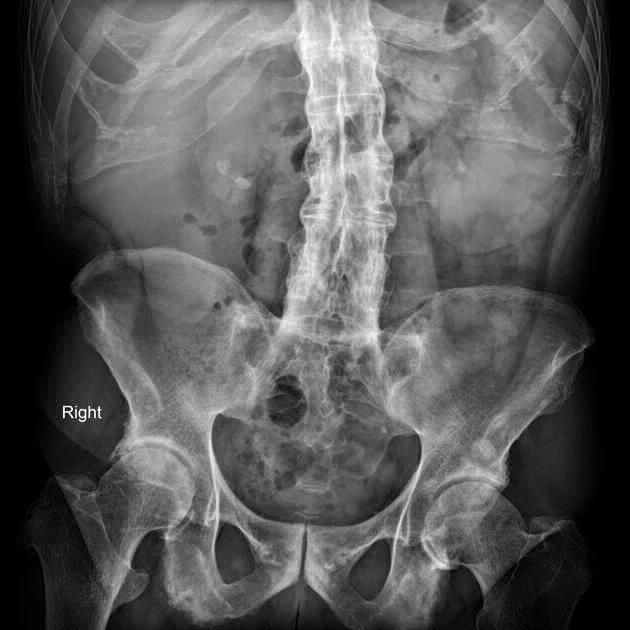
143
this innervates the intervertebral discs
sinuvertebral n
144
this innervates the zygapophyseal joints
posterior rami
145
intravertebral disc herniations: they involve herniation into adjacent vertebral
bodies; may lead to inflammation of affected vertebra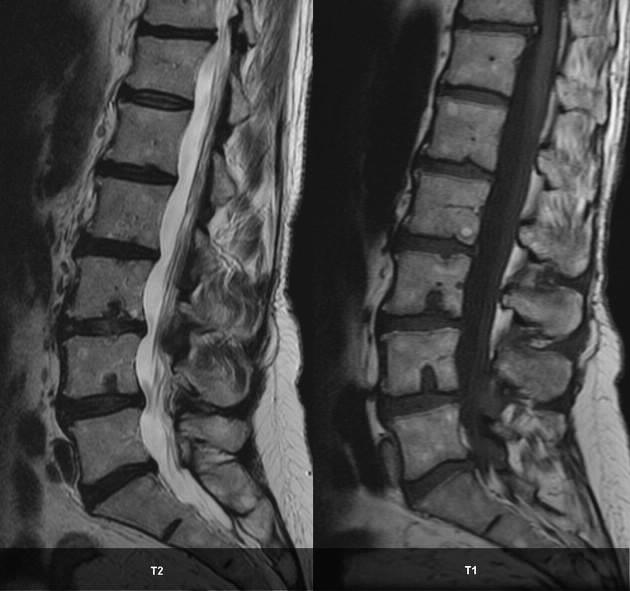
bodies; may lead to inflammation of affected vertebra
schmorl nodes
146
a viral infection of posterior root (or cranial nerve ganglia); characterized by vesicular
outbreaks in a dermatomal pattern, corresponding to the territory of the infected ganglion
outbreaks in a dermatomal pattern, corresponding to the territory of the infected ganglion
herpes zoster