Upper Limb
Study these flashcardsFree · spaced repetition · iPhone, Android, Mac & web
All cards
1
1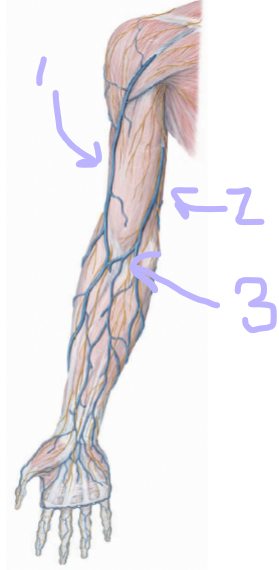
cephallic v
2
2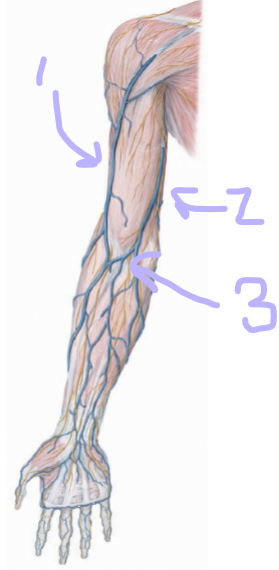
basillic v
3
3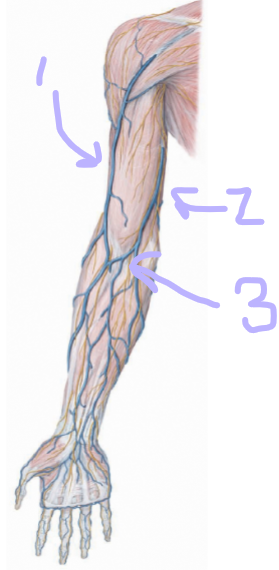
median cubital v
4
the anterior muscles of the upper limb are (flexors/extensors)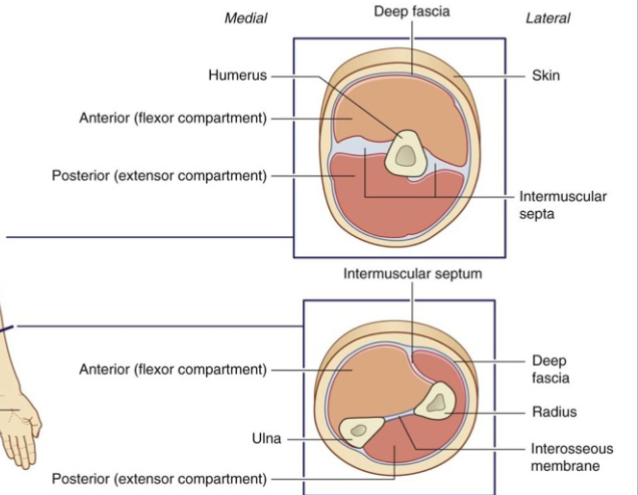
flexors
5
the posterior muscles of the upper lumb are (flexors/extensors)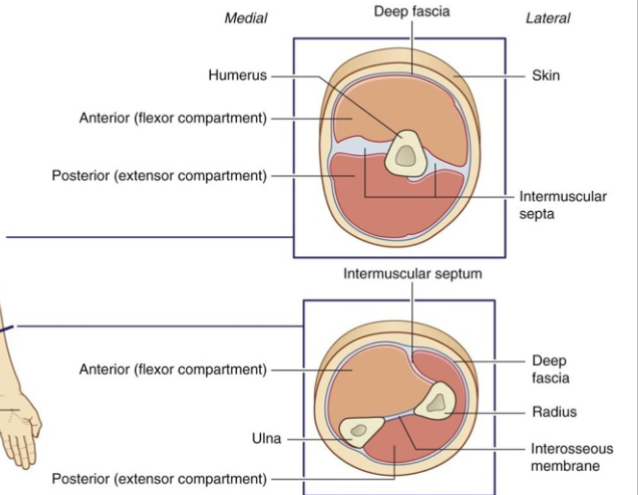
extensors
6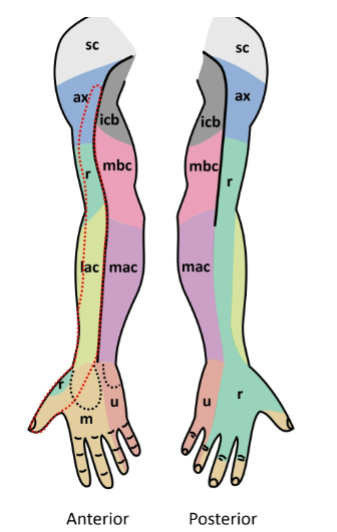
Image occlusion: name the hidden labels
7
Image occlusion: name the hidden labels
8
Image occlusion: name the hidden labels
9
Image occlusion: name the hidden labels
10
Image occlusion: name the hidden labels
11
Image occlusion: name the hidden labels
12
Image occlusion: name the hidden labels
13
Image occlusion: name the hidden labels
14
Image occlusion: name the hidden labels
15
shoulder abduction innervator spine
C5-6
16
shoulder adductor innervator spine
C5-T1
17
elbow flexion innervators spine
C5-6
18
elbow extension innervators spine
C6-8
19
wrist extension
C6
20
wrist flexion
C7
21
finger extension
C7
22
finger flexion
C8
23
finger ab/adduction
T1
24
where lymph drains from the upper limb
lateral nodes
25
what type of joint is the sternoclavicular
synovial saddle
26
what type of joint is the acromioclavicular
synovial plane
27
what typre of joint is the glenohumeral
synovial ball and socket
28
joints that reinforce acromioclavicular joint
acromioclavcular lig and coracoclavicular lig
29
proximal attachement of deltoid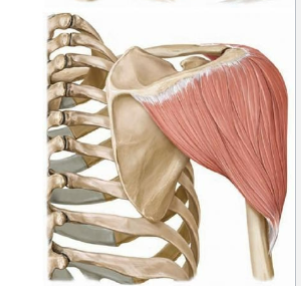
lateral third of the clavicle, the acromion process, and the spine of the scapula
30
functions of the deltoid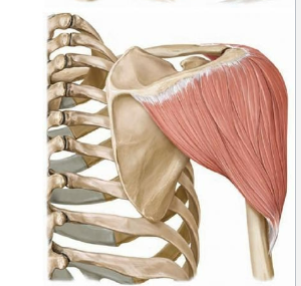
anterior fib: flex and medially rotate
middle fib: abduct 90*
post fibers: extend and laterally rotate
middle fib: abduct 90*
post fibers: extend and laterally rotate
31
what innervates the deltoid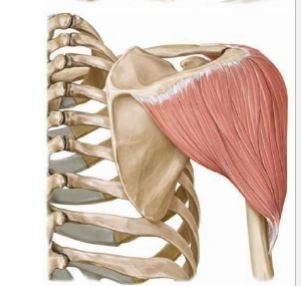
axillary n
32
action of supraspinatois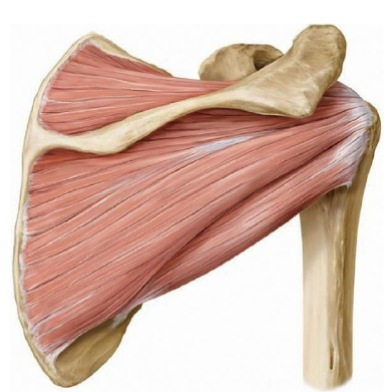
15* of abduction
33
prox attachment of supraspinatous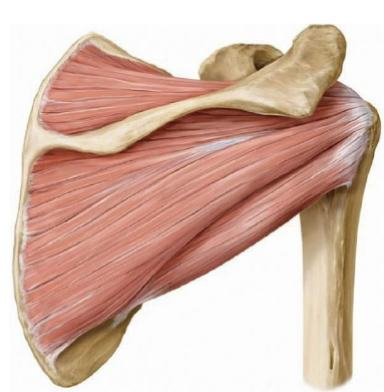
supraspinous fossa
34
distal attachment supraspinatous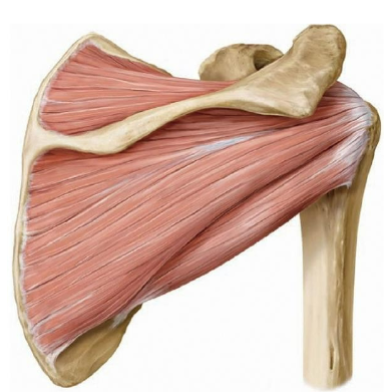
greater tubercle of humerous
35
what is the supraspinatoud innervated by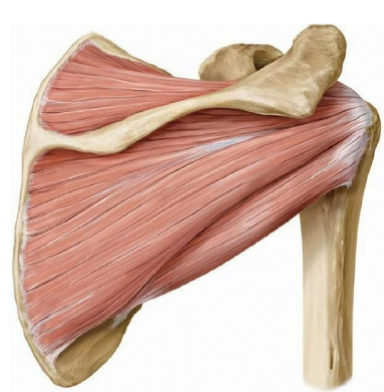
suprascapular n
36
infraspinatous action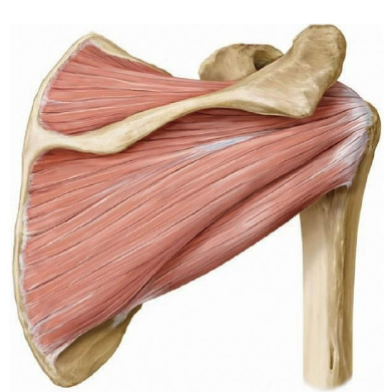
lateral rotation
37
infraspinatous prox attachement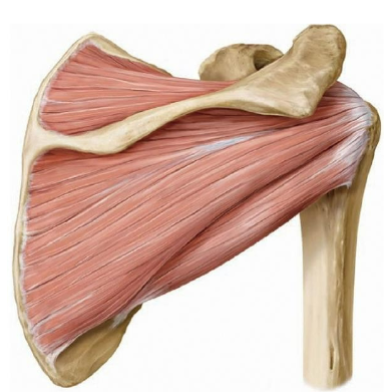
infraspinous fossa
38
distal attachement infraspinous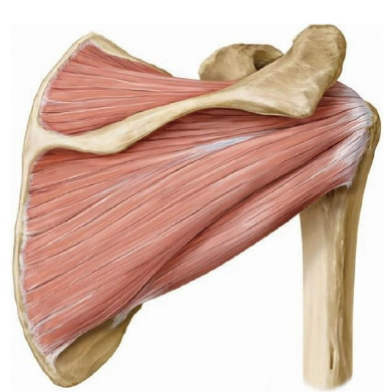
greater tubercle of humerous
39
innervation infraspinatous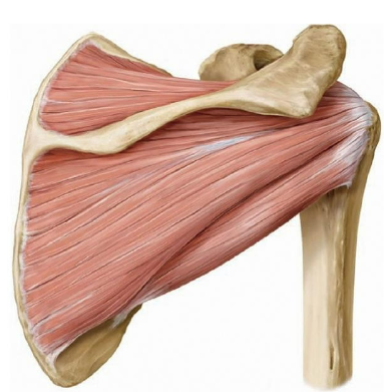
suprascapular n
40
prox attachement teres minor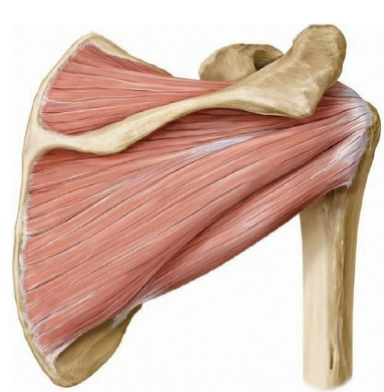
lateral border of scapula
41
distal attachement teres minor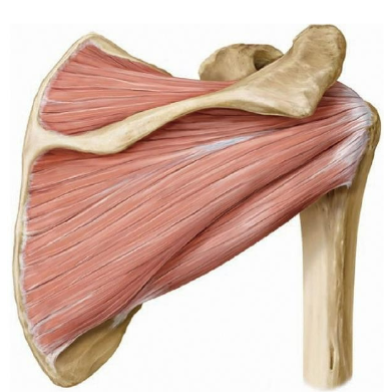
greater tubercle of humerus
42
action teres minor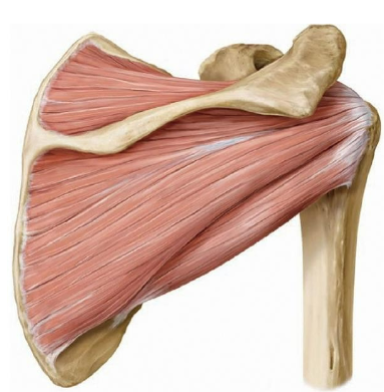
lateral rotation
43
innervation teres minor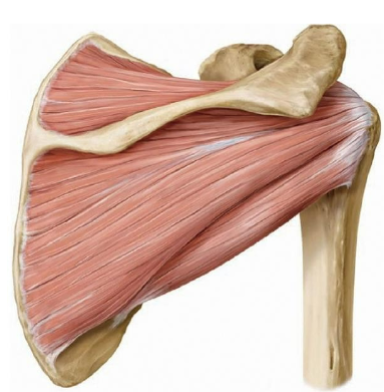
axillary n
44
rotator cuff muscles (x4)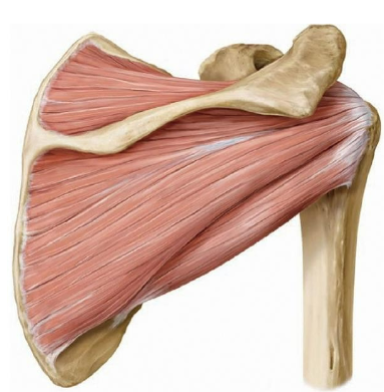
teres minor, subscapularis, supraspinatus, infraspinatus
45
prox attachment subscapularis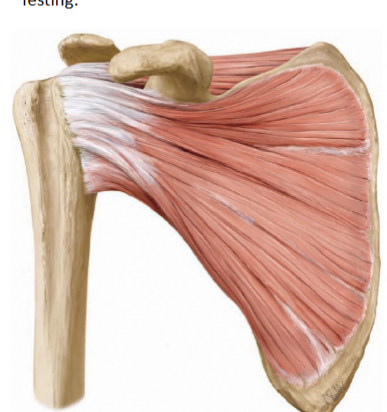
subscapular fossa
46
distal attachemnet subscapularis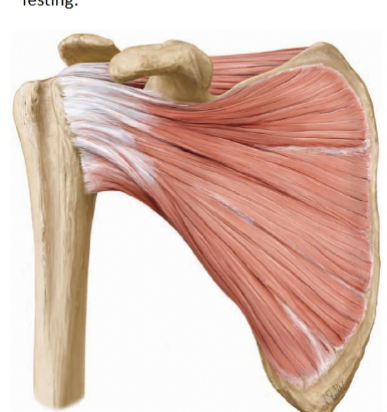
lesser tubercle of humerus
47
function of subscapularis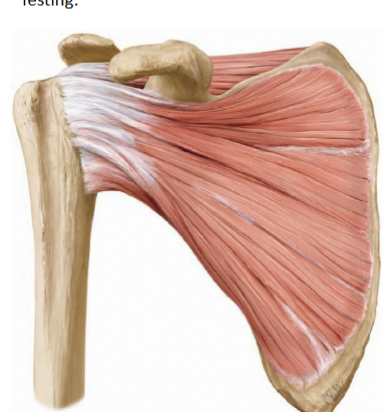
medial rotation
48
innervation subscapularis m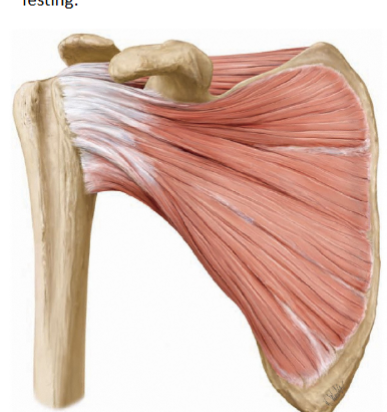
upper and lower subscapular n
49
prox attachment serratus anterior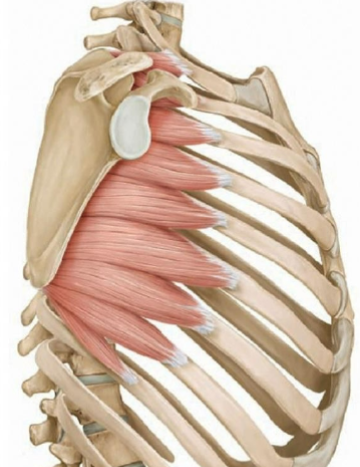
lateral surface of the first 8-9 ribs and intercostal fascia
50
distal attachment serratus anterior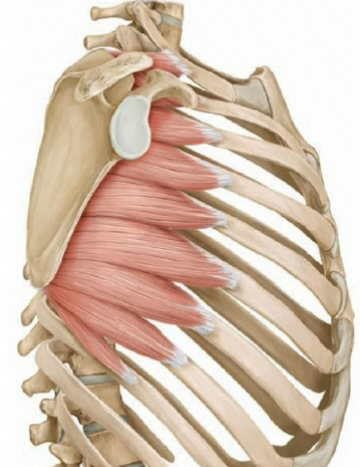
medial border of scapula
superior angle of the scapula
inferior angle pf the scapula
superior angle of the scapula
inferior angle pf the scapula
51
action of the serratus anterior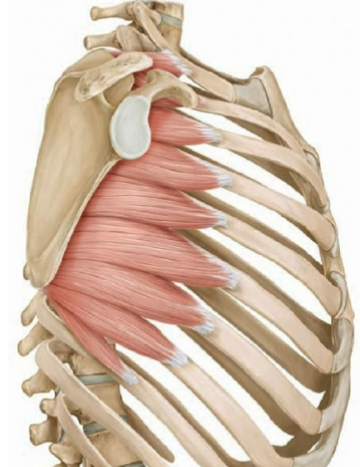
180* abduction
52
innervation of the serratus anterior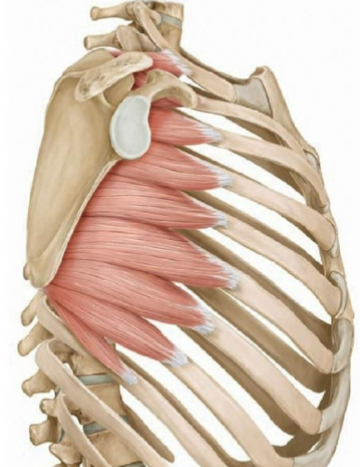
long thoracic
53
teres major distal attachment
intertubercular sulcys
54
teres major function
medial rotator, extension
55
teres major innervation
lower subscapukar n
56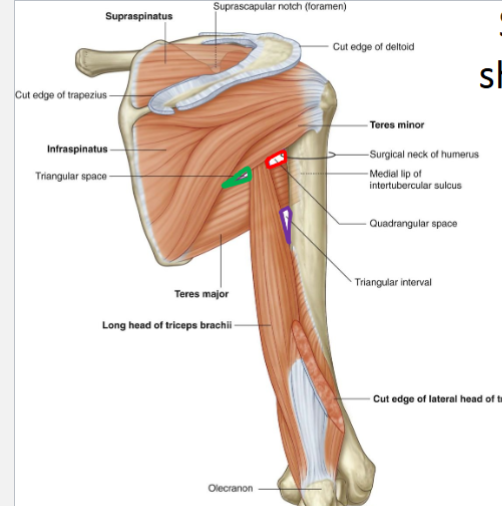
Image occlusion: name the hidden labels
57
Image occlusion: name the hidden labels
58
Image occlusion: name the hidden labels
59
Image occlusion: name the hidden labels
60
Image occlusion: name the hidden labels
61
Image occlusion: name the hidden labels
62
Image occlusion: name the hidden labels
63
Image occlusion: name the hidden labels
64
Image occlusion: name the hidden labels
65
what lives in the triangular space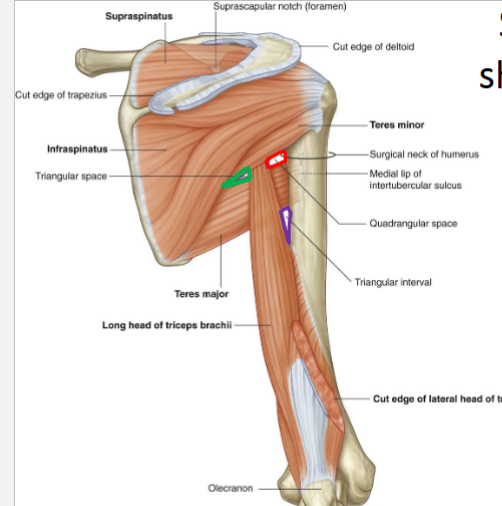
circumflex scapular a
66
what lives in the quadrangular space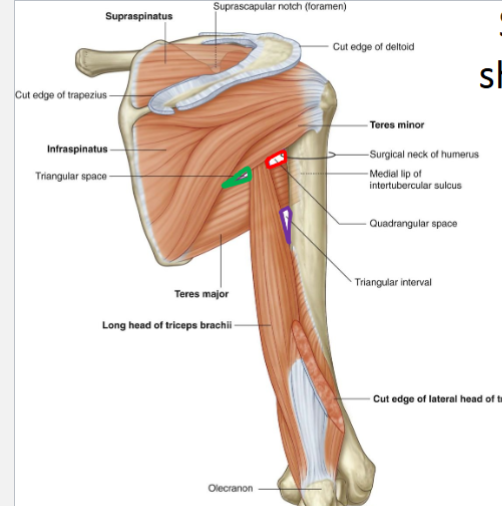
axillary n
posterior circumflex
humeral a
posterior circumflex
humeral a
67
what lives in the triangular interval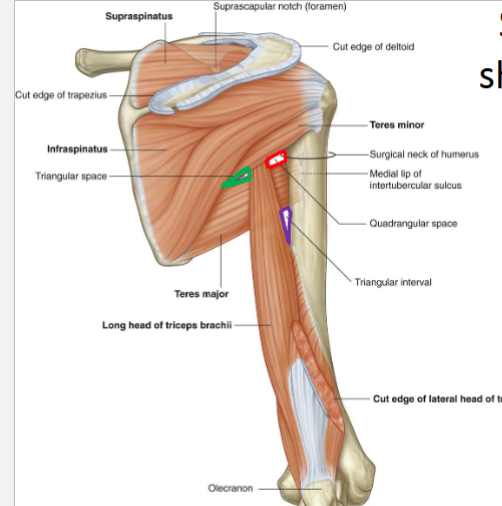
radial n
profunda brachii a
profunda brachii a
68
what defines the first section of the ax artery
first rib to pec minor
69
what defies the second section of the ax artery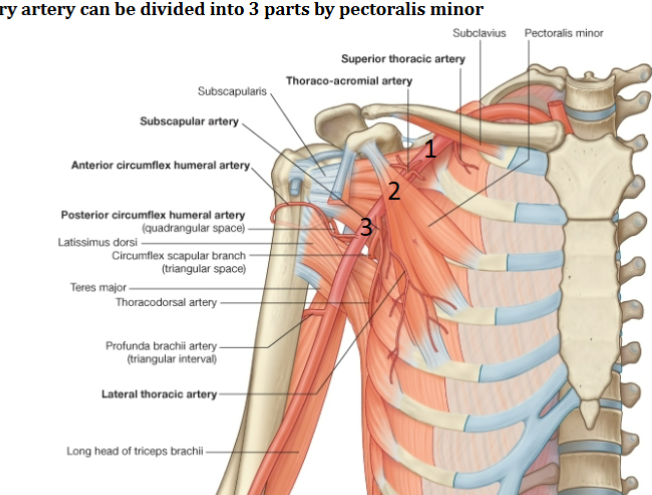
post to pec minor
70
what defines the third section of the ax artery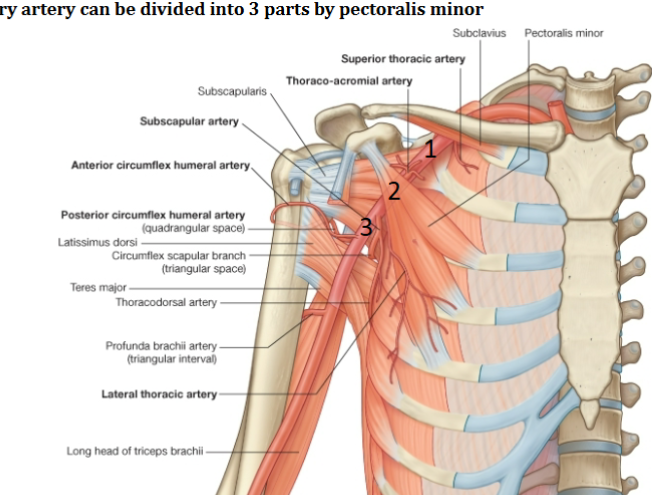
inf to pec minor b/4 teres major
71
what branches of the first part of the ax artery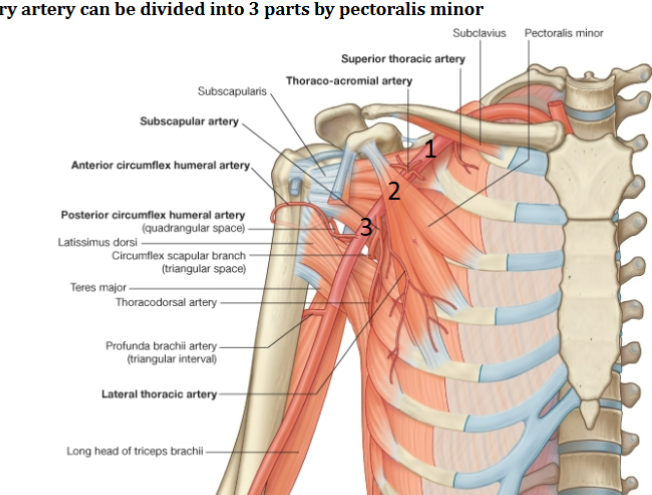
superior thoracic a
72
what branches off the second part of the axilary artery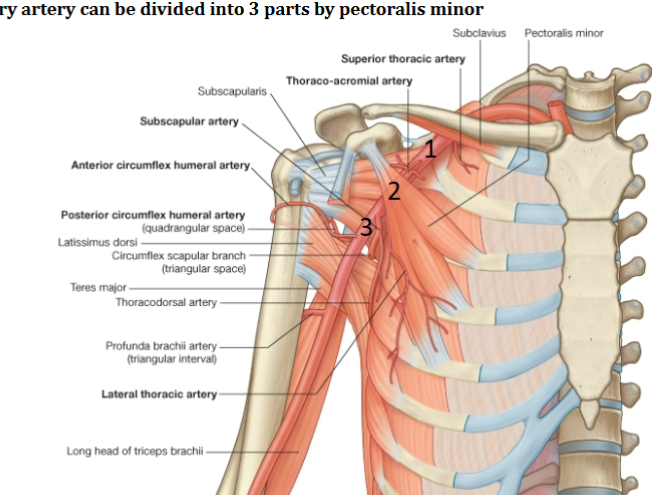
thoracoacromial trunk
lateral thoracic a
lateral thoracic a
73
what branches off the third part of the axillary a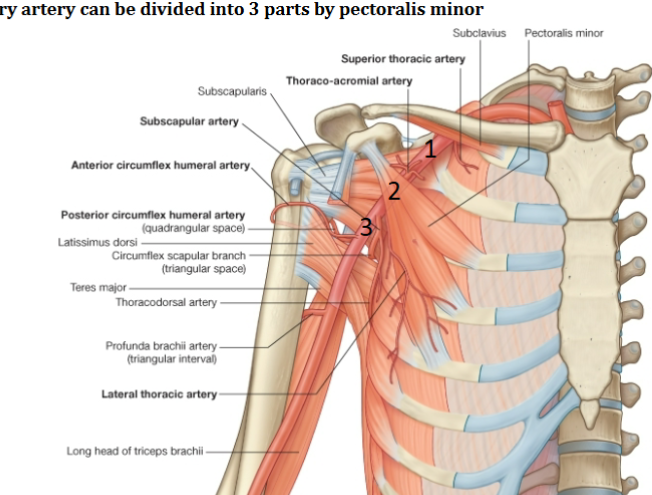
posterior circuflex humeral a
anterior circumflex humeral a
subscapular a
anterior circumflex humeral a
subscapular a
74
origin pec major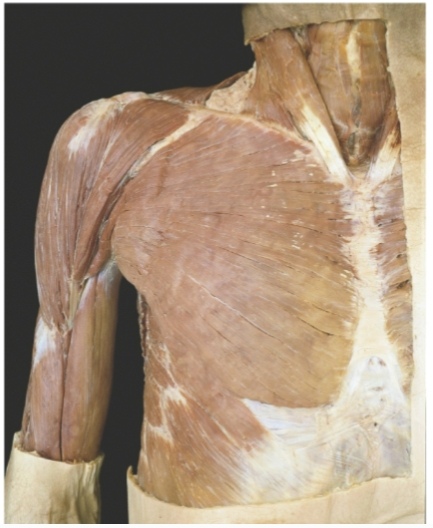
Clavicular head: Anterior surface of the medial half of the clavicle
Sternocostal head:
Anterior surface of the sternum
Costal cartilages of ribs 2-6
Aponeurosis of the external oblique muscle
Sternocostal head:
Anterior surface of the sternum
Costal cartilages of ribs 2-6
Aponeurosis of the external oblique muscle
75
insertion [pec major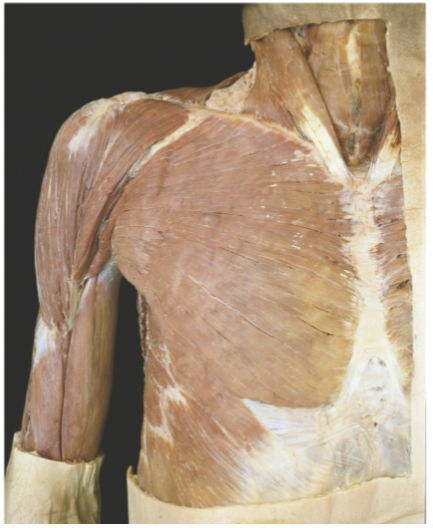
Lateral lip of the intertubercular sulcus of the humerus
76
action of pec major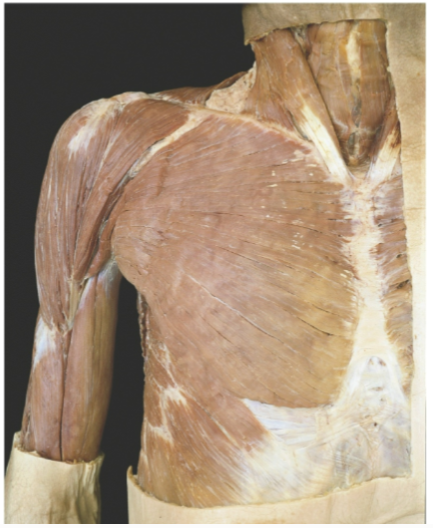
adduction and flex arm
77
innervation pec major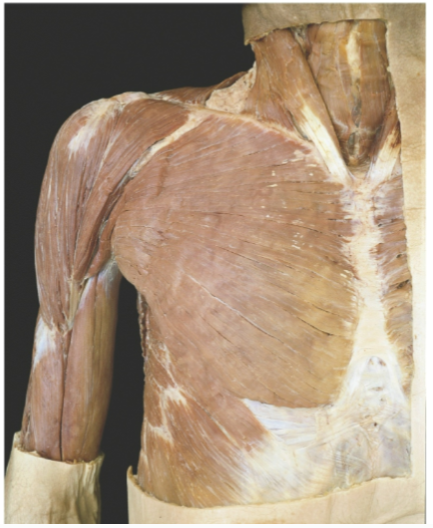
lateral and medial pectoral n
78
origin pec minor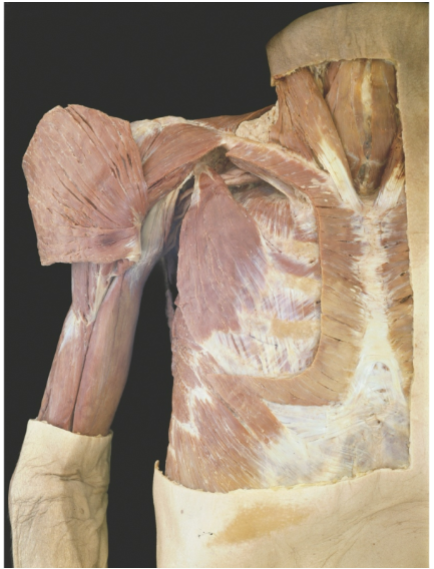
anterior surface of ribs 3-5
79
insertion pec minor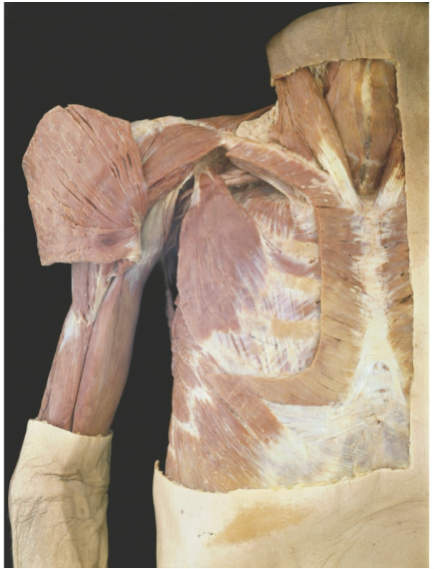
medial border and superior surface of coracoid process of scapula
80
action pec minor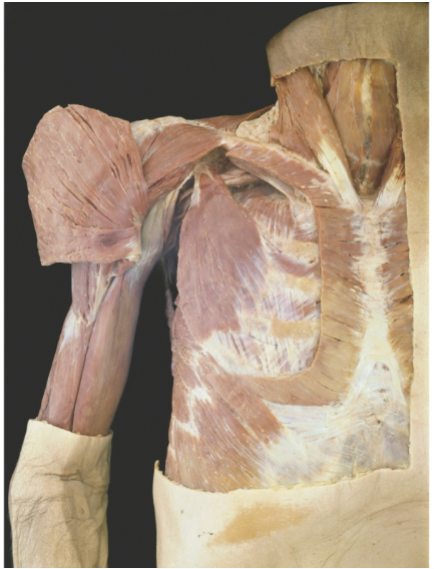
protraction of scapula
81
innervation of pec minor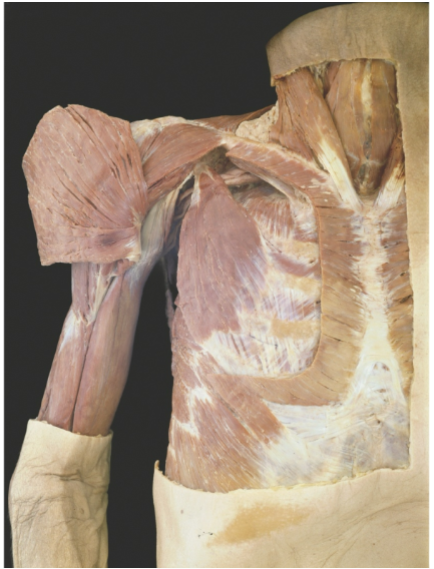
medial and lateral pec nerves
82
what are the boundaries of the axilla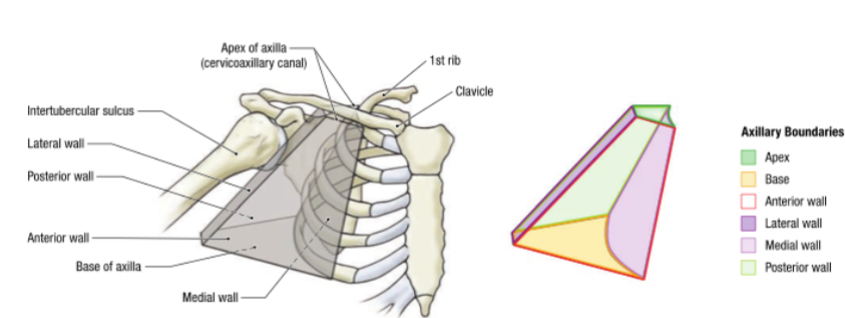
anterior: pec muscles
posterior: subscapularis, teres major, latissimus dorsi
medial: serratus anterior
lateral: humerus
posterior: subscapularis, teres major, latissimus dorsi
medial: serratus anterior
lateral: humerus
83
what lives in the axilla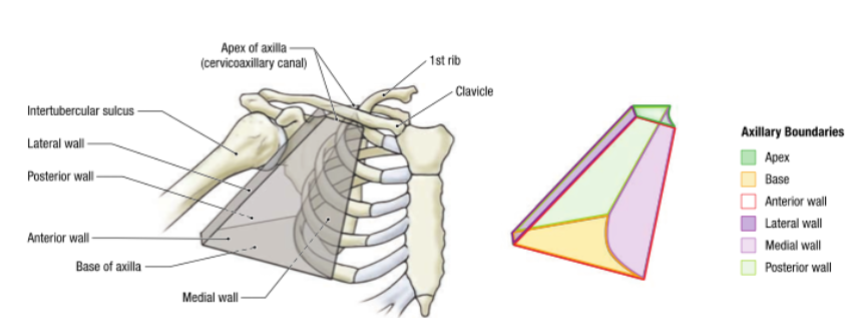
axillary a and v
brachial plexus
lymphatics
coracobrachialis
biceps brachii
brachial plexus
lymphatics
coracobrachialis
biceps brachii
84
what are the roots brachial plexus
C5-T1
85
what are the trunks of the brachial plexus
upper, middle low
86
what are the divisions of the brachial plexus
aterior and posterior
87
what are the cords of the brachial plexus
lateral posterior medoal
88
what branches off the C5
dorsal scapular n
89
what branches of the upper trunk
subscapular n
90
what branches off the lateral cord
lateral pec n, musculociutaneous n, median n
91
what are the spinal roots of the long thoracic n
C5-C7
92
whatbranches off the posterior cord?
thoracodorsal n, upper subscapular n, lower subscapular n, radial n, axillary n
93
what branches off the medial cord
medial pec n, medial brachial cutaneous n, medial antebrachial cutaneous n, ulnar n, median n
94
nerve that innervates flexors of the brachium
musciulocutaneous
95
nerve that innervates extesors of the brachium
radial n
96
nerve that innervaytes flexors of the antebrachium
median and ulnar n
97
nerve that innervates the extensors of the antebrachium
radial n
98
what type of joint is the humeroulnar and humeroradial?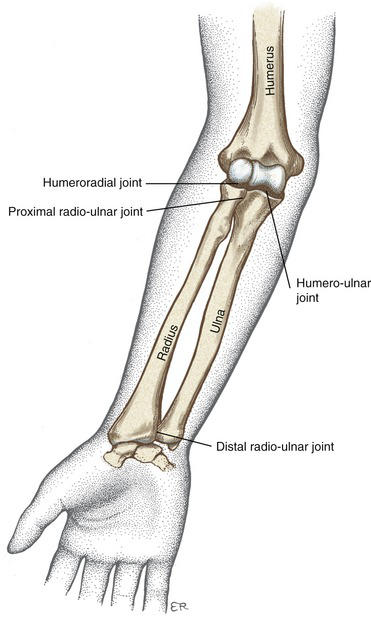
synovial hinge
99
what type of joint is the prox radioulnar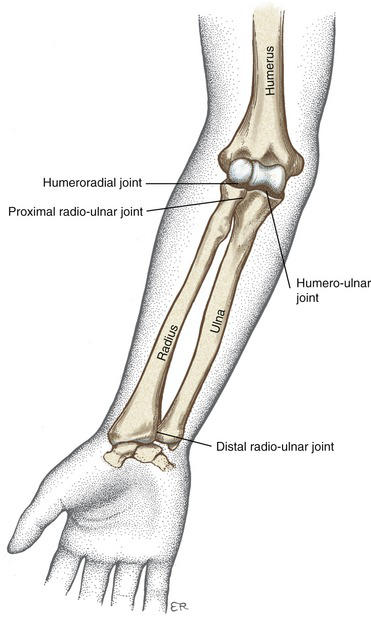
synovial pivot
100
this joint holds the radial head to the capitulum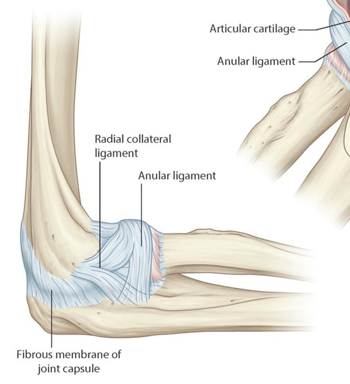
anular ligament
101
this is when the radial head is pulled out of the anular ligament
nursemaid's elbow (subluxation of the radial head)
102
origin biceps brachii lobg heaf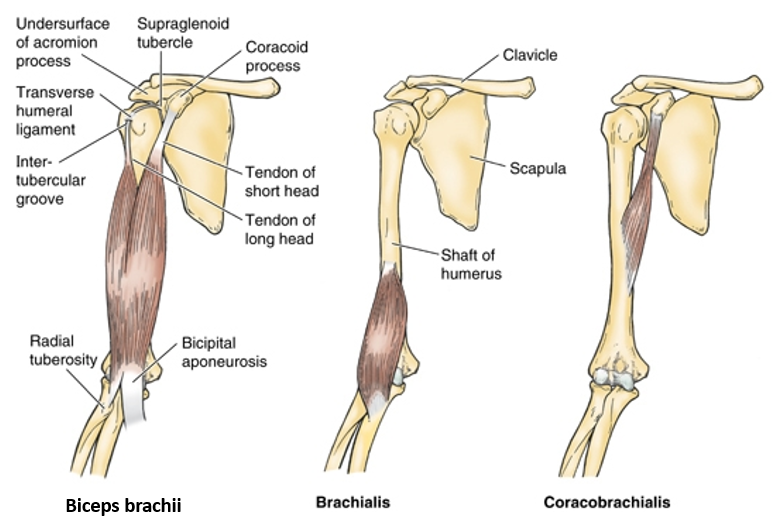
sup glenoid tubercle
103
insertion biceps brachii (long and short)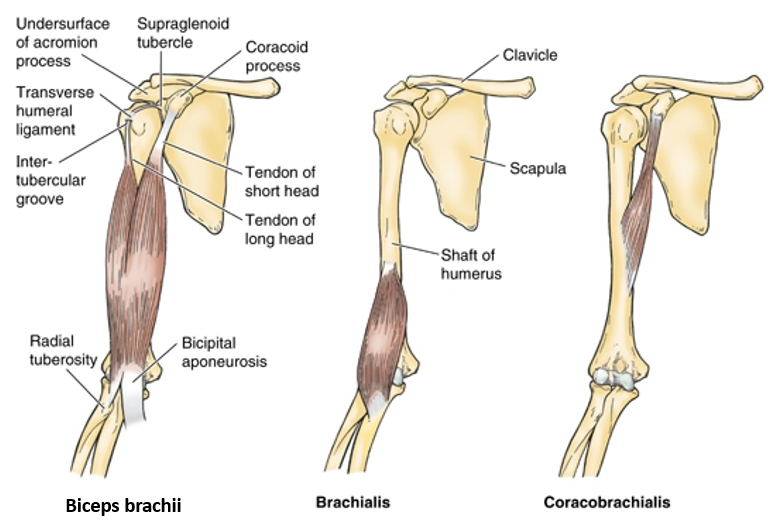
biceps aponeurosis and radial tuberocity
104
innervation biceps brachii (long and short)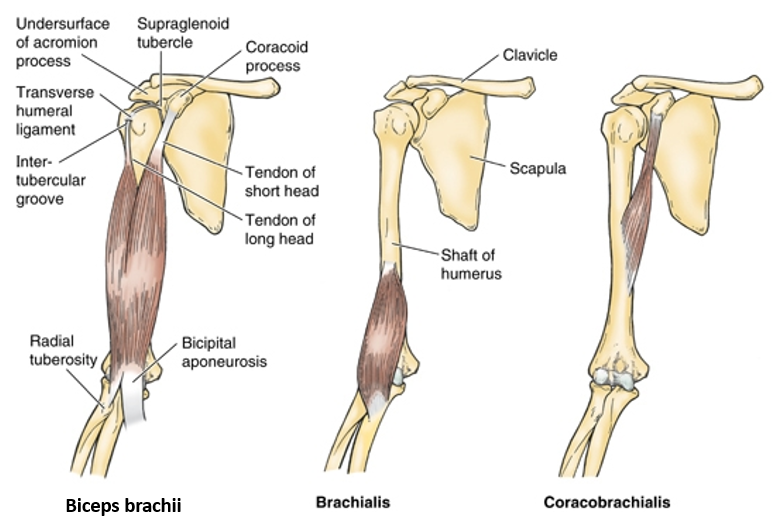
musculocutaneous
105
fx biceps brachii long and short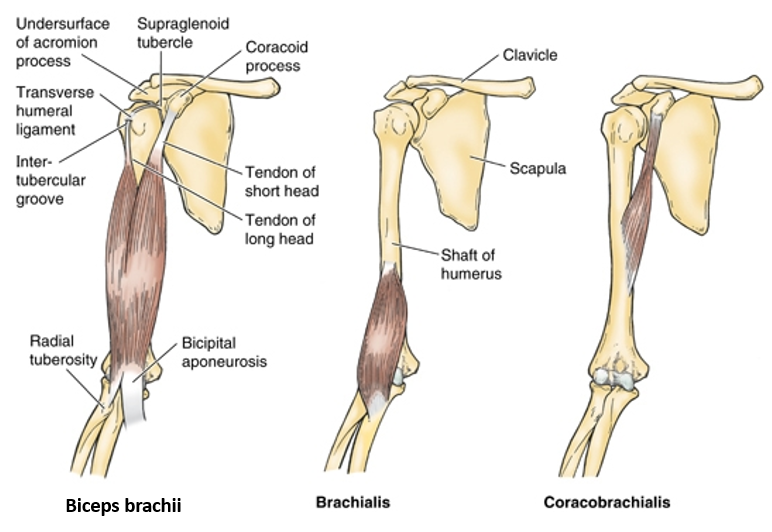
flex arm and forearm, suppination
106
origin biceps brachii short head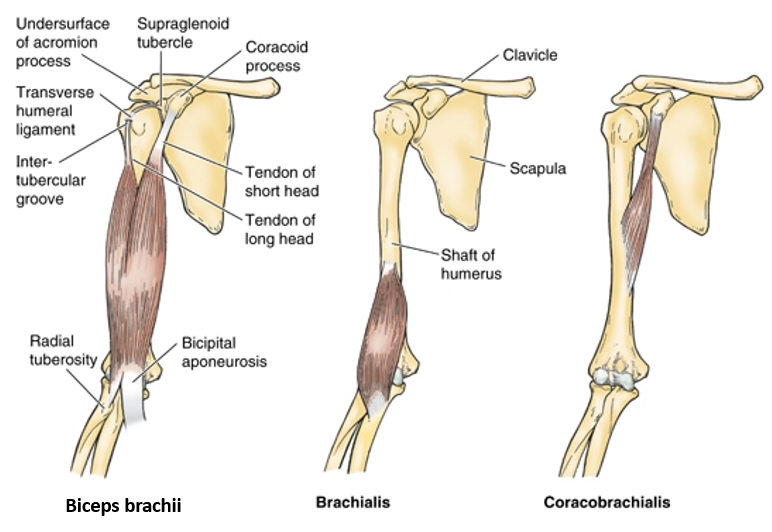
coracoid process
107
coracobrachiallis origin and insertion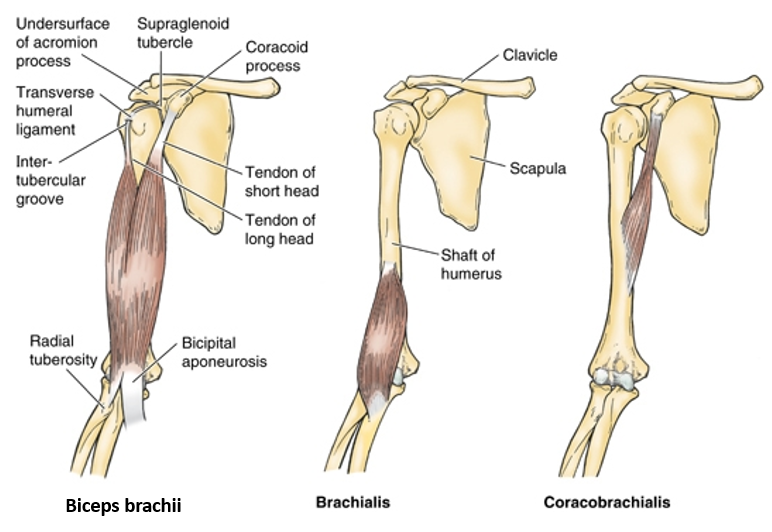
origin: coracoud process
insertion: medial humerus
insertion: medial humerus
108
function of coracobrachiallis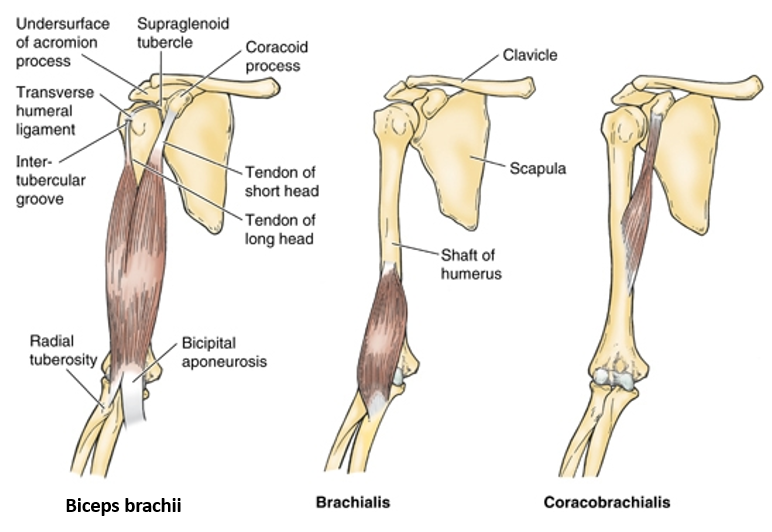
flex arm
109
innervation coracobrachiallis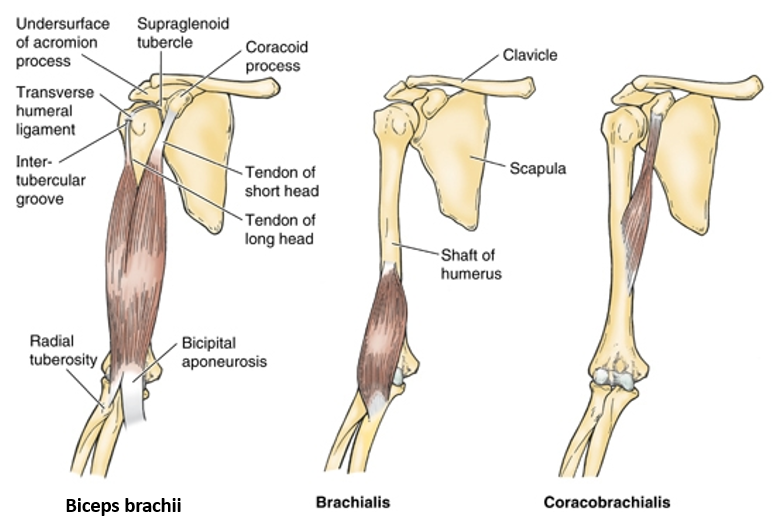
musculocutaneous n
110
brachiallis origin and insertion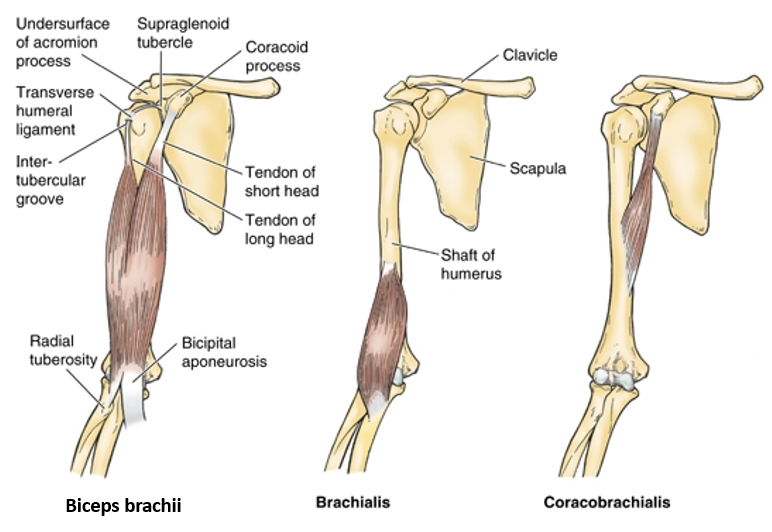
origin: midshaft humerus
insertion: ulna
insertion: ulna
111
brachiallis fx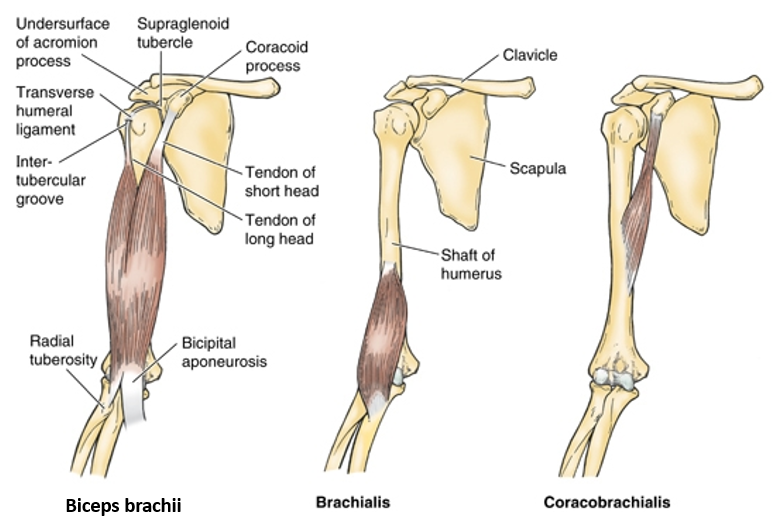
flex forearm
112
brachiallis innervation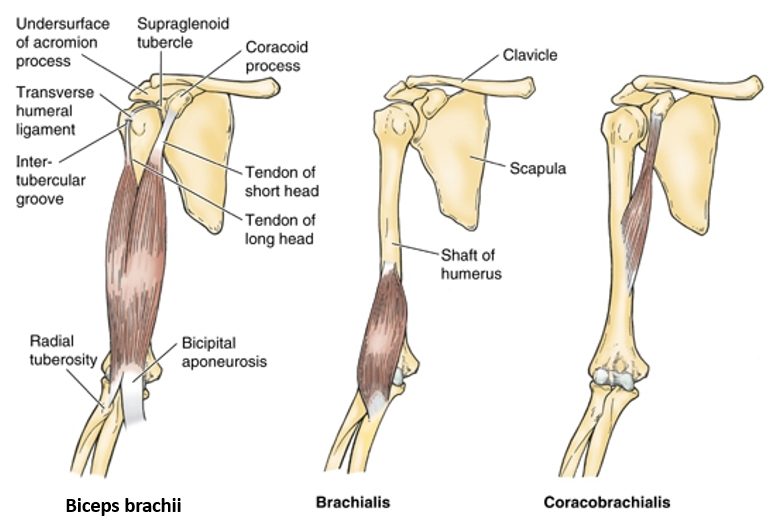
musculocutaneous n.
113
innervation triceps brachii and anoconeus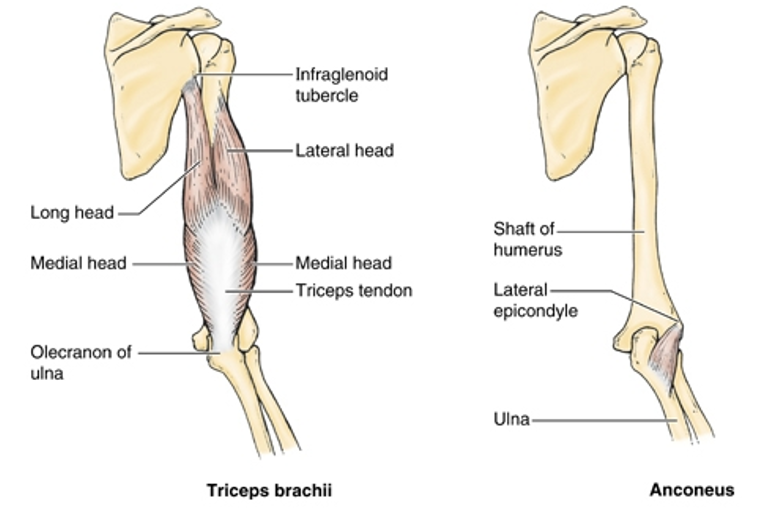
radial n
114
origin long head triceps brachii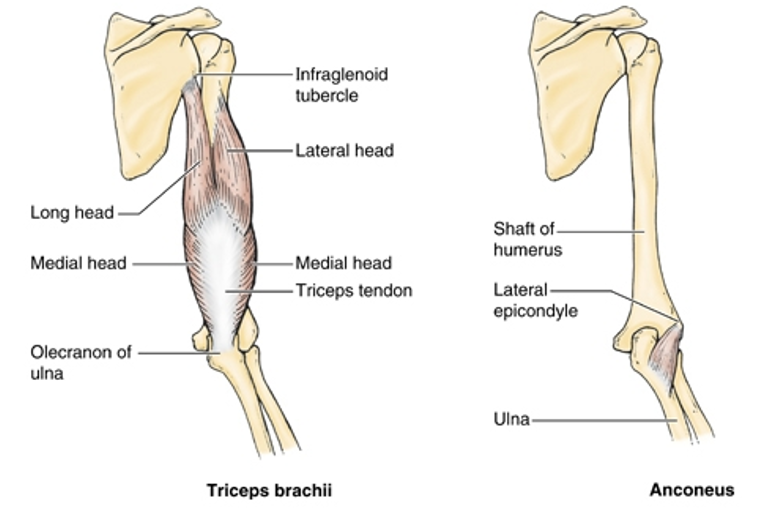
infraglenoid tubercle
115
origin medial head triceps brachii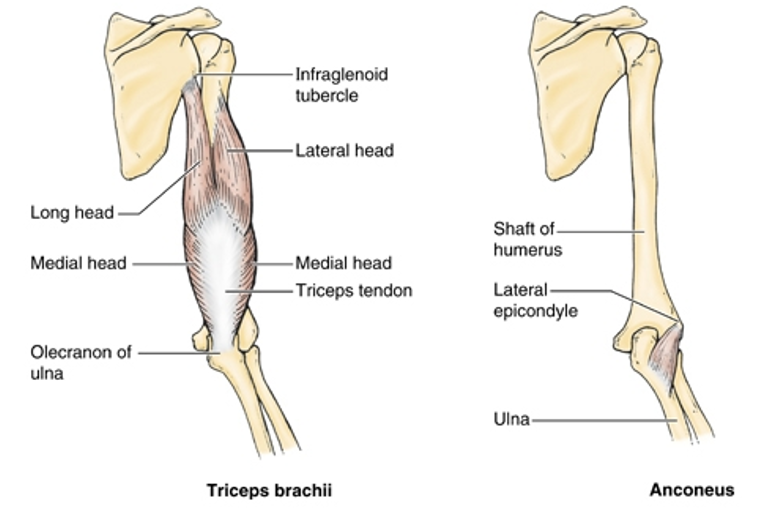
shaft of humerus
116
origin latreral head of triceps brachii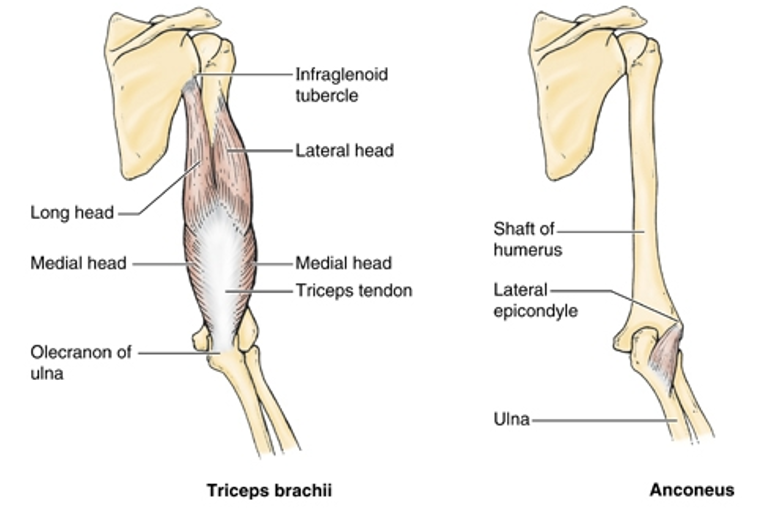
shaft of humerus
117
insertion of triceps brachii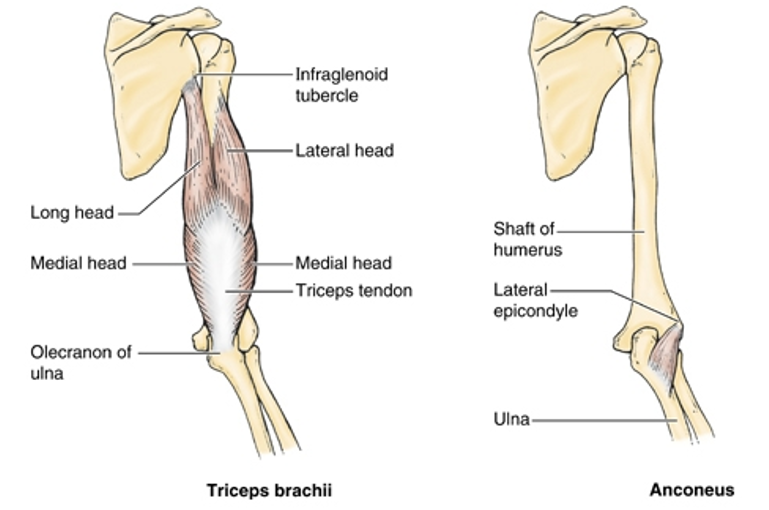
olecranon of ulna
118
fx long head of triceps brachii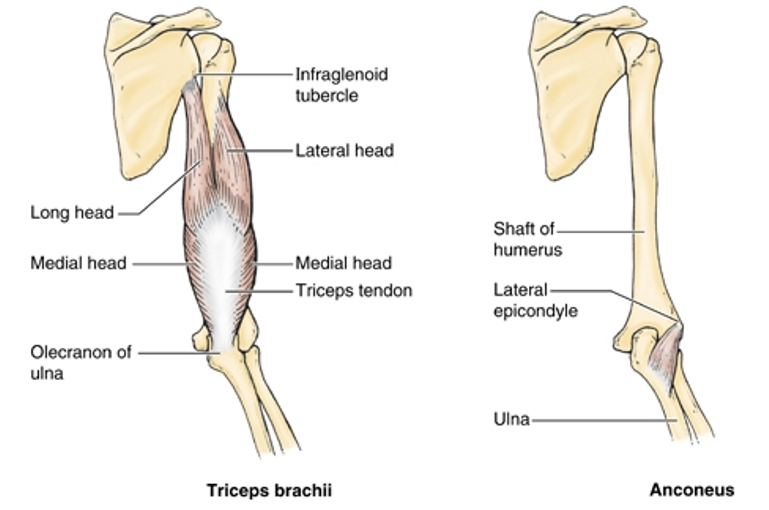
extend shoulder
119
fx medial and lateral head of tricepos brachii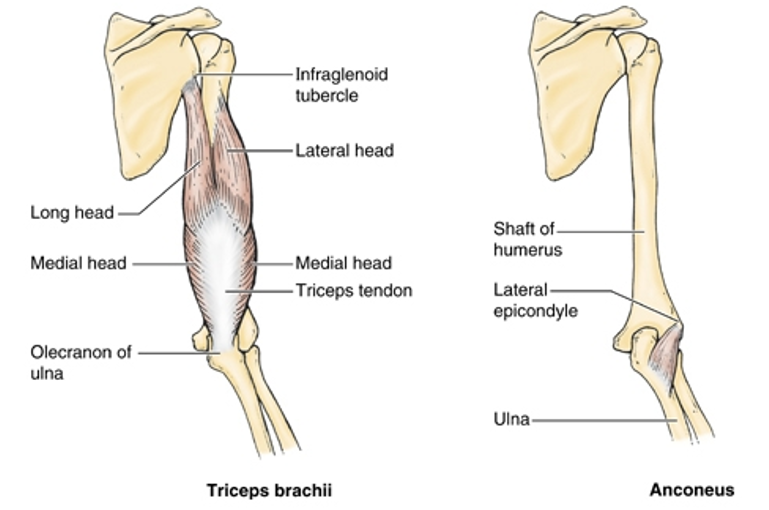
extend elbow
120
origin and insertion anconeus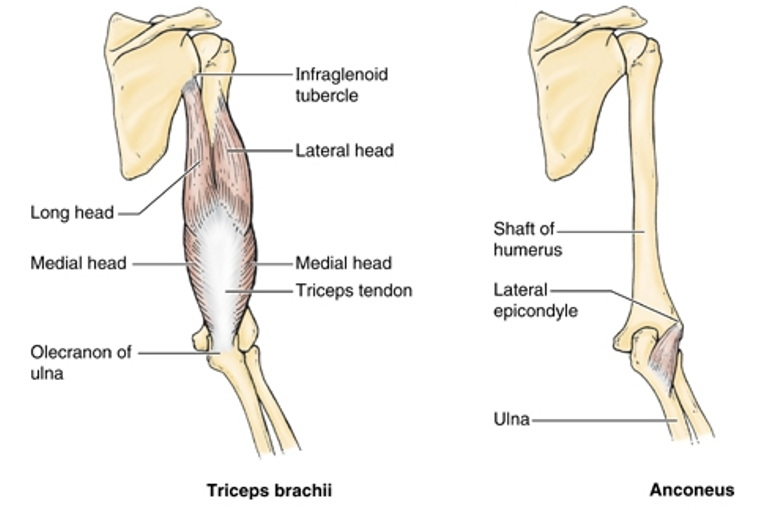
origin lateral epicondyle
insertion ulna
insertion ulna
121
fx anconeus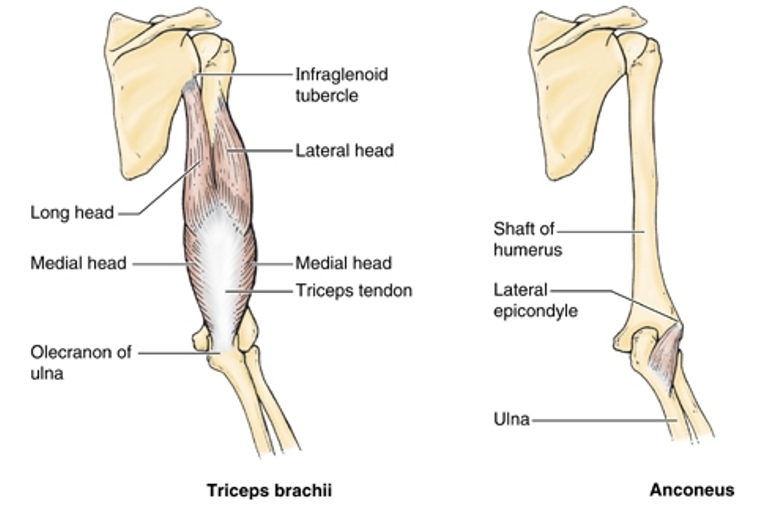
assist in elbow flexion
122
what is damaged to a fracture to the surgical neck?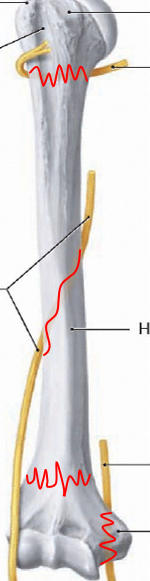
axillary n
123
what is damaged in a fracture to the midshaft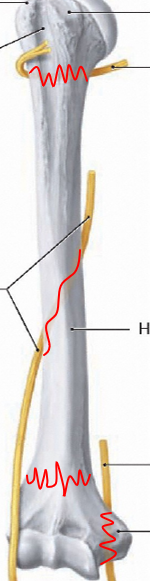
radial n
124
what is damaged to a fracture to the distal humerus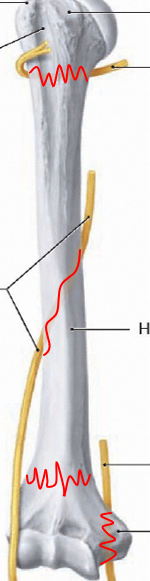
radial n and ulnar n
125
what is damaged to a medial epicondyle injury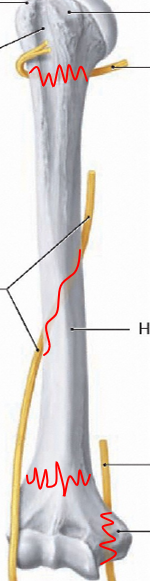
ulnar n
126
what can be damaged wit a greater tubercle fracture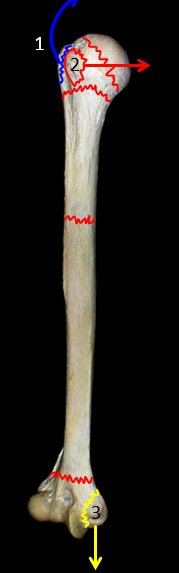
supraspinatous
127
what can be damaged witj an injury to the lesser tubercle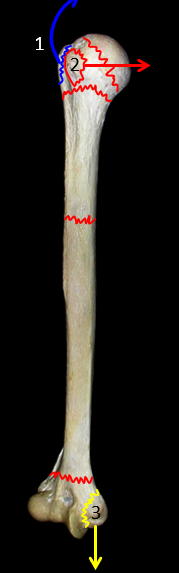
subscapularis
128
what lives in the cubital fossa (x3)
tendon of biceps brachii
brachial a.
median n.
brachial a.
median n.
129
distal radioulnar joint type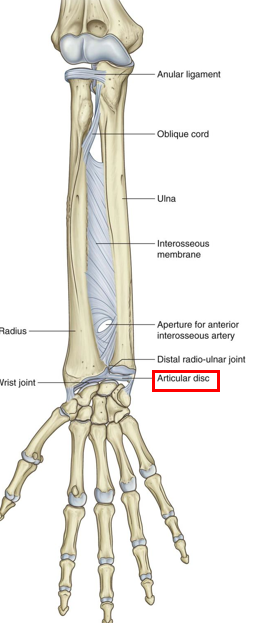
synovial plane
130
radiocarpal joint type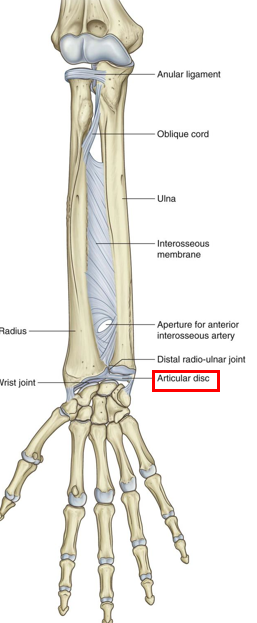
synovial condyloid
131
distal interphalangeal and proximal interphalangeal joint type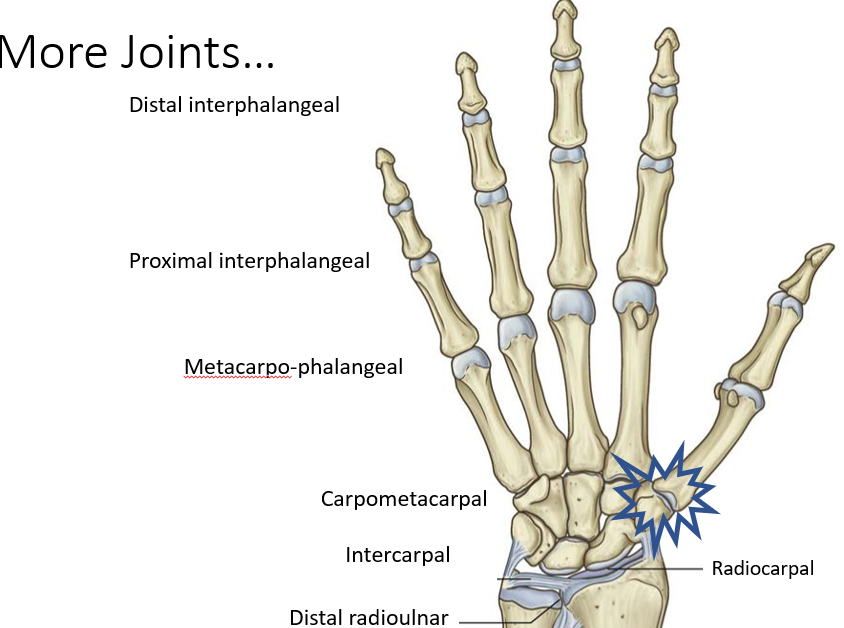
hinge
132
metacarpo-phalangeal type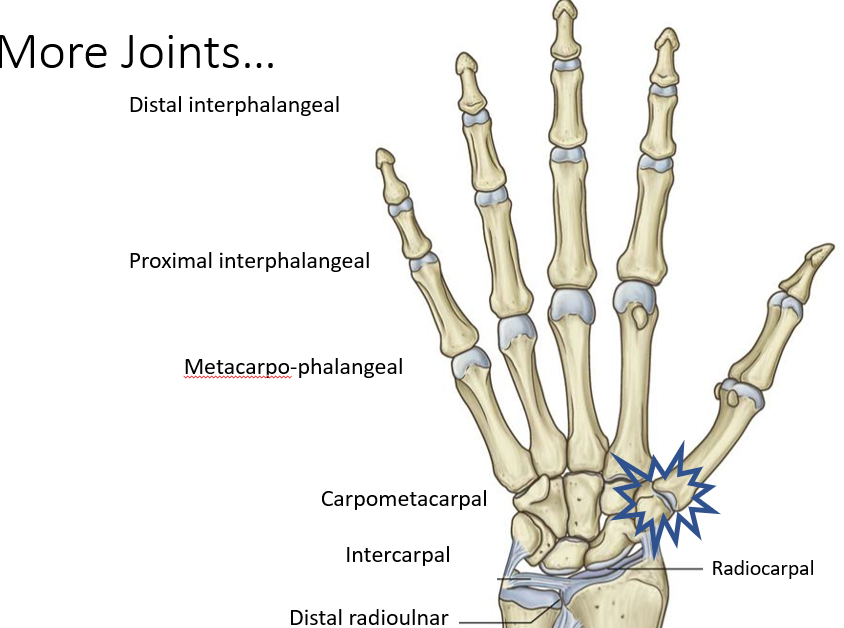
condyloid
133
carpometocarpal and intercapal joint type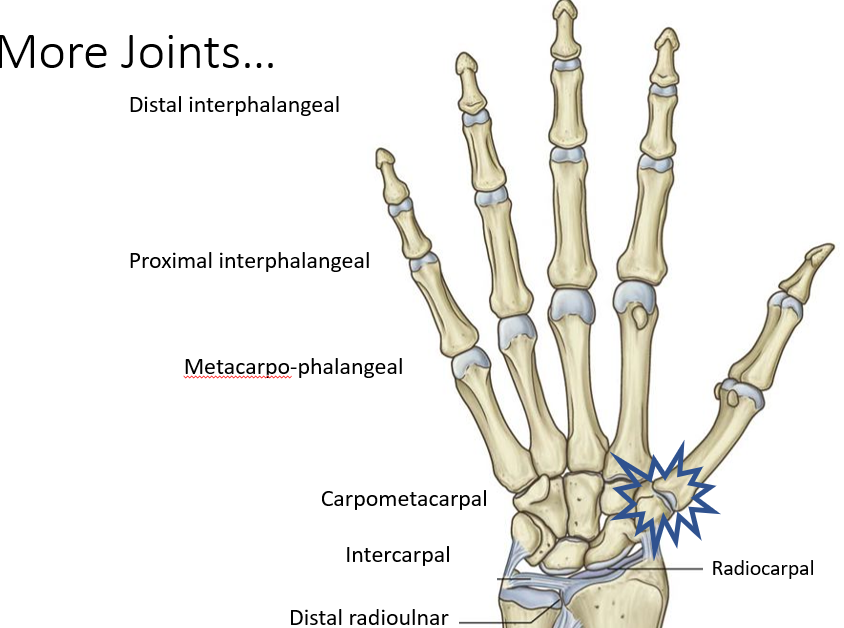
plane synovial
134
1st carpal metacarpal joint type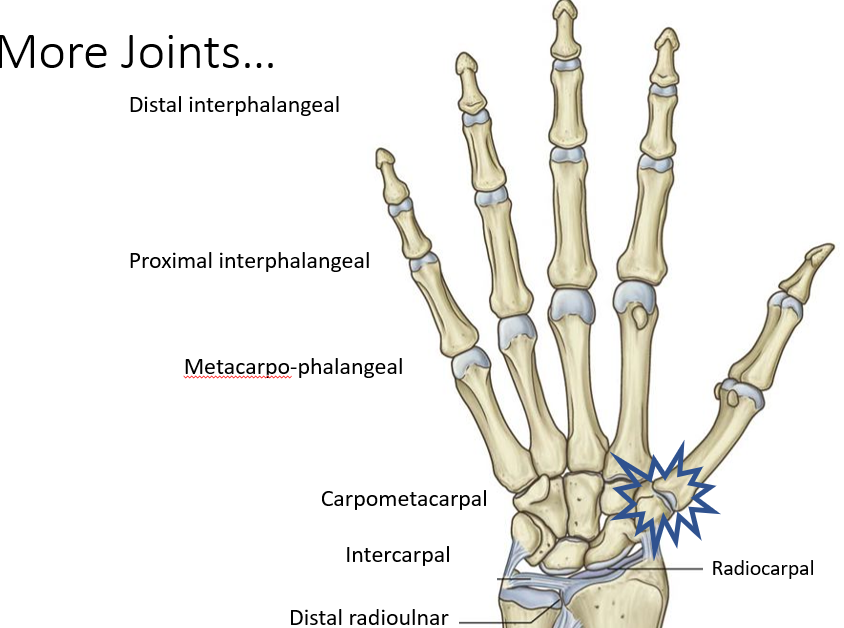
saddle joint
135
insertion and origin pronator teres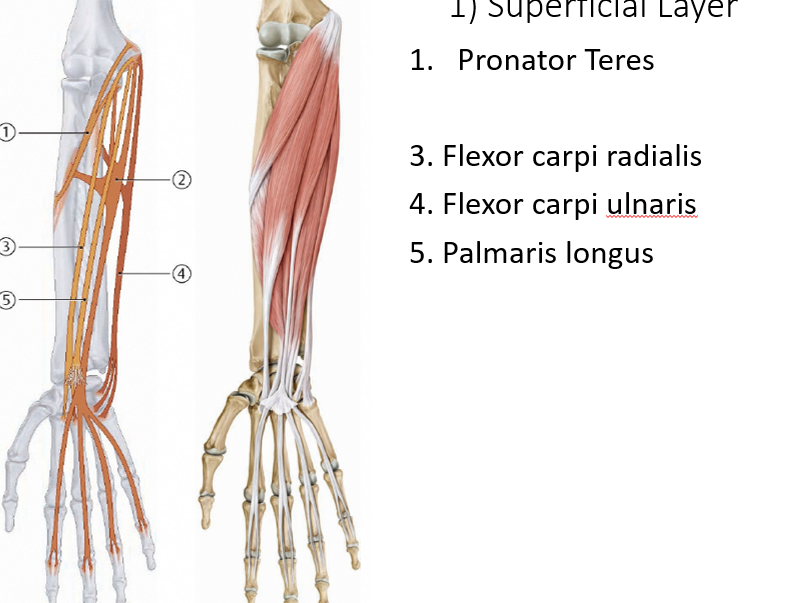
origin: medial epicondyle
insertion: radius
insertion: radius
136
origin and insertion flexor carpi radialis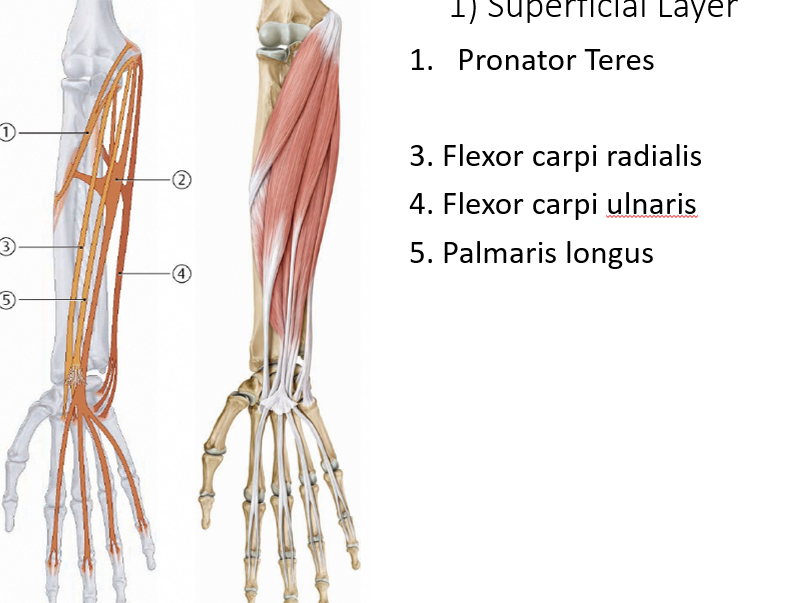
origin: common flexor tendon
insertion: base 2nd metacarpal
insertion: base 2nd metacarpal
137
origin and insertion flexor carpi ulnaris
or: common flexor tendon
in: 5th metacarpal and carpal bones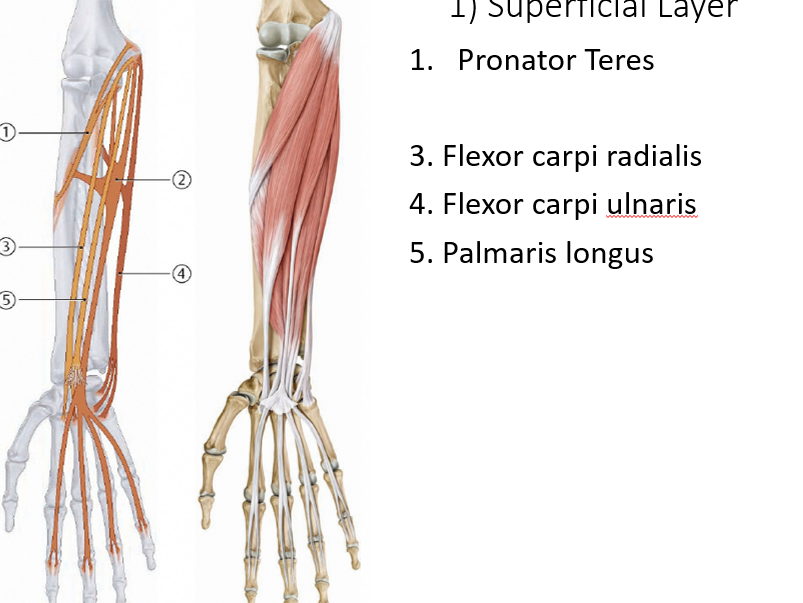
in: 5th metacarpal and carpal bones
138
origin and insertion palmaris longus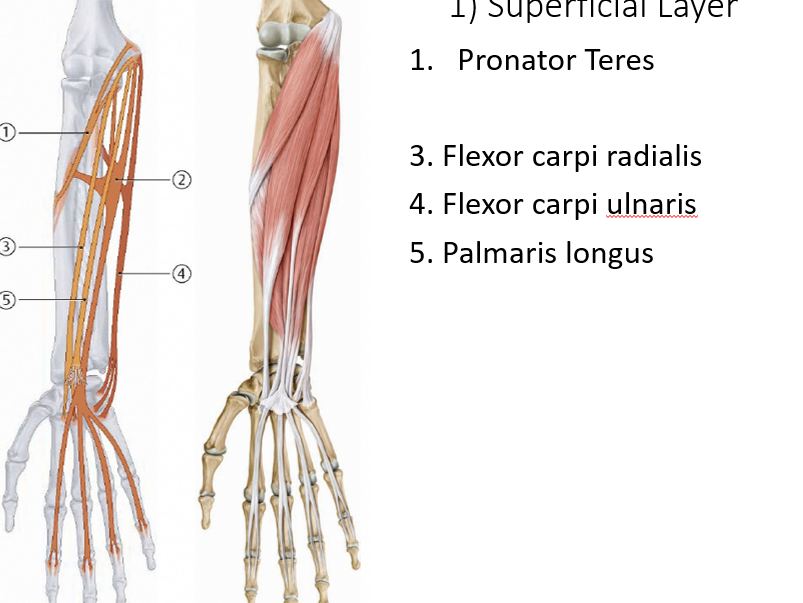
origin: common flexor tendon
insert: palmar aponeurosis
insert: palmar aponeurosis
139
fx pronator teres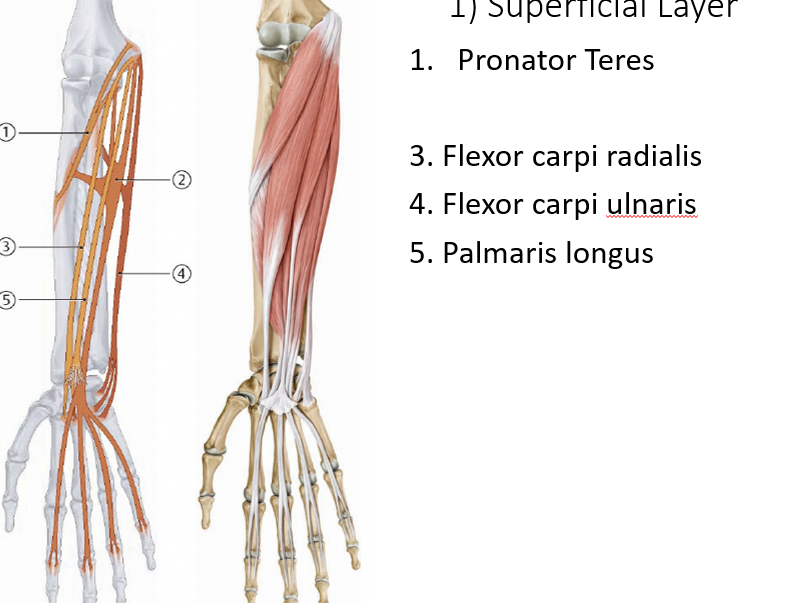
pronation
140
fx flexor carpi radialis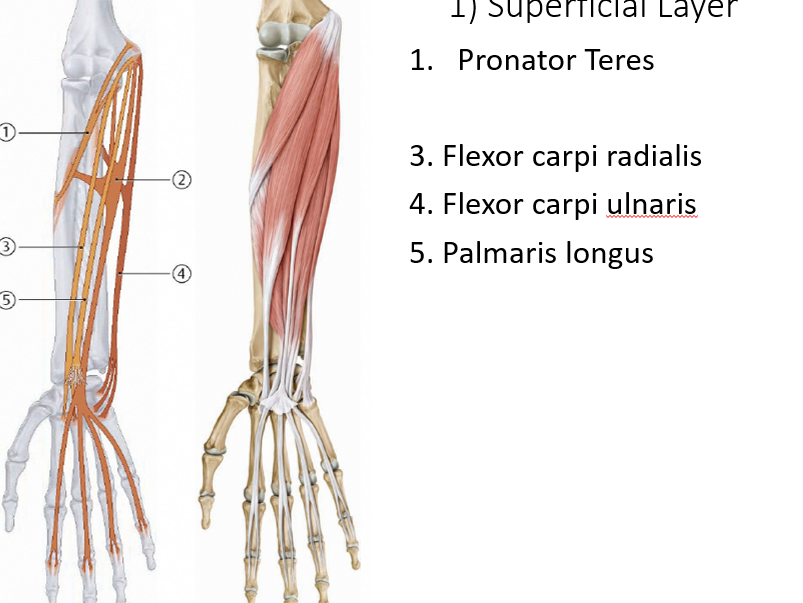
radial deviation
141
fx: palmaris longus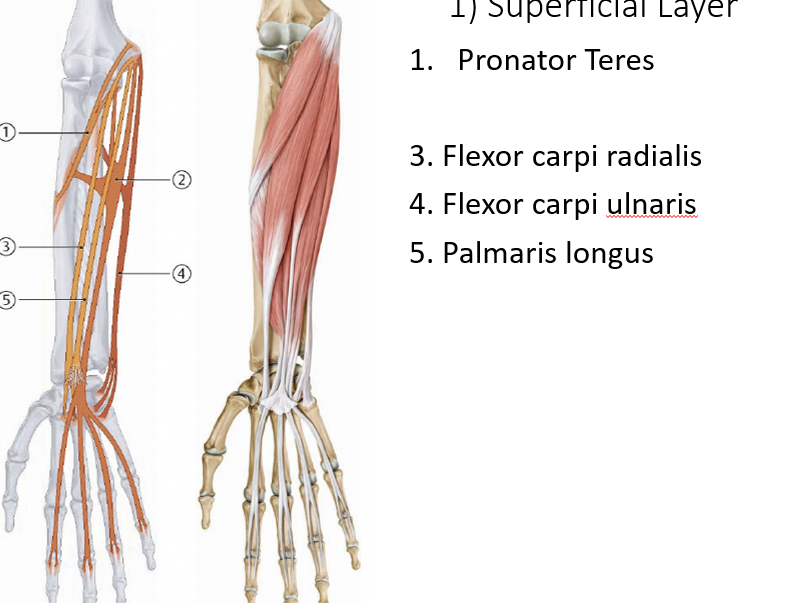
flexes wrist joint
142
fx flexor carpi ilnaris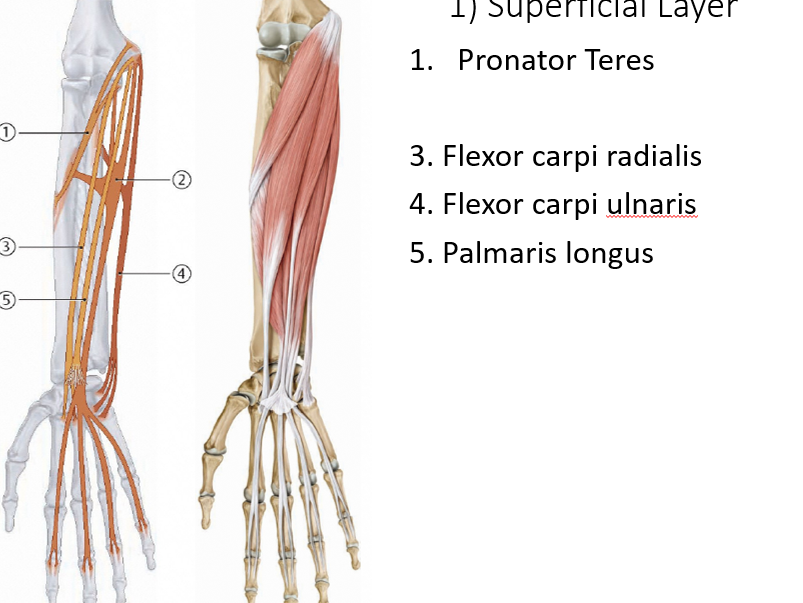
ulnar devation
143
innervation of pronator teres, flexor carpi radialis, palmaris longus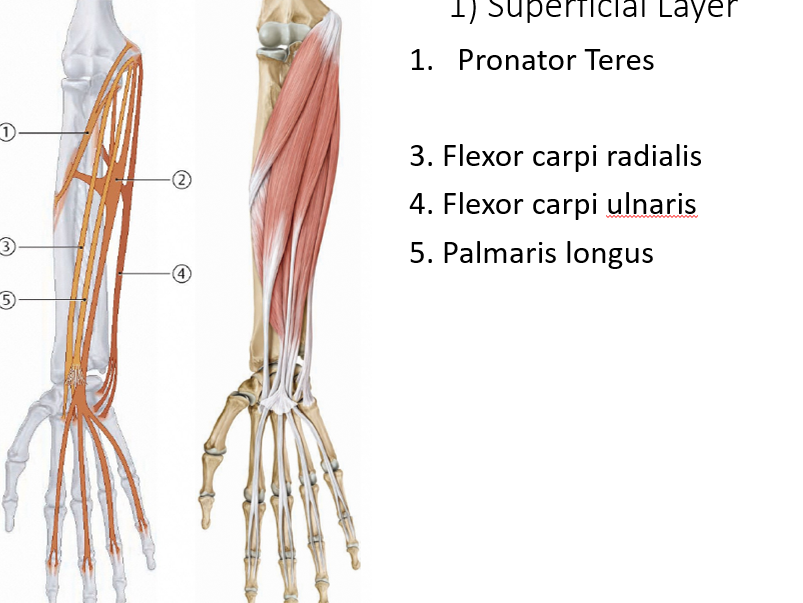
median n
144
innervation flexor carpi ulnaris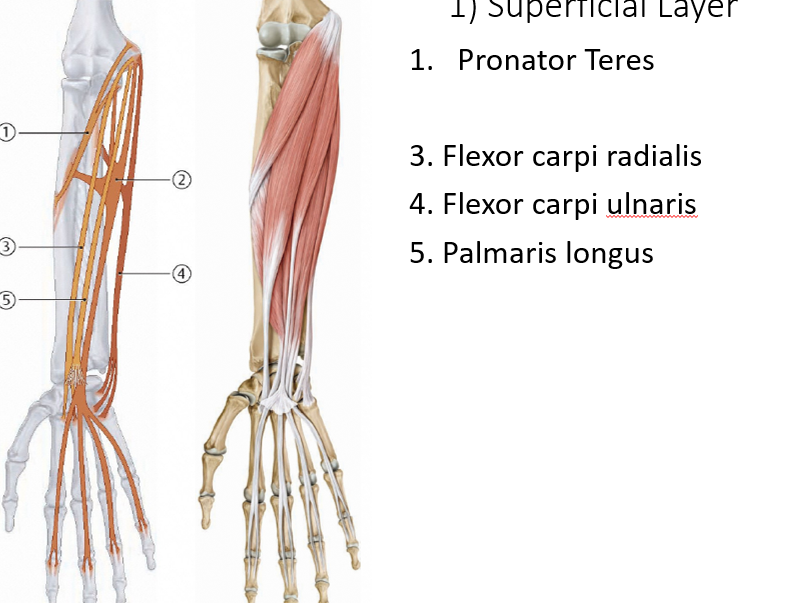
ulnar n
145
origin and insertion flexor digitorum superficialis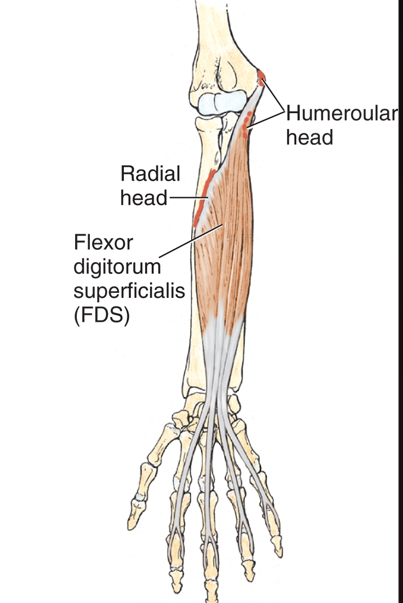
or: medial epicondyle, radial head
insert: middle phalanx of 2-5
insert: middle phalanx of 2-5
146
fx flexor digitorum superficialis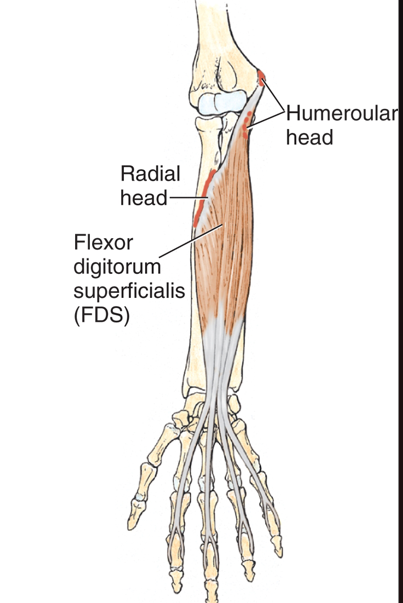
flexes middle phalanx at the interphalangeal joint
147
innervation of flexor digitorum superficialis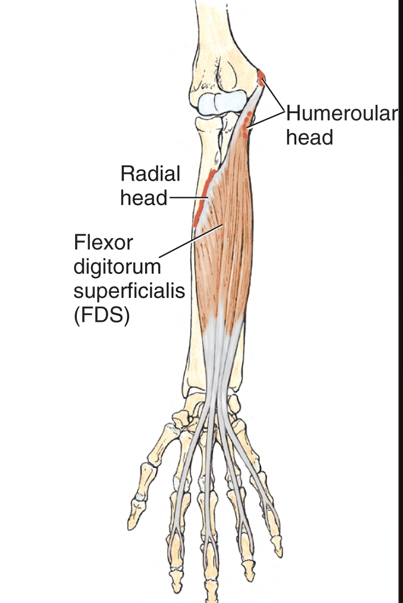
median n.
148
or and insert (FDP) flexor digirorum profundus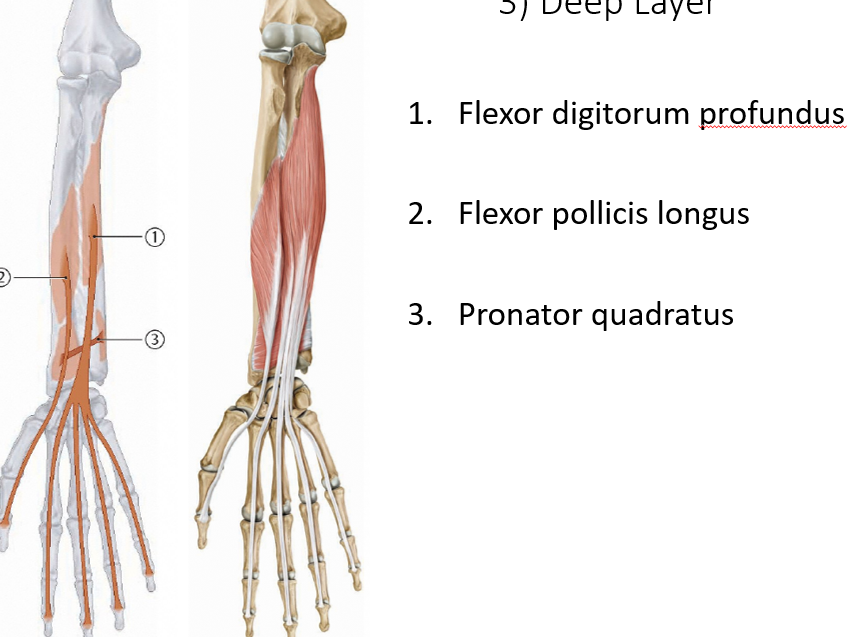
or: ulna
insert: distal phalanges digits 2-5
insert: distal phalanges digits 2-5
149
flexor pollicis longus origin and insertion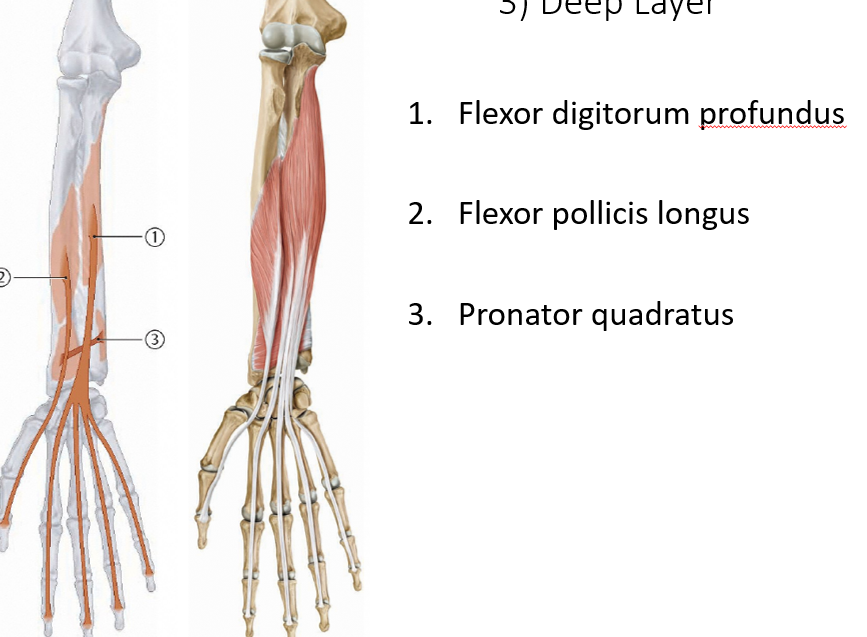
or: radius
in: thumb
in: thumb
150
pronator quadratus or and insert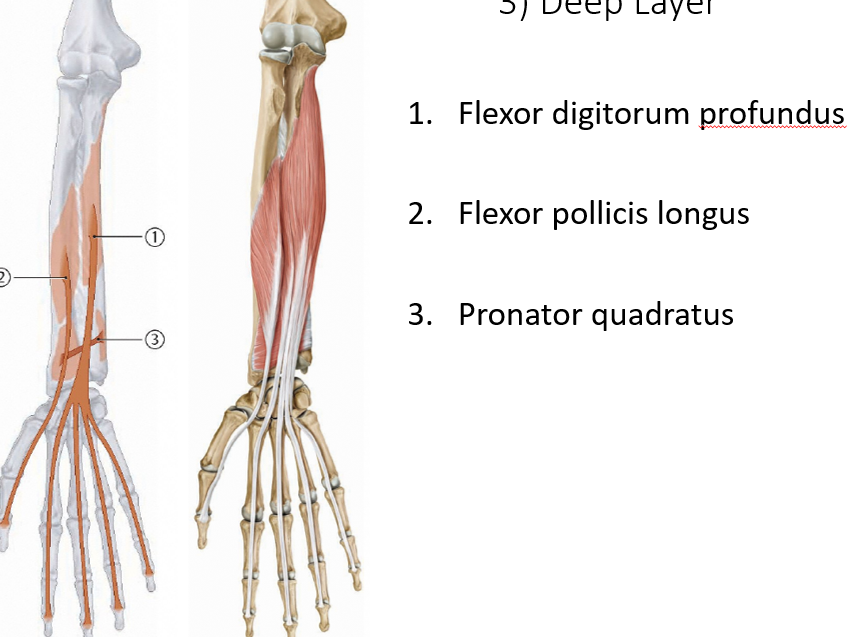
or: radius
in: ulna
in: ulna
151
flexor pollicis longus fx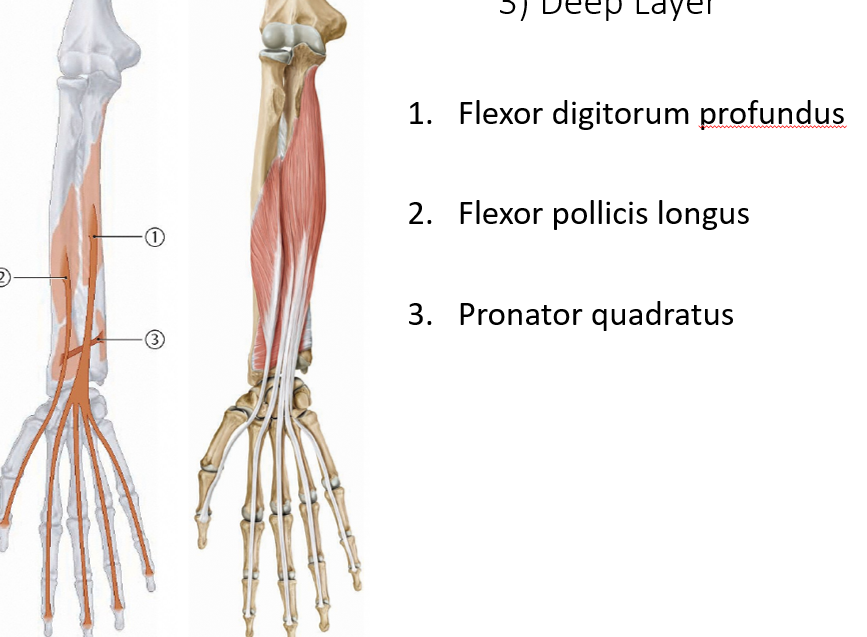
flexes DIP joint
152
flexor digitorum profundus fx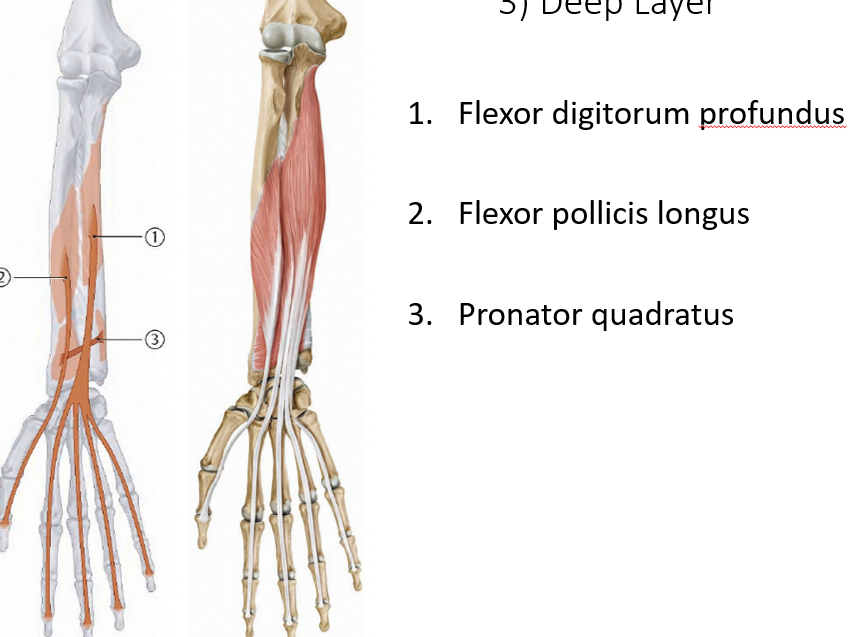
flexes DIP joints
153
innervation flecor pollicis longus and flexor digitorum profundus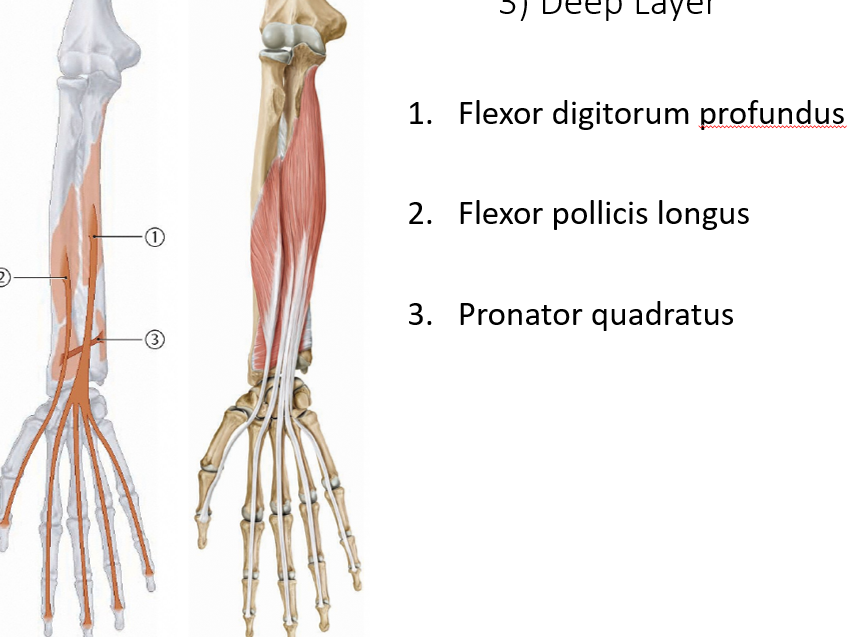
median n.
154
innervation flexor digitorum profundus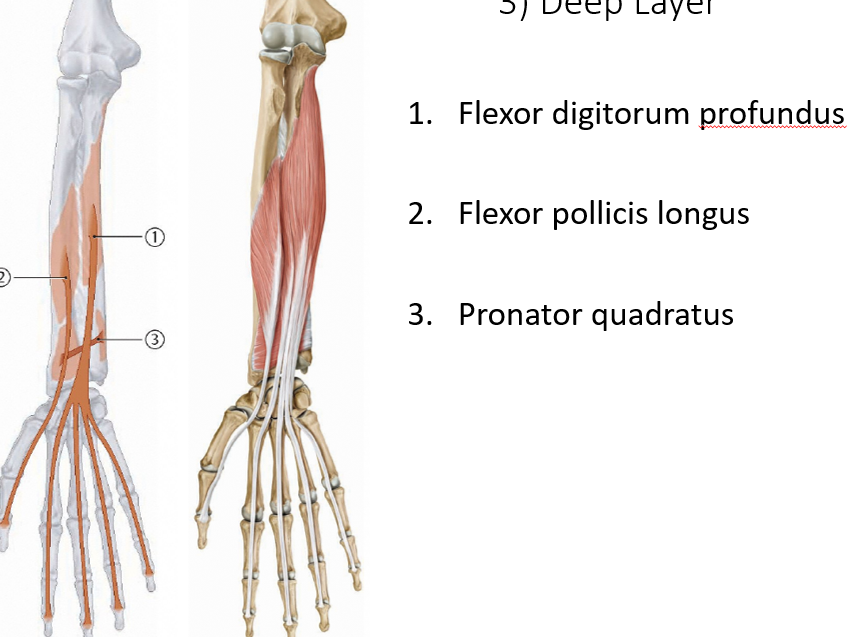
medial half innervated by ulnar n
155
what lives in the carpal tunnel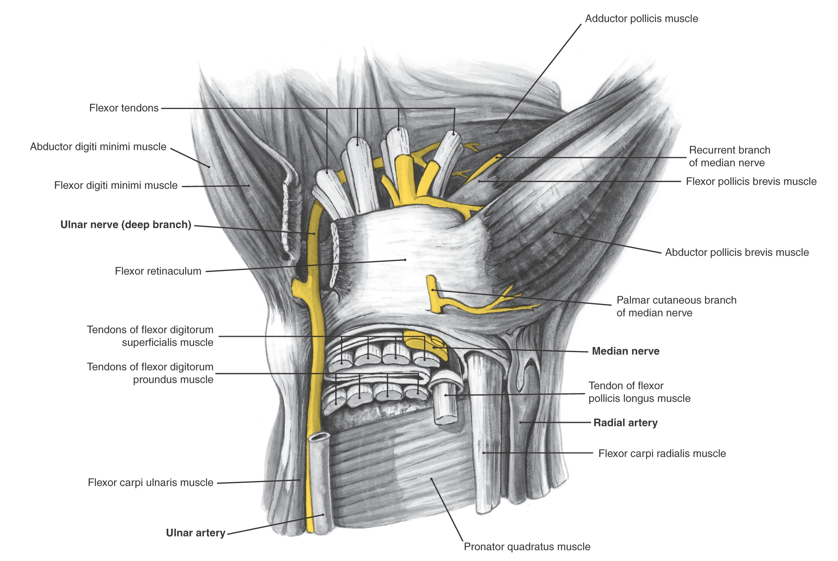
tendons of flexor digitorum superficialis, profundus, and tendon of flexor pollicis longus, median n
156
or and insertion brachioradialis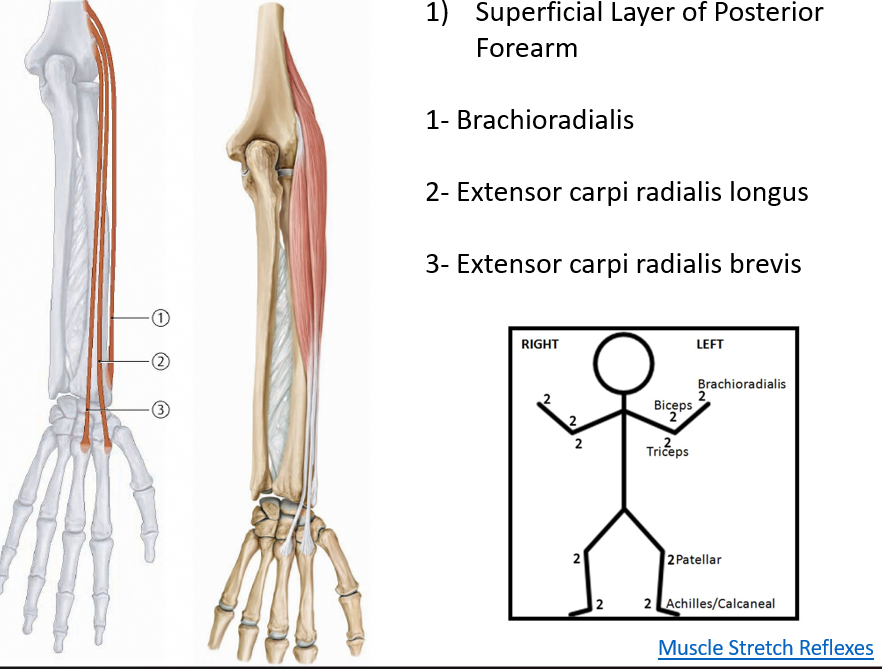
or: above medial epicondyle
in: radius
in: radius
157
or and insert extensor carpi radialis longus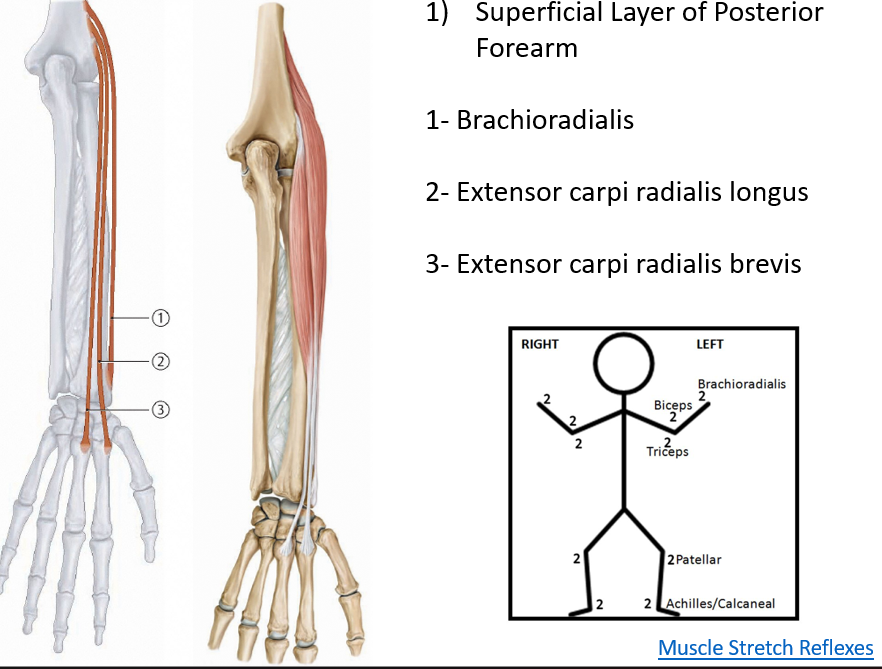
or: common extensor tendon
in: base of 2nd metacarpal
in: base of 2nd metacarpal
158
or and insertion extensor carpi radialis brevis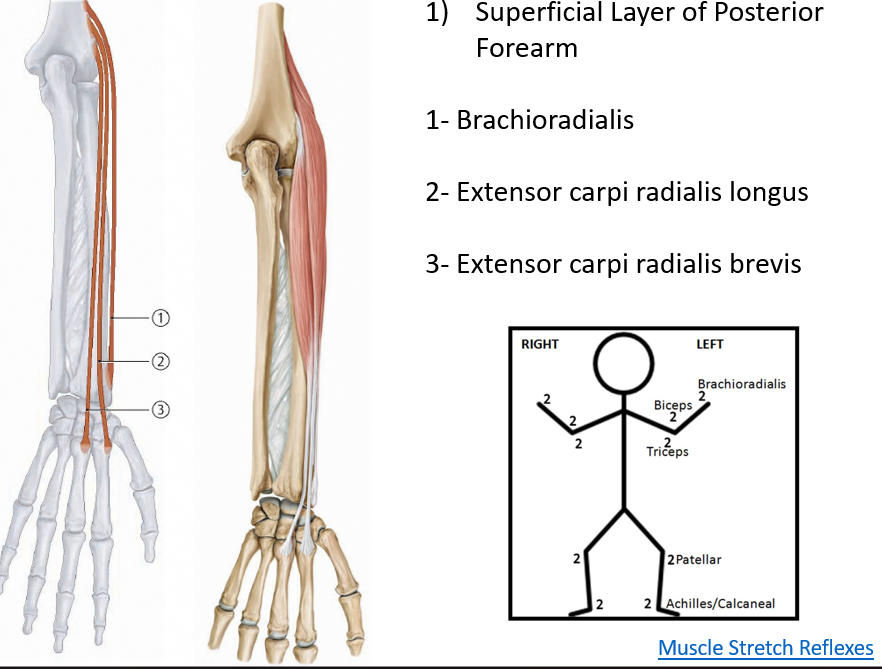
or: common extensor tendon
insert: base third metacarpal
insert: base third metacarpal
159
innervation brachioradialis, extensor carpi radialis longus and brevis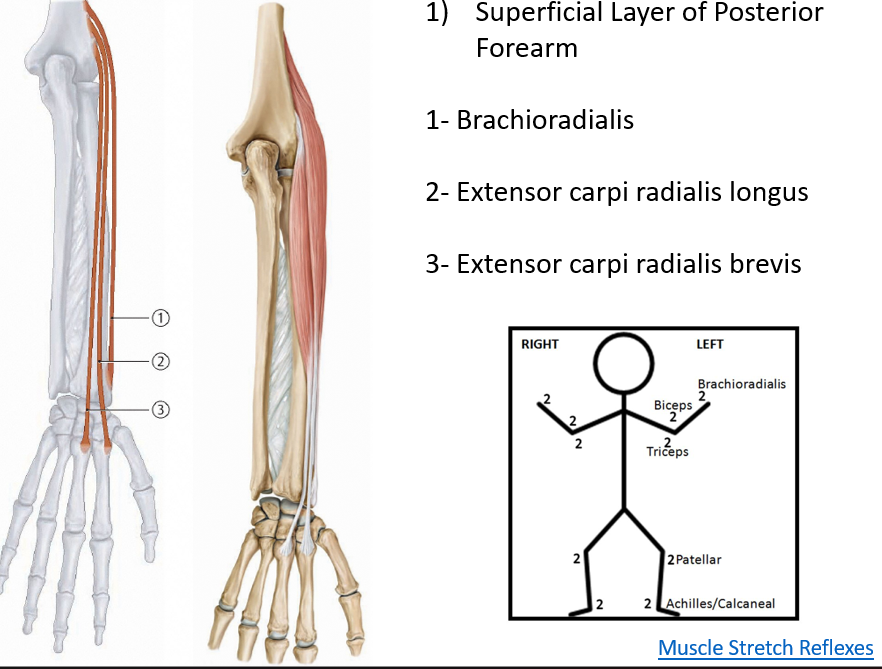
radial n
160
or and insert extensor digitorum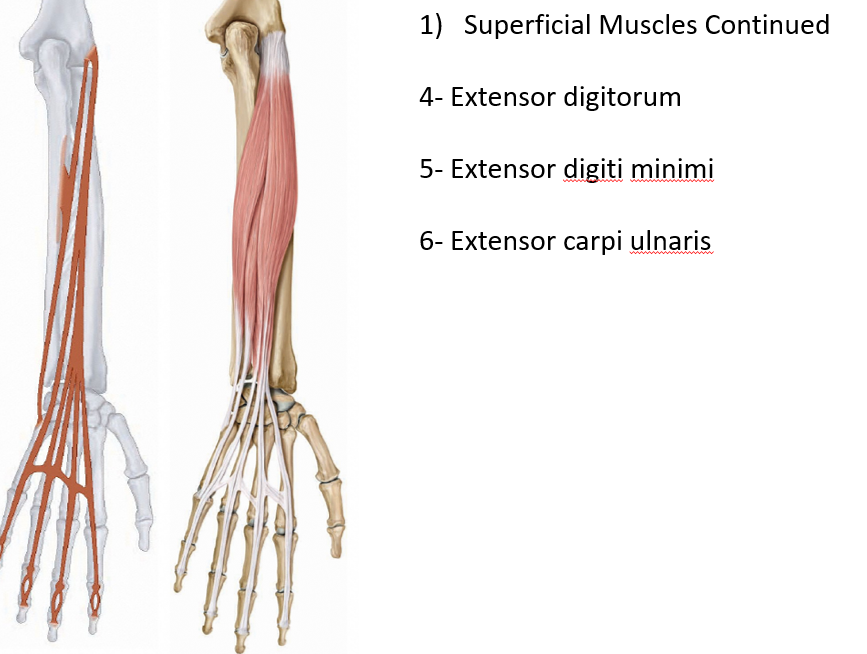
or: common ectensor tendon
in: digits 2-5 dorsum
in: digits 2-5 dorsum
161
or and insertion extsnsor digiti minimi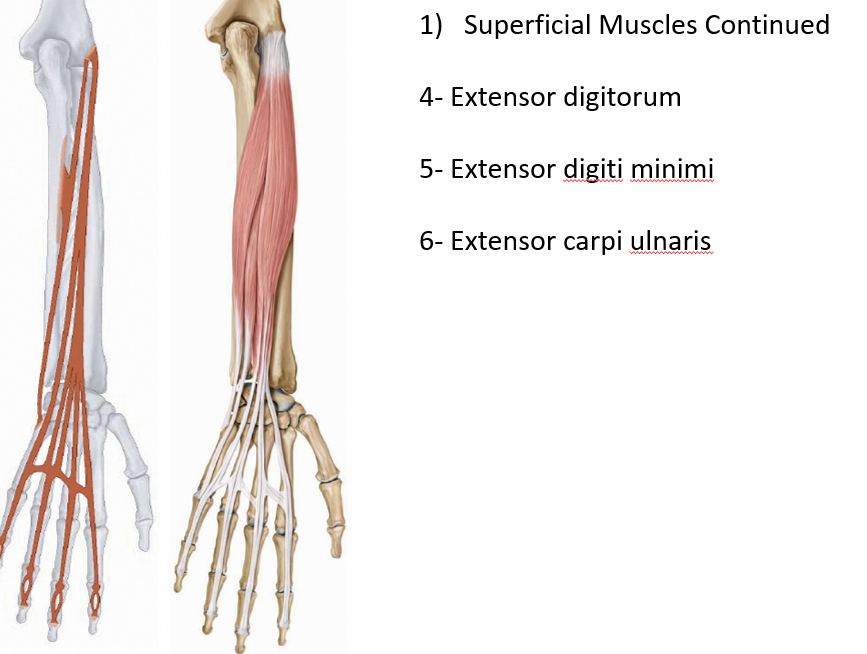
or: extensor digitorum
insert: 5th digit
insert: 5th digit
162
or and insertion extebnsor carpi ulnaris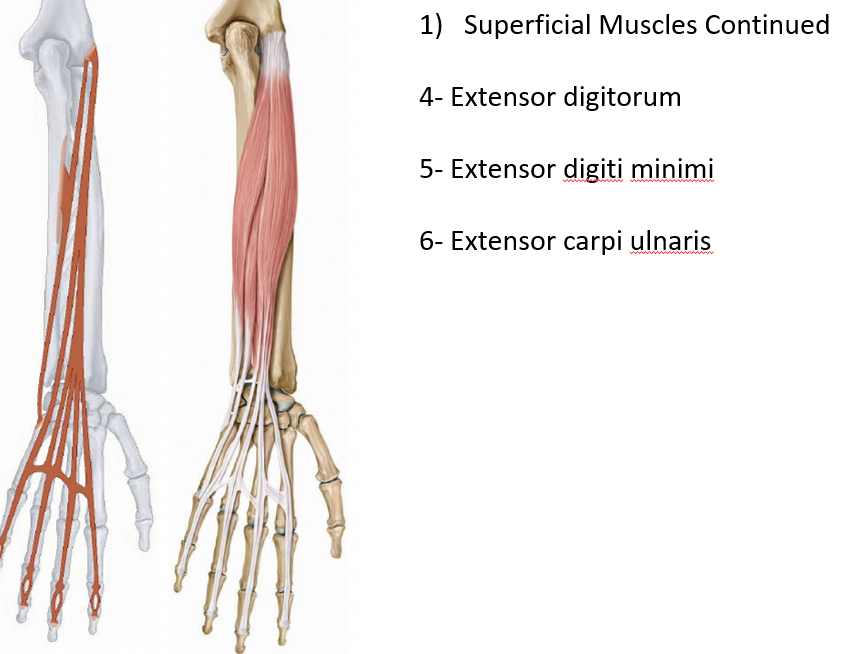
or: common extensor tendon
insert: base 5th metacarpal
insert: base 5th metacarpal
163
innervation extensor digitorum, extensor digiti minimi, extensor carpi ulnaris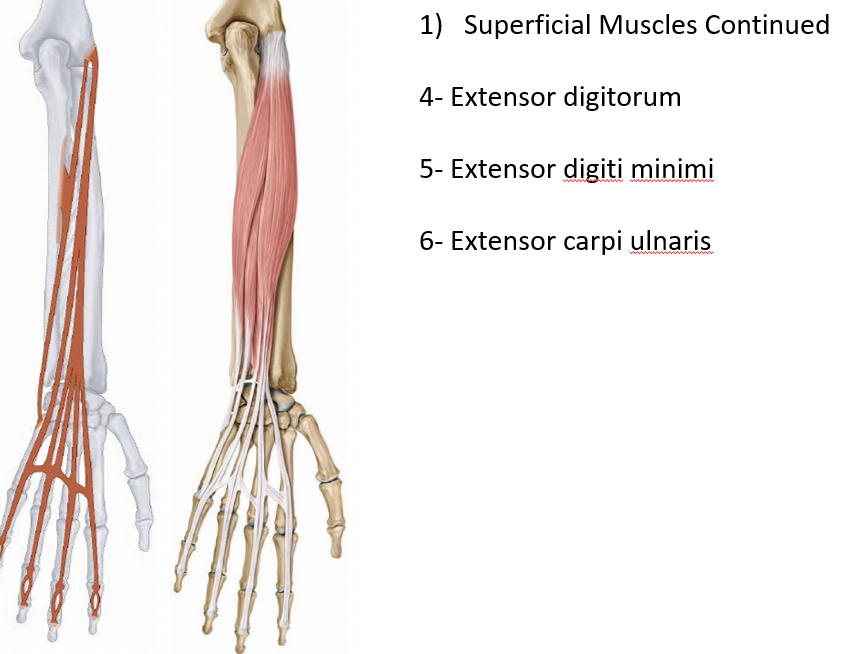
radial n
164
what arteries run the anterior forearm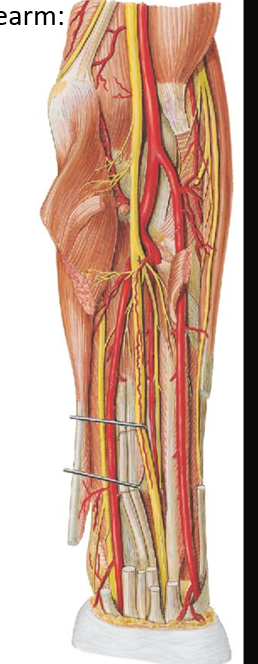
radial to radial recurrent
ulnar to ulnar recurrent and common interossus to anterior and posterior interosseus
ulnar to ulnar recurrent and common interossus to anterior and posterior interosseus
165
or and in supinator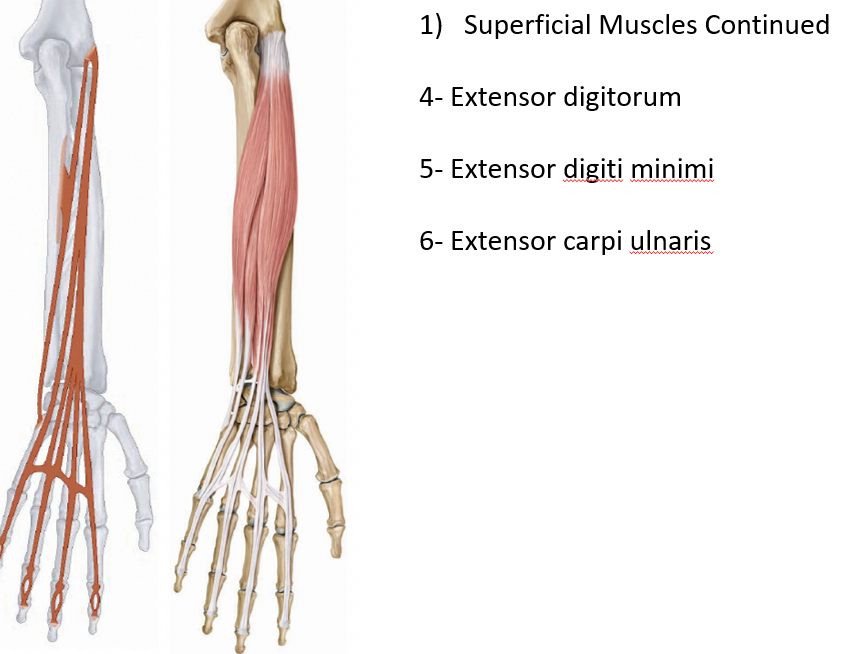
or: lateral epicondyle
in: radius and ulna
in: radius and ulna
166
action supinator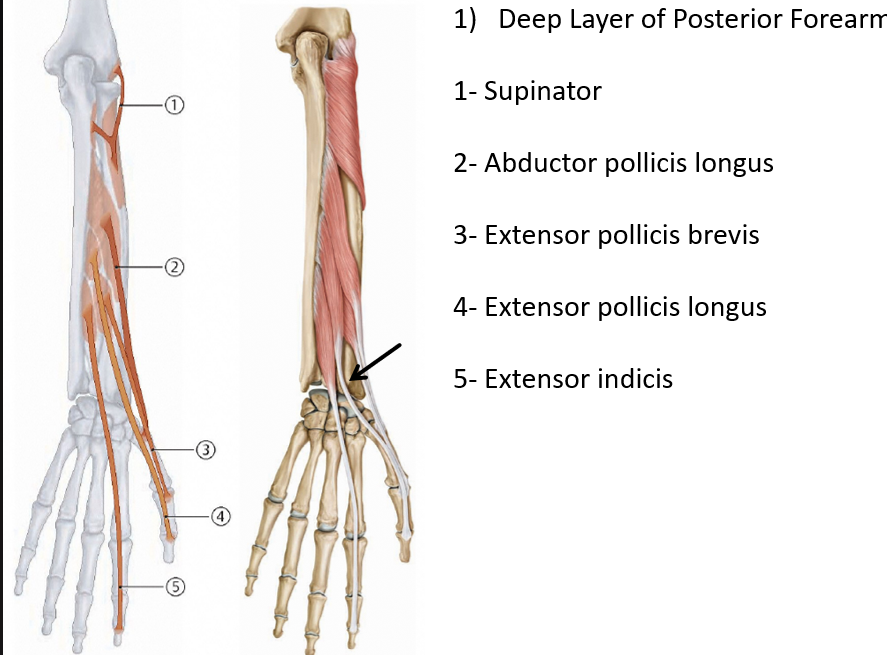
supinates forearm
167
or and insertion abductor pollicis longus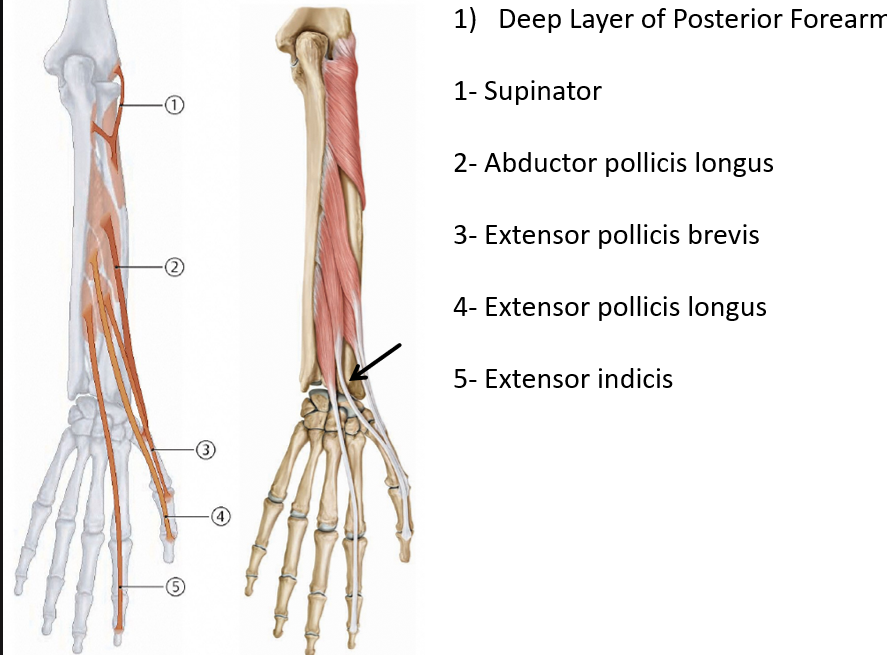
or: interroseus membrane and radius
insert: thumb
insert: thumb
168
action abductor pollicis longus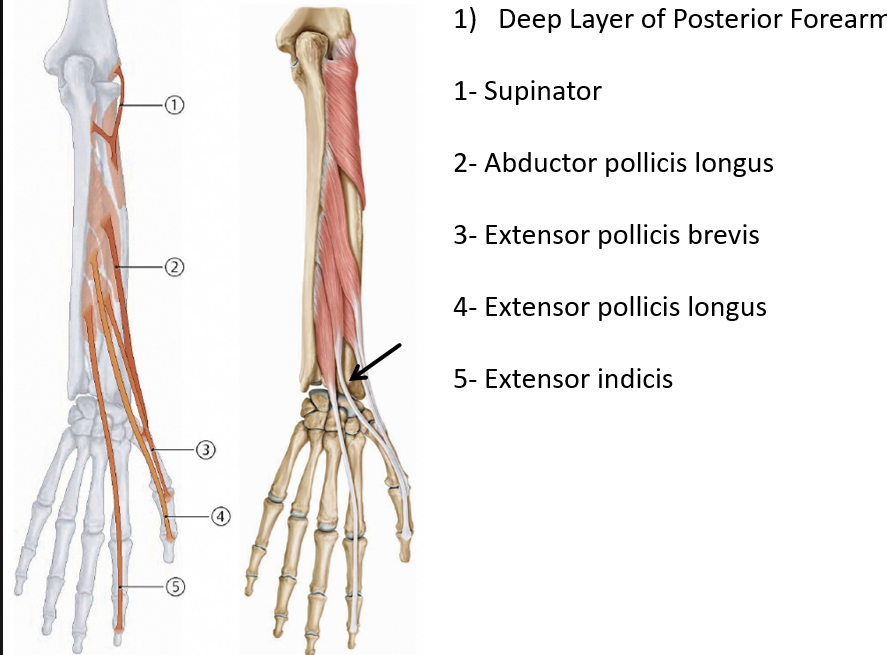
abduct thumb
169
or and insertion extensor pollicis brevis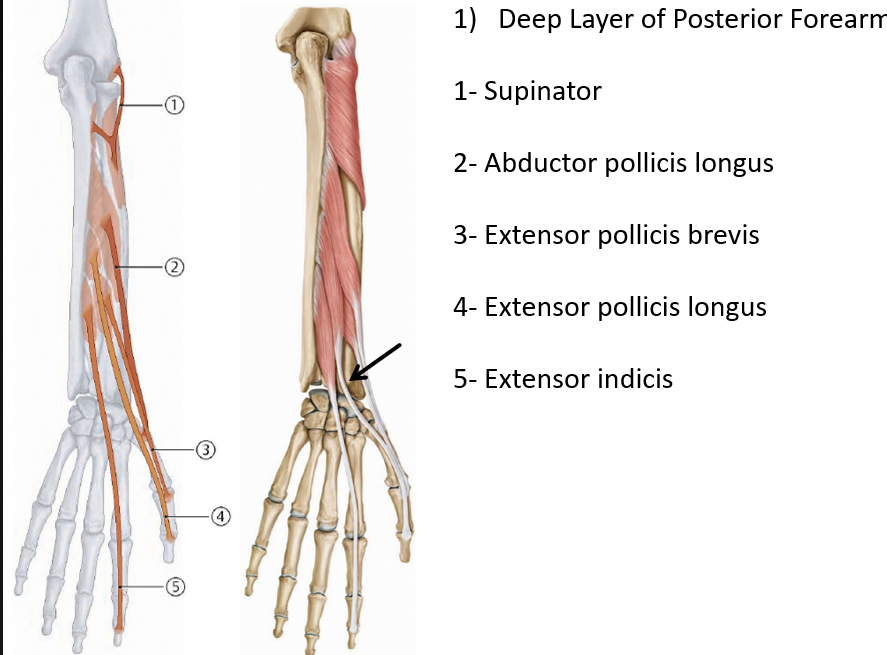
or: interroseus membrane
insert: prox phalynx of thumb
insert: prox phalynx of thumb
170
or and insert extensor pollicis longus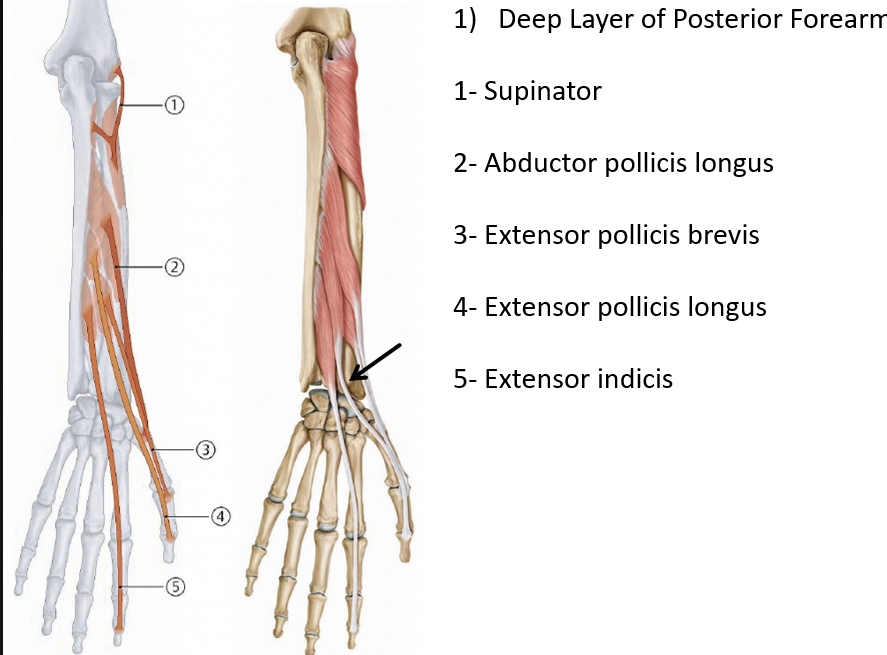
or: ulna
insert: distal phalynx of thumb
insert: distal phalynx of thumb
171
action extensor pollicis longus and brevis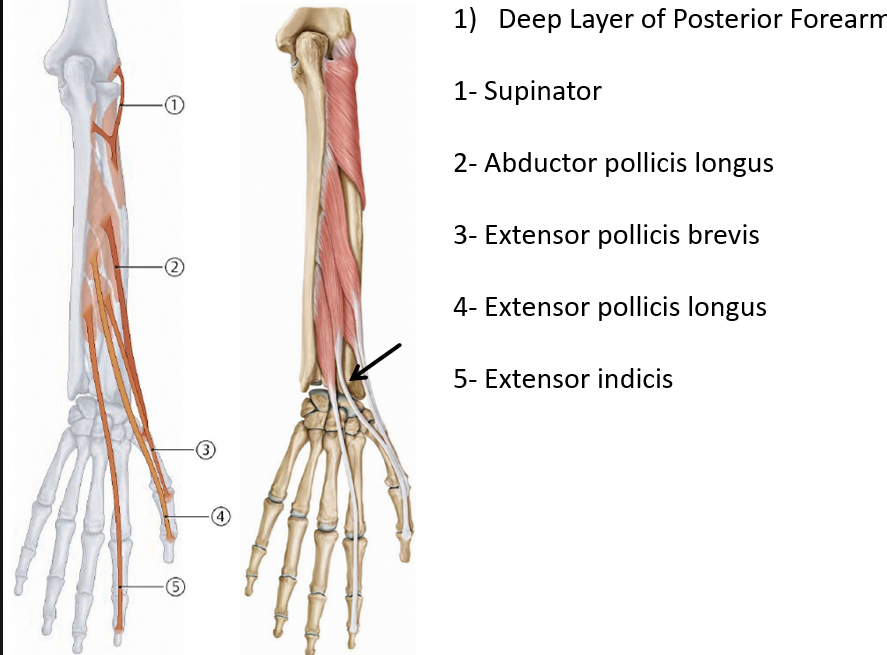
extend thumb
172
or and insertion extensor indicis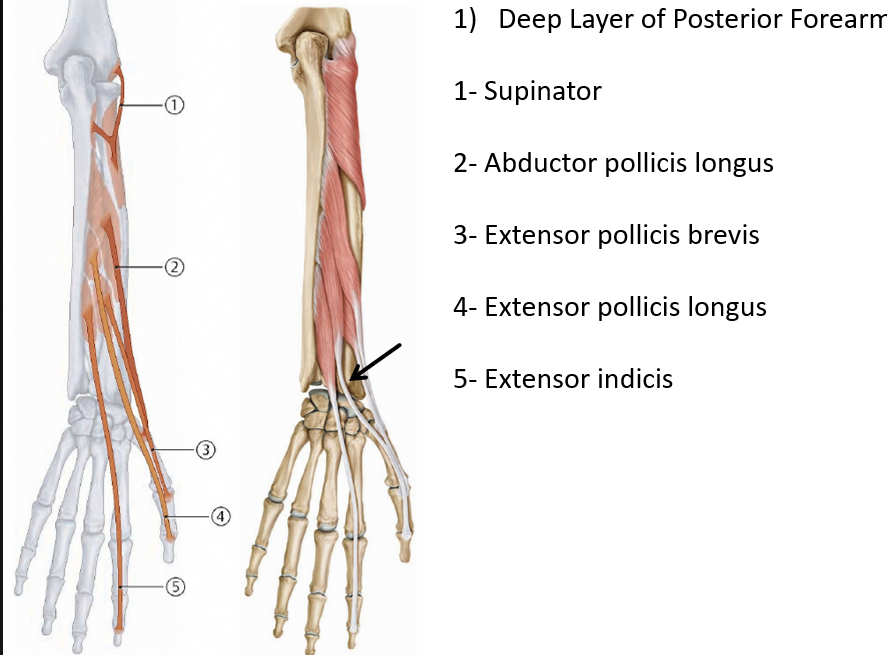
or: ulna
insertion: distal phalynx 2nd digit
insertion: distal phalynx 2nd digit
173
action ectensor indicis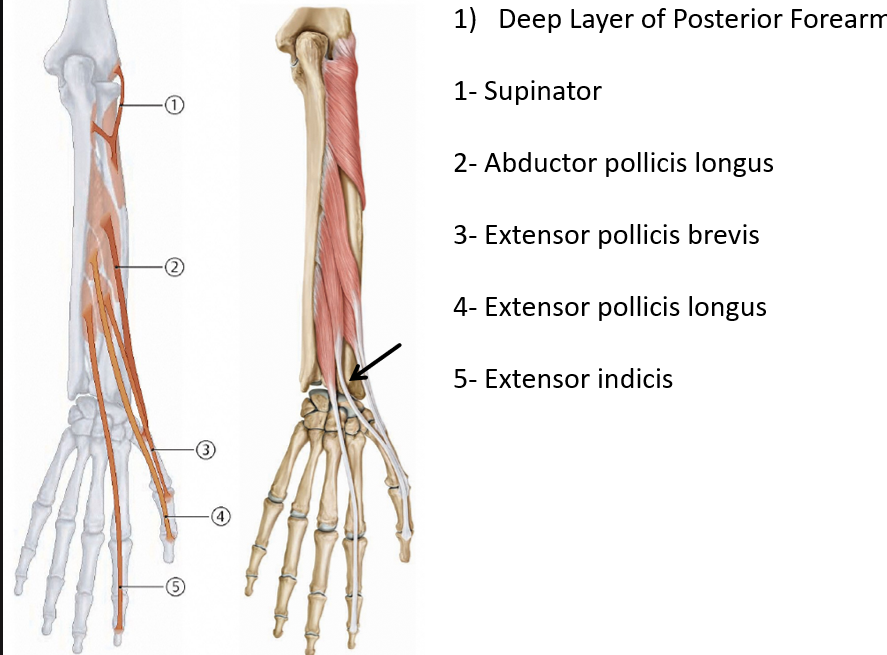
extend 2nd digit
174
what innervates the muscles of the deep posterior forearm: supinator, abductor pollicis longus, extensor pollcis brevis, extensr pollucis longus, extensor indicis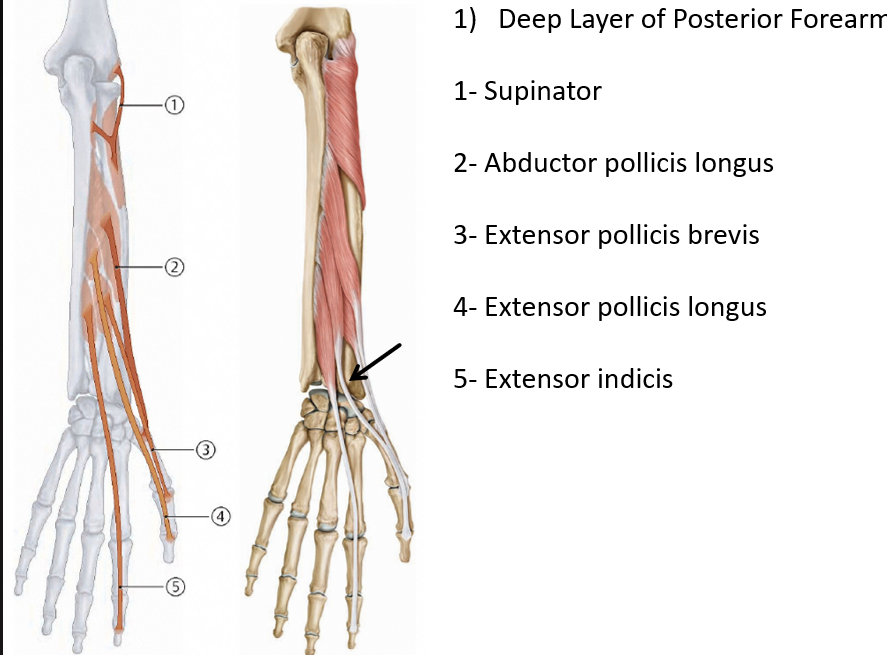
radial n
175
this is where muscles in the extensor compartment of the hand insert into and helps give find motor control to the digits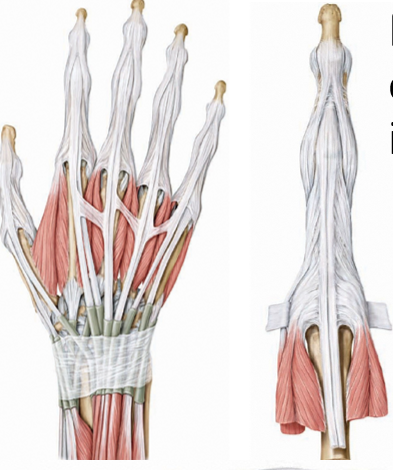
extensor hood
176
what is the artery that supplies the posterior forearm; what does it branch from?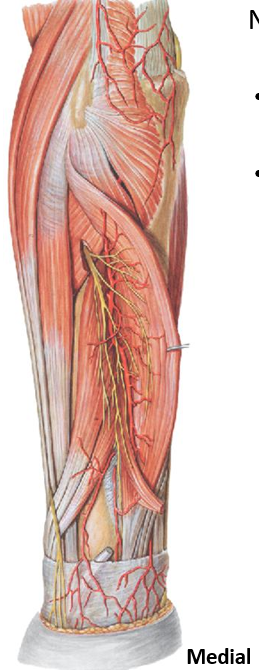
poisterior interosseus artery; common interosseus of ulnar a.
177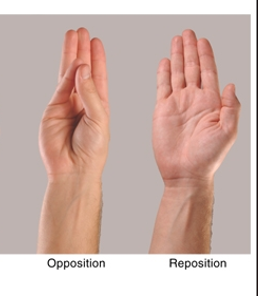
Image occlusion: name the hidden labels
178
Image occlusion: name the hidden labels
179
this is the name for the deep fascia of the hand that covers the palmar brevis muscle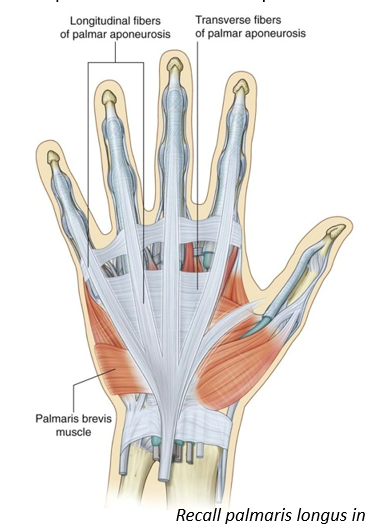
palmar aponeurosis
180
name for the hand muscles that act on the thumb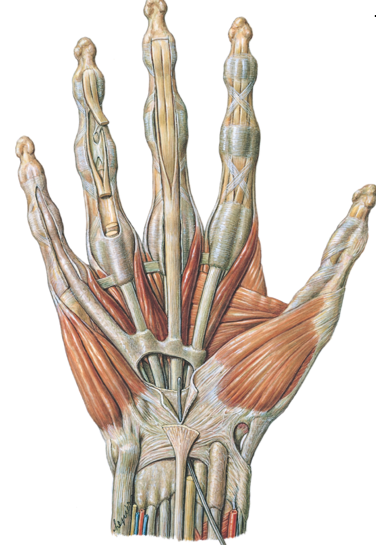
thenar muscles: flexor pollicis brevis, abductor pollicis brevis, opponens pollicis
181
or and insertion flexor pollicis brevis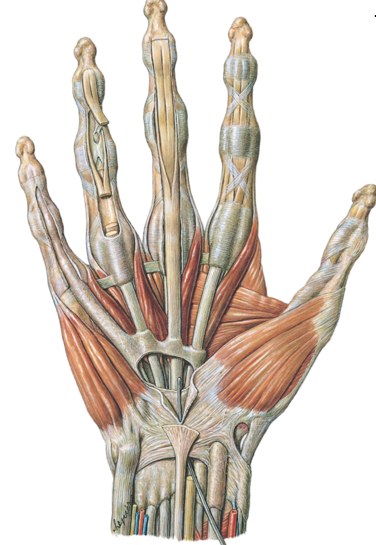
or: flexor retinaculum
in: thumb
in: thumb
182
or and insertion abductor policis brevis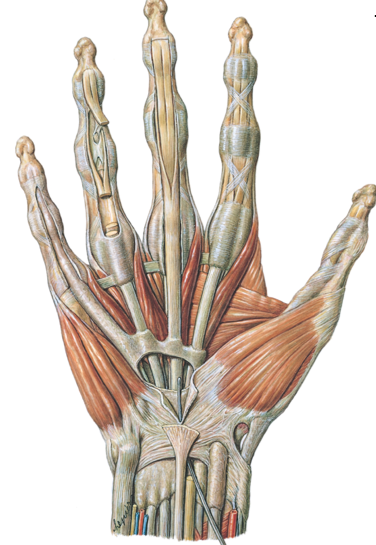
or: flexor retinaculum
insert: thumb
insert: thumb
183
or and insertion opponens pollicis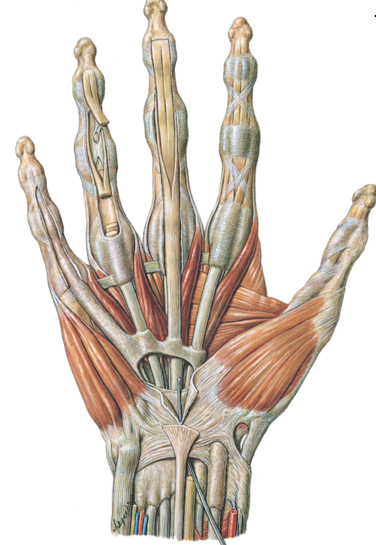
or and insertion on the thumb
184
hand muscles that act on the 5th digit
hypothenar muscles: flexor digiti minimi brevis, opponens digiti minimi, abductor digiti minimi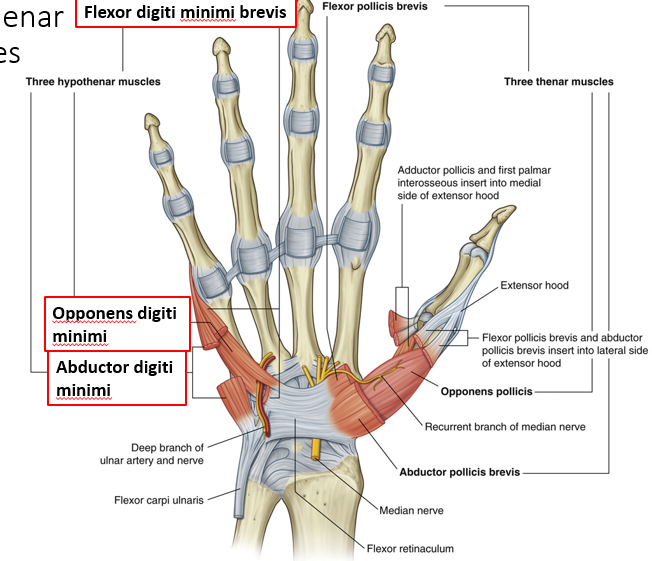
185
or and insert flexor digiti minimi brevis and abductor digiti minimi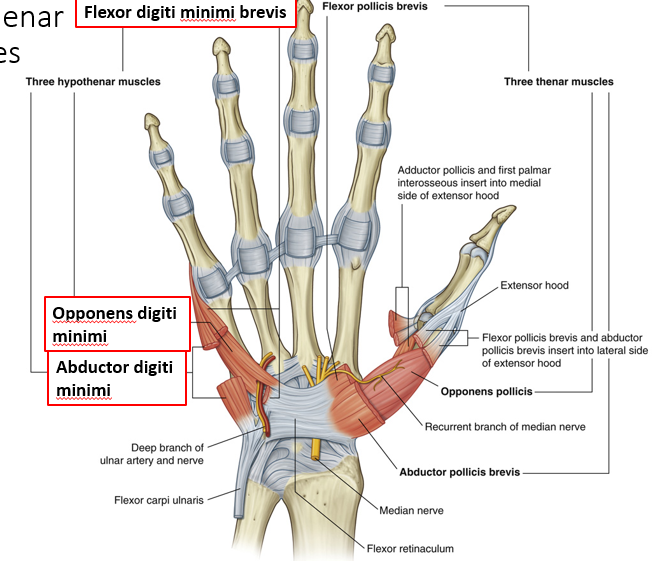
orL flexor retinaculum
insert: 5th digit
insert: 5th digit
186
opponens digiti minimi origin and insert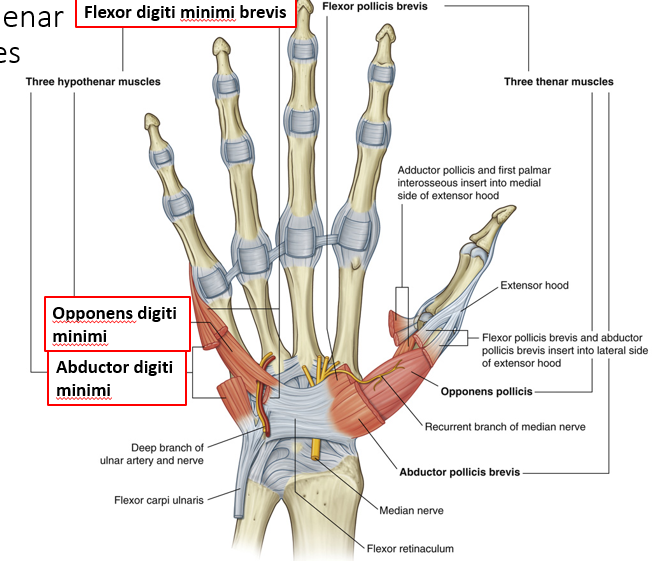
5th digit
187
or and insert adducxtor pollicis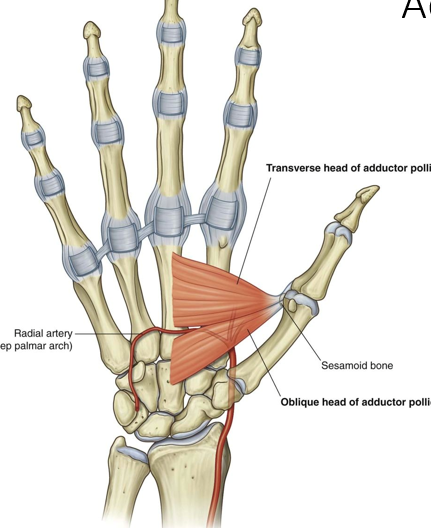
or: third betacarpal
insert: thumb
insert: thumb
188
actions adductor pollicis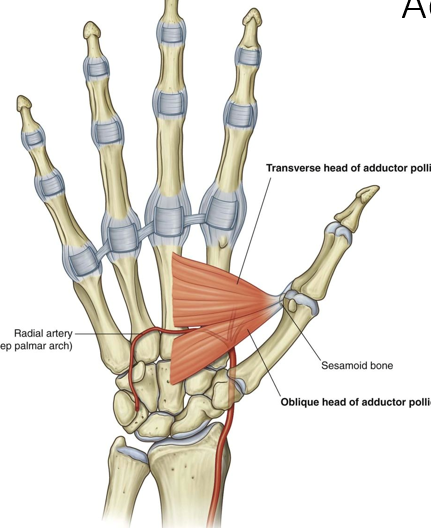
adduct thumb
189
origin and insertion lumbricals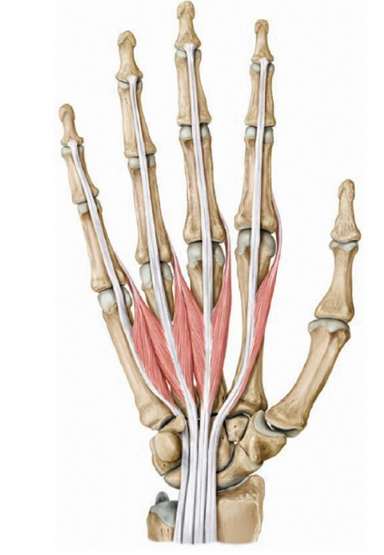
or: tendons of FDP
insert: dorsal hood
insert: dorsal hood
190
actions lumbricals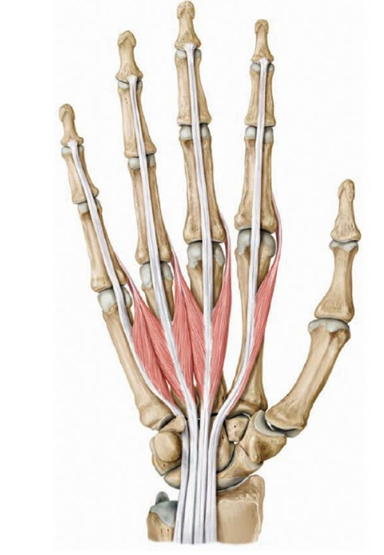
flex MP joint
extend IP and DIP joints
extend IP and DIP joints
191
innervation lumbricals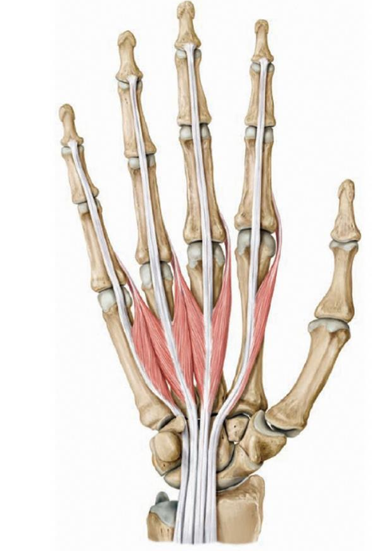
1 and 2nd median nerve
3rd and 4th ulnar n
3rd and 4th ulnar n
192
or and insert dorsal interossei (Dabs)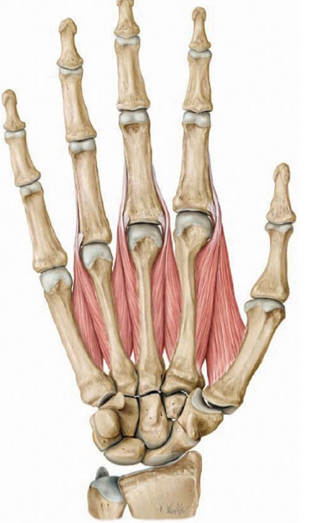
or: metacarpals
insert: dorsal hood
insert: dorsal hood
193
action dorsal interossei (dabs)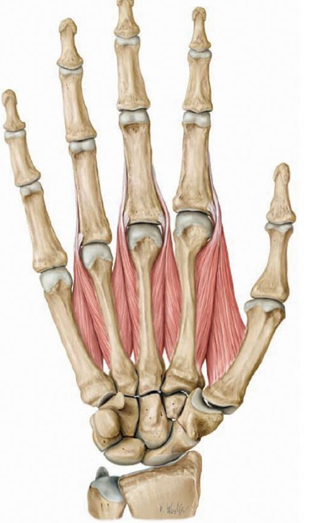
abduct fingers at MP joints
194
palmar interossei (pads) or and insert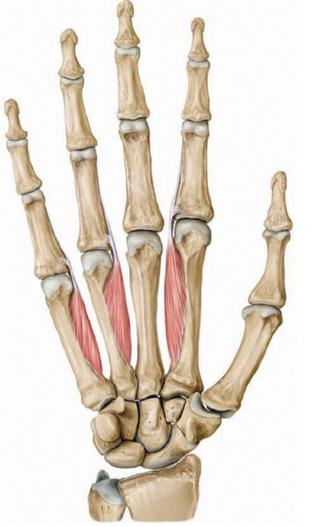
or: metacarpals
insert: dosral hood
insert: dosral hood
195
palmar interossei (pads) action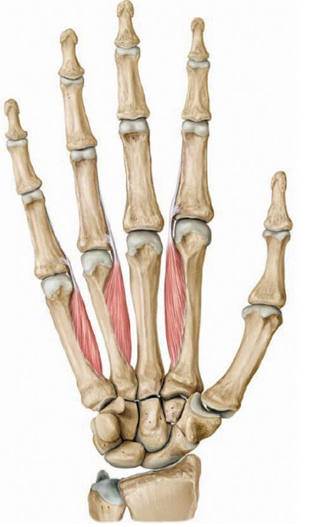
adduct figers at MP joint
196
what is the major contrbuter to the superficial palmar arch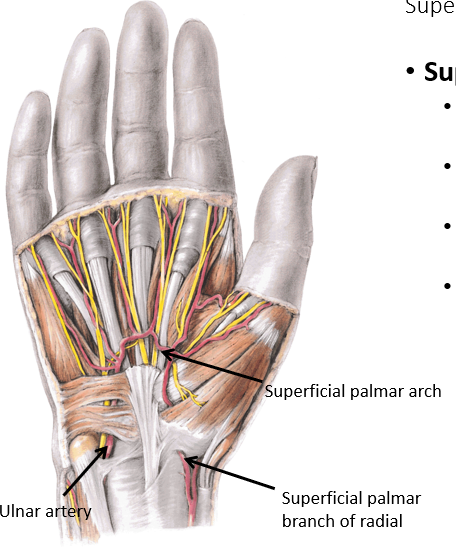
ulnar artery
197
what is the major contributer to the deep palmar arch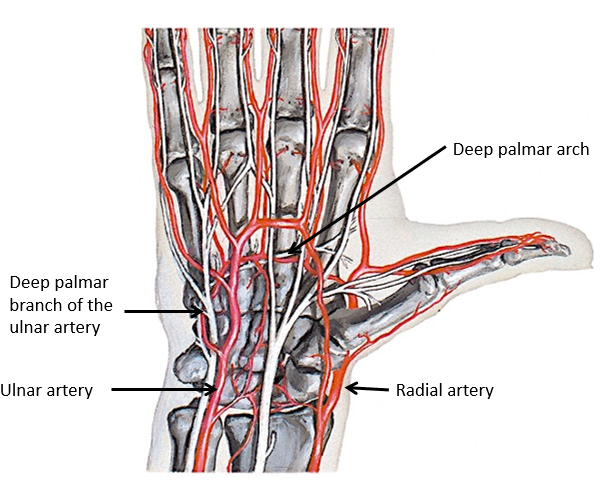
radial a.
198
what innervates the hypothenar muscles
ulnar n
199
what innervates the adductor pollicis m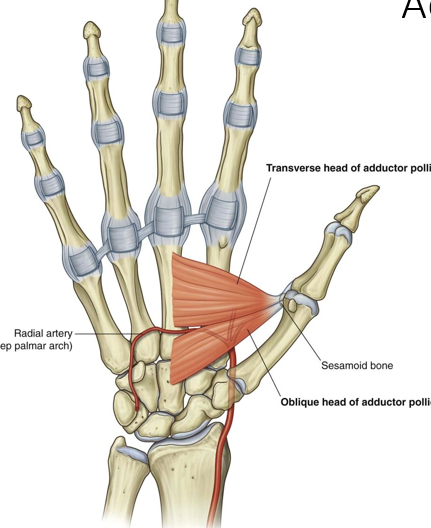
ulnar n
200
what innervates the interossei (Dabs and Pads)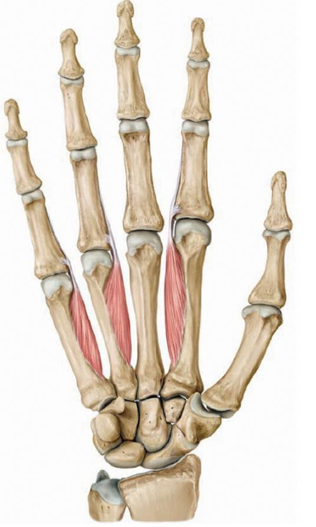
ulnar n
201
what lives in the guyon's tunnel and can be impinged
ulnar n and artery: palmar arches branch before this so palmar n wont be fdamaged here but superficial and deep ulnar effected
202
what innervates the opponens pollices?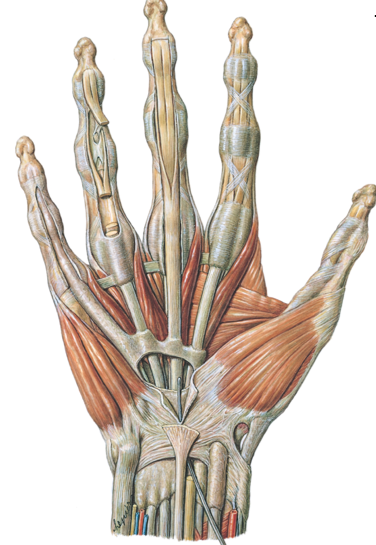
median n
203
what innervates the anductor pollicis brevis and flexor policis brevis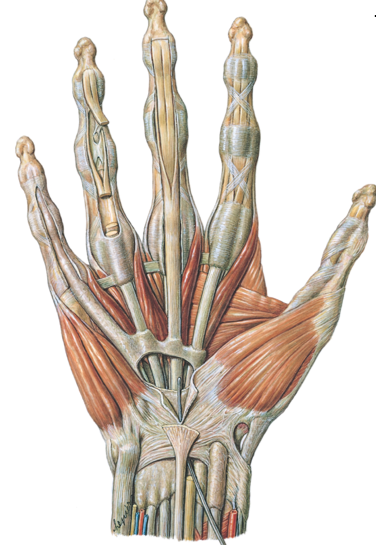
median n
204
sensory btranch of median n that innervates skin of lateral palm
superficial palmar branch
205
what two tendons line the snuff box
lateral: EPB
medial: EPL
medial: EPL
206
what lives in the snuff box
radial artery
207
what does this show?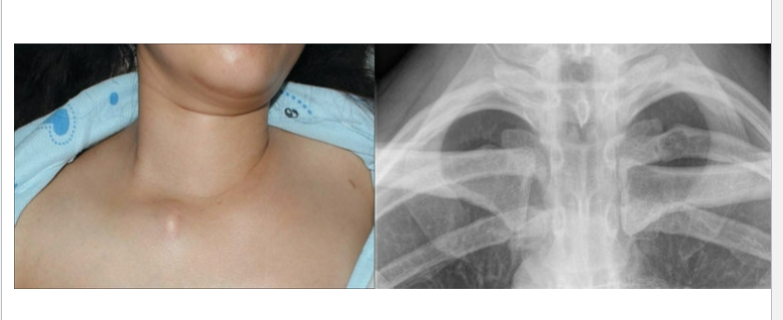
disloacation of the sternoclavicular joint
208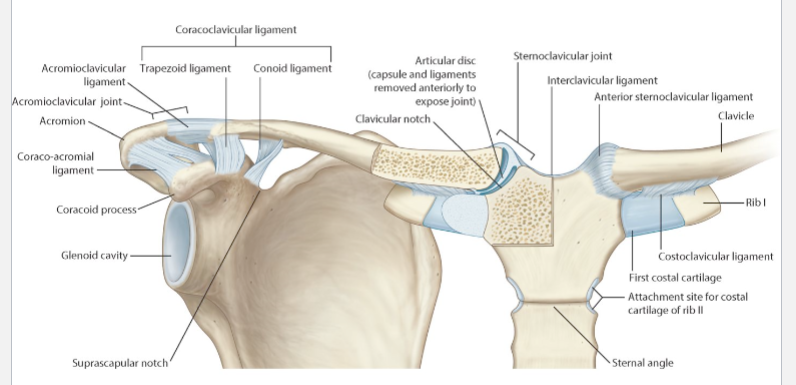
Image occlusion: name the hidden labels
209
Image occlusion: name the hidden labels
210
what does this show?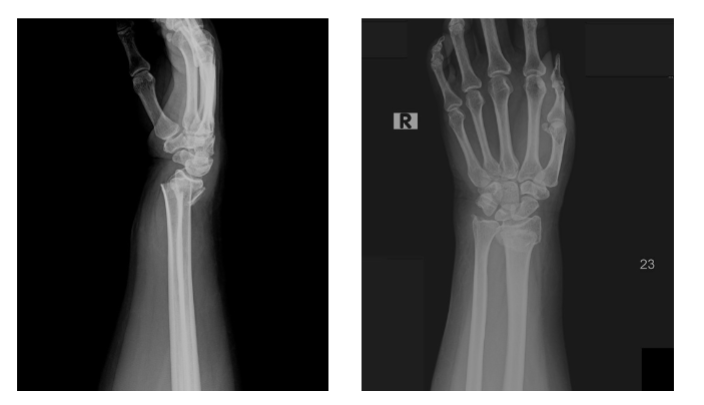
collie's fracture: fracture of the dorsa;l radial head
211
a condition where multiple peripheral nerves throughout the body are damaged, leading to a range of symptoms
polyneuropathy
212
a physical exam test used to assess for nerve damage or compression. It involves tapping over a nerve, and a positive result is when the patient experiences tingling or "pins and needles" sensations in the area supplied by that nerve. 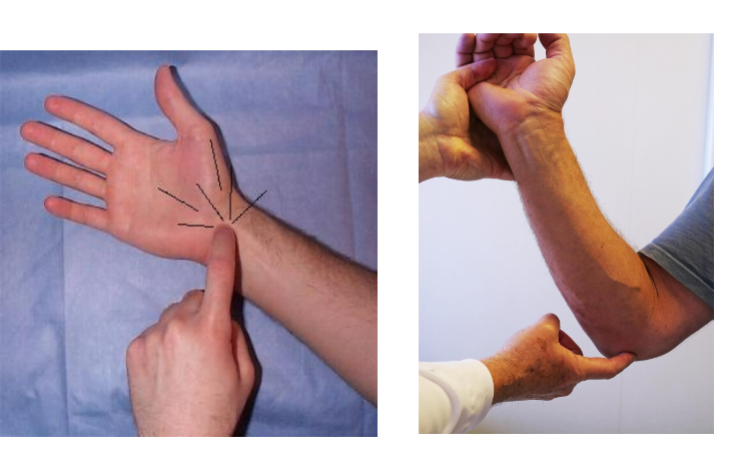
tinel's sign.
213
a break in the neck of the fifth metacarpal bone, located in the hand near the pinky finger. It typically occurs when someone punches something with a closed fist, often a hard object or another person's face.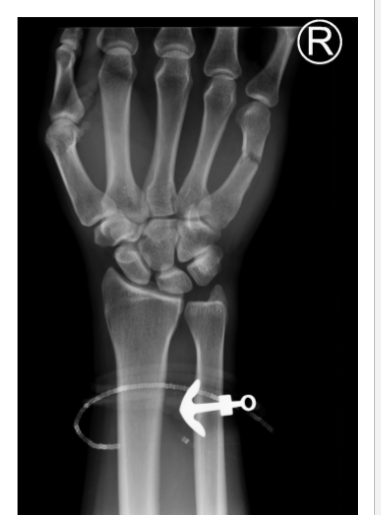
boxer's fracture
214
what is damaged in klumpke's palsy?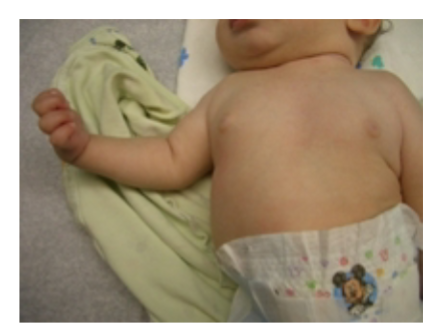
lower trunk ofd brachial plexus
215
what does pain in the shoulder indicate (reffered pain)
from peritonitis, gall bladder inflamations, hepatic abscess, pericarditis, pleurisy
216
what does pain in the chest wall and medial left upper limb indocate
reffered pain from heart
217
pathological thickening and shortening of the longitudinal bundles of the
palmar aponeurosis; draws fingers (usually digits 4 & 5) into palm to such a degree that they become
useless. Can mimic an ulnar claw since it commonly affects digits 4 & 5
palmar aponeurosis; draws fingers (usually digits 4 & 5) into palm to such a degree that they become
useless. Can mimic an ulnar claw since it commonly affects digits 4 & 5
dupuytren contracture
218
hairlkine fracture to the hook of the hamayte, pain/tenderness in the palm or wrist
golfer's wrist
219
reconstruction of a torn ulnar collateral ligament; carries serious risk of injury to
the ulnar nerve as it passes posterior to the medial epicondye
the ulnar nerve as it passes posterior to the medial epicondye
tommy john surgery
220
tests the integrity of communication between the ulnar and radial arteries in the
hand; pt will make a tight fist and the radial and ulnar arteries are compressed at the wrist with
your fingers, the pt opens the hand (it should appear pale); the ulnar compression is removed →
if the circulation is intact, normal color will return in a few seconds, if the hand remains pale it
indicates that ulnar circulation to the hand is insufficient
hand; pt will make a tight fist and the radial and ulnar arteries are compressed at the wrist with
your fingers, the pt opens the hand (it should appear pale); the ulnar compression is removed →
if the circulation is intact, normal color will return in a few seconds, if the hand remains pale it
indicates that ulnar circulation to the hand is insufficient
Allen's test
221
where is sympathetic innervatuon fro the upper lumb from
T2-7
222
entrapment of the median nerve between heads of the pronator
teres (or fibrous bands of FDS); signs/symptoms are pain in proximal forearm
teres (or fibrous bands of FDS); signs/symptoms are pain in proximal forearm
pronator syndrome
223
Results in paresthesia of lateral 3 1/2 fingers and distal portion of palm (region
of palm innervated by the palmar cutaneous br. of median nerve is spared since
this nerve DOES NOT pass through the carpal tunnel) with paresis (weakness) in
flexion, abduction and opposition of the thumb, wasting of the thenar eminence,
and loss of the grasp reflex
of palm innervated by the palmar cutaneous br. of median nerve is spared since
this nerve DOES NOT pass through the carpal tunnel) with paresis (weakness) in
flexion, abduction and opposition of the thumb, wasting of the thenar eminence,
and loss of the grasp reflex
carpal tunnel syndrome
224
acute brachial plexus neuritis; bilateral in 20% of pts
b. most commonly affects long thoracic nerve, musculocutaneous n and axillary
c. etiologies: diabetes, lupus, viral infection, immunizatio
b. most commonly affects long thoracic nerve, musculocutaneous n and axillary
c. etiologies: diabetes, lupus, viral infection, immunizatio
parsonage turner syndrome
225
press thumb onto patient’s carpal tunnel for 30 seconds; pain or paresthesia in
median nerve territory is a positive test – this is the most sensitive test for carpal tunnel
syndrome!
median nerve territory is a positive test – this is the most sensitive test for carpal tunnel
syndrome!
durken's test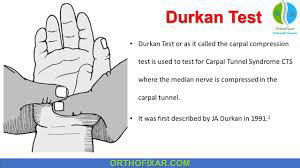
226
chronic inflammation at the common origin of the forearm extensor
muscles, especially ECRB; pt presents with pain over lateral elbow; may lead to entrapment of the
posterior interosseus nerve (see radial tunnel syndrome, above)
muscles, especially ECRB; pt presents with pain over lateral elbow; may lead to entrapment of the
posterior interosseus nerve (see radial tunnel syndrome, above)
lateral epicondylithis (tennis elbow)
227
inflammation at the common origin of the forearm flexor muscles;
pt presents with pain over medial elbow, PE = pain with forearm flexion against resistance
pt presents with pain over medial elbow, PE = pain with forearm flexion against resistance
medial epicondylithis (golfer's elbow)
228
damage to extensor expansion; results in flexion of middle and
extension of distal phalange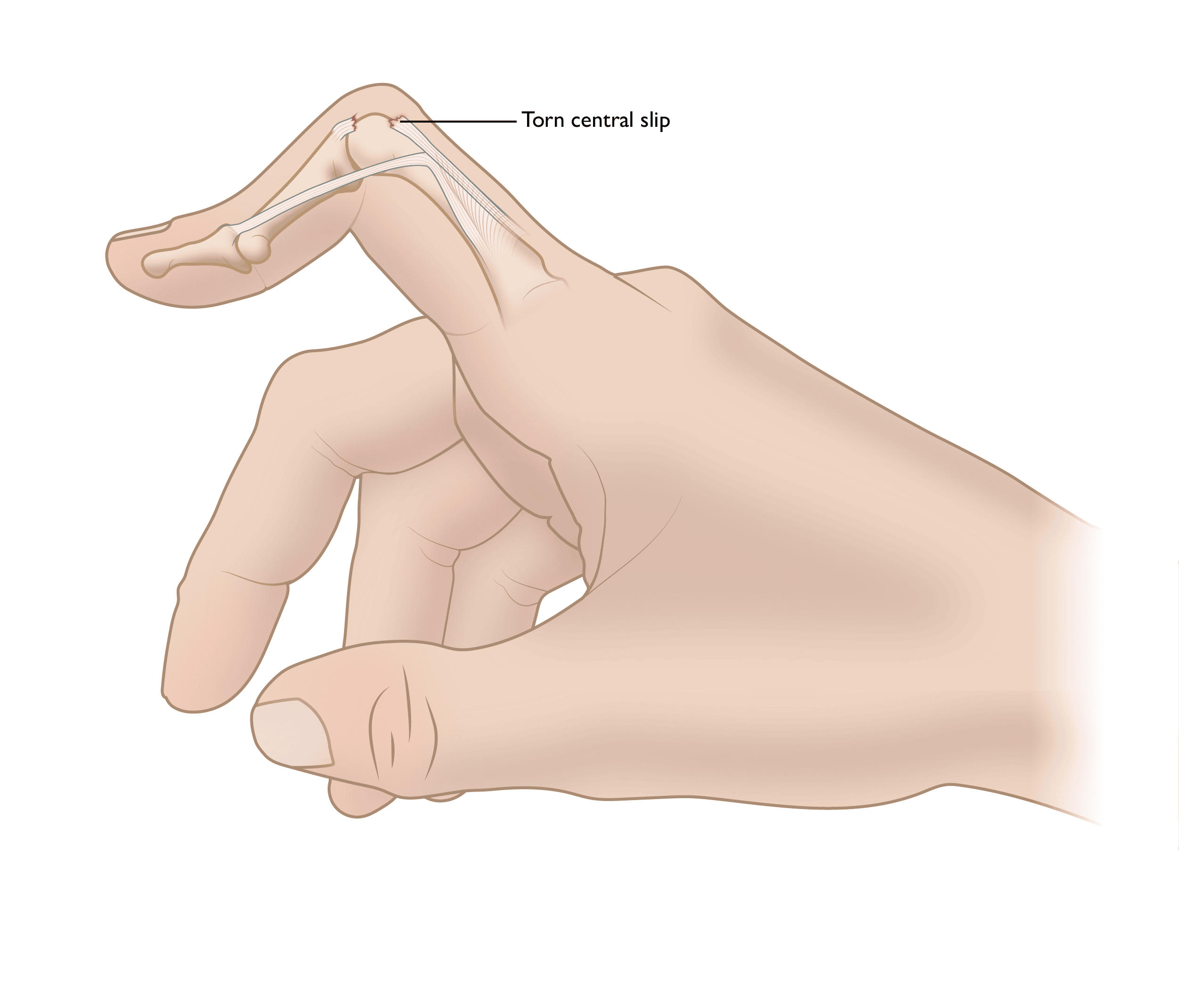
extension of distal phalange
boutonniere deformity
229
partial avulsion of extensor tendon; flexion of distal phalanx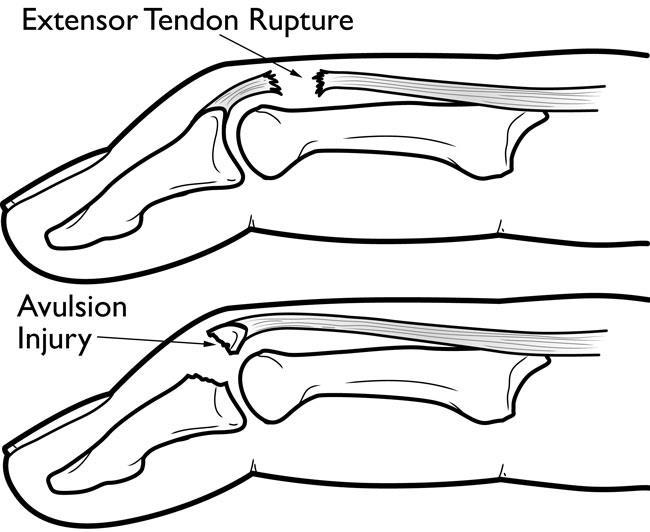
mallet finger
230
stenosing tenosynovitis involving flexor tendon; results in “clicking” during
flexion/extension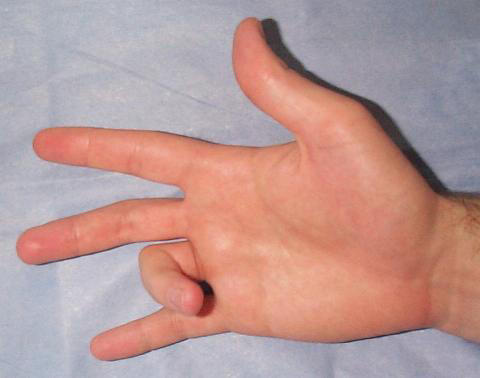
flexion/extension
trigger finger
231
tearing of the flexor digitorum profundus tendon from the distal phalanx (from
getting your finger caught in the neck of someone’s jersey); affected finger is stuck in extension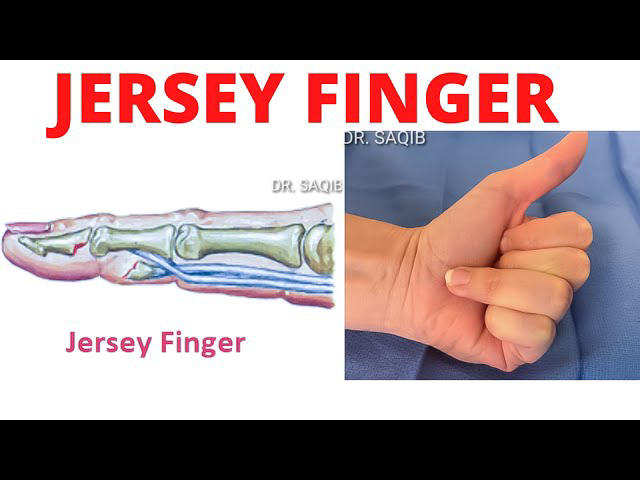
getting your finger caught in the neck of someone’s jersey); affected finger is stuck in extension
Jersey finger