Pharmacology S1 U2
Study these flashcardsFree · spaced repetition · iPhone, Android, Mac & web
First 300 of 433 cards
1
a molecular target in a biological system
that responds specifically to a substance (i.e. drug)
that responds specifically to a substance (i.e. drug)
receptor
2
binda to and activates receotor/enzyme
agonist
3
binds to and deactivates recepor enzyme
antagonist
4
Includes the site where the
drug acts and the mechanism by which it produces
its effects (desired effects
drug acts and the mechanism by which it produces
its effects (desired effects
mechanism of action
5
(adverse): undesired effects of the drug- eg. blockers - heart: too much antihypertensive effect (cardiodepressive effect)- lungs: broncho-constriction, could be fatal in asthma or other
obstructive lung disorders
obstructive lung disorders
side effects
6
Conditions that preclude safe use of the
drug, eg. 1) comorbidities, eg., β-blockers contraindicated
in asthmatics, 2) co-administration with other drugs may
produce undesirable/altered effects, 3) not safe during
pregnancy or breast feeding, 4) others
drug, eg. 1) comorbidities, eg., β-blockers contraindicated
in asthmatics, 2) co-administration with other drugs may
produce undesirable/altered effects, 3) not safe during
pregnancy or breast feeding, 4) others
contraindications
7
An enhancement or reduction of a drug’s effect
when another drug is given concurrently
when another drug is given concurrently
drug interactions
8
Specific situations where a drug should not be
used because it may be harmful to the patient
A 23-year-old male with a history of asthma presents
to the emergency department with breathing difficulty.
Current medication includes salmeterol (β2 agonist) for
his asthma. A week ago he suffered from an
arrhythmia. Is propranolol indicated for his treatment?
used because it may be harmful to the patient
A 23-year-old male with a history of asthma presents
to the emergency department with breathing difficulty.
Current medication includes salmeterol (β2 agonist) for
his asthma. A week ago he suffered from an
arrhythmia. Is propranolol indicated for his treatment?
contraindications
9
The study of drug disposition in the body
• Focuses on changes in drug plasma
concentration
• Focuses on changes in drug plasma
concentration
pharmacokinetics
10
In order for a drug to exert an effect, it must
reach its ...
reach its ...
intended molecular target
11
make up pharmacokinetics
absorption, distribution, metaboism, excretion
12
prpocess of a substance entering blood circulation (usually in plasmA)
absorption
13
Dispersion or dissemination of substances
throughout the fluids and tissues of the body (to the site of
action)
throughout the fluids and tissues of the body (to the site of
action)
distribution
14
(biotransformation): may change the
substance to a more active form or inactive form
substance to a more active form or inactive form
metabolism
15
removal from the body
excretion
16
in general, only ___________ drigs can access tissues (not bound to proteins)
free
17
what is the common protein deugs bind to in the plasma
albumin
18
Passive diffusion through intracellular junctions (gap junctions);
driven by concentration gradient (e.g. ions (K
+
, Cl
)
driven by concentration gradient (e.g. ions (K
+
, Cl
)
aqueous diffusion
19
: Must pass across membranes; driven by concentration gradient*,
partition coefficient, pH/pKa** (e.g. steroid hormones/acidic or basic drugs
partition coefficient, pH/pKa** (e.g. steroid hormones/acidic or basic drugs
lipid diffusion
20
for substances too large or insoluble to
passively diffuse, use active transport or facilitated diffusion;
require specific receptors: e.g., peptides, amino acids, glucose
passively diffuse, use active transport or facilitated diffusion;
require specific receptors: e.g., peptides, amino acids, glucose
carrier mediated movement
21
process of binding to cell surface
receptor, engulfment by cell membrane, and carried into the cell
in vesicles; require specific receptors: e.g., iron, Vit B12
receptor, engulfment by cell membrane, and carried into the cell
in vesicles; require specific receptors: e.g., iron, Vit B12
endocytosis and exocytosis
22
2 determining factors to a drugs permiabikuty across a membrane (lipid membranes)
drugs acid or base properties and the aqueous partirion coefficient
23
ficks law equation that determines membrane permiaboility
rate of diffusion=(available surface area*concentration radient)/(resistance of membrane*thivkness of membrane)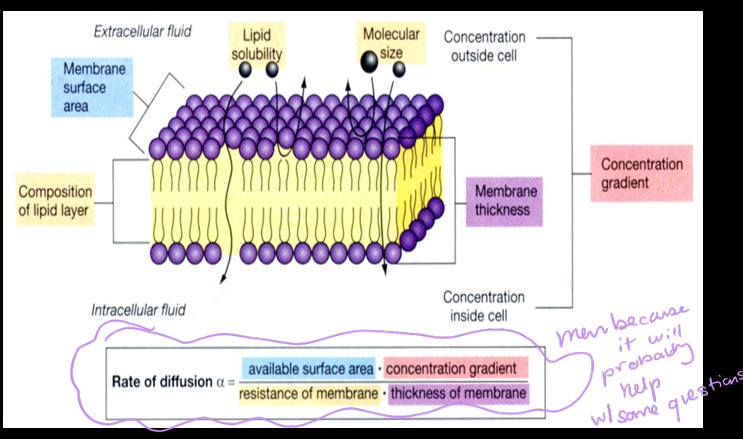
24
readily donates protons in aqueous solutions →
deprotonated/ionized (e.g., aspirin)
deprotonated/ionized (e.g., aspirin)
weak acid
25
accepts protons in aqueous solutions
→ protonated/ionized (e.g., amphetamine
→ protonated/ionized (e.g., amphetamine
weak base
26
the uncharged s[pecies in the acid base reactions is more _ soluable
lipid
27
pH at which the acid or base is equally protonated and
non-protonated (50:50), also ionized:un-ionized
(charged:uncharged
non-protonated (50:50), also ionized:un-ionized
(charged:uncharged
pKa
28
henderson hasselbach equation
pH= pKa+ log (A-/HA)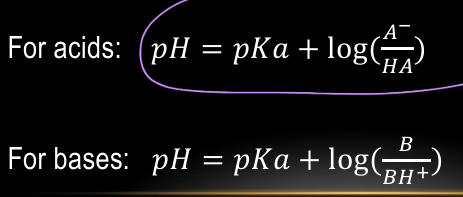
29
weak acids are excreted faster in _______________ urone
alkaline
30
what can make urine more alkaline
sodium bicarbonate (NaHCO3)
31
what makes urine more acidic
Ammonium chloride (NH
4
Cl), Ascorbic acid
(Vit C), citric acid (e.g. cranberry juice
4
Cl), Ascorbic acid
(Vit C), citric acid (e.g. cranberry juice
32
weak bases are excreted faster in ______ urine
acidic
33
diffusion will continue until ________ is reached
equilibreium
34
The ratio of solute concentration, at equilibrium, between two
immiscible solvent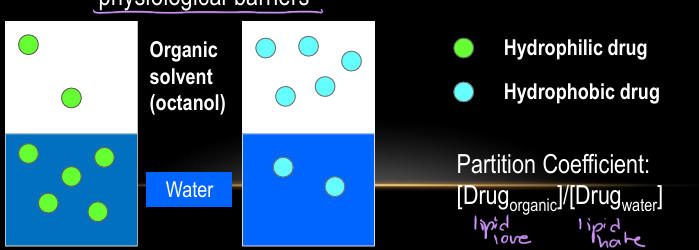
immiscible solvent
partition coefficient
35
partition coefficient equation
part coefficient= drug organic/drig water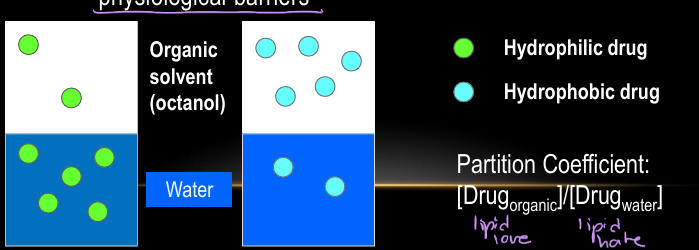
36
determines the
rate of diffusion across physiological barriers
rate of diffusion across physiological barriers
apparent partition coeffoicient (PC)
37
apparent partition coeffcient (PC) equation
apparent PC= PC* fraction non-ionized drug
38
target drug concentration in plasma (usually initial adninistration)
Ct
39
concentration at steady state (maintaining concentration)
CT or Css
40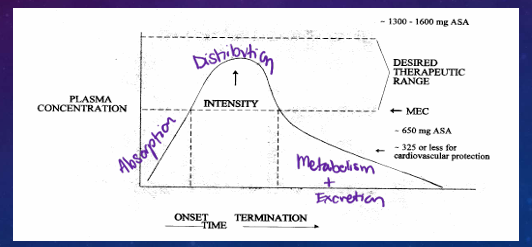
Image occlusion: name the hidden labels
41
Image occlusion: name the hidden labels
42
Image occlusion: name the hidden labels
43
- threshold
PC. Enough drug enters tissues to interact with
receptors and produce effect
PC. Enough drug enters tissues to interact with
receptors and produce effect
minimal effective concerration (MEC)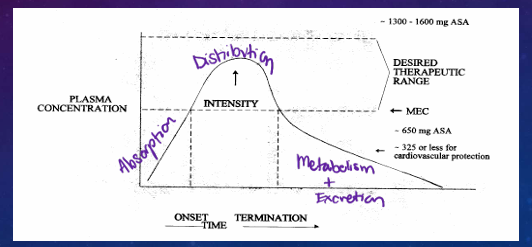
44
the desired effect of a drug is achieved aboce ______________
MEC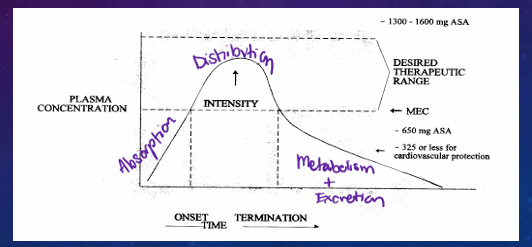
45
(%) of drug dose that reaches
the systemic circulation via a given route of
administration
the systemic circulation via a given route of
administration
bioavailability (F)
46
F (bioavailability equation
amt absorbed/amt administered
47
factors that effect bioavailabilkiuty
• Route of administration
• Chemical-Physical properties of the drug
• Patient-specific factor
• Chemical-Physical properties of the drug
• Patient-specific factor
48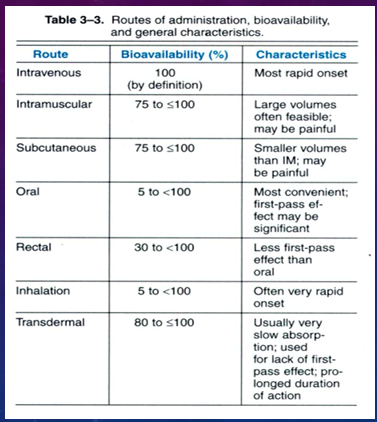
Image occlusion: name the hidden labels
49
Image occlusion: name the hidden labels
50
Image occlusion: name the hidden labels
51
Image occlusion: name the hidden labels
52
Image occlusion: name the hidden labels
53
Image occlusion: name the hidden labels
54
Image occlusion: name the hidden labels
55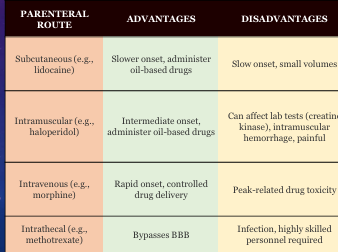
Image occlusion: name the hidden labels
56
Image occlusion: name the hidden labels
57
Image occlusion: name the hidden labels
58
Image occlusion: name the hidden labels
59
how to calculate dosage when changing to new route
D1F1=D2F2
60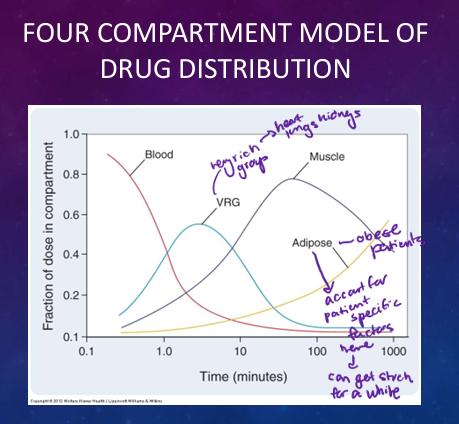
Image occlusion: name the hidden labels
61
Image occlusion: name the hidden labels
62
Image occlusion: name the hidden labels
63
areas where drug is not used or has no
effec
effec
sites of loss
64
what may cross the BBB
low MW (200-300 Da) and lipid soluble drugs may cross
65
what may cross the placental barrier
not very selective (many drugs pass through and may
affect fetus)
• Subject to usual physicochemical properties (MW < 1000 Da, lipid solubility, free
vs protein-bound, etc.
affect fetus)
• Subject to usual physicochemical properties (MW < 1000 Da, lipid solubility, free
vs protein-bound, etc.
66
Binds more basic drugs, e.g., lidocaine, quinidine, propranolol
a1-acid glycoprotein
67
Vd equation
dose mg/plasma drug conc (mg/ml)
68
Highly absorbed drug (high bioavailability) – (higher/lower ) dose
• Highly distributed drug (high V
d
) –(higher/lower dose)
• Highly distributed drug (high V
d
) –(higher/lower dose)
lower; higher
69
after phase 1, drugs become...
metabolites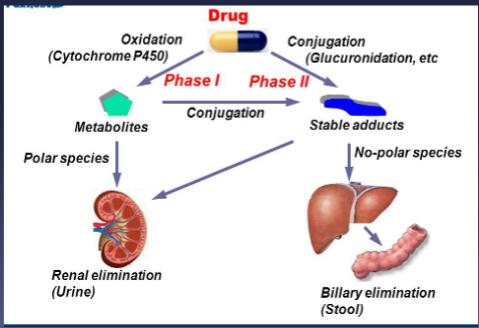
70
after phase 2, drugs become...
stable adducts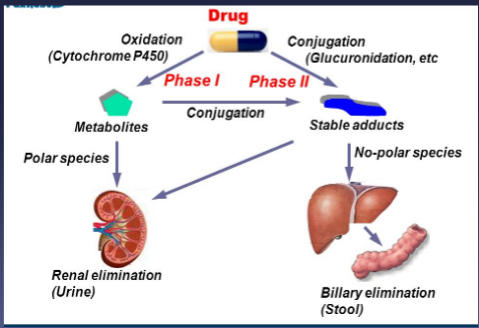
71
do hydrophobic or hydrophilic drugs have a higher therapurtic effects (generally)
hydrophobic
72
Render the drug less toxic (while preparing it for
conjugation)
-simpler reactions
-assist with fecal and urine elimination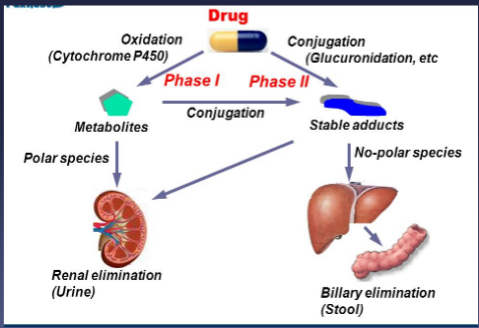
conjugation)
-simpler reactions
-assist with fecal and urine elimination
phase 1 rxn
73
conjugate the drug: make the drug more redaily excretted
-typically add bulkier adducts to group
-assist in fecal elimination
-typically add bulkier adducts to group
-assist in fecal elimination
phase II rxn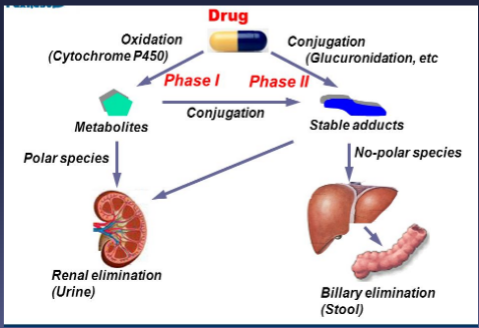
74
major sites of metabolism in the body
liver (most), kidneysm lungs, skin, intrestines
75
thes edrugs take advantage of the first pass effect to activate the drug
prodrugs
76
examples of prodrugs (x3)
tamoxifen, enalapril (ace inhibitors), L dopa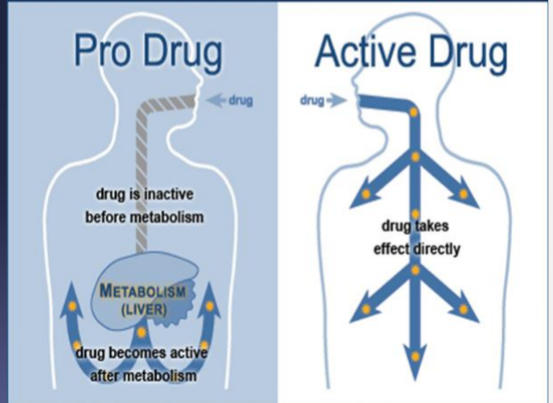
77
phase 1 reactions include these types of rxns
oxidation, reduction, hydrolysis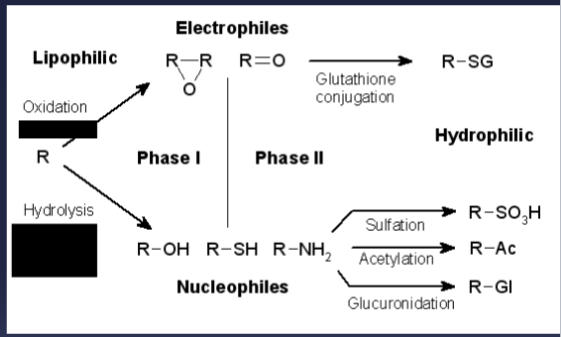
78
enzyme responsible for a majority of phase 1 rxns
cytochrome CYP enzyme (Cytochrome P450)
79
how does cytochrpome P450 assist in phase 1 rxns
donates electrons via NADPH to NADP+
80
enzyme responsible for metabolism pg >50% theraputic drug metabolism of the liver
CYP3A4
81
enzyme that metabolizes meds with neurological actovity
CYP2D6
82
enzyme responsible for alcohol and aceteminophen procesin
CYP2E1
83
enzyme responsible for anticoagulation medication [processing and metabolism
CYP2C9
84
Transcriptional
activation of gene
expressing an enzyme
Increased amount of the
enzyme
activation of gene
expressing an enzyme
Increased amount of the
enzyme
induction
85
physical
interaction with the enzyme
(often at the heme)
resulting in decreased
enzyme activity
interaction with the enzyme
(often at the heme)
resulting in decreased
enzyme activity
inhibition
86
________ of CYP enzymes will accelerate the drug metabolism, reduce the bioavalability and efficacy, and increace bioavailability of a prpodrug (toxicity)
induction
87
a
substrate which irreversibly
binds to the CYP enzyme
Requires synthesis of new
enzyme to restore function
substrate which irreversibly
binds to the CYP enzyme
Requires synthesis of new
enzyme to restore function
suicide inhibitor
88
what enzyme is inducced by tobaco smoke?
CYP1A
89
what enzyme is induced by ethanol (chronic)
CYP2E1
90
what enzymes are enduced by steroids
CYP3A4
91
what enzymes are induced by fibrates (LDL decrease drugs)
CYP4A
92
what do barbituates do to CYP enzmes
cause induction to many if them
93
phase 2 rxns create conjugates that are usually highly ________ and often inactive, and are easily excreted
polar
94
phase II rxns invlve high energy ___________- and transfer enzymes in the ______ or __________
intremediates; cytosol, microsomes
95
this toxic version of acetominophen is made when it is taken chronically
NAPQI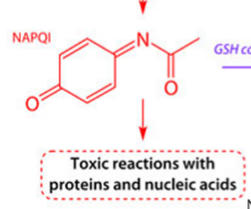
96
what can be taken tl reduce the amonts of NAPQI in the bloodstream
N-acetylcysteine (NAC)
97
phase 1 enzyme polymorphisms that can affect biotransformation
2D6, 2C19, 2C9
98
phase 2 enzyme polymorphisms that can effect biotransformayopm
slow acetylators
99
grapefruit juice inhibits this enzyme
CYP3A4
100
st johns wort induces this enzyme
CYP3A4
101
the polycyclic aromatic hydrocarbons in cigarette smoke induce these enzymes (x3)
CYP1A1, 1A2, 2E1
102
lead induces heme oxygenase enzyme that breaks down this enzyme
P450`
103
liver dosease will (increase/decrease) enzyme production
decrease
104
hypothyroidism will (increase/decrease) drug metabolism
decrease
105
hyperthyroidism will (decrease/increase) drug metabolism
increase
106
increasing the glomerulus filtration rate will (increase/decrease) excretion
increase
107
do males or females have a faster renal excretion and therefore drug metabolism
males
108
as your age increasesm so does this which is caused by a decreased GFR
t1/2
109
percentage eliminated over given amount of time
slope of graph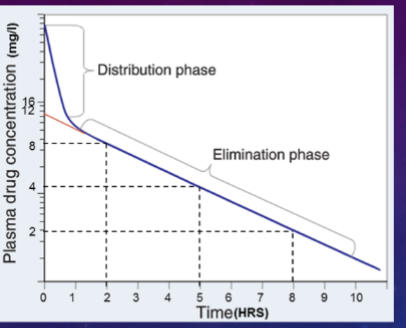
slope of graph
Kelim (rate of elimination)
110
the rate of removal of the drug from the body relative to the
concentration of the drug in plasma
concentration of the drug in plasma
Cl
111
Cl equation
rate of clearance (mL)/concentration of drug(min)
112
kelim equation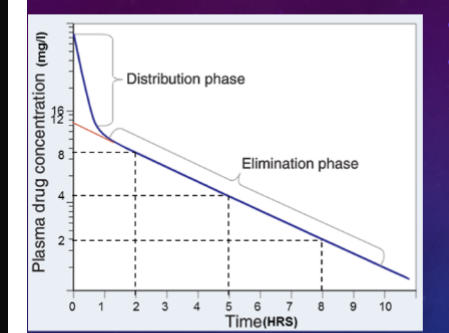
clearance/vd
113
first order enzyme kinetics: when the drug is high, the rate of elimination is (slowapid)
rapid
114
half life is constant fpr ________- rxns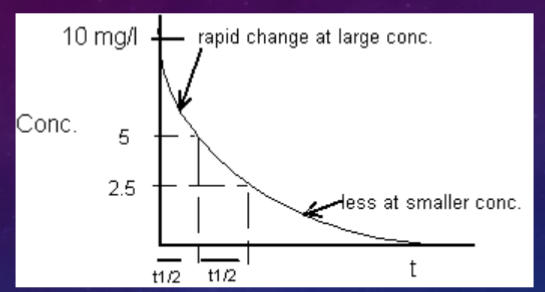
1st order rxns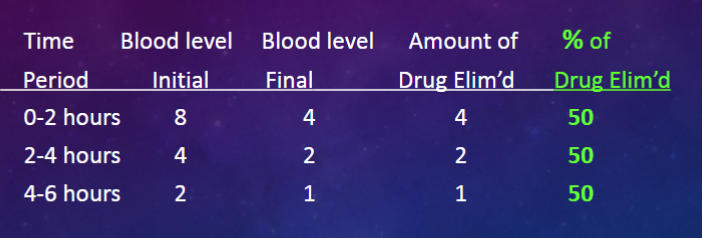
115
time required to eliminate 1/2 of the quantity of drug as
measured along the elimination curve.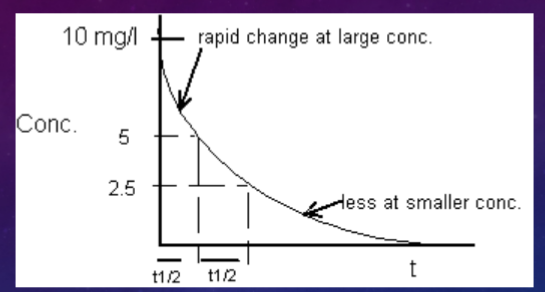
measured along the elimination curve.
t1/2
116
t1/2 equation
t1/2= (ln(2)*Vd)/Cl`
117
what drugs have zero order kinetics (x3)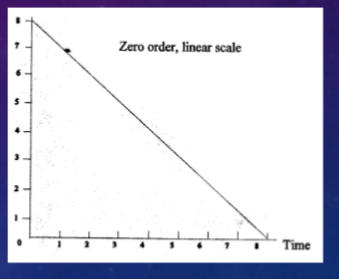
etoh., aspirin, phenytoin
118
for driugs with _______ kinbetics, a constant amoint of drug is lost per unit of time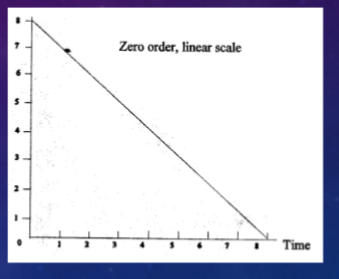
zero order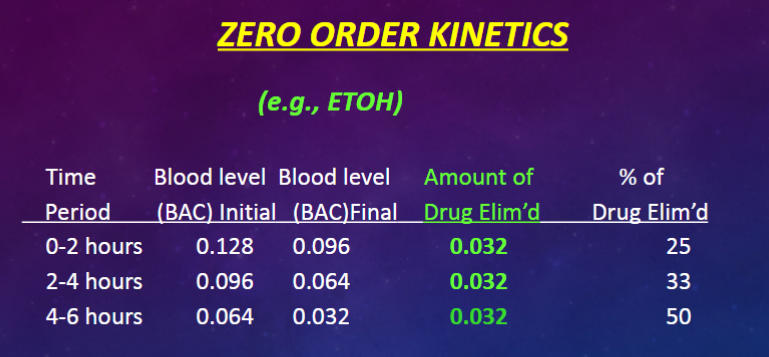
119
how many half lives does it take for a steadu state to be reached?
5
120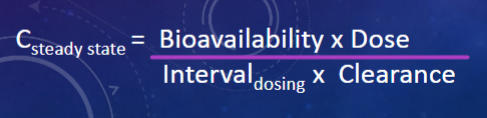
steady state equation
121
a single large dose
that is used to achieve the therapeutic
level more quickly than repeated
smaller doses.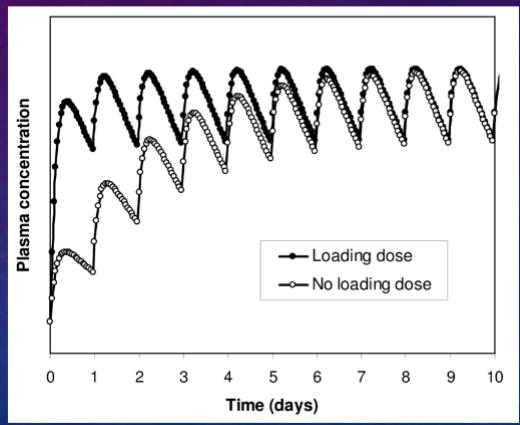
that is used to achieve the therapeutic
level more quickly than repeated
smaller doses.
loading dose
122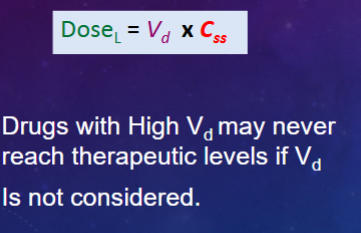
loading dose equation
123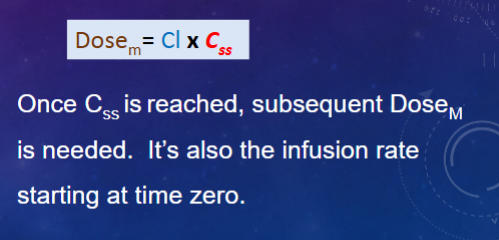
maintenence dose equation
124
The concentration of ligand that elicits 50% occupancy of the receptor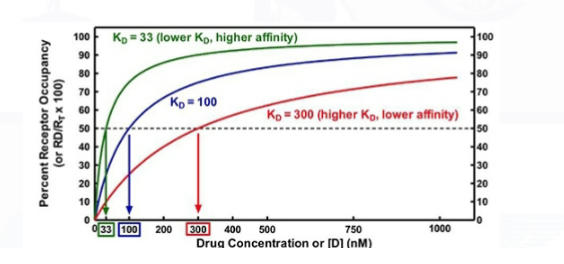
Kd
125
An efficacious drug takes less concentration to mediate a (higher/lower)
activity from a receptor.
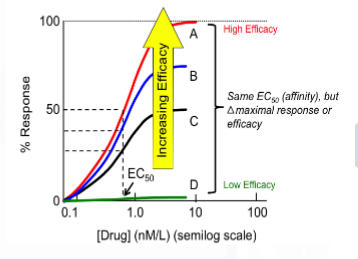
activity from a receptor.
higher
126
The concentration of a drug that elicits half the maximal biological
effect is the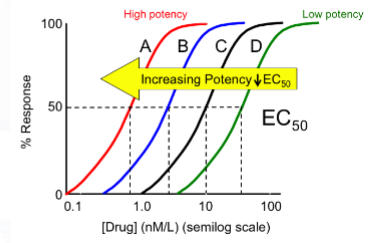
effect is the
effective concentration 50
127
what is this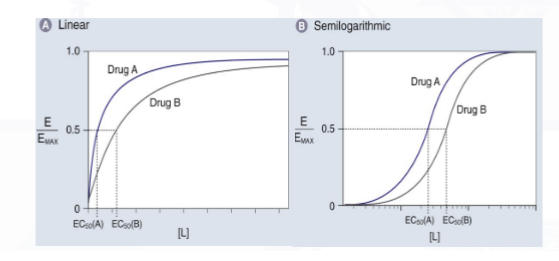
graded dose response curves
128
what curve is this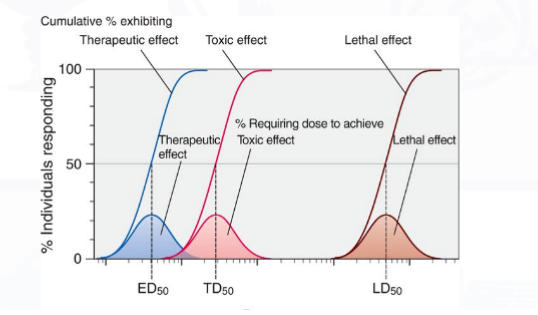
quantal dose response curve
129
a molecule that binds to a receptor and stabilizes the active conformation of the receptor.
agonist
130
binds to the active site and sterically
prohibits agonist-receptor interactions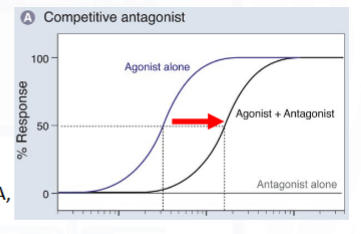
prohibits agonist-receptor interactions
competitive antagonist
131
binds to the active site but does not allow for agonist
competition.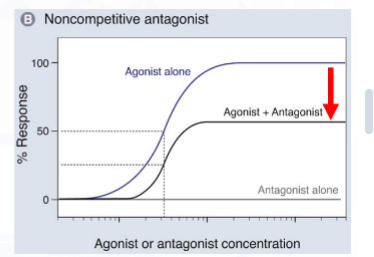
competition.
noncompetitive active site antagonist
132
a molecule that binds to a receptor at its active site
but only produces a partial effect.
Could have different potency but always less efficacious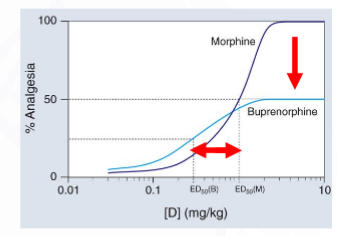
but only produces a partial effect.
Could have different potency but always less efficacious
partial agonist
133
binds to the receptor and induces a receptor
conformation that unequally activates the signaling pathways linked to
the receptor
conformation that unequally activates the signaling pathways linked to
the receptor
biased agonist
134
binds to the receptor and induces a receptor
conformation that unequally activates the signaling pathways linked to
the receptor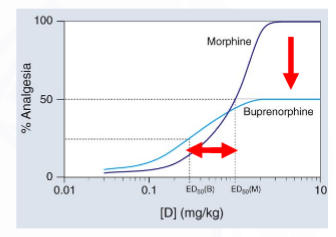
conformation that unequally activates the signaling pathways linked to
the receptor
mixed agonist/antagonist
135
inhibits constitutive activity of an unbound
receptor.
Some receptors, like ion channels, have a baseline level of
activity when not bound to any ligand.
Binding of an inverse agonist stabilizes the inactive state and
decreases this constitutive activity.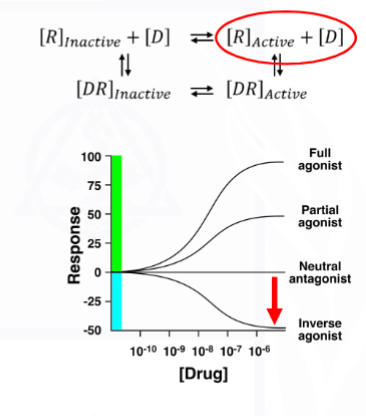
receptor.
Some receptors, like ion channels, have a baseline level of
activity when not bound to any ligand.
Binding of an inverse agonist stabilizes the inactive state and
decreases this constitutive activity.
inverse agonist
136
receptors not occupied although 100% response has been
achieved.
In a system without spare receptors, a noncompetitive antagonist causes
efficacy to decrease at all concentrations of the antagonist.
achieved.
In a system without spare receptors, a noncompetitive antagonist causes
efficacy to decrease at all concentrations of the antagonist.
spare receptors
137
Increase Adenylate Cyclase (AC)
• Increases cyclic AMP (cAMP)
• cAMP activates protein kinase A (PKA)
• PKA phosphorylates intracellular targets and may alter gene
transcription
• Increases cyclic AMP (cAMP)
• cAMP activates protein kinase A (PKA)
• PKA phosphorylates intracellular targets and may alter gene
transcription
Gas
138
nhibits Adenylate Cyclase (AC)
• Inhibits cyclic AMP (cAMP)
• Gβγ activates Inward Rectifying K+ Channels (GIRKS)
• Gβγ activates Ras -> activated Raf -> activates MEK
-> activates ERK -> affects gene transcription
• Inhibits cyclic AMP (cAMP)
• Gβγ activates Inward Rectifying K+ Channels (GIRKS)
• Gβγ activates Ras -> activated Raf -> activates MEK
-> activates ERK -> affects gene transcription
Gai
139
Activated Phospholipase C (PLC)
• PLC cleaves phospholipid
phosphatidylinositol-4,5-bisphosphate (PIP2)
to diacylglycerol (DAG) and
inositol-4,5-triphosphate (IP3)
• IP3 causes release of Ca2+ from intracellular
stores
• PLC cleaves phospholipid
phosphatidylinositol-4,5-bisphosphate (PIP2)
to diacylglycerol (DAG) and
inositol-4,5-triphosphate (IP3)
• IP3 causes release of Ca2+ from intracellular
stores
Gaq
140
Activates RhoGEF and RhoA
• Regulates cytoskeletal assembly and contraction
• Regulates cytoskeletal assembly and contraction
Ga12/13
141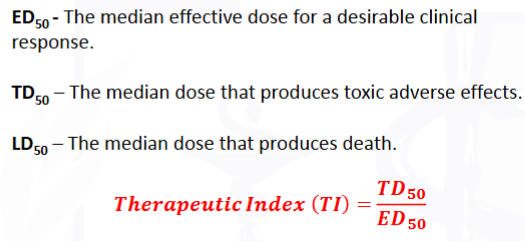
thereputic index quation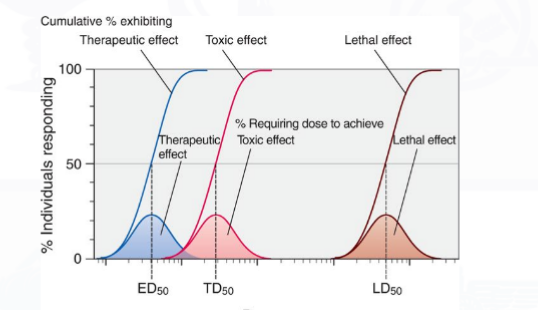
142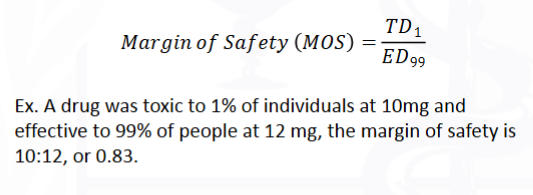
margin of safety equation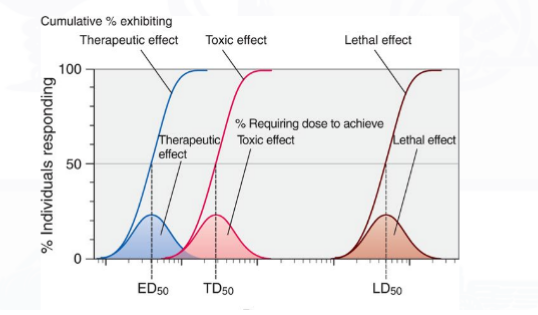
143
using five or more medications based on a review of current data
polytherapy significantly increases likelihood of interactions!
polytherapy significantly increases likelihood of interactions!
polypharmacy
144
describes a pathologic state in which normal hemostatic processes are activated inappropriately
thrombosis
145
Primary hemostasis ultimately results in the formation of a
primaru hemostatoc plug
146
Local endothelial secretion of ___________, a potent vasoconstrictor, potentiates the reflex vasoconstriction
endothelin
147
mediates platelet adhesion to the subendothelium by binding both to platelet membrane glycoprotein GPIb and to exposed subendothelial collagen.
von willebrand factor
148
this metabolite increases cAMP levels within platelets and thereby inhibits platelet aggregation and platelet granule release.
PGI2
149
protein c and s
150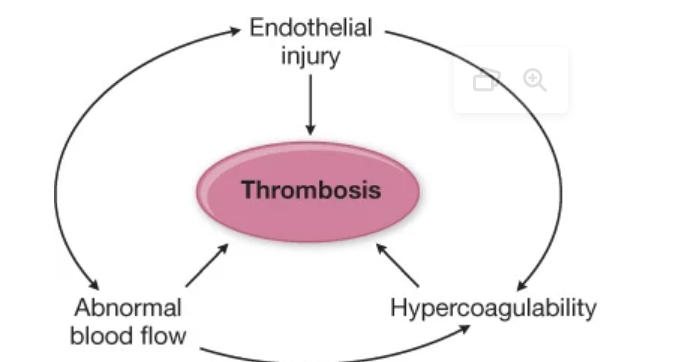
Three major factors predispose to thrombus formation: Virchow's triad
151
a mutation here increases prothrombin level and activity
prpthrombin G2021A mutation
152
Multiple classes of drugs have been developed to prevent and/or reverse thrombus formation. These classes consist of (x3)
antiplatelet agents, anticoagulant, thrombolyitc agents
153
classes of antiplatelet agents in current clinical use include (xx5)
cyclooxygenase (COX) inhibitors, phosphodiesterase inhibitors, ADP receptor pathway inhibitors, GPIIb–IIIa antagonists, and thrombin receptor (PAR-1) antagonists.
154
asprin drug class
NSAID: cyclooxygenase inhibitor
155
asprin mechanism
inhibits the synthesis of prostaglandins (at cycloxygenase enzyme), thereby inhibiting the platelet granule release reaction and interfering with normal platelet aggregation
=.ovalently acetylating a serine residue near the active site of the COX enzyme, thereby inhibiting the synthesis of the cyclic endoperoxide and the various metabolites of the cyclic endoperoxide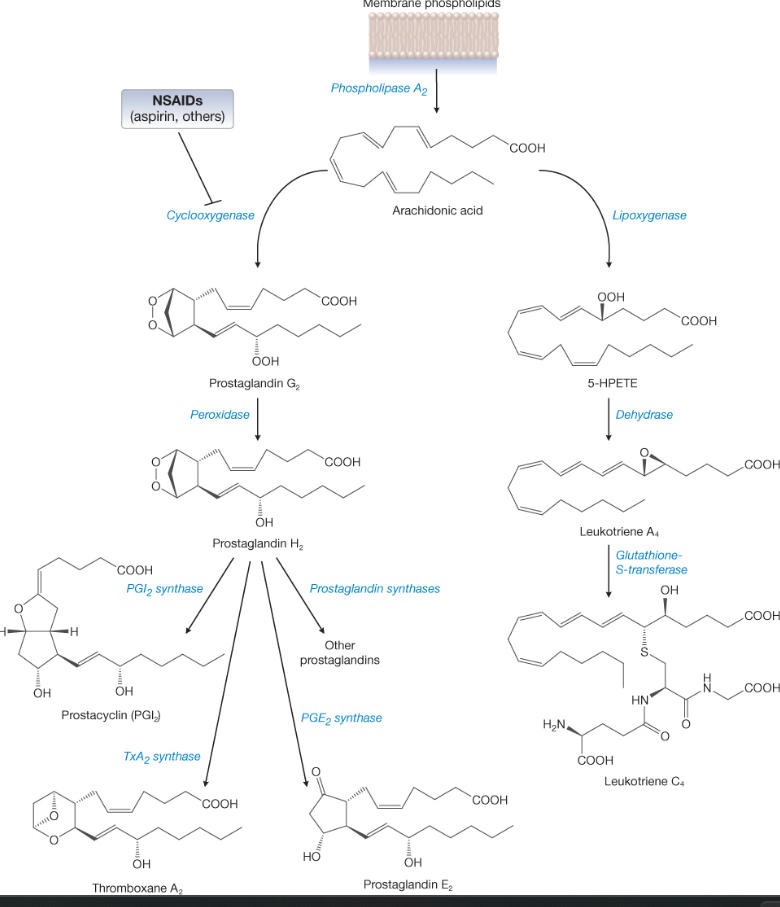
=.ovalently acetylating a serine residue near the active site of the COX enzyme, thereby inhibiting the synthesis of the cyclic endoperoxide and the various metabolites of the cyclic endoperoxide
156
can COX ensymes be used once asprin has inactivated all available COX enzymes
in platelets np, irreversibly poisoned, new ones need to be made
-in endothelial cells yes
-in endothelial cells yes
157
Compared with aspirin, other nonsteroidal anti-inflammatory drugs (NSAIDs) are not as widely used in the prevention of arterial thrombosis because the inhibitory action of these drugs on cyclooxygenas is _______________
not permanent
158
when is asprin used
antiplatelet agent to prevent arterial thrombosis leading to transient ischemic attack, stroke, and myocardial infarction
159
phosphpdiesterase inhibitors mechanism
decrease platelet aggregability by inhibiting cAMP degradation, while activators of platelet adenylyl cyclase decrease platelet aggregability by increasing cAMP synthesis.
160
drug class dipyrifamole
platelet phosphodiesterase inhibitor
161
how /when is dipyridamole used?
combination of dipyridamole and warfarin can be used to inhibit thrombus formation on prosthetic heart valves, while the combination of dipyridamole and aspirin can be used to reduce the likelihood of thrombosis in patients with a thrombotic diathesis.
162
side effects of dipyridamole
nay induce angina
163
ADP R pathway inhibitors
Ticlopidine, clopidogrel, and prasugrel
164
how do ADPR pathway inhibitors work?
covalently modifying and inactivating the platelet P2Y(ADP) receptor (also called P2Y12), which is physiologically coupled to the inhibition of adenylyl cyclase
165
ticlopidine drug class
prodrug ADP R pathway inhibitor
166
what is ticlopidine used for
(1) secondary prevention of thrombotic strokes in patients intolerant of aspirin, and (2) in combination with aspirin, prevention of stent thrombosis after placement of coronary artery stents.
167
side effects of ticlopidine
neutropenia, thrombocytopenia, and thrombotic thrombocytopenic purpura (TTP)
168
drug class Clopidogrel
2nd gen thienopyridine, prodrug, must be oxidized by p450
169
contraindications Clopidogrel
interact with statins, proton pump inhibitors, and other drugs metabolized by these P450 isoforms
170
clopidogrel uses
approved for secondary prevention in patients with recent myocardial infarction, stroke, or peripheral vascular disease. It is also approved for use in acute coronary syndromes that are treated with either percutaneous coronary intervention or coronary artery bypass graftin
171
prasugrel drug fx
irreversible antagonist P2Y12 ADP R
172
prasugrel uses
approved for use in acute coronary syndromes treated with percutaneous coronary intervention. Like clopidogrel, prasugrel is a prodrug and is used in combination with aspirin.
173
side effects prasugrel
may increase the risk of bleeding relative to clopidogrel, especially in patients over 75 years of age or weighing less than 60 kilograms
174
contraindications prasugrel
use in patients with a prior history of stroke or transient ischemic attack because of an increased risk of intracranial hemorrhage
175
ticagrelor drug fx
competitive antagonist at P2Y12 ADPR
-no hepatic activatuon requred
-orally taken
-no hepatic activatuon requred
-orally taken
176
ticahrelor uses
approved for use in patients with acute coronary syndromes.
177
side effects ticagrelor
dyspnea and bradycardia.
178
contraindications ticagrelor
patients with histiry of intracranial hemorrhage
179
dug vlass Epitifatide
GPIIb-IIIa R antagonist
180
epitifibatide mechanism
antagonizes the platelet GPIIb–IIIa receptor with high affinity
181
uses eptifibatide
used to reduce ischemic events in patients undergoing percutaneous coronary intervention and to treat unstable angina and non-ST elevation myocardial infarction.
182
drug class Abciximab
essentially irreversible GPIIb-IIIa receptir antagonist
183
uses Abciximab
reduces both long-term and short-term ischemic events in patients undergoing high-risk percutaneous coronary intervention
184
drug class Tirofiban
nonpeptide tyrosine analog that reversible GPIIB-IIIa R antagonist
185
when is tirofiban used
patients with acute coronary syndromes
186
how to reverse Abciximab effects
previously infused is already bound to platelets, infusion of fresh platelets after the drug has been stopped can reverse the antiplatelet effect.
187
side effects GPIIb-IIIa antagonists
bleeding
188
how to reverse effects eptifibatide and tiroifiban
one must stop the drug infusion and wait for platelet function to return to normal
189
interacts with collagen in the exposed vessel wall, one of the required steps for initiation of primary hemostasis
GPVI
190
GPVI is the most abundant collagen receptor on __________, making it an integral and significant part of primary hemostasis.
platelets
191
Revacept drug class
GPVI antagonist
192
mechanism revacept
can bind to collagen and block the binding of platelet GPVI, thereby blocking this step in initiating primary hemostasis.
-also binds to other extracellular matrix proteins, such as fibronectin, laminin, and vitronectin, and it inhibits the binding of vWF to collagen, thereby blocking the other major step of primary hemostasis initiation.
-also binds to other extracellular matrix proteins, such as fibronectin, laminin, and vitronectin, and it inhibits the binding of vWF to collagen, thereby blocking the other major step of primary hemostasis initiation.
193
why is Revacept unique compared to other antiplatelet agents?
this agent may have the ability to block pathologic thrombosis while maintaining systemic hemostasis, potentially giving it a unique advantage compared to other antiplatelet agents.
194
drug class Vorapaxar
reversible thrombin R (PAR-1) antagonist
195
what is Vorapaxar approved for?
secondary prevention of myocardial infarction, death, and stroke in patients with a prior myocardial infarction or with peripheral artery disease.
196
what hepatic enzyme metabolizes Vorapaxar?
CYP3A4
197
contraindications Vorapaxar
should not be administered to patients with a prior history of stroke, transient ischemic attack, or intracranial hemorrhage
198
side effects Vorapaxar
ncrease the risk of bleeding when used in the treatment of acute coronary syndrome, limiting its clinical utility
199
classes of antocoagulants in orfer from least selective to most selectibe
least selective agents (warfarin and unfractionated heparin) to the most selective agents (selective factor Xa inhibitors and direct thrombin inhibitors).
200
adverse side effect of all anticoagulants
bleeding
201
required for the normal hepatic synthesis of four coagulation factors (II, VII, IX, and X), protein C, and protein S.
Vitamin K
202
what does carboxylation requer (x4) Vitamin k rx
(1) a precursor form of the target protein with its 9 to 12 amino-terminal glutamic acid residues, (2) carbon dioxide, (3) molecular oxygen, and (4) reduced vitamin K.
203
mechanism warfarin
blocking epoxide redictase that mediates the regeneratuon of reduced vitamin K
204
a small population of patients is genetically resistant to warfarin because of mutations in their ______________ gene. These patients require 10–20 times the usual dose of warfarin to achieve the desired anticoagulant effect.
epoxide reductase
205
genetic variation in the _______ gene has been associated with approximately 25–30% of the variance in warfarin maintenance dose in patients taking this drug.
VKORC1
206
uses warfarin
often administered to complete a course of anticoagulation that has been initiated with heparin (see below) and to prevent thrombosis in predisposed patients.
207
contraindications warfarin
Because warfarin is highly albumin-bound in the plasma, co-administration of warfarin with other albumin-bound drugs can increase the free (unbound) plasma concentrations of both drugs. In addition, because warfarin is metabolized by P450 enzymes in the liver, co-administration of warfarin with drugs that induce and/or compete for P450 metabolism can affect the plasma concentrations of both drugs.
-pregnant women
-pregnant women
208
used to moniotor warfarin therapy reguarly
prothrombin time (PT)
209
categories of heparin
unfractioned standard heparin and lmw heparin
210
which is often prepared from bovine lung and porcine intestinal mucosa, ranges in molecular weight from 5 to 30 kDa.
unfractional heparin
211
prepared from standard heparin by gel-filtration chromatography; their molecular weights range from 1 to 5 kDa.
LMW heparin
212
in addition to inactivating thrombin, inactivates other serine proteases including factors IXa, Xa, XIa, and XIIa
antithrombin III
213
heparin nechaism
acting as a cofactor, accelerates the reaction by 1,000-fold. Heparin has two important physiologic functions: (1) it serves as a catalytic surface to which both antithrombin III and the serine proteases bind; and (2) it induces a conformational change in antithrombin III that makes the reactive site of this molecule more accessible to the attacking protease
214
difference between binding LMW and unfractiomed heparin
LMW heparins, which have an average molecular weight of 3–4 kDa and contain fewer than 18 monosaccharide units, efficiently catalyze the inactivation of factor Xa by antithrombin III but less efficiently catalyze the inactivation of thrombin by antithrombin III. In contrast, unfractionated heparin, which has an average molecular weight of 20 kDa and contains more than 18 monosaccharide units, is of sufficient length to bind simultaneously to thrombin and antithrombin III and therefore efficiently catalyzes the inactivation of both thrombin and factor Xa by antithrombin III. Q
215
uses heparins
both prophylaxis and treatment of thromboembolic diseases. Both unfractionated and LMW heparins are used to prevent propagation of established thromboembolic disease such as deep vein thrombosis and pulmonary embolism.
216
dministratio of heparin
parenterally, usually via intravenous or subcutaneous routes.
217
patients develop antibodies to a hapten created when heparin molecules bind to the platelet surface
heparin induced thrombocytopoenia
218
the antibody-coated platelets are targeted for removal from the circulation, and the platelet count decreases by 50–75% approximately 5 days into the course of heparin therapy.
HIT type I
219
the heparin-induced antibodies not only target the platelets for destruction but also act as agonists to activate the platelets, leading to platelet aggregation, endothelial injury, and potentially fatal thrombosis. There is a higher incidence of HIT in patients receiving unfractionated heparin than in those receiving LMW heparin.
HIT type 2
220
LMW heparins (x3)
enoxaparin, dalteparin, and tinzaparin
221
contraindication LMW heparins
renal insufficiency
222
Fondaparinux drug ckass
selective factor Xa inhibitir (idirect)
223
what is Fondaparinux approved for
prevention and treatment of deep vein thrombosis and is available as a once-daily subcutaneous injection.
224
contraindication fondaparinux
renal insiufficency
225
fx Rivaroxaban, apixaban, and edoxaban
directly inhibit factor Xa by binding to its active site and competitively inhibiting the enzyme (Fig. 51-15). All three of these agents bind factor Xa that is complexed with factor Va and calcium ions on phospholipid surfaces. As a result, these agents do not require antithrombin III as a cofactor for inhibition of factor Xa.
226
drug class Rivaroxaban, apixaban, and edoxaban
DOACs
227
Rivaroxaban, apixaban, and edoxaban uses
approved for prevention of stroke in patients with non-valvular atrial fibrillation (i.e., atrial fibrillation not related to mitral stenosis or a prosthetic heart valve) and for prevention of deep vein thrombosis after hip or knee orthopedic surgery.
228
what drugs may compete with warfarin
-drugs that compete with active sites of metabolism (Cyp2C9(Swarfarin), Cyp3A4(Rwarfarin)
-drugs that compete with albumin binding sites (antibiotics)
-anything that increases Vitamin K amounts can counteract the effects of warfarin therapy (vitamin K rich foods)
-anything that wipes out gut bacteria (systemic antibiotics)
-drugs that compete with albumin binding sites (antibiotics)
-anything that increases Vitamin K amounts can counteract the effects of warfarin therapy (vitamin K rich foods)
-anything that wipes out gut bacteria (systemic antibiotics)
229
administered orally and exert a direct effect on coagulation
direct oral anticoagulants (DOCAs)
230
why is DOAC dosing very limited
patient’s weight; in patients with weights below 60 kg or above 120 kg, or with a BMI of greater than 40 kg/m2, dabigatran is contraindicated
231
what monitoring needs to be done in patients taking DOACs
Renal function, hepatic function, and monitoring for bleeding should be considered in all patients taking DOACs due to their potential effects on these processes.
232
what should you monitor in DOAC patients
Renal function, hepatic function, and monitoring for bleeding should be considered in all patients taking DOACs due to their potential effects on these processes.
233
actions of thrombin
(1) proteolytically converts fibrinogen to fibrin; (2) activates factor XIII, which cross-links fibrin polymers to form a stable clot; (3) activates platelets; and (4) induces endothelial release of PGI2, t-PA, and PAI-1.
234
direct thrombin inhibitors (x5)
lepirudin, desirudin, bivalirudin, argatroban, and dabigatran
235
Lepirudin mechanism of action
Lepirudin binds with high affinity to two sites on the thrombin molecule—the enzymatic active site and the “exosite,” a region of the thrombin protein that orients substrate proteins. Lepirudin binding to thrombin prevents the thrombin-mediated activation of fibrinogen and factor XIII. Lepirudin is a highly effective anticoagulant because it can inhibit both free and fibrin-bound thrombin in developing clots and because lepirudin binding to thrombin is essentially irreversible
-direct thrombin inhibitor
-direct thrombin inhibitor
236
approved use of Lepirudin
for use in the treatment of heparin-induced thrombocytopenia.
237
excretiion of Lepirudin
renally excreted
238
monitoring for Lepirudin
bleeding is the major adverse effect of lepirudin, and clotting times must be monitored closely.
239
important side effects of Lepirudin
-bleeding
-patients may develop anti-hirudin antibodies, limiting the long-term effectiveness of this agent as an anticoagulant
-patients may develop anti-hirudin antibodies, limiting the long-term effectiveness of this agent as an anticoagulant
240
recombinant formulation of hirudin approved for prophalaxis against DVT in patients undergoing hip replacements
Desirudin
241
mechanism of action Bivalirudin
binds to both the active site and exosite of thrombin and thereby inhibits thrombin activity
-Thrombin slowly cleaves an arginine–proline bond in bivalirudin, leading to reactivation of the thrombin (not permanent)
-Thrombin slowly cleaves an arginine–proline bond in bivalirudin, leading to reactivation of the thrombin (not permanent)
242
Bivalirudin approved for
anticoagulation in patients undergoing coronary angiography and angioplasty and may reduce rates of bleeding relative to heparin for this indication.
243
excretion and half life Bivalirudin
renally and 25min half life
244
Argatroban mechanism of action
binds only to the active site of thrombin (i.e., it does not interact with the exosite)
-small molecule inhibitor for thrombin
-small molecule inhibitor for thrombin
245
use of argatroban
heparin-induced thrombocytopenia
246
excretion of Argatroban and administration
-biliarysecretion: can be used in patients with renal insufficiency
-continuous intravenous infusion
-continuous intravenous infusion
247
mechanism of actio dabigatran
direct thrombin inhibitor
-prodrug that is metabolized to an active species that, like argatroban, binds competitively to the active site of thrombin
-prodrug that is metabolized to an active species that, like argatroban, binds competitively to the active site of thrombin
248
what is dabigatran approved for
approved for prevention of thromboembolism in patients with non-valvular atrial fibrillation
-ndicated for the treatment of established deep vein thrombosis and pulmonary embolism
-ndicated for the treatment of established deep vein thrombosis and pulmonary embolism
249
significant side effects of dabigatran
significant bleeding
250
exerts an anticoagulant effect by proteolytically cleaving factors Va and VIIIa. APC also reduces the amount of circulating plasminogen activator inhibitor 1
actvated protein C (APC)
251
has been found to significantly reduce mortality in patients at high risk of death from septic shock
recombinant activated protein C
252
what is arecombinant activated protein c approved for
treatment of patients with severe sepsis who demonstrate evidence of acute organ dysfunction, shock, oliguria, acidosis, and hypoxemia.
253
side effects of r-APC
increases the risk of bleeding.
254
contraindications of r-APC
patients who have recently undergone a surgical procedure and in those with chronic liver failure, kidney failure, or thrombocytopenia.
255
act by converting the inactive zymogen plasminogen to the active protease plasmin
Thrombolytic Agents
256
Contraindications of all thrombolytic agents
hemorrhage of varying severity
257
mechanism of action Streptokinase
forms a stable, noncovalent 1:1 complex with plasminogen. The complexation reaction produces a conformational change in plasminogen that exposes this protein’s proteolytically active site. Streptokinase-complexed plasminogen, with its active site exposed and available, can then proteolytically cleave other plasminogen molecules to plasmin.
258
side effects streptokinase
-capable of eliciting an antogenic response in humans apon a repeated adminiatration
-can resukt in systemic fibrnolysis
-can resukt in systemic fibrnolysis
259
what re contraindications of streptokinase administration
having taken streptokinase before
260
what is streptokinase approved for
treatment of ST elevation myocardial infarction and for treatment of life-threatening pulmonary embolism.
261
binds to newly formed (fresh) thrombi with high affinity, causing fibrinolysis at the site of a thrombus.
T-PA
262
what is t-PA approved for?
treatment of patients with ST elevation myocardial infarction or life-threatening pulmonary embolism. It is also approved for the treatment of acute ischemic stroke.
263
genetically engineered variant of t-PA. The molecular modifications in tenecteplase increase its fibrin specificity relative to t-PA and make tenecteplase more resistant to plasminogen activator inhibitor 1.
Tenectplase
264
a genetically engineered variant of t-PA with longer half-life and increased specificity for fibrin.
Reteplase
265
a chemical antagonist of heparin. This agent rapidly forms a stable complex with the negatively charged heparin molecule through multiple electrostatic interactions
-administered intravenously to reverse the effects of heparin in situations of life-threatening hemorrhage or great heparin excess
-administered intravenously to reverse the effects of heparin in situations of life-threatening hemorrhage or great heparin excess
Protamine
266
mechanism of action AMinocaproic acid and tranexamic acic
analogues of lysine that bind to and inhibit plasminogen and plasmin.
267
what are aminocaproic acid and tranexamic acid approved for
promote hemostasis in situations where fibrinolysis contributes to bleeding.
-used to reduce perioperative bleeding during coronary artery bypass grafting
-may not increase the risk of postoperative acute renal failure
-used to reduce perioperative bleeding during coronary artery bypass grafting
-may not increase the risk of postoperative acute renal failure
268
a recombinant inactive form of human factor Xa that binds and sequesters factor Xa inhibitor molecules, leading to a rapid drop in factor Xa inhibition.
Andexanet alfa
269
humanized monoclonal antibody fragment that binds dabigatran. Because of its high affinity and high specificity, it is very effective as a dabigatran antidote.
Idarucizumab
270
Image occlusion: name the hidden labels
271
Image occlusion: name the hidden labels
272
Image occlusion: name the hidden labels
273
Image occlusion: name the hidden labels
274
Image occlusion: name the hidden labels
275
Image occlusion: name the hidden labels
276
Image occlusion: name the hidden labels
277
Image occlusion: name the hidden labels
278
Image occlusion: name the hidden labels
279
Image occlusion: name the hidden labels
280
Image occlusion: name the hidden labels
281
Image occlusion: name the hidden labels
282
how do prostacyclins lead to vasodialation
activate Gs coupled receptors on vascylar smoot myuscle
283
what produces endothelin I
endothelial cells
284
ET1 synthesis patheway
preproendothelin to big endothelin to ET1 (endithelin converting enzyme)
285
what promotes the release of ET1
vasoactive agents
286
wat antagonizes the release of ET1
prostacyclin, NO, atrial natruretic peptide
287
mechanism of action ET1
binds ETa and ETb receptors (Gqs) which mediate vasoconstriction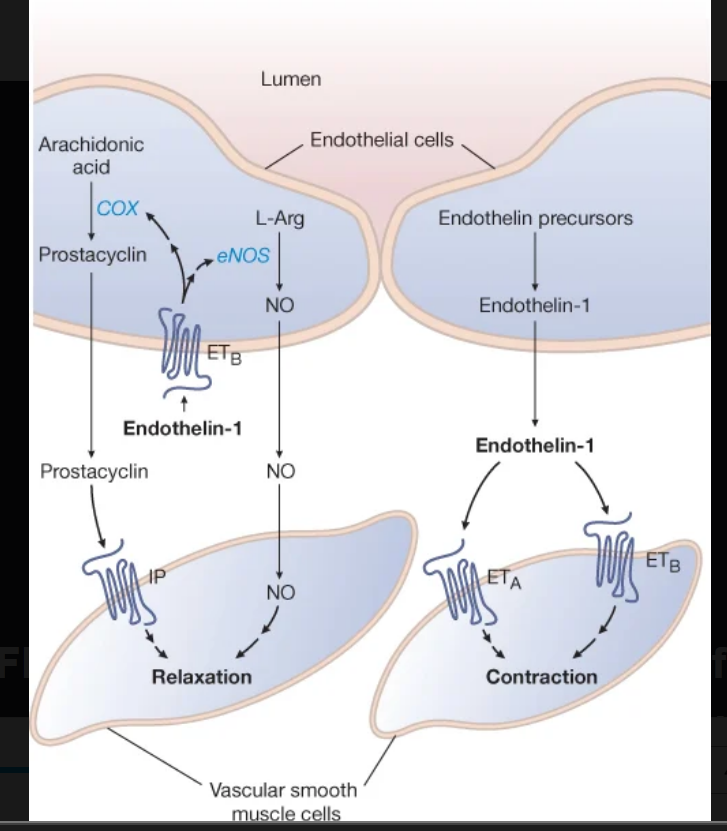
288
what recetors for epinephrine are atctovated at lower comcentrations
B2 receptors (higher affinity)
289
what receptors does histamine activate on vasculat smooth myuscle cells; response?
G2 coupled H2 receptors; vasodialation
290
what receptors does histamine activate on endothelial cells; response
Gq coupled HI receptors, NO generation
291
where do Ca2+ channel blockjers have their primary effects
arteries; little venous system effects
292
agents that relax the myocardiym
lusitropic agents
293
mechanism of action Ca2+channel blockers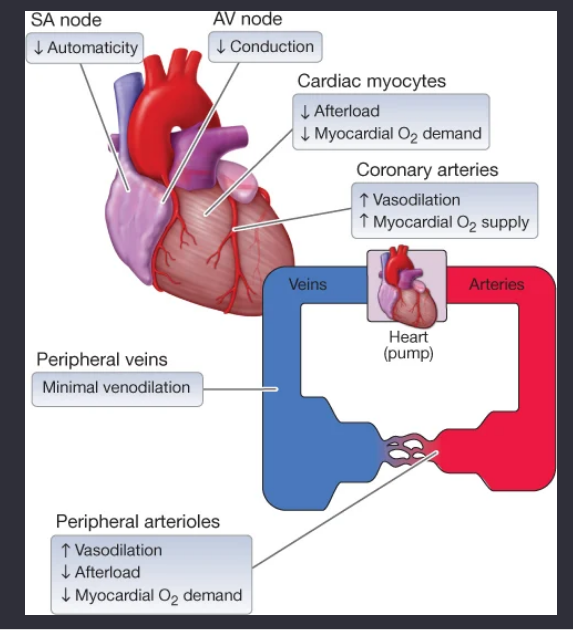
smooth muscle: inhibit Ca2+ influx through L type channels
294
Ca2+ channel blocketrs effects on conduction
decreased automaticity SA node and conduction Av node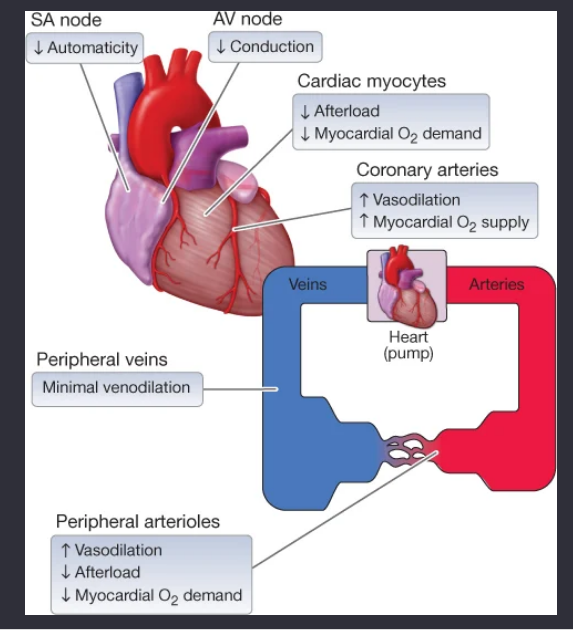
295
ca 2+ channel blockers effects on cardiac myocytes
decreased afterload and myocardial O2 demand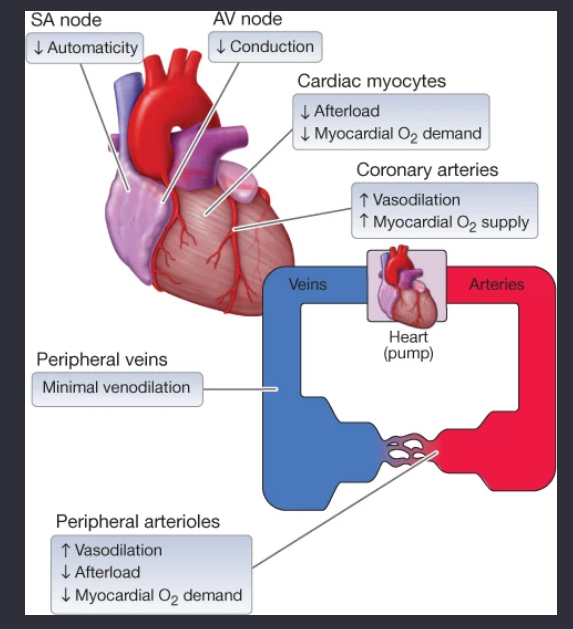
296
ca2+ channel blockers effects on vasodilation and myocardial O2 supply in the coronary arteries
increased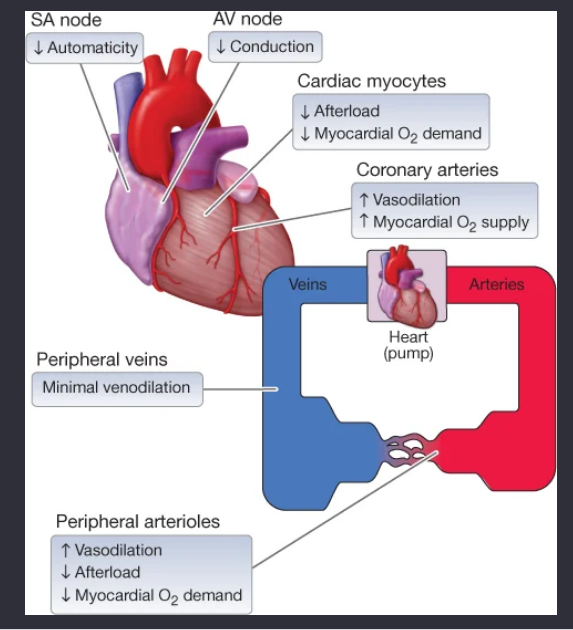
297
Ca2+ channel blockers effect on peripgeral arterioles
vasodilation increase, afterload decrease, mypcardial O2 demand decrease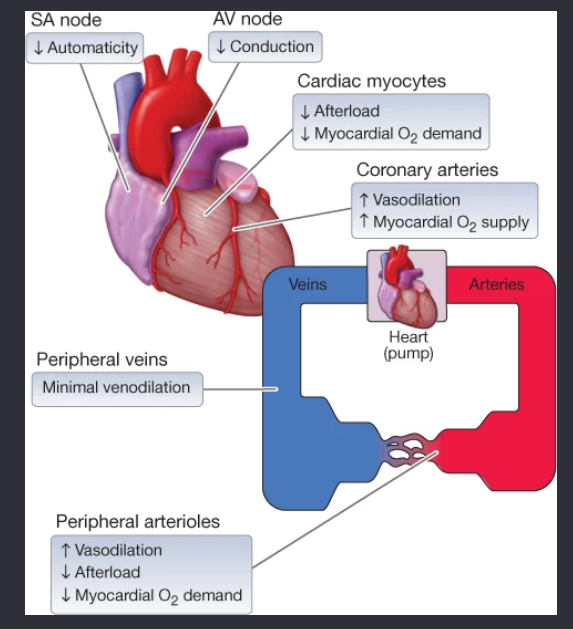
298
three chemicak classes of Ca2+ channe;l blockers in clinical use
dihydropryridines, benzodiazepines, phenylalkylamines
299
how do dihydropyridines inhibit the Ca2+ channe
extracellular side by using a binding site buried in the lipid bilayer.
-a1 ion pore forming subunit is where the allosteric site located
-a1 ion pore forming subunit is where the allosteric site located
300
how do diltiazem inhibit ca2+ channe;s
binds the ion pore (a1) from extracellular side of channel
133 more cards in OutLearn. Open the full deck