Exam 2 OPP
Study these flashcardsFree · spaced repetition · iPhone, Android, Mac & web
First 300 of 402 cards
1
functions of thoracic cage (x4)
respiration
protection of vtal organs
pump fpr venous and lymph return
support sreucture for the upper extremities
protection of vtal organs
pump fpr venous and lymph return
support sreucture for the upper extremities
2
what are the true ribs?
1-7
3
what are the false ribs?
8-10
4
what are the floating ribs?
11, 12
5
what are the typical ribs?
3-9
6
what are the atypical ribs
1,2,10,11,12
7
ribs attach directly tp the sternum
true ribs
8
ribs attach to the sternum via synchrondroses
false ribs
9
ribs that do nt attach to the sternum
floating ribs
10
what are the articulations of the typical ribs (x3)
head: vertebral bpdy at same level and anterior ;level
tubercle: transverse process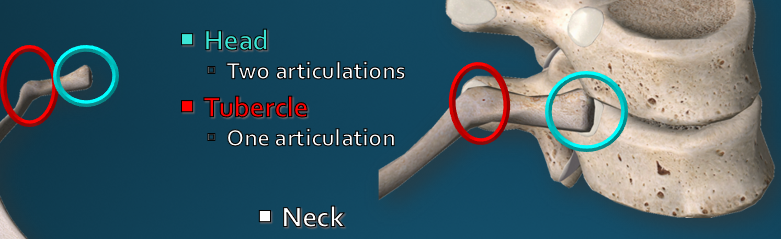
tubercle: transverse process
11
what does R1 articulare with?
T1 body, has no angle
12
what does rib 2 articulate wuth
large tuberpcity for serratus anterior
13
what does R10 articulate with
single facer for costocavicular articulation
otherwise typical
otherwise typical
14
wjat do R11 and 12 articulate with
correspondng vertebral body
-no nexk or tubercles
-no nexk or tubercles
15
what type of joint is rib 1 tp the manubrium
symchrondrosis
16
ribs 1-7 cpstrotransverse joint motion
rotation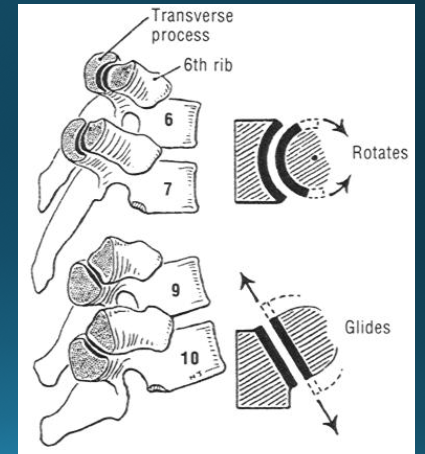
17
ribs 8-10 costotranverse joint motion
gliding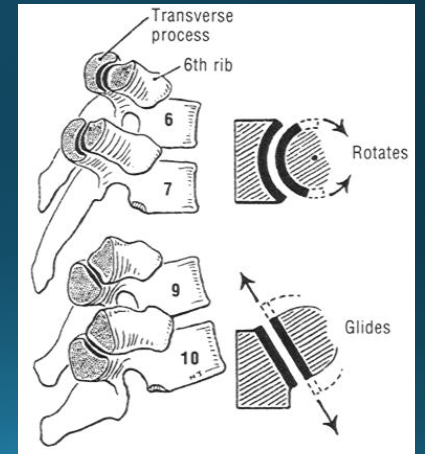
18
primary rib motion 1-5
pump handle
19
primapry rib motion R6-10
bucklet handle
20
primary rib motion 11 and 12
caliper
21
plane and axis pof motion pump handle (1-5)
sagittal plane
costovertebral-cpstrotranverse line (axis)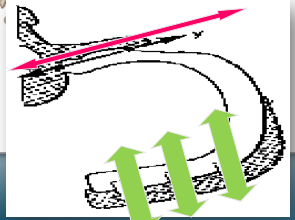
costovertebral-cpstrotranverse line (axis)
22
pump handle motion of ribs 1-5
inspiration: anterior aspect of rib cephalad (superior)
posterior aspect moves caudad (inferiorly)
(opposite for expiration)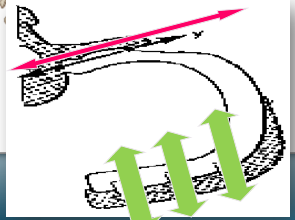
posterior aspect moves caudad (inferiorly)
(opposite for expiration)
23
what is this assessing?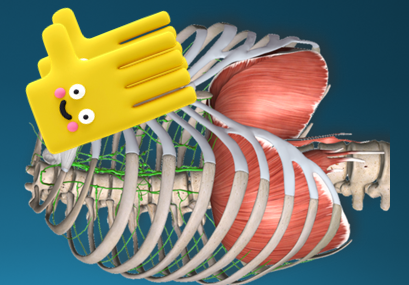
pump handle motion ribs 1-5
24
plane of morion and axis bucket handle (6-10)
coronal plane
cpostovertebral costosternal line (axis)
cpostovertebral costosternal line (axis)
25
bucket handle motion (6-10)
rib shaft lifts during inhilation
falls with exhalation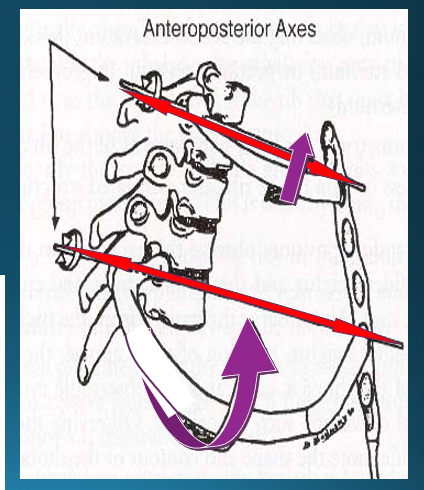
falls with exhalation
26
what is this assessing?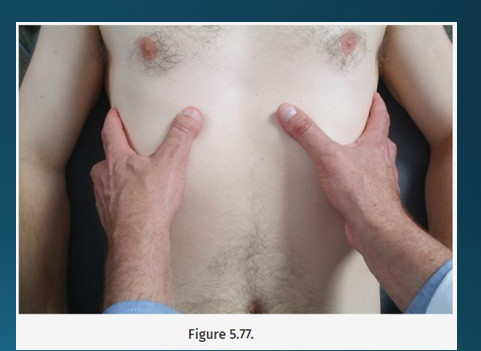
bucket handle motion ribs 6-10
27
caliper motion (11,12)
ribs externally rotate wth inhalation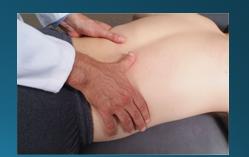
28
what is this assessing?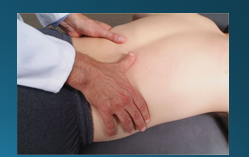
caliper motion (ribs 11 and 12)
29
what plane of motion and axis caliper motion
horizontal plane
vertical line (axis0
vertical line (axis0
30
what runs through the intercostal space (in order)
intercostal v, a, n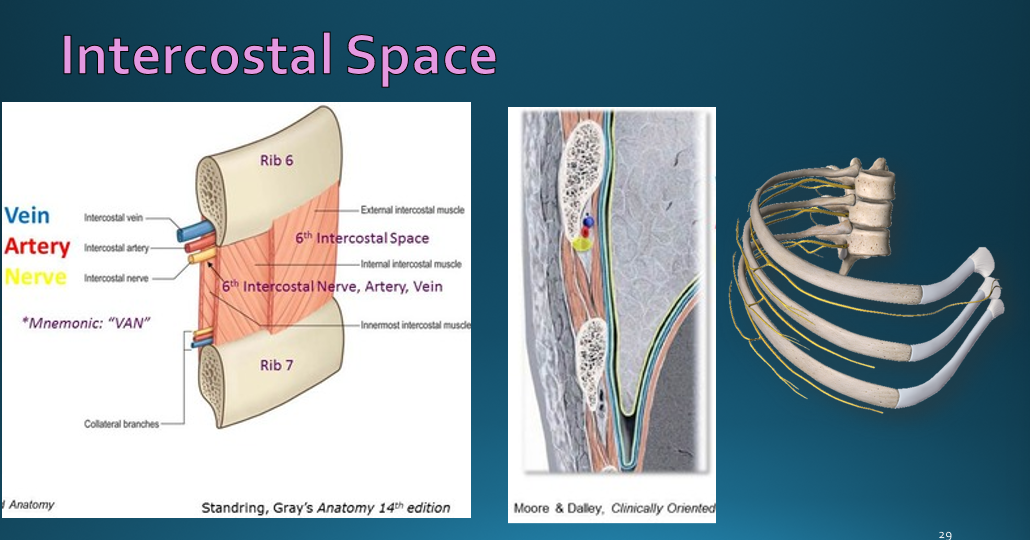
31
where are intercostal nerves locatedun
costal groove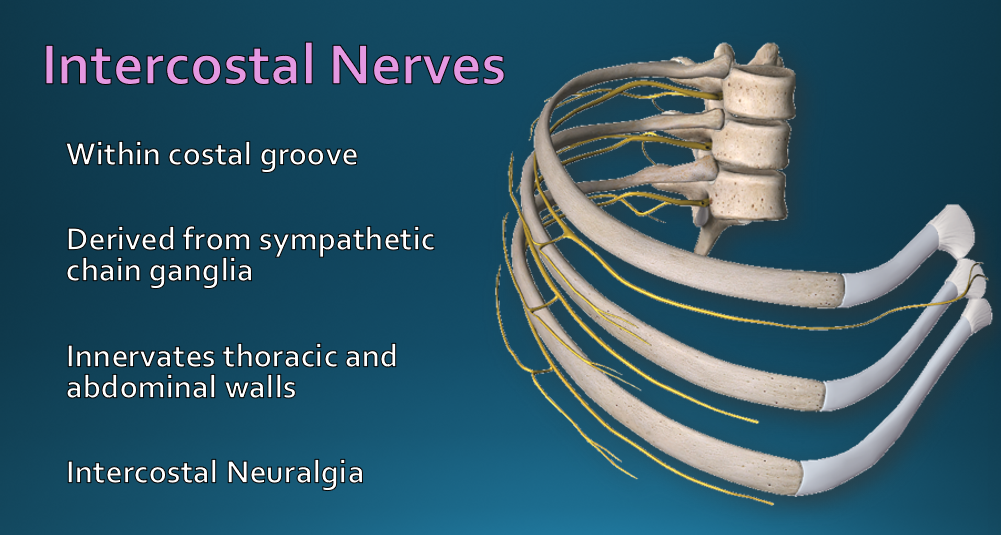
32
where are intercostalk nerves deribved from?
sympathetic chain ganglia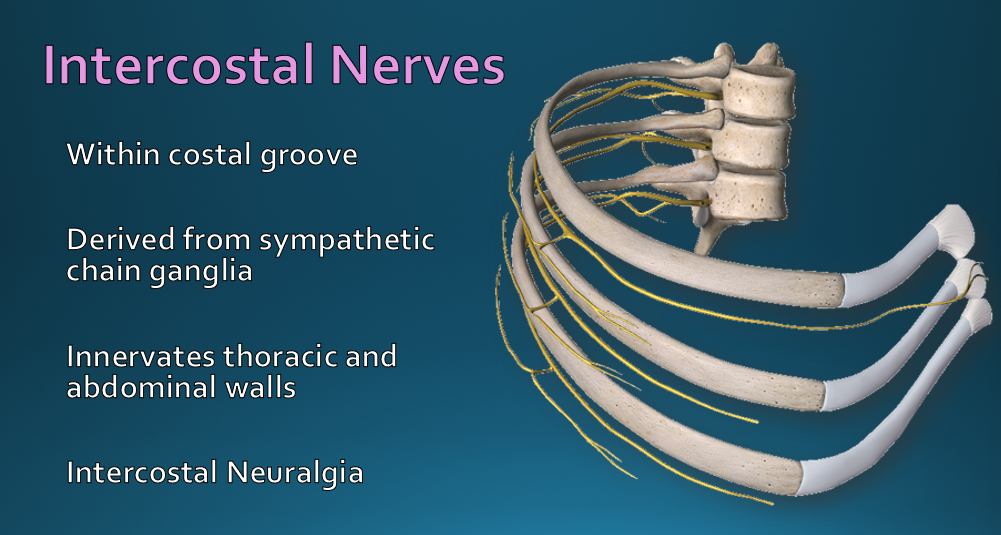
33
what do intercostal nerves innervate?
thoracic and abdominal walls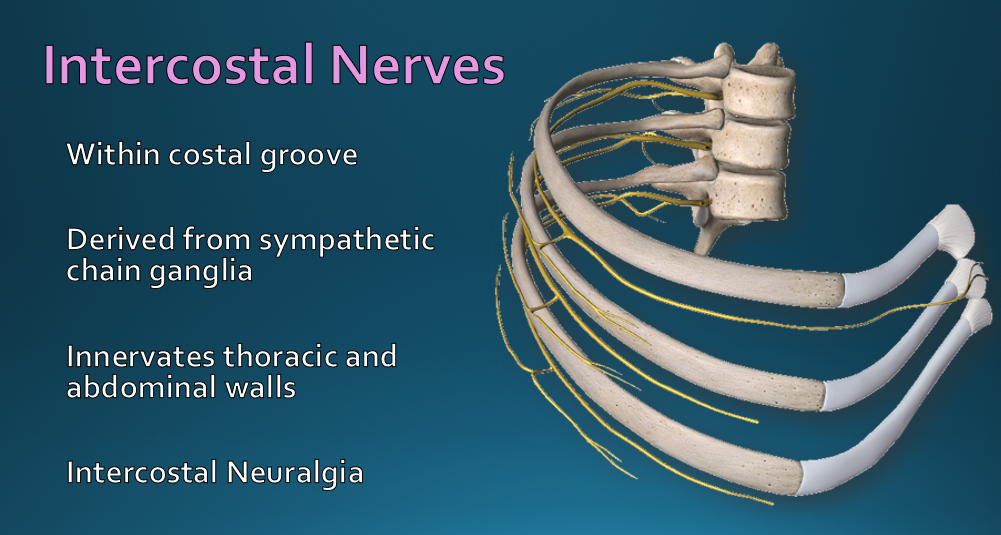
34
what nerve roots innervate the diaphragm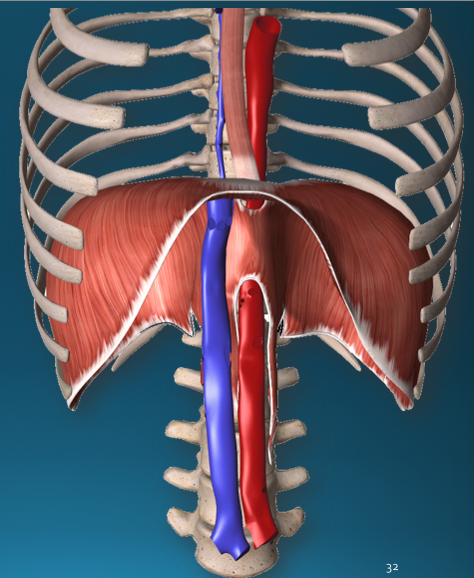
C3-5
35
what structures pass thrugh the diaphragm? (x3)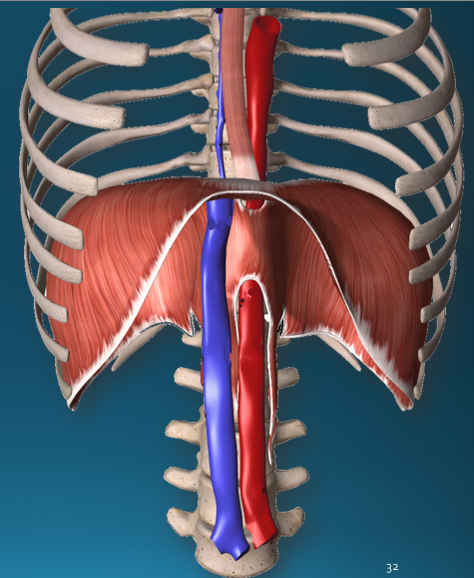
IVC at T8
Esophagus T10
Aorta at T12
(I8 10 eggs at noon)
Esophagus T10
Aorta at T12
(I8 10 eggs at noon)
36
If you have thoracuc cage somatic dysfunction, what do you treat first, ribs or vertebrae?
vertebrae
37
an inhalation SD will elevate with _________- and _________- with restriction
inspiration, expiration
38
key rib in inhalation SD
lowerottom
39
exhalation SD: moves ________ with expiration (ease) and inhalates with restriction, will not move ________-
inferiorly; superior
40
how do you evaluate the first rib for inhalation or exhalation somatic dysfunction
Patient seated
DOc stands behind the patient
Palpates the posterolateral shaft of each 1st rib immediately lateral to the costotransverse articulation
Start at the ear and move your thumbs inferior staying tight to the neck and medial. The first bony prominence will be the posterior first rib. (Anterior to the trapezius)
Place index finger on the first rib anterior
Observe the static position of the rib
Compare side to side
Compress the rib – resistance = dysfunction
Instruct the patient inhale and exhale
Observe & feel the motion
Somatic Dysfunction
Inhalation Dysfunction
Exhalation Dysfunction
Elevated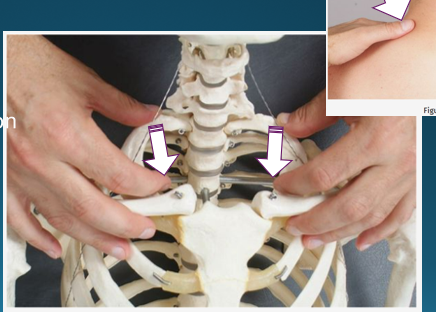
DOc stands behind the patient
Palpates the posterolateral shaft of each 1st rib immediately lateral to the costotransverse articulation
Start at the ear and move your thumbs inferior staying tight to the neck and medial. The first bony prominence will be the posterior first rib. (Anterior to the trapezius)
Place index finger on the first rib anterior
Observe the static position of the rib
Compare side to side
Compress the rib – resistance = dysfunction
Instruct the patient inhale and exhale
Observe & feel the motion
Somatic Dysfunction
Inhalation Dysfunction
Exhalation Dysfunction
Elevated
41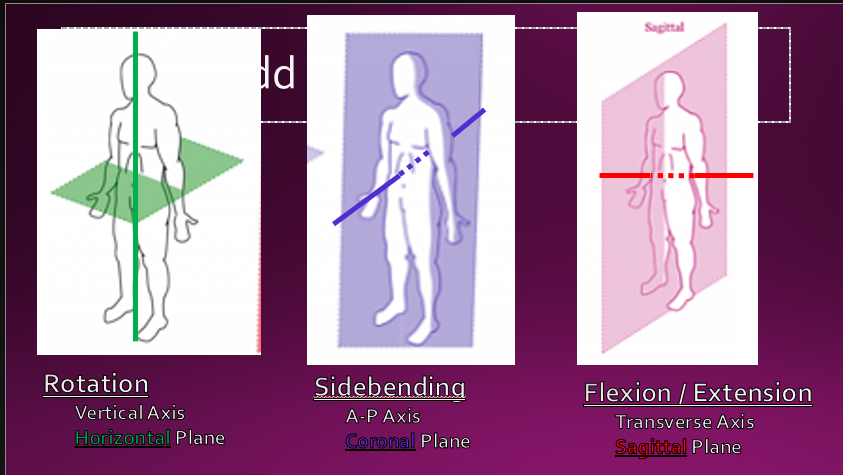
Image occlusion: name the hidden labels
42
Image occlusion: name the hidden labels
43
which ribs have the pump handle motion
ribs 1-5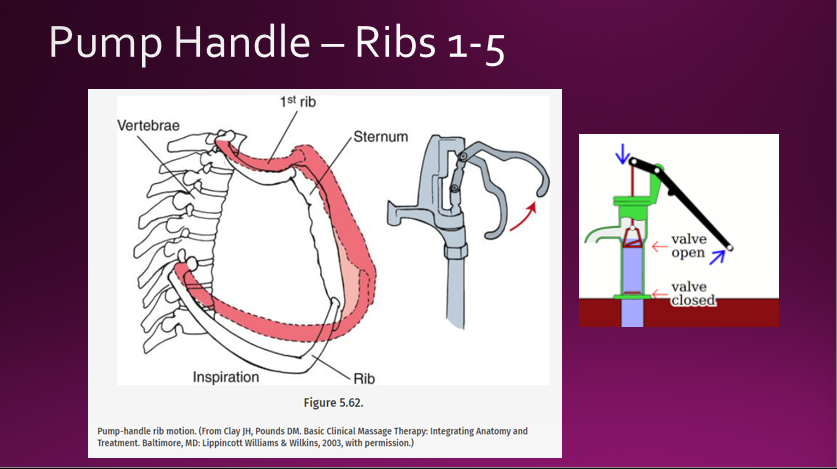
44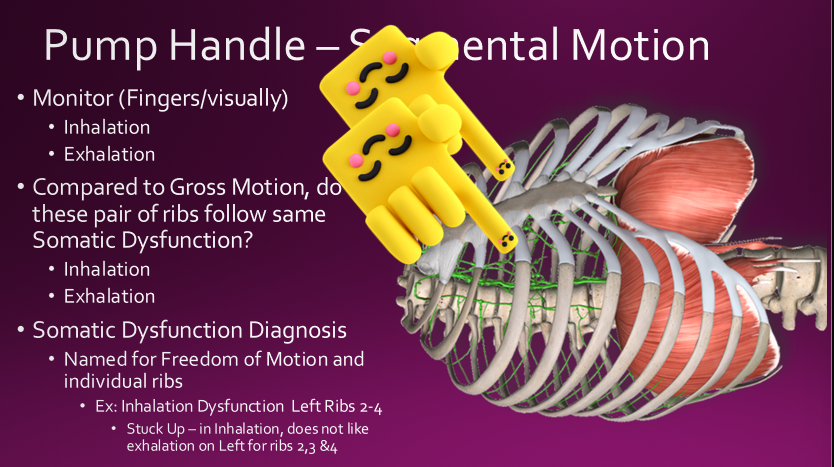
how do you screen for somatic dysfunction pump handle motion
45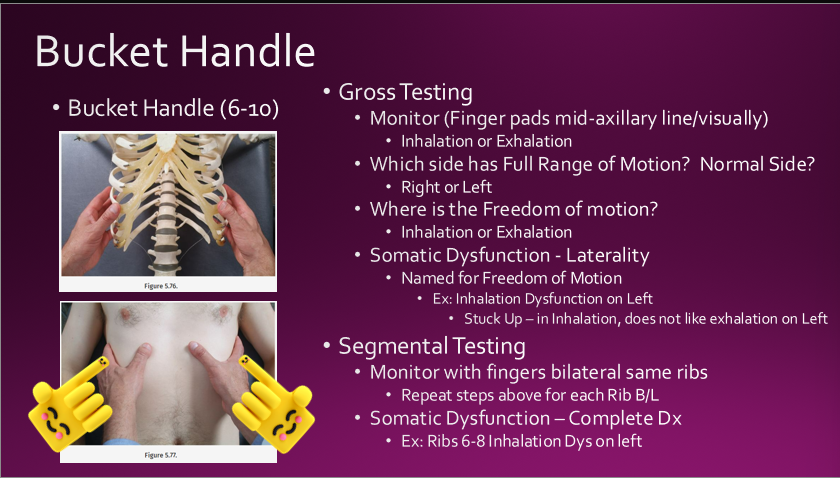
how do you screen for somatic dysfunction bucket handle motion
46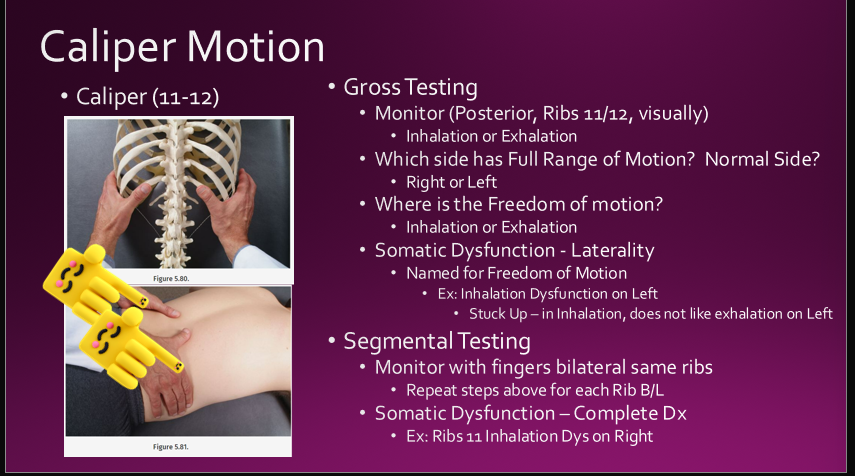
how do you screen for somatic dysfunction caliper motion
47
Somatic dysfunction that maintains a total dysfunction pattern including other secondary dysfunctions”
key lesion
48
Introduced in muscle energy technique seminars to help determine which rib should be treated first when a group costal dysfunction was evident
key rib
49
what is the key rib if your ribs are stuck up in inhalation
botton rib
50
what is the key rib if your ribs are stuck down in exhalation
top rib
51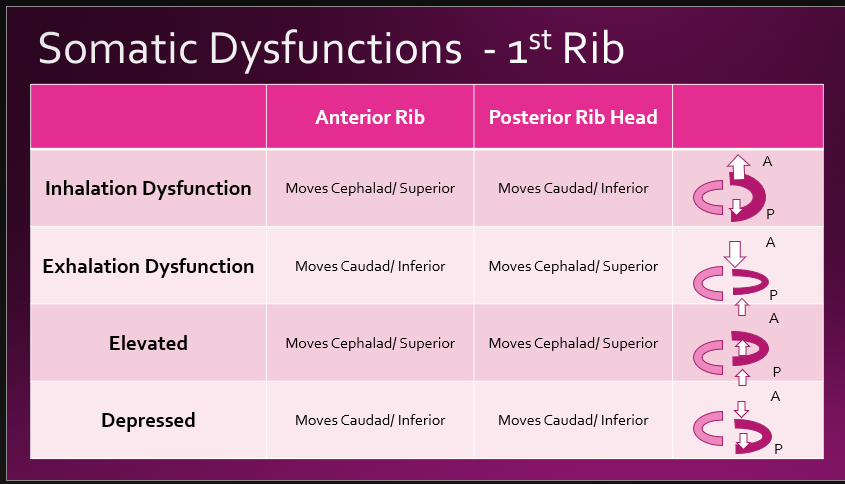
Image occlusion: name the hidden labels
52
Image occlusion: name the hidden labels
53
Image occlusion: name the hidden labels
54
Image occlusion: name the hidden labels
55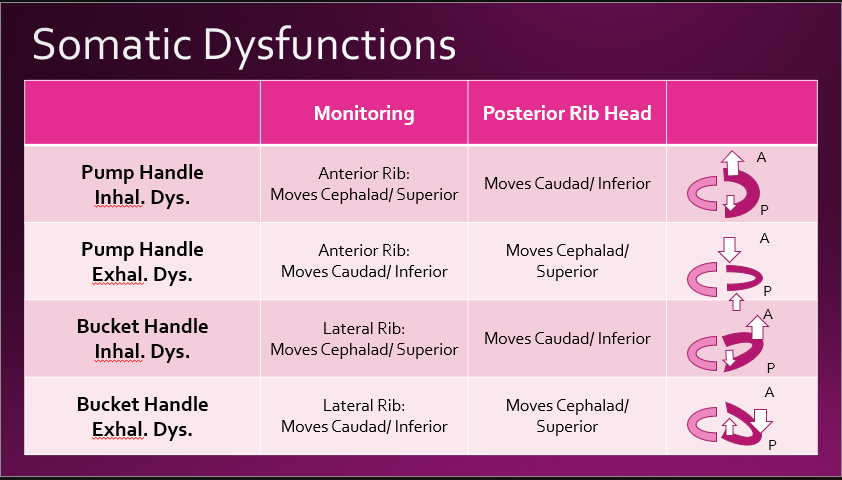
Image occlusion: name the hidden labels
56
Image occlusion: name the hidden labels
57
Image occlusion: name the hidden labels
58
Image occlusion: name the hidden labels
59
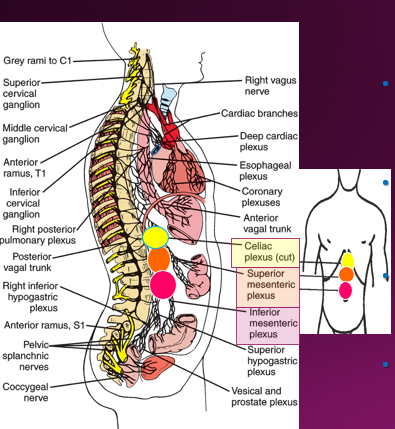
the celliac ganglia is post ganglionic to...
Distal Esophagus, Stomach, Liver, Gallbladder, Spleen, portions of Pancreas, proximal Duodenum (foregut)
60
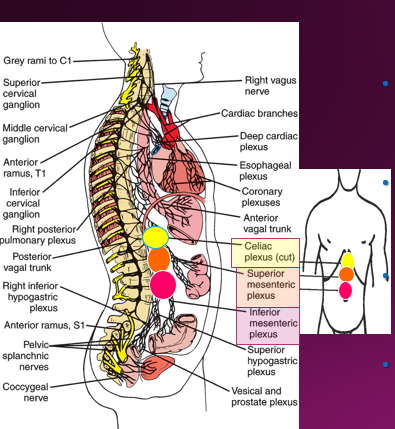
the superior mesentreric ganflia is post ganglionic to...
Portions of Pancreas, Duodenum, Jejunum, Ileum, Asc. Colon, Prox. 2/3 of Transverse Colon. (midgut); Adrenals, Gonads, Kidneys, upper ½ Ureter
61
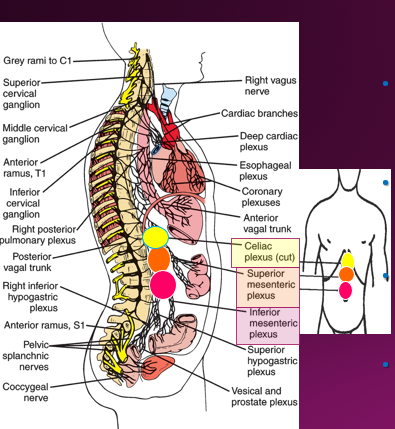
the inferior mesentreric ganglia is post ganglionic to...
Distal 1/3 Transverse Colon, Desc. Colon, Sigmoid, Rectum (hindgut); lower ½ Ureter, Bladder, Genitalia
62
Nerve fibers via which organs communicate with the central nervous system
-Capable of transmitting stress (pain)
-Utilize Acetylcholine as their neural transmitter.
-Capable of transmitting stress (pain)
-Utilize Acetylcholine as their neural transmitter.
visceral afferents
63
-A theory regarding the neurophysiological mechanisms underlying the neuronal activity associated with somatic dysfunction
-The maintenance of a pool of neurons in a state of partial or subthreshold excitation.
-Less afferent stimulation is required to trigger the discharge of impulses
-The maintenance of a pool of neurons in a state of partial or subthreshold excitation.
-Less afferent stimulation is required to trigger the discharge of impulses
Facilitation
64
Disruption, Irritation, or Disease of an internal organ or tissue results in a reflex dysfunction in a segmentally related musculoskeletal region
Localized visceral stimuli producing patterns of reflex response in segmentally related somatic structures. (Glossary of Terms)
Localized visceral stimuli producing patterns of reflex response in segmentally related somatic structures. (Glossary of Terms)
viscero somatic reflex
65
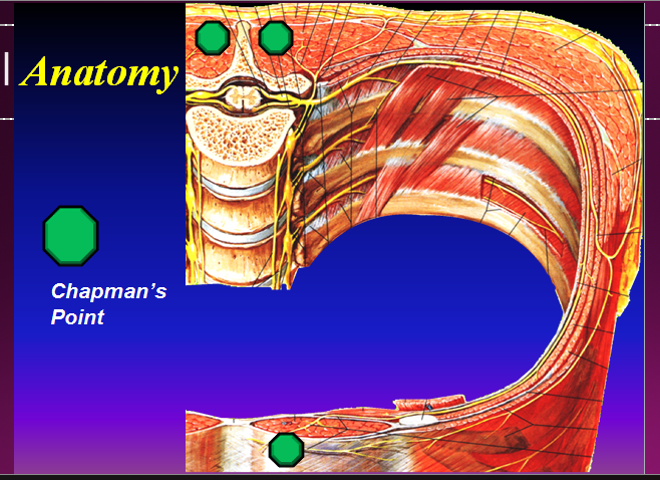
A system of reflex points that are present as predictable anterior and posterior abnormalities in fascia - tissue texture changes – assumed to be a reflection of visceral dysfunction or pathology.
chapman reflexes
66
how are chapman reflxes described
Pea-sized area
Boggy, ropey, shotty, and/or thickened
Do NOT radiate pain
Boggy, ropey, shotty, and/or thickened
Do NOT radiate pain
67
what is the criteria for a chapmans reflex
lymphatic congestion and altered myofascial texture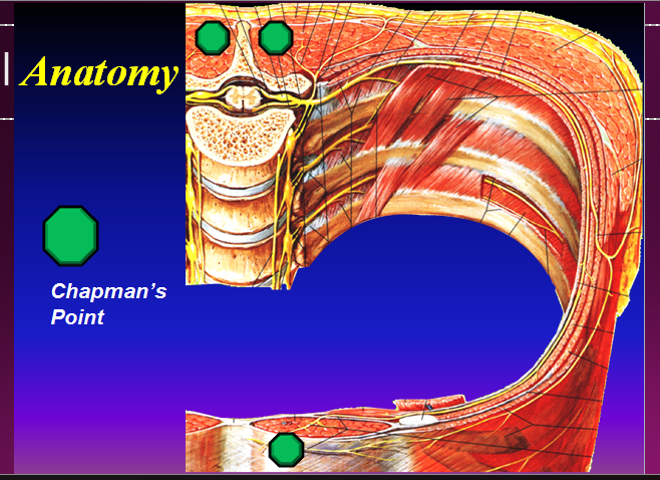
68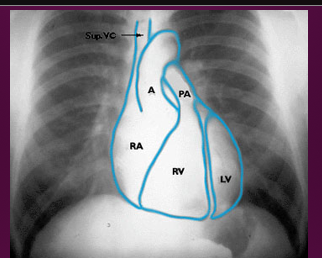
Image occlusion: name the hidden labels
69
Image occlusion: name the hidden labels
70
Image occlusion: name the hidden labels
71
Image occlusion: name the hidden labels
72
Image occlusion: name the hidden labels
73
Image occlusion: name the hidden labels
74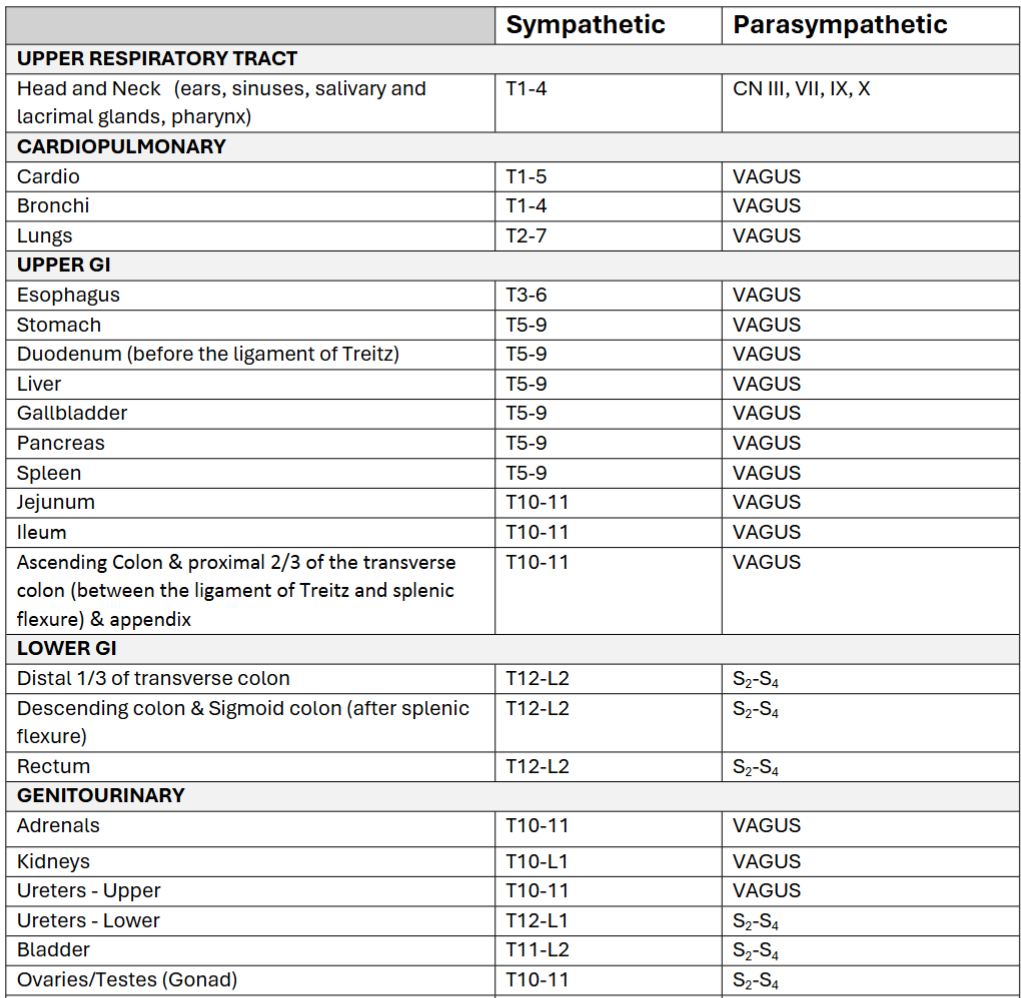
Image occlusion: name the hidden labels
75
Image occlusion: name the hidden labels
76
Image occlusion: name the hidden labels
77
Image occlusion: name the hidden labels
78
Image occlusion: name the hidden labels
79
Image occlusion: name the hidden labels
80
Image occlusion: name the hidden labels
81
Image occlusion: name the hidden labels
82
Image occlusion: name the hidden labels
83
Image occlusion: name the hidden labels
84
Image occlusion: name the hidden labels
85
Image occlusion: name the hidden labels
86
Image occlusion: name the hidden labels
87
Image occlusion: name the hidden labels
88
Image occlusion: name the hidden labels
89
Image occlusion: name the hidden labels
90
Image occlusion: name the hidden labels
91
Image occlusion: name the hidden labels
92
Image occlusion: name the hidden labels
93
Image occlusion: name the hidden labels
94
Image occlusion: name the hidden labels
95
Image occlusion: name the hidden labels
96
Image occlusion: name the hidden labels
97
Image occlusion: name the hidden labels
98
Image occlusion: name the hidden labels
99
Image occlusion: name the hidden labels
100
Image occlusion: name the hidden labels
101
Image occlusion: name the hidden labels
102
Image occlusion: name the hidden labels
103
Image occlusion: name the hidden labels
104
Image occlusion: name the hidden labels
105
Image occlusion: name the hidden labels
106
Image occlusion: name the hidden labels
107
Image occlusion: name the hidden labels
108
Image occlusion: name the hidden labels
109
Image occlusion: name the hidden labels
110
Image occlusion: name the hidden labels
111
Image occlusion: name the hidden labels
112
Image occlusion: name the hidden labels
113
Image occlusion: name the hidden labels
114
Image occlusion: name the hidden labels
115
Image occlusion: name the hidden labels
116
Image occlusion: name the hidden labels
117
Image occlusion: name the hidden labels
118
Image occlusion: name the hidden labels
119
Image occlusion: name the hidden labels
120
Image occlusion: name the hidden labels
121
Image occlusion: name the hidden labels
122
Image occlusion: name the hidden labels
123
Image occlusion: name the hidden labels
124
Image occlusion: name the hidden labels
125
Image occlusion: name the hidden labels
126
Image occlusion: name the hidden labels
127
Image occlusion: name the hidden labels
128
4 categories of visceral motion
1.Somatic Nervous System
2. Autonomic Nervous System
3.Craniosacral Rhythm
4.Visceral Motility
2. Autonomic Nervous System
3.Craniosacral Rhythm
4.Visceral Motility
129
visceral motion: Voluntary motion of the
musculoskeletal system
musculoskeletal system
somatic nervous system
130
Visceral motion: diaphragmatic motion, cardiac motion, peristaltic motion
ANS
131
Capable of rapid, wide spread
organ and somatic changes
“Sustained sympathetic activity
is a common factor in disease.”
organ and somatic changes
“Sustained sympathetic activity
is a common factor in disease.”
sympathetic innervation
132
sympathetic effects of foregut
Vasoconstriction
Alters HCO3- & mucus buffers
Increase sphincter tone
Alters HCO3- & mucus buffers
Increase sphincter tone
133
sympathetic motions of the midgut
Vasoconstriction
Decrease peristalsis
Decrease peristalsis
134
sympathetic motions of the hindgut
Vasoconstriction
Decrease peristalsis
Decrease peristalsis
135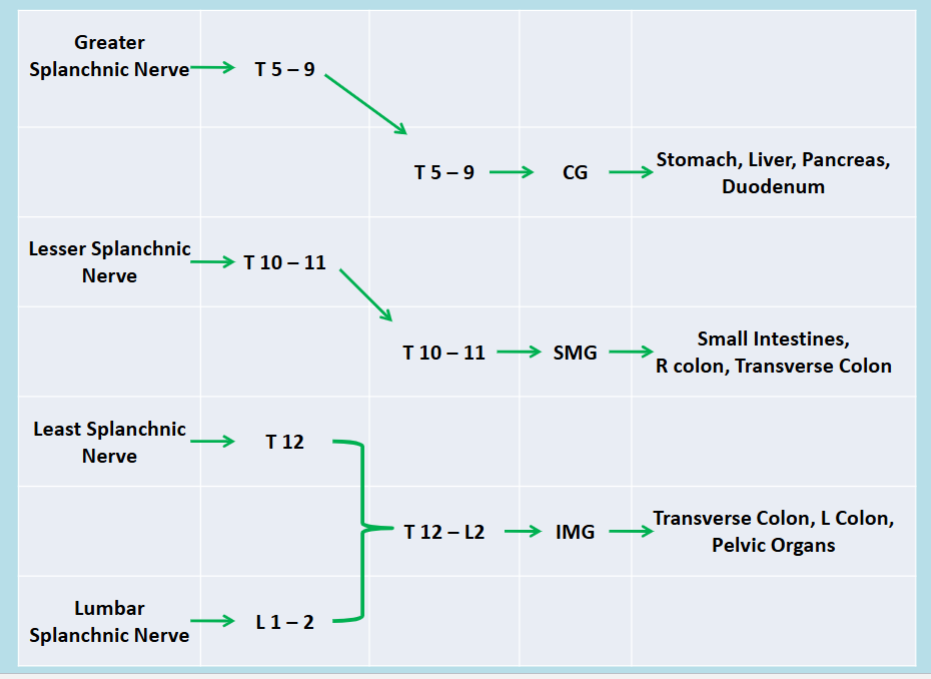
Image occlusion: name the hidden labels
136
Image occlusion: name the hidden labels
137
Image occlusion: name the hidden labels
138
Image occlusion: name the hidden labels
139
Image occlusion: name the hidden labels
140
Image occlusion: name the hidden labels
141
Image occlusion: name the hidden labels
142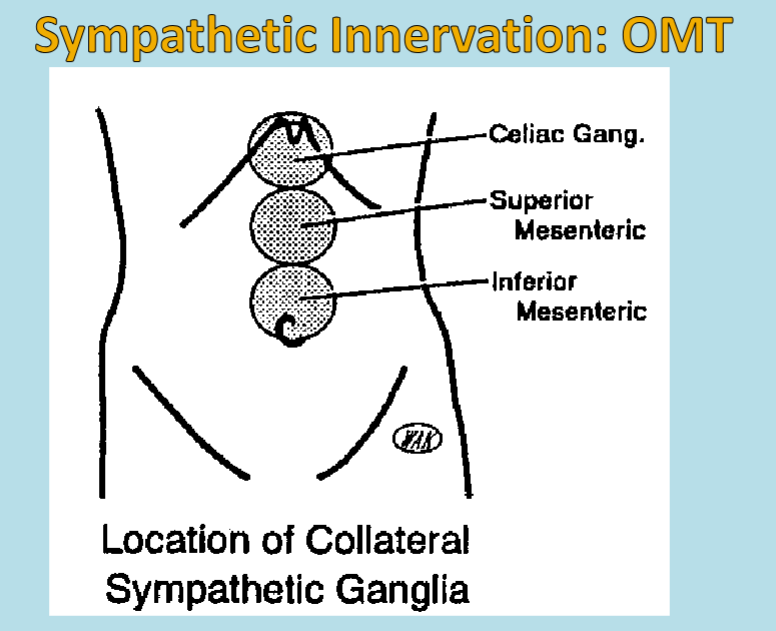
Image occlusion: name the hidden labels
143
Image occlusion: name the hidden labels
144
Image occlusion: name the hidden labels
145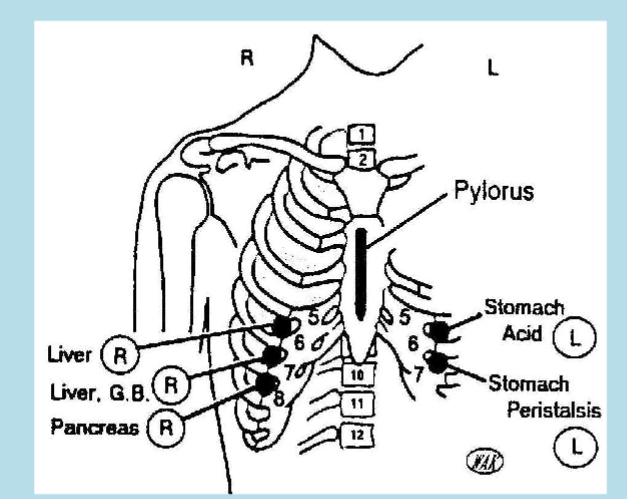
Image occlusion: name the hidden labels
146
Image occlusion: name the hidden labels
147
Image occlusion: name the hidden labels
148
Image occlusion: name the hidden labels
149
Image occlusion: name the hidden labels
150
Image occlusion: name the hidden labels
151
parasympathetic effects abdominal
Increased glandular secretion
Increased peristalsis → diarrhea
Sphincter relaxation
Occipital headache
Increased peristalsis → diarrhea
Sphincter relaxation
Occipital headache
152
visceral motion: ciculation of CSF, pure;u autonomic
craniosacral rhythm
153
visceral motion: intrinsic actove motion of individual cells; innate for each organs; independent to extrinsic factors; synchronous motion
visceral motility
154
Image occlusion: name the hidden labels
155
Image occlusion: name the hidden labels
156
Image occlusion: name the hidden labels
157
Image occlusion: name the hidden labels
158
Image occlusion: name the hidden labels
159
Image occlusion: name the hidden labels
160
Image occlusion: name the hidden labels
161
Image occlusion: name the hidden labels
162
Image occlusion: name the hidden labels
163
attachments abdominal obliques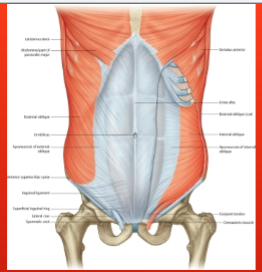
Internal – Iliac crest
External: Iliac crest, Pubic tubercle
External: Iliac crest, Pubic tubercle
164
attachments erector spinae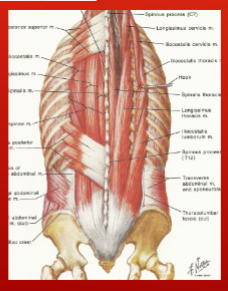
Iliac crest
ligaments
ligaments
165
attachments tensor fascia lata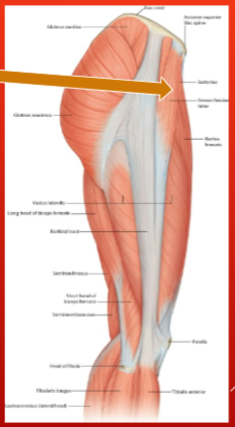
ASIS
Iliac crest
Iliac crest
166
three true pelvic ligaments
anterior sacroiliac
interosseous
posterior sacroiliac
interosseous
posterior sacroiliac
167
three pelvic motion
Pubic motions
Ilial motions on the sacrum
Sacral motions on the ilium
Ilial motions on the sacrum
Sacral motions on the ilium
168
pubic motions (x3)
caliper, torisonal, superoinferior translatory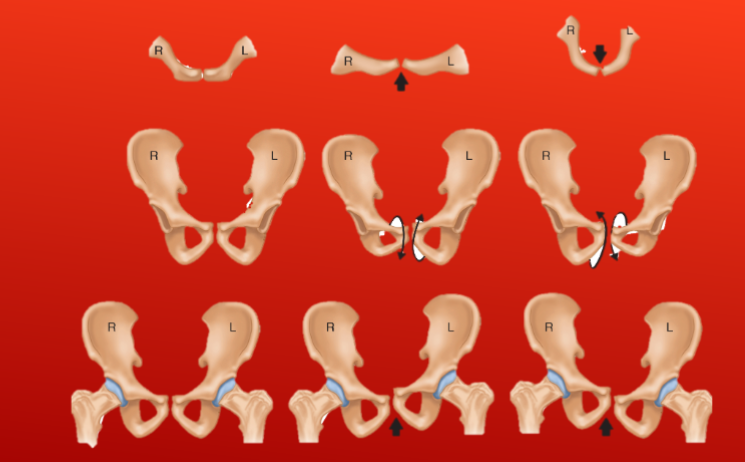
169
One pubic bone is displaced
superiorly compared to the other
Etiology – tight rectus
abdominus or trauma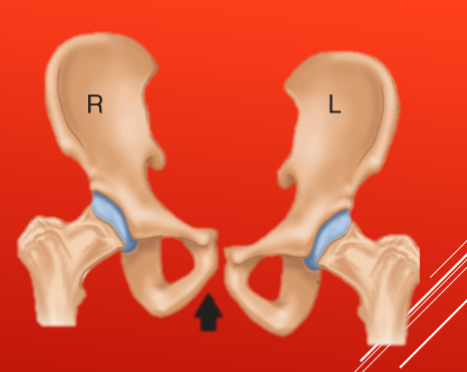
superiorly compared to the other
Etiology – tight rectus
abdominus or trauma
superior pubic shear
170
what m is tight in a superior pubic shear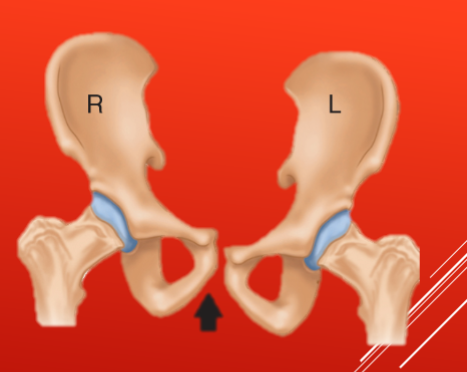
rectus abdominus
171
ASIS level or inferior
PSIS level or superior
Etiology
- tight adductors or trauma
PSIS level or superior
Etiology
- tight adductors or trauma
inferior pubic shear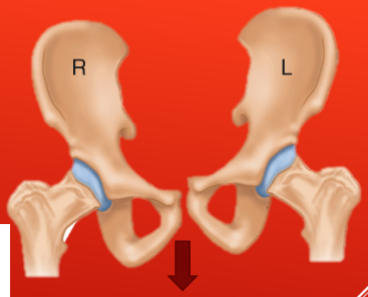
172
what muscles are tight in inferior pubic shear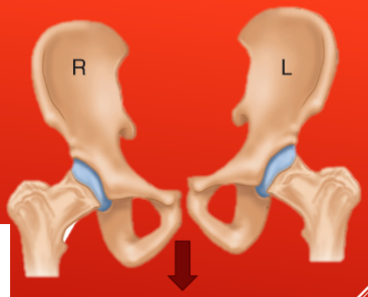
tight adductors or trauma
173
Suspicion of dysfunction by history
Bulging of pubic symphysis
Tenderness
Urinary symptoms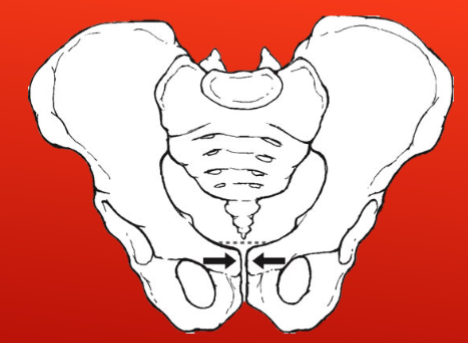
Bulging of pubic symphysis
Tenderness
Urinary symptoms
pubic adduction
174
Suspicion of dysfunction by history
Sulcus deeper than normal
Tenderness
Urinary tract symptoms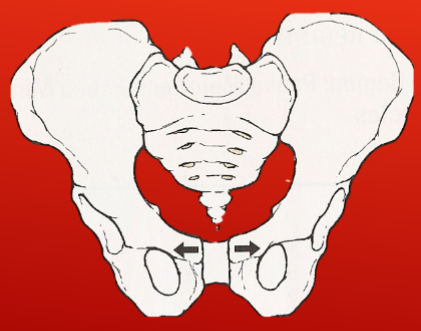
Sulcus deeper than normal
Tenderness
Urinary tract symptoms
pubic abduction
175
due to muscular imbalance
and the side of the
dysfunction is the side of the
positive standing flexion test
and the side of the
dysfunction is the side of the
positive standing flexion test
iliosacral somatic dysfunction
176
ASIS - inferior
PSIS - superior
Ipsilateral hamstring taught
Sciatica
Tissue changes at ILA
Iliolumbar ligament
Can be associated with an anatomic short leg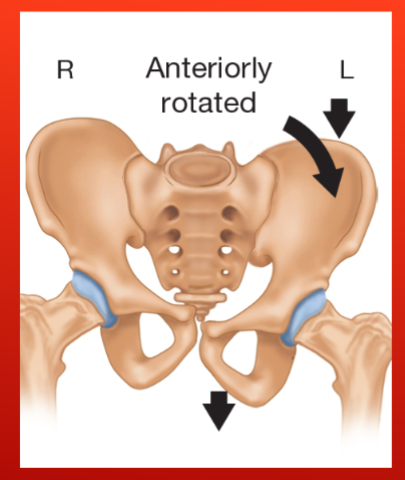
PSIS - superior
Ipsilateral hamstring taught
Sciatica
Tissue changes at ILA
Iliolumbar ligament
Can be associated with an anatomic short leg
anterior innominate rotation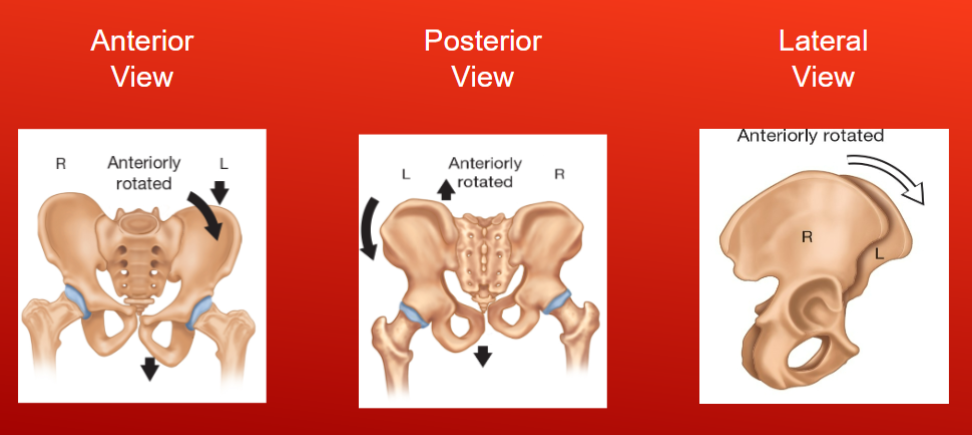
177
etiology of anterior innominate rotation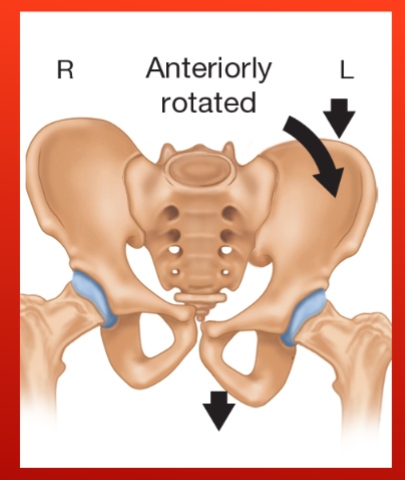
Hypertonic quads
Hypertonic QL
Hypertonic adductors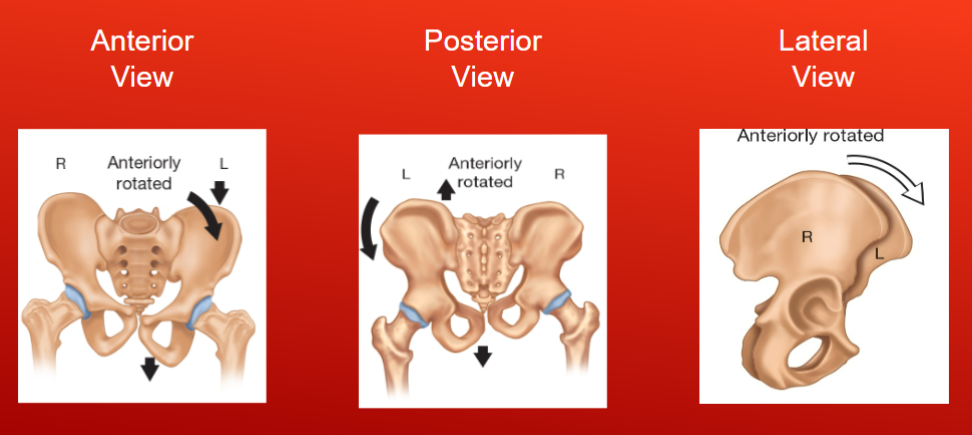
Hypertonic QL
Hypertonic adductors
178
ASIS - superior
PSIS - inferior
Inguinalroin pain
Medial knee pain
Inguinal tenderness
Tissue changes at the sacral sulcus
Can be associated with an anatomic long leg
PSIS - inferior
Inguinalroin pain
Medial knee pain
Inguinal tenderness
Tissue changes at the sacral sulcus
Can be associated with an anatomic long leg
posterior innominate rotation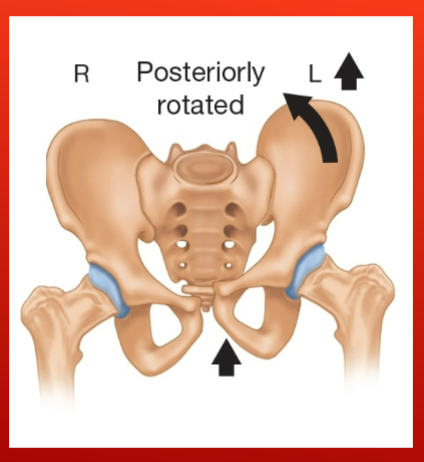
179
etiology posterior innominate rotation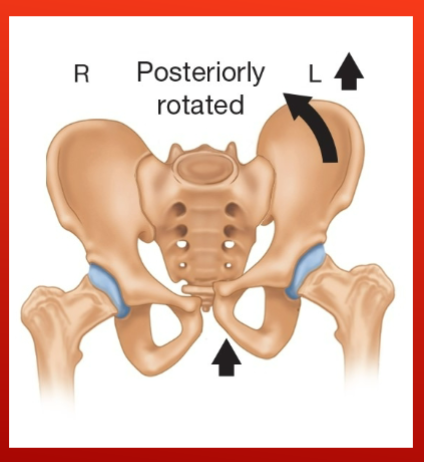
Hypertonic hamstrings
Hypertonic rectus abdominus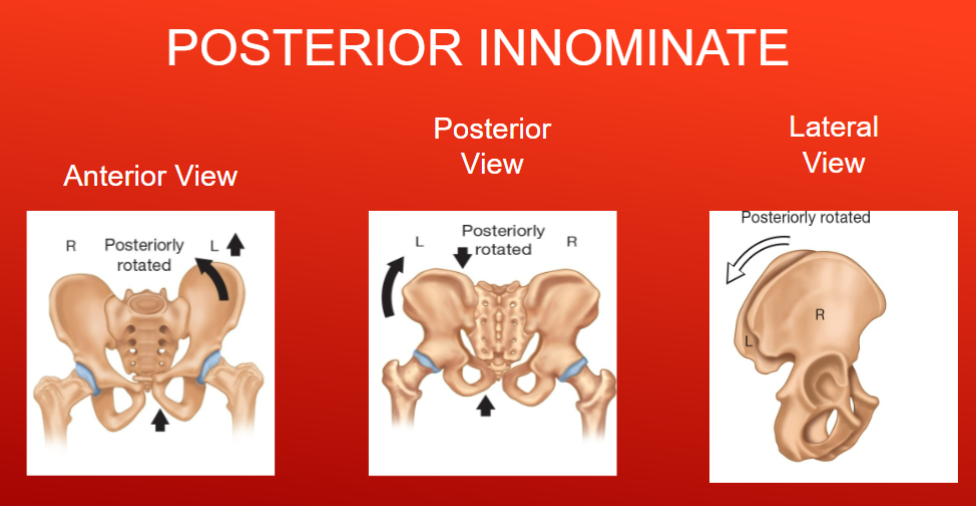
Hypertonic rectus abdominus
180
ASIS - superior
PSIS - superior
Pubic ramus
Pelvic pain
Ipsilateral SI joint and pubes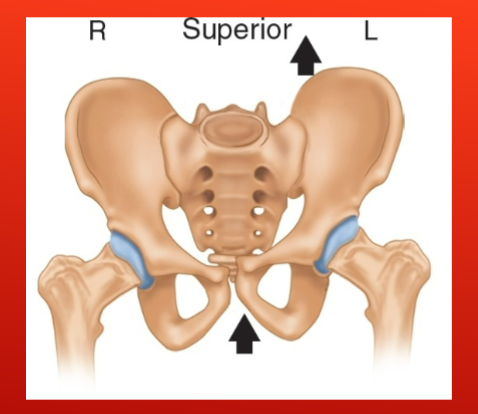
PSIS - superior
Pubic ramus
Pelvic pain
Ipsilateral SI joint and pubes
superior innominate shear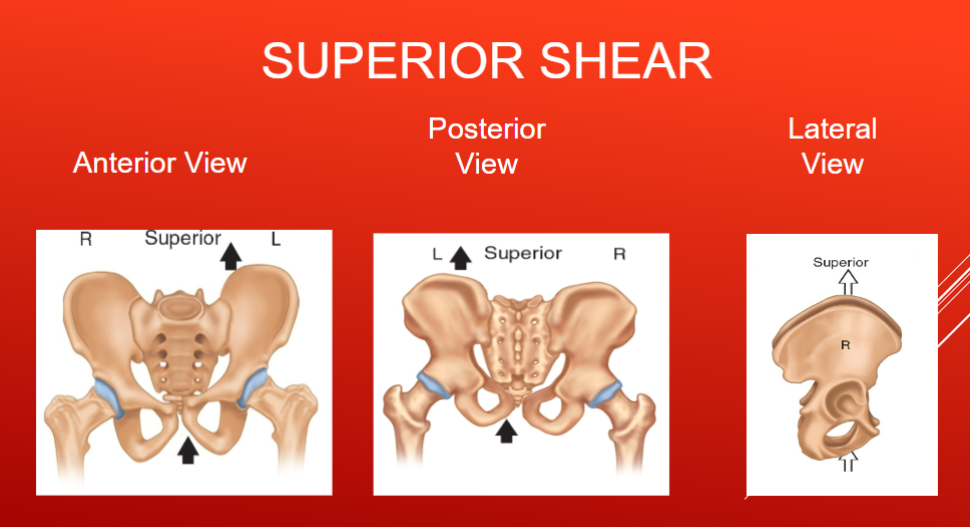
181
etiology superior innominate shear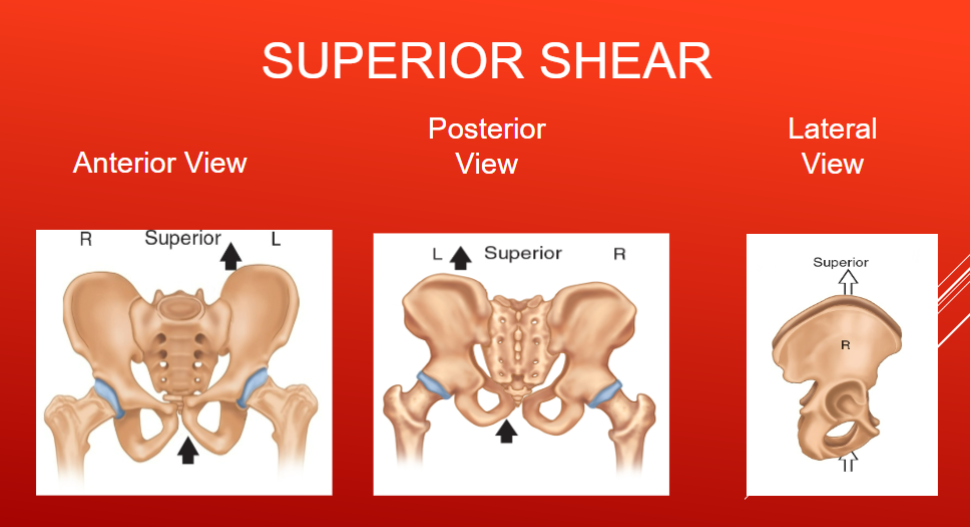
Fall to the buttocks/knee - same side
Sitting/standing unevenly
Sitting/standing unevenly
182
ASIS more inferior
PSIS more inferior
Pubic ramus inferior
same complaint of pelvic
pain
same tissue changes
rare
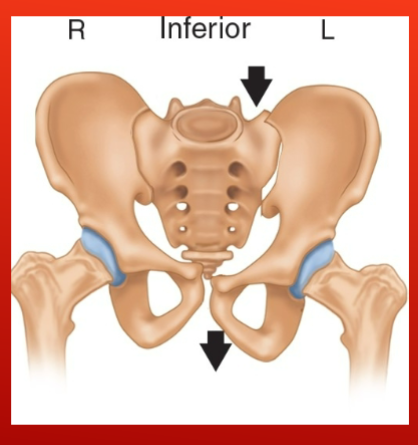
PSIS more inferior
Pubic ramus inferior
same complaint of pelvic
pain
same tissue changes
rare
inferior innominate shear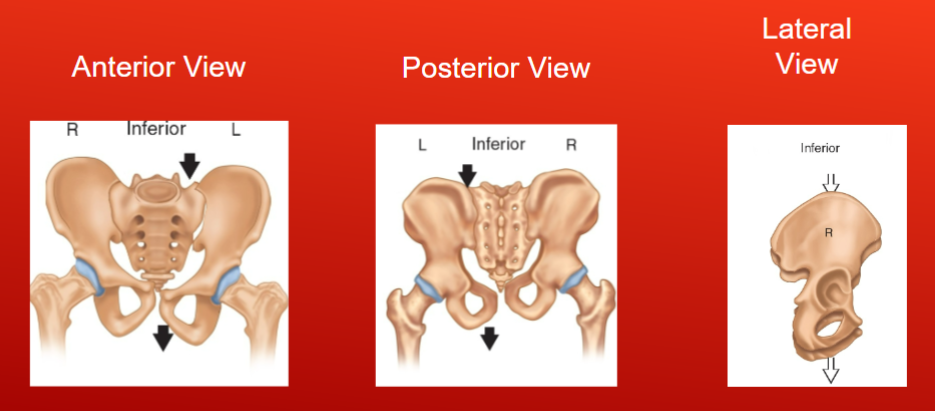
183
anterior rotation
adducted
ASIS is medial or lateral to its usual position
adducted
ASIS is medial or lateral to its usual position
innominate inflare
184
posteriorly rotated
abducted
ASIS is medial or lateral to its usual position
abducted
ASIS is medial or lateral to its usual position
innominate outflares
185
Gross evaluation of iliosacral motion
• Standing position feet shoulder length apart
• Operator behind patient with thumbs UNDER the PSIS
• Patient bends forward
• Motion restriction = PSIS moves cephalad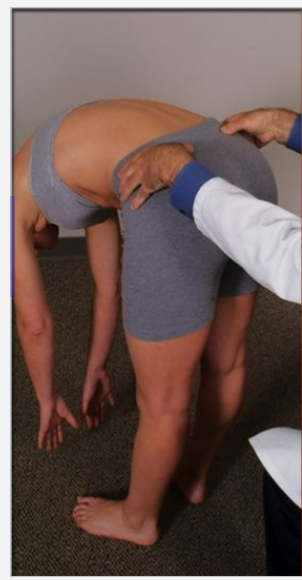
• Standing position feet shoulder length apart
• Operator behind patient with thumbs UNDER the PSIS
• Patient bends forward
• Motion restriction = PSIS moves cephalad
standig flexion test
186
what is a positive standing flexion test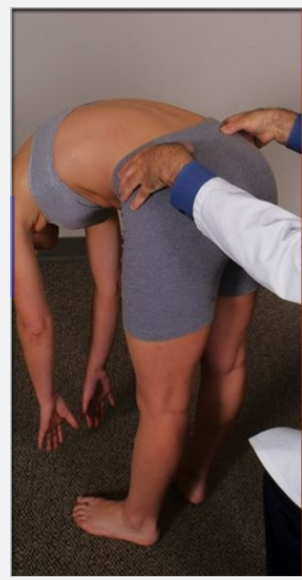
PSIS moves cephalad
187
• Evaluates sacroiliac dysfunction
• Patient is seated
• Operator behind patient, eyes level
and thumbs UNDER the PSIS
• Same as standing flexion test
• Removes innominates as a factor
• Patient is seated
• Operator behind patient, eyes level
and thumbs UNDER the PSIS
• Same as standing flexion test
• Removes innominates as a factor
seated flexion test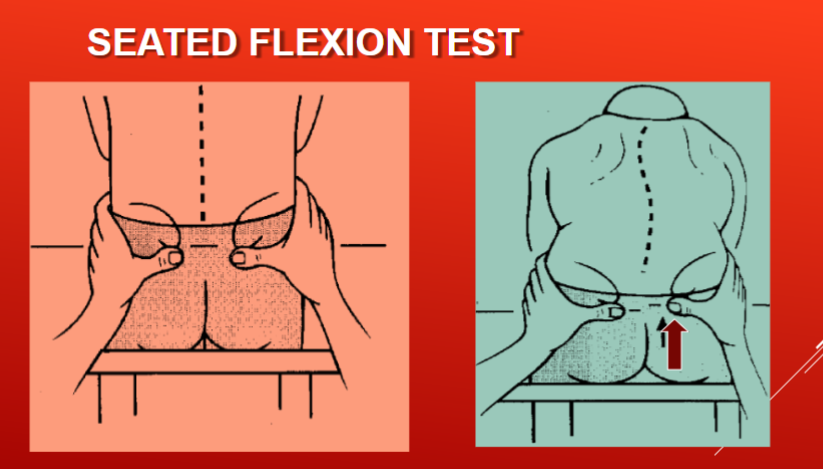
188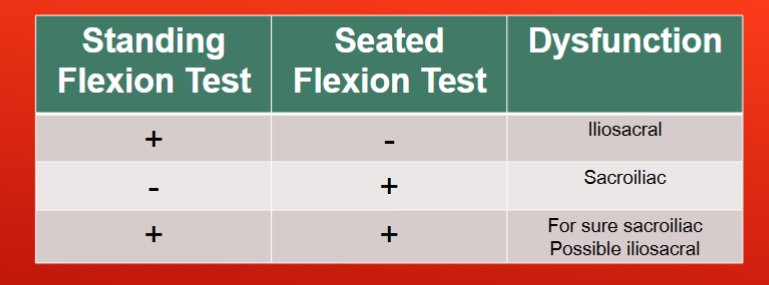
Image occlusion: name the hidden labels
189
Image occlusion: name the hidden labels
190
Image occlusion: name the hidden labels
191
Patient supine
Hips and knees bent
Patient lifts the buttock up and sets it down
Physician straightens the legs
Patient passive and relaxed
Assures alignment on the table
Perform prior to any anterior landmark eval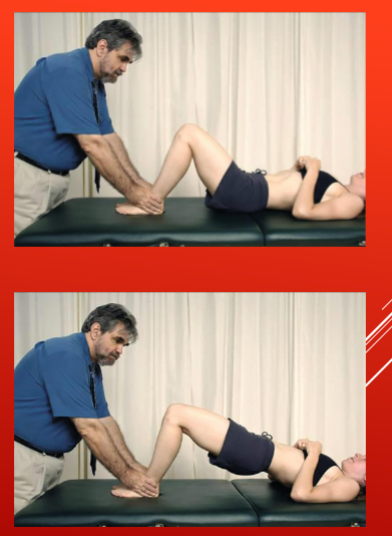
Patient supine
Hips and knees bent
Patient lifts the buttock up and sets it down
Physician straightens the legs
Patient passive and relaxed
Assures alignment on the table
Perform prior to any anterior landmark eval
hip flop
192
when do you perform a hip flop?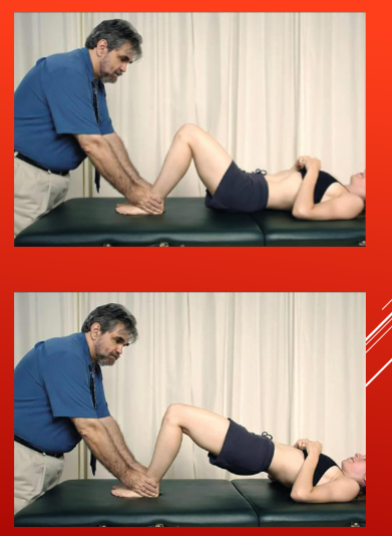
prior to any anterior landmark eval
193
what are they evaluating?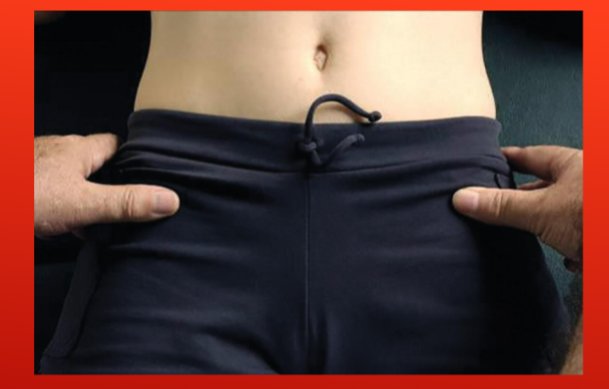
ASIS
194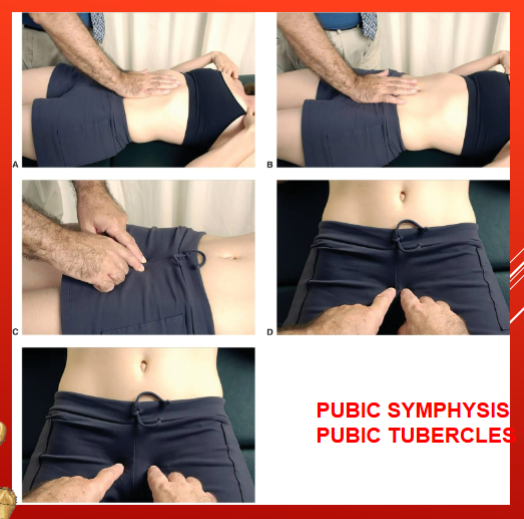
Image occlusion: name the hidden labels
195
what are they evaluating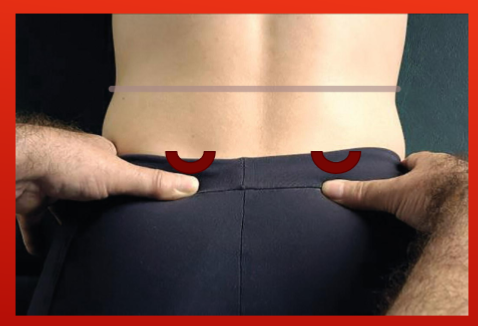
PSIS
196
what are they evaluating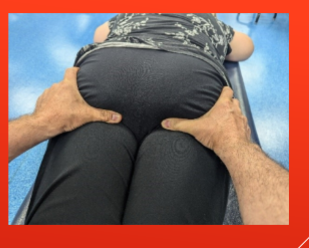
ischial tuberosity
197
A healing-oriented medicine that considers the whole person (body, mind, spirit) and uses both conventional and alternative therapies
Integrative Medicine
198
A model that is reductionistic, biochemical/physical, interventional, symptomatic, and emergency-focused
Conventional Medicine
199
A model emphasizing prevention, self-healing, holistic paradigms, and root cause of illness
Complementary/Alternative Medicine (CAM)
200
Underlying origin of illness, involving body, mind, emotions, and spirit
Root Cause
201
The stage before disease develops, where prevention and early care are emphasized
Clinical Horizon
202
A category of CAM therapies involving bioenergetic or vibrational approaches
Energy Medicine
203
The vital life force or energy flow in traditional Chinese medicine
Qi
204
Acupuncture applied to the whole body meridian system
Macrosystem Acupuncture
205
Acupuncture applied to localized systems such as the ear, scalp, or hand
Microsystem Acupuncture
206
A form of acupuncture where electrical current is applied to the needles
Electroacupuncture
207
OMT (Osteopathic Manipulative Treatment)
Hands-on therapy to improve body function and self-healing
208
A health system emphasizing natural healing, nutrition, prevention, herbalism, and holistic approaches
Naturopathy
209
A system of medicine using highly diluted substances to stimulate the body’s healing response
Homeopathy
210
A system of healthcare including herbalism, nutrition, acupuncture, massage (Tui na), and exercise
Oriental Medicine
211
A therapy involving burning “moxa” (mugwort) on or near the skin to stimulate acupuncture points
Moxabustion
212
Chinese therapeutic massage used in Oriental medicine
Tui Na
213
A therapy involving suction cups placed on the skin to stimulate circulation and healing
Cupping
214
An ear acupuncture treatment developed for addiction detoxification
NADA Protocol
215
Various models of acupuncture including TCM 5 elements, neuroanatomical, Dr. Tan method, and microsystems
Acupuncture Repertoire
216
Pathways in the body where Qi flows in Oriental medicine
Meridian
217
Curious Meridians
Special acupuncture meridians with unique influence, such as Du Mai and Dai Mai
218
Five Elements (TCM)
Wood, Fire, Earth, Metal, Water — used in Chinese medicine for diagnosis and treatment
219
Kidney Yin Deficiency
A TCM symptom complex involving depletion of kidney energy
220
Whole medical systems such as Osteopathy, Chiropractic, Naturopathy, Homeopathy, Oriental Medicine, and Ayurveda
Alternative Systems
221
Therapies using herbalism, essential oils, and plant-based medicines (Western, Chinese, Ayurvedic)
Botanicals
222
Energy Medicine Modalities
Acupuncture, Qi Gong, Reiki, Therapeutic Touch, Pranic Healing, Marma Therapy
223
Energy medicine focusing on body energy centers
Chakra Therapies
224
Healing approaches using magnets or electromagnetic fields
Magnetic Therapies
225
A system balancing body energy fields
Polarity Therapy
226
Zero Balancing
A hands-on therapy integrating body structure and energy
227
PEMF
Pulsed electromagnetic field therapy
228
TENSCAM
A device-based form of energy therapy
229
Health practice involving direct contact with the earth’s surface
Earthing (Grounding)
230
Sound Therapies
Healing using music therapy, Tomatis method, ultrasound
231
Color Therapies
Healing using art therapy, laser therapy, and colorpuncture
232
Craniosacral Therapy
A gentle hands-on method for releasing tension in the craniosacral system
233
Spinal adjustments for improving health
Chiropractic Manipulation
234
Manual therapy to relieve pain and stress
Therapeutic Massage
235
Treatment targeting muscle trigger points
Trigger Point Myotherapy
236
Deep tissue bodywork to reorganize connective tissue
Rolfing
237
Reflexology
Therapy using pressure points on the feet, hands, or ears
238
Education method improving posture and movement
Alexander Technique
239
Exercise system for core strength and flexibility
Pilates
240
Mind-body practice combining postures, breathing, and meditation
Yoga
241
Chinese martial art practiced for health and relaxation
Tai Chi
242
Water-based bodywork therapy
Aqua Healing (Watsu)
243
Therapy using expressive movement
Dance Therapy
244
Technique using feedback on body functions like EEG or HRV to improve health
Biofeedback
245
Focused attention therapy for behavior and symptom change
Hypnosis
246
Visualization practice for healing and relaxation
Guided Imagery
247
Energy Psychology
Approach combining psychology and energy therapies
248
Shamanism
Traditional healing using rituals and altered states
249
Practice of mindfulness and awareness
Meditation
250
Spiritual practice to promote healing
Prayer
251
Treatment using agents that bind heavy metals for removal
Chelation Therapy
252
Injection therapy to stimulate tissue repair
Prolotherapy
253
Platelet Rich Plasma (PRP)
Injections using concentrated platelets to heal tissue
254
Stem Cell Therapy
Treatment using stem cells for regeneration
255
Orthomolecular Medicine
Use of nutritional supplements for health
256
Diets
Therapeutic nutrition plans for prevention and treatment
257
Ayurveda
Traditional Indian medicine system based on elements and doshas
258
Five Elements (Ayurveda)
Ether, Air, Fire, Water, Earth
259
True articular ligaments of the pelvis (x3)
anterior SI ligament
interosseus SI ligament
Posteriot SI ligament
interosseus SI ligament
Posteriot SI ligament
260
what is the normal degree of the ferguson (lumbosacral) angle
35*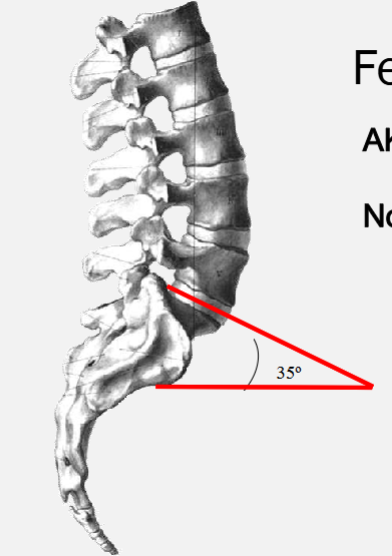
261
what are the promary pelvis muscles?
intrinsic pelvic floor: urogenital diaphragm and pelvoc diaphragm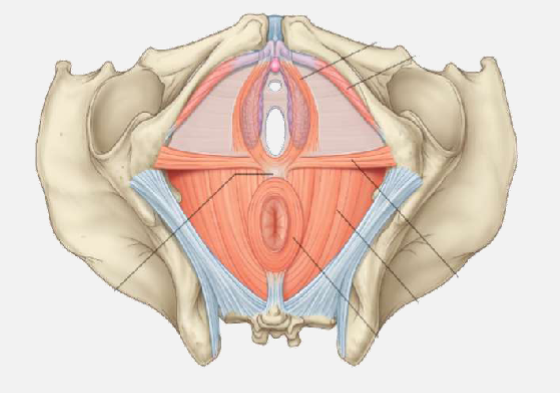
262
what is the axis of movement of the pubic symphysis during normal gait
trasnverse axis
263
in flexion, the base of the sacrum moves?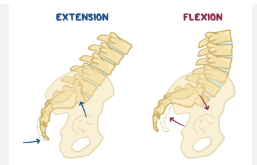
anterior
264
3 things needed for sacral diagnosis
sulcus, ILA, testing: indicating its forward or backward or stuck
265
what is this ecaluating?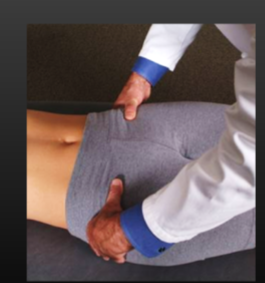
ASIS
266
what is this evaluating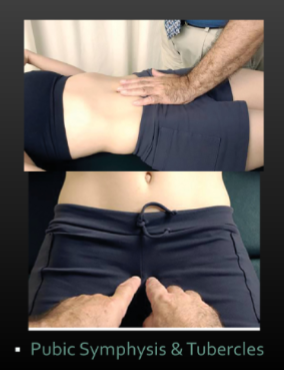
pubic symphysis and tubercles
267
what is this evaluating?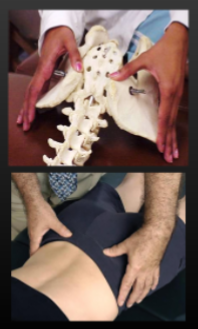
PSIS
268
ehat dpes this evaluate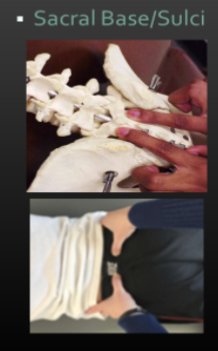
sacral base
269
what does this evaluate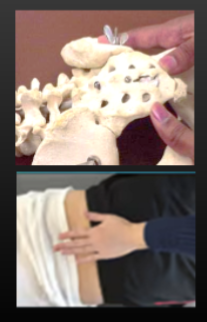
iferior lateral angles
270
what does this evaluate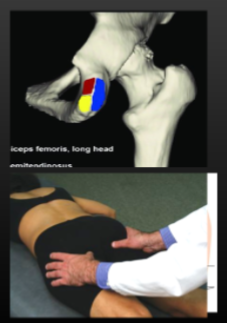
ischial tuberosities
271
what do you ecaluate with a standing patient at this view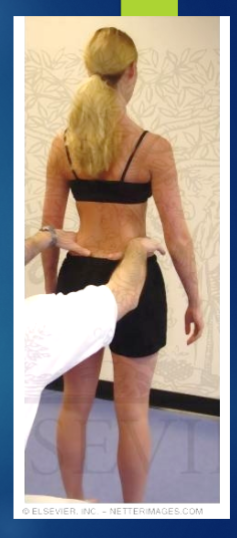
PSIS, illiac crest; standing flexion test
272
Patient – Standing (feet should width)
DOc– Behind patient – EYE level (Dominant Eye)
DOc– Locate INFERIOR border PSIS, hook under B/L
Pt instructed to flex at waist & hips w/o flexing knees
Then ask patient to return to neutral when don
Evaluation
PSIS - moves first anteriorly/superiorly is dysfunctional
The Iliosacral joint on the affected side does not have as
much freedom of motion as the other side.
Interpretation
Ilio-sacral or Sacro-iliac – undefined pelvic SD
Laterality (right or left)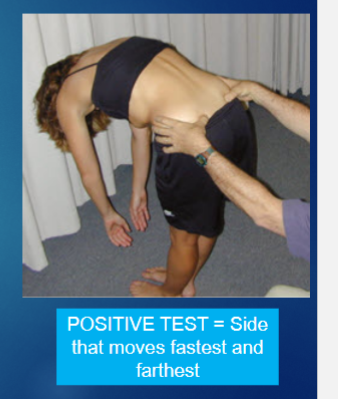
DOc– Behind patient – EYE level (Dominant Eye)
DOc– Locate INFERIOR border PSIS, hook under B/L
Pt instructed to flex at waist & hips w/o flexing knees
Then ask patient to return to neutral when don
Evaluation
PSIS - moves first anteriorly/superiorly is dysfunctional
The Iliosacral joint on the affected side does not have as
much freedom of motion as the other side.
Interpretation
Ilio-sacral or Sacro-iliac – undefined pelvic SD
Laterality (right or left)
standing flexion test
273
what is positive in a standing flexion test?
side that moves fastest and farthest is positive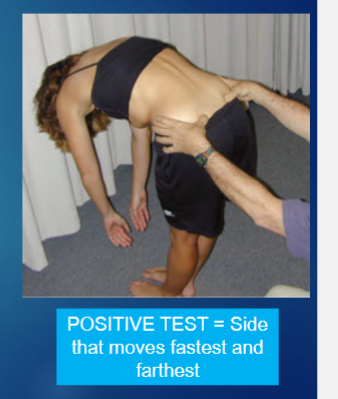
274
what test? what side posituve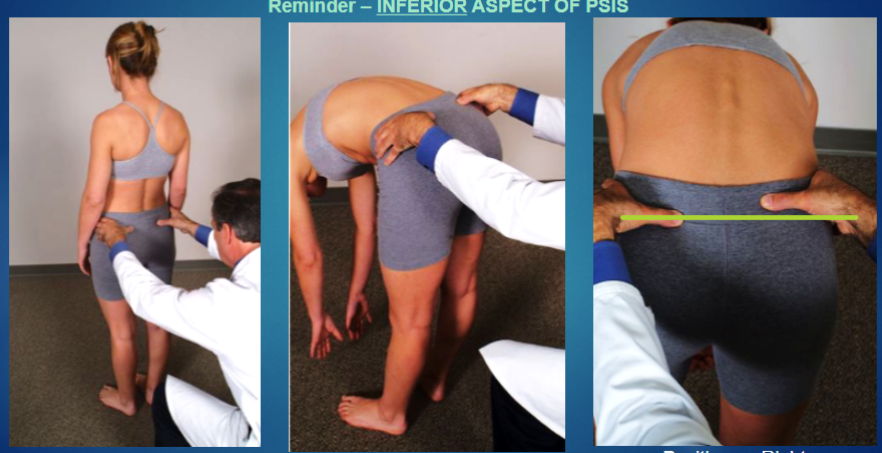
standing fkexion test; right
275
what do you evaluate on a seated patient (innominate, pelvis, sacrum)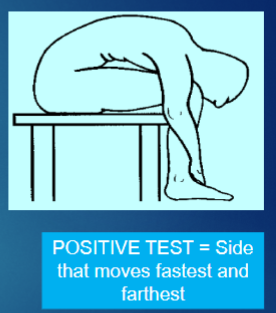
Illiac crest, PSIS, seated flexion test
276
Testing for symmetry of motion between innominate and
sacrum
Sitting on ischial tuberosities stabilizes the ilium and
focuses testing on the sacral motion
And, eliminates the influence of the lower extremities
Lateralizes dysfunction (which side is trouble)
Also confirms that it is a "sacral" problem and not
necessarily a problems with an ilium (i.e. Sacroiliac
Dysfunction)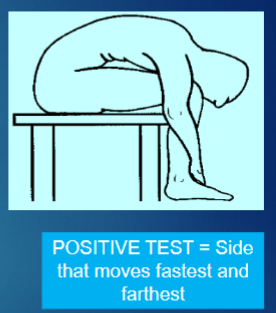
sacrum
Sitting on ischial tuberosities stabilizes the ilium and
focuses testing on the sacral motion
And, eliminates the influence of the lower extremities
Lateralizes dysfunction (which side is trouble)
Also confirms that it is a "sacral" problem and not
necessarily a problems with an ilium (i.e. Sacroiliac
Dysfunction)
seated flexion test
277
what is the advantage of the seated flexion test vs the standing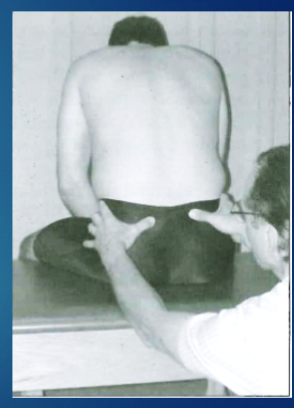
removes the innnominate as a factor/locks it in place
278
what is the interpretation of a seated and standing flexion test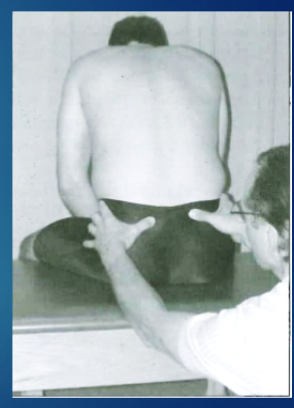
sacro iliac dysfunction and laterality (right or left)
279
which side shows a positive seated flexion test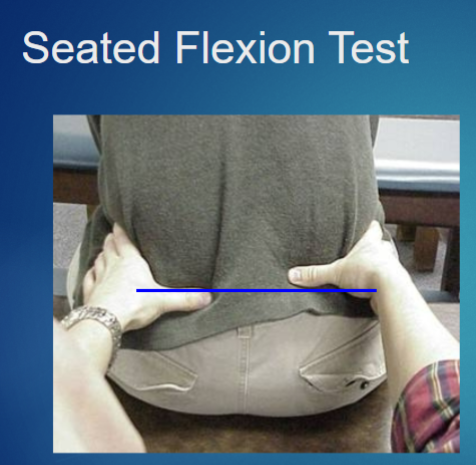
rightright
280
what do you evaliate for iliosacral dysfunction
Supine
Anterior Landmarks
ASIS
Pubic Tubercles
Medial Malleolus
Prone
Posterior Landmarks
PSIS
Ischial Tuberosities
Anterior Landmarks
ASIS
Pubic Tubercles
Medial Malleolus
Prone
Posterior Landmarks
PSIS
Ischial Tuberosities
281
what do yiu evaluate fir sacroiluac dysfunction
Prone
Posterior Landmarks
Sacral Sulci
Sacral Base
ILAs
Sacrotuberous Ligament
Posterior Landmarks
Sacral Sulci
Sacral Base
ILAs
Sacrotuberous Ligament
282
Purpose: Tests lateralization of somatic dysfunction
Patient: Supine
DOc: side of table, Dominant Eye closet to table
Contact both ASIS and apply a posterior compression on one side,
(approximately 45d toward the SI Joint) while stabilizing the other
ASIS/pelvis. Then repeat process on opposite side.
Compare sides. There should be a sense of movement on the normal side
and a sense of resistance if dysfunction. Somatic dysfunction of the SI joint
produces resistance to the test or lack of spring.
Most resistance = positive side.
Indicates laterality only – not if iliosacral or sacroiliac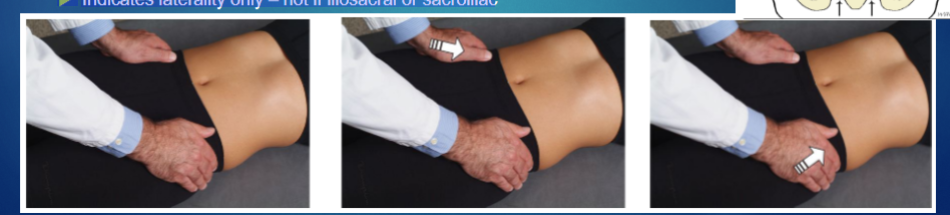
Patient: Supine
DOc: side of table, Dominant Eye closet to table
Contact both ASIS and apply a posterior compression on one side,
(approximately 45d toward the SI Joint) while stabilizing the other
ASIS/pelvis. Then repeat process on opposite side.
Compare sides. There should be a sense of movement on the normal side
and a sense of resistance if dysfunction. Somatic dysfunction of the SI joint
produces resistance to the test or lack of spring.
Most resistance = positive side.
Indicates laterality only – not if iliosacral or sacroiliac
ASIS compression test
283
what is the puroose if an ASIS copression test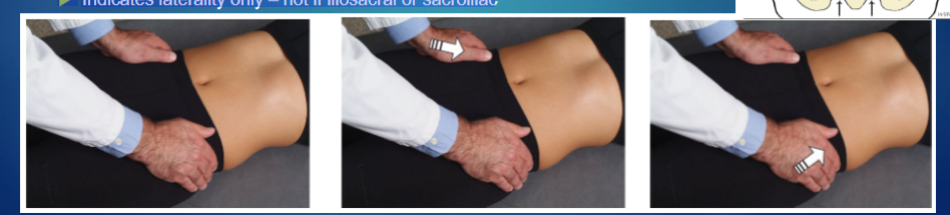
test lateraization of somatic dysfunction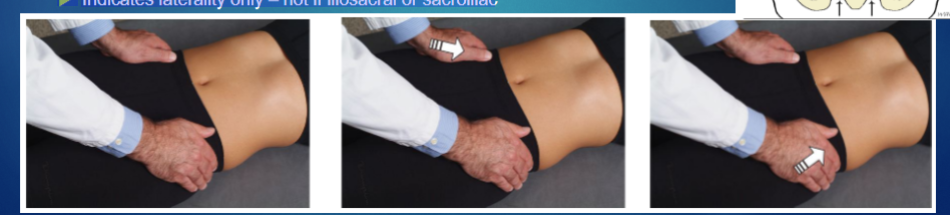
284
what does the sprinbg test evaluate
Testing Passive ROM
It’s purpose: Assess if sacral base has moved posterior. An
example would be a backward sacral torsion: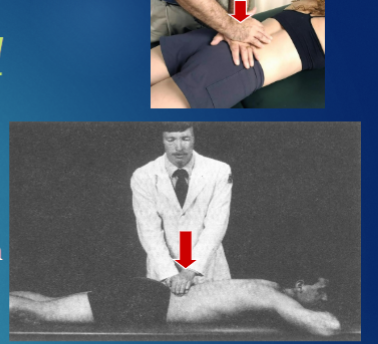
It’s purpose: Assess if sacral base has moved posterior. An
example would be a backward sacral torsion:
285
1. Patient – Prone
2. DOc – Side of table
3. Find sacral base
4. Place heel of hand over Lumbosacral junction
5. Spring in an Anterior motion
6. Results:
a. Positive = If there is NO springing allowed = Non-neutral condition
(AKA Backward torsion)
b. Negative = If there is springing allowed = Neutral condition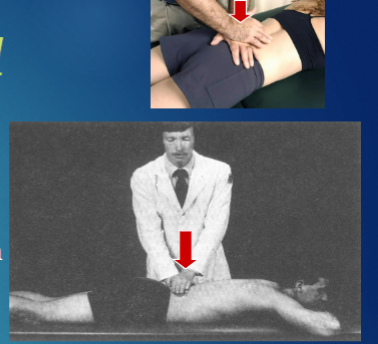
2. DOc – Side of table
3. Find sacral base
4. Place heel of hand over Lumbosacral junction
5. Spring in an Anterior motion
6. Results:
a. Positive = If there is NO springing allowed = Non-neutral condition
(AKA Backward torsion)
b. Negative = If there is springing allowed = Neutral condition
spring test
286
what is a negative spring test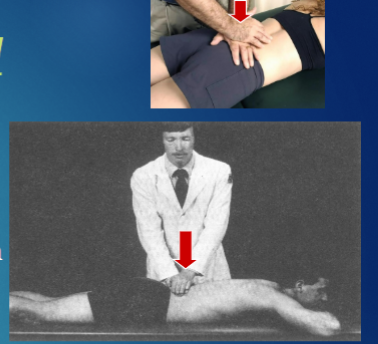
If there is springing allowed = Neutral condition
287
where is heel of hand placed in spring test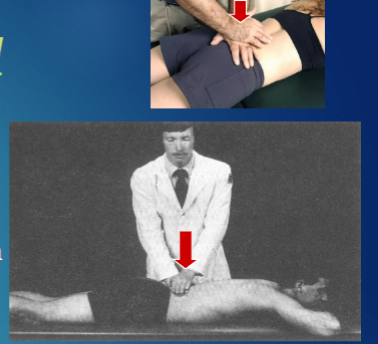
lumbosacral junction
288
what is a positive spring test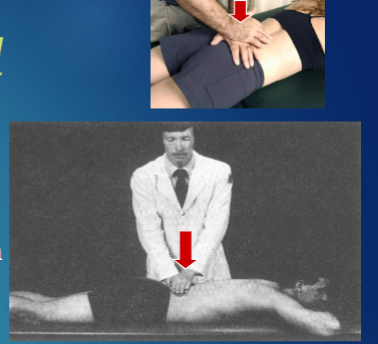
If there is NO springing allowed = Non-neutral condition
(AKA Backward torsion)
(AKA Backward torsion)
289
what does the sphynx test evaluate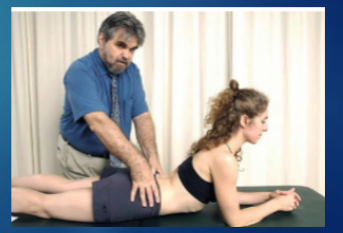
Testing Active ROM
It will help to point out any asymmetric motion of the sacrum
It will help to identify loss of motion
It will help to point out any asymmetric motion of the sacrum
It will help to identify loss of motion
290
Patient: Prone
DOc: Dominant eye closest to side of table
Places thumbs in sacral sulci/sacral base
Asks patient to prop up on elbows, inducing lumbar extension
which in turn should cause the sacral base to move anterior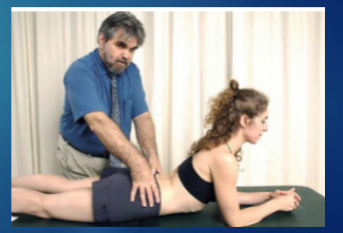
DOc: Dominant eye closest to side of table
Places thumbs in sacral sulci/sacral base
Asks patient to prop up on elbows, inducing lumbar extension
which in turn should cause the sacral base to move anterior
sphinx test
291
positive sphinx test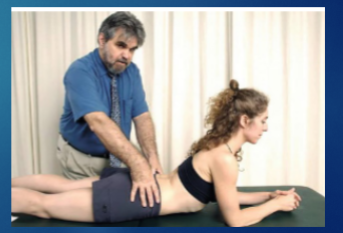
If one side of the sacral base is stuck posterior, it will resist moving
anterior with lumbar extension and thumbs will appear more
asymmetric. (Secondly, the bases could move posteriorly, instead of
normal – moves anteriorly.)
anterior with lumbar extension and thumbs will appear more
asymmetric. (Secondly, the bases could move posteriorly, instead of
normal – moves anteriorly.)
292
negative sphinx test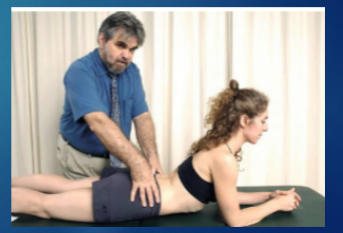
f part of the sacral base is stuck anterior, when the patient extends
the lumbar region, the NON-dysfunctional side will move anteriorly
to “catch-up” with the dysfunctional side giving a more symmetrical
appearance.
the lumbar region, the NON-dysfunctional side will move anteriorly
to “catch-up” with the dysfunctional side giving a more symmetrical
appearance.
293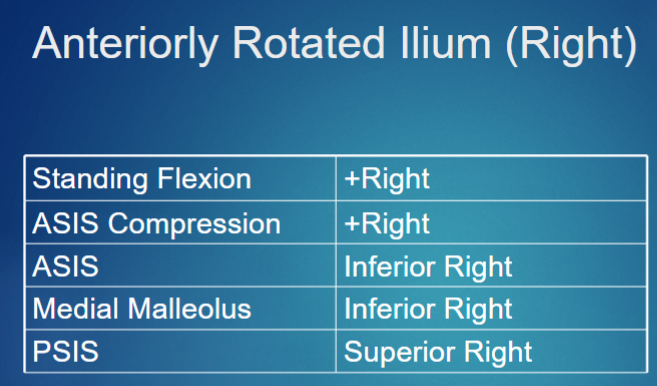
Image occlusion: name the hidden labels
294
Image occlusion: name the hidden labels
295
Image occlusion: name the hidden labels
296
Image occlusion: name the hidden labels
297
Image occlusion: name the hidden labels
298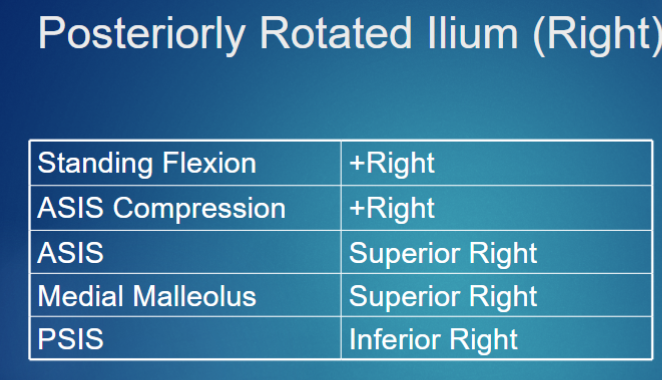
Image occlusion: name the hidden labels
299
Image occlusion: name the hidden labels
300
Image occlusion: name the hidden labels
102 more cards in OutLearn. Open the full deck