NDEE N3 Lecture BAN PHAM
Study these flashcardsFree · spaced repetition · iPhone, Android, Mac & web
First 300 of 721 cards
1
What is viral hepatitis?
Systemic, viral infection characterized by necrosis and inflammation of liver cells
2
What are the five definitive types of viral hepatitis that cause liver disease?
Hepatitis A, B, C, D, and E
3
What types of hepatitis are transmitted via the fecal-oral route?
Hepatitis A
Hepatitis E
Hepatitis E
4
What are the four phases of infectious hepatitis, and how do they present clinically?
1. Viral replication phase --> asymptomatic; lab markers of hepatitis appear
2. Pre-icteric/prodromal phase --> s/s include anorexia, nausea/vomiting, fatigue, and pruritus
3. Icteric phase --> s/s include jaundice, dark urine; some pts experience abdominal pain secondary to enlarged liver
4. Convalescent phase --> s/s resolve; lab values return to normal
2. Pre-icteric/prodromal phase --> s/s include anorexia, nausea/vomiting, fatigue, and pruritus
3. Icteric phase --> s/s include jaundice, dark urine; some pts experience abdominal pain secondary to enlarged liver
4. Convalescent phase --> s/s resolve; lab values return to normal
5
What causes Hepatitis A, and how is it transmitted (or not transmitted)?
Caused by an RNA virus of the enterovirus family
Primarily transmitted through the fecal-oral route (e.g. poor hygiene, hand to mouth, contaminated foods and liquids, sexual activity)
Not transmitted by blood infusions
Primarily transmitted through the fecal-oral route (e.g. poor hygiene, hand to mouth, contaminated foods and liquids, sexual activity)
Not transmitted by blood infusions
6
What is the prognosis of Hepatitis A? Does it lead to severe liver damage?
Most patients recover from Hepatitis A, and it RARELY progresses to acute liver necrosis or hepatic failure
Cirrhosis or death is uncommon in Hepatitis A cases
Cirrhosis or death is uncommon in Hepatitis A cases
7
Does a carrier state or chronic infection exist for Hepatitis A?
No carrier state exists
No chronic hepatitis associated with HAV
No chronic hepatitis associated with HAV
8
How long is the Hepatitis A virus present in the serum? When is the patient likely noninfectious?
The virus is present only briefly in the serum
By the time jaundice occurs, the patient is likely to be noninfectious
By the time jaundice occurs, the patient is likely to be noninfectious
9
What are the clinical manifestions of a Hepatitis A infection?
Symptoms resemble those of a mild, flu-like upper respiratory tract infection, with low-grade fever
Anorexia --> Early symptom (often severe)
Jaundice and dark urine --> Late symptom
Indigestion --> vague epigastric distress, nausea, heartburn, flatulence
Strong dislike to taste of cigarettes, presence of cigarette smoke, and other strong odors
Anorexia --> Early symptom (often severe)
Jaundice and dark urine --> Late symptom
Indigestion --> vague epigastric distress, nausea, heartburn, flatulence
Strong dislike to taste of cigarettes, presence of cigarette smoke, and other strong odors
10
What are common physical findings in patients with Hepatitis A?
Liver and spleen are often moderately enlarged for a few days after onset
Other than jaundice, there are few other physical signs
Other than jaundice, there are few other physical signs
11
When can the HAV antigen be detected, and how long does it persist?
HAV antigen may be found in the stool 7-10 days before illness and for 2-3 weeks after symptoms appear
12
How are HAV antibodies detected, and what does immunoglobulin analysis reveal?
HAV antibodies are detectable in the serum, usually not until symptoms appear
Analysis of subclasses of immunoglobulins can help determine whether the antibody represents acute or past infection
Analysis of subclasses of immunoglobulins can help determine whether the antibody represents acute or past infection
13
What are key prevention strategies for Hepatitis A?
Scrupulous hand hygeine
Safe water supplies
Proper control of sewage disposal
Safe water supplies
Proper control of sewage disposal
14
How effective and safe is the HAV vaccine?
The HAV vaccine is effective (95-100% after 2-3 doses) and safe
15
Who is recommended to receive the two-dose Hepatitis A vaccine?
the two-dose vaccine is recommended for adults 18 years of age or older
16
Who should consider getting vaccinated against Hepatitis A?
Vaccination is recommended for:
- People traveling to locations with unsatisfactory sanitation and hygeine
- High-risk groups (e.g. gay sex, IV/injection drug users, daycare staff, healthcare personnel, those working with the virus in research or animal care settings)
- People traveling to locations with unsatisfactory sanitation and hygeine
- High-risk groups (e.g. gay sex, IV/injection drug users, daycare staff, healthcare personnel, those working with the virus in research or animal care settings)
17
How can HAV be prevented for people who have not been previously vaccinated?
HAV can be prevented by IM administration of immune globulin during the incubation period
Must be given within 2 weeks of exposure
Must be given within 2 weeks of exposure
18
What effect can immune globulins have on Hepatitis A symptoms?
Immune globulin may suppress overt symptoms of the disease
19
Who else should receive immune globulins if someone has Hepatitis A?
Immune globulin is recommended for household members and sexual contacts of people with HAV
20
What should susceptible individuals in the same household as a Hepatitis A patient do?
Susceptible individuals in the same household are usually infected by the time diagnosis is made --> immune globulin is recommended
Institutional contacts of patients with HAV should also receive post-exposure prophylaxis with immune globulin
Institutional contacts of patients with HAV should also receive post-exposure prophylaxis with immune globulin
21
What are the key components of medical management for Hepatitis A?
Bed rest during the acute stage
A nutritious diet
A nutritious diet
22
What dietary approach should be taken during the period of anorexia in Hepatitis A patients?
Frequent, small feedings
IV fluids with glucose should be supplemented PRN
IV fluids with glucose should be supplemented PRN
23
How can healthcare providers stimulate appetite in Hepatitis A patients who have an aversion to food?
Gentle persistence and creativity may be required to stimulate appetite.
24
Why are optimal food and fluid levels important for Hepatitis A patients?
Optimal food and fluid levels are necessary to counteract weight loss and speed recovery.
25
Where does the management of Hepatitis A usually take place?
Management usually occurs in the home unless symptoms are severe
26
What is a key component of nursing management for Hepatitis A?
EDUCATION is key
27
What topics should be covered in patient education for Hepatitis A management?
Diet
Rest when fatigued
Avoid alcohol
Infection control measures, especially hand hygiene after bowel movements and before eating
Follow-up bloodwork → LFTs (AST, ALT), HAV antigen
Environmental sanitation (safe food and water supply, effective sewage disposal)
Rest when fatigued
Avoid alcohol
Infection control measures, especially hand hygiene after bowel movements and before eating
Follow-up bloodwork → LFTs (AST, ALT), HAV antigen
Environmental sanitation (safe food and water supply, effective sewage disposal)
28
Why is infection control important in the nursing management of Hepatitis A?
Infection control measures, especially hand hygiene after bowel movements and before eating, help prevent the spread of the virus.
29
What follow-up tests should be conducted for patients with Hepatitis A?
Follow-up bloodwork should include liver function tests (LFTs) such as AST and ALT, as well as testing for HAV antigen.
30
How is Hepatitis B (HBV) primarily transmitted, and through which body fluids
Primarily transmitted through blood
Found in: blood, saliva, semen, vaginal secretions
Transmitted through mucous membranes or breaks in skin
Found in: blood, saliva, semen, vaginal secretions
Transmitted through mucous membranes or breaks in skin
31
How is Hepatitis B transmitted from mother to infant?
Transferred from carrier mother to infant at birth or during close contact afterward
Not transmitted via umbilical vein
Not transmitted via umbilical vein
32
What are key characteristics of HBV's incubation and replication?
Long incubation period (1-6 months)
Replicates in the liver
Remains in the serum for long periods, facilitating virus transmission
Replicates in the liver
Remains in the serum for long periods, facilitating virus transmission
33
How has screening blood donors impacted the transmission of HBV?
Screening of blood donors has greatly reduced the occurence of HBV transmission through blood transfusions
34
What is the prognosis for most people who contract Hepatitis B?
>90% of people who contract HBV develop antibodies and recover spontaneously within 6 months
35
How does the incubation period of Hepatitis B compare to Hepatitis A?
Hepatitis B has a much longer incubation period than Hepatitis A, ranging from 1-6 months
36
What are the common signs and symptoms of Hepatitis B?
Anorexia (loss of appetite)
Abdominal pain
Generalized aching
Malaise and weakness
Fever and respiratory symptoms are rare
Abdominal pain
Generalized aching
Malaise and weakness
Fever and respiratory symptoms are rare
37
Are fever and respiratory symptoms common in Hepatitis B?
Fever and respiratory symptoms are rare
Some patients have arthralgias (joint pain) and rashes
Some patients have arthralgias (joint pain) and rashes
38
What are the GI symptoms of Hepatitis B, and why do they occur?
GI symptoms such as dyspepsia (indigestion) and abdominal pain
Occurs because the liver infection can spread to the spleen and the entire GI system
Occurs because the liver infection can spread to the spleen and the entire GI system
39
What are common physical findings in Hepatitis B patients with jaundice?
Light-colored stools and dark urine are common --> issues with enzyme secretion and food breakdown
40
What are the possible physical signs related to liver and spleen enlargement in Hepatitis B?
Liver may be tender and enlarged 12-14 cm vertically
Spleen may also be enlarged and palpable in a few patients
Posterior lymph nodes may be enlarged
Spleen may also be enlarged and palpable in a few patients
Posterior lymph nodes may be enlarged
41
When does HBsAg (Hepatitis B surface antigen) appear in the circulation of infected patients?
HBsAg appears in 80-90% of patients 1-10 weeks after exposure to HBV and about 2-8 weeks before onset of symptoms or increased transferase levels
42
What is the next antigen to appear in the serum after HBsAg in Hepatitis B infection?
HBeAg (Hepatitis B e-antigen) --> indicates active viral replication in the liver
43
When does HBV DNA appear in the serum, and how is it detected?
HBV DNA appears in the serum around the same time as HBeAg
Detected through polymerase chain reaction (PCR) testing
Detected through polymerase chain reaction (PCR) testing
44
Is HBcAg (Hepatitis B core antigen) always detected in the serum during HBV infection?
No, HBcAg is not always detected in the serum in HBV infection.
45
What is the key goal of public health interventions and education in preventing Hepatitis B?
The goal is to reduce the disease burden by fostering immunization and educating the public on preventing Hepatitis B transmission.
46
How can blood donation be safely managed to prevent Hepatitis B transmission?
Screening of blood donors for presence of HBAg
Individuals with a positive Hep B test cannot donate blood, even to themselves
Individuals with a positive Hep B test cannot donate blood, even to themselves
47
What measures are used to prevent Hepatitis B transmission in medical and tattoo procedures?
The use of disposable syringes, needles, lancets, and needleless IV systems helps prevent transmission.
48
What infection control measures are taken in clinical laboratories and hemodialysis units to prevent Hepatitis B transmission?
Work areas disinfected DAILY
Gloves are worn when handling blood, body fluids, or HBAg-positive specimens
Eating is PROHIBITED in areas exposed to blood or secretions
Gloves are worn when handling blood, body fluids, or HBAg-positive specimens
Eating is PROHIBITED in areas exposed to blood or secretions
49
Why is patient education important in preventing Hepatitis B transmission?
Educating patients about the nature of the disease, its infectiousness, and prognosis is key to preventing transmission and protecting others.
50
Who is recommended to receive active immunization for Hepatitis B (HBV)?
High risk groups such as:
- healthcare personnel
- patients undergoing hemodialysis
- people with HCV
- people with chronic liver disease
- healthcare personnel
- patients undergoing hemodialysis
- people with HCV
- people with chronic liver disease
51
What is the new Hepatitis B vaccine recommended by ACIP in 2018, and what is its dosage schedule?
HEPLISAV-B is recommended for people >18 years of age
Administered in 2 doses given 1 month apart --> shorter schedule = increased completion rate
Administered in 2 doses given 1 month apart --> shorter schedule = increased completion rate
52
What was the Hepatitis B vaccine used prior to 2019, and how effective was it?
Prior to 2019, a yeast-recombinant hepatitis B vaccine was used
Provided protection >90% in healthy individuals
Provided protection >90% in healthy individuals
53
Are booster doses of the Hepatitis B vaccine necessary for people with normal immune systems
In those with normal immune systems, booster doses are not required
Booster doses are recommended for people who are immunocompromised
Booster doses are recommended for people who are immunocompromised
54
What precautions are taken for healthcare workers regarding Hepatitis B immunization?
Healthcare workers with frequent blood contact are screened for anti-HBs to determine if immunity is present from previous exposure, and those without immunity are vaccinated.
55
Who else should receive the Hepatitis B vaccine due to sexual transmission risks?
Unvaccinated people evaluated for STIs
Those with a history of STIs
Multiple sex partners
People who have sex with injection drug users
Gay sex
Those with a history of STIs
Multiple sex partners
People who have sex with injection drug users
Gay sex
56
What is Hepatitis B Immune Globulin (HBIG), and who is it indicated for?
Provides passive immunity to HBV
Indicated for people exposed to HBV who have never had hepatitis B AND have never received the Hepatitis B vaccine
Indicated for people exposed to HBV who have never had hepatitis B AND have never received the Hepatitis B vaccine
57
When should both active and passive immunization be recommended for HBV exposure?
Recommended for people exposed to HBV through sexual contact or percutaneous/transmucosal routes
58
How should HBIG and the hepatitis B vaccine be administered if given at the same time?
Given at separate sites with separate syringes
59
What are the primary goals in the medical management of Hepatitis B?
Minimize infectivity
Reduce liver inflammation
Decrease symptoms
Reduce liver inflammation
Decrease symptoms
60
What activity level is recommended for patients with Hepatitis B?
Bed rest until symptoms subside
Activities restricted until hepatic enlargement, serum bilirubin, and liver enzyme levels decrease
Gradually, activity increase is allowed
Activities restricted until hepatic enlargement, serum bilirubin, and liver enzyme levels decrease
Gradually, activity increase is allowed
61
Is there a need to restrict protein intake for Hepatitis B patients?
No, protein intake is not restricted
Maintaining adequate nutrition is essential for recovery
Maintaining adequate nutrition is essential for recovery
62
How are dyspeptic symptoms and general malaise managed in Hepatitis B?
Antacids and antiemetics are used to control dyspeptic symptoms and malaise
Medications should be avoided if vomiting occurs
Persistent vomiting may require hospitalization and fluid therapy
Medications should be avoided if vomiting occurs
Persistent vomiting may require hospitalization and fluid therapy
63
What additional evaluations should be conducted for Hepatitis B patients?
Due to mode of transmission, patient is evaluated for other bloodborne diseases (like HIV)
64
How long can convalescence (recovey) take for a patient with Hepatitis B?
Can be prolonged
Complete symptomatic recovery sometimes requires 3-4 months or LONGER
Complete symptomatic recovery sometimes requires 3-4 months or LONGER
65
When is gradual resumption of physical activity encouraged for Hepatitis B patients?
After jaundice has resolved
66
What psychosocial concerns may arise for Hepatitis B patients during hospitalization?
Separation from family and friends
Inability to work or engage in sexual contact during acute and infective stages
Inability to work or engage in sexual contact during acute and infective stages
67
How can planning help reduce social isolation for Hepatitis B patients?
Planning with family involvement can reduce fears and anxieties about disease spread and minimize social isolation for the patient
68
What must patients and families be prepared for during the prolonged convalescence of Hepatitis B?
Be prepared for care in the home
Ensure provision for adequate rest and nutrition
Ensure provision for adequate rest and nutrition
69
What education should the nurse provide to family members and close contacts of a Hepatitis B patient?
Risk for contracting HBV --> arrange for them to receive HBV vaccine or HBIG as prescribed
70
What are key signs and prevention tips that at-risk individuals need to be aware of regarding Hepatitis B?
Be aware of early signs of HBV
Ways to reduce risk --> avoid all modes of transmission (blood and body fluids)
Ways to reduce risk --> avoid all modes of transmission (blood and body fluids)
71
What lifestyle change is recommended for all hepatitis patients?
Avoid drinking alcohol
72
Why might follow-up visits by a transitional or home health nurse be needed for Hepatitis B patients?
Assess patient's progress
Answer family members' questions about disease transmission
Reinforce education on care and prevention
Answer family members' questions about disease transmission
Reinforce education on care and prevention
73
What is assessed by the nurse during a home visit for a Hepatitis B patient?
Patient's physical and psychological status
Patient and family understand importance of rest and nutrition
Patient and family understand importance of rest and nutrition
74
What strategies are recommended by the nurse to prevent Hepatitis B transmission through sexual activity?
Abstinence
Use of condoms
Use of condoms
75
What does the nurse emphasize about follow-up care for Hepatitis B patients?
Keeping follow-up appointments
Participating in health promotion activities
Undergoing recommended health screenings
Participating in health promotion activities
Undergoing recommended health screenings
76
What key aspects of education does the nurse reinforce during home visits for Hepatitis B patients?
Reinforce the importance of adequate rest and nutrition
Strategies to prevent disease transmission
Strategies to prevent disease transmission
77
What are the primary transmission routes for Hepatitis C Virus (HCV)?
Sharing contaminated needles
Blood transfusions
Sexual contact
Unintentional needlesticks or injuries in healthcare settings
Blood transfusions
Sexual contact
Unintentional needlesticks or injuries in healthcare settings
78
Who is at increased risk for contracting Hepatitis C Virus?
IV or injection drug users
Multiple sexual partners
Patients receiving frequent transfusions or large blood volumes
Healthcare workers
Multiple sexual partners
Patients receiving frequent transfusions or large blood volumes
Healthcare workers
79
What is the clinical course of acute HCV, and what are its potential long-term complications?
Similar to that of HBV --> symptoms usually mild or absent
Chronic carrier state often develops --> increased risk of chronic liver disease, cirrhosis, liver cancer
Chronic carrier state often develops --> increased risk of chronic liver disease, cirrhosis, liver cancer
80
How does alcohol consumption affect Hepatitis C disease progression?
Small amounts of alcohol taken regularly appear to cause progression of the disease
Alcohol and medications that may affect the liver should be avoided
Alcohol and medications that may affect the liver should be avoided
81
Is there any benefit from rest, diet, or vitamin supplements in treating HCV?
No benefit
82
How has HCV treatment evolved?
Since 2011, highly effective HCV protease inhibitor therapies have been introduced
↓
Can acheive a sustained virologic response (SVR), indicating a cure of the infection
↓
Can acheive a sustained virologic response (SVR), indicating a cure of the infection
83
What is a sustained virologic response (SVR), and what does it indicate?
SVR --> absence of detectable virus 12 weeks after completing treatment
Indicates cure of HCV infection
Indicates cure of HCV infection
84
How has the incidence of HCV from blood transfusions and shared needles been reduced?
Screening of blood supplies
Public health programs aimed at reducing shared needle use in IV drug use
Public health programs aimed at reducing shared needle use in IV drug use
85
What is the relationship between Hepatitis D Virus (HDV) and Hepatitis B Virus (HBV)?
Hepatitis D infection only occurs in people with Hepatitis B, as HDV requires the Hepatitis B surface antigen (HBsAg) for replication.
86
How is a diagnosis of Hepatitis D confirmed?
Confirmed by the presence of anti-delta antibodies along with HBsAg in testing
87
What patients are at higher risk of Hepatitis D?
IV or injection drug users
Patients undergoing hemodialysis
Recipients of multiple blood transfusions
Individuals who engage in sexual contact with people who have Hepatitis B
Patients undergoing hemodialysis
Recipients of multiple blood transfusions
Individuals who engage in sexual contact with people who have Hepatitis B
88
What is the incubation period for Hepatitis D Virus (HDV)?
varies between 30-150 days
89
How do the symptoms of Hepatitis D differ from Hepatitis B?
Symptoms are similar
Patients with HDV are more likely to develop acute hepatic failure, chronic active hepatitis, and cirrhosis
Patients with HDV are more likely to develop acute hepatic failure, chronic active hepatitis, and cirrhosis
90
What is the treatment for Hepatitis D Virus (HDV), and how effective is it?
Interferon alfa is the only licensed treatment for HDV
High-dose, long-duration therapy (at least 1 year) is recommended
Recurrence rate is high --> efficacy depends on the dose and treatment duration
High-dose, long-duration therapy (at least 1 year) is recommended
Recurrence rate is high --> efficacy depends on the dose and treatment duration
91
How is Hepatitis E Virus (HEV) primarily transmitted?
Fecal-oral route (remember "Eat Ass")
Primarily through contaminated water in areas with poor sanitation
Primarily through contaminated water in areas with poor sanitation
92
What is the typical incubation period for Hepatitis E, and how does it generally present?
Incubation period ranges from 15-65 days
Presentation resembles Hepatitis A
Has a self-limited course, abrupt onset
Jaundice is almost always present
Presentation resembles Hepatitis A
Has a self-limited course, abrupt onset
Jaundice is almost always present
93
What are the prevention methods for Hepatitis E, and how effective is immune globulin?
Major prevention method is good hygeine (e.g. handwashing), avoiding contact with virus
Effectiveness of immune globulin in protecting against HEV is uncertain
Effectiveness of immune globulin in protecting against HEV is uncertain
94
Which hepatitis viruses are chronic?
A – No
B – Yes
C – Yes
D – Yes
E - No
B – Yes
C – Yes
D – Yes
E - No
95
What are Hepatitis G Virus (HGV) and GB Virus-C (GBV-C)?
They are thought to be two different isolates of the SAME virus
Another form of hepatitis, believed to cause non A-E hepatitis in humans
Another form of hepatitis, believed to cause non A-E hepatitis in humans
96
How are HGV/GBV-C transmitted, and what are the risk factors?
Transmitted percutaneously
Risk factors similar to Hepatitis C (e.g. IV drug use, blood transfusions)
Risk factors similar to Hepatitis C (e.g. IV drug use, blood transfusions)
97
Does HGV/GBV-C cause progressive liver disease?
While persistent infection with HGV/GBV-C can occur, it does not seem to affect the clinical course or lead to progressive liver disease
Clinical significance remains uncertain
Clinical significance remains uncertain
98
What is Non-Viral Hepatitis?
Liver damage caused by toxic chemicals --> leads to acute liver cell necrosis or toxic hepatitis
Occurs when the toxins are inhaled, injected parenterally, or ingested
Occurs when the toxins are inhaled, injected parenterally, or ingested
99
What chemicals are commonly implicated in Non-Viral Hepatitis?
Some chemicals commonly implicated in this disease include carbon tetrachloride and phosphorus.
These substances are true hepatotoxins
These substances are true hepatotoxins
100
How do chemicals cause Non-Viral Hepatitis?
Toxic chemicals cause acute liver cell necrosis by damaging liver cells when they are inhaled, injected, or ingested, leading to toxic hepatitis
101
What is Drug-Induced Hepatitis?
a condition where medications cause liver inflammation
Similar to acute viral hepatitis, but the liver parenchymal destruction is often more extensive
Similar to acute viral hepatitis, but the liver parenchymal destruction is often more extensive
102
Which medications can induce hepatitis?
Isoniazid (for tuberculosis)
halothane
acetaminophen
methyldopa
certain antibiotics
antimetabolites
anesthetic agents
halothane
acetaminophen
methyldopa
certain antibiotics
antimetabolites
anesthetic agents
103
Why do certain medications cause Drug-Induced Hepatitis?
These medications cause Drug-Induced Hepatitis because they are metabolized by the liver, leading to liver inflammation or damage.
104
How does toxic hepatitis relate to viral hepatitis?
At the onset of disease, toxic hepatitis resembles viral hepatitis.
105
What are the S/S of Toxic Hepatitis?
Symptoms include anorexia, nausea, vomiting, and jaundice
Hepatomegaly (enlarged liver) is also observed on physical assessment
Symptoms can be more intense in severely toxic patients
Hepatomegaly (enlarged liver) is also observed on physical assessment
Symptoms can be more intense in severely toxic patients
106
How is Toxic Hepatitis treated?
Recovery is rapid if hepatotoxic agent is identified early and removed, or if exposure has been limited
No effective antidotes for Toxic Hepatitis
No effective antidotes for Toxic Hepatitis
107
What are the complications of severe Toxic Hepatitis?
In severe cases, symptoms intensify: Patient develops high fever, extreme weakness (prostration), and persistent vomiting, which may contain blood
Symptoms become progressively worse as the condition intensifies
Symptoms become progressively worse as the condition intensifies
108
What causes clotting abnormalities and hemorrhages in toxic hepatitis?
Clotting abnormalities in toxic hepatitis are caused by the liver’s inability to produce clotting factors, which may lead to hemorrhages under the skin.
109
What severe symptoms can toxic hepatitis lead to if untreated?
Severe GI symptoms may lead to vascular collapse
Delirium, coma, and seizures develop (unfiltered blood gets backed up into the brain)
Without liver transplant, patient may die of acute hepatic failure within days
Delirium, coma, and seizures develop (unfiltered blood gets backed up into the brain)
Without liver transplant, patient may die of acute hepatic failure within days
110
What are the available treatment options for advanced toxic hepatitis?
Treatment focuses on maintaining fluid and electrolyte balance, blood replacement, and supportive care
Few options exist short of liver transplantation
Recovery is rare, but those who survive may develop chronic liver disease or postnecrotic cirrhosis
Few options exist short of liver transplantation
Recovery is rare, but those who survive may develop chronic liver disease or postnecrotic cirrhosis
111
What is the most common cause of acute liver failure?
Drug-induced liver disease --> over 50% of all cases
Acetaminophen is the leading cause
Acetaminophen is the leading cause
112
What is the onset of Drug-Induced Hepatitis?
Manifestations of sensitivity to a medication may occur on the first day of its use or not until several months later
Usually, the onset is abrupt
Usually, the onset is abrupt
113
What are the early S/S of Drug-Induced Hepatitis?
Chills, fever
Rash, pruritus
Arthralgia
Anorexia, nausea
Rash, pruritus
Arthralgia
Anorexia, nausea
114
What are the later S/S of Drug-Induced Hepatitis?
Jaundice
Dark urine
Enlarged and tender liver
Dark urine
Enlarged and tender liver
115
What treatments are available for drug-induced hepatitis?
After the offending medication is withdrawn, symptoms may gradually subside
In severe hypersensitivity cases, high-dose corticosteroids may be used, although efficacy is uncertain
Liver transplantation is also an option, but with mixed outcomes
In severe hypersensitivity cases, high-dose corticosteroids may be used, although efficacy is uncertain
Liver transplantation is also an option, but with mixed outcomes
116
What clotting abnormalities may occur in drug-induced hepatitis?
Clotting abnormalities can be severe --> lead to hemorrhages under the skin
Due to liver's ability to produce clotting factors being impaired
Due to liver's ability to produce clotting factors being impaired
117
What severe complications can arise from GI symptoms in drug-induced hepatitis?
Severe GI symptoms may lead to vascular collapse --> lead to delirium, coma, and seizures
Without a liver transplant, patients may die of acute hepatic failure within a few days
Without a liver transplant, patients may die of acute hepatic failure within a few days
118
What are the available treatment options for drug-induced hepatitis?
Treatment focuses on maintaining fluid and electrolyte balance, blood replacement, and supportive care
Apart from liver transplantation, few treatment options exist for severe cases of drug-induced hepatitis
Apart from liver transplantation, few treatment options exist for severe cases of drug-induced hepatitis
119
What long-term complications may follow recovery from drug-induced hepatitis?
Some patients recover from acute drug-induced hepatitis only to develop chronic liver disease
If liver heals, scarring may occur, leading to postnecrotic cirrhosis
If liver heals, scarring may occur, leading to postnecrotic cirrhosis
120
What are the precautions for prevention of transmission of hepatitis?
Universal precautions
- Gown
- Gloves
- Hand hygeine
- Gown
- Gloves
- Hand hygeine
121
What is Acute Liver Failure (ALF) and its duration?
ALF is a clinical syndrome of sudden and severely impaired liver function in a previously healthy perosn
Acute = less than 6 months
Acute = less than 6 months
122
What are key diagnostic criteria for Acute Liver Failure?
Neurologic dysfunction
Elevated PT and INR is ≥1.5
Elevated PT and INR is ≥1.5
123
What are the common causes of Acute Liver Failure?
Viral hepatitis
Toxic medications (e.g., acetaminophen)
Chemicals (e.g., carbon tetrachloride)
Metabolic disturbances (e.g., Wilson disease)
Structural changes (e.g., Budd–Chiari syndrome)
Toxic medications (e.g., acetaminophen)
Chemicals (e.g., carbon tetrachloride)
Metabolic disturbances (e.g., Wilson disease)
Structural changes (e.g., Budd–Chiari syndrome)
124
What conditions often accompany Acute Liver Failure (ALF)?
Coagulation defects
Kidney disease and electrolyte imbalances
Cardiovascular abnormalities
Infection and hypoglycemia
Encephalopathy and cerebral edema
Kidney disease and electrolyte imbalances
Cardiovascular abnormalities
Infection and hypoglycemia
Encephalopathy and cerebral edema
125
What treatment modalities are used in Acute Liver Failure (ALF)?
Plasmapheresis (replace plasma) --> correct coagulopathy and reduce serum ammonia levels
Lactulose --> laxative used to reduce ammonia levels (beware of loose stools 4+)
Lactulose --> laxative used to reduce ammonia levels (beware of loose stools 4+)
126
What labs are important to monitor in Acute Liver Failure (ALF)?
Ammonia levels
Liver function tests (LFTs)
PT/INR (prothrombin time and international normalized ratio)
Liver function tests (LFTs)
PT/INR (prothrombin time and international normalized ratio)
127
What life-threatening complication is associated with stage 4 encephalopathy in ALF?
Cerebral edema --> requires intracranial pressure monitoring
128
What measures are used to promote adequate cerebral perfusion in patients with ALF and cerebral edema?
Careful fluid balance and hemodynamic assessments
Maintaining a quiet environment to avoid increasing intracranial pressure
Diuresis with mannitol, an osmotic diuretic, to reduce cerebral edema
Maintaining a quiet environment to avoid increasing intracranial pressure
Diuresis with mannitol, an osmotic diuretic, to reduce cerebral edema
129
What is hepatic cirrhosis?
A chronic disease characterized by the replacement of normal liver tissue with diffuse fibrosis, which disrupts the structure and function of the liver
130
What are the three types of cirrhosis?
1. Alcoholic cirrhosis --> scar tissue surrounds the portal areas, often caused by chronic alcoholism
2. Post-necrotic cirrhosis --> Broad bands of scar tissue form, typically following acute viral hepatitis
3. Biliary cirrhosis --> scarring occurs around bile ducts, usually due to chronic biliary obstruction and cholangitis
2. Post-necrotic cirrhosis --> Broad bands of scar tissue form, typically following acute viral hepatitis
3. Biliary cirrhosis --> scarring occurs around bile ducts, usually due to chronic biliary obstruction and cholangitis
131
Which parts of the liver are primarily affected by cirrhosis?
Portal and periportal spaces of the liver are chiefly involved in cirrhosis
These areas include the bile canaliculi, which form the liver bile ducts
These areas include the bile canaliculi, which form the liver bile ducts
132
What happens to the bile ducts during cirrhosis?
In cirrhosis, the bile ducts become occluded with inspissated bile (thickened) and pus --> leads to inflammation and overgrowth of scar tissue
133
How does the liver respond to the occlusion of bile ducts in cirrhosis?
The liver attempts to form new bile channels --> leads to overgrowth of disconnected, newly formed bile ducts surrounded by scar tissue
134
What role does nutritional deficiency play in cirrhosis?
Nutritional deficiency, particularly reduced protein intake, contributes to liver destruction in cirrhosis
135
What is the major causative factor in fatty liver and cirrhosis?
Excessive alcohol intake is the major causitive factor in fatty liver and its consequences, which can lead to cirrhosis
136
Can cirrhosis occur in people who don’t consume alcohol?
Yes; cirrhosis can occur in people who do not consume alcohol and even in those with a normal diet BUT consume high amounts of alcohol
137
What are some non-alcohol-related causes of cirrhosis?
Exposure to certain chemicals (e.g. carbon tetrachloride, chlorinated naphthalene, arsenic, phosphorus)
Infectious schistomiasis
Infectious schistomiasis
138
Who is more likely to be affected by cirrhosis, men or women?
MEN are affected by cirrhosis twice as often as women
139
What characterizes alcoholic cirrhosis?
Alcoholic cirrhosisi is marked by episodes of necrosis involving liver cells.
Over time, scar tissue replaces destroyed liver cells, eventually exceeding the amount of functioning liver tissue
Over time, scar tissue replaces destroyed liver cells, eventually exceeding the amount of functioning liver tissue
140
What gives the cirrhotic liver its characteristic appearance?
The cirrhotic liver develops a hobnail appearance due to islands of residual normal tissue and regenerating liver tissue projecting from the constricted areas.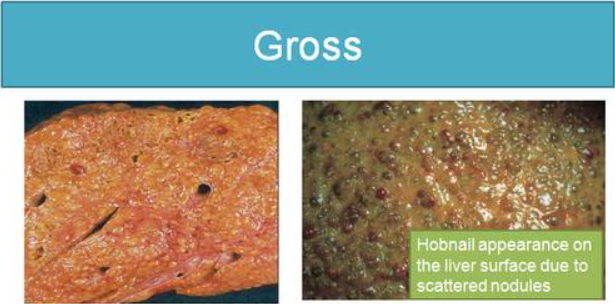
141
What are the two categories of cirrhosis based on symptom severity?
Classified as either compensated (less severe, often vague symptoms) or decompensated (resulting from liver failure to synthesize proteins, clotting factors, and portal hypertension)
142
What causes the hallmark symptoms of decompensated cirrhosis?
Caused by failure of liver to synthesize proteins, clotting factors, and other substances, along with manifestations of portal hypertension
143
What is portal hypertension?
Elevated pressure in the portal vein due to cirrhosis (scarring of the liver) 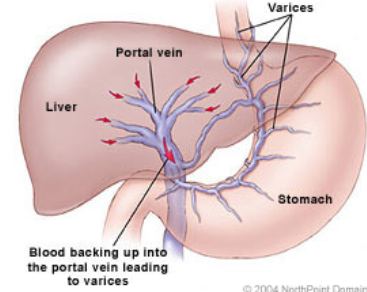
144
What is a common early characteristic of the liver in cirrhosis?
Early in the course of cirrhosis, the liver tends to be large and the cells are loaded with fat
145
How does the liver feel upon palpation in the early stages of cirrhosis?
Liver is firm and has a sharp edge that is noticeable on palpation
146
Why might abdominal pain be present in a patient with early cirrhosis?
May occur due to recent, rapid enlargement of the liver which produces tension on the Glisson capsule (fibrous covering of the liver)
147
What happens to the liver size as cirrhosis progresses?
Later in the disease, the liver decreases in size as scar tissue contracts the liver tissue
148
What is the characteristic feel of the liver edge in advanced cirrhosis
The liver edge, if palpable, is nodular
149
What are late manifestations of cirrhosis related to portal circulation?
Portal obstruction and ascites
150
What causes portal obstruction and ascites in cirrhosis?
Chronic liver failure and obstruction of the portal circulation
151
How does the cirrhotic liver affect blood flow from digestive organs?
The cirrhotic liver prevents free blood passage, causing blood to back up into the spleen and GI tract.
152
What happens to the spleen and GI tract when blood backs up due to cirrhosis?
They become stagnant with blood (chronic passive congestion) --> leads to indigestion and altered bowel function
153
What can accumulate in the peritoneal cavity due to cirrhosis, and what condition does this cause?
Fluid rich in protein may accumulate --> ascites
154
How can ascites be detected in patients with cirrhosis?
Through percussion for shifting dullness or the presence of a fluid wave.
155
What condition can develop in cirrhosis patients with ascites, without an intra-abdominal source of infection?
Bacterial peritonitis
156
What causes bacterial peritonitis in cirrhosis patients with ascites?
Bacteremia due to translocation of intestinal flora.
157
How does ascities affect bowel sounds?
Ascites leads to absent bowel sounds because fluid presses against the intestines in the peritoneum space.
158
What diagnostic method may be necessary for detecting bacterial peritonitis in cirrhosis patients?
Paracentesis --> clinical signs may be absent, making a paracentesis necessary for diagnosis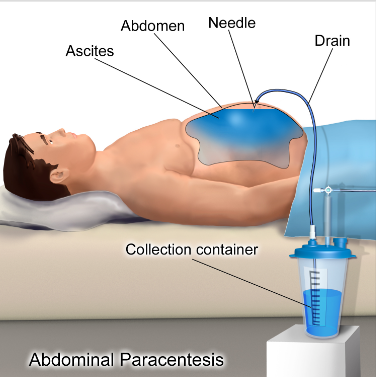
159
What causes collateral blood vessels to form in the GI system of cirrhosis patients?
Fibrotic changes in the liver obstruct blood flow --> leads to collateral vessel formation and shunting of blood into vessels with lower pressures.
160
What are prominent, distended abdominal blood vessels visible in cirrhosis patients called?
Caput medusae
ngl kinda looks like medusa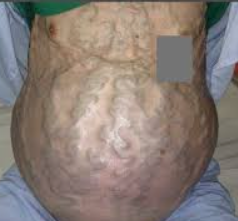
ngl kinda looks like medusa
161
Where do collateral blood vessels commonly form in cirrhosis patients?
In the esophagus, stomach, and lower rectum.
162
What serious risk do distended blood vessels (varices) pose in cirrhosis patients?
May rupture and cause internal bleeding, leading to significant blood loss
163
Which lab values should be monitored to assess for internal bleeding in patients with gastrointestinal varices?
Hemoglobin and Hematocrit (H&H) levels.
164
What should be assessed in cirrhosis patients to detect GI tract bleeding?
Observation for occult (hidden) and frank (visible) bleeding from the GI tract.
165
Compare varices and hemorrhoids
They are both distended blood vessels
Difference is in location --> hemorrhoids are in the rectal area
Difference is in location --> hemorrhoids are in the rectal area
166
What is the top priority in managing esophageal varices?
Prevent Bleeding
167
What is a key prevention strategy to avoid pressure on esophageal varices?
Prevent constipation --> high fiber diet, stool softeners (e.g. lactulose)
168
Why is rest important for patients with esophageal varices?
Rest helps reduce physical stress, which can prevent pressure on the varices and reduce the risk of bleeding.
169
What additional measure is recommended to prevent pressure on the esophagus?
Voice rest --> avoid strain on the esophageal area
170
Edema is a ____ symptom of cirrhosis that results from chronic liver failure
late
171
How does a reduced plasma albumin concentration contribute to cirrhosis-related symptoms?
Predisposes patient to the formation of edema and ascites
172
Which areas of the body are most commonly affected by edema in cirrhosis patients?
Lower and upper extremities
Presacral area
Facial edema is not typical
Presacral area
Facial edema is not typical
173
What hormonal imbalance contributes to sodium and water retention in cirrhosis patients?
Overproduction of aldosterone --> also causes potassium excretion
174
Which vitamin deficiencies are common in patients with cirrhosis?
Deficiencies in vitamins A, C, and K
Especially hemorrhagic phenomena associated with vitamin K deficiency.
Especially hemorrhagic phenomena associated with vitamin K deficiency.
175
What factors contribute to anemia in cirrhosis patients?
Chronic gastritis
Impaired GI function
Inadequate dietary intake
Impaired liver function
Impaired GI function
Inadequate dietary intake
Impaired liver function
176
How does anemia affect patients with cirrhosis?
Results in severe fatigue, poor nutritional status, and a diminished ability to perform daily activities
177
What is a common clinical manifestation of cirrhosis that affects mental and cognitive function?
Deterioration of mental and cognitive function --> can lead to hepatic encephalopathy and hepatic coma
178
What assessments are indicated for patients showing mental deterioration due to cirrhosis?
Serial neurologic assessments, including:
- evaluating general behavior
- cognitive abilities
- orientation to time and place
- speech patterns
- evaluating general behavior
- cognitive abilities
- orientation to time and place
- speech patterns
179
What is the primary cause of mental deterioration in cirrhosis patients and its treatment?
Mental deterioration is often caused by increased ammonia levels --> treatment is lactulose (helps reduce ammonia)
180
What is biliary atresia?
a birth defect characterized by the obstruction of tubes that transport bile from the liver to the gallbladder
Bile cannot pass from liver to gallbladder --> liver damage, cirrhosis
Can be fatal if left untreated
Bile cannot pass from liver to gallbladder --> liver damage, cirrhosis
Can be fatal if left untreated
181
What are common signgs and symptoms of biliary atresia?
Jaundice
Light-colored stool
Abdominal distention
Malaise
Light-colored stool
Abdominal distention
Malaise
182
What are key laboratory findings in severe parenchymal (functional tissue) liver dysfunction due to cirrhosis?
Decreased
- Serum albumin
- Serum cholinesterase
Increased
- Serum globulin
- LFTs (AST, ALT, GGT, alkaline phosphatase)
- Bilirubin
- PT/INR
- Serum albumin
- Serum cholinesterase
Increased
- Serum globulin
- LFTs (AST, ALT, GGT, alkaline phosphatase)
- Bilirubin
- PT/INR
183
What diagnostic imaging methods are used to assess hepatic cirrhosis?
Ultrasound
MRI
CT scan
MRI
CT scan
184
What is the role of ultrasound scanning in assessing hepatic cirrhosis?
Ultrasound scanning measures the difference in density between parenchymal cells and scar tissue.
185
What information do CT, MRI, radioisotope liver scans, and elastography provide in hepatic cirrhosis?
Imaging studies that provide information on liver size, hepatic blood flow and obstruction, and presence of liver fibrosis
186
What confirms the diagnosis of hepatic cirrhosis?
Diagnosis is confirmed by liver biopsy
187
What are the pre-procedure requirements for a liver biopsy?
Consent from the patient is required
Coagulation labs (PT/INR, PTT, vitamin K) must be reviewed
Prepare FFP (fresh frozen plasma) and protamine sulfate (heparin antidote) for possible use
Coagulation labs (PT/INR, PTT, vitamin K) must be reviewed
Prepare FFP (fresh frozen plasma) and protamine sulfate (heparin antidote) for possible use
188
What should be monitored post-procedure for a liver biopsy?
Monitor for bleeding
Check for H/H (hemoglobin and hematocrit)
Regularly assess vital signs
Monitor for pain
Check for H/H (hemoglobin and hematocrit)
Regularly assess vital signs
Monitor for pain
189
What medications are commonly prescribed to reduce gastric distress and prevent GI bleeding in cirrhosis patients?
Antacids
H2 histamine receptor antagonists (famotidine, cimetidine, ranitidine)
H2 histamine receptor antagonists (famotidine, cimetidine, ranitidine)
190
What is the role of vitamins and nutritional supplements in cirrhosis management?
Promote healing of damaged liver cells
Improve patient's general nutritional status
Improve patient's general nutritional status
191
Which diuretics are preferred for reducing ascites in cirrhosis patients?
Potassium-sparing diuretics (spironolactone, triamterene) --> minimize fluid and electrolyte imbalances
192
What lifestyle changes are essential in the management of hepatic cirrhosis?
Avoid alcohol consumption
Maintaining an adequate diet
Maintaining an adequate diet
193
Can fibrosis in a cirrhotic liver be reversed?
Cannot be reversed, but progression may be halted or slowed with appropriate measures
194
What types of medications possess antifibrotic activity for treating cirrhosis?
Colchicine
Angiotensin system inhibitors (ACE inhibitors and ARBs; -pril and -sartan)
Statins
Diuretics (e.g. spironolactone)
Immunosuppresants
Glitazones (e.g. pioglitazone, rosiglitazone)
Angiotensin system inhibitors (ACE inhibitors and ARBs; -pril and -sartan)
Statins
Diuretics (e.g. spironolactone)
Immunosuppresants
Glitazones (e.g. pioglitazone, rosiglitazone)
195
What are some antifibrotic medications under study for liver fibrosis?
Vitamin E
Chemokine receptor (CCR2/CCR5) inhibitors
Chemokine receptor (CCR2/CCR5) inhibitors
196
How do Peroxisome proliferator-activated receptor (PPAR) agonists help in treating liver fibrosis?
Cause cell death of hepatic stellate cells, which potentiate fibrosis
197
What is the role of Farnesoid X receptor agonists in liver fibrosis treatment?
Farnesoid X receptor agonists, such as obeticholic acid, help prevent chronic inflammation and liver fibrosis.
198
What herb is commonly used by patients with ESLD and cirrhosis for liver disease symptoms?
Milk Thistle (Silybum marianum)
199
What are the primary properties of Silymarin from milk thistle?
Silymarin has anti-inflammatory and antioxidant properties that may benefit liver disease, particularly in hepatitis and alcohol-induced liver damage.
200
What are the primary nursing interventions for a patient with cirrhosis?
Promote rest
Improve nutritional status
Providing skin care
Reduce the risk of injury
Monitoring and managing potential complications
Improve nutritional status
Providing skin care
Reduce the risk of injury
Monitoring and managing potential complications
201
Why is skin care an important intervention for patients with ascites?
Ascites causes the skin to become tight and stretched, increasing the risk of skin breakdown and discomfort.
202
Why is promoting rest essential for patients with cirrhosis?
Promoting rest allows the liver to reestablish its functional ability, helping the patient recover from liver damage and manage symptoms.
It reduces the demands on the liver and increases blood supply, aiding in liver function and recovery
It reduces the demands on the liver and increases blood supply, aiding in liver function and recovery
203
What daily measurements are taken for a hospitalized cirrhosis patient?
Daily weight and I&O (intake and output) --> used to monitor for fluid retention (edema, ascities)
Accurate weights are critical --> use same gown/clothes, zero out the bed
Accurate weights are critical --> use same gown/clothes, zero out the bed
204
Why is position adjustment in bed important for cirrhosis patients?
Positioning is crucial for maximal respiratory efficiency, especially when ascites is present, as it can interfere with thoracic excursion and breathing.
205
What additional therapy might be required in liver failure to prevent further liver cell destruction?
Oxygen therapy --> ensures adequate oxygenation of damaged liver cells and prevent further cell destruction
206
What measures are taken to prevent complications from immobility in cirrhosis patients?
To prevent hazards of immobility, measures are initiated to avoid:
- atelectasis (use deep breathing exercises, incentive spirometry)
- pneumonia (hand washing, vaccination)
- venous thromboembolism (DVT prevention)
- pressure injuries
- atelectasis (use deep breathing exercises, incentive spirometry)
- pneumonia (hand washing, vaccination)
- venous thromboembolism (DVT prevention)
- pressure injuries
207
When does the nurse encourage a cirrhosis patient to increase activity?
After nutritional status improvement and patient's strength increases, encourage a gradual increase in activity
208
How should activity and rest be planned for a cirrhosis patient?
Activity and mild exercise should be planned alongside rest to balance physical recovery and prevent exhaustion
209
What type of diet should a cirrhosis patient without complications follow?
Nutritious, high-protein diet supplemented with B complex vitamins and vitamins A, C, and K if tolerated
210
How should a nurse encourage a cirrhosis patient to eat?
The nurse should encourage the patient to eat, especially if they do not have ascites or signs of hepatic coma.
211
What meal pattern may be beneficial for cirrhosis patients with ascites?
small, frequent meals --> better tolerated than three large meals due to abdominal pressure
212
What role do probiotics play in managing cirrhosis?
Probiotics are under ongoing research for managing hepatic encephalopathy, as imbalance of intestinal flora is common in these patients.
213
What should be given to cirrhosis patients experiencing steatorrhea?
Water-soluble forms of fat-soluble vitamins A, D, and E, along with folic acid and iron to prevent anemia
214
What dietary restriction is indicated for cirrhosis patients to prevent ascites?
Sodium restriction to help prevent formation of ascities
215
What alternative nutrition methods are available for patients with prolonged anorexia or vomiting?
They may receive nutrients via enteral or parenteral route
216
Why is careful skin care important for patients with cirrhosis?
It is important due to subcutaneous edema, immobility, jaundice, and increased susceptibility to skin breakdown and infection
217
What is a key measure to prevent pressure injuries in cirrhosis patients?
Frequent changes in position
218
What types of products should be avoided to protect the skin of cirrhosis patients?
Irritating soaps
Adhesive tape
Adhesive tape
219
What can be used to soothe irritated skin in cirrhosis patients?
Lotion
Nurse should take measures to minimize scratching by the patient --> can worsen skin irritation
Nurse should take measures to minimize scratching by the patient --> can worsen skin irritation
220
What measures should a nurse take to protect a cirrhosis patient from falls?
Ensure side rails are in place
Use pads in case patient becomes restless/agitated
Use pads in case patient becomes restless/agitated
221
How can a nurse help minimize agitation in a cirrhosis patient?
Orient patient to time and place
Explain all procedures
Explain all procedures
222
What should patients with cirrhosis be instructed to do when getting out of bed?
Ask for assistance
223
What grooming tool should cirrhosis patients use to reduce the risk of bleeding?
Electric shaver
224
What dental care practice should be encouraged for cirrhosis patients to minimize gum bleeding?
Soft-bristled toothbrush
225
How can bleeding be minimized at venipuncture sites in cirrhosis patients?
Apply pressure to venipuncture sites
226
What is a major nursing responsibility for patients with cirrhosis?
A major role of the nurse is monitoring the patient for complications related to cirrhosis.
227
Why are cirrhosis patients at increased risk for bleeding and hemorrhage?
Decreased production of prothrombin
Liver's decreased ability to synthesize necessary substances for blood coagulation
Liver's decreased ability to synthesize necessary substances for blood coagulation
228
What specific complications should nurses monitor in cirrhosis patients?
Monitor for bleeding, hemorrhage, coagulation disorders and other potential complications related to liver dysfunction
229
What is hepatic encephalopathy?
Hepatic encephalopathy is a complication of cirrhosis characterized by deteriorating mental status, which may present as delirium.
230
What are the signs of hepatic encephalopathy?
Signs of hepatic encephalopathy include deteriorating mental status, changes in cognition, and potential progression to coma.
231
Why is monitoring important in patients with hepatic encephalopathy?
Monitoring is essential to identify early deterioration in mental status, allowing for timely interventions.
232
What complications can arise in patients with advanced chronic liver disease due to fluid volume excess?
Patients with advanced chronic liver disease may experience cardiovascular abnormalities and pulmonary compromise as complications of fluid volume excess.
233
What pulmonary complications are associated with end-stage liver disease (ESLD)?
Pulmonary compromise is a potential complication of ESLD due to plasma volume excess.
234
What nursing interventions can optimize pulmonary function in patients with fluid volume excess?
Administer diuretics --> monitor BP
Implement fluid restrictions
Enhance patient positioning
Implement fluid restrictions
Enhance patient positioning
235
What signs of fluid retention should be monitored in patients with advanced liver disease?
Ascites
Lower extremity edema
Dyspnea
Lower extremity edema
Dyspnea
236
What assessments are part of monitoring fluid volume status in patients with liver disease?
Monitor I&O
Daily weight changes
Changes in abdominal girth
Edema formation
Daily weight changes
Changes in abdominal girth
Edema formation
237
What urinary symptoms should be monitored in patients with advanced chronic liver disease, and what do they indicate?
Monitor for nocturia and oliguria --> can indicate increasing severity of liver dysfunction
238
What are key self-care dietary recommendations for patients with hepatic cirrhosis?
1. Exclude alcohol from the diet
2. Consider referral to AA (alcoholics anonymous), psychiatric care, or counseling
3. Avoid raw shellfish
4. Implement sodium restrictions --> may be necessary for a long time, if not permanently
2. Consider referral to AA (alcoholics anonymous), psychiatric care, or counseling
3. Avoid raw shellfish
4. Implement sodium restrictions --> may be necessary for a long time, if not permanently
239
What is crucial for successful self-care in patients with hepatic cirrhosis?
Adherence to the therapeutic plan, including:
- Rest
- Lifestyle changes
- Adequate dietary intake
- Elimination of alcohol
- Rest
- Lifestyle changes
- Adequate dietary intake
- Elimination of alcohol
240
What should patients and their families be educated about regarding symptoms of hepatic cirrhosis?
Symptoms of impending encephalopathy
Possible bleeding tendencies
Susceptibility to infection
Possible bleeding tendencies
Susceptibility to infection
241
What challenges do patients with hepatic cirrhosis face in their recovery?
Recovery is often slow with frequent setbacks
Many patients find it difficult to refrain from alcohol for comfort or escape
Many patients find it difficult to refrain from alcohol for comfort or escape
242
What is the role of referral for transitional or home care in hepatic cirrhosis patients?
Assisting patients in managing the transition from hospital to home care
243
How can the patient's past social habits impact their transition to home care after hospitalization for hepatic cirrhosis?
The use of alcohol may have been an important part of patient's normal home and social life
244
What types of tumors can occur in the liver?
Malignant (cancerous) tumors
Benign (non-cancerous) tumors
Benign (non-cancerous) tumors
245
What has led to an increase in benign liver tumors, particularly hepatic adenomas?
The widespread use of oral contraceptives in western countries, especially among women in their reproductive years.
246
How has the incidence of benign liver tumors changed with modern contraceptives?
The incidence has decreased with the development of modern contraceptives that contain less estrogen.
247
What factors can increase the risk of benign liver tumors like hepatic adenomas?
Being overweight or obese
248
What complications can arise from benign liver tumors?
Hemorrhage
Potential conversion to a malignant state
Potential conversion to a malignant state
249
How common are primary liver tumors compared to other cancers?
Few cancers originate in the liver
Primary liver tumors are relatively rare
Primary liver tumors are relatively rare
250
What conditions are primary liver tumors usually associated with?
Chronic liver disease
Hepatitis B and C infections
Cirrhosis
Hepatitis B and C infections
Cirrhosis
251
What is the possibility of treating primary liver cancer if detected early?
Resection (surgical removal) of primary liver cancer may be possible if found early; however, early detection is not common.
252
What factors have been implicated as causes of primary liver tumors?
Cirrhosis
Chronic infection with HBV and HCV
Exposure to certain chemical toxins (e.g. vinyl chloride, arsenic)
Chronic infection with HBV and HCV
Exposure to certain chemical toxins (e.g. vinyl chloride, arsenic)
253
What role does cigarette smoking play in liver cancer risk?
Identified as a risk factor for liver cancer, especially when combined with alcohol consumption
254
What is aflatoxin and how is it related to liver cancer?
it is a metabolite of the fungus Aspergillus flavus and may be a risk factor for liver cancer
255
How can aflatoxin contaminate food, and what foods are particularly at risk?
Aflatoxin can contaminate ground nuts and grains, especially when stored unrefrigerated in tropical or subtropical climates.
256
What is the relationship between aflatoxin and hepatitis B?
Aflatoxin and other similar toxic molds may act as co-carcinogens with hepatitis B, increasing the risk of liver cancer.
257
How common is liver metastasis compared to primary liver cancers?
Liver metastasis from other primary sites occurs 2.5x more frequently than tumors originating from primary liver cancers
258
What are common primary sites that can lead to liver metastasis?
Common primary sites include the digestive system, breast, and lung.
259
How do malignant tumors typically reach the liver?
via the portal system, lymphatic channels, or through direct extension from an abdominal tumor
260
What are the early manifestations of liver malignancy?
Continuous dull ache in the right upper quadrant, epigastrum, or back
Other symptoms include weight loss, anorexia, loss of strength, and anemia
Other symptoms include weight loss, anorexia, loss of strength, and anemia
261
How might the liver appear on examination in cases of liver metastasis?
The liver may be enlarged and irregular on palpation
262
When is jaundice present in liver metastasis?
Jaundice is present only if the larger bile ducts are occluded by the pressure of malignant nodules in the hilum of the liver.
263
What causes ascites in liver metastasis?
Ascites develops if malignant nodules obstruct the portal veins or if tumor tissue is seeded in the peritoneal cavity.
264
What is the basis for diagnosing liver cancer?
Based on:
- clinical signs and symptoms
- history and physical examination
- results of laboratory and x-ray studies
- clinical signs and symptoms
- history and physical examination
- results of laboratory and x-ray studies
265
What laboratory findings may indicate liver cancer?
Increased serum levels of: bilirubin, Alkaline phosphatase, AST, GGT, Lactic dehydrogenase
Other possible findings: Leukocytosis, Erythrocytosis, Hypercalcemia, Hypoglycemia, Hypocholesterolemia
Other possible findings: Leukocytosis, Erythrocytosis, Hypercalcemia, Hypoglycemia, Hypocholesterolemia
266
What are common sites for metastases from liver tumors?
Lung
Regional lymph nodes
Adrenals
Bone
Kidneys
Heart
Pancreas
Stomach
Regional lymph nodes
Adrenals
Bone
Kidneys
Heart
Pancreas
Stomach
267
What imaging studies are used in the diagnostic workup for liver cancer?
X-ray, CT scans
Ultrasound studies
MRI
Liver scans
Arteriography
Laparoscopy
Ultrasound studies
MRI
Liver scans
Arteriography
Laparoscopy
268
What imaging techniques are used to evaluate metastatic tumors of the liver?
PET (positron emission tomography) scans
CT scans
Ultrasound
CT scans
Ultrasound
269
How is tumor histology confirmed in liver tumors?
Biopsy under imaging guidance (CT scan or ultrasound)
Laparoscopic biopsy
Laparoscopic biopsy
270
What post-operative care should a nurse provide after a liver biopsy?
Assess biopsy site
Monitor labs q.1H for 3-6 hours per protocol
Monitor labs q.1H for 3-6 hours per protocol
271
What risks are associated with liver biopsy?
Local or systemic dissemination of tumor
Tumor seeding (0.5% to 2%)
Hemorrhage
False-negative results
Tumor seeding (0.5% to 2%)
Hemorrhage
False-negative results
272
What is preferred over biopsy for diagnosing hepatocellular carcinoma (HCC) in certain patients?
Due to risk of dissemination (spreading) of malignant tumor, assessment of imaging characteristics is preferred
Confirmed diagnosis made by frozen section at time of the surgery
Confirmed diagnosis made by frozen section at time of the surgery
273
What surgical option is available for some patients with liver metastasis?
Surgical resection of the liver tumor
274
What types of therapies are used to treat liver cancer?
Radiation therapy
Chemotherapy
Chemotherapy
275
What is the primary goal of radiation therapy and chemotherapy in liver cancer treatment?
Prolong survival and improve quality of life by reducing pain and discomfort
Their major effect is palliative
Their major effect is palliative
276
What limits the use of external-beam radiation for treating liver tumors?
Radiosensitivity of normal hepatocytes
Risk of destruction of normal liver parenchyma
Risk of destruction of normal liver parenchyma
277
What is the effect of internal radiotherapy on liver tumors?
Internal radiotherapy can lead to a reduction in tumor size, but its effect on survival is yet to be determined.
278
How is systemic chemotherapy used in the treatment of liver metastasis?
Systemic chemotherapy may be used to treat metastatic liver lesions.
279
What is the purpose of embolizing tumor vessels with chemotherapy?
Embolization produces anoxic necrosis with high concentrations of trapped chemotherapeutic agents.
280
What method has been used to deliver chemotherapy directly to the liver in metastatic disease?
An implantable pump has been used to deliver a high concentration of chemotherapy through the hepatic artery by constant infusion.
281
What is the purpose of percutaneous biliary drainage?
To bypass biliary ducts obstructed by tumors (liver, pancreatic, or bile duct) in patients with inoperable tumors or those at poor surgical risk.
282
How is the percutaneous biliary drainage procedure performed?
A catheter is inserted through the abdominal wall and past the obstruction into the duodenum under fluoroscopy.
283
What are the benefits of percutaneous biliary drainage?
Reestablishes biliary drainage, relieves pressure and pain from bile buildup, decreases pruritus and jaundice, improving comfort, quality of life, and survival.
284
What should be monitored after catheter insertion for percutaneous biliary drainage?
Observe bile for: amount, color, presence of blood and debris
Monitor for: fever, chills, vital signs
Complications: bile drainage around catheter, signs of biliary obstruction (increased pain, pressure, pruritus, jaundice)
Monitor for: fever, chills, vital signs
Complications: bile drainage around catheter, signs of biliary obstruction (increased pain, pressure, pruritus, jaundice)
285
What are the complications associated with percutaneous biliary drainage?
Sepsis
Leakage of bile
Hemorrhage
Reobstruction of biliary system by debris or tumor encroachment
Leakage of bile
Hemorrhage
Reobstruction of biliary system by debris or tumor encroachment
286
What is laser hyperthermia used for in treating hepatic metastasis?
Directs heat to tumors through various methods to cause necrosis of tumor cells while sparing normal tissue
287
How does radiofrequency thermal ablation work?
A needle electrode is inserted into the liver tumor under imaging guidance, and radiofrequency energy passes through the non-insulated needle tip, causing heat and tumor cell death from coagulation necrosis.
288
What is immunotherapy in the context of hepatic cancer?
Treatment modality under investigation --> lymphocytes with antitumor reactivity are administered to patients
Tumor regression has been observed in patients with metastatic cancer who have not responded to standard treatments
Tumor regression has been observed in patients with metastatic cancer who have not responded to standard treatments
289
What is transcatheter arterial embolization, and how does it work?
It interrupts arterial blood flow to small tumors by injecting small particulate embolic or chemotherapeutic agents into the artery supplying the tumor, resulting in ischemia and necrosis of the tumor.
290
How does ultrasound-guided alcohol injection treat multiple small liver lesions?
It promotes dehydration of tumor cells and tumor necrosis through the injection of alcohol, which targets the tumor cells directly.
291
What is the treatment of choice for liver metastasis?
Surgical resection is treatment of choice when hepatocellular carcinoma (HCC) is confined to one lobe of the liver and function of the remaining liver is considered adequate for postoperative recovery
In the case of metastasis, hepatic resection can be performed if the primary site can be completely excised and the metastasis is limited.
In the case of metastasis, hepatic resection can be performed if the primary site can be completely excised and the metastasis is limited.
292
What are the key components of preoperative assessment for liver surgery?
Assess nutritional status
Evaluate fluid balance
Review general physical condition to ensure optimal preparation for surgery
Evaluate fluid balance
Review general physical condition to ensure optimal preparation for surgery
293
What diagnostic studies may be performed before surgical resection of liver metastasis?
Liver scan
Liver biopsy
Cholangiography
Selective hepatic angiography
Percutaneous needle biopsy
Peritoneoscopy
Laparoscopy
Ultrasound
CT scan
PET scan
MRI
Blood tests (particularly for serum alkaline phosphatase, AST, GGT, and isoenzymes)
Liver biopsy
Cholangiography
Selective hepatic angiography
Percutaneous needle biopsy
Peritoneoscopy
Laparoscopy
Ultrasound
CT scan
PET scan
MRI
Blood tests (particularly for serum alkaline phosphatase, AST, GGT, and isoenzymes)
294
What is a lobectomy in liver surgery?
surgical procedure involving removal of a lobe of the liver
Most common procedure for removal of a liver tumor
Most common procedure for removal of a liver tumor
295
What surgical approach is used for a right-liver lobectomy or extended right lobectomy?
A thoracoabdominal incision is used for a right-liver lobectomy or an extended right lobectomy, which includes the medial left lobe.
296
What surgical approach is used for a left lobectomy?
An extensive abdominal incision is made for a left lobectomy.
297
What is local ablation in the context of liver tumors?
Involves destroying tumor cells using chemicals (such as ethanol) or physical means (e.g. radiofrequency, microwave) in patients who are not candidates for resection or transplantation
298
What techniques are used for local ablation of HCC (hepatoceullular carcinoma), and how are they guided?
Local ablation (e.g. radiofrequency ablation, microwave coagulation) under ultrasound or CT guidance
Can be done laparoscopically or percutaneously
Can be done laparoscopically or percutaneously
299
What is the effectiveness of radiofrequency ablation in treating liver tumors?
Radiofrequency ablation is a standard mode of treatment that can effectively destroy a tumor up to 5 cm in size in one session.
300
What are the common complications following local ablation?
Local pain or bleeding
Serious complications are rare
Serious complications are rare
421 more cards in OutLearn. Open the full deck