All cards
1
Membranes
act as selective barriers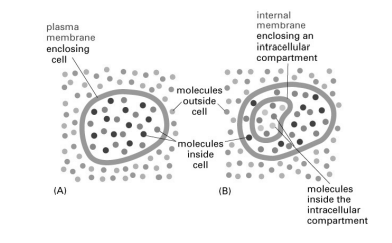
2
Plasma Membrane
- is involved in cell communication, import/export
of molecules and cell growth/motility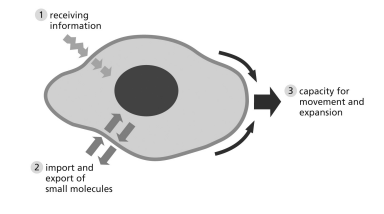
of molecules and cell growth/motility
3
Membrane compartments
•PM 2% cell membrane
•ER 50%
•ER 50%
4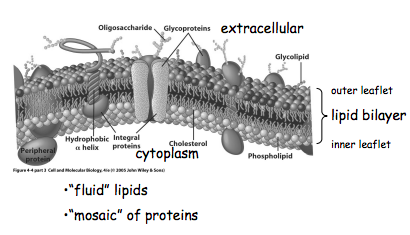
Current model of the plasma membrane --
a fluid-mosaic
a fluid-mosaic
5
lipid bilayer
- embedded protiens
~ 5 nm thick
10,000 PM stacked together to make thickness of paper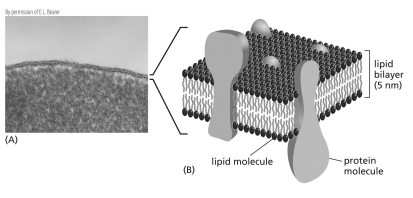
~ 5 nm thick
10,000 PM stacked together to make thickness of paper
6
Membranes
•lipid-protein assemblies held together in thin sheet by
noncovalent bonds
•Lipid bilayer is structural framework & barrier
•Proteins carry out most of specific functions
• Often include carbohydrates attached to membrane
lipids & proteins
noncovalent bonds
•Lipid bilayer is structural framework & barrier
•Proteins carry out most of specific functions
• Often include carbohydrates attached to membrane
lipids & proteins
7
Chemical composition of membranes
•Lipid:protein ratio varies greatly depending on
membrane type (e.g., PM vs. ER)
•relates to membrane function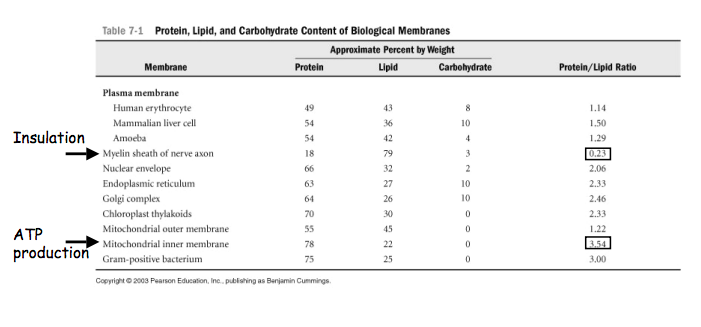
membrane type (e.g., PM vs. ER)
•relates to membrane function
8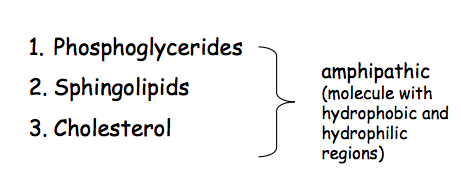
Membranes contain 3 major classes of
lipids
lipids
9
Different types of membrane lipids are ...
- all amphipathic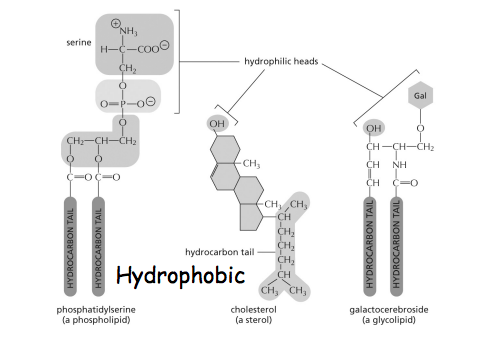
10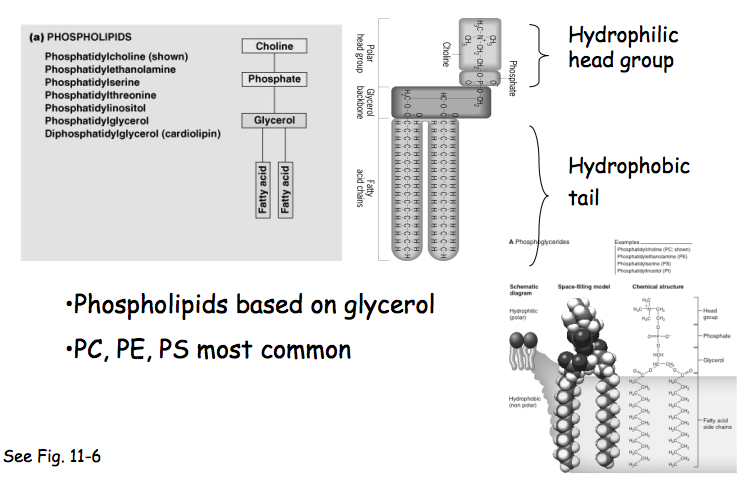
1. Phosphoglycerides
11
2. Sphingolipids
•less abundant class of membrane lipids
•derivatives of sphingosine- an amino
alcohol with long hydrocarbon chain
•sphingosine + fatty acid + X
•sphingomyelin -- if X is
phosphorylcholine; a phospholipid
•glycolipid -- if X is carbohydrate
•derivatives of sphingosine- an amino
alcohol with long hydrocarbon chain
•sphingosine + fatty acid + X
•sphingomyelin -- if X is
phosphorylcholine; a phospholipid
•glycolipid -- if X is carbohydrate
12
2. Sphingolipids (image)
13
3. Cholesterol
•may constitute 50% of animal cell plasma
membranes
•absent from most plants // bacteria
•smaller and less amphipathic than
phospholipids
•interferes with phospholipid packing; makes
membrane more fluid at lower temps and less
fluid at higher temps
membranes
•absent from most plants // bacteria
•smaller and less amphipathic than
phospholipids
•interferes with phospholipid packing; makes
membrane more fluid at lower temps and less
fluid at higher temps
14
3. Cholesterol
**image
15
Structure of phospholipids and assembly
of a membrane bilayer (video)
of a membrane bilayer (video)
16
Amphipathic
phospholipids
phospholipids
- form a bilayer
in H2O
•10,000 PM stacked
together to make
thickness of 1 sheet
of paper
in H2O
•10,000 PM stacked
together to make
thickness of 1 sheet
of paper
17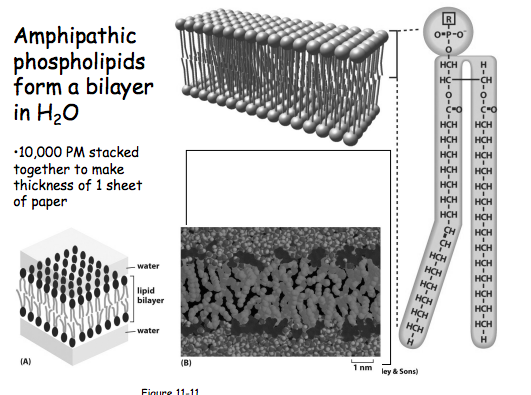
Amphipathic
phospholipids (image)
phospholipids (image)
18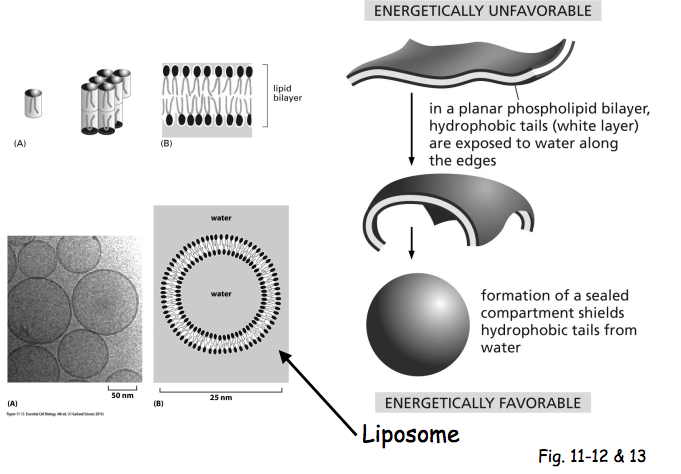
Lipid bilayers self-assemble
19
Nature and importance of lipid bilayer
•each type of cellular membrane has characteristic
lipid composition
•lipid composition:
--determines physical state of membrane
--influences activities of some membrane proteins
--may provide precursors or chemical messengers
lipid composition
•lipid composition:
--determines physical state of membrane
--influences activities of some membrane proteins
--may provide precursors or chemical messengers
20
Distributed asymmetrically in the PM:
- Phospholipids and glycolipids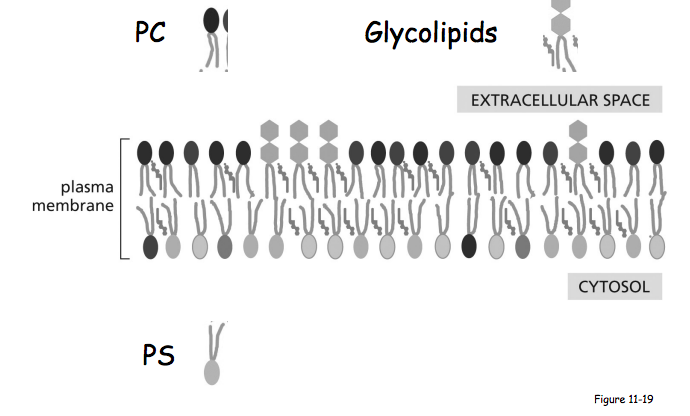
21
Newly-synthesized
lipids:
lipids:
- added to the
ER cytosolic
membrane
•Scramblases in ER
randomly transfer
some phospholipids to
inner leaflet
ER cytosolic
membrane
•Scramblases in ER
randomly transfer
some phospholipids to
inner leaflet
22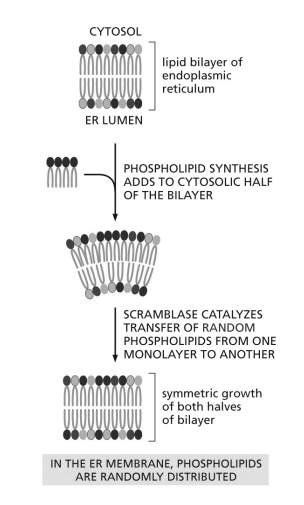
Newly-synthesized
lipids are added to the
ER cytosolic
membrane: (the process)
lipids are added to the
ER cytosolic
membrane: (the process)
23
Flippases/floppases
- establish and maintain
asymmetric distribution of phospholipids in most
cell membranes
•Flippases in Golgi and
PM move specific
phospholipids (e.g., PS)
to cytosolic leaflet
•Floppases move
specific phospholipids
(e.g., PC) to outer
leaflet
asymmetric distribution of phospholipids in most
cell membranes
•Flippases in Golgi and
PM move specific
phospholipids (e.g., PS)
to cytosolic leaflet
•Floppases move
specific phospholipids
(e.g., PC) to outer
leaflet
24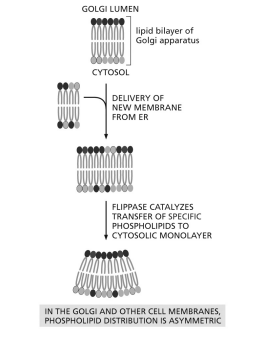
Flippases/floppases (the process)
25
cell signaling:
- Some functions of membrane phospholipids in
cell signaling
cell signaling
26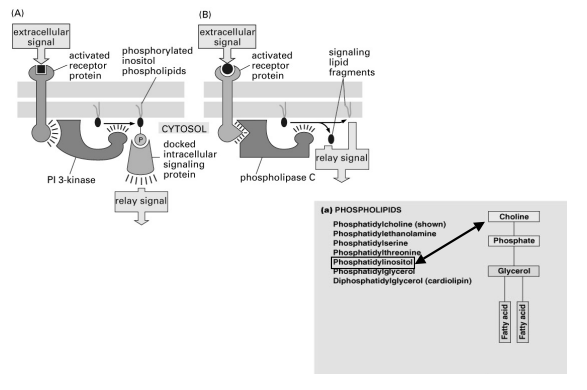
Some functions of membrane phospholipids in
cell signaling (the process)
cell signaling (the process)
27
Cell surface
- is covered with carbohydrates
•Carbohydrate content covalently linked to both lipids & proteins
•2 - 10% PM by weight (<10% in glycolipid & >90% in glycoprotein)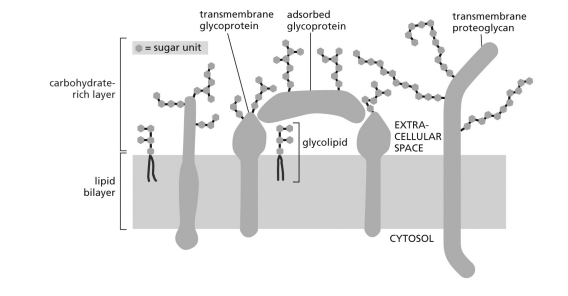
•Carbohydrate content covalently linked to both lipids & proteins
•2 - 10% PM by weight (<10% in glycolipid & >90% in glycoprotein)
28
Current model of the plasma membrane
- a fluid-mosaic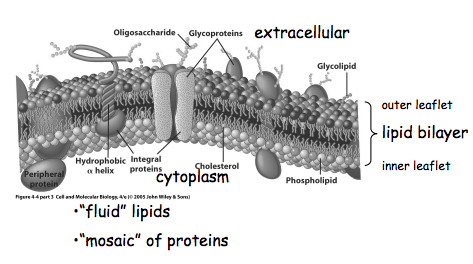
29
CM f(x)
- Some functions of PM proteins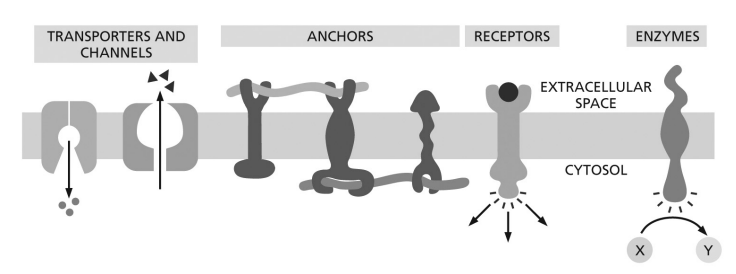
30
Transporters
31
Anchors
32
Receptors
33
Enzymes
34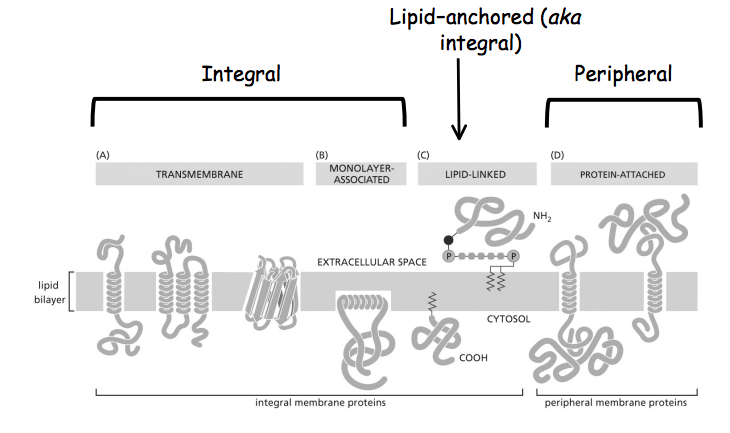
Membrane proteins -- the “mosaic” part of
the model
the model
35
Integral membrane proteins
•amphipathic (like the lipids near them)
•AA in transmembrane domain forms hydrophobic
interactions with FA tails
•required detergents to solubilize (separate from
membrane)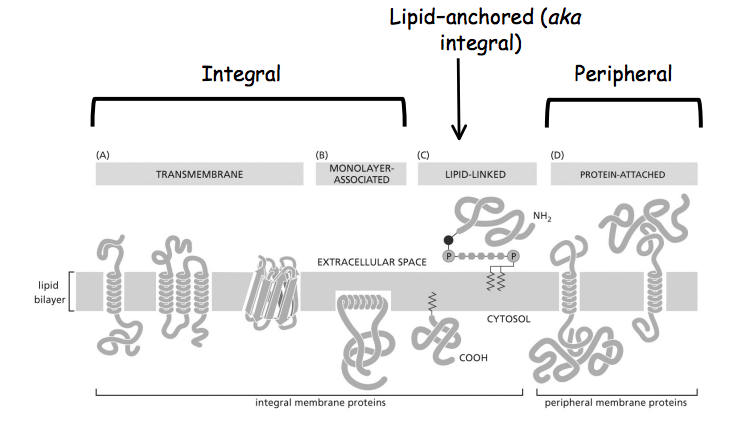
•AA in transmembrane domain forms hydrophobic
interactions with FA tails
•required detergents to solubilize (separate from
membrane)
36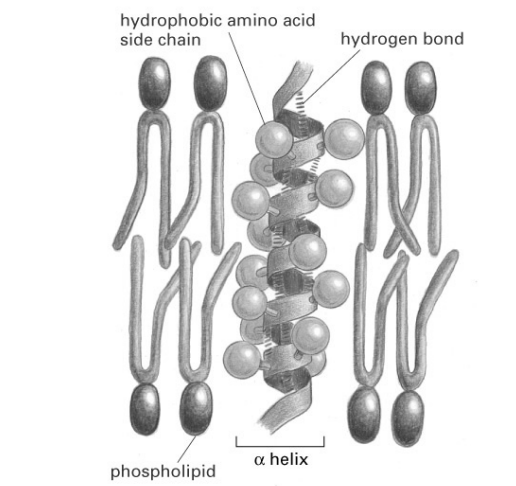
Integral membrane proteins (bonds)
37
transmembrane segments
- Not all transmembrane segments are
entirely hydrophobic (e.g., ion channels)
ex. bacteriorhodopsin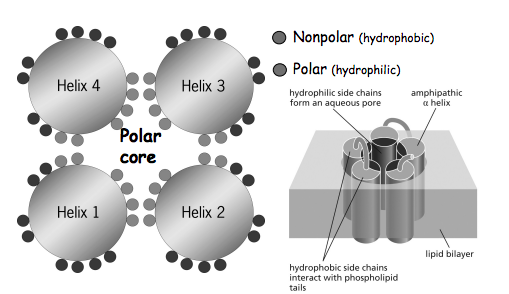
entirely hydrophobic (e.g., ion channels)
ex. bacteriorhodopsin
38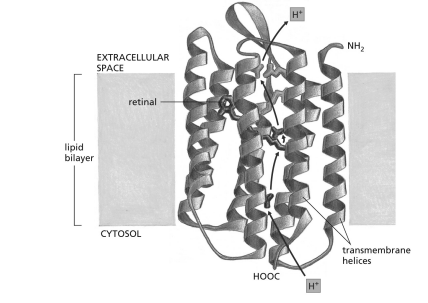
bacteriorhodopsin
39
Methods used to understand
integral membrane proteins
integral membrane proteins
40
Red Blood Cell PM
- Methods used to understand
integral membrane proteins
- Red Blood Cell PM disruption with detergent
integral membrane proteins
- Red Blood Cell PM disruption with detergent
41
Detergents
•amphipathic (polar & nonpolar
ends)
•can substitute for phospholipids
and make hydrophobic proteins
soluble in water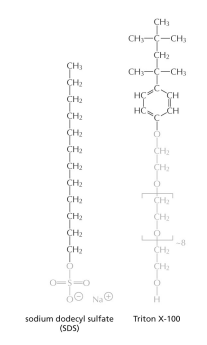
ends)
•can substitute for phospholipids
and make hydrophobic proteins
soluble in water
42
Studying the structure and properties of
membrane proteins
membrane proteins
- Solubilization with
detergents
•detergents substitute for
phospholipids in stabilizing
integral membrane proteins
while making soluble in
aqueous solutions
•now amenable to analysis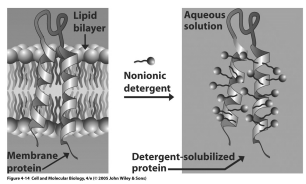
detergents
•detergents substitute for
phospholipids in stabilizing
integral membrane proteins
while making soluble in
aqueous solutions
•now amenable to analysis
43
Identifying transmembrane domains --
- usually hydrophobic α-helices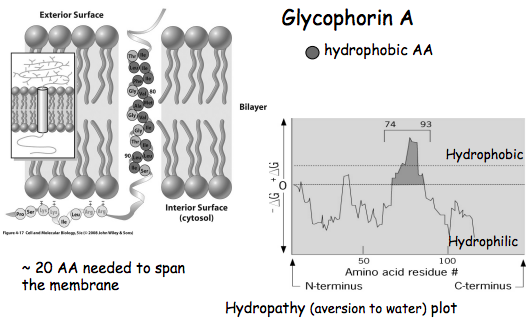
44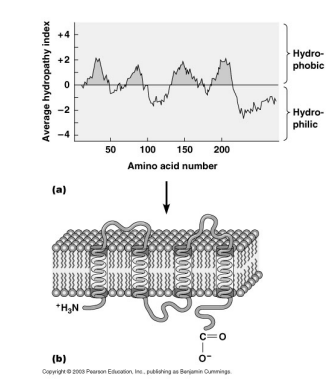
~ 20 AA needed
to span the
membrane
to span the
membrane
45
Peripheral membrane proteins
•weak electrostatic bonds with lipids or
integral membrane proteins
•can be solubilized with aqueous salt solutions
•typically dynamic binding to membrane
•may be enzymes, specialized coats, transmit
transmembrane signals or provide mechanical
support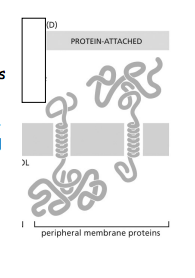
integral membrane proteins
•can be solubilized with aqueous salt solutions
•typically dynamic binding to membrane
•may be enzymes, specialized coats, transmit
transmembrane signals or provide mechanical
support
46
Lipid-anchored membrane proteinsDiffer in anchor used and membrane
sidedness
sidedness
1. GPI (glycophosphatidylinositol)
• external PM face
• covalently linked to glycolipid
• various receptors, enzymes, celladhesion proteins
2. Fatty acid anchor
• internal PM face
• covalently linked to FA
• kinases, etc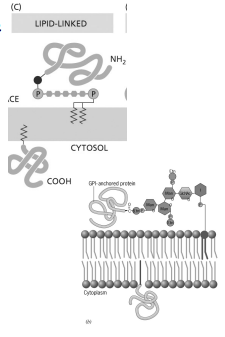
• external PM face
• covalently linked to glycolipid
• various receptors, enzymes, celladhesion proteins
2. Fatty acid anchor
• internal PM face
• covalently linked to FA
• kinases, etc
47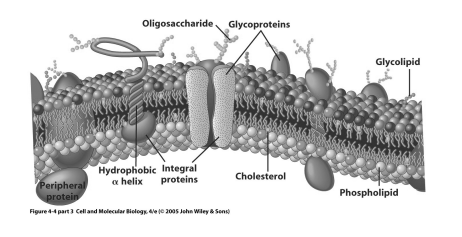
Membrane lipids and
membrane fluidity
membrane fluidity
48
laser tweezers
- PM fluidity demonstration
49
Membrane lipids and membrane
fluidity -- importance of fluidity
fluidity -- importance of fluidity
•Fluidity is an essential aspect of membrane
function
•Changes in membrane fluidity can alter the
ability of a membrane to function properly
•required for cell movement, growth, division,
intercellular junction formation, secretion,
endocytosis
function
•Changes in membrane fluidity can alter the
ability of a membrane to function properly
•required for cell movement, growth, division,
intercellular junction formation, secretion,
endocytosis
50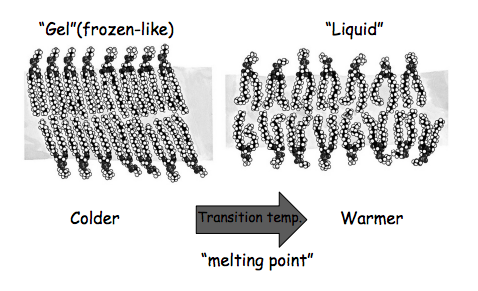
Structure of lipid bilayer depends on
temperature:
temperature:
51
Fluidity (cell mem)
- Fluidity depends on chain
length and degree of
saturation
- The soft margarine - butter
analogy
length and degree of
saturation
- The soft margarine - butter
analogy
52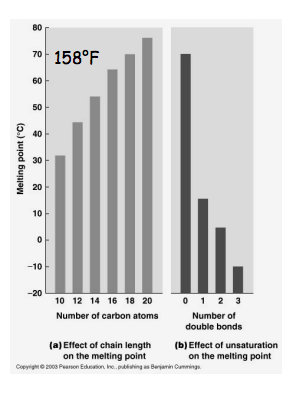
melting point diagram
53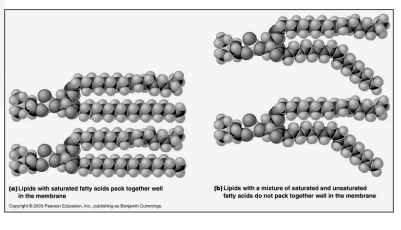
lipids and fluit diagram
54
cholesterol & fatty acids
•cholesterol disrupts close packing of fatty acids & interferes with
their mobility
•abolish sharp transition temperatures & creates condition of
intermediate fluidity
•it tends to increase durability & decrease permeability of
membrane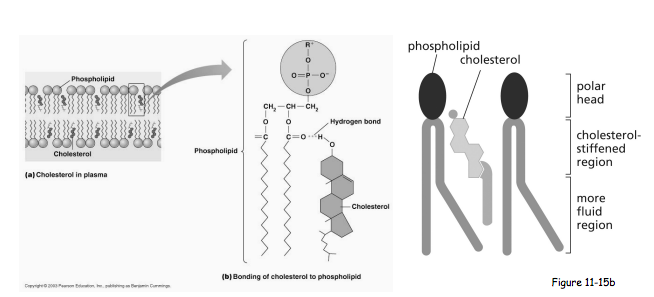
their mobility
•abolish sharp transition temperatures & creates condition of
intermediate fluidity
•it tends to increase durability & decrease permeability of
membrane
55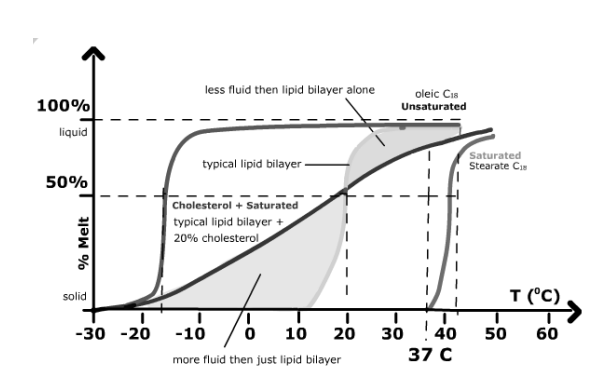
temp: cholesterol & fatty acids
56
Maintaining membrane fluidity
internal temp. of most organisms (not
birds/mammals) changes with outside temp.
• organisms respond by altering membrane lipid
composition
At lower temps:
1. Desaturase enzymes single --> double bonds
2. Phospholipases and acyltransferases
reshuffle fatty acid chains to create lipids
with two unsaturated chains
birds/mammals) changes with outside temp.
• organisms respond by altering membrane lipid
composition
At lower temps:
1. Desaturase enzymes single --> double bonds
2. Phospholipases and acyltransferases
reshuffle fatty acid chains to create lipids
with two unsaturated chains
57
Asymmetry of membrane lipids
- membrane sidedness
•Phospholipid content
varies between the inner
and outer leaflets of the
membrane
•e.g., phosphatidylserine
(PS) inner leaflet
•glycolipids outer leaflet
•Phospholipid content
varies between the inner
and outer leaflets of the
membrane
•e.g., phosphatidylserine
(PS) inner leaflet
•glycolipids outer leaflet
58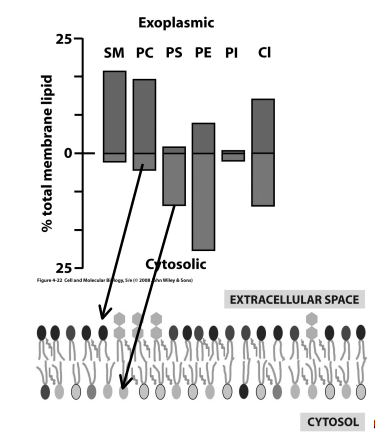
Asymmetry of membrane lipids – membrane sidedness (diagram)
59
Asymmetry of membrane lipids:
- on same membrane side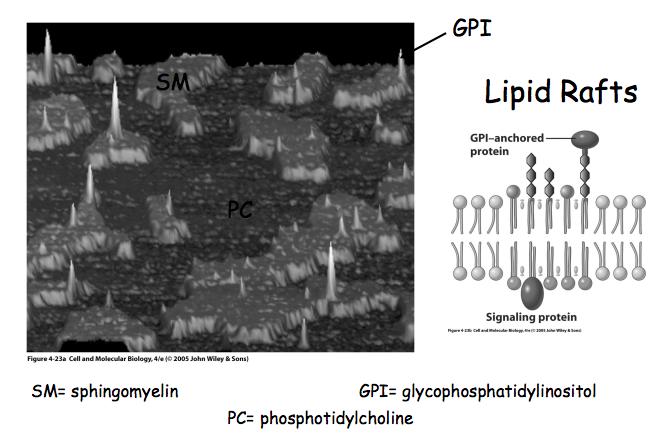
60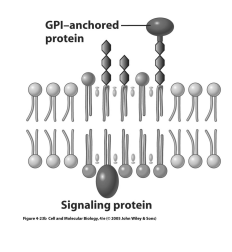
Lipid Rafts
61
Possible movements of phospholipids in a
membrane
membrane
•Flippases/scramblases
can help lipids switch
leaflets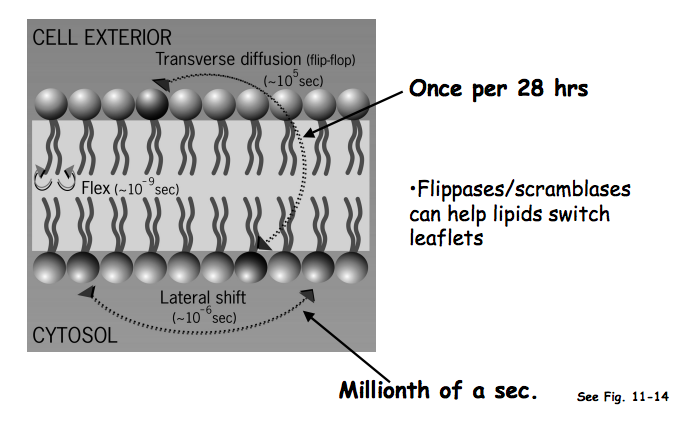
can help lipids switch
leaflets
62
How do we study protein dynamics
in the PM?
in the PM?
63
Protein movements
- diffusion of
membrane proteins after cell fusion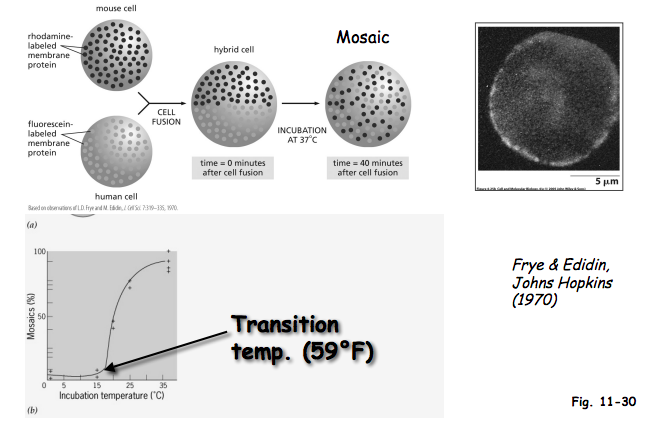
membrane proteins after cell fusion
64
FRAP
fluorescence recovery after photobleaching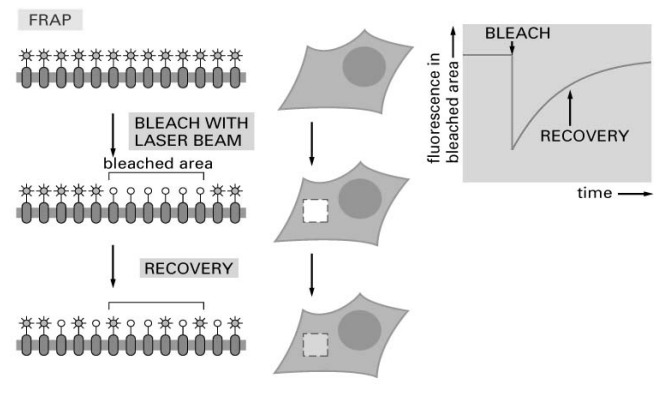
65
FRAP
rate of recovery -- direct measure of diffusion rate
• extent of recovery -- direct measure of % of labeled
molecules free to move
• Results --
1. proteins move more slowly in PM than in artificial
lipids
2. large fraction (30-70%) not free to diffuse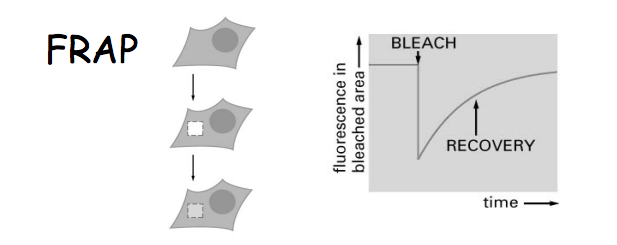
• extent of recovery -- direct measure of % of labeled
molecules free to move
• Results --
1. proteins move more slowly in PM than in artificial
lipids
2. large fraction (30-70%) not free to diffuse
66
Proteins show different patterns of
diffusion
diffusion
- single particle tracking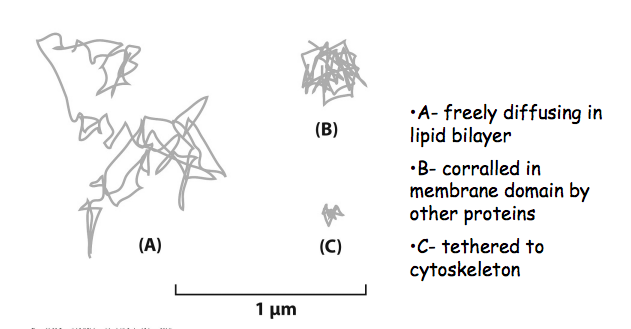
67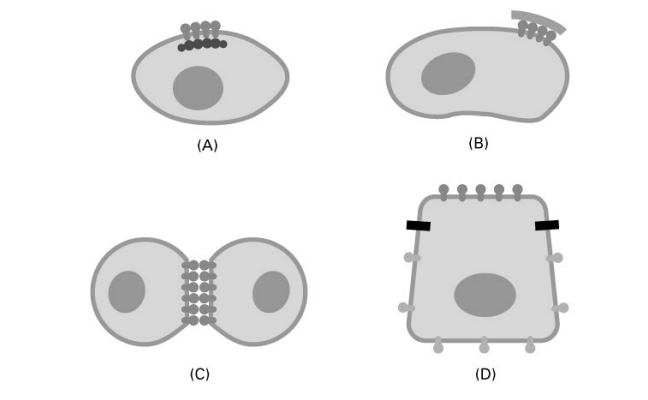
Protein movement can be restricted in several ways
68
In specialized cells, cell surfaces ...
- have distinct
functions & must have order maintained
•differentiated
functions of the
PM of an
epithelial cell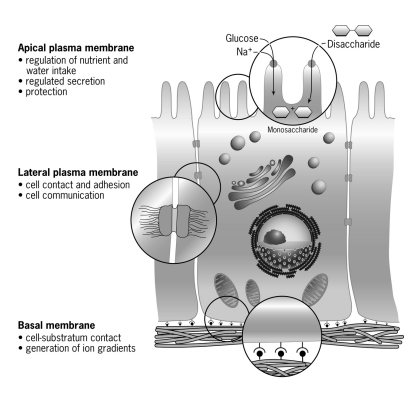
functions & must have order maintained
•differentiated
functions of the
PM of an
epithelial cell
69
Apical PM
70
Lateral PM
71
Basal PM
72
A lot of what we know about PM proteins came
from studies with
from studies with
- human red blood cells
- Red Blood Cell PM cytoskeleton and osmosis
- Red Blood Cell PM cytoskeleton and osmosis
73
Why are RBCs
a good cell to
use to
understand
PM?
a good cell to
use to
understand
PM?
74
Red Blood Cells
- an example of PM structure
- PM "ghosts"
- PM "ghosts"
75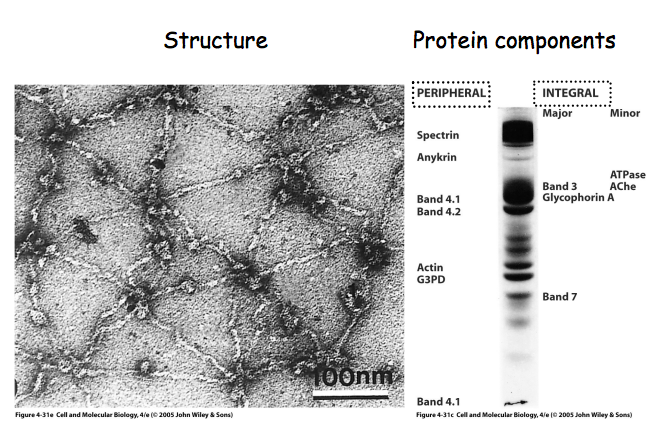
RBC Structure & Protein Components
76
Spectrin meshwork
- forms cell cortex
77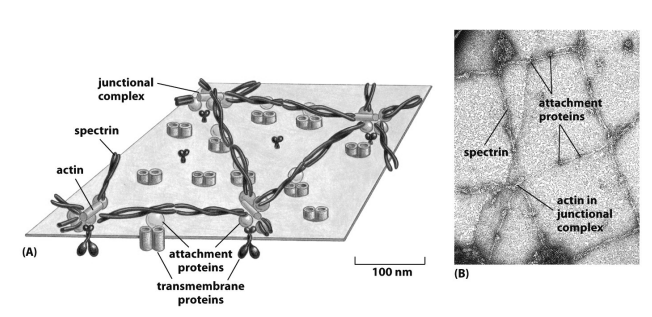
Spectrin meshwork diagram
78
The PM of the red blood cell (RBC)
•cell cortex (proteins on
the inside of the PM)
strengthens PM
•spectrin mutations --
individuals anemic; cells
break in capillaries
What would you see if you FRAP-ed spectrin?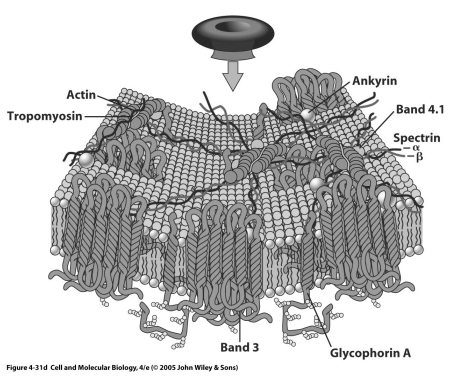
the inside of the PM)
strengthens PM
•spectrin mutations --
individuals anemic; cells
break in capillaries
What would you see if you FRAP-ed spectrin?