All cards
1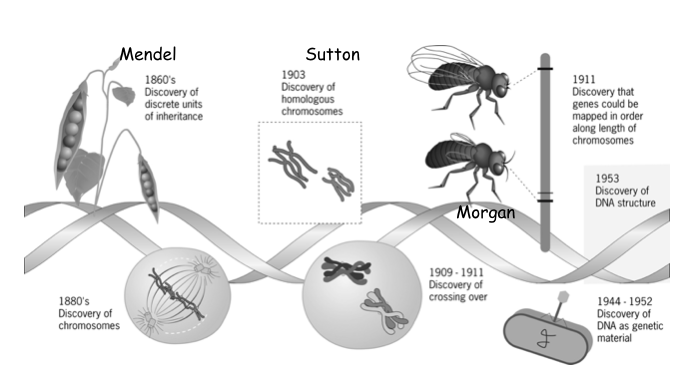
Mendel and Sutton
2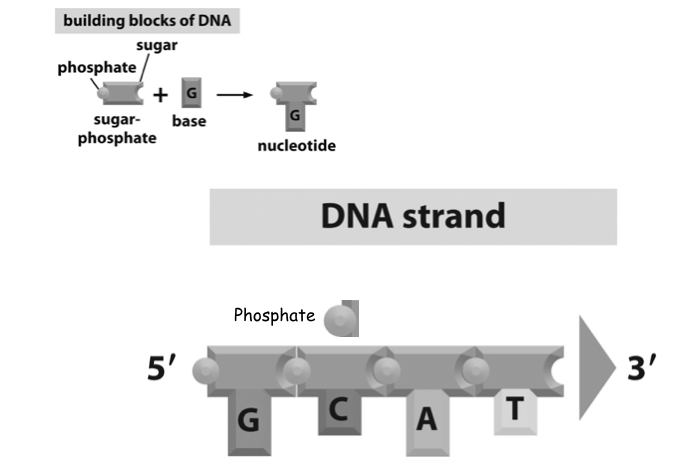
building blocks of DNA & DNA strand
3
nucleotides DNA & RNA
- Shapes of bases only allow H-bonds between A & T and G & C
- antiparallel
- complementary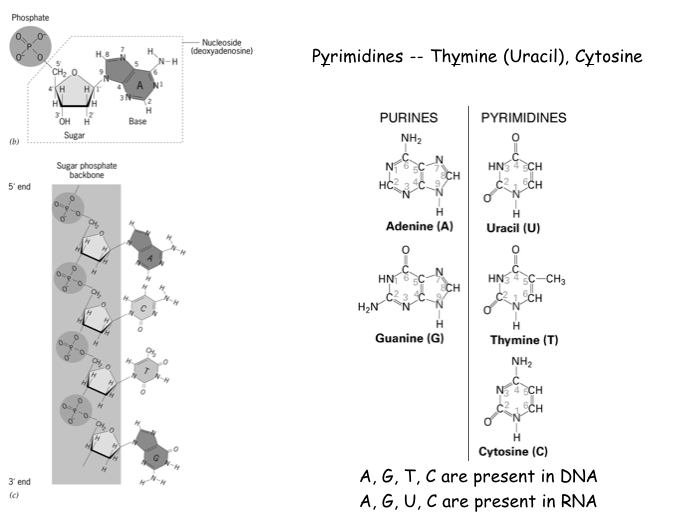
- antiparallel
- complementary
4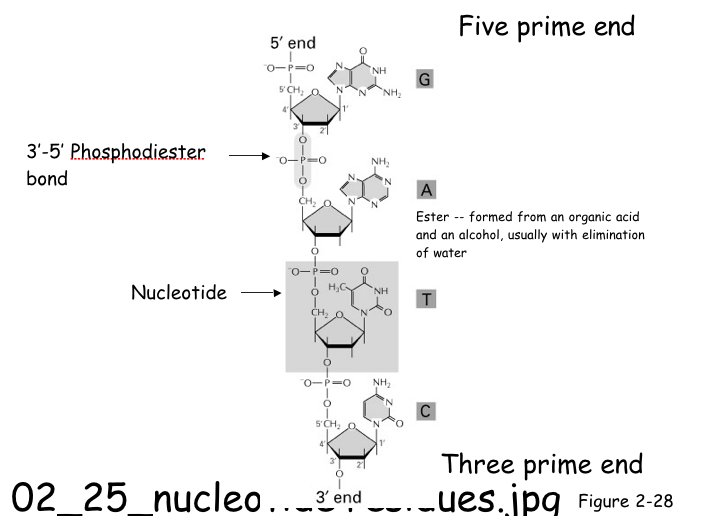
three and five prime ends
5
Ester
formed from an organic acid and an alcohol, usually with elimination of water
6
DNA synthesis
7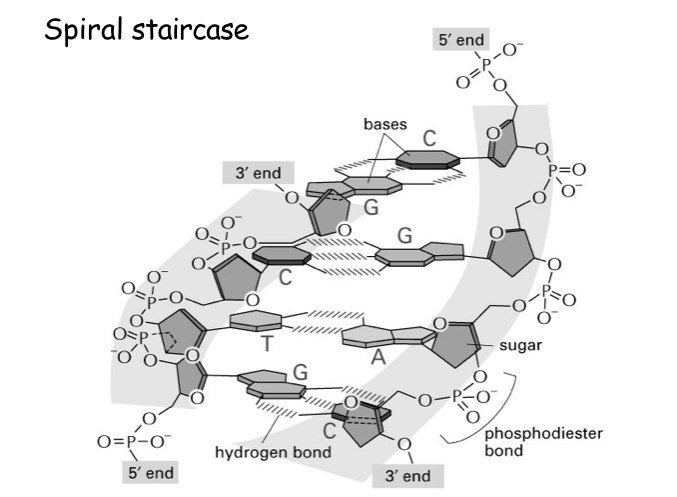
Spiral staircase
8
The double helix
- major vs. minor groove
- Hydrophobic and van der Waal forces
- Hydrophobic and van der Waal forces
9
DNA sturcture
10
chromosome
Chromosomes physically-carry the genes
- Human chromosomes have been “painted” with fluorescent DNA probes to allow identification (karyotyping)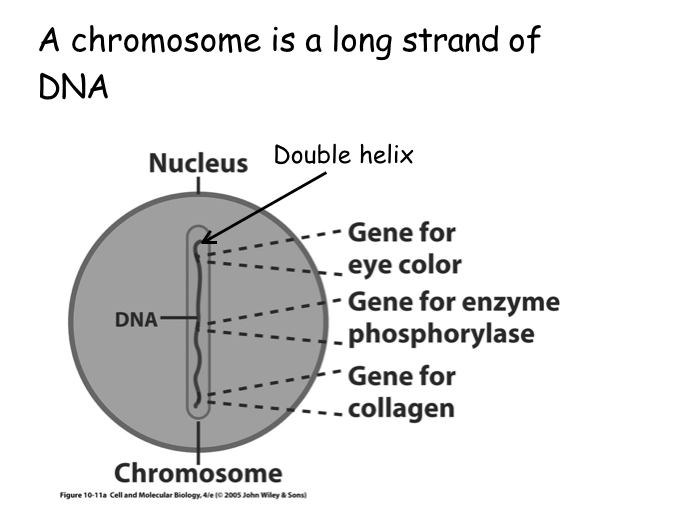
- Human chromosomes have been “painted” with fluorescent DNA probes to allow identification (karyotyping)
11
genes & RNA
- Genes contain information to make RNA, some of which encode proteins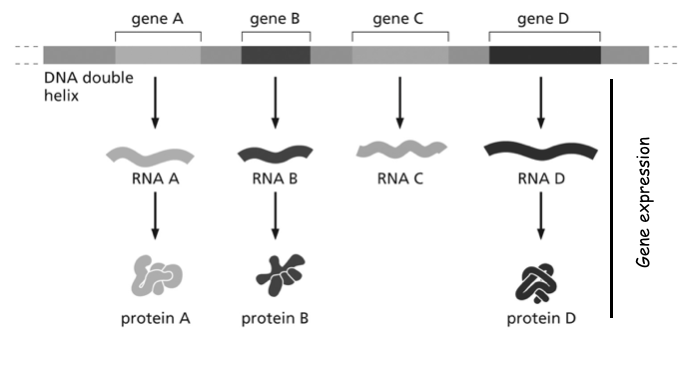
12
genes
1. Genes are the unit of inheritance
- Genes are arranged along the chromosomes
- Note spaces between genes
At any one point on the chromosome why is only one strand yellow?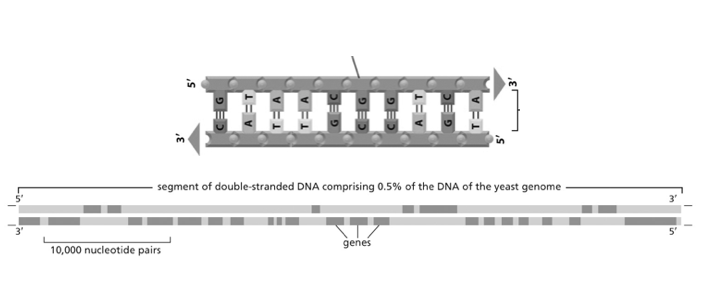
- Genes are arranged along the chromosomes
- Note spaces between genes
At any one point on the chromosome why is only one strand yellow?
13
genes and chromosomes
- allele: somatic cells contain two copies of a gene--one from each parent. Copies can be the same or different. These alternate (or same form) are called alleles
- homologous chromosomes: contain info for same biological functions
- dominant vs. recessive
- gametes
- homologous chromosomes: contain info for same biological functions
- dominant vs. recessive
- gametes
14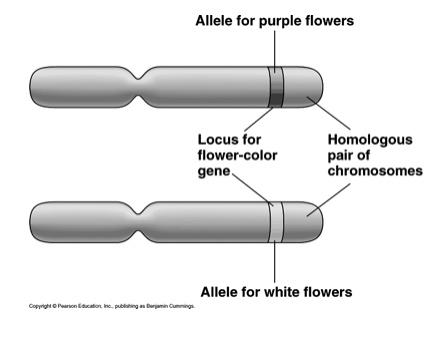
alleles on a chromosome
15
abnormal chromosomes
- Abnormal chromosomes are associated with some inherited genetic defects and many cancers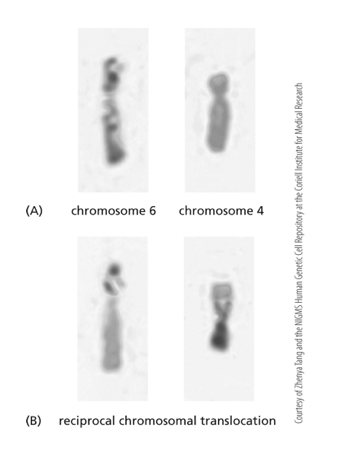
16
replication and regulation
- Replication and segregation of chromosomes occurs in the cell cycle of proliferating cells
--Chromosomes exist in different forms throughout the life of the cell
-- during interphase the cell expresses many of its genes; during one part of this phase it also duplicates the chromosomes
--Chromosomes exist in different forms throughout the life of the cell
-- during interphase the cell expresses many of its genes; during one part of this phase it also duplicates the chromosomes
17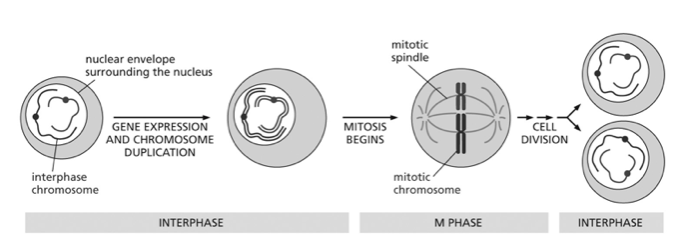
replication and regulation (the process)
18
3 DNA sequence elements needed to produce chromosome that can be replicated and segregated in mitosis
1. Origins for initiation of DNA replication
2. The centromere
3. The two ends (telomeres)
2. The centromere
3. The two ends (telomeres)
19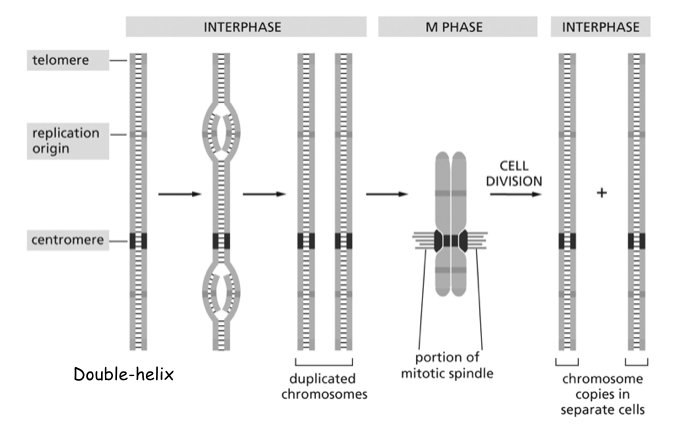
3 DNA sequence elements needed for duplication and segregation (the process)
20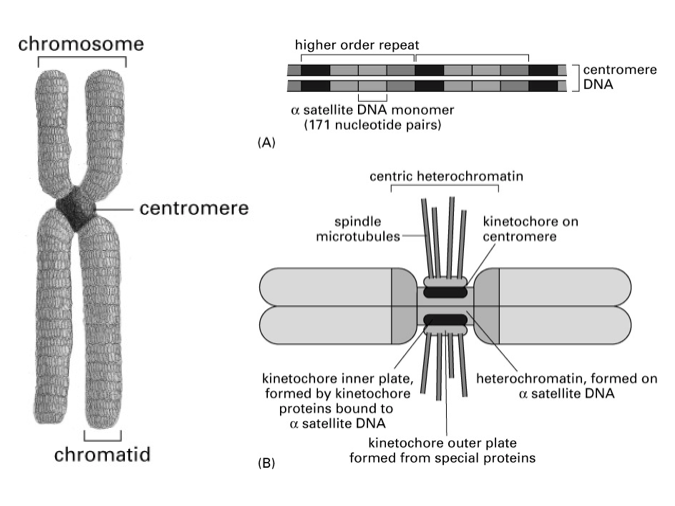
chromosome (chromatid, centromere) structure
21
Interphase chromosomes
- Interphase chromosomes are organized in the nucleus
--Different “territories” within nucleus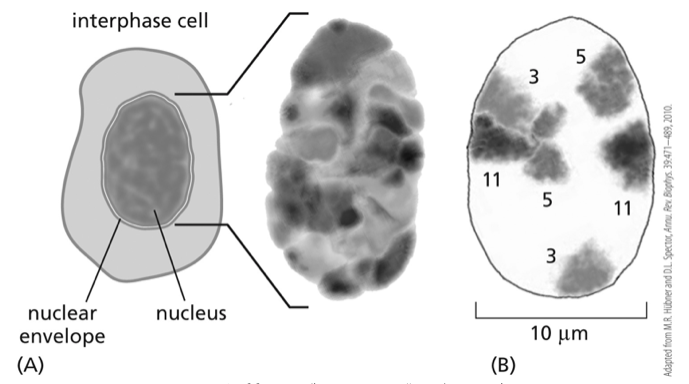
--Different “territories” within nucleus
22
Levels of organization of chromatin
- chromatin = DNA + proteins
- histones - basic AA
- nucleosomes - repeating subunits of DNA and histones
- Local modification of histones determines whether chromatin in that region is transcribed
- histones - basic AA
- nucleosomes - repeating subunits of DNA and histones
- Local modification of histones determines whether chromatin in that region is transcribed
23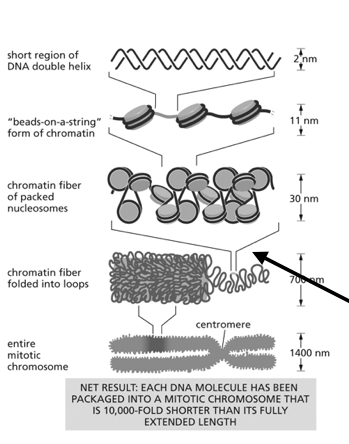
Levels of organization of chromatin (process)
24
DNA packing and gene expression
25
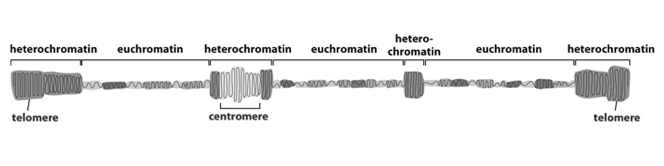
Heterochromatin
- Heterochromatin consists of chromosome regions that do not uncoil after mitosis
- euchromatin is uncoiled and active in interphase
- heterochromatin found in centromeres and telomeres
- euchromatin is uncoiled and active in interphase
- heterochromatin found in centromeres and telomeres
26
Heterochromatin Structures
27
Chromatin structure
- Chromatin structure varies along a single interphase chromosome