12 - Membrane Transport
Study these flashcardsFree · spaced repetition · iPhone, Android, Mac & web
All cards
1
Lipid bilayer & Transportation
- Lipid bilayer is ideally suited to prevent loss of charged &
polar solutes (ions, sugars, AA)
- Must allow movement of nutrients, respiratory gases,
hormones, wastes, etc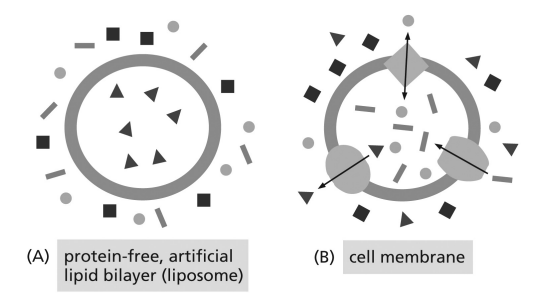
polar solutes (ions, sugars, AA)
- Must allow movement of nutrients, respiratory gases,
hormones, wastes, etc
2
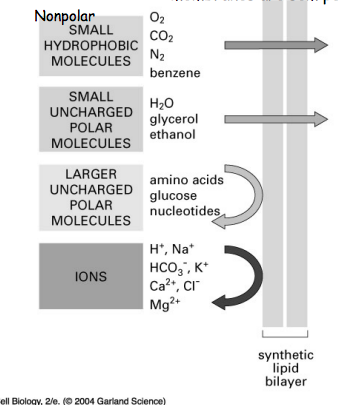
membranes & transport
•membranes are semipermeable
3
ion concentrations
•Approximately equal quantities of +/- charges
inside and outside of cell
•Tiny excesses of + or - charges do occur near
PM and have imp. electrical effects
inside and outside of cell
•Tiny excesses of + or - charges do occur near
PM and have imp. electrical effects
4
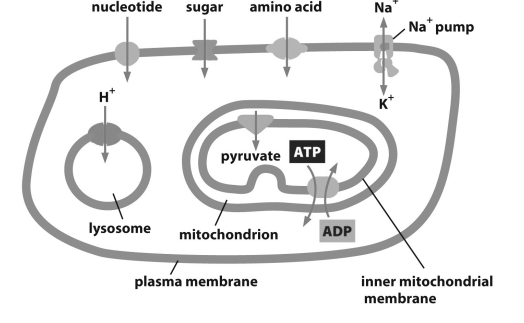
Each cell membrane has its own characteristic
set of
set of
carrier proteins
5
facilitated diffusion
- Transporters and channels move inorganic
ions and small, polar molecules cross
membrane
A — channels either open or close; faster transport rates than
transporters
B — transporters undergo a series of conformational changes
(alternate access)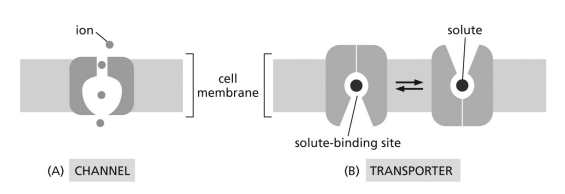
ions and small, polar molecules cross
membrane
A — channels either open or close; faster transport rates than
transporters
B — transporters undergo a series of conformational changes
(alternate access)
6
Membranes are a selectively permeable barrier
- two means for movement both of which lead to net
flux of ions/compounds (influx - into cell; efflux -
out of cell)
1. Passively by diffusion
2. Actively by energy-coupled transport process
flux of ions/compounds (influx - into cell; efflux -
out of cell)
1. Passively by diffusion
2. Actively by energy-coupled transport process
7
Diffusion
•substance moves from region of high conc. to region of
low conc.; eventually eliminating conc. difference
•driven by random thermal motion leading to increase in
entropy
•electrochemical gradient
--chemical - compartment concentration difference
-- electrical - compartment charge difference
low conc.; eventually eliminating conc. difference
•driven by random thermal motion leading to increase in
entropy
•electrochemical gradient
--chemical - compartment concentration difference
-- electrical - compartment charge difference
8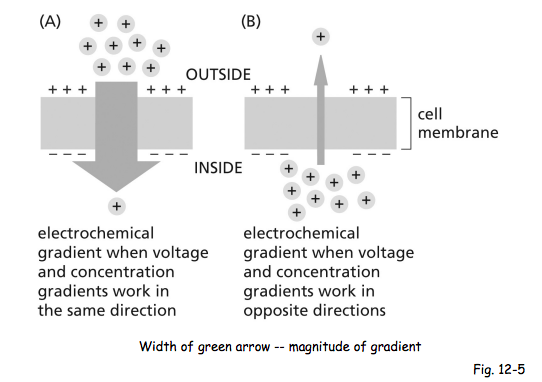
An electrochemical gradient has two components
9
Different processes by which
substances move across membranes
substances move across membranes
1. Simple diffusion through lipid bilayer
2. Facilitate transport through aqueous,
protein-lined channel; “channels”
3. Facilitated transporters; “transporters”
4. Active transport; “pumps
2. Facilitate transport through aqueous,
protein-lined channel; “channels”
3. Facilitated transporters; “transporters”
4. Active transport; “pumps
10
1. Diffusion through membranes
•must be concentration difference
•must be membrane permeable
•directly through lipid
-- partition coefficient - measure of polarity;
ratio of solubility in nonpolar solvent/water
-- molecule size (smaller is faster)
•must be membrane permeable
•directly through lipid
-- partition coefficient - measure of polarity;
ratio of solubility in nonpolar solvent/water
-- molecule size (smaller is faster)
11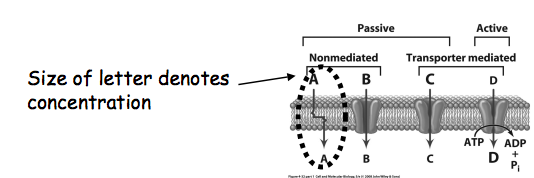
Diffusion Through mem diagram
12
Diffusion of ions through membrane channels
•Ions (e.g. Na+, K+, Ca2+, & Cl-) cannot pass freely
through the lipid bilayer, but must still enter and exit
cells.
• ion channels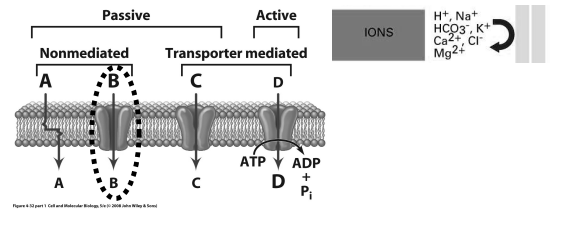
through the lipid bilayer, but must still enter and exit
cells.
• ion channels
13
Diffusion of ions through membrane
channels -- transport
channels -- transport
•transport is passive and proceeds down the
concentration gradient of the ion being transported
•Usually 107 - 108 ions/s
•gated -- open/close with the proper stimulus
• bidirectional -- depending on the gradient, channels
may transport ions in either// both of the two possible
directions.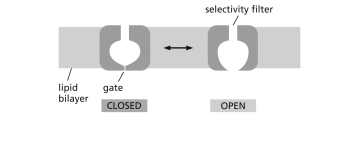
concentration gradient of the ion being transported
•Usually 107 - 108 ions/s
•gated -- open/close with the proper stimulus
• bidirectional -- depending on the gradient, channels
may transport ions in either// both of the two possible
directions.
14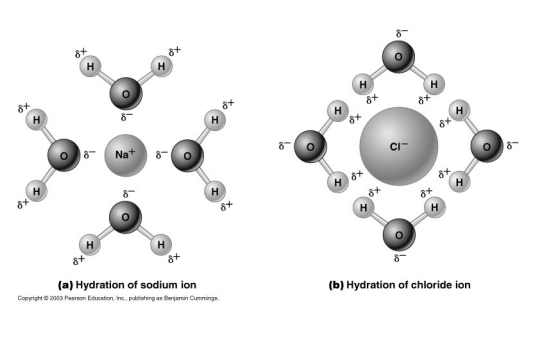
ion hydration
15
Potassium channel
- Potassium channel has a selectivity filter for ion specificity
Unsolvated = water removed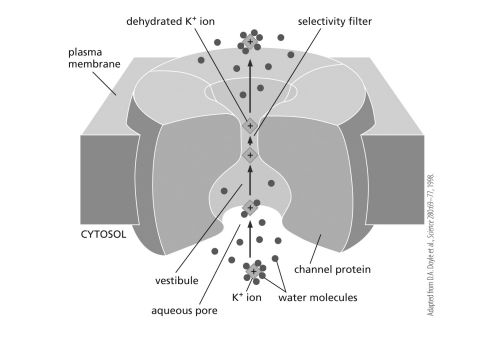
Unsolvated = water removed
16
Major categories of gated ion channels
1. Voltage-gated channels -- opens due to change in
voltage difference
2. Ligand-gated channels -- opens due to ligand
binding; usually not the transported species
3. Stress (mechanically) gated -- opens due to
mechanical stimulation
voltage difference
2. Ligand-gated channels -- opens due to ligand
binding; usually not the transported species
3. Stress (mechanically) gated -- opens due to
mechanical stimulation
17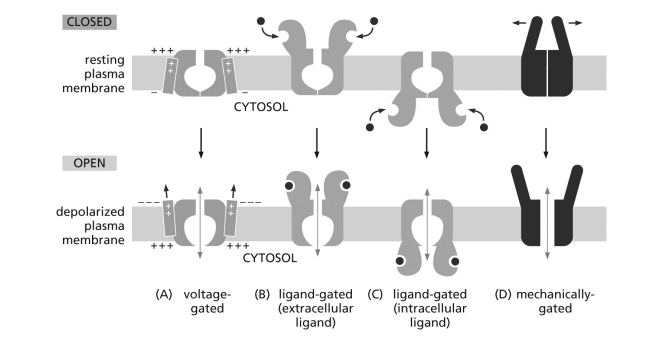
Major categories of gated ion channels: diagram
18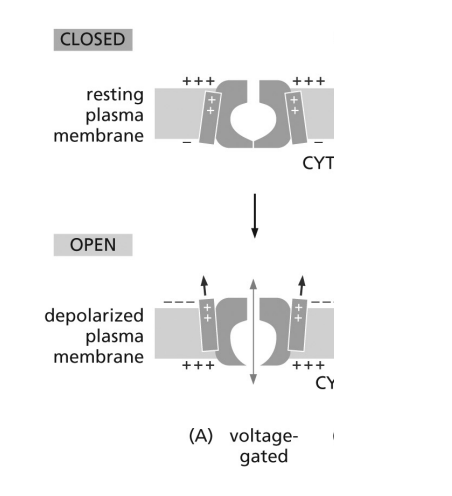
Voltage gated
19
Patch-clamping
(used to monitor ion channel
activity)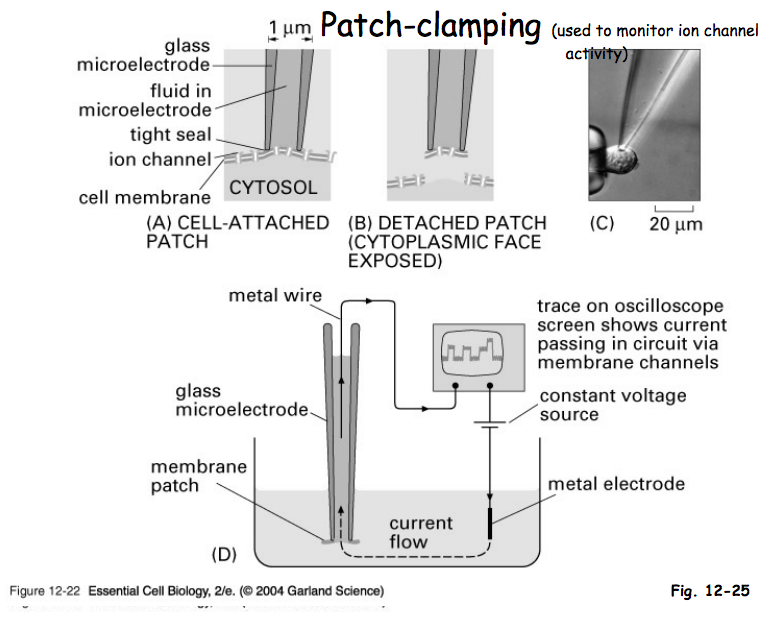
activity)
20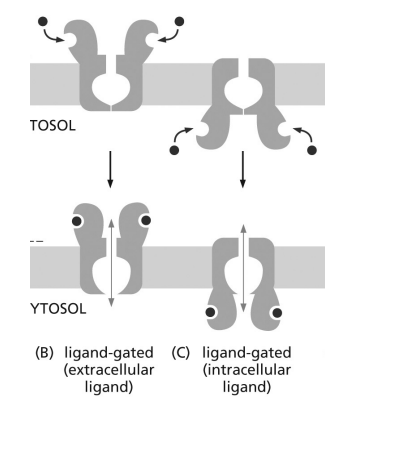
2. Ligand gated
21
Neurotransmitter receptor
-- a ligand gated ion
channel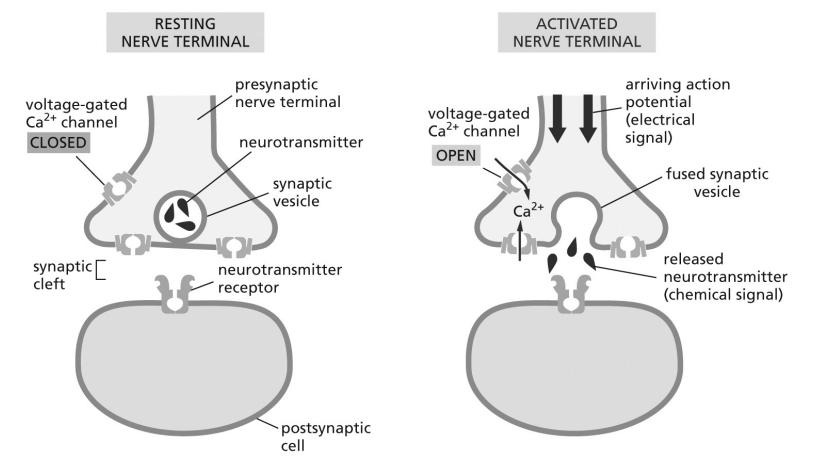
channel
22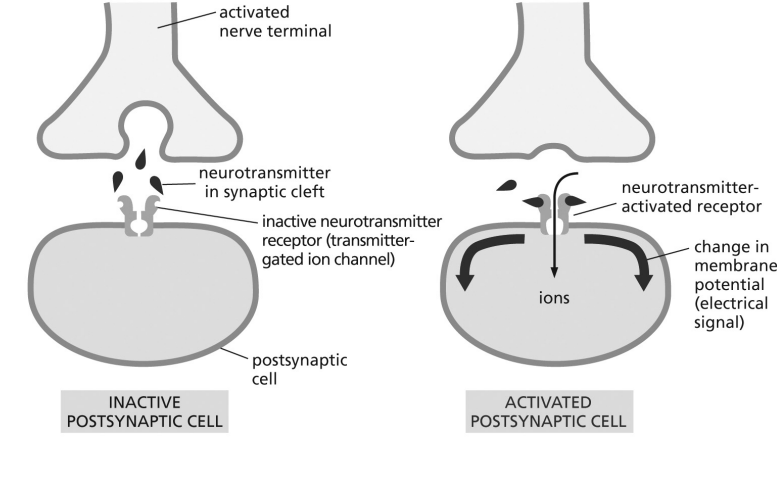
Neurotransmitter receptor -- inactive vs active
23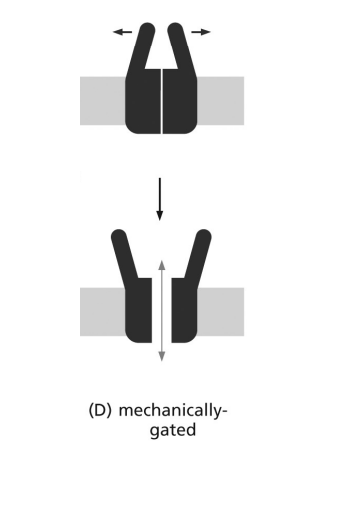
3. Mechanically gated
24
Mechanically-activated ion channels allow ..
- us to hear
- Stress-gated ion channels allow us
to hear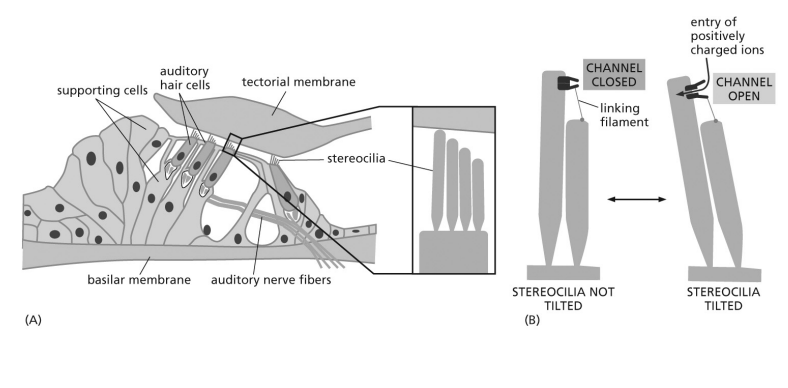
- Stress-gated ion channels allow us
to hear
25
3. Facilitated transporters
•binds to membrane-spanning protein
that changes its shape; facilitative
transporter
•passive -- doesn’t require energy
•bidirectional -- depends on conc.
•102 - 104 molecules/s
•molecule-specific; (AA, sugars)
• activity regulatable
that changes its shape; facilitative
transporter
•passive -- doesn’t require energy
•bidirectional -- depends on conc.
•102 - 104 molecules/s
•molecule-specific; (AA, sugars)
• activity regulatable
26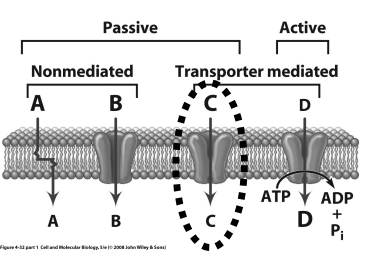
Facilitated transporters diagram
27
Facilitated diffusion (solute)
•Solute binding on one side of membrane
may or may not be required to change
protein shape, exposing solute to other
surface
ex. gluclose transporter
may or may not be required to change
protein shape, exposing solute to other
surface
ex. gluclose transporter
28
gluclose transporter
•Changes shape randomly even without glucose; glucose binding
induces shape change
•Side of membrane with highest glc conc. will tend to bind
most glc
•If glc higher outside, will move glc inward and vice versa
induces shape change
•Side of membrane with highest glc conc. will tend to bind
most glc
•If glc higher outside, will move glc inward and vice versa
29
gluclose transporter diagram
30
Glucose transporter -- facilitated
diffusion of glucose into muscle cell
diffusion of glucose into muscle cell
•down concentration
gradient (High --> Low)
•14 related
transporters
(isoforms; GLUT 1-14)
in humans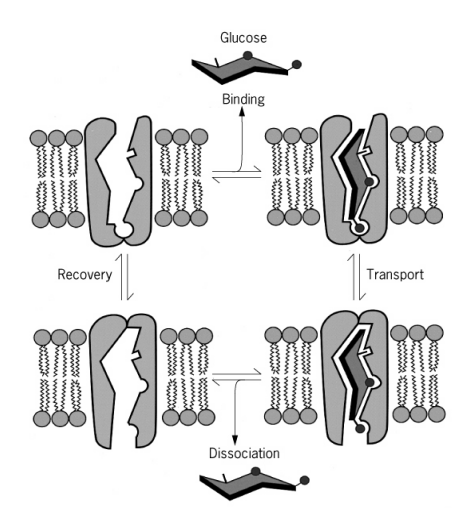
gradient (High --> Low)
•14 related
transporters
(isoforms; GLUT 1-14)
in humans
31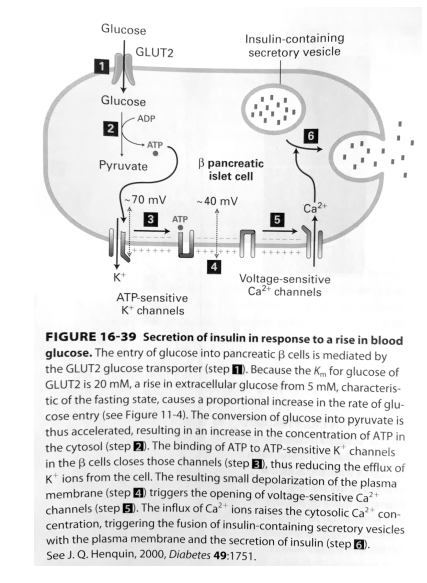
Secretion of insulin in
response to a rise in blood
glucose:
response to a rise in blood
glucose:
32
Example of regulation
of a transporter:
of a transporter:
• (INC) glucose
levels triggers
insulin secretion
by pancreas
• (DEC) glucose
uptake into
various cells (e.g.,
skeletal muscle
and fat cells)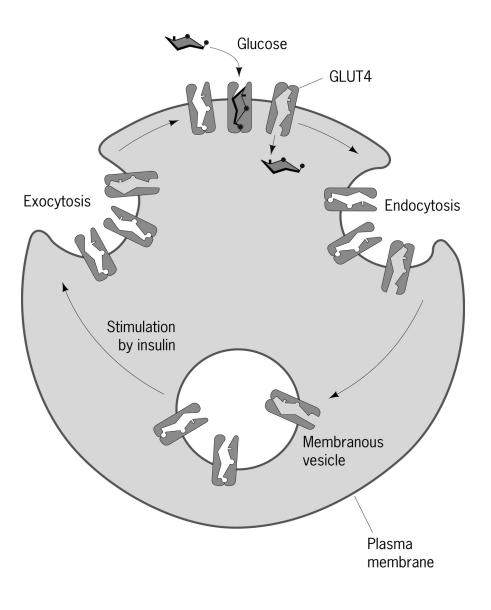
levels triggers
insulin secretion
by pancreas
• (DEC) glucose
uptake into
various cells (e.g.,
skeletal muscle
and fat cells)
33
Active transport
•uses energy to move molecules “up” conc.
gradient (Low --> High)
•energy source may be ATP hydrolysis or light
absorbance
•uses molecule-specific transmembrane
proteins; usually called “pumps
gradient (Low --> High)
•energy source may be ATP hydrolysis or light
absorbance
•uses molecule-specific transmembrane
proteins; usually called “pumps
34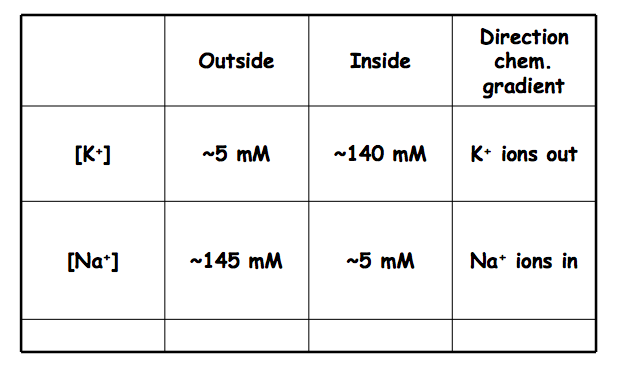
Maintenance requires active transport
35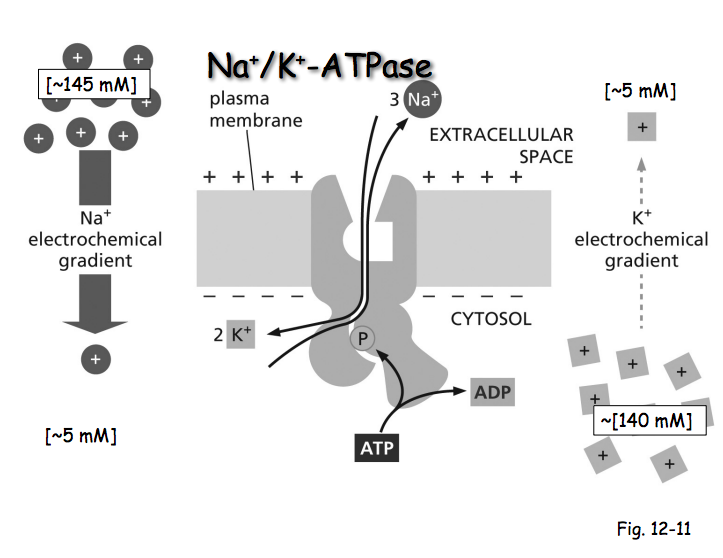
Na+/K+ -ATPase
36
Na+/K+-ATPase does what??
- changes conformation as it
exchanges Na+ for K+
exchanges Na+ for K+
37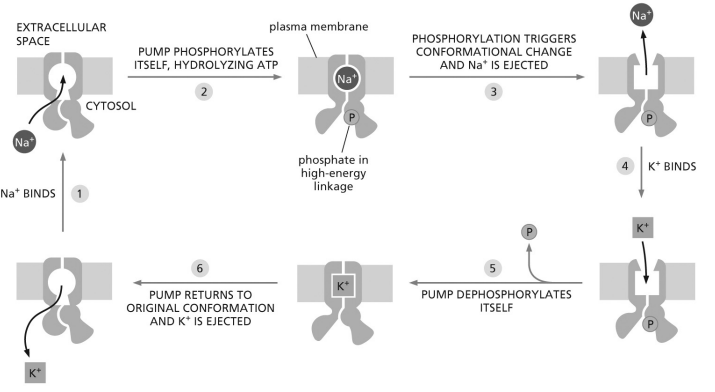
Na+/K+-ATPase changes conformation as it
exchanges Na+ for K+
exchanges Na+ for K+
38
Na+/K+ -ATPase
•Pump is unidirectional; pumps Na+ ions out & K+ ions in
•phosphorylation-induced shape change alters ion
affinity
• If 3 Na+ ions out for every 2 K+ ions in, what does this
do to net charge on each side of the membrane? Na+/K+-ATPase
• As the pump operates, it makes the cell interior
more negative
• electrogenic -- contributes to charge differences
across PM — pump changes shape when autophosphorylated
• establish steep gradients needed for nerve-muscle impulses
• uses 1/3 of most animal cells' energy (2/3 in nerve cells) -100 cycles/sec
•phosphorylation-induced shape change alters ion
affinity
• If 3 Na+ ions out for every 2 K+ ions in, what does this
do to net charge on each side of the membrane? Na+/K+-ATPase
• As the pump operates, it makes the cell interior
more negative
• electrogenic -- contributes to charge differences
across PM — pump changes shape when autophosphorylated
• establish steep gradients needed for nerve-muscle impulses
• uses 1/3 of most animal cells' energy (2/3 in nerve cells) -100 cycles/sec
39
pump trick
— Think of the pump keeping internal Na+ low, (not keeping external high)
• functions like bilge pump on a leaky ship; constantly pumping out Na+ that came in thru channels or carrier proteins
• functions like bilge pump on a leaky ship; constantly pumping out Na+ that came in thru channels or carrier proteins
40
Na+ outside of cell is like water behind a dam. Why?
- gradient can be used to transport other molecules
• Humans have hundreds of different transporters that use this Na+ gradient to move specific molecules against
their concentration gradients
• Humans have hundreds of different transporters that use this Na+ gradient to move specific molecules against
their concentration gradients
41
Transporters Function
can function as uniports, symports, or antiports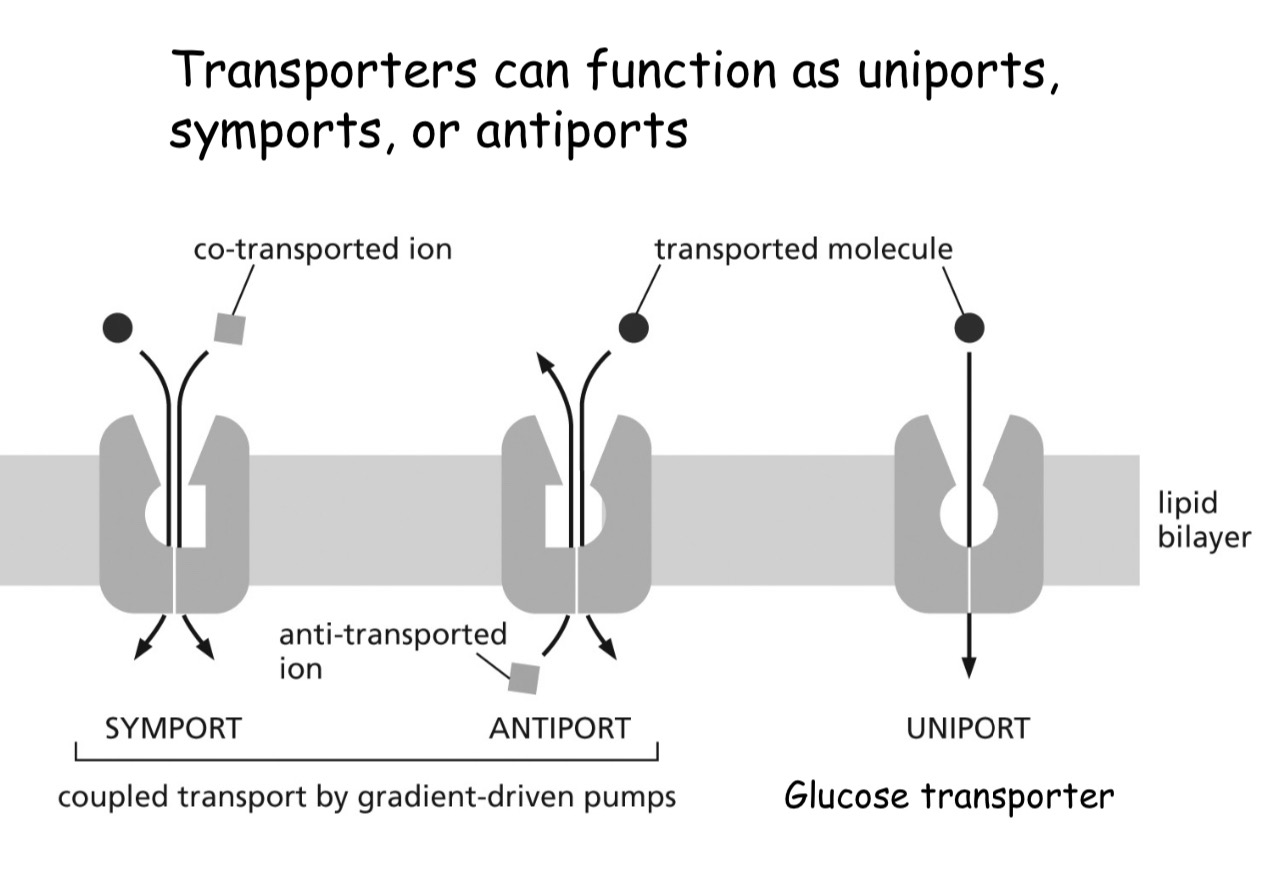
42
3 types of carrier-mediated transport
43
Electrochemical Na+ gradient
drives coupled transporters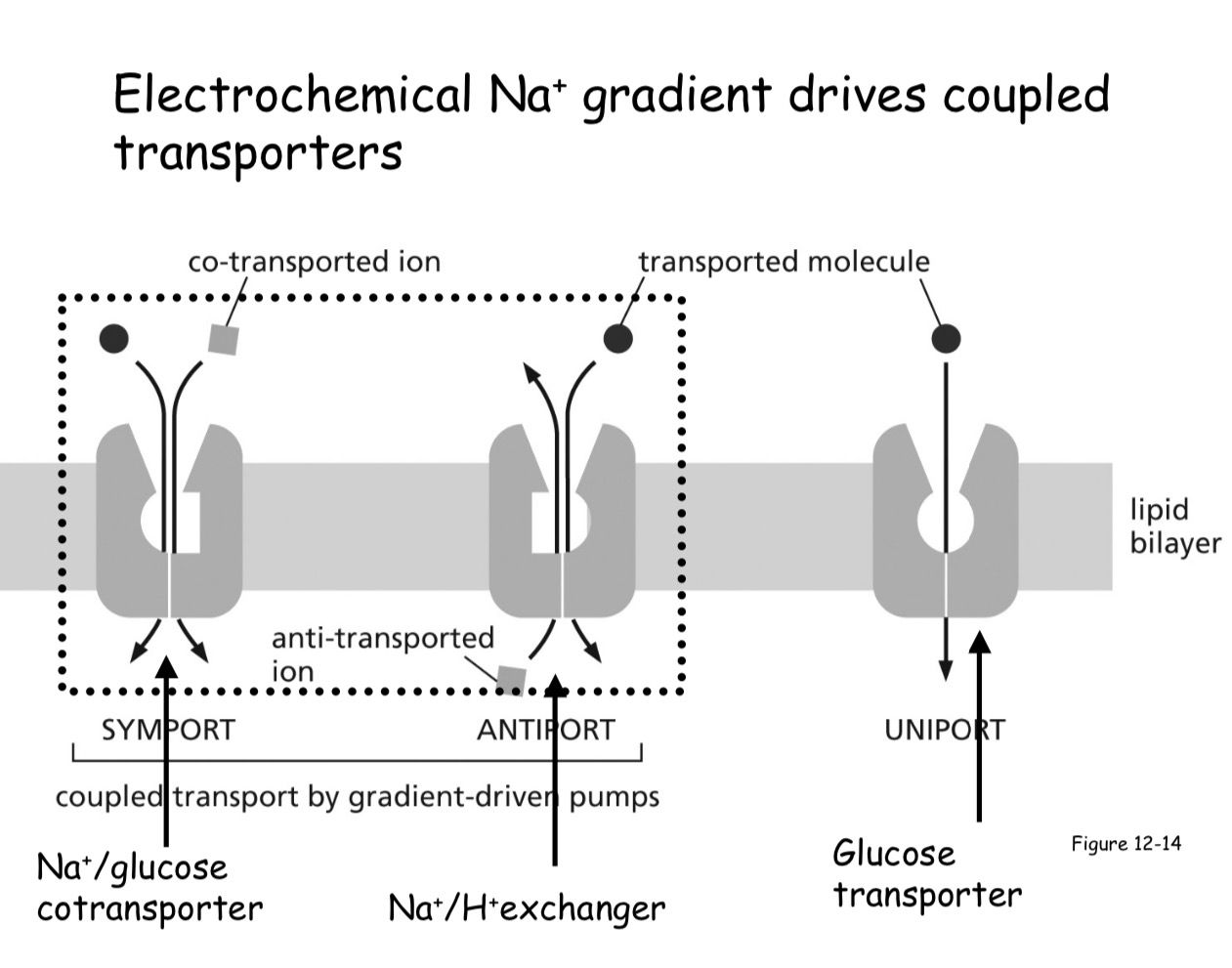
44
Glucose-Na+ symport protein
uses the electrochemical Na+ gradient to drive the import of glucose • Unlikely to close unless entirely empty or entirely full
• Glucose is “dragged” into cell along with N ——— actually 2 Na+ per 1 glucose
• Glucose is “dragged” into cell along with N ——— actually 2 Na+ per 1 glucose
45
Glucose-Na+ symport protein (process)
46
Cotransport:
Coupling active transport to existing ion gradients • Na+ moves glucose up its gradient as Na+ flows down its gradient across apical membrane (2° active transport system)
•Transport protein (Na+lucose cotransporter) binds 2 Na+ ions & 1 glucose molecule on outer apical surface • Movement of 2 moles of Na+ ions into a cell can generate a glucose conc. that is 30,000 times higher inside than out
•Transport protein (Na+lucose cotransporter) binds 2 Na+ ions & 1 glucose molecule on outer apical surface • Movement of 2 moles of Na+ ions into a cell can generate a glucose conc. that is 30,000 times higher inside than out
47
two types of glucose transporters allow gut epithelial cells to transport glucose from intestine to blood (the process)
48
Membrane potentials and nerve impulses
• Nerve cells (neurons) specialized for the transmission of information, which is coded in the form of fast-moving electrical impulses
• electricity in metals is carried by electrons, electricity in aqueous solutions is carried by ions (positive cations and negative anions)
• electricity in metals is carried by electrons, electricity in aqueous solutions is carried by ions (positive cations and negative anions)
49
Membrane Potential
• Thin (<1nm) layer of ions (~ 10 ions-thick)
• When ions of one type cross membrane, charge difference creates membrane potential - If balancing of charges are same on both side of the membrane the potential is = 0
• When ions of one type cross membrane, charge difference creates membrane potential - If balancing of charges are same on both side of the membrane the potential is = 0
50
Membrane potential established largely by
potassium leak channels. •Membrane potential is determined by K+ gradient •Electrochemical gradient for K+ is zero
•In animals resting potential is -20 to -200mV (inside negative) •If a Na+ channel were to open, a new potential would be reached •Membrane potential is determined by state of ion channels and ion concentrations
•In animals resting potential is -20 to -200mV (inside negative) •If a Na+ channel were to open, a new potential would be reached •Membrane potential is determined by state of ion channels and ion concentrations
51
Resting potential
(–) inside cell because:
1. Na+/K+-ATPase pumps more Na+ out than K+ in (10% contribution)
2. K+ ions leak out; excess (+) outside favors K+ remaining inside; balances; (90% contribution)
3. (–) proteins trapped inside
1. Na+/K+-ATPase pumps more Na+ out than K+ in (10% contribution)
2. K+ ions leak out; excess (+) outside favors K+ remaining inside; balances; (90% contribution)
3. (–) proteins trapped inside
52
Nerve Sturcture
53
Resting potential in a neuron
•inside of PM (–) 60-70 mV relative to outside
•magnitude and direction determined by differences in [ion] and permeability
•magnitude and direction determined by differences in [ion] and permeability
54
Squid giant axon
The axon is big, not the squid— so it is not the giant squid axon and you needn’t be afraid
55
squid anatomy
56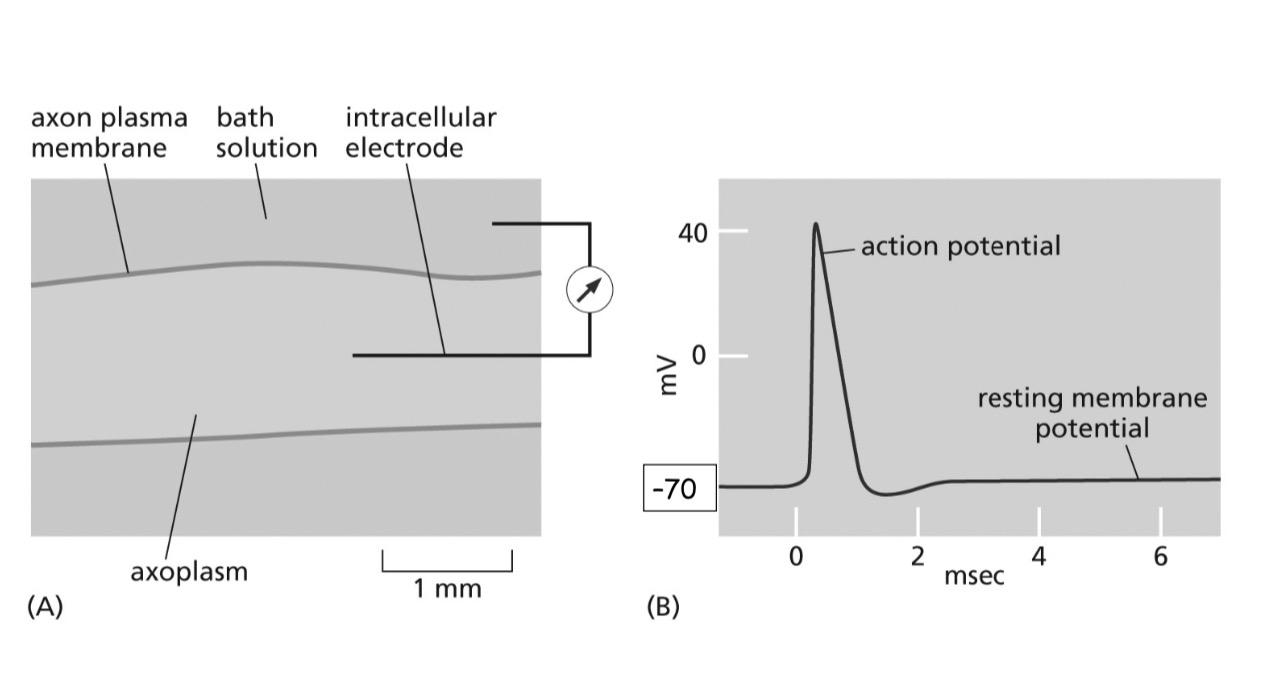
•Learned that of all of the ions in seawater that Na+ and K+ levels needed for an action potential
•resting potential determined by [K+] and height of action potential voltage change determined by extracellular [Na+
•resting potential determined by [K+] and height of action potential voltage change determined by extracellular [Na+
57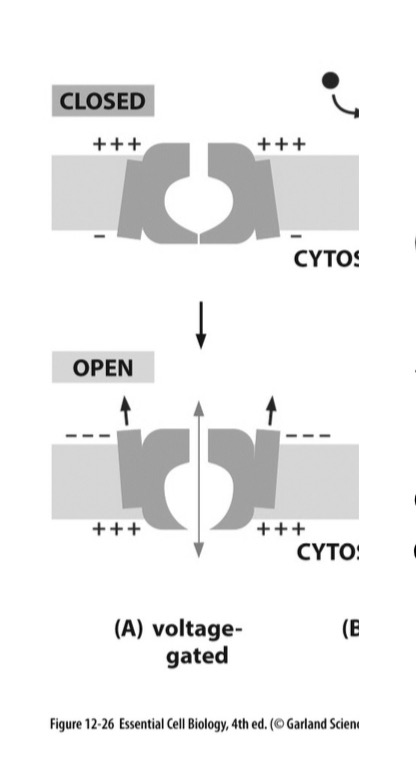
•Resting potential of axon -60-70 mV (neg. inside)
•Voltage-gated sodium channel — opens at -40 mV (so closed in resting axon)
•Voltage-gated potassium channel — opens at +40 mV (so closed in resting axon)
•Voltage-gated sodium channel — opens at -40 mV (so closed in resting axon)
•Voltage-gated potassium channel — opens at +40 mV (so closed in resting axon)
58
Action potential
1. stimulus causes opening of Na+ channels causing depolarization of membrane (gets more (+))
(if small amt, then rapidly returns to resting potential)
2. if depolarization reaches -40 mV threshold, voltage-gated Na+ channels open & Na+ rushes in; depolarization to +40 mV; all-or- none law
3. At +40 mV Na+ stops entering because electrical gradient and conc. gradient balance
4. 1 msec later, Na+ channels inactivated and voltage-gated K+ channels open to let K+ out and -60 mV returns
(if small amt, then rapidly returns to resting potential)
2. if depolarization reaches -40 mV threshold, voltage-gated Na+ channels open & Na+ rushes in; depolarization to +40 mV; all-or- none law
3. At +40 mV Na+ stops entering because electrical gradient and conc. gradient balance
4. 1 msec later, Na+ channels inactivated and voltage-gated K+ channels open to let K+ out and -60 mV returns
59
Action potential propagation and voltage-gated channels
•total % of cell’s ions doesn’t change much
•Internal Na+ is mM, one action potential lets in pM amounts of Na+
•many consecutive action potentials without Na+ /K+ pump requirement
•in a 10 um3 cell 1/100,000 of internal K+ must flow out to change voltage by 100 mV
•Internal Na+ is mM, one action potential lets in pM amounts of Na+
•many consecutive action potentials without Na+ /K+ pump requirement
•in a 10 um3 cell 1/100,000 of internal K+ must flow out to change voltage by 100 mV
60
Movement of action potential along an axon (nerve conduction
•Change in voltage in one part of axon triggers opening of channels in next part of axon
•Does not weaken (decrease in size) as it travels
•Note that it moves one direction. Why?
•Does not weaken (decrease in size) as it travels
•Note that it moves one direction. Why?
61
Voltage-gated Na+ channel can change conformation depending on membrane potential
•At +40 mV even though voltage would keep channel open, it becomes inactivated
•Na+ stops entering cell and channel cannot be reopened initially
•Na+ stops entering cell and channel cannot be reopened initially
62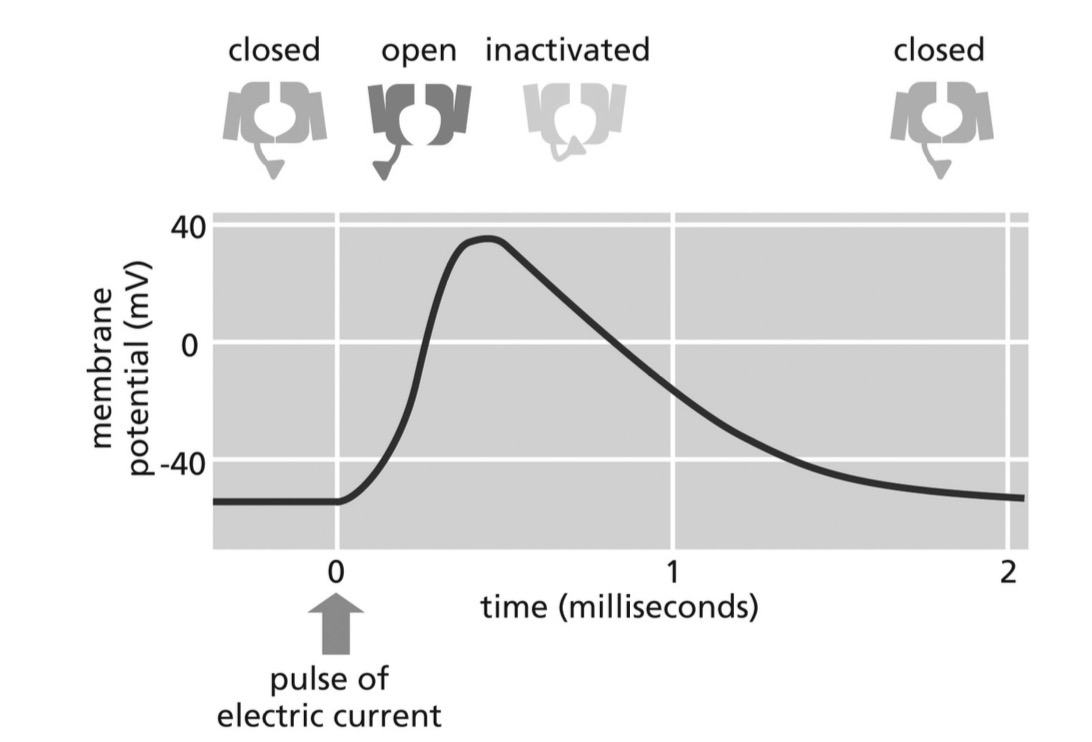
Voltage-gated Na+ channel change conformation during an action potential
63
Propagation of action potential –the nerve impulse
rom onset of action potential to end of refractory period ~2 msec; thus a neuron can produce 100’s per sec.
64
peed of action potential propagation is of the essence:
•the greater the axon diameter, the faster the impulse
•wrapping axon with myelin sheath allows small axons to transmit faster (~20X or more)
•wrapping axon with myelin sheath allows small axons to transmit faster (~20X or more)
65
Node and Action Potential
•action potential at one node triggers next node
•Ion channels are concentrated at nodes
•saltatory conduction
•Ion channels are concentrated at nodes
•saltatory conduction
66
Neurotransmission — jumping the synaptic clef
•neurons are connected to their target cells at junctions called synapses
•presynaptic cells (neuron or sensory cell) and postsynaptic cells (neuron, muscle or gland cell) are separated by a synaptic cleft
•presynaptic cells (neuron or sensory cell) and postsynaptic cells (neuron, muscle or gland cell) are separated by a synaptic cleft
67
Neuromuscular junction
•Voltage-gated Ca++ channels at terminal open to increase cytosolic Ca++
•Increased Ca++ causes synaptic vesicles to fuse with PM •synaptic vesicles contain neurotransmitte
•Increased Ca++ causes synaptic vesicles to fuse with PM •synaptic vesicles contain neurotransmitte
68
Synapse order
electrical -> chemical -> electrical transmission