Module 1-4
Study these flashcardsFree · spaced repetition · iPhone, Android, Mac & web
All cards
1
Operations Managment OM is the art and science of what
Art and science of converting materials and labor into goods and services efficiently.
OM plans, executes and controls the process to create and deliver goods and services to customers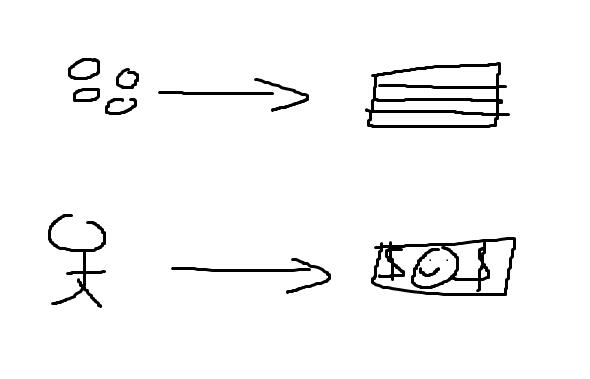
OM plans, executes and controls the process to create and deliver goods and services to customers
2
The principles of OM help one to view a business enterprise as a
________________, in which all activities are coordinated, not only
vertically throughout the organization, but also horizontally across
multiple functional areas.
________________, in which all activities are coordinated, not only
vertically throughout the organization, but also horizontally across
multiple functional areas.
total system
3
the perception of the benefits associated with a
bundle of goods and/or services in relation to what buyers
are willing to pay for them
bundle of goods and/or services in relation to what buyers
are willing to pay for them
Value
4
How do manufcaturing firms and automobile manufacturers create value?
By converting materials and labor into automobiles
5
How do service organizations such as dineyland and sea world create value?
Through intangible, excellent experience
6
How do manufacturing firms and service organizations create value?
By focusing on OM functions and activities
7
Service encounters are defined as
Interations between customer and service provider 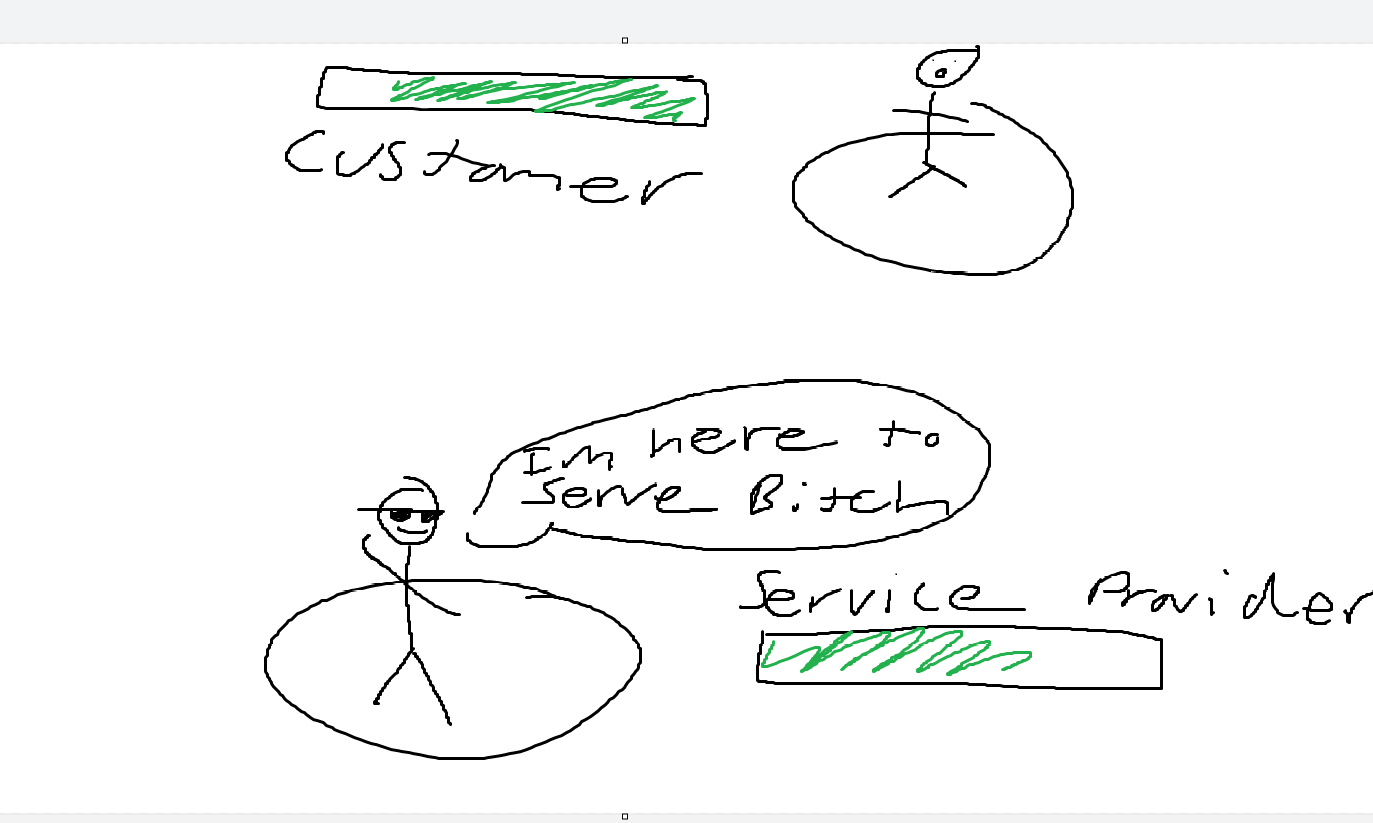
8
What do operations managers do?
Forecasting, planning, purchasing, facility layout and design,
technology selection, quality management, resource and capacity
management, process design, job design, service encounter
design, scheduling, sequencing, training employees, supply chain
management,
technology selection, quality management, resource and capacity
management, process design, job design, service encounter
design, scheduling, sequencing, training employees, supply chain
management,
9
Examples of operations managers
- Chief Operating Officer
• Vice President of Manufacturing
• Hotel or Restaurant Manager
• Casino Pit Manager (Pit Boss)
• Customer Service Manager
• Plant or Factory Manager
• Field Services Manager
• Purchasing and/or Supply Chain Manager
8/26/2024 Keah-Choon Tan | SCM352 Operations Management 5
• Vice President of Manufacturing
• Hotel or Restaurant Manager
• Casino Pit Manager (Pit Boss)
• Customer Service Manager
• Plant or Factory Manager
• Field Services Manager
• Purchasing and/or Supply Chain Manager
8/26/2024 Keah-Choon Tan | SCM352 Operations Management 5
10
• High Customer Expectations
• Evolving Technology → Short Product Life Cycles
• Managing Workforce
• Globalization
• Sustainability
• Optimizing Supply Chains
• Business Analytics
Current Challenges in OM
• High Customer Expectations
• Evolving Technology → Short Product Life Cycles
• Managing Workforce
• Globalization
• Sustainability
• Optimizing Supply Chains
• Business Analytics
11
Good is what
is a physical product that we can see, touch, or possibly
consume
examples: oranges, flowers, soap,
consume
examples: oranges, flowers, soap,
12
Service
Any primary or complementary activity that does
not directly produce a physical product
not directly produce a physical product
13
Standardized goods/services
(make-to-stock goods/services)
Goods/services made to fixed design, and the customer has no options
from which to choose
Goods/services made to fixed design, and the customer has no options
from which to choose
14
Customized goods/services
products that are uniquely designed according to customer specification
15
80-90% of the jobs in the U.S. economy are in the
Service Sector
16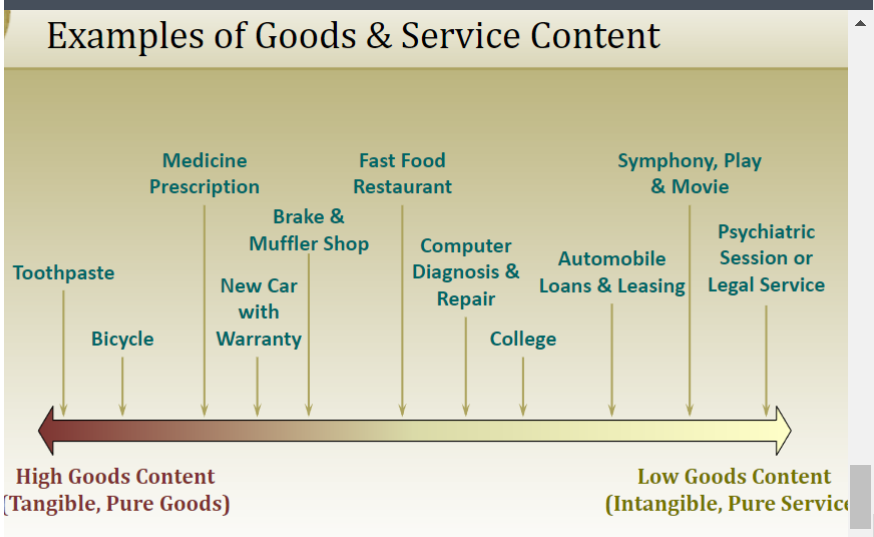
Examples of Goods and Service Content
17
1. Goods and services provide value and satisfaction to customers.
2. They both can be standardized or customized to individual wants and needs.
3. A process creates and delivers each good or service, thus, OM is a critical skill.
Similarities Between Goods and Services
1. Goods and services provide value and satisfaction to customers.
2. They both can be standardized or customized to individual wants and needs.
3. A process creates and delivers each good or service, thus, OM is a critical skill.
18
Differences Between Goods and Services
1. Goods are tangible while services are intangible.
2. Goods can be stored as physical inventory while services can’t be stored.
3. Manufacturers typically are large and can be located anywhere in the world.
4. Customers participate in many service processes, activities, & transactions.
5. The demand for services is more difficult to predict than demand for goods.
6. Service firms typically are small and in proximity to customers.
7. Service management skills are paramount to a successful service encounter.
8. Patents do not protect services.
2. Goods can be stored as physical inventory while services can’t be stored.
3. Manufacturers typically are large and can be located anywhere in the world.
4. Customers participate in many service processes, activities, & transactions.
5. The demand for services is more difficult to predict than demand for goods.
6. Service firms typically are small and in proximity to customers.
7. Service management skills are paramount to a successful service encounter.
8. Patents do not protect services.
19
Supply Chain
is a network of facilities and processes that describes the
flow of goods, services, information, and financial transactions from
suppliers through the facilities and processes that create goods and
services and deliver them to customer
flow of goods, services, information, and financial transactions from
suppliers through the facilities and processes that create goods and
services and deliver them to customer
20
Supply Chain Management
is the management of all activities that
facilitate the fulfillment of a customer order for a manufactured good or
service to achieve satisfied customers at a reasonable cost.
Broadly speaking, SCM includes purchasing, operations management, and
physical distribution of finished goods
facilitate the fulfillment of a customer order for a manufactured good or
service to achieve satisfied customers at a reasonable cost.
Broadly speaking, SCM includes purchasing, operations management, and
physical distribution of finished goods
21
Supply Chain Purpose
The basic purpose of a supply chain is to coordinate the flow of materials,
services, and information along the elements of the supply chain to maximize
customer value
services, and information along the elements of the supply chain to maximize
customer value
22
Dell
sells highly customized computers, servers, computer workstations, and peripherals.
Most computers are assembled based on individual orders through a direct sales model.
Dell’s value chain electronically links customers, suppliers, assembly operations, & shippers
Most computers are assembled based on individual orders through a direct sales model.
Dell’s value chain electronically links customers, suppliers, assembly operations, & shippers
23
Contract Manufacture
Is a firm that specializes in certain types of goods-producing
activities, such as customized design, manufacturing, assembly, and packaging, and works
under contract for end users.
activities, such as customized design, manufacturing, assembly, and packaging, and works
under contract for end users.
24
Electronic manufacturing services (EMS)
is a term used for companies that design, test,
manufacture, distribute, and provide return / repair services for electronic components and
assemblies for original equipment manufacturers (OEMs). Some of the major global EMS
contract manufacturers are Flextronics International Ltd., Solectron, Jabil Circuit, Hon Hai
Precision Industrial, Celestica Inc., and Sanmina-SCI Corporation
manufacture, distribute, and provide return / repair services for electronic components and
assemblies for original equipment manufacturers (OEMs). Some of the major global EMS
contract manufacturers are Flextronics International Ltd., Solectron, Jabil Circuit, Hon Hai
Precision Industrial, Celestica Inc., and Sanmina-SCI Corporation
25
Outsourcing to contract manufacturers
can offer significant competitive advantages, such as
access to advanced manufacturing technologies, faster product time-to-market,
customization of goods in regional markets, and lower total costs resulting from economies of
scale.
access to advanced manufacturing technologies, faster product time-to-market,
customization of goods in regional markets, and lower total costs resulting from economies of
scale.
26
Third-Party Logistics (3PL)
providers provide integrated services that include packaging,
warehousing, inventory management, and inbound/outbound transportation
warehousing, inventory management, and inbound/outbound transportation
27
Sustainability
ability to address current business needs and successfully develop a long-
term strategy to preserve resources for future generations
term strategy to preserve resources for future generations
28
• Economic sustainability focuses on making sound financial and operational decisions such as
financial management, resource management, and emergency preparedness.
• Environmental sustainability focuses on OM activities like remanufacturing, waste management,
green supply chains, and energy conservation.
• Social sustainability focuses on activities that impact the society as a part of the firm’s overall
corporate responsibilities, such as creating a zero carbon footprint product, product safety, gambling
addiction, & second-hand smoke
Sustainability – Three Dimensions
• Economic sustainability focuses on making sound financial and operational decisions such as
financial management, resource management, and emergency preparedness.
• Environmental sustainability focuses on OM activities like remanufacturing, waste management,
green supply chains, and energy conservation.
• Social sustainability focuses on activities that impact the society as a part of the firm’s overall
corporate responsibilities, such as creating a zero carbon footprint product, product safety, gambling
addiction, & second-hand smoke
29
• Financial Measures – sales, profit, ROA, EPS
• Customer and Market – market shares, customer satisfaction
• Quality – product recalls, defects/million, number of warranty repairs
• Time – (speed & variability) average delivery time, cycle time, tardiness
• Flexibility – design flexibility, volume flexibility, changeover time
• Innovation – new products development rates, patents, staff turnover
• Sustainability – toxic waste discharge rate, workplace safety violations
Types and Examples of Performance Measures
• Financial Measures – sales, profit, ROA, EPS
• Customer and Market – market shares, customer satisfaction
• Quality – product recalls, defects/million, number of warranty repairs
• Time – (speed & variability) average delivery time, cycle time, tardiness
• Flexibility – design flexibility, volume flexibility, changeover time
• Innovation – new products development rates, patents, staff turnover
• Sustainability – toxic waste discharge rate, workplace safety violations
30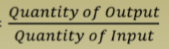
Productiviity formula
31
What is VLC
Quantifies the total revenue of a customer over his life cycle
32
VLC formula
(P)(CM)(RF)(BLC)
P = Revenue per Unit
CM = Contribution margin (percent)
RF = repurchase frequent = # of purchases per year
BLC = buyers life cycle = 1/defection rate = 1/ (1- retention rate)
P = Revenue per Unit
CM = Contribution margin (percent)
RF = repurchase frequent = # of purchases per year
BLC = buyers life cycle = 1/defection rate = 1/ (1- retention rate)
33
Competitive Advantage
Is the strategic superiority of a firm over its
competitors. A firm’s core competencies contribute to its competitive
advantage that allows it to outperform competitors. Competitive
advantage is not easily duplicated
competitors. A firm’s core competencies contribute to its competitive
advantage that allows it to outperform competitors. Competitive
advantage is not easily duplicated
34
Competitive priority
is the strategic focus that a firm choose to achieve
competitive advantage
competitive advantage
35
Order Qualifiers & Order Winners
• Order Qualifiers: Basic performance expectations of customers. Meeting or
exceeding performance on an order qualifier is not a competitive advantage.
• Order Winners: A performance characteristic that customers use to
differentiate the products and/or services of a firm from its competitors
exceeding performance on an order qualifier is not a competitive advantage.
• Order Winners: A performance characteristic that customers use to
differentiate the products and/or services of a firm from its competitors
36
Search attributes are?
the characteristics of a good or service that a
customer can determine prior to purchase. Supermarket food,
furniture, clothing, and automobiles are high in search attributes.
• Examples of these attributes are color, price, freshness, style, fit, feel,
hardness, and smell
customer can determine prior to purchase. Supermarket food,
furniture, clothing, and automobiles are high in search attributes.
• Examples of these attributes are color, price, freshness, style, fit, feel,
hardness, and smell
37
Experience attributes
are the characteristics that can be determined
only after purchase or during consumption.
• Examples of these attributes are friendliness, taste, wearability, safety,
fun, and customer satisfaction
only after purchase or during consumption.
• Examples of these attributes are friendliness, taste, wearability, safety,
fun, and customer satisfaction
38
Competitive Priorities, three main ones
1.Cost Leadership – high volumes of standardized products by taking
advantage of economies of scale and learning curve effects
2.Differentiation – creating a unique product or service in terms of
• Quality
• Time
• Flexibility
• Innovation
3.Focus Strategy – focus on a niche market segment
advantage of economies of scale and learning curve effects
2.Differentiation – creating a unique product or service in terms of
• Quality
• Time
• Flexibility
• Innovation
3.Focus Strategy – focus on a niche market segment
39
Hard Technology
Refers to equipment and devices that perform a variety
of tasks in the creation and delivery of goods and services
of tasks in the creation and delivery of goods and services
40
Soft Technology
Refers to the application of software and information
systems in the creating and delivery of goods and services
systems in the creating and delivery of goods and services
41
RFID tags are
tiny computer chips that transmit radio signals and can
be mounted on packages or shipping containers to help organizations
identify product locations and movement
be mounted on packages or shipping containers to help organizations
identify product locations and movement
42
Push System
produces goods in advance of customer demand using a forecast of
sales and moves them through supply chain to points of sale where they are stored
as finished goods inventory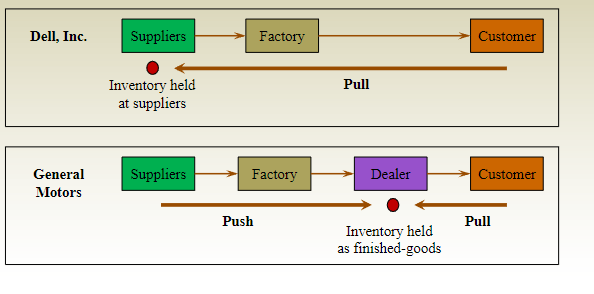
sales and moves them through supply chain to points of sale where they are stored
as finished goods inventory
43
Pull System
produces only what is needed at upstream stages in the supply chain
in response to demand signals from downstream stages. JIT is a pull system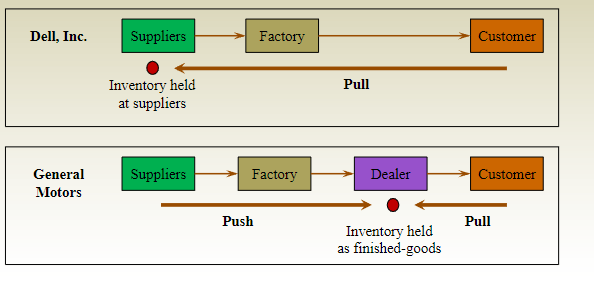
in response to demand signals from downstream stages. JIT is a pull system
44
Postponement
Is the process of delaying product customization until the product is
closer to the customer at the end of the supply chain
- An example is a global manufacturer of electronic printers that would manufacture
printers without the power assembly and maintain inventories of printers at the
distribution centers. When orders arrive, the power assembly (110/220 volts and type of
adapters depending on regional requirement) can be installed and shipped quickly. This
would reduce inventory requirements.
closer to the customer at the end of the supply chain
- An example is a global manufacturer of electronic printers that would manufacture
printers without the power assembly and maintain inventories of printers at the
distribution centers. When orders arrive, the power assembly (110/220 volts and type of
adapters depending on regional requirement) can be installed and shipped quickly. This
would reduce inventory requirements.
45
Multisite management
is the process of managing geographically dispersed
service-providing facilities
• McDonald's Corporation has over 30,000 stores in 121 countries.
• Bank of America has over 16,000 ATMs and 5,700 branch banks in the United States.
• Federal Express operates over one million drop-off mailboxes in 215 countries.
• Supply chains are vital to the operation of multisite management organizations.
service-providing facilities
• McDonald's Corporation has over 30,000 stores in 121 countries.
• Bank of America has over 16,000 ATMs and 5,700 branch banks in the United States.
• Federal Express operates over one million drop-off mailboxes in 215 countries.
• Supply chains are vital to the operation of multisite management organizations.
46
Reverse logistics
refers to managing the flow of finished goods, materials, or
components that may be unusable or discarded through the supply chain from
customers toward either suppliers, distributors or manufacturers for the purpose of
reuse, resale, or disposal
components that may be unusable or discarded through the supply chain from
customers toward either suppliers, distributors or manufacturers for the purpose of
reuse, resale, or disposal
47
Offshoring
Is the building, acquiring, or moving of process capabilities
from a domestic location to another country while maintaining
ownership and control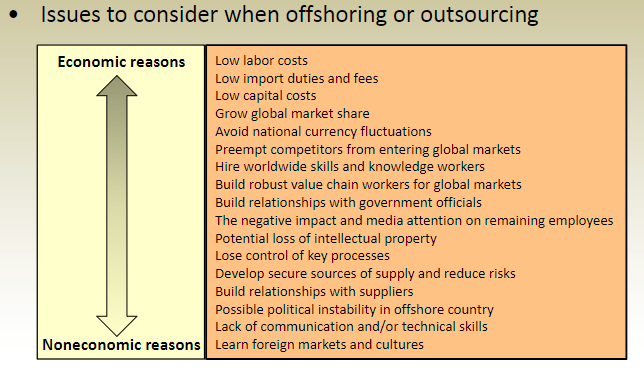
from a domestic location to another country while maintaining
ownership and control
48
Bullwhip effect. How does it work.
The bullwhip effect results from order amplification in the supply chain: a
phenomenon that occurs when each member of a supply chain “orders up” to
buffer its own inventory
phenomenon that occurs when each member of a supply chain “orders up” to
buffer its own inventory
49
Factors contributing to the bullwhip effect include
Large lot sizes, long lead time,
and lack of demand information (uncertainty)
and lack of demand information (uncertainty)
50
How to counter bullwhip?
Many firms counteract this phenomenon by modifying the supply chain
infrastructure and operational processes. The time lags associated with
information and material flow cause a mismatch between actual customer
demand and the supply chain’s ability to satisfy that demand as each component
of the supply chain seeks to manage its operations from its own perspective.
infrastructure and operational processes. The time lags associated with
information and material flow cause a mismatch between actual customer
demand and the supply chain’s ability to satisfy that demand as each component
of the supply chain seeks to manage its operations from its own perspective.
51
Vertical Integration
Refers to the process of acquiring and consolidating
elements of a value chain to achieve more control
elements of a value chain to achieve more control
52
Backward (upstream) integration
Refers to acquiring capabilities at the
front-end of the supply chain (e.g., suppliers)
front-end of the supply chain (e.g., suppliers)
53
Forward (downstream) integration
Refers to acquiring capabilities
toward the back-end of the supply chain (e.g., distribution, customers)
toward the back-end of the supply chain (e.g., distribution, customers)
54
What is Oursourcing?
Is the process of having suppliers provide goods and
services that were previously provided internally
services that were previously provided internally
55
Outsourcing is the opposite of?
Is the opposite of vertical integration in the sense that the
organization is shedding (not acquiring) a part of its organization.
organization is shedding (not acquiring) a part of its organization.
56
Location decisions can...
have a profound effect on supply chain performance and
a firms’ competitive advantage.
a firms’ competitive advantage.
57
Location decisions in supply and value chains are based on both
• economic (facility costs, operating costs, and transportation costs) and
• non-economic (labor availability, legal and political factors, community) factors.
• non-economic (labor availability, legal and political factors, community) factors.
58
Four basic decisions(location):
• global (nation) location
• regional location
• community location
• local site location
• regional location
• community location
• local site location
59
What is Center of Gravity Method
• The center of gravity method determines the X and Y coordinates for a facility.
• Takes into account locations, demand, and transportation costs to arrive at the “best”
location. However, it ignores some crucial qualitative factors.
• Takes into account locations, demand, and transportation costs to arrive at the “best”
location. However, it ignores some crucial qualitative factors.