Module 1 Practice
Study these flashcardsFree · spaced repetition · iPhone, Android, Mac & web
All cards
1
What is operations managment
is the art and science of
converting materials and labor into goods and services efficiently.
OM plans, executes and controls the process to create and deliver
goods and services to customers
converting materials and labor into goods and services efficiently.
OM plans, executes and controls the process to create and deliver
goods and services to customers
2
What business is operations management essential to
1. Manufacturing firms
2. service organizations
2. service organizations
3
Explain total system
The principles of OM help one to view a business enterprise as a
total system, in which all activities are coordinated, not only
vertically throughout the organization, but also horizontally across
multiple functional areas.
total system, in which all activities are coordinated, not only
vertically throughout the organization, but also horizontally across
multiple functional areas.
4
What is Value?
is the perception of the benefits associated with a
bundle of goods and/or services in relation to what buyers
are willing to pay for them
bundle of goods and/or services in relation to what buyers
are willing to pay for them
5
How do automobile manufacturers create value in the context of OM?
by converting materials and labor into automobiles
6
How does disneyland or sea world create value?
by providing excellent (though intangible) theme park
experience for customers
experience for customers
7
Define Service Encounters
the interactions between
customer and service provider
customer and service provider
8
List, What do operations managers do
OM Activities & Careers
• Forecasting, planning, purchasing, facility layout and design,
technology selection, quality management, resource and capacity
management, process design, job design, service encounter
design, scheduling, sequencing, training employees, supply chain
management, and etc.
• Forecasting, planning, purchasing, facility layout and design,
technology selection, quality management, resource and capacity
management, process design, job design, service encounter
design, scheduling, sequencing, training employees, supply chain
management, and etc.
9
What are Examples of operations managers
Chief Operating Officer
• Vice President of Manufacturing
• Hotel or Restaurant Manager
• Casino Pit Manager (Pit Boss)
• Customer Service Manager
• Plant or Factory Manager
• Field Services Manager
• Purchasing and/or Supply Chain Manager
• Vice President of Manufacturing
• Hotel or Restaurant Manager
• Casino Pit Manager (Pit Boss)
• Customer Service Manager
• Plant or Factory Manager
• Field Services Manager
• Purchasing and/or Supply Chain Manager
10
Seven Era of Operations Managment and when
Cost and Efficiency - 1960s
Quality - 1970s
Customization and Design - 1980s
Time - 1990s
Service and Value- mid 1990s
Sustainability - 2000s
Data and Analytics - 2010s to present
Quality - 1970s
Customization and Design - 1980s
Time - 1990s
Service and Value- mid 1990s
Sustainability - 2000s
Data and Analytics - 2010s to present
11
Major goal changes overtime
Cost minimization ----------------------> Sustainability
Mass production (economies of scale) -> Mass customization
Manufacturing-based technology ------>Information-based technology
Focus on goods ------------------------> Focus on value and analytics
Local markets --------------------------> Global markets
Mass production (economies of scale) -> Mass customization
Manufacturing-based technology ------>Information-based technology
Focus on goods ------------------------> Focus on value and analytics
Local markets --------------------------> Global markets
12
Current Challenges in OM
High Customer Expectations
• Evolving Technology → Short Product Life Cycles
• Managing Workforce
• Globalization
• Sustainability
• Optimizing Supply Chains
• Business Analytics
• Evolving Technology → Short Product Life Cycles
• Managing Workforce
• Globalization
• Sustainability
• Optimizing Supply Chains
• Business Analytics
13
a "good" is
Is a physical product that we can see, touch, or possibly
Examples: oranges, flowers, soap
Examples: oranges, flowers, soap
14
a "service" is
Is any primary or complementary activity that does
not directly produce a physical product
Examples: legal service,
accounting service, travel by air or bus
not directly produce a physical product
Examples: legal service,
accounting service, travel by air or bus
15
a "Standardized good/service" is
Goods/services made to fixed design, and the customer has no options
from which to choose
from which to choose
16
Customized Goods/Services
roducts that are uniquely designed according to customer specification
17
What percent of jobs are in the service sector?
80-90%
18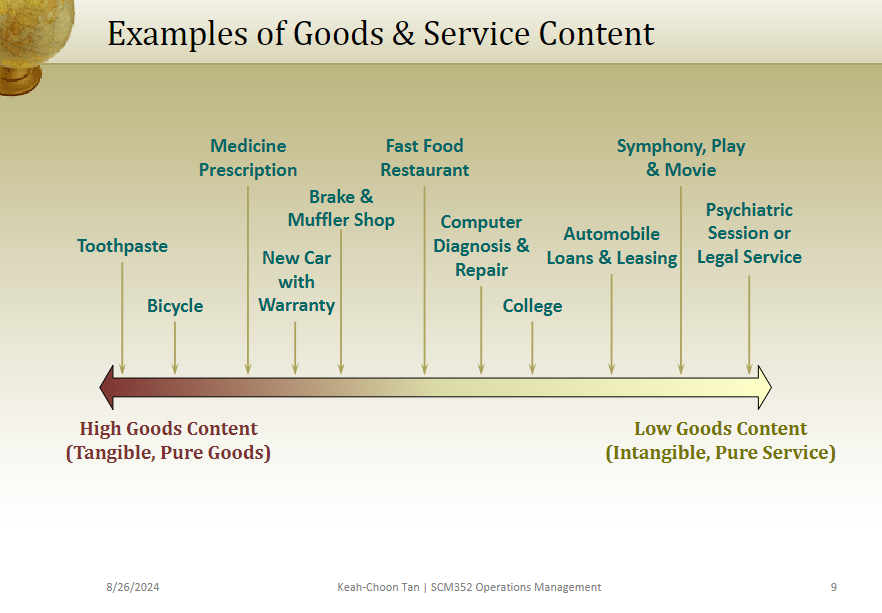
High Good Content vs Low Good Content
19
Similarities Between Goods and Services
1. Goods and services provide value and satisfaction to customers.
2. They both can be standardized or customized to individual wants and needs.
3. A process creates and delivers each good or service, thus, OM is a critical skill.
2. They both can be standardized or customized to individual wants and needs.
3. A process creates and delivers each good or service, thus, OM is a critical skill.
20
Differences Between Goods and Services
1. Goods are tangible while services are intangible.
2. Goods can be stored as physical inventory while services can’t be stored.
3. Manufacturers typically are large and can be located anywhere in the world.
4. Customers participate in many service processes, activities, & transactions.
5. The demand for services is more difficult to predict than demand for goods.
6. Service firms typically are small and in proximity to customers.
7. Service management skills are paramount to a successful service encounter.
8. Patents do not protect services.
2. Goods can be stored as physical inventory while services can’t be stored.
3. Manufacturers typically are large and can be located anywhere in the world.
4. Customers participate in many service processes, activities, & transactions.
5. The demand for services is more difficult to predict than demand for goods.
6. Service firms typically are small and in proximity to customers.
7. Service management skills are paramount to a successful service encounter.
8. Patents do not protect services.
21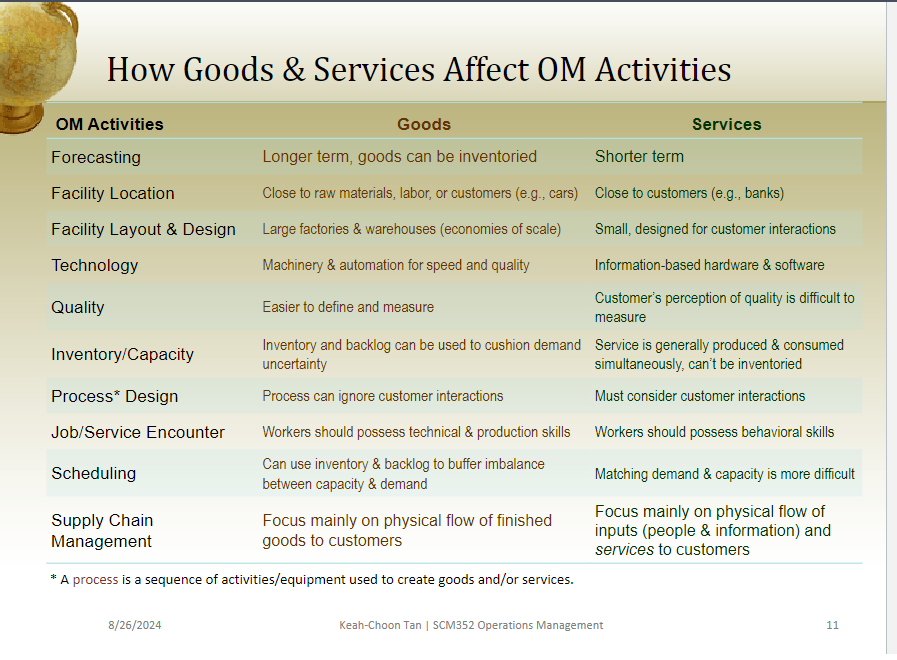
How Goods & Services Affect OM Activities
22
Supply Chain
A supply chain is a network of facilities and processes that describes the
flow of goods, services, information, and financial transactions from
suppliers through the facilities and processes that create goods and
services and deliver them to customer.
flow of goods, services, information, and financial transactions from
suppliers through the facilities and processes that create goods and
services and deliver them to customer.
23
Supply chain management
is the management of all activities that
facilitate the fulfillment of a customer order for a manufactured good or
service to achieve satisfied customers at a reasonable cost.
facilitate the fulfillment of a customer order for a manufactured good or
service to achieve satisfied customers at a reasonable cost.
24
Supply Chain Purpose
The basic purpose of a supply chain is to coordinate the flow of materials,
services, and information along the elements of the supply chain to maximize
customer value.
services, and information along the elements of the supply chain to maximize
customer value.
25
Major Activities of Supply Chain Management
Purchasing/Sourcing
• Supplier Development, Evaluation, and Certification
• Operations Management/Transformation
• Physical Distribution and Warehousing (Logistics)
• Inventory Management
• Risk Management
• Measuring Supply Chain Performance
• Ensuring Sustainability
• Supplier Development, Evaluation, and Certification
• Operations Management/Transformation
• Physical Distribution and Warehousing (Logistics)
• Inventory Management
• Risk Management
• Measuring Supply Chain Performance
• Ensuring Sustainability
26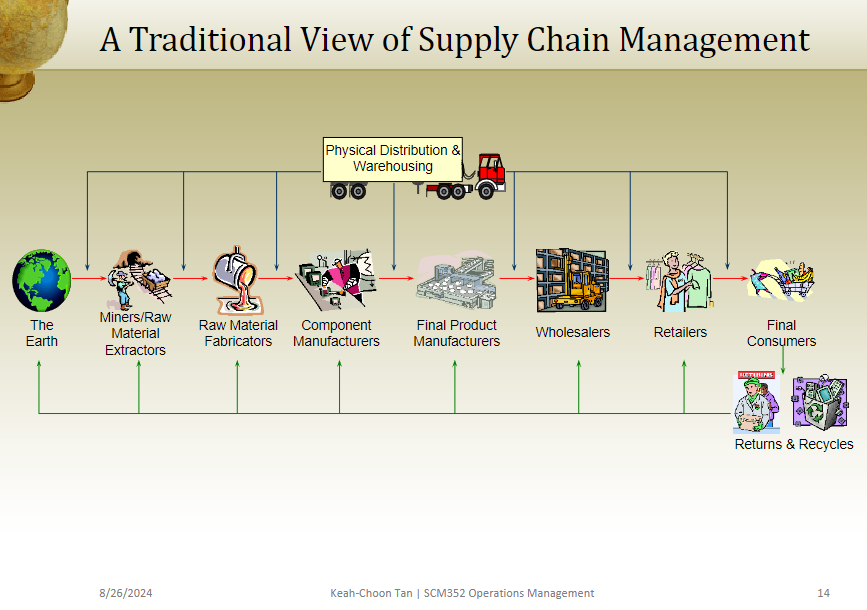
A Traditional View of Supply Chain Management
27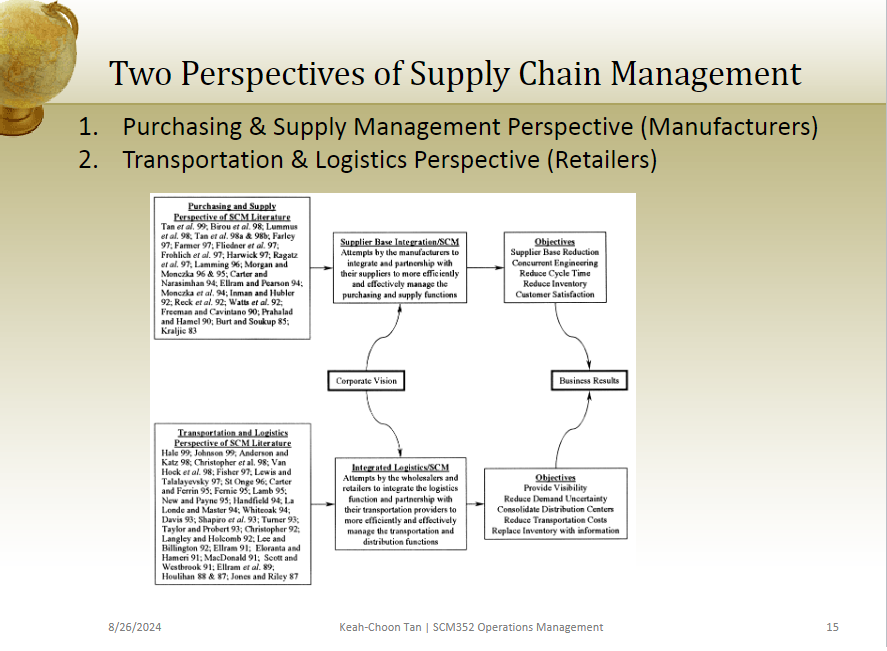
Two Perspectives of Supply Chain Management
28
Dell
sells highly customized computers, servers, computer workstations, and peripherals.
Most computers are assembled based on individual orders through a direct sales model.
Dell’s value chain electronically links customers, suppliers, assembly operations, & shippers
Most computers are assembled based on individual orders through a direct sales model.
Dell’s value chain electronically links customers, suppliers, assembly operations, & shippers
29
contract manufacturer
is a firm that specializes in certain types of goods-producing
activities, such as customized design, manufacturing, assembly, and packaging, and works
under contract for end users.
activities, such as customized design, manufacturing, assembly, and packaging, and works
under contract for end users.
30
Electronic manufacturing services (EMS)
is a term used for companies that design, test, manufacture, distribute, and provide return / repair services for electronic components and assemblies for original equipment manufacturers (OEMs). Some of the major global EMS contract manufacturers are Flextronics International Ltd., Solectron, Jabil Circuit, Hon Hai Precision Industrial, Celestica Inc., and Sanmina-SCI Corporation
31
Outsourcing to contract manufacturers
can offer significant competitive advantages, such as
access to advanced manufacturing technologies, faster product time-to-market,
customization of goods in regional markets, and lower total costs resulting from economies of
scale
access to advanced manufacturing technologies, faster product time-to-market,
customization of goods in regional markets, and lower total costs resulting from economies of
scale
32
Third-Party Logistics (3PL)
providers provide integrated services that include packaging,
warehousing, inventory management, and inbound/outbound transportation
warehousing, inventory management, and inbound/outbound transportation
33
Five Modes of Transportation
1.Air
• Speed is the major advantage, but expensive
2. Rail
• Railroads have handled the largest number of ton-miles in the US
• Efficient for handling large tonnage over long distances
3. Motor (Road)
• Very flexible, handle door-to-door delivery
4. Water
• Oldest mode of transportation, can handle extremely large shipments
• Ranked between rail and motor in terms of fixed cost
5. Pipelines
• Handle ~ 70% of all crude and petroleum ton-mile movements
• Extremely high fixed cost, though low variable cost to operate
• Multimodal
• Speed is the major advantage, but expensive
2. Rail
• Railroads have handled the largest number of ton-miles in the US
• Efficient for handling large tonnage over long distances
3. Motor (Road)
• Very flexible, handle door-to-door delivery
4. Water
• Oldest mode of transportation, can handle extremely large shipments
• Ranked between rail and motor in terms of fixed cost
5. Pipelines
• Handle ~ 70% of all crude and petroleum ton-mile movements
• Extremely high fixed cost, though low variable cost to operate
• Multimodal
34
Sustainability
ability to address current business needs and successfully develop a long-
term strategy to preserve resources for future generations
term strategy to preserve resources for future generations
35
Sustainability – Three Dimensions
Economic sustainability focuses on making sound financial and operational decisions such as
financial management, resource management, and emergency preparedness.
• Environmental sustainability focuses on OM activities like remanufacturing, waste management,
green supply chains, and energy conservation.
• Social sustainability focuses on activities that impact the society as a part of the firm’s overall
corporate responsibilities, such as creating a zero carbon footprint product, product safety, gambling
addiction, & second-hand smoke.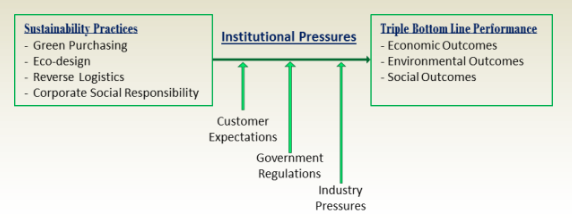
financial management, resource management, and emergency preparedness.
• Environmental sustainability focuses on OM activities like remanufacturing, waste management,
green supply chains, and energy conservation.
• Social sustainability focuses on activities that impact the society as a part of the firm’s overall
corporate responsibilities, such as creating a zero carbon footprint product, product safety, gambling
addiction, & second-hand smoke.
36
SCOR Model is a framework for analyzing SCM scope based on five basic functions:
1. Plan: developing a strategy that balances resources with requirements.
2. Source: procuring goods and services to meet planned or actual demand.
3. Make: transforming goods and services to a finished state to meet demand.
4. Deliver: managing orders, transportation, and distribution.
5. Return: customer returns, maintenance, dealing with excess goods
2. Source: procuring goods and services to meet planned or actual demand.
3. Make: transforming goods and services to a finished state to meet demand.
4. Deliver: managing orders, transportation, and distribution.
5. Return: customer returns, maintenance, dealing with excess goods
37
stopped at 20 so go over 20