GCSE Edexcel Physics 11 - Static Electricity
Study these flashcardsFree · spaced repetition · iPhone, Android, Mac & web
All cards
1
What type of objects can be electrically charged by friction?
Insulators such as plastic or polythene rod
2
Explain how an insulator gains charge when it is rubbed
When it is rubbed, electrons are transferred to or from the insulator.
If electrons transfer to the insulator, it gains a negative charge
If electrons transfer from the insulator, it gains a positive charge
If electrons transfer to the insulator, it gains a negative charge
If electrons transfer from the insulator, it gains a positive charge
3
What happens when a polyethene rod is rubbed with cloth?
Electrons are transferred from the polythene rod to the cloth
The polythene rod gains a positive charge
The cloth gains an equal and opposite/negative charge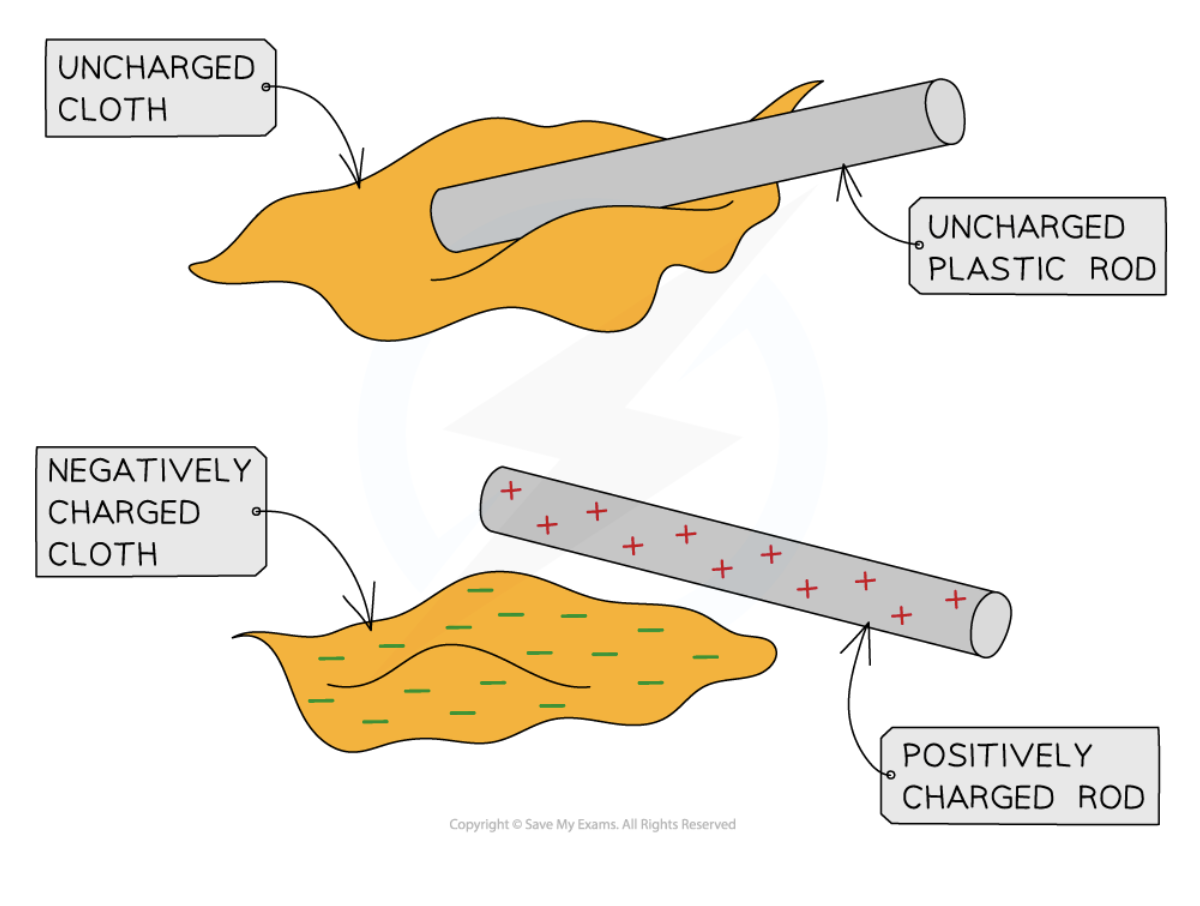
The polythene rod gains a positive charge
The cloth gains an equal and opposite/negative charge
4
What charge do all objects have initially, why?
Neutral as they have the same number of positive and negative charges (protons and electrons)
5
Objects with opposite charges will…
Attract
6
Objects with the same charges will…
Repel
7
Two positively charged objects will…
Repel
8
Two negatively charged objects will…
Repel
9
A positively charged object and a negatively charged object will
Attract
10
Why can the buildup of electric charge be dangerous?
It can cause sparking/electric shock/small current
11
When does electric sparking/electric shocks occur?
Two objects charged by friction
Become oppositely charged
And the large number of electrons cause some electrons to ‘jump’ across a neutral object
(Remember that the flow of electrons is a current)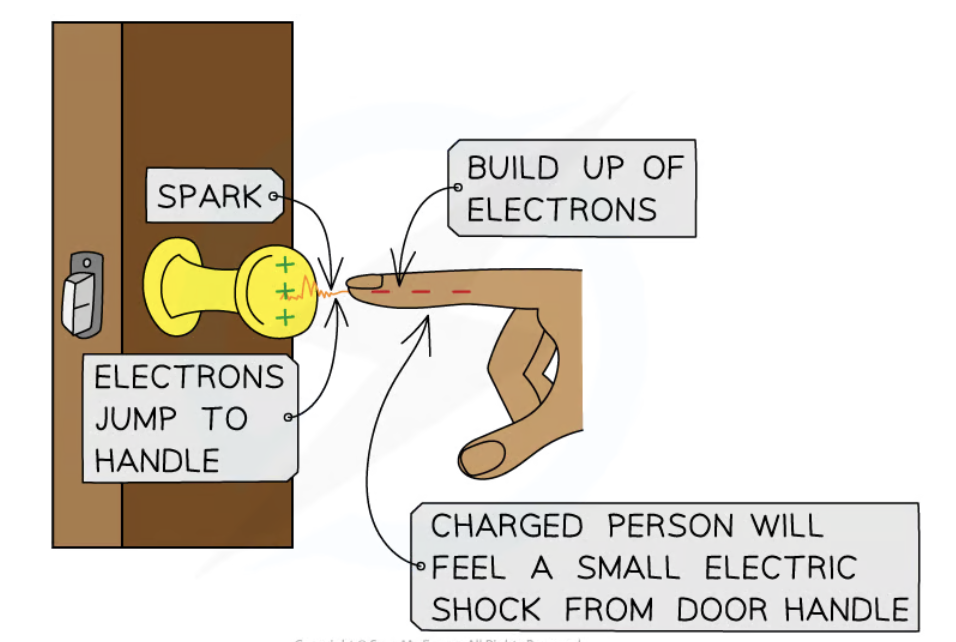
Become oppositely charged
And the large number of electrons cause some electrons to ‘jump’ across a neutral object
(Remember that the flow of electrons is a current)
12
How is it possible for someone to get an electric shock from every day objects?
After walking on a carpet in rubber shoes or socks (insulators),
Friction causes electrons to be transferred to a person causing them to be negatively charged.
When the person gets close to a positively charged object
Electrons can jump to the object and cause an electric shock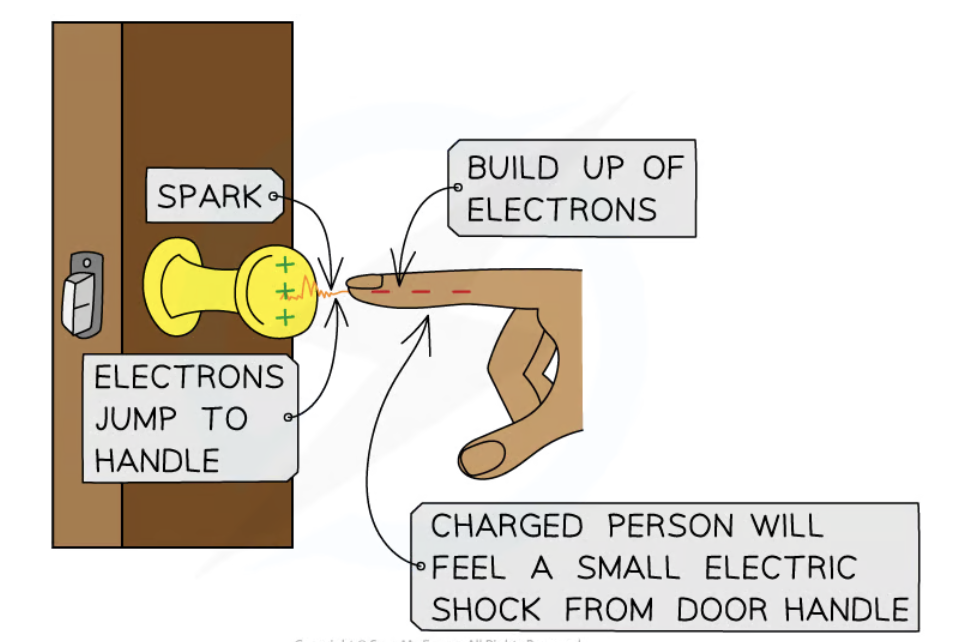
Friction causes electrons to be transferred to a person causing them to be negatively charged.
When the person gets close to a positively charged object
Electrons can jump to the object and cause an electric shock
13
How is it possible for someone to get an electric shock from other people?
After walking on a carpet in rubber shoes or socks (insulators),
Friction causes electrons to be transferred to a person causing them to be negatively charged.
When the person gets close to another person (who is neutral)
Electrons can jump to the person and cause an electric shock
[Diagram]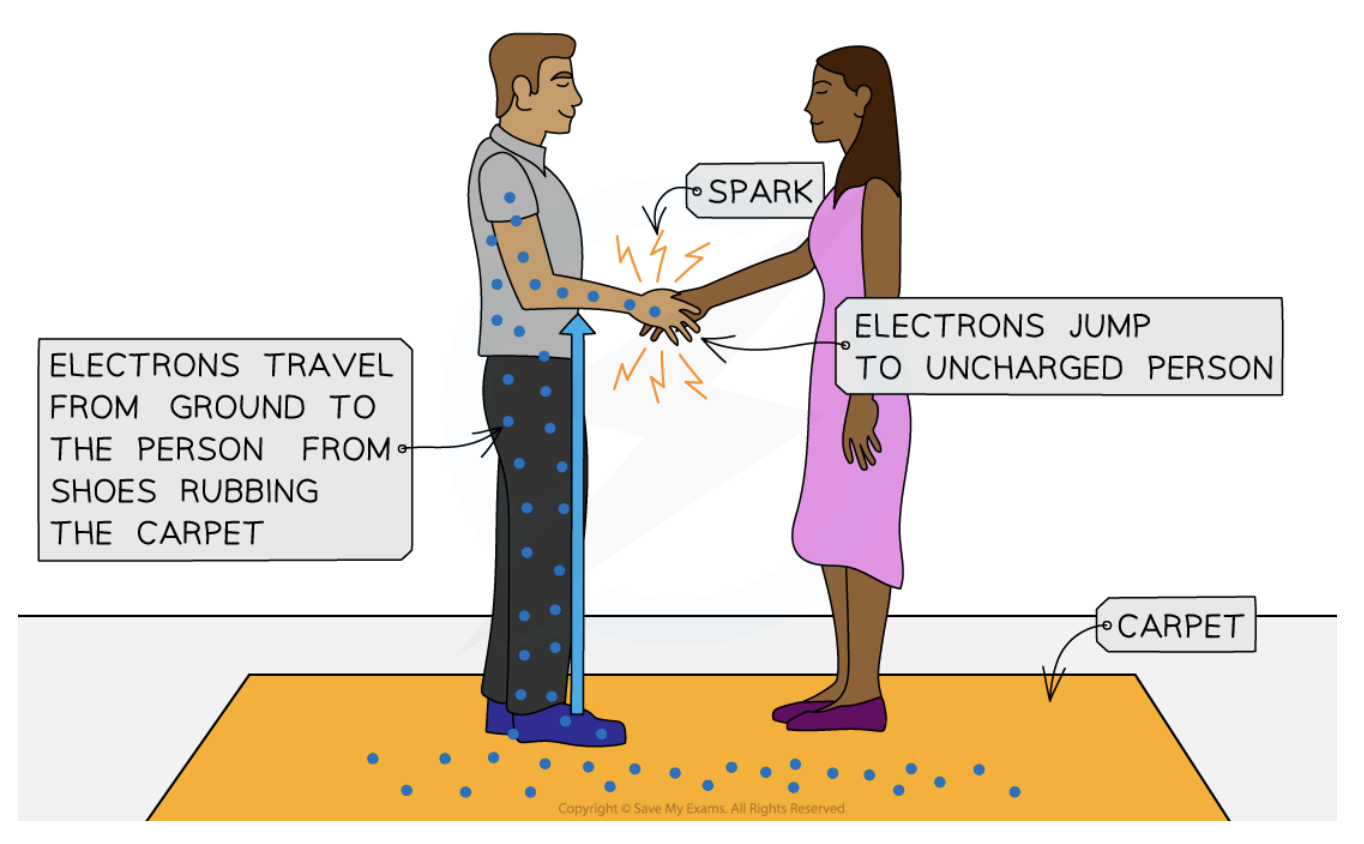
Friction causes electrons to be transferred to a person causing them to be negatively charged.
When the person gets close to another person (who is neutral)
Electrons can jump to the person and cause an electric shock
[Diagram]
14
What happens when a negatively charged object is brought closer to a neutral object?
Electrons in the neutral object are repelled, leaving one side of the object positively charged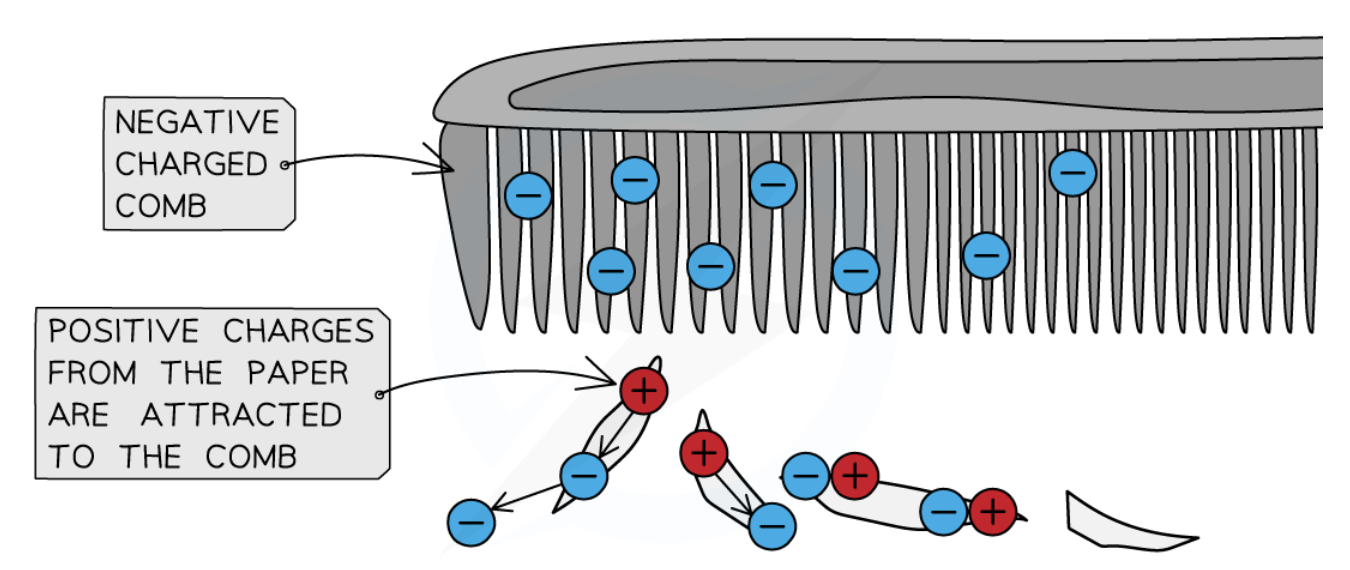
15
How do clouds become charged?
When clouds move over each other, friction causes electrons to be transferred between them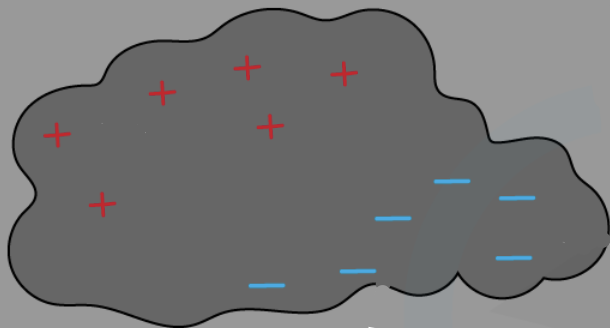
16
Explain how lightning is produced between charged clouds and the neutral ground
A negatively charged cloud induces a positive charge on the ground
Difference in charges causes an electric field
The field causes electrons to travel from the cloud to the ground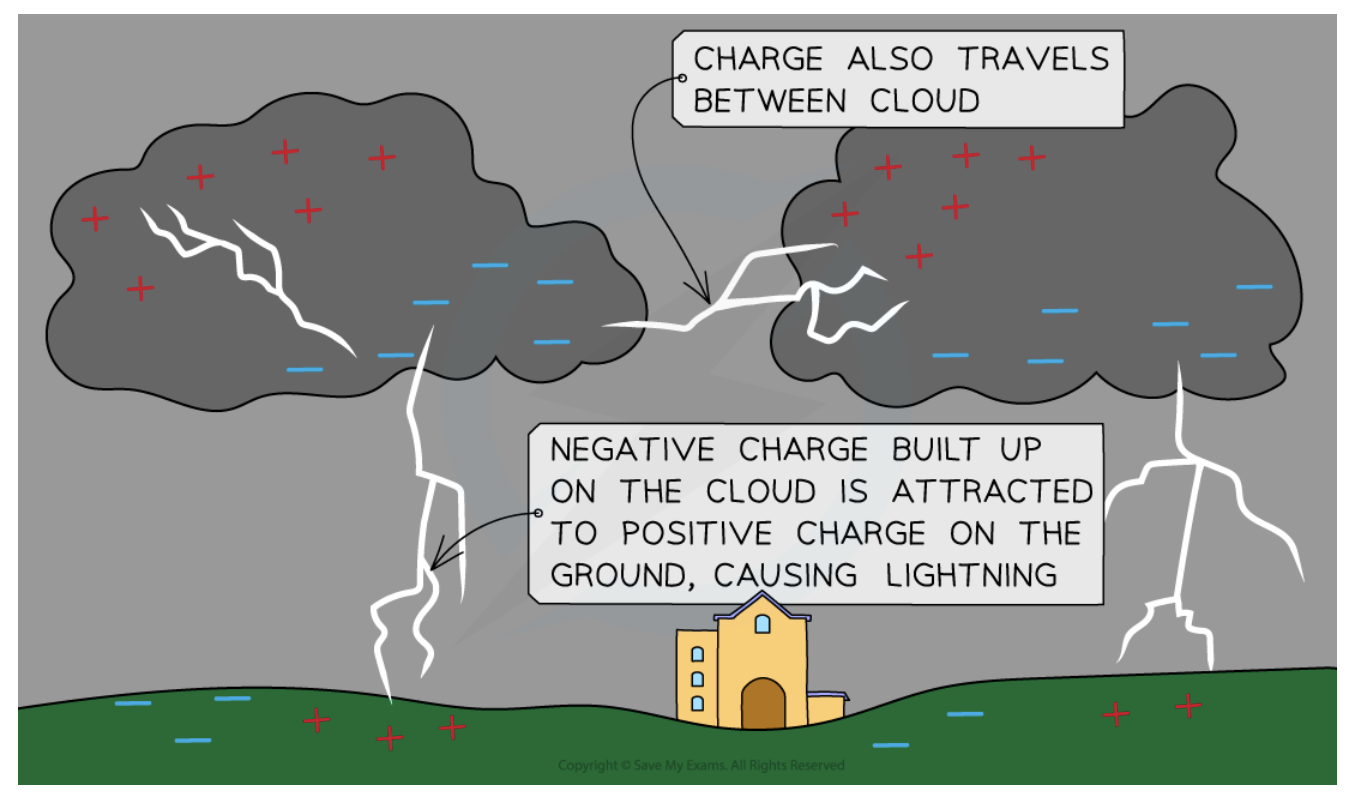
Difference in charges causes an electric field
The field causes electrons to travel from the cloud to the ground
17
Explain how a balloon is able to stick to a wall after being rubbed against a jumper
Friction causes electrons to be transferred from the jumper to the balloon
The balloon is negatively charged and the jumper is positively charged
The wall is neutral but as the balloon get closer, electrons in the wall are repelled by the balloon
Leaving a region of the wall with a positive charge
Opposite charges attract and the balloon stick to the wall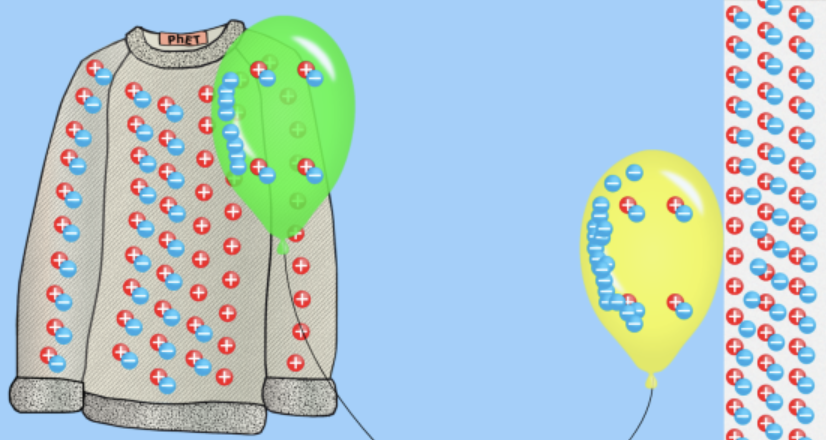
The balloon is negatively charged and the jumper is positively charged
The wall is neutral but as the balloon get closer, electrons in the wall are repelled by the balloon
Leaving a region of the wall with a positive charge
Opposite charges attract and the balloon stick to the wall
18
Explain how a plastic comb can pick up small pieces of paper
When comb is used in hair, friction causes electrons to be transferred from hair to comb
Comb becomes negatively charged, hair becomes positively charged (and strands of hair can start to repel each other)
Paper pieces are neutral, but when comb comes close, electrons in the paper are repelled
Leaving surface of paper positively charged
Opposite charges attract so paper pieces stick to the comb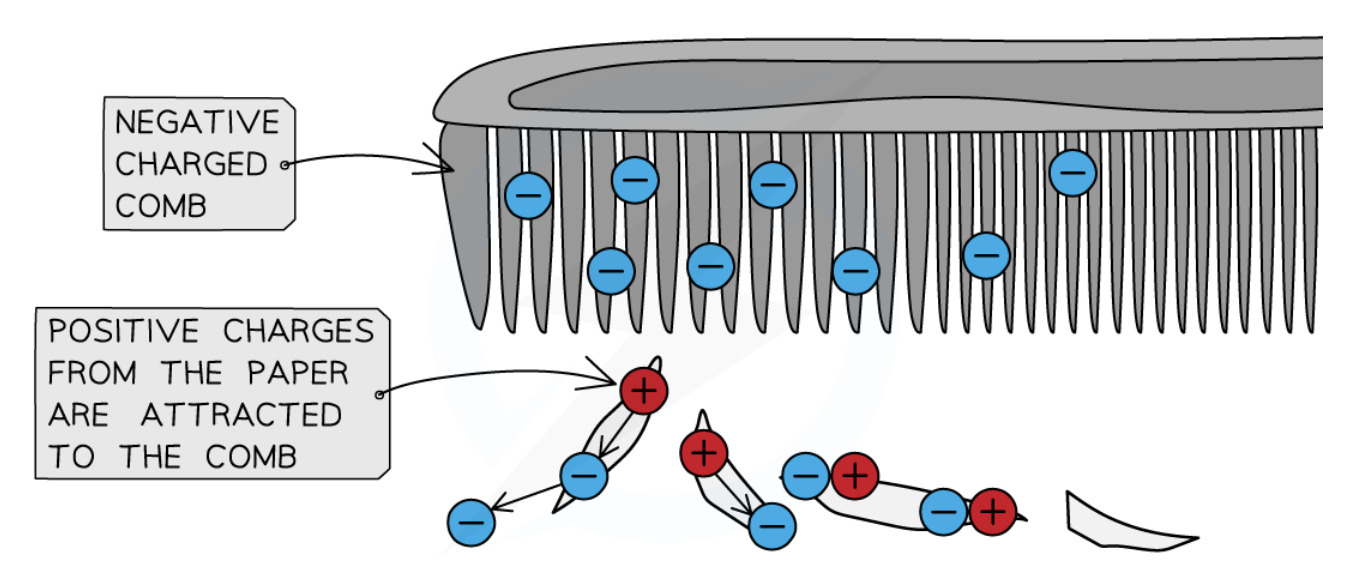
Comb becomes negatively charged, hair becomes positively charged (and strands of hair can start to repel each other)
Paper pieces are neutral, but when comb comes close, electrons in the paper are repelled
Leaving surface of paper positively charged
Opposite charges attract so paper pieces stick to the comb
19
What is earthing (or grounding)?
Process of removing excess charge from a charged object to prevent sparking
20
How do you earth an object?
Connect the charged object to the Earth using a conductor (like a wire)
21
(Earthing) Why is a conductor used to connect charged objects to the Earth?
Charge can flow through the conductor
22
What happens when a negatively charged object is earthed?
Negatively charged object has surplus electrons
The electrons repel
And travel down the conductor (away from the object)
The object becomes neutral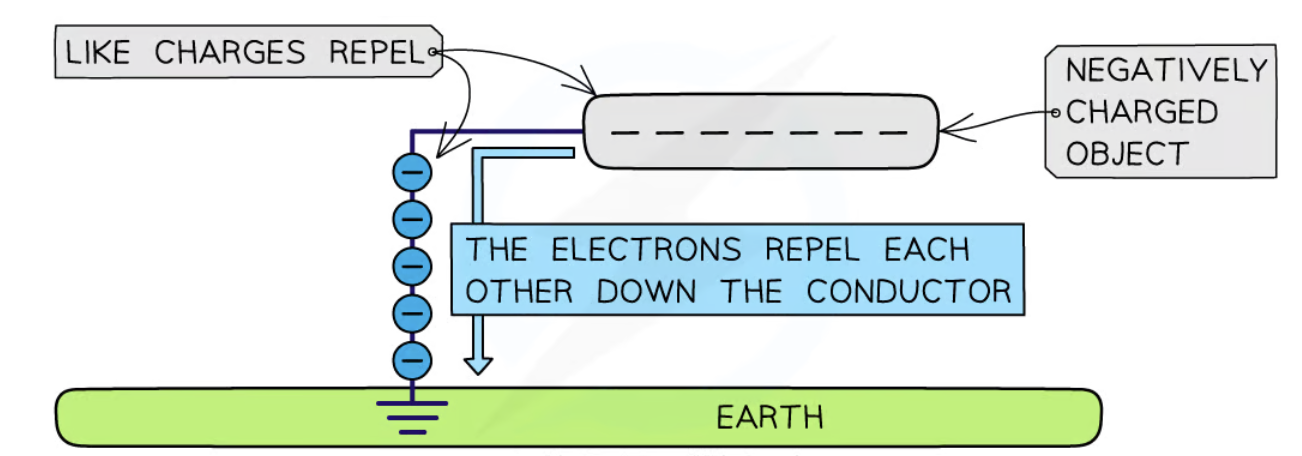
The electrons repel
And travel down the conductor (away from the object)
The object becomes neutral
23
What happens when a positively charged object is earthed?
Positively charged object has less electrons
Opposite charges attract
So electrons travel up the conductor (towards the object)
The object becomes neutral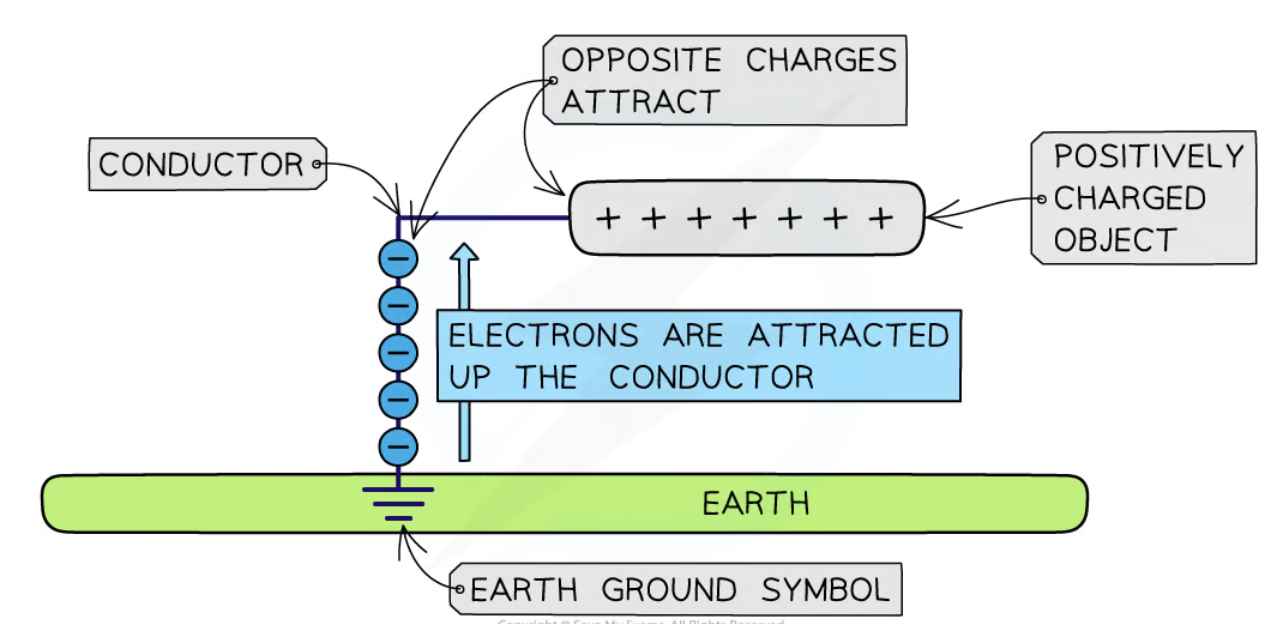
Opposite charges attract
So electrons travel up the conductor (towards the object)
The object becomes neutral
24
How is static electricity used in insecticide/paint sprayers to deliver a fine mist that covers a large area?
The sprayer nozzle removes electrons from the paint drops
Giving the paint drops a positive charge
Like charges repel
So paint drops spread out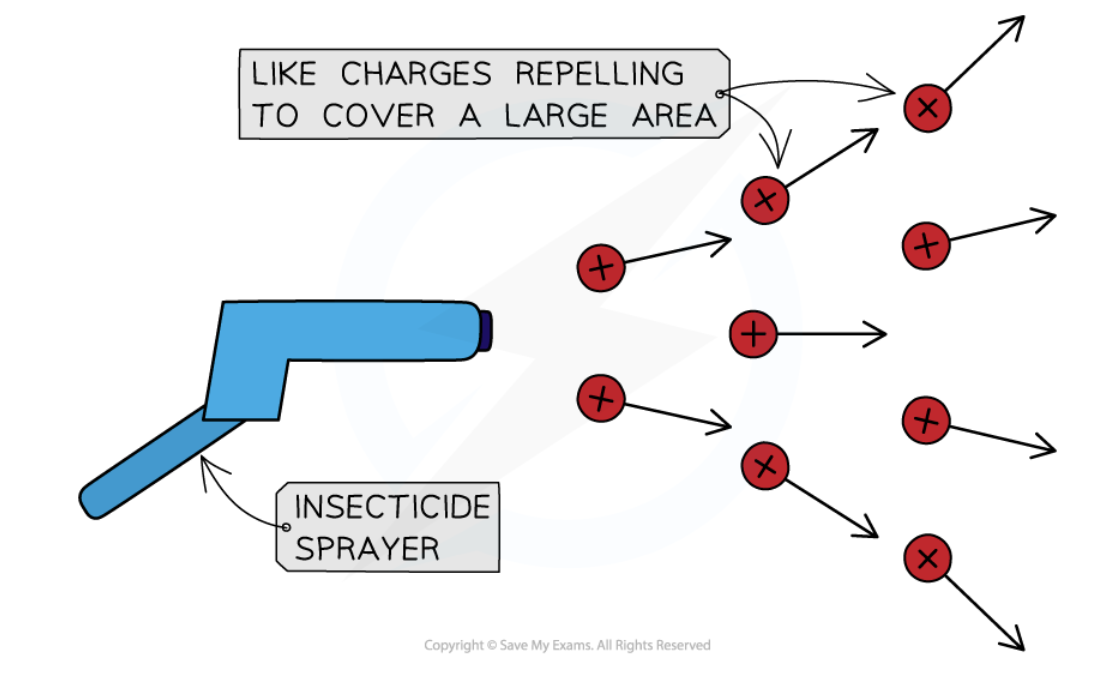
Giving the paint drops a positive charge
Like charges repel
So paint drops spread out
25
Why do insecticide/paint sprayers have to be earthed with a conductor?
The nozzle/sprayer gains a negative charge
Which can cause sparking
The conductor allows electrons to travel down the conductor (away from the object)
So the sprayer does not give the user an electric shock
Which can cause sparking
The conductor allows electrons to travel down the conductor (away from the object)
So the sprayer does not give the user an electric shock
26
How can static charge build up when refuelling a plane, and why is it dangerous?
The friction between the fuel and pipe causes them to gain charge
Fuel is very flammable
If the build up of charge caused sparking, fuel would ignite (potentially causing an explosion)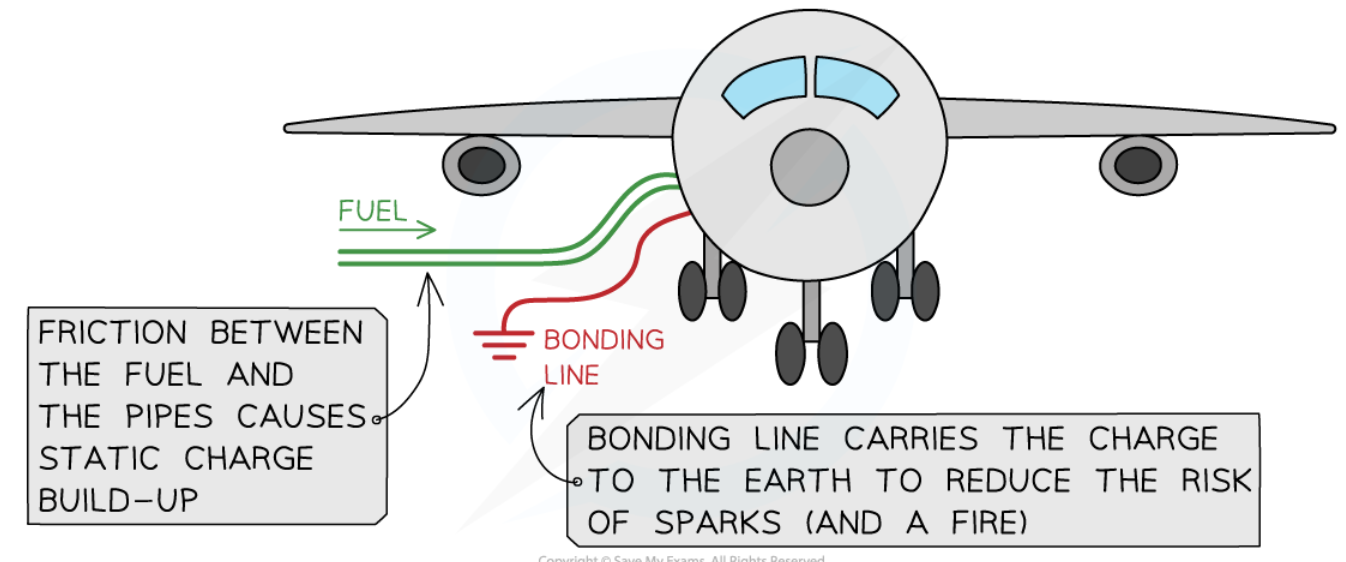
Fuel is very flammable
If the build up of charge caused sparking, fuel would ignite (potentially causing an explosion)
27
How is static charge build up prevented when refuelling a plane?
The fuel tank of the plane is connected to the earth with a wire (conductor)
This earths the plane and reduces the risk of sparking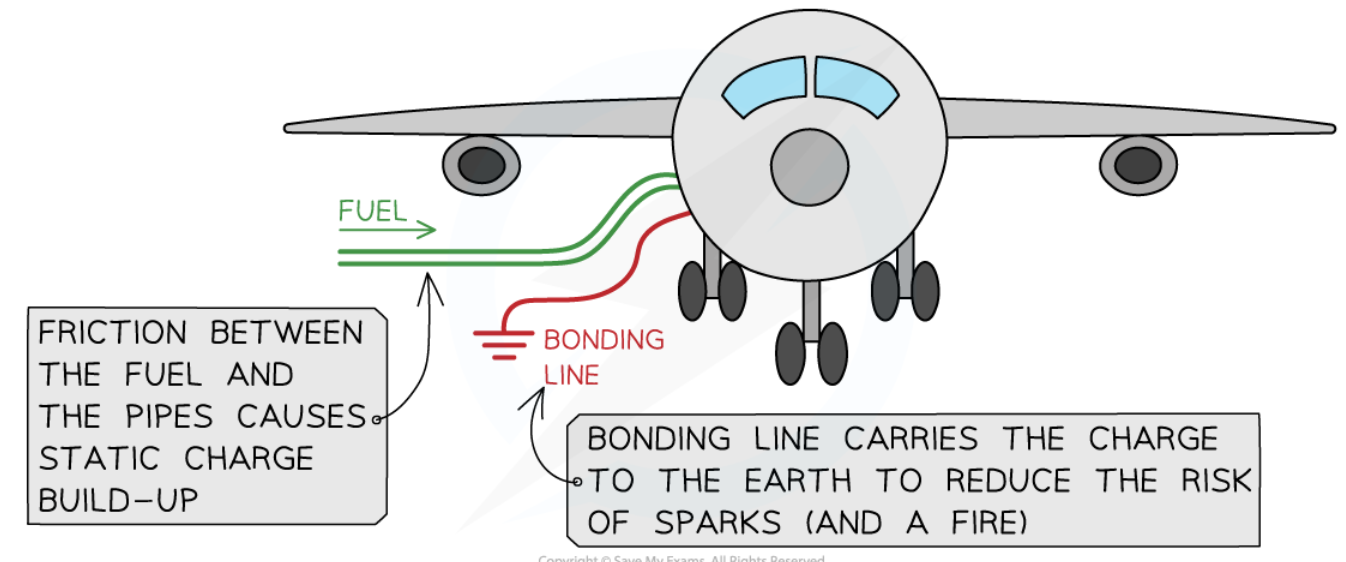
This earths the plane and reduces the risk of sparking
28
What is an electric field?
A region where an electric charge experiences a force
29
Shape of electric field around a positive point charge
Straight field lines going outwards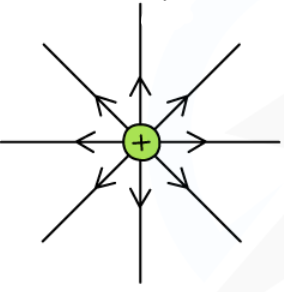
30
Shape of electric field around a negative point charge
Straight field lines going inwards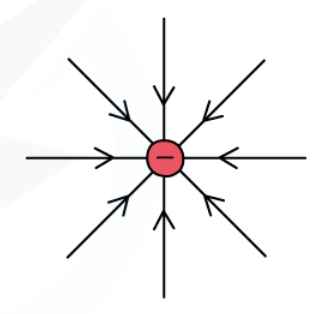
31
Shape of electric field around two oppositely charged spheres
Field lines going from positive to negative charge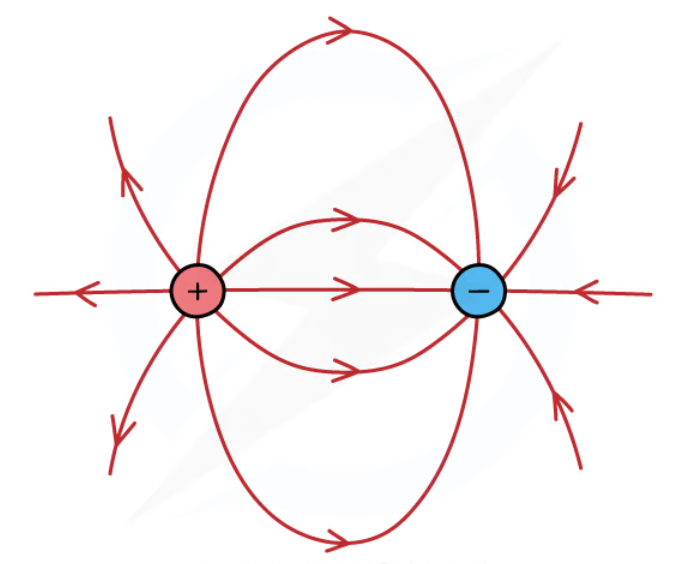
32
Shape of electric field between parallel plates
Uniform field
Straight parallel lines going from positive plate to negative plate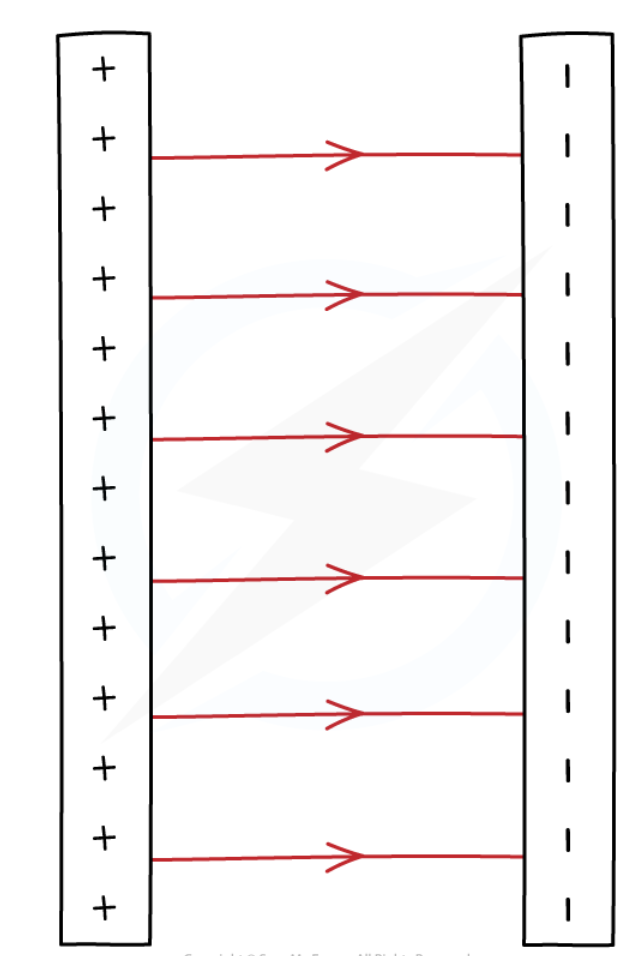
Straight parallel lines going from positive plate to negative plate
33
How is the strength of an electric field represented with electric field lines?
Lines closer together = stronger field
Lines further apart = weaker field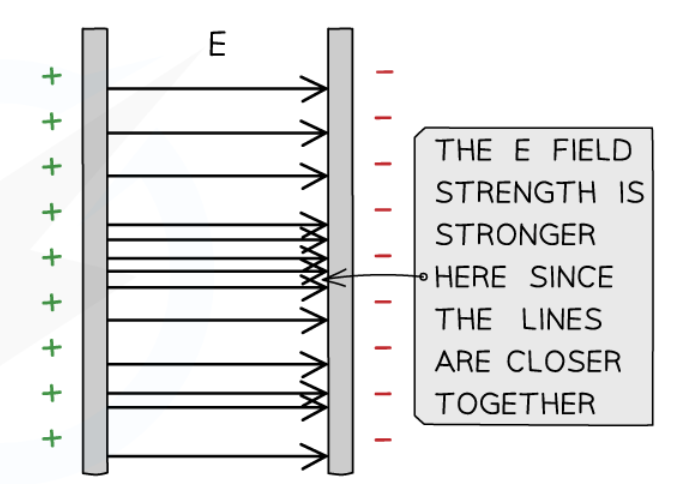
Lines further apart = weaker field
34
How does the strength of an electric field change around a point charge?
The greater the distance, the weaker the electric field
The smaller the distance, the stronger the electric field
(Look at how far apart field lines are closer and further away from the point charge)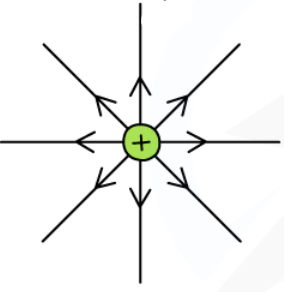
The smaller the distance, the stronger the electric field
(Look at how far apart field lines are closer and further away from the point charge)
35
How does the strength of an electric field change in a uniform field (between parallel plates)?
It doesn’t
Strength of electric field is the same at all points
Electric field lines are same distance apart at all points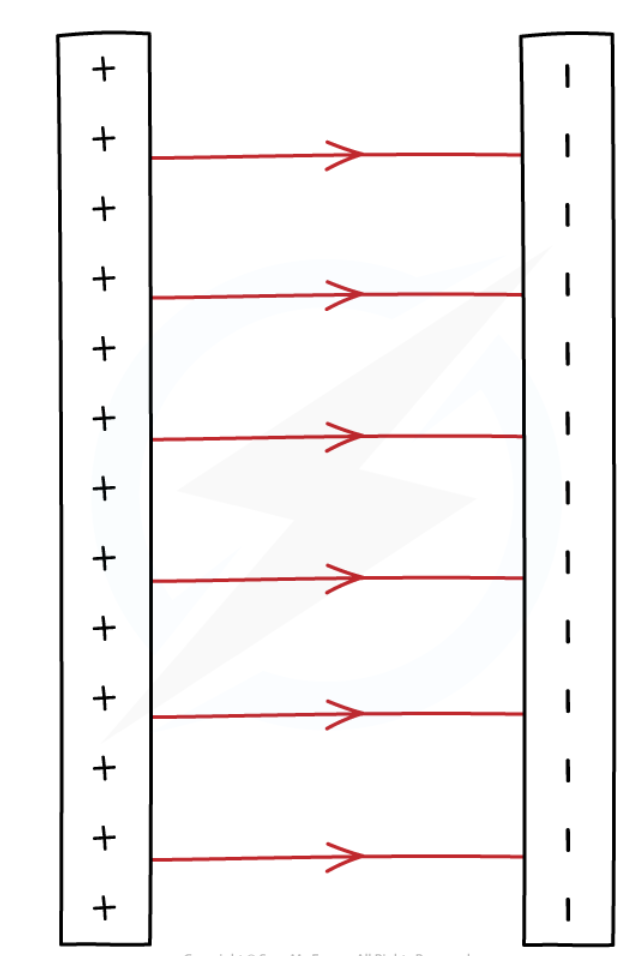
Strength of electric field is the same at all points
Electric field lines are same distance apart at all points
36
What happens when the electric field between two charged objects becomes very strong?
Charges experience a force in an electric field
If the electric field is strong enough, it can force charges through insulators (like air) creating a spark
The charged particle travels towards the area with opposite charge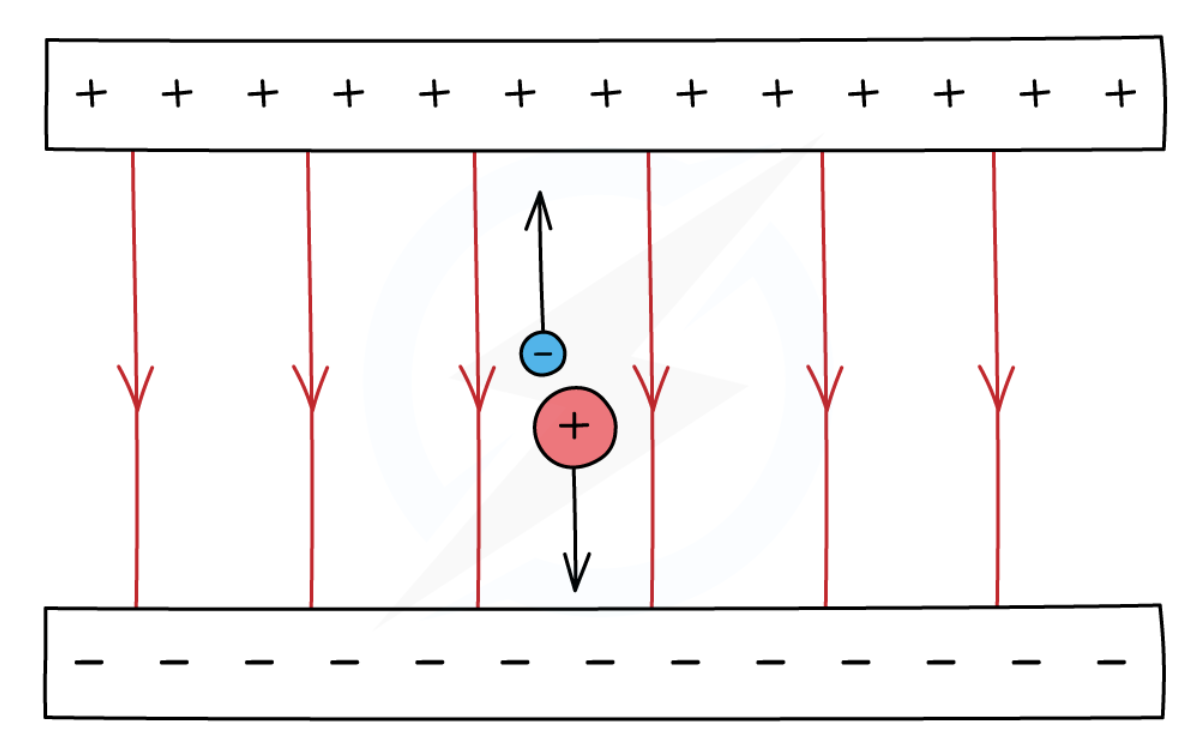
If the electric field is strong enough, it can force charges through insulators (like air) creating a spark
The charged particle travels towards the area with opposite charge