GCSE Edexcel Physics 15.1 - Forces and Elasticity
Study these flashcardsFree · spaced repetition · iPhone, Android, Mac & web
All cards
1
Three ways in which objects can have their shape changed
Stretching
Bending
Compressing
Bending
Compressing
2
What is the minimum number of forces that need to act on an object to change its shape? Why?
At least 2 forces
If only 1 force acts on an object, it will move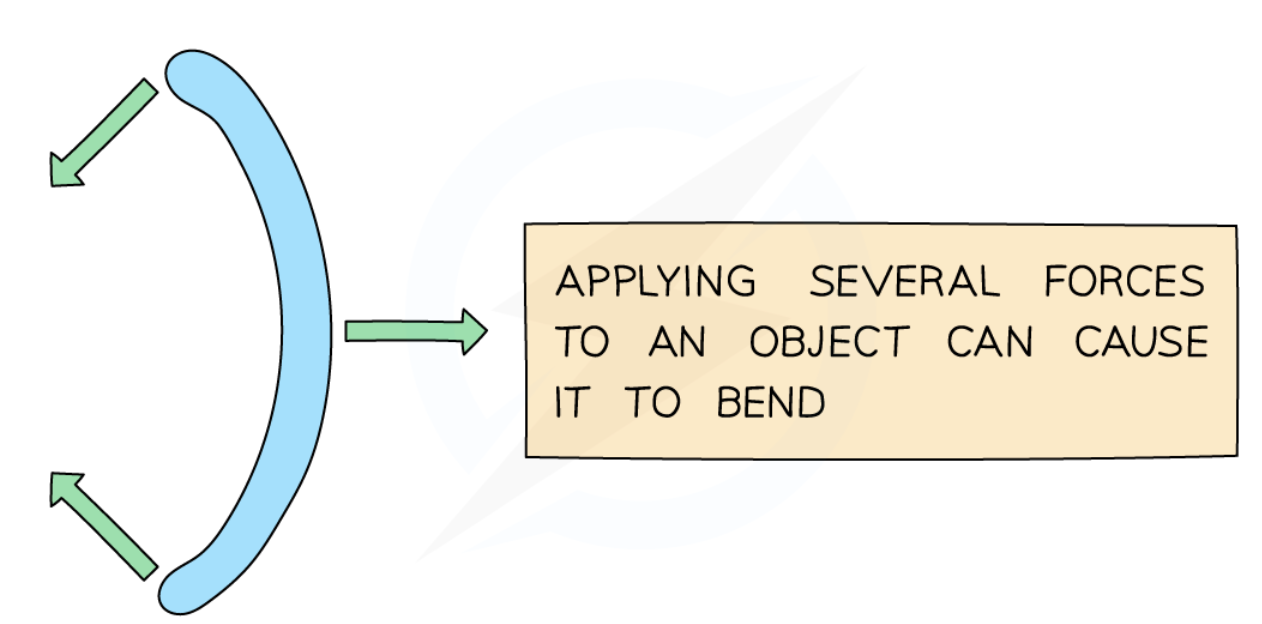
If only 1 force acts on an object, it will move
3
Forces when an object is compressed
Act in opposite directions
And towards the object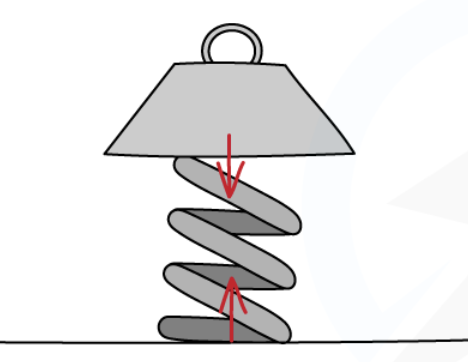
And towards the object
4
Forces when an object is stretched
Act in opposite directions
Away from the object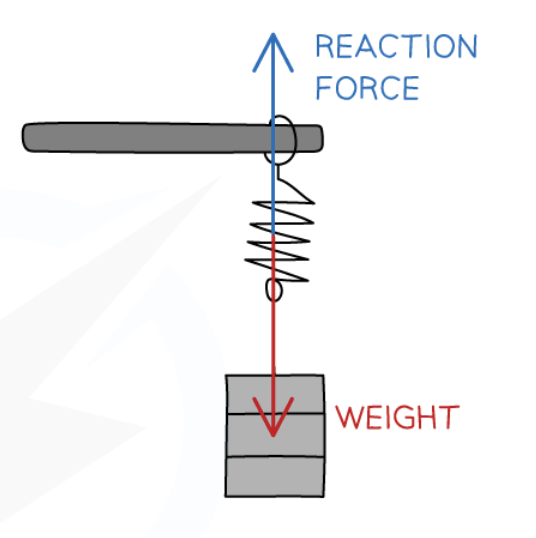
Away from the object
5
Name of force caused by stretching (in spring)
Tension force
6
Forces when an object is bent
Act in opposite directions
At different points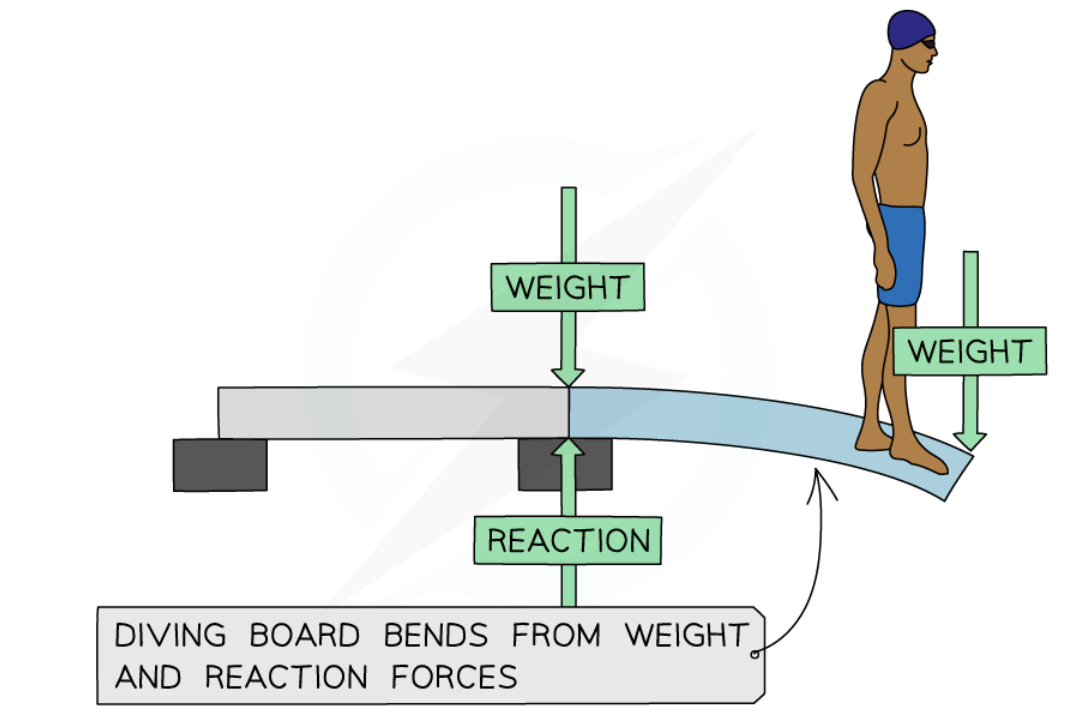
At different points
7
Elastic Distortion
Objects return to their original shapes when forces are removed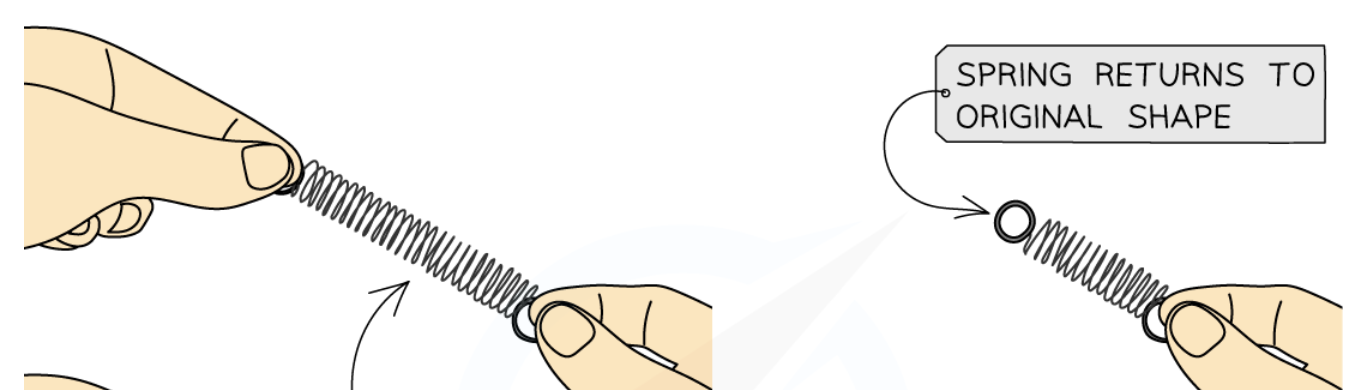
8
Inelastic Distortion
Objects do not return completely to original shape even when forces are removed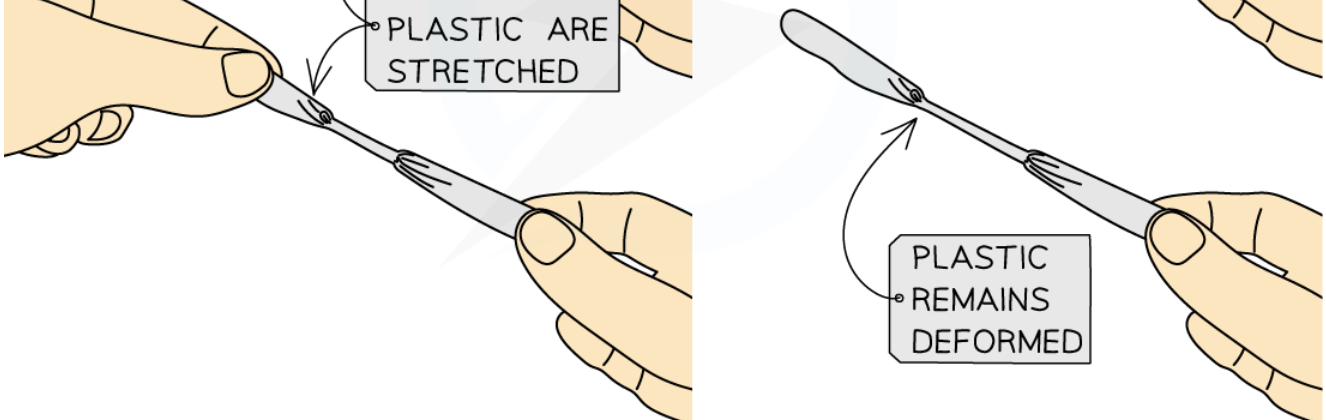
9
Measuring extension in springs
extension = final length - original length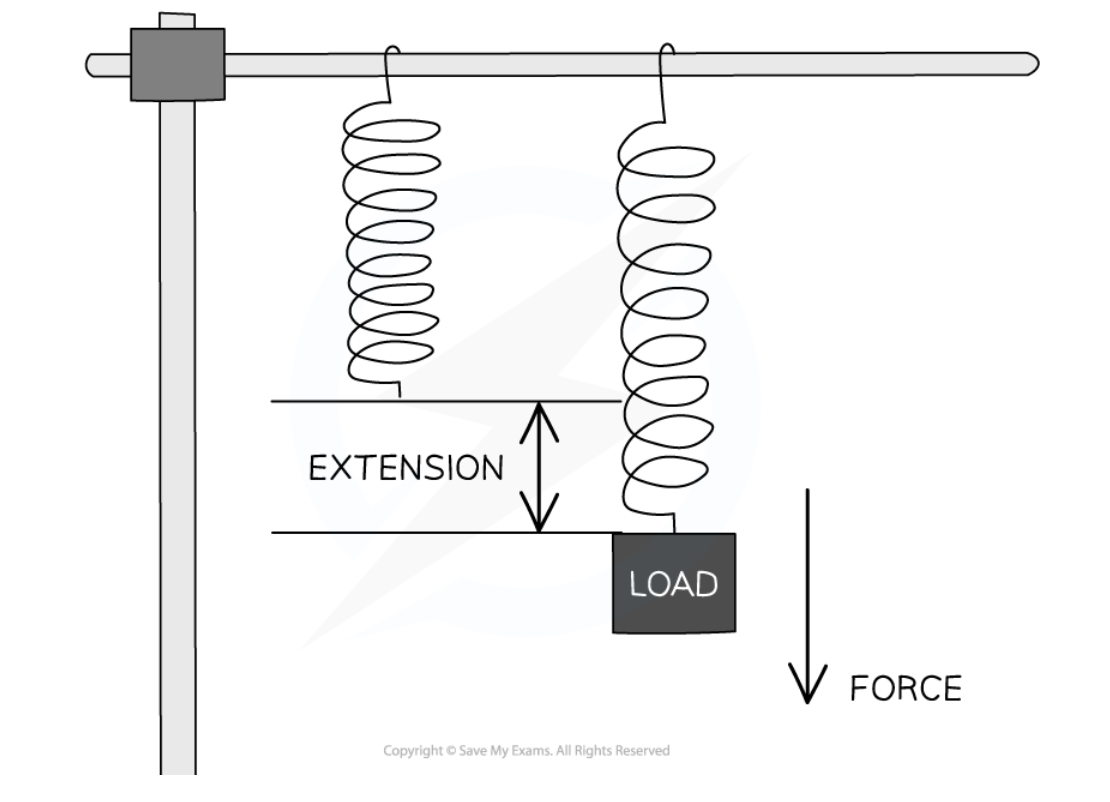
10
Hooke’s law/spring equation
Only up to the limit of proportionality!
Force (N) = spring constant (N/m) x extension (m)
F = k x x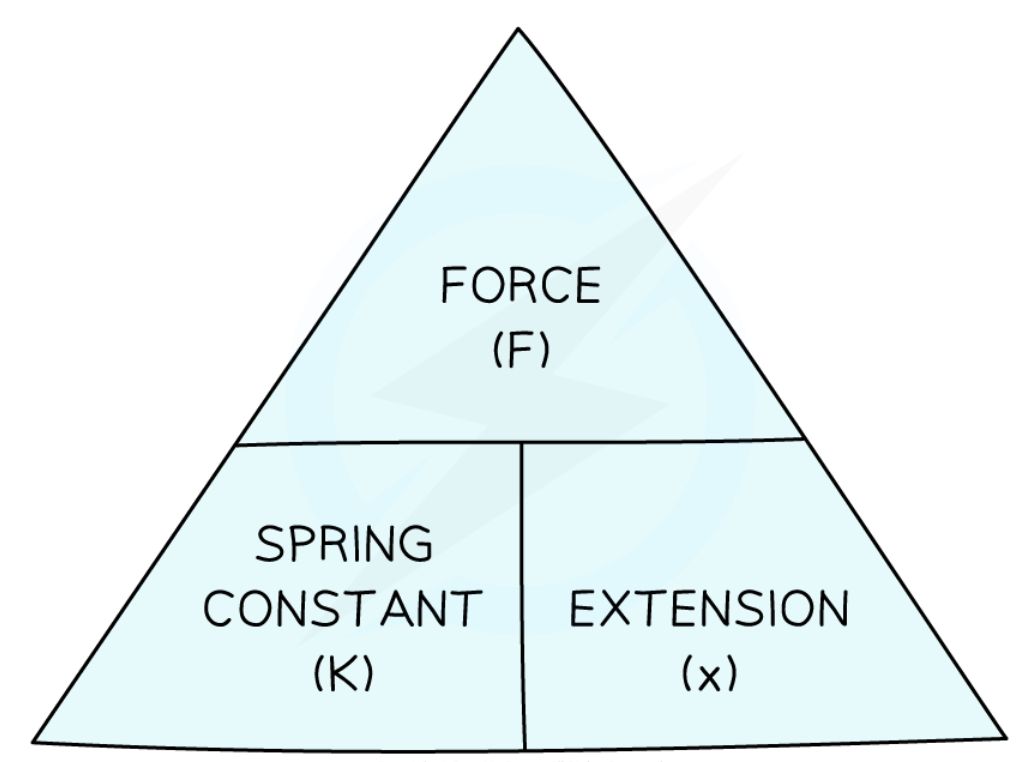
Force (N) = spring constant (N/m) x extension (m)
F = k x x
11
State Hooke’s Law
Extension is directly proportional to force, up to limit of proportionality
12
Limit of proportionality
The point at which extension is no longer directly proportional to force
Up to limit of proportionality, Hooke’s law is followed and object returns to original shape or length (elastic distortion)
After reaching it, object does not return to original shape or length (inelastic distortion)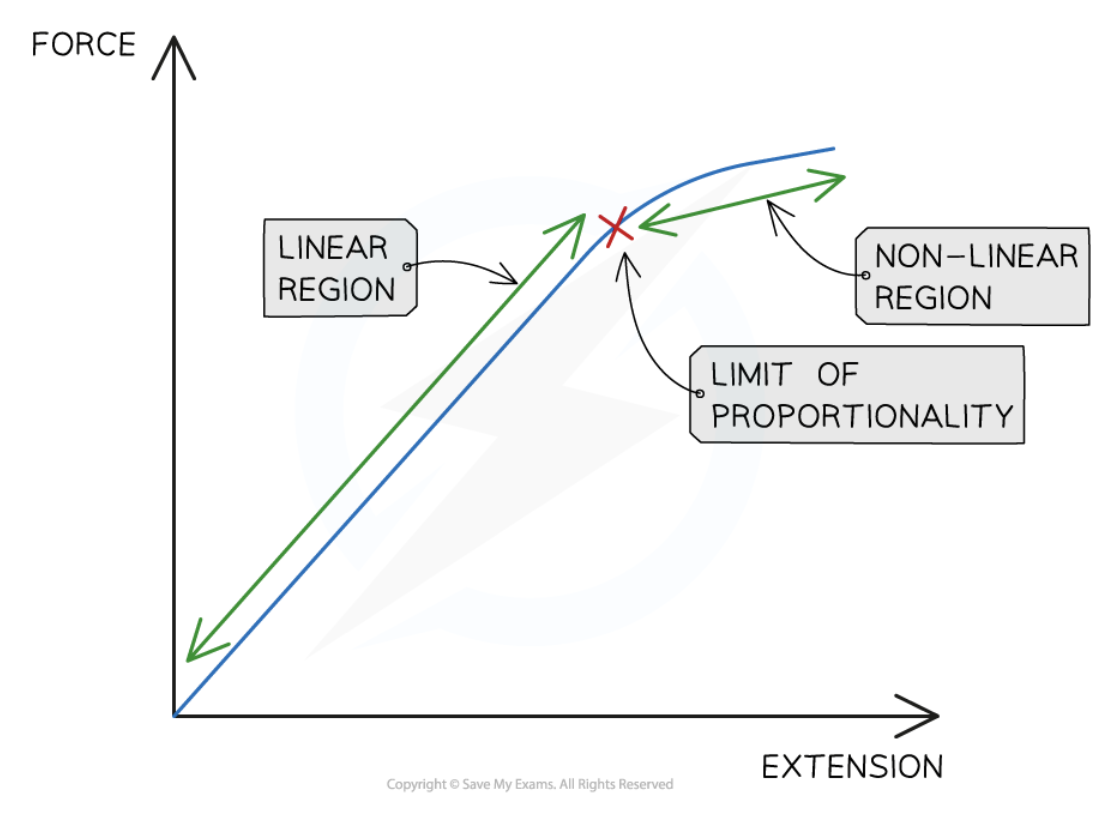
Up to limit of proportionality, Hooke’s law is followed and object returns to original shape or length (elastic distortion)
After reaching it, object does not return to original shape or length (inelastic distortion)
13
Work done/energy transferred in spring equation
Only up to the limit of proportionality!
Energy transferred (J) = ½ x spring constant (N/m) x extension² (m)
E = ½ x k x x²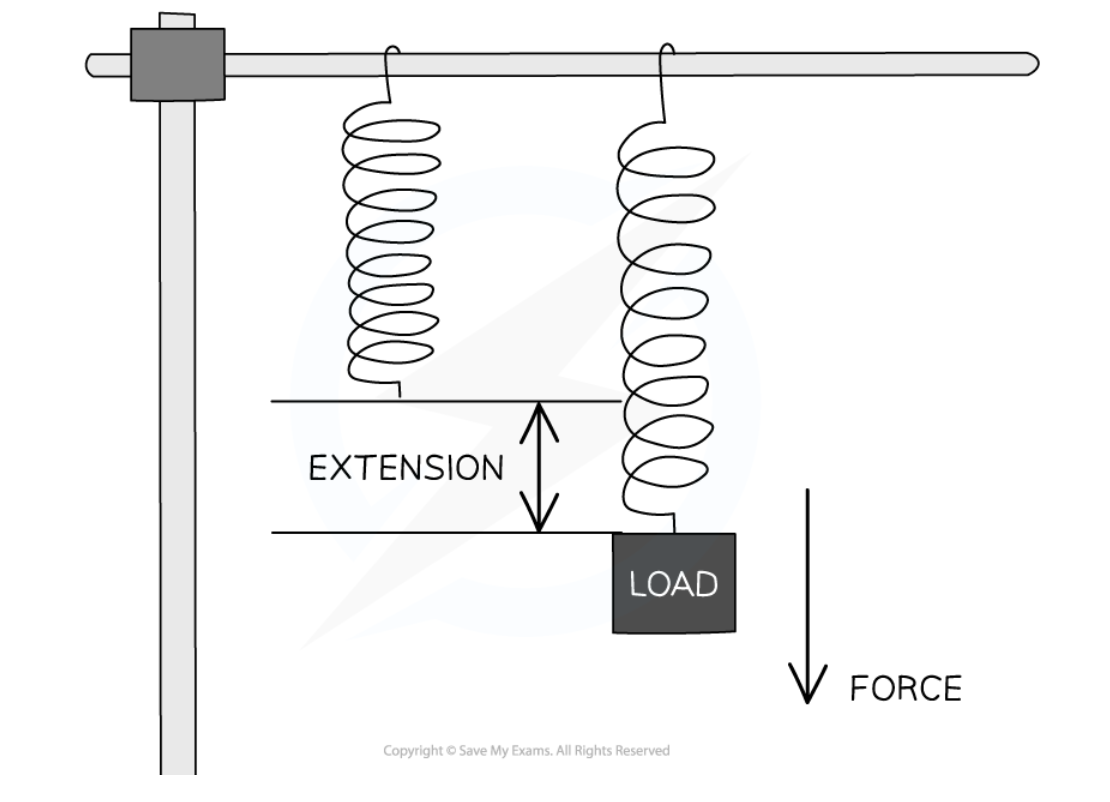
Energy transferred (J) = ½ x spring constant (N/m) x extension² (m)
E = ½ x k x x²
14
What type of relationship does extension and force have when the object obeys Hooke’s Law?
Linear
Represented by a straight line on a force-extension graph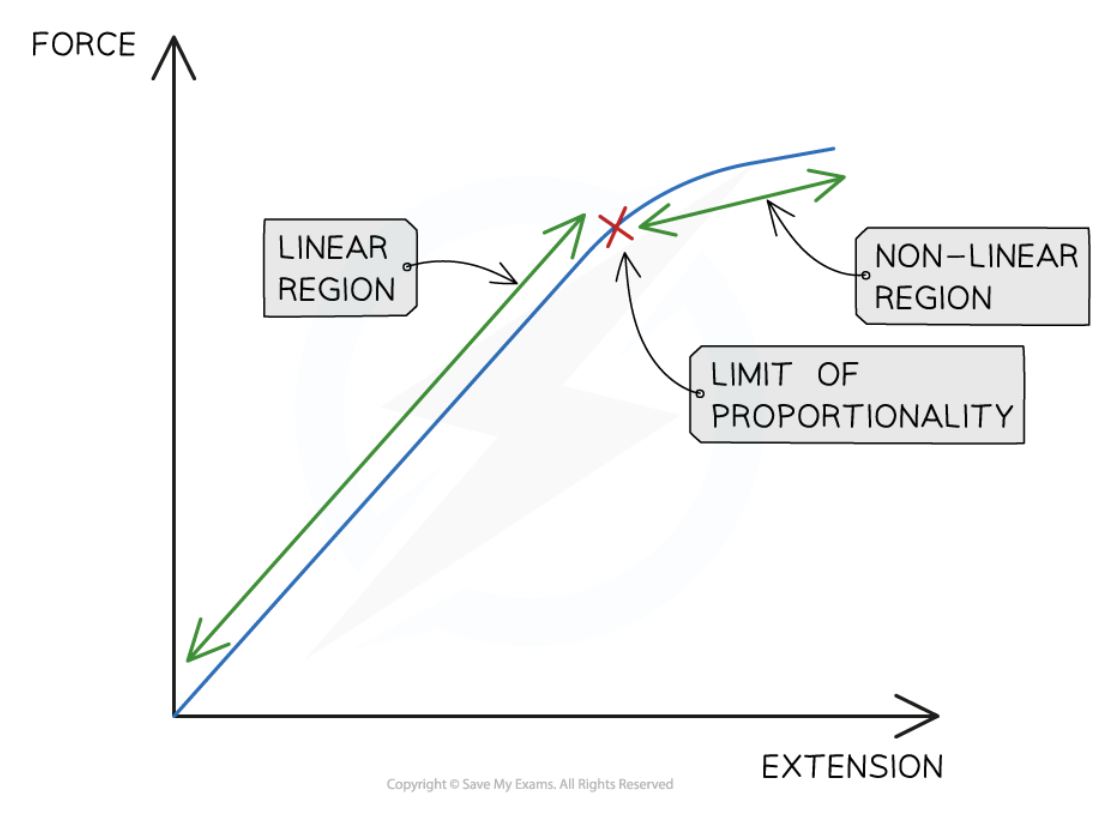
Represented by a straight line on a force-extension graph
15
What type of relationship does extension and force have past the limit of proportionality?
Non-linear
Represented by a curve on a force-extension graph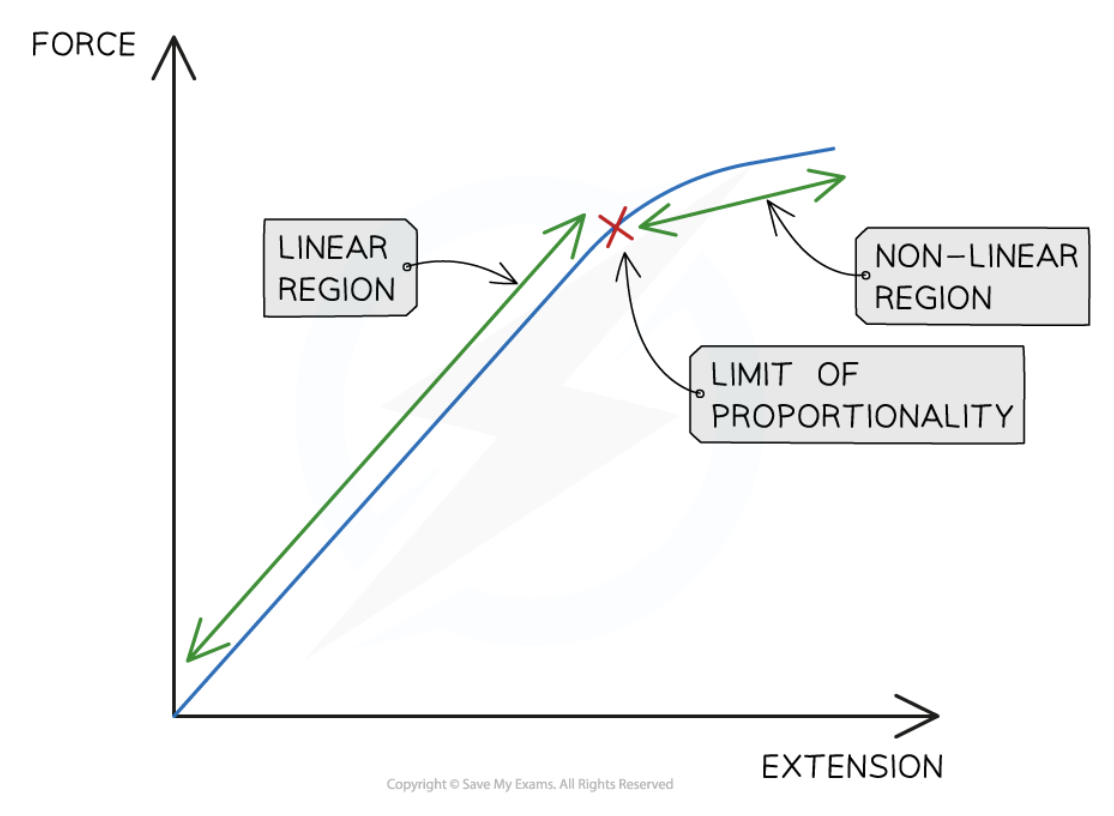
Represented by a curve on a force-extension graph